Article

SFCD-Det: A Spatial–Frequency Collaborative Architecture for UAV Infrared Small-Object Detection

College of Computer Science and Technology, Guizhou University, Guiyang 550025, China
*
Author to whom correspondence should be addressed.
Appl. Sci. 2026, 16(15), 7594; https://doi.org/10.3390/app16157594
Submission received: 4 July 2026 / Revised: 27 July 2026 / Accepted: 28 July 2026 / Published: 30 July 2026
(This article belongs to the Section Computing and Artificial Intelligence)

Abstract

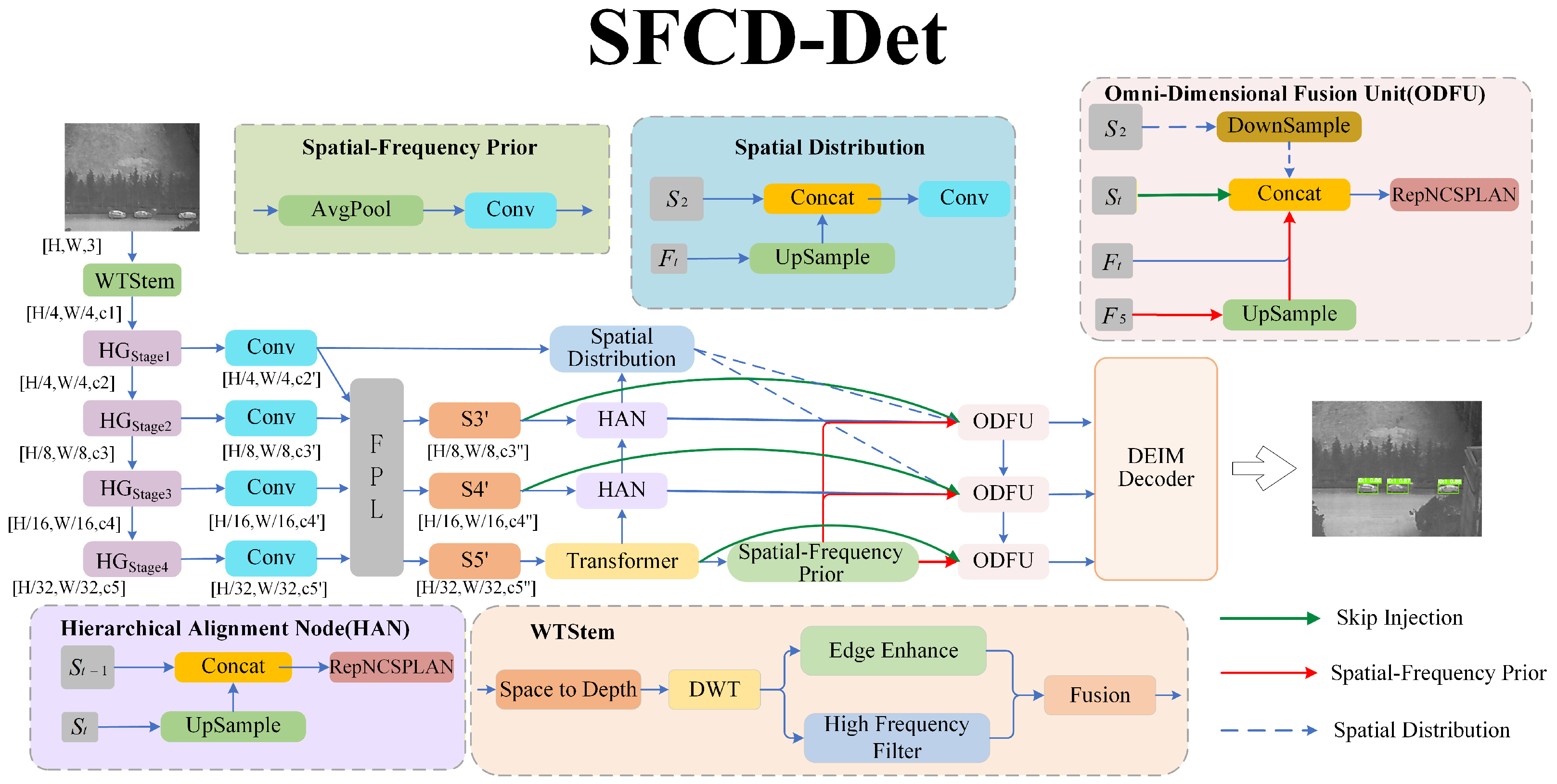
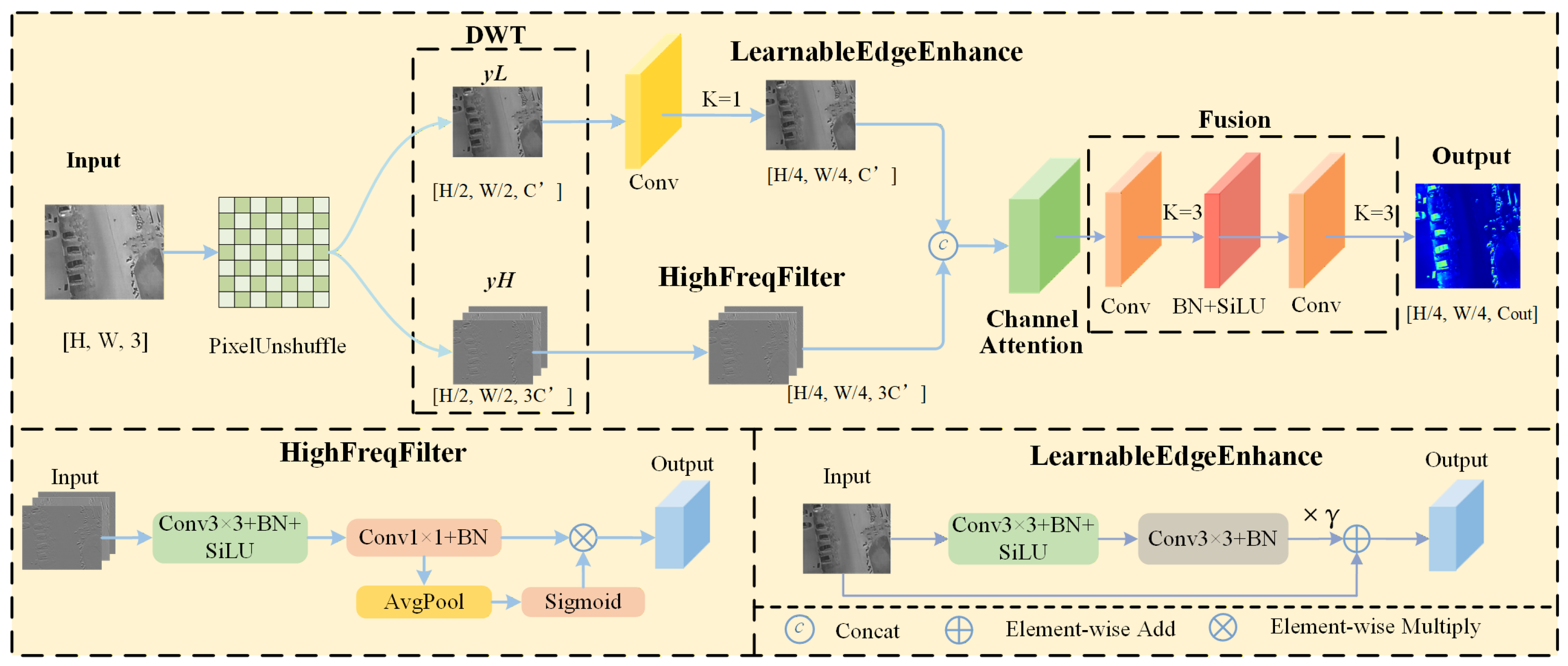
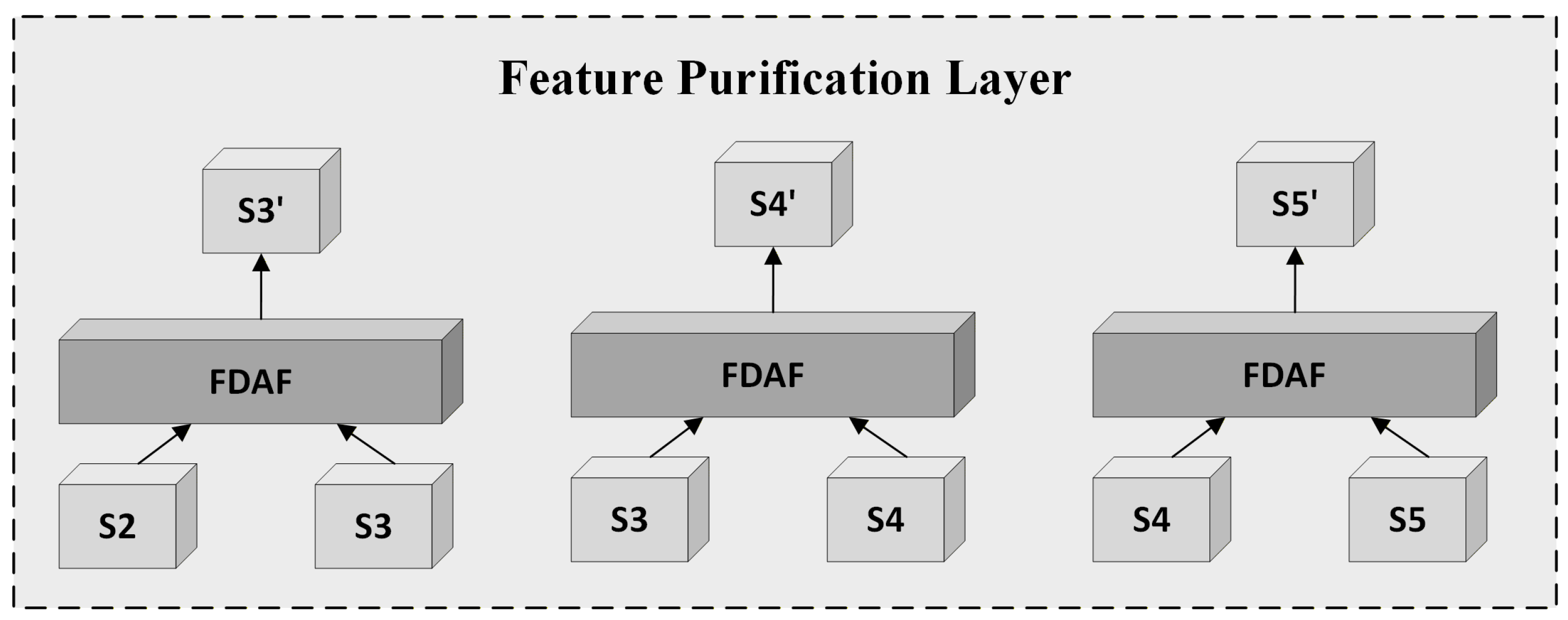
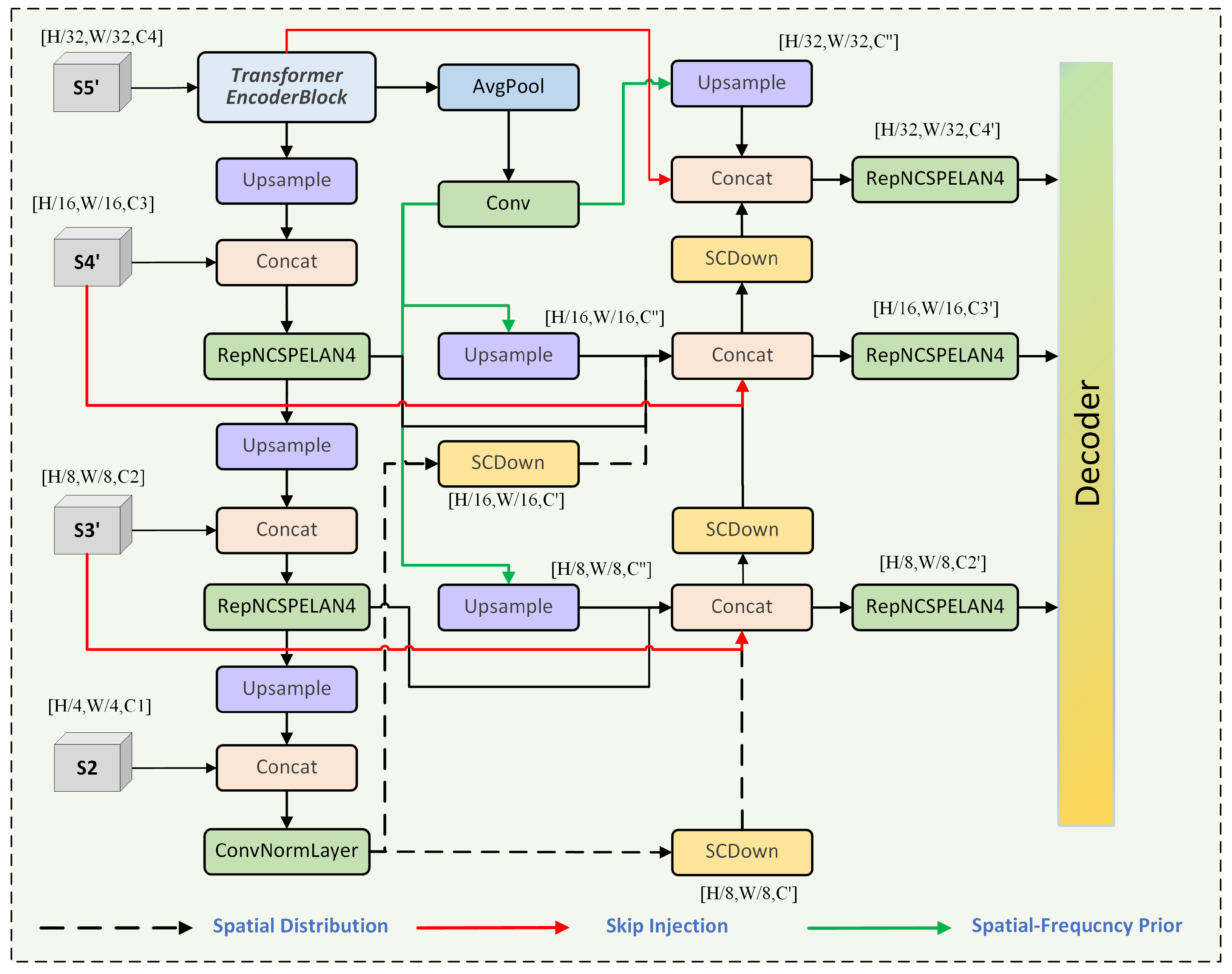
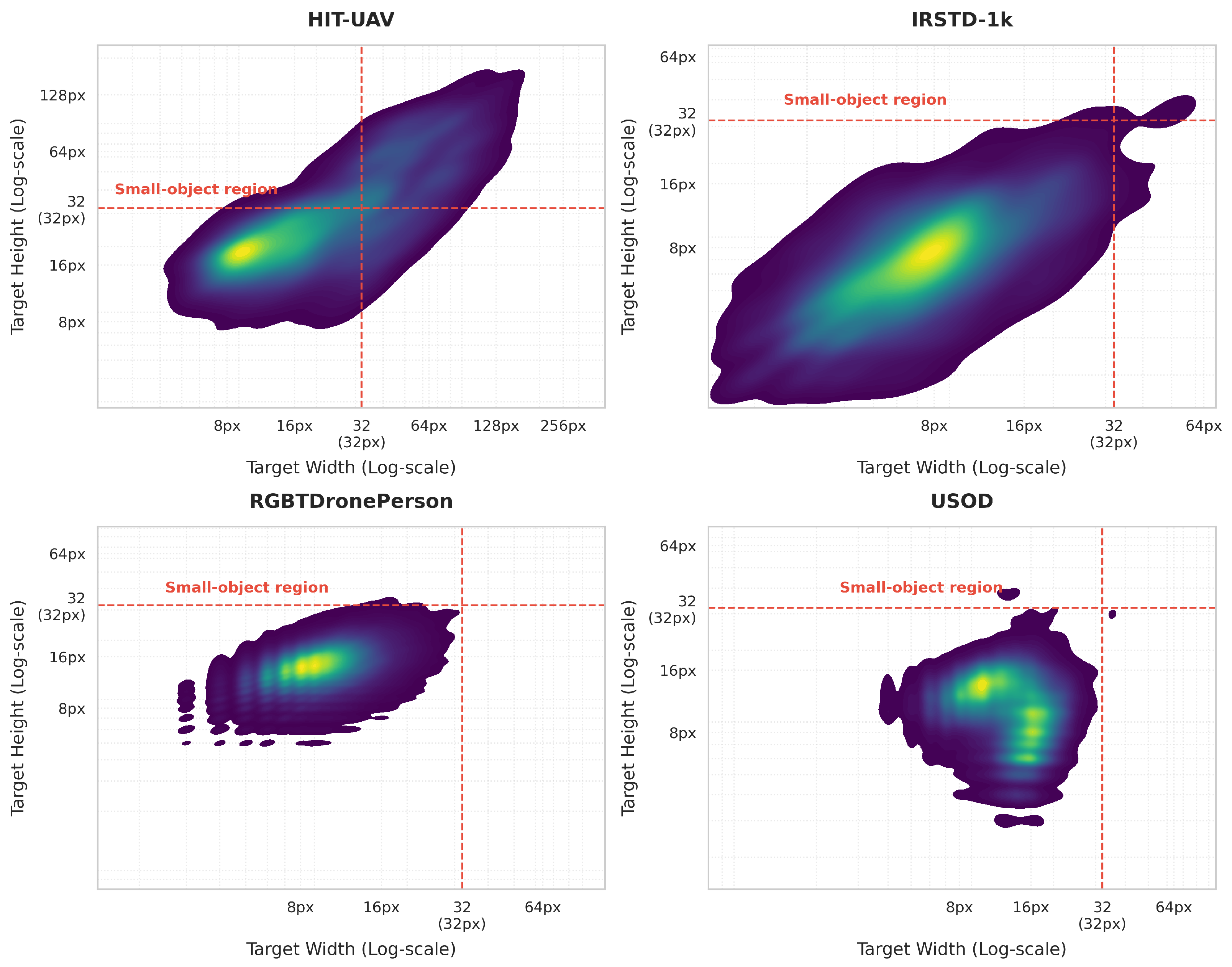
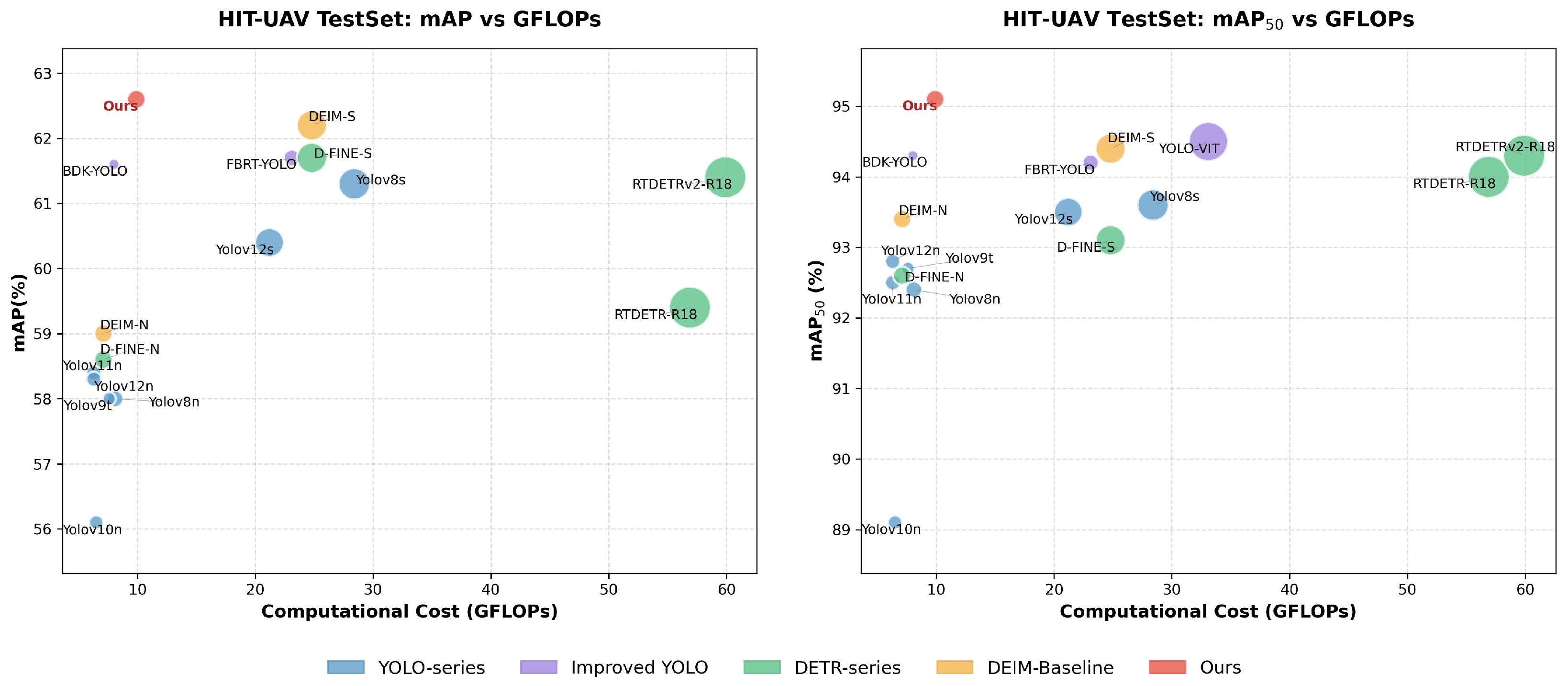
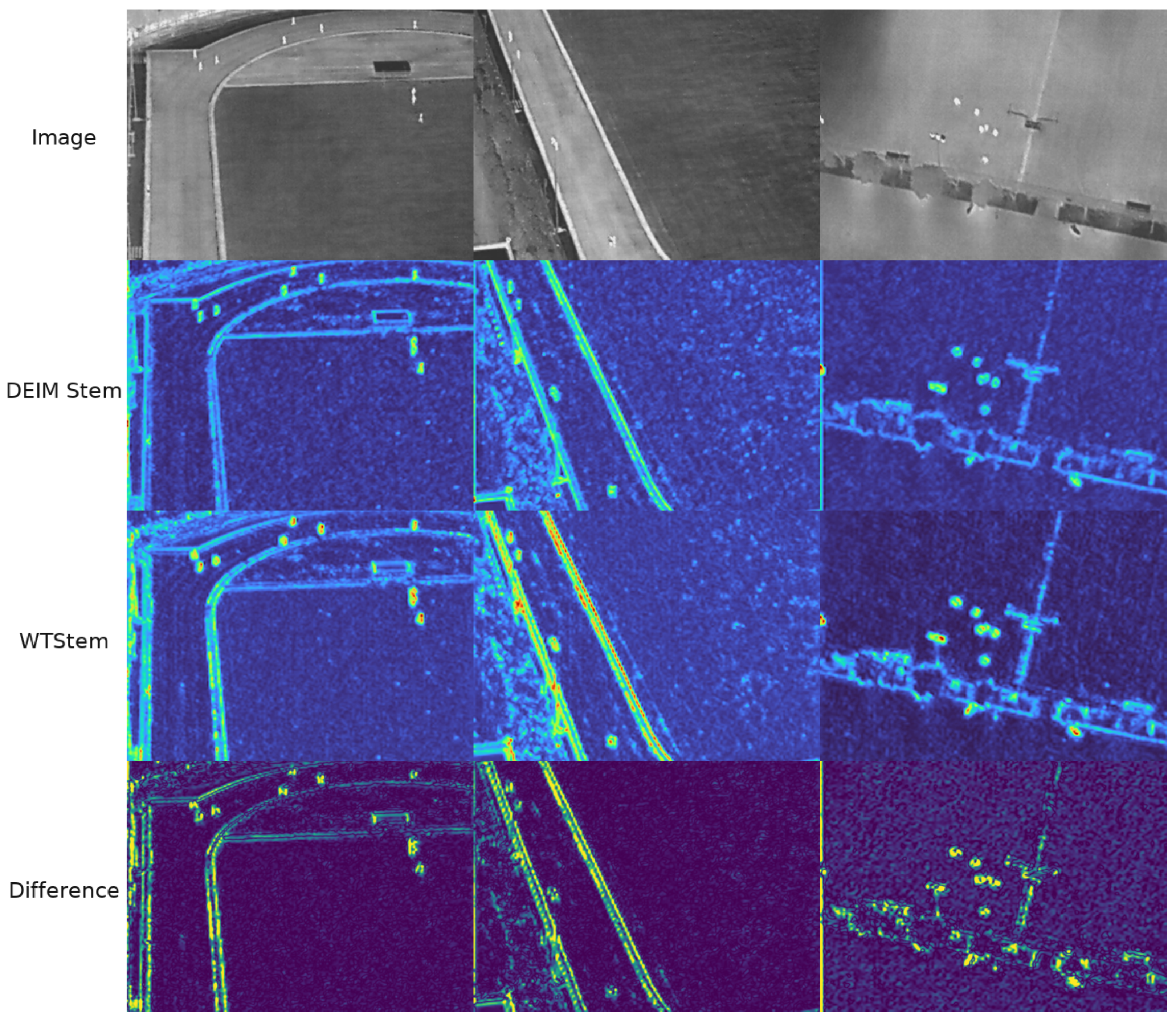
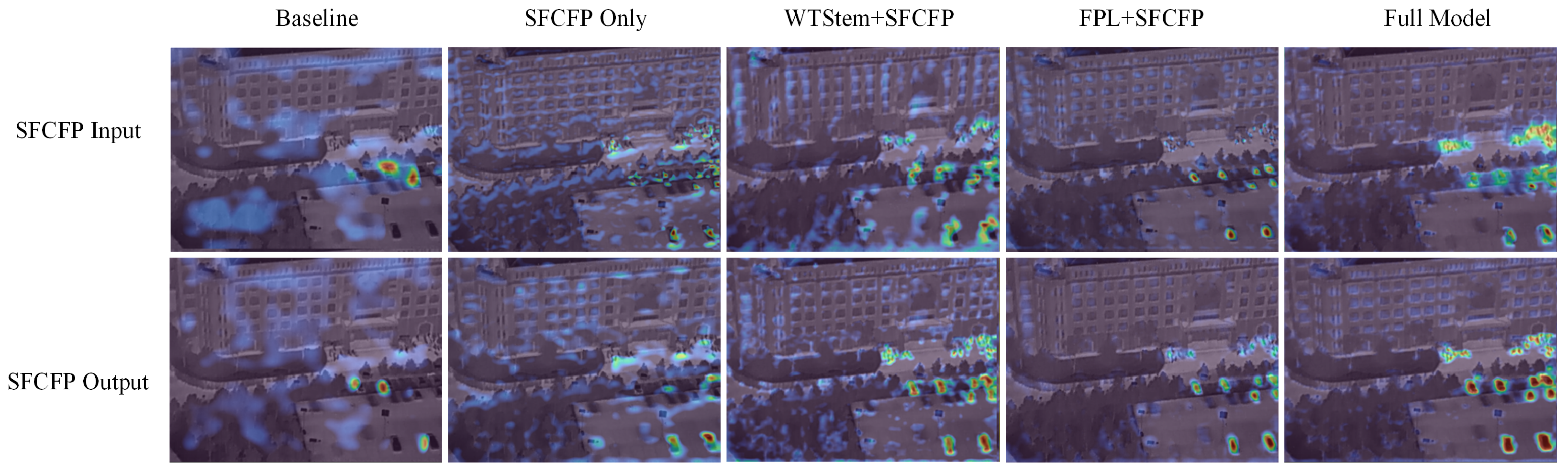
UAV infrared small-object detection is challenging because targets occupy few pixels, provide weak thermal contrast, and are easily confused with cluttered backgrounds. Although convolutional and Transformer-based detectors improve local representation and global context modeling, their predominantly spatial processing pipelines do not explicitly prevent fragile target responses from being attenuated during early encoding and multi-scale aggregation. To address this gap, we propose SFCD-Det, a spatial–frequency collaborative detector organized around a progressive preservation–purification–coordination methodology. A Wavelet-Transform Stem preserves low-frequency structures and localized high-frequency details before backbone encoding. A Feature Purification Layer regulates adjacent-scale interactions and suppresses clutter-dominated responses before aggregation, while a Spatial–Frequency Coordinated Feature Pyramid reconstructs multi-scale features using shallow spatial anchors, purified intermediate responses, and deep spatial–frequency priors. Experiments on four benchmarks show that SFCD-Det consistently outperforms the DEIM-N baseline. It achieves 62.6% mAP and 95.1% mAP50 on HIT-UAV, 41.4% and 86.4% on IRSTD-1K, 16.8% and 46.8% on RGBTDronePerson, and 34.1% and 88.0% on USOD, respectively. These results demonstrate that SFCD-Det strengthens weak-target representation in UAV infrared imagery. Its additional gains on USOD suggest that the frequency mechanism may also benefit weak and spatially localized responses in visible imagery under low illumination or shadow.
Keywords: UAV imagery; small-object detection; spatial–frequency collaboration; wavelet transform; feature purification; feature pyramid network; thermal imagery UAV imagery; small-object detection; spatial–frequency collaboration; wavelet transform; feature purification; feature pyramid network; thermal imagery