1. Introduction
Hypertension remains one of the leading contributors to global cardiovascular morbidity and mortality [
1,
2]. Recent estimates suggest that more than 1.2 billion adults worldwide live with hypertension, and a large proportion of these individuals have uncontrolled blood pressure despite the availability of pharmacological therapies [
1]. Hypertensive heart disease is characterized not only by chronically elevated arterial pressure but also by structural and functional changes in the myocardium, including left ventricular (LV) hypertrophy, impaired relaxation, and, ultimately, systolic dysfunction [
3]. These maladaptive processes are driven by hemodynamic overload in concert with oxidative stress, low-grade inflammation, neurohormonal activation, and endothelial dysfunction. The spontaneously hypertensive rat (SHR) is a well-established preclinical model of human essential hypertension. SHRs develop progressive increases in systolic blood pressure from early life, followed by LV hypertrophy, diastolic dysfunction, and, with prolonged disease, systolic impairment and heart failure. This model has been widely used to evaluate dietary and pharmacological strategies targeting hypertensive cardiovascular disease, including interventions that modulate oxidative stress and inflammation [
4].
Dietary modification is a cornerstone of hypertension management, and there is growing interest in the use of polyphenol-rich plant foods, including berries and related small fruits, as adjunctive strategies to attenuate target-organ damage [
5,
6,
7,
8,
9]. Epidemiological and clinical data suggest that a greater intake of fruits and vegetables, particularly those rich in flavonoids and anthocyanins, is associated with improved vascular function, reduced arterial stiffness, and lower cardiovascular risk. However, randomized trials have shown that anthocyanin-rich berries often exert modest or inconsistent blood pressure-lowering effects, while more reproducible benefits are observed in surrogate endpoints such as oxidative stress markers, endothelial function, and indices of vascular remodelling [
7,
8,
10]. These findings suggest that the cardioprotective actions of berry polyphenols may be partially independent of blood pressure reduction.
Several studies from our group have demonstrated that berry-derived bioactives can modulate hypertensive cardiac and vascular remodelling in SHRs and related models [
3,
11,
12,
13,
14,
15]. Blueberry polyphenolic extract attenuated vascular remodelling and reduced pro-apoptotic signalling in SHRs despite failing to lower blood pressure, highlighting a blood pressure-independent mechanism of vascular and myocardial protection in this model [
13]. Collectively, these studies support the concept that polyphenol-rich foods can protect the hypertensive heart and vasculature by targeting oxidative and inflammatory pathways in addition to hemodynamic load.
Saskatoon berry (
Amelanchier alnifolia Nutt.) is an emerging North American fruit crop with a distinctive polyphenolic profile [
16,
17,
18,
19,
20,
21,
22]. It is particularly rich in anthocyanins (notably cyanidin-3-glucoside and cyanidin-3-galactoside), proanthocyanidins, and flavonols, together with phenolic acids and other micronutrients [
16,
17,
18,
19,
20]. Saskatoon berry extracts exhibit strong in vitro antioxidant activity, effectively scavenging reactive oxygen species and inhibiting lipid peroxidation, with an antioxidant capacity that can equal or exceed that of other dark-skinned berries such as wild blueberry, raspberry, and strawberry [
17,
19,
20,
23,
24]. Anthocyanin-rich Saskatoon preparations also demonstrate anti-inflammatory effects, including suppression of TNF-α production and monocyte adhesion in cultured endothelial and macrophage models, which are in some cases comparable to or exceeding classical anti-inflammatory phytochemicals [
19].
In vivo, Saskatoon berry has shown promising metabolic and cardiovascular actions [
25]. In a diet-induced metabolic syndrome model, Saskatoon berry supplementation improved glucose homeostasis, attenuated dyslipidemia, and ameliorated several cardiovascular and hepatic abnormalities [
26]. In a reno-cardiac syndrome model (Han: SPRD-Cy/+rats), dietary Saskatoon berry reduced LV wall thickness and plasma malondialdehyde (MDA), indicating mitigation of cardiac remodelling and oxidative stress, but did not improve renal dysfunction, underscoring a primarily cardioprotective and antioxidant effect [
27]. Together, these data suggest that Saskatoon berry is a plausible functional ingredient for targeting oxidative and inflammatory mechanisms that contribute to hypertensive heart disease.
Despite this emerging evidence, the effects of whole Saskatoon berry powder on cardiac structure and function have not been characterized in the canonical SHR model of primary hypertension. Furthermore, previous Saskatoon berry studies have primarily focused on renal–cardiac syndromes or metabolic dysfunction, whereas the impact of Saskatoon berry on established hypertensive cardiac remodelling and heart function, and on circulating markers such as TNF-α and lipid peroxidation, remains unclear [
26,
27]. Moreover, it is not known whether Saskatoon berry can confer meaningful cardioprotection in SHRs without substantially lowering blood pressure.
We hypothesized that Saskatoon berry powder would attenuate hypertensive cardiac remodelling and preserve heart function, despite persistent severe hypertension. Accordingly, this study was conducted to investigate the effects of dietary Saskatoon berry powder supplementation on blood pressure, heart structure and function, as well as underlying mechanisms of action such as oxidative stress and inflammation in SHRs.
2. Materials and Methods
2.1. Chemicals and Reagents
All chemicals and reagents used in this study were of analytical or reagent grade unless otherwise stated. Distilled water used for preparation of dosing solutions and assays was obtained from a Milli-Q water purification system (MilliporeSigma, Burlington, MA, USA). Human IL-10 and TNF-α ELISA kits were purchased from Abcam (Cambridge, UK). Plasma lipid peroxidation was assessed using a Lipid Peroxidation (MDA) Assay Kit (ab233471; Abcam, Cambridge, UK). Oxygen absorbers containing dimethyl fumarate and iron oxide and silica gel desiccants used for Saskatoon berry powder storage were purchased from Uline (Milton, ON, Canada). Saskatoon berry powder (Amelanchier alnifolia var. Northline) was supplied by Interlake Saskatoons Limited (Stonewall, MB, Canada). All other chemicals and reagents used for sample preparation and biochemical analyses were of analytical grade and obtained from standard commercial suppliers.
2.2. Animals, Housing, and Ethical Approval
Male spontaneously hypertensive rats (SHRs) and age-matched male Wistar Kyoto (WKY) rats were obtained from an approved commercial breeder (Charles River Laboratories, Senneville, Quebec City, QC, Canada). SHRs were selected because they are the gold-standard model of primary hypertension, showing progressive elevations in blood pressure, left ventricular (LV) hypertrophy, and contractile dysfunction that closely mimic human essential hypertension, as established in previous studies [
11,
12,
13,
27]. The animal experimental protocols for this project were approved by the University of Manitoba Office of Research Ethics and Compliance and Animal Care Committee and were conducted in accordance with the guidelines by the Canadian Council for Animal Care (AC11731), Protocol number 22-008; approval date was 26 July 2022. Animals were housed two per standard polycarbonate cage under controlled environmental conditions (22 ± 2 °C; 55 ± 5% humidity; 12:12 h light–dark cycle) with free access to food and water. This housing protocol matches the standardized conditions used in all berry- and cereal-based SHR feeding studies conducted by our group earlier. Animals were allowed a one-week acclimation period before the start of the experiment and were monitored daily for posture, activity, coat condition, and signs of distress. At five weeks of age, rats were randomly assigned to one of three groups (n = 10 per group): normotensive WKY controls, hypertensive SHRs receiving standard chow, and hypertensive SHRs receiving standard chow which were administered Saskatoon berry powder (600 mg/kg body weight/day) via oral gavage (SHR + SB). The intervention lasted 16 weeks, consistent with the duration used to elicit dietary cardiovascular protection in prior work involving oat, Saskatoon berry, and blueberry polyphenolics in SHRs.
2.3. Saskatoon Berry Powder Preparation and Diet Formulation
Human-grade Saskatoon berry powder (Amelanchier alnifolia var. Northline) was obtained from Interlake Saskatoons Limited, Stonewall, MB, Canada. According to the supplier, the berries typically had a Brix value of 18 and an antioxidant capacity of 40,000 µmol Trolox equivalents per 100 g. Whole ripe berries were harvested, immediately frozen, and stored at −20 °C before processing. The frozen berries were freeze-dried by Supreme Freeze Dry using commercial industry-standard freeze-drying conditions, some of which were proprietary to the toll processor. The freeze-dried berries were then ground by the processor to a particle size of approximately 0.8 mm. The resulting powder was packed in food-safe 20 L pails and returned to Manitoba, where it was repacked into 1 kg low-oxygen-transmission-rate food-grade bags. An oxygen absorber containing dimethyl fumarate and iron oxide and a silica gel desiccant, both purchased from Uline.ca, were added before sealing. The powder was stored at −20 °C under low-oxygen conditions to minimize polyphenol oxidation. Saskatoon berry powder was freshly suspended in distilled water and administered to animals by oral gavage at the defined dose in a standardized volume. Control animals received an equivalent volume of distilled water alone. All animals were maintained on a standard AIN-93G basal diet throughout the study, and SHR and WKY control animals received the same basal diet without Saskatoon berry powder.
2.4. Blood Pressure Measurement
Systolic and diastolic blood pressures were measured at baseline (week 0) and at week 16 using non-invasive tail–cuff plethysmography (CODA, Kent Scientific, Torrington, CT, USA), following the validated procedures widely used in our previous study [
3,
11]. The tail–cuff methodology, while less invasive than telemetry, is well-established for longitudinal strain comparisons in SHRs when animals are acclimatized adequately [
28,
29]. To minimize stress-induced variability, rats underwent three consecutive days of acclimatization to the restrainer and cuff inflation cycles before data collection. During each session, animals were placed on a thermostatically controlled warming platform (31–33 °C) to enhance tail blood flow. A minimum of 10 successful measurements per rat were recorded, and the average of stable recordings was used for analysis. This protocol ensures reproducibility and matches the internal SOPs used for evaluating dietary cardioprotective agents in SHRs.
2.5. Transthoracic Echocardiography
Echocardiography was performed at the 16-week endpoint using a high-frequency ultrasound imaging system (Vivid E9 GE) (Vingmed Ultrasound A/S, Horten, Norway) with a 13–24 MHz transducer, as outlined in our previous studies. Rats were lightly anesthetized with 1.5–2.0% isoflurane in oxygen and placed on a temperature-controlled platform to maintain physiologic body temperature [
3,
12,
14]. Two-dimensional parasternal long-axis and short-axis images were acquired, and M-mode tracings were recorded at the papillary muscle level. Cardiac structural measurements included LV internal diameter (LVID), interventricular septal thickness (IVS), left ventricular posterior wall thickness (LVPW), and left ventricular mass (LVM). Cardiac functional markers include ejection fraction (EF), fractional shortening (FS), cardiac output (CO), parameters of systolic heart function, and isovolumic relaxation time (IVRT), a parameter of diastolic heart function [
3,
12,
14].
2.6. Sample Collection
Following an overnight fast at week 16, animals were anesthetized with isoflurane and euthanized by cardiac puncture exsanguination, following protocols used in previous berry-feeding studies. Blood was collected and stored at −80 °C.
2.7. Biochemical Analyses
2.7.1. Cytokine Measurements
Serum levels of tumour necrosis factor-α (TNF-α) and interleukin-10 (IL-10) were quantified using a commercially available enzyme-linked immunosorbent assay (ELISA) kit from Abcam, Waltham, MA, USA, following the manufacturer’s instructions [
30]. Briefly, samples and standards were analyzed in duplicate using a pre-coated 96-well microplate. Following incubation with the antibody cocktail and washing steps, TMB substrate was added for colour development, and absorbance was measured at 450 nm using a microplate reader. IL-10 concentrations were determined from a standard calibration curve generated using recombinant IL-10 standards.
2.7.2. TBARS Assay
Plasma lipid peroxidation was assessed by measuring malondialdehyde (MDA) concentrations using a commercially available Lipid Peroxidation (MDA) Assay Kit (Abcam, Cambridge, UK) according to the manufacturer’s instructions [
31]. Briefly, samples and MDA standards were analyzed in duplicate in a 96-well microplate. Following the addition of MDA Color Reagent and Reaction Solution, plates were incubated at room temperature and protected from light, and absorbance was measured at 695 nm using a microplate reader. MDA concentrations were calculated from a standard calibration curve and expressed as TBARS equivalents.
2.8. Statistical Analysis
All statistical analyses were conducted using OriginPro 2025. Data are expressed as mean ± SEM. For baseline (week 0) measurements, one-way ANOVA was applied to confirm equivalence among groups. Week 16 outcomes, including blood pressure, echocardiographic parameters, cytokines, and TBARS, were analyzed using one-way ANOVA followed by Tukey’s multiple comparison test when the overall ANOVA p-value was <0.05. This analytical approach replicates the statistical methods used across multiple studies from the same research group, where comparisons among WKY, SHR, and SHR + treatment groups are made at the final endpoint. Normality and homogeneity of variance were assessed before parametric testing. A p-value < 0.05 was considered statistically significant.
3. Results and Discussion
3.1. Nutritional Composition of Saskatoon Berry Powder Used in the Study
The nutritional composition of the Saskatoon berry powder used for supplementation is presented in
Table 1. According to the manufacturer’s label/technical sheet, each 10 g serving provides 35 kcal, with a low fat content (0.3 g), no cholesterol, and no sodium, indicating a low-lipid, low-sodium fruit powder matrix. Carbohydrates represented the major macronutrient fraction (8 g per 10 g serving), including 1 g dietary fibre and 5 g naturally occurring sugars, while the protein content was 1 g per serving. The powder also supplied modest amounts of potassium (100 mg), calcium (30 mg), and iron (0.2 mg).
These compositional characteristics are consistent with previous reports describing Saskatoon berry as a nutrient-dense berry rich in carbohydrates, fibre, and minerals, while being naturally low in fat. Beyond conventional nutrients, Saskatoon berry has been widely recognized as an important source of bioactive phytochemicals, particularly anthocyanins, flavonols, chlorogenic acid, and proanthocyanidins, which are believed to contribute substantially to its antioxidant, anti-inflammatory, and cardiometabolic effects reported in experimental and clinical models. Previous analytical studies have identified cyanidin-3-galactoside and cyanidin-3-glucoside as the dominant anthocyanins in Saskatoon berry, together with appreciable levels of rutin and phenolic acids [
16,
17,
23,
32].
Although the nutrition label does not quantify these phytochemicals directly, the use of a whole-fruit powder is relevant from a functional food perspective because it preserves the natural food matrix, allowing combined exposure to fibre, micronutrients, and polyphenols rather than isolated compounds [
6,
7,
8,
33]. This may enhance biological efficacy through additive or synergistic interactions among constituents. Therefore, the observed cardioprotective effects in the present study likely reflect the integrated actions of both the nutritional and phytochemical components of Saskatoon berry powder.
3.2. Effects of Saskatoon Berry Supplementation on Body Weight and Baseline Hemodynamics
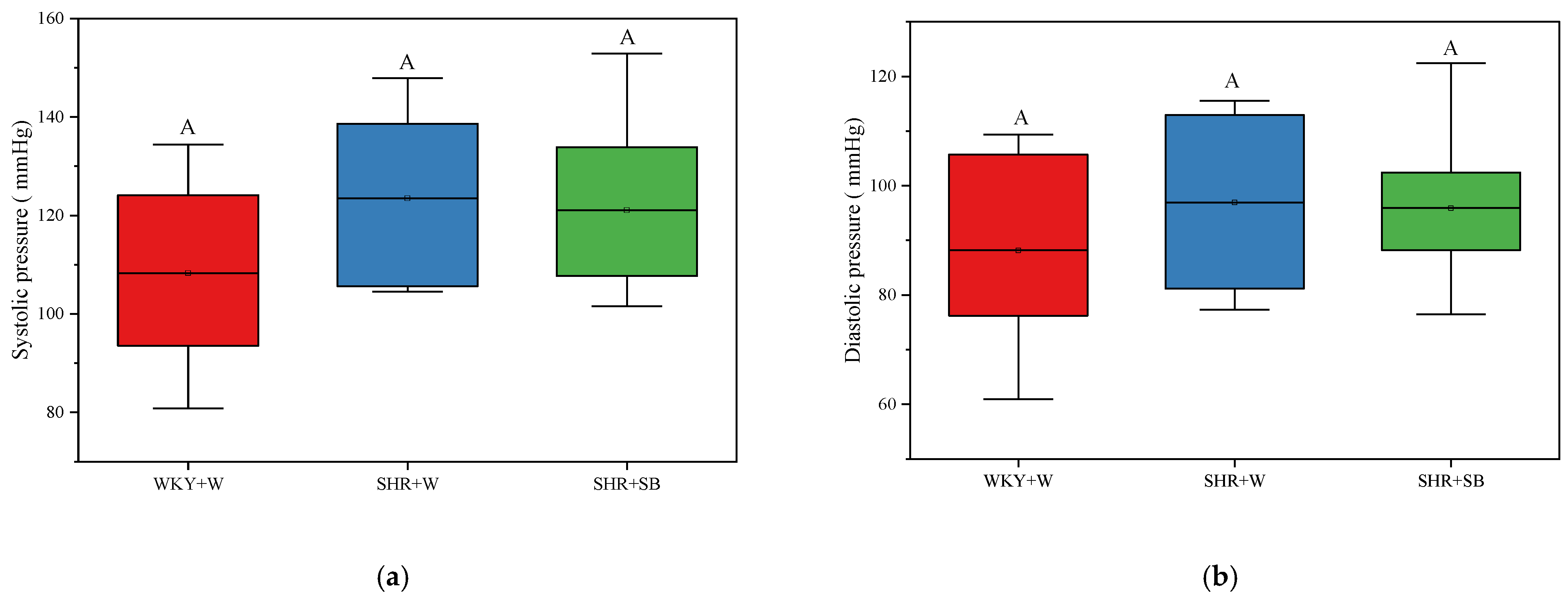
At the end of this study, body weight was not found to be significantly different between the groups (WKY Control—359 ± 8 g; SHR Control—358 ± 14 g and SHR SB—354 ± 21 g). Baseline hemodynamic data at week 0, before dietary treatment, showed that both systolic and diastolic blood pressure were comparable across all three groups (
Figure 1), with ANOVA and Tukey’s tests showing no significant differences. These findings confirm proper randomization and indicate that subsequent divergences reflect the development of hypertension in SHRs and not baseline variation.
3.3. Effects of Saskatoon Berry Supplementation on Arterial Pressure and Systolic Heart Function
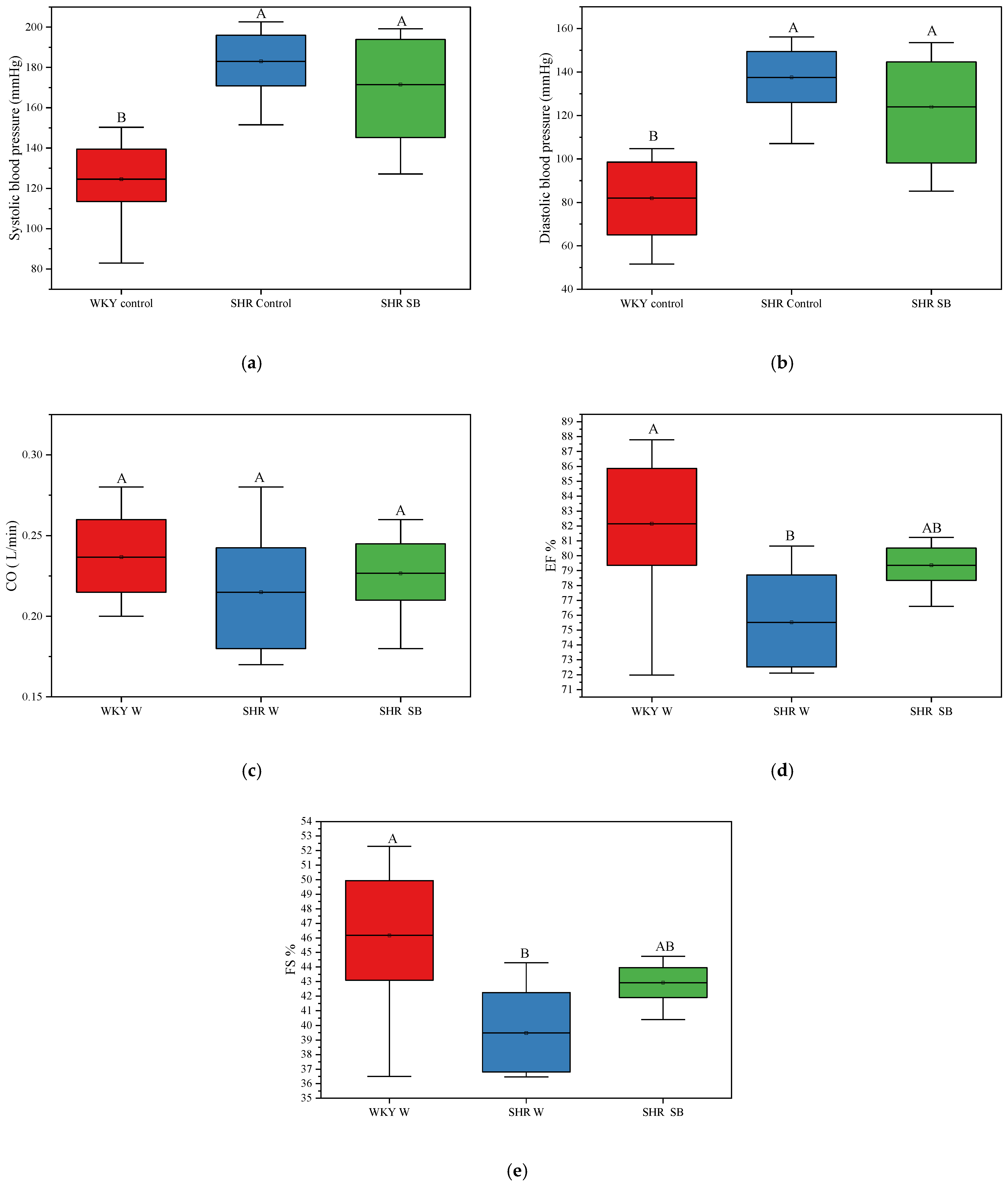
After 16 weeks, the SHRs presented with severe hypertension, with both systolic and diastolic blood pressure significantly higher than in WKY controls (
Figure 2a,b). This mirrors the classical time-course of SHRs, where systolic and diastolic blood pressure rise progressively from adolescence and are typically 40–60 mmHg above WKY by 18–20 weeks of age [
3,
11,
14]. In the present study, Saskatoon berry-supplemented SHRs (SHR + SB) remained clearly hypertensive and did not differ significantly from untreated SHRs for either SBP or DBP. Thus, Saskatoon berry did not exert an antihypertensive effect under our conditions. This lack of a robust blood pressure-lowering response is consistent with several preclinical and clinical datasets on anthocyanins. In SHRs, diets enriched with wild blueberries slowed the rise in SBP or improved vascular parameters [
34,
35,
36,
37], but other work has found that an anthocyanin-rich intervention, such as purified cyanidin-3-O-glucoside (C3G), preserves cardiac structure and function while leaving blood pressure largely unchanged [
14]. Aloud et al. [
14] showed that C3G prevented maladaptive cardiac hypertrophy and diastolic dysfunction in 20-week-old SHRs, despite an inability to alleviate severe hypertension, closely paralleling the dissociation between blood pressure and cardiac benefit that we observe with whole Saskatoon berry. Animal and human studies also report that anthocyanins and anthocyanin-rich foods produce, at best, small average effects on BP, whereas improvements in endothelial function and vascular health markers are more consistent [
5,
7,
10,
38]. Against this backdrop, the absence of a significant BP reduction in our study falls well within the variability seen in the wider anthocyanin literature.
Cardiac output (CO) provides a more integrated view of global pump performance. In our data (
Figure 2c), CO did not show any significant group differences. However, systolic function parameters, ejection fraction (EF) and fractional shortening (FS) revealed clearer effects (
Figure 2d,e). Both EF and FS were significantly reduced in SHRs relative to WKY, indicating early systolic dysfunction superimposed on pressure overload, findings consistent with prior imaging and hemodynamic studies in adult SHRs [
3,
12,
14,
39]. Importantly, SHR + SB displayed EF and FS values that were higher than those of SHR and consistently intermediate between SHR and WKY, indicating partial preservation of systolic function. This pattern resembles that seen in the diet-induced metabolic syndrome model of du Preez et al. [
26], where Saskatoon berry improved cardiac structural and functional signs despite variable effects on SBP [
26]. The partial normalization of EF and FS in our Saskatoon berry-treated SHRs is thus consistent with a myocardium-centric protective mechanism rather than simple hemodynamic unloading.
3.4. Effects of Saskatoon Berry Supplementation on Diastolic Heart Function and Cardiac Structure
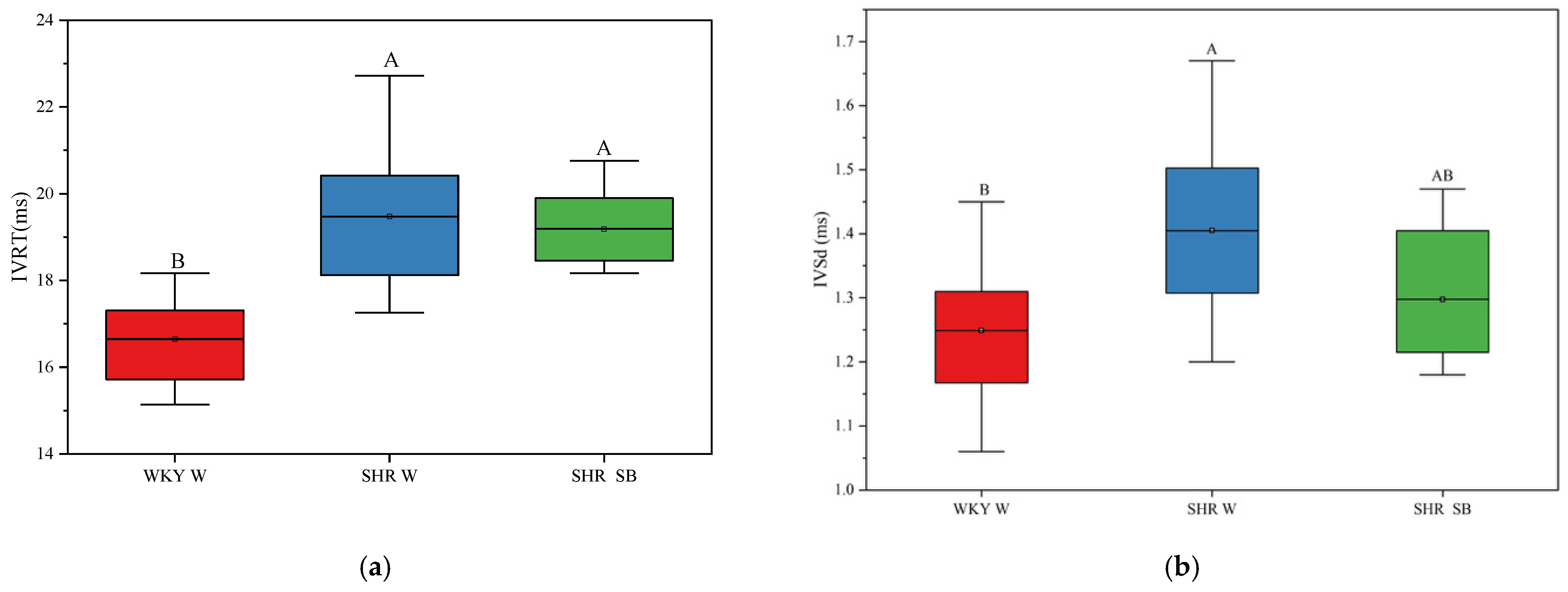
Diastolic heart function, assessed using isovolumic relaxation time (IVRT;
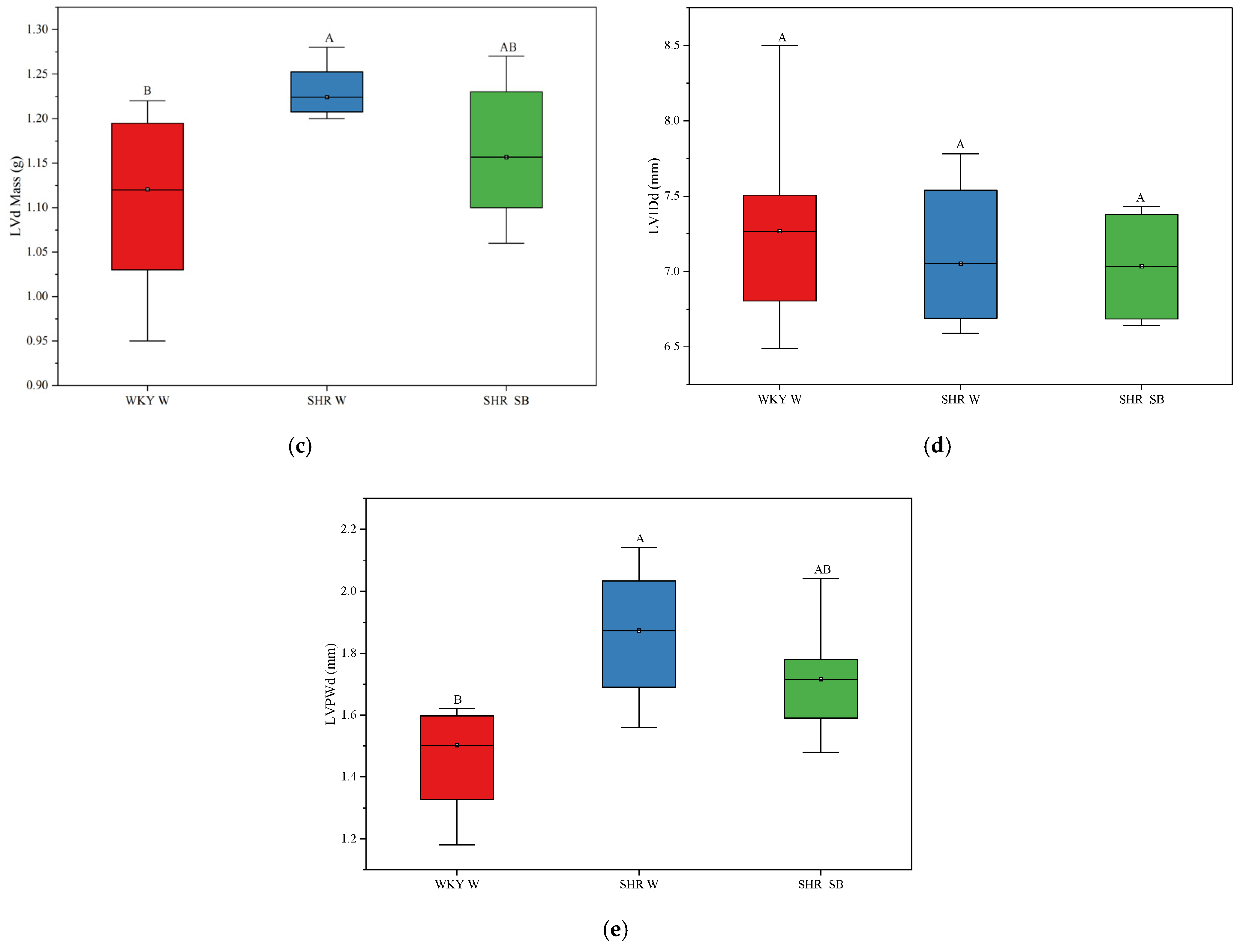
Figure 3a), was significantly impaired in SHRs, as indicated by prolonged relaxation time compared with WKY. Saskatoon berry supplementation did not significantly improve IVRT, as SHR + SB values were comparable to those of untreated SHRs. Hypertensive rats developed a clear concentric hypertrophic phenotype, as evidenced by increased interventricular septal thickness in diastole (IVSd) and posterior wall thickness in diastole (LVPWd) (
Figure 3b,e). Both parameters were significantly elevated in SHRs compared with WKY, confirming pressure overload-induced cardiac remodelling. This pattern is consistent with the well-established progression of hypertensive remodelling in SHRs, where chronic pressure overload promotes concentric hypertrophy rather than chamber dilation [
3,
12,
14,
40]. Saskatoon berry-treated SHRs (SHR + SB) exhibited intermediate values, with reduced wall thickness relative to SHRs but remaining above WKY levels. The attenuation of ventricular hypertrophy observed with Saskatoon berry supplementation aligns with our previous studies. Raj et al. demonstrated that Saskatoon berry reduced LV wall thickness in a reno-cardiac model despite no effect on blood pressure. Similarly, we reported earlier that cyanidin-3-O-glucoside (C3G), a major anthocyanin in Saskatoon berry and other berries, reduced left ventricular and interventricular wall thicknesses in SHRs without significantly lowering blood pressure [
14]. These findings support the concept that Saskatoon berry modulates myocardial remodelling pathways independently of systemic hemodynamic changes. Left ventricular mass (
Figure 3c) further confirmed hypertrophic remodelling. LV mass was significantly elevated in SHRs compared with WKY, reflecting increased myocardial load, cardiomyocyte hypertrophy, and extracellular matrix expansion. Saskatoon berry supplementation significantly reduced LV mass relative to untreated SHRs, with values intermediate between SHRs and WKY. This finding is consistent with previous reports demonstrating anti-hypertrophic effects of Saskatoon berry and other anthocyanin-rich berries, including blueberries and wild blueberries, which attenuate structural remodelling even in the absence of substantial blood pressure reduction [
27,
35,
36].
Assessment of left ventricular internal dimensions showed that LVIDd (
Figure 3d) did not differ significantly among groups, indicating preserved diastolic chamber size and the absence of eccentric dilation. This is characteristic of SHRs, where pressure overload primarily induces concentric hypertrophy rather than chamber enlargement during this stage of disease progression [
12,
14,
39].
Taken together, the results obtained on heart structure and function suggest that Saskatoon berry improves cardiac structure and systolic heart function, but does not recover diastolic heart function in SHRs.
3.5. Systemic Oxidative Stress and Inflammatory Profile
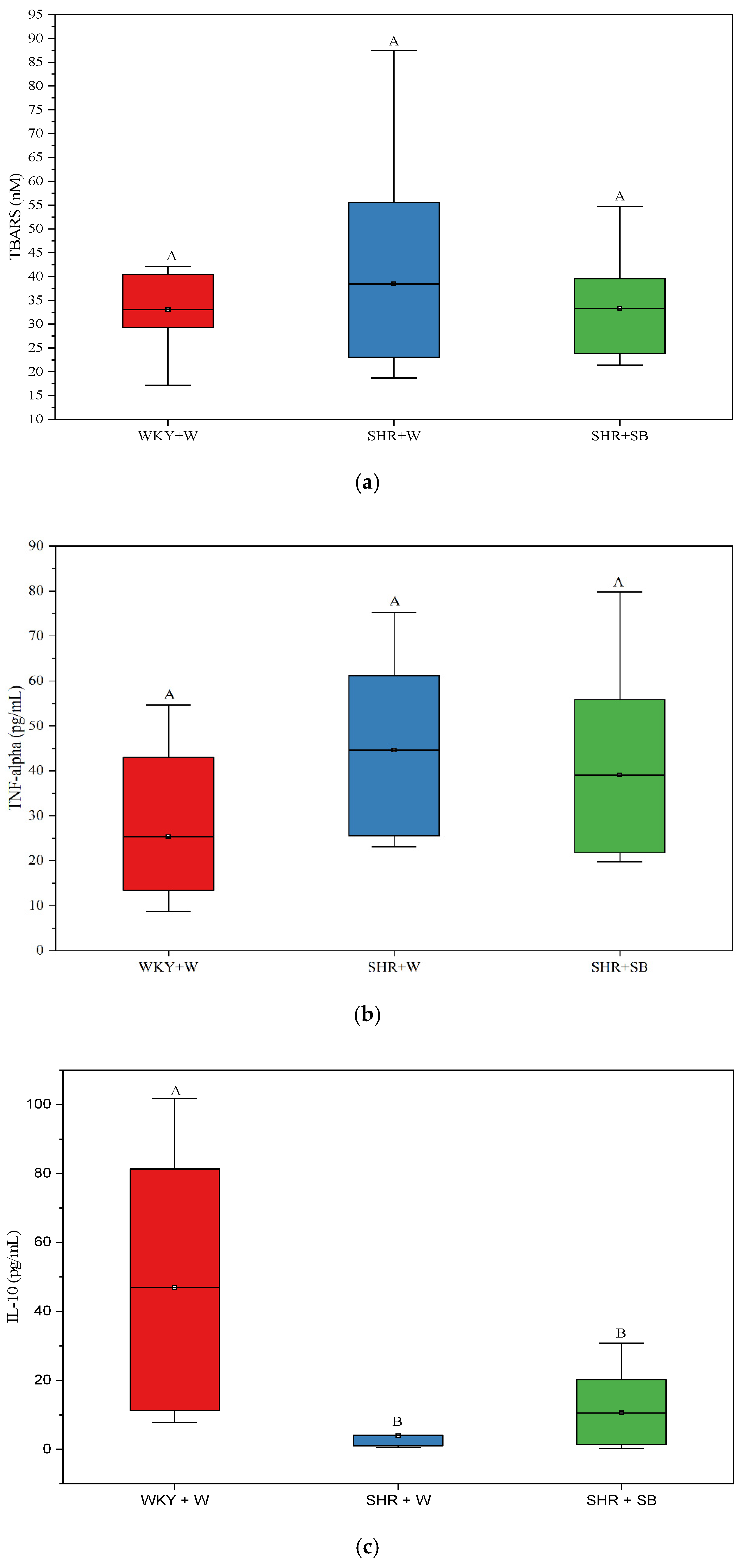
The three serum biomarkers, including TBARS, TNF-α, and IL-10, provide complementary information about systemic oxidative stress and inflammatory tone after 16 weeks of dietary intervention (
Figure 4a–c).
Effects of Saskatoon Berry Supplementation on Oxidative Stress and Inflammation Markers
Serum TBARS, expressed as malondialdehyde (MDA) equivalents, an indicator of oxidative stress, did not differ significantly among WKY, SHR, and SHR + SB groups (
Figure 4a), suggesting no detectable group-level difference in systemic lipid peroxidation under the present conditions.
TNF-α is a key pro-inflammatory cytokine implicated in hypertension-associated vascular dysfunction, cardiac remodelling, and heart failure. In our study, serum TNF-α was not significantly different between the groups (
Figure 4b), and systemic TNF-α alone did not capture the inflammatory alterations observed in this model.
IL-10 is a key anti-inflammatory cytokine that counter-regulates TNF-α, and other pro-inflammatory mediators. In this study, IL-10 showed differences among groups (
Figure 4c). WKY animals had high serum levels of IL-10 (~47 pg/mL), while SHR exhibited a markedly suppressed IL-10 (~2.5 pg/mL), indicative of a strongly pro-inflammatory systemic milieu. SHR + SB had intermediate IL-10 concentrations (~10.5 pg/mL), higher than SHRs but still significantly lower than WKY, and ANOVA confirmed a significant overall group effect, driven primarily by reduced IL-10 in both hypertensive groups relative to WKY. Experimental models of hypertension and heart failure have shown that reduced IL-10 levels correlate with enhanced LV remodelling, fibrosis, and endothelial dysfunction, whereas genetic or pharmacologic enhancement of IL-10 can ameliorate these outcomes. Future studies should further investigate the cardioprotective effects of anthocyanin-rich Saskatoon berry independent of blood pressure reduction, particularly the mechanisms linking oxidative stress, inflammation-driven remodelling, and myocardial dysfunction in SHRs. There is evidence to suggest that berry anthocyanins may modulate NF-κB signalling, mitochondrial oxidative stress, and fibrotic pathways involved in hypertensive cardiac remodelling [
6,
14,
41]. Comparative studies involving other North American wild berries with high anthocyanin content may also help identify distinct phytochemical profiles associated with cardiovascular protection.
The numerically higher IL-10 in SHR + SB, compared with SHRs, although not statistically significant, suggests that Saskatoon berry may partially restore anti-inflammatory tone. This is consistent with mechanistic work on anthocyanins, where C3G and its metabolites have been shown to increase IL-10 expression and reduce pro-inflammatory cytokine production in various models. Anthocyanin-rich berry interventions in metabolic syndrome and diabetes report simultaneous reductions in TNF-α/IL-6 and increases (or trends toward increases) in IL-10, contributing to a more balanced cytokine profile [
8,
42,
43,
44]. Although our study did not detect a statistically significant IL-10 difference between SHR and SHR + SB, the directional change is fully in line with this literature and may have biological relevance.
Taken together, the TBARS, TNF-α, and IL-10 data indicate that SHRs did not develop oxidative stress in our study; however, there is a clear hypertension-associated reduction in IL-10 which suggest a loss of anti-inflammatory protection despite no increase in TNF-α, the inflammatory cytokine. Saskatoon berry partially reverses this pattern (for IL-10) at least numerically, suggesting a shift toward a more balanced inflammatory profile, even if not statistically robust.
3.6. Multivariate Characterization of the Cardiovascular Phenotype Using PCA
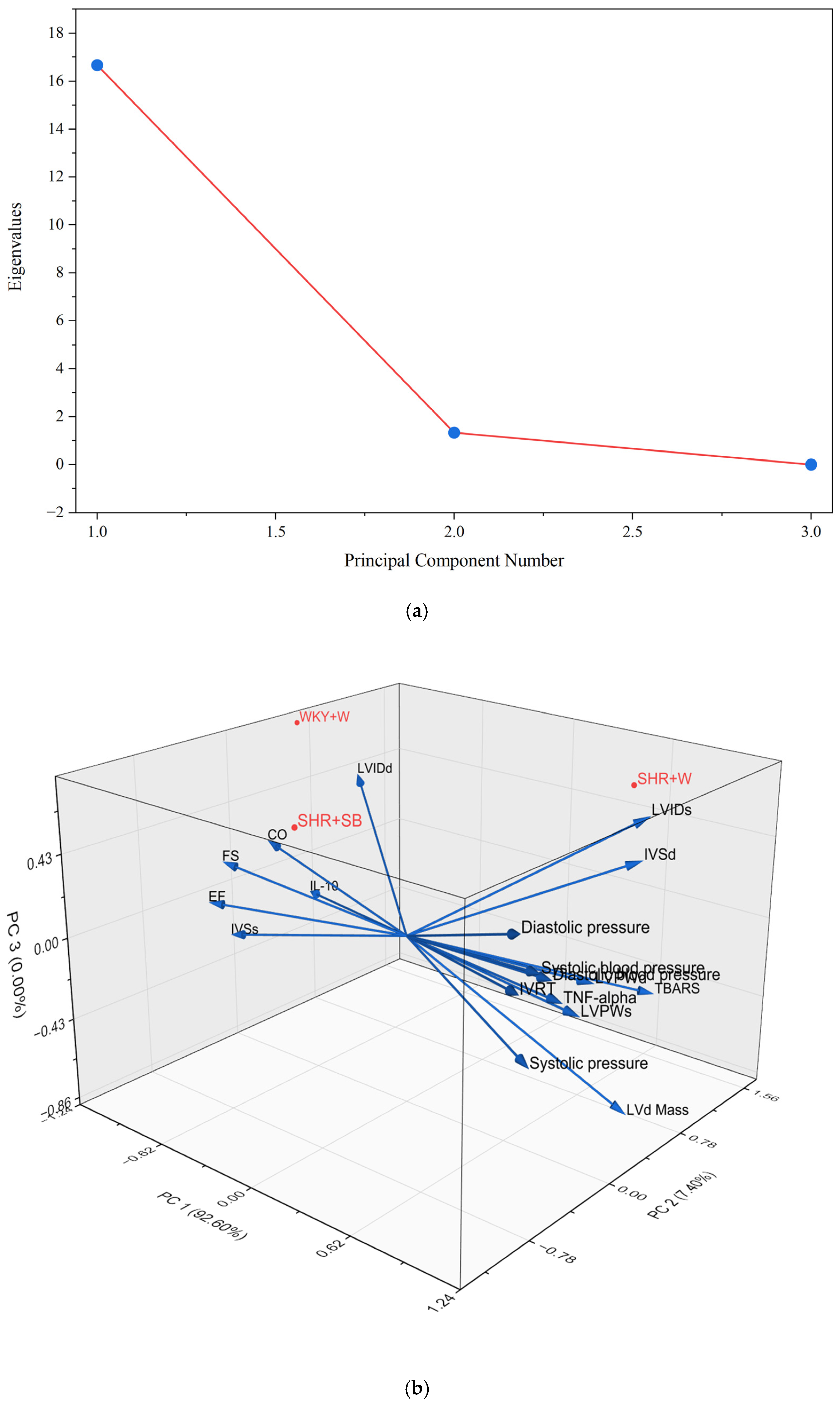
Principal component analysis was performed to evaluate whether Saskatoon berry supplementation produced a discernible multivariate shift in the integrated cardiovascular phenotype of SHRs when all hemodynamic, structural, functional, and inflammatory variables were considered together. The two-component solution captured 100% of the dataset variation, with PC1 alone explaining 92.6% of the total variance, indicating that the variables were highly correlated and reflected a unified physiological axis rather than independent domains. Inspection of the loadings revealed that PC1 represented a comprehensive index of hypertensive cardiac pathology. Blood pressure indices (systolic and diastolic) loaded almost perfectly onto PC1, as did interventricular septal and posterior wall thickness, LV mass, and systolic chamber dimensions, demonstrating that structural hypertrophy, increased afterload, and impaired contractile geometry co-varied tightly in the expected direction. These findings mirror prior physiological studies in SHRs and other hypertensive models, where blood pressure, LV concentric hypertrophy, and systolic impairment form a single dominant pathological vector.
Importantly, functional impairments contributed strongly to this same axis. Ejection fraction, fractional shortening, cardiac output, and IL-10 exhibited large negative loadings, demonstrating that loss of contractile function and suppression of anti-inflammatory signalling were integral components of the same remodelling continuum. IL-10 was the single strongest loading variable, reflecting its well-established inverse association with hypertensive inflammation and LV remodelling. Human and animal studies consistently show that hypertension is characterized by a marked reduction in IL-10, which contributes to increased oxidative stress, NF-κB activation, and extracellular matrix expansion, mechanisms that feed directly into structural hypertrophy and impaired systolic function. The strong negative loading of IL-10 in the present PCA aligns with those mechanistic relationships and confirms that anti-inflammatory capacity is tightly embedded within the hypertensive cardiac phenotype. The positive loadings of TNF-α and TBARS further reinforce this pattern. Although TBARS exhibited a smaller loading magnitude, its positive directionality indicates that systemic oxidative stress increases in parallel with hypertrophy and systolic dysfunction, supporting earlier findings in both SHRs and diet-induced cardiometabolic models where inflammatory cytokines and lipid peroxidation track with worsening cardiac structure and function.
When considering group distributions in the PCA score plot, WKY, SHR, and SHR + SB separated along PC1 in a manner that reflects the graded severity of hypertensive remodelling (
Figure 5). WKY rats (characterized by normal blood pressure), ventricular walls, and preserved EF and FS clustered at the negative end of PC1. SHRs, in contrast, occupied the extreme positive end, representing the fully developed hypertensive phenotype. This separation is consistent with previous reports in which PCA or discriminant analyses clearly distinguish normotensive and hypertensive animals based on complex cardiac and biochemical signatures. Notably, the SHR + SB group occupied an intermediate region between WKY and SHRs, reflecting partial improvement across multiple domains. This shift is especially relevant because PC1 integrates the entire pathophysiological profile; thus, movement toward the WKY cluster indicates broad improvement across structural, functional, hemodynamic, and inflammatory axes rather than isolated changes in single variables.
The direction and magnitude of the shift produced by Saskatoon berry supplementation are consistent with the broader literature on berry-derived anthocyanins. Prior studies in metabolic syndrome, reno-cardiac dysfunction and ageing SHRs have reported partial reductions in LV hypertrophy, improvements in EF and FS, suppression of pro-inflammatory mediators, and enhancement of antioxidant responses despite a minimal effect on blood pressure. The present PCA results reproduce this pattern at a multivariate level: Saskatoon berry did not shift SHRs into the WKY domain, indicating that hypertension and its structural consequences were not fully reversed, but the intermediate clustering shows that Saskatoon berry consistently improved several interconnected pathological features. This pattern suggests that the beneficial effects of Saskatoon berry supplementation arise through mechanisms that modulate the shared axis of hypertensive pathology, likely involving attenuation of inflammation and partial normalization of excitation–contraction coupling. Because PC1 combined nearly all pathological variables into a single dimension, the intermediate reduction along this axis represents a meaningful global improvement across the cardiovascular system. Taken together, the PCA results provide an integrated and rigorous confirmation of the univariate analyses: Saskatoon berry supplementation does not normalize hypertension but produces a coordinated, multidimensional attenuation of the hypertensive cardiac phenotype. This multivariate shift supports the interpretation that Saskatoon berry exerts cardioprotective effects that operate independently of blood pressure lowering and act through the simultaneous modulation of structural remodelling, systolic performance, and inflammatory balance. As a result, the PCA strengthens the evidence that the Saskatoon berry may serve as an effective adjunctive nutritional strategy to mitigate the global impact of hypertension-induced cardiac dysfunction.
4. Conclusions
Consistent with the classical SHR phenotype, untreated hypertensive rats exhibited severe hypertension, marked concentric left ventricular hypertrophy, reduced ejection fraction and fractional shortening, and impaired diastolic relaxation. Saskatoon berry supplementation did not significantly lower blood pressure in SHRs, a finding aligned with several anthocyanin-rich interventions reporting structural and vascular benefits without strong antihypertensive effects. The present study nevertheless demonstrates that long-term dietary supplementation with Saskatoon berry powder exerts meaningful cardioprotective effects in SHRs. Across multiple cardiac functional and structural endpoints, Saskatoon berry partially attenuated hypertensive cardiac remodelling and also partially improved systolic heart function, as evidenced by reduced left ventricular wall thickness and mass together with improved ejection fraction and fractional shortening. In contrast, TBARS and TNF-α did not differ significantly among groups, while IL-10 showed only a non-significant numerical increase following Saskatoon berry supplementation. In addition, diastolic relaxation remained impaired, as IVRT was not significantly improved in the SHR + SB group.
Several limitations of the present study should be acknowledged. The current study did not investigate whether longer-term Saskatoon berry supplementation could limit the progressive increase in systolic and diastolic blood pressure or improve diastolic heart function over time. Furthermore, only a single dose of Saskatoon berry supplementation was evaluated. The mechanisms underlying the cardioprotective effects provided by Saskatoon berries were also not examined in detail. Lastly, the composition of potential Saskatoon berry bioactive components, including fibre, phenolic compounds, vitamins, minerals, phytosterols, and fatty acids, was not characterized in the present study.
Future studies should examine whether higher doses of Saskatoon berry powder or longer supplementation periods produce stronger cardiovascular effects, particularly with respect to blood pressure regulation and diastolic function. Since IVRT remained impaired in the present study, extended intervention is needed to determine whether prolonged exposure can improve myocardial relaxation and lusitropic function. Additional studies should also investigate whether the observed improvements in systolic function and cardiac remodelling translate into long-term benefits such as reduced myocardial fibrosis, delayed progression to heart failure, and improved survival outcomes. Furthermore, future work should also evaluate the efficacy of Saskatoon berry supplementation in milder settings of hypertension by using other animal models representing mild or moderate hypertension; please note that the SHRs used in the present study represents a model of severe hypertension. Comprehensive characterization of the bioactive composition of Saskatoon berry and mechanistic studies targeting oxidative stress, inflammatory signalling, mitochondrial function, and extracellular matrix remodelling will also be important to better define its therapeutic potential in hypertensive cardiovascular disease.