Development of Precursory Non-Segregation Criteria for Hard Rock Mine Tailings Slurries: Integration of Flume Testing and Buckingham π Dimensional Analysis

 ,
, 
 , ,
, ,
Abstract
1. Introduction
2. Materials and Methods
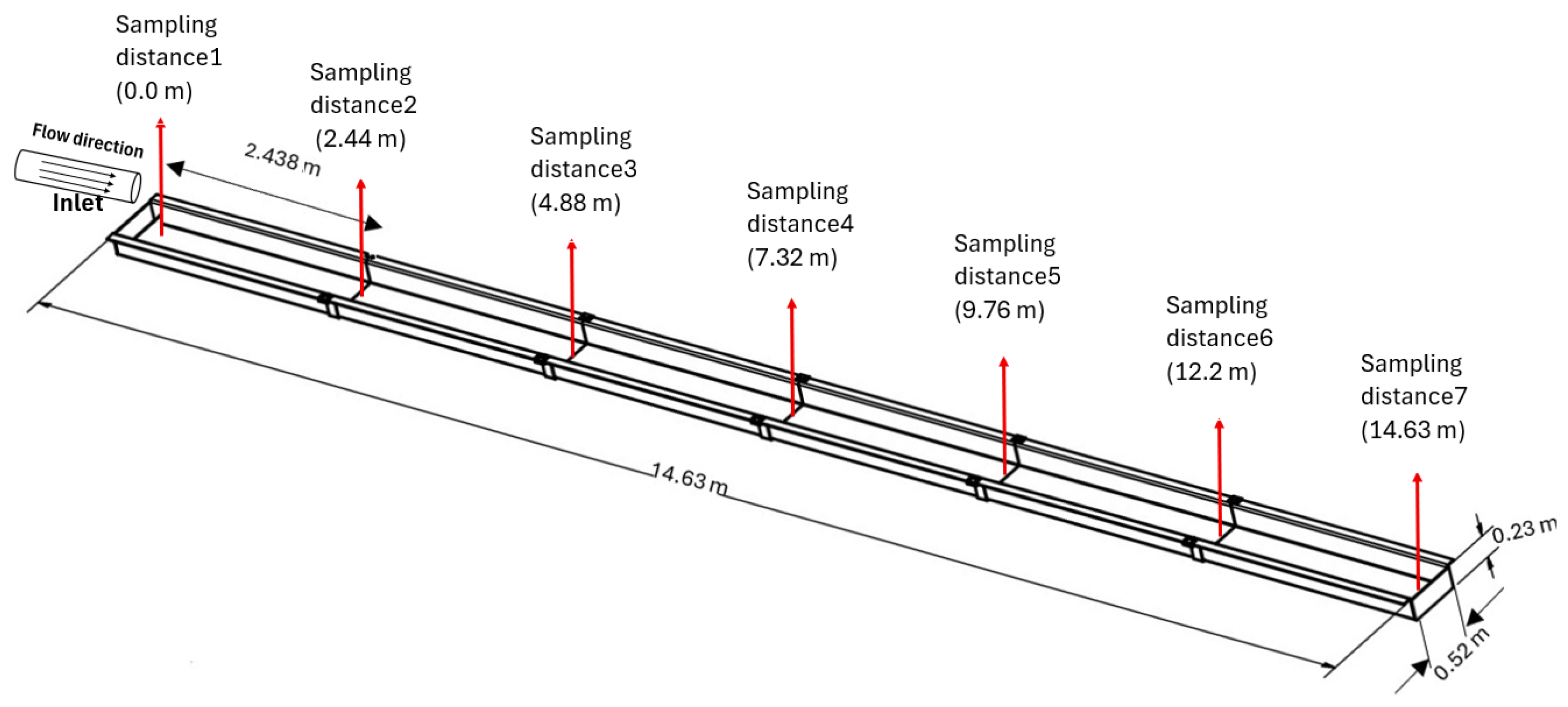
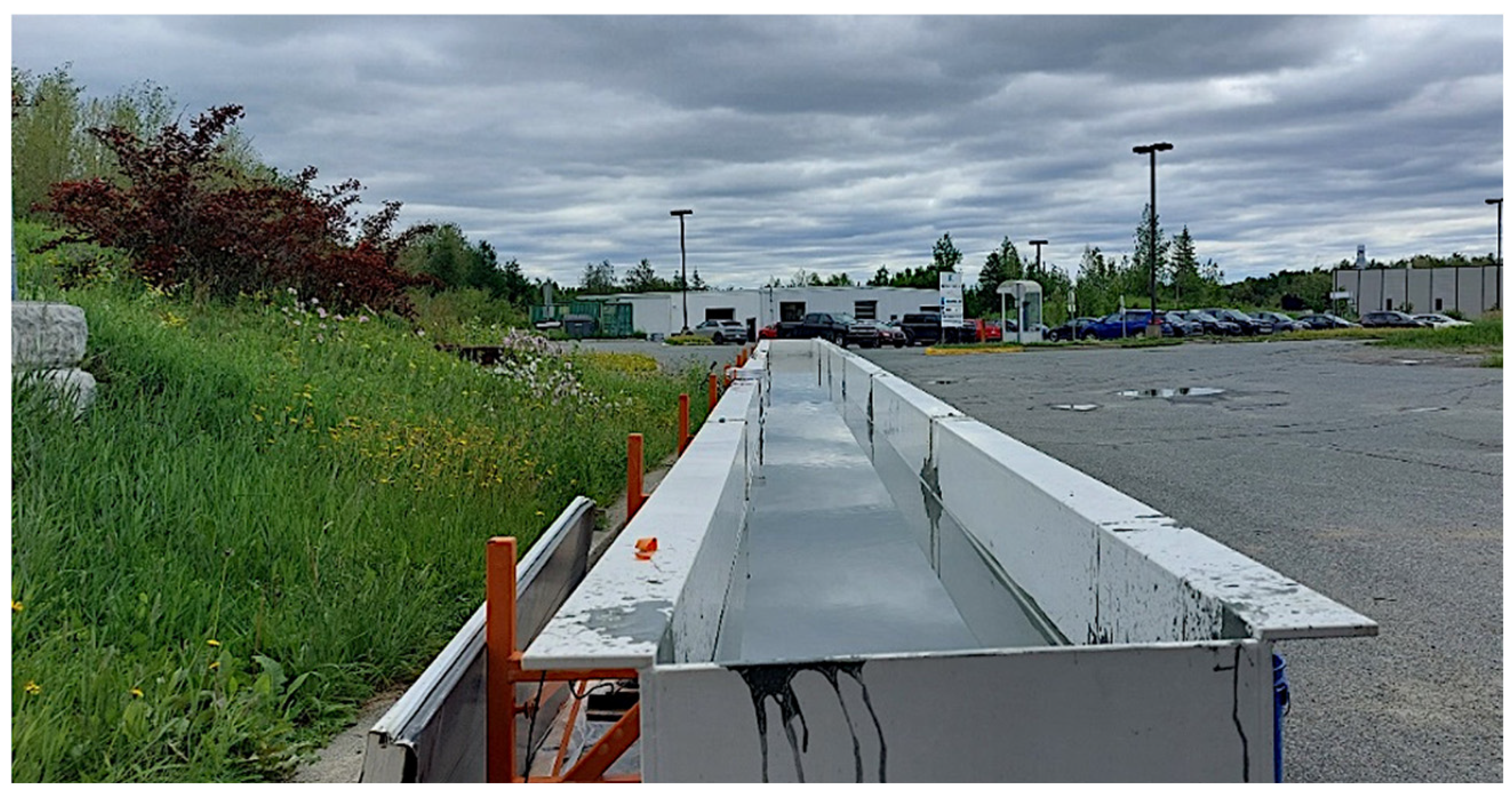
2.1. Laboratory Flume Setup
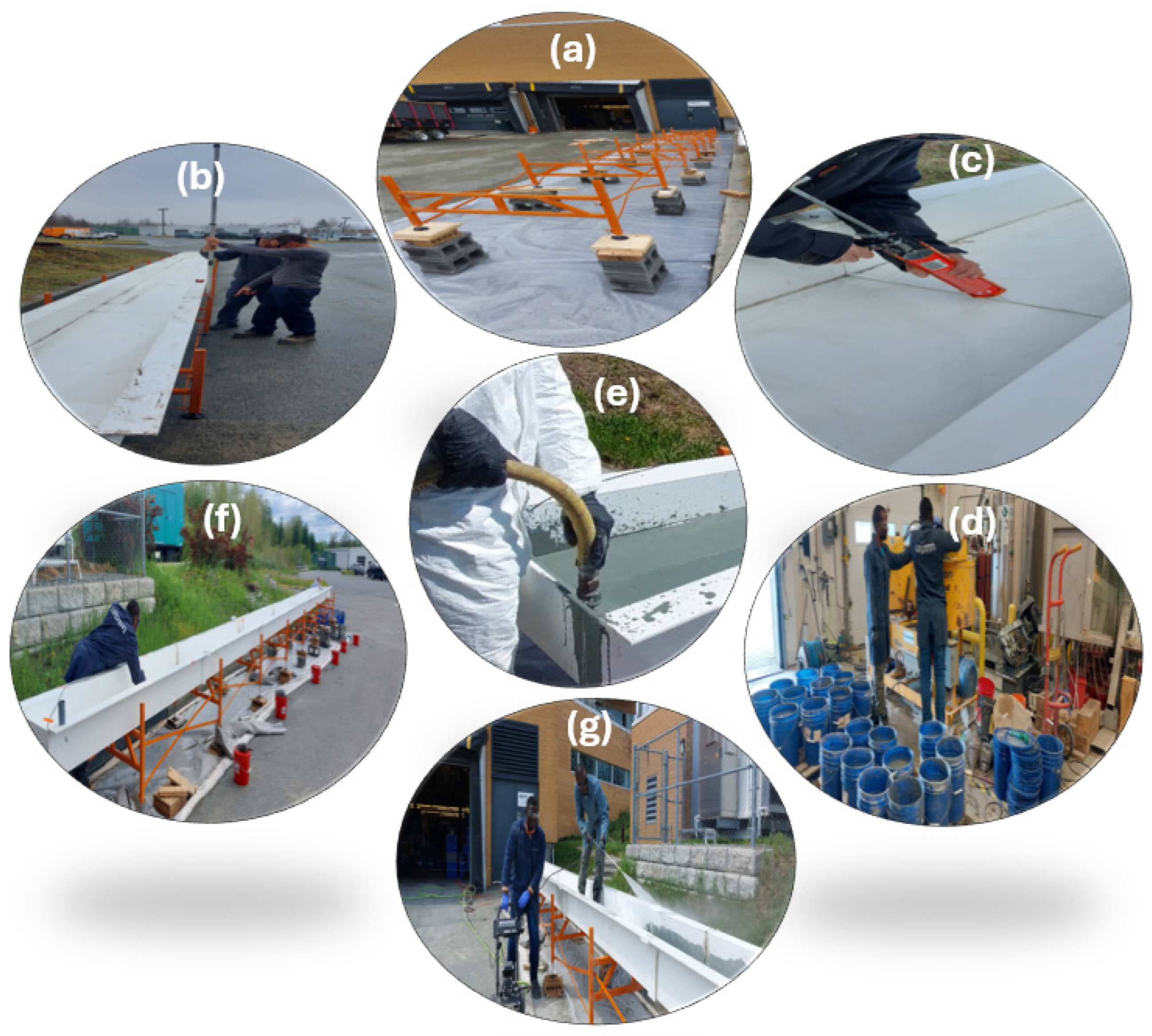
2.2. Experimental Procedure and Program
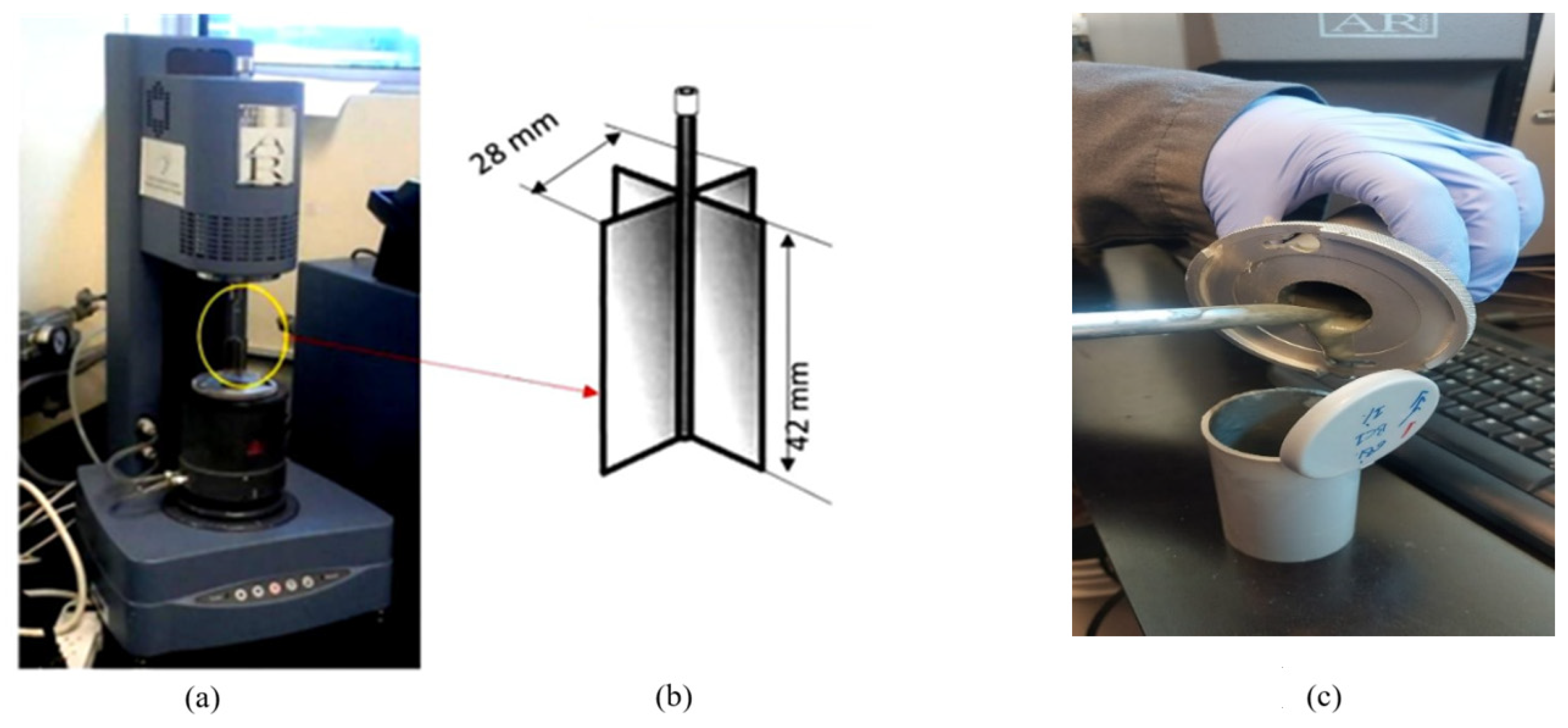
2.3. Physical and Rheological Characterization of Tailings Samples Collected Along the Flume
3. Results
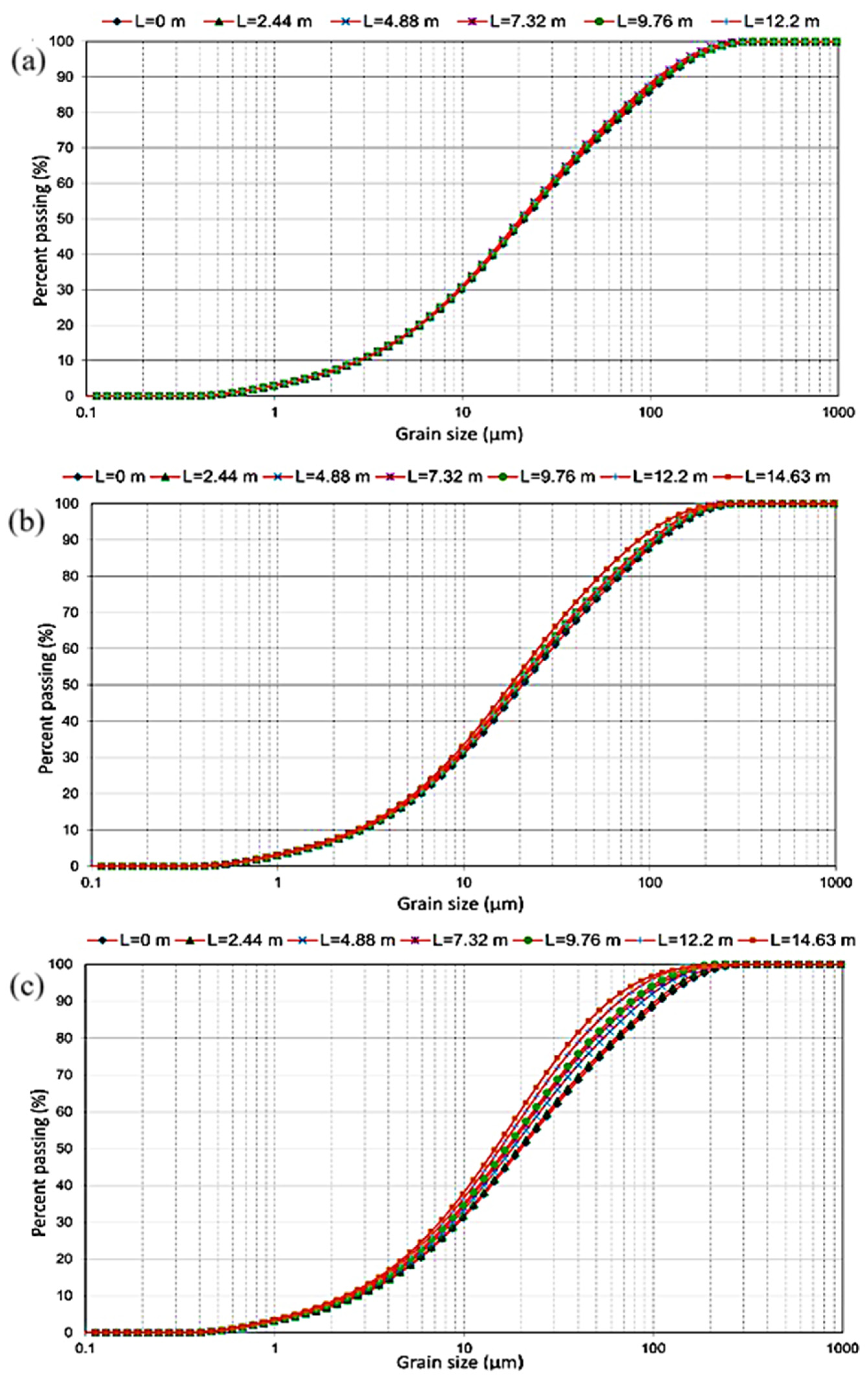
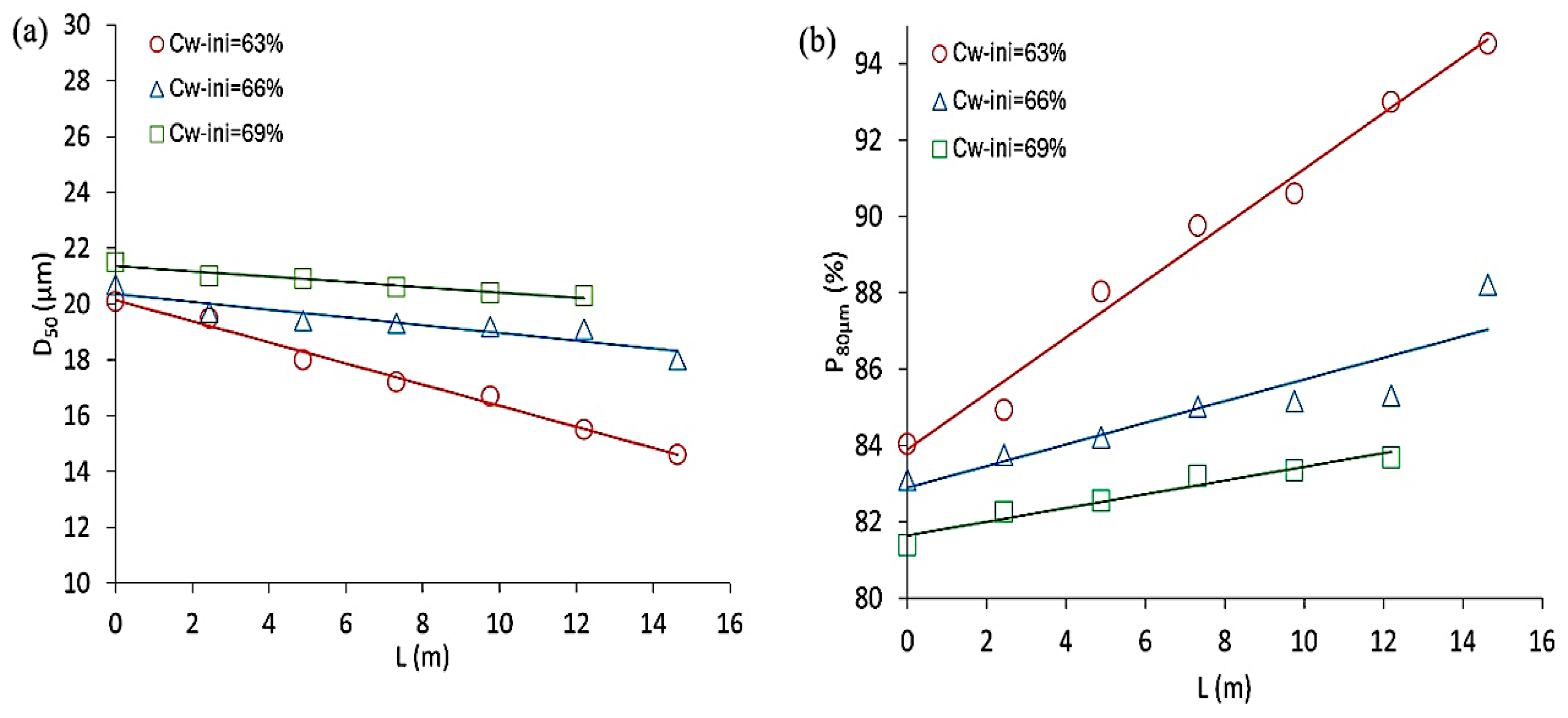
3.1. Distribution of Particle Size Along the Flume
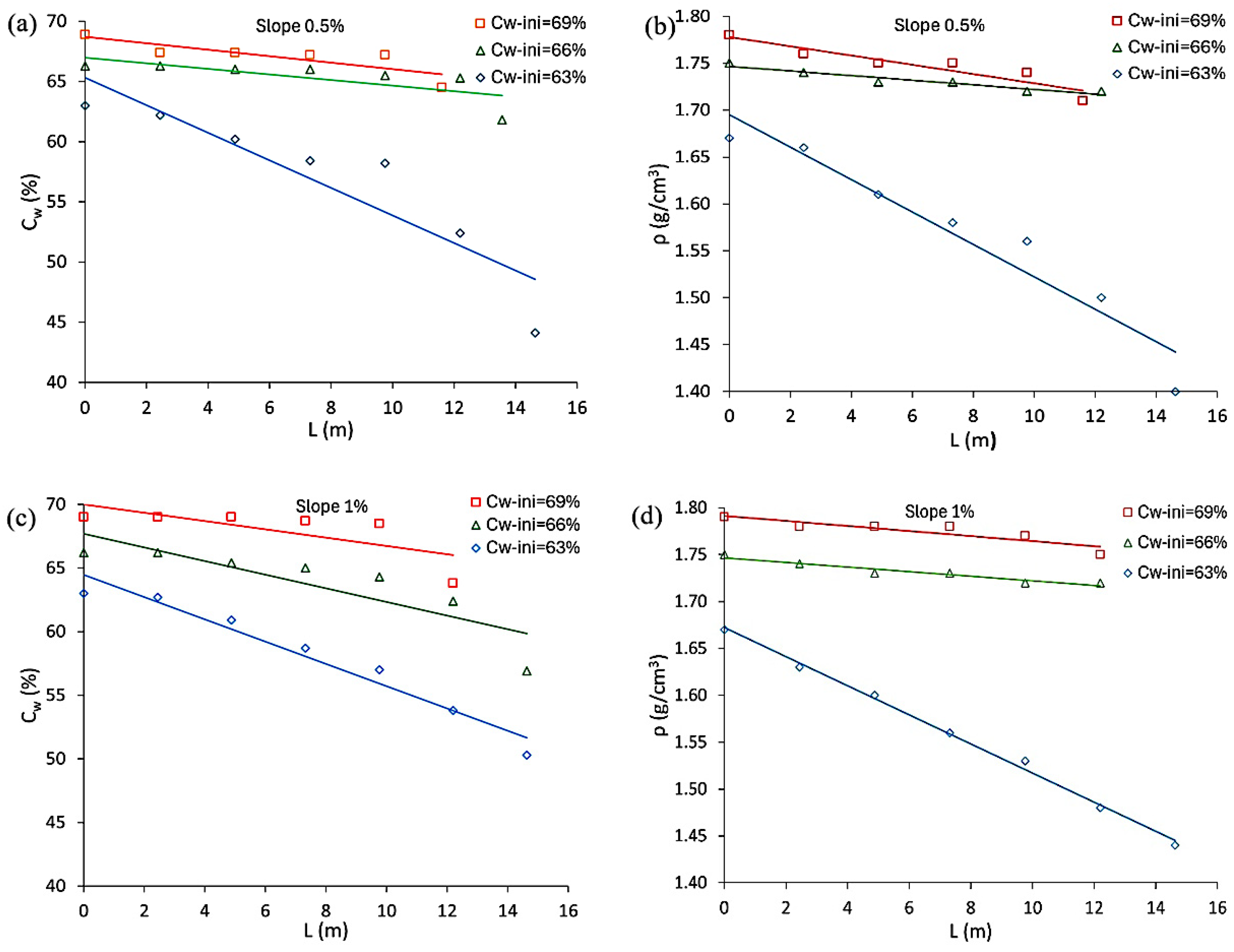
3.2. Distribution of Solid Content and Bulk Density Along the Flume
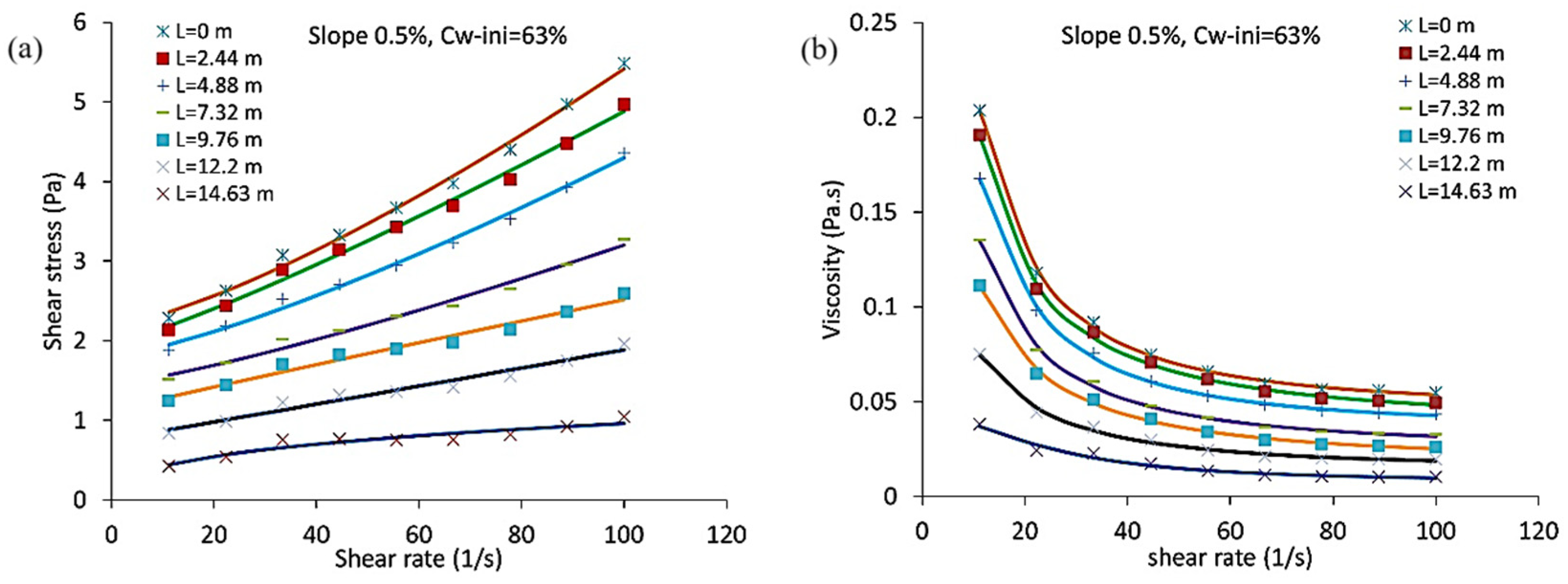
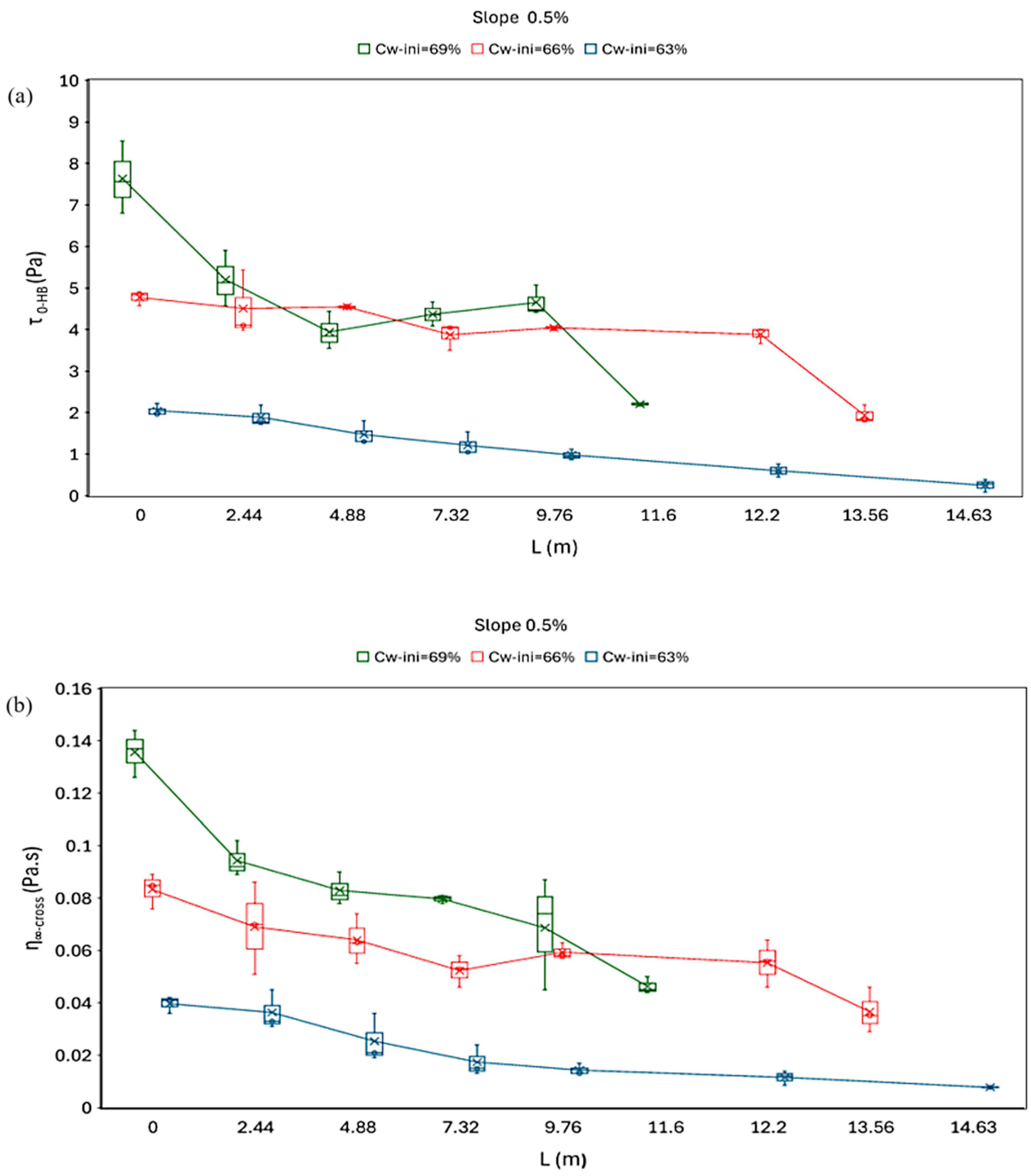
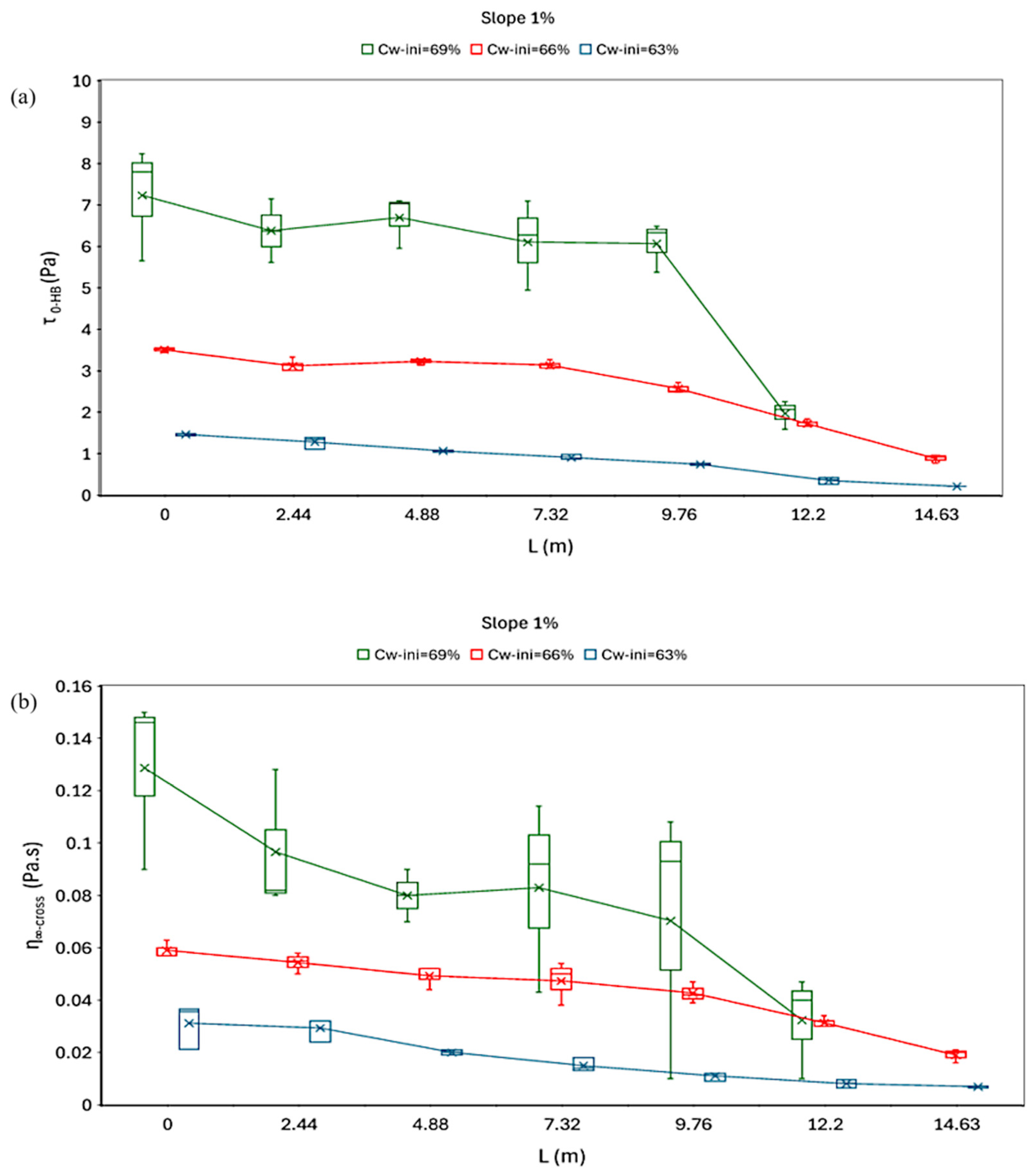
3.3. Distribution of Rheological Properties Along the Flume
4. Development of Precursory Non-Segregation Criteria
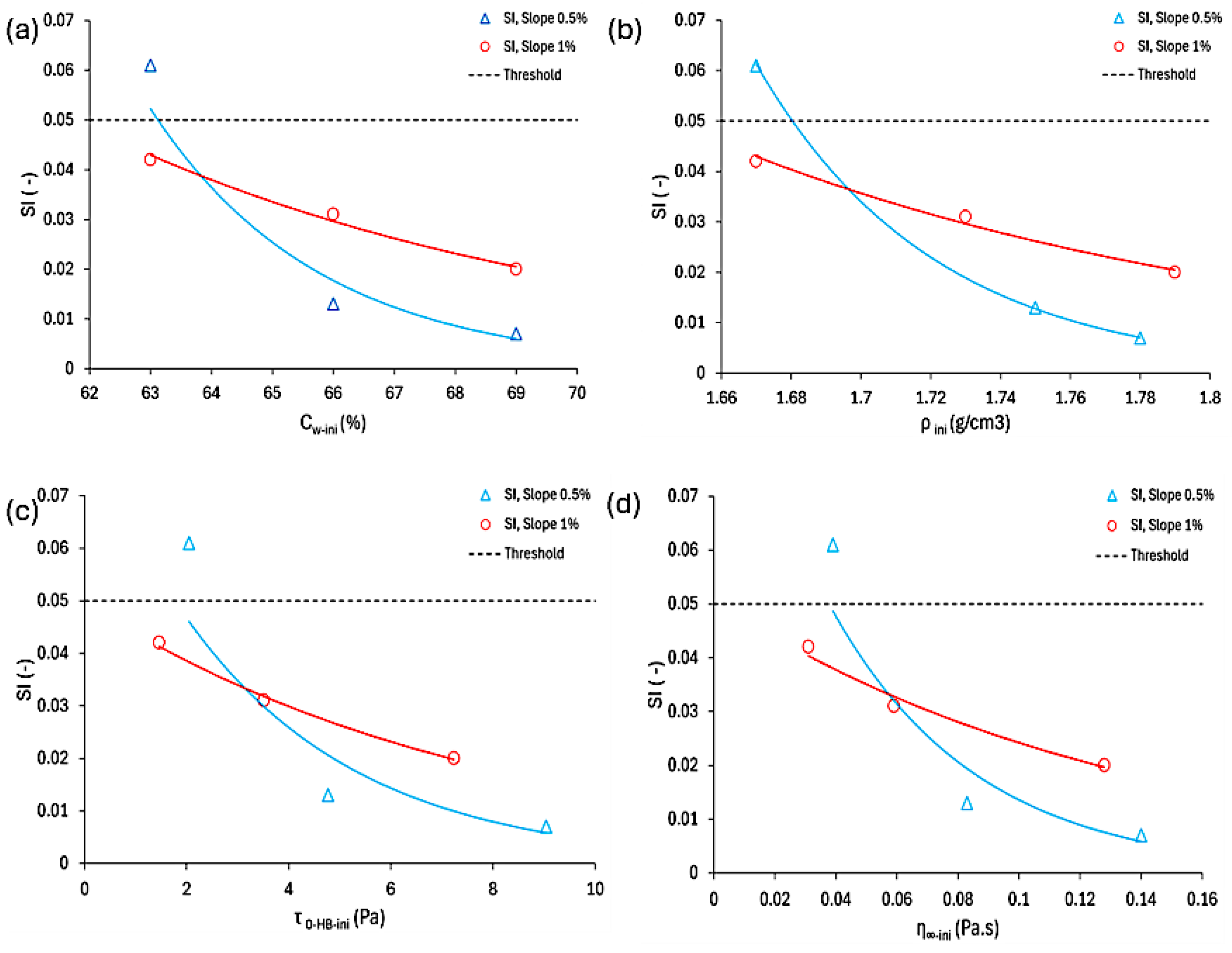
4.1. Uni-Iparametric Non-Segregation Threshold Limits
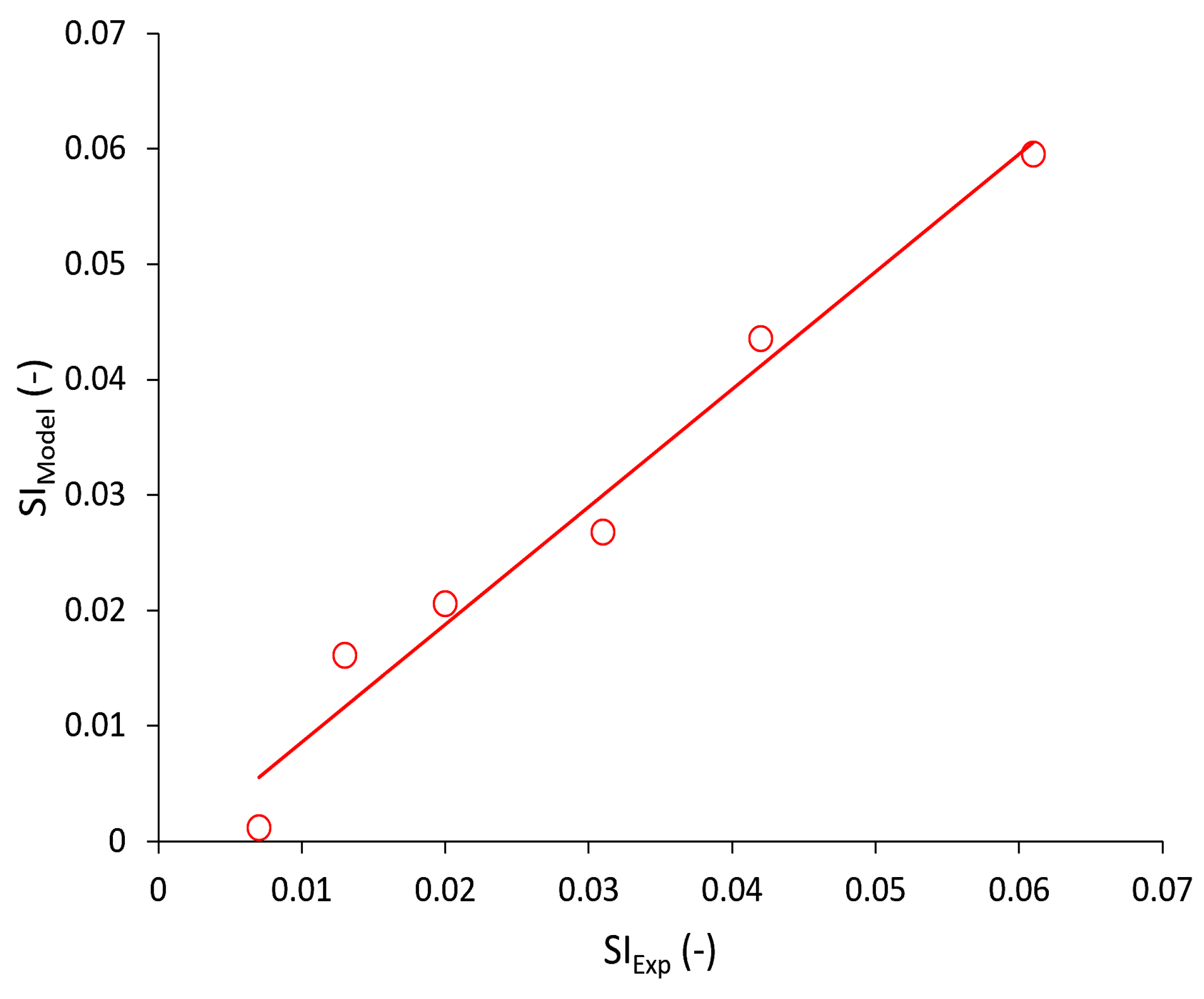
4.2. Multiparametric Non-Segregation Threshold Limit
- Step 1: The independent variables involved in the problem and their dimensions are determined (see Table 2). Here, the total number of variables is nt = 7. The solid content (Cw) is not considered an independent variable, as it is directly dependent on density (ρ), which is already included among the seven variables. It would also have been necessary to account for the initial flow velocity (at L = 0 m) of the tailings; however, this parameter was not measured, and it varies along the flume.
- Step 2: The fundamental dimensions governing the physical system are identified. The selected dimensions are mass (M), length (L), and time (T), which are sufficient to represent all physical quantities involved in the analysis. The number of fundamental dimensions k is 3.
- Step 3: The total number of dimensionless groups according to the Buckingham π theorem is determined as:“Number of “π”-groups” = nt − k = 7 − 3 = 4
- Step 4: The repeating variables that must collectively represent all the fundamental dimensions (M, L, T) are selected. This selection is not necessarily unique, as different researchers may choose different sets of repeating variables. Consequently, the resulting π terms are also not unique. The methodology recommends selecting a suitable combination of variables, typically including one geometric variable, one kinematic variable, and one fluid property, as is common in fluid mechanics problems. In this study, the repeating variables chosen for each π group are ρ [ML−3], η∞ [ML−1T−1], and L [L].
- Step 5: The π groups are constructed by combining the selected repeating variables with the remaining variables to form dimensionless groups, as illustrated in Table 3. Each π group represents a unique combination that captures the relationship among the physical parameters governing the system. The group Π1: Shear yield stress (), is similar to the well-known Hedström number (He), where L is the characteristic length, D (m) is replaced by the flow running length (L).
- Step 6: The final dimensionless relationship is established by combining the constructed π groups. The relationship can be expressed as follows:or
4.3. Limitations of the Study
5. Conclusions
Author Contributions
Funding
Institutional Review Board Statement
Informed Consent Statement
Data Availability Statement
Acknowledgments
Conflicts of Interest
Appendix A

| Reference | Flume Length (m) | Flume Width (m) | Flume Depth (m) | Materials | Cw (%) | Goal of the Study | General Results |
|---|---|---|---|---|---|---|---|
| Blight et al. [9] | 1.8 | 0.3 | 0.6 | Silty tailings | 50–70 | Determining beach profile. | Final normalized profile for each test. |
| Lighthall [10] | 2 | 1.5 | 0.15 | Tailings from a copper and zinc mine | 20–45 | Assessing tailings beach slopes for Dam design. | Steeper laboratory slopes than field slopes. |
| Boldt [11] | 12.2 | 0.6 | 0.6 | Fine mill tailings from a copper- silver mine | 20–57 | Examining tailings beach formation, shear strength, permeability, and grain size distribution. | Average slope, shear strength, and permeability tests. |
| Fourie [20] | 2–4 | 0.6 | 0.6 | Bauxite, nickel ore slurry, coal tailings | - | Examine the beaching and permeability of bauxite, nickel, and coal tailings. | Non-segregating slurries behaved as viscous fluids, different from sand-based segregating tests. |
| Pirouz et al. [12] | 10 | 1 | 0.5 | Gold mine tailings | 54–59 | Investigate the beach formation slope. | Overall, the beach slope is governed by the equilibrium slope of self-formed turbulent channels. |
| Fitton et al. [13], Fitton [14] | 10 | 0.15 | 0.5 | Gold mine tailings | 44–60 | Prediction of beach slope. | Developed a new semi-empirical model for beach slope prediction. |
| Mihiretu [21] | 2.44 | 0.11 | 0.5 | Oil sand tailings | 55–57 | Study dynamic segregation under zero, 5%, and 10% slopes for sand–kaolinite mixtures (SFR = 1, 2, and 4). | The beach profile steepness increased with Cw. Increasing SFR increased segregation. |
| Henriquez and Simms [15] | 2.5 | 0.15 | 0.3 | Gold mine tailings | 40–70 | Compare the dynamic vs the steady-state deposition of the tailings stack. | The angle of a tailings deposit at steady state is dependent on the scale of the flow. |
| Fourie et al. [16] | 1.8 | 0.15 | 0.5 | Zinc, gold, and copper tailings | 55–59 | Beach slope prediction considering the wall friction of the flume. | A steeper slope angle than the field observation. |
| Mizani et al. [22] | 2.43 | 0.15 | 0.3 | Gold mine tailings | 68–75 | How settling and capillary action change the rheology of overland flow and deposition geometry. | The tailings exhibited consistently higher yield stresses with longer deposition times. |
| Nik [17] | 2.38 | 0.18 | 1 | Oil sand tailings | 37–65 | Quantifying segregation index (SI) based on flume profiles. | Increasing CW and yield stress led to shorter flow distances and steeper slopes. |
| Pirouz et al. [18] | 10 | 1 | 0.5 | Copper mine tailings | 56–72 | Beach slope prediction. | Slope value is a complex function of rheology, solid content, PSD, etc. |
| Gao and Fourie [25] | 2.5 | 0.2 | 2.5 | Mixtures of kaolin clay and water | - | Evaluating the influence of yield stress and viscosity on flow profiles. | Increasing yield stress and viscosity led to shorter flow distances and steeper deposit profiles. |
| Guang and Anstey [19] | 2.4 | 0.15 | 0.3 | fine tailings from two existing oil sands mines | 30–40 | Prediction of field-scale tailings beach slopes by BSLOPE. | The ability to apply the BSLOPE model to the flume and full-scale deposits of polymer-treated MFT. |
| Gao and Fourie [32] | 1.5 | 0.2 | 0.1 | thickened tailings | - | Effect of yield stress and viscosity on the slope of deposited tailings by CFD simulation | The yield stress of the fluid generally has more influence on the final profiles than the viscosity. |
| Furtado et al. [23] | 1.65 | 0.31 | 0.62 | Fine tailings from the niobium ore flotation process. | 57–69 | Evaluating the feasibility of non-segregable high-density tailings. | Particle-size curves along the flume overlapped; no segregation was detected. |
| Li et al. [24] | 20 | 2 | 1.2 | Iron tailings pond | 20–50 | Investigate the flow and depositional behavior of tailings slurry. | Developed and validated an empirical beach slope equation for segregating tailings. |
References
- MEND. Manual Report 5.4.2; CANMET: Ottawa, ON, Canada, 2001. [Google Scholar]
- Bussière, B. Hydrogeotechnical properties of hard rock tailings from metal mines and emerging geoenvironmental disposal approaches. Can. Geotech. J. 2007, 44, 1019–1052. [Google Scholar] [CrossRef]
- Driouky, Z.; Mbonimpa, M.; Temgoua, M.D.; Demers, I.; Belem, T. Lateral segregation-induced distribution of sulfide tailings reactivity with oxygen in a tailings storage facility. In Proceedings of the MEDGU 2025—5th Mediterranean Geosciences Union, Athens, Greece, 10–12 November 2025. [Google Scholar]
- Bussière, B.; Guittonny, M. (Eds.) Hard Rock Mine Reclamation: From Prediction to Management of Acid Mine Drainage; CRC Press: Boca Raton, FL, USA, 2020. [Google Scholar] [CrossRef]
- Pashias, N. The Characterization of Bauxite Residue Suspensions in Shear and Compression. Ph.D. Thesis, The University of Melbourne, Melbourne, Australia, 1996. [Google Scholar]
- Sofra, F.; Boger, D.V. Rheology for thickened tailings and paste—History, state-of-the-art, and future directions. In Paste 2011: Proceedings of the 14th International Seminar on Paste and Thickened Tailings; Australian Centre for Geomechanics: Perth, Australia, 2011. [Google Scholar]
- Boger, D.V. Personal perspective on paste and thickened tailings: A decade on. Min. Technol. 2012, 121, 29–36. [Google Scholar] [CrossRef]
- Zhang, X.; Wang, H.; Wu, A. Study on correlations between tailings particle size distribution and rheological properties of filling slurries. Minerals 2023, 13, 1134. [Google Scholar] [CrossRef]
- Blight, G.E.; Thomson, R.R.; Vorster, K. Profiles of hydraulic-fill tailings beaches, and seepage through hydraulically sorted tailings. J. S. Afr. Inst. Min. Metall. 1985, 85, 157–161. [Google Scholar]
- Lighthall, P.C. Innovative tailings disposal methods in Canada. Int. J. Surf. Min. Reclam. Environ. 1987, 1, 7–12. [Google Scholar] [CrossRef]
- Boldt, C.M.K. Beach Characteristics of Mine Waste Tailings; U.S. Bureau of Mines Report: Washington, DC, USA, 1988.
- Pirouz, B.; Kavianpour, M.R.; Williams, P. Thickened tailings beach deposition: Field observations and full-scale flume testing. In Proceedings of the 8th International Seminar on Paste and Thickened Tailings; Australian Centre for Geomechanics: Brisbane, Australia, 2005; pp. 53–72. [Google Scholar] [CrossRef]
- Fitton, T.G.; Chryss, A.G.; Bhattacharya, S.N. Tailings beach slope prediction: A new rheological method. Int. J. Min. Reclam. Environ. 2006, 20, 181–202. [Google Scholar] [CrossRef]
- Fitton, T. Tailings Beach Slope Prediction. Ph.D. Thesis, RMIT University, Melbourne, Australia, 2007. [Google Scholar]
- Henriquez, J.; Simms, P. Dynamic imaging and modeling of multilayer deposition of gold paste tailings. Miner. Eng. 2009, 22, 128–139. [Google Scholar] [CrossRef]
- Fourie, A.B.; Gawu, S.K.Y. The validity of laboratory flume data for predicting beach slopes of thickened tailings deposits. In Paste 2010: Proceedings of the Thirteenth International Seminar on Paste and Thickened Tailings; Australian Centre for Geomechanics: Perth, Australia, 2010; pp. 241–253. [Google Scholar]
- Nik, R.M. Application of Dewatering Technologies in Production of Robust Non-Segregating Tailings. Ph.D. Thesis, University of Alberta, Edmonton, AB, Canada, 2013. [Google Scholar]
- Pirouz, B.; Seddon, K.; Pavissich, C.; Williams, P.; Echevarria, J. Flow through tilt flume testing for beach slope evaluation at Chuquicamata Mine, Codelco, Chile. In Proceedings of the 16th International Seminar on Paste and Thickened Tailings; Australian Centre for Geomechanics: Perth, Australia, 2013; pp. 457–472. [Google Scholar] [CrossRef]
- Guang, R.; Anstey, D. Application of Flume Testing to Field-Scale Beach Slope Prediction. Available online: http://hdl.handle.net/2429/59160 (accessed on 14 May 2026).
- Fourie, A.B. Beaching and permeability properties of tailings. In Hydraulic Fill Structures; ASCE Geotechnical Special Publication 21; ASCE: New York, NY, USA, 1988; pp. 142–154. [Google Scholar]
- Mihiretu, Y.T. Fundamentals of Segregation. Ph.D. Thesis, University of Alberta, Edmonton, AB, Canada, 2009. [Google Scholar]
- Mizani, S. Rheology of Thickened Gold Tailings for Surface Deposition. Master’s Thesis, Carleton University, Ottawa, ON, Canada, 2010. [Google Scholar]
- Furtado, R.M.; Chaves, A.P.; Testa, F.G.; de Paula, P.T. Feasibility of high-density and non-segregable niobium ore tailings. Minerals 2023, 13, 820. [Google Scholar] [CrossRef]
- Li, Q.; Duan, Z.; Shi, H.; Yu, Y.; Zhang, H.; Fu, B. Development of a full-scale flume test system for depositional behavior study of segregating tailings. Bull. Eng. Geol. Environ. 2024, 83, 66. [Google Scholar] [CrossRef]
- Gao, J.; Fourie, A. Using the flume test for yield stress measurement of thickened tailings. Miner. Eng. 2015, 81, 116–127. [Google Scholar] [CrossRef]
- Maqsoud, A.; Mbonimpa, M.; Bussière, B. Rheology and hydrogeological behavior of thickened tailings disposal using field experimental cell. In Proceedings of the 10th International Congress on Acid Rock Drainage and IMWA Annual Conference, Santiago, Chile, 21–24 April 2015. [Google Scholar]
- Chalaturnyk, R.J.; Scott, J.D. Soil structure behaviour diagram. In Proceedings of High Density and Paste Tailings 2001; University of Alberta Geotechnical Centre: Calgary, AB, Canada, 2001. [Google Scholar]
- Buckingham, E. On physically similar systems: Illustrations of the use of dimensional equations. Phys. Rev. 1914, 4, 345–376. [Google Scholar] [CrossRef]
- Sofra, F. Minimization of Bauxite Tailings Using Dry Disposal Techniques. Ph.D. Thesis, The University of Melbourne, Melbourne, Australia, 2001. [Google Scholar]
- Sofra, F.; Boger, D.V. Environmental rheology for waste minimization in the minerals industry. Chem. Eng. J. 2002, 86, 319–330. [Google Scholar] [CrossRef]
- Yarin, L.P. The Pi-Theorem: Applications to Fluid Mechanics and Heat and Mass Transfer; Springer: Berlin/Heidelberg, Germany, 2012. [Google Scholar] [CrossRef]
- Gao, J.; Fourie, A. Studies on thickened tailings deposition in flume tests using the computational fluid dynamics (CFD) method. Can. Geotech. J. 2019, 56, 249–262. [Google Scholar] [CrossRef]
- Dumka, P.; Chauhan, R.; Singh, A.; Singh, G.; Mishra, D. Implementation of Buckingham’s Pi theorem using Python. Adv. Eng. Softw. 2022, 173, 103232. [Google Scholar] [CrossRef]
- Shaikhli, H.A.; Mohammed, S.H.; Al-Khafaji, Z. Using Flow 3D simulation, multiple nonlinear regression, and artificial neural network approaches to study the behavior of vertical drop structures. Civ. Environ. Eng. 2024, 20, 654–683. [Google Scholar] [CrossRef]
- MathWorks. MATLAB, version R2025b; The MathWorks Inc.: Natick, MA, USA, 2025.




| Test # | Slope (%) | Cw-ini (%) | Mass of Tailings Prepared (kg) | Measured Density (g/cm3) |
|---|---|---|---|---|
| 1 | 0.5 | 63 | 712 | 1.67 |
| 2 | 66 | 731 | 1.75 | |
| 3 | 69 | 740 | 1.78 | |
| 4 | 1.0 | 63 | 649 | 1.67 |
| 5 | 66 | 711 | 1.73 | |
| 6 | 69 | 695 | 1.79 |
| Parameter | Symbol | Unit | Dimensions |
|---|---|---|---|
| Flow running Length | L | ||
| Shear yield stress | τ0_HB | ||
| Infinite dynamic Viscosity | η∞ | ||
| Flow index | n | - | - |
| Slope of flume | tan(θ) | - | - |
| Bulk density | ρ | ||
| Segregation index | SI | - | - |
| Π Groups | Formula |
|---|---|
| Π1: Shear yield stress () | |
| Π2: Flow index () | |
| Π3: Slope of flume () | |
| Π4: Segregation index () |
| Flume Test # | Cw-ini (%) | tan(θ) (-) | ρini (kg/m3) | τ0-HB-ini (Pa) | nini (-) | η∞-ini (Pa·s) | SIExp (-) | SIModel (-) |
|---|---|---|---|---|---|---|---|---|
| 1 | 69 | 0.005 | 1780 | 9.04 | 1.67 | 0.14 | 0.007 | 0.001 |
| 2 | 66 | 0.005 | 1750 | 4.78 | 1.31 | 0.08 | 0.013 | 0.016 |
| 3 | 63 | 0.005 | 1670 | 2.05 | 1.18 | 0.04 | 0.061 | 0.060 |
| 4 | 69 | 0.01 | 1790 | 7.23 | 1.18 | 0.12 | 0.020 | 0.021 |
| 5 | 66 | 0.01 | 1730 | 3.51 | 1.23 | 0.06 | 0.031 | 0.027 |
| 6 | 63 | 0.01 | 1670 | 1.46 | 1.2 | 0.03 | 0.042 | 0.044 |
Disclaimer/Publisher’s Note: The statements, opinions and data contained in all publications are solely those of the individual author(s) and contributor(s) and not of MDPI and/or the editor(s). MDPI and/or the editor(s) disclaim responsibility for any injury to people or property resulting from any ideas, methods, instructions or products referred to in the content. |
© 2026 by the authors. Licensee MDPI, Basel, Switzerland. This article is an open access article distributed under the terms and conditions of the Creative Commons Attribution (CC BY) license.
Share and Cite
Davarpanah, S.M.; Mbonimpa, M.; Belem, T.; Maqsoud, A.; Dima, A.D.; Oumarou Danni, S. Development of Precursory Non-Segregation Criteria for Hard Rock Mine Tailings Slurries: Integration of Flume Testing and Buckingham π Dimensional Analysis. Appl. Sci. 2026, 16, 5895. https://doi.org/10.3390/app16125895
Davarpanah SM, Mbonimpa M, Belem T, Maqsoud A, Dima AD, Oumarou Danni S. Development of Precursory Non-Segregation Criteria for Hard Rock Mine Tailings Slurries: Integration of Flume Testing and Buckingham π Dimensional Analysis. Applied Sciences. 2026; 16(12):5895. https://doi.org/10.3390/app16125895
Chicago/Turabian StyleDavarpanah, Seyed Morteza, Mamert Mbonimpa, Tikou Belem, Abdelkabir Maqsoud, Alain Donald Dima, and Saadou Oumarou Danni. 2026. "Development of Precursory Non-Segregation Criteria for Hard Rock Mine Tailings Slurries: Integration of Flume Testing and Buckingham π Dimensional Analysis" Applied Sciences 16, no. 12: 5895. https://doi.org/10.3390/app16125895
APA StyleDavarpanah, S. M., Mbonimpa, M., Belem, T., Maqsoud, A., Dima, A. D., & Oumarou Danni, S. (2026). Development of Precursory Non-Segregation Criteria for Hard Rock Mine Tailings Slurries: Integration of Flume Testing and Buckingham π Dimensional Analysis. Applied Sciences, 16(12), 5895. https://doi.org/10.3390/app16125895