Review

Seaweed Biomass as a Sustainable Raw Material for Food Packaging: A Review on Biomolecules, Properties, Applications, Limitations and Future Perspectives


by
Evmorfia Athanasopoulou
1,
Tiago L. C. T. Barroso
2 and
Eva Hernández-García
3,*
1
Laboratory of Food Process Engineering, Department of Food Science and Human Nutrition, Agricultural University of Athens, Iera Odos 75, 11855 Athens, Greece
2
School of Food Engineering (FEA), University of Campinas (UNICAMP), Campinas 13083-862, SP, Brazil
3
Departmental Section of Galenic Pharmacy and Food Technology, Veterinary Faculty, Complutense University of Madrid, Av. Puerta del Hierro, s/n, 28040 Madrid, Spain
*
Author to whom correspondence should be addressed.
Appl. Sci. 2026, 16(12), 5836; https://doi.org/10.3390/app16125836 (registering DOI)
Submission received: 22 April 2026 / Revised: 2 June 2026 / Accepted: 4 June 2026 / Published: 10 June 2026

Abstract

Due to the environmental concerns associated with petroleum-based plastics, industry and academia have directed increasing attention toward marine-derived biodegradable biopolymers, particularly those obtained from seaweed. In line with global efforts to enhance resource efficiency and sustainability by introducing non-fossil raw materials into the circular economy, seaweed valorization has emerged as a promising pathway. Seaweeds are attractive feedstocks due to their biodegradability, non-toxicity, antioxidant activity, and excellent film-forming capacity. This review provides a critical and application-oriented overview of seaweed biomass for food packaging applications by comparatively discussing the relationship between seaweed composition, extraction technologies, material functionality, packaging performance, and regulatory considerations. Emphasis is placed on the role of structural biopolymers and bioactive compounds in the development of passive, active, and intelligent packaging systems. Recent advances in extraction technologies, polymer modification strategies, and incorporation of functional additives are critically discussed in relation to their influence on the physicochemical, mechanical, barrier, antioxidant, and antimicrobial properties of seaweed-based composites. Furthermore, the review highlights key challenges limiting industrial implementation, including high hydrophilicity, high variability between the batches, energy-intensive drying processes, regulatory compliance, migration safety, and long-term material stability. Overall, seaweed-derived materials demonstrate strong potential as sustainable alternatives to conventional packaging systems, particularly in food applications. However, further optimization of processing technologies, material standardization, techno-economic feasibility, and end-of-life management are still required before large-scale commercialization can be achieved.

1. Introduction

The increasing environmental impact of petroleum-based plastics has become one of the most important global sustainability challenges over the last years. Conventional plastics are widely used in food packaging due to their excellent mechanical strength, barrier properties, and low cost; however, their persistence in the environment, contribution to microplastic pollution, and dependence on fossil resources have driven the urgent need for renewable and biodegradable alternatives. In this context, marine biomass, and particularly seaweed, has emerged as a promising third-generation resource that does not compete with agricultural land or freshwater resources, making it a key material for future circular bioeconomy strategies [1].
Microalgae are unicellular or colonial photosynthetic organisms that include both eukaryotic algae and prokaryotic cyanobacteria. Typically, they measure only a few micrometers, inhabit nearly all aquatic and terrestrial environments, and are characterized by rapid growth, high metabolic diversity, and substantial production of bioactive compounds such as pigments, polysaccharides, lipids, and vitamins [2,3,4]. Microalgae play a fundamental role in aquatic ecosystems as primary producers and contributors to global carbon and oxygen cycles. Beyond their ecological importance, they represent a chemically rich and highly diverse biomass composed of polysaccharides, proteins, lipids, and a wide range of bioactive secondary metabolites [5]. In contrast, macroalgae, commonly known as seaweeds, are multicellular macroscopic algae occurring in marine habits, where they form structurally complex thalli with holdfasts, stipes and blades. These biomolecules provide intrinsic functionalities such as film-forming ability, emulsification, antioxidant activity, and antimicrobial properties, making seaweed an attractive raw material for food packaging applications [6].
The growing scientific interest in seaweed-derived biopolymers is mainly driven by their structural polysaccharides, including alginate, carrageenan, agar, and ulvan, which exhibit excellent gelation and film-forming properties. However, despite their promising characteristics, these materials also present inherent limitations, particularly high hydrophilicity, poor moisture resistance, and variability in composition depending on species, season, and extraction method. These factors significantly affect reproducibility and scalability, which remain major barriers for industrial applications [7].
Recent advances in green extraction technologies, such as ultrasound-assisted, microwave-assisted, and enzyme-assisted extraction, have been developed to improve yield, purity, and sustainability of seaweed biopolymer recovery. In parallel, material engineering strategies including blending with hydrophobic polymers, incorporation of materials in nanoscale, and ionic crosslinking have been widely explored to overcome mechanical and barrier limitations. Moreover, the integration of seaweed-derived bioactive compounds into packaging systems has enabled the development of active and intelligent packaging solutions capable of extending shelf life and monitoring food quality in real time [8].
Despite significant developments, the field needs more research, particularly regarding the balance between material performance, safety regulation, and industrial feasibility. Regulatory frameworks differ significantly across regions, and concerns regarding migration, heavy metal content, and batch-to-batch variability still limit large-scale commercialization. In addition, conflicting findings exist in the literature regarding the trade-off between biodegradability, mechanical reinforcement, and functional performance of seaweed-based composites, highlighting the need for more specific approaches [9,10].
The aim of this review is to provide a comprehensive and critical overview of seaweed biomass as a sustainable raw material for food packaging applications. It systematically examines the composition and functional properties of seaweed-derived biomolecules, evaluates current extraction and processing technologies, and discusses their application in biopolymer-based packaging systems. Furthermore, the review highlights key limitations, regulatory and scientific perspectives, while identifying future research directions necessary for industrial-scale implementation.
In contrast to previous review articles that primarily focus on individual seaweed compounds, film preparation methods, or the incorporation of active compounds into biopolymer matrices, the present review provides a more integrated and application-oriented perspective on seaweed-based food packaging systems. The emphasis of the present review, it is the relationship between seaweed chemical composition, extraction strategy, material functionality, and packaging performance, while simultaneously addressing industrial scalability and regulatory constraints associated with food-contact applications. Furthermore, this review critically discusses the balance between biodegradability, mechanical and barrier properties, and long-term stability, highlighting the current technological limitations that restrict commercial implementation. By combining structural and chemical biomolecule analysis, bioactive compound functionality, processing approaches, and regulatory considerations within a single framework, this work aims to bridge the gap between laboratory-scale research and industrial feasibility, providing a more comprehensive study for the future development of seaweed-derived packaging materials.
Overall, seaweed-based materials represent a promising but still developing alternative to sustainable packaging solutions. While their environmental and functional potential is evident, further advances in processing efficiency, material standardization, and regulatory harmonization are essential to achieve their industrial and commercial viability.

Literature Database and Selection Criteria

The literature included in this review was collected through searches performed in major scientific databases, including Scopus, Web of Science, ScienceDirect, and PubMed. The search strategy focused on peer-reviewed articles published mainly between 2015 and 2025, although earlier foundational studies were also included when considered essential for understanding the development of seaweed-based packaging materials.
Keywords and combinations of keywords used during the literature search included “seaweed-based packaging”, “algae derived films”, “edible films and coating”, “marine biopolymers”, “active and intelligent packaging systems”, “alginate films”, “food contact materials”, “biodegradable packaging”, and “seaweed bioactive compounds”.
The selection process prioritized studies related to food packaging applications, extraction and processing technologies, physicochemical characterization, active and intelligent packaging systems, regulatory aspects, biodegradability, and industrial feasibility. Preference was also given to recent studies reporting functional, mechanical, barrier, antimicrobial, antioxidant, or shelf-life performance of seaweed-derived materials.

2. Seaweed

Marine macroalgae, commonly referred to as seaweeds, represent a diverse group of marine plants composed of simple cells that can photosynthesize but have no true stems or leaves. Depending on their dominant pigments, they are categorized into green (Chlorophyta), brown (Phaephyceae), or red (Rhodophyta) algae. These organisms play an important role in the marine ecosystem, acting as primary producers in the marine food chain and significantly supporting the production of oxygen in marine environments [11]. Seaweeds contain high quantities of water, with their moisture content typically ranging from 63% to 96% of their total mass. The remaining dry part comprises various organic matter and minerals. The exact chemical profile is dependent on the species and the architecture of the thallus. Typically, the protein content is between 3 and 50%, total carbohydrates range between 22 and 62%, and minerals are between 12 and 46%, on a dry basis. Lipids represent the smallest fraction, at only 0.6–4% [12].
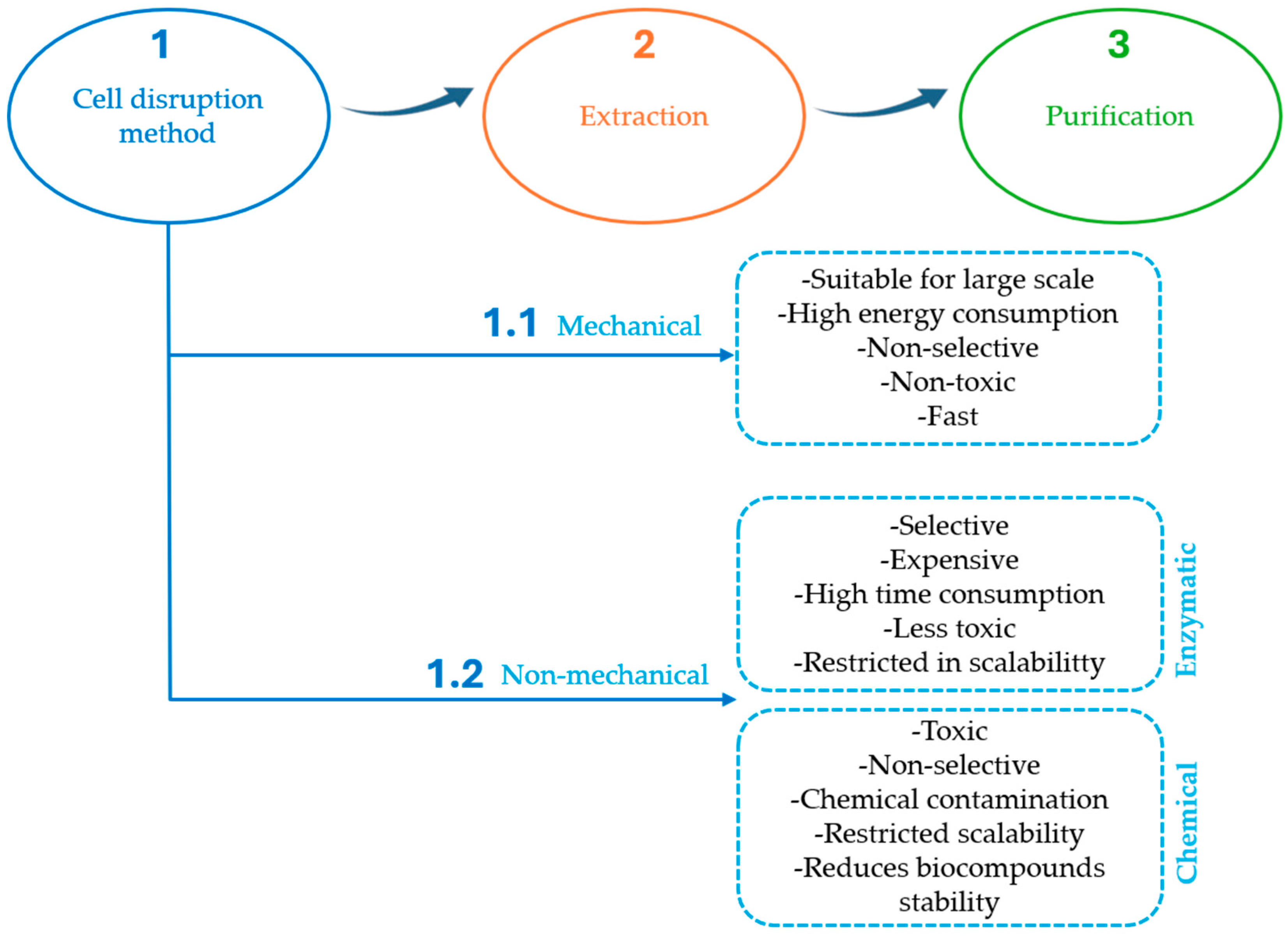
When macroalgae are incorporated into packaging materials as an extract, a multiple-step process is necessary to obtain high-value compounds. This process involves cell rupture, extraction and purification, which effectively separate compounds of interest and their associated bioactive compounds from non-valuable components [13]. Cell disruption treatment, which is obligatory to release the stored bioactive compounds, can be performed through physical and mechanical methods (such as homogenization, bead milling, microwave treatment, autoclaving, pulsed electric fields or ultrasound) or chemical techniques by using solvents, alkalis, acids, surfactants, antibiotics, or hypochlorite. Also, enzymes can be used as biological methods [14]. The different cell disruption methods are presented in Figure 1. A variety of extraction techniques are available which can be applied directly to the whole cell or in combination with cell disruption methods. Solvent extraction and supercritical fluid extraction are the most common methods. Organic solvents are mainly used in combination with cell disruption in order to help the solvent access the cell compounds and increase the yield. Alternative solvents have also been studied in the literature to enhance safety and reduce environmental impact of the materials. Terpenes, deep eutectic solvents, ionic polymers and liquid polymers are some common examples of biobased alternative solvents. Supercritical fluid extraction has seen increasing use, particularly in the food and pharmaceutical sectors, because it offers a green and contamination-free method of extraction. Supercritical fluid extraction combines both extraction and separation by allowing for precise control over key operational parameters, including temperature, pressure, flow rate, and processing time. This high degree of selectivity is essential for producing outputs that have both higher purity and improved yields. Regarding the processing of macroalga biomass, supercritical fluid extraction is widely studied, primarily for recovering high-value biomolecules such as polyunsaturated fatty acids (PUFAs), pigments, and vitamins. The most commonly utilized solvent for these specific applications is sc-CO2, which is used either in its pure form or combined with a co-solvent [14].
Expanding the scope of algal biotechnology beyond microalgae, macroalgae are characterized by their high content of polysaccharides and lack of lignin, and therefore, they are suitable for bioplastic applications. The extraction of biopolymers from marine macroalgae is a critical step that determines the yield, the purity, and functional properties of the biopolymers, such as alginate, carrageenan, and agar. While traditional extraction methods often rely on hot water or alkaline solutions followed by precipitation, recent studies have investigated more sustainable and efficient technologies. Techniques such as Ultrasound-Assisted Extraction (UAE) and Microwave-Assisted Extraction (MAE) utilize cavitation and electromagnetic heating, respectively, to disrupt cell walls more effectively than conventional heating. These methods, also known as green methods, significantly reduce solvent consumption, processing time, and the required amount of energy while maintaining the structural integrity of the polymers [15]. Furthermore, Enzyme-Assisted Extraction (EAE) is an alternative, employing cell wall-degrading enzymes to release intracellular compounds without the use of harsh chemicals, enhancing the biodegradability and biocompatibility of the extracted materials [16].
Pretreatment of seaweed and macroalgae biomass is an important step to overcome the inherent resistance of the cell wall structure and facilitate the downstream conversion of biomass to bioproducts or even biofuels [17,18]. Mechanical pretreatment serves as the initial physical intervention, involving processes such as milling or grinding. The aim of mechanical treatment is to reduce the size of the seaweed, by increasing the surface area which will be available for chemical or enzymatic attacks. By disrupting the seaweed structure, the crystallinity of the cellulose is reduced, and the biomass is more susceptible to hydrolysis. However, this process can be energy-intensive with high economic cost [19].
Thermal and chemical pretreatments are widely employed to enhance the deconstruction and bioconversion efficiency of seaweed and macroalgal biomass, owing to their high polysaccharide content and low lignin levels. Thermal methods such as hydrothermal heating, steam explosion, autoclaving, and microwave-assisted processes promote structural disruption, increase porosity, and solubilize organic matter, with effective temperatures typically ranging from 120 to 150 °C under pressure for up to one hour in macroalgal systems [20]. Chemical pretreatments commonly use dilute acids or alkalis to hydrolyze structural polysaccharides, especially hemicellulose, and expose cellulose fibers for further enzymatic hydrolysis; dilute acid pretreatment is noted as one of the most effective strategies for macroalgae, though careful control is required to minimize inhibitor formation such as HMF and levulinic acid [21,22]. Combined thermo-chemical approaches, such as acid–thermal pretreatment or microwave irradiation with oxidizing agents, have also demonstrated enhanced hydrolysis efficiency and higher sugar or biohydrogen yields in species such as Ulva spp. [23].
Intensive thermal and chemical pretreatments can generate inhibitory compounds that can suppress microbial activity in subsequent fermentation or digestion steps. The degradation of sugars under acidic or high-temperature conditions leads to the formation of furan derivatives, such as furfural and 5-hydroxymethylfurfural (HMF). These substances can penetrate cell membranes and disrupt the metabolic functions of fermentative organisms and reduce biofuel and biopolymer yield. To overcome this problem, detoxification or inhibitor removal steps are implemented. Treatment with calcium hydroxide or activated charcoal can lead to the precipitation of the toxic compounds [24].

3. Biopolymers in Seaweed

Seaweed is considered an important renewable source of biopolymers with significant potential for food packaging applications due to their biodegradability, film-forming ability, and functional properties [15]. The most relevant macromolecules include polysaccharides, proteins, and lipids, whose composition varies among red, brown, and green algae depending on species, environmental conditions, and extraction methods [25].
Polysaccharides
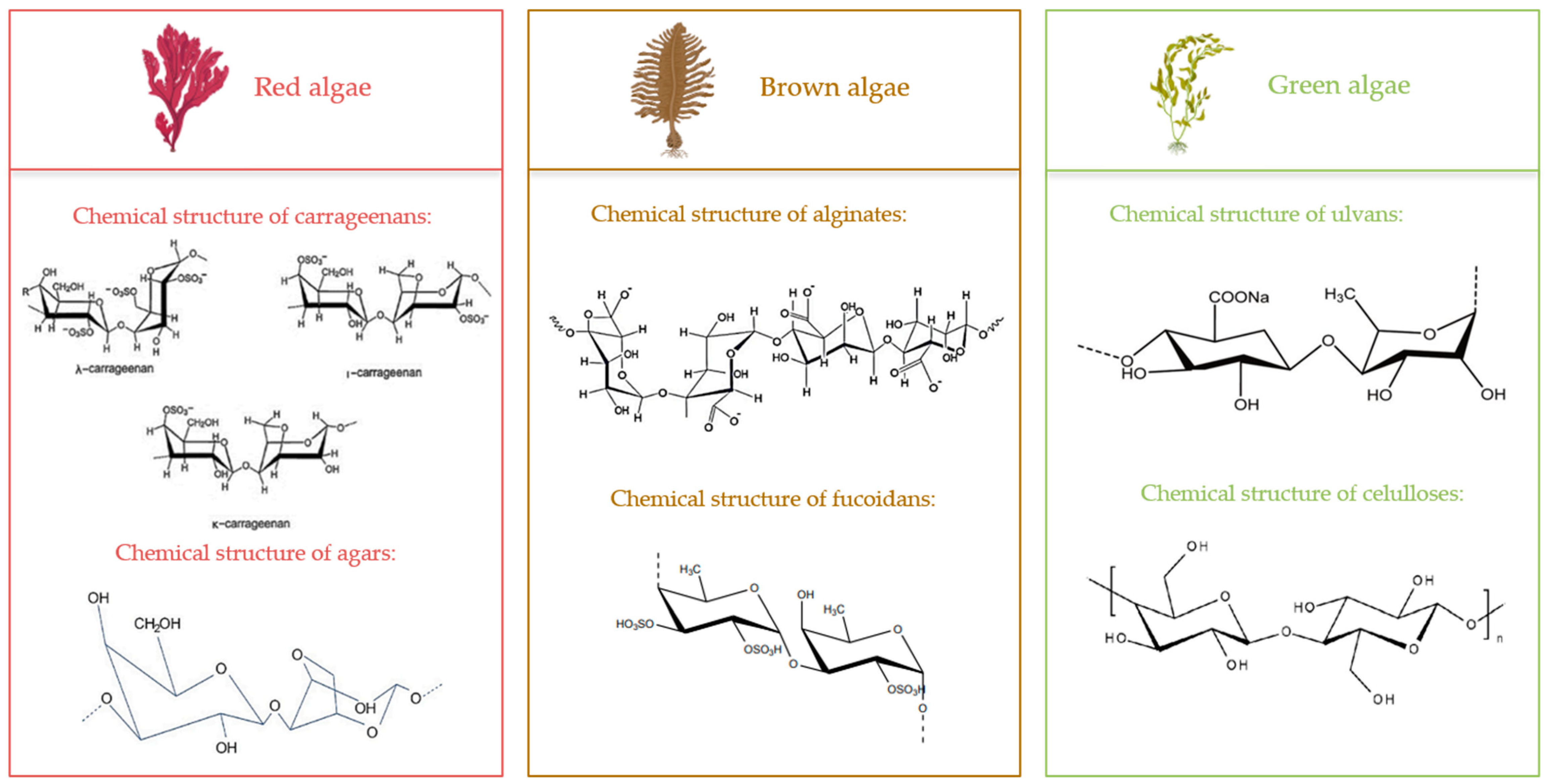
Polysaccharides are the dominant biopolymers in seaweed and the main compounds investigated for packaging materials. Their anionic character due to the existence of sulphate ester groups enables interactions with cationic compounds and facilitates the modification of film properties such as mechanical strength, barrier performance, and water resistance [15]. Red algae are rich in carrageenan and agar, brown algae mainly contain alginates and fucoidans, and green algae are characterized by ulvans and cellulose-based polysaccharides (Figure 2). These polymers are widely studied because they are renewable, non-toxic, biodegradable, and capable of forming edible or biodegradable films suitable for food packaging applications [26].
Macroalgal polysaccharides such as alginate, carrageenan, agar, fucoidan, laminarin, and ulvan exhibit strong film-forming capacity, high oxygen-barrier performance, and tunable mechanical behavior, but they are inherently hydrophilic, causing poor water-vapor barrier properties and moisture sensitivity [27]. Reinforcement with microfibers, nanomaterials, or lignin nanoparticles can markedly improve mechanical strength, hydrophobicity, and moisture resistance, as shown for GL-MCC cellulose microfibers and lignin nanoparticles, which increased tensile strength and raised water-contact angles above 100° [28]. Polysaccharides provide inherent antioxidant and antimicrobial activities, especially sulfated types and seaweed powders rich in phenolics [29]. They also show strong compatibility with plasticizers like glycerol and nanoparticles such as AgNPs, enabling active packaging functionalities with UV-blocking and additional antimicrobial capacity [30]. Migration and safety considerations include potential heavy metal accumulation in some macroalgae, emphasizing the need for source monitoring [31]. Scalability is supported by widespread macroalgal abundance and commercial production of polysaccharide-based bioplastics, though water sensitivity remains a major industrial limitation [32,33].
Proteins
Algal proteins present a fascinating nutritional profile, characterized by their unique amino acid composition and a diverse presence of bioactive compounds A key characteristic of seaweed proteins is their amino acid composition. Although the precise profile differs across species, seaweed generally provide a complete range of essential and non-essential amino acids. Furthermore, seaweed proteins are known for their high bioavailability and excellent digestibility [34]. Green seaweeds exhibit higher protein and lipid content compared to brown and red seaweed which typically contains low-to-moderate levels of protein (except in the case of Porphyra that contains almost 45% proteins [19]).
Algal proteins exist either in their free form or complexed with other molecules, such as polyphenols or pigments. The pigment-bound proteins, widely known as phycobiliproteins, constitute a significant fraction of the total cellular protein. They compromise a chromophore (phycobilins) covalently bonded with apo-proteins through thioether connection to cysteine residues. These complexes are stabilized by the presence of linker peptides. Allophycocyanins, phycocyanins, phycoerythrins and phycoerythrocyanin are responsible for photosynthetic energy fixation as they participate in the light harvesting and energy transfer reactions in the chloroplast. Structurally, these proteins are composed of α and β subunits, each having a molecular mass between 15 and 20 kDa and containing approximately 160–165 amino acids. The covalent linkage of the chromophores to the apo-protein is what imparts the specific hues to the phycobiliproteins. Algal proteins are unique due to their ability to perform diverse functional keys roles, serving as antioxidants, stabilizers, and emulsifiers. In the food and cosmetic packaging sector, the use of algal proteins is investigated not only because of their ability to produce biodegradable materials but also because the energy and economic costs of producing algal proteins are significantly lower when they are produced using waste and side streams as carbon sources [35].
Regarding their use in the food packaging sector, protein-based films offer excellent gas-barrier properties and favorable mechanical strength, but, like polysaccharides, they suffer from high hydrophilicity, resulting in moisture sensitivity that can be mitigated through hydrophobization, multilayer structures, and blending with lipids or nanofillers. Incorporation of nanoparticles or biopolymer fillers such as cellulose nanocrystals or calcium ion-based crosslinkers significantly enhances tensile strength, barrier performance, hydrophobicity, and thermal stability [36,37]. While proteins generally have low migration risk, structural sensitivity to humidity remains a challenge. Nevertheless, their biodegradability, film-forming capacity, and emerging scalable processing methods (casting, extrusion, electrospinning) suggest increasing commercial feasibility [38].
Lipids
The lipid composition of marine macroalgae is typically dominated by glycolipids, which can account for approximately 60–70% of total lipids, followed by phospholipids (10–25%) and neutral lipids (10–15%). Detailed analysis of representative species across green, red and brown algae reveals considerable variability in fatty acids profiles, which depend strongly on biological and environmental factors such as seasonality, temperature, and geographical region. The modified Folch extraction method is the most commonly used method for lipid and fatty acid characterization, often coupled with GC-MS, although several alternative extraction and pretreatment techniques have also been tested, including ultrasound-assisted, enzyme-assisted, pulse electric field-assisted, pressurized liquid, microwave-assisted, and supercritical CO2 extraction. Macroalgae consistently represent a rich source of biologically active lipids, particularly unsaturated fatty acids, with saturated fatty acids typically ranging from 7.53% to 95.21%. Monounsaturated fatty acids are between 2.30% and 47.10% and polyunsaturated fatty acids range from 2.60% to 73.70% of total fatty acids. Macroalgae also provide essential polyunsaturated fatty acids such as α-linoleic acid (ALA, C18:3 n-3) and linoleic acid (LA, C18:2 n-6), which cannot be synthesized by mammals. Significant amounts of long-chain n-3 PUFAs, particularly eicosatetraenoic acid (EPA) and, at a lower percentage, docosahexaenoic acid (DHA), are detected among diverse species. The n-6/n-3 ratio varies among algal groups, being lowest in green algae, intermediate in brown algae, and highest in red algae [39]. However, their susceptibility to oxidation remains a challenge for direct incorporation into packaging matrices [40].
Macroalgal lipids, especially polar lipids, fatty acids, and hydrophobic bioactives, are good candidates in providing water-vapor barrier performance, hydrophobic surface modification, and moisture resistance, making them valuable as coatings or as additives in composite films [41]. Seaweed-derived lipid fractions and lipid-mediated nanoparticle systems also contribute antioxidant and antimicrobial activities, enabling active packaging functions [42]. From a safety perspective, lipids themselves show low toxicity, but, as with polysaccharides, macroalgae can accumulate heavy metals, necessitating raw-material screening [31]. Lipid-enriched films are considered commercially promising due to strong barrier functionality and biodegradability, though challenges include achieving uniform dispersion and maintaining mechanical integrity at scale [43].

4. Bioactive Compounds in Seaweed

Seaweeds represent one of the richest biological reservoirs of structurally diverse and highly potent bioactive compounds. These bioactive compounds which originate from the three main algal divisions serve essential ecological functions while providing significant biomedical potential for humans. They are characterized by diversity, such as their need for salinity, light exposure, ultraviolet radiation, nutrient availability, and the presence of competing organisms, all of which lead to the biosynthesis of secondary metabolites with antioxidant, anti-inflammatory, antimicrobial, anticancer, neuroprotective and cardioprotective properties. In the following paragraphs, we summarize the main bioactive compounds in marine macroalgae [44].
Polyphenols and phenolic derivatives
Polyphenols, particularly phlorotannins found in brown algae, are among the most studied seaweed bioactive for packaging applications due to their strong antioxidant and antimicrobial activity [45,46,47]. These compounds can delay lipid oxidation and inhibit the growth of spoilage microorganisms when incorporated into seaweed-based films. Additionally, their hydroxyl groups may improve film cohesion and barrier properties through hydrogen bonding with polymer matrices [48]. Bromophenols and phenolic terpenoids also exhibit antimicrobial and antioxidant activities with potential relevance in active packaging formulations [49,50].
Phlorotannins
Phlorotannins are polyphenolic compounds unique to brown seaweeds and are characterized by strong antioxidant and antimicrobial properties. In the context of biopackaging, phlorotannins are particularly attractive as natural active agents that can be incorporated into seaweed-derived polymer matrices such as alginates, carrageenans, and cellulose-based films. Their antioxidant capacity allows them to delay lipid oxidation in packaged foods, thereby extending shelf life, while their antimicrobial activity can inhibit the growth of spoilage and pathogenic microorganisms. Additionally, the presence of multiple hydroxyl groups enables hydrogen bonding with polymer chains, which may improve film cohesion and enhance barrier properties against oxygen and light. However, challenges remain regarding their stability, migration behavior, and potential impact on film color and transparency [48].
Terpenoids
Terpenoids, including halogenated terpenes mainly found in red and brown seaweeds, are secondary metabolites with notable bioactivity. From a packaging perspective, terpenoids are promising candidates for antimicrobial active packaging, particularly in coatings or multilayer systems. Their relatively low molecular weight facilitates interaction with microbial cell membranes, leading to antimicrobial efficacy. Nevertheless, their volatility and sensitivity to processing conditions may limit their direct incorporation into biopolymer matrices. Encapsulation strategies or controlled-release systems are considered necessary to ensure their activity and compatibility with seaweed or other biopolymer-based packaging materials [51].
Alkaloids
Seaweed-derived alkaloids are less abundant compared to terrestrial sources but still can have interesting functional properties. In packaging, alkaloids may contribute to antimicrobial and antifouling properties when incorporated into biodegradable films or coatings. Their integration into seaweed-based biomaterials could enhance resistance to microbial colonization on food contact surfaces. However, their relatively complex structures and potential toxicity at higher concentrations necessitate careful evaluation of their safety, migration limits, and regulatory acceptance for food packaging applications [52].
Photosynthetic pigments
Photosynthetic pigments such as chlorophylls, carotenoids (e.g., fucoxanthin), and phycobiliproteins are abundant in seaweed and exhibit antioxidant and light-filtering properties. These pigments are of particular interest for intelligent and UV-protective packaging, as they can act as natural UV absorbers, protecting light-sensitive food products from photo-oxidation. Additionally, some pigments exhibit color-changing behavior in response to environmental factors (e.g., pH, oxidation), offering potential as freshness indicators. However, their strong coloration may negatively affect film transparency and consumer acceptance, which remains a key limitation for commercial application [53].
Polyunsaturated fatty acids (PUFAs)
Seaweed is an important source of long-chain polyunsaturated fatty acids, including n-3 and n-6 fatty acids. Although PUFAs are highly susceptible to oxidation, their incorporation into seaweed-based packaging materials can be exploited in antioxidant-active systems, particularly when stabilized or encapsulated. Moreover, lipid–polymer interactions may influence film flexibility and plasticization. Nevertheless, the oxidative instability of PUFAs represents a major challenge, as uncontrolled oxidation could negatively affect both the packaging material and the packaged food [54].
Polyamines
Polyamines such as putrescine, spermidine, and spermine are naturally occurring nitrogen-containing compounds involved in cellular growth and stabilization. In seaweed-based biomaterials, polyamines may play a role in interactions between molecules, potentially enhancing film strength, flexibility, and crosslinking efficiency. Their cationic nature enables electrostatic interactions with anionic polysaccharides like alginates and carrageenan, which could improve mechanical integrity and reduce water solubility. However, their impact on sensory properties and long-term stability of packaging materials requires further investigation [55].
Seaweed bioactives, especially polyphenols, phlorotannins, pigments, and sulfated polysaccharides, provide strong antioxidant and antimicrobial activities, enabling active-packaging functions such as inhibiting oxidation and microbial growth. Phenolic-rich extracts and pigments (e.g., fucoxanthin) enhance film antioxidant performance, while many seaweed species show broad antimicrobial action against key foodborne bacteria [56,57]. Incorporating seaweed powders or extracts into films can also add UV-blocking and preservation effects [58]. Seaweed bioactives are generally biocompatible, but migration into food must remain within regulatory limits; controlled-release systems help prevent excessive diffusion [59].
Seaweed bioactive compounds clearly enhance packaging through strong antioxidant and antimicrobial activities. However, these functional outcomes alone are not sufficient for evaluating active packaging performance. The current literature does not yet address critical aspects such as migration behavior, toxicological safety, regulatory acceptance, possible sensory effects on food, dose optimization, and consumer perception. These issues are directly relevant because seaweeds can accumulate heavy metals, requiring careful raw-material monitoring [60]. There is only one study that proves that the consumers are willing to accept seaweed packaging innovations [61]. Moreover, bioactives may migrate into food matrices, and such migration must remain within specific limits to ensure safety and compliance. Therefore, assessing the acceptability of seaweed-based active packaging requires consideration of both the release characteristics of the active agents and their potential impact on food quality and consumer acceptance, except for their antimicrobial or antioxidant performance [59].

5. Food Packaging Applications of Seaweed-Based Biopolymers

Using biopolymers from marine macroalgae offers key advantages over those from terrestrial plants, mainly by avoiding competition for land and water used in food production [62]. Unlike traditional crops, algae are a third-generation biomass [63]; they do not need arable land or pesticides [64]. Under the circumstances, harvesting algae safeguards food security and benefits aquatic ecosystems. They form the base of the food web, support oxygen production, and act as carbon sinks, helping reduce ocean acidification [11]. However, harvesting or cultivation is not a benefit for ecosystems when post-harvest decomposition can turn farms from CO2 sinks to CO2 sources if biomass is not removed or processed efficiently [65]. Furthermore, co-cultured fish farming can overwhelm algal carbon uptake and lead to net CO2 outgassing [66]. Life cycle assessments show that growing algae for packaging biopolymers not only replaces fossil materials but also has positive environmental and regenerative impacts.
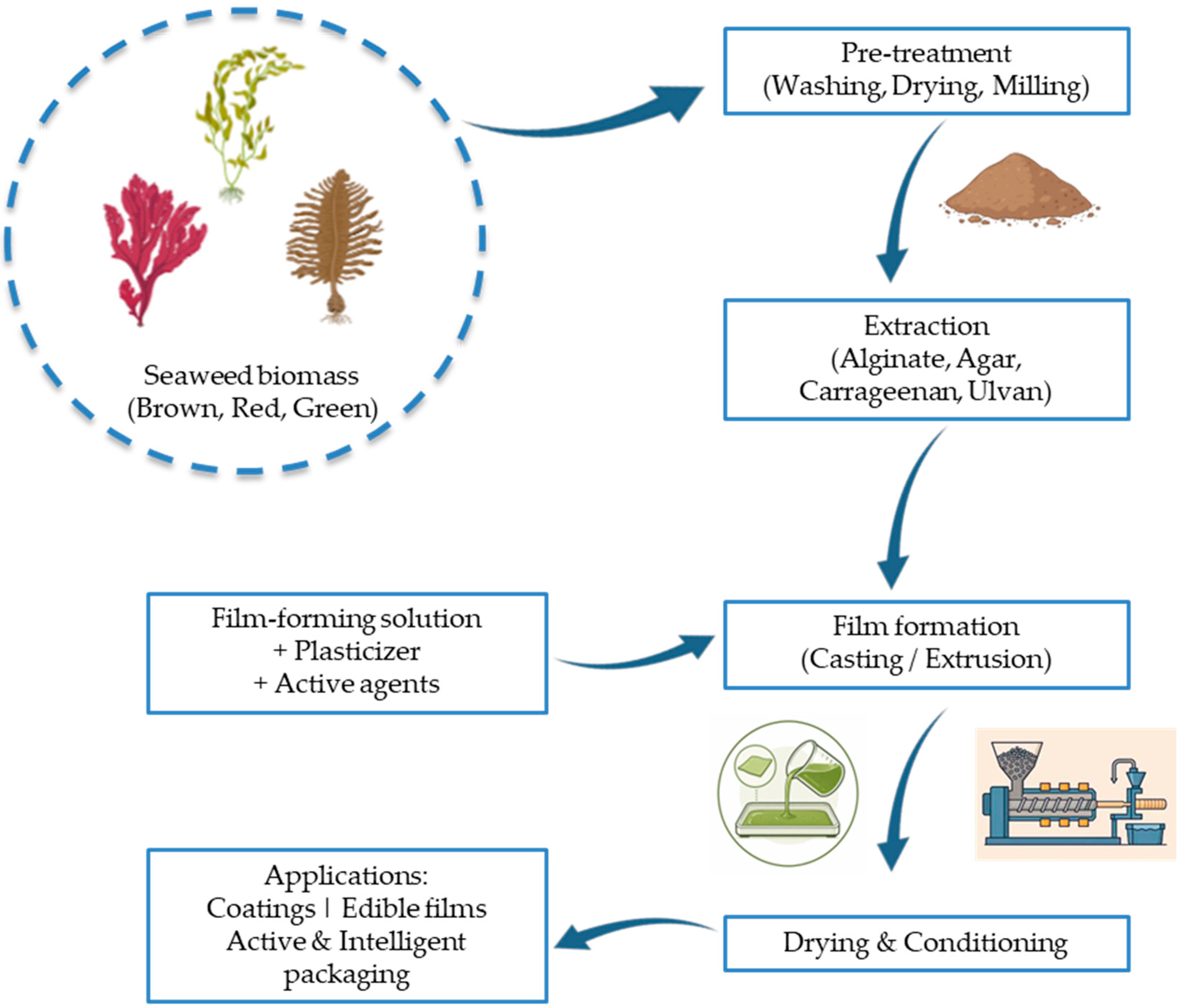
The use of biopolymers derived from seaweeds in the food packaging industry (Figure 3) has advanced significantly as a sustainable alternative to extend the shelf life of perishable products [63]. These marine macromolecules—including alginate (from brown algae), carrageenan, and agar (from red algae), as well as ulvan (from green algae)—are primarily used in food packaging [67]. Their applications can be categorized based on the physical form of the packaging and the type of food they are designed for, utilizing their barrier properties and natural functionalities.
Among the ways to use biopolymers derived from water in food packaging, the two most common primary applications are coatings and edible films. Coatings are applied directly to the surface of foods, creating a thin layer that reduces moisture loss, prevents oxidation, and limits microbial deterioration [68]. On the other hand, edible films are pre-made, standalone matrices, such as flexible sheets, used to wrap the product, regulating gas exchange and maintaining freshness [62]. Both options serve as effective barriers to oxygen and carbon dioxide and help regulate humidity.
In addition to the physical barrier and the traditional concept of inert packaging that does not interact with the food, seaweed biopolymers are perfect for creating active and intelligent packaging. Active packaging incorporates compounds such as essential oils, plant extracts, and nanoparticles (for example, nano-silver) into the polymer matrix, enabling controlled release of antimicrobial and antioxidant agents directly onto the food [68,69,70]. Conversely, intelligent packaging features real-time monitoring functionalities, such as the use of pH-sensitive dyes in carrageenan biofilms, which change color to alert consumers about product spoilage [62].
Despite the sustainable potential, the use of algal biopolymers faces critical challenges related to their high hydrophilicity, an intrinsic characteristic that gives pure packaging a high affinity for water, compromising logistical integrity and the preservation of moist foods such as fruits and meats. To mitigate this limitation, material engineering strategies are applied, such as formulating polymer blends with hydrophobic polyesters (e.g., polylactic acid (PLA), polyhydroxybutyrate (PHB), or polycaprolactone (PCL)) [71] incorporating nanometric clays that create physical barriers to permeability [72], and using essential oils [73], which, besides providing antimicrobial properties, reduce the film’s surface energy [74]. Additionally, the development of coating systems or bilayer films protects the hydrophilic matrix [75], while structural modifications through chemical crosslinking, such as the reaction of sodium alginate with calcium ions from calcium chloride (CaCl2), promote the formation of a stable three-dimensional network (the ‘egg box’ model), drastically reducing solubility and increasing the mechanical resistance of the material against moisture [76].
Considering the various study methods used with seaweed biopolymers for the food packaging sector, we have summarized some of the research in Table 1.
As can be seen, the versatility of alga-based biopolymers allows packaging to be adapted to address the main deterioration issues faced by various food industries:
Fresh Fruits and Vegetables
Alga-based packaging and coatings alter the atmosphere around fresh foods, reducing respiration and delaying senescence. Their strong barrier prevents water loss, maintaining texture and juiciness, and acts as light protection for nutrients [95]. Examples include alginate films for sliced apples [96] and carrageenan coatings for strawberries [97].
Meat, Poultry, and Seafood
The fast deterioration of these products results from oxidation and microbial activity. Alga films limit oxygen exposure and help retain natural juices, keeping meats tender and colorful while preventing lipid oxidation [57]. For example, sodium alginate coatings infused with ginger essential oil greatly slowed lipid oxidation and preserved the sensory qualities of beef for as long as 18 days [98]. Furthermore, coatings made with furcellaran combined with gelatin and herb extracts effectively prevented biogenic amine formation and delayed microbial spoilage in carp filets [99].
Dairy Products
For cheese, yogurts, and butter, managing humidity levels and blocking oxygen are essential. Algal polysaccharides form a superior bioactive barrier in Swiss cheese, reducing moisture loss and microbial growth more effectively than commercial paraffin. When combined with natamycin, they extend shelf life to 60 days while preserving sensory quality [100]. In yogurt and butter, these films preserve the smooth texture and help retain their distinctive aromas [63].
Bakery and Confectionery
Seaweed-based packaging controls moisture transfer in these products, stopping them from becoming hard, dry, or losing their crunch, typical issues caused by prolonged storage and exposure [70]. Its ability to block light also helps preserve fats and colorants in recipes [101]. For example, bio-nanocomposite films made from Kappaphycus alvarezii seaweed (carrageenan) reinforced with nanocellulose and silver nanoparticles can prevent mold growth in bread for up to 30 days while significantly improving moisture-barrier performance and degrading within 15 days [102].
Ready-to-Eat Meals and Beverages
Seaweed films are increasingly utilized in the convenience sector to create single-serve, soluble, or tearable sachets for liquid products such as energy drinks, instant coffee, and juices, boosting portability and sustainability [63,64]. For ready-to-eat meals, these films help maintain food texture and quality while providing tamper-evident packaging essential for safety and consumer trust. For example, we have a composite coating made from a blend of carboxymethyl cellulose, carrageenan, and polysaccharide gums, with added citric and oxalic acids, that was applied to ready-to-eat pears, reducing oxidative damage, physiological deterioration, and browning [103]. Additionally, agarose microparticles are investigated for developing textural functionalities in beverages, transitioning from liquid to fluid gels [104].
The comparative data summarized in Table 2 shows that seaweed-based packaging systems exhibit highly variable performance depending on the specific polymer matrix, bioactive additives, and processing methods employed. Collectively, these findings indicate that industrial relevance and technology-readiness remain highest for formulations demonstrating both bioactivity and partial barrier optimization, while many systems remain at laboratory scale due to weak mechanical or permeability attributes.

6. Regulatory Framework

The commercial acceptance and large-scale adoption of seaweed-based biopolymers for food packaging rely heavily on compliance with strict regulatory standards. Although these materials are highly valued for their biodegradability, biocompatibility, and low toxicity, they must meet food contact material (FCM) safety standards to prevent the release of harmful substances into food [111]. Globally, safety and intake guidelines are overseen by authorities such as the FDA (USA), EFSA (European Union), the JECFA committee (FAO/WHO), and the MHLW (Japan), with regulatory status varying by usage history and the purity of the macroalga extract [112]. Alginate and agar, derived from brown and red algae, have the most established regulatory frameworks; the FDA classifies sodium and propylene glycol alginate and agar as GRAS (Generally Recognized as Safe), permitting their use without a specified upper intake limit under good manufacturing practices [81]. Similarly, in Europe, EFSA authorizes them as food additives under codes E 400–E 404 for alginates and E 406 for agar (Regulation (EC) No. 1333/2008), with an “unspecified” Acceptable Daily Intake (ADI) indicating minimal toxicological concern, provided they meet strict purity standards, including lead limits below 5 ppm [113]. Additionally, a 2022 EFSA review confirmed the safety of alginates and expanded their use in infant formulas [114].
Before discussing the regulatory status of individual seaweed-derived compounds, it is important to distinguish the different categories of seaweed-based packaging systems addressed in this review, since each category may belong to different regulatory requirements. Edible films and coatings are intended to be consumed together with the food product and may therefore be regulated both as food ingredients and as food contact materials, depending on their composition and intended use [115,116,117]. In contrast, non-edible seaweed-based films, trays, coatings, or multilayer structures are generally classified as food contact materials, requiring compliance with migration and safety regulations. Furthermore, passive packaging systems primarily serve as physical barriers without interacting with the packaged food, whereas active packaging systems intentionally release or absorb substances to extend shelf life or improve food quality [118]. Intelligent packaging systems, on the other hand, provide monitoring or sensing functions, such as freshness indicators or colorimetric responses. Because these systems differ significantly in composition, functionality, and intended use, their regulatory evaluation and authorization pathways may also differ considerably within international regulatory frameworks [119].
In contrast, carrageenan has a more restrictive and stricter regulatory environment; while the FDA considers it GRAS for general adult use [120], the EFSA, under code E 407, has set a conservative intake limit of 75 mg/kg of body weight per day and has banned its use in infant formulas as a precaution [113]. This concern stems from confusion between food-grade carrageenan and poligeenan. Poligeenan, a low-molecular-weight polymer (10,000–20,000 Da) made by extreme acid hydrolysis in labs, lacks thickening or gelling ability, unlike high-molecular-weight carrageenan (200,000–800,000 Da) used in foods. It is not allowed in food because animal studies linked it to intestinal ulcers [121]. Regarding fucoidan from brown algae, the FDA granted GRAS status to specific extracts, such as those from Undaria pinnatifida and Fucus vesiculosus, allowing up to 250 mg/day in foods and drinks [122]. In the European Union, these extracts were approved under the strict Novel Foods Regulation (Regulation EU 2017/2470) [123] due to not having evidence of genotoxicity, mutagenicity, or allergenicity. This approval is supported by a No Observed Adverse Effect Level (NOAEL) that ensures safe human consumption.
Meanwhile, ulvan from green algae is an emerging polysaccharide used in packaging technology, with regulations still developing; it is regulated under the Novel Foods Regulation (Regulation EU 2015/2283) in the EU, while in the US, it does not yet have independent GRAS status but is legally allowed when it is an inherent part of approved Ulva spp. algae (Regulation FDA—21 CFR 172.365).
For seaweed biofilms to gain final approval as a commercial packaging, the industry must address safety concerns through Specific Migration Limits (SMLs) testing, ensuring compliance with food contact laws such as Regulation (EC) No. 1935/2004 and (EU) No. 10/2011 [124]. Standardized migration testing with food simulants at specific temperatures is employed to ensure that components of the seaweed-based polymer and any plasticizer additives remain below established safety limits and do not contaminate the food product [125,126,127]. At the regulatory level, the EU identified the importance of migration testing in 2011 [128], and this requirement is also being evaluated by other authorities like the FDA. Additionally, controlling contaminants and heavy metals is essential, as seaweed can bioaccumulate toxins from water. Therefore, regulatory authorities require rigorous laboratory monitoring during harvesting and processing [112,124]; for example, Germany tests iodine levels with a limit of 20 mg/kg, Australia limits inorganic arsenic to 1 mg/kg, and France and China impose strict maximum limits for cadmium, lead, mercury, and pesticide residues [129]. Ultimately, the variability in seaweed biomass, affected by species, environmental conditions, and extraction methods, necessitates the development of globally recognized quality standards to define precise composition and toxicological purity limits for commercial use.

7. Challenges and Future Perspectives

Although biopolymers derived from seaweeds offer a strong, sustainable platform for next-generation food packaging, their transition from laboratory research to industrial production faces major hurdles. One key challenge is the extreme structural variability and the lack of standardization in biomass. The chemical makeup and yield of macroalgal polysaccharides vary significantly depending on the species, environmental factors (such as water temperature, light, and salinity), harvest season, and extraction methods [124,130]. This diversity makes it difficult to establish consistent and reproducible quality standards, which are crucial for ensuring viability in large-scale production [112].
Additionally, alga polymers have inherent limitations related to their mechanical properties and are highly sensitive to moisture. Due to their highly hydrophilic nature, rich in hydroxyl and sulfate groups, pure algal biofilms often exhibit high water vapor permeability and tend to swell and lose structural strength [124]. Without modifications or blends, these biopolymers often do not meet the mechanical and gas-barrier performance required by the industry compared with petroleum-derived plastics. Scaling up and economic viability are also critical barriers. Currently, it is estimated that the production cost of marine alga biofilms is 2.5 to 5 times higher than that of conventional fossil-based plastics [62]. However, this comparison is somewhat unfair, given that the industrialization of plastics derived from fossil waste has decades of process adaptation and optimization for this purpose, enabling the current low-cost products. The extraction of these polysaccharides often relies on traditional processes that consume large amounts of energy, water, and chemical solvents, significantly increasing operational costs [131]. Finally, commercial acceptance may be hindered by undesirable sensory and visual attributes; the presence of naturally co-extracted compounds from algae, such as photosynthetic pigments (chlorophylls and carotenoids) and phenolic compounds, can impart strong coloration, opacity, and characteristic odors to the biofilms, negatively affecting the appearance of the packaging [53].
To overcome these barriers, future developments in the field point toward adopting innovations focused on green extraction methods and biorefineries. The extraction of seaweed biopolymers and bioactive compounds may also involve considerable consumption of water, acids, alkalis, and organic solvents, depending on the target compound and extraction method employed. Traditional extraction techniques frequently require large solvent volumes and elevated temperatures, generating secondary waste streams and increasing operational costs. Moving to advanced technologies such as ultrasound-assisted extraction (UAE), microwave-assisted extraction (MAE), and enzymatic extraction (EAE) promises to improve the yield and purity of algal polymers [131,132]. These environmentally friendly methods significantly cut processing time, reduce the use of toxic solvents, and lower energy consumption. At the same time, implementing integrated biorefinery models, which enable the sequential or simultaneous extraction of polysaccharides, proteins, and bioactive compounds from the same algal biomass, will be vital for maximizing resource use and spreading out production costs, making the process more economically viable [12]. An alternative to achieve this was proposed by Baghel et al. (2021) [133], in which the raw biomass could initially be processed to obtain high-value-added products such as pigments and lipids, followed by the extraction of proteins and minerals; from the solid residue of this stage, phycocolloids such as agar and carrageenan were extracted, and finally, the remaining residual mass, rich in cellulose, underwent hydrolysis and fermentation processes for the sustainable production of bioethanol.
In material engineering and nanotechnology, future research should focus on blending strategies that combine seaweed polysaccharides with other complementary biopolymers, such as PLA and PHB, to overcome water sensitivity and mechanical fragility [134], as well as the incorporation of nano-reinforcements, such as cellulose nanofibrils [135], zinc oxide [136], silver nanoparticles [102], and the use of ionic crosslinking agents [137]. Present advanced methods can greatly enhance the elasticity, thermal stability, and barrier properties of packaging. Advances in polymer matrices will guide the development of next-generation smart packaging. Using seaweed extracts, such as polyphenols and essential oils, will enable the creation of biofilms with controlled release of antimicrobials and antioxidants, as well as packaging that changes color according to pH to monitor freshness [36]. To harness these ecological benefits, it is vital to expand life cycle assessments (LCA) of seaweed-based packaging. Quantitatively demonstrating the reduction in carbon footprint and environmental impact of these materials compared to plastics will help implement economic incentives and global policies for a circular bioeconomy [138,139,140].

7.1. Sustainability, Industrial Feasibility and End-of-Life Considerations

Although seaweed-based packaging materials are widely considered environmentally acceptable alternatives to petroleum-derived plastics, their overall sustainability strongly depends on cultivation practices, biomass processing, extraction technologies, and end-of-life management. Therefore, comprehensive life cycle assessment (LCA) studies are necessary to accurately evaluate their environmental footprint and industrial feasibility. Multiple LCAs and reviews highlight cultivation infrastructure as critical contributors to environmental impacts [141,142,143]. Studies show strong sensitivity to end of life assumptions. According to Ayal et al., (2023) composting reduces impacts of seaweed bioplastics by ~30% compared with incineration [144].
One of the major environmental problems associated with seaweed processing is the drying stage. Fresh macroalgae contain very high moisture levels, often exceeding 80–90%, requiring significant energy input before storage, transportation, or extraction procedures. Conventional thermal drying methods are energy-intensive and may substantially increase the carbon footprint of seaweed-derived materials, particularly at an industrial scale. Consequently, alternative low-energy drying strategies, including solar drying, air drying, and process integration approaches, are increasingly investigated to reduce energy demand [140].
The sustainability of seaweed biomass sourcing also depends on whether the biomass originates from cultivated or wild-harvested seaweed. Large-scale wild harvesting may negatively affect marine biodiversity and ecosystem stability if not properly regulated. In contrast, cultivated seaweed offers improved traceability, biomass consistency, and supply stability, although cultivation infrastructure and processing requirements may increase production costs. Additionally, the utilization of invasive seaweed species or industrial seaweed residues represents an attractive circular-economy strategy, simultaneously reducing environmental impact and valorizing low-cost biomass resources [145].
End-of-life management is another critical factor influencing the environmental performance of seaweed-based packaging materials. Depending on the polymer composition and additives used, these materials may follow different disposal routes, including composting, biodegradation, anaerobic digestion, recycling, or landfill disposal. However, biodegradability is highly dependent on environmental conditions such as temperature, humidity, microbial activity, and marine versus terrestrial environments. Furthermore, blending seaweed biopolymers with synthetic or poorly biodegradable polymers may compromise compostability and recycling compatibility [140].
Compared with petroleum-based plastics, seaweed-derived materials generally exhibit clear advantages regarding renewability, biodegradability, and reduced dependence on fossil resources. Nevertheless, their current industrial production costs remain significantly higher, while their mechanical strength, moisture resistance, and long-term stability are often inferior to conventional plastics. In comparison with other biobased polymers such as PLA, PHB, or starch-based materials, seaweed-derived polymers offer the additional advantage of not competing with agricultural land or freshwater resources. However, further optimization of cultivation, extraction, processing, and standardization strategies remains essential before large-scale commercial implementation can be achieved [32].

7.2. Critical Challenges and Safety Concerns in Algal Biomass for Food Packaging

Despite the environmental promise of marine biopolymers, substituting conventional plastics with biomass-derived materials presents substantial industrial and safety challenges that must be addressed. The transition from established fossil-based packaging to renewable algal biomass carries a significant opportunity cost. Biodegradable and biobased packaging formulations often increase the expenses of the industry by relying on expensive feedstock, resulting in initial costs up to 6 to 10 times higher than petroleum-derived equivalents [146]. Also, early-stage marine-derived biopolymers and waste-based bioplastics are currently estimated to cost four times more than conventional plastics [147]. To determine whether these materials are economically viable alternatives rather than mere technical novelties, comprehensive end-to-end Techno-Economic Assessments (TEAs) are urgently required to evaluate scalable processing energy, chemical inputs, and minimum selling prices [148,149].
In combination with economic considerations, establishing a reliable self-degradation timeline is critical for commercial adoption. The evidence indicates that seaweed-based packaging generally achieves degradation in 4 to 8 weeks under composting or soil conditions [150,151]. However, the exact rate is highly dependent on the algal species and film formulation. For example, bioplastics derived from Sargassum can fully degrade within 4 days [152] and Padina pavonica alginate films in 45 days [153], while other brown seaweed composites take up to 6 months to reach >90% disintegration [154]. High-moisture and low-density formulations degrade the fastest [152,155,156].
A primary safety concern for marine-derived packaging is the inherent capacity of macroalgae to bioaccumulate heavy metals, such as lead (Pb), cadmium (Cd), copper (Cu), and arsenic (As), from the aquatic environment [31,157,158]. Strict quality control methods must be implemented to control this risk in food contact materials. Sourcing biomass from clean waters is the most important technique, as algae harvested from unpolluted regions consistently show concentrations below safety limits [158,159]. Furthermore, post-harvest processing, such as blanching, fermentation, and pasteurization has been proven to almost eliminate cadmium and inorganic arsenic [160,161]. Mandatory batch-based sampling and routine monitoring remain essential to ensure consistent raw-material safety [162].
Allergenic safety represents another complex limitation, driven by three distinct pathways. First, farmed seaweeds are naturally exposed to the marine environment, leading to trace contamination by crustacean or mollusk tropomyosin and fish parvalbumin, which can survive thermal processing steps like blanching [163]. Second, the algae themselves may contain intrinsic allergenic proteins [164]. Finally, studies on other biobased food contact materials have proven that allergenic proteins can actively migrate from the packaging matrix into food simulants at significant concentrations [165]. Therefore, the risk analysis of allergen transfer requires comprehensive hazard tests.
Protecting algal packaging from biological hazards requires intervention at both the processing and application stages. Raw seaweed biomass must undergo hygienic processing (e.g., fermentation or blanching) to neutralize naturally occurring aquatic pathogens like Vibrio spp. and Salmonella [160]. To protect the final produced material, manufacturers can incorporate functional antimicrobials directly into the film matrix. This includes natural essential oils such as thyme or garlic [57], zinc oxide or silver nanoparticles [95,130], or relying on the intrinsic antibacterial activity of seaweed polyphenols [95,166]. Additionally, surface sterilization via low-temperature plasma jets and controlled-release active packaging technologies are validated methods for maintaining microbiological safety [167].
To overcome safety risks and ensure batch-to-batch reproducibility, rigorous supply-chain control is mandatory. During cultivation, biopolymer yields are highly sensitive to environmental variables like light, temperature, and pH [168]. Closed photobioreactors are preferred over open ponds to tighten environmental regulation and reduce contamination [169]. Coupling robust, high-yield algal strains with targeted nutrient limitation strategies optimizes the raw material’s biochemical profile [168,170]. Furthermore, integrating advanced real-time monitoring, such as VOC-based spectrometry [171] and reinforcement-learning control systems [172], enables dynamic adjustments to maintain culture stability.
Biological contamination from competing algae, bacteria, or viruses can limit cultures and distort biochemical compositions [66,173]. This can be managed by filtration, physicochemical treatments, or non-toxic biopolymeric flocculants [173,174], as co-culturing beneficial microbes can sometimes enhance quality [175]. Stabilization is therefore critical: anaerobic ensiling or citric-acid treatments can halt microbial spoilage and limit mass loss to ~1% [176]. Additionally, freeze-drying is prioritized over conventional drying to preserve the delicate bioactive compounds necessary for packaging applications [151,177].
Finally, commercial-scale reliability requires strict analytical standardization. Because laboratory characterization frequently causes large variances in reported biochemical profiles [178]. Harmonizing sample preparation, adopting reference biomass materials, and conducting inter-laboratory validations are essential [179]. Implementing these standardized quality-control checks at every stage ensures that microbial hazards, toxins, and heavy metals are accurately detected before the biomass enters the packaging manufacturing stream [180,181].

8. Conclusions

Marine macroalgae represent a highly promising, third-generation sustainable feedstock for the development of biodegradable food packaging, effectively addressing the environmental concerns of microplastic pollution caused by conventional petroleum-based plastics. The compounds of seaweed such as polysaccharides, proteins, and lipids are responsible for its good film-forming ability and the development of active or intelligent packaging systems. Among the different seaweed-derived polymers, alginate-, carrageenan- and agar-based systems currently appear the most technologically advanced because of their good film-forming properties, commercial availability, and compatibility with active packaging formulations. Alginate-based materials demonstrate strong potential for edible coatings and active packaging applications, while carrageenan-based systems exhibit promising mechanical and optical properties when combined with suitable reinforcement or crosslinking strategies. These natural biopolymer matrices have demonstrated significant efficacy in extending the shelf life of perishable goods, including fresh produce, meat, and dairy products, by regulating moisture transfer, limiting lipid oxidation, and inhibiting microbial deterioration.
Despite these evident advantages, the large-scale industrial commercialization of seaweed-based packaging remains impeded by inherent material limitations, notably their high hydrophilicity and low mechanical strength. Also, variability in biomass composition depending on species and environmental conditions, insufficient long-term stability, and the relatively high processing costs associated with drying, extraction, purification, and film production are restrict their application. In addition, the uncertain regulatory framework, the weak migration safety evaluation, and the lack of standardized industrial processing protocols still limit commercialization.
Overcoming these drawbacks requires a multidisciplinary approach focused on material engineering, including strategic polymer blending and nano-reinforcement. Furthermore, the implementation of integrated biorefinery models and green extraction technologies will be crucial to optimize production costs, standardize biomass variability, and ensure compliance with safety and migration rules. Ultimately, with ongoing technological advancements and comprehensive life cycle assessments validating their environmental performance, seaweed-derived materials are expected to play a key role in advancing a sustainable and circular bioeconomy within the packaging sector.

Author Contributions

E.A.: Conceptualization; data curation; writing—original draft; writing—review and editing. T.L.C.T.B.: data curation; writing—original draft. E.H.-G.: Conceptualization; supervision; validation; writing—original draft; writing—review and editing. All authors have read and agreed to the published version of the manuscript.

Funding

This research received no external funding.

Institutional Review Board Statement

Not applicable.

Informed Consent Statement

Not applicable.

Data Availability Statement

No new data were created or analyzed in this study.

Conflicts of Interest

The authors declare no conflicts of interest.

References

  1. Yin, Y.; Woo, M.W. Transitioning of Petroleum-Based Plastic Food Packaging to Sustainable Bio-Based Alternatives. Sustain. Food Technol. 2024, 2, 548–566. [Google Scholar] [CrossRef]
  2. Chia, W.Y.; Tang, D.Y.Y.; Khoo, K.S.; Kay Lup, A.N.; Chew, K.W. Nature’s Fight against Plastic Pollution: Algae for Plastic Biodegradation and Bioplastics Production. Environ. Sci. Ecotechnol. 2020, 4, 100065. [Google Scholar] [CrossRef]
  3. Barboza-Rodríguez, R.; Rodríguez-Jasso, R.M.; Rosero-Chasoy, G.; Rosales Aguado, M.L.; Ruiz, H.A. Photobioreactor Configurations in Cultivating Microalgae Biomass for Biorefinery. Bioresour. Technol. 2024, 394, 130208. [Google Scholar] [CrossRef]
  4. Singh, A.; Rai, A.; Rai, P.K.; Sharma, N.K. Biodiversity and Biogeography of Microalgae with Food and Feed Potential. In Handbook of Food and Feed from Microalgae; Elsevier: Amsterdam, The Netherlands, 2023; pp. 9–21. ISBN 978-0-323-99196-4. [Google Scholar]
  5. Sarıtaş, S.; Kalkan, A.E.; Yılmaz, K.; Gurdal, S.; Göksan, T.; Witkowska, A.M.; Lombardo, M.; Karav, S. Biological and Nutritional Applications of Microalgae. Nutrients 2024, 17, 93. [Google Scholar] [CrossRef]
  6. Azcárate-García, T.; Cara-Ortega, C.L.; Figuerola, B.; Beca-Carretero, P.; Stengel, D.B.; Avila, C. Distinct Biochemical Profiles in Antarctic Seaweeds Reflect Acclimation to Polar and Hydrothermal Environments with Implications for Biomass Nutritional Value. Sci. Total Environ. 2025, 1007, 180915. [Google Scholar] [CrossRef] [PubMed]
  7. Lei, Y.; Ter, Z.Y.; Wan Mustapha, W.A.; Mohd Razali, N.S.; Md Nor, A.R.; Lu, X.; Lim, S.J. Seaweed Polysaccharide-Based Materials for Advanced Food Packaging: A Review. Food Biosci. 2025, 74, 107832. [Google Scholar] [CrossRef]
  8. Wichard, T.; Mapelli-Brahm, P.; Barba, F.J.; Domingues, R.; Guttman, L.; Hutarova, L.; Loureiro, J.A.; Unal, D.; Koseoglu-Yilmaz, P.; Zammit, G.; et al. Green Seaweed Ulva spp. Bioprocessing: Bioactive Molecules, Emerging Extraction Technologies, and Industrial Applications in the Circular Bioeconomy. Bioresour. Technol. 2026, 445, 134066. [Google Scholar] [CrossRef] [PubMed]
  9. Iroegbu, A.O.C.; Teffo, M.L.; Sadiku, E.R.; Meijboom, R.; Hlangothi, S.P. Advancing Wastewater Treatment with Green and Scalable Metal–Organic Frameworks: From Synthetic Strategies to Real-World Deployment. npj Clean Water 2025, 8, 85. [Google Scholar] [CrossRef]
  10. Aswathi Mohan, A.; Robert Antony, A.; Greeshma, K.; Yun, J.-H.; Ramanan, R.; Kim, H.-S. Algal Biopolymers as Sustainable Resources for a Net-Zero Carbon Bioeconomy. Bioresour. Technol. 2022, 344, 126397. [Google Scholar] [CrossRef] [PubMed]
  11. Liu, C.; Gao, J.; Jiang, H.; Sun, J.; Gao, X.; Mao, X. Value-added Utilization Technologies for Seaweed Processing Waste in a Circular Economy: Developing a Sustainable Modern Seaweed Industry. Compr. Rev. Food Sci. Food Saf. 2024, 23, e70027. [Google Scholar] [CrossRef]
  12. Baghel, R.S. Developments in Seaweed Biorefinery Research: A Comprehensive Review. Chem. Eng. J. 2023, 454, 140177. [Google Scholar] [CrossRef]
  13. Silva, A.; Silva, S.A.; Carpena, M.; Garcia-Oliveira, P.; Gullón, P.; Barroso, M.F.; Prieto, M.A.; Simal-Gandara, J. Macroalgae as a Source of Valuable Antimicrobial Compounds: Extraction and Applications. Antibiotics 2020, 9, 642. [Google Scholar] [CrossRef]
  14. Corrêa, P.S.; Morais Júnior, W.G.; Martins, A.A.; Caetano, N.S.; Mata, T.M. Microalgae Biomolecules: Extraction, Separation and Purification Methods. Processes 2020, 9, 10. [Google Scholar] [CrossRef]
  15. Moore, E.; Colbert, D. Ocean Plastics: Extraction, Characterization and Utilization of Macroalgae Biopolymers for Packaging Applications. Sustainability 2024, 16, 7175. [Google Scholar] [CrossRef]
  16. Pandian, A.; Rajinikanth, V.; Narayanan, M. Harnessing Marine Macroalgae for Bioplastic Materials Production: A Comprehensive Review. Discov. Mater. 2025, 5, 172. [Google Scholar] [CrossRef]
  17. Maneein, S.; Milledge, J.J.; Nielsen, B.V.; Harvey, P.J. A Review of Seaweed Pre-Treatment Methods for Enhanced Biofuel Production by Anaerobic Digestion or Fermentation. Fermentation 2018, 4, 100. [Google Scholar] [CrossRef]
  18. Torrejon, V.M.; Fernando, S.; Roy, U.K.; Onwukwe, U.; Anguilano, L. Transforming Seaweed into Bioplastics: A Review of Cultivation, Harvesting and Processing Methods. Appl. Phycol. 2025, 6, 52–73. [Google Scholar] [CrossRef]
  19. Nesic, A.; Meseldzija, S.; Benavides, S.; Figueroa, F.A.; Cabrera-Barjas, G. Seaweed as a Valuable and Sustainable Resource for Food Packaging Materials. Foods 2024, 13, 3212. [Google Scholar] [CrossRef]
  20. De La Lama-Calvente, D.; Fernández-Rodríguez, M.J.; Ballesteros, M.; Ruiz-Salvador, Á.R.; Raposo, F.; García-Gómez, J.C.; Borja, R. Turning an Invasive Alien Species into a Valuable Biomass: Anaerobic Digestion of Rugulopteryx okamurae after Thermal and New Developed Low-Cost Mechanical Pretreatments. Sci. Total Environ. 2023, 856, 158914. [Google Scholar] [CrossRef] [PubMed]
  21. Xu, C.; Xiong, Y.; Wang, Q.; Fang, F.; Wang, J.; Huang, S.; Xu, J.; Peng, Y.; Xie, C. Isolation of Salt-Tolerant Vibrio alginolyticus X511 for Efficient Co-Production of 2,3-Butanediol and Alginate Lyase from Laminaria japonica. Int. J. Biol. Macromol. 2025, 288, 138765. [Google Scholar] [CrossRef]
  22. Ramachandra, T.V.; Hebbale, D. Bioethanol from Macroalgae: Prospects and Challenges. Renew. Sustain. Energy Rev. 2020, 117, 109479. [Google Scholar] [CrossRef]
  23. Braga, A.F.M.; Lens, P.N.L. Pretreatment Optimisation of Ulva spp. for Production of bioH2 and Lactic Acid as Added-Value Product. Int. J. Hydrogen Energy 2023, 48, 33466–33482. [Google Scholar] [CrossRef]
  24. Sodré, V.; Vilela, N.; Tramontina, R.; Squina, F.M. Microorganisms as Bioabatement Agents in Biomass to Bioproducts Applications. Biomass Bioenergy 2021, 151, 106161. [Google Scholar] [CrossRef]
  25. Wang, N.; Xu, W.; Duan, W.; Qin, J.; Huang, H.; Liu, J.; Zhu, L.; Xiang, W. A Review on Marine Algae Polysaccharides: From Extraction, Structural Characteristics to Anti-Type 2 Diabetes Mellitus Mechanisms and Structure-Activity Relationship. J. Agric. Food Res. 2026, 26, 102653. [Google Scholar] [CrossRef]
  26. Fanina, S.; Casillo, A.; Corsaro, M.M. Mediterranean Seaweed Polysaccharides: Insight into Chemical Structures, Applications, and Structure/Application Correlations. Mar. Drugs 2025, 24, 11. [Google Scholar] [CrossRef]
  27. Ureña, M.; Phùng, T.T.-T.; Gerometta, M.; De Siqueira Oliveira, L.; Chanut, J.; Domenek, S.; Dole, P.; Roudaut, G.; Lagorce, A.; Karbowiak, T. Potential of Polysaccharides for Food Packaging Applications. Part 1/2: An Experimental Review of the Functional Properties of Polysaccharide Coatings. Food Hydrocoll. 2023, 144, 108955. [Google Scholar] [CrossRef]
  28. Alfatah, T.; Abdul Khalil, H.P.S. Sustainable Lignin Nanoparticles from Coconut Fiber Waste for Enhancing Multifunctional Properties of Macroalgae Biofilms. Int. J. Biol. Macromol. 2024, 258, 128858. [Google Scholar] [CrossRef] [PubMed]
  29. Xie, C.; Lee, Z.J.; Ye, S.; Barrow, C.J.; Dunshea, F.R.; Suleria, H.A.R. A Review on Seaweeds and Seaweed-Derived Polysaccharides: Nutrition, Chemistry, Bioactivities, and Applications. Food Rev. Int. 2024, 40, 1312–1347. [Google Scholar] [CrossRef]
  30. Hero, J.S.; Chaves Vilardi, C.; Sineli, P.E.; Morales, A.H.; Tolosa, M.R.; Pacios, M.G.; Gomez López, A.; Nieva, N.; Romero, C.M. Composite Films Biobased on Prosopis nigra Polysaccharide for Potential Sustainable Food Packaging. Int. J. Biol. Macromol. 2025, 329, 147455. [Google Scholar] [CrossRef]
  31. Bhaskaran, J.; Kolandhasamy, P.; Partheeban, E.C.; Arumugam, A.; Godebo, T.R.; Rajendran, R. Potential Health Hazards and Bioaccumulation of Heavy Metals in Marine Macroalgae Collected from Palk Bay and Gulf of Mannar, Southeastern India. Environ. Monit. Assess. 2026, 198, 545. [Google Scholar] [CrossRef]
  32. Kajla, P.; Chaudhary, V.; Dewan, A.; Bangar, S.P.; Ramniwas, S.; Rustagi, S.; Pandiselvam, R. Seaweed-Based Biopolymers for Food Packaging: A Sustainable Approach for a Cleaner Tomorrow. Int. J. Biol. Macromol. 2024, 274, 133166. [Google Scholar] [CrossRef]
  33. Nagarajan, D.; Senthilkumar, G.; Chen, C.; Karmegam, N.; Praburaman, L.; Kim, W.; Dong, C. Sustainable Bioplastics from Seaweed Polysaccharides: A Comprehensive Review. Polym. Adv. Technol. 2024, 35, e6536. [Google Scholar] [CrossRef]
  34. Pereira, L.; Cotas, J.; Gonçalves, A. Seaweed Proteins: A Step towards Sustainability? Nutrients 2024, 16, 1123. [Google Scholar] [CrossRef]
  35. Dewan, A.; Sridhar, K.; Yadav, M.; Bishnoi, S.; Ambawat, S.; Nagaraja, S.K.; Sharma, M. Recent Trends in Edible Algae Functional Proteins: Production, Bio-Functional Properties, and Sustainable Food Packaging Applications. Food Chem. 2025, 463, 141483. [Google Scholar] [CrossRef]
  36. Qazanfarzadeh, Z.; Kumaravel, V. Hydrophobisation Approaches of Protein-Based Bioplastics. Trends Food Sci. Technol. 2023, 138, 27–43. [Google Scholar] [CrossRef]
  37. Chen, Y.; Meng, X.; Zhao, L.; Peng, P.; Ma, Y.; Wang, J. Recent Progress in Hygroscopicity Improvement Strategies of Protein-Based Films for Edible Food Packaging. Trends Food Sci. Technol. 2025, 164, 105270. [Google Scholar] [CrossRef]
  38. Kumar, A.; Kumar, A.; Wei, S.; Chopra, S.; Rudra, S.G.; Rabbani, A. Biodegradable and Smart Packaging Films for Food Quality and Safety: A Review. Appl. Food Res. 2025, 5, 101491. [Google Scholar] [CrossRef]
  39. Cadar, E.; Popescu, A.; Dragan, A.-M.-L.; Pesterau, A.-M.; Pascale, C.; Anuta, V.; Prasacu, I.; Velescu, B.S.; Tomescu, C.L.; Bogdan-Andreescu, C.F.; et al. Bioactive Compounds of Marine Algae and Their Potential Health and Nutraceutical Applications: A Review. Mar. Drugs 2025, 23, 152. [Google Scholar] [CrossRef]
  40. Bukhari, N.T.M.; Bairwan, R.D.; Kassim, M.H.M.; Abdullah, C.; Razak, N.B.A.; Aras, M.S.M.; Khalil, H.P.S.A.; Rawi, N.F.M. Sustainable Seaweed-Based Biopolymer Films Reinforced with Rice Husk-Derived Silica Nanoparticles for Eco-Friendly Packaging Applications. J. Environ. Chem. Eng. 2026, 14, 120743. [Google Scholar] [CrossRef]
  41. Lopes, D.; Rey, F.; Melo, T.; Moreira, A.S.P.; Marques, F.; Abreu, M.H.; Domingues, P.; Domingues, M.R. Mapping the Polar Lipidome of Macroalgae Using LC-MS-Based Approaches for Add-Value Applications. Eur. J. Lipid Sci. Technol. 2023, 125, 2300005. [Google Scholar] [CrossRef]
  42. Elrefaey, A.; El-Gamal, A.; Hamed, S.; El-belely, E. Algae-Mediated Biosynthesis of Zinc Oxide Nanoparticles from Cystoseira crinite (Fucales; Sargassaceae) and It’s Antimicrobial and Antioxidant Activities. Egypt. J. Chem. 2021, 65, 231–240. [Google Scholar] [CrossRef]
  43. Zubair, M.; Pradhan, R.A.; Arshad, M.; Ullah, A. Recent Advances in Lipid Derived Bio-Based Materials for Food Packaging Applications. Macromol. Mater. Eng. 2021, 306, 2000799. [Google Scholar] [CrossRef]
  44. Jaworowska, A.; Murtaza, A. Seaweed Derived Lipids Are a Potential Anti-Inflammatory Agent: A Review. Int. J. Environ. Res. Public Health 2022, 20, 730. [Google Scholar] [CrossRef]
  45. Rodríguez, P.F.; Murillo-González, L.; Rodríguez, E.; Pérez, A.M. Marine Phenolic Compounds: Sources, Commercial Value, and Biological Activities. In Marine Phenolic Compounds; Elsevier: Amsterdam, The Netherlands, 2023; pp. 47–86. ISBN 978-0-12-823589-8. [Google Scholar]
  46. Lee, H.; Selvaraj, B.; Lee, J.W. Anticancer Effects of Seaweed-Derived Bioactive Compounds. Appl. Sci. 2021, 11, 11261. [Google Scholar] [CrossRef]
  47. Aina, O.; Bakare, O.O.; Daniel, A.I.; Gokul, A.; Beukes, D.R.; Fadaka, A.O.; Keyster, M.; Klein, A. Seaweed-Derived Phenolic Compounds in Growth Promotion and Stress Alleviation in Plants. Life 2022, 12, 1548. [Google Scholar] [CrossRef]
  48. Zheng, H.; Zhao, Y.; Guo, L. A Bioactive Substance Derived from Brown Seaweeds: Phlorotannins. Mar. Drugs 2022, 20, 742. [Google Scholar] [CrossRef] [PubMed]
  49. Sadeghi, A.; Rajabiyan, A.; Nabizade, N.; Meygoli Nezhad, N.; Zarei-Ahmady, A. Seaweed-Derived Phenolic Compounds as Diverse Bioactive Molecules: A Review on Identification, Application, Extraction and Purification Strategies. Int. J. Biol. Macromol. 2024, 266, 131147. [Google Scholar] [CrossRef] [PubMed]
  50. Lomartire, S.; Cotas, J.; Pacheco, D.; Marques, J.C.; Pereira, L.; Gonçalves, A.M.M. Environmental Impact on Seaweed Phenolic Production and Activity: An Important Step for Compound Exploitation. Mar. Drugs 2021, 19, 245. [Google Scholar] [CrossRef] [PubMed]
  51. Ghaliaoui, N.; Hazzit, M.; Mokrane, H. Seaweeds as a Potential Source of Bioactive Compounds. Res. Biotechnol. Environ. Sci. 2024, 3, 1–8. [Google Scholar] [CrossRef]
  52. Matos, J.; Cardoso, C.; Serralheiro, M.L.; Bandarra, N.M.; Afonso, C. Seaweed Bioactives Potential as Nutraceuticals and Functional Ingredients: A Review. J. Food Compos. Anal. 2024, 133, 106453. [Google Scholar] [CrossRef]
  53. Rengasamy, K.R.; Mahomoodally, M.F.; Aumeeruddy, M.Z.; Zengin, G.; Xiao, J.; Kim, D.H. Bioactive Compounds in Seaweeds: An Overview of Their Biological Properties and Safety. Food Chem. Toxicol. 2020, 135, 111013. [Google Scholar] [CrossRef]
  54. Marques, F.; Lopes, D.; Da Costa, E.; Conde, T.; Rego, A.; Ribeiro, A.I.; Abreu, M.H.; Domingues, M.R. Seaweed Blends as a Valuable Source of Polyunsaturated and Healthy Fats for Nutritional and Food Applications. Mar. Drugs 2021, 19, 684. [Google Scholar] [CrossRef]
  55. Tiburcio, A.F.; Alcázar, R. Potential Applications of Polyamines in Agriculture and Plant Biotechnology. In Polyamines; Alcázar, R., Tiburcio, A.F., Eds.; Methods in Molecular Biology; Springer: New York, NY, USA, 2018; Volume 1694, pp. 489–508. ISBN 978-1-4939-7397-2. [Google Scholar]
  56. Lakshanee, L.W.; Kadigamuwa, C.C.; Sumudu Tharangani Mapa, M.M. Antimicrobial Properties of Seaweeds. In The Role of Seaweeds in Blue Bioeconomy; Asanka Sanjeewa, K.K., Jayawardena, T.U., Nadeeka Madushani Herath, K.H.I., Jeon, Y.-J., Eds.; Bentham Science Publishers: Singapore, 2024; pp. 228–264. ISBN 978-981-5223-64-4. [Google Scholar]
  57. Ebrahimzadeh, S.; Biswas, D.; Roy, S.; McClements, D.J. Incorporation of Essential Oils in Edible Seaweed-Based Films: A Comprehensive Review. Trends Food Sci. Technol. 2023, 135, 43–56. [Google Scholar] [CrossRef]
  58. De Lima, A.D.C.A.; Silva, M.V.D.D.B.; Alves Júnior, S.; Brito, A.M.S.S.; Caetano, V.F.; Vinhas, G.M. Bacterial Cellulose/Kappa-Carrageenan Polymeric Films Incorporated with Algae Extracts (K. alvarezii and P. boergesenii) and the Effects of Gamma Irradiation. Algal Res. 2026, 94, 104578. [Google Scholar] [CrossRef]
  59. Ghosh, R.; Rana, K.; Rawat, N.K. Seaweed Extracted BiopolymerBased Sustainable Films for Packaging Applications. In Sustainability in Polymer Technology and Plastic Engineering; Apple Academic Press: New York, NY, USA, 2024; pp. 309–326. ISBN 978-1-003-56376-1. [Google Scholar]
  60. Trindade, M.A.; Nunes, C.; Coimbra, M.A.; Gonçalves, F.J.M.; Marques, J.C.; Gonçalves, A.M.M. Seaweed in Food Industries: Raw Materials, Processing, Formulations, Packaging. In Algal Functional Foods and Nutraceuticals: Benefits, Opportunities, and Challenges; Mishra, A., Ed.; Bentham Science Publishers: Singapore, 2022; pp. 406–428. ISBN 978-981-5051-87-2. [Google Scholar]
  61. Alfaridi, N.; Puspitorini, A.G.; Wicaksono, D.J.; Octaviani, R.D. Do Customers Will Accept Seaweed Packaging Innovation? J. Phys. Conf. Ser. 2020, 1573, 012020. [Google Scholar] [CrossRef]
  62. Li, R.; Xing, R.; Li, H.; Ren, J.; Chen, L.; Yu, Z.; Zhang, H.; Wu, W.; Li, C.; Zhu, L.; et al. From Terrestrial Plants to Marine Macroalgae: A Comprehensive Review of Cell Wall Component-Properties, Extraction, Modification, and Application of Algal Cellulose. J. Agric. Food Chem. 2025, 73, 23759–23782. [Google Scholar] [CrossRef]
  63. Waseem, M.; Khan, M.U.; Majeed, Y.; Ntsefong, G.N.; Kirichenko, I.; Klopova, A.; Trushov, P.; Lodygin, A. Seaweed-Based Films for Sustainable Food Packaging: Properties, Incorporation of Essential Oils, Applications, and Future Directions. Potravin. Slovak J. Food Sci. 2023, 17, 899–917. [Google Scholar] [CrossRef]
  64. Sekar, S.; Jeyachandran, S.; Giri, J.; Aman, M. Advancing Sustainable Agriculture: The Potential of Seaweed-Derived Bio Pesticides from Marine Biomass. Bioresour. Bioprocess. 2025, 12, 22. [Google Scholar] [CrossRef]
  65. Yang, W.; Wu, Y.; Liu, Y.; Zhuang, P.; Li, C.; Zhang, J.; Chen, Y.; Zhuang, Y.; Lin, H.; Qiu, H.; et al. Massive Carbon Inputs from Fish Farming Reduce Carbon Sequestration Capacity in a Macroalgae Mariculture Area. Mar. Environ. Res. 2025, 212, 107515. [Google Scholar] [CrossRef]
  66. Wang, P.; Hu, Z.-X.; Xin, Y.; Li, B.-H.; Han, L.; Dong, S.-H.; Liu, C.-Y.; Liu, T.; Hu, J.-W.; Gong, J.-C.; et al. Impact of Macroalgae Farming on the Carbonate System and Biogenic Sulfur Dynamics in Sansha Bay, China. Mar. Pollut. Bull. 2026, 226, 119397. [Google Scholar] [CrossRef]
  67. Thiviya, P.; Gamage, A.; Liyanapathiranage, A.; Makehelwala, M.; Dassanayake, R.S.; Manamperi, A.; Merah, O.; Mani, S.; Koduru, J.R.; Madhujith, T. Algal Polysaccharides: Structure, Preparation and Applications in Food Packaging. Food Chem. 2023, 405, 134903. [Google Scholar] [CrossRef]
  68. Wang, L.-F.; Rhim, J.-W. Preparation and Application of Agar/Alginate/Collagen Ternary Blend Functional Food Packaging Films. Int. J. Biol. Macromol. 2015, 80, 460–468. [Google Scholar] [CrossRef]
  69. Kumar, L.; Ramakanth, D.; Akhila, K.; Gaikwad, K.K. Edible Films and Coatings for Food Packaging Applications: A Review. Environ. Chem. Lett. 2022, 20, 875–900. [Google Scholar] [CrossRef]
  70. Abdul Khalil, H.P.S.; Saurabh, C.K.; Tye, Y.Y.; Lai, T.K.; Easa, A.M.; Rosamah, E.; Fazita, M.R.N.; Syakir, M.I.; Adnan, A.S.; Fizree, H.M.; et al. Seaweed Based Sustainable Films and Composites for Food and Pharmaceutical Applications: A Review. Renew. Sustain. Energy Rev. 2017, 77, 353–362. [Google Scholar] [CrossRef]
  71. Krishnan, L.; Ravi, N.; Kumar Mondal, A.; Akter, F.; Kumar, M.; Ralph, P.; Kuzhiumparambil, U. Seaweed-Based Polysaccharides–Review of Extraction, Characterization, and Bioplastic Application. Green Chem. 2024, 26, 5790–5823. [Google Scholar] [CrossRef]
  72. Sedayu, B.B.; Cran, M.J.; Bigger, S.W. Improving the Moisture Barrier and Mechanical Properties of Semi-refined Carrageenan Films. J. Appl. Polym. Sci. 2020, 137, 49238. [Google Scholar] [CrossRef]
  73. Mahcene, Z.; Khelil, A.; Hasni, S.; Akman, P.K.; Bozkurt, F.; Birech, K.; Goudjil, M.B.; Tornuk, F. Development and Characterization of Sodium Alginate Based Active Edible Films Incorporated with Essential Oils of Some Medicinal Plants. Int. J. Biol. Macromol. 2020, 145, 124–132. [Google Scholar] [CrossRef]
  74. Rajasekaran, J.; Viswanathan, P. Anti-Bacterial and Antibiofilm Properties of Seaweed Polysaccharide-Based Nanoparticles. Aquac. Int. 2023, 31, 2799–2823. [Google Scholar] [CrossRef]
  75. Zhang, B.; Liu, Y.; Wang, H.; Liu, W.; Cheong, K.; Teng, B. Characterization of Seaweed Polysaccharide-Based Bilayer Films Containing Essential Oils with Antibacterial Activity. LWT 2021, 150, 111961. [Google Scholar] [CrossRef]
  76. Makarova, A.O.; Derkach, S.R.; Khair, T.; Kazantseva, M.A.; Zuev, Y.F.; Zueva, O.S. Ion-Induced Polysaccharide Gelation: Peculiarities of Alginate Egg-Box Association with Different Divalent Cations. Polymers 2023, 15, 1243. [Google Scholar] [CrossRef]
  77. Rojas-Graü, M.A.; Raybaudi-Massilia, R.M.; Soliva-Fortuny, R.C.; Avena-Bustillos, R.J.; McHugh, T.H.; Martín-Belloso, O. Apple Puree-Alginate Edible Coating as Carrier of Antimicrobial Agents to Prolong Shelf-Life of Fresh-Cut Apples. Postharvest Biol. Technol. 2007, 45, 254–264. [Google Scholar] [CrossRef]
  78. Wu, Y.; Weller, C.L.; Hamouz, F.; Cuppett, S.; Schnepf, M. Moisture Loss and Lipid Oxidation for Precooked Ground-Beef Patties Packaged in Edible Starch-Alginate-Based Composite Films. J. Food Sci. 2001, 66, 486–493. [Google Scholar] [CrossRef]
  79. Azarakhsh, N.; Osman, A.; Ghazali, H.M.; Tan, C.P.; Mohd Adzahan, N. Lemongrass Essential Oil Incorporated into Alginate-Based Edible Coating for Shelf-Life Extension and Quality Retention of Fresh-Cut Pineapple. Postharvest Biol. Technol. 2014, 88, 1–7. [Google Scholar] [CrossRef]
  80. Motelica, L.; Ficai, D.; Oprea, O.-C.; Ficai, A.; Ene, V.-L.; Vasile, B.-S.; Andronescu, E.; Holban, A.-M. Antibacterial Biodegradable Films Based on Alginate with Silver Nanoparticles and Lemongrass Essential Oil–Innovative Packaging for Cheese. Nanomaterials 2021, 11, 2377. [Google Scholar] [CrossRef]
  81. Albert, A.; Salvador, A.; Fiszman, S.M. A Film of Alginate plus Salt as an Edible Susceptor in Microwaveable Food. Food Hydrocoll. 2012, 27, 421–426. [Google Scholar] [CrossRef]
  82. Olaimat, A.N.; Fang, Y.; Holley, R.A. Inhibition of Campylobacter jejuni on Fresh Chicken Breasts by κ-Carrageenan/Chitosan-Based Coatings Containing Allyl Isothiocyanate or Deodorized Oriental Mustard Extract. Int. J. Food Microbiol. 2014, 187, 77–82. [Google Scholar] [CrossRef]
  83. Hernández-García, E.; Escalante-Aburto, A.; Fabra, M.J.; López-Rubio, A. Exploring Composites of Alternative Flour Sources and Marine Biomass Residues for Sustainable Degradable Food Packaging Films. Food Hydrocoll. 2026, 175, 112464. [Google Scholar] [CrossRef]
  84. Hernández-García, E.; Fabra, M.J.; Reyes, A.; López-Rubio, A. Exploring the Use of Invasive Algae Rugulopteryx okamurae and Gelidium corneum Holocellulosic Residue as Additives in Starch-Based to Develop Sustainable Materials. Food Hydrocoll. 2026, 179, 112731. [Google Scholar] [CrossRef]
  85. Nair, M.S.; Saxena, A.; Kaur, C. Characterization and Antifungal Activity of Pomegranate Peel Extract and Its Use in Polysaccharide-Based Edible Coatings to Extend the Shelf-Life of Capsicum (Capsicum annuum L.). Food Bioprocess Technol. 2018, 11, 1317–1327. [Google Scholar] [CrossRef]
  86. Jiang, T.; Feng, L.; Wang, Y. Effect of Alginate/Nano-Ag Coating on Microbial and Physicochemical Characteristics of Shiitake Mushroom (Lentinus edodes) during Cold Storage. Food Chem. 2013, 141, 954–960. [Google Scholar] [CrossRef]
  87. De Amorim Da Silva, G.; De Farias Neves, F.; Tribuzi, G. Development and Characterization of Edible Films Based on a Mixture of the Seaweeds Ulva lactuca and Kappaphycus alvarezii. J. Appl. Phycol. 2024, 36, 2325–2341. [Google Scholar] [CrossRef]
  88. Hamzah, H.M.; Osman, A.; Tan, C.P.; Mohamad Ghazali, F. Carrageenan as an Alternative Coating for Papaya (Carica papaya L. cv. Eksotika). Postharvest Biol. Technol. 2013, 75, 142–146. [Google Scholar] [CrossRef]
  89. Yavari Maroufi, L.; Shahabi, N.; Fallah, A.A.; Mahmoudi, E.; Al-Musawi, M.H.; Ghorbani, M. Soy Protein Isolate/Kappa-Carrageenan/Cellulose Nanofibrils Composite Film Incorporated with Zenian Essential Oil-Loaded MOFs for Food Packaging. Int. J. Biol. Macromol. 2023, 250, 126176. [Google Scholar] [CrossRef]
  90. Amariei, S.; Ursachi, F.; Petraru, A. Development of New Biodegradable Agar-Alginate Membranes for Food Packaging. Membranes 2022, 12, 576. [Google Scholar] [CrossRef]
  91. Kumar, S.; Boro, J.C.; Ray, D.; Mukherjee, A.; Dutta, J. Bionanocomposite Films of Agar Incorporated with ZnO Nanoparticles as an Active Packaging Material for Shelf Life Extension of Green Grape. Heliyon 2019, 5, e01867. [Google Scholar] [CrossRef]
  92. Ramu Ganesan, A.; Shanmugam, M.; Bhat, R. Producing Novel Edible Films from Semi Refined Carrageenan (SRC) and Ulvan Polysaccharides for Potential Food Applications. Int. J. Biol. Macromol. 2018, 112, 1164–1170. [Google Scholar] [CrossRef] [PubMed]
  93. Gomaa, M.; Al-Badaani, A.A.; Hifney, A.F.; Adam, M.S. Utilization of Cellulose and Ulvan from the Green Seaweed Ulva lactuca in the Development of Composite Edible Films with Natural Antioxidant Properties. J. Appl. Phycol. 2022, 34, 2615–2626. [Google Scholar] [CrossRef]
  94. Roy, S.; Rhim, J.-W. Carrageenan/Agar-Based Functional Film Integrated with Zinc Sulfide Nanoparticles and Pickering Emulsion of Tea Tree Essential Oil for Active Packaging Applications. Int. J. Biol. Macromol. 2021, 193, 2038–2046. [Google Scholar] [CrossRef] [PubMed]
  95. Carina, D.; Sharma, S.; Jaiswal, A.K.; Jaiswal, S. Seaweeds Polysaccharides in Active Food Packaging: A Review of Recent Progress. Trends Food Sci. Technol. 2021, 110, 559–572. [Google Scholar] [CrossRef]
  96. Shabbir, Z.; Javed, K.; Khan, I.A.; Khan, A.; Saleem, M.J. Sustainable Fruit Preservation Using Algae-Based Bioactive Coatings on Textile Packaging. Resources 2025, 14, 15. [Google Scholar] [CrossRef]
  97. Gomaa, M.; Mahmoud, G.A.-E.; Aldaby, E.S.E. Enhancing Strawberry Quality and Resistance to Botrytis cinerea Using Calcareous Seaweed-Derived Ca2+/Carrageenan Extracts. Algal Res. 2024, 80, 103558. [Google Scholar] [CrossRef]
  98. Zhang, B.; Liu, Y.; Wang, H.; Liu, W.; Cheong, K.; Teng, B. Effect of Sodium Alginate-Agar Coating Containing Ginger Essential Oil on the Shelf Life and Quality of Beef. Food Control 2021, 130, 108216. [Google Scholar] [CrossRef]
  99. Tkaczewska, J.; Jamróz, E.; Kasprzak, M.; Zając, M.; Pająk, P.; Grzebieniarz, W.; Nowak, N.; Juszczak, L. Edible Coatings Based on a Furcellaran and Gelatin Extract with Herb Addition as an Active Packaging for Carp Fillets. Food Bioprocess Technol. 2023, 16, 1009–1021. [Google Scholar] [CrossRef]
  100. Siriwardana, J.; Wijesekara, I. Analysis of the Effectiveness of an Antimicrobial Edible Coating Prepared from Sweet Whey Base to Improve the Physicochemical, Microbiological, and Sensory Attributes of Swiss Cheese. Adv. Agric. 2021, 2021, 5096574. [Google Scholar] [CrossRef]
  101. Trindade, M.A.; Nunes, C.; Coimbra, M.A.; Gonçalves, F.J.M.; Marques, J.C.; Gonçalves, A.M.M. Sustainable and Biodegradable Active Films Based on Seaweed Compounds to Improve Shelf Life of Food Products. In Sustainable Global Resources of Seaweeds Volume 2; Ranga Rao, A., Ravishankar, G.A., Eds.; Springer International Publishing: Cham, Switzerland, 2022; pp. 235–252. ISBN 978-3-030-92173-6. [Google Scholar]
  102. Jaffar, S.S.; Saallah, S.; Misson, M.; Siddiquee, S.; Roslan, J.; Lenggoro, W. Development and Characterization of Carrageenan/Nanocellulose/Silver Nanoparticles Bionanocomposite Film from Kappaphycus alvarezii Seaweed for Food Packaging. Int. J. Biol. Macromol. 2025, 311, 143922. [Google Scholar] [CrossRef]
  103. Magri, A.; Landi, N.; Capriolo, G.; Di Maro, A.; Petriccione, M. Effect of Active Layer-by-Layer Edible Coating on Quality, Biochemicals, and the Antioxidant System in Ready-to-Eat ‘Williams’ Pear Fruit during Cold Storage. Postharvest Biol. Technol. 2024, 212, 112873. [Google Scholar] [CrossRef]
  104. Chudasama, N.A.; Sequeira, R.A.; Moradiya, K.; Prasad, K. Seaweed Polysaccharide Based Products and Materials: An Assessment on Their Production from a Sustainability Point of View. Molecules 2021, 26, 2608. [Google Scholar] [CrossRef]
  105. Rusli, A.; Syamsuar; Santi, A.; Malle, S.; Arfini, F.; Arsyad, M.A.; Syukroni, I.; Inthe, M.G. Application of Antimicrobial Edible Film Incorporated with Caulerpa racemosa Crude Extract as Active Packaging of Seaweed Dodol. Appl. Food Res. 2024, 4, 100625. [Google Scholar] [CrossRef]
  106. İpsalalı, Ö.; Esim, B.; Uğur Nigiz, F. Extraction of Alginate from the Brown Seaweed Using Response Surface Method (RSM) and Utilization for Developing Films with Halloysite Nanotube and Thyme Essential Oil. Sustain. Chem. Pharm. 2026, 51, 102428. [Google Scholar] [CrossRef]
  107. Sari, W.M.; Supartono, W.; Suharno. Characterization of Biodegradable Films from Raw Seaweed (Kappaphycus alvarezii) and Glycerol. IOP Conf. Ser. Earth Environ. Sci. 2024, 1364, 012081. [Google Scholar] [CrossRef]
  108. Rajan, D.; Venkatachalam, C.D.; Sundaravadivelu, K.; Rajan, S.; Vigneshwaran, V.; Gupta, R.K. Sustainable Applications of Carrageenan as a Next-Generation Biopolymer in Intelligent and Active Food Packaging. Sustain. Food Technol. 2026, 4, 1290–1315. [Google Scholar] [CrossRef]
  109. Zhao, J.; Yang, F.; Fang, X.; Liu, M.; Sun, Y.; Gu, L. Preparation, Characterization of Algae Polyphenol-Polysaccharide Composite Films and Application in Chilled Porcine Longissimus Lumborum Packaging. Meat Sci. 2025, 225, 109801. [Google Scholar] [CrossRef]
  110. Roy, K.A.D.; Desai, S.S.; Abishad, P.; Krishnan, R.; Vinod, V.K.; Sruthimol, J.J.; Kothakotta, A.; Barbuddhe, S.B.; Rawool, D.B.; Vergis, J. Development of a Sodium Alginate-Silver/Zinc Oxide–Cinnamaldehyde Nanocomposite Film for Coating Chicken Meat and Evaluation of Meat Safety. RSC Adv. 2026, 16, 17233–17248. [Google Scholar] [CrossRef] [PubMed]
  111. Sharma, S.; Jaiswal, A.K.; Duffy, B.; Jaiswal, S. Food Contact Surfaces: Challenges, Legislation and Solutions. Food Rev. Int. 2023, 39, 1086–1109. [Google Scholar] [CrossRef]
  112. Sundar, P.S.; Alagarsamy, V.; Bose, S.C.; Manjappa, A.S.; Galatage, S.T.; Lakshmanarao, P.; Karjun, K.M.; Solomon, V.R. Marine-Based Polysaccharides in Food: Safety and Regulation. In Multifunctional Marine Polysaccharides; Jana, S., Jana, S., Kennedy, J.F., Eds.; Springer Nature: Singapore, 2026; pp. 549–583. ISBN 9789819541256. [Google Scholar]
  113. European Union. Regulation (EC) No 1333/2008 of the European Parliament and of the Council of 16 December 2008 on Food Additives (Text with EEA Relevance). Off. J. Eur. Union 2008, L 354, 16–33. [Google Scholar]
  114. Shaikh, M.A.J.; Gupta, G.; Afzal, O.; Gupta, M.M.; Goyal, A.; Altamimi, A.S.A.; Alzarea, S.I.; Almalki, W.H.; Kazmi, I.; Negi, P.; et al. Sodium Alginate-Based Drug Delivery for Diabetes Management: A Review. Int. J. Biol. Macromol. 2023, 236, 123986. [Google Scholar] [CrossRef] [PubMed]
  115. Dages, J.M. Active and Intelligent Packaging Materials Chapter for Global Legislation for Food Contact Materials Book. In Global Legislation for Food Contact Materials; Elsevier: Amsterdam, The Netherlands, 2022; pp. 203–209. ISBN 978-0-12-821181-6. [Google Scholar]
  116. Morales-de La Peña, M.; Raybaudi-Massilia, R.; Mosqueda-Melgar, J.; Soliva-Fortuny, R.; Martín-Belloso, O. Recent Trends in Antimicrobial Edible Films and Coatings. In Antimicrobial Food Packaging; Elsevier: Amsterdam, The Netherlands, 2025; pp. 903–915. ISBN 978-0-323-90747-7. [Google Scholar]
  117. Jeya Jeevahan, J.; Chandrasekaran, M.; Venkatesan, S.P.; Sriram, V.; Britto Joseph, G.; Mageshwaran, G.; Durairaj, R.B. Scaling up Difficulties and Commercial Aspects of Edible Films for Food Packaging: A Review. Trends Food Sci. Technol. 2020, 100, 210–222. [Google Scholar] [CrossRef]
  118. Perera, K.Y.; Sharma, S.; Pradhan, D.; Jaiswal, A.K.; Jaiswal, S. Seaweed Polysaccharide in Food Contact Materials (Active Packaging, Intelligent Packaging, Edible Films, and Coatings). Foods 2021, 10, 2088. [Google Scholar] [CrossRef] [PubMed]
  119. Rahman, M.; Sobhan, A.; Sadak, O. Emerging Trends in Intelligent Packaging for Tackling Food Waste in the Modern Food Supply Chain. Trends Food Sci. Technol. 2026, 167, 105436. [Google Scholar] [CrossRef]
  120. Udo, T.; Mummaleti, G.; Mohan, A.; Singh, R.K.; Kong, F. Current and Emerging Applications of Carrageenan in the Food Industry. Food Res. Int. 2023, 173, 113369. [Google Scholar] [CrossRef]
  121. Kimilu, N.; Gładyś-Cieszyńska, K.; Pieszko, M.; Mańkowska-Wierzbicka, D.; Folwarski, M. Carrageenan in the Diet: Friend or Foe for Inflammatory Bowel Disease? Nutrients 2024, 16, 1780. [Google Scholar] [CrossRef]
  122. Citkowska, A.; Szekalska, M.; Winnicka, K. Possibilities of Fucoidan Utilization in the Development of Pharmaceutical Dosage Forms. Mar. Drugs 2019, 17, 458. [Google Scholar] [CrossRef]
  123. Shikov, A.N.; Flisyuk, E.V.; Obluchinskaya, E.D.; Pozharitskaya, O.N. Pharmacokinetics of Marine-Derived Drugs. Mar. Drugs 2020, 18, 557. [Google Scholar] [CrossRef] [PubMed]
  124. Gao, J.; Chen, Z.; Kaewprachu, P.; Jaisan, C.; Liu, Y.; Sangsawad, P.; Theppawong, A.; Deng, S.; Bunyameen, N.; Kraithong, S. Structural and Rheological Properties of Ulvan Polysaccharides and Their Potential for Food Packaging Applications. Food Chem. 2025, 488, 144850. [Google Scholar] [CrossRef]
  125. Seref, N.; Cufaoglu, G. Food Packaging and Chemical Migration: A Food Safety Perspective. J. Food Sci. 2025, 90, e70265. [Google Scholar] [CrossRef]
  126. Arvanitoyannis, I.S.; Bosnea, L. Migration of Substances from Food Packaging Materials to Foods. Crit. Rev. Food Sci. Nutr. 2004, 44, 63–76. [Google Scholar] [CrossRef]
  127. Arvanitoyannis, I.S.; Kotsanopoulos, K.V. Migration Phenomenon in Food Packaging. Food–Package Interactions, Mechanisms, Types of Migrants, Testing and Relative Legislation—A Review. Food Bioprocess Technol. 2014, 7, 21–36. [Google Scholar] [CrossRef]
  128. European Commission. European Commission (EC) Commission Regulation (EU) No 10/2011 of 14 January 2011 on Plastic Materials and Articles Intended to 884 Come into Contact with Food. Off. J. Eur. Union 2011, L 12, 1–89. [Google Scholar]
  129. Huang, Z.; Bi, R.; Musil, S.; Pétursdóttir, Á.H.; Bi, C.; Zhao, P.; Tan, X.; Jia, Y. Arsenic Species and Their Health Risks in Edible Seaweeds Collected along the Chinese Coastline. Sci. Total Environ. 2022, 847, 157429. [Google Scholar] [CrossRef] [PubMed]
  130. Sinha, S. Seaweed Polysaccharide-Derived Biopolymers: A Sustainable Alternative for Food Packaging. Polym. Renew. Resour. 2026, 20412479261436665. [Google Scholar] [CrossRef]
  131. Novak, U.; Bajić, M.; Kõrge, K.; Oberlintner, A.; Murn, J.; Lokar, K.; Triler, K.V.; Likozar, B. From Waste/Residual Marine Biomass to Active Biopolymer-Based Packaging Film Materials for Food Industry Applications–A Review. Phys. Sci. Rev. 2020, 5, 20190099. [Google Scholar] [CrossRef]
  132. Akbar, W.A.; Rahim, H.U.; Rutigliano, F.A. Microbial- and Seaweed-Based Biopolymers: Sources, Extractions and Implications for Soil Quality Improvement and Environmental Sustainability–A Review. J. Environ. Manag. 2024, 359, 120964. [Google Scholar] [CrossRef]
  133. Baghel, R.S.; Reddy, C.R.K.; Singh, R.P. Seaweed-Based Cellulose: Applications, and Future Perspectives. Carbohydr. Polym. 2021, 267, 118241. [Google Scholar] [CrossRef]
  134. Barros, D.; Nobre, L.; Bessa, J.; Leite, L.; Mota, C.; Cunha, F.; Fangueiro, R. Bio-Inspired Eco-Composite Materials Seaweed Waste Integration for Sustainable Structural Applications. Sustainability 2024, 16, 11051. [Google Scholar] [CrossRef]
  135. Abdullah, C.K.; Khalil, H.P.S.A.; Baharudin, M.S.; Fazita, M.R.N.; Ahmad, A.; Norizan, M.N.; Bairwan, R.D. Enhancement of Seaweed-based Biofilms with Cellulose Nanofiber: A Comparative Study on Raw Seaweed and Semi-refined Carrageenan for Sustainable Packaging Applications. Polym. Eng. Sci. 2025, 65, 2177–2191. [Google Scholar] [CrossRef]
  136. Mobarraei, M.; Babaei, S.; Naseri, M.; Esmaeili, M.; Moosavi-Nasab, M. Effect of Zinc Oxide Nanoparticles on the Physical, Mechanical, and Antibacterial Properties of Active Packaging Films Based on Gracilaria corticata Agar and Fish Skin Gelatin. Food Bioprocess Technol. 2025, 18, 8055–8070. [Google Scholar] [CrossRef]
  137. Ismail, N.A.; Mohd Johary, N.; Abd Aziz, A.; Mohammad Rawi, N.F.; Saharudin, N.I.; Azahari, B. Investigating the Effect of Ionic and Covalent Crosslinkers on the Properties of Marine-Based Macroalgae Biofilm Composite. PaperASIA 2023, 39, 48–57. [Google Scholar] [CrossRef] [PubMed]
  138. Nakhate, P.; Van Der Meer, Y. A Systematic Review on Seaweed Functionality: A Sustainable Bio-Based Material. Sustainability 2021, 13, 6174. [Google Scholar] [CrossRef]
  139. Mulyani, S. From Marine Carbon Dioxide Removal to Circular Blue Bioeconomy: A Systematic Review of Seaweed Cultivation, Verification, and Sustainability Trade-Offs. Int. J. Innov. Sustain. (I-JOINS) 2026, 1, 82–129. [Google Scholar] [CrossRef]
  140. Chaurasiya, S.; Preuss, N.; You, F. Life Cycle Assessment of Seaweed-Based Biorefineries: Environmental Impacts, Hotspots, and Pathways for a Circular Bioeconomy. RSC Sustain. 2026, 4, 2011–2041. [Google Scholar] [CrossRef]
  141. Thomas, J.-B.E.; Ahlgren, E.; Hornborg, S.; Ziegler, F. Life Cycle Environmental Impacts of Kelp Aquaculture through Harmonized Recalculation of Inventory Data. J. Clean. Prod. 2024, 450, 141987. [Google Scholar] [CrossRef]
  142. Waqas, M.A.; Hashemi, F.; Mogensen, L.; Knudsen, M.T. Environmental Performance of Seaweed Cultivation and Use in Different Industries: A Systematic Review. Sustain. Prod. Consum. 2024, 48, 123–142. [Google Scholar] [CrossRef]
  143. Slegers, P.M.; Helmes, R.J.K.; Draisma, M.; Broekema, R.; Vlottes, M.; Van Den Burg, S.W.K. Environmental Impact and Nutritional Value of Food Products Using the Seaweed Saccharina latissima. J. Clean. Prod. 2021, 319, 128689. [Google Scholar] [CrossRef]
  144. Ayala, M.; Thomsen, M.; Pizzol, M. Life Cycle Assessment of Pilot Scale Production of Seaweed-Based Bioplastic. Algal Res. 2023, 71, 103036. [Google Scholar] [CrossRef]
  145. Hasselström, L.; Visch, W.; Gröndahl, F.; Nylund, G.M.; Pavia, H. The Impact of Seaweed Cultivation on Ecosystem Services–A Case Study from the West Coast of Sweden. Mar. Pollut. Bull. 2018, 133, 53–64. [Google Scholar] [CrossRef]
  146. Lahtinen, T.; Viitanen, J.; Mutanen, A.; Lintunen, J. Value Added and Employment Effects in Finland When Wood Fibre Is Substituted for Plastic in Food Packaging–A Case Study. Trees For. People 2025, 19, 100741. [Google Scholar] [CrossRef]
  147. Dissanayake, K.K.; Kurniawan, T.A.; Sarangi, P.K.; AlSultan, G.A.; Goh, H.H.; Wong, H.Y.; Onn, C.W.; Tharikulislam, M.; Aziz, F.; Othman, M.H.D.; et al. Upcycling Marine Food Waste into Biodegradable Food Packaging: A Sustainable Approach toward Zero-Waste Society and Biocircular Economy. Biomass Bioenergy 2026, 208, 108837. [Google Scholar] [CrossRef]
  148. Pereira, S.G.; Pereira, R.N.; Rocha, C.M.R.; Teixeira, J.A. Electric Fields as a Promising Technology for the Recovery of Valuable Bio Compounds from Algae: Novel and Sustainable Approaches. Bioresour. Technol. Rep. 2023, 22, 101420. [Google Scholar] [CrossRef]
  149. Ayala, M.; Arlov, Ø.; Nøkling-Eide, K.; Sœther, M.; Dore, C.; Vidal, J.; Zhou, Q.; Wang, S.; Michalak, L.; Kyvik, A.; et al. A Supply-Chain Perspective on Producing and Upscaling Bioplastic from Cultivated Brown Seaweed. J. Clean. Prod. 2024, 444, 141248. [Google Scholar] [CrossRef]
  150. Divakar, S.; Beji, D.S.; Santosh, A.B.R.; Sekaran, M.; Thaigarajan, K.; Nachiappan, K.; Chandrasekaran, R. Harnessing Seaweed’s Potential for Blue Bioeconomy and Sustainable Future. S. Afr. J. Bot. 2025, 187, 410–425. [Google Scholar] [CrossRef]
  151. Duarah, R.; Hazarika, P.; Boruah, P.; Lakshmi, D.S.; Hazarika, S. Macroalgal (Seaweed) Derived Bioplastic as a Sustainable Food Packaging Material–A Critical Review. Int. J. Biol. Macromol. 2025, 323, 147094. [Google Scholar] [CrossRef]
  152. Khan, N.; Sudhakar, K.; Mamat, R. Biodegradable Plastics from Marine Biomass: A Solution to Marine Plastic Pollution. J. Hazard. Mater. Adv. 2025, 17, 100559. [Google Scholar] [CrossRef]
  153. Dalal, S.R.; El-Naggar, N.E.-A.; El Naeem, G.A. Biosynthesis of Sustainable Biodegradable Bioplastics Using Alginate Extracted from Padina Pavonica, Optimization and Characterization. Algal Res. 2023, 76, 103325. [Google Scholar] [CrossRef]
  154. Ayala, M.; Goosen, N.; Michalak, L.; Thomsen, M.; Pizzol, M. Prospective LCA of Brown Seaweed-Based Bioplastic: Upscaling from Pilot to Industrial Scale. Sustain. Prod. Consum. 2024, 52, 416–426. [Google Scholar] [CrossRef]
  155. Lomartire, S.; Gomes, L.; Cotas, J.; Marques, J.C.; Pereira, L.; Gonçalves, A.M.M. Algae-Based Bioplastics. In Algae Materials; Elsevier: Amsterdam, The Netherlands, 2023; pp. 133–156. ISBN 978-0-443-18816-9. [Google Scholar]
  156. Mutmainna, I.; Suryani, S.; Gareso, P.L.; Tahir, D. Gadung (Dioscorea hispida Dennst) Starch for Bifunctional Purposes: Wastewater Treatment by Photocatalytic Systems and Bioplastic Production. Bioresour. Technol. Rep. 2024, 26, 101827. [Google Scholar] [CrossRef]
  157. Acharjee, M.R.; Islam, S.; Barua, H.; Shuvo, A.I.; Himel Mahamud, M. Seaweed under Threat: Global Perspectives on Heavy Metal Exposure and Public Health Implications. Food Control 2026, 187, 112140. [Google Scholar] [CrossRef]
  158. Sundhar, S.; Jeya Shakila, R.; Shalini, R.; Aanand, S.; Jayakumar, N.; Arisekar, U.; Manikandan, B. Bioaccessibility of Toxic Heavy Metals/Metalloids in Edible Seaweeds: Exposure and Health Risk Assessment. Food Res. Int. 2024, 182, 114135. [Google Scholar] [CrossRef]
  159. Gümüş, N.E.; Keskïnkaya, H.B.; Okudan, E.Ş.; Aşikkutlu, B.; Akköz, C.; Koçak, M. Environmental Impact of Thermal Power Plants: Heavy Metal Analysis in Sediments and Macroalgae from Karabiga (Çanakkale), Türkiye. Reg. Stud. Mar. Sci. 2025, 89, 104314. [Google Scholar] [CrossRef]
  160. Banach, J.L.; Hoffmans, Y.; Faassen, E.J. A Case Study on Norwegian Commercial Harvesting and Production of Saccharina latissima (Part 1): Effect of Processing Seaweed on Chemical Hazards, Allergens, and Microbiological Hazards. Food Control 2024, 162, 110461. [Google Scholar] [CrossRef]
  161. Sepúlveda, B.; Echeverría, P.; Larrazabal, M.J.; Pavez, O.; Nazer, A.; Sepúlveda, B. Effect of Processing the Macroalgae Macrocystis pyrifera and Lessonia trabeculata in Reducing Mining Contaminants for the Improvement of Their Food Quality. Rev. Chil. Nutr. 2025, 52, 3–12. [Google Scholar] [CrossRef]
  162. Faassen, E.J.; Hoffmans, Y.; Banach, J.L. A Case Study on Norwegian Commercial Harvesting and Production of Saccharina latissima (Part 2): Strategies for Food Safety Sampling of Farmed Seaweed. Food Control 2024, 163, 110498. [Google Scholar] [CrossRef]
  163. Mildenberger, J.; Rebours, C. Marine Allergens in Farmed Seaweed: Considerations for Precautionary Labelling. J. Appl. Phycol. 2025, 37, 1465–1478. [Google Scholar] [CrossRef]
  164. James, C.A.; Welham, S.; Rose, P. Edible Algae Allergenicity–A Short Report. J. Appl. Phycol. 2023, 35, 339–352. [Google Scholar] [CrossRef]
  165. Mossburger, J.; Scherf, K.A. Gluten Migration from Biodegradable Food Contact Materials Poses a Risk to Celiac Disease Patients. Eur. Food Res. Technol. 2024, 250, 2711–2718. [Google Scholar] [CrossRef]
  166. Ali, M.Q.; Azhar, M.A.; Munaim, M.S.A.; Ruslan, N.F.; Alsubhi, L.M.; Ahmad, N.; Noman, A.E. Seaweed Organic Compounds Source of Hydrocolloids and Sustainable Food Packaging: Properties, Application, and Future Direction. Discov. Food 2024, 4, 101. [Google Scholar] [CrossRef]
  167. Yawut, N.; Mekwilai, T.; Vichiansan, N.; Braspaiboon, S.; Leksakul, K.; Boonyawan, D. Cold Plasma Technology: Transforming Food Processing for Safety and Sustainability. J. Agric. Food Res. 2024, 18, 101383. [Google Scholar] [CrossRef]
  168. Iqbal, K.; Mishra, A.; Sreedharan, S.M. The Quintessence of Algal Biomass in Bioplastic Production: Insightful Advancement and Sustainable Use. Bioresour. Bioprocess. 2025, 12, 91. [Google Scholar] [CrossRef]
  169. Irfan, F.; Tasnim, N.; Razzak, S.A.; Uddin, S. Advances in Capturing Carbon and Producing Bioplastics through the Microalgal Approach towards a Sustainable Future: A Review. J. Clean. Prod. 2025, 486, 144576. [Google Scholar] [CrossRef]
  170. Kartik, A.; Akhil, D.; Lakshmi, D.; Panchamoorthy Gopinath, K.; Arun, J.; Sivaramakrishnan, R.; Pugazhendhi, A. A Critical Review on Production of Biopolymers from Algae Biomass and Their Applications. Bioresour. Technol. 2021, 329, 124868. [Google Scholar] [CrossRef]
  171. Cämmerer, M.; Mayer, T.; Schott, C.; Steingroewer, J.; Petrich, R.; Borsdorf, H. Membrane Inlet—Ion Mobility Spectrometry with Automatic Spectra Evaluation as Online Monitoring Tool for the Process Control of Microalgae Cultivation. Eng. Life Sci. 2023, 23, e2200039. [Google Scholar] [CrossRef]
  172. Woźniak, A.; Szramowiat-Sala, K.; Hirose, T. From Traditional Methods to Intelligent Control–A Comparison of Algae Cultivation Strategies with a Focus on Reinforcement Learning. J. Phys. Conf. Ser. 2025, 3107, 012027. [Google Scholar] [CrossRef]
  173. Krishnamoorthy, S.; Manickam, P. Phycoremediation of Industrial Wastewater: Challenges and Prospects. In Bioremediation for Environmental Sustainability; Elsevier: Amsterdam, The Netherlands, 2021; pp. 99–123. ISBN 978-0-12-820318-7. [Google Scholar]
  174. Noh, W.; Kim, J.; Lee, S.; Ryu, B.-G.; Kang, C. Harvesting and Contamination Control of Microalgae Chlorella Ellipsoidea Using the Bio-Polymeric Flocculant α-Poly-l-Lysine. Bioresour. Technol. 2018, 249, 206–211. [Google Scholar] [CrossRef]
  175. Padri, M.; Tamzil, M.S. Role of Microbial Communities as Co-Culture for Mass-Scale Production of Algal Biomass for Industrial Applications. In Industrial and Biotechnological Applications of Algae; Singh, Y., Khattar, J.I.S., Singh, D.P., Singh, R.P., Eds.; Springer Nature: Singapore, 2025; pp. 45–63. ISBN 978-981-96-1843-9. [Google Scholar]
  176. Wahlen, B.D.; St Germain, C.C.; Wendt, L.M.; McGowen, J.; You, Y. Citric Acid Treatment of Tetradesmus obliquus Biomass Reduces Dry Matter Loss in Handling, Queuing, and Long-Term Storage, While Stimulating Auto-Fermentative Production of Succinic Acid. J. Ind. Microbiol. Biotechnol. 2026, 53, kuag008. [Google Scholar] [CrossRef]
  177. Barajas-Ferreira, C.; Contreras-Ropero, J.E.; García-Martínez, J.B.; Barajas-Solano, A.F.; Zuorro, A. Large-Scale Microalgae Drying. In Microalgae Horizons; Severo, I.A., Ordóñez, J.C., Mariano, A.B., Vargas, J.V.C., Eds.; Grand Challenges in Biology and Biotechnology; Springer Nature: Cham, Switzerland, 2025; pp. 401–423. ISBN 978-3-031-84281-8. [Google Scholar]
  178. Lane, M.; Van Wychen, S.; Politis, A.; Laurens, L.M.L. A Data-Driven Comparison of Commercially Available Testing Methods for Algae Characterization. Algal Res. 2021, 53, 102134. [Google Scholar] [CrossRef]
  179. Laurens, L.M.L.; Van Wychen, S.; Pienkos, P.T.; Harmon, V.L.; McGowen, J. Harmonization of Experimental Approach and Data Collection to Streamline Analysis of Biomass Composition from Algae in an Inter-Laboratory Setting. Algal Res. 2017, 25, 549–557. [Google Scholar] [CrossRef]
  180. Assunção, J.; Pagels, F.; Guedes, A.C. Algae Biorefinery. In Algae Materials; Elsevier: Amsterdam, The Netherlands, 2023; pp. 399–433. ISBN 978-0-443-18816-9. [Google Scholar]
  181. Salehipour-Bavarsad, F.; Nematollahi, M.A.; Pistocchi, R.; Pezzolesi, L. Algal Food Safety: Possible Contaminations, Challenges of Harmonized Quality Assessments, and Suggested Recommendations for the Nascent Industry of Microalgae-Based Products. Algal Res. 2024, 81, 103579. [Google Scholar] [CrossRef]
Figure 1. Cell disruption method (adapted from [14]).
Applsci 16 05836 g001
Figure 2. Chemical structure of the principal algal polysaccharides.
Applsci 16 05836 g002
Figure 3. Preparation and Applications of Seaweed-Based Biopolymer Films.
Applsci 16 05836 g003
Table 1. Applications of Seaweed-Based Biopolymers in Foods.
Seaweed BiopolymerApplied FoodAdditives/Active Agents (Matrix)Main Benefits/Results ObtainedSource
AlginateFresh-cut applesApple puree, essential oils (lemongrass, oregano, vanillin)Prolongs shelf life and acts as a carrier for antimicrobial agents[77]
AlginatePrecooked ground beef pattiesStarchReduces moisture loss and inhibits lipid oxidation[78]
AlginateFresh-cut melon and pineapplesLemongrassImproves shelf life, quality retention, and inhibits microbial growth[79]
AlginateCheeseSilver nanoparticles and lemongrass essential oilActs as an antibacterial, biodegradable packaging, improving microbial stability[80]
AlginateMicrowaveable foodSaltActs as an edible susceptor that shortens cooking time and improves heating efficiency[81]
CarrageenanChicken breastChitosan, κ-carrageenan, allyl isothiocyanate, and oriental mustard extractStrong inhibition of spoilage bacteria growth (e.g., C. jejuni, lactic acid, and aerobic bacteria)[82]
Gelidium corneum holocellulosic residue (agar by-product)Sustainable packaging (General use)Pigmented popcorn and sorghum flours (rich in starch and bioactive polyphenols)Increases tensile strength and stiffness, modulates water vapor permeability, water uptake, and hydrophobicity, acting as a sustainable alternative to conventional plastics[83]
Rugulopteryx okamurae and Gelidium corneum holocellulosic residue (agar by-product)Sustainable packaging (General use)Corn starchG. corneum tended to improve strength and water resistance; R. okamurae produced weaker films[84]
AlginateBell pepper (Capsicum)Chitosan and pomegranate peel extractIt inhibited microbial growth, maintained sensory scores, and extended shelf life up to 25 days at 10 °C[85]
AlginateShiitake MushroomsSilver nanoparticlesExerts a strong beneficial effect on physicochemical and sensory quality, significantly reducing microbial count during cold storage[86]
Ulva lactuca and Kappaphycus alvarezii blendSnacks or commercial nori alternativesNone (seaweeds and water only)The optimized 60:40 formulation (U. lactuca: K. alvarezii) enhanced surface uniformity, increased transparency, and showed greater tensile strength[87]
CarrageenanPapaya (Carica papaya)GlycerolSignificantly reduces moisture loss, maintains firmness, and delays ripening[88]
Kappa-carrageenanFood packaging (general use)Soy protein isolate, bacterial cellulose nanofibrils (BCN) and zenian-loaded metal–organic frameworks (ZM)BCN improved structural and barrier properties. ZM significantly enhanced thermal stability, inhibited pathogenic bacteria, and increased antioxidant activity[89]
Agar and alginate blendActive food packaging (general use)Glycerol (plasticizer), ascorbic acid (AA), and calcium chloride (CaCl2)AA improved tensile strength, transparency, and barrier properties (O2 and water). CaCl2 increased hardness, tensile strength, and opacity. The blend showed excellent UV absorption and uniform distribution[90]
AgarGreen grapesZinc oxide nanoparticlesMaintains a fresh appearance during storage, providing adequate thickness and high thermal stability to the biofilm[91]
UlvanFresh fruitsBlend with semi-refined carrageenanEnhances metal ion chelation and presents significant hydroxyl radical scavenging capacity[92]
Alginate, carrageenan, agar, and furcellaranEdible films for food packaging (general use)Essential oils (EOs)EOs impart high antimicrobial and antioxidant properties, extending the shelf life of packed foods. They also improve mechanical strength, hydrophobicity, UV-light barrier, and thermal properties[57]
UlvanEdible films for food packaging (general use)Cellulose, polyvinyl alcohol (PVA), and glycerolMarkedly enhanced thermal stability and antioxidant properties (TAC, FRAP, HRSA, ICA). Decreased oxygen permeability and showed good UV/visible light barrier, although water solubility and water vapor permeability increased[93]
Carrageenan and agar blendActive food packaging (general use)Zinc sulfide nanoparticle (ZnSNP) and tea tree oil Pickering emulsion (PET) (stabilized with nanocellulose fibers)Maintained mechanical strength with slightly improved flexibility, enhanced water-vapor barrier, water resistance, and thermal stability. Showed distinct antioxidant and antibacterial activity[94]
Table 2. Comparative performance and technological considerations of representative seaweed-based packaging systems.
Seaweed SpeciesPolymer Type
Additives
Preparation MethodFood Model and Storage ConditionsProperties of the FilmsTRL/Industrial RelevanceSource
Caulerpa racemosaSeaweed extract active filmSolution castingSeaweed dodol
(6 days)
-Experimental lab scale[105]
Brown seaweed
(source of extracted alginate)
Alginate + halloysite nanotubes + thyme essential oilSolution casting--Stress of control films 66.4 MPa
-Nanoclay increased the mechanical properties
-Antimicrobial activity from thyme EO
Early experimental stage[106]
Kappaphycus alvarezii (raw seaweed)Raw seaweed + glycerolSolution casting--Tensile strength up to 22.36 MPa; elongation up to 18.99%
-WVP increased with seaweed/glycerol content
Low-TRL material research[107]
Ulva lactucaCellulose + ulvan composite filmSolution castingFood simulants tested (water, 3% acetic acid)-Improved mechanical strength; thermal stability higher with ulvan
-Increased WVP; decreased O2 permeability with ulvan
Experimental lab scale[93]
Carrageenan (semi-refined)κ-carrageenan + honey + Kaempferia galanga EOSolution castingMeat
(48 h refrigerated)
-Strong antimicrobial (Listeria reduction < 2.5 log CFU g−1); antioxidant activity 71–92%
-Improved fish shelf life by 13.3%
Relevant to pilot-scale active packaging[108]
Pullulan + alga polyphenolsPullulan + alga polyphenol extractSolution castingPork longissimus
(7 days, 4 °C)
-Tensile strength up to 55.82 MPa
-WVP 2.35 g/m2
-Delayed spoilage in meat
Advanced lab stage relevant to meat packaging[109]
AlginateAlginate nanocompositeSolution castingChicken meatStrong antioxidant capacity from cinnamaldehydeEarly-stage, requires optimization[110]
Disclaimer/Publisher’s Note: The statements, opinions and data contained in all publications are solely those of the individual author(s) and contributor(s) and not of MDPI and/or the editor(s). MDPI and/or the editor(s) disclaim responsibility for any injury to people or property resulting from any ideas, methods, instructions or products referred to in the content.