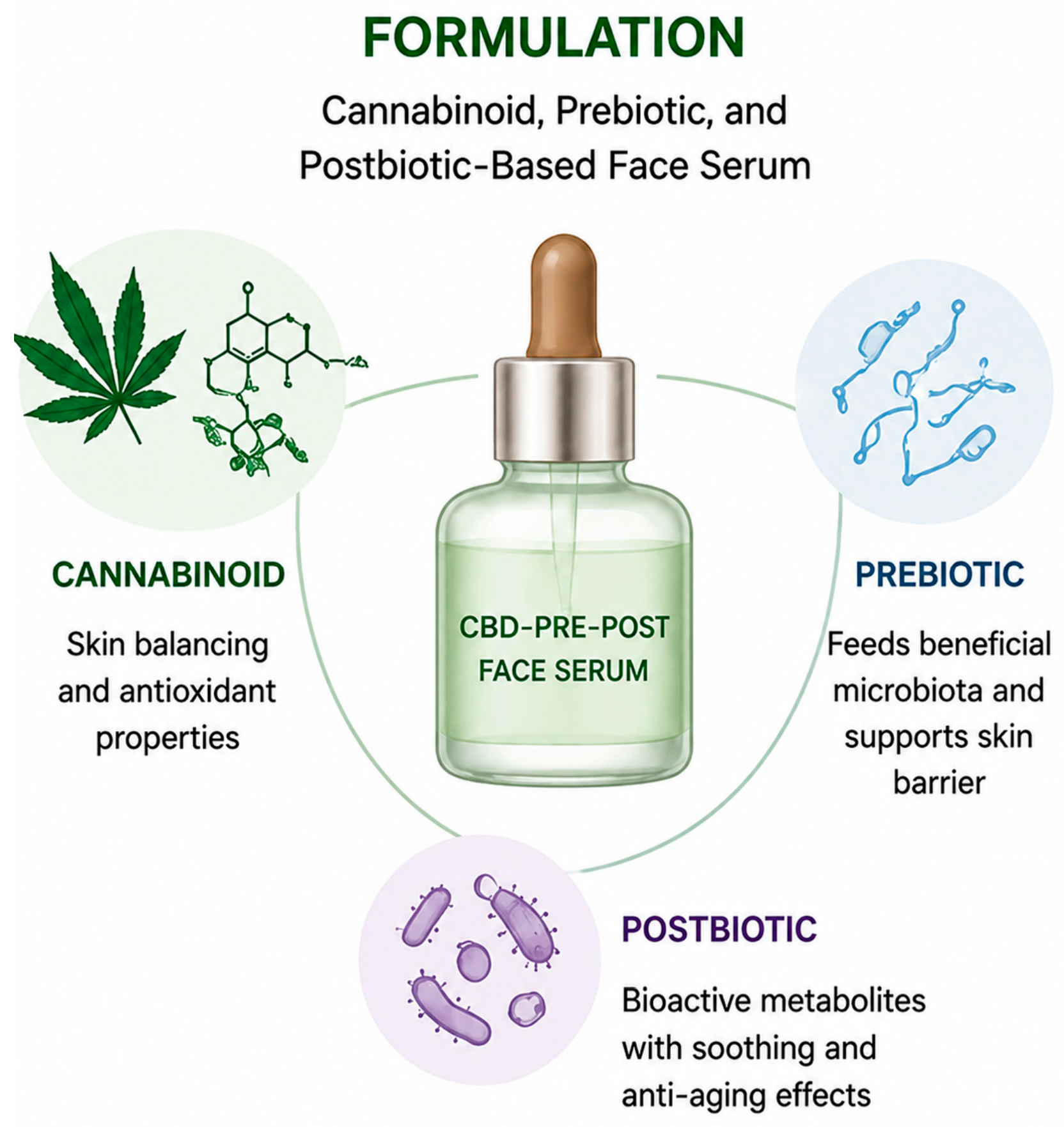
Formulation of a Cannabinoid-, Prebiotic-, and Postbiotic-Based Face Serum—A 30-Day Pilot Study on Skin Hydration and Aging Parameters

 ,
,  ,
,  and
and 
Abstract
1. Introduction
2. Materials and Methods
2.1. Cosmetic Ingredients Used for the Development of the Formulation
2.2. Assessment of the Developed Formulation’s Physical-Chemical and Microbiological Properties
2.2.1. Testing the Cosmetic Formulation for Stability
2.2.2. The Cosmetic Formulation’s Quality Control
2.2.3. Assessment of Microbiological Quality and Preservative Performance of the Cosmetic Formulation
2.3. Efficacy Assessment of the Cosmetic Formulation
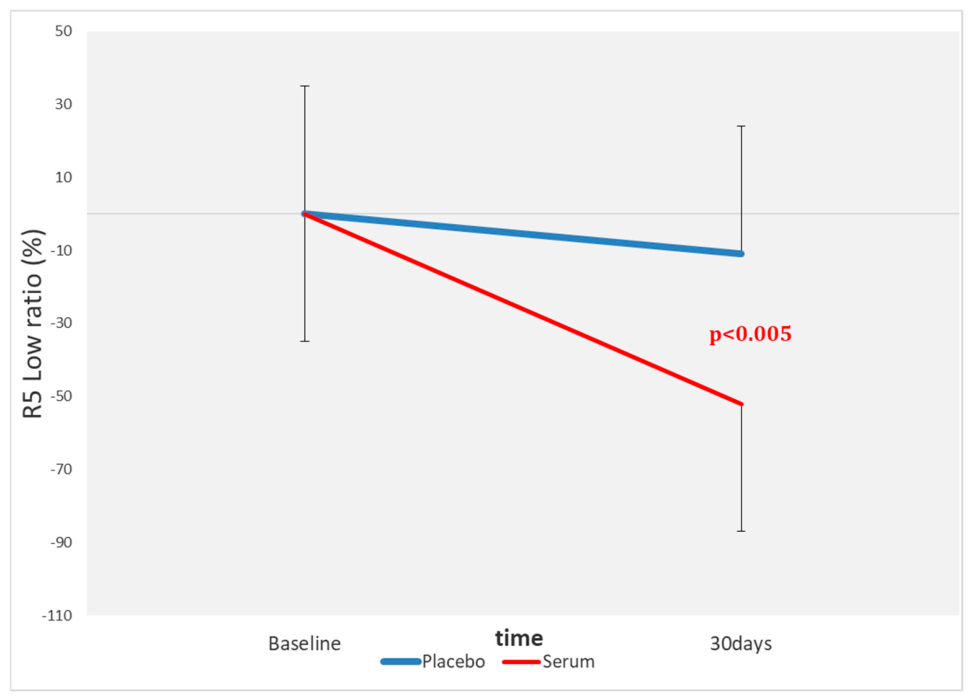
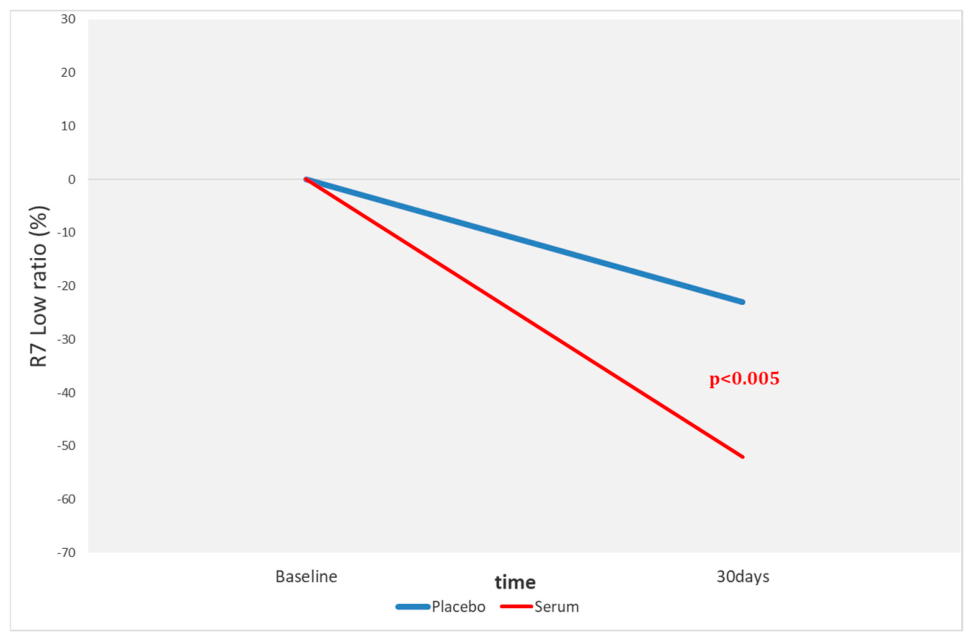
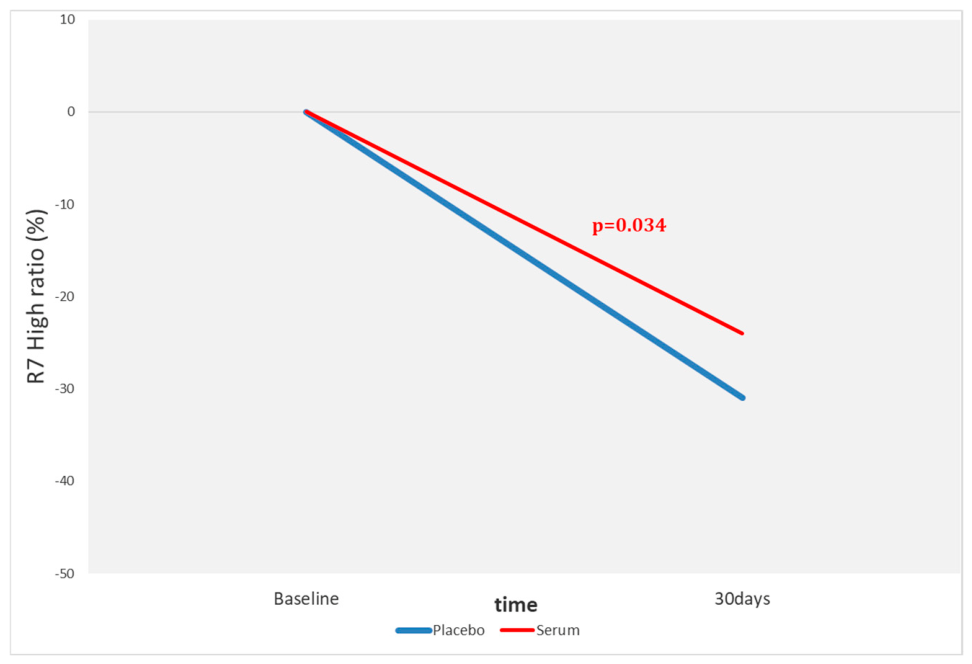
- Skin biomechanical characteristics were evaluated using the Cutometer® Dual MPA 580 (Courage + Khazaka Electronic GmbH, Cologne (Köln), Germany). Elasticity measurements were obtained through the R5 and R7 parameters, where R5 reflects net elasticity (%), expressed as the ratio between elastic deformation during suction and immediate recovery during the relaxation phase (Ur/Ue), while R7 represents the percentage ratio of immediate recovery relative to total skin deformation following suction (Ur/Uf). Skin hydration measurements were performed using the Corneometer CM825®, whereas transepidermal water loss (TEWL) was determined using the Tewameter TM300®.
- Skin microtopographical characteristics were further examined using the Visioscan® VC98 USB system (Courage + Khazaka Electronic GmbH). Surface characteristics were quantified according to Surface Evaluation of the Living Skin (SELS) parameters, including smoothness (SEsm), roughness (SEr), scaliness (SEsc), and wrinkle-associated parameters (Sew).
2.4. Statistical Analysis
3. Results
3.1. Quality Control Evaluation of the Face Serum Included Stability Studies, Physicochemical Characterization, and Microbiological Assessment
3.2. Biophysical Measurements
3.2.1. Elasticity Index-R5
3.2.2. Elasticity Index-R7
3.2.3. Keratin Hydration
3.2.4. Transepidermal Water Loss
3.2.5. Skin Topography
Smoothness (SEsm)
Roughness (SEr)
Scaliness (SEsc)
Wrinkles (Sew)
3.2.6. Self-Assessment Questionnaire
4. Discussion
5. Conclusions
Author Contributions
Funding
Informed Consent Statement
Data Availability Statement
Acknowledgments
Conflicts of Interest
References
- Tiwari, S.; Talreja, M.S. A concept of nanotechnology in cosmetics: A complete overview. Adalya J. 2020, 9, 14–23. [Google Scholar] [CrossRef] [PubMed]
- Ledwoń, P.; Errante, F.; Papini, A.M.; Rovero, P.; Latajka, R. Peptides as active ingredients: A challenge for cosmeceutical industry. Chem. Biodivers. 2021, 18, e2000833. [Google Scholar] [CrossRef]
- Nowak, K.; Jabłońska, E.; Ratajczak-Wrona, W. Controversy around parabens: Alternative strategies for preservative use in cosmetics and personal care products. Environ. Res. 2021, 198, 110488. [Google Scholar] [CrossRef]
- Al-Ghazzewi, F.H.; Tester, R.F. Impact of prebiotics and probiotics on skin health. Benef. Microbes 2014, 5, 99–107. [Google Scholar] [CrossRef] [PubMed]
- Martins, A.M.; Gomes, A.L.; Vilas Boas, I.; Marto, J.; Ribeiro, H.M. Cannabis-based products for the treatment of skin inflammatory diseases: A timely review. Pharmaceuticals 2022, 15, 210. [Google Scholar] [CrossRef]
- Nadar, R.M.; Pathak, S.; Ramesh, S.; Govindarajulu, M.; Moore, T.; Agrawal, D.C.; Dhanasekaran, M. Cannabis-based cosmetic products and their uses. In Cannabis/Marijuana for Healthcare; Agrawal, D.C., Kumar, R., Dhanasekaran, M., Eds.; Springer: Singapore, 2022. [Google Scholar] [CrossRef]
- Morean, M.E.; Lederman, I.R. Prevalence and correlates of medical cannabis volunteers’ use of cannabis for recreational purposes. Addict. Behav. 2019, 93, 233–239. [Google Scholar] [CrossRef]
- Walsh, Z.; Callaway, R.; Belle-Isle, L.; Capler, R.; Kay, R.; Lucas, P.; Holtzman, S. Cannabis for therapeutic purposes: Patient characteristics, access, and reasons for use. Int. J. Drug Policy 2013, 24, 511–516. [Google Scholar] [CrossRef]
- Huestis, M.A.; Solimini, R.; Pichini, S.; Pacifici, R.; Carlier, J.; Busardò, F.P. Cannabidiol adverse effects and toxicity. Curr. Neuropharmacol. 2019, 17, 974–989. [Google Scholar] [CrossRef]
- Hamilton, H.A.; Brands, B.; Ialomiteanu, A.R.; Mann, R.E. Therapeutic use of cannabis: Prevalence and characteristics among adults in Ontario, Canada. Can. J. Public Health 2017, 108, e282–e287. [Google Scholar] [CrossRef]
- Błędzka, D.; Gromadzińska, J.; Wąsowicz, W. Parabens: From environmental studies to human health. Environ. Int. 2014, 67, 27–42. [Google Scholar] [CrossRef] [PubMed]
- Nowak, K.; Ratajczak-Wrona, W.; Górska, M.; Jabłońska, E. Parabens and their effects on the endocrine system. Mol. Cell. Endocrinol. 2018, 474, 238–251. [Google Scholar] [CrossRef]
- Stout, E.I.; McKessor, A. Glycerin-based hydrogel for infection control. Adv. Wound Care 2012, 1, 48–51. [Google Scholar] [CrossRef]
- Cosmetics Europe. Guidelines on Stability Testing of Cosmetic Products. 2004. Available online: https://www.cosmeticseurope.eu (accessed on 21 February 2023).
- Juncan, A.M. Packaging evaluation and safety assessment of a cosmetic product. Mater. Plast. 2018, 55, 644–647. [Google Scholar] [CrossRef]
- Juncan, A.M.; Rus, L.L. Influence of packaging and stability test assessment of an anti-aging cosmetic serum. Mater. Plast. 2018, 55, 426–430. [Google Scholar] [CrossRef]
- Montenegro, L.; Rapisarda, L.; Ministeri, C.; Puglisi, G. Effects of lipids and emulsifiers on cosmetic emulsions containing vitamin E. Cosmetics 2015, 2, 35–47. [Google Scholar] [CrossRef]
- Olejnik, A.; Kapuscinska, A.; Schroeder, G.; Nowak, I. Physico-chemical characterization of formulations containing endomorphin-2 derivatives. Amino Acids 2017, 49, 1719–1731. [Google Scholar] [CrossRef]
- Bashir, A.; Lambert, P. Microbiological study of used cosmetic products. J. Appl. Microbiol. 2020, 128, 598–605. [Google Scholar] [CrossRef]
- Devlieghere, F.; De Loy-Hendrickx, A.; Rademaker, M.; Pipelers, P.; Crozier, A.; De Baets, B.; Joly, L.; Keromen, S. Evaluation of dispensing systems in preservative-free cosmetics. Int. J. Cosmet. Sci. 2015, 37, 627–635. [Google Scholar] [CrossRef] [PubMed]
- Fiorentino, F.A.M.; Chorilli, M.; Salgado, H.R.N. Challenge test for preservative efficiency. Anal. Methods 2011, 3, 790–798. [Google Scholar] [CrossRef]
- Halla, N.; Fernandes, I.P.; Heleno, S.A.; Costa, P.; Boucherit-Otmani, Z.; Boucherit, K.; Rodrigues, A.E.; Ferreira, I.C.F.R.; Barreiro, M.F. Cosmetics preservation: A review on present strategies. Molecules 2018, 23, 1571. [Google Scholar] [CrossRef] [PubMed]
- Siegert, W. ISO 11930—Evaluation of antimicrobial preservation. SOFW J. 2012, 138, 44–53. [Google Scholar]
- ISO/IEC 17025:2017; General Requirements for the Competence of Testing and Calibration Laboratories. International Organization for Standardization (ISO): Geneva, Switzerland, 2017.
- Siegert, W. Comparison of microbial challenge testing methods for cosmetics. Househ. Pers. Care Today 2013, 8, 32–39. [Google Scholar]
- Gardiki, V.; Varvaresou, A.; Papageorgiou, S.; Protopapa, E.; Pavlou, P.; Rallis, E.; Papadopoulos, A.; Chaniotis, D. A Randomized, Double-Blind, Placebo-Controlled Study Evaluating a Novel Skin Care Cream with Olea europaea Stem Cell Extract Following Nd:YAG 1064 nm Laser Epilation. Cosmetics 2025, 12, 2. [Google Scholar] [CrossRef]
- Xagorari, V. Efficacy Studies of Personal Care Products Containing Cannabinoids and Prebiotics/Probiotics. Master’s Thesis, University of West Attica, Egaleo, Greece, 2024. [Google Scholar] [CrossRef]
- Pavlou, P.; Xagorari, V.; Tiligada, Z.; Miltidis, C.; Papageorgiou, S.; Varvaresou, A. Efficacy study of facial products enriched with probiotics/prebiotics & cannabinoids. Ep. Klin. Farmakol. Farmakokinet. 2024, 42, 17–21. [Google Scholar]




| Commercial Name | INCI Name | Cosmetic Claim |
|---|---|---|
| SymReboot® L19 | Maltodextrin, Lactobacillus Ferment | Component based on probiotics for the care of sensitive skin. It is derived from a structurally preserved bacterium. By triggering the skin’s built-in defensive system, SymReboot® L19 helps to protect and soothe the skin barrier. |
| Ecodermine® | Glycerin, Lactitol, Xylitol | Protecting agent/Prebiotic. This composition consists of two complementary active ingredients dissolved in glycerin and is designed to support the maintenance and restoration of the cutaneous microflora and skin ecosystem. Its activity is associated with promoting microbial homeostasis within the skin microenvironment, thereby contributing to the reduction in disturbances related to microbial imbalance and supporting the skin’s natural defense mechanisms. |
| Lipobelle® Pino C | Pinus Cembra Wood Extract, Cannabis Sativa Seed Oil, Cannabis Sativa Leaf Extract, Lecithin, Alcohol, Pentylene Glycol, Tocopherol, Aqua/Water | It exhibits properties associated with the reduction in oxidative stress and discomfort sensation while also supporting tissue regeneration processes following injury and contributing to the relaxation of facial muscle tension. Additionally, it has been associated with improvements in skin appearance through reductions in parameters related to hemoglobin and melanin content, contributing to smoother skin texture in areas such as the cheeks, periocular region, and forehead. Lipobelle™ Pino C is a phytocomplex containing encapsulated cannabidiol (CBD). |
| Commercial Name | INCI | Function | Supplier | INCI-KEY * (%) |
|---|---|---|---|---|
| Aqua | Water | solvent | A | |
| Panthenol | Panthenol | moisturizing agent | BASF | E |
| Glycerine | Glycerin | denaturant/humectant/solvent | COSMOCHEM | E |
| Zemea® | Propanediol | denaturant/humectant/solvent | DuPont Tate & Lyle Bio Products/Primient Covation | D |
| Hyaluronic acid | Hyaluronic acid | humectant/skin conditioning/moisturizing | Contipro | F |
| Siligel® | Xanthan Gum, Lecithin, Sclerotium Gum, Pullulan | gelling agent | Seppic | E |
| Aqua | Water | solvent | D | |
| SymReboot® L19 | Maltodextrin, Lactobacillus Ferment | active ingredient/probiotic-based ingredient for sensitive skin care | SYMRISE | E |
| Ecodermine® | Glycerin, Lactitol, Xylitol | active ingredient/preservation and restoration of cutaneous microflora and ecosystem | Lubrizol | E |
| Lipobelle® Pino C | Pinus Cembra Wood Extract, Cannabis Sativa Seed Oil, Cannabis Sativa Leaf Extract, Lecithin, Alcohol, Pentylene Glycol, Tocopherol, Aqua/Water | active ingredient/phyto-complex with encapsulated cannabidiol (CBD) | Lipotec (Lubrizol) | E |
| Alcohol Denat. | Alcohol Denat. | solvent | Merck Group, Sigma-Aldrich | E |
| Parfum | Parfum | deodorant/masking | ELTON | F |
| Nipaguard® SCE or | Sorbitan Caprylate, Propanediol, Benzoic Acid | preservative | Clariant | E |
| Euxyl® PE 9010 or | Phenoxyethanol, Ethylhexylglycerin | preservative | Schülke & Mayr | F |
| Iscaguard® DGP | Pentylene Glycol, caprylyl glycol, decylene glycol | preservative | ISCA UK | E |
| Covapearl Satin 931 | CI 77891, Mica | Sensient Cosmetic Technologies | F |
| Evaluation Time | Qualitative and Quantitative Evaluations |
|---|---|
| D0 | Instrument-based measurements of skin elasticity, hydration, transepidermal water loss (TEWL), and surface topography were performed prior to serum application. In parallel, a dermatological assessment was conducted to evaluate baseline skin condition. |
| D30 | Instrument-based assessments of skin elasticity, hydration, transepidermal water loss (TEWL), and skin surface topography were conducted following 30 days of serum application. A dermatological evaluation of baseline skin condition was also performed. In addition, tolerability and any adverse events were monitored, along with a self-assessment questionnaire to gather user feedback. |
| Test | Unit | Result |
|---|---|---|
| Viscosity at 20 °C (Brookfield DV-III Ultra) | cP | 3500–4500 |
| Density at 20 °C | g/cm3 | 1.00 ± 0.02 |
| Appearance | Homogeneous * | |
| Color | Light yellow | |
| Odor | Specific | |
| pH | 5.0–5.3 |
| Time | t = 0 | 1st Month | 2nd Month | 3rd Month |
|---|---|---|---|---|
| TRIAL: S1—Euxyl pe 9010 | ||||
| Viscosity | 4300 | 3170 | 3050 | 2750 |
| pH | 5.1 | 5.15 | 5.2 | 5.2 |
| Color | Light yellow | Light yellow | Light yellow | Light yellow |
| TRIAL: S2—Nipaguard® SCE | ||||
| Viscosity | 3700 | 3100 | 2700 | 2500 |
| pH | 5.05 | 5.21 | 5.3 | 5.33 |
| Color | Light yellow | Light yellow | Light yellow | Light yellow |
| TRIAL: S3—Iscaguard DGP | ||||
| Viscosity | 4100 | 3500 | 3250 | 3000 |
| pH | 5.01 | 5.1 | 5.15 | 5.2 |
| Color | Light yellow | Light yellow | Light yellow | Light yellow |
| TRIAL: S1—Euxyl pe 9010 | Colony-Forming Units per Gram (CFU/g) After: | ||||
|---|---|---|---|---|---|
| Test Organism | Baseline | 7 Days | 14 Days | 28 Days | Criteria |
| Pseudomonas aeruginosa DSMZ 1128 | 4.30 × 10⁵ | <10 | <10 | <10 | A |
| Staphylococcus aureus DSMZ 799 | 3.00 × 10⁵ | <10 | <10 | <10 | A |
| Escherichia coli DSMZ 1576 | 5.00 × 10⁵ | <10 | <10 | <10 | A |
| Candida albicans DSMZ 1386 | 1.30 × 10⁵ | <10 | <10 | <10 | A |
| Aspergillus brasiliensis DSMZ 1988 | 9.00 × 10⁴ | ΝΤ | <10 | <10 | A |
| TRIAL: S2—Nipaguard® SCE | Colony-Forming Units per Gram (CFU/g) After: | ||||
|---|---|---|---|---|---|
| Test Organism | Baseline | 7 Days | 14 Days | 28 Days | Criteria |
| Pseudomonas aeruginosa DSMZ 1128 | 4.30 × 10⁵ | <10 | <10 | <10 | A |
| Staphylococcus aureus DSMZ 799 | 3.00 × 10⁵ | <10 | <10 | <10 | A |
| Escherichia coli DSMZ 1576 | 5.00 × 10⁵ | <10 | <10 | <10 | A |
| Candida albicans DSMZ 1386 | 1.30 × 10⁵ | <10 | <10 | <10 | A |
| Aspergillus brasiliensis DSMZ 1988 | 9.00 × 10⁴ | ΝΤ | <10 | <10 | A |
| TRIAL: S3—Iscaguard DGP | Colony-Forming Units per Gram (CFU/g) After: | ||||
|---|---|---|---|---|---|
| Test Organism | Baseline | 7 Days | 14 Days | 28 Days | Criteria |
| Pseudomonas aeruginosa DSMZ 1128 | 4.30 × 10⁵ | <10 | <10 | <10 | A |
| Staphylococcus aureus DSMZ 799 | 3.00 × 10⁵ | <10 | <10 | <10 | A |
| Escherichia coli DSMZ 1576 | 5.00 × 10⁵ | <10 | <10 | <10 | A |
| Candida albicans DSMZ 1386 | 1.30 × 10⁵ | <10 | <10 | <10 | A |
| Aspergillus brasiliensis DSMZ 1988 | 9.00 × 10⁴ | ΝΤ | <10 | <10 | A |
| Parameters | Face Serum | p-Value | %Variable | Placebo | p-Value | %Variable | ||
|---|---|---|---|---|---|---|---|---|
| Baseline | 30 Days | Baseline | 30 Days | |||||
| R5 ratio (high) | 0.749 ± 0.314 | 0.558 ± 0.392 | 0.160 | −36.29(113.3) (IQR) | 0.718 ± 0.370 | 0.485 ± 0.354 | 0.021 | −25.16(48.07) (IQR) |
| R5 ratio (low) | 0.590 ± 0.270 | 0.255 ± 0.195 | <0.005 | −52.23% ± 37.10 | 0.494 ± 0.295 | 0.389 ± 0.312 | 0.286 | −10.38% ± 51.45 |
| R7 ratio (high) | 0.478 ± 0.208 | 0.316 ± 0.183 | 0.034 | −24.10(87.8) | 0.469 ± 0.156 | 0.328 ± 0.125 | <0.005 | −31.13(34.2) |
| R7 ratio (low) | 0.427 ± 0.171 | 0.194 ± 0.115 | <0.005 | −52.05(44.6) | 0.341 ± 0.162 | 0.279 ± 0.137 | 0.287 | −23.59(90.5) |
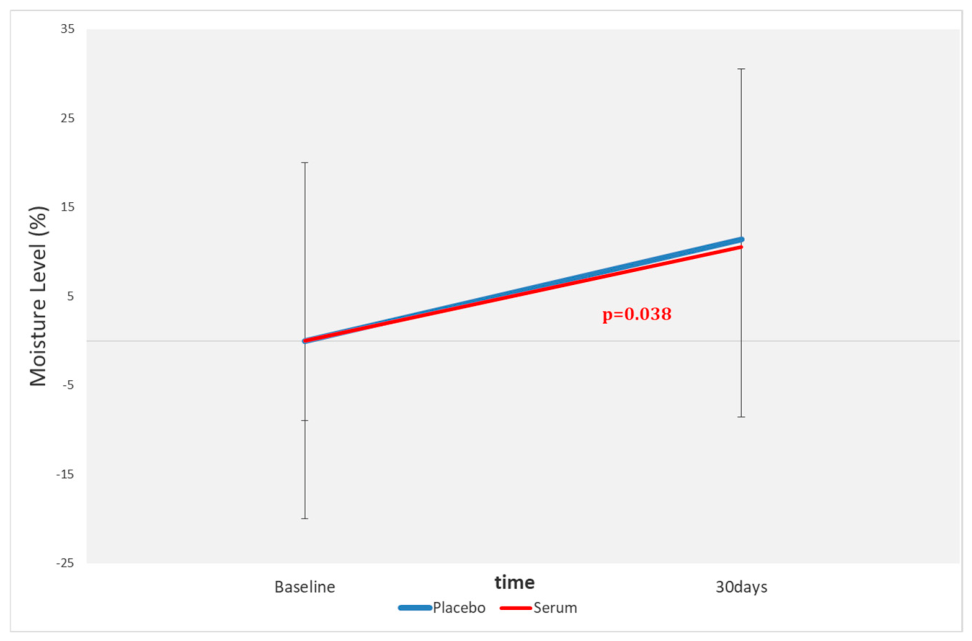
| Moisture level (hydration) | 69.72 ± 15.93 | 76.25 ± 13.85 | 0.038 | 10.51% ± 24.92 | 64.66 ± 16.50 | 69.76 ± 16.04 | 0.177 | 11.41% ± 16.34 |
| TEWL (g/h/m2) | 13.68 ± 7.51 | 14.35 ± 8.31 | 0.784 | −11.07(91.8) | 15.14 ± 7.61 | 16.94 ± 6.21 | 0.106 | 6.45(45.26) |
| SELS parameters | ||||||||
| SEsm (high) | 57.97 ± 11.68 | 60.8 ± 14.30 | 0.459 | 0.50(26.7) | 65.43 ± 11.08 | 63.91 ± 15.05 | 0.754 | −11.46(28.9) |
| SEsm (low) | 48.61 ± 8.52 | 50.95 ± 9.86 | 0.322 | 5.26(26.1) | 49.66 ± 7.26 | 50.68 ± 6.42 | 0.562 | 0.74(25.2) |
| SEr (high) | 3.82 ± 1.00 | 4.21 ± 2.38 | 0.438 | 9.21% ± 45.96 | 3.94 ± 1.00 | 4.18 ± 2.01 | 0.664 | 8.87% ± 49.88 |
| SEr (low) | 3.05 ± 0.68 | 3.34 ± 1.60 | 0.499 | 1.85(60.2) | 3.32 ± 1.58 | 0.382 | −1.51(65.5) | 2.86 ± 0.83 |
| SEsc (high) | 0.788 ± 0.275 | 0.791 ± 0.282 | 0.975 | 5.10(21.0) | 0.815 ± 0.316 | 0.776 ± 0.265 | 0.681 | −3.89(48.7) |
| SEsc (low) | 0.644 ± 0.350 | 0.700 ± 0.200 | 0.614 | 15.23(65.1) | 0.736 ± 0.273 | 0.679 ± 0.192 | 0.525 | −5.00(54.8) |
| Sew (high) | 50.65 ± 8.56 | 48.49 ± 9.13 | 0.431 | −3.13(28.1) | 49.60 ± 7.19 | 49.96 ± 9.17 | 0.885 | 2.77(30.7) |
| Sew (low) | 42.99 ± 8.79 | 45.16 ± 9.26 | 0.355 | 6.86% ± 21.25 | 40.50 ± 5.38 | 43.56 ± 8.99 | 0.278 | 9.06% ± 25.10 |
Disclaimer/Publisher’s Note: The statements, opinions and data contained in all publications are solely those of the individual author(s) and contributor(s) and not of MDPI and/or the editor(s). MDPI and/or the editor(s) disclaim responsibility for any injury to people or property resulting from any ideas, methods, instructions or products referred to in the content. |
© 2026 by the authors. Licensee MDPI, Basel, Switzerland. This article is an open access article distributed under the terms and conditions of the Creative Commons Attribution (CC BY) license.
Share and Cite
Panagoula, P.; Vasileia, X.; Zoi, T.; Miltiadis, C.; Spyridon, P.; Athanasia, V. Formulation of a Cannabinoid-, Prebiotic-, and Postbiotic-Based Face Serum—A 30-Day Pilot Study on Skin Hydration and Aging Parameters. Appl. Sci. 2026, 16, 5834. https://doi.org/10.3390/app16125834
Panagoula P, Vasileia X, Zoi T, Miltiadis C, Spyridon P, Athanasia V. Formulation of a Cannabinoid-, Prebiotic-, and Postbiotic-Based Face Serum—A 30-Day Pilot Study on Skin Hydration and Aging Parameters. Applied Sciences. 2026; 16(12):5834. https://doi.org/10.3390/app16125834
Chicago/Turabian StylePanagoula, Pavlou, Xagorari Vasileia, Tliligada Zoi, Chalikias Miltiadis, Papageorgiou Spyridon, and Varvaresou Athanasia. 2026. "Formulation of a Cannabinoid-, Prebiotic-, and Postbiotic-Based Face Serum—A 30-Day Pilot Study on Skin Hydration and Aging Parameters" Applied Sciences 16, no. 12: 5834. https://doi.org/10.3390/app16125834
APA StylePanagoula, P., Vasileia, X., Zoi, T., Miltiadis, C., Spyridon, P., & Athanasia, V. (2026). Formulation of a Cannabinoid-, Prebiotic-, and Postbiotic-Based Face Serum—A 30-Day Pilot Study on Skin Hydration and Aging Parameters. Applied Sciences, 16(12), 5834. https://doi.org/10.3390/app16125834