Article

Compressive Mechanical Anisotropy Evolution in Pretwinned AZ31 Mg Alloy upon Annealing

by
Seyed Mahmood Fatemi
1,*,
Henryk Paul
2 and
Jose Maria Cabrera
1,3
1
Department of Materials Science and Engineering, Campus Diagonal Besòs-EEBE, Universitat Politècnica de Catalunya-BarcelonaTech, 08019 Barcelona, Spain
2
Institute of Metallurgy and Materials Science, Polish Academy of Sciences (PAS), 31-018 Krakow, Poland
3
Fundació Centre CIM, Llorens i Artigas 12, 08028 Barcelona, Spain
*
Author to whom correspondence should be addressed.
Appl. Sci. 2026, 16(12), 5832; https://doi.org/10.3390/app16125832
Submission received: 2 December 2025 / Revised: 6 March 2026 / Accepted: 4 June 2026 / Published: 10 June 2026
(This article belongs to the Special Issue Processing and Microstructural Evolution of Alloys)

Abstract

Pretwinning followed by annealing was employed to modify the microstructure and texture of an AZ31 wrought magnesium alloy. A precompression step was applied to an as-rolled plate to introduce dense extension twin bands, after which annealing at 300 °C for 5, 15, and 60 min was conducted. The resulting microstructures were analyzed in terms of grain size, recrystallization behavior, and texture evolution. Mechanical properties were evaluated using uniaxial compression tests along the rolling, transverse, and normal directions to quantify changes in mechanical anisotropy. The results show that this thermomechanical treatment effectively reduces yield strength anisotropy through twin-assisted recrystallization and texture randomization. The mechanical response is interpreted based on microstructural changes and the activation of twining and slip systems.

1. Introduction

Although Mg alloys possess excellent properties such as low density and high specific strength, their use remains limited due to poor workability. This limitation arises primarily from the strong basal texture produced during thermos-mechanical processing, where basal slip and extension twinning cause basal planes to align perpendicular to the rolling or extrusion direction, reducing formability [1,2].
Mg offers only four independent basal and prismatic <a> slip systems, insufficient for uniform polycrystalline deformation [3]. The activation of pyramidal <c+a> slip is therefore essential for c-axis strain accommodation. However, <c+a> dislocations tend to dissociate into immobile configurations, promoting hardening while reducing ductility [4,5,6].
Strategies to modify texture include alloying with rare earth elements [7] and controlling recrystallization mechanisms such as twin-induced recrystallization, shear band nucleation, and particle-stimulated nucleation [8,9,10]. Multidirectional rolling can also weaken texture and improve ductility [11]. Recently, increased attention has been directed toward exploiting twinning-related microstructural changes [12]. Linking microstructural evolution to mechanical behavior remains a significant challenge for Mg alloys [13].
Extension twins, activated during tension parallel to the c-axis or compression perpendicular to it, can grow extensively and reorient the lattice, weakening the basal texture [12,13,14,15]. In contrast, contraction twinning is more difficult to activate and usually contributes minimally to texture evolution [13,14]. Pretwinning creates a dual-texture microstructure composed of matrix and twin domains, strongly influencing subsequent deformation and annealing behavior.
Precompression may raise compressive strength but decrease tensile yield strength while also increasing twin boundary dislocation interactions and restricting twin mobility [16,17,18,19,20]. Previous work by the present authors showed that pre-existing twins accelerate dynamic recrystallization and intensify texture rotation during deformation. Pretwins provide a strong driving force for recrystallization, often leading to nucleation at twin boundaries during annealing [21,22]. Although initially producing texture weakening, such recrystallized grains may later be consumed by grains with more favorable growth orientations, resulting in a strengthened basal texture after prolonged annealing [22].
Several studies have investigated the annealing behavior of pretwinned Mg alloys, typically using temperatures between 200 and 400 °C and relatively short annealing times (5–60 min) due to the high stored energy associated with twin boundaries. For example, annealing for 10–60 min at 200–350 °C in AZ31 Mg alloy revealed grain growth and twin boundary evolution during annealing [23]. Similarly, experiments performed at 200–400 °C for about 30 min showed gradual twin disappearance and microstructural recovery [24]. In other work, annealing between 250 and 350 °C for 10–30 min led to twin-induced recrystallization where twins acted as nucleation sites for new grains [25]. Studies focusing on mechanical response reported 15–60 min annealing at 200–300 °C, where detwinning and annealing hardening were observed [26]. Overall, these studies consistently show that the annealing of pretwinned Mg alloys promotes twin evolution, detwinning, and recrystallization, strongly influencing microstructure and mechanical properties.
Synchrotron-based in situ experiments on precompressed AZ31 sheet and plate reveal that pretwins raise the macroscopic yield stress; during RD tension, plasticity proceeds mainly by detwinning followed by prismatic slip, while ND tension activates basal slip first and then twinning, evidencing strongly path-dependent twin–slip interactions [27,28]. Consistently, Li et al. showed that cross precompression introduces dense and intersecting {10–12} twins in AZ31, breaking the strong basal texture and promoting higher yield strength through twinning-induced grain refinement and twin boundary strengthening [27,28]. In AZX311, even a modest in-plane pre-strain of about 4% along RD is sufficient to generate tensile twins; subsequent heat treatment allows tuning of the twin fraction and texture, which substantially improves room temperature stretch formability by increasing the Erichsen index and reducing r-value anisotropy [29]. Under biaxial loading, pretwinned AZ31 exhibits strong hardening and pronounced loading path dependence: ND-dominated stress facilitates further twinning, whereas TD-dominated stress favors detwinning, meaning that the balance between twin growth and detwinning governs both yield stress and work-hardening behavior [30]. MDPI studies by Dai et al. further demonstrate that pretwins in AZ31 under biaxial tension not only refine grains but also reorient substantial volume fractions, thereby modifying the activation of basal versus non-basal slip and providing a controllable transition from low-yield detwinning-dominated response to higher-yield twinning-dominated behavior as the applied stress ratio changes [30].
In contrast to previous studies that primarily focused either on the deformation behavior of pretwinned Mg alloys or on texture changes after prolonged annealing, the present work focuses on the short-time annealing response of a heavily pretwinned AZ31 alloy and its direct impact on mechanical anisotropy. The novelty of this study lies in providing a quantitative assessment of (i) twin volume fraction retention and reduction during annealing, (ii) the progression of twin-assisted recrystallization and recrystallized grain fraction, and (iii) the corresponding evolution of texture intensity and orientation distribution. These microstructural and textural metrics are systematically correlated with the compressive yield and flow responses along the rolling, transverse, and normal directions. By explicitly linking twin fraction, recrystallization state, and texture randomization to anisotropy reduction, this work provides new mechanistic insight into how pretwinning followed by short annealing can be used as an effective strategy for tailoring isotropic mechanical behavior in wrought magnesium alloys.

2. Materials and Methods

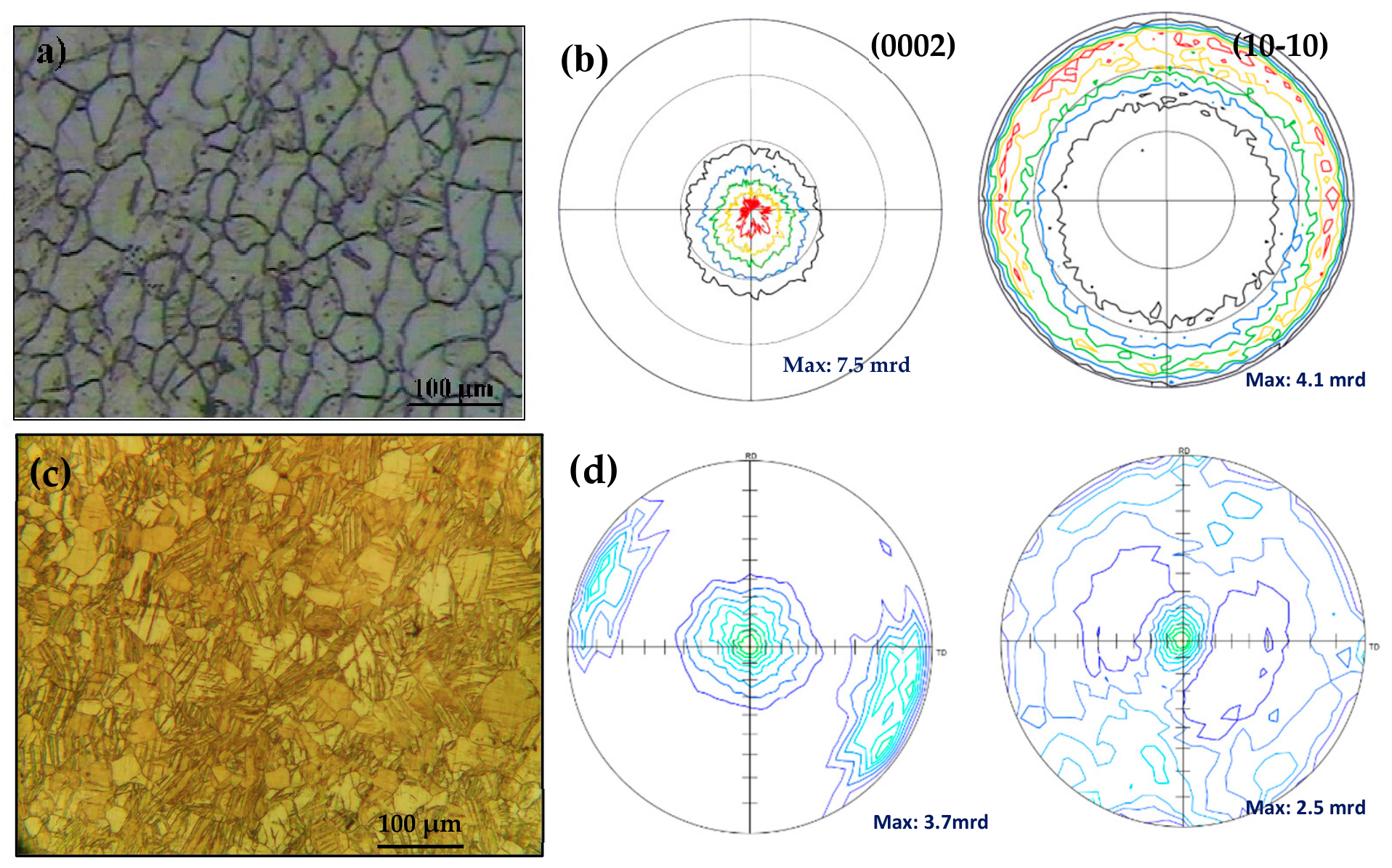
A commercial rolled AZ31 Mg alloy (Mg–2.9Al–0.9Zn–0.7Mn, wt.%) with a thickness of 22 mm was used as the experimental material. The as-received plate exhibited a fully recrystallized equiaxed microstructure with an average grain size of 45 μm and no observable twins. Its initial crystallographic texture, shown in Figure 1a,b, displayed a strong basal component, with the c-axis nearly parallel to the sample normal direction (ND) and the a-axes randomly distributed within the rolling plane. Precompression was carried out at room temperature under uniaxial loading along the rolling direction. A total compressive strain of 6% was applied at a constant true strain rate of 0.001 s−1 using a single monotonic loading path without intermediate unloading. This loading condition was selected to introduce a high density of extension twins while avoiding macroscopic instability. This condition is referred to as pretwinned (PT). The selected strain level was based on previous findings [12], demonstrating that 6% precompression produces a high density of extension twins. In the current work, this could easily generate a high density of extension twins with a 79% volume fraction. Twinning reduced the effective mean grain size to approximately 25 μm when considering the contribution of both initial grain boundaries and twin boundaries. The microstructure and texture of the PT alloy are shown in Figure 1c,d. The texture components are presented as (0002) and (10–10) pole figures. Due to extension twinning, which induces an ~86° lattice rotation about the a-axis, the basal poles became inclined by nearly 40° toward RD, and prismatic planes were realigned within the rolling plane.
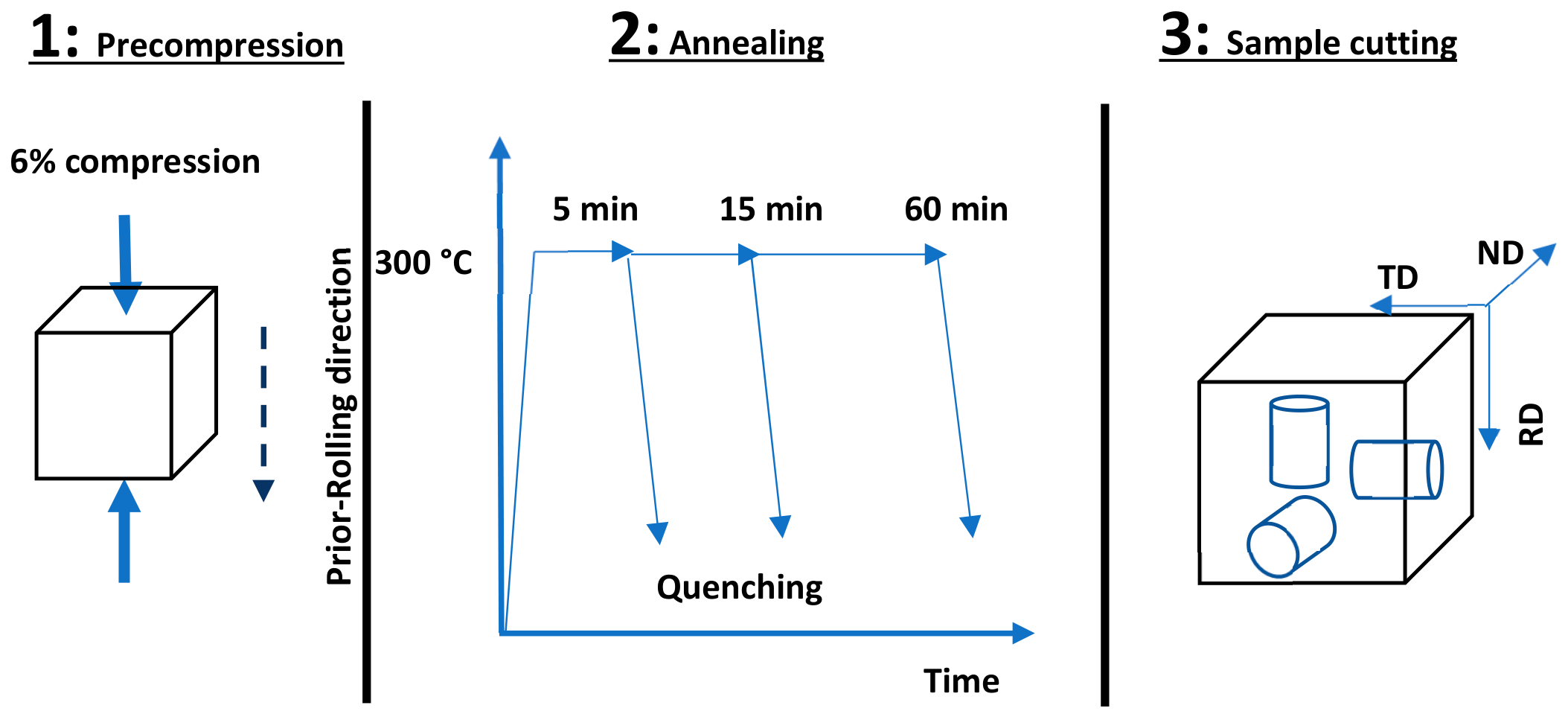
Annealing was conducted in a protective argon atmosphere to prevent oxidation of the magnesium alloy. Samples were heated at a controlled rate of 10 °C/min to the target temperature of 300 °C. The holding time (5, 15, or 60 min) was defined from the moment the sample temperature, measured using a contact thermocouple attached to the specimen, reached the target value. After annealing, specimens were immediately quenched in cold water to preserve the annealed microstructure. Figure 2 shows a schematic presentation of the employed thermomechanical treatment. Specimens were sectioned parallel to RD, mechanically polished, and examined using optical microscopy and a scanning electron microscope (FEGSEM, FEI Quanta 3D) furnished with an electron back scattered diffraction (EBSD) facility. Crystallographic texture was measured using X-ray diffraction on a four-circle goniometer operating in reflection mode with Cu Kα radiation. Experimental (10–10) and (0002) pole figures were collected using a 5° × 5° grid, with sample tilts from 0 to 85° and azimuthal rotations from 0 to 355°. Standard background and defocusing corrections were applied using data obtained from random powder samples.
Cylindrical compression specimens with a diameter of 10 mm and a height of 15 mm were machined from the as-rolled and annealed plates along the rolling (RD), transversal (TD), and normal (ND) directions. Teflon tape was used to minimize friction at the anvil–sample interface. Tests were performed on a SANTAM S150 universal testing machine, with at least three repetitions per condition to ensure statistical reliability.

3. Results and Discussion

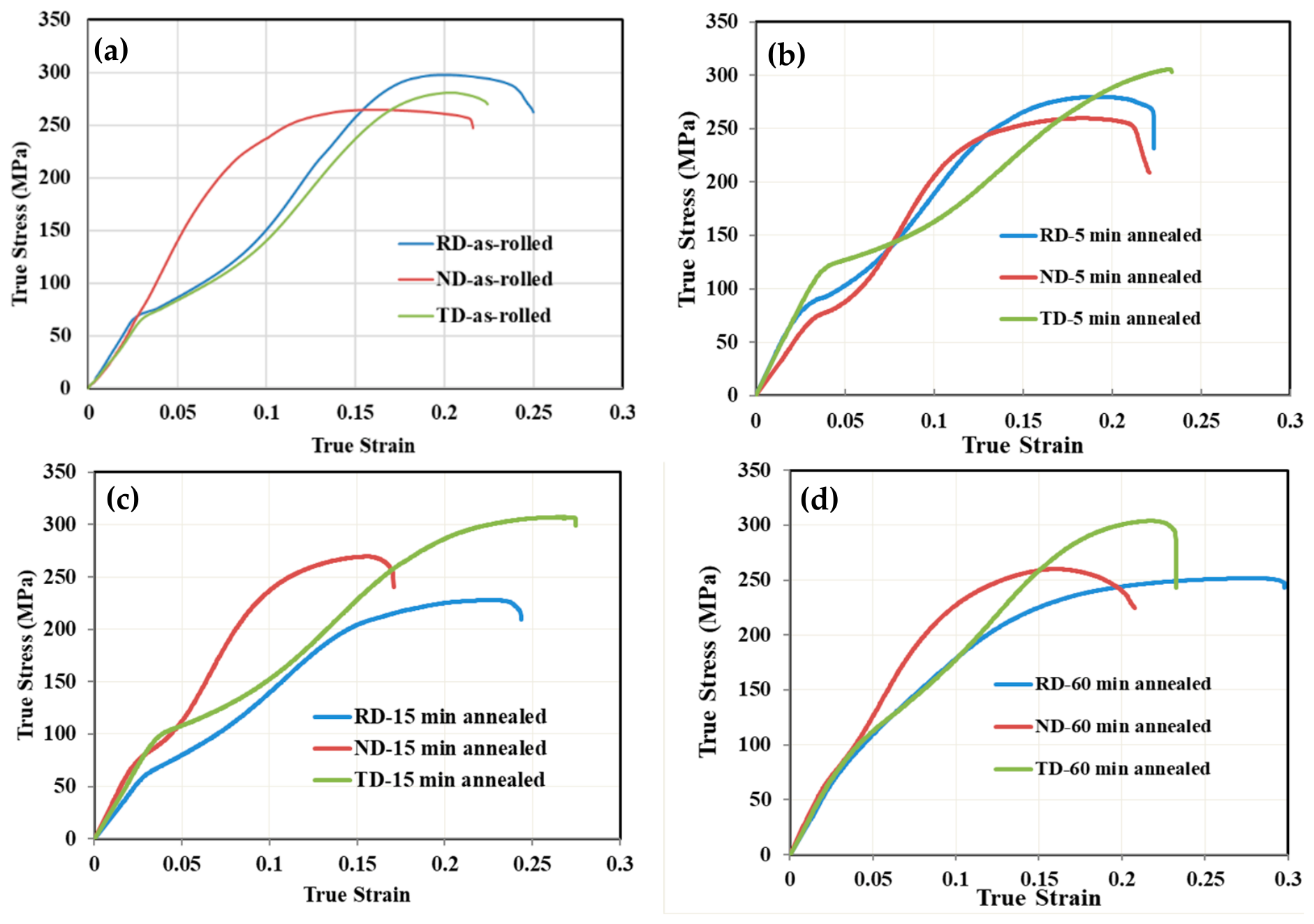
The true stress–strain curves of the as-rolled AZ31 alloy (Figure 3a) reveal a pronounced dependence on the loading direction. Samples deformed along the RD and TD exhibit the characteristic sigmoidal hardening response. At small strains, the rapid activation of extension twins increases the hardening rate because twin–matrix boundaries act as substantial barriers to dislocation motion and promote strain localization. As twinning progresses, these boundaries accumulate dense dislocation networks, further enhancing hardening at intermediate strains. Once twinning saturates, however, the hardening rate decreases as deformation becomes dominated by slip, for which dislocation storage is less efficient [27]. This type of sigmoidal response is well established in rolled Mg alloys subjected to compression along RD or TD, where deformation twinning plays a major role.
In contrast, ND-oriented samples do not exhibit sigmoidal behavior; instead, their hardening rate decreases monotonically with strain. This difference arises because ND loading strongly disfavors extension twinning. As a result, deformation is primarily governed by secondary pyramidal slip, a mechanism with a higher critical resolved shear stress (CRSS) and lower hardening capacity. The absence of twin-induced hardening and the dominance of non-basal slip systems explain the reduced strain-hardening rate observed along ND.
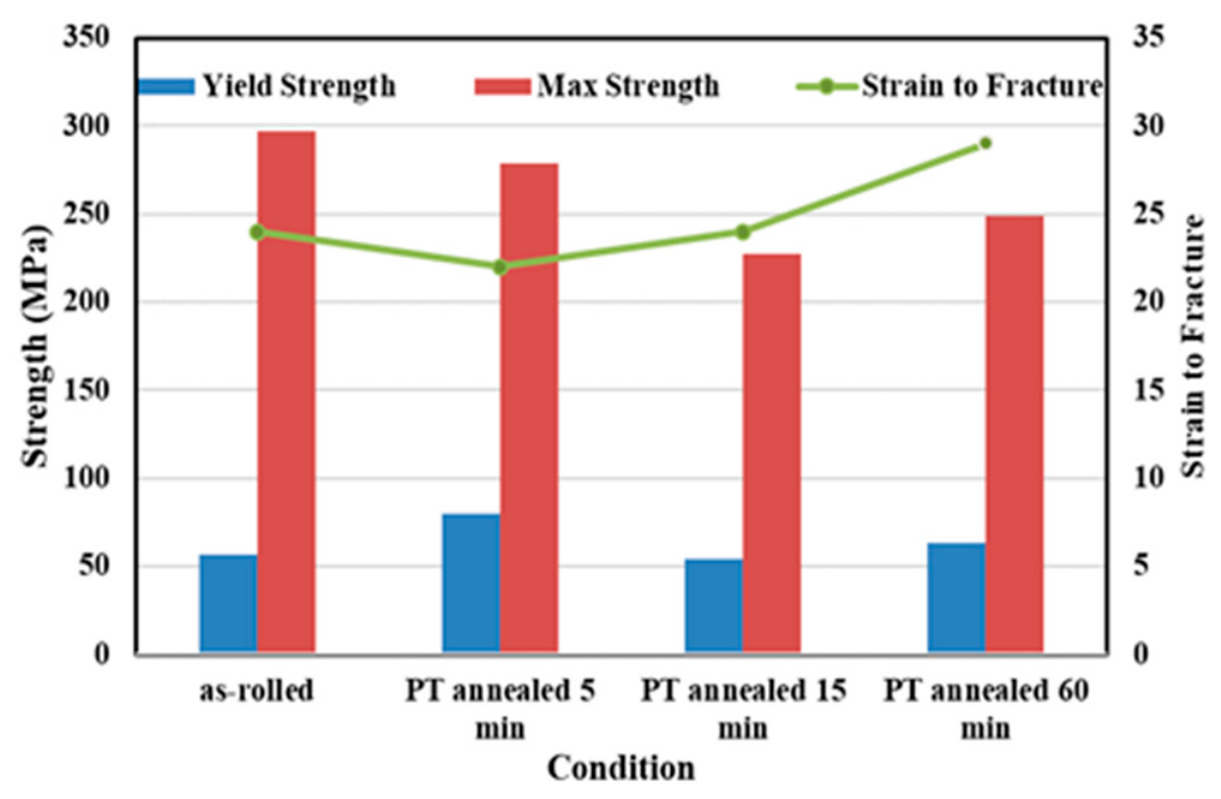
Figure 3b–d show the stress–strain curves for the PT material after annealing. Remarkably, all PT-annealed samples display sigmoidal flow behavior regardless of loading direction. To examine the influence of annealing, Figure 4 compares the mechanical response along RD between the as-rolled and PT-annealed conditions. Both strength and ductility vary significantly with annealing time, reflecting combined effects of the evolving grain size and crystallographic texture. Therefore, interpretation of the mechanical behavior requires detailed analysis of the microstructural and textural evolution.
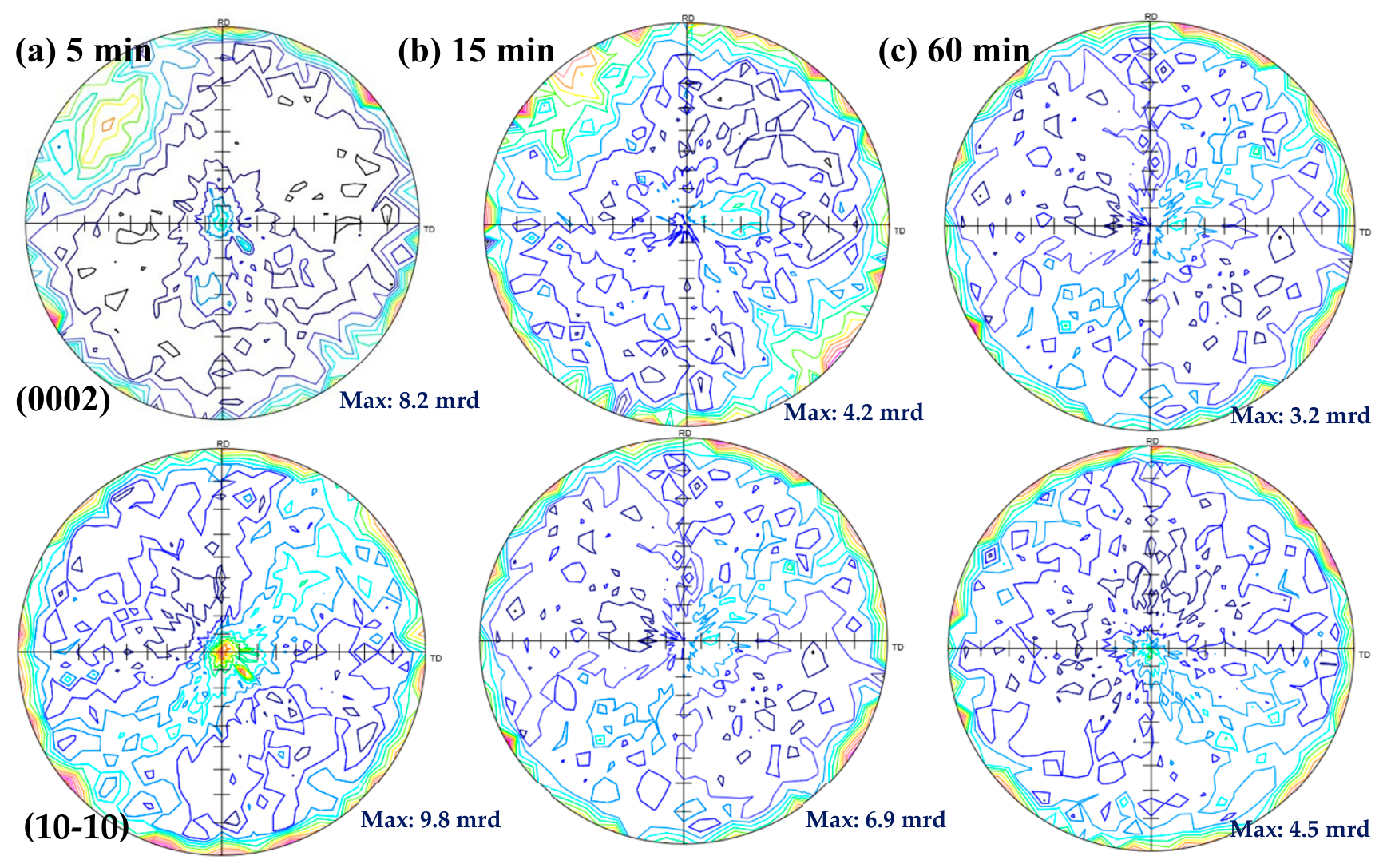
Figure 5 presents the (0002) and (10–10) pole figures for the PT-annealed samples. After 5 min of annealing, the initially strong basal texture of the as-rolled plate is partitioned into components with basal planes either parallel to the rolling plane or inclined by approximately 40°, accompanied by redistribution of the prismatic orientations relative to ND. As annealing time increases to 15 and 60 min, the basal texture becomes significantly weakened. The basal poles become randomly oriented and lie nearly 90° away from ND, indicating substantial texture randomization. At short annealing times (5 min), the prismatic plane intensity is relatively high, indicating that many grains retain orientations imposed by rolling, with strong clusters appearing at characteristic off-center angles associated with deformation texture. By 15 min, recovery processes sharpen some of these orientations, causing certain prismatic poles to show increased definition and slightly higher maxima, while the angular spread of contours becomes narrower, meaning grains begin to align more consistently toward specific crystallographic directions. However, at longer annealing times (60 min), recrystallization reduces the overall texture strength: the prismatic planes show lower maxima and more diffuse contours, indicating a broadening of angles and partial randomization of orientations as new grains form with less preferred alignment.
To further analyze the deformation behavior, Schmid factors for the principal slip and twinning systems were calculated and are summarized in Table 1, using CRSS values of 10, 55, 30, and 19 MPa for basal slip, prismatic slip, twinning, and {10–12} detwinning, respectively [28]. For the as-rolled alloy, the RD orientation favors deformation by extension twinning and prismatic slip. The {10–10} planes are either perpendicular or inclined by 30° to the loading axis; only the latter orientation contributes, and modestly, to plasticity. The TD orientation similarly promotes extension twinning and prismatic slip. In contrast, the ND orientation suppresses extension twinning, leading to deformation governed predominantly by secondary pyramidal slip.
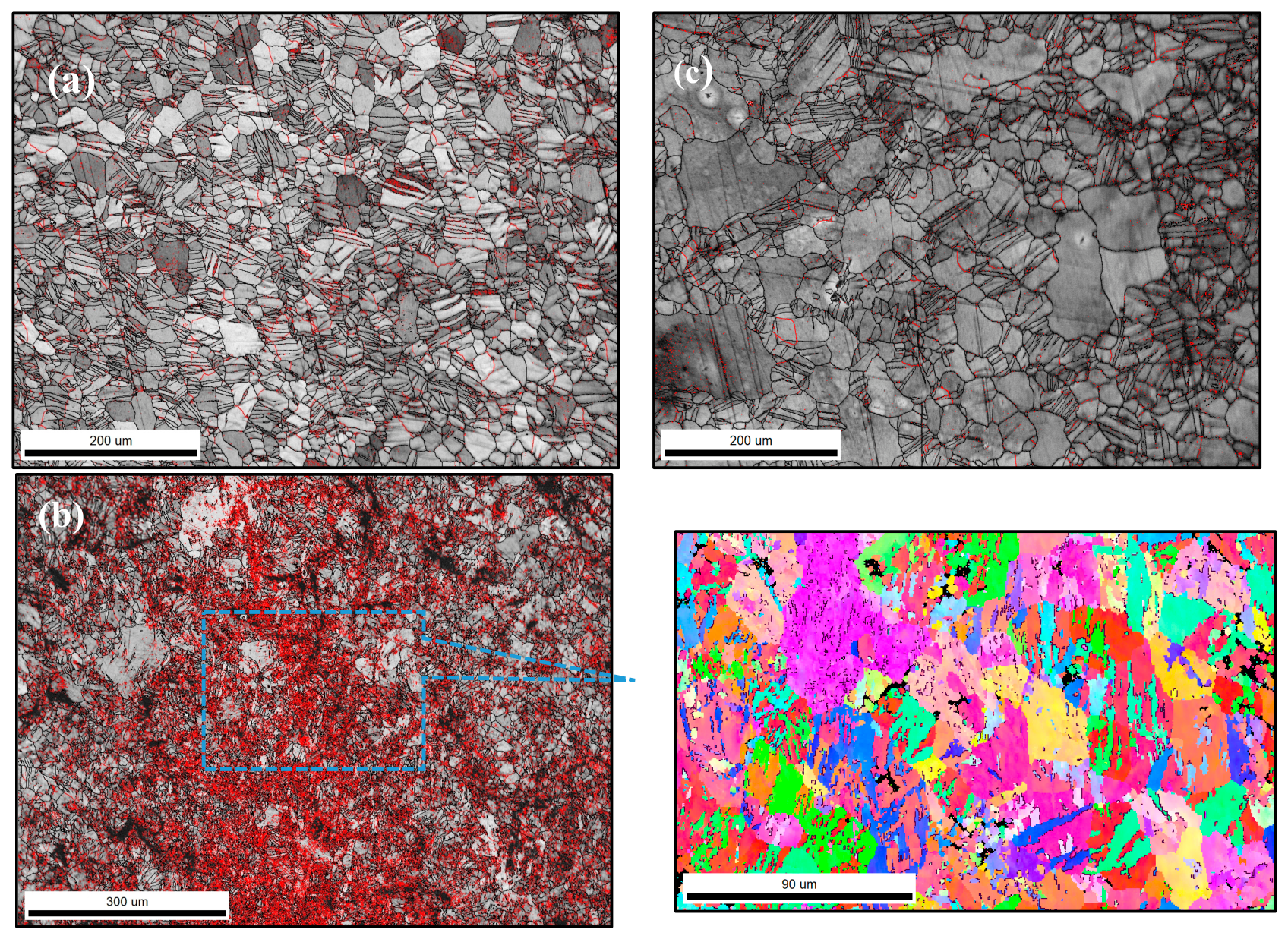
The microstructure after 5 min of annealing (Figure 6a) still contains numerous twin bands, demonstrating that this duration is insufficient to fully remove the pretwinned regions. Consequently, the remaining twins contribute to strengthening during subsequent deformation. Under RD loading, the twinned areas adopt hard orientations for both twinning and basal slip; therefore, deformation occurs mainly through {10–12} twinning and basal slip within the untwinned matrix. The Hall–Petch strengthening imposed by the twin boundaries increases the critical stresses for both slip and twinning, resulting in higher flow stresses after 5 min of annealing. Although the Schmid factor for basal slip increases, the sigmoidal flow curve confirms that extension twinning still initiates deformation, consistent with its low CRSS. Overall, the elevated yield strength is attributed to Hall–Petch strengthening combined with the reduced Schmid factor for twinning.
After 15 min of annealing (Figure 6b), some twin bands fragment into new grains through twin dynamic recrystallization (TDRX), identifiable by their distinctive morphology. The resulting grain size is approximately 35 μm. The numerous red points in Figure 6b do not represent a higher number of retained twins. Instead, they correspond to fragmented boundaries whose misorientation angles remain close to the characteristic twin misorientation, causing them to appear in red in the analysis. Texture randomization observed in Figure 5b is consistent with TDRX, which is known to generate new grains with orientations different from their parent twins [29]. According to Table 1, the texture after 15 min still permits favorable activation of extension twinning, explaining the persistence of sigmoidal flow. Relative to the 5 min condition, the recovery of dislocations, removal of twin boundaries, and formation of strain-free recrystallized grains promote marked softening, reducing the yield strength. However, low Schmid factors for basal and prismatic slip limit hardening capability at higher strains, leading to reduced maximum strength and strain-to-failure.
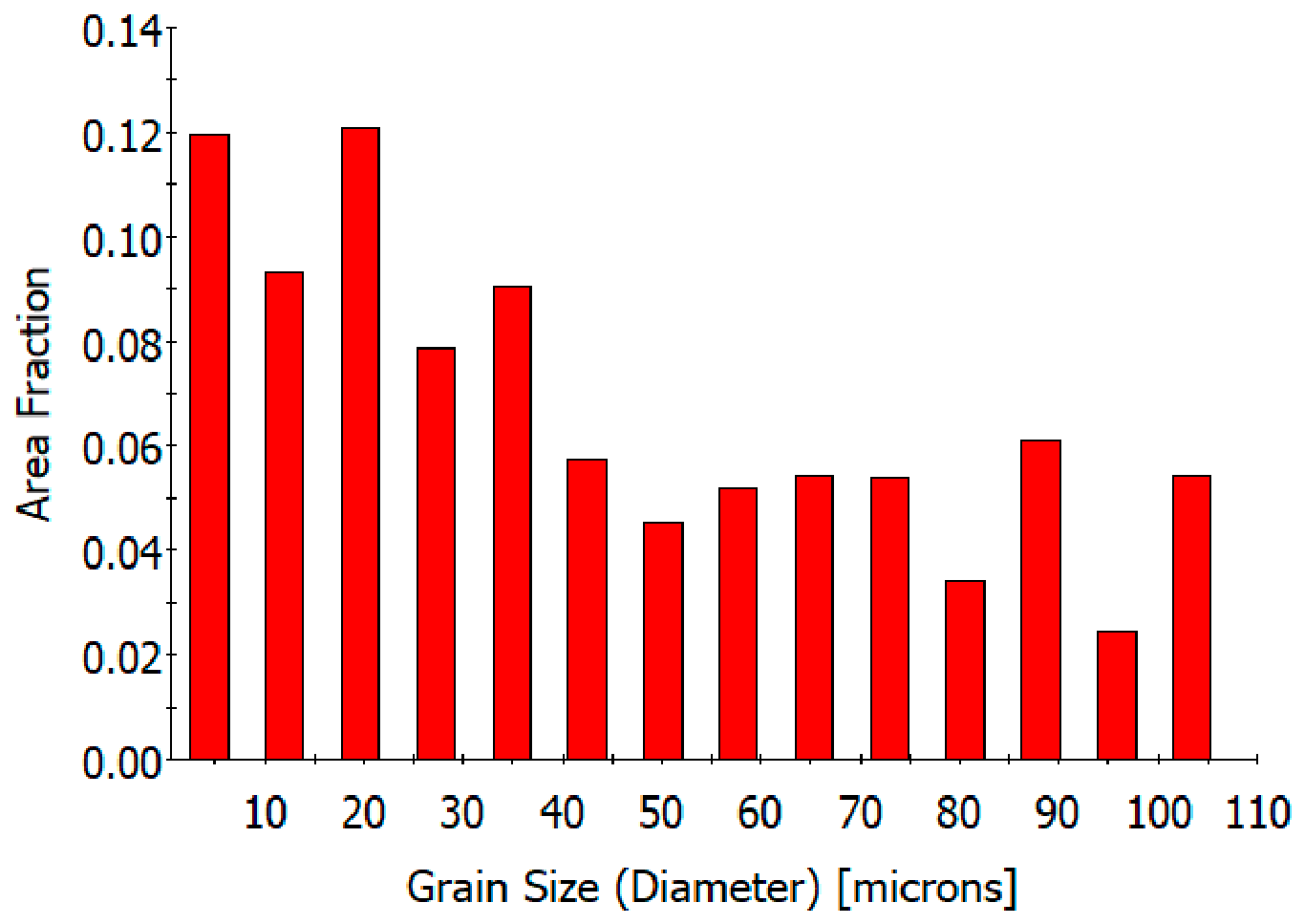
After 60 min of annealing (Figure 6c), extensive recrystallization has occurred, although a small fraction of twins remains (15%). Some grains grow preferentially by consuming twinned regions due to their higher stored energy. Such selective growth favors orientations that minimize the overall strain energy. Despite this growth, the mean grain size remains essentially unchanged. The basal and prismatic planes become nearly randomized around ND, reflecting substantial texture transformation. This microstructure still supports extension twinning at low strains, consistent with the initial sigmoidal response. Moreover, the bimodal grain size distribution enhances workability: fine grains strengthen the material while coarse grains improve ductility. The bimodal grain structure developed after 60 min of annealing is clearly evidenced by the grain size distribution histogram shown in Figure 7, which reveals two distinct grain populations; the corresponding mean grain size was measured to be approximately 28 µm. The 60 min condition, therefore, offers improved strength and workability due to the combined effects of bimodal grain structure and texture modification. Enhanced Schmid factors for basal and prismatic slip also promote increased dislocation activity at higher strains, improving hardenability.
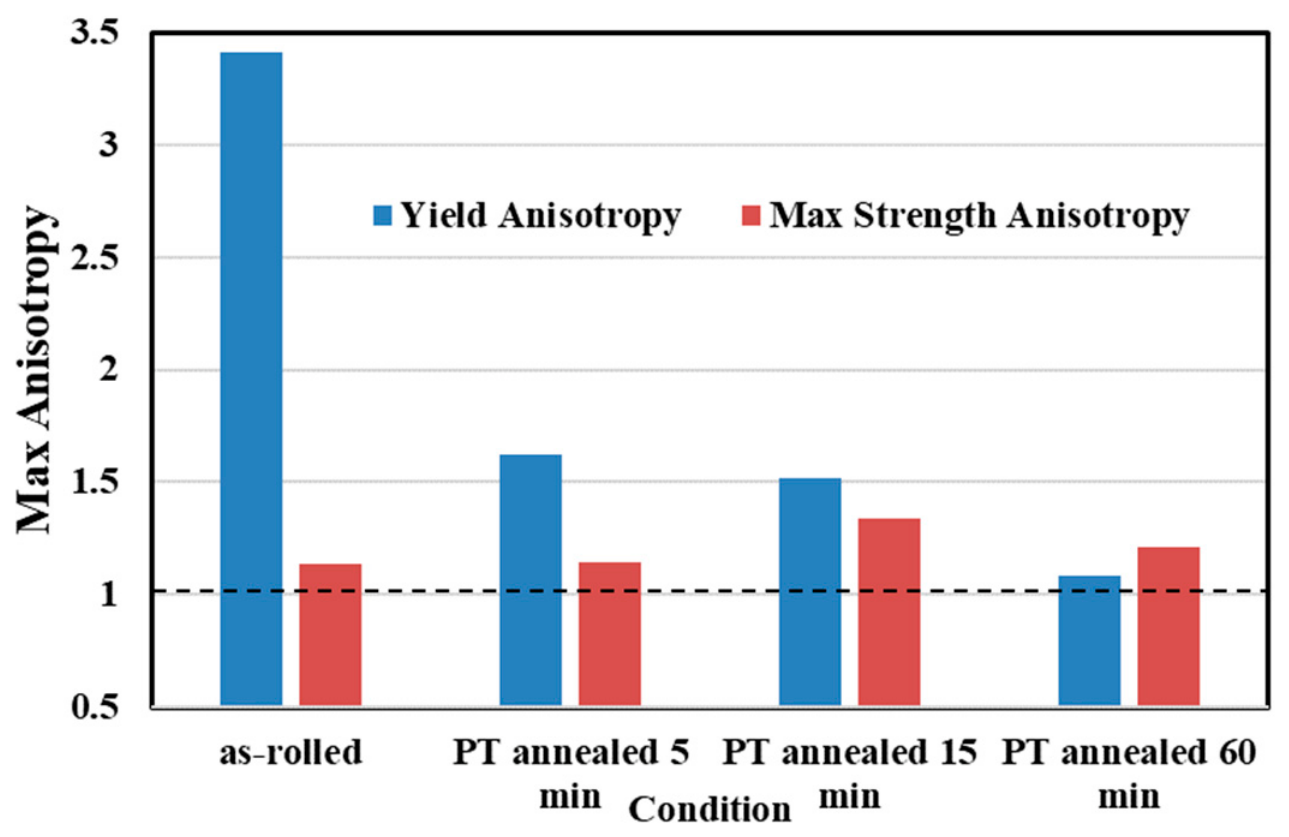
Mechanical anisotropy was assessed using strength measurements obtained along the three orthogonal directions (Figure 8). The maximum anisotropy calculated for yield and ultimate strength was defined as the maximum value obtained by dividing the corresponding values measured under loading in different material directions (RD, TD, and ND). Increasing the annealing time progressively reduces the anisotropy in both yield and maximum strength. After 60 min, the alloy displays an almost isotropic yield response.
The active deformation mechanisms under different loading orientations can be rationalized using the orientation factors. The shear stresses required for slip and twinning are obtained by dividing the CRSS values by the corresponding Schmid factors in Table 1. During ND compression, extension twinning is generally suppressed in the untwinned matrix because the c-axis is nearly parallel to the loading direction, which is geometrically unfavorable for {10–12} twinning. However, in the pretwinned material, deformation behavior is strongly influenced by the presence of reoriented twin domains introduced during precompression. These pretwinned regions possess local crystallographic orientations that differ substantially from the matrix and can exhibit favorable Schmid factors for twinning or detwinning under ND loading. Moreover, detwinning proceeds through the reverse motion of twin dislocations and occurs at comparatively low CRSS [8]. Back stresses accumulated during twin growth may further facilitate detwinning [30]. As a result, ND deformation of pretwinned samples may involve significant detwinning activity, which contributes to the reduced yield stress observed in this direction. With increasing annealing time, the twin fraction decreases, and the influence of detwinning diminishes, leading to a more uniform activation of slip systems and reduced mechanical anisotropy [31].
Activation of slip systems is also influenced by local stress concentrations near high-angle grain boundaries, which may activate slip systems with lower CRSS. Consequently, these boundaries can partially mitigate orientation-dependent slip behavior. Shen et al. [32] also reported that grain refinement enhances the activation of non-basal slip, reducing anisotropy in AZ31. A similar effect may arise from pre-existing twin boundaries. Nevertheless, anisotropy often persists in wrought Mg alloys because of the polarity of extension twinning. Even at high strain rates, extruded AZ31 exhibits anisotropic behavior [33], mainly due to the differing contributions of extension twinning. Overall, the sequence of pretwinning followed by 60 min of annealing constitutes an effective thermomechanical strategy to produce a magnesium alloy with improved strength and substantially reduced anisotropy.

4. Conclusions

A thermomechanical process involving pretwinning followed by short-time annealing was applied to modify the microstructure and mechanical response of a wrought AZ31 magnesium alloy. The key findings are as follows:
  • Pretwinning introduces a high density of extension twins, significantly altering grain size and lattice orientation.
  • Annealing for 5 min retains most twin boundaries, enhancing strength due to Hall–Petch effects.
  • Annealing for 15 min triggers twin dynamic recrystallization, fragmenting twin bands, producing new grains, and partially randomizing texture, which collectively lead to softening.
  • After 60 min of annealing, extensive recrystallization and a bimodal grain structure develop, leading to improved hardenability and workability. Texture randomization becomes significant, promoting more uniform slip activity.
  • Mechanical anisotropy is progressively reduced with annealing time, becoming nearly isotropic after 60 min due to texture randomization and reduced detwinning effects.

Author Contributions

Conceptualization, Methodology, Investigation, Original Draft Preparation, S.M.F.; Investigation and Resources, H.P.; Validation, Review and Editing, J.M.C. All authors have read and agreed to the published version of the manuscript.

Funding

This research received no external funding.

Institutional Review Board Statement

Not applicable.

Informed Consent Statement

Not applicable.

Data Availability Statement

The original data is available upon request.

Conflicts of Interest

The authors declare no conflict of interest.

References

  1. Jin, Z.-Z.; Zha, M.; Wang, S.-Q.; Wang, S.-C.; Wang, C.; Jia, H.-L.; Wang, H.Y. Alloying design and microstructural control strategies towards developing Mg alloys with enhanced ductility. J. Magnes. Alloys 2022, 10, 1191–1206. [Google Scholar] [CrossRef]
  2. Peng, R.; Xu, C.; Li, Y.; Zhong, S.; Cao, X.; Ding, Y. Multiple-twinning induced recrystallization and texture optimization in a differential-temperature-rolled AZ31B magnesium alloy with excellent ductility. Mater. Res. Lett. 2022, 10, 318–326. [Google Scholar] [CrossRef]
  3. Wang, D.; Jing, Y.; Lin, B.; Li, J.; Shi, Y.; Misra, R. On the structure, mechanical behavior, and deformation mechanism of AZ91 magnesium alloy processed by symmetric and asymmetric rolling. Mater. Charact. 2022, 194, 112444. [Google Scholar] [CrossRef]
  4. Zhang, S.; Hu, L.; Ruan, Y.; Zhou, T.; Chen, Q.; Zhong, Y.; Shi, L.; Li, M.; Yang, M.; Jiang, S. Influence of bimodal non-basal texture on microstructure characteristics, texture evolution and deformation mechanisms of AZ31 magnesium alloy sheet rolled at liquid-nitrogen temperature. J. Magnes. Alloys 2023, 11, 2600–2609. [Google Scholar] [CrossRef]
  5. Hu, L.; Lv, H.; Shi, L.; Chen, Y.; Chen, Q.; Zhou, T.; Li, M.; Yang, M. Research on deformation mechanism of AZ31 magnesium alloy sheet with non-basal texture during uniaxial tension at room temperature: A visco-plastic self-consistent analysis. J. Magnes. Alloys 2022, 10, 1994–2008. [Google Scholar] [CrossRef]
  6. Zhou, X.; Su, H.; Ye, H.; Yang, Z. Removing basal-dissociated <c + a> dislocations by {101¯ 2} deformation twinning in magnesium alloys. Acta Mater. 2021, 217, 117170. [Google Scholar]
  7. Wu, J.; Jin, L.; Dong, J.; Wang, F.; Dong, S. The texture and its optimization in magnesium alloy. J. Mater. Sci. Technol. 2020, 42, 175–189. [Google Scholar] [CrossRef]
  8. Fatemi, S.; Zarei-Hanzaki, A. Microband/twin recrystallization during back extrusion of AZ31 magnesium. Mater. Sci. Eng. A 2017, 708, 230–236. [Google Scholar] [CrossRef]
  9. Fatemi, S.M.; Kazemi Asl, A.A.; Abedi, A. The effect of twinning on texture evolution during ECAP processing of an AM30 magnesium alloy. J. Ultrafine Grained Nanostruct. Mater. 2019, 52, 142–148. [Google Scholar]
  10. Kim, K.; Ji, Y.; Kim, K. Effect of Ca Precipitation on Texture Component Development in AZ Magnesium Alloy. Materials 2022, 15, 5367. [Google Scholar] [CrossRef]
  11. Liu, S.; Wang, C.; Ning, H.; Meng, Z.-Y.; Guan, K.; Wang, H.-Y. Achieving high ductility and low in-plane anisotropy in magnesium alloy through a novel texture design strategy. J. Magnes. Alloys 2024, 12, 2863–2873. [Google Scholar] [CrossRef]
  12. Fatemi, S.; Asl, A.K.; Paul, H. Effects of pretwins on texture and microstructural evolutions of AZ31 magnesium alloy during high temperature deformation. J. Alloys Compd. 2022, 894, 162412. [Google Scholar] [CrossRef]
  13. Malik, A.; Wang, Y.; Huanwu, C.; Nazeer, F.; Khan, M.A. Dynamic mechanical behavior of magnesium alloys: A review. Int. J. Mater. Res. 2019, 110, 1105–1115. [Google Scholar] [CrossRef]
  14. Hou, D.; Zhu, Y.; Li, Q.; Liu, T.; Wen, H. Effect of {10− 12} twinning on the deformation behavior of AZ31 magnesium alloy. Mater. Sci. Eng. A 2019, 746, 314–321. [Google Scholar] [CrossRef]
  15. Hou, D.; Liu, T.; Shi, D.; Chen, H.; Chen, H. Study of twinning behaviors of rolled AZ31 magnesium alloy by interrupted in situ compressive tests. Mater. Sci. Eng. A 2016, 653, 108–114. [Google Scholar] [CrossRef]
  16. Basu, I.; Al-Samman, T. Twin recrystallization mechanisms in magnesium-rare earth alloys. Acta Mater. 2015, 96, 111–132. [Google Scholar] [CrossRef]
  17. Malik, A.; Wang, Y.; Nazeer, F. The both positive and negative effect of pre-strain on the mechanical response of extruded magnesium alloy. Forces Mech. 2021, 4, 100031. [Google Scholar] [CrossRef]
  18. Zhang, N.; Guo, S.; Gong, X.; Zhang, Y.; Chen, S.; Zhang, B.; Lu, L.; Yao, X.H. Deformation dynamics and pre-compression effects on Mg-3Al-1Zn alloy: An in situ synchrotron-based multiscale study. Mater. Charact. 2021, 179, 111349. [Google Scholar] [CrossRef]
  19. Cui, Y.; Bian, H.; Li, Y.; Zhao, Y.; Aoyagi, K.; Chiba, A. Impacts of pre-strain on twin boundary mobility of magnesium. J. Alloys Compd. 2020, 816, 152496. [Google Scholar]
  20. Malik, A.; Wang, Y.; Nazeer, F.; Khan, M.A.; Ali, T.; Ain, Q.T. Effect of pre-straining on twinning, texture and mechanical behavior of magnesium alloys A-review. J. Mater. Res. Technol. 2020, 9, 14478–14499. [Google Scholar] [CrossRef]
  21. Peng, J.-H.; Zhang, Z.; Cheng, H.-H.; Wei, H.-G.; Chen, L.-Y.; Zang, Q.-H.; Lu, S. Texture weakening effect from {10 11 ¯ } twins induced static recrystallization in ambient extrusion AZ31 magnesium alloy. J. Alloys Compd. 2023, 960, 170738. [Google Scholar]
  22. Zhang, Y.; Wang, L.; Liu, X.; Huang, G. Microstructural evolution and grain growth mechanism of pre-twinned magnesium alloy during annealing. Materialia 2020, 12, 100785. [Google Scholar]
  23. Zhang, Y.; Liu, X.; Wang, L.; Huang, G. Microstructural evolution of pre-twinned Mg alloy during annealing at different temperatures. Materialia 2022, 22, 101379. [Google Scholar]
  24. Li, Z.; Zhang, J.; Wang, Q.; Huang, X. Recrystallization behaviors and mechanical properties of pre-twinned Mg sheets during annealing. J. Mater. Eng. Perform. 2023, 32, 5405–5415. [Google Scholar]
  25. Liu, Y.; Wang, H.; Chen, S.; Zhang, J. Detwinning and anneal-hardening behaviors of pre-twinned AZ31 alloys. J. Mater. Eng. Perform. 2024, 33, 2145–2154. [Google Scholar]
  26. Li, C.; Liang, W.; Wang, L.; Shi, Q.; Lin, P.; Zhang, X.; Zhang, W.; Jiang, S. The mechanism of pre-twinning on enhancing strength of AZ31 magnesium alloy. J. Magnes. Alloys, 2025; in press.
  27. Deng, Y.J.; Li, X.Y.; Zhang, J.; Wu, P.D.; Li, S.X.; Zeng, X.Q. Detwinning and twinning dynamics in pre-twinned Mg–3Al–1Zn alloy under uniaxial tension: A synchrotron-based multiscale study. J. Mater. Sci. 2025, 60, 6008–6021. [Google Scholar] [CrossRef]
  28. Panchal, M.; Kumar, N.; Patel, V.; Patel, M.; Panchal, K.; Narendranath, S. Effect of pre-twinning and heat treatment on formability of AZX311 Mg alloy. J. Magnes. Alloys 2024, 12, 1154–1169. [Google Scholar] [CrossRef]
  29. Dai, H.; Li, Y.; Wu, L.; Li, G.; Xin, R. Deformation Behavior of AZ31 Magnesium Alloy with Pre-Twins under Biaxial Tension. Materials 2024, 17, 3377. [Google Scholar] [CrossRef]
  30. Sahoo, S.K.; Biswas, S.; Toth, L.S.; Gautam, P.; Beausir, B. Strain hardening, twinning and texture evolution in magnesium alloy using the all twin variant polycrystal modelling approach. Int. J. Plast. 2020, 128, 102660. [Google Scholar] [CrossRef]
  31. Misra, R.D.K.; Zuo, L. Softening behavior by excessive twinning and adiabatic heating at high strain rate in a Fe-20Mn-0.6C TWIP steel. Acta Mater. 2016, 103, 229–242. [Google Scholar]
  32. Shen, T.; Huan, L.; Jialong, Z.; Min, M.; Zhqiang, W.; Liwei, L. The improvement on mechanical anisotropy of AZ31 magnesium alloy sheets by multi cross-rolling process. J. Alloys Compd. 2024, 963, 171252. [Google Scholar] [CrossRef]
  33. Wang, X.; Mao, P.; Wang, R.; Liu, Z.; Wang, Z.; Wang, F.; Zhou, L.; Wei, Z. Role of {10-12} twinning in the anisotropy and asymmetry of AZ31 magnesium alloy under high strain rate deformation. Mater. Sci. Eng. A 2020, 772, 138814. [Google Scholar] [CrossRef]
Figure 1. Optical microstructure and pole figures of basal and prismatic planes of the experimental AZ31 alloy: (a,b) as-rolled condition; (c,d) pretwinned condition.
Applsci 16 05832 g001
Figure 2. Schematic representation of the thermomechanical treatment applied in this work.
Applsci 16 05832 g002
Figure 3. True stress–strain curves obtained during compression testing of the experimental alloy along different orientations: (a) as-rolled condition, pretwinned and annealed for (b) 5 min, (c) 15 min, and (d) 60 min.
Applsci 16 05832 g003
Figure 4. The variation in the mechanical properties of the experimental alloy along the RD in different conditions.
Applsci 16 05832 g004
Figure 5. The (0002) and (10–10) pole figures of the rolled material, PT-annealed for (a) 5 min, (b) 15 min, and (c) 60 min at 300 °C.
Applsci 16 05832 g005
Figure 6. EBSD images showing the high-angle and twin boundaries in black and red, respectively. PT materials annealed for (a) 5 min, (b) 15 min, and (c) 60 min at 300 °C.
Applsci 16 05832 g006
Figure 7. Grain size distribution histogram of the pretwinned AZ31 alloy after annealing at 300 °C for 60 min.
Applsci 16 05832 g007
Figure 8. The variation in compressive anisotropy of the experimental alloy in different conditions.
Applsci 16 05832 g008
Table 1. The absolute Schmid factor for different deformation mechanisms during compression along different directions.
As-RolledPT-Annealed 5PT-Annealed 15PT-Annealed 60
RDTDNDRDTDNDRDTDNDRDTDND
Basal slip0000.210.280.410.170.120.190.210.240.19
Prismatic slip0.250.2500.330.120.240.110.260.220.170.280.38
First-order pyramidal slip0.420.4400.160.300.140.230.420.210.110.180.21
Second-order pyramidal slip0.380.440.430.270.210.180.220.250.310.270.310.19
Extension twin0.40.45-0.270.220.160.390.150.220.110.230.17
Disclaimer/Publisher’s Note: The statements, opinions and data contained in all publications are solely those of the individual author(s) and contributor(s) and not of MDPI and/or the editor(s). MDPI and/or the editor(s) disclaim responsibility for any injury to people or property resulting from any ideas, methods, instructions or products referred to in the content.