Form-Stable Phase Change Material Integrated with PVA/CMC-Na Hydrogel for 5 °C Cold Chain Logistics


Abstract
1. Introduction
2. Materials and Methods
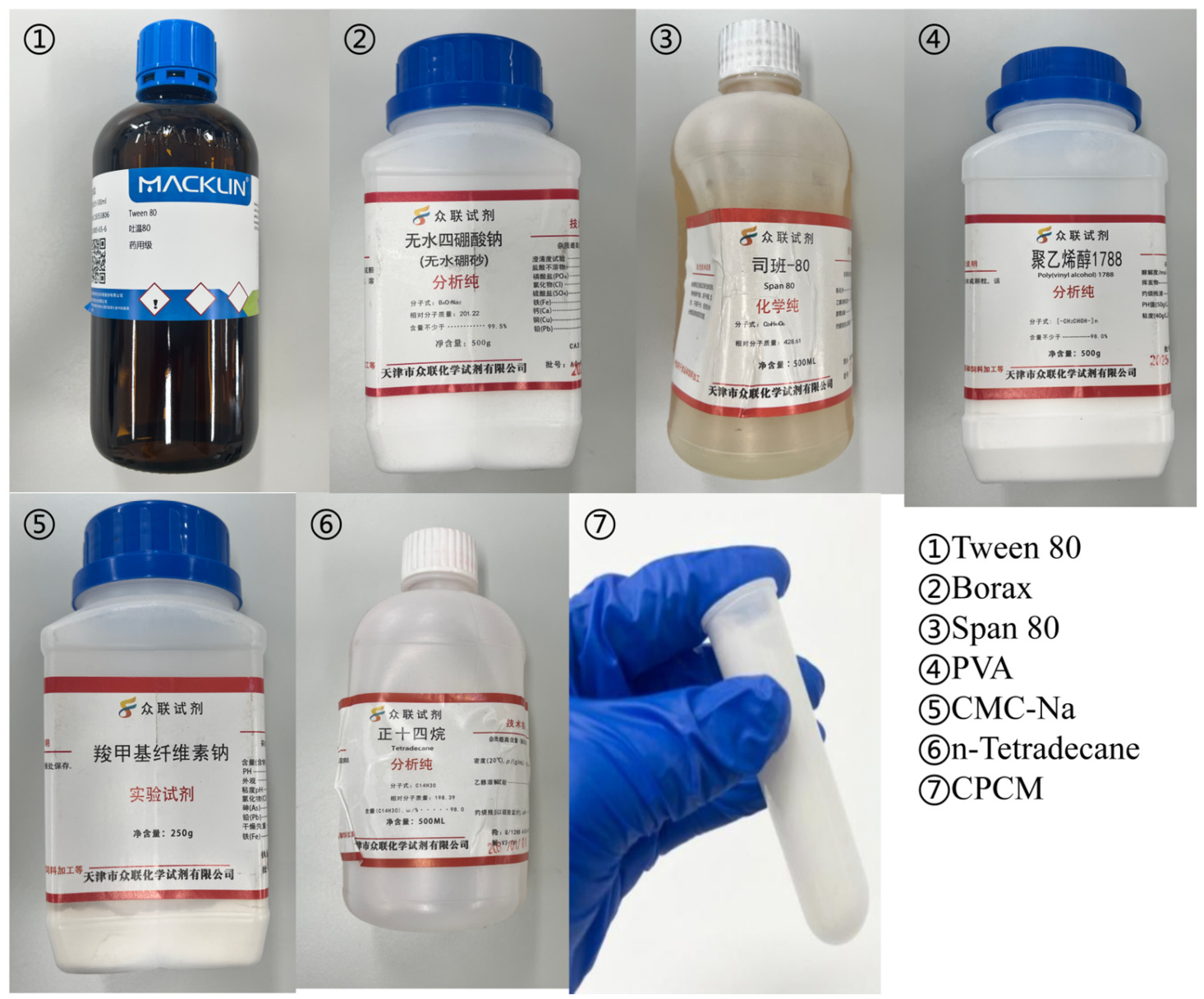
2.1. Materials
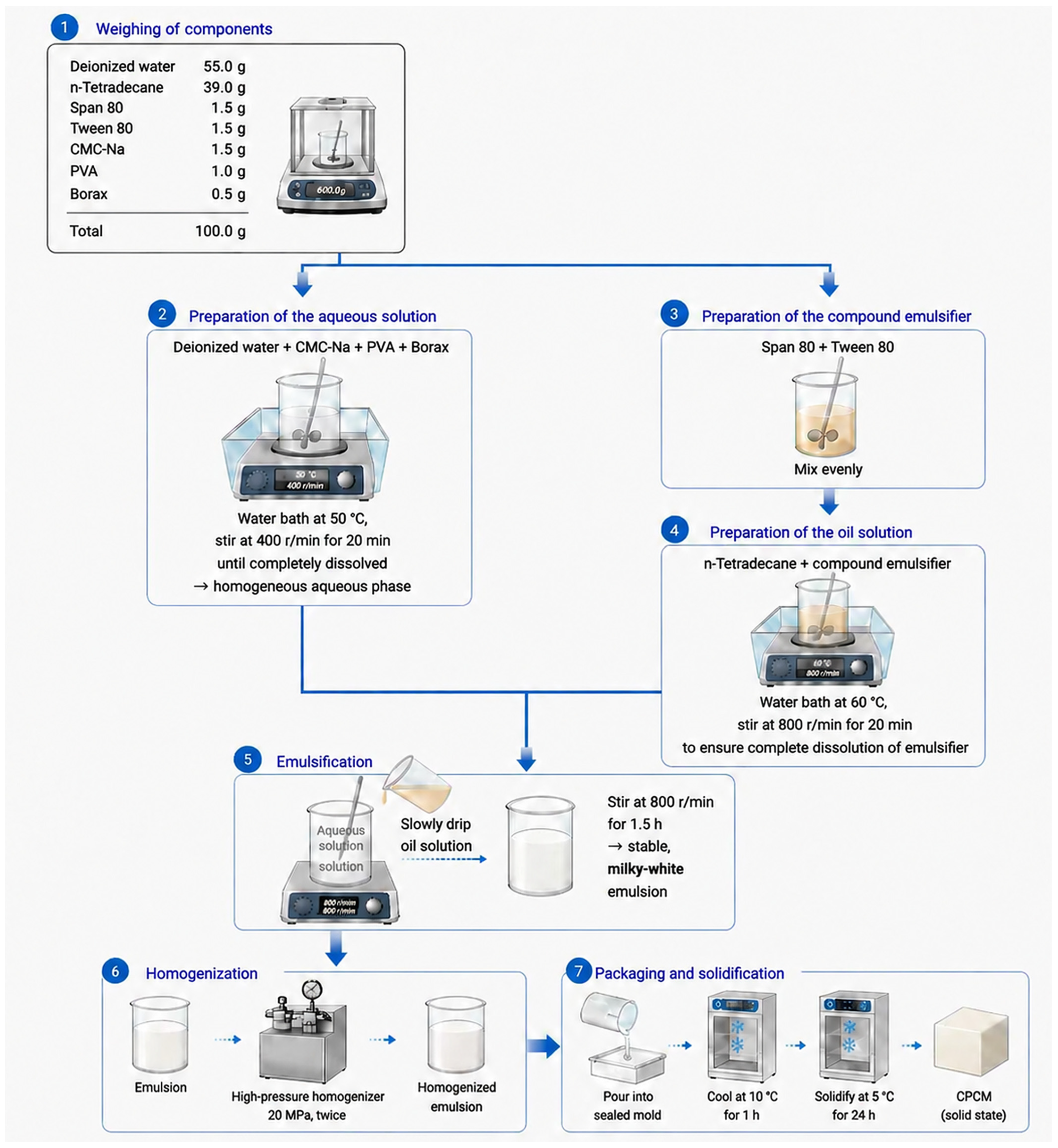
2.2. Preparation Steps
- (1)
- Weighing of components: The raw materials were precisely weighed according to the designated mass fractions (totaling 100.0 g): 55.0 g of deionized water, 39.0 g of n-Tetradecane, 1.5 g of Span 80, 1.5 g of Tween 80, 1.5 g of CMC-Na, 1.0 g of PVA, and 0.5 g of borax.
- (2)
- Preparation of the aqueous solution: Deionized water, CMC-Na, PVA, and borax were added into a 500 mL beaker. The mixture was placed in a 50 °C water bath and stirred at 400 r/min for 20 min until the solutes were completely dissolved, forming a homogeneous aqueous phase.
- (3)
- Preparation of the compound emulsifier: Span 80 and Tween 80 were mixed in another 500 mL beaker.
- (4)
- Preparation of the oil solution: N-Tetradecane was added into the composite emulsifier to form the oil solution mixture. The mixture was heated in a 60 °C water bath and stirred for 20 min at 800 r/min to ensure the complete dissolution of the emulsifier.
- (5)
- Emulsification: The aqueous solution was stirred at 800 r/min, with the oil solution slowly dripped into it. The mixture was continuously stirred for 1.5 h to yield a stable, milky-white emulsion.
- (6)
- Homogenization: The obtained emulsion was processed by a high-pressure homogenizer twice at a pressure of 20 MPa.
- (7)
- Molding and solidification: The homogenized emulsion was poured into a sealed mold, which was then cooled in an environment at a constant temperature of 10 °C for 1 h, followed by a solidification period of 24 h in a 5 °C environment.
2.3. The Ratio of the Relevant Components in the Material
3. Thermophysical Property Tests of CPCM
3.1. Instruments
3.2. Thermophysical Properties of the CPCM
3.3. Stability of Form and Phase Transition Temperature
4. Application of the CPCM in a Cold Storage Container
5. Conclusions
- (1)
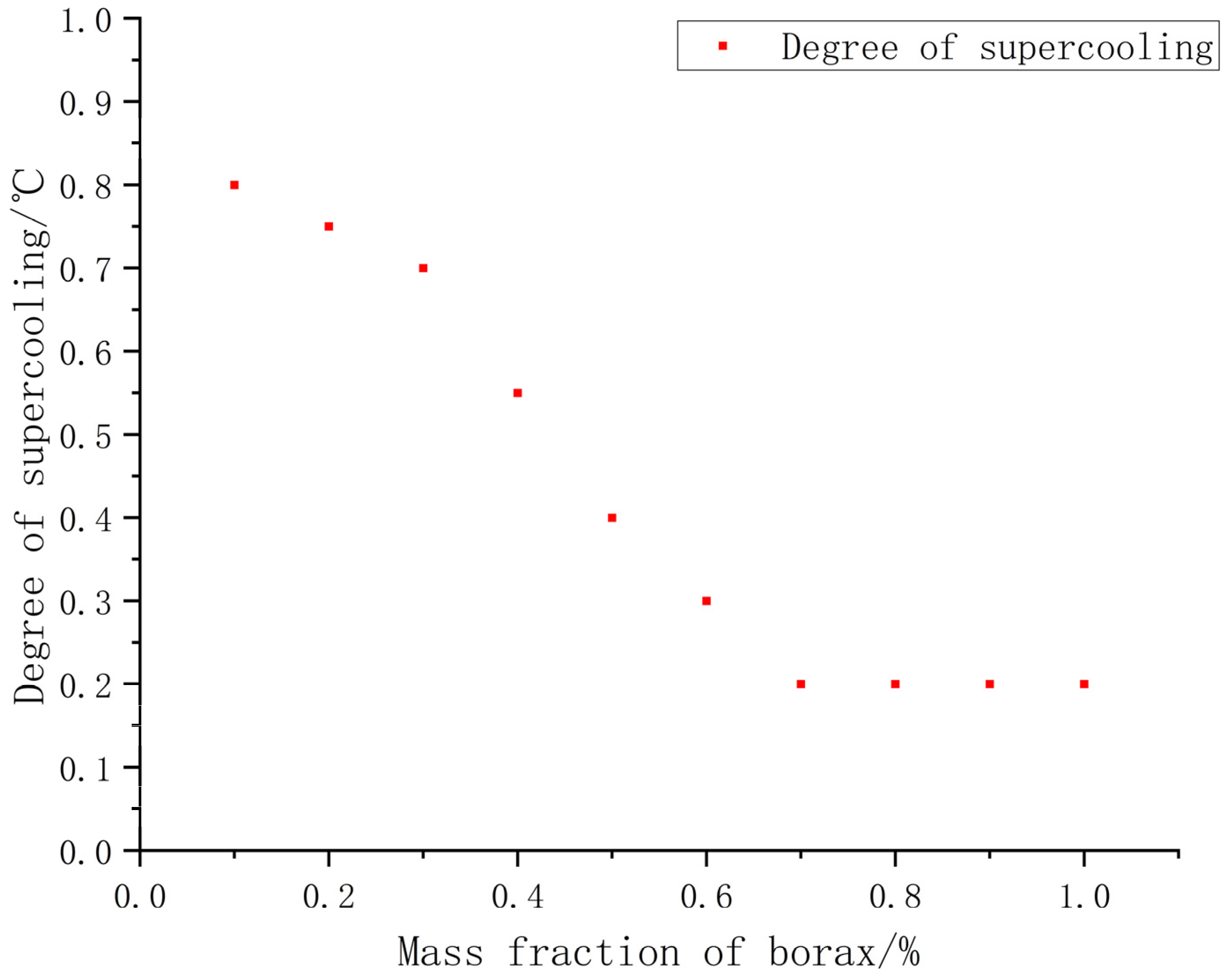
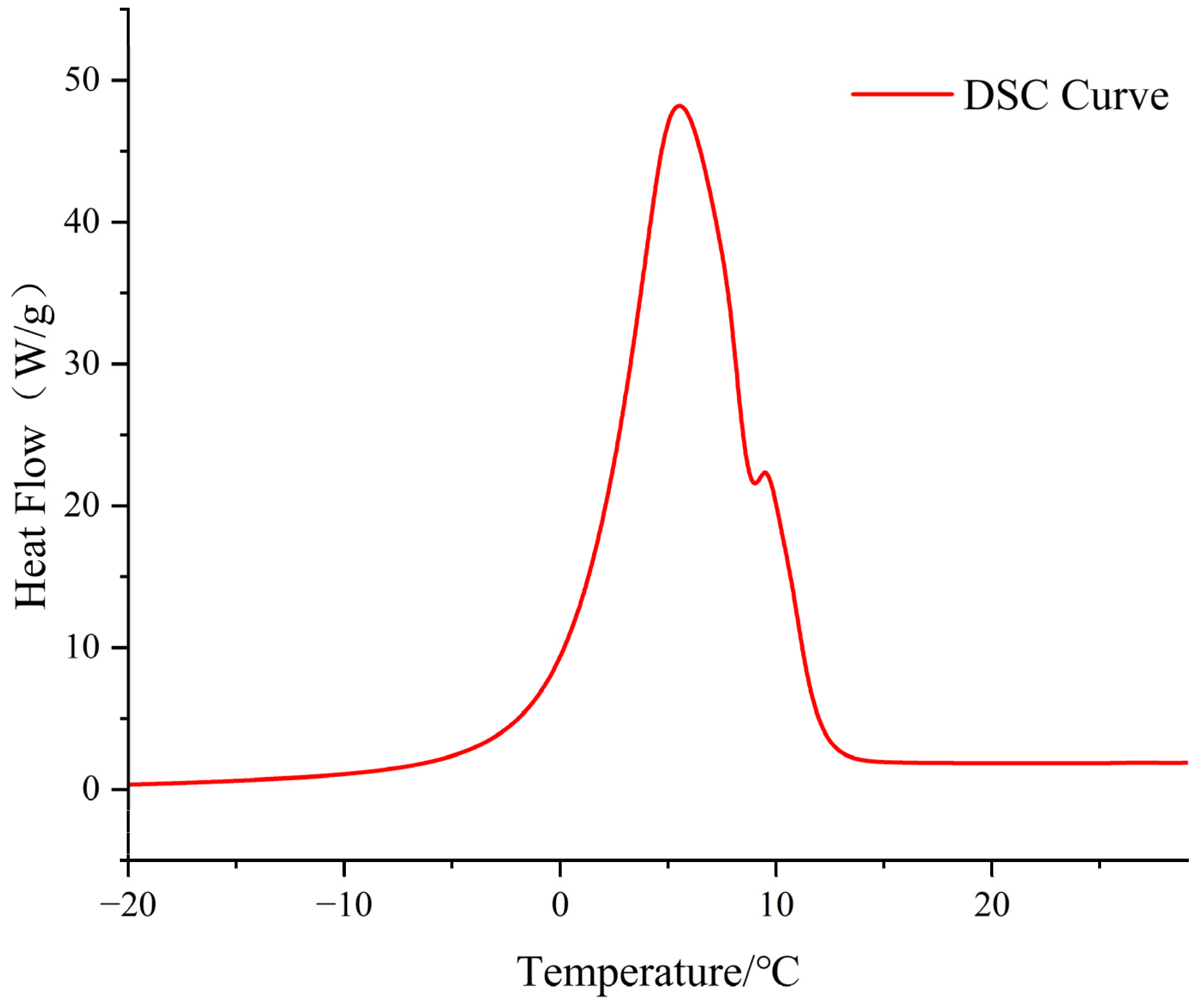
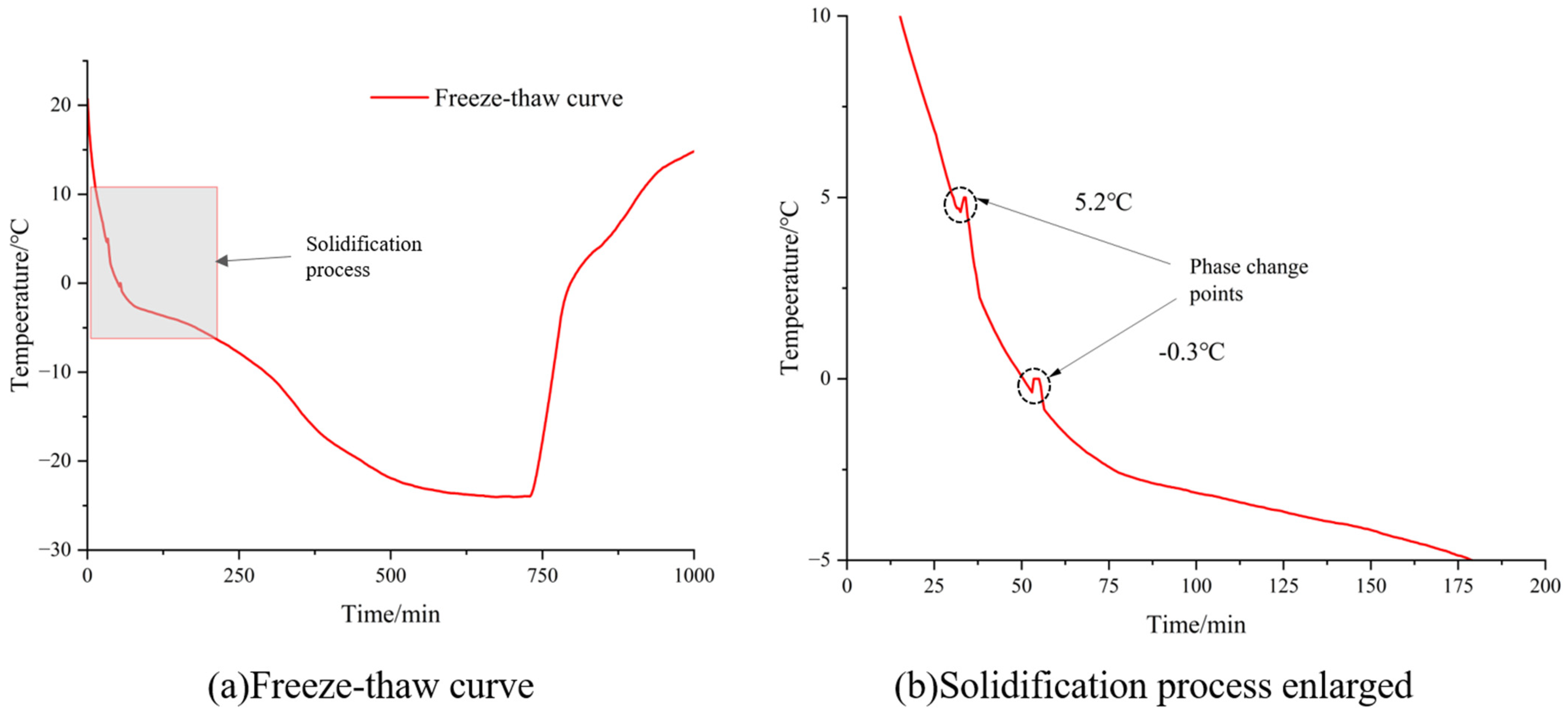
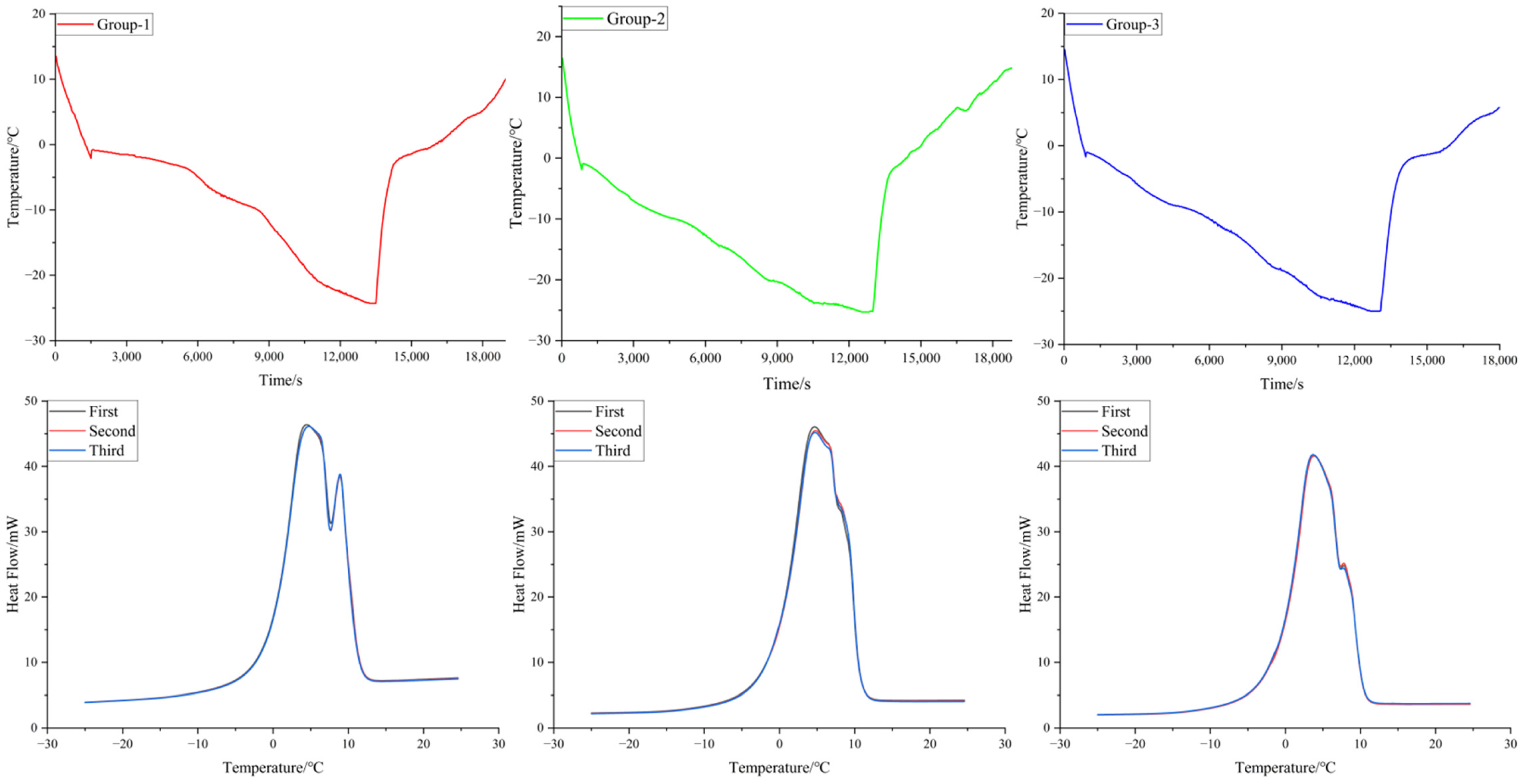
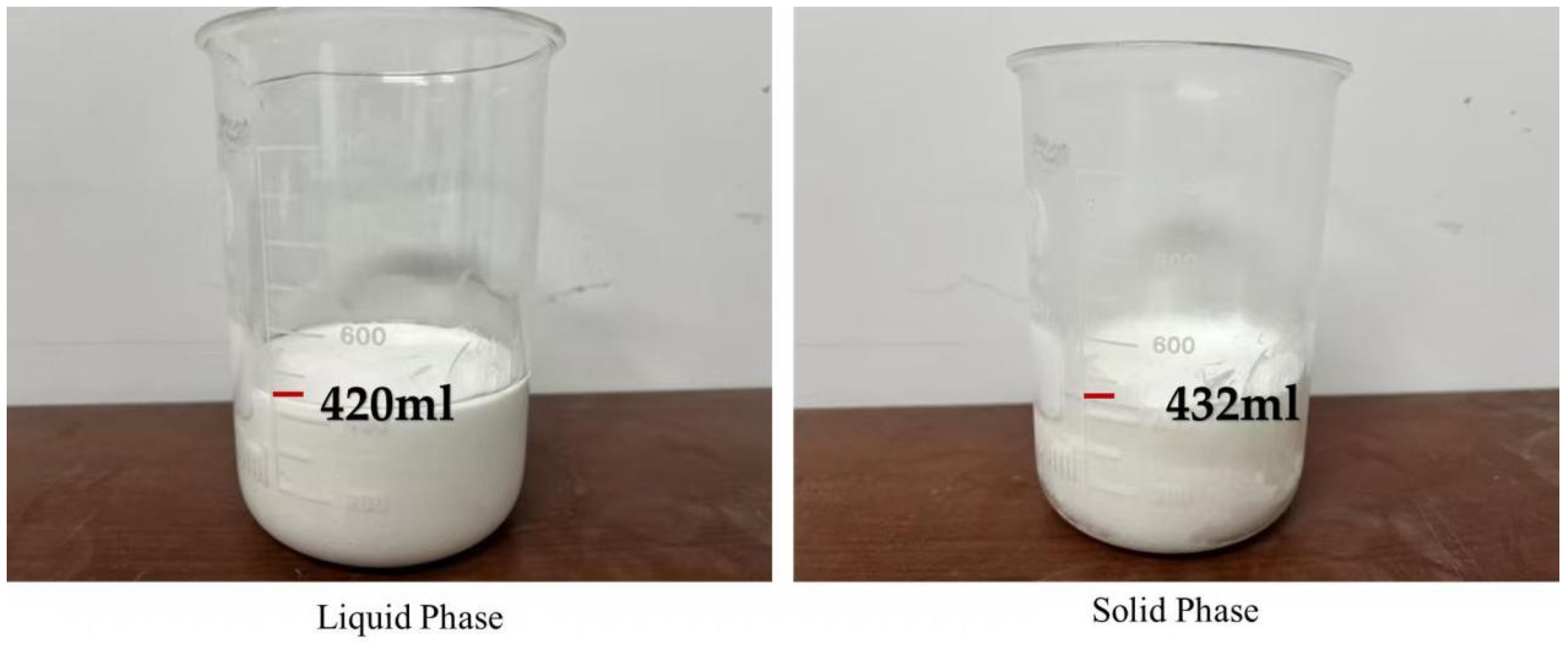
- The phase transition temperature of the proposed CPCM ranges from 0 °C to 5 °C, with a latent heat of 236.2 J/g and a supercooling degree of no more than 0.5 °C. The volume expansion rate during the liquid-solid phase transition is 3%, and the CPCM in the liquid phase remains form-stable without any liquid leakage.
- (2)
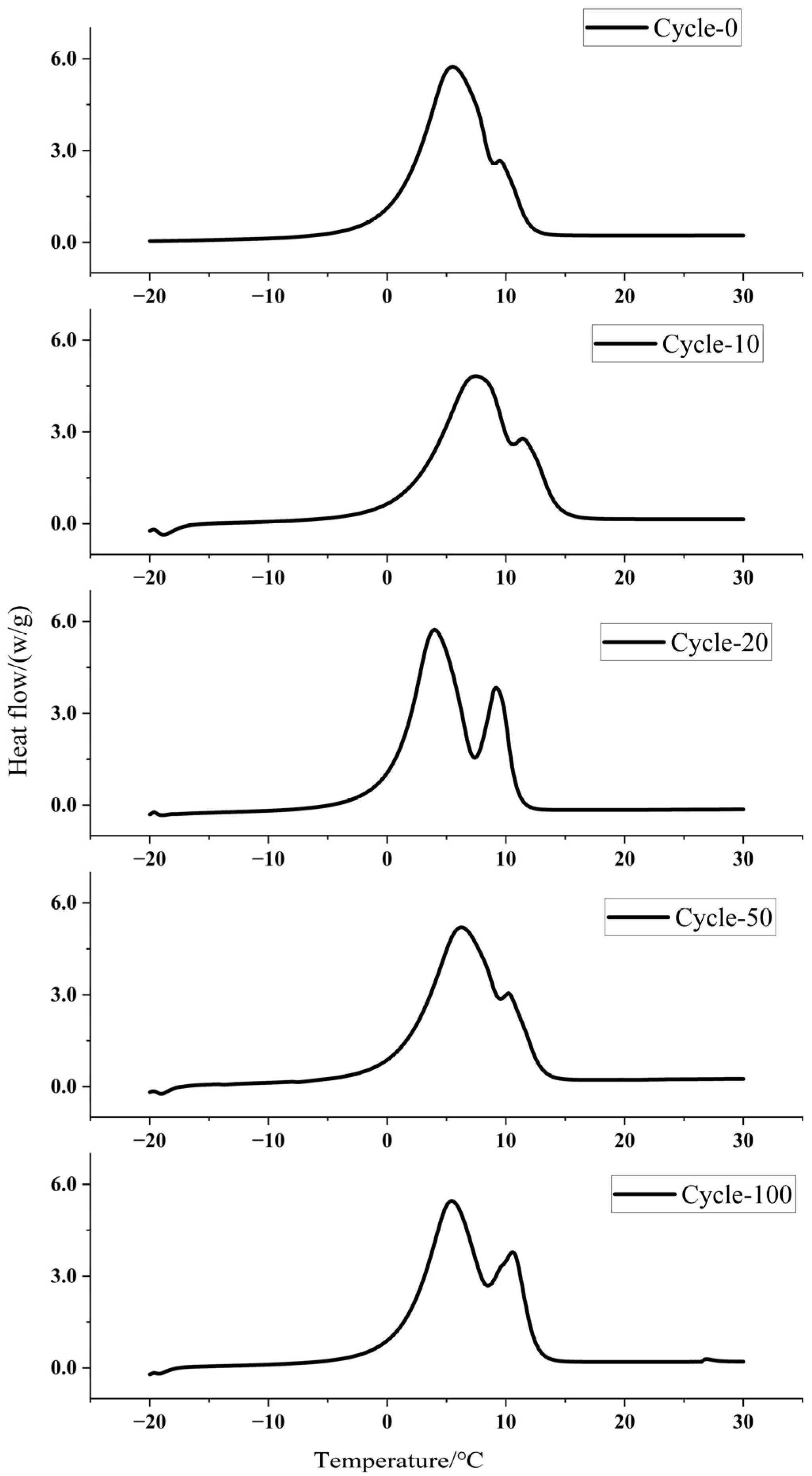
- After 100 freeze-thaw cycles, the latent heat of the CPCM decreases from 236.2 J/g to 224.0 J/g, with a decay rate of 5.2%, while the phase transition temperature shows no significant variation.
- (3)
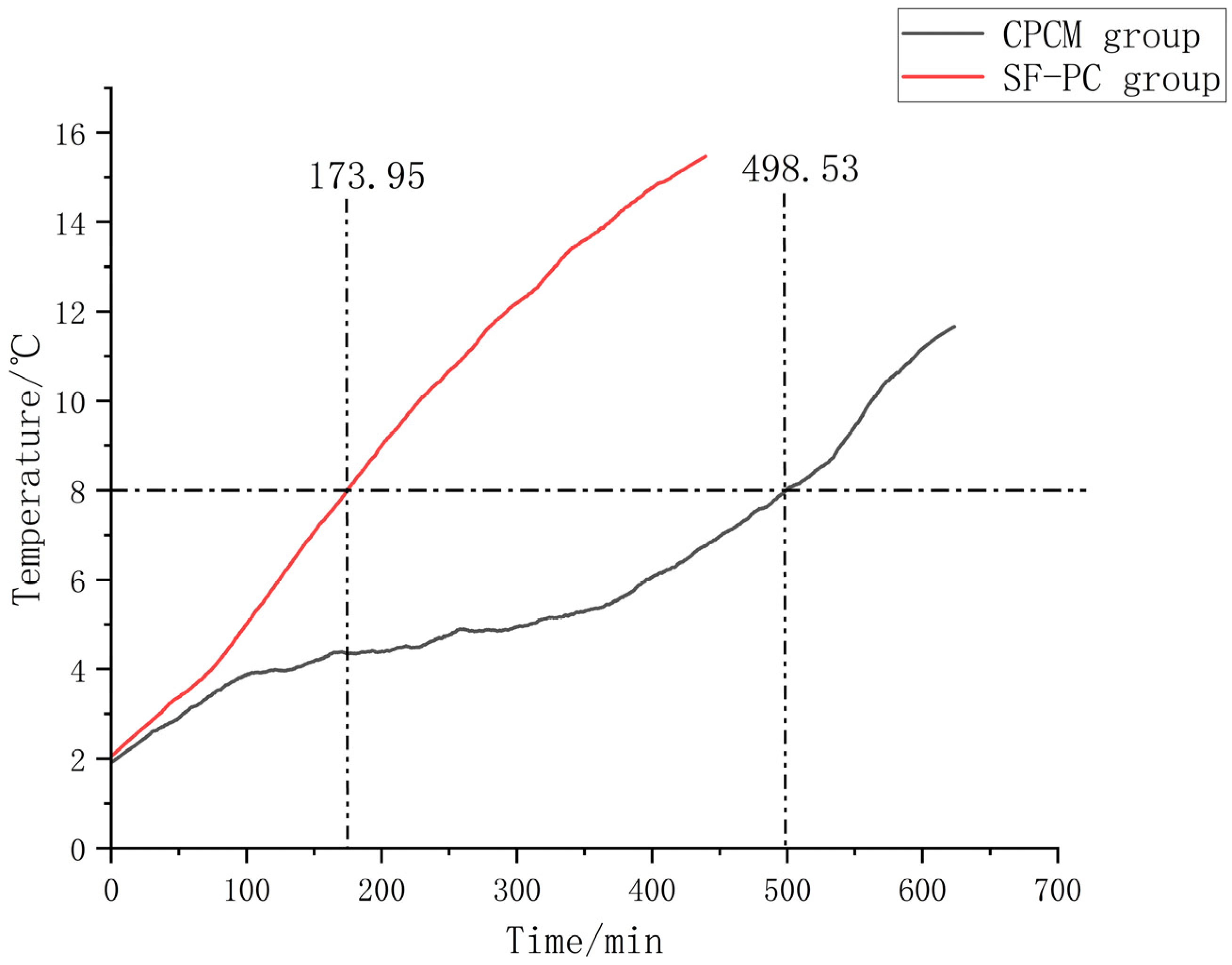
- To evaluate the performance of the CPCM in practical cold chain application, the ability of the CPCM to maintain a low-temperature environment in a container is tested. The results show that the CPCM could extend the temperature maintenance duration by 187% compared to conventional materials (SF-PC).
Author Contributions
Funding
Institutional Review Board Statement
Informed Consent Statement
Data Availability Statement
Acknowledgments
Conflicts of Interest
Abbreviations
| PCM | phase change material |
| CPCM | composite phase change material |
| PVA | polyvinyl alcohol |
| HDPE | high-density polyethylene |
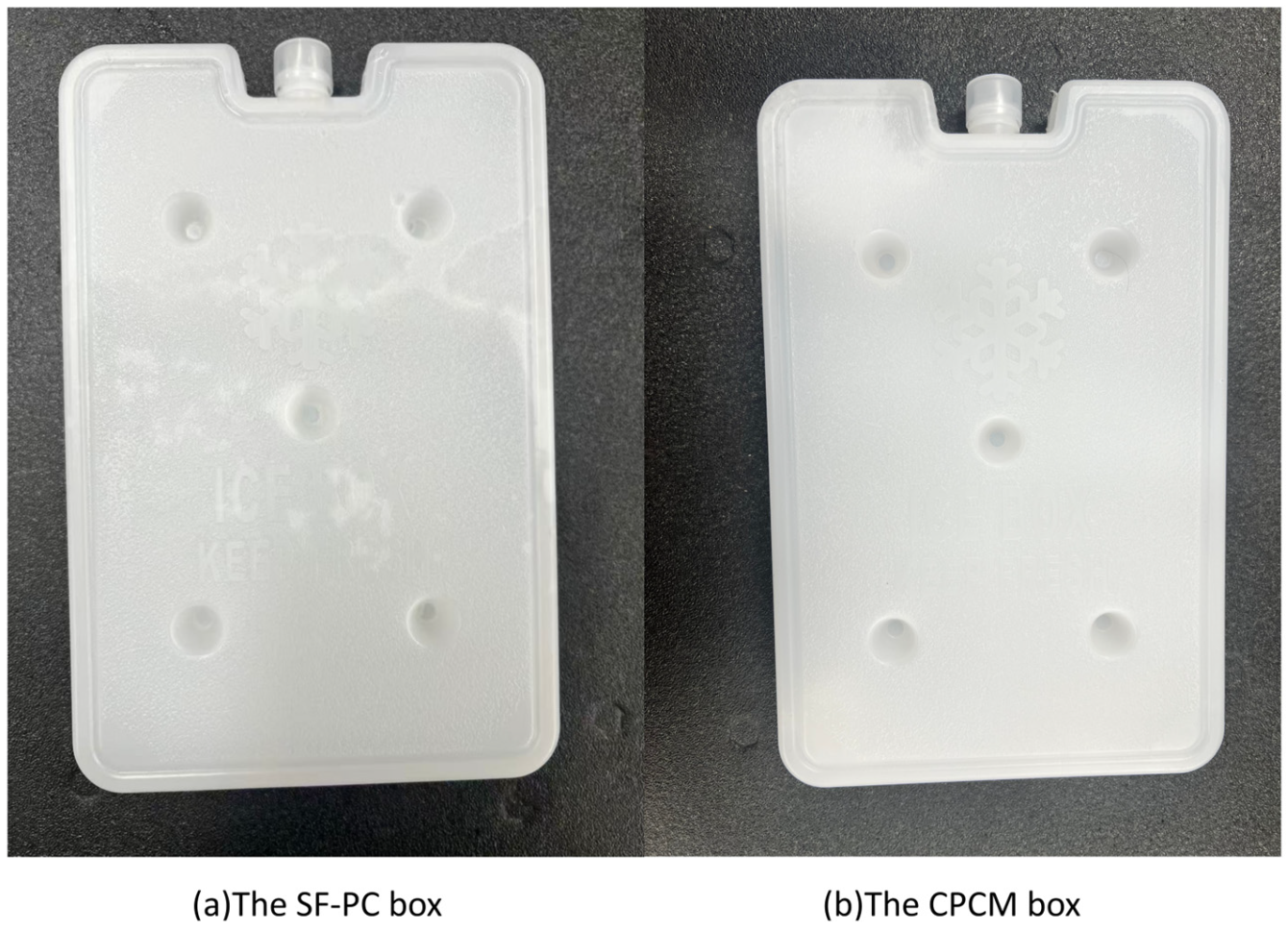
| SF-PC | a phase change material commonly used in markets |
| HLB | Hydrophile-lipophile balance |
| O/W | oil-in-water |
| CMC-Na | sodium carboxymethylcellulose |
| DSC | differential scanning calorimetry |
References
- Ben Taher, M.A.; Ahachad, M.; Mahdaoui, M.; Zeraouli, Y.; Kousksou, T. Thermal Performance of Domestic Refrigerator with Multiple Phase Change Materials: Numerical Study. J. Energy Storage 2022, 55, 105673. [Google Scholar] [CrossRef]
- Bruno, F.; Belusko, M.; Liu, M.; Tay, N.H.S. Solid-Liquid Phase Change Materials for Thermal Energy Storage. In Advances in Thermal Energy Storage Systems; Elsevier: Amsterdam, The Netherlands, 2021; pp. 221–268. [Google Scholar]
- Oró, E.; De Gracia, A.; Castell, A.; Farid, M.M.; Cabeza, L.F. Review on Phase Change Materials (PCMs) for Cold Thermal Energy Storage Applications. Appl. Energy 2012, 99, 513–533. [Google Scholar] [CrossRef]
- Nie, B.; Palacios, A.; Zou, B.; Liu, J.; Zhang, T.; Li, Y. Review on Phase Change Materials for Cold Thermal Energy Storage Applications. Renew. Sustain. Energy Rev. 2020, 134, 110340. [Google Scholar] [CrossRef]
- Wang, H.; Han, Z. Numerical Study on Thermal Performance of Radiant Panels Coupled with V-Shaped Grooves and Phase Change Materials. Appl. Sci. 2025, 15, 13260. [Google Scholar] [CrossRef]
- Shen, C.; Su, C.; Zhang, Z.; Wang, F.; Wang, Z.; Wang, S. Synergistic PCM–Liquid Thermal Management for Large-Format Cylindrical Batteries under High-Rate Discharge. Appl. Sci. 2026, 16, 3200. [Google Scholar] [CrossRef]
- Yu, X.K.; Tao, Y.B. Improvement of Thermal Cycle Stability of Paraffin/Expanded Graphite Composite Phase Change Materials and Its Application in Thermal Management. J. Energy Storage 2023, 63, 107019. [Google Scholar] [CrossRef]
- Alzuwaid, F.; Ge, Y.T.; Tassou, S.A.; Raeisi, A.; Gowreesunker, L. The Novel Use of Phase Change Materials in a Refrigerated Display Cabinet: An Experimental Investigation. Appl. Therm. Eng. 2015, 75, 770–778. [Google Scholar] [CrossRef]
- Bharathiraja, R.; Ramkumar, T.; Selvakumar, M. Studies on the Thermal Characteristics of Nano-Enhanced Paraffin Wax Phase Change Material (PCM) for Thermal Storage Applications. J. Energy Storage 2023, 73, 109216. [Google Scholar] [CrossRef]
- Kittusamy, R.K.; Rajagopal, V.; Felix, P.G. Numerical and Experimental Investigation on the Melting Heat Transfer of Nanographene-Enhanced Phase Change Material Composites for Thermal Energy Storage Applications. Int. J. Heat Mass Transf. 2023, 206, 123940. [Google Scholar] [CrossRef]
- Takudzwa Muzhanje, A.; Hassan, M.A.; Hassan, H. Phase Change Material Based Thermal Energy Storage Applications for Air Conditioning: Review. Appl. Therm. Eng. 2022, 214, 118832. [Google Scholar] [CrossRef]
- Sharwan, S.; Sikarwar, P.; Mazumdar, B. Recent Innovations in Support Materials for Shape-Stable Organic Composite Phase Change Materials: A Comprehensive Review. Sol. Energy Mater. Sol. Cells 2024, 272, 112910. [Google Scholar] [CrossRef]
- Mishra, R.K.; Verma, K.; Mishra, V.; Chaudhary, B. A Review on Carbon-Based Phase Change Materials for Thermal Energy Storage. J. Energy Storage 2022, 50, 104166. [Google Scholar] [CrossRef]
- Liu, K.; He, Z.; Lin, P.; Zhao, X.; Chen, Q.; Su, H.; Luo, Y.; Wu, H.; Sheng, X.; Chen, Y. Highly-Efficient Cold Energy Storage Enabled by Brine Phase Change Material Gels towards Smart Cold Chain Logistics. J. Energy Storage 2022, 52, 104828. [Google Scholar] [CrossRef]
- Gritsuk, I.; Žaglinskis, J. Digital Twin-Based Intelligent System for Thermal Conditioning of Engines and Vehicles with Phase Change Thermal Energy Storage. Appl. Sci. 2026, 16, 3439. [Google Scholar] [CrossRef]
- Chai, Z.; Fang, M.; Min, X. Composite Phase-Change Materials for Photo-Thermal Conversion and Energy Storage: A Review. Nano Energy 2024, 124, 109437. [Google Scholar] [CrossRef]
- Pandey, R.; Thapa, P.; Kumar, V.; Zhu, Y.; Wang, N.; Bystrzejewski, M.; Tiwari, S.K. Updates in Phase Change Materials for Thermoelectric Devices: Status and Challenges. Materialia 2022, 21, 101357. [Google Scholar] [CrossRef]
- GB/T 6682-2008; Water for Analytical Laboratory Use—Specification and Test Methods. China Standards Press: Beijing, China, 2008.
- Lv, G.; Wang, F.; Cai, W.; Zhang, X. Characterization of the Addition of Lipophilic Span 80 to the Hydrophilic Tween 80-Stabilized Emulsions. Colloids Surf. A Physicochem. Eng. Asp. 2014, 447, 8–13. [Google Scholar] [CrossRef]
- Xie, T.; He, J.; Zhou, Z.; Yu, S.; Yan, T.; Hu, H.; Yao, H. Synthesis and Properties of Shape-Stabilized Composite Phase Change Material Based on Biochar via Molten Salt Thermal Treatment. Int. Commun. Heat Mass Transf. 2025, 169, 109782. [Google Scholar] [CrossRef]
- El-naggar, A.M.; Alsulaymani, L.A.; Kamal, A.M.; Albassam, A.A.; Aldhafiri, A.M.; Mohamed, M.B. Structural, Electrical and Dielectric Characteristics of Polypyrrole Doped Polyvinyl Alcohol/Carboxymethyl Cellulose Blended Polymer. J. Indian Chem. Soc. 2025, 102, 101648. [Google Scholar] [CrossRef]
- Tokuyama, H.; Kamikawa, Y.; Kitajima, T. Measurement and QSPR Modeling of Flory–Huggins Parameter for Solvent-Swollen Gels, and Gel Catalyst Informatics. J. Taiwan Inst. Chem. Eng. 2025, 173, 106159. [Google Scholar] [CrossRef]
- Cai, J.; Zhang, D.; Xie, F. The Role of Alginate in Starch Nanocrystals-Stabilized Pickering Emulsions: From Physical Stability and Microstructure to Rheology Behavior. Food Chem. 2024, 431, 137017. [Google Scholar] [CrossRef]
- Kang, J.; Wu, B.; Chen, S.; Zhou, J.; Shi, H.; Wen, L.; Huang, Y.; Gong, X.; Nie, M.; Sun, L. Solvent-Induced Biphasic Phase Separated Hydrogels: Synergistic Energy Dissipation for Softness, Ultra-Tough and Shape Recovery. Chem. Eng. J. 2026, 529, 172732. [Google Scholar] [CrossRef]
- Li, Y.; Yang, D.; Xie, J.; Wang, J. Review on Research and Application of Phase Change Materials in Cold Storage Refrigerator. IOP Conf. Ser. Earth Environ. Sci. 2021, 766, 012094. [Google Scholar] [CrossRef]
- Li, Y.; Kou, Y.; Sun, K.; Chen, J.; Deng, C.; Fang, C.; Shi, Q. Spatiotemporal Phase Change Materials for Thermal Energy Long-Term Storage and Controllable Release. J. Energy Chem. 2023, 80, 228–236. [Google Scholar] [CrossRef]
- Yu, X.K.; Tao, Y.B.; He, Y.; Lv, Z.C. Temperature Control Performance of High Thermal Conductivity Metal Foam/Paraffin Composite Phase Change Material: An Experimental Study. J. Energy Storage 2022, 46, 103930. [Google Scholar] [CrossRef]
- Wu, W.; Cronjé, P.; Nicolai, B.; Verboven, P.; Linus Opara, U.; Defraeye, T. Virtual Cold Chain Method to Model the Postharvest Temperature History and Quality Evolution of Fresh Fruit—A Case Study for Citrus Fruit Packed in a Single Carton. Comput. Electron. Agric. 2018, 144, 199–208. [Google Scholar] [CrossRef]



| CMC-Na/PVA Ratio | Macroeconomic Outlook | Oil Leakage Rate % |
|---|---|---|
| 9:1 | High-viscosity emulsion | 5 |
| 8:2 | High-viscosity emulsion | 3 |
| 7:3 | High-viscosity emulsion | 3 |
| 6:4 | High-viscosity emulsion | 1 |
| 5:5 | High-viscosity emulsion | 2 |
| 4:6 | High-viscosity emulsion | 4 |
| 3:7 | High-viscosity emulsion | 5 |
| 2:8 | High-viscosity emulsion | 5 |
| 1:9 | High-viscosity emulsion | 6 |
| Group Number | Sample Size mg | Latent Heat J/g | Heat Conductivity W/(m·K) |
|---|---|---|---|
| Group-1 | 7.6 | 271.2 | 0.317 |
| 267.9 | 0.322 | ||
| 267.8 | 0.338 | ||
| Group-2 | 7.9 | 265.3 | 0.295 |
| 266.3 | 0.341 | ||
| 266.6 | 0.333 | ||
| Group-3 | 7.0 | 262.2 | 0.333 |
| 261.2 | 0.378 | ||
| 259.7 | 0.330 |
| Materials | Cycles | Latent Heat (J/g) | Attenuation Rate % |
|---|---|---|---|
| CPCM | Cycles-0 | 236.2 | 5.2 |
| Cycles-100 | 224.0 | ||
| PCM-1 | Cycles-0 | 102.0 | 14.1 |
| Cycles-100 | 87.6 | ||
| PCM-2 | Cycles-0 | 158.2 | 15.7 |
| Cycles-100 | 133.4 |
| Parameters | Estimated Maximum Errors |
|---|---|
| Mass | ±0.0002 g |
| Temperature | ±0.1 °C |
| Latent heat | ±10% |
| Heat conductivity | ±5% |
| Degree of supercooling | ±0.2 °C |
| Component | Mass Fraction wt% | Unit Price RMB· | Cost Contribution RMB· |
|---|---|---|---|
| Water | 55.0 | 1.5 | 0.8 |
| N-Tetradecane | 39.0 | 247.0 | 96.3 |
| PVA | 1.0 | 48.0 | 0.5 |
| CMC-Na | 1.5 | 44.0 | 0.7 |
| Span-80 | 1.5 | 38.0 | 0.6 |
| Tween-80 | 1.5 | 99.6 | 1.5 |
| Borax | 0.5 | 45.8 | 0.2 |
| Total | 100.0 | 100.6 | 100.6 |
Disclaimer/Publisher’s Note: The statements, opinions and data contained in all publications are solely those of the individual author(s) and contributor(s) and not of MDPI and/or the editor(s). MDPI and/or the editor(s) disclaim responsibility for any injury to people or property resulting from any ideas, methods, instructions or products referred to in the content. |
© 2026 by the authors. Licensee MDPI, Basel, Switzerland. This article is an open access article distributed under the terms and conditions of the Creative Commons Attribution (CC BY) license.
Share and Cite
Wang, J.-F.; Zhang, X.-G.; Sun, X.-L.; Yang, D.-Z.; Pan, Y.-Y. Form-Stable Phase Change Material Integrated with PVA/CMC-Na Hydrogel for 5 °C Cold Chain Logistics. Appl. Sci. 2026, 16, 5699. https://doi.org/10.3390/app16115699
Wang J-F, Zhang X-G, Sun X-L, Yang D-Z, Pan Y-Y. Form-Stable Phase Change Material Integrated with PVA/CMC-Na Hydrogel for 5 °C Cold Chain Logistics. Applied Sciences. 2026; 16(11):5699. https://doi.org/10.3390/app16115699
Chicago/Turabian StyleWang, Jin-Feng, Xin-Guo Zhang, Xiao-Lin Sun, Da-Zhang Yang, and Yuan-Yuan Pan. 2026. "Form-Stable Phase Change Material Integrated with PVA/CMC-Na Hydrogel for 5 °C Cold Chain Logistics" Applied Sciences 16, no. 11: 5699. https://doi.org/10.3390/app16115699
APA StyleWang, J.-F., Zhang, X.-G., Sun, X.-L., Yang, D.-Z., & Pan, Y.-Y. (2026). Form-Stable Phase Change Material Integrated with PVA/CMC-Na Hydrogel for 5 °C Cold Chain Logistics. Applied Sciences, 16(11), 5699. https://doi.org/10.3390/app16115699