Thermal Prediction for Efficient Management of Temperatures in System-in-Package (SiP) Using Machine Learning (ML)




Abstract
1. Introduction
- 1.
- Predictive accuracy: Can ensemble and generative ML models predict SiP node temperatures accurately enough to serve as real-time complements to physical sensor networks?
- 2.
- Objective compatibility: How does the structural mismatch between a generative ELBO objective and a deterministic regression task quantitatively affect prediction accuracy and classification reliability?
- 3.
- Practical guidance: Which model family offers the best trade-off among predictive accuracy, computational efficiency, and engineering interpretability for deployment in thermal management pipelines?
2. Background, State of the Art, and Theoretical Foundations
2.1. Current Context and Challenges in SiP Thermal Management
2.2. Random Forest: Algorithm, Theory, and Relevance
2.2.1. Mathematical Foundations
- Step 1.
- Bootstrap aggregation.
- Step 2.
- Random feature selection and node splitting.
- Step 3.
- Prediction by averaging.
- Generalization bound.
- Feature importance (mean decrease in impurity).
2.2.2. State of the Art (2023–2025): Random Forest for Thermal and Microelectronic Prediction
2.2.3. Motivation and Expected Contribution in This Study
- Handling heterogeneous features without preprocessing: SiP datasets combine spatial coordinates, normalized node identifiers, and thermal labels that span different scales and distributions. Random Forest handles such heterogeneity natively, without requiring standardization of the target or feature transformation beyond the normalization already applied.
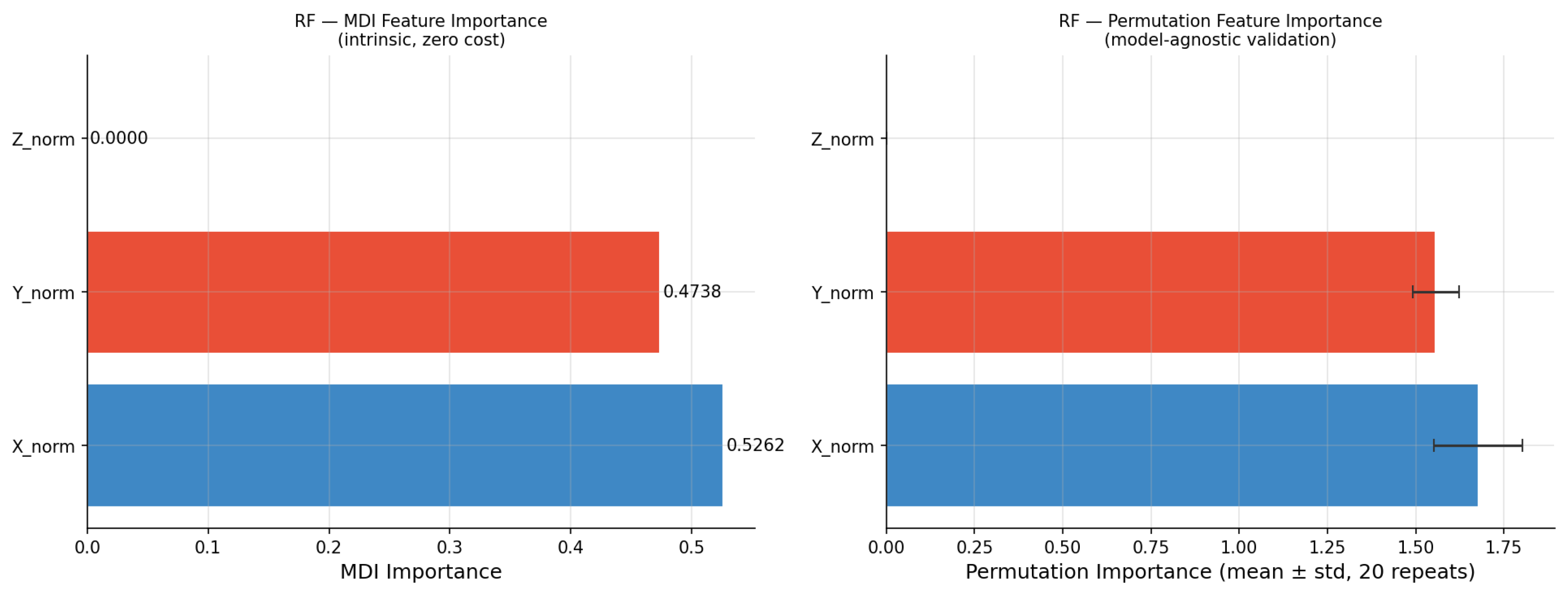
- Physical interpretability via feature importance: In an SiP context, knowing which spatial coordinate (X, Y, or Z) most influences temperature is actionable knowledge for thermal design. The MDI-based feature importance metric provides this insight at negligible computational cost, making Random Forest the most interpretable of the three candidates evaluated here.
- Robustness to the ensemble size: The OOB error provides an unbiased estimate of generalization performance throughout training, allowing early stopping without a separate validation set, which is an advantage when labeled SiP thermal data is limited.
2.3. XGBoost: Algorithm, Theory, and Relevance
2.3.1. Mathematical Foundations
- Additive model and regularized objective.
- Second-Order Taylor Expansion.
- Optimal Leaf Weights and Structure Score.
2.3.2. State of the Art (2023–2025): XGBoost for Thermal and Electronic Prediction
2.3.3. Motivation and Expected Contribution in This Study
- Second-order thermal sensitivity: the Hessian captures the curvature of the MSE loss surface, enabling XGBoost to model rapid, non-monotonic temperature variations around hotspots with higher fidelity than gradient-only (first-order) methods such as standard gradient boosting or linear regressors.
- Regularization-driven noise robustness: The parameter (L2 penalty on leaf scores) and the parameter (minimum split gain) together act as an adaptive filter, suppressing the influence of noisy or outlier temperature readings, a critical property in SiP monitoring where individual sensor readings may be corrupted by electromagnetic interference or thermal transients.
- Efficient hyperparameter optimization: The closed-form gain formula enables XGBoost to evaluate every candidate split in O(p × N) time, making RandomizedSearchCV over large hyperparameter grids computationally feasible even on modest hardware, directly enabling the optimization protocol applied in this study.
2.4. Variational Autoencoder: Algorithm, Theory, and Relevance
2.4.1. Mathematical Foundations
- Generative Process.
- Marginal Log-Likelihood and Intractability.
- KL Divergence and the Evidence Lower Bound (ELBO).
- Reconstruction term: rewards the decoder for accurately reconstructing x from latent sample z. For a Gaussian decoder, this term reduces to the negative MSE between x and its reconstruction .
- KL regularization: penalizes the encoder for deviating from the standard normal prior, ensuring a smooth, well-structured latent space that supports interpolation and anomaly scoring.
- Closed-Form KL for Diagonal Gaussian Encoder.
- Reparameterization Trick.
- Anomaly Score.
2.4.2. State of the Art (2023–2025): VAEs for Anomaly Detection and Thermal Applications
2.4.3. Motivation and Expected Limitations in This Study
- Unsupervised thermal anomaly detection: The reconstruction error A(x) provides a model-free anomaly score that does not require labeled examples of thermal failure, an important practical advantage for SiP systems where failure data is rare or absent.
- Latent space interpolation and stress scenario generation: By sampling from unexplored regions of the latent space, the trained VAE can synthesize temperature distributions corresponding to operating conditions not present in the training data, enabling systematic robustness testing of the SiP.
- Robustness to incomplete data: The encoder can infer plausible latent representations from partially corrupted inputs (e.g., missing spatial coordinates), providing resilience to sensor failures during real-time monitoring.
3. Study Objectives and Experimental Methodology
3.1. Methodological Steps
- 1.
- Development of predictive models capable of estimating temperature distributions at mesh nodes from their normalized three-dimensional spatial coordinates ().
- 2.
- Systematic evaluation and optimization of model performance through rigorous hyperparameter search procedures using RandomizedSearchCV, with full reproducibility guaranteed by setting random_state = 42 at every stage of the pipeline.
- 3.
- Comparative analysis of three heterogeneous machine learning paradigms, gradient boosting (XGBoost), ensemble bagging (Random Forest), and deep variational generation (Variational Autoencoder), under a unified controlled experimental framework.
3.2. Data Preparation Pipeline
3.2.1. Raw Data Loading and Cleaning
3.2.2. Feature Normalization (Z-Score Standardization)
3.2.3. Dataset Merging and Partitioning
3.3. Evaluation Protocol
3.4. Model Architectures and Training Procedures
3.4.1. XGBoost (Extreme Gradient Boosting)
3.4.2. Random Forest
3.4.3. Variational Autoencoder (VAE)
- Input normalization: all four input features, temperature, , are normalized to the range of [0, 1] using MinMaxScaler. Temperatures are scaled with °C and °C, fitted exclusively on the training partition to prevent test-set leakage. This step is essential because raw temperatures between 20 and 76 °C and standardized coordinates between and operate on fundamentally different scales, which disrupts KL divergence optimization and causes the network to prioritize reconstruction of the dominant-scale feature.
- Linear output activation: the decoder uses a linear activation rather than the sigmoid activation of the initial configurations. Sigmoid constrains outputs to [0, 1], rendering it physically impossible to reconstruct normalized temperatures above and guaranteeing an artificial minimum MSE floor of order 730.
4. Results and Discussion
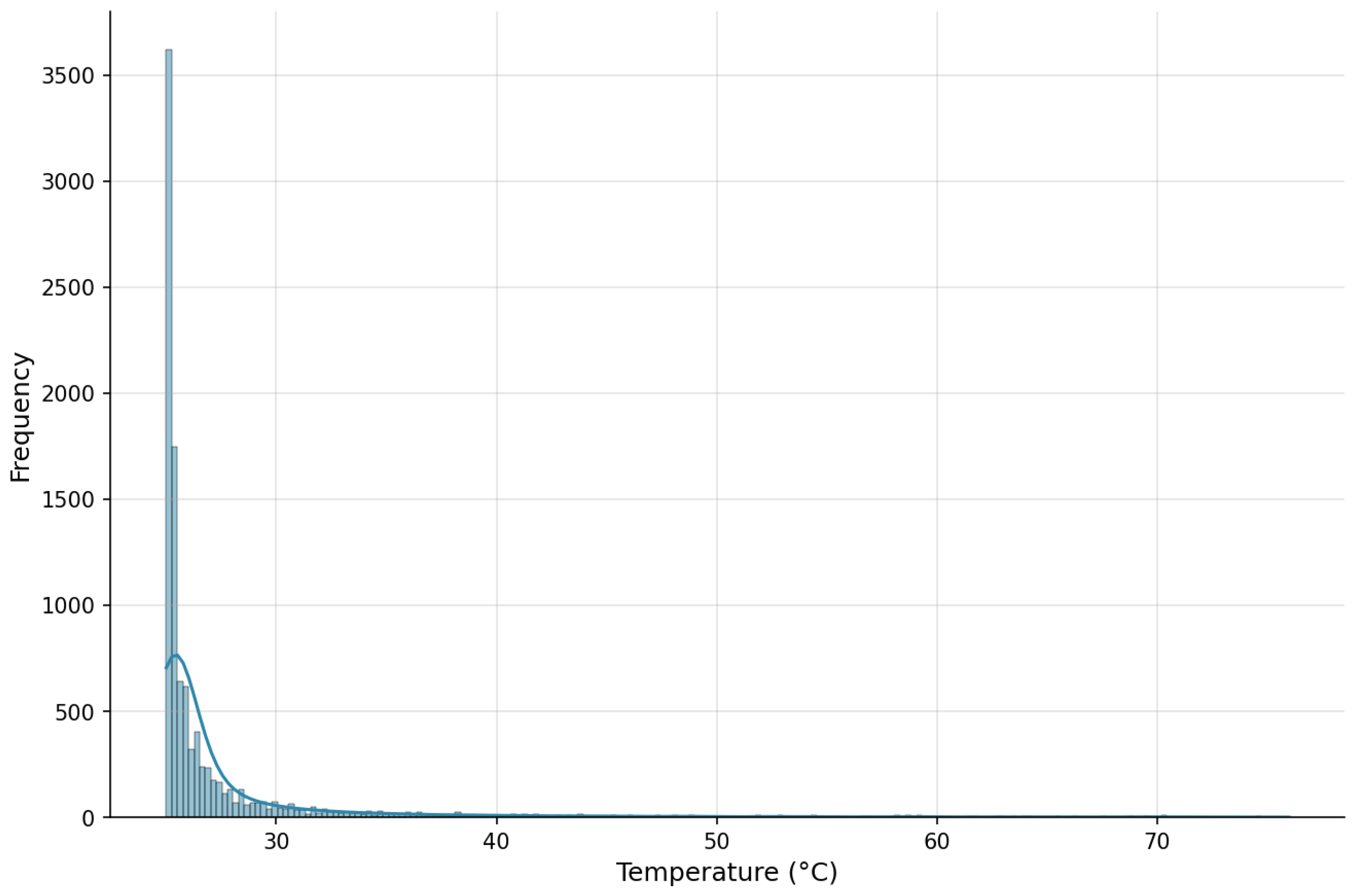
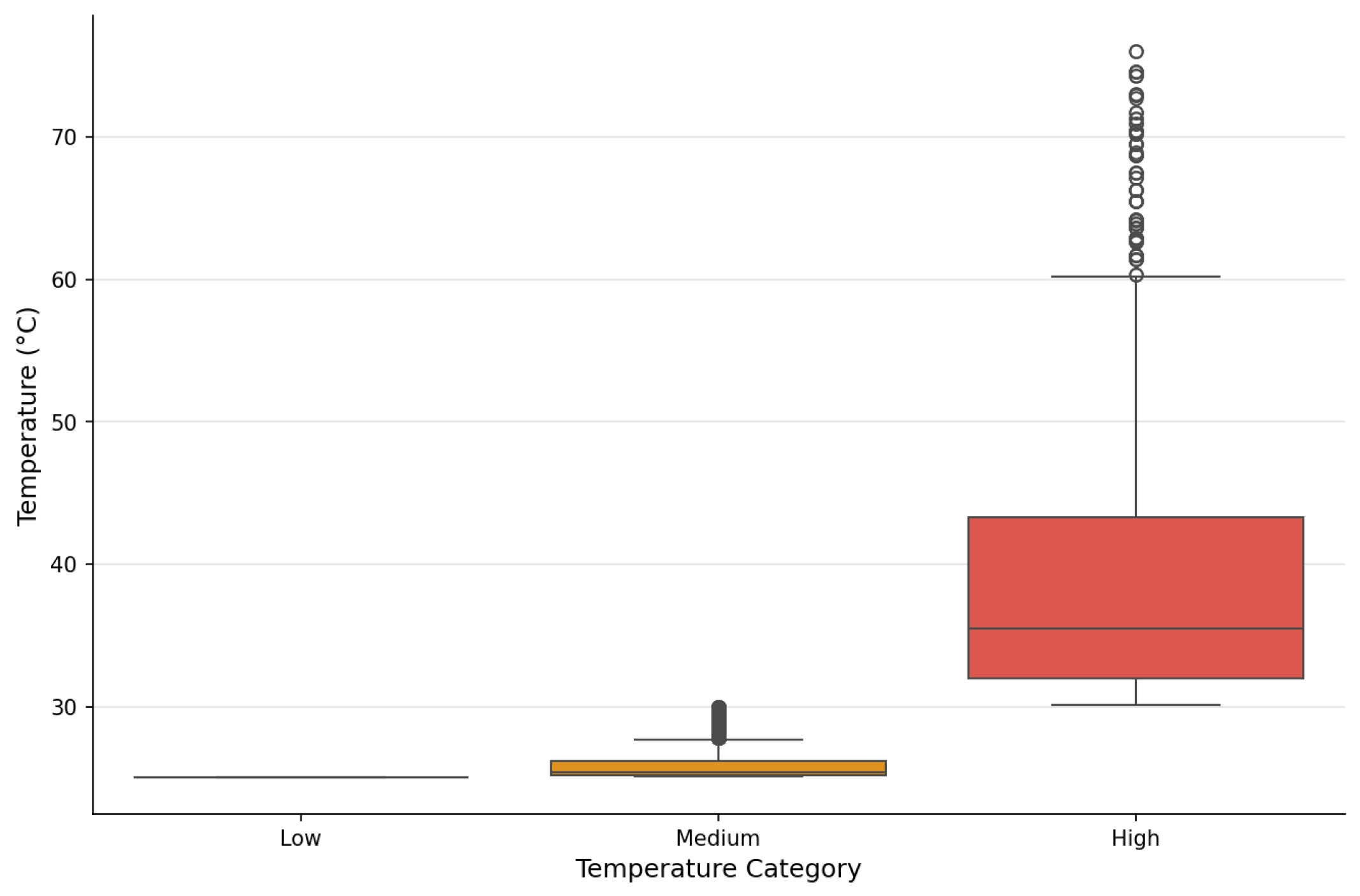
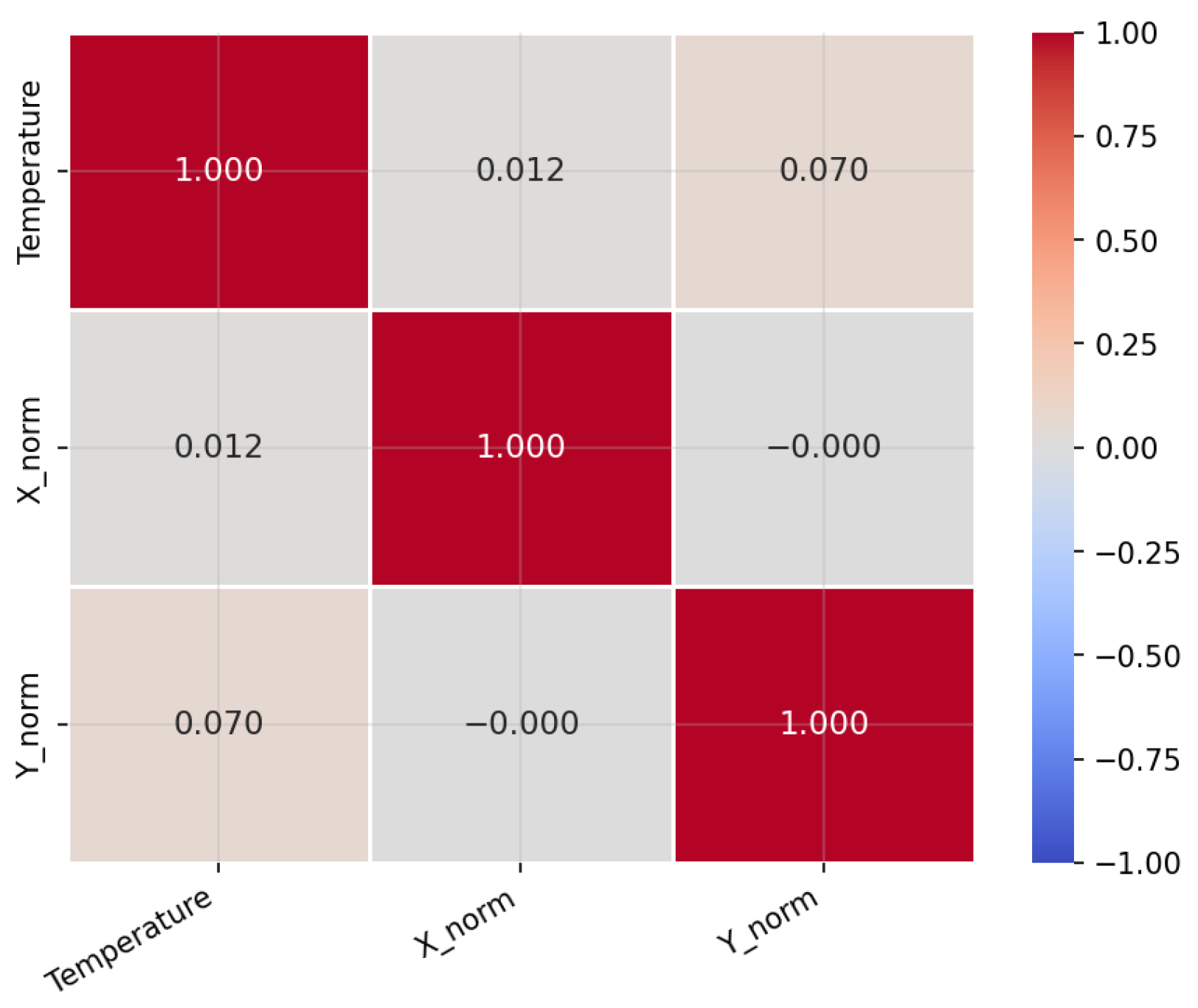
4.1. Exploratory Data Analysis
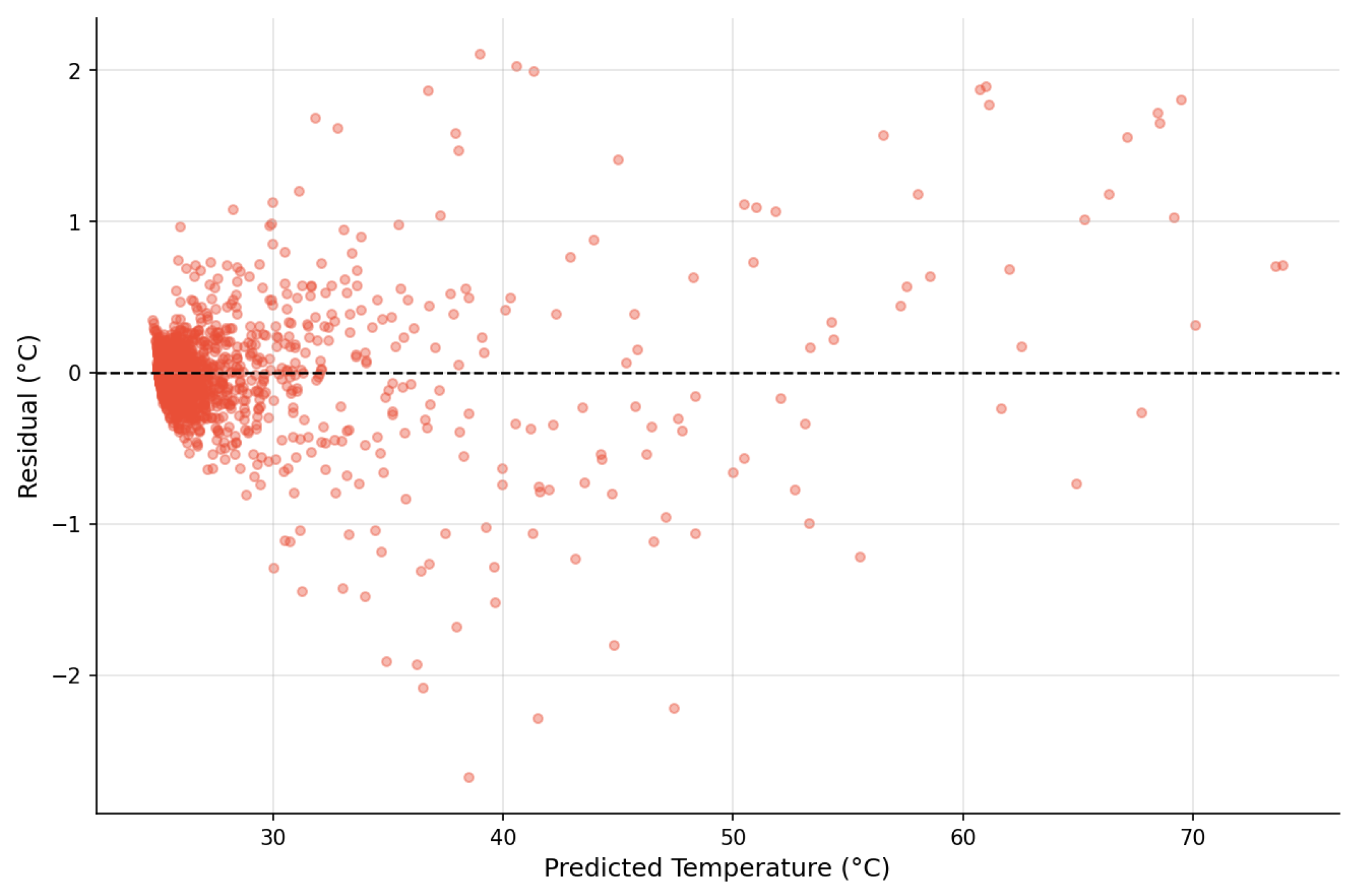
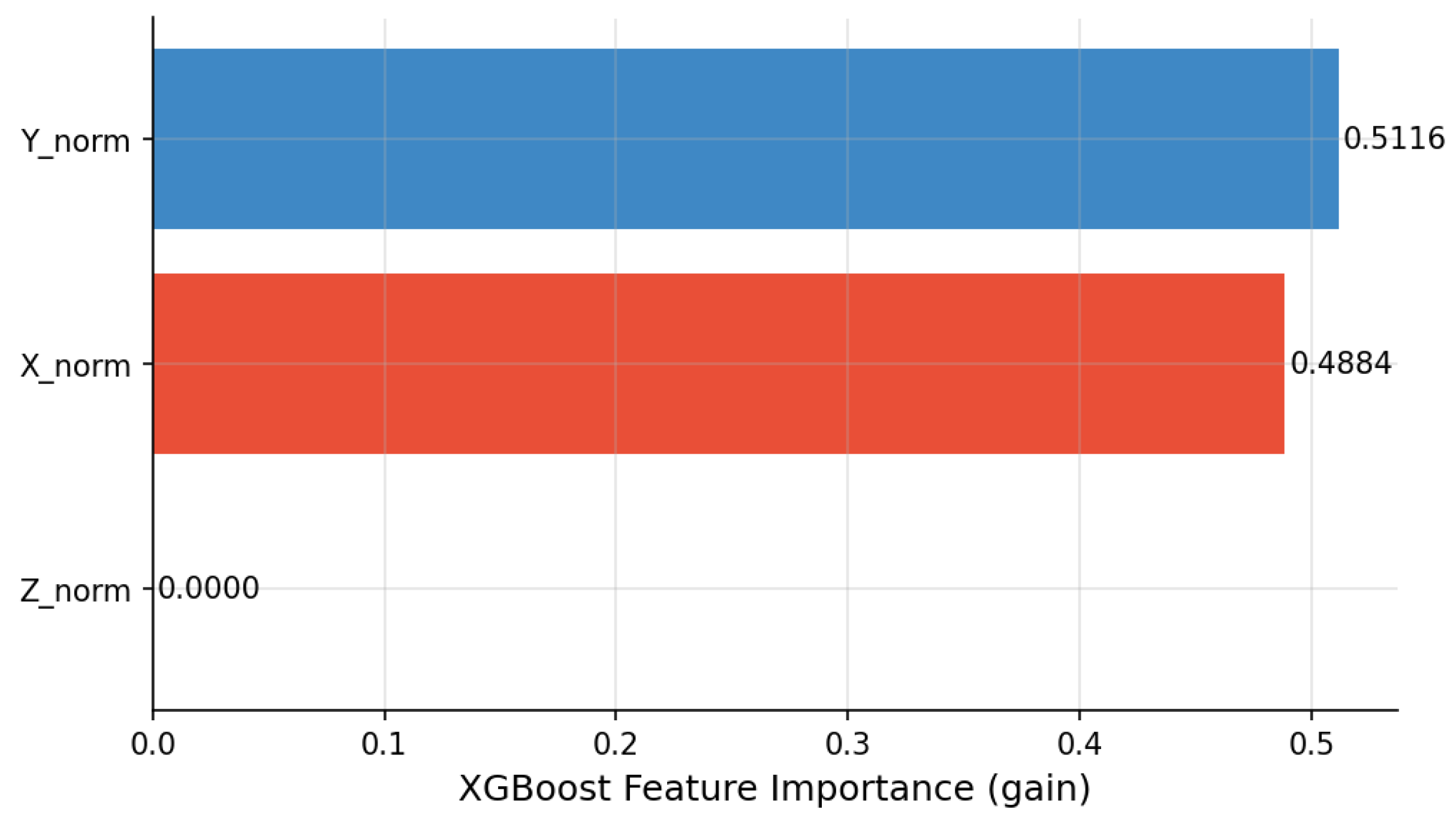
4.2. XGBoost Model Results
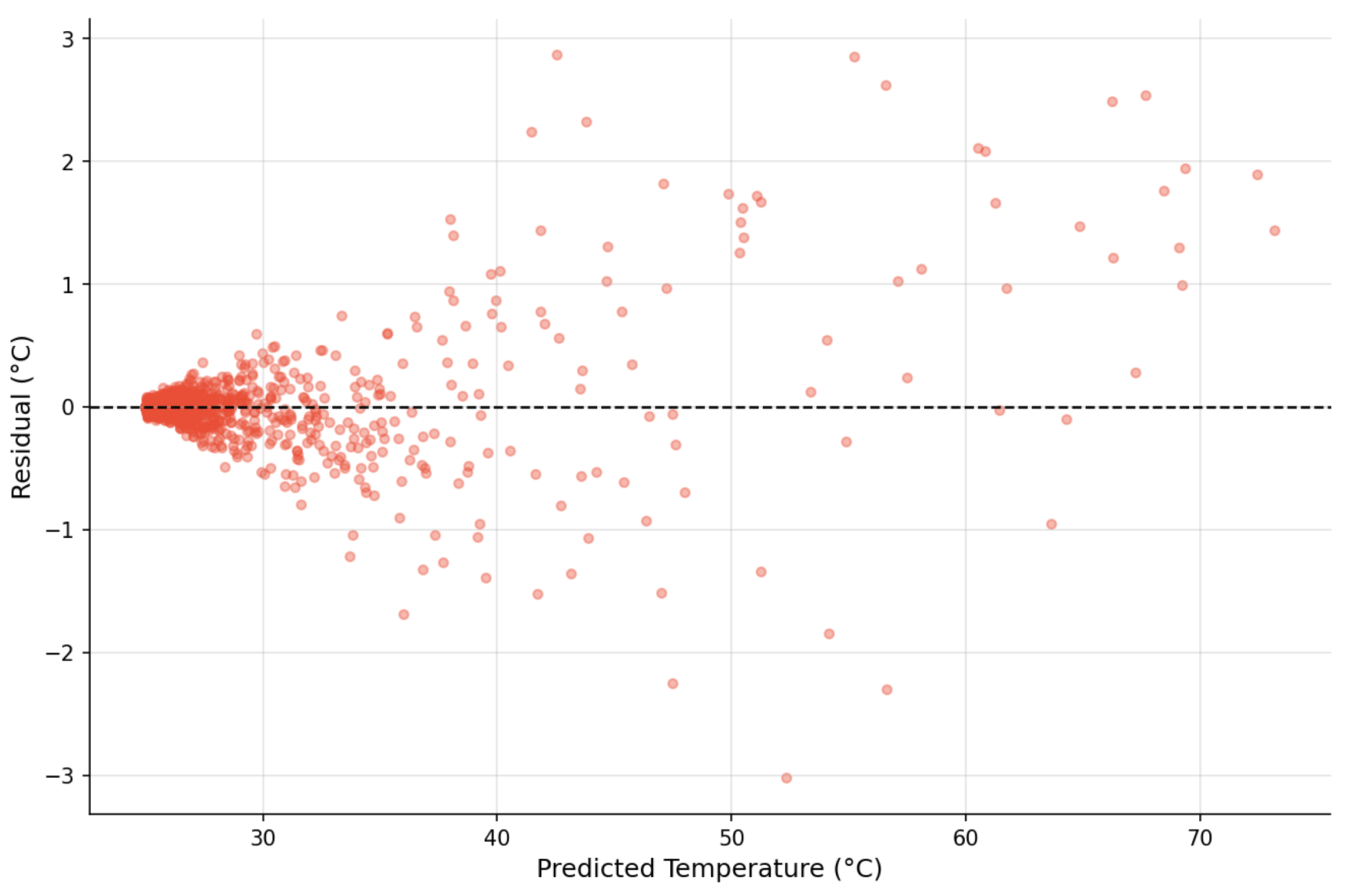
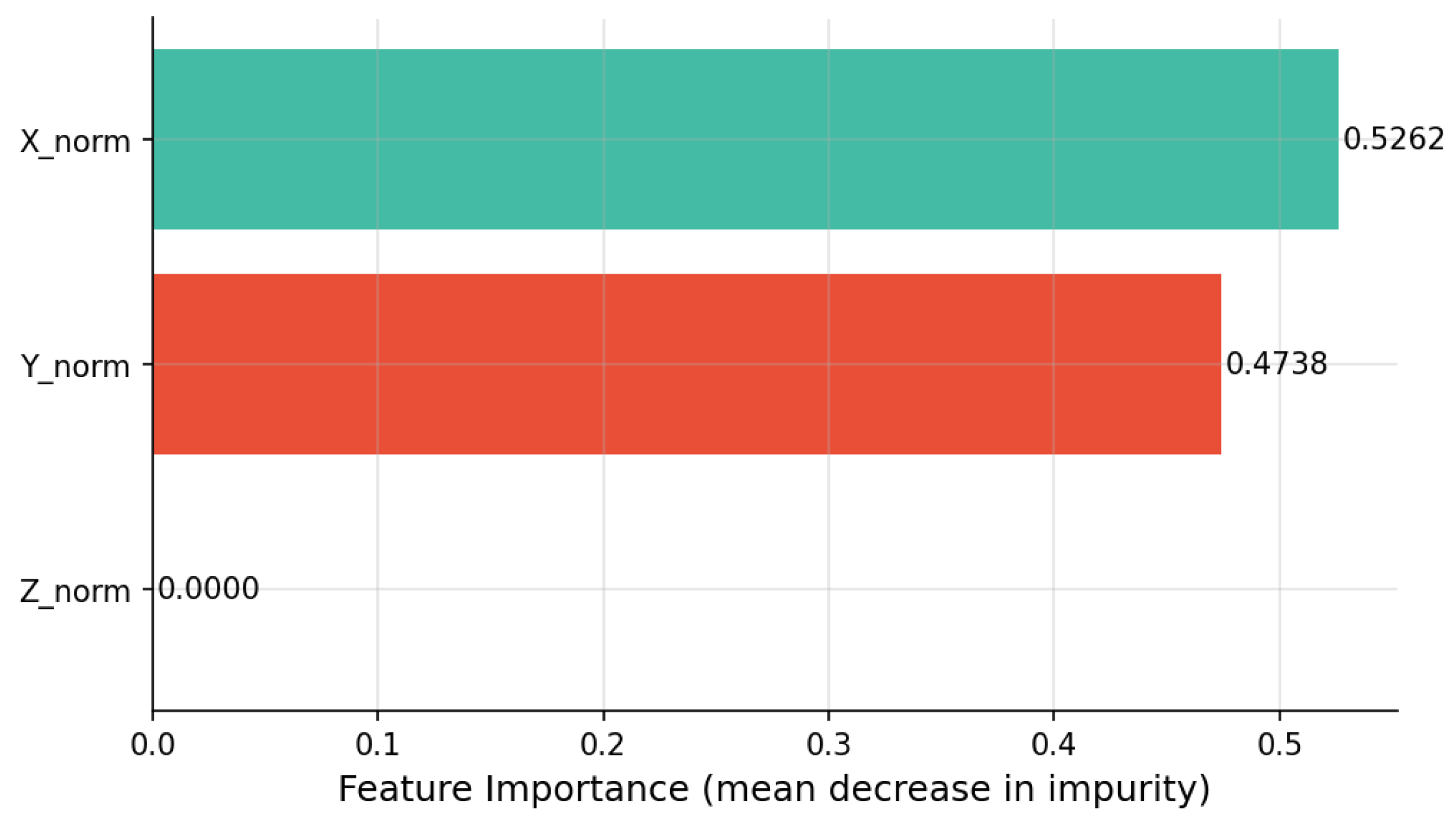
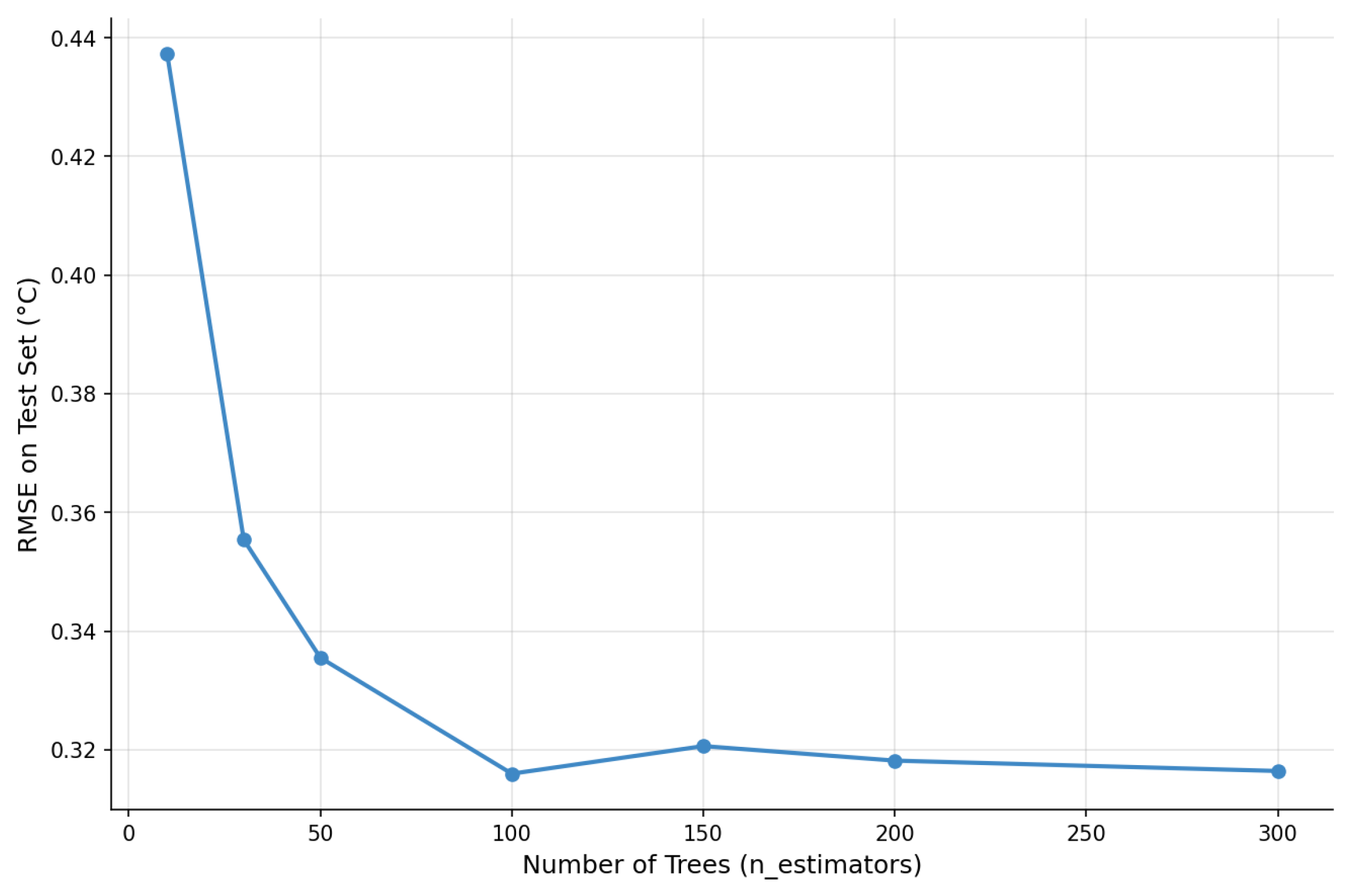
4.3. Random Forest Model Results
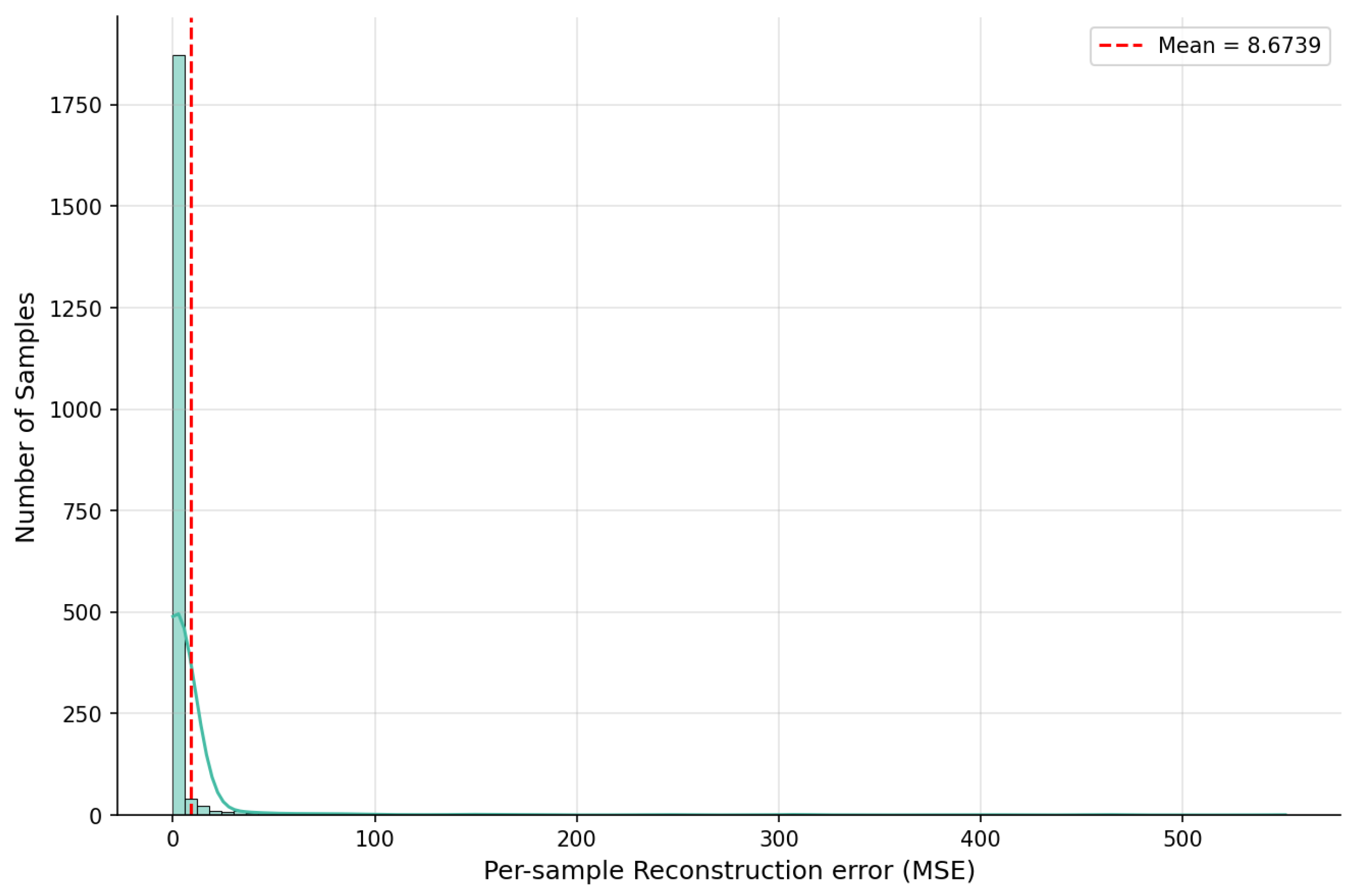
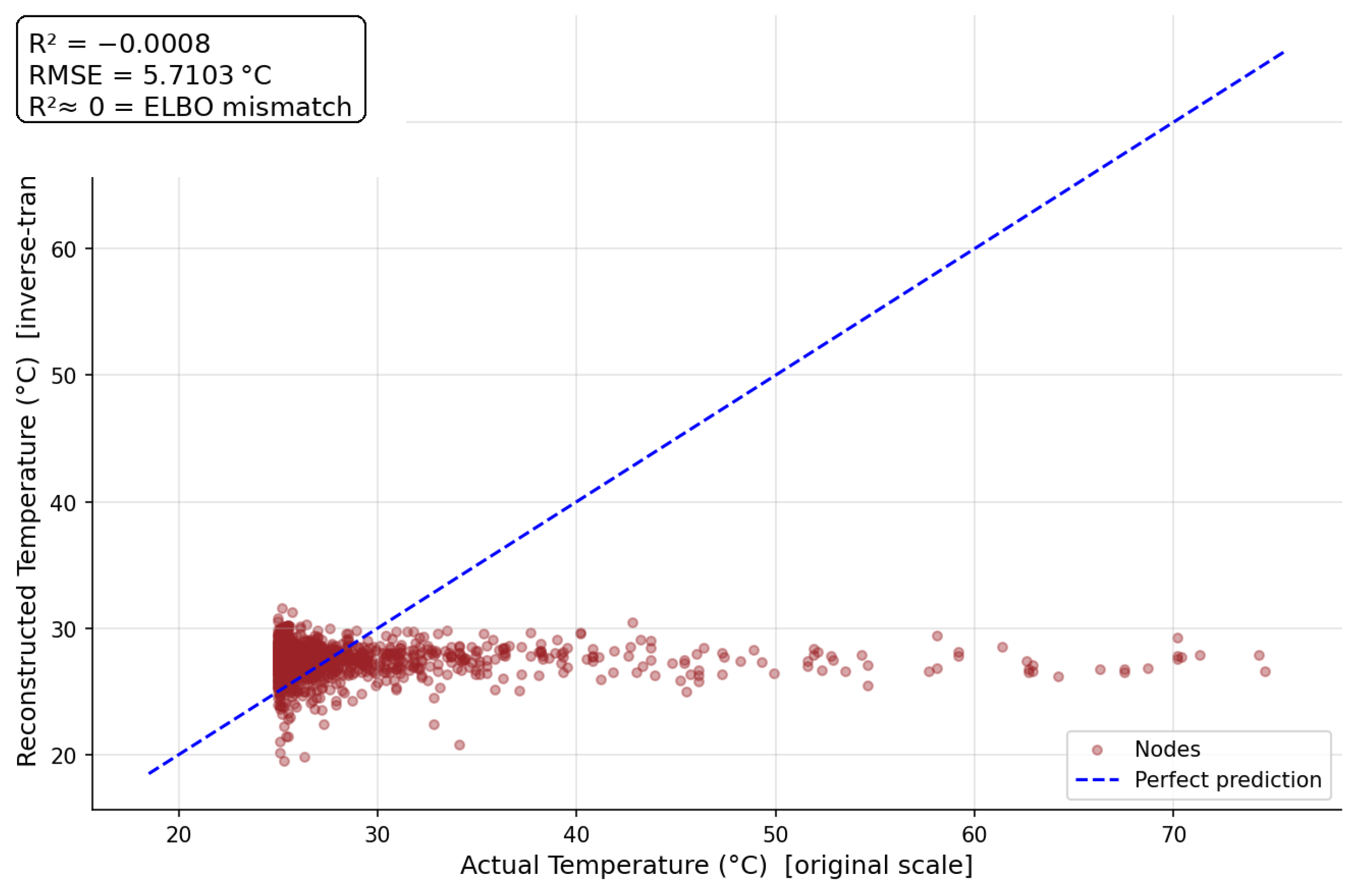
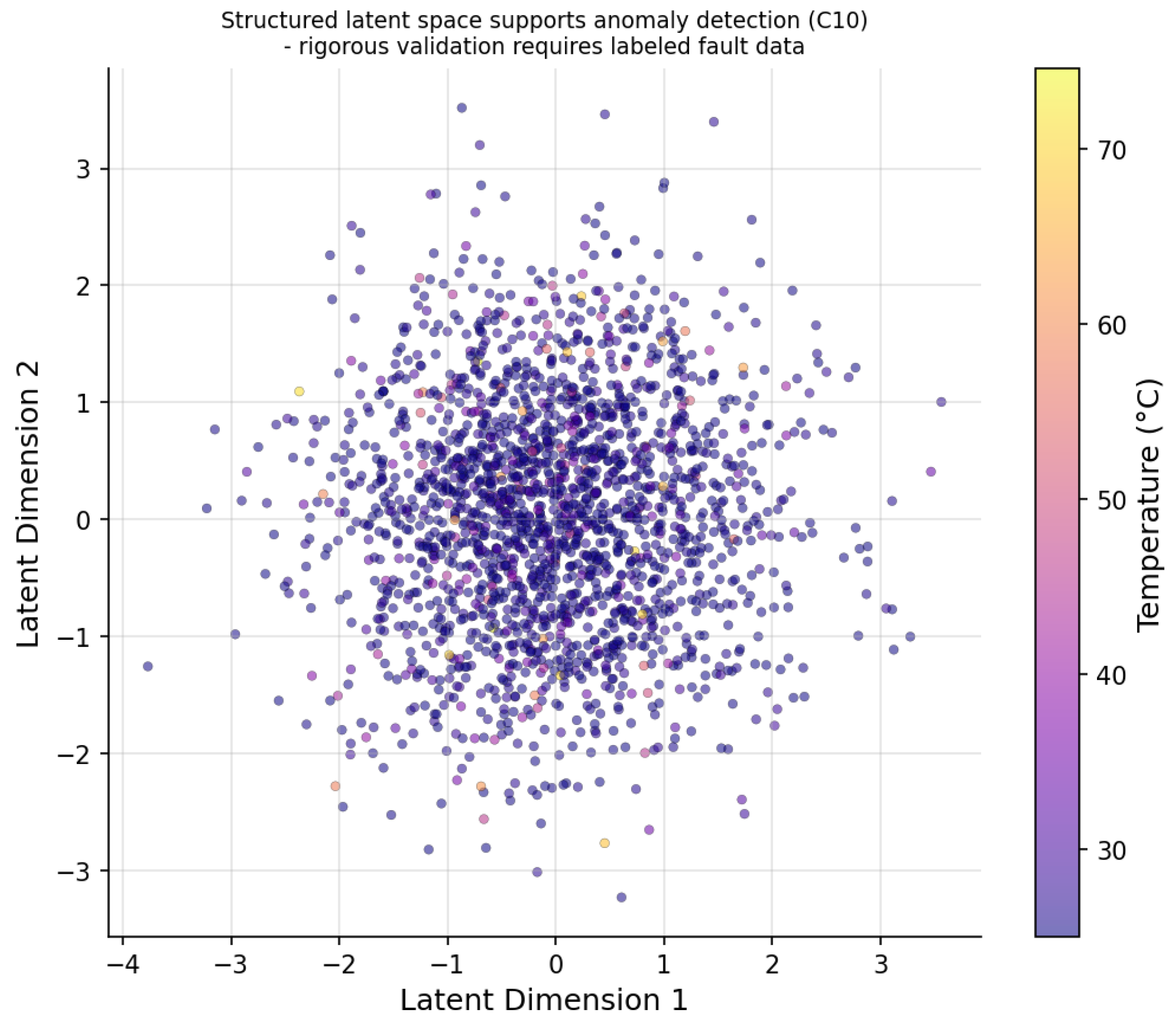
4.4. Variational Autoencoder Results
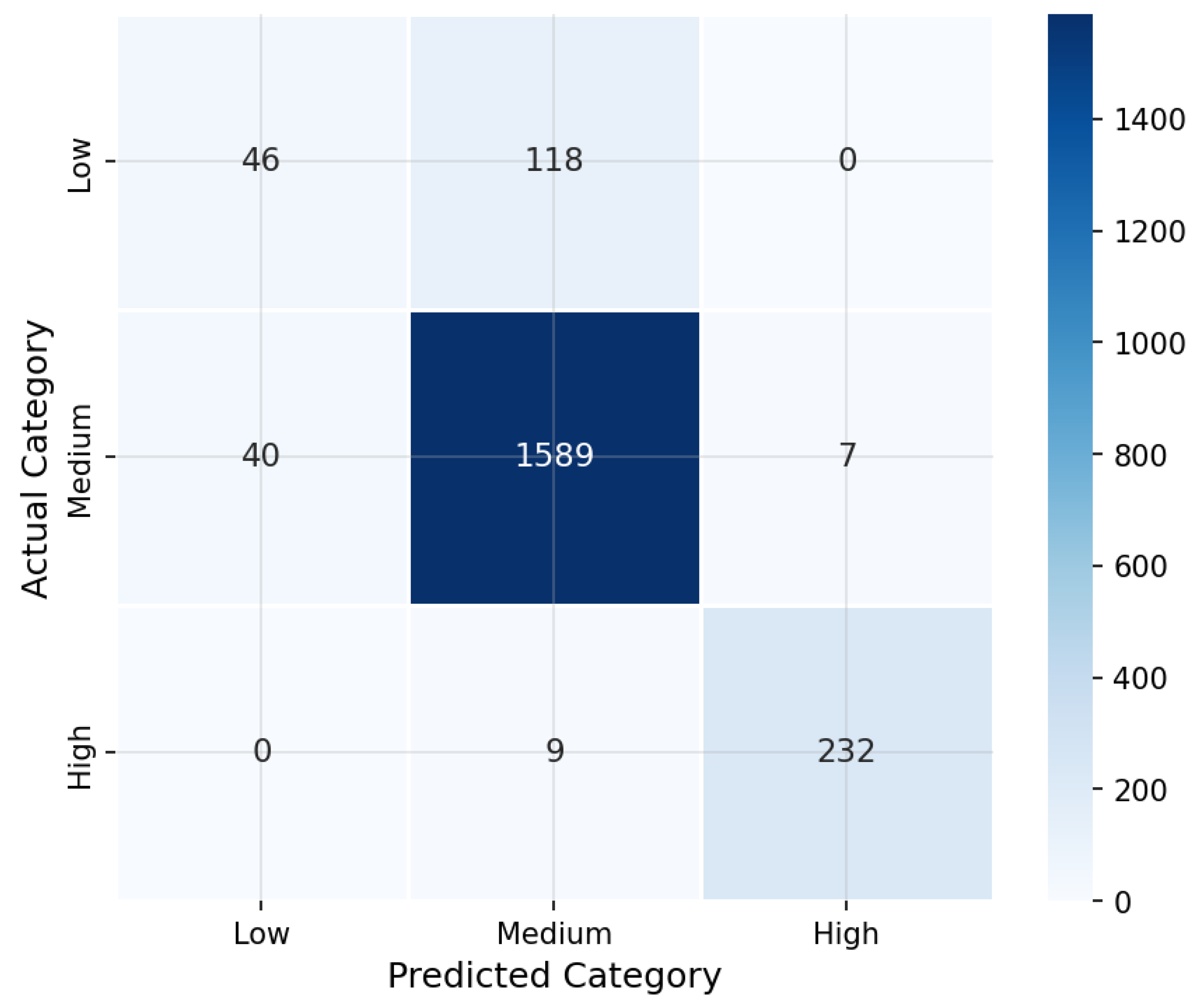
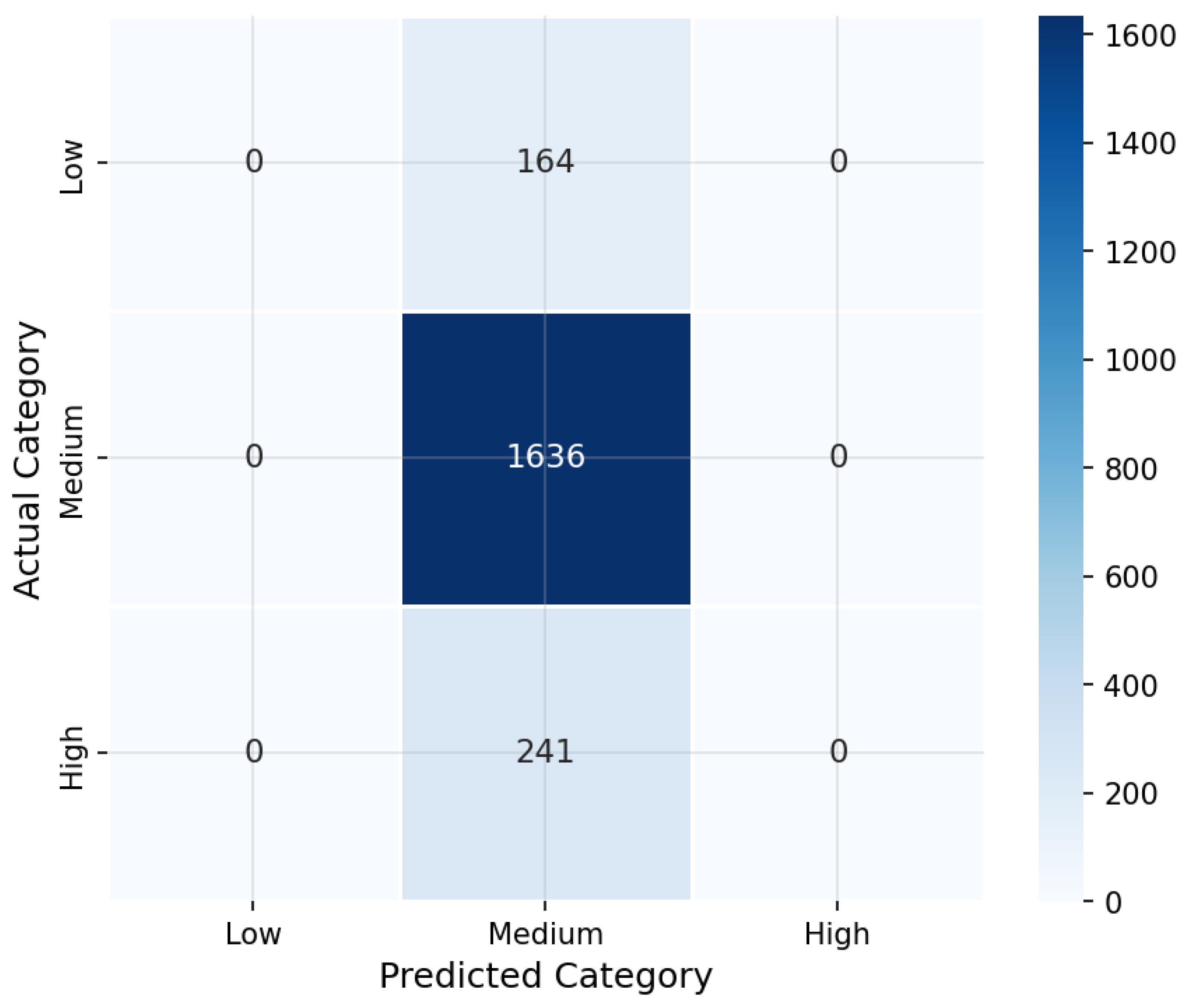
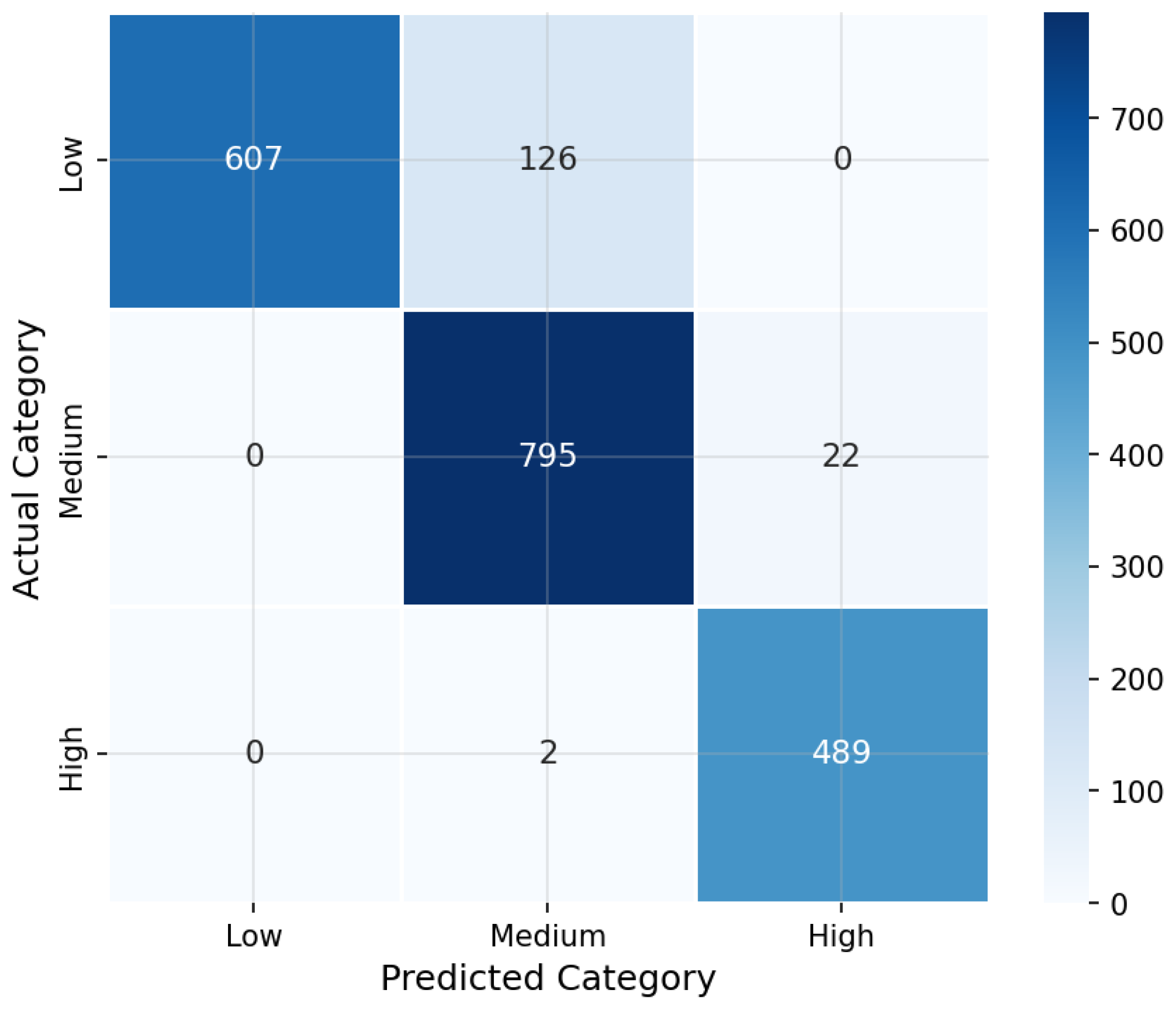
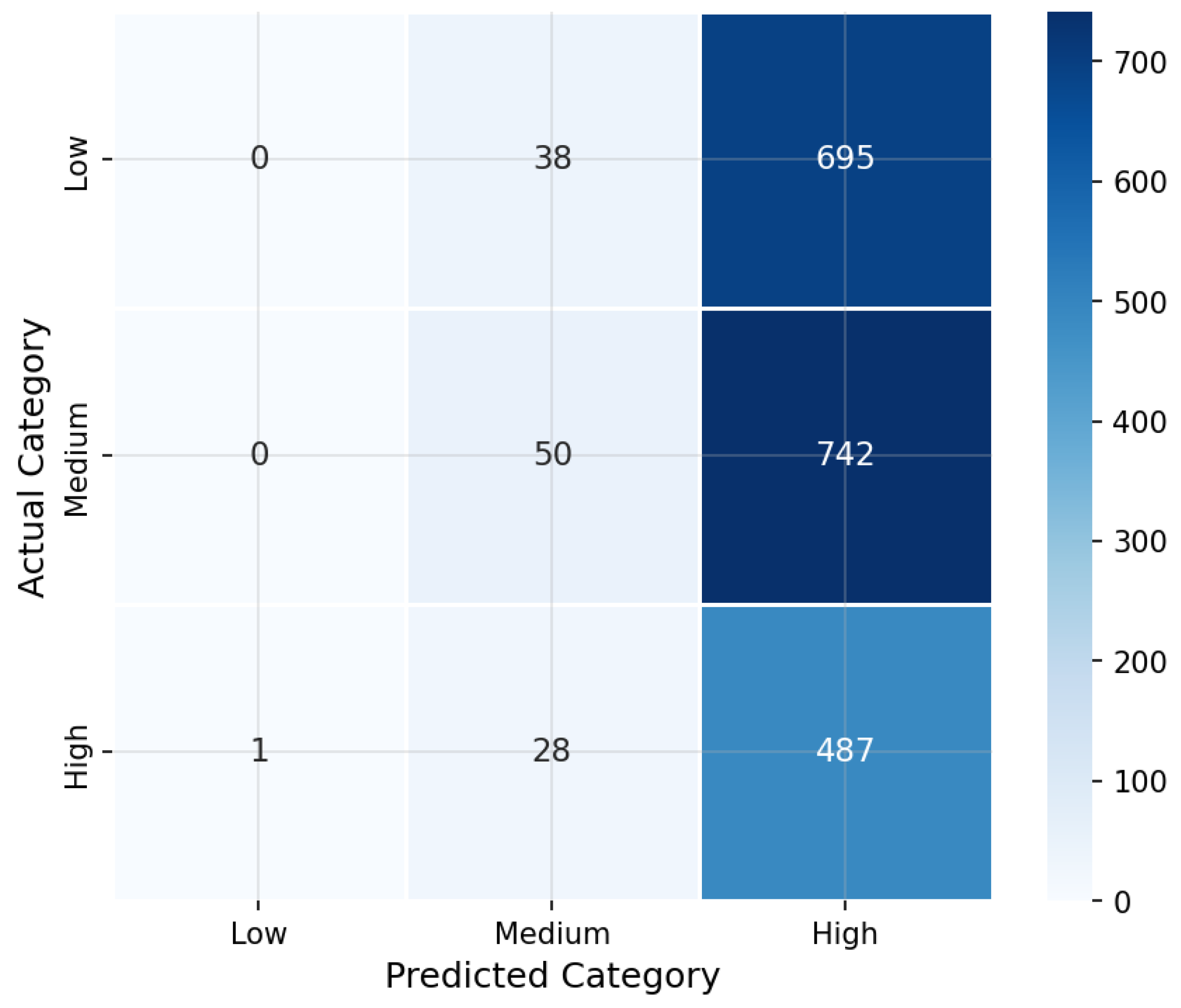
4.5. Confusion Matrix Analysis
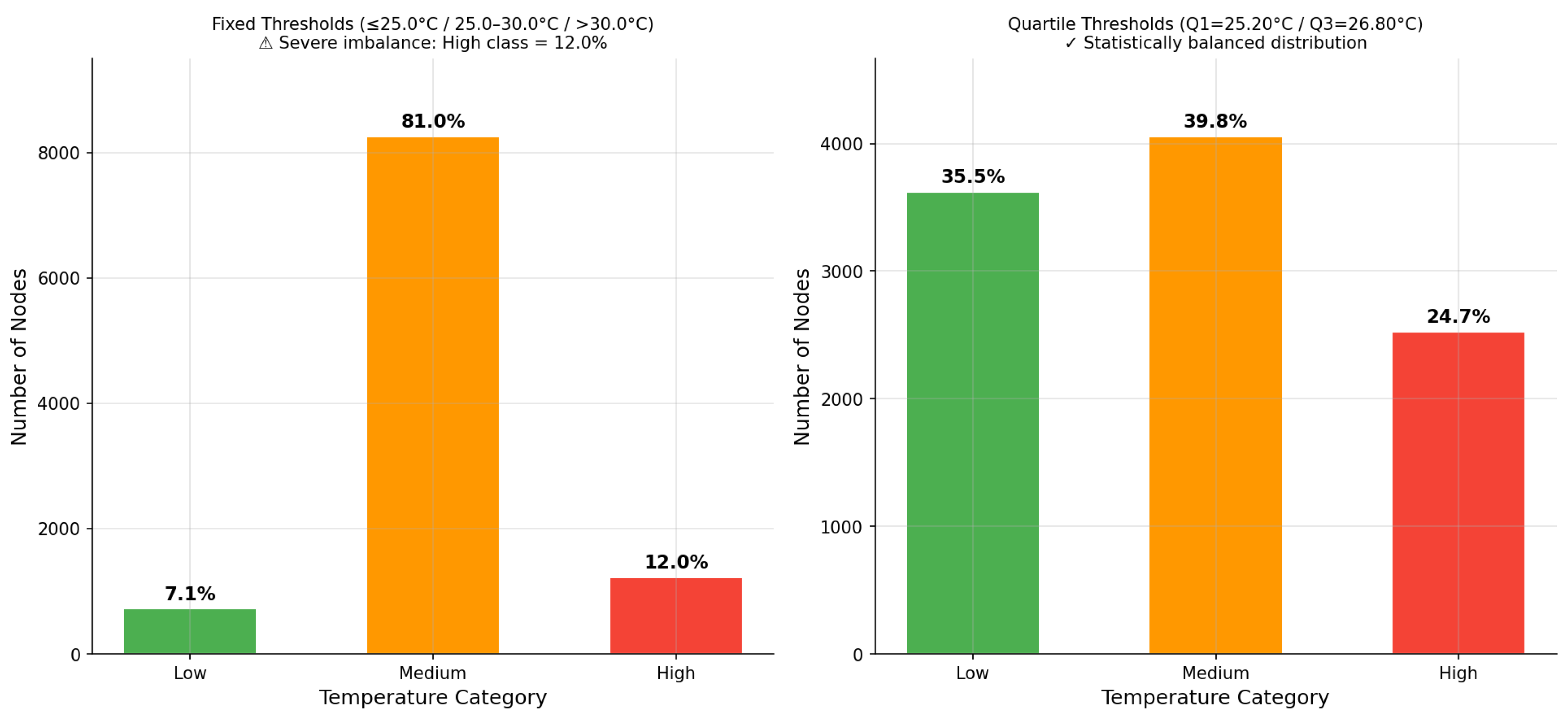
4.5.1. Fixed-Threshold Classification (Low/Medium/High)
4.5.2. Quartile-Threshold Classification (Nominal/Transitional/Critical)
4.6. Global Performance Comparison
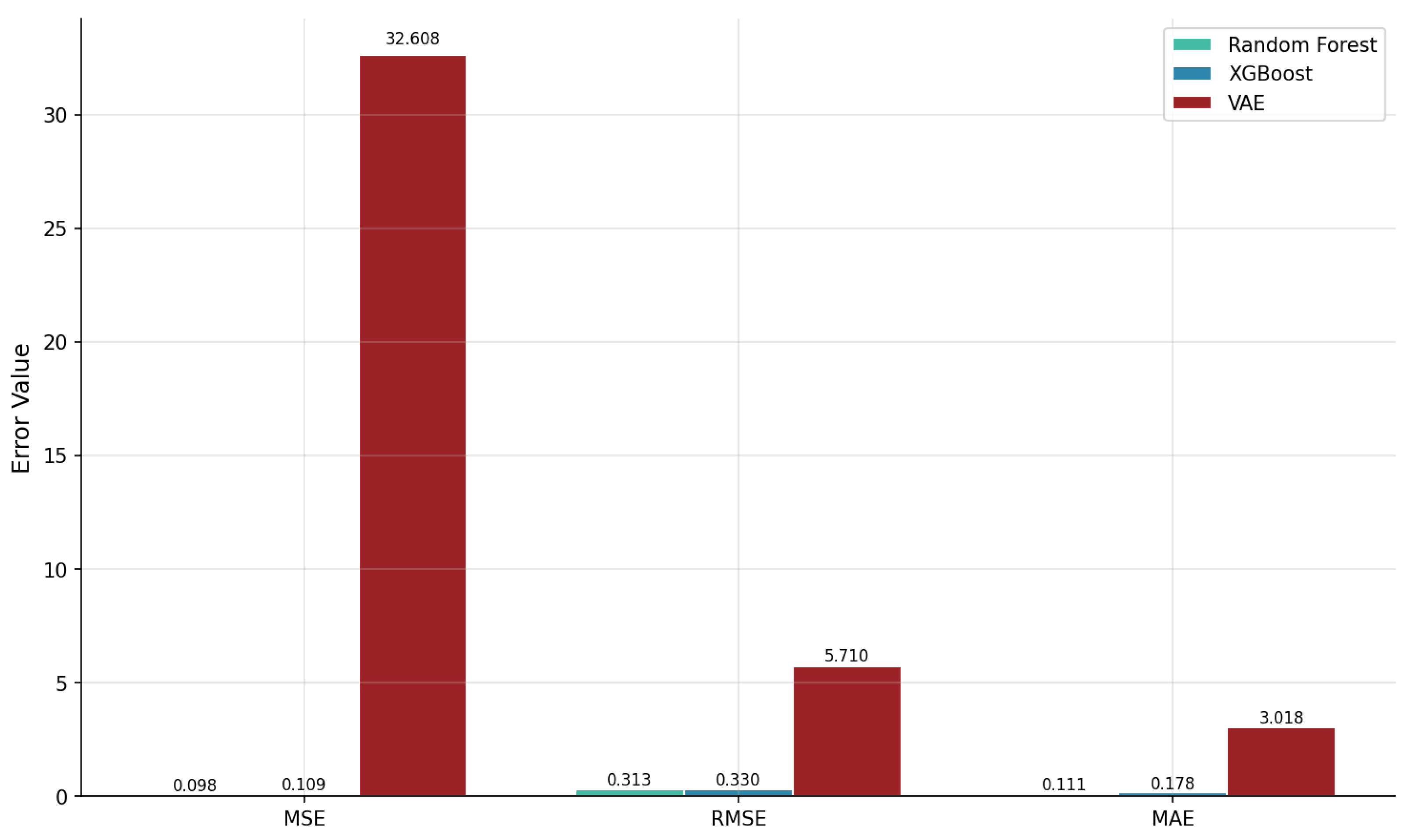
- The optimized Random Forest achieves an MSE of 0.0978, which falls below the threshold of 0.5 reported for the Graph Convolutional Network of [20], despite operating on a feature space of dramatically reduced the dimensionality of three normalized spatial coordinates, without power map information, graph topology encoding, or adjacency matrix construction.
- Both studies independently converge on the same structural conclusion regarding the positioning of ensemble methods: they provide the best accuracy to implementation cost trade-off for structured per-node temperature estimation, a finding whose consistency across two independent datasets and two distinct chip architectures strengthens its generalizability.
5. Conclusions
5.1. Results and Discussion
- 1.
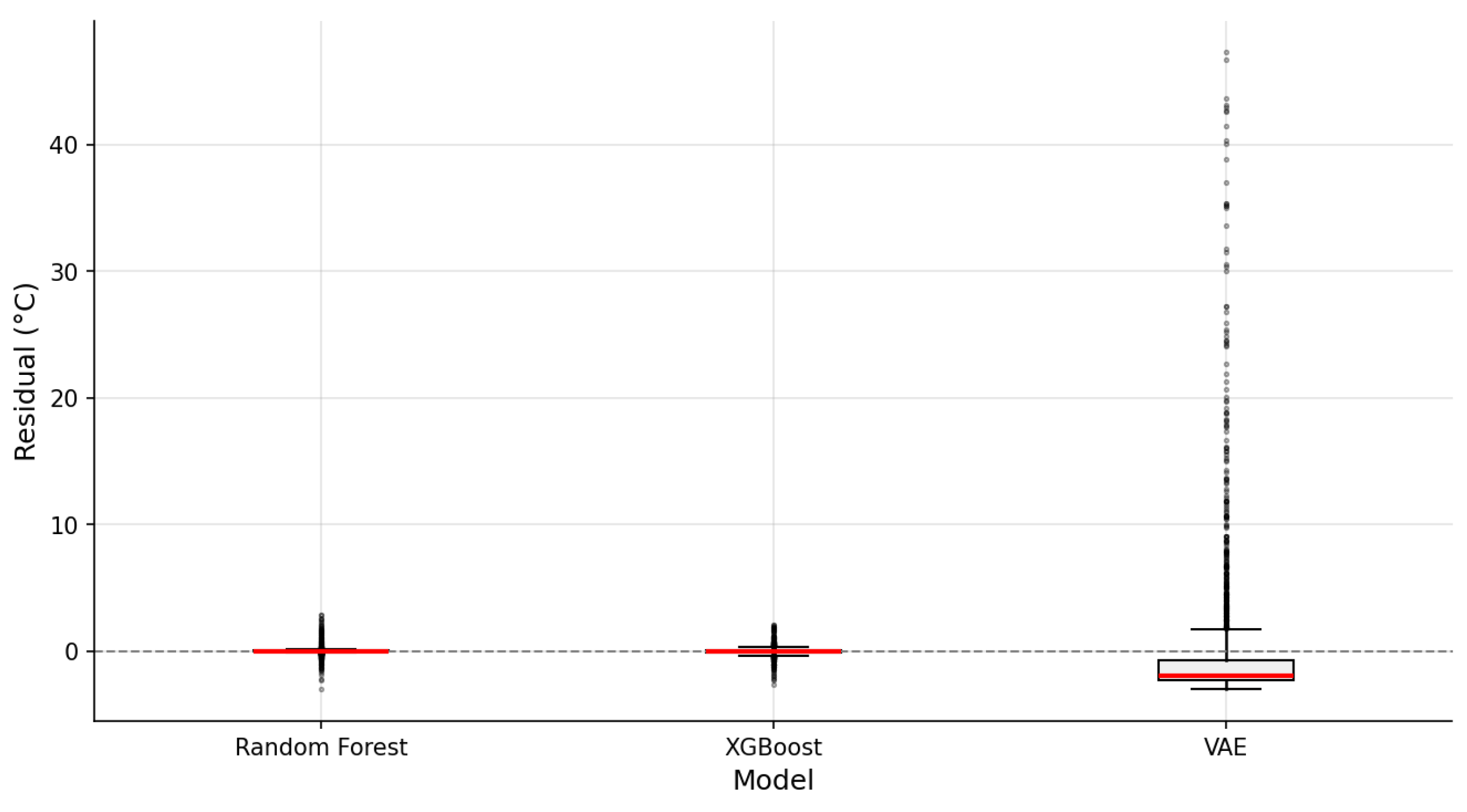
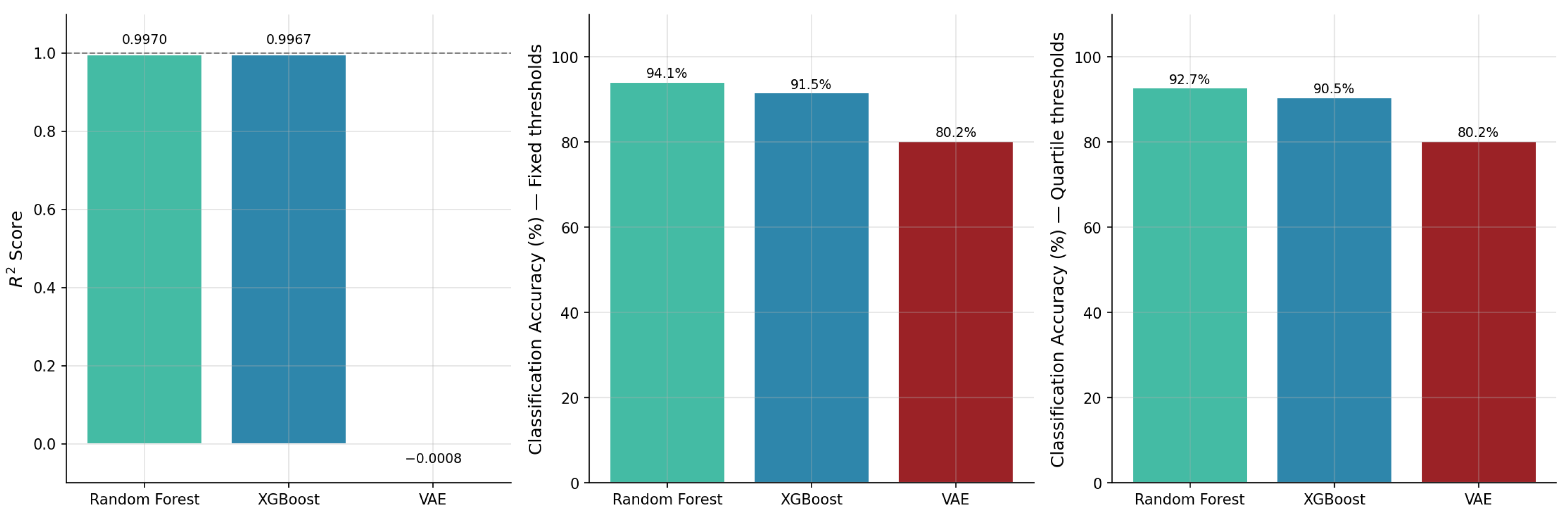
- Ensemble methods constitute effective and practically tractable surrogates for FEM-based thermal field prediction. Random Forest achieved MSE = °C2, R2 = 0.9970; XGBoost attained MSE = °C2, R2 = 0.9967, both from three normalized spatial coordinates alone. The Random Forest result (MSE = 0.0978) falls below the GCN benchmark (<0.5) of [20], which requires power maps and full graph topology. MDI feature attribution (: 0.5262; : 0.4738; : 0.000), independently confirmed by permutation importance, reveals a planar thermal anisotropy that can guide sensor placement and design decisions.
- 2.
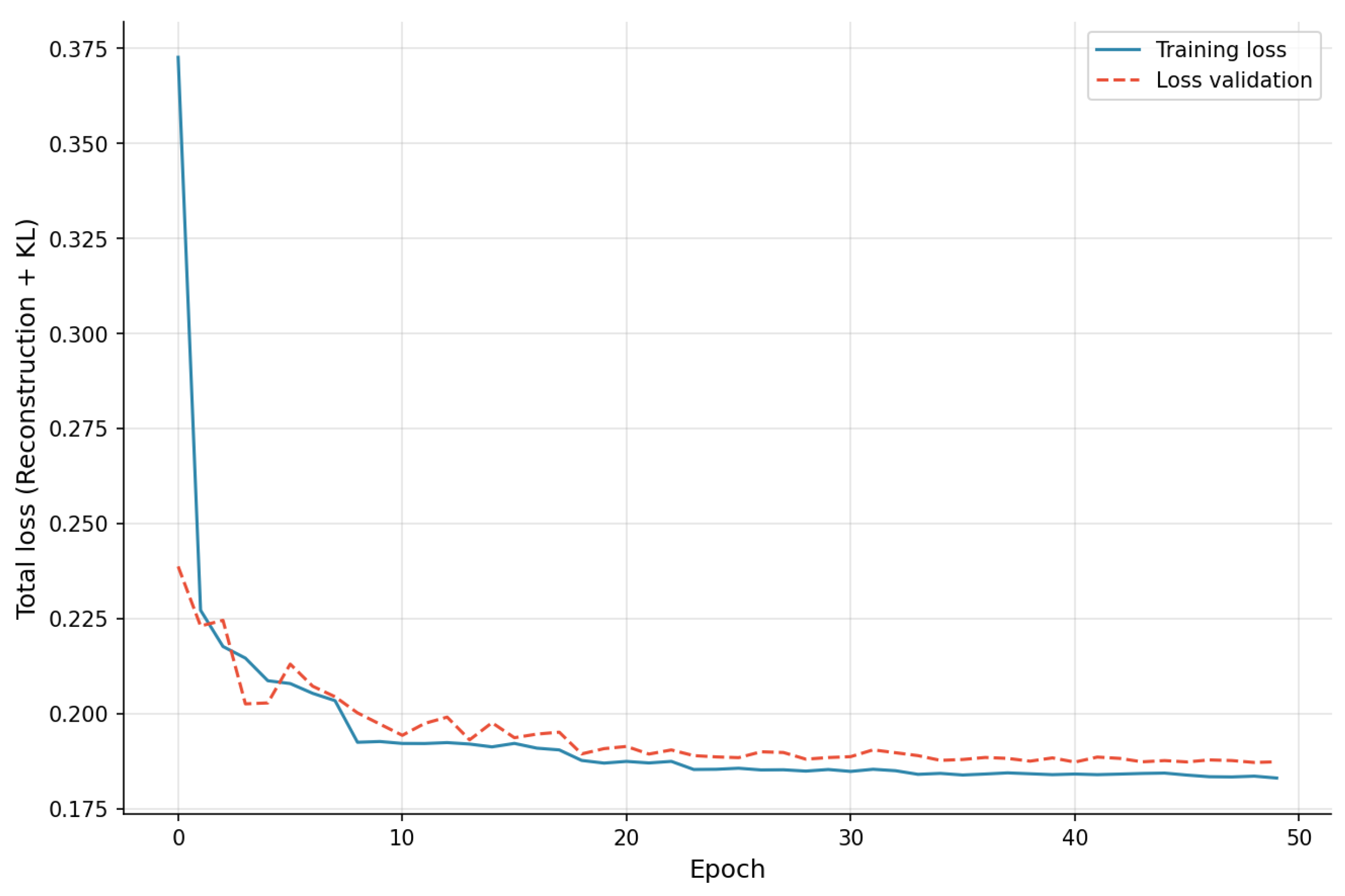
- The structural incompatibility between the ELBO training objective and deterministic regression accounts for the VAE’s inferior point-prediction performance. The VAE achieved R2 = −0.0008 and MSE = °C2 (RMSE = °C), performing no better than a constant mean predictor. The revised architecture employs linear decoder activation, MinMaxScaler normalization, and converged at epoch 44 under early stopping. The regression failure is structural: the KL regularization term penalizes the sharp, point-estimating latent representations that deterministic regression requires. The temperature-structured latent space is consistent with the hypothesis of reconstruction-error-based anomaly detection, a claim that requires experimental validation with labeled fault data before operational deployment.
- 3.
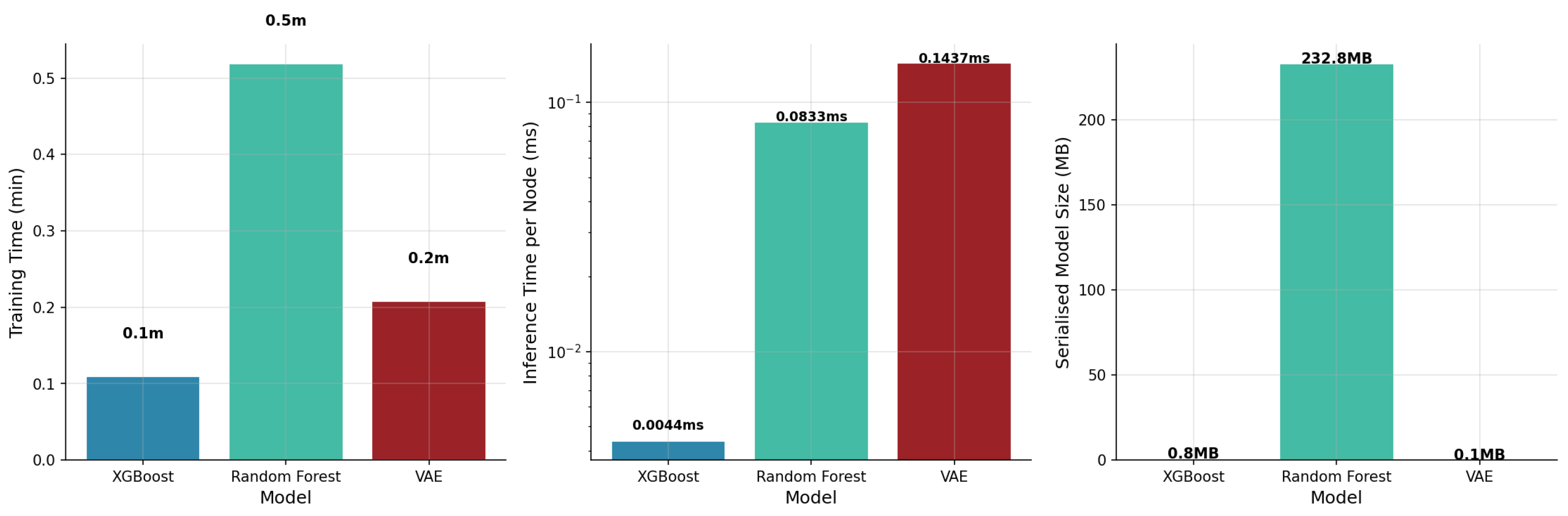
- The three paradigms present complementary accuracy, interpretability, and computational profiles, guiding model selection for different deployment contexts. XGBoost achieves the lowest inference latency (0.0044 ms/node) and serialized footprint (0.8 MB), positioning it as the preferred model for embedded real-time monitoring. Random Forest provides the highest regression fidelity and the richest engineering interpretability through intrinsic MDI feature attribution. The VAE, while unsuitable for deterministic regression, offers a compact representation (0.1 MB) and a structured latent geometry that may support anomaly detection.
- 4.
- The coordinate-only input feature space is a deliberate and bounded design choice enabling rigorous cross-paradigm comparison. The exclusion of power dissipation maps, material conductivities, graph topology, and boundary condition labels ensures that observed performance differences are attributable solely to algorithmic characteristics. This constraint limits the applicability of the trained models to designs with similar spatial–thermal structures to the training configuration and identifies physics-augmented features as the highest-priority extension.
5.2. Perspectives and Future Work
- 1.
- Physics-augmented feature engineering: Incorporating per-node power dissipation, material conductivities, heat-source locations, and boundary condition labels would substantially improve accuracy and cross-design generalization.
- 2.
- Graph-structured and physics-informed architectures: GCNs can exploit explicit mesh adjacency; PINNs incorporate heat-conduction equations into the training loss. Both address the spatial correlation limitation quantified in Section 3.3.
- 3.
- Hybrid ensemble–generative architectures: VAE-derived latent features fed to a Random Forest regressor could combine ensemble regression accuracy with generative uncertainty quantification and anomaly detection capabilities.
- 4.
- Rigorous anomaly detection validation: Operational deployment of the VAE requires labeled out-of-distribution fault data enabling AUC-ROC, precision–recall, and F1 evaluation across detection thresholds.
- 5.
- Integration with active thermal management: The sub-millisecond inference latency of all three models renders them compatible with closed-loop control architectures—DVFS controllers, fan-speed modules, or thermoelectric coolers—closing the gap between ML prediction and actionable thermal management.
- 6.
- Cross-design generalization and transfer learning: Domain adaptation and design-agnostic representations should be explored to reduce per-design training data requirements for new SiP configurations.
Author Contributions
Funding
Institutional Review Board Statement
Informed Consent Statement
Data Availability Statement
Conflicts of Interest
Abbreviations
| AUC-ROC | Area Under the Curve–Receiver Operating Characteristic |
| BCs | Boundary Conditions |
| CCLC | Chip Cooling Laminate Chip |
| CFD | Computational Fluid Dynamics |
| DVFS | Dynamic Voltage and Frequency Scaling |
| ELBO | Evidence Lower Bound |
| FEM | Finite Element Method (comparison baseline) |
| GCN | Graph Convolutional Network |
| IoT | Internet of Things |
| KL | Kullback–Leibler (divergence) |
| MAE | Mean Absolute Error |
| MAPE | Mean Absolute Percentage Error |
| MDI | Mean Decrease in Impurity |
| ML | Machine Learning |
| MSE | Mean Squared Error |
| PINN | Physics-Informed Neural Network |
| RF | Random Forest |
| RMSE | Root Mean Squared Error |
| SiP | System-in-Package |
| SMOTE | Synthetic Minority Over-sampling Technique |
| SoC | System-on-Chip |
| TSV | Through-Silicon Via |
| VAE | Variational Autoencoder |
| XGBoost | Extreme Gradient Boosting |
References
- Oukaira, A.; Said, D.; Zbitou, J.; Lakhssassi, A. Advanced Thermal Control Using Chip Cooling Laminate Chip (CCLC) with Finite Element Method for System-in-Package (SiP) Technology. Electronics 2023, 14, 3154. [Google Scholar] [CrossRef]
- Memik, S.O.; Mukherjee, R.; Ni, M.; Long, J. Optimizing Thermal Sensor Allocation for Microprocessors. IEEE Trans.-Comput.-Aided Des. Integr. Circuits Syst. 2008, 27, 516–527. [Google Scholar] [CrossRef]
- Wang, Z.; Dong, R.; Ye, R.; Singh, S.S.K.; Wu, S.; Chen, C. A Review of Thermal Performance of 3D Stacked Chips. Int. J. Heat Mass Transf. 2024, 235, 126212. [Google Scholar] [CrossRef]
- Gabriel, O.E.; Huitink, D.R. Failure Mechanisms Driven Reliability Models for Power Electronics: A Review. J. Electron. Packag. 2023, 145, 020801. [Google Scholar] [CrossRef]
- Sharma, M.K.; Ramos-Alvarado, B. Thermal Management of 3-D Heterogeneously Integrated Microelectronics: Challenges and Future Research Directions. Commun. Eng. 2026, 5, 28. [Google Scholar] [CrossRef] [PubMed]
- Zhang, H.; Tian, M.; Gu, X. Thermal Management of Through-Silicon vias and Back-End-of-Line, Layers in 3D ICs: A Comprehensive Review. Microelectron. Eng. 2025, 298, 112325. [Google Scholar] [CrossRef]
- Oukaira, A.; Oumlaz, M.; Zbitou, J.; Lakhssassi, A. Integrated Thermal Management Strategies for 3D Chip Stacking with Through-Silicon Vias (TSV). In Proceedings of the 4th International Conference on Innovative Research in Applied Science, Engineering and Technology (IRASET), Fez, Morocco, 16–17 May 2024; pp. 1–4. [Google Scholar]
- Chuttar, A.; Banerjee, D. Machine Learning (ML) Based Thermal Management for Cooling of Electronics Chips by Utilizing Thermal Energy Storage (TES) in Packaging That Leverages Phase Change Materials (PCM). Electronics 2021, 10, 2785. [Google Scholar] [CrossRef]
- Sun, Y.; Cheng, J.; Luo, Z.; Zeng, Y. A Sub-0.01 °C Resolution All-CMOS Temperature Sensor with 0.43 °C/−0.38 °C Inaccuracy and 1.9 pJ · K2 Resolution FoM for IoT Applications. Micromachines 2024, 15, 1132. [Google Scholar] [CrossRef] [PubMed]
- Ilager, S.; Ramamohanarao, K.; Buyya, R. Thermal Prediction for Efficient Energy Management of Clouds Using Machine Learning. IEEE Trans. Parallel Distrib. Syst. 2021, 32, 1044–1056. [Google Scholar] [CrossRef]
- Pereira, D.; Oliveira, R.; Kim, H.S. A Machine Learning Approach for Prediction of Signaling SiP Dialogs. IEEE Access 2021, 9, 44094–44106. [Google Scholar] [CrossRef]
- Balega, M.; Farag, W.; Wu, X.-W.; Ezekiel, S.; Good, Z. Enhancing IoT Security: Optimizing Anomaly Detection through Machine Learning. Electronics 2024, 13, 2148. [Google Scholar] [CrossRef]
- Zabin, R.; Haque, K.F.; Abdelgawad, A. PredXGBR: A Machine Learning Framework for Short-Term Electrical Load Prediction. Electronics 2024, 13, 4521. [Google Scholar] [CrossRef]
- Hu, Z.; Cui, M.; Wu, X. Real-Time Temperature Prediction of Power Devices Using an Improved Thermal Equivalent Circuit Model and Application in Power Electronics. Micromachines 2024, 15, 63. [Google Scholar] [CrossRef]
- Qiu, Y.; Li, Z. Neural Network-Based Approach for Failure and Life Prediction of Electronic Components under Accelerated Life Stress. Electronics 2024, 13, 1512. [Google Scholar] [CrossRef]
- Liang, H. Predicting Temperature Rise in Medium Voltage Switchgear within the Smart Grid Environment and the Application of a Random Forest Model. In Proceedings of the 10th International Forum on Electrical Engineering and Automation (IFEEA), Nanjing, China, 3–5 November 2023; pp. 584–590. [Google Scholar]
- Zhu, J.; Jiang, M.; Liu, Z. Fault Detection and Diagnosis in Industrial Processes with Variational Autoencoder: A Comprehensive Study. Sensors 2022, 22, 227. [Google Scholar] [CrossRef]
- Jakubowski, J.; Stanisz, P.; Bobek, S.; Nalepa, G.J. Anomaly Detection in Asset Degradation Process Using Variational Autoencoder and Explanations. Sensors 2022, 22, 291. [Google Scholar] [CrossRef]
- Pham, T.; Lee, J.-H.; Park, C.-S. MST-VAE: Multi-Scale Temporal Variational Autoencoder for Anomaly Detection in Multivariate Time Series. Appl. Sci. 2022, 12, 10078. [Google Scholar] [CrossRef]
- Miao, D.; Duan, G.; Chen, D.; Zhu, Y.; Zheng, X. Real-Time Temperature Prediction for Large-Scale Multi-Core Chips Based on Graph Convolutional Neural Networks. Electronics 2025, 14, 1223. [Google Scholar] [CrossRef]
- Pagani, S.; Manoj, P.D.S.; Jantsch, A.; Henkel, J. Machine Learning for Power, Energy, and Thermal Management on Multicore Processors: A Survey. IEEE Trans.-Comput.-Aided Des. Integr. Circuits Syst. 2020, 39, 101–116. [Google Scholar] [CrossRef]
- Zhang, Y.; Sarvey, T.; Bakir, M.S. Thermal Challenges for Heterogeneous 3D ICs and Opportunities for Air Gap Thermal Isolation. In Proceedings of the 2014 International 3D Systems Integration Conference (3DIC), Kinsdale, Ireland, 1–3 December 2014; pp. 1–5. [Google Scholar]
- Chen, K.-C.; Liao, Y.-H.; Chen, C.-T.; Wang, L.-Q. Adaptive Machine Learning-Based Proactive Thermal Management for NoC Systems. IEEE Trans. Very Large Scale Integr. (VLSI) Syst. 2023, 31, 1114–1124. [Google Scholar] [CrossRef]
- Zhang, K.; Guiliani, A.; Ogrenci-Memik, S.; Memik, G.; Yoshii, K.; Sankaran, R.; Beckman, P. Machine Learning-Based Temperature Prediction for Runtime Thermal Management Across System Components. IEEE Trans. Parallel Distrib. Syst. 2018, 29, 405–419. [Google Scholar] [CrossRef]
- Breiman, L. Random Forests. Mach. Learn. 2001, 45, 5–32. [Google Scholar] [CrossRef]
- Acharya, P.V.; Lokanathan, M.; Ouroua, A.; Hebner, R.; Strank, S.; Bahadur, V. Machine Learning-Based Predictions of Benefits of High Thermal Conductivity Encapsulation Materials for Power Electronics Packaging. J. Electron. Packag. 2021, 143, 041109. [Google Scholar] [CrossRef]
- Azarifar, M.; Ocaksonmez, K.; Cengiz, C.; Aydoğan, R.; Arik, M. Machine Learning to Predict Junction Temperature Based on Optical Characteristics in Solid-State Lighting Devices: A Test on WLEDs. Micromachines 2022, 13, 1245. [Google Scholar] [CrossRef]
- He, K.; Ding, H. Prediction of NOx Emissions in Thermal Power Plants Using a Dynamic Soft Sensor Based on Random Forest and Just-in-Time Learning Methods. Sensors 2024, 24, 4442. [Google Scholar] [CrossRef]
- Chen, T.; Guestrin, C. XGBoost: A Scalable Tree Boosting System. In Proceedings of the 22nd ACM SIGKDD International Conference on Knowledge Discovery and Data Mining, San Francisco, CA, USA, 13–17 August 2016; pp. 785–794. [Google Scholar]
- Bhandari, U.; Chen, Y.; Ding, H.; Zeng, C.; Emanet, S.; Gradli, P.R.; Guo, S. Machine-Learning-Based Thermal Conductivity Prediction for Additively Manufactured Alloys. J. Manuf. Mater. Process. 2023, 7, 160. [Google Scholar] [CrossRef]
- Shanmugam, M.; Maganti, L.S. Machine Learning-Based Thermal Performance Study of Microchannel Heat Sink under Non-Uniform Heat Load Conditions. Appl. Therm. Eng. 2024, 253, 123769. [Google Scholar] [CrossRef]
- Kingma, D.P.; Welling, M. Auto-Encoding Variational Bayes. arXiv 2013, arXiv:1312.6114. [Google Scholar]
- Kingma, D.P.; Welling, M. An Introduction to Variational Autoencoders. Found. Trends Mach. Learn. 2019, 12, 307–392. [Google Scholar] [CrossRef]
- Liu, J.; Huang, Y.; Wu, D.; Yang, Y.; Chen, Y.; Chen, L.; Zhang, Y. Multi-Channel Multi-Scale Convolution Attention Variational Autoencoder (MCA-VAE): An Interpretable Anomaly Detection Algorithm Based on Variational Autoencoder. Sensors 2024, 24, 5316. [Google Scholar] [CrossRef]
- Zhu, B.; Ren, S.; Weng, Q.; Si, F. A Physics-Informed Variational Autoencoder for Modeling Power Plant Thermal Systems. Energies 2025, 18, 4742. [Google Scholar] [CrossRef]
- Gong, J.; Chu, S.; Mehta, R.K.; McCaughey, A.J.H. XGBoost Model for Electrocaloric Temperature Change Prediction in Ceramics. npj Comput. Mater. 2022, 8, 140. [Google Scholar] [CrossRef]
- Naing, W.Y.N.; Htike, Z.Z. Forecasting of Monthly Temperature Variations Using Random Forests. ARPN J. Eng. Appl. Sci. 2015, 10, 10109–10112. [Google Scholar]









| Model | MSE (°C2) | RMSE (°C) | MAE (°C) | MAPE (%) | |
|---|---|---|---|---|---|
| Random Forest | 0.0978 | 0.3128 | 0.1112 | 0.31 | 0.9970 |
| XGBoost | 0.1091 | 0.3304 | 0.1778 | 0.58 | 0.9967 |
| VAE | 32.608 | 5.7103 | 3.0179 | 11.12 | −0.0008 |
| Model | Study | MSE (Test) | Input Features | Interpretability |
|---|---|---|---|---|
| Graph Convolutional Network | [20] | <0.5 | Power map | Low |
| Random Forest | Present study | 0.0978 | 3D normalized | High (MDI) |
| XGBoost | Present study | 0.1091 | 3D normalized | Moderate |
| VAE | Present study | 32.608 | 3D normalized | Low |
| Model | Training | Inference/Node | Memory |
|---|---|---|---|
| XGBoost | 0.1 min | 0.0044 ms | 0.8 MB |
| Random Forest | 0.5 min | 0.0833 ms | 232.8 MB |
| VAE | 0.2 min | 0.1437 ms | 0.1 MB |
Disclaimer/Publisher’s Note: The statements, opinions and data contained in all publications are solely those of the individual author(s) and contributor(s) and not of MDPI and/or the editor(s). MDPI and/or the editor(s) disclaim responsibility for any injury to people or property resulting from any ideas, methods, instructions or products referred to in the content. |
© 2026 by the authors. Licensee MDPI, Basel, Switzerland. This article is an open access article distributed under the terms and conditions of the Creative Commons Attribution (CC BY) license.
Share and Cite
Oukaira, A.; Baba, M.F.; Ettahri, O.; Lakhssassi, A. Thermal Prediction for Efficient Management of Temperatures in System-in-Package (SiP) Using Machine Learning (ML). Appl. Sci. 2026, 16, 5468. https://doi.org/10.3390/app16115468
Oukaira A, Baba MF, Ettahri O, Lakhssassi A. Thermal Prediction for Efficient Management of Temperatures in System-in-Package (SiP) Using Machine Learning (ML). Applied Sciences. 2026; 16(11):5468. https://doi.org/10.3390/app16115468
Chicago/Turabian StyleOukaira, Aziz, Mhamed Filali Baba, Ouafaa Ettahri, and Ahmed Lakhssassi. 2026. "Thermal Prediction for Efficient Management of Temperatures in System-in-Package (SiP) Using Machine Learning (ML)" Applied Sciences 16, no. 11: 5468. https://doi.org/10.3390/app16115468
APA StyleOukaira, A., Baba, M. F., Ettahri, O., & Lakhssassi, A. (2026). Thermal Prediction for Efficient Management of Temperatures in System-in-Package (SiP) Using Machine Learning (ML). Applied Sciences, 16(11), 5468. https://doi.org/10.3390/app16115468