Article

Mechanical Properties and Energy Evolution of Granite Under Graded Constant-Amplitude Cyclic Loading

School of Civil Engineering and Architecture, Anhui University of Science and Technology, Huainan 232001, China
*
Author to whom correspondence should be addressed.
Appl. Sci. 2026, 16(11), 5633; https://doi.org/10.3390/app16115633
Submission received: 27 April 2026 / Revised: 3 June 2026 / Accepted: 3 June 2026 / Published: 4 June 2026
(This article belongs to the Section Civil Engineering)

Abstract

To clarify the mechanical response and energy evolution of granite under cyclic disturbance in underground engineering, triaxial graded constant-amplitude cyclic loading–unloading tests were carried out under confining pressures of 6–15 MPa. The stress–strain behavior, residual strain, deformation modulus, energy characteristics, and damage evolution were analyzed. The results indicate that increasing confining pressure significantly improves peak strength and restrains irreversible deformation. Residual strain occurs in every cycle and decreases rapidly after the first cycle before tending to stabilize; compared with that at 6 MPa, the first-cycle residual strain is reduced by 4.31%, 6.62%, and 9.91% at 9, 12, and 15 MPa, respectively. The hysteresis loops evolve from sparse to dense distributions, suggesting progressive compaction and adjustment of pre-existing defects from a macroscopic mechanical perspective. The loading and unloading deformation moduli both increase with confining pressure, with the unloading deformation modulus consistently exceeding the loading deformation modulus. The total input, elastic, and dissipated energies all increase with stress level and confining pressure, whereas the energy dissipation ratio decreases from 15.00% at 6 MPa to 11.35% at 15 MPa in the first cycle. Higher confining pressure therefore suppresses damage-related energy dissipation and promotes elastic energy storage. The damage variable increases with cycle number but is significantly inhibited at higher confining pressures. These results provide experimental support for evaluating the stability of granite in underground rock structures subjected to cyclic loading.

1. Introduction

With the continuous development of underground engineering toward greater depths, the mechanical behavior of rock masses under complex stress conditions has become a critical research topic in geotechnical engineering. During excavation activities such as tunneling and mining [1,2,3], surrounding rock is frequently subjected to cyclic loading and unloading, leading to fatigue damage accumulation, irreversible deformation, and energy dissipation. These processes significantly affect the long-term stability and safety of underground structures. Granite, as a typical hard rock widely distributed in the Earth’s crust, is extensively used in engineering practice for its high strength and durability. Understanding its behavior under cyclic loading is essential for evaluating structural performance in underground environments.
Indoor cyclic loading and unloading tests are effective methods for studying the deformation characteristics of rocks with complex stress paths [4,5,6,7], and early research on rock mechanics focused on the strength characteristics, deformation laws, and constitutive relationships of rocks under monotonic loading. With the innovation of experimental testing technology, the research focus has gradually shifted toward complex stress paths, dynamic disturbances, and multistage cyclic loading, which are more closely related to actual engineering stress conditions. Some scholars have focused on studying the mechanical properties of rock under cyclic loading and unloading under engineering conditions, such as earthquake loads, mining unloading, and tunnel blasting disturbances, and have revealed the evolution of rock stress–strain hysteresis curves, residual deformation development, elastic modulus degradation, and energy dissipation under cyclic stress. Compared with those under monotonic loading, rocks under cyclic loading exhibit different mechanical behaviors and failure modes [8,9]. Previous studies on cyclic rock loading have identified confining pressure, stress amplitude, loading frequency, and peak axial stress as key parameters governing the deformation and strength response of rocks [10,11]. Yang and Xu [12] carried out incremental cyclic loading–unloading tests on diversion-tunnel granite and elucidated the deformation theory, energy mechanism, and damage evolution associated with cyclic dynamic disturbance. Chen et al. [13] examined the strength, deformation, failure characteristics, and ultrasonic response of granite under conventional uniaxial compression, triaxial compression, and cyclic loading–unloading compression, and found that elastic strain increased gradually with repeated cycling. Wang and Li [14] showed that coal damage is more likely to initiate at the early stage under low-frequency cyclic loading, while increasing the loading frequency delays damage development and shifts failure toward higher peak cyclic stress amplitudes.
From a thermodynamic perspective, material damage is essentially energy-driven; therefore, the process of rock deformation and failure is irreversible [15]. Many scholars have also conducted related research on rock damage characteristics and energy evolution [16,17,18]. Ran et al. [19] explored the failure mechanism of sandstone subjected to cyclic loading at different stress amplitudes, with particular attention to strain-energy evolution, internal crack growth, and post-failure fragmentation. Tan et al. [20] combined dry–wet cycling with multistage fatigue loading–unloading tests to examine the acoustic emission response, damage deterioration, and fracture behavior of red sandstone. Wang et al. [21] performed cyclic gradient loading tests on sandstone specimens containing cracks at four inclination angles by progressively increasing the lower stress limit. Sun et al. [22] evaluated the effects of loading frequency, stress amplitude, and maximum strain on rock damage under constant-amplitude cyclic loading, with emphasis on peak stress, elastic modulus, and energy evolution under different loading paths. Based on uniaxial monotonic and cyclic loading tests, Li et al. [23] characterized the deformation–failure behavior and energy evolution of sandstone and established corresponding damage variables. Guo et al. [24] performed compression failure tests on granite with varying moisture contents under different confining pressures, revealing how moisture and confinement affect energy evolution and failure behavior.
Despite these advances, most existing studies have been restricted to single-amplitude cyclic loading or a limited number of cycles [25,26,27]. However, underground rock masses exposed to repeated engineering disturbances commonly experience staged stress paths, and the coupled stress–energy–damage evolution of granite under graded constant-amplitude cyclic loading–unloading has not yet been systematically characterized. In addition, the role of confining pressure in energy evolution and irreversible damage accumulation during cyclic loading, especially the quantitative evolution characteristics in the range of medium-to-high confining pressure, still lacks in-depth exploration.
To address these gaps, conventional triaxial compression tests and graded constant-amplitude cyclic loading–unloading tests were conducted on granite using an MTS 816 rock mechanics testing system under confining pressures of 6, 9, 12, and 15 MPa. By examining the stress–strain response, irreversible strain accumulation, deformation modulus, energy conversion, and damage development, this study clarifies the mechanical and energy-evolution characteristics of granite under graded cyclic loading and provides experimental support for energy-based damage criteria and cyclic constitutive modeling.

2. Experimental Program

2.1. Sample Preparation

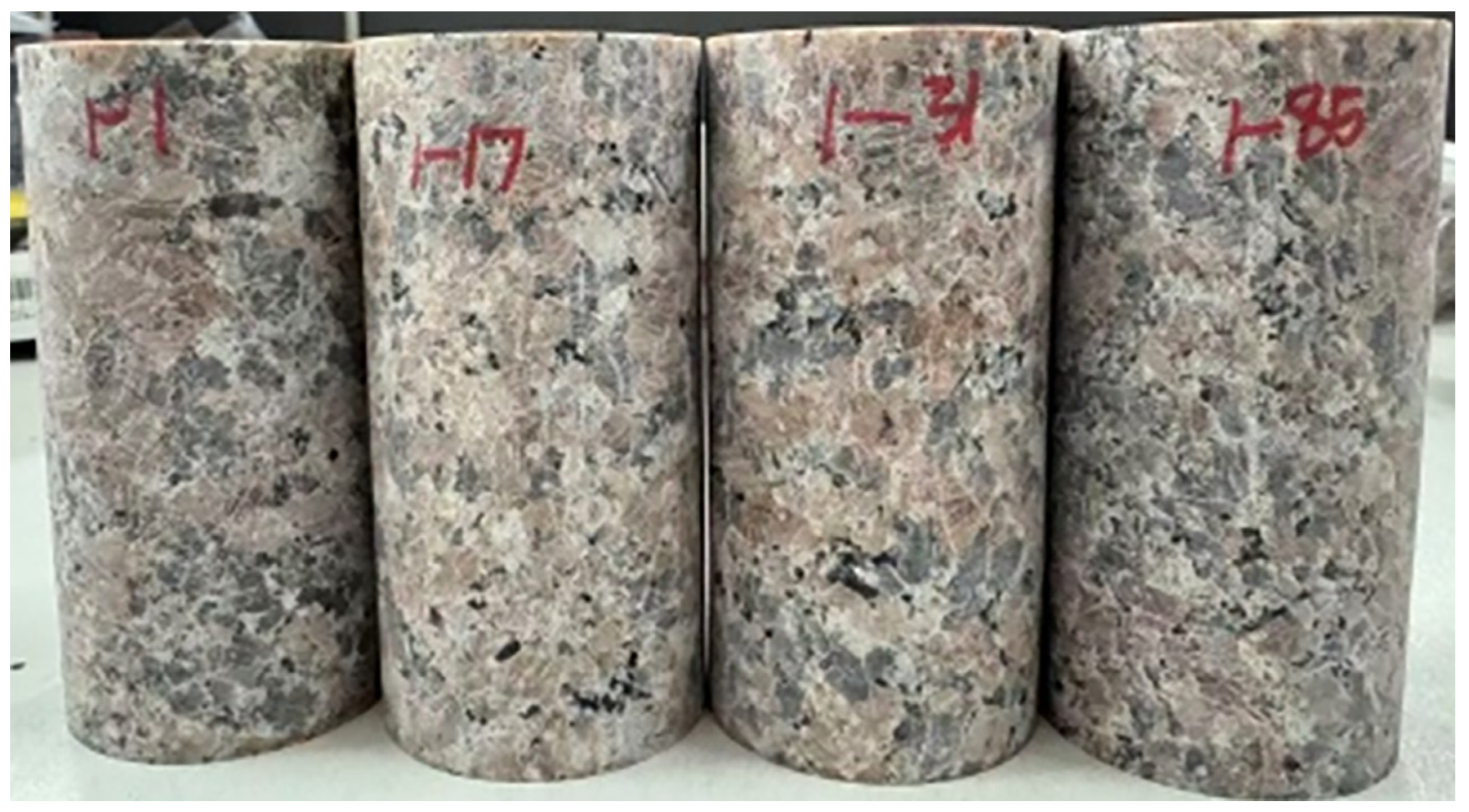
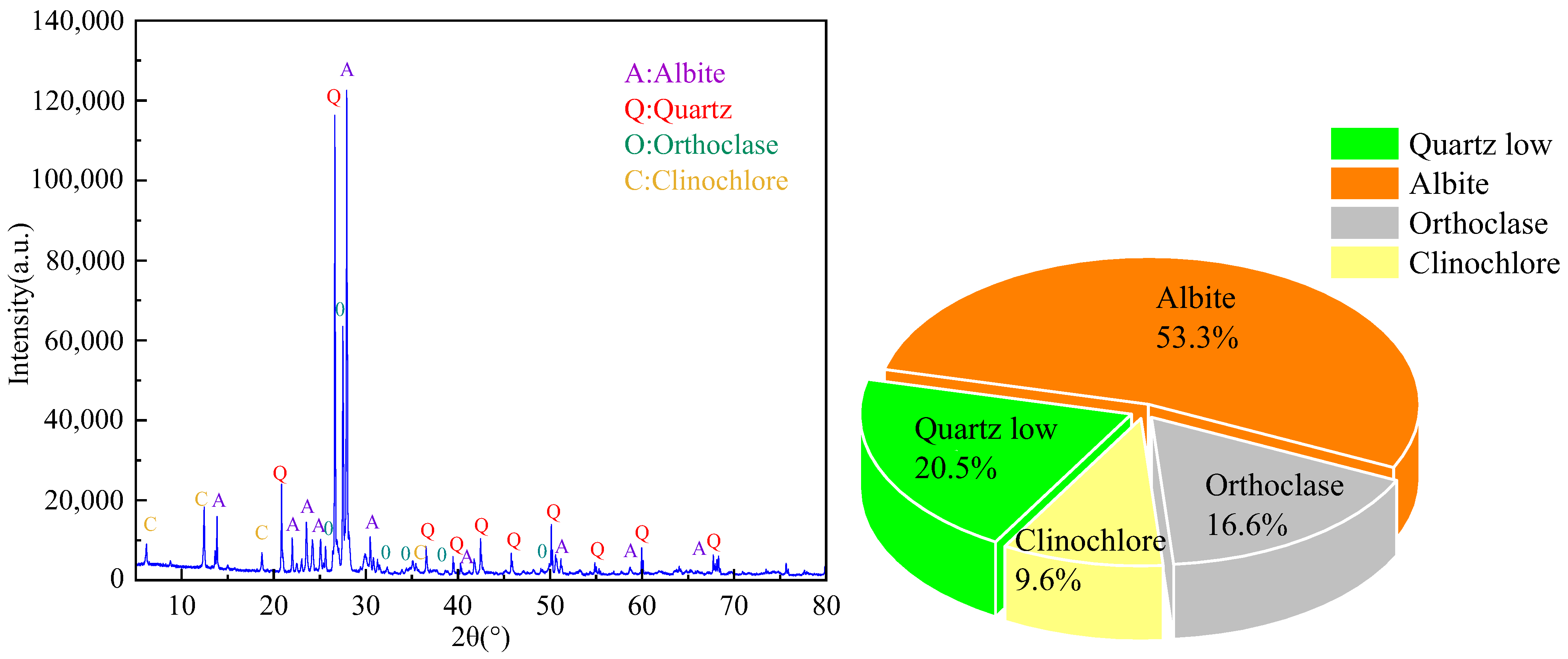
The granite used in this study was obtained from a relatively homogeneous rock block with no obvious structural defects or compositional heterogeneity. According to the specimen preparation standards recommended by the International Society for Rock Mechanics, the granite specimens were machined into standard cylinders with a diameter of 50 mm and a height of 100 mm. The parallelism of the two ends was controlled within 0.05 mm, and the surface flatness was maintained within 0.02 mm, as shown in Figure 1. In addition, an ultrasonic detector was used to measure the longitudinal wave velocity of each specimen, and specimens with visible damage or a wave velocity deviation greater than 10% were excluded [28]. XRD analysis shows that the granite is predominantly composed of albite, low quartz, orthoclase, and clinochlore, with corresponding contents of 53.3%, 20.5%, 16.6%, and 9.6%, respectively. The XRD pattern and corresponding mineral phase identification results of the granite are presented in Figure 2.

2.2. Test Apparatus

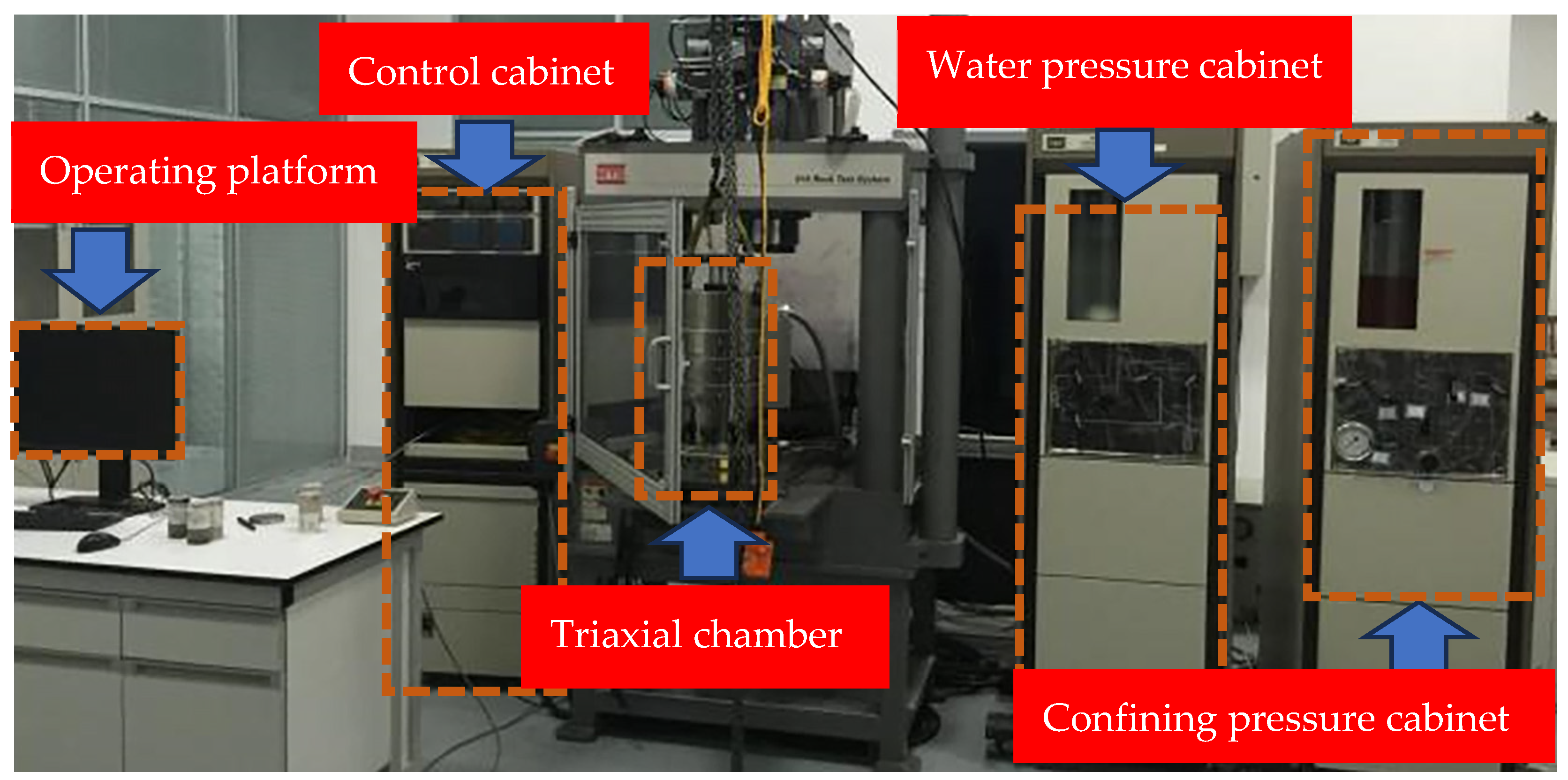
Conventional triaxial tests and graded constant-amplitude cyclic loading–unloading tests were conducted using an MTS816 rock mechanics testing system (MTS Systems Corporation, Eden Prairie, MN, USA), as shown in Figure 3. The system consists mainly of a triaxial pressure chamber, a confining pressure control unit, a water pressure control unit, a servo control cabinet, and a computer-based data acquisition and control system. It is capable of performing uniaxial compression tests, triaxial compression tests, temperature-controlled tests, and seepage tests under load-control or displacement-control modes. The maximum axial load capacity of the system is 3000 kN.
During specimen installation, each sample was positioned at the center of the triaxial chamber, wrapped with heat-shrink tubing, and sealed using a hot-air gun. An axial extensometer was used to monitor the axial displacement of the specimen, while a circumferential extensometer was employed to measure the radial deformation.

2.3. Test Procedure

Owing to excavation activities, mining operations, and overburden movement, rock masses in underground engineering under cyclic disturbance are often subjected to repeated loading and unloading [29]. To investigate the effects of confining pressure on the strength, deformation, and energy evolution of granite under graded constant-amplitude cyclic loading, four confining pressure levels, namely 6, 9, 12, and 15 MPa, were selected. These values represent typical in situ stress conditions at depths of approximately 200–600 m.
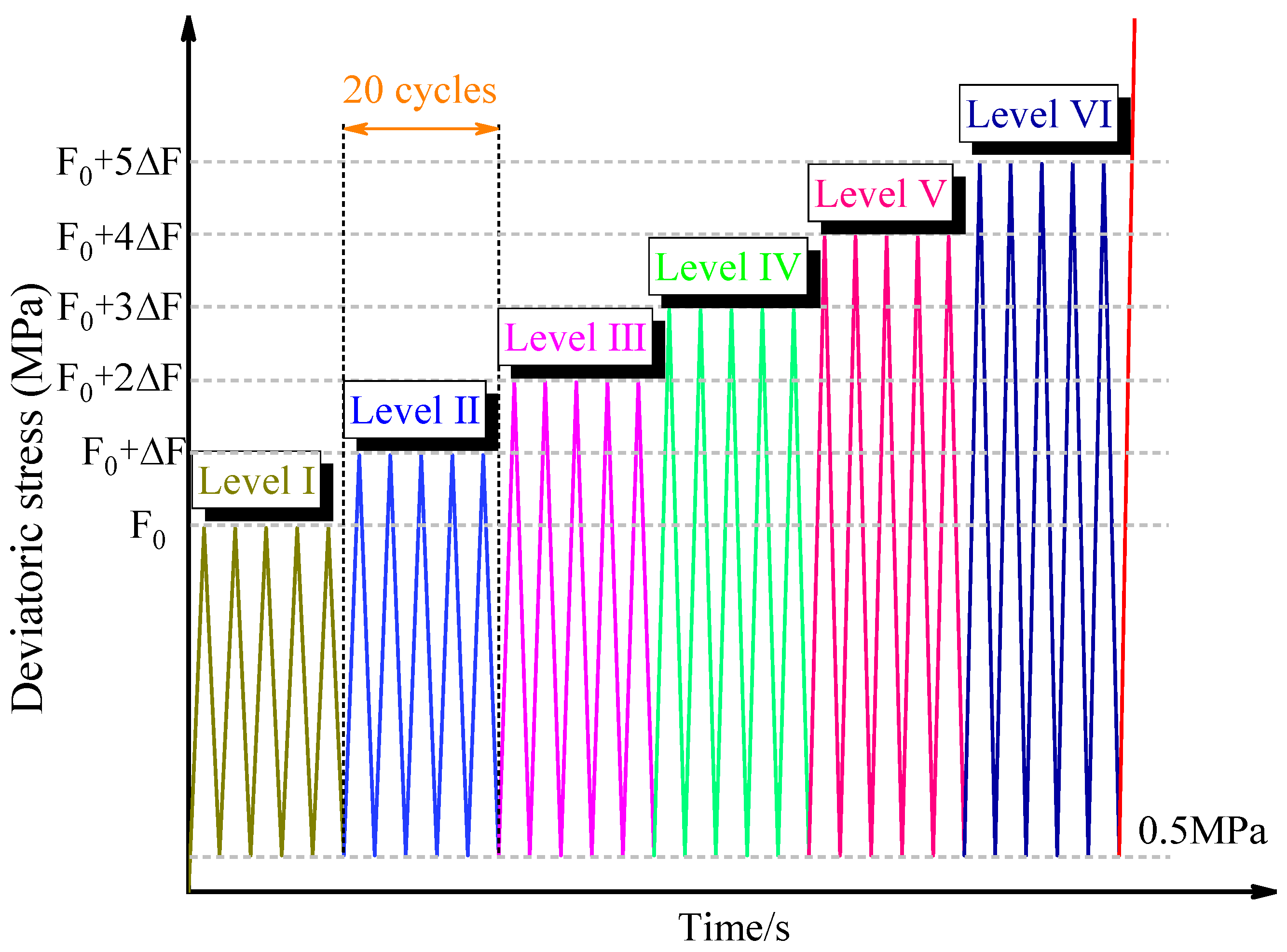
Conventional triaxial compression tests and graded constant-amplitude cyclic loading–unloading tests were carried out under each confining pressure level. The conventional triaxial tests were first performed to determine the peak deviatoric stress and to define the upper and lower stress limits for the subsequent cyclic loading tests. A schematic illustration of the stress path adopted in the graded cyclic loading–unloading tests is shown in Figure 4.
Based on the conventional triaxial test results, the initial deviatoric stress levels F0 for confining pressures of 6, 9, 12, and 15 MPa were set to 85, 100, 115, and 130 MPa, respectively. The corresponding stress increments ∆F were 17, 20, 23, and 26 MPa. The entire cyclic loading–unloading process was divided into six stress levels, with 20 cycles performed at each level, giving a total of 120 cycles. After completion of the sixth stress level, axial loading was continuously applied until specimen failure occurred.
To avoid separation between the loading platen and the specimen during unloading, the lower deviatoric stress limit was fixed at 0.5 MPa for all confining pressure conditions. The axial loading and unloading processes were controlled in displacement mode at a constant rate of 0.004 mm/s. This displacement rate was adopted to maintain a quasi-static cyclic loading condition and to minimize potential dynamic effects during the triaxial loading–unloading process. In this study, the loading rate was kept constant for all specimens to isolate the effects of confining pressure and stress level.

3. Experimental Results and Analysis

3.1. Stress–Strain Characteristics of Granite Under Graded Constant-Amplitude Cyclic Loading

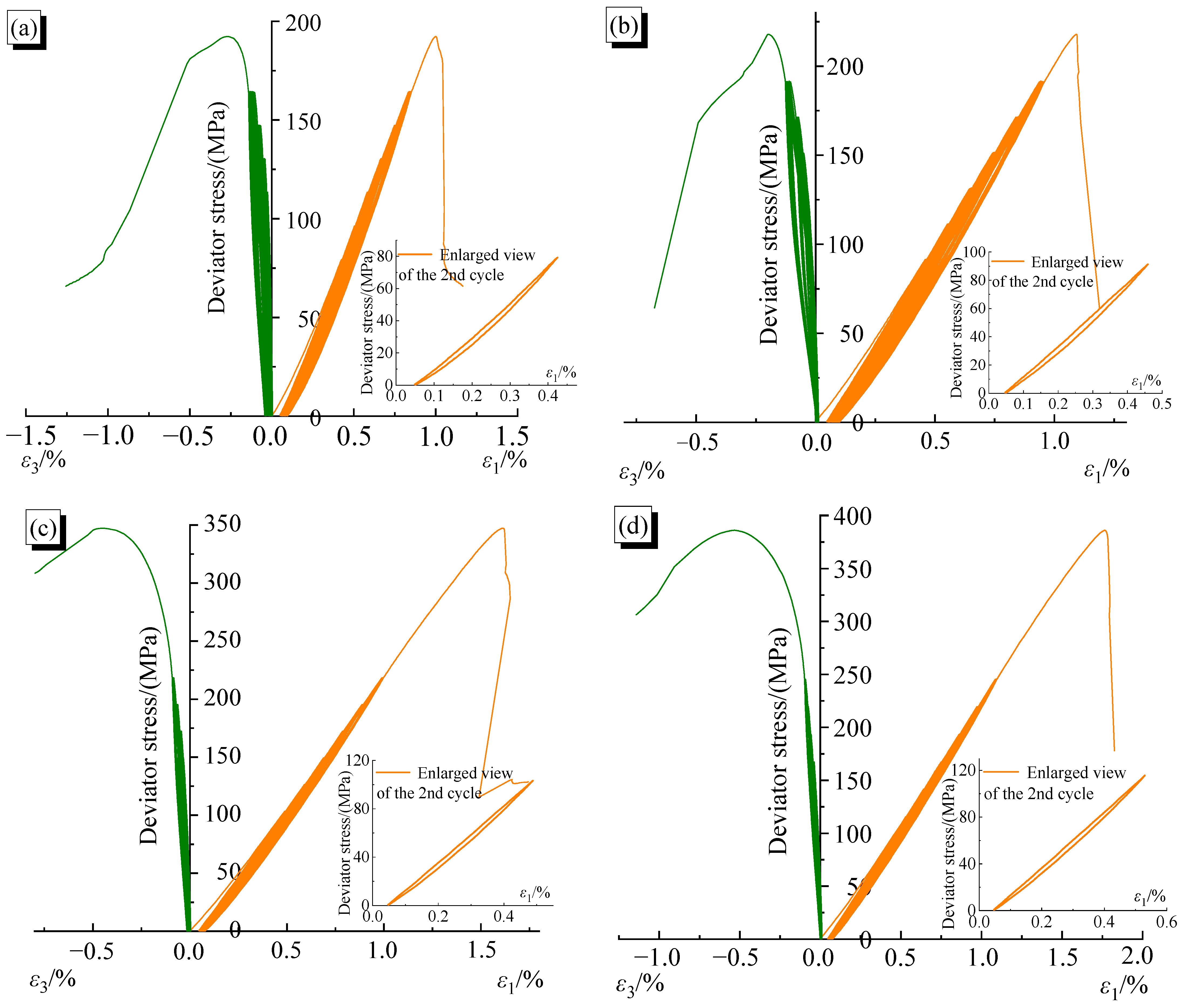
The stress–strain curves of granite specimens subjected to graded constant-amplitude cyclic loading–unloading under different confining pressures are presented in Figure 5. As the confining pressure increases, the peak strength of the granite specimens increases significantly, indicating that confining pressure has a pronounced strengthening effect on granite. The loading and unloading curves do not completely overlap, and distinct hysteresis loops are formed during cyclic loading, indicating the occurrence of irreversible plastic deformation. In addition to elastic deformation, the specimens also undergo permanent plastic deformation throughout the loading–unloading process.
With increasing cycle number, the hysteresis loops gradually shift toward higher strain values, reflecting the continuous accumulation of residual deformation during cyclic loading. The hysteresis loop in the first cycle exhibits the largest enclosed area, whereas the loop areas in the subsequent cycles change only slightly. Overall, the hysteresis loops evolve from a relatively sparse to a denser distribution, suggesting progressive compaction and adjustment of pre-existing defects. This behavior indicates that the initial cycles are mainly associated with the closure and rearrangement of pre-existing defects, while the mechanical response gradually stabilizes in later cycles.
The stress–strain curves under different confining pressures generally exhibit four stages: pore and crack compaction, elastic deformation, yielding, and failure. In the compaction stage, the degree of compaction decreases markedly with increasing confining pressure. This suggests that under low confining pressure, the pre-existing joints and microcracks inside the specimen are not fully closed, whereas higher confining pressure promotes crack closure and suppresses interfacial slip. During the elastic stage, the influence of confining pressure on deformation is relatively limited, and the specimens exhibit an approximately linear stress–strain relationship under all confining pressure conditions. The yielding stage is relatively short, and in the failure stage, the deviatoric stress drops sharply at a relatively small axial strain, indicating a clear brittle failure characteristic of granite.

3.2. Residual Strain and Cumulative Residual Strain

Granite is a non-ideal elastic material that exhibits distinct plastic deformation during cyclic loading and unloading. After unloading, part of the deformation cannot be recovered, resulting in residual strain. Residual strain in each cycle represents the irreversible deformation generated during loading and unloading and can be calculated using Equation (1):
Δ ε n r s = Δ ε n e n d Δ ε n b e g i n
where ε   n rs represents the residual strain generated in the nth cycle, and ε   n end and ε   n begin are the strains at the beginning and end of the nth cycle, respectively.
The cumulative residual strain is defined as the sum of the residual strains over all previous cycles, as expressed in Equation (2):
ε n r s = 1 n Δ ε n r s
where ε n rs is the cumulative residual strain at the nth cycle.
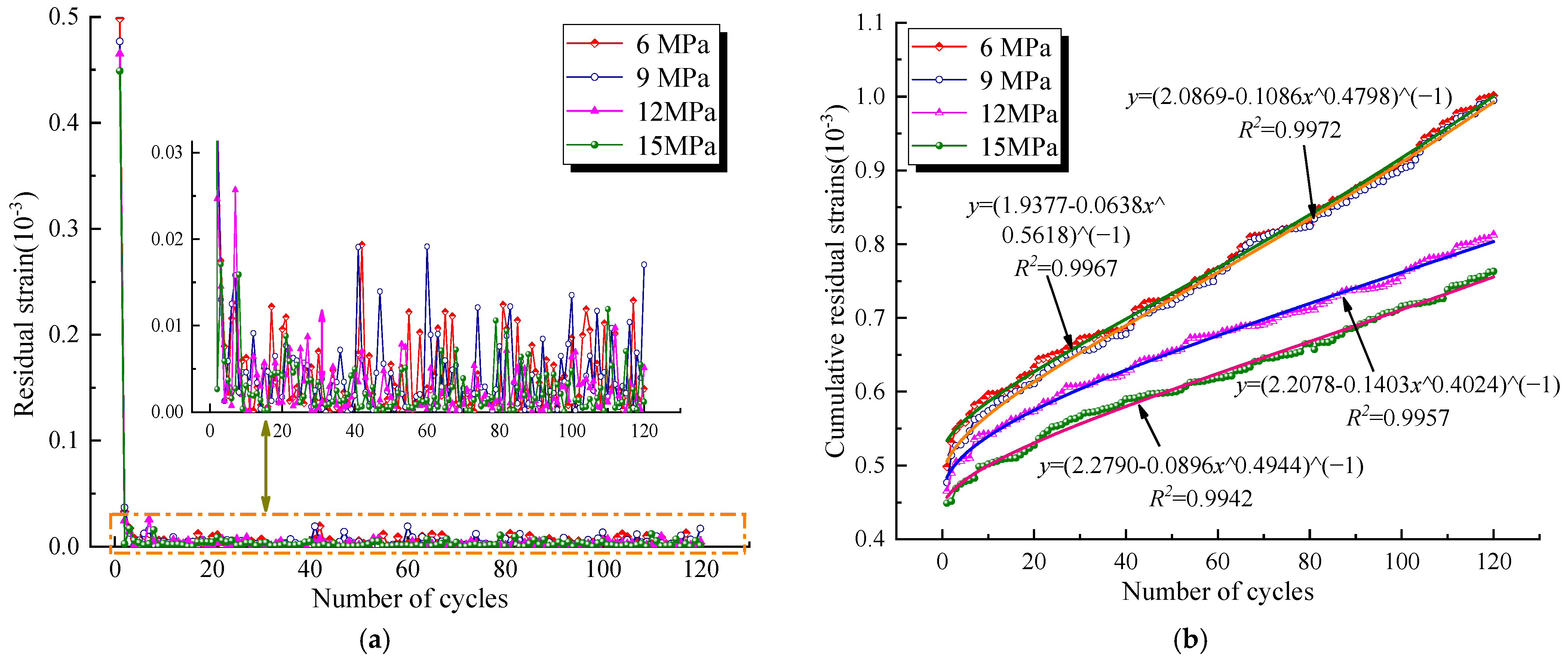
To characterize the deformation evolution of granite during cyclic loading, both the residual strain in each cycle and the cumulative residual strain were analyzed. The variation in residual strain with cycle number is shown in Figure 6a. The results indicate that residual strain is generated in every loading–unloading cycle and exhibits a nonlinear relationship with cycle number. In the first cycle, the residual strain is relatively large because the initial loading causes rapid closure of pre-existing pores and microcracks inside the specimen. As the cyclic loading process continues, the hysteresis loops gradually become denser, and the residual strain decreases rapidly before tending toward a relatively stable level. Compared with that under a confining pressure of 6 MPa, the residual strain in the first cycle decreases by 4.31%, 6.62%, and 9.91% under confining pressures of 9, 12, and 15 MPa, respectively. In addition, at the beginning of each new stress level, the residual strain increases noticeably in the first cycle and then varies only slightly in the following cycles at the same stress level. These results indicate that higher confining pressure effectively suppresses irreversible axial deformation during cyclic loading.
The evolution of cumulative residual strain with cycle number is shown in Figure 6b. Under all confining pressure conditions, the cumulative residual strain increases nonlinearly with cycle number, showing a rapid increase in the early stage followed by a slower growth trend. In the first stress level, the evolution curve is concave, mainly because the initial loading stage is dominated by the compaction of internal pores and cracks. After unloading, this compaction-induced deformation cannot be fully recovered. With continued cycling, new damage cracks gradually develop, and irreversible deformation continues to accumulate. After 120 cycles, the cumulative residual strain reaches 0.763 × 10⁻³ under a confining pressure of 15 MPa, whereas the corresponding values under 12, 9, and 6 MPa are 0.813 × 10⁻³, 0.995 × 10⁻³, and 1.002 × 10⁻³, respectively. These values are 6.55%, 30.41%, and 31.32% higher than those at 15 MPa, indicating that increasing confining pressure effectively restrains the accumulation of irreversible deformation and improves the deformation stability of granite. To facilitate a more direct quantitative comparison of residual deformation under different confining pressures, Table 1 summarizes the residual strain generated in the first cycle, its percentage reduction relative to the 6 MPa condition, and the cumulative residual strain after completion of 120 cycles.

3.3. Deformation Modulus

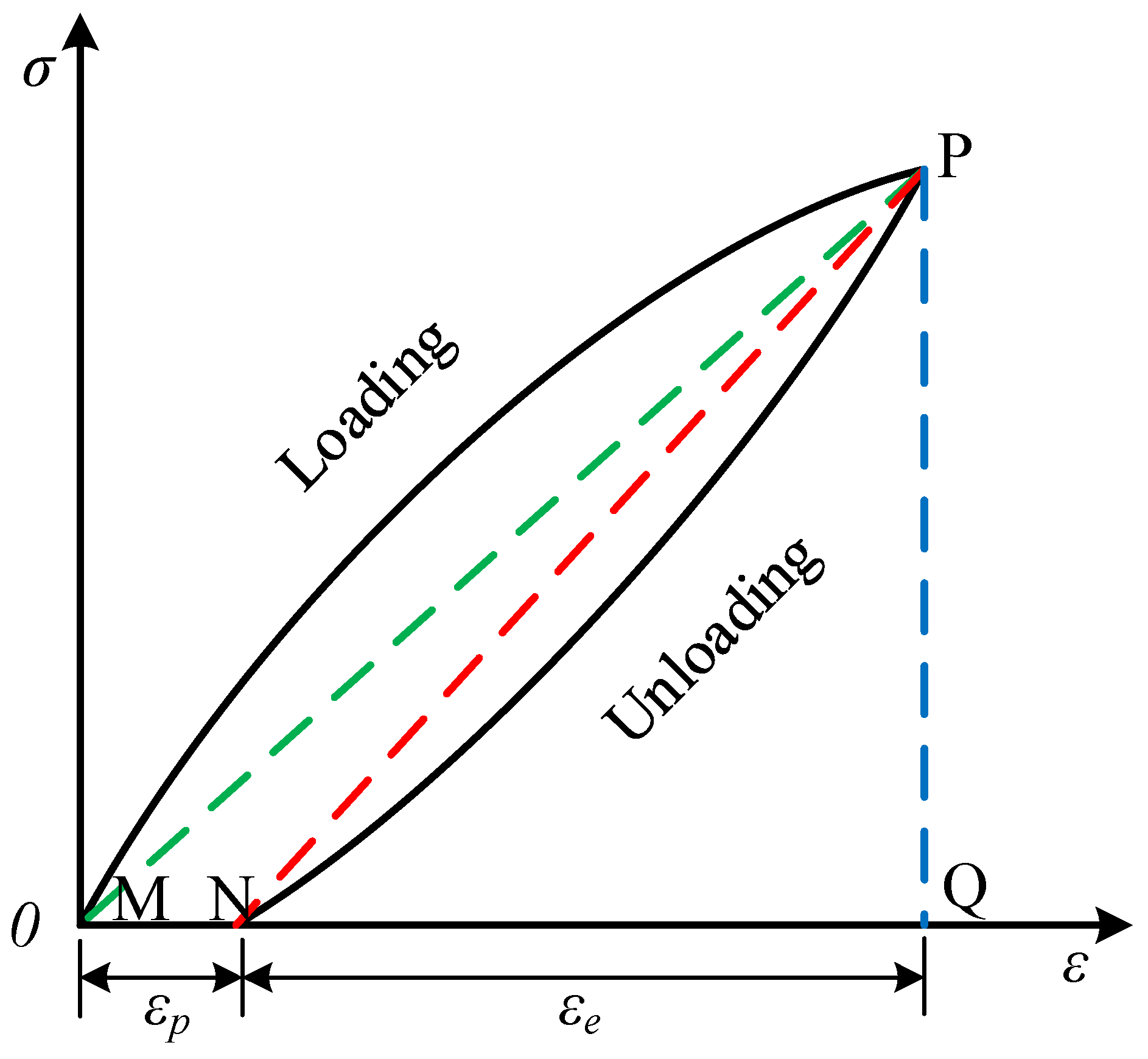
The deformation modulus is an important parameter for characterizing the deformation behavior of rock and is widely used to evaluate the mechanical response of rock masses [30]. During triaxial cyclic loading and unloading, the loading and unloading paths do not completely coincide, and a hysteresis loop is formed between them. This indicates that the approximately linear stress–strain response observed during loading does not represent purely elastic behavior. In the present study, the loading and unloading deformation moduli were used to quantify the mechanical response of granite specimens under graded constant-amplitude cyclic loading. Their calculation methods are given in Equations (3) and (4) [31], and the corresponding schematic diagram is shown in Figure 7.
E 1 = σ ε e + ε p = P Q M Q
E 2 = σ ε e = P Q N Q
where E1 is the loading deformation modulus, E2 is the unloading deformation modulus, P represents the upper limit point of stress for each cycle, εp is the residual strain of each cycle, εe is the elastic strain of each cycle. A schematic diagram for calculating the deformation modulus of loading and unloading is shown in Figure 7.
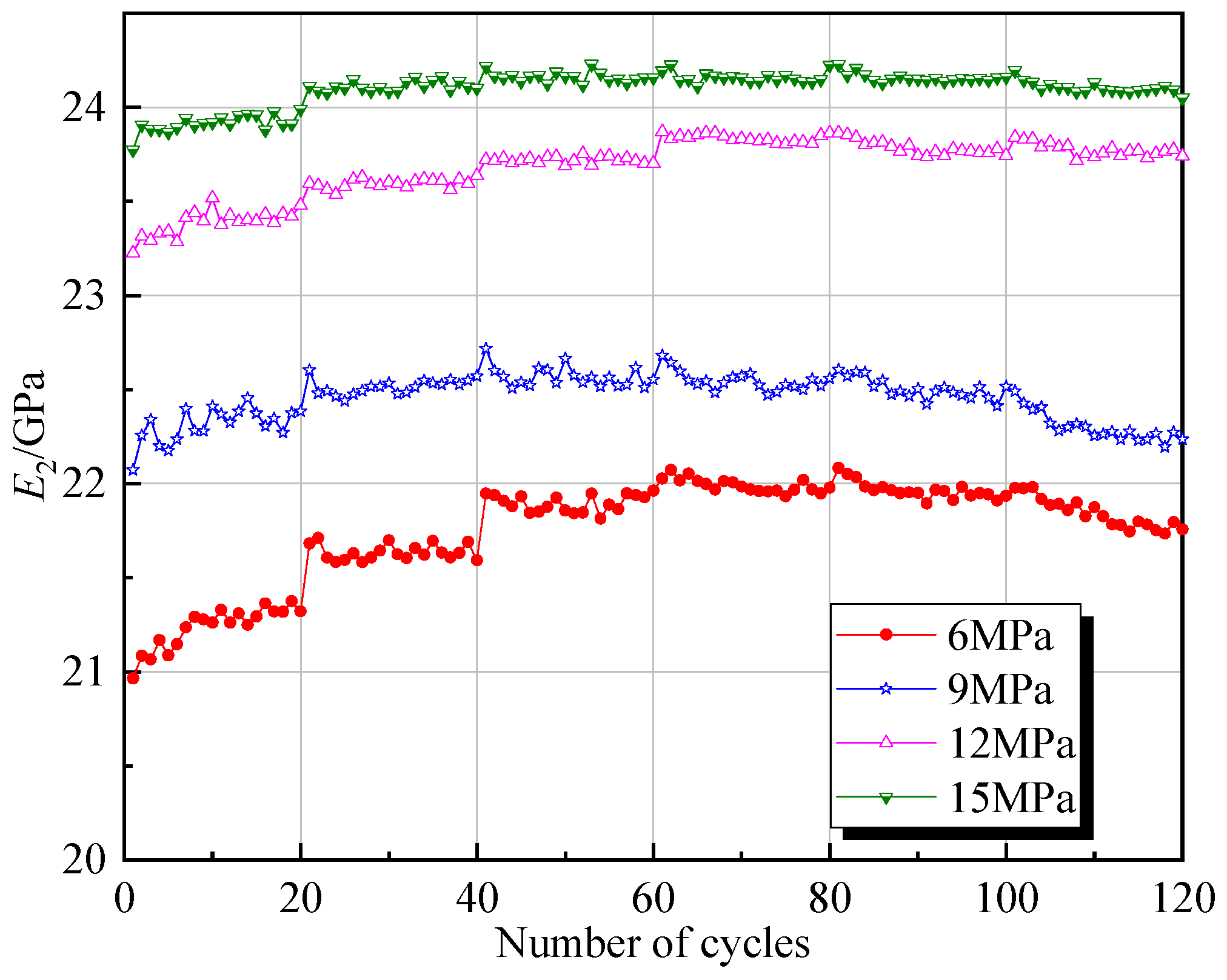
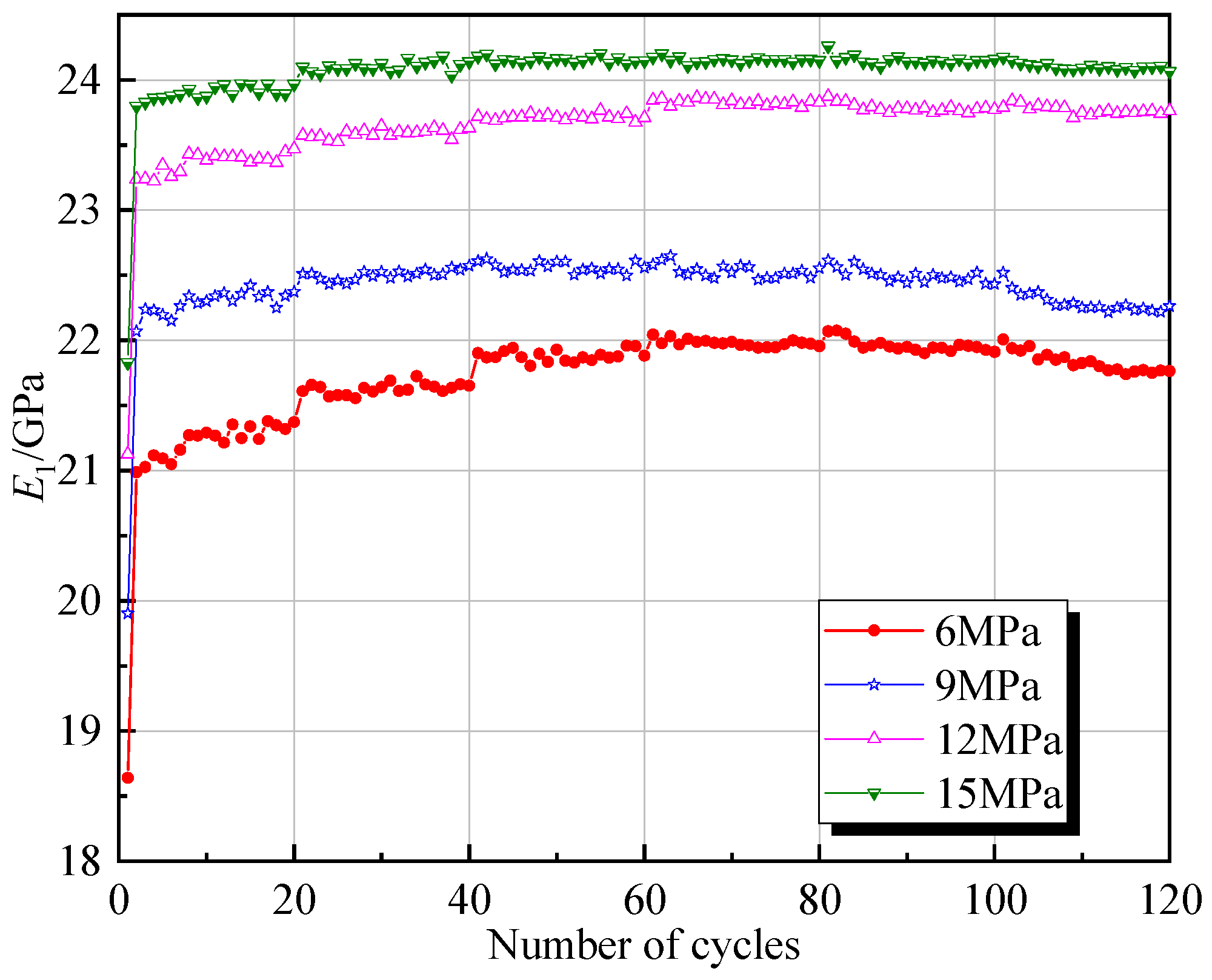
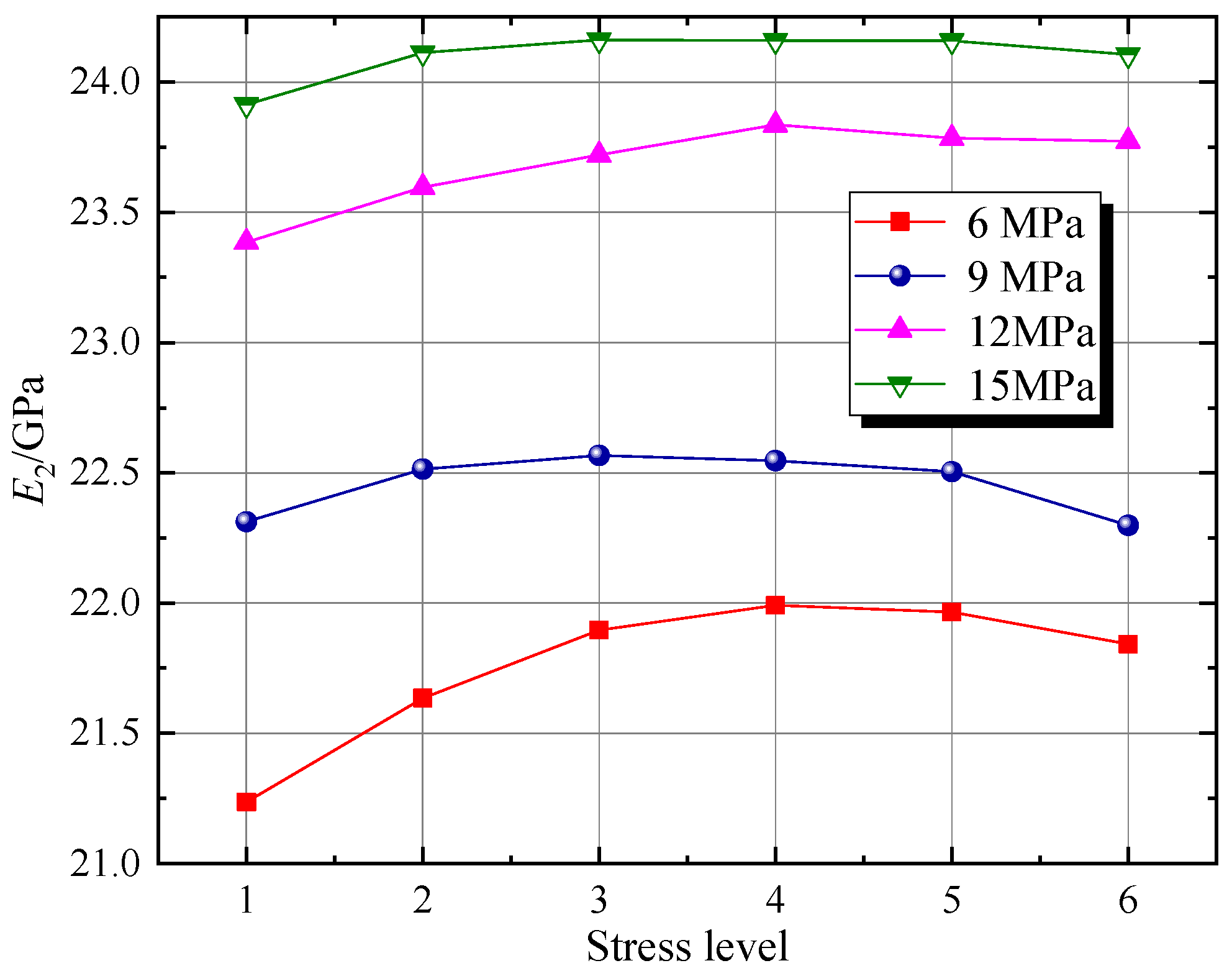
According to Equations (3) and (4), the relationships between deformation modulus and cycle number under different confining pressures were obtained, as shown in Figure 8 and Figure 9. The results indicate that the evolution trends of the loading and unloading deformation moduli are generally consistent under different confining pressures, and both moduli increase significantly with increasing confining pressure. Under the same confining pressure and cycle number, the unloading deformation modulus is consistently higher than the loading deformation modulus, indicating that the elastic recovery capacity of the specimen is greater during unloading than its deformation resistance during loading. In addition, with increasing stress level, the loading and unloading deformation moduli of the specimens under 6 MPa and 9 MPa first increase, then remain relatively stable, and finally decrease, whereas those under 12 MPa and 15 MPa generally increase and then tend to stabilize. This difference suggests that higher confining pressure suppresses crack propagation and helps maintain structural integrity during cyclic loading.
The observed evolution of deformation modulus is closely related to the closure and development of internal cracks. Under higher confining pressures, repeated loading and unloading promote the compaction and closure of microcracks, thereby enhancing the overall stiffness of the granite specimens. By contrast, under lower confining pressures, the strengthening effect is limited, and the specimens become more susceptible to damage accumulation at high stress levels. As a result, the deformation modulus begins to decrease in the fifth and sixth stress levels, indicating progressive stiffness degradation as the applied stress approaches the peak strength. In addition, at the beginning of the first cycle of each stress level, a noticeable change in deformation modulus is observed due to the increase in upper stress limit, whereas only minor variations occur in the subsequent cycles at the same stress level.
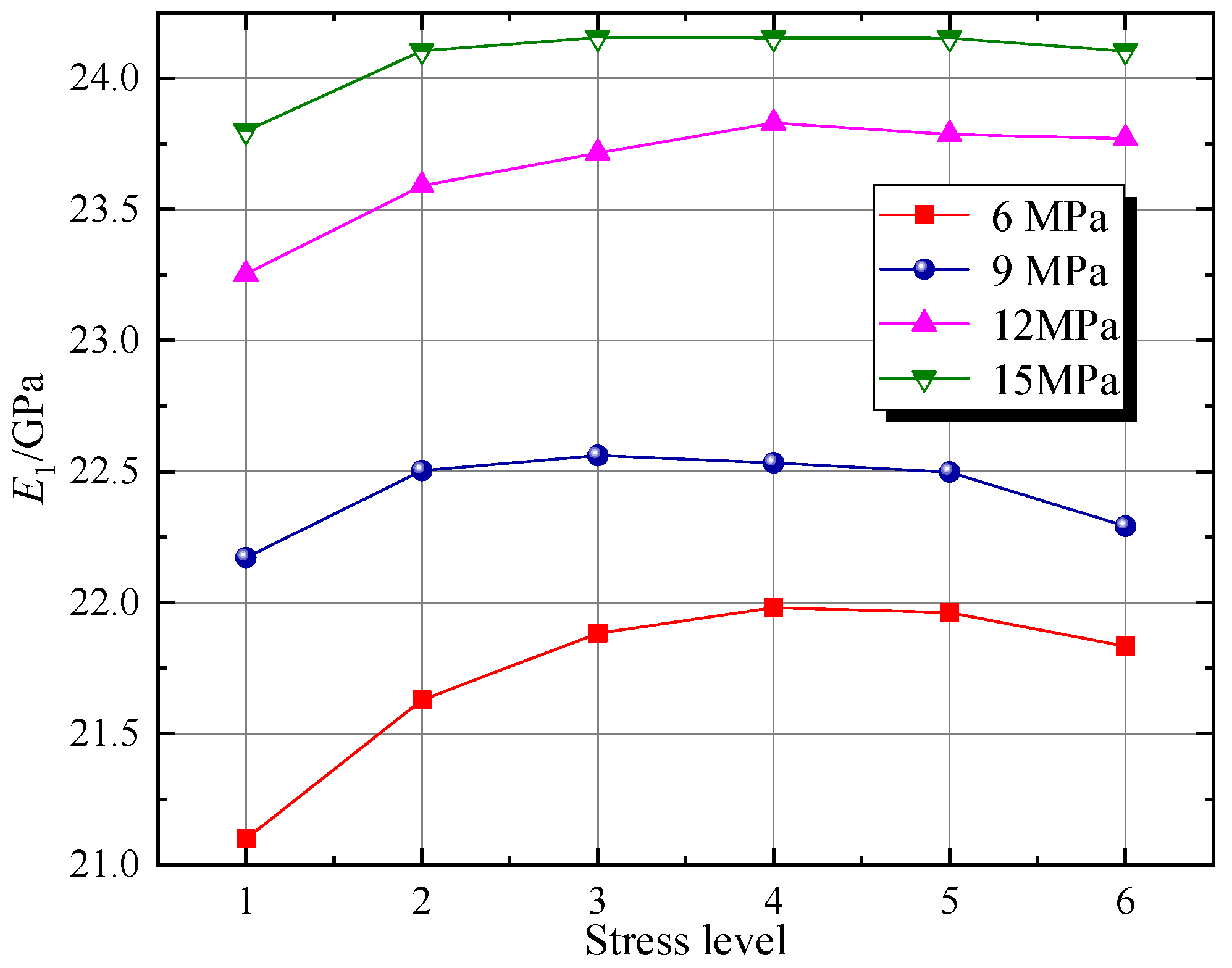
Figure 10 and Figure 11 further show the relationships between the average deformation modulus at each stress level and the corresponding confining pressure. Under the same stress level, both the loading and unloading deformation moduli increase with confining pressure. Taking the first stress level as an example, compared with the specimen under 6 MPa, the average loading deformation modulus increases by 5.08%, 10.21%, and 12.79% under confining pressures of 9, 12, and 15 MPa, respectively, while the corresponding increases in average unloading deformation modulus are 5.06%, 10.12%, and 12.61%. These results further confirm that confining pressure plays a significant role in improving the stiffness and deformation stability of granite under cyclic loading.
To facilitate a clearer quantitative comparison of the deformation characteristics under different confining pressures, Table 2 summarizes the average loading deformation modulus and unloading deformation modulus at the first stress level, together with their percentage increases relative to the 6 MPa condition. The results show that both moduli increase with confining pressure, and the unloading deformation modulus is consistently slightly higher than the loading deformation modulus.

4. Energy Evolution of Granite Under Graded Constant-Amplitude Cyclic Loading–Unloading

4.1. Principles of Energy Calculation

According to the first law of thermodynamics, the deformation and failure of granite under cyclic loading–unloading can be regarded as an energy conversion process [32]. In this study, external heat exchange and thermo-mechanical coupling effects were not explicitly considered. The dissipated energy obtained from the hysteresis loop was regarded as the total irreversible energy consumption, including crack propagation, frictional sliding, plastic deformation, and the associated heat generation. During deformation, the absorbed energy is mainly partitioned into elastic energy and dissipated energy. Elastic energy refers to the recoverable strain energy stored in the rock and reflects its capacity for energy storage. Dissipated energy, by contrast, is the energy irreversibly consumed during processes such as pore compaction, crack initiation, crack propagation, and frictional sliding, which lead to internal damage.
Therefore, the total input energy U provided by external loading is mainly composed of releasable elastic strain energy and dissipated energy. In the pre-peak stage, most of the input energy is stored in the form of elastic strain energy, whereas only a smaller portion is dissipated through irreversible deformation and damage development. Accordingly, the elastic energy Ue can be expressed as [32,33]:
U e = 1 2 σ 1 ε 1 e + 1 2 σ 2 ε 2 e + 1 2 σ 3 ε 3 e
For elastic deformation,
ε 1 e = 1 E 1 σ 1 μ 1 σ 2 + σ 3 ε 2 e = 1 E 2 σ 2 μ 1 σ 1 + σ 3 ε 3 e = 1 E 3 σ 3 μ 1 σ 1 + σ 2
where σ1, σ2 and σ3 represent the principal stresses in the three directions and where ε i e , Ei and μi represent the elastic strain, elastic modulus, and Poisson’s ratio in the three principal stress directions, respectively.
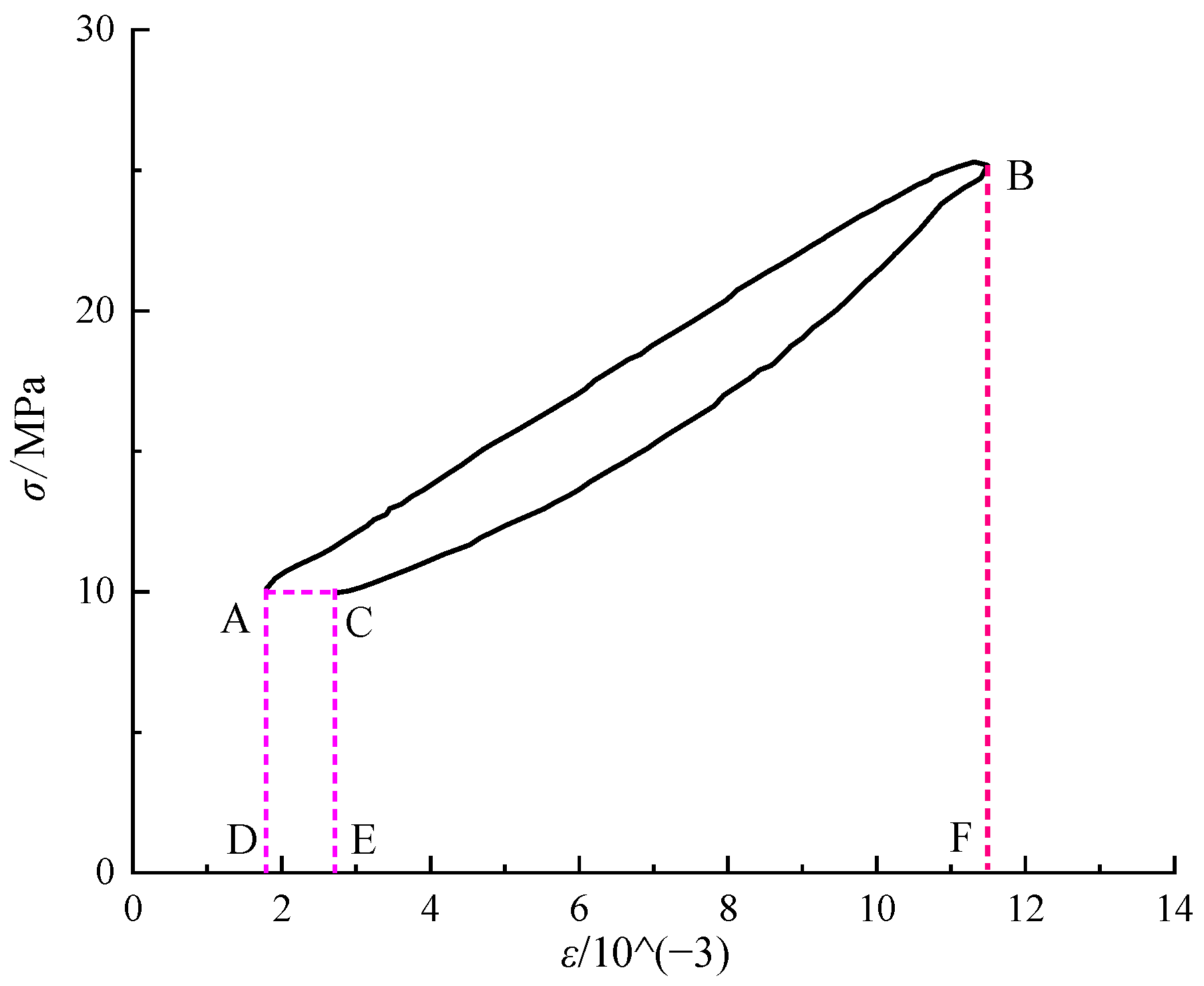
The initiation and propagation of internal cracks in rock consume energy, which is referred to as dissipated energy. If heat exchange between the specimen and the testing system is neglected, the dissipated energy can be defined as the difference between the total input energy and the elastic energy stored in the rock, as illustrated in Figure 12. Specifically, the area under the loading curve (AB) represents the total input energy U supplied by the testing machine, whereas the area under the unloading curve (BC) represents the elastic energy Ue released during unloading. Accordingly, the dissipated energy Ud corresponds to the unrecoverable part of the input energy and is represented by the enclosed hysteresis area. The expression for dissipated energy is given in Equation (7).
U d = U U e

4.2. Energy Variation Law of Granite

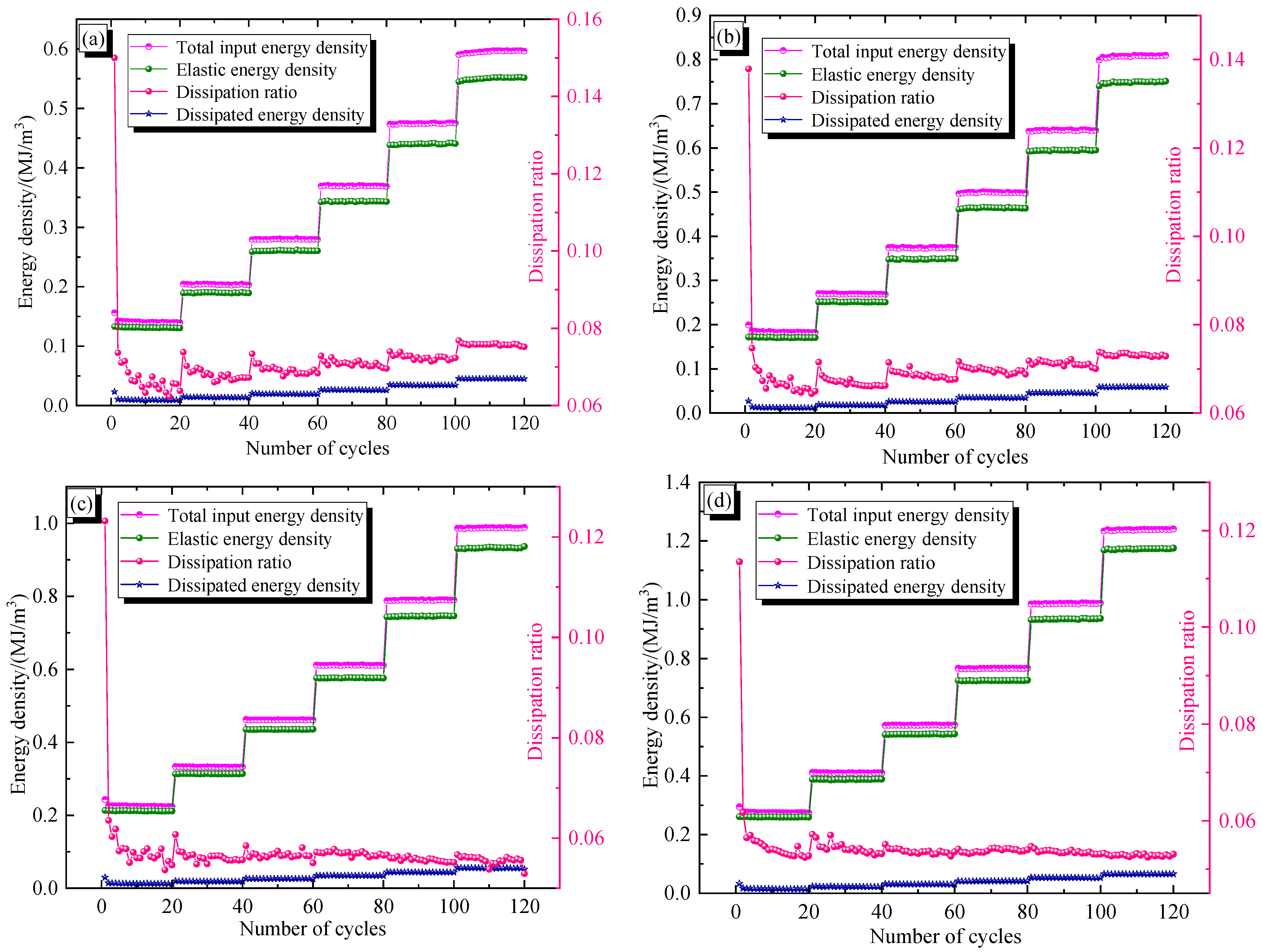
Equations (5)–(7) were used to calculate the total input energy, elastic energy, and dissipated energy for each loading–unloading cycle. Figure 12 illustrates the geometric interpretation of these energy components in a typical hysteresis loop, while Figure 13 presents the calculated energy evolution results under different confining pressures. As shown in Figure 13, the total input energy, elastic energy, and dissipated energy all increase with increasing stress level. At a given stress level, the dissipated energy reaches its maximum during the first loading–unloading cycle, indicating that the initial cycle is more likely to induce plastic deformation and microcrack propagation, thereby resulting in greater energy consumption. As the number of cycles increases, the dissipated energy gradually decreases and eventually tends to stabilize. Throughout the cyclic loading–unloading process at each stress level, the elastic energy remains greater than the dissipated energy, suggesting that during the pre-peak stage, most of the input energy is stored in the granite in the form of elastic energy. In contrast, the variation in elastic energy with increasing cycle number at the same stress level is relatively small.
Under different confining pressures, the total input energy, elastic energy, and dissipated energy all increase as the confining pressure increases, and the differences in total input energy among the specimens become more pronounced at higher stress levels. As the stress level rises, the accumulated dissipated energy at each stress level also increases progressively. Taking the specimen under a confining pressure of 6 MPa as an example, the accumulated dissipated energy at the six stress levels is 0.2009, 0.2775, 0.3878, 0.5240, 0.6879, and 0.9030 MJ/m3, respectively. This trend indicates that the absolute amount of dissipated energy within the specimen continues to increase with increasing stress level, reflecting the progressive accumulation of internal damage and the gradual approach to failure. The representative calculated energy parameters for the first cycle under different confining pressures are summarized in Table 3.

4.3. Evolution of the Energy Dissipation Ratio of Granite

The concept of the energy dissipation ratio [34] is introduced in this study. The energy dissipation ratio is defined as the proportion of dissipated energy to input energy during a single loading–unloading cycle. The expression for calculating the energy dissipation ratio is given as follows:
ω i = 1 U e i U i
where ωi, Uei and Ui represent the energy dissipation ratio, elastic energy, and input energy, respectively, under the loading and unloading action in the ith cycle.
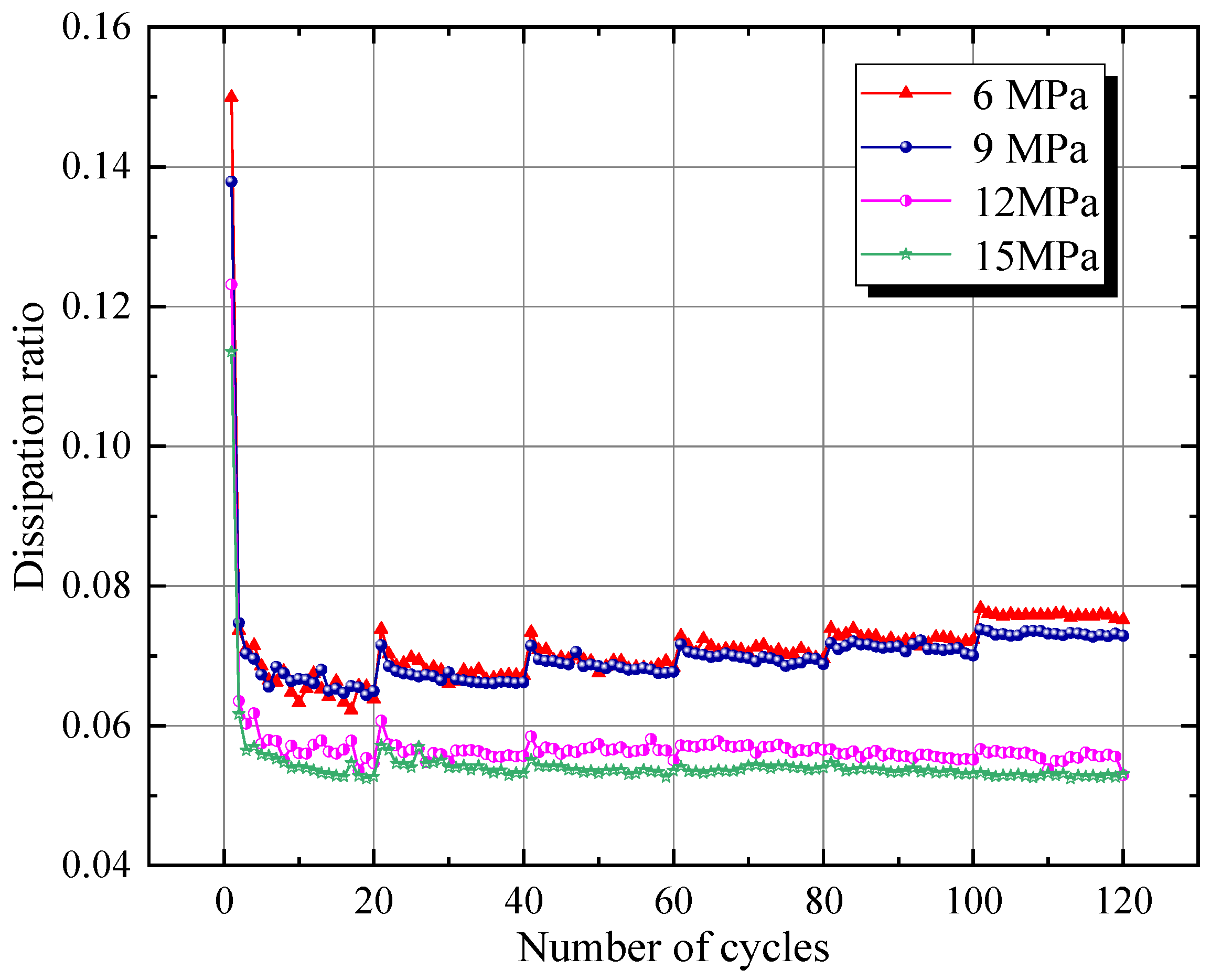
The energy dissipation ratio can, to some extent, reflect the development of internal damage and plastic deformation in rocks under a given stress or strain level. As shown in Figure 14, the energy dissipation ratio of the granite specimens subjected to graded cyclic loading and unloading decreases with increasing confining pressure. This indicates that higher confining pressure more effectively restrains specimen deformation and suppresses the initiation, propagation, sliding, and relative displacement of microcracks and mineral particles. As a result, energy dissipation mechanisms associated with irreversible plastic deformation, damage development, and frictional slip are weakened, while a greater proportion of the input energy is stored and released in the form of elastic energy, leading to a lower energy dissipation ratio. In addition, the energy dissipation ratio exhibits an overall decreasing trend with increasing confining pressure. During the first cycle of graded constant-amplitude loading and unloading, the energy dissipation ratio reaches its maximum value. Specifically, the energy dissipation ratios of the specimens under confining pressures of 6 MPa, 9 MPa, 12 MPa, and 15 MPa are 15.00%, 13.79%, 12.32%, and 11.35%, respectively. At each stress level, the energy dissipation ratio gradually decreases and eventually tends to stabilize with increasing cycle number. This behavior can be attributed to the progressive compaction of internal pores and cracks, as well as the gradual stabilization of the rock structure during cyclic loading and unloading.

4.4. Mechanism of Damage Evolution in Granite

Rock damage evolution is essentially a process of continuous damage accumulation and irreversible deformation. The damage and failure of rocks originate from the initiation, propagation, and coalescence of internal microcracks, which ultimately lead to the degradation of their macroscopic mechanical properties. The damage variable, D, is commonly used to quantitatively characterize the degree of internal deterioration of a material. It can effectively reflect the state of damage evolution within the rock, enable quantitative analysis of the damage development process and crack propagation behavior, and provide a theoretical basis for identifying precursory signs of failure [35,36]. Therefore, in this study, an energy-based analysis method [37] is adopted to define the damage variable D, and the corresponding expression is given as follows.
D = k = 1 n U d k / k = 1 n U d k + U e k
where U d k is the dissipated energy density produced in the kth cycle, MJ/m3, and U e k is the elastic energy produced in the kth cycle, MJ/m3. U d k and U e k can be calculated by the area enclosed by the stress–strain curve.
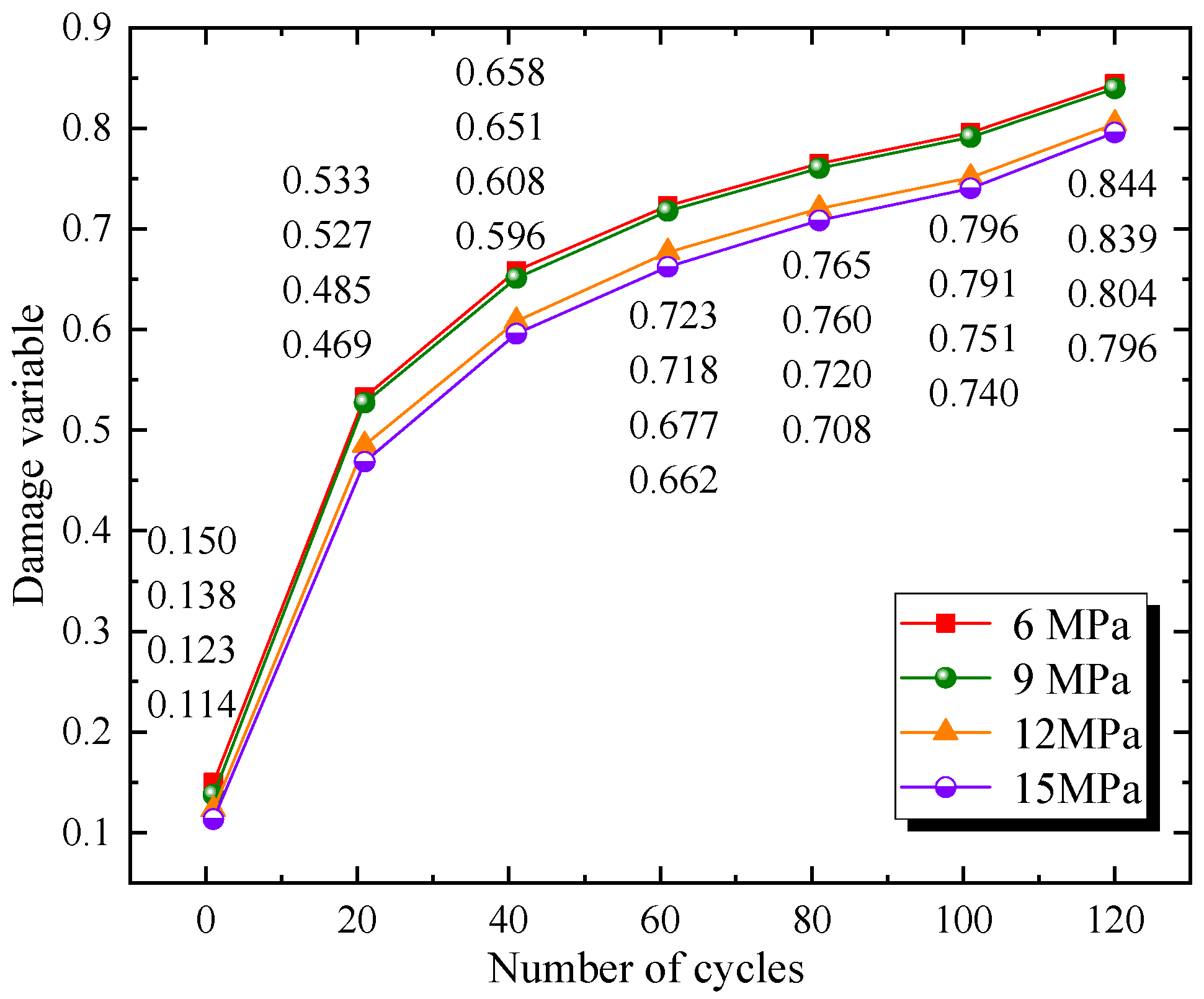
According to Equation (9), the average values of the damage variable D for the specimens under confining pressures of 6 MPa, 9 MPa, 12 MPa, and 15 MPa are 0.697, 0.692, 0.654, and 0.642, respectively. All these values fall within the range of 0 to 1, which is consistent with the definition of the damage variable. Figure 15 illustrates the relationship between the damage variable and the number of cycles for granite specimens subjected to different confining pressures. The damage variable of the granite specimens gradually increases throughout the cyclic loading and unloading process under all four confining pressure conditions. In particular, the damage variable increases rapidly at the first and second stress levels, whereas at the third, fourth, and fifth stress levels, it continues to increase but at a reduced rate. This indicates that, with increasing stress level, the internal damage of the specimens continuously accumulates during cyclic loading and unloading, thereby aggravating the deterioration of the granite. Owing to the constraining effect of confining pressure, the damage variable of the specimens under low confining pressure is greater than that of the specimens under high confining pressure. The dissipated energy obtained from the hysteresis loop represents the total irreversible energy consumption, including crack-related damage, frictional sliding, plastic deformation, and possible viscoelastic damping. Therefore, the energy-based damage variable should be regarded as an apparent damage indicator rather than a direct measure of crack-growth energy alone. Therefore, at the same strain stage, the damage variable of specimens under high confining pressure may be relatively lower.
Granite is not an ideal linear material, but a heterogeneous, anisotropic, and discontinuous medium. During cyclic loading and unloading, the internal stress state of the granite specimens changes periodically, resulting in repeated stress concentration and release. Meanwhile, pre-existing cracks and pores within the specimens propagate and coalesce, and new cracks are gradually generated during the loading and unloading process, causing irreversible damage to the material. As the number of cycles increases, the internal damage effect becomes increasingly pronounced, which progressively weakens the overall load-bearing capacity of the granite specimens.

5. Discussion

5.1. Effect of Confining Pressure on Mechanical Stability

Confining pressure is a governing factor in the mechanical stability of granite under graded constant-amplitude cyclic loading. The experimental results show that increasing confining pressure significantly enhances peak strength and reduces both residual strain and cumulative residual strain, indicating effective suppression of irreversible deformation. This behavior suggests that higher confinement limits the opening, sliding, and coalescence of pre-existing cracks by increasing the normal stress and frictional resistance along crack surfaces, thereby slowing damage accumulation and preserving structural integrity.
This interpretation is consistent with the evolution of hysteresis loops and deformation modulus. The hysteresis loops gradually become denser with increasing cycle number, reflecting progressive compaction and internal stabilization. In addition, both the loading and unloading deformation moduli increase with confining pressure, while the unloading modulus remains consistently higher than the loading modulus, indicating improved elastic recovery. Under higher confining pressures (12–15 MPa), the deformation modulus remains stable or continues to increase, whereas under lower confining pressures, it degrades near peak stress. These results indicate that higher confinement can delay stiffness deterioration and enhance the resistance of granite to cyclic disturbance, providing useful insight for underground rock engineering under low-to-moderate in situ stress conditions.

5.2. Energy Evolution Mechanism

The energy evolution characteristics provide important insight into the deformation and damage processes of granite under cyclic loading. The total input energy, elastic energy, and dissipated energy all increase with stress level, indicating continuous energy absorption during loading. At each stress level, the dissipated energy is highest in the first cycle and then gradually decreases and stabilizes, implying that the early loading cycles are mainly associated with pore closure, crack surface adjustment, and frictional slip. As these internal defects become progressively compacted, the rock mass enters a more stable mechanical state.
During most of the pre-peak stage, elastic energy remains higher than dissipated energy, indicating that granite has a strong capacity for elastic energy storage. Increasing confining pressure further decreases the energy dissipation ratio, meaning that a smaller proportion of the input energy is consumed by irreversible damage and a larger proportion is stored elastically. This result suggests that confining pressure suppresses damage-related energy dissipation and promotes structural stability during cyclic loading. Overall, the energy evolution reflects a coupled process of defect compaction, structural stabilization, and progressive damage accumulation, confirming the usefulness of energy-based analysis for characterizing granite behavior under cyclic disturbance.

5.3. Damage Evolution and Engineering Implications

The energy-based damage variable effectively characterizes the progressive deterioration of granite during cyclic loading. The results show that damage increases continuously with cycle number, with a rapid rise in the early stage followed by a slower growth trend. This nonlinear pattern reflects the transition from initial defect compaction to gradual damage accumulation. As the stress level continues to increase, renewed crack propagation and interaction lead to further damage development and eventual instability.
Confining pressure significantly restrains this damage evolution process. Higher confining pressure results in lower damage variable values under the same loading conditions, indicating reduced internal deterioration. This interpretation is supported by the corresponding reductions in residual strain and energy dissipation ratio, as well as the more stable evolution of deformation modulus. From an engineering perspective, the long-term stability of underground rock masses subjected to cyclic disturbance should be evaluated not only in terms of peak strength, but also by considering energy dissipation and damage evolution. Maintaining sufficient confining conditions, either naturally or through support systems, can help reduce damage accumulation and enhance structural reliability. Although the selected confining pressures correspond to moderate burial depths, all tests were conducted at room temperature. Therefore, the present results should be regarded as baseline data for evaluating the effects of confining pressure and cyclic stress level, while the influence of elevated temperature on granite damage and energy evolution requires further investigation. These findings provide a useful basis for the design and stability assessment of underground engineering systems under repeated loading.

6. Conclusions

In this article, the mechanical response, deformation characteristics, energy evolution law, and damage evolution mechanism of graded granite under cyclic loading and unloading tests at different confining pressures are systematically studied. The results indicate that the confining pressure level significantly affects the mechanical properties and energy distribution of granite. Under high confining pressure conditions, plastic deformation, energy dissipation, and the degree of damage in the samples are effectively suppressed, revealing the strengthening effect of confining pressure on rock stability during cyclic loading and unloading processes. The main conclusions are as follows:
(1)
The stress–strain curve clearly exhibits hysteresis loop characteristics, and as the number of cycles increases, the hysteresis loop tends to vary slightly, suggesting the gradual compaction and adjustment of internal defects at the macroscopic scale and the accumulation of irreversible plastic deformation. The residual strain and cumulative residual strain increase nonlinearly with the number of cycles, and the relative residual deformation generated in the first cycle at each stress level is the greatest, with smaller changes in subsequent cycles. High confining pressure significantly suppresses irreversible axial deformation. After 120 cycles, the accumulated residual strain under 15 MPa confining pressure decreased by 31.32% compared with that under 6 MPa confining pressure, and the peak strength increased significantly with increasing confining pressure.
(2)
The loading and unloading deformation modulus increases with increasing confining pressure, and under the same confining pressure, the unloading deformation modulus is always greater than the loading deformation modulus. Under low confining pressures (6 MPa and 9 MPa), the deformation modulus first increased, then stabilized, and then decreased; under high confining pressures (12 MPa and 15 MPa), the deformation modulus did not deteriorate and exhibited a continuous increase or stability. Total energy, elastic energy, and dissipated energy increase with increasing stress level and confining pressure. Under the same stress level, the dissipated energy during the first cycle is the highest and then gradually decreases and tends to stabilize. The proportion of dissipated energy decreases with increasing confining pressure, and high confining pressure suppresses energy dissipation mechanisms such as microcrack propagation and frictional slip, allowing more input energy to be stored and released in the form of elastic energy.
(3)
The damage variable gradually increases with increasing number of cycles, with faster growth in the early stress stage and a flattening trend in the later stage. The degree of damage is significantly reduced under high confining pressure, and the average value of the damage variable under 15 MPa confining pressure is 7.89% lower than that under 6 MPa confining pressure, indicating that confining pressure has a significant inhibitory effect on the expansion of internal cracks and structural degradation of the sample, reflecting the strengthening effect of the confining pressure constraint on rock stability under cyclic loading.

Author Contributions

Conceptualization, X.W. and T.C.; investigation, T.C.; data curation, X.W. and T.C.; writing—original draft preparation, X.W. and T.C.; writing—review and editing, X.W.; funding acquisition, X.W. All authors have read and agreed to the published version of the manuscript.

Funding

This work is financially supported by the Natural Science Research Project of Anhui Educational Committee (No. 2023AH051169), Scientific Research Foundation for High-level Talents of Anhui University of Science and Technology (No. 2022yjrc11).

Institutional Review Board Statement

Not applicable.

Informed Consent Statement

Not applicable.

Data Availability Statement

The original contributions presented in this study are included in the article. Further inquiries can be directed to the corresponding author.

Conflicts of Interest

The authors declare no conflicts of interest.

References

  1. Taheri, A.; Royle, A.; Yang, Z.; Zhao, Y. Study on variations of peak strength of a sandstone during cyclic loading. Geomech. Geophys. Geo-Energy Geo-Resour. 2016, 2, 1–10. [Google Scholar] [CrossRef]
  2. Khaledi, K.; Mahmoudi, E.; Datcheva, M.; Schanz, T. Stability and serviceability of underground energy storage caverns in rock salt subjected to mechanical cyclic loading. Int. J. Rock Mech. Min. 2016, 86, 115–131. [Google Scholar] [CrossRef]
  3. Momeni, A.; Karakus, M.; Khanlari, G.R.; Heidari, M. Effects of cyclic loading on the mechanical properties of a granite. Int. J. Rock Mech. Min. 2015, 77, 89–96. [Google Scholar] [CrossRef]
  4. Duan, S.D.; Jian, Q.; Xu, D.P.; Liu, G.F. Experimental Study of Mechanical Behavior of Interlayer Staggered Zone under Cyclic Loading and Unloading Condition. Int. J. Geomech. 2020, 20, 04019187. [Google Scholar] [CrossRef]
  5. Wen, T.; Tang, H.M.; Huang, L.; Wang, Y.K.; Ma, J.W. Energy evolution: A new perspective on the failure mechanism of purplish-red mudstones from the Three Gorges Reservoir area, China. Eng. Geol. 2020, 264, 105350. [Google Scholar] [CrossRef]
  6. Chen, J.; Du, C.; Jiang, D.Y.; Fan, J.Y.; He, Y. The mechanical properties of rock salt under cyclic loading-unloading experiments. Geomech. Eng. 2016, 10, 325–334. [Google Scholar] [CrossRef]
  7. Taheri, A.; Yfantidis, N.; Olivares, C.L.; Connelly, B.J.; Bastian, T.J. Experimental Study on Degradation of Mechanical Properties of Sandstone Under Different Cyclic Loadings. Geotech. Test. J. 2016, 39, 673–687. [Google Scholar] [CrossRef]
  8. Meng, Q.; Zhang, M.; Han, L.; Pu, H.; Chen, Y. Acoustic Emission Characteristics of Red Sandstone Specimens Under Uniaxial Cyclic Loading and Unloading Compression. Rock Mech. Rock Eng. 2018, 51, 969–988. [Google Scholar] [CrossRef]
  9. Yang, S.; Ranjith, P.G.; Huang, Y.; Yin, P.; Jing, H.; Gui, Y.; Yu, Q. Experimental investigation on mechanical damage characteristics of sandstone under triaxial cyclic loading. Geophys. J. Int. 2015, 201, 662–682. [Google Scholar] [CrossRef]
  10. Liu, Y.; Dai, F.; Dong, L.; Xu, N.W.; Feng, P. Experimental Investigation on the Fatigue Mechanical Properties of Intermittently Jointed Rock Models Under Cyclic Uniaxial Compression with Different Loading Parameters. Rock Mech. Rock Eng. 2018, 51, 47–68. [Google Scholar] [CrossRef]
  11. Gao, D.Y.; Sang, S.X.; Liu, S.Q.; Geng, J.S.; Wang, T.; Sun, T.M. Investigation of the Energy Evolution of Tectonic Coal under Triaxial Cyclic Loading with Different Loading Rates and the Underlying Mechanism. Energies 2021, 14, 8124. [Google Scholar] [CrossRef]
  12. Yang, R.; Xu, Y. Deformation theory and energy mechanism of cyclic dynamic mechanical damage for granite in the diversion tunnel under cyclic loading-unloading. iScience 2025, 28, 111583. [Google Scholar] [CrossRef] [PubMed]
  13. Chen, Y.; Zuo, J.P.; Guo, B.H.; Guo, W.B. Effect of cyclic loading on mechanical and ultrasonic properties of granite from Maluanshan Tunnel. Bull. Eng. Geol. Environ. 2020, 79, 299–311. [Google Scholar] [CrossRef]
  14. Wang, H.J.; Li, J. Mechanical Behavior Evolution and Damage Characterization of Coal under Different Cyclic Engineering Loading. Geofluids 2020, 2020, 8812188. [Google Scholar] [CrossRef]
  15. Steffler, E.D.; Epstein, J.S.; Conley, E.G. Energy partitioning for a crack under remote shear and compression. Int. J. Fract. 2003, 120, 563–580. [Google Scholar] [CrossRef]
  16. Zhu, L.; Cui, S.; Pei, X.; Cheng, J.; Liang, Y. Experimental Investigation of the Fatigue Damage and Strength Characteristics of Heterogeneous Rock Mass under Cyclic Loading. KSCE J. Civ. Eng. 2022, 26, 3007–3018. [Google Scholar] [CrossRef]
  17. Peng, H.; Fan, J.; Zhang, X.; Chen, J.; Li, Z.; Jiang, D.; Liu, C. Computed tomography analysis on cyclic fatigue and damage properties of rock salt under gas pressure. Int. J. Fatigue 2020, 134, 105523. [Google Scholar] [CrossRef]
  18. Peng, K.; Wang, Y.; Zou, Q.; Liu, Z.; Mou, J. Effect of crack angles on energy characteristics of sandstones under a complex stress path. Eng. Fract. Mech. 2019, 218, 106577. [Google Scholar] [CrossRef]
  19. Ran, Q.C.; Liang, Y.P.; Zou, Q.L.; Chen, Z.H.; Zhan, J.F.; Chen, L.; Wu, Z.P.; Ma, T.F. Failure mechanisms of sandstone subjected to cyclic loading considering stress amplitude effects. Int. J. Coal Sci. Technol. 2025, 12, 68. [Google Scholar] [CrossRef]
  20. Tan, H.; Jiang, C.; Li, J.T.; Wang, M.X.; Shi, Z.M. Acoustic emission response characteristics and fracture behavior of dry-wet red sandstone under multistage fatigue loading. Theor. Appl. Fract. Mech. 2026, 142, 105358. [Google Scholar] [CrossRef]
  21. Wang, Y.Q.; Peng, K.; Wang, Z.Y.; Zhang, Y.S.; Wu, Y.; Li, C.H. Mechanical properties and damage evolution of fissured sandstone under cyclic gradient loading with an increasing lower stress limit. Eng. Fract. Mech. 2026, 333, 111839. [Google Scholar] [CrossRef]
  22. Sun, Z.Y.; Meng, W.J.; Zhao, X.X.; Liu, Z.P. Damage behavior of sandstone under cyclic loading with different frequencies, amplitudes, and maximum strains. AIP Adv. 2025, 15, 105012. [Google Scholar] [CrossRef]
  23. Li, X.; Yao, Z.; Huang, X.; Liu, Z.; Zhao, X.; Mu, K. Investigation of deformation and failure characteristics and energy evolution of sandstone under cyclic loading and unloading. Rock Soil Mech. 2021, 42, 1693–1704. [Google Scholar] [CrossRef]
  24. Guo, J.; Zhang, H.; Sun, F.; Fan, J.; Shi, X. Experimental Investigation of Nonlinear Energy Evolution and Failure Characteristics of Granite under Different Water Content States. Geofluids 2022, 2022, 7969009. [Google Scholar] [CrossRef]
  25. Bao, X.; Huang, S.; Lv, Y.; Huang, Y.; Wang, L.; Zhang, X. Study on Kaiser effect of granite under cyclic loading and unloading at different temperatures. Sci. Rep. 2025, 15, 11898. [Google Scholar] [CrossRef]
  26. Song, Z.Y.; Zhang, W.H.; Yu, Z.; Zhao, Y.; Zhang, M.; Dang, W.G. Mechanical responses of sandstone exposed to triaxial differential cyclic loading with distinct unloading rates of confining stress: A lab scale investigation. Int. J. Coal Sci. Technol. 2025, 12, 58. [Google Scholar] [CrossRef]
  27. Lin, Z.Q.; Xue, F.; Wu, X.Z.; Zhou, X. Experimental Investigation on Fracture Behaviors and Crack Propagation Characteristics of Granite Under Cyclic Loading and Unloading. Rock Mech. Rock Eng. 2025, 58, 13221–13242. [Google Scholar] [CrossRef]
  28. Wang, L.; Zhong, H.; Fan, H.; Zou, P.; Shang, R.; Jin, K. Study on the mechanical properties and strain field evolution of gas-bearing coal under cyclic loading. Coal Sci. Technol. 2024, 52, 90–101. [Google Scholar] [CrossRef]
  29. Zou, Q.; Chen, Z.; Zhan, J.; Chen, C.; Gao, S.; Kong, F.; Xia, X. Morphological evolution and flow conduction characteristics of fracture channels in fractured sandstone under cyclic loading and unloading. Int. J. Min. Sci. Technol. 2023, 33, 1527–1540. [Google Scholar] [CrossRef]
  30. Jiang, N.; Zhang, Y.; Gao, Z.; Zhang, G.; Feng, Q.; Gong, C. Damage and Deterioration Characteristics of Sandstone Under Multi-Stage Equal-Amplitude Intermittent Cyclic Loading and Unloading. Buildings 2025, 15, 3459. [Google Scholar] [CrossRef]
  31. Cai, M. Rock Mechanics and Engineering; Science Press: Beijing, China, 2013; pp. 50–51. [Google Scholar]
  32. Xie, H.; Ju, Y.; Li, L.; Peng, R. Energy mechanism of deformation and failure of rock masses. Chin. J. Rock Mech. Eng. 2008, 27, 1729–1740. [Google Scholar]
  33. Ji, H.; Chen, D.; Su, X.; Quan, D. Analysis of Elastic Modulus Variation and Energy Evolution of Granite Based on Triaxial Loading and Unloading Test. J. Northeast. Univ. (Nat. Sci.) 2023, 44, 415–423. [Google Scholar] [CrossRef]
  34. Yang, X.; Cheng, H.; Lv, J.; Hou, X.; Nie, C. Study on the evolution characteristics of rock deformation and post-peak energy under different loading methods. Rock Soil Mech. 2019, 40, 3751–3757. [Google Scholar] [CrossRef]
  35. Browning, J.; Meredith, P.G.; Stuart, C.E.; Healy, D.; Harland, S.; Mitchell, T.M. Acoustic characterization of crack damage evolution in sandstone deformed under conventional and true triaxial loading. J. Geophys. Res. Solid Earth 2017, 122, 4395–4412. [Google Scholar] [CrossRef]
  36. Zhou, J.W.; Yang, X.G.; Yang, Z.H.; Li, H.T.; Zhou, H.W. Micromechanics Damage Modeling of Brittle Rock Failure Processes Under Compression. Int. J. Comp. Meth. 2013, 10, 1350034. [Google Scholar] [CrossRef]
  37. Huang, P.; Zhang, J.X.; Damascene, N.J.; Dong, C.W.; Wang, Z.J. A fractional order viscoelastic-plastic creep model for coal sample considering initial damage accumulation. Alex. Eng. J. 2021, 60, 3921–3930. [Google Scholar] [CrossRef]
Figure 1. Representative photographs of the granite specimens.
Applsci 16 05633 g001
Figure 2. XRD pattern and mineral phase identification.
Applsci 16 05633 g002
Figure 3. MTS816 rock mechanics testing system used in the experiments.
Applsci 16 05633 g003
Figure 4. Schematic diagram of the stress path for graded constant-amplitude cyclic loading and unloading.
Applsci 16 05633 g004
Figure 5. Stress–strain curves and enlarged views of representative hysteresis loops of granite specimens under graded constant-amplitude cyclic loading–unloading at different confining pressures: (a) 6 MPa; (b) 9 MPa; (c) 12 MPa; and (d) 15 MPa.
Applsci 16 05633 g005
Figure 6. Residual deformation characteristics of granite specimens under different confining pressures: (a) residual strain; and (b) cumulative residual strain.
Applsci 16 05633 g006
Figure 7. Schematic illustration of the method used to calculate the loading and unloading deformation moduli.
Applsci 16 05633 g007
Figure 8. Evolution of the loading deformation modulus with cycle number under different confining pressures.
Applsci 16 05633 g008
Figure 9. Evolution of the unloading deformation modulus with cycle number under different confining pressures.
Applsci 16 05633 g009
Figure 10. Average loading deformation modulus at each stress level under different confining pressures.
Applsci 16 05633 g010
Figure 11. Average unloading deformation modulus at each stress level under different confining pressures.
Applsci 16 05633 g011
Figure 12. Typical hysteresis loop of a rock specimen under cyclic loading and unloading.
Applsci 16 05633 g012
Figure 13. Evolution of total energy, elastic energy, and dissipated energy with cycle number under different confining pressures: (a) 6 MPa; (b) 9 MPa; (c) 12 MPa; and (d) 15 MPa.
Applsci 16 05633 g013
Figure 14. Evolution of the energy dissipation ratio with cycle number under different confining pressures.
Applsci 16 05633 g014
Figure 15. Evolution of the damage variable with cycle number under different confining pressures.
Applsci 16 05633 g015
Table 1. Calculated residual strain and cumulative residual strain under different confining pressures.
Confining Pressure/MPaFirst-Cycle Residual Strain/×10−3Reduction Compared with 6 MPa/%Cumulative Residual Strain After 120 Cycles/×10−3Increase Compared with 15 MPa/%
60.498401.00231.32
90.47694.310.99530.41
120.46546.620.8136.55
150.44909.910.7630
Table 2. Calculated average loading and unloading deformation moduli at the first stress level under different confining pressures.
Confining Pressure/MPaAverage Loading Deformation Modulus/GPaIncrease Relative to 6 MPa/%Average Unloading Deformation Modulus/GPaIncrease Relative to 6 MPa/%
621.09021.220
922.165.0822.305.06
1223.2410.2123.3910.12
1523.7812.7923.9112.61
Table 3. Representative calculated energy parameters under different confining pressures.
Confining Pressure/MPaTotal Input Energy in the First Cycle/MJ·m−3Elastic Energy in the First Cycle/MJ·m−3Dissipated Energy in the First Cycle/MJ·m−3Energy Dissipation Ratio in the First Cycle/%
60.15620.13280.023414.98
90.19950.17200.027513.78
120.24320.21320.030012.34
150.29460.26110.033511.37
Disclaimer/Publisher’s Note: The statements, opinions and data contained in all publications are solely those of the individual author(s) and contributor(s) and not of MDPI and/or the editor(s). MDPI and/or the editor(s) disclaim responsibility for any injury to people or property resulting from any ideas, methods, instructions or products referred to in the content.