Article

Experimental Comparison of HCCI and Spark-Ignited Combustion Using Gasoline and Ethanol: Efficiency, Stability and Emissions


1
Chair of Mechatronics in Mobile Propulsion, RWTH Aachen University, 52074 Aachen, Germany
2
Mechanical Engineering Department, University of Alberta, Edmonton, AB T6G 1H9, Canada
*
Author to whom correspondence should be addressed.
Appl. Sci. 2026, 16(11), 5537; https://doi.org/10.3390/app16115537
Submission received: 20 April 2026 / Revised: 22 May 2026 / Accepted: 28 May 2026 / Published: 2 June 2026
(This article belongs to the Special Issue Advances in Combustion Science and Engineering)

Abstract

Homogeneous Charge Compression Ignition (HCCI) combustion has been widely reported to offer high efficiency and ultra-low nitrogen oxide emissions compared to conventional spark-ignited (SI) combustion. However, reported efficiency benefits strongly depend on boundary conditions, engine hardware, and the chosen reference concept. This study presents a systematic experimental comparison between HCCI and SI combustion using gasoline and ethanol on the same single-cylinder research engine under unthrottled and otherwise identical operating conditions. Combustion stability, indicated efficiency, combustion phasing, and gaseous emissions are evaluated. The results show that HCCI combustion provides substantially reduced CO (ethanol: −61.1%; gasoline: −80.6%) and NOx (ethanol: −96.1%; gasoline: −86.3%) emissions and superior combustion stability for both fuels. Ethanol further improves efficiency and emissions compared to gasoline. Contrary to common expectations reported in the literature, no universal efficiency advantage of HCCI combustion over SI operation is observed under the specific boundary conditions and with the investigated engine configuration of this study. A detailed loss analysis shows that, for the present setup, increased gas exchange and heat transfer losses offset the higher working cycle efficiency (without gas exchange) of HCCI combustion.

1. Introduction

A key objective in modern combustion research is the simultaneous reduction in exhaust emissions and improvement of thermal efficiency. In this context, Homogeneous Charge Compression Ignition (HCCI) combustion has been extensively investigated as a promising alternative to conventional concepts [1,2,3]. Owing to the absence of flame propagation and the nearly simultaneous auto-ignition of a premixed charge, HCCI combustion exhibits rapid heat release and comparatively low peak temperatures, resulting in very low nitrogen oxide (NOx) emissions [4].
Despite the promising efficiency and emissions characteristics of HCCI combustion, practical application remains challenging due to the strong coupling between combustion phasing, mixture composition, residual gas fraction, and thermal boundary conditions. Since no direct ignition trigger is present, stable auto-ignition strongly depends on achieving suitable in-cylinder temperature conditions at the end of compression. Consequently, HCCI combustion is highly sensitive to variations in operating conditions and cycle-to-cycle fluctuations, which may result in unstable combustion or complete combustion extinction under lean or excessively cooled conditions [5].
Building on these characteristics, numerous studies report efficiency advantages of HCCI combustion compared to conventional spark-ignited (SI) operation [1,2,3,4,6,7,8,9,10,11,12,13,14,15,16]. However, these advantages are often demonstrated by comparing unthrottled HCCI operation with throttled SI operation, which inherently introduces pumping losses in the SI reference case. As shown by Seebach et al. [16], a significant fraction of the reported efficiency gain can be attributed to reduced gas exchange losses rather than to intrinsic thermodynamic benefits of the combustion process.
Fuel properties strongly influence HCCI operation. Alternative fuels with favorable auto-ignition and evaporation characteristics therefore represent an important research field for advanced low-temperature combustion concepts. Ethanol is of particular interest due to its renewable production pathways and well-defined fuel properties. Depending on the production pathway and feedstock, ethanol can substantially reduce the overall CO2 footprint compared to conventional fossil fuels, particularly when produced from biomass residues or renewable energy sources. In addition, the biogenic carbon cycle of ethanol-based fuels offers the potential to further reduce net greenhouse gas emissions when combined with sustainable production processes. As increasing regulatory pressure and decarbonization strategies are expected to further increase the share of renewable and bio-based fuels in future powertrain systems, the investigation of ethanol-based combustion concepts gains additional relevance [17].
Ethanol has been evaluated in several experimental studies for low-temperature combustion concepts [1,13,14,15,18]. As a single-component fuel, it offers advantages compared to conventional gasoline, whose composition and properties vary depending on source and production process [19]. Such variations in fuel properties affect the auto-ignition behavior and thus the HCCI combustion process. Studies indicate that alternative fuels can mitigate typical disadvantages of HCCI combustion, such as increased hydrocarbon (HC) or carbon monoxide (CO) emissions, while only slightly increasing NOx emissions, making the combination of both approaches promising [18].
The objective of this work is to experimentally compare HCCI and SI combustion using gasoline and ethanol under identical and fully unthrottled boundary conditions. By isolating combustion-related effects, this study aims to provide a differentiated assessment of efficiency, stability, and emissions for both combustion concepts and fuels.
The novelty of the present work lies in the strict thermodynamic comparability between HCCI and SI operation. In contrast to many previous studies, the comparison is performed on the same engine under identical and fully unthrottled boundary conditions, thereby eliminating efficiency differences originating from throttling effects. Furthermore, both gasoline and ethanol are investigated systematically using identical hardware and operating constraints. This approach enables a clearer separation between intrinsic combustion-related efficiency effects and losses associated with gas exchange, heat transfer, and residual gas handling. The presented analysis therefore contributes to a more differentiated assessment of the actual thermodynamic benefits and limitations of HCCI combustion.

2. Materials and Methods

2.1. Engine and Experimental Setup

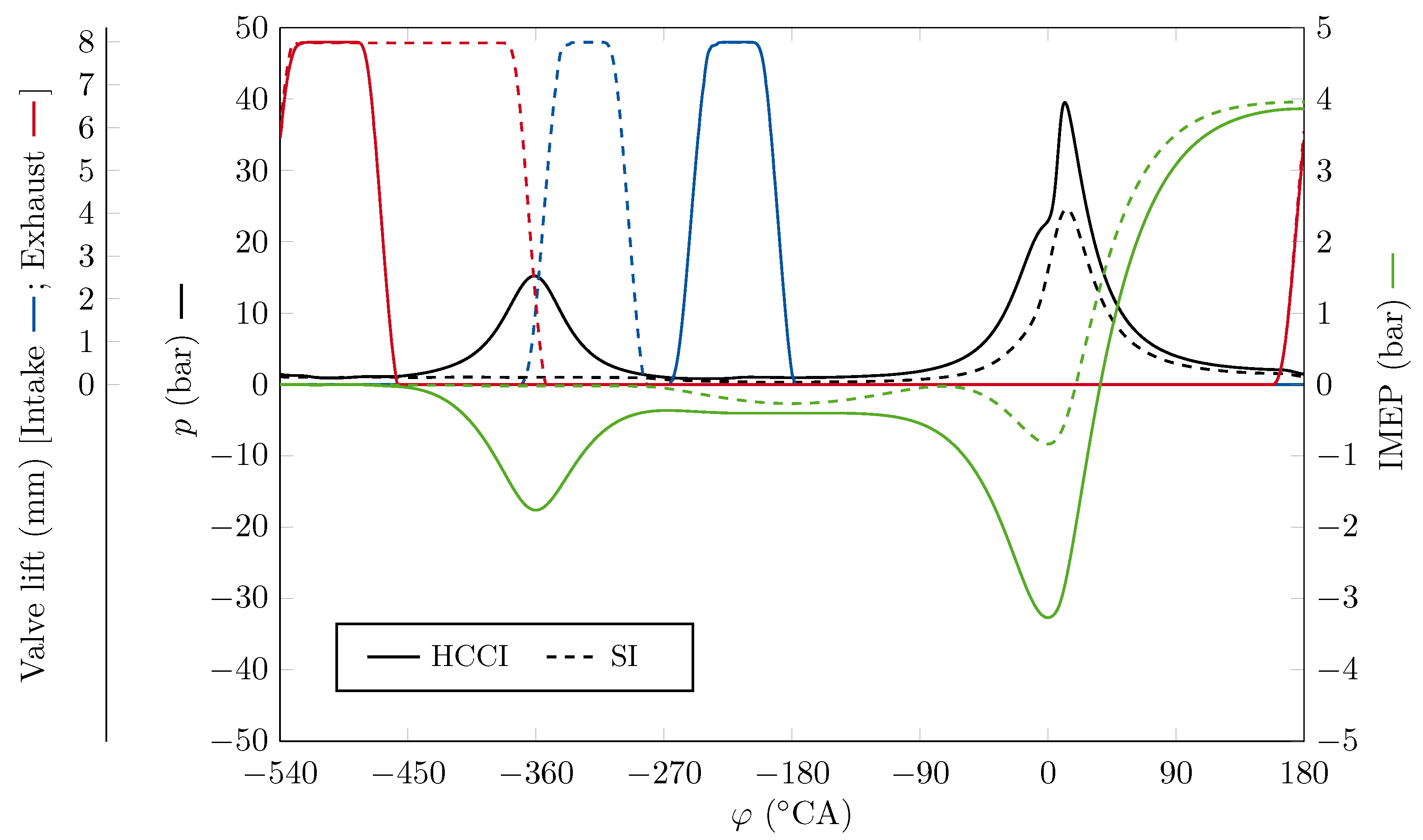
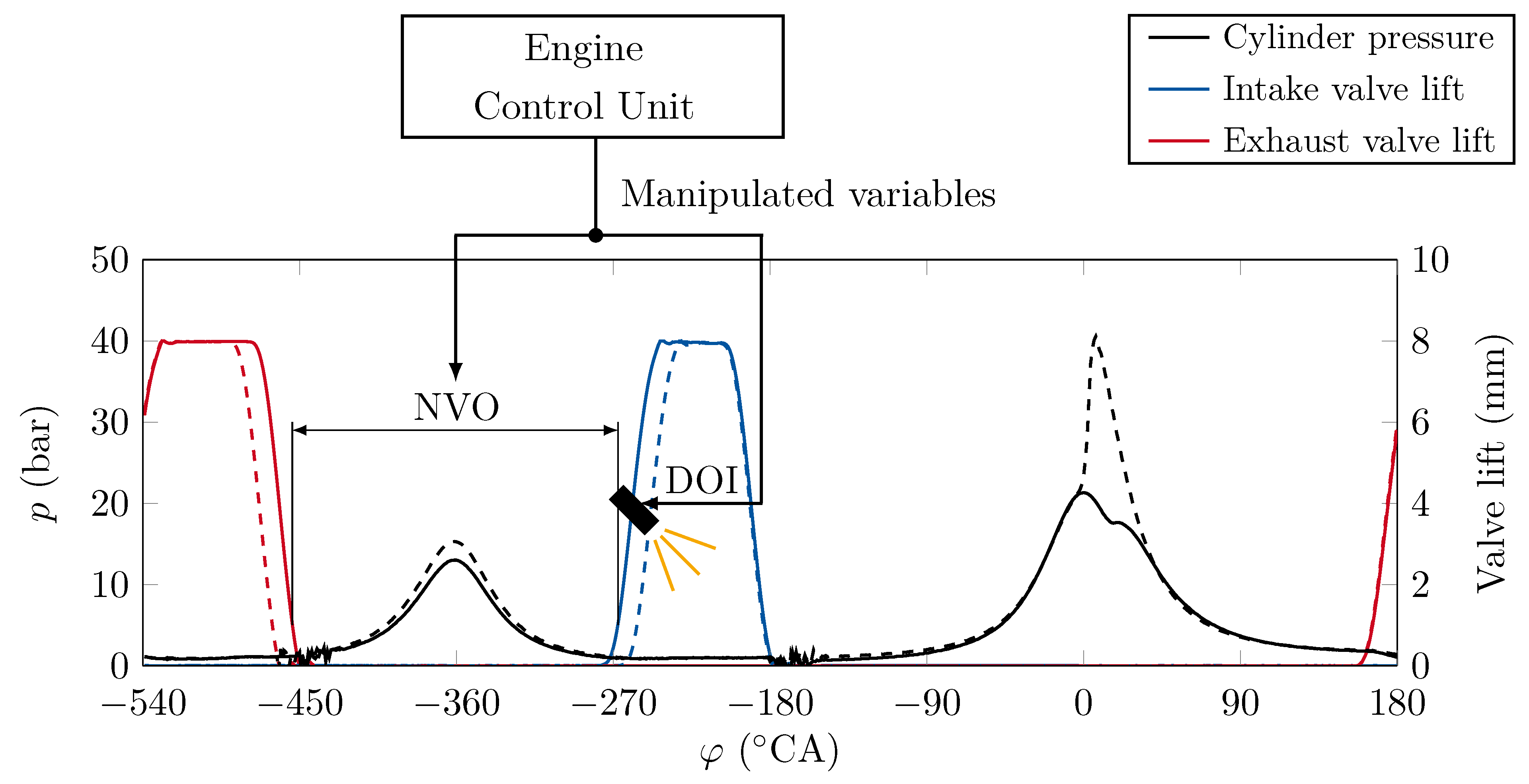
All experiments were conducted on a single-cylinder research engine equipped with a fully variable electromechanical valve train, enabling precise adjustment of valve timing and negative valve overlap (NVO) [20]. NVO describes a valve timing strategy in which the exhaust valve closes before top dead center during the gas exchange phase and the intake valve opens only after top dead center, resulting in a period around gas exchange top dead center where both valves remain closed simultaneously. In contrast to conventional positive valve overlap, this strategy traps a defined quantity of hot residual gas inside the cylinder. During the subsequent upward piston motion, the trapped residual gas is recompressed, increasing in-cylinder temperature prior to the next combustion cycle. Figure 1 shows the resulting pressure traces. In HCCI operation, this internal exhaust gas recirculation is a key control mechanism because it increases charge temperature and strongly influences the auto-ignition timing. By adjusting the duration of the NVO period through exhaust valve closing and intake valve opening timing, the residual gas fraction and thermal state of the charge can be controlled without external exhaust gas recirculation hardware.
The engine was operated at a constant speed of 1500 min−1. Table 1 provides an overview of the most important parameters. In HCCI operation, the exhaust valve opening and intake valve closing timings were kept constant, whereas exhaust valve closing and intake valve opening were varied symmetrically to realize different NVO values. In SI operation, the exhaust valve timings and the intake valve opening were kept constant to achieve a positive valve overlap ( NVO = 20 ° CA ). The intake closing timing was varied to realize different loads without throttling the engine.
Due to the fully variable valve train and extensive instrumentation, the combustion chamber includes valve pockets, pressure sensor bores, and two injectors, resulting in a comparatively high surface-to-volume ratio. Intake air pressure, exhaust pressure, intake air temperature, coolant temperature, and oil temperature were externally conditioned to ensure reproducible operation but were not optimized for efficiency.

2.2. Fuels

Two fuels were investigated:
  • Ethanol (E100);
  • Commercial gasoline E10 with 10% ethanol content (referred to as gasoline).
Fuel is injected directly into the combustion chamber using piezoelectric direct injectors. Separate rail pressure settings were used for gasoline and ethanol operation as listed in Table 1. Fuel-specific operating strategies were adjusted via injection duration and valve timing to ensure stable combustion. No additional fuel-specific hardware modifications were applied.
Across the investigated operating range, the injected fuel mass ranged between 7 and 18 m g /cycle for gasoline and between 10 and 26 m g /cycle for ethanol. The injected fuel mass depended on operating point, combustion mode, and fuel type. Across the investigated load range, the fuel mass flow corresponded to indicated mean effective pressures between 1.2 and 5 bar. Ethanol generally required higher injected fuel mass due to its lower lower heating value compared to gasoline. The exact operating-point-resolved fuel mass flow data is available in the published dataset [21].

2.3. Operating Strategies and Reference Conditions

The engine was controlled using a MicroAutoBox III (dSPACE Group SE & Co., KG, 33102 Paderborn, Germany) equipped with an FPGA-based real-time processing unit. As shown in Figure 1, HCCI combustion was realized using the negative valve overlap strategy described above in combination with variation of the duration of injection (DOI). By increasing the NVO duration, a larger amount of hot residual gas was trapped and recompressed inside the cylinder. This increased the in-cylinder charge temperature sufficiently to achieve auto-ignition without the use of a spark plug. Consequently, in HCCI operation spark ignition was disabled and combustion phasing was governed primarily by the thermodynamic state of the mixture resulting from residual gas fraction, temperature level, and air–fuel equivalence ratio.
For both fuels, complete operating maps were recorded using a full-factorial variation of NVO and DOI. The resulting operating regions were evaluated with respect to combustion stability, achievable load, indicated efficiency, combustion phasing, and emissions.
Stable HCCI operation was bounded by several limiting effects, including misfire at low residual gas fractions, excessive mixture dilution, overly rich operation, and valve train constraints at high NVO values. Based on these operating maps, an optimized operating strategy was manually derived for each fuel. The selected operating trajectories aimed to achieve high indicated efficiency and combustion stability while simultaneously minimizing emissions.
No closed-loop combustion control was applied during the experiments. Each operating point was measured under stationary conditions using constant valve timings and constant injection duration. SI reference measurements were subsequently conducted at comparable load points on the same engine under identical intake, exhaust, speed, and thermal boundary conditions. All measurements were performed fully unthrottled in order to isolate combustion-related effects from pumping losses associated with throttled SI operation.
All measurements were conducted fully unthrottled to eliminate pumping losses associated with throttled SI operation. The SI combustion mode was operated at stoichiometric conditions (air–fuel equivalence ratio λ = 1 ) to represent conventional operation with a three-way catalyst. HCCI combustion was operated under lean conditions enabled by inherently low NOx emissions.

2.4. Measurement and Data Evaluation

In-cylinder pressure was measured using a piezoelectric pressure transducer (Kistler Instrumente AG, Winterthur, Switzerland) with 0.1° crank angle (CA) resolution. Indicated mean effective pressure (IMEP), combustion phasing (CA50), burn duration (BD1090), and cycle-to-cycle variability were calculated from the pressure data. Gaseous emissions of HC, CO, and NOx were measured using exhaust gas analyzers (FEV Group GmbH, Aachen, Germany).

2.5. Measurement Uncertainty

To ensure reproducibility and minimize thermal drift effects, all operating points were measured only after stabilization of pressures and temperatures. Depending on measurement objective, pressure data from 500 or 1000 consecutive engine cycles were recorded for each operating point and subsequently ensemble-averaged for thermodynamic analysis. Cycle-resolved quantities such as IMEP, combustion phasing, and burn duration were additionally evaluated statistically to characterize combustion stability. Reference measurements were repeatedly conducted throughout the measurement campaigns to monitor long-term drift effects and changes in engine behavior.
The overall uncertainty of the pressure-based combustion analysis is primarily influenced by crank-angle synchronization, pressure sensor referencing, cycle-to-cycle variability, and emissions analyzer accuracy. Since the observed differences between SI and HCCI operation substantially exceed the remaining measurement scatter, the reported trends are considered robust and reproducible within the investigated operating range.

2.6. Data Availability and Use of Generative AI

All experimental data was collected on a proprietary research engine and has been published in a data repository [21]. Generative artificial intelligence was used solely for linguistic support during manuscript preparation and not for data generation, analysis, or interpretation.

3. Results

3.1. HCCI Operating Range and Stability

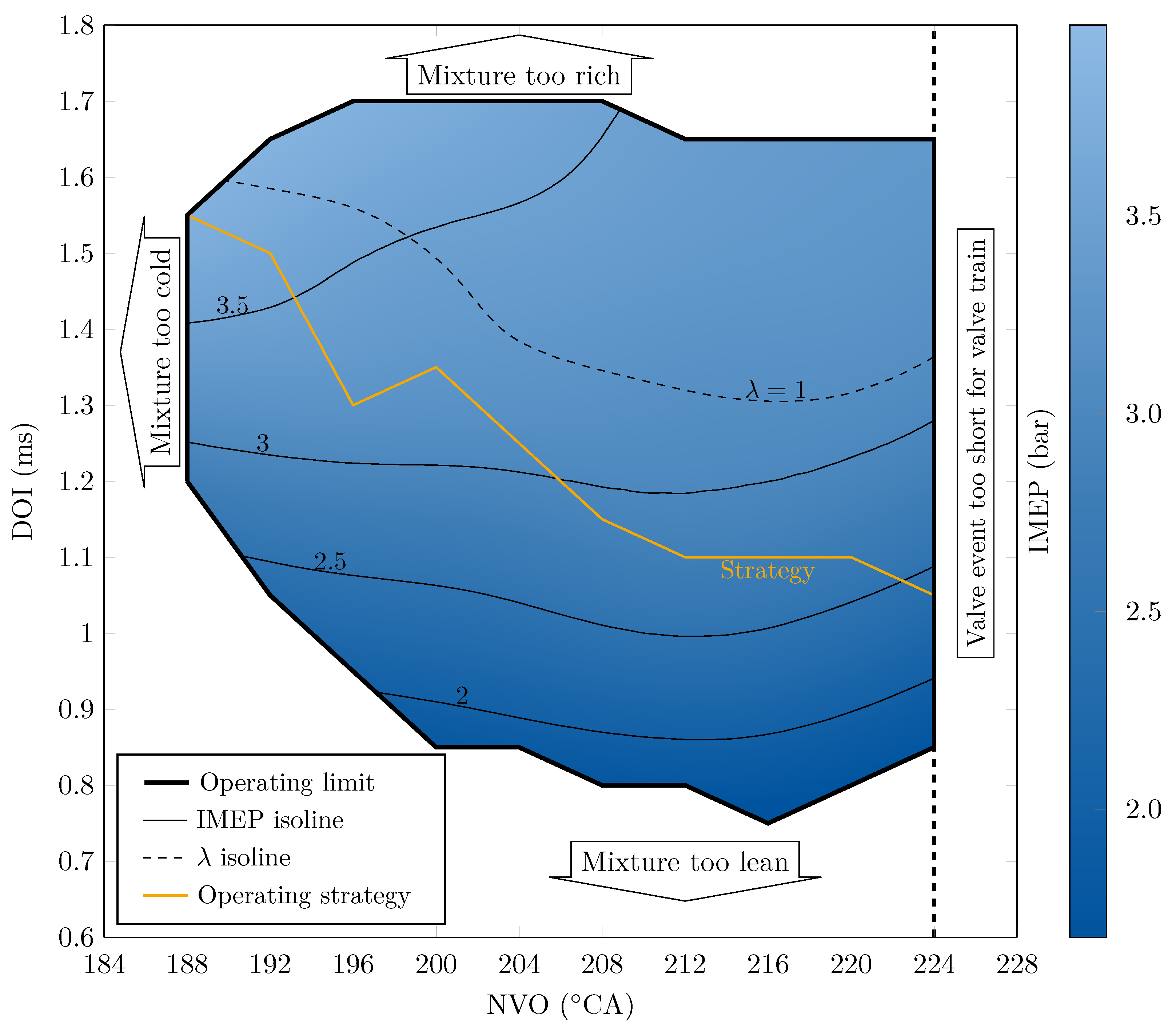
The HCCI operating range with ethanol is shown in Figure 2. The figure presents a grid-based variation of the control parameters DOI and NVO. The resulting IMEP is shown as the output variable. The achievable operating region is bounded by combustion stability limits and valve train constraints. At high negative valve overlap values ( NVO > 224 ° CA ), the intake valve opening duration becomes insufficient due to hardware limitations, preventing a further increase in residual gas fraction. At low NVO values (<188 °CA), insufficient residual gas temperature leads to frequent misfire and combustion extinction. High values of DOI result in overly rich mixtures, while low DOI values lead to excessively lean mixtures. Additionally, combinations of these limiting effects can further restrict the achievable operating range.
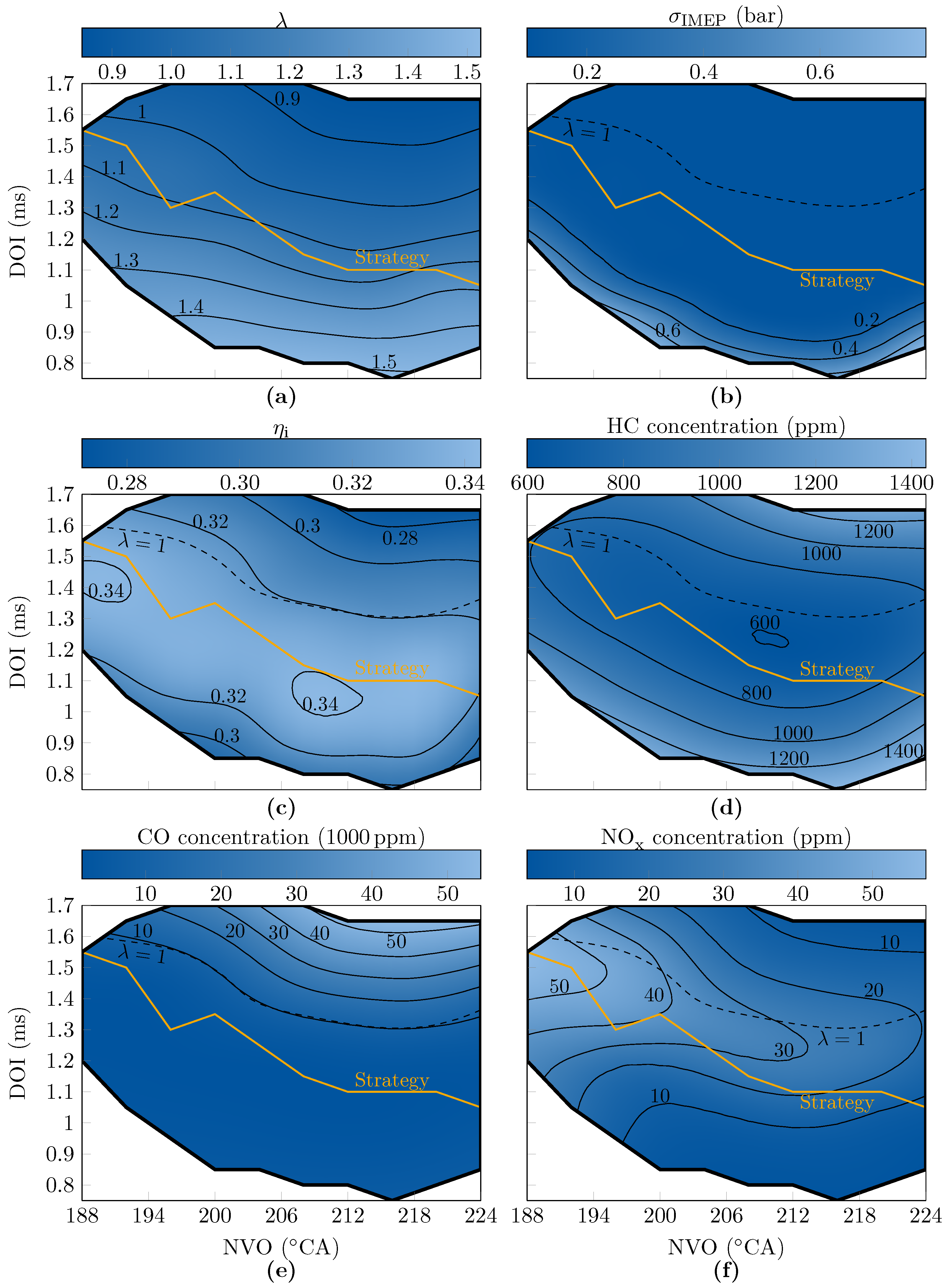
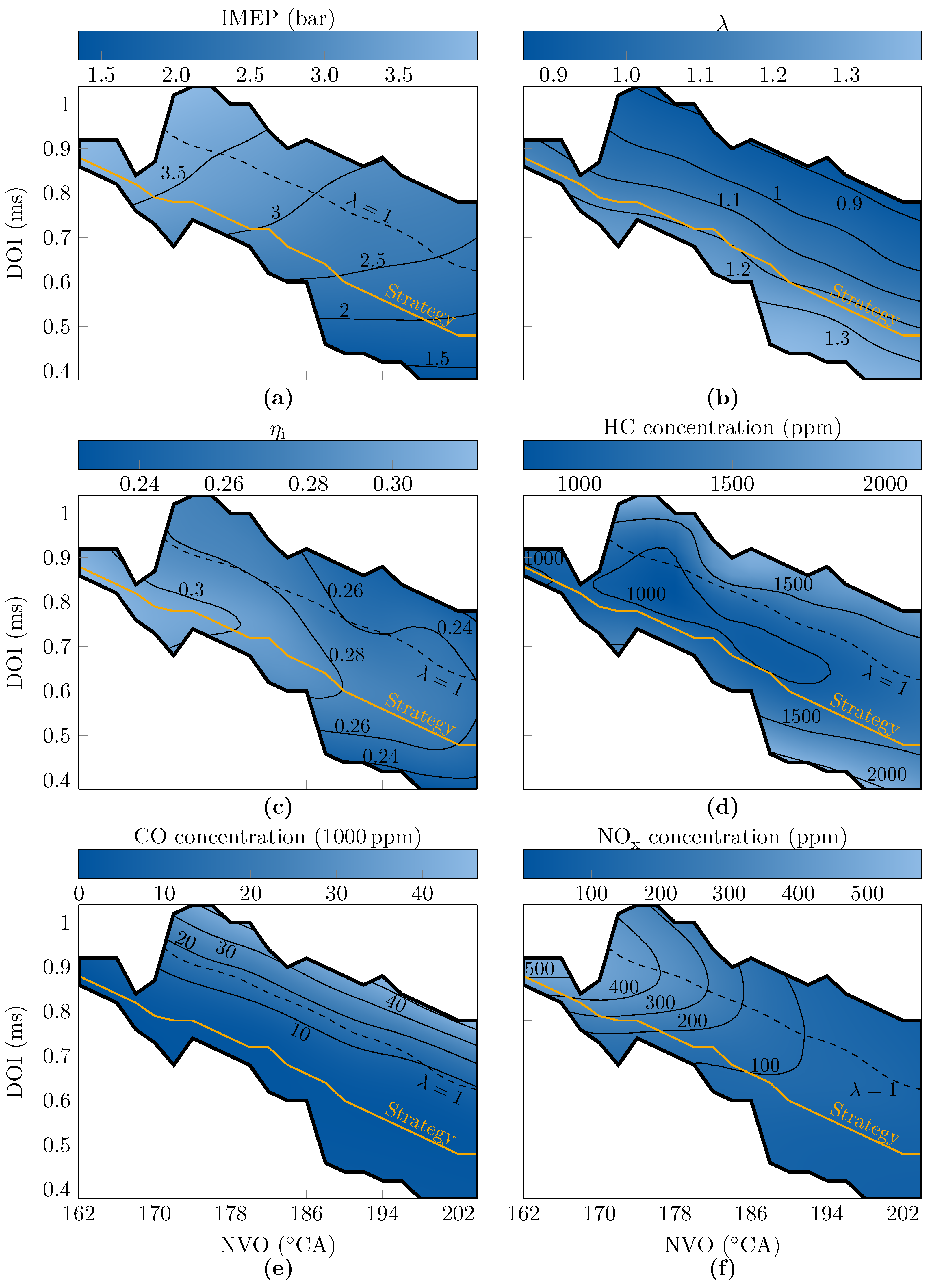
The detailed behavior of air–fuel equivalence ratio λ , combustion stability (expressed by standard deviation of IMEP σ IMEP ), indicated efficiency η i , and emissions across the ethanol HCCI map is illustrated in Figure 3. Combustion remains stable over large parts of the map, with an increased standard deviation of IMEP near the lean limit. Maximum indicated efficiencies are achieved at slightly lean mixtures (λ = 1.1 to 1.2). An optimized operating strategy has been manually derived for performing a load sweep while maintaining high combustion stability and efficiency and simultaneously low emissions. It is illustrated as a yellow line in Figure 2, Figure 3 and Figure 4.
The corresponding HCCI operating map for gasoline is shown in Figure 4. Due to the lower auto-ignition temperature of gasoline, stable HCCI operation is possible at higher loads and leaner mixtures compared to ethanol. However, absolute HC and NOx emissions are higher.

3.2. Comparison of HCCI and SI Combustion over Load

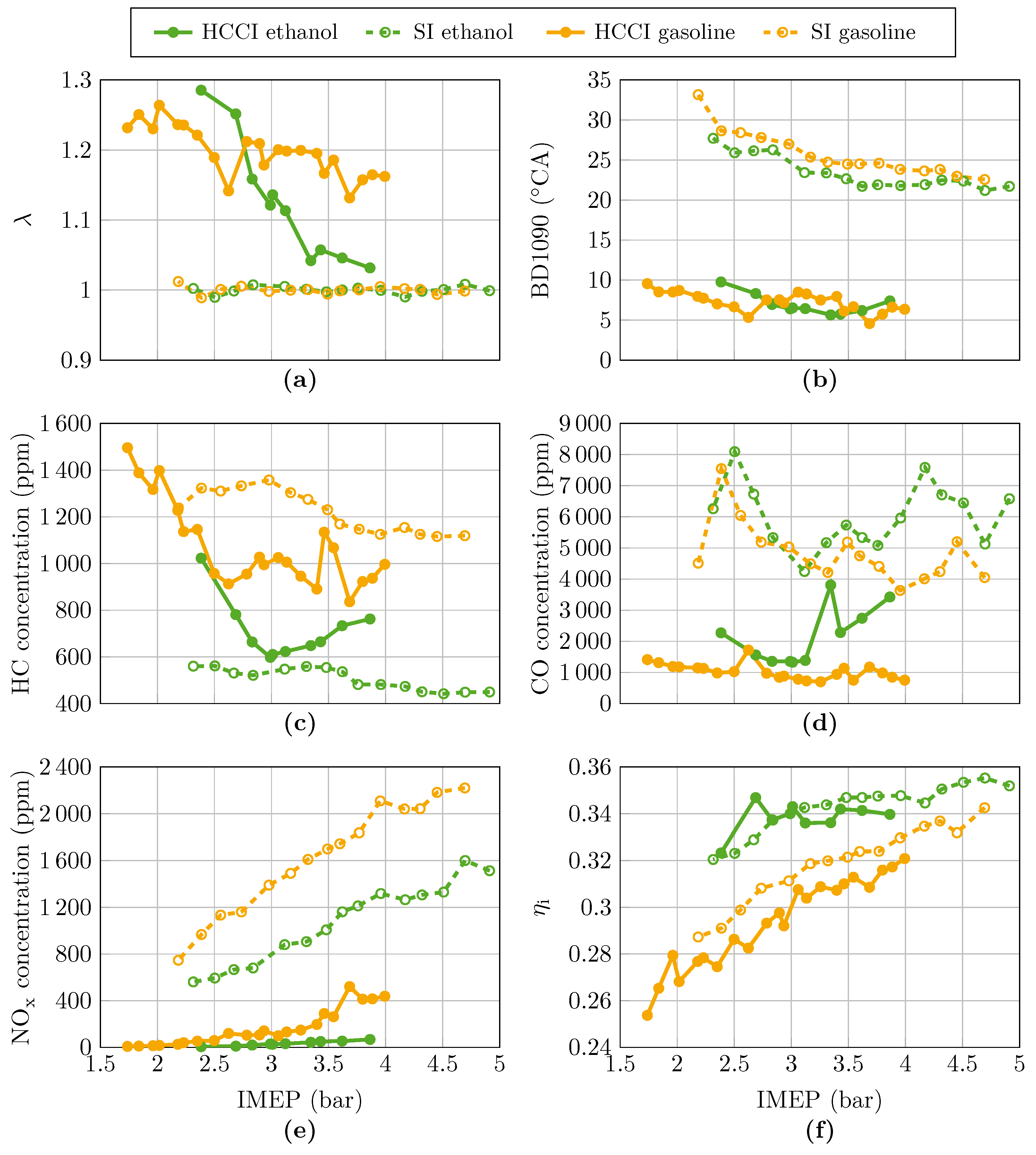
A direct comparison between HCCI and SI combustion for both fuels as a function of indicated mean effective pressure is presented in Figure 5. The solid lines represent optimized HCCI operating strategies derived from the operating maps in Figure 3 and Figure 4, while the dashed lines show SI reference measurements under identical boundary conditions.
Figure 5a shows the air–fuel equivalence ratio. SI operation is maintained at λ = 1 , whereas HCCI operation is conducted under lean conditions. Subplot Figure 5b illustrates the burn duration, revealing that HCCI combustion is significantly faster than SI combustion due to nearly simultaneous auto-ignition throughout the combustion chamber. This behavior is consistent with fundamental descriptions of HCCI combustion reported in [2,3].

3.3. Emissions Characteristics

Figure 5c shows gasoline consistently producing higher HC emissions than ethanol, with concentrations generally decreasing as load increases. The lowest levels are observed for SI combustion with ethanol. In the overlapping operating range, HCCI with ethanol shows on average 34.9% higher HC emissions; these initially decrease and then rise again above an indicated mean effective pressure of ~3 bar due to reduced dilution. For gasoline, HC emissions in SI operation are on average 140% higher than with ethanol, while HCCI operation reduces them by 21.8%.
Figure 5d illustrates that due to lean operation, HCCI combustion yields substantially lower CO emissions than the conventional reference. With ethanol, emissions decreased by an average of 3460 ppm (61.1%), while gasoline achieves a reduction of 4100 ppm (80.6%) owing to a consistently lean strategy. In SI operation, gasoline produces 18.8% lower CO emissions than ethanol; in HCCI operation, this difference increases to 55.0%, partly attributable to the leaner operation with gasoline.
As shown in Figure 5e, HCCI combustion significantly reduces NOx emissions compared to the conventional reference: by 86.3% for gasoline and 96.1% for ethanol, reaching an average level of 33.5 ppm with ethanol. At such low concentrations, a lean oxidation catalyst is sufficient for HC and CO control, eliminating the need for a three-way catalyst. This concept is implemented in the Mazda Skyactiv-X engine, where the three-way catalyst is effectively used as an oxidation catalyst under lean-burn operation without selective catalytic reduction (SCR) [22]. In SI operation, ethanol reduces NOx emissions by 38.7% relative to gasoline, and by 82.9% in HCCI operation. Overall, NOx emissions increase with load due to rising combustion temperatures.

3.4. Combustion Phasing and Cycle-to-Cycle Variability

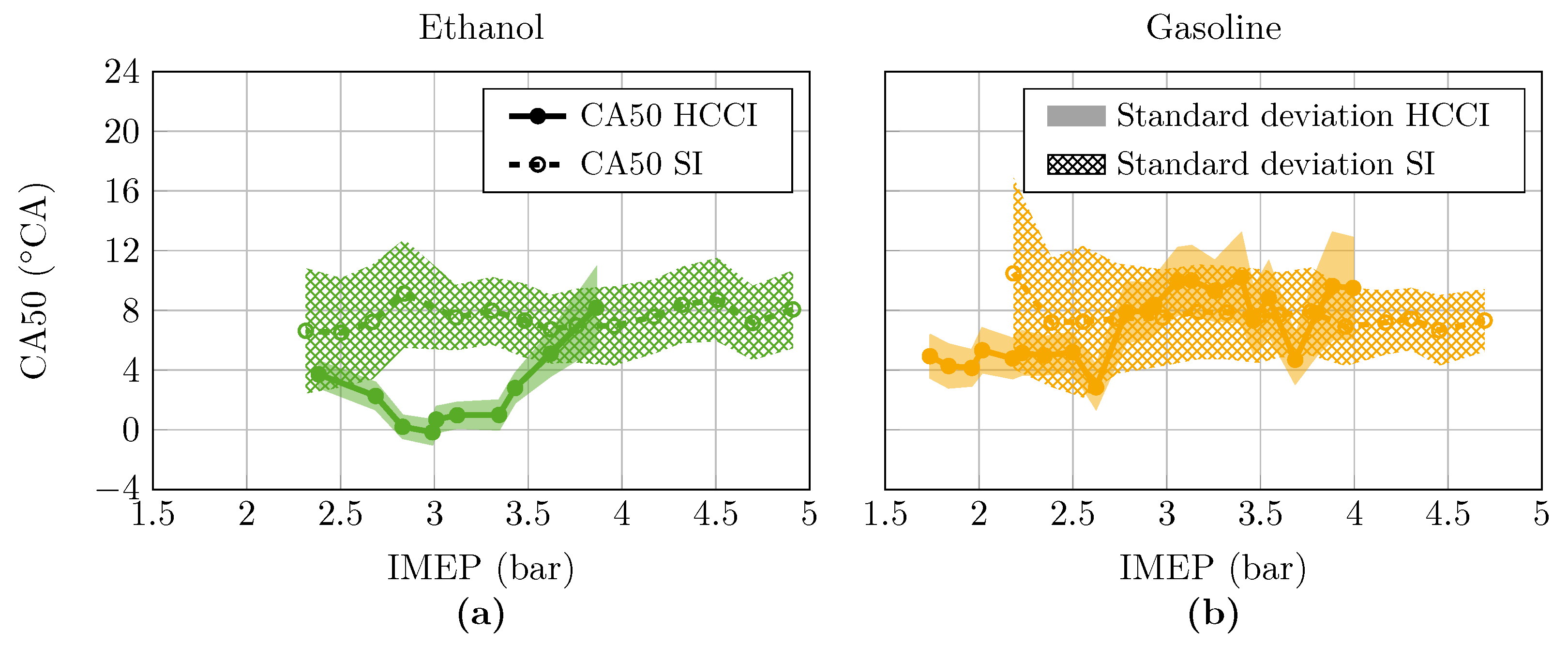
Combustion phasing and its cycle-to-cycle variability are compared in Figure 6. The combustion phasing and its standard deviation are shown as a function of load for both fuels. HCCI combustion exhibits a significantly lower standard deviation of CA50 compared to SI combustion, indicating more repeatable combustion.
In SI operation, the combustion phasing was maintained within the efficiency-optimal range [23] by appropriate selection of the ignition timing, whereas in HCCI operation, it is governed by the prevailing thermodynamic boundary conditions. For ethanol, HCCI combustion phasing tends to occur substantially earlier than in the corresponding SI operation. This behavior should not be interpreted as evidence of intrinsically faster ignition chemistry or enhanced low-temperature reactivity of ethanol. Instead, the observed combustion phasing results primarily from the operating strategy optimization and from the fundamentally different heat release characteristics of HCCI combustion.
For both fuels, the HCCI operating strategy was derived from a systematic optimization of the experimentally recorded operating maps with respect to efficiency, stability, and emissions. The resulting optimal operating points consistently correspond to comparatively early combustion phasing combined with very short burn durations. Due to the nearly volumetric heat release of HCCI combustion, the thermodynamically favorable combustion phasing shifts closer toward top dead center compared to conventional SI combustion, which is characterized by substantially slower flame propagation.
In contrast, the SI reference operation was adjusted to the conventionally efficiency-optimal combustion phasing range of approximately 5 to 11 °CA aTDCF, consistent with established SI combustion behavior [23]. Consequently, the earlier CA50 values observed for HCCI operation primarily reflect the different thermodynamic optimum of the combustion process.

3.5. Indicated Efficiency and Loss Analysis

The indicated efficiencies of all investigated operating modes are shown in Figure 5f. Ethanol consistently achieves higher indicated efficiencies than gasoline in both combustion concepts. In SI operation, ethanol provides an average efficiency increase of approximately 2.2 percentage points. In HCCI operation, ethanol achieves efficiencies comparable to SI operation, whereas gasoline exhibits an efficiency deficit of approximately 1.3 percentage points.
From a thermodynamic perspective, the HCCI process is expected to yield higher efficiencies due to its fundamentally different combustion characteristics, which is stated widely in literature [1,2,3,4,6,7,8,9,10,11,12,13,14,15,16]. The combustion occurs with significantly shorter burn durations and a tendency toward earlier combustion phasing, approaching an ideal constant-volume process. This would generally imply a higher efficiency potential compared to the flame-propagation-based SI combustion. However, the experimental results show that this potential is not fully realized under the investigated conditions, and the indicated efficiency of HCCI operation remains at a similar or even lower level than that of the SI process.
Two ethanol-fueled operating points at IMEP ≈ 4 bar with a pronounced efficiency difference are compared. Indicated efficiency is 34.77% for SI combustion and 33.97% for HCCI (−2.31%). The indicated efficiency is defined as [5]
η i = 0.5 · n · IMEP · V d m ˙ f · LHV
Engine speed n, Engine displacement V d , fuel mass flow m ˙ f , and lower heating value LHV are effectively identical, and measurement uncertainties are negligible relative to the observed deviation. The difference is therefore attributed to a 2.40% lower IMEP for the HCCI case. IMEP is defined as [5]
I M E P = 1 V d · p · d V ,
where p denotes the in-cylinder pressure and V the instantaneous cylinder volume.
Figure 7 shows valve lift profiles (intake/exhaust) and averaged cylinder pressure traces over crank angle, along with the cumulative IMEP (work integral). HCCI exhibits a significantly higher peak pressure despite similar combustion phasing, due to faster heat release and a higher total trapped in-cylinder mass resulting from retained residual gases. Because NVO operation intentionally traps exhaust gas inside the cylinder, the total cylinder mass at the beginning of compression consists not only of fresh charge but also of recompressed residual gas. Although the oxygen concentration is reduced, the increased total mass and elevated temperature level contribute to higher pressure during compression and combustion.
The cumulative IMEP curve (proportional to indicated work) reveals distinct process differences: after exhaust valve closing, HCCI shows a pronounced drop caused by additional compression work for residual gas recompression. Due to losses from heat transfer and leakage, this work is only partially recovered during expansion. During gas exchange, elevated pressure and temperature levels in HCCI lead to substantially higher pumping losses. When evaluated over the gas exchange interval, these losses are more than an order of magnitude higher than for SI operation. Consequently, the cumulative IMEP curves do not coincide at the start of compression.
To quantify the gas exchange losses associated with NVO operation, the pumping mean effective pressure (PMEP) was evaluated by integrating the pressure–volume loop between exhaust valve opening and intake valve closing using valve lift thresholds of 1 m m : For the representative ethanol operating points shown in Figure 7 (IMEP ≈ 4 bar), the SI operating point exhibits a PMEP of −0.023 bar, whereas the HCCI operating point reaches −0.393 bar. The substantially more negative PMEP observed for HCCI operation results primarily from the recompression of trapped residual gases during the negative valve overlap interval and the elevated cylinder pressure during gas exchange. Although part of the recompression work is recovered during the subsequent expansion, irreversible losses caused by wall heat transfer and leakage prevent full recuperation of this energy. Consequently, the gas exchange penalty of the HCCI process exceeds that of SI operation by more than one order of magnitude under the investigated conditions.
At the same time, the working cycle portion of the HCCI cycle exhibits superior thermodynamic efficiency. When the analysis is restricted to the interval between intake valve closing and exhaust valve opening, the HCCI operating point achieves 7.01% higher indicated efficiency than the corresponding SI operation. This indicates that the intrinsic combustion process of HCCI approaches a more favorable thermodynamic heat release behavior, which is expected from a closer to ideal constant-volume process heat release. However, this advantage is offset by the additional gas exchange and thermal losses associated with negative valve overlap operation. Overall, these losses result in the observed 2.31% lower indicated efficiency.
Supporting simulations, which were performed using a zero-dimensional thermodynamic engine model analogous to the approach described and validated in [24], are used to analyze the impact of heat transfer losses for both HCCI and SI operating points. Therefore, cycle-averaged pressure and temperature trajectories were derived from the measured operating points by the use of the zero-dimensional thermodynamic engine model. Based on these averaged traces, the wall heat transfer Q ˙ w (in W ) was recalculated using the Hohenberg correlation [25]
Q ˙ w = C 1 · V 0.06 · p 0.8 · T g 0.4 · ( c p ¯ + C 2 ) 0.8 · A · ( T g T w )
with instantaneous cylinder volume V in m 3 , in-cylinder pressure p in bar, in-cylinder gas temperature T g and cylinder wall temperature T w in K , mean piston speed c p ¯ in ms−1 and instantaneous cylinder surface area A in m2. The Constants C 1 = 158 and C 2 = 1.4 were calibrated using representative ethanol and gasoline HCCI operating points.
The wall heat transfer is decomposed into gas exchange losses ( 540 to 180 °CA) and working cycle losses ( 180 to 180 °CA). Under nominal model conditions, the cumulative heat transfer during the gas exchange phase is 314% higher for HCCI operation than for SI operation, while the heat transfer during the working cycle is increased by 23.6%. Overall, the resulting total simulated heat transfer losses are 57.4% higher for HCCI operation. Despite the approximately 230 K higher peak temperature predicted for SI combustion, the substantially elevated pressure level during HCCI operation dominates the heat transfer behavior due to the strong pressure dependency of the applied Hohenberg correlation.
To assess the robustness of this interpretation, an additional sensitivity analysis was performed using conservative assumptions favoring SI operation. For this purpose, the SI heat transfer coefficient C 1 was increased by 20%, while the corresponding SI temperature trajectory was simultaneously shifted by +100 K , resulting in a peak temperature difference of approximately 330 K relative to HCCI operation. Even under these intentionally SI-favoring assumptions, the simulated HCCI heat transfer during the gas exchange phase remains 132% higher than for SI operation. Although the working cycle heat transfer becomes 8.28% lower for HCCI under these conditions, the total cumulative heat transfer loss of the HCCI process still exceeds that of SI operation by 12.6%.
These results indicate that the experimentally observed increase in cumulative thermal losses during HCCI operation cannot be explained solely by uncertainties in the employed one-zone heat transfer model. Instead, the dominant contribution originates from the substantially elevated pressure level and the extended high-temperature residence time associated with negative valve overlap operation.

4. Discussion

The results demonstrate that HCCI combustion provides robust advantages in terms of emissions and combustion stability, largely independent of fuel type. These benefits are characterized by low CO and NOx emissions and a stable combustion process approaching ideal constant-volume heat release. Ethanol, in particular, emerges as a well-suited fuel for HCCI operation, combining low emissions with competitive efficiency.
However, the frequently reported efficiency advantage of HCCI combustion is not observed under the investigated unthrottled operating conditions. As discussed in Section 3.5, the thermodynamic advantages of the HCCI combustion process are offset by increased gas exchange and thermal losses associated with the employed negative valve overlap strategy.
It is essential to emphasize that these findings are strongly conditioned by the specific boundary conditions of the present study. No optimization of key parameters as compression ratio or intake air temperature was performed. All operating points were measured at the same engine speed. Thermal boundary conditions (coolant and oil temperatures) were selected for robust test bench operation rather than efficiency optimization.
Furthermore, the engine features a fully variable valvetrain and a free-running design with a geometrically complex combustion chamber (valve pockets, indication ports, dual injectors), resulting in a comparatively large surface area and thus increased heat transfer losses. This geometric characteristic is particularly relevant for HCCI combustion because low-temperature combustion concepts are generally more sensitive to cumulative wall heat transfer than conventional SI combustion, as stated in Section 3.5. In addition, elevated pressure levels in HCCI operation increase the sensitivity to leakage losses (e.g., piston rings, valve seats), which may be overrepresented in the present setup.
Accordingly, the experimentally observed absence of an overall efficiency advantage should not be interpreted as a universal characteristic of HCCI combustion itself. Rather, the results indicate that the efficiency balance between HCCI and SI combustion is highly sensitive to combustion chamber geometry, residual gas handling strategy, and thermal boundary conditions.
Literature-reported efficiency gains often include effects such as dethrottling, which are not intrinsic to the combustion process itself. When compared under equivalent (unthrottled) conditions, the remaining differences are primarily thermodynamic and highly dependent on engine-specific characteristics. Therefore, efficiency advantages of HCCI combustion must be assessed in the context of boundary conditions and engine design, as emphasized in [16].
From a practical perspective, the results indicate that future HCCI-based combustion systems should not be evaluated solely based on idealized combustion efficiency metrics or dethrottling benefits. Instead, engine architecture, valve train strategy, thermal management, and residual gas handling must be considered as integral parts of the overall efficiency optimization problem. The findings demonstrate that substantial emissions reductions and highly stable combustion can already be achieved without complex exhaust aftertreatment systems, particularly when ethanol is used as fuel. At the same time, this study highlights that gas exchange and thermal losses may offset the theoretical thermodynamic advantages of HCCI combustion if the engine hardware is not specifically optimized for this operating mode. These insights are particularly relevant for the development of future highly efficient low-temperature combustion engines, hybrid powertrains operating at fixed load points, and renewable-fuel-based combustion concepts.

Future Work

Future work will focus on extending the presented experimental investigations toward predictive combustion modeling approaches for HCCI operation. In particular, the experimentally obtained data will be used to develop coupled modeling frameworks combining zero-dimensional gas exchange models with data-driven combustion models in order to improve combustion prediction and control capabilities under highly dilute operating conditions.
In addition, the influence of water content in ethanol on combustion stability, auto-ignition behavior, emissions formation, and thermodynamic efficiency will be investigated systematically. Since water addition significantly modifies evaporation cooling, mixture temperature, and ignition characteristics, robust adaptation of the modeling approaches to varying ethanol–water compositions represents an important objective of future research.
The combination of experimentally validated thermodynamic models and data-driven combustion prediction approaches may contribute to more robust control strategies for alternative-fuel HCCI combustion systems under practical operating conditions.

5. Conclusions

This study presents a comprehensive experimental comparison between HCCI and SI combustion using gasoline and ethanol under identical and fully unthrottled conditions. The main conclusions are as follows:
1.
HCCI combustion significantly reduces CO and NOx emissions for both fuels.
2.
Combustion stability is superior in HCCI operation, as indicated by reduced cycle-to-cycle variability.
3.
Ethanol provides higher indicated efficiency and lower emissions than gasoline in both combustion concepts.
4.
No universal efficiency advantage of HCCI over SI combustion is observed under unthrottled conditions for the specific engine setup.
Increased gas exchange and heat transfer losses offset the significantly higher working cycle efficiency of HCCI combustion.
Overall, ethanol-fueled HCCI combustion represents a promising pathway for low-emission combustion systems, provided that engine design and operating strategies are optimized accordingly.

Author Contributions

Conceptualization, P.S. and J.A.; methodology, P.S.; software, J.B. and P.S.; validation, P.S., D.G. and J.A.; formal analysis, P.S., J.B. and A.W.; investigation, P.S. and J.B.; resources, J.A.; data curation, P.S. and J.B.; writing—original draft preparation, P.S.; writing—review and editing, D.G., A.W. and J.A.; visualization, P.S.; supervision, J.A.; project administration, J.A.; funding acquisition, J.A. All authors have read and agreed to the published version of the manuscript.

Funding

This research was performed as part of the research unit 2401 (FOR2401) “Optimization based Multiscale Control for Low Temperature Combustion Engines” funded by the Deutsche Forschungsgemeinschaft (DFG, German Research Foundation)—277012063. This support is gratefully acknowledged.

Data Availability Statement

The measurement data collected and used in this study was published here: [21].

Acknowledgments

During the preparation of this manuscript/study, the authors used ChatGPT 5.2 for the purposes of text generation and translation. The authors have reviewed and edited the output and take full responsibility for the content of this publication.

Conflicts of Interest

The authors declare no conflicts of interest. The funders had no role in the design of the study; in the collection, analyses, or interpretation of data; in the writing of the manuscript; or in the decision to publish the results.

Abbreviations

The following abbreviations are used in this manuscript:
aTDCFAfter Top Dead Center Firing
CACrank Angle
CA50Combustion Phasing
DOIDuration of Injection
HCCIHomogeneous Charge Compression Ignition
IMEPIndicated Mean Effective Pressure
LHVLower Heating Value
NVONegative Valve Overlap
PMEPPumping Mean Effective Pressure
SISpark Ignition

References

  1. Christensen, M.; Johansson, B.; Einewall, P. Homogeneous Charge Compression Ignition (HCCI) Using Isooctane, Ethanol and Natural Gas—A Comparison with Spark Ignition Operation. SAE Trans. 1997, 106, 1104–1114. [Google Scholar] [CrossRef]
  2. Zhao, H. HCCI and CAI Engines for the Automotive Industry; Woodhead Publishing Limited: Cambridge, UK, 2007. [Google Scholar]
  3. Aceves, S.M.; Flowers, D.L.; Martinez-Frias, J.; Smith, J.R.; Dibble, R.; Au, M.; Girard, J. HCCI Combustion: Analysis and Experiments. In Proceedings of the SAE International Government/Industry Meeting, Washington, DC, USA, 14 May 2001. [Google Scholar] [CrossRef]
  4. Fei, Y. HCCI Engines: Benefits, Challenges and Future Advancements. E3S Web Conf. 2025, 606, 01006. [Google Scholar] [CrossRef]
  5. van Basshuysen, R. Handbuch Verbrennungsmotor: Grundlagen, Komponenten, Systeme, Perspektiven, 7th ed.; ATZ/MTZ-Fachbuch Series; Springer Vieweg Wiesbaden: Wiesbaden, Germany, 2015; ISBN 978-3-658-04677-4. [Google Scholar]
  6. Isobe, R.; Endo, K.; Sueoka, M. New-Generation Gasoline Engine “SKYACTIV-X”. Maz. Tech. Rev. 2019, 36, 16–23. [Google Scholar] [CrossRef]
  7. Gordon, D.; Wouters, C.; Wick, M.; Xia, F.; Lehrheuer, B.; Andert, J.; Koch, C.R.; Pischinger, S. Development and experimental validation of a real-time capable field programmable gate array–based gas exchange model for negative valve overlap. Int. J. Engine Res. 2020, 21, 421–436. [Google Scholar] [CrossRef]
  8. Ebrahimi, K. Model Based Control of Combustion Timing and Load in HCCI Engines. Ph.D. Thesis, University of Alberta, Edmonton, AB, Canada, 2016. [Google Scholar]
  9. Jia, N.; Wang, J.; Nuttall, K.; Wei, J.; Xu, H.; Wyszynski, M.L.; Qiao, J.; Richardson, M.J. HCCI Engine Modeling for Real-Time Implementation and Control Development. IEEE/ASME Trans. Mechatron. 2007, 12, 581–589. [Google Scholar] [CrossRef]
  10. Namar, M.M.; Jahanian, O.; Koten, H. The Start of Combustion Prediction for Methane-Fueled HCCI Engines: Traditional vs. Machine Learning Methods. Math. Probl. Eng. 2022, 2022, 4589160. [Google Scholar] [CrossRef]
  11. Bidarvatan, M.; Thakkar, V.; Shahbakhti, M.; Bahri, B.; Abdul Aziz, A. Grey-box modeling of HCCI engines. Appl. Therm. Eng. 2014, 70, 397–409. [Google Scholar] [CrossRef]
  12. Nuss, E.; Wick, M.; Andert, J.; de Schutter, J.; Diehl, M.; Abel, D.; Albin, T. Nonlinear model predictive control of a discrete-cycle gasoline-controlled auto ignition engine model: Simulative analysis. Int. J. Engine Res. 2019, 20, 1025–1036. [Google Scholar] [CrossRef]
  13. Oakley, A.; Zhao, H.; Ladommatos, N.; Ma, T. Dilution Effects on the Controlled Auto-Ignition (CAI) Combustion of Hydrocarbon and Alcohol Fuels. SAE Trans. 2001, 110, 2086–2099. [Google Scholar] [CrossRef]
  14. Yang, D.b.; Wang, Z.; Wang, J.X.; Shuai, S. Experiment and Chemical Kinetics Analysis of Active Atmosphere with Different Fuels in HCCI Combustion. Energy Fuels 2010, 24, 4872–4878. [Google Scholar] [CrossRef]
  15. Mack, J.H.; Aceves, S.M.; Dibble, R.W. Demonstrating direct use of wet ethanol in a homogeneous charge compression ignition (HCCI) engine. Energy 2009, 34, 782–787. [Google Scholar] [CrossRef]
  16. Seebach, D.; Stapf, K.; Pischinger, S.; Hoffmann, K.; Abel, D. Modellierung und Regelung der ottomotorischen Selbstzündung. In Proceedings of the Motorische Verbrennung—Aktuelle Probleme und moderne Lösungsansätze (IX. Tagung); Leipertz, A., Ed.; Berichte zur Energie- und Verfahrenstechnik (BEV); ESYTEC: Erlangen, Germany, 2009; Volume Heft 9.1, pp. 395–406. [Google Scholar]
  17. International Energy Agency. Oil 2024; Technical Report; International Energy Agency: Paris, France, 2024; Available online: https://www.iea.org/reports/oil-2024 (accessed on 6 June 2025).
  18. Gawale, G.R.; Naga Srinivasulu, G. Experimental investigation of ethanol/diesel and ethanol/biodiesel on dual fuel mode HCCI engine for different engine load conditions. Fuel 2020, 263, 116725. [Google Scholar] [CrossRef]
  19. Bebeshko, G.I.; Omel’yanyuk, G.G.; Samoilova, O.V.; Usov, A.I. Assessing the Reliability of the Forensic Technique for the Identification Study of Motor Gasoline Using Gas-Liquid Chromatography. Inorg. Mater. 2024, 60, 93–103. [Google Scholar] [CrossRef]
  20. Salber, W.; Kemper, H.; van der Staay, F.; Esch, T. Der elektromechanische Ventiltrieb—Systembaustein für zukünftige Antriebskonzepte Teil 1. MTZ-Mot. Z. 2000, 61, 826–836. [Google Scholar] [CrossRef]
  21. Schaber, P.; Bedei, J.; Ratz, F.; Andert, J. Measurement Data HCCI and SI with Gasoline and Ethanol [Data set]. Zenodo 2026. [Google Scholar] [CrossRef]
  22. Tsumura, Y.; Kusunoki, T.; Takemoto, K.; Kinoshita, M.; Teramoto, R.; Ito, T. Control System of SKYACTIV-X. Maz. Tech. Rev. 2019, 36, 59–65. [Google Scholar] [CrossRef]
  23. Caton, J.A. Combustion phasing for maximum efficiency for conventional and high efficiency engines. Energy Convers. Manag. 2014, 77, 564–576. [Google Scholar] [CrossRef]
  24. Schaber, P.; Wenzel, H.; Häbel, S.; Bedei, J.; Winkler, A.; Gordon, D.; Andert, J. Added value of thermodynamic white-box data for HCCI combustion prediction. IFAC-PapersOnLine 2023, 56, 4947–4952. [Google Scholar] [CrossRef]
  25. Hohenberg, G.F. Advanced Approaches for Heat Transfer Calculations. SAE Trans. 1979, 88, 2788–2806. [Google Scholar] [CrossRef]
Figure 1. Engine control unit output displaying the manipulated variables NVO and DOI; Solid line: low NVO → combustion occurs late in the cycle; Dashed line: high NVO → combustion occurs early in the cycle.
Applsci 16 05537 g001
Figure 2. Profile of the IMEP in HCCI operation with ethanol as a function of injection duration and negative valve overlap, including the specification of the operating limits.
Applsci 16 05537 g002
Figure 3. The profile of the air–fuel equivalence ratio (a), the standard deviation of the indicated mean effective pressure (b), the indicated efficiency (c), and the pollutant concentrations (df) during HCCI operation with ethanol as a function of injection duration and negative valve overlap.
Applsci 16 05537 g003
Figure 4. The profile of the indicated mean effective pressure (a), the air–fuel equivalence ratio (b), the indicated efficiency (c), and the pollutant concentrations (df) during HCCI operation with gasoline as a function of injection duration and negative valve overlap.
Applsci 16 05537 g004
Figure 5. Load sweeps with air–fuel equivalence ratio (a), burn duration (b), pollutant concentrations (ce), and indicated efficiency (f) in comparison between HCCI operation and SI operation with ethanol and gasoline.
Applsci 16 05537 g005
Figure 6. Combustion phasing including standard deviation over load in comparison between HCCI operation and SI operation with ethanol (a) and gasoline (b).
Applsci 16 05537 g006
Figure 7. Comparison between an HCCI and a comparable SI operating point with respect to the indicated mean effective pressure profile using ethanol.
Applsci 16 05537 g007
Table 1. Geometry data and conditioning parameters of the single-cylinder research engine.
ParameterValueUnit
GeometryDisplacement499 cm 3
Stroke90 m m
Bore84 m m
Compression ratio10.9:1-
ConditioningEngine speed1500min−1
Intake pressure1013mbar
Exhaust pressure1013mbar
Intake temperature50°C
Exhaust valve opens 560 °CA aTDCF
Exhaust valve closes (HCCI) 472 441 °CA aTDCF
Exhaust valve closes (SI) 350 °CA aTDCF
Intake valve opens (HCCI)−279–−248°CA aTDCF
Intake valve opens (SI) 370 °CA aTDCF
Intake valve closes (HCCI) 175 °CA aTDCF
Intake valve closes (SI)−298–−270°CA aTDCF
NVO (HCCI)162–224°CA
NVO (SI) 20 °CA
Rail pressure gasoline100bar
Rail pressure ethanol55bar
Coolant temperature90°C
Oil temperature105°C
Disclaimer/Publisher’s Note: The statements, opinions and data contained in all publications are solely those of the individual author(s) and contributor(s) and not of MDPI and/or the editor(s). MDPI and/or the editor(s) disclaim responsibility for any injury to people or property resulting from any ideas, methods, instructions or products referred to in the content.