Article

Laboratory Model Tests and Numerical Investigation of Gravelly Silt Slope Instability Under Extreme Rainfall Conditions

Department of Civil Engineering, Shanghai University, 99 Shangda Road, Shanghai 200444, China
*
Author to whom correspondence should be addressed.
Appl. Sci. 2026, 16(11), 5517; https://doi.org/10.3390/app16115517
Submission received: 8 May 2026 / Revised: 25 May 2026 / Accepted: 29 May 2026 / Published: 2 June 2026

Abstract

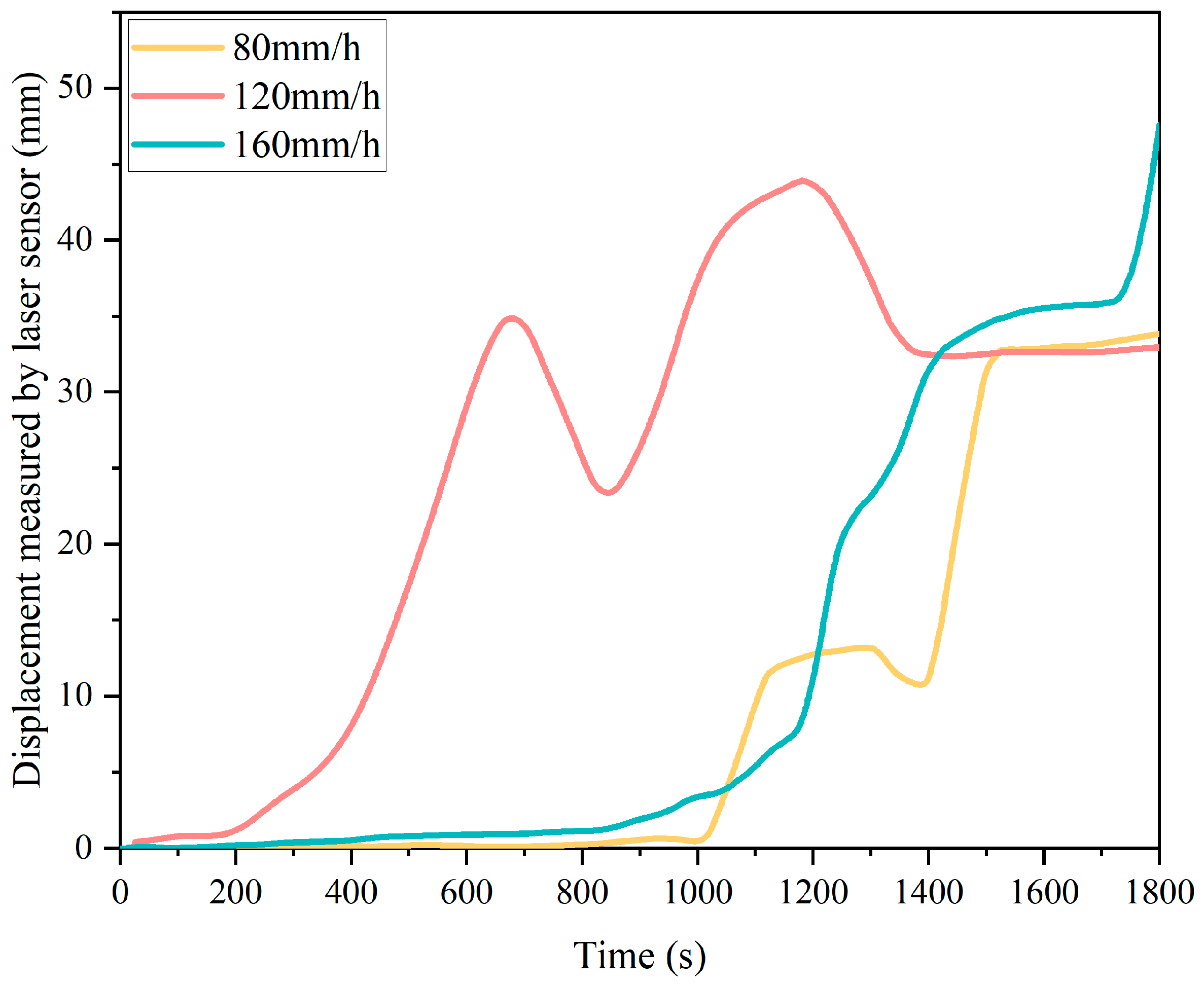
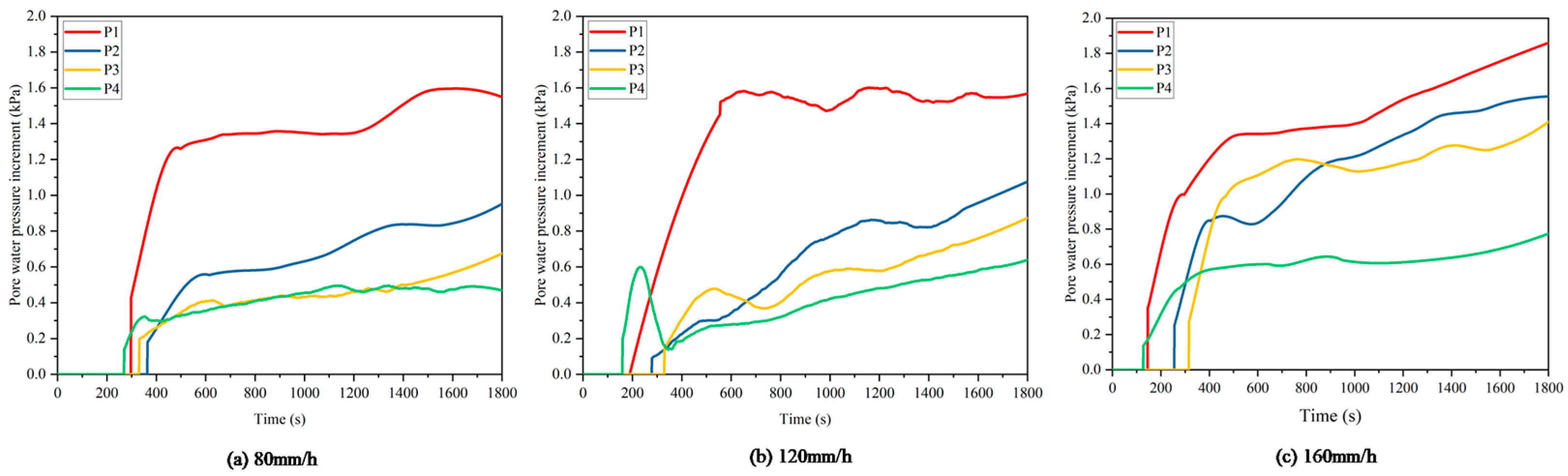
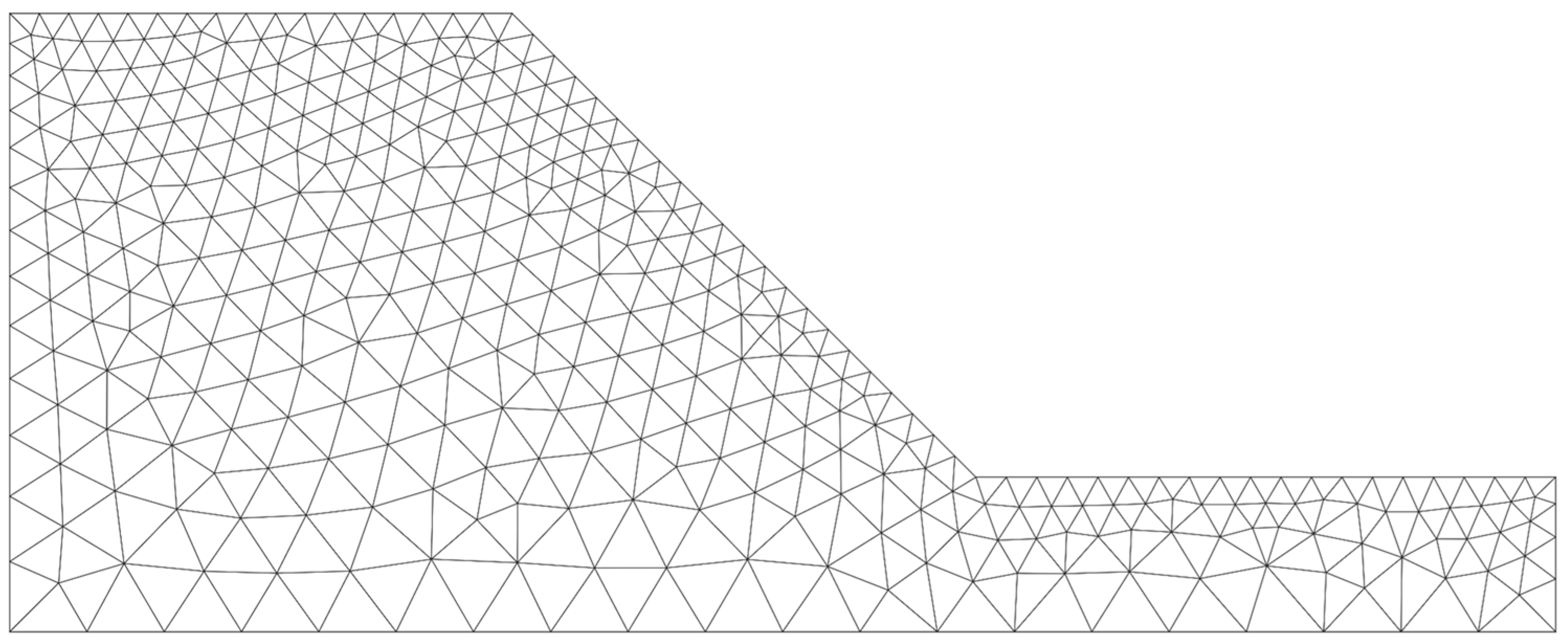
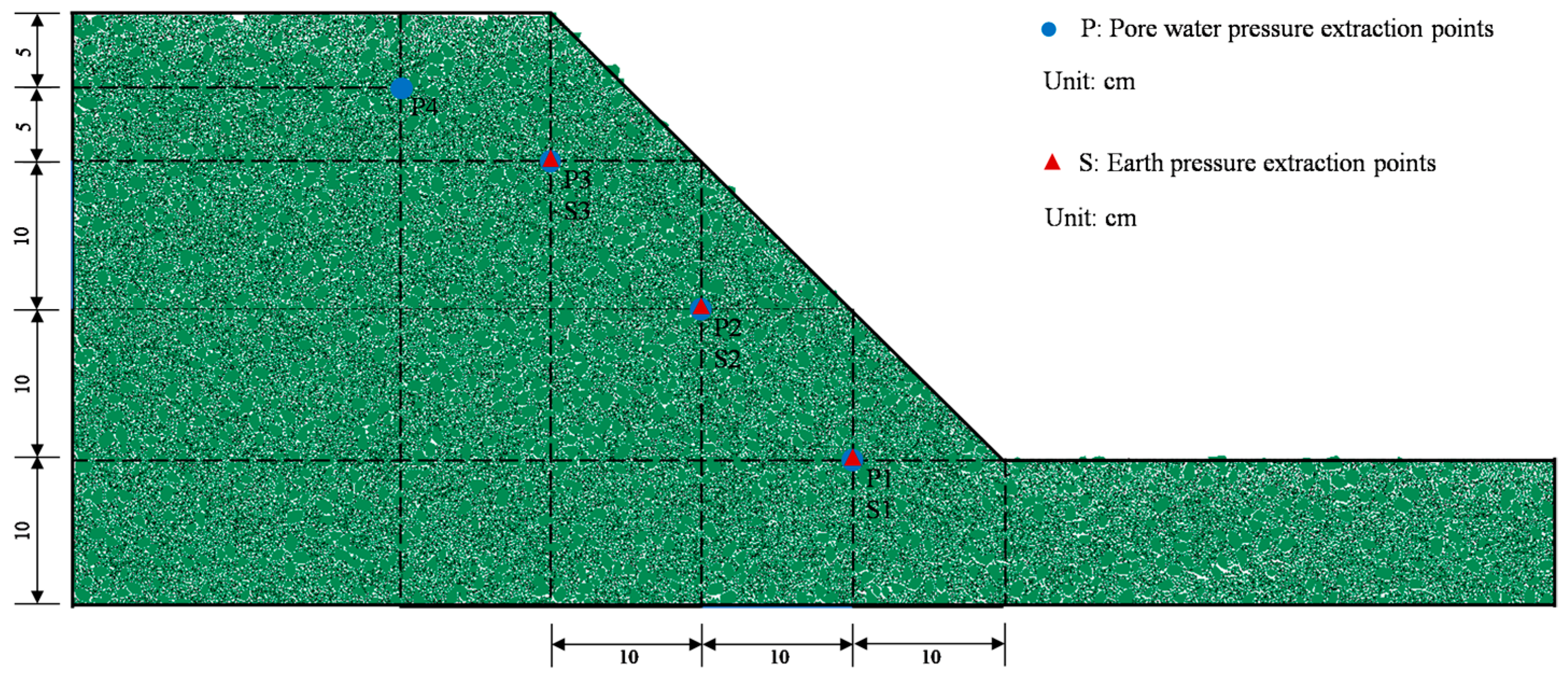
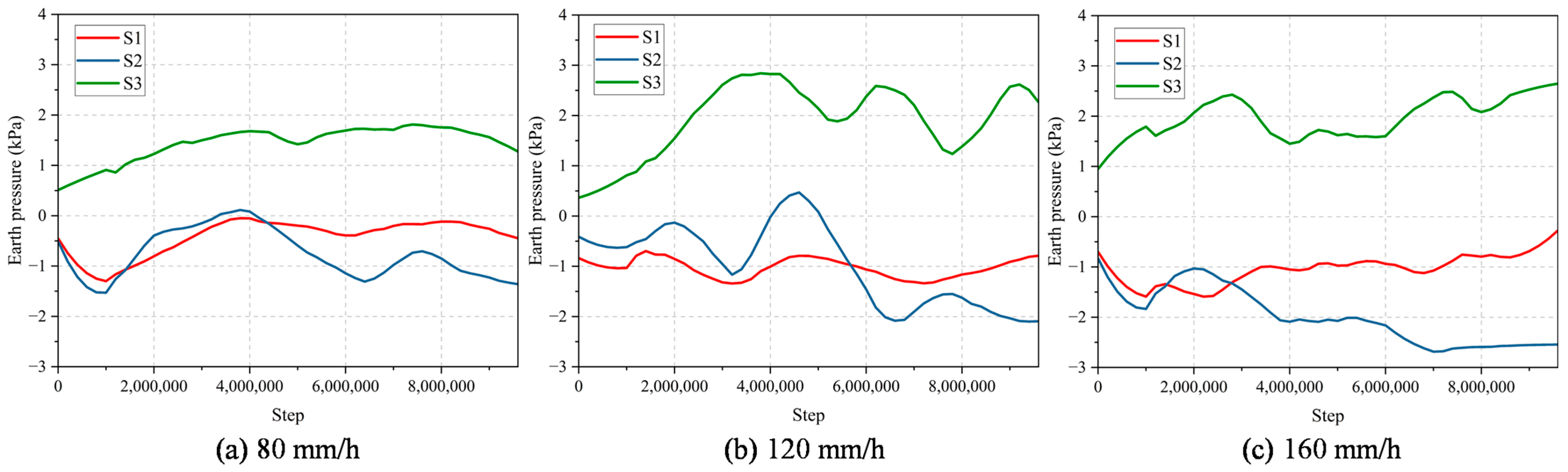
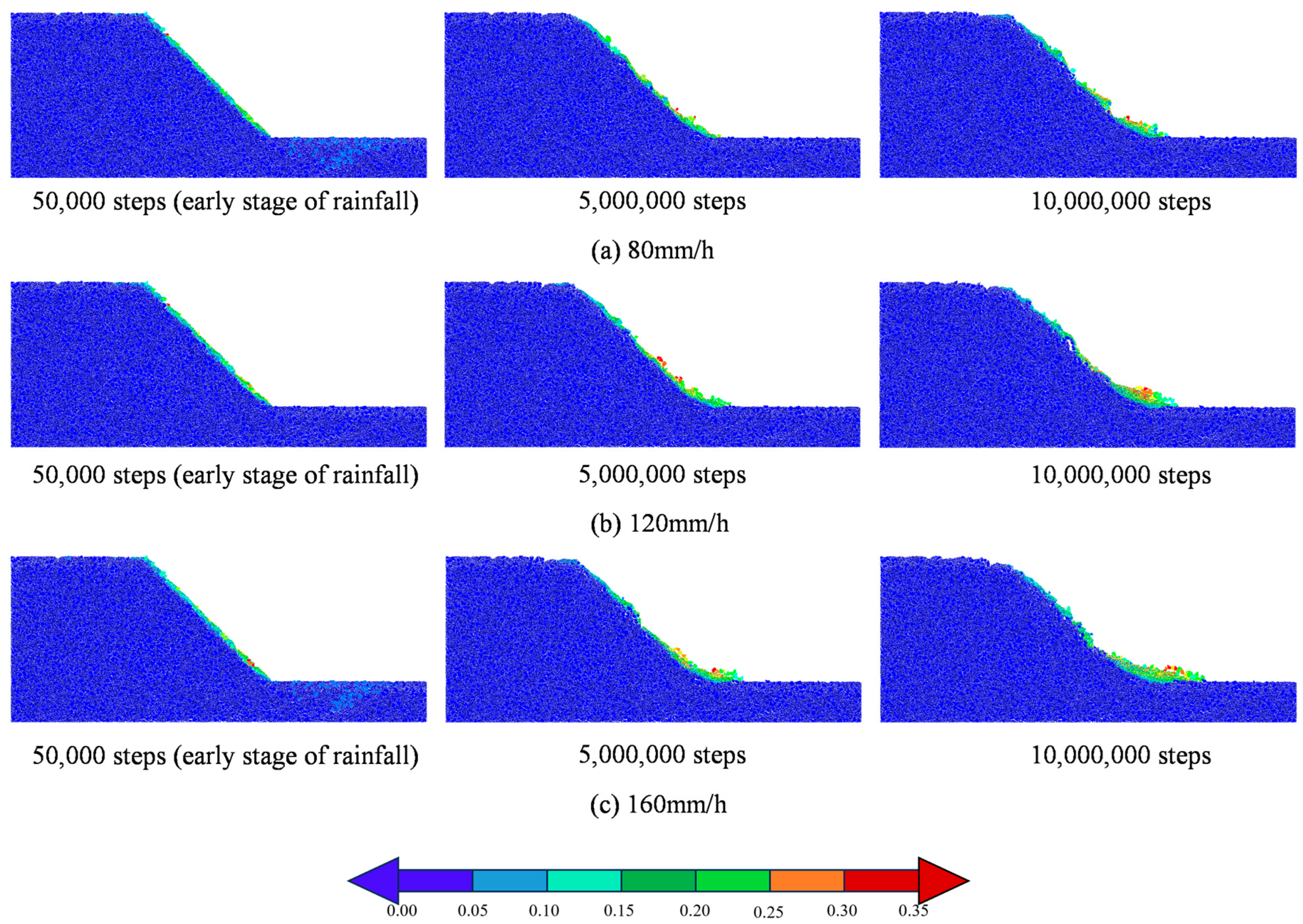
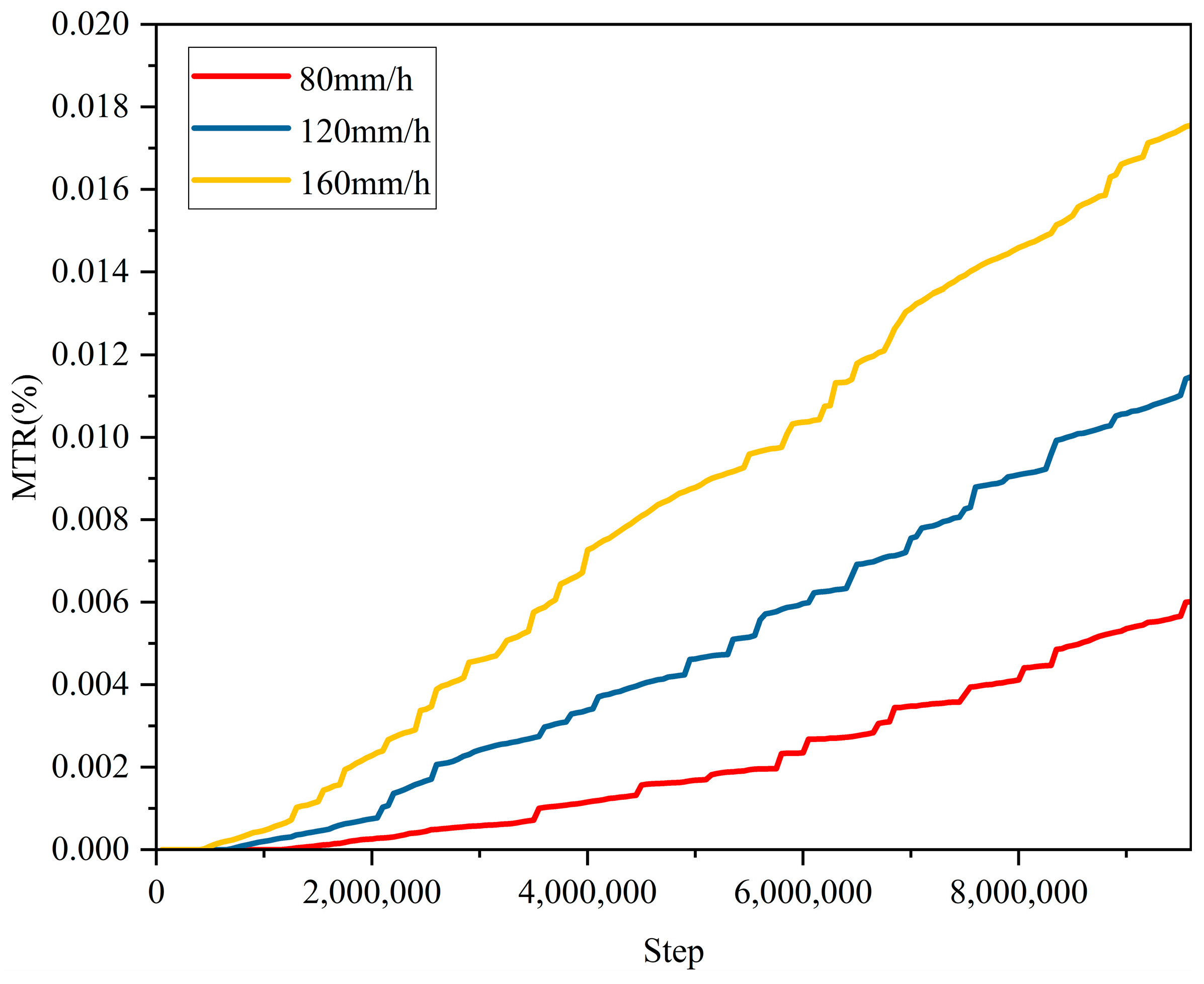
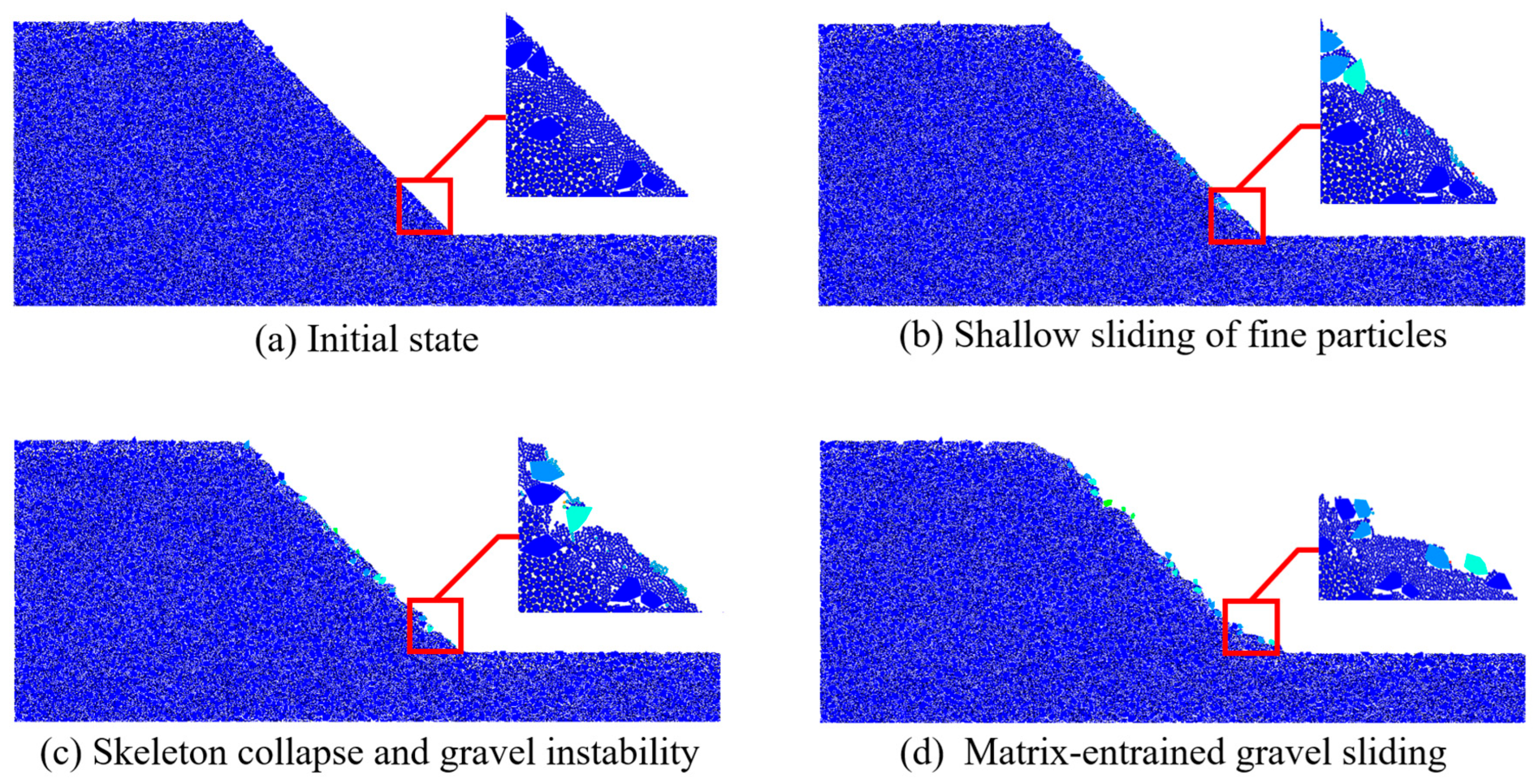
Rainfall-induced instability of gravelly silt slopes is strongly affected by infiltration, runoff erosion, pore water pressure evolution, and particle-scale degradation. In this study, laboratory rainfall model tests were conducted on gravelly silt slopes under three extreme rainfall intensities of 80, 120, and 160 mm/h, and an FVM-DEM coupled model was developed to investigate the associated hydromechanical response and failure mechanism. The tested soil was obtained from the Shanghai East Railway Station project, and the 30% gravel content was selected to represent the typical field condition. Pore water pressure gauges and laser displacement sensors were used to monitor the infiltration response and slope deformation. The results show that all three slopes developed shallow instability, but the deformation rate and failure mode changed with rainfall intensity. Under the tested infiltration-excess conditions, the additional rainfall mainly increased surface runoff, toe erosion, and failed mass mobility rather than proportionally increasing the infiltration depth. The numerical results further indicate that failure evolved through equivalent fine matrix mobilization, gravel destabilization, skeleton collapse, and matrix-entrained gravel movement. These findings clarify the progressive instability mechanism of gravelly silt model slopes under extreme rainfall and provide experimental evidence for slope protection under short-duration, high-intensity rainfall.
Keywords: laboratory rainfall model test; gravelly silt; infiltration-excess rainfall; runoff erosion; FVM-DEM; shallow landslide laboratory rainfall model test; gravelly silt; infiltration-excess rainfall; runoff erosion; FVM-DEM; shallow landslide