From Ancient Fermentation to Modern Functional Foods: Food Microbiology and Biotechnology at the Interface of Tradition and Innovation



Abstract
1. Introduction
2. Defining Fermented Foods: Microbial Processes, Substrates, and Conceptual Boundaries
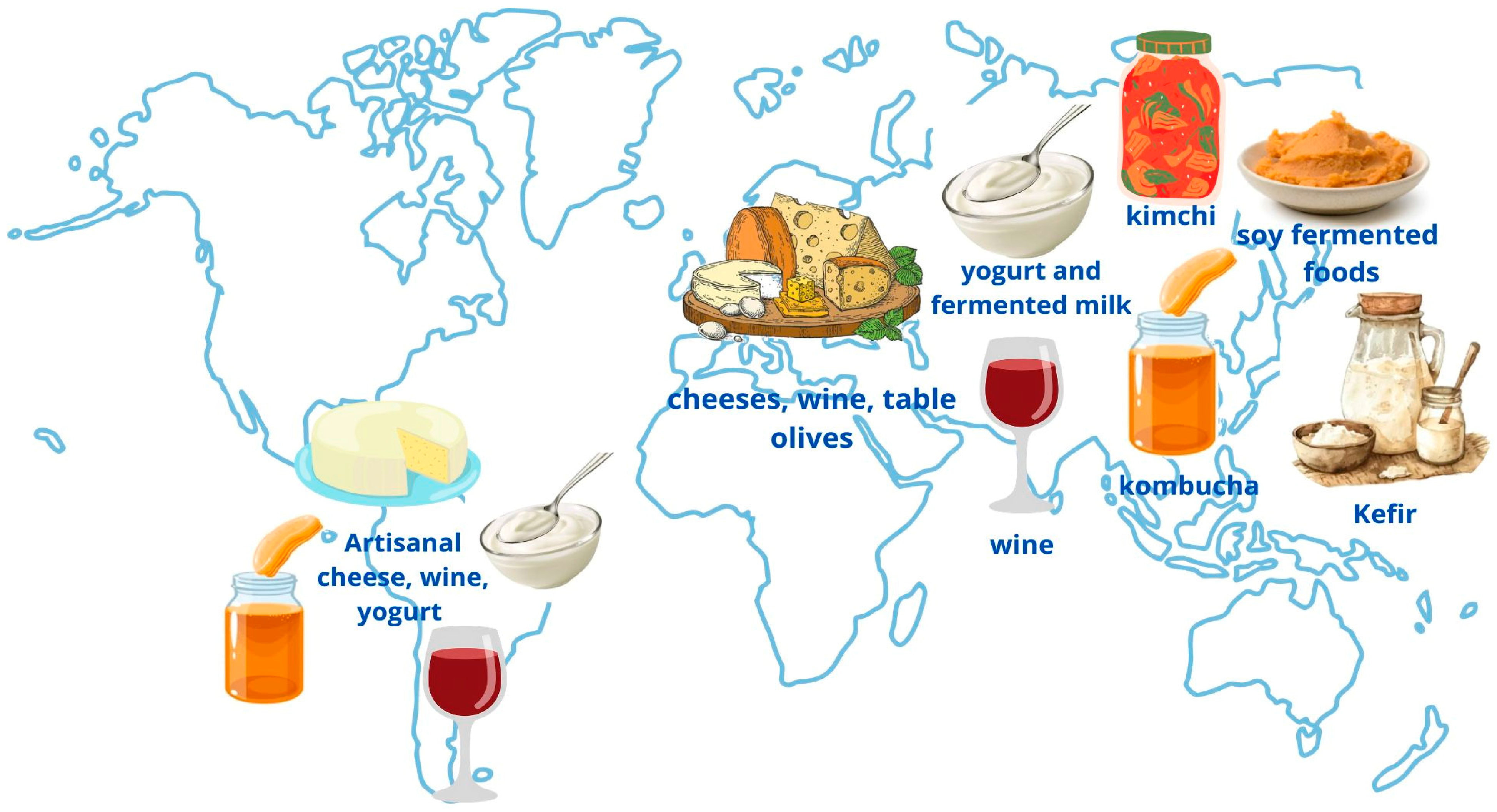
3. Globalization of Fermented Foods and the Challenge of Preserving Quality, Identity, and Microbial Biodiversity
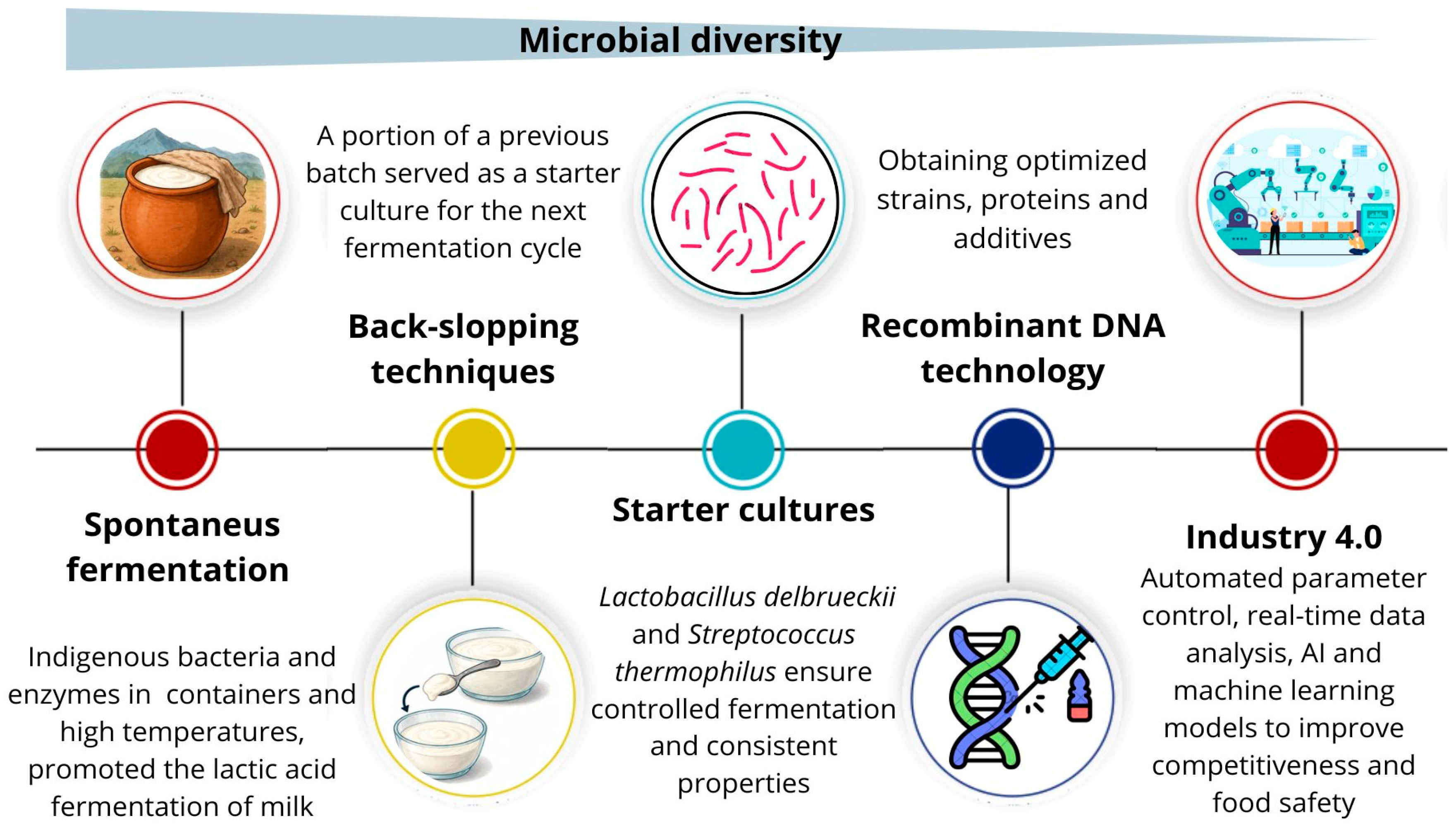
4. Yogurt and Cheese as a Case Study: Past and Present of Two Ancestral Fermented Foods
4.1. The Case of Yogurt

4.2. About Cheese
5. Traditional and Emerging Fermented Foods: Associated Microorganisms, Bioactive Metabolites, and Functional Properties
5.1. Cocoa Bean Fermentation
5.2. Fermented Stevia
5.3. Fermented Juices
5.4. Microalgal Fermentation

| Fermented Food | Main Microorganisms Involved | Key Metabolites Produced | Key Advantages | References |
|---|---|---|---|---|
| Yogurt | Streptococcus thermophilus and Lactobacillus delbrueckii subsp. Bulgaricus. | Organic acids, bioactive peptides, fatty acids, bacteriocins | Inhibits spoilage and pathogenic bacteria. Enhances texture, flavor, and aroma. Improves vitamin, mineral, and amino acid bioavailability. | [36,37,38] |
| Cheese | (i) Starter cultures, mainly LAB (Enterococcus, Lactococcus, former genus Lactobacillus, Leuconostoc); (ii) secondary adjunct cultures: specific bacteria, yeasts (Debaryomyces hansenii, Kluyveromyces lactis, and Yarrowia lipolytica, and molds); (iii) adventitious microbiota. | Organics acids, free fatty acids, ketones, alcohols, esters, aldehydes | (i) Initiates rapid fermentation and curd acidification; (ii) promotes flavor development and unique textures; (iii) optimizes ripening and sensory profiles. | [71,72,73,74,75,76] |
| Plant-based cheeses | Bacillus strains, Lactococcus, Bacillus, Leuconostoc | Bioactive peptides glutamate levels | Improved the quality and flavor profile and extended shelf life. | [80,81,82] |
| Chocolate | Yeasts (Saccharomyces and Pichia), LAB, (Limosilactobacillus fermentum, Lactiplantibacillus plantarum, Lactobacillus cacaonum, Fructobacillus pseudoficulneus, Leuconostoc and Streptococcus spp.); acetic acid bacteria (Acetobacter). | Ethanol, lactic acid, and acetic acid | Influenced sensory and chemical properties, and flavor development. | [87,88,89] |
| Fermented stevia | Lactiplantibacillus plantarum and Lacticaseibacillus pentosus, Pediococcus pentosaceus, and Streptomyces. | Steviol glycosides, phenolic compounds, bioactive metabolites (terpenoids) | Improvement in health and sensory attributes. Modulation of gut microbiota. | [90,91,92] |
| Fermented juices | LAB strains. | Total flavonoids and polysaccharides, volatile aroma, polyphenols, carotenoids and amino acids | Improved the functional, antioxidant activity, enhanced the inhibition of diabetes-related enzymes. | [100,101,102] |
| Fermented microalgal | LAB strains. | Bacteriocins, peptides, amino acids and lactic acid | Upgrades nutritional and functional values. Improves digestibility and bioaccessibility. Elevates overall sensory properties. | [103,104,105,106,107,108] |
6. Functional Attributes of Fermented Foods: From Microbial Metabolism to Mechanistic Evidence
6.1. Enzymatic Transformation of Raw Substrates
6.1.1. Increased Digestibility of Complex Macromolecules and Elimination of Antinutritional Factors
6.1.2. Enhancement of Concentration and Bioaccessibility of Antioxidant Compounds
6.2. Biosynthesis of Bioactive Metabolites
6.2.1. Vitamins
6.2.2. Exopolysaccharides
6.2.3. Gamma-Aminobutyric Acid
6.2.4. Short-Chain Fatty Acids
6.3. Modulation of the Gut Microbiota
6.4. Fermented Foods and Metabolic Health
7. Fermented Foods as Vehicles of Biotics
7.1. Probiotic Fermented Food
7.2. Prebiotics in Fermented Foods
7.3. Postbiotics in Fermented Foods
8. Safety and Regulatory Considerations in Fermented Foods
8.1. Selection of Safe Strains
8.2. Contamination Risks in Fermented Foods
8.3. Authentication and Traceability in Fermented Products
8.4. Regulatory Concerns
9. Precision Fermentation
AI-Driven Culture Optimization and Fermented Foods
10. Conclusions
Author Contributions
Funding
Institutional Review Board Statement
Informed Consent Statement
Data Availability Statement
Conflicts of Interest
References
- Bustos, A.; Gerez, C. Precision biomanufacturing with lactic acid bacteria: From ancestral fermentations to technological innovation and future prospects for next-generation functional foods. Fermentation 2026, 12, 33. [Google Scholar] [CrossRef]
- Padhi, S.; Sarkar, P.; Sahoo, D.; Rai, A. Potential of fermented foods and their metabolites in improving gut microbiota function and lowering gastrointestinal inflammation. J. Sci. Food Agric. 2024, 105, 4058–4069. [Google Scholar] [CrossRef]
- Singh, A.; Kumar, S. Exploring the functionality of microbes in fermented foods: Technological advancements and future directions. Fermentation 2025, 11, 300. [Google Scholar] [CrossRef]
- Marco, M.; Sanders, M.; Gänzle, M.; Arrieta, M.; Cotter, P.; De Vuyst, L.; Hill, C.; Holzapfel, W.; Lebeer, S.; Merenstein, D.; et al. The International Scientific Association for Probiotics and Prebiotics (ISAPP) consensus statement on fermented foods. Nat. Rev. Gastroenterol. Hepatol. 2021, 18, 196–208. [Google Scholar] [CrossRef]
- Anagnostopoulos, D.; Tsaltas, D. Current status, recent advances, and main challenges on table olive fermentation: The present meets the future. Front. Microbiol. 2022, 13, 797295. [Google Scholar] [CrossRef] [PubMed]
- Surya, R.; Nugroho, D. Kimchi throughout millennia: A narrative review on the early and modern history of kimchi. J. Ethn. Foods 2023, 10, 5. [Google Scholar] [CrossRef]
- Makino, S.; Sato, A.; Goto, A.; Nakamura, M.; Ogawa, M.; Chiba, Y.; Hemmi, J.; Kano, H.; Takeda, K.; Okumura, K.; et al. Enhanced natural killer cell activation by exopolysaccharides derived from yogurt fermented with Lactobacillus delbrueckii ssp. bulgaricus OLL1073R-1. J. Dairy Sci. 2016, 99, 915–923. [Google Scholar] [CrossRef] [PubMed]
- Wolever, T. Yogurt is a low-glycemic index food. J. Nutr. 2017, 147, 1462–1467. [Google Scholar] [CrossRef] [PubMed]
- Sarıtas, S.; Mondragon Portocarrero, A.d.C.; Miranda, J.M.; Witkowska, A.M.; Karav, S. Functional yogurt: Types and health benefits. Appl. Sci. 2024, 14, 11798. [Google Scholar] [CrossRef]
- Öneş, E.; Zavotçu, M.; Nisan, N.; Baş, M.; Sağlam, D. Effects of kefir consumption on gut microbiota and athletic performance in professional female soccer players: A randomized controlled trial. Nutrients 2025, 17, 512. [Google Scholar] [CrossRef]
- Cataldo, P.; Villena, J.; Elean, M.; de Giori, G.S.; Saavedra, L.; Hebert, E. Immunomodulatory properties of a γ-aminobutyric acid-enriched strawberry juice produced by Levilactobacillus brevis CRL 2013. Front. Microbiol. 2020, 11, 610016. [Google Scholar] [CrossRef]
- Nagarajan, M.; Rajasekaran, B.; Venkatachalam, K. Microbial metabolites in fermented food products and their potential benefits. Int. Food Res. J. 2022, 29, 466–486. [Google Scholar] [CrossRef]
- Bintsis, T.; Papademas, P. The evolution of fermented milks, from artisanal to industrial products: A critical review. Fermentation 2022, 8, 679. [Google Scholar] [CrossRef]
- Bibra, M.; Navanietha Krishnaraj, R.; Sani, R.K. Fermentation strategies in the food and beverage industry. In Biomolecular Engineering Solutions for Renewable Specialty Chemicals: Microorganisms, Products, and Processes; Navanietha Krishnaraj, R., Sani, R.K., Eds.; John Wiley & Sons: Hoboken, NJ, USA, 2022; Chapter 5. [Google Scholar] [CrossRef]
- Mannaa, M.; Han, G.; Seo, Y.-S.; Park, I. Evolution of food fermentation processes and the use of multi-omics in deciphering the roles of the microbiota. Foods 2021, 10, 2861. [Google Scholar] [CrossRef]
- Marco, M.; Heeney, D.; Binda, S.; Cifelli, C.; Cotter, P.; Foligné, B.; Gänzle, M.; Kort, R.; Pasin, G.; Pihlanto, A.; et al. Health benefits of fermented foods: Microbiota and beyond. Curr. Opin. Biotechnol. 2017, 44, 94–102. [Google Scholar] [CrossRef]
- Bustos, A.; Font, G.; Taranto, M. Fruit and vegetable snacks as carriers of probiotics and bioactive compounds: A review. Int. J. Food Sci. Technol. 2023, 58, 3211–3223. [Google Scholar] [CrossRef]
- Voidarou, C.; Antoniadou, M.; Rozos, G.; Tzora, A.; Skoufos, I.; Varzakas, T.; Lagiou, A.; Bezirtzoglou, E. Fermentative foods: Microbiology, biochemistry, potential human health benefits and public health issues. Foods 2021, 10, 69. [Google Scholar] [CrossRef]
- Khongthaw, B.; Dladla, M.; Chauhan, P.K.; Dulta, K.; Kumar, V.; Oneyaka, H.; Ghosh, S. Fermented fish products: A comprehensive overview of traditional processing techniques, varieties, and their health benefits. Compr. Rev. Food Sci. Food Saf. 2026, 25, e70457. [Google Scholar] [CrossRef]
- Yang, J.; Li, Z.; Lin, X.; Zhang, S.; Ji, C. Impact of enzyme–microbe combined fermentation on the safety and quality of soy paste fermented with grass carp by-products. Foods 2025, 14, 106. [Google Scholar] [CrossRef]
- Leeuwendaal, N.K.; Stanton, C.; O’Toole, P.W.; Beresford, T.P. Fermented foods, health and the gut microbiome. Nutrients 2022, 14, 1527. [Google Scholar] [CrossRef]
- Jung, J.; Lee, S.; Jeon, C. Kimchi microflora: History, current status, and perspectives for industrial kimchi production. Appl. Microbiol. Biotechnol. 2014, 98, 2385–2393. [Google Scholar] [CrossRef] [PubMed]
- Qiao, Y.; Zhang, K.; Zhang, Z.; Zhang, C.; Sun, Y.; Feng, Z. Fermented soybean foods: A review of their functional components, mechanism of action and factors influencing their health benefits. Food Res. Int. 2022, 158, 111575. [Google Scholar] [CrossRef] [PubMed]
- da Anunciacao, T.A.; Guedes, J.D.S.; Tavares, P.P.L.G.; de Melo Borges, F.E.; Ferreira, D.D.; Costa, J.A.V.; Umsza-Guez, M.A.; Magalhães-Guedes, K.T. Biological significance of probiotic microorganisms from kefir and kombucha: A review. Microorganisms 2024, 12, 1127. [Google Scholar] [CrossRef] [PubMed]
- Moccia, T.; Antuña, C.; Trochine, A.; Alvarez, L. Microbial and chemical stability of commercial kombucha after thermal processing. Food Biosci. 2026, 78, 108530. [Google Scholar] [CrossRef]
- Johansen, E. Use of natural selection and evolution to develop new starter cultures for fermented foods. Annu. Rev. Food Sci. Technol. 2018, 9, 411–428. [Google Scholar] [CrossRef]
- Sirakova, S. Forgotten stories of yogurt: Cultivating multispecies wisdom. J. Ethnobiol. 2023, 43, 250–261. [Google Scholar] [CrossRef]
- Huttenhower, C.; Gevers, D.; Knight, R. Structure, function and diversity of the healthy human microbiome. Nature 2012, 486, 207–214. [Google Scholar] [CrossRef]
- Sonnenburg, E.; Sonnenburg, J. The ancestral and industrialized gut microbiota and implications for human health. Nat. Rev. Microbiol. 2019, 17, 383–390. [Google Scholar] [CrossRef]
- Lederberg, J.; McCray, A. Ome sweet omics—A genealogical treasury of words. Scientist 2001, 15, 8. [Google Scholar]
- Bello, M.G.D.; Knight, R.; Gilbert, J.A.; Blaser, M. Preserving microbial diversity. Science 2018, 362, 33–34. [Google Scholar] [CrossRef]
- Wei, F.; Yano, H. Development of “new” bread and cheese. Processes 2020, 8, 1541. [Google Scholar] [CrossRef]
- Sinotte, V.M.; Ramos-Viana, V.; Vásquez, D.P.; Sirakova, S.M.; Valerón, N.R.; Cuesta-Maté, A.; Parkins, S.K.T.; Giecko, J.; Velasco, E.M.; Zilber, D.; et al. Making yogurt with the ant holobiont uncovers bacteria, acids, and enzymes for food fermentation. iScience 2025, 28, 113595. [Google Scholar] [CrossRef] [PubMed]
- Vigne, J.; Helmer, D. Was milk a “secondary product” in the Old World Neolithisation process? Its role in the domestication of cattle, sheep and goats. Anthropozoologica 2007, 42, 9–40. [Google Scholar]
- Abarquero, D.; Renes, E.; Combarros-Fuertes, P.; Fresno, J.; Tornadijo, M. Evaluation of technological properties and selection of wild lactic acid bacteria for starter culture development. LWT 2022, 171, 114121. [Google Scholar] [CrossRef]
- Ardö, Y. Enzymes in cheese ripening. In Agents of Change: Enzymes in Milk and Dairy Products; Kelly, A.L., Larsen, L.B., Eds.; Springer: Cham, Switzerland, 2021; pp. 363–395. [Google Scholar] [CrossRef]
- Rampanti, G.; Cantarini, A.; Cardinali, F.; Milanovic, V.; Garofalo, C.; Aquilanti, L.; Osimani, A. Technological and enzymatic characterization of autochthonous lactic acid bacteria isolated from Viili natural starters. Foods 2024, 13, 1115. [Google Scholar] [CrossRef]
- Verma, D.; Thakur, M.; Singh, S.; Tripathy, S.; Gupta, A.; Baranwal, D.; Patel, A.; Shah, N.; Utama, G.; Niamah, A.; et al. Bacteriocins as antimicrobial and preservative agents in food: Biosynthesis, separation and application. Food Biosci. 2022, 46, 101594. [Google Scholar] [CrossRef]
- Ayyash, M.; Abdalla, A.; Alkalbani, N.; Baig, M.; Turner, M.; Liu, S.; Shah, N. Invited review: Characterization of new probiotics from dairy and nondairy products—Insights into acid tolerance, bile metabolism and tolerance, and adhesion capability. J. Dairy Sci. 2021, 104, 8363–8379. [Google Scholar] [CrossRef]
- Punia, S.; Suri, S.; Trif, M.; Ozogul, F. Organic acids production from lactic acid bacteria: A preservation approach. Food Biosci. 2022, 46, 101615. [Google Scholar] [CrossRef]
- O’Callaghan, A.; van Sinderen, D. Bifidobacteria and their role as members of the human gut microbiota. Front. Microbiol. 2016, 7, 925. [Google Scholar] [CrossRef]
- Tamime, A.; Robinson, R. Tamime and Robinson’s Yoghurt: Science and Technology; Elsevier: Cambridge, UK, 2007. [Google Scholar] [CrossRef]
- Gardoul, M.; Mbarki, A.; Ajdig, M.; Rached, B.; Chouati, T.; Belouad, E.; Chauiyakh, O.; Chebbaki, R.; Ouchari, L.; Melloul, M.; et al. Unveiling the technological and biopreservative potential of wild lactic acid bacteria from Moroccan traditional dairy products: A pathway to sustainable food fermentation. Braz. J. Microbiol. 2026, 57, 24. [Google Scholar] [CrossRef]
- Bankole, A.O.; Irondi, E.A.; Awoyale, W.; Ajani, E.O. Application of natural and modified additives in yogurt formulation: Types, production, and rheological and nutraceutical benefits. Front. Nutr. 2023, 10, 1257439. [Google Scholar] [CrossRef] [PubMed]
- Velikova, P.; Petrov, K.; Lozanov, V.; Tsvetanova, F.; Stoyanov, A.; Wu, Z.; Liu, Z.; Petrova, P. Microbial diversity and health-promoting properties of the traditional Bulgarian yogurt. Biotechnol. Biotechnol. Equip. 2018, 32, 1205–1217. [Google Scholar] [CrossRef]
- Tragust, S.; Herrmann, C.; Häfner, J.; Braasch, R.; Tilgen, C.; Hoock, M.; Milidakis, M.A.; Gross, R.; Feldhaar, H. Formicine ants swallow their highly acidic poison for gut microbial selection and control. eLife 2020, 9, e60287. [Google Scholar] [CrossRef]
- Zheng, D.; Liwinski, T.; Elinav, E. Interaction between microbiota and immunity in health and disease. Cell Res. 2020, 30, 492–506. [Google Scholar] [CrossRef]
- Tayyebymoghadam, S.; Ehsani, M. Comparison of the effect of extracted inulin from native chicory root with commercial inulin on the viability of probiotics and physicochemical, rheological and sensory properties of synbiotic yogurt. Food Sci. Technol. 2020, 17, 91–109. [Google Scholar] [CrossRef]
- Pourrajab, B.; Naderi, N.; Janani, L.; Hajahmadi, M.; Mofid, V.; Dehnad, A.; Sohouli, M.H.; Hosseini, S.; Shidfar, F. The impact of probiotic yogurt versus ordinary yogurt on serum sTWEAK, sCD163, ADMA, LCAT and BUN in patients with chronic heart failure: A randomized, triple-blind, controlled trial. J. Sci. Food Agric. 2022, 102, 6024–6035. [Google Scholar] [CrossRef]
- Essawy, M.A.; Badr, E.A.; Abohadida, R.M. Effect of mothers’ application of yogurt probiotic bacteria on relieving their young children’s acute gastroenteritis. Egypt. J. Health Care 2024, 15, 1153–1169. [Google Scholar] [CrossRef]
- Silva, F.; Queiroga, R.; de Souza, E.; Voss, G.; Pintado, M.; Da Silva, M. Ingredients from integral valorization of Isabel grape to formulate goat yogurt with stimulatory effects on probiotics and beneficial impacts on human colonic microbiota in vitro. Food Sci. Hum. Wellness 2023, 12, 1331–1342. [Google Scholar] [CrossRef]
- Chai, W.; Maskarinec, G.; Lim, U.; Boushey, C.; Wilkens, L.; Setiawan, V.; Le Marchand, L.; Randolph, T.; Jenkins, I.; Lampe, J.; et al. Association of habitual intake of probiotic supplements and yogurt with characteristics of the gut microbiome in the multiethnic cohort adiposity phenotype study. Gut Microbiome 2023, 4, e14. [Google Scholar] [CrossRef]
- Rashidi, S.; Ariaii, P.; Esmaeli, M.; Bagheri, R. Evaluating the properties of the hydrolyzed clover sprout protein obtained by enzymatic hydrolysis and its effect in free and microencapsulated form on the properties of probiotic yogurt. J. Food Meas. Charact. 2024, 18, 2700–2714. [Google Scholar] [CrossRef]
- Diaz-Bustamante, M.L.; Keppler, J.K.; Reyes, L.H.; Solano, O.A.A. Trends and prospects in dairy protein replacement in yogurt and cheese. Heliyon 2023, 9, e16974. [Google Scholar] [CrossRef] [PubMed]
- McClements, D.; Grossmann, L. The science of plant-based foods: Constructing next-generation meat, fish, milk, and egg analogs. Compr. Rev. Food Sci. Food Saf. 2021, 20, 4049–4100. [Google Scholar] [CrossRef]
- Paul, A.; Kumar, S.; Kumar, V.; Sharma, R. Milk analog: Plant-based alternatives to conventional milk, production, potential and health concerns. Crit. Rev. Food Sci. Nutr. 2020, 60, 3005–3023. [Google Scholar] [CrossRef] [PubMed]
- Jeske, S.; Zannini, E.; Arendt, E. Past, present and future: The strength of plant-based dairy substitutes based on gluten-free raw materials. Food Res. Int. 2018, 110, 42–51. [Google Scholar] [CrossRef]
- Ritala, A.; Häkkinen, S.; Toivari, M.; Wiebe, M. Single cell protein—State-of-the-art, industrial landscape and patents 2001–2016. Front. Microbiol. 2017, 8, 2009. [Google Scholar] [CrossRef] [PubMed]
- Saha, D.; Bhattacharya, S. Hydrocolloids as thickening and gelling agents in food: A critical review. J. Food Sci. Technol. 2010, 47, 587–597. [Google Scholar] [CrossRef]
- Li, R.; Xu, M.; Xiao, H.; Hong, W.; Yao, X.; Pan, L.; Han, Y. Natural stabilizer levan enhances the casein network, rheological properties and sensory quality of yogurt. Int. J. Biol. Macromol. 2025, 332, 148704. [Google Scholar] [CrossRef]
- Kalsi, G.; Hazarika, U.; Baruah, L.D.; Bordoloi, P.L.; Gogoi, M. Comprehensive review of carrageenan’s multifaceted role in health and food systems. Discov. Food 2025, 5, 115. [Google Scholar] [CrossRef]
- Hussein, H.; Awad, S.; El-Sayed, I.; Ibrahim, A. Impact of chickpea as prebiotic, antioxidant and thickener agent of stirred bio-yoghurt. Ann. Agric. Sci. 2020, 65, 49–58. [Google Scholar] [CrossRef]
- Huang, K.; Liu, Y.; Zhang, Y.; Cao, H.; Luo, D.; Yi, C.; Guan, X. Formulation of plant-based yoghurt from soybean and quinoa and evaluation of physicochemical, rheological, sensory and functional properties. Food Biosci. 2022, 49, 101831. [Google Scholar] [CrossRef]
- Akyazi, T.; Goti, A.; Oyarbide, A.; Alberdi, E.; Bayon, F. A guide for the food industry to meet the future skills requirements emerging with Industry 4.0. Foods 2020, 9, 492. [Google Scholar] [CrossRef] [PubMed]
- Zhou, J.; Gan, L.; Du, L.; Liu, X.; Song, P.; Tang, X.; Wang, K.; Yang, B.; Chen, T.; He, Y.; et al. Intelligent monitoring technologies for food fermentation processes: Transformation from traditional experience to multimodal approaches and challenges. Food Sci. Biotechnol. 2026. [Google Scholar] [CrossRef]
- Zhou, Z.; Xie, J.; Huang, M.; Ouyang, T.; Liu, F.; Chen, X. (Eds.) Towards federated inference: An online model ensemble framework for cooperative edge AI. In IEEE INFOCOM 2025—IEEE Conference on Computer Communications; IEEE: New York, NY, USA, 2025. [Google Scholar]
- Yeboah, B.N.; Boakye, O.; Teye, E.K. Comparative analysis on plant-based formulated tiger nut (Cyperus esculentus) yoghurts (prebiotic, probiotic and symbiotic) fortified with fresh moringa leaf tea as functional foods. BMC Food Sci. Risk 2026, 13, 2. [Google Scholar] [CrossRef]
- Pareek, A.; Pant, M.; Gupta, M.M.; Kashania, P.; Ratan, Y.; Jain, V.; Pareek, A.; Chuturgoon, A.A. Moringa oleifera: An updated comprehensive review of its pharmacological activities, ethnomedicinal, phytopharmaceutical formulation, clinical, phytochemical, and toxicological aspects. Int. J. Mol. Sci. 2023, 24, 2098. [Google Scholar] [CrossRef]
- El-Sherbiny, G.M.; Alluqmani, A.J.; Elsehemy, I.A.; Kalaba, M.H. Antibacterial, antioxidant, cytotoxicity, and phytochemical screening of Moringa oleifera leaves. Sci. Rep. 2024, 14, 30485. [Google Scholar] [CrossRef] [PubMed]
- Bamishaiye, E.; Bamishaiye, O. Tiger nut: As a plant, its derivatives and benefits. Afr. J. Food Agric. Nutr. Dev. 2011, 11, 5157–5170. [Google Scholar] [CrossRef]
- Beresford, T.; Fitzsimons, N.; Brennan, N.; Cogan, T. Recent advances in cheese microbiology. Int. Dairy J. 2001, 11, 259–274. [Google Scholar] [CrossRef]
- Ruvalcaba-Gómez, J.M.; Ruiz-Espinosa, H.; Méndez-Robles, M.D.; Arteaga-Garibay, R.I.; Anaya-Esparza, L.M.; Villagrán, Z.; Delgado-Macuil, R.J. Use of autochthonous lactic acid bacteria as starter culture of pasteurized milk Adobera cheese. Fermentation 2022, 8, 234. [Google Scholar] [CrossRef]
- Coelho, M.; Malcata, F.; Silva, C. Lactic acid bacteria in raw-milk cheeses: From starter cultures to probiotic functions. Foods 2022, 11, 2276. [Google Scholar] [CrossRef]
- López-DíaZ, T.; Alonso, C.; Román, C.; García-López, M.; Moreno, B. Lactic acid bacteria isolated from a hand-made blue cheese. Food Microbiol. 2000, 17, 23–32. [Google Scholar] [CrossRef]
- Centeno, J.; Carballo, J. Current advances in cheese microbiology. Foods 2023, 12, 2577. [Google Scholar] [CrossRef]
- Lucey, J.A.; Johnson, M.E.; Horne, D.S. Invited Review: Perspectives on the basis of the rheology and texture properties of cheese. J. Dairy Sci. 2003, 86, 2725–2743. [Google Scholar] [CrossRef]
- Law, B. Controlled and accelerated cheese ripening: The research base for new technology. Int. Dairy J. 2001, 11, 383–398. [Google Scholar] [CrossRef]
- Bertuzzi, A.; Walsh, A.; Sheehan, J.; Cotter, P.; Crispie, F.; McSweeney, P.; Kilcawley, K.; Rea, M. Omics-based insights into flavor development and microbial succession within surface-ripened cheese. mSystems 2018, 3, e00211-17. [Google Scholar] [CrossRef]
- Bachmann, H. Cheese analogues: A review. Int. Dairy J. 2001, 11, 505–515. [Google Scholar] [CrossRef]
- Ahmad, N.; Li, L.; Yang, X.; Ning, Z.; Randhawa, M. Improvements in the flavour of soy cheese. Food Technol. Biotechnol. 2008, 46, 252–261. [Google Scholar]
- Li, Q.; Xia, Y.; Zhou, L.; Xie, J. Evaluation of the rheological, textural, microstructural and sensory properties of soy cheese spreads. Food Bioprod. Process. 2013, 91, 429–439. [Google Scholar] [CrossRef]
- Xie, J.; Veigel, M.; Schmidt, H.; Gänzle, M. Selection of Bacillus spp. as fermentation cultures for production of plant-based cheese analogues. Int. J. Food Microbiol. 2025, 435, 111178. [Google Scholar] [CrossRef]
- Pereira, G.; Miguel, M.; Ramos, C.; Schwan, R. Microbiological and physicochemical characterization of small-scale cocoa fermentations and screening of yeast and bacterial strains to develop a defined starter culture. Appl. Environ. Microbiol. 2012, 78, 5395–5405. [Google Scholar] [CrossRef] [PubMed]
- Schwan, R.; Wheals, A. The microbiology of cocoa fermentation and its role in chocolate quality. Crit. Rev. Food Sci. Nutr. 2004, 44, 205–221. [Google Scholar] [CrossRef] [PubMed]
- Viesser, J.A.; Pereira, G.V.d.M.; Neto, D.P.d.C.; Vandenberghe, L.P.d.S.; Azevedo, V.; Brenig, B.; Rogez, H.; Góes-Neto, A.; Soccol, C.R. Exploring the contribution of fructophilic lactic acid bacteria to cocoa bean fermentation: Isolation, selection and evaluation. Food Res. Int. 2020, 136, 109478. [Google Scholar] [CrossRef]
- Rodriguez-Campos, J.; Escalona-Buendía, H.; Contreras-Ramos, S.; Orozco-Avila, I.; Jaramillo-Flores, E.; Lugo-Cervantes, E. Effect of fermentation time and drying temperature on volatile compounds in cocoa. Food Chem. 2012, 132, 277–288. [Google Scholar] [CrossRef] [PubMed]
- López, M.; Criollo, J. Cambios fisicoquímicos en la fermentación y secado de materiales de cacao en Colombia. Cienc. Desarro. 2022, 13, 25–34. [Google Scholar] [CrossRef]
- Verce, M.; Schoonejans, J.; Aguirre, C.H.; Molina-Bravo, R.; De Vuyst, L.; Weckx, S. A combined metagenomics and metatranscriptomics approach to unravel Costa Rican cocoa box fermentation processes reveals yet unreported microbial species and functionalities. Front. Microbiol. 2021, 12, 641185. [Google Scholar] [CrossRef]
- López-Puentes, D.; Ojeda-Pérez, Z.Z.; Arias-Moreno, D.M. Metagenomic insights into the microbial composition and functional potential of cocoa (Theobroma cacao L.) during fermentation and drying in Colombia. Microb. Ecol. 2026, 89, 79. [Google Scholar] [CrossRef] [PubMed]
- Marcinek, K.; Krejpcio, Z. Stevia rebaudiana Bertoni—Chemical composition and functional properties. Acta Sci. Pol. Technol. Aliment. 2015, 14, 145–152. [Google Scholar] [CrossRef] [PubMed]
- Sharma, S.; Walia, S.; Singh, B.; Kumar, R. Comprehensive review on agro technologies of low-calorie natural sweetener stevia (Stevia rebaudiana Bertoni): A boon to diabetic patients. J. Sci. Food Agric. 2016, 96, 1867–1879. [Google Scholar] [CrossRef]
- Wang, Y.; Xu, P.; Wang, W.; Jia, X.; Zhu, L.; Yin, H. Oligosaccharides increased both leaf biomass and steviol glycosides content of Stevia rebaudiana. Plant Physiol. Biochem. 2023, 202, 107937. [Google Scholar] [CrossRef]
- Gülhan, M. A new substrate and nitrogen source for traditional kombucha beverage: Stevia rebaudiana leaves. Appl. Biochem. Biotechnol. 2023, 195, 4096–4115. [Google Scholar] [CrossRef]
- Ma, Q.; Dawa, Y.; Zhang, J. Revolutionizing sweetness: The multifaceted health benefits of fermented stevia. Appl. Microbiol. Biotechnol. 2026, 110, 118. [Google Scholar] [CrossRef]
- Basharat, S.; Zhai, L.; Jiang, F.; Asjad, T.; Khan, A.; Liao, X. Screening and comparative genomics of probiotic lactic acid bacteria from bee bread of Apis cerana: Influence of stevia and stevioside on bacterial cell growth and the potential of fermented stevia as an antidiabetic, antioxidant, and antifungal agent. Microorganisms 2025, 13, 216. [Google Scholar] [CrossRef]
- Kamauchi, H.; Kon, T.; Kinoshita, K.; Takatori, K.; Takahashi, K.; Koyama, K. New diterpenoids isolated from Stevia rebaudiana fermented by Saccharomyces cerevisiae. Tetrahedron Lett. 2015, 56, 4377–4382. [Google Scholar] [CrossRef]
- Sharma, M.; Manhas, R. Purification and characterization of actinomycins from Streptomyces strain M7 active against methicillin-resistant Staphylococcus aureus and vancomycin-resistant Enterococcus. BMC Microbiol. 2019, 19, 44. [Google Scholar] [CrossRef]
- Kim, D.; Jeong, C.H.; Jung, H.S.; Han, S.G. Stevia extract enhances the fermentation and functional properties of fermented milk in human colon epithelial cells. Food Biosci. 2023, 53, 102747. [Google Scholar] [CrossRef]
- Ma, Q.; Noda, M.; Danshiitsoodol, N.; Sugiyama, M. Fermented stevia improves alcohol poisoning symptoms associated with changes in mouse gut microbiota. Nutrients 2023, 15, 3708. [Google Scholar] [CrossRef]
- Frediansyah, A.; Romadhoni, F.; Suryani; Nurhayati, R.; Wibowo, A. Fermentation of Jamaican cherries juice using Lactobacillus plantarum elevates antioxidant potential and inhibitory activity against type II diabetes-related enzymes. Molecules 2021, 26, 2868. [Google Scholar] [CrossRef]
- Barrón-Álvarez, N.; Prado-Barragán, L.A.; Fortis-Barrera, M.d.L.Á.; Alarcon-Aguilar, F.J. Fermentation of the Cucurbita ficifolia fruit juice: Its antioxidant activity and effects on the glycemia. Beverages 2022, 8, 55. [Google Scholar] [CrossRef]
- Xu, J.; Qi, Y.; Wei, X.; Ding, W.; Wu, H.; Liu, H.; Fang, H. Lactobacillus paracasei fermentation enhances the aroma profile and antidiabetic efficacy of goji berry juice. npj Sci. Food 2026, 10, 35. [Google Scholar] [CrossRef]
- Pérez-Alva, A.; MacIntosh, A.; Baigts-Allende, D.; García-Torres, R.; Ramírez-Rodrigues, M. Fermentation of algae to enhance their bioactive activity: A review. Algal Res. 2022, 64, 102684. [Google Scholar] [CrossRef]
- Aguirre-Garcia, Y.L.; Nery-Flores, S.D.; Campos-Muzquiz, L.G.; Flores-Gallegos, A.C.; Palomo-Ligas, L.; Ascacio-Valdés, J.A.; Sepúlveda-Torres, L.; Rodríguez-Herrera, R. Lactic acid fermentation in the food industry and biopreservation of food. Fermentation 2024, 10, 168. [Google Scholar] [CrossRef]
- Garofalo, C.; Norici, A.; Mollo, L.; Osimani, A.; Aquilanti, L. Fermentation of microalgal biomass for innovative food production. Microorganisms 2022, 10, 2069. [Google Scholar] [CrossRef]
- Wang, C.; Onyeaka, H.; Miri, T.; Soltani, F. Chlorella vulgaris as a food substitute: Applications and benefits in the food industry. J. Food Sci. 2024, 89, 8231–8247. [Google Scholar] [CrossRef]
- Spain, O.; Funk, C. Detailed characterization of the cell wall structure and composition of Nordic green microalgae. J. Agric. Food Chem. 2022, 70, 9711–9721. [Google Scholar] [CrossRef]
- Bilgin, H.; Aboobacker, S.; Šipailienė, A.; Kitrytė-Syrpa, V.; Syrpas, M. Enhancing bioactivity of Chlorella vulgaris through enzymatic pretreatment and lactic acid fermentation. Bioresour. Bioprocess. 2026, 13, 50. [Google Scholar] [CrossRef]
- Fernández, M.; Panahi, S.; Daniel, N.; Tremblay, A.; Marette, A. Yogurt and cardiometabolic diseases: A critical review of potential mechanisms. Adv. Nutr. 2017, 8, 812–829. [Google Scholar] [CrossRef]
- Savaiano, D.; Hutkins, R. Yogurt, cultured fermented milk, and health: A systematic review. Nutr. Rev. 2021, 79, 599–614. [Google Scholar] [CrossRef]
- Singhania, R.R.; Adsul, M.; Pandey, A.; Patel, A.K. Cellulases. In Current Developments in Biotechnology and Bioengineering; Pandey, A., Negi, S., Soccol, C.R., Eds.; Elsevier: Amsterdam, The Netherlands, 2017; pp. 73–101. [Google Scholar]
- Li, J.; Peng, C.; Mao, A.; Zhong, M.; Hu, Z. An overview of microbial enzymatic approaches for pectin degradation. Int. J. Biol. Macromol. 2024, 254, 127804. [Google Scholar] [CrossRef]
- Mrudula, S.J.A.B. A review on microbial alkaline proteases: Optimization of submerged fermentative production, properties, and industrial applications. Appl. Biochem. Microbiol. 2024, 60, 383–401. [Google Scholar] [CrossRef]
- Carol Paz, J.J.; Bustos, A.Y.; Ledesma, A.E. FTIR spectroscopy, a new approach to evaluating caseinolytic activity of probiotic lactic acid bacteria during goat milk fermentation and storage. Fermentation 2025, 11, 699. [Google Scholar] [CrossRef]
- Sawant, S.S.; Park, H.-Y.; Sim, E.-Y.; Kim, H.-S.; Choi, H.-S. Microbial fermentation in food: Impact on functional properties and nutritional enhancement—A review of recent developments. Fermentation 2025, 11, 15. [Google Scholar] [CrossRef]
- Savaiano, D. Lactose digestion from yogurt: Mechanism and relevance. Am. J. Clin. Nutr. 2014, 99, 1251–1255. [Google Scholar] [CrossRef]
- Ziegler, J.; Steiner, D.; Longin, F.; Würschum, T.; Schweiggert, R.; Carle, R. Wheat and the irritable bowel syndrome—FODMAP levels of modern and ancient species and their retention during bread making. J. Funct. Foods 2016, 25, 257–266. [Google Scholar] [CrossRef]
- Hill, P.; Muir, J.; Gibson, P. Controversies and recent developments of the low-FODMAP diet. Gastroenterol. Hepatol. 2017, 13, 36–45. [Google Scholar]
- Huaman, J.; Mego, M.; Manichanh, C.; Cañellas, N.; Cañueto, D.; Segurola, H.; Jansana, M.; Malagelada, C.; Accarino, A.; Vulevic, J.; et al. Effects of prebiotics versus a diet low in FODMAPs in patients with functional gut disorders. Gastroenterology 2018, 155, 1004–1007. [Google Scholar] [CrossRef]
- Nagarajan, N.; Chavannavar, S.; Umesh, A. Reduction of phenolics, tannins and cyanogenic glycoside contents in fermented beverage of linseed (Linum usitatissimum). Int. J. Food Ferment. Technol. 2018, 8, 185–190. [Google Scholar] [CrossRef]
- Liang, J.; Zhang, M.; Li, X.; Yue, Y.; Wang, X.; Han, M.; Yue, T.; Wang, Z.; Gao, Z. Structure and immunomodulatory activity of Lentinus edodes polysaccharides modified by probiotic fermentation. Food Sci. Hum. Wellness 2024, 13, 421–433. [Google Scholar] [CrossRef]
- Zhang, X.; Miao, Q.; Pan, C.; Yin, J.; Wang, L.; Qu, L.; Yin, Y.; Wei, Y. Research advances in probiotic fermentation of Chinese herbal medicines. iMeta 2023, 2, e93. [Google Scholar] [CrossRef]
- Wang, Z.; Zheng, Y.; Zhou, X.; Wang, X.; Liu, X.; Wang, Q.; Zhao, R.; Gao, M.; Li, Z.; Feng, Y.; et al. Effect of Lactobacillus fermentation on the structural feature, physicochemical property, and bioactivity of plant and fungal polysaccharides: A review. Trends Food Sci. Technol. 2024, 148, 104492. [Google Scholar] [CrossRef]
- Pei, F.; Cao, X.; Wang, X.; Ren, Y.; Ge, J. Structural characteristics and bioactivities of polysaccharides from blue honeysuckle after probiotic fermentation. LWT Food Sci. Technol. 2022, 165, 113764. [Google Scholar] [CrossRef]
- Gao, H.; Wen, J.; Hu, J.; Nie, Q.; Chen, H.; Xiong, T.; Nie, S.; Xie, M. Polysaccharide from fermented Momordica charantia L. with Lactobacillus plantarum NCU116 ameliorates type 2 diabetes in rats. Carbohydr. Polym. 2018, 201, 624–633. [Google Scholar] [CrossRef]
- Cen, Q.; Cui, Y.; Feng, J.; Zhu, L.; Wei, J.; Wang, L.; Chang, C.; Pang, R.; Wang, J.; Zhang, A. Limosilactobacillus reuteri DSM17938 attenuates neuroinflammatory responses after spinal cord injury by modulating tryptophan metabolism. Probiotics Antimicrob. Proteins 2026, 18, 583–601. [Google Scholar] [CrossRef]
- Dinleyici, E.C.; Ozen, M.; Guven, S.; Dalgic, N.; Karbuz, A.; Sutcu, M.; Turel, O.; Oz, F.; Kirli, U.; Durmus, S.Y.; et al. Effect of Limosilactobacillus reuteri DSM17938 to prevent antibiotic-associated diarrhea in children: Prospective multicenter randomized placebo-controlled clinical trial (PEARL study). Eur. J. Pediatr. 2025, 184, 408. [Google Scholar] [CrossRef]
- Di Porzio, A.; Barrella, V.; Gatto, C.; Cigliano, L.; Spagnuolo, M.; Crescenzo, R.; Romano, I.; Mauriello, G.; Iossa, S.; Mazzoli, A. Protective effect of probiotic Limosilactobacillus reuteri DSM17938 against Western diet-induced obesity and associated metabolic alterations. J. Funct. Foods 2023, 109, 105805. [Google Scholar] [CrossRef]
- Liu, J.; Li, Z.; Pu, S.; Huang, X.; Xu, Z.; Yang, X.; Zhang, Y.; Luo, C.; Li, S.; Miao, J.; et al. Limosilactobacillus reuteri fermentation enhances the anti-type 2 diabetic activity of Gastrodia elata polysaccharides. AMB Express 2026, 16, 16. [Google Scholar] [CrossRef] [PubMed]
- Yan, Z.; Liu, Z.; Zhou, C.; Tan, Z. Anti-nutritional factors of plant protein feeds for ruminants and methods for their elimination. Animals 2025, 15, 1107. [Google Scholar] [CrossRef] [PubMed]
- De Montijo-Prieto, S.; Razola-Díaz, M.d.C.; Barbieri, F.; Tabanelli, G.; Gardini, F.; Jiménez-Valera, M.; Ruiz-Bravo, A.; Verardo, V.; Gómez-Caravaca, A.M. Impact of lactic acid bacteria fermentation on phenolic compounds and antioxidant activity of avocado leaf extracts. Antioxidants 2023, 12, 298. [Google Scholar] [CrossRef] [PubMed]
- Li, W.; Ji, J.; Chen, X.; Jiang, M.; Rui, X.; Dong, M. Structural elucidation and antioxidant activities of exopolysaccharides from Lactobacillus helveticus MB2-1. Carbohydr. Polym. 2014, 102, 351–359. [Google Scholar] [CrossRef]
- LeBlanc, J.; Laiño, J.; del Valle, M.; Vannini, V.; van Sinderen, D.; Taranto, M.; de Valdez, G.F.; de Giori, G.; Sesma, F. B-group vitamin production by probiotic lactic acid bacteria—Current knowledge and potential applications. J. Appl. Microbiol. 2011, 111, 1297–1309. [Google Scholar] [CrossRef]
- Lai, Y.; Masatoshi, H.; Ma, Y.; Guo, Y.; Zhang, B. Role of vitamin K in intestinal health. Front. Immunol. 2022, 12, 791565. [Google Scholar] [CrossRef]
- Pompei, A.; Cordisco, L.; Amaretti, A.; Zanoni, S.; Raimondi, S.; Matteuzzi, D.; Rossi, M. Administration of folate-producing bifidobacteria enhances folate status in Wistar rats. J. Nutr. 2007, 137, 2742–2746. [Google Scholar] [CrossRef]
- Molina, V.; Médici, M.; de Valdez, G.F.; Taranto, M.P. Soybean-based functional food with vitamin B12-producing lactic acid bacteria. J. Funct. Foods 2012, 4, 831–836. [Google Scholar] [CrossRef]
- Angelin, J.; Kavitha, M. Exopolysaccharides from probiotic bacteria and their health potential. Int. J. Biol. Macromol. 2020, 162, 853–865. [Google Scholar] [CrossRef]
- Hong, Y.; Lee, H.; Young, B.; Jang, S.; Chung, D.; Kim, H. Lipoteichoic acid isolated from Lactobacillus plantarum down-regulates UV-induced MMP-1 expression and upregulates type I procollagen through inhibition of reactive oxygen species generation. Mol. Immunol. 2015, 67, 248–255. [Google Scholar] [CrossRef]
- Pokusaeva, K.; Johnson, C.; Luk, B.; Uribe, G.; Fu, Y.; Oezguen, N.; Matsunami, R.K.; Lugo, M.; Major, A.; Mori-Akiyama, Y.; et al. GABA-producing Bifidobacterium dentium modulates visceral sensitivity in the intestine. Neurogastroenterol. Motil. 2017, 29, e12904. [Google Scholar] [CrossRef]
- Braga, J.D.; Thongngam, M.; Kumrungsee, T. Gamma-aminobutyric acid as a potential postbiotic mediator in the gut-brain axis. npj Sci. Food 2024, 8, 16. [Google Scholar] [CrossRef]
- Altaib, H.; El-Nouby, M.A.M.; Badr, Y. An overview of GABA production by microorganisms. In Microbial Nutraceuticals: Products and Processes; Wiley: Hoboken, NJ, USA, 2025; pp. 365–398. [Google Scholar] [CrossRef]
- Li, H.; Qiu, T.; Huang, G.; Cao, Y. Production of gamma-aminobutyric acid by Lactobacillus brevis NCL912 using fed-batch fermentation. Microb. Cell Fact. 2010, 9, 85. [Google Scholar] [CrossRef]
- Takeuchi, O.; Akira, S. Pattern recognition receptors and inflammation. Cell 2010, 140, 805–820. [Google Scholar] [CrossRef]
- He, J.; Zhang, P.; Shen, L.; Niu, L.; Tan, Y.; Chen, L.; Zhao, Y.; Bai, L.; Hao, X.; Li, X.; et al. Short-chain fatty acids and their association with signalling pathways in inflammation, glucose and lipid metabolism. Int. J. Mol. Sci. 2020, 21, 6356. [Google Scholar] [CrossRef]
- Pingitore, A.; Gonzalez-Abuin, N.; Ruz-Maldonado, I.; Huang, G.C.; Frost, G.; Persaud, S.J. Short-chain fatty acids stimulate insulin secretion and reduce apoptosis in mouse and human islets in vitro: Role of free fatty acid receptor 2. Diabetes Obes. Metab. 2019, 21, 330–339. [Google Scholar] [CrossRef] [PubMed]
- Zhang, D.; Jian, Y.; Zhang, Y.; Li, Y.; Gu, L.; Sun, H.; Liu, M.; Zhou, H.; Wang, Y.; Xu, Z. Short-chain fatty acids in diseases. Cell Commun. Signal. 2023, 21, 212. [Google Scholar] [CrossRef] [PubMed]
- Du, L.; Zong, Y.; Li, H.; Wang, Q.; Xie, L.; Yang, B.; Pang, Y.; Zhang, C.; Zhong, Z.; Gao, J. Hyperuricemia and its related diseases: Mechanisms and advances in therapy. Signal Transduct. Target. Ther. 2024, 9, 212. [Google Scholar] [CrossRef]
- Annunziata, G.; Arnone, A.; Ciampaglia, R.; Tenore, G.; Novellino, E. Fermentation of foods and beverages as a tool for increasing availability of bioactive compounds: Focus on short-chain fatty acids. Foods 2020, 9, 999. [Google Scholar] [CrossRef]
- Asarat, M.; Apostolopoulos, V.; Vasiljevic, T.; Donkor, O. Short-chain fatty acids produced by symbiotic mixtures in skim milk differentially regulate proliferation and cytokine production in peripheral blood mononuclear cells. Int. J. Food Sci. Nutr. 2015, 66, 755–765. [Google Scholar] [CrossRef] [PubMed]
- Fernando, W.B.; Martins, I.J.; Morici, M.; Bharadwaj, P.; Rainey-Smith, S.R.; Lim, W.L.F.; Martins, R.N. Sodium butyrate reduces brain amyloid-β levels and improves cognitive memory performance in an Alzheimer’s disease transgenic mouse model at an early disease stage. J. Alzheimer’s Dis. 2020, 74, 91–99. [Google Scholar] [CrossRef] [PubMed]
- Utoiu, E.; Matei, F.; Toma, A.; Diguță, C.F.; Ștefan, L.M.; Mănoiu, S.; Vrăjmașu, V.V.; Moraru, I.; Oancea, A.; Israel-Roming, F.; et al. Bee-collected pollen with enhanced health benefits produced by fermentation with a kombucha consortium. Nutrients 2018, 10, 1365. [Google Scholar] [CrossRef]
- Mosca, A.; Leclerc, M.; Hugot, J. Gut microbiota diversity and human diseases: Should we reintroduce key predators in our ecosystem? Front. Microbiol. 2016, 7, 455. [Google Scholar] [CrossRef] [PubMed]
- Salvucci, E. Microbiome, holobiont and the net of life. Crit. Rev. Microbiol. 2016, 42, 485–494. [Google Scholar] [CrossRef]
- Lang, J.; Eisen, J.; Zivkovic, A. The microbes we eat: Abundance and taxonomy of microbes consumed in a day’s worth of meals for three diet types. PeerJ 2014, 2, e659. [Google Scholar] [CrossRef]
- Taylor, B.; Lejzerowicz, F.; Poirel, M.; Shaffer, J.; Jiang, L.; Aksenov, A.; Litwin, N.; Humphrey, G.; Martino, C.; Miller-Montgomery, S.; et al. Consumption of fermented foods is associated with systematic differences in the gut microbiota and metabolome. mSystems 2020, 5, e00901-19. [Google Scholar] [CrossRef]
- Slurink, I.A.; Vogtschmidt, Y.D.; Brummel, B.; Smeets, T.; Kupper, N.; Soedamah-Muthu, S.S. Dairy intake in relation to prediabetes and continuous glycemic outcomes: A systematic review and dose-response meta-analysis of prospective cohort studies. Curr. Dev. Nutr. 2024, 8, 104470. [Google Scholar] [CrossRef]
- Cheraghi, Z.; Mirmiran, P.; Mansournia, M.A.; Moslehi, N.; Khalili, D.; Nedjat, S. The association between nutritional exposures and metabolic syndrome in the Tehran Lipid and Glucose Study (TLGS): A cohort study. Public Health 2016, 140, 163–171. [Google Scholar] [CrossRef]
- Zhu, Y.; Wang, H.; Hollis, J.H.; Jacques, P.F. The associations between yogurt consumption, diet quality, and metabolic profiles in children in the USA. Eur. J. Nutr. 2015, 54, 543–550. [Google Scholar] [CrossRef]
- Tremblay, A.; Panahi, S. Yogurt consumption as a signature of a healthy diet and lifestyle. J. Nutr. 2017, 147, 1476S–1480S. [Google Scholar] [CrossRef]
- Le Roy, C.I.; Kurilshikov, A.; Leeming, E.R.; Visconti, A.; Bowyer, R.C.E.; Menni, C.; Falchi, M.; Koutnikova, H.; Veiga, P.; Zhernakova, A.; et al. Yoghurt consumption is associated with changes in the composition of the human gut microbiome and metabolome. BMC Microbiol. 2022, 22, 39. [Google Scholar]
- Mirjalili, M.; Salari Sharif, A.; Sangouni, A.A.; Emtiazi, H.; Mozaffari-Khosravi, H. Effect of probiotic yogurt consumption on glycemic control and lipid profile in patients with type 2 diabetes mellitus: A randomized controlled trial. Clin. Nutr. ESPEN 2023, 54, 144–149. [Google Scholar] [CrossRef]
- Sampsell, K.; Marcolla, C.S.; Tapping, S.; Fan, Y.; Sanchez-Lafuente, C.L.; Willing, B.P.; Reimer, R.A.; Burton, J.P. Current research in fermented foods: Bridging tradition and science. Adv. Nutr. 2025, 16, 100554. [Google Scholar] [CrossRef]
- Vinderola, G.; Cotter, P.; Freitas, M.; Gueimonde, M.; Holscher, H.; Ruas-Madiedo, P.; Salminen, S.; Swanson, K.; Sanders, M.; Cifelli, C. Fermented foods: A perspective on their role in delivering biotics. Front. Microbiol. 2023, 14, 1196239. [Google Scholar] [CrossRef]
- Ji, J.; Jin, W.; Liu, S.J.; Jiao, Z.; Li, X. Probiotics, prebiotics, and postbiotics in health and disease. MedComm 2023, 4, e420. [Google Scholar] [CrossRef]
- Hill, C.; Guarner, F.; Reid, G.; Gibson, G.; Merenstein, D.; Pot, B.; Morelli, L.; Canani, R.B.; Flint, H.; Salminen, S.; et al. Expert consensus document: The International Scientific Association for Probiotics and Prebiotics consensus statement on the scope and appropriate use of the term probiotic. Nat. Rev. Gastroenterol. Hepatol. 2014, 11, 506–514. [Google Scholar] [CrossRef]
- Gibson, G.R.; Hutkins, R.; Sanders, M.E.; Prescott, S.L.; Reimer, R.A.; Salminen, S.J.; Scott, K.; Stanton, C.; Swanson, K.S.; Cani, P.D.; et al. Expert consensus document: The International Scientific Association for Probiotics and Prebiotics (ISAPP) consensus statement on the definition and scope of prebiotics. Nat. Rev. Gastroenterol. Hepatol. 2017, 14, 491–502. [Google Scholar] [CrossRef]
- Salminen, S.; Collado, M.C.; Endo, A.; Hill, C.; Lebeer, S.; Quigley, E.M.M.; Sanders, M.E.; Shamir, R.; Swann, J.R.; Szajewska, H.; et al. The International Scientific Association or Probiotics and Prebiotics (ISAPP) consensus statement on the definition and scope of postbiotics. Nat. Rev. Gastroenterol. Hepatol. 2021, 18, 649–667. [Google Scholar] [CrossRef]
- Aguilar-Toalá, J.E.; Garcia-Varela, R.; Garcia, H.S.; Mata-Haro, V.; González-Córdova, A.F.; Vallejo-Cordoba, B.; Hernández-Mendoza, A. Postbiotics: An evolving term within the functional foods field. Trends Food Sci. Technol. 2018, 75, 105–114. [Google Scholar] [CrossRef]
- Baheti, R.; Deshkar, S.; Jadhav, S.; Mule, K.; Jha, A.; Giram, P.; Mahore, J. Interplay of probiotics, prebiotics, synbiotics and postbiotics: A review of their therapeutic potential for gastrointestinal inflammation. Food Res. Int. 2026, 230, 118598. [Google Scholar] [CrossRef]
- Mazziotta, C.; Tognon, M.; Martini, F.; Torreggiani, E.; Rotondo, J. Probiotics mechanism of action on immune cells and beneficial effects on human health. Cells 2023, 12, 184. [Google Scholar] [CrossRef]
- Olson, D.; Aryana, K. Probiotic incorporation into yogurt and various novel yogurt-based products. Appl. Sci. 2022, 12, 12607. [Google Scholar] [CrossRef]
- Toshimitsu, T.; Gotou, A.; Sashihara, T.; Hojo, K.; Hachimura, S.; Shioya, N.; Iwama, Y.; Irie, J.; Ichihara, Y. Ingesting probiotic yogurt containing Lactiplantibacillus plantarum OLL2712 improves glycaemic control in adults with prediabetes in a randomized, double-blind, placebo-controlled trial. Diabetes Obes. Metab. 2024, 26, 2239–2247. [Google Scholar] [CrossRef]
- Yousefvand, A.; Huang, X.; Zarei, M.; Saris, P. Lacticaseibacillus rhamnosus GG survival and quality parameters in kefir produced from kefir grains and natural kefir starter culture. Foods 2022, 11, 523. [Google Scholar] [CrossRef]
- Xu, X.; Cui, H.; Yuan, Z.; Xu, J.; Li, J.; Liu, J.; Liu, H.; Zhu, D. Effects of different combinations of probiotics on rheology, microstructure, and moisture distribution of soy material-based yogurt. J. Food Sci. 2022, 87, 2820–2830. [Google Scholar] [CrossRef]
- Gholami, A.; Montazeri-Najafabady, N.; Ashoori, Y.; Kazemi, K.; Heidari, R.; Omidifar, N.; Karimzadeh, I.; Ommati, M.; Abootalebi, S.; Golkar, N. The ameliorating effect of Limosilactobacillus fermentum and its supernatant postbiotic on cisplatin-induced chronic kidney disease in an animal model. BMC Complement. Med. Ther. 2023, 23, 243. [Google Scholar] [CrossRef]
- Choi, Y.; Park, E.; Yoon, Y.; Ha, J. Development of postbiotics by bioconverting whey using Lactobacillus plantarum SMFM2017-YK1 and Limosilactobacillus fermentum SMFM2017-NK1 to alleviate periodontitis. PLoS ONE 2022, 17, e0263851. [Google Scholar] [CrossRef]
- de Luna Freire, M.O.; Cruz Neto, J.P.R.; de Albuquerque Lemos, D.E.; de Albuquerque, T.M.R.; Garcia, E.F.; de Souza, E.L.; de Brito Alves, J.L. Limosilactobacillus fermentum strains as novel probiotic candidates to promote host health benefits and development of biotherapeutics: A comprehensive review. Probiotics Antimicrob. Proteins 2024, 16, 1483–1498. [Google Scholar] [CrossRef]
- Al-Fakhrany, O.M.; Elekhnawy, E. Next-generation probiotics: The upcoming biotherapeutics. Mol. Biol. Rep. 2024, 51, 505. [Google Scholar] [CrossRef]
- Abouelela, M.E.; Helmy, Y.A. Next-generation probiotics as novel therapeutics for improving human health: Current trends and future perspectives. Microorganisms 2024, 12, 430. [Google Scholar] [CrossRef]
- O’Toole, P.W.; Marchesi, J.R.; Hill, C. Next-generation probiotics: The spectrum from probiotics to live biotherapeutics. Nat. Microbiol. 2017, 2, 17057. [Google Scholar] [CrossRef]
- Hua, Z.; Liu, S.; Yang, G.; Hou, X.; Fang, Y. Next-generation probiotics: Innovations in safety assessments. Curr. Opin. Food Sci. 2025, 61, 101238. [Google Scholar] [CrossRef]
- Salazar, N.; Gueimonde, M.; de Los Reyes-Gavilán, C.G.; Ruas-Madiedo, P. Exopolysaccharides produced by lactic acid bacteria and bifidobacteria as fermentable substrates by the intestinal microbiota. Crit. Rev. Food Sci. Nutr. 2016, 56, 1440–1453. [Google Scholar] [CrossRef]
- Swanson, K.S.; Gibson, G.R.; Hutkins, R.; Reimer, R.A.; Reid, G.; Verbeke, K.; Scott, K.P.; Holscher, H.D.; Azad, M.B.; Delzenne, N.M.; et al. The International Scientific Association for Probiotics and Prebiotics (ISAPP) consensus statement on the definition and scope of synbiotics. Nat. Rev. Gastroenterol. Hepatol. 2020, 17, 687–701. [Google Scholar] [CrossRef]
- Valentino, V.; Magliulo, R.; Farsi, D.; Cotter, P.D.; O’Sullivan, O.; Ercolini, D.; De Filippis, F. Fermented foods, their microbiome and its potential in boosting human health. Microb. Biotechnol. 2024, 17, e14428. [Google Scholar] [CrossRef]
- Vinderola, G.; Sanders, M.E.; Salminen, S. The concept of postbiotics. Foods 2022, 11, 1077. [Google Scholar] [CrossRef]
- Calvanese, C.; Villani, F.; Ercolini, D.; De Filippis, F. Postbiotics versus probiotics: Possible new allies for human health. Food Res. Int. 2025, 217, 116869. [Google Scholar] [CrossRef]
- Khani, N.; Bonyadi, M.; Soleimani, R.; Raziabad, R.; Ahmadi, M.; Homayouni-Rad, A. Postbiotics: As a promising tools in the treatment of celiac disease. Probiotics Antimicrob. Proteins 2025, 17, 1513–1522. [Google Scholar] [CrossRef]
- Khani, N.; Shakeri, A.; Houshmandi, S.; Ziavand, M.; Abedi-Soleimani, R.; Hosseinzadeh, N.; Homayouni-Rad, A. The promising biological role of postbiotics in treating human infertility. Probiotics Antimicrob. Proteins 2025, 17, 2166–2178. [Google Scholar] [CrossRef] [PubMed]
- Khani, N.; Soleimani, R.; Homayouni-Rad, A. Potential of postbiotics for the biodegradation of xenobiotics: A review. Curr. Nutr. Food Sci. 2025, 21, 653–670. [Google Scholar] [CrossRef]
- Kataoka, K.; Nemoto, H.; Sakurai, A.; Yasutomo, K.; Shikanai, M. Preventive effect of fermented brown rice and rice bran on spontaneous type 1 diabetes in NOD female mice. J. Funct. Foods 2021, 78, 104356. [Google Scholar] [CrossRef]
- Sawada, D.; Sugawara, T.; Ishida, Y.; Aihara, K.; Aoki, Y.; Takehara, I.; Takano, K.; Fujiwara, S. Effect of continuous ingestion of a beverage prepared with Lactobacillus gasseri CP2305 inactivated by heat treatment on the regulation of intestinal function. Food Res. Int. 2016, 79, 33–39. [Google Scholar] [CrossRef]
- Nakamura, S.; Mitsunaga, F. Anti-allergic effect of para-probiotics from nonviable acetic acid bacteria in ovalbumin-sensitized mice. Food Nutr. Sci. 2018, 9, 1376–1385. [Google Scholar] [CrossRef]
- Suh, M.; Shin, H.; Jeong, E.; Kim, G.; Bin Jeong, S.; Ha, E.; Choi, S.; Moon, S.; Yu, K.; Suh, H.; et al. Immunostimulatory effect of postbiotics prepared from Phellinus linteus mycelial submerged culture via activation of spleen and Peyer’s patch in C3H/HeN mice. Pharmaceuticals 2022, 15, 1215. [Google Scholar] [CrossRef]
- Kim, Y.; Shin, H.; Kim, H.; Jeong, E.; Koo, J.; Ha, E.; Kim, G.; Bin Jeong, S.; Suh, H.; Shin, K.; et al. Immunostimulatory activity of postbiotics from liquid culture of Phellinus baumii mycelium. Curr. Top. Lact. Acid Bact. Probiotics 2022, 8, 92–102. [Google Scholar] [CrossRef]
- Zhao, J.; Gong, L.; Wu, L.; She, S.; Liao, Y.; Zheng, H.; Zhao, Z.; Liu, G.; Yan, S. Immunomodulatory effects of fermented fig (Ficus carica L.) fruit extracts on cyclophosphamide-treated mice. J. Funct. Foods 2020, 75, 104219. [Google Scholar] [CrossRef]
- Nie, Z.; Yao, Z.; Su, Y.; Cui, L.; Lu, Z.; Li, Y.; Lang, F.; Sun, Y.; Yao, S.; Guo, S. Metabolomics analysis functional metabolites shaped by Ganoderma lucidum fermentation of daylily. BMC Plant Biol. 2026, 26, 243. [Google Scholar] [CrossRef] [PubMed]
- Li, R.; Zhang, Z.; Su, X.; Yu, J.; Lu, L.; Liu, T. Nontargeted metabolomics study and pharmacodynamic evaluation of bidirectional fermentation for Ganoderma lucidum with Marsdenia tenacissima. Front. Pharmacol. 2022, 13, 1012063. [Google Scholar] [CrossRef]
- Zhou, X.; Wang, J.; Shao, G.; Chang, X.; Liu, Y.; Xiang, T.; Zhu, Q.; Ren, A.; Jiang, A.; He, Q. Bidirectional solid-state fermentation of Highland barley by edible fungi to improve its functional components, antioxidant activity, and texture characteristics. Plant Foods Hum. Nutr. 2024, 79, 308–315. [Google Scholar] [CrossRef]
- Kachrimanidou, V.; Papadaki, A.; Papapostolou, H.; Alexandri, M.; Gonou-Zagou, Z.; Kopsahelis, N. Ganoderma lucidum mycelial mass and bioactive compounds production through grape pomace and cheese whey valorization. Molecules 2023, 28, 6331. [Google Scholar] [CrossRef]
- Kwak, M.; Kim, S.-A.; Lim, S.H.; Kim, G.; Cheon, S.; Song, S.; Shim, S.; Lee, S.; Han, N.S. Limosilactobacillus fermentum SPC L75-1: A novel sourdough starter enhancing bread quality and exhibiting postbiotic immunomodulatory activity. BMC Microbiol. 2026, 26, 252. [Google Scholar] [CrossRef]
- Mukherjee, A.; Gómez-Sala, B.; O’Connor, E.M.; Kenny, J.G.; Cotter, P.D. Global regulatory frameworks for fermented foods: A review. Front. Nutr. 2022, 9, 902642. [Google Scholar] [CrossRef] [PubMed]
- Niyigaba, T.; Küçükgöz, K.; Kołożyn-Krajewska, D.; Królikowski, T.; Trząskowska, M. Advances in fermentation technology: A focus on health and safety. Appl. Sci. 2025, 15, 3001. [Google Scholar] [CrossRef]
- Heo, S.; Kim, T.; Na, H.E.; Lee, G.; Park, J.H.; Park, H.J.; Jeong, D.W. Safety assessment systems for microbial starters derived from fermented foods. J. Microbiol. Biotechnol. 2022, 32, 1219–1229. [Google Scholar] [CrossRef]
- European Food Safety Authority (EFSA); European Centre for Disease Prevention and Control (ECDC). The European Union One Health 2022 Zoonoses Report. EFSA J. 2023, 21, e8442. [Google Scholar]
- Bintsis, T. Foodborne pathogens. AIMS Microbiol. 2017, 3, 529–563. [Google Scholar] [CrossRef] [PubMed]
- Wolfe, B.E. Are fermented foods an overlooked reservoir of antimicrobial resistance? Curr. Opin. Food Sci. 2023, 51, 101018. [Google Scholar] [CrossRef]
- Danezis, G.P.; Tsagkaris, A.S.; Brusic, V.; Georgiou, C.A. Food authentication: State of the art and prospects. Curr. Opin. Food Sci. 2016, 10, 22–31. [Google Scholar] [CrossRef]
- Fusco, V.; Fanelli, F.; Chieffi, D. Recent and advanced DNA-based technologies for the authentication of probiotic, Protected Designation of Origin (PDO), and Protected Geographical Indication (PGI) fermented foods and beverages. Foods 2023, 12, 3782. [Google Scholar] [CrossRef] [PubMed]
- Deng, L.; Liu, L.; Fu, T.; Li, C.; Jin, N.; Zhang, H.; Li, C.; Liu, Y.; Zhao, C. Genome sequence and evaluation of safety and probiotic potential of Lactiplantibacillus plantarum LPJZ-658. Microorganisms 2023, 11, 1620. [Google Scholar] [CrossRef]
- El Sheikha, A.F.; Hu, D.-M. Molecular techniques reveal more secrets of fermented foods. Crit. Rev. Food Sci. Nutr. 2020, 60, 11–32. [Google Scholar] [CrossRef]
- Fusco, V.; Fanelli, F.; Chieffi, D. Authenticity of probiotic foods and dietary supplements: A pivotal issue to address. Crit. Rev. Food Sci. Nutr. 2022, 62, 6854–6871, Erratum in Crit. Rev. Food Sci. Nutr. 2023, 63, 4210–4215. [Google Scholar] [CrossRef]
- Priyadharshini, D.; Muthuvel, I.; Saraswathy, S.; Kavitha, P.S.; Jegadeeswari, V. Precision to plate: AI-driven innovations in fermentation and hyper-personalized diets. Front. Nutr. 2025, 12, 1659511. [Google Scholar] [CrossRef]
- Cazier, A.P.; Blazeck, J. Advances in promoter engineering: Novel applications and predefined transcriptional control. Biotechnol. J. 2021, 16, e2100239. [Google Scholar] [CrossRef]
- Feng, Y.; Wang, Y.; Beykal, B.; Qiao, M.; Xiao, Z.; Luo, Y. A mechanistic review on machine learning-supported detection and analysis of volatile organic compounds for food quality and safety. Trends Food Sci. Technol. 2024, 143, 104297. [Google Scholar] [CrossRef]
- Zhao, Z.; Wang, R.; Liu, M.; Bai, L.; Sun, Y. Application of machine vision in food computing: A review. Food Chem. 2025, 463, 141238. [Google Scholar] [CrossRef]
- Wang, T.; Qin, B.R.; Li, S.; Wang, Z.; Li, X.; Jiang, Y.; Qin, C.; Ouyang, Q.; Lou, C.; Qian, L. Discovery of diverse and high-quality mRNA capping enzymes through a language model-enabled platform. Sci. Adv. 2025, 11, eadt0402. [Google Scholar] [CrossRef] [PubMed]
- Pinto, Y.; Bhatt, A.S. Sequencing-based analysis of microbiomes. Nat. Rev. Genet. 2024, 25, 829–845. [Google Scholar] [CrossRef]
- Shi, P.; Liu, S.; Mao, J.; Liu, X.; Tu, R.; Qin, H.; Sun, A.; Zhang, D.; Mao, J. AI-driven exploration of microbial resources in fermented foods. Trends Food Sci. Technol. 2025, 167, 105450. [Google Scholar] [CrossRef]
- Yang, Y. Moderately supervised learning: Definition, framework and generality. Artif. Intell. Rev. 2024, 57, 37. [Google Scholar] [CrossRef]
- Cai, Z.; Apolinário, S.; Baião, A.R.; Pacini, C.; Sousa, M.D.; Vinga, S.; Reddel, R.R.; Robinson, P.J.; Garnett, M.J.; Zhong, Q.; et al. Synthetic augmentation of cancer cell line multi-omic datasets using unsupervised deep learning. Nat. Commun. 2024, 15, 10390. [Google Scholar] [CrossRef]
- Carlino, N.; Blanco-Míguez, A.; Punčochář, M.; Mengoni, C.; Pinto, F.; Tatti, A.; Manghi, P.; Armanini, F.; Avagliano, M.; Barcenilla, C.; et al. Unexplored microbial diversity from 2,500 food metagenomes and links with the human microbiome. Cell 2024, 187, 5775–5795.e15. [Google Scholar] [CrossRef]
- Li, Y.; Lyu, H.; Yang, H.; Ju, Z.; Ma, C.; Hou, H.; Wang, Y.; Zhou, Y.; Gao, Y.; Yang, J.; et al. FoodMicroDB: A microbiome database for composition and time-series research in food. iMetaOmics 2024, 1, e40. [Google Scholar] [CrossRef]
- Zinno, P.; Calabrese, F.M.; Schifano, E.; Sorino, P.; Di Cagno, R.; Gobbetti, M.; Parente, E.; De Angelis, M.; Devirgiliis, C. FDF-DB: A database of traditional fermented dairy foods and their associated microbiota. Nutrients 2022, 14, 4581. [Google Scholar] [CrossRef]
- Atta, O.M.; Chen, L.; Mohamed, H.; Ullah, S.; Abo-Kadoum, M.A.; Abdel-Aziz, A.E.; Taleb, K.; Mosa, M.A.; Hassane, A.M.A. Biotechnological approaches concerning valorisation of fungal enzymes in agro-industrial waste management. Biomass Bioenergy 2026, 206, 108585. [Google Scholar] [CrossRef]
- Bisht, A.; Murugan, G.; Hussain, M.; Abdi, G. Current advancements in alternative protein sources: Plant-based, cultured meat, and insect proteins for a sustainable future. Food Biosci. 2025, 73, 107708. [Google Scholar] [CrossRef]
- Khaleghi, M.K.; Savizi, I.S.P.; Lewis, N.E.; Shojaosadati, S.A. Synergisms of machine learning and constraint-based modeling of metabolism for analysis and optimization of fermentation parameters. Biotechnol. J. 2021, 16, 2100212. [Google Scholar] [CrossRef]
- Foti, R.; Storti, G.; Palmesano, M.; Calicchia, A.; Foti, R.; Ciprandi, G.; Cervelli, G.; Scioli, M.G.; Orlandi, A.; Cervelli, V. AI-driven innovations for quality control and standardization: Future strategies in adipose-derived stem cell manufacturing. Int. J. Mol. Sci. 2026, 27, 2388. [Google Scholar] [CrossRef]

| Mechanisms | Microorganisms Involved | Health Outcome | Type of Study | References | |
|---|---|---|---|---|---|
| Enzymatic transformation of raw substrates | Bacterial lactases in yogurt survive gastric acidity to digest lactose in the small intestine | Lactobacillus delbrueckii and Streptococcus termophilus | Improvement in lactose intolerance symptoms | RCT in humans and animals | [116] |
| Reduction in FODMAPs | Saccharomyces cerevisiae | Long proofing (>4 h) reduces wheat bread FODMAPs by up to 90% | In vitro | [117,118] | |
| Elimination of antinutritional factors | LAB, Bacillus, Saccharomyces | Increased availability and digestibility of nutrients | In vitro | [120,130] | |
| Release of enzymes such as glucosidases and decarboxylases, which break down the cell walls of plants and glycosidic bonds | LAB strains | Increased bioavailability of phenolic compounds and antioxidants | In vitro | [131,132] | |
| Biosynthesis of bioactive metabolites | B12 vitamin | Limosilactobacillus reuteri CRL 1098 | Fermented soy milk prevented the development of symptoms of nutritional vitamin B12 deficiency | RCT in female mice and their offspring | [136] |
| B2 vitamin | LAB strains | Increased folate status | In vitro and RCT in rats and humans | [133,135] | |
| K vitamin | Bacillus subtilis var. Natto, LAB strains, Flavobacterium meningosepticum | Blood clotting, bone health, and prevention of cardiovascular disease | RCT in humans and animals | [134] | |
| Gamma-aminobutyric acid | LAB strains, Bifidobacterium, Rhodotorula, Neurospora crassa, Aspergillus nidulans and Aspergillus niger, Monascus spp., Saccharomyces, Candida spp. | Increased GABA concentration. Reduced the excitability of specific sensory neurons in the colon. | In vitro and RCT in animals | [11,139,140] | |
| Exopolysaccharides | LAB strains | Antioxidants, barriers against pathogens, and hypocholesterolemic activities | In vitro and RCT in animals | [7,137,138] | |
| Short-chain fatty acids | LAB strains, Bifidobacterium and yeast | Regulating intestinal barrier integrity and modulating immune response | In vitro and RCT in animals | [143,144,145,146,147,148,149,150,151] | |
| Modulation of the gut microbiota | Restore microbiota diversity | LAB strains, Bifidobacterium, molds and yeast | Microbial diversity and the abundance of beneficial bacteria | RCT in animals and humans | [10,154,155] |
| Vehicles of probiotics | Traditional probiotic (mainly LAB and Bifidobacterium) and NGP (Akkermansia muciniphila, Faecalibacterium prausnitzii, Bacteroides species, Christensenella minuta, certain Clostridium, among others) | Pathogen exclusion, immune modulation, and metabolic regulation | RCT in animals and humans | [172,173,174,175,176,177] | |
| Vehicles of postbiotics | LAB strains, Phellinus linteus, Phellinus baumii, Ganoderma lucidum | Treatment of celiac disease, biodegradation of xenobiotics, modulation of immune response, improved intestinal function, antioxidant and anti-inflammatory activities | [187,188,189,190,191,192,193,194,195,196,197,198,199,200] | ||
Disclaimer/Publisher’s Note: The statements, opinions and data contained in all publications are solely those of the individual author(s) and contributor(s) and not of MDPI and/or the editor(s). MDPI and/or the editor(s) disclaim responsibility for any injury to people or property resulting from any ideas, methods, instructions or products referred to in the content. |
© 2026 by the authors. Licensee MDPI, Basel, Switzerland. This article is an open access article distributed under the terms and conditions of the Creative Commons Attribution (CC BY) license.
Share and Cite
Bustos, A.Y.; Varzakas, T. From Ancient Fermentation to Modern Functional Foods: Food Microbiology and Biotechnology at the Interface of Tradition and Innovation. Appl. Sci. 2026, 16, 5510. https://doi.org/10.3390/app16115510
Bustos AY, Varzakas T. From Ancient Fermentation to Modern Functional Foods: Food Microbiology and Biotechnology at the Interface of Tradition and Innovation. Applied Sciences. 2026; 16(11):5510. https://doi.org/10.3390/app16115510
Chicago/Turabian StyleBustos, Ana Yanina, and Theodoros Varzakas. 2026. "From Ancient Fermentation to Modern Functional Foods: Food Microbiology and Biotechnology at the Interface of Tradition and Innovation" Applied Sciences 16, no. 11: 5510. https://doi.org/10.3390/app16115510
APA StyleBustos, A. Y., & Varzakas, T. (2026). From Ancient Fermentation to Modern Functional Foods: Food Microbiology and Biotechnology at the Interface of Tradition and Innovation. Applied Sciences, 16(11), 5510. https://doi.org/10.3390/app16115510