1. Introduction
Efforts to meet rising energy demand have accelerated the integration of photovoltaic (PV) power stations into transmission grids. However, the connection of PV systems to transmission lines increases their exposure to lightning-induced voltage transients. This situation leads not only to insulation faults in line equipment but also to the failure of critical and sensitive power electronics components, such as high-frequency inverters, thereby causing serious power outages in the system. The outages caused by such faults pose a threat to energy supply security and sustainability, going beyond mere technical disruptions. The resulting prolonged production losses and high repair costs pose significant economic risks for operators. Consequently, rapid and precise lightning fault localization is essential to ensure grid reliability and minimize financial losses. In the literature on power systems, fault location has always remained a critical area of research, from the past to the present day. Today, advanced developments in machine learning- and artificial intelligence-based techniques have enabled the development of data-driven, high-performance algorithms to solve the complex problems that remain relevant in this field.
The methodologies used in fault location are generally examined as methods based on various electrical quantities and methods based on traveling wave theory. Traveling-wave-based methods are recognized as one of the most accurate approaches, classified as single-ended or double-ended methods. Single-ended measurement methodologies estimate the fault distance by analyzing the voltage and current waveforms obtained from only one terminal of the transmission line [
1,
2,
3,
4,
5,
6,
7,
8,
9,
10].
A high-precision fault location method has been developed for transmission lines, utilizing prefault and fault instantaneous current–voltage phasors obtained from a single end of the faulty line [
1]. Research on single-end fault locations has focused on various mathematical models to reduce hardware costs. A fault location algorithm based on calculating the first derivative of the voltage profile along the faulty line with respect to distance, using voltage and current data from a single line end, has been employed [
2]. By utilizing single-ended phasor data and system-equivalent models within an optimization algorithm, a method has been developed that estimates the fault distance in transmission lines with high accuracy [
3]. A single-ended, traveling-wave-based method integrating wavelet transform with support vector machines has been proposed for the detection of faults in hybrid transmission lines [
4]. They have developed a precise method for determining the fault location in transmission lines using only the first three traveling wave arrival times obtained from a single end [
5]. They have proposed an improved single-end fault location method based on a correlation function to estimate the time delay between the arrival and reflection signals of traveling waves [
6]. They have analyzed critical parameters such as network topology and fault resistance, which directly affect the accuracy of single-end traveling-wave-based fault location methods. While highlighting the advantages of these methods, such as their lack of requirement for a communication infrastructure and their immunity to time synchronization errors, the researchers drew attention to the risks posed by signal attenuation, particularly in low-resistance faults, during the detection of reflected waves [
7]. By characterizing traveling wave reflections in transmission lines, they have developed a methodology that enables high-precision fault location and line length estimation using single-ended measurements [
8]. By simulating faults occurring in transmission lines, they compared impedance-based algorithms for distance relays with wavelet transform-based traveling wave methods. The researchers demonstrated that both single-ended and double-ended traveling wave methods yielded results with a much lower margin of error compared to traditional impedance-based methods [
9]. To overcome the challenges encountered in fault detection and classification processes on transmission lines, they proposed the application of ANN technology. The researchers trained the ANN architecture using current measurements and developed a model suitable for real-time applications, offering high accuracy and fast response times [
10]. To determine the location of faults occurring in transmission lines, they have developed a high-accuracy method that combines the theory of traveling waves, which operates based on the frequency of the first harmonic generated by the fault, with the frequency spectrum analysis of transient signals measured at a single end [
11]. To rapidly and accurately locate faults occurring in transmission lines using single-ended data, they have developed a hybrid method that integrates traveling wave frequencies with a deep learning algorithm [
12].
The double-ended measurement method estimates the fault location with high accuracy based on the time difference between the arrival times of the first traveling waves propagating from the fault point at both terminals, using the line length and wave propagation speed parameters [
13,
14,
15,
16,
17,
18]. To determine the location of direct lightning strikes on transmission lines with high accuracy, algorithms based on transient wave arrival times and DWT analysis have been developed; the performance of the proposed methods has been analyzed using ATP-EMTP (7.5) and MATLAB (R2024b) simulations to demonstrate their impact on system reliability [
13]. To address the operational challenges posed by the GPS dependency required for synchronizing two end measurements in traveling-wave-based fault locations, they have developed a novel algorithm that operates using unsynchronized data [
14]. In fault location processes on transmission lines, they have proposed a new traveling wave method based on unsynchronized current measurements, with the aim of overcoming the challenges posed by hardware delays and data synchronization errors between smart electronic devices. The researchers have developed an algorithm that identifies two possible fault locations using the arrival times of the first two traveling waves, without the need for GPS synchronization, and then determines the exact point by comparing the wave rise times [
15]. To address the complexity of fault detection and location in multi-terminal transmission lines, they have proposed an original protection scheme based on decision trees and traveling waves. The developed model first identifies the faulty section by analyzing travel time data, and then calculates the fault location with high accuracy using the relevant terminal measurements [
16]. For the protection of transmission lines, they have proposed a simple and fast two-terminal traveling wave protection scheme based solely on the arrival times of the first wavefronts reaching both terminals [
17]. To eliminate the requirement for time synchronization and the problem of distinguishing reflected waves encountered in traditional methods for fault location in transmission lines, the authors have proposed an original two-terminal method based on traveling wave time series. The researchers have developed a mathematical model that treats the arrival times obtained from both terminals as independent sets and determines the fault location based on the intersection of these sets [
18]. In addition to these approaches, recent studies have emphasized the importance of transient signal processing and spectral analysis for improving fault detection accuracy. For instance, arc faults in transformer windings have been successfully detected by analyzing transient voltage and current signals in the frequency domain using FFT, demonstrating that high-frequency components generated during arcing can provide valuable diagnostic information [
19]. Furthermore, advanced signal processing techniques such as the Chirp-Z transform combined with machine learning algorithms have been applied to transmission line fault detection, enabling high-resolution spectral analysis and significantly improving fault location accuracy and prediction performance [
20]. These developments highlight the growing trend toward integrating signal processing and intelligent methods for faster and more reliable protection schemes in modern power systems.
Although traveling-wave-based fault detection methods and machine learning techniques have been widely studied in traditional power transmission systems, their application to grid-connected photovoltaic (PV) systems may present additional challenges. Most existing methods have been developed for systems with relatively stable electromagnetic characteristics, whereas inverter-based PV systems can exhibit different transient responses under lightning-induced disturbances due to power electronics-based structures. Therefore, this study investigates the applicability of traveling-wave- and machine learning-based fault location methods in PV-integrated transmission systems under lightning-induced transient conditions. Using an ATP/EMTP-based high-frequency modeling approach, the performances of ANN, RF, and XGBoost algorithms are comparatively evaluated under different lightning strike locations to contribute to existing research on PV-integrated power systems. In this context, the machine learning models are not intended to replace the analytical traveling wave formulation, but rather to complement it by learning the relationship between traveling wave arrival times and fault locations under non-ideal transient conditions. This hybrid approach may help compensate for residual effects associated with waveform distortion, reflections, attenuation, and inverter-related transient characteristics in PV-integrated systems.
2. Fault Location Using Traveling Waves
A lightning strike at any point on a transmission line causes transient current and voltage waves to propagate along the line. When such a fault occurs on the transmission line, the resulting voltage and current waves propagate towards both ends of the line in the form of traveling waves. On a line defined by the series impedance
z =
r +
jwl and the parallel admittance
y =
g +
jwc per unit length, the voltage (V) and current (I) at any point are expressed by the following equations [
21]:
Here, r, l, g, and c represent the resistance, inductance, conductance, and capacitance per unit length of the transmission line, respectively. is the propagation constant, and is the characteristic impedance of the line. Vf and Vr represent the forward and reflected traveling wave components, respectively.
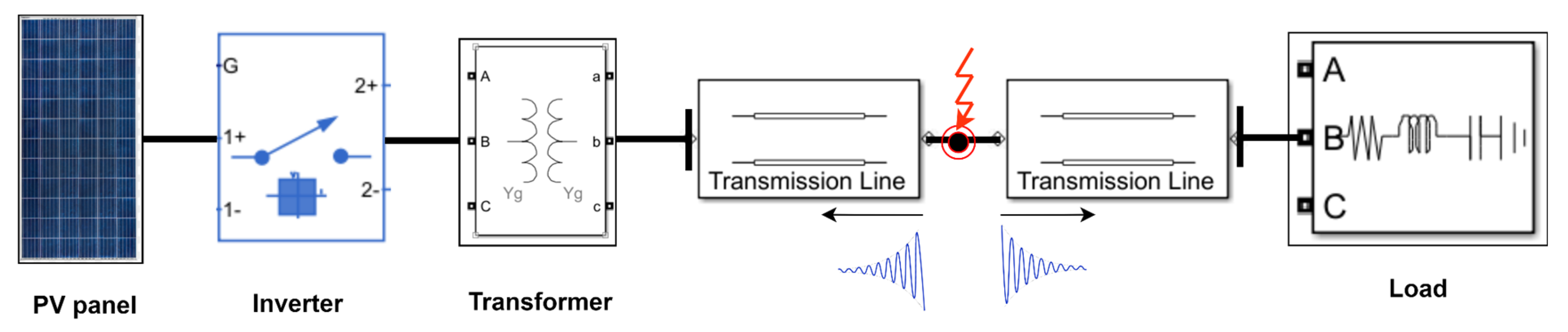
As shown in
Figure 1, the arrival times of traveling waves at the terminals are analyzed in the event of a lightning strike on the transmission line. When the arrival time of the wave at the inverter side is defined as
ti (µs) and the arrival time at the load side as
ty (µs), assuming the line length is
L (km) and the wave propagation speed is
v (km/s), the location of the fault point
x (km) can be determined from the following equation:
3. Simulation Model
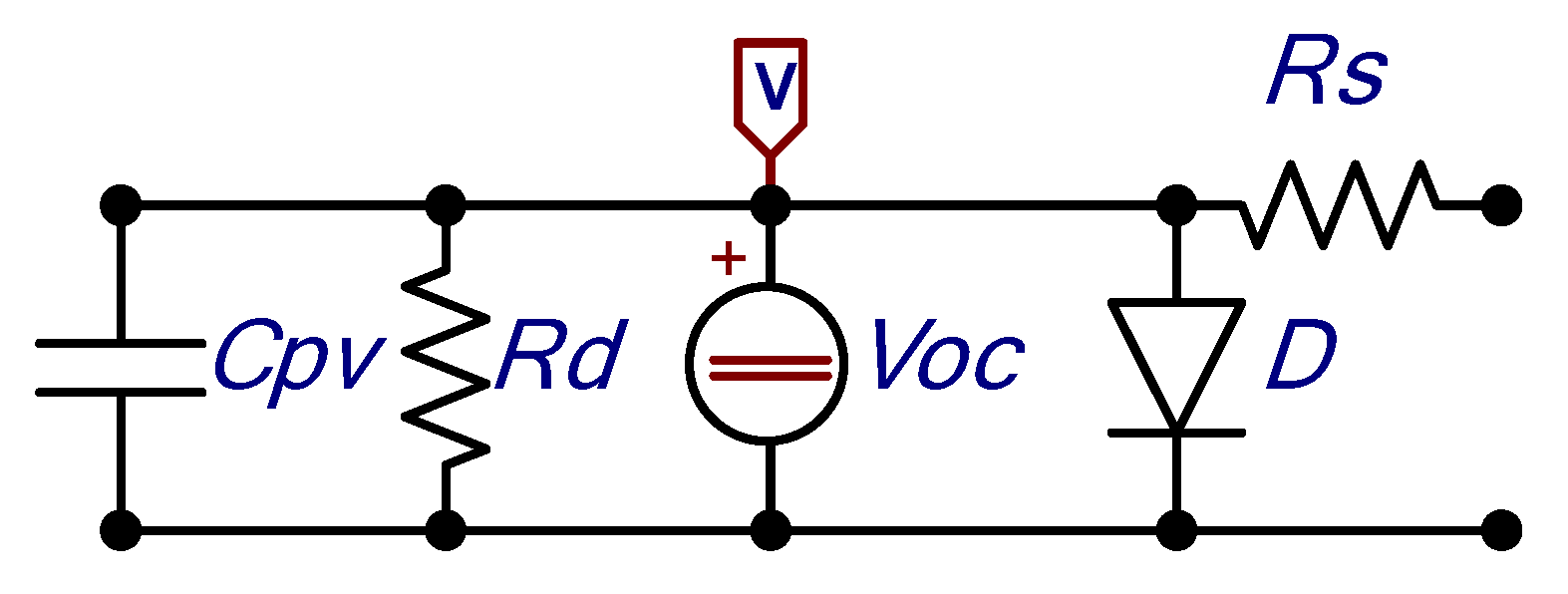
In this study, a comprehensive PV system model was simulated using ATP-EMTP software with the aim of creating training and test datasets for the high-precision detection of lightning-induced fault locations. This model enables the acquisition of high-frequency transient regime data generated when lightning strikes different points along the line. A high-frequency equivalent circuit model, representing the frequency-dependent characteristics of the panel and shown in
Figure 2, was utilized.
The electrical parameters of the PV array model have been determined in accordance with the literature and are presented in
Table 1.
In the simulation studies, a current source with a 1.2/50 µs waveform representing a standard lightning impulse characteristic with a peak value of 20 kA was used to perform transient regime analyses on the transmission line. To model the high-frequency components and damping effects caused by lightning as realistically as possible, the transmission line parameters were defined using the frequency-dependent JMarti model [
23,
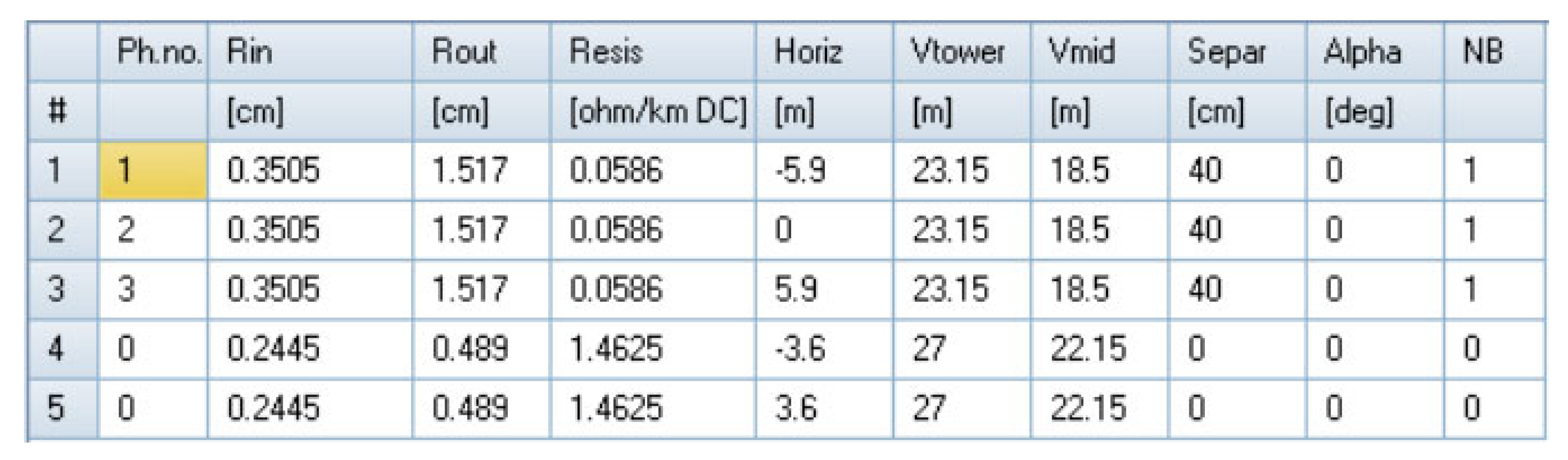
24] within the ATP-EMTP environment. The geometric and electrical data for the transmission line tower are shown in the ATP-EMTP data input interface in
Figure 3.
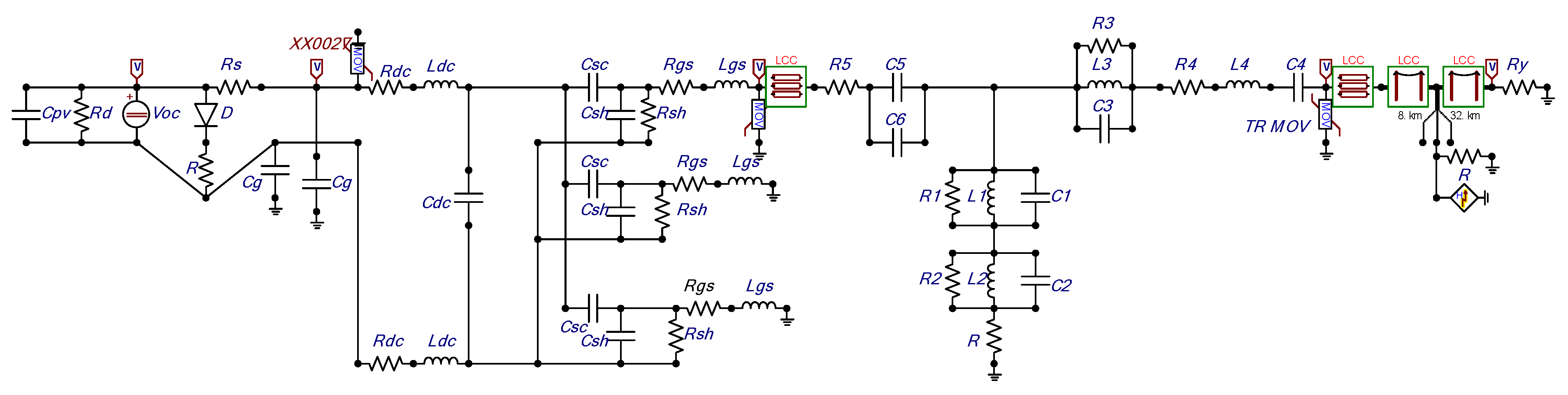
The general simulation model, in which all system components are integrated, has been modeled using ATPDRAW (7.5), as shown in
Figure 4.
Due to the limited availability of actual lightning-induced transient current measurements in real-world PV-integrated transmission systems, ATP-EMTP-based simulations were used to generate high-frequency transient current datasets. To enhance the physical realism of the simulations, a frequency-dependent JMarti transmission line model and standard lightning impulse parameters were employed. Nevertheless, the generated dataset remains simulation-based and relatively limited in terms of operating conditions, lightning characteristics, measurement noise, and system parameter diversity. Therefore, the reported results should be interpreted within the scope of the investigated simulation scenarios, and further validation using larger datasets and field measurements is recommended.
4. Applications and Results
To train and test the proposed method, a comprehensive simulation scenario was devised for a 40 km long transmission line. A lightning current surge was applied by shifting it in 0.5 km increments from the sending end to the receiving end of the line, generating data for a total of 80 different fault locations. For each simulation result, the arrival times of the traveling waves generated by the lightning at the PV plant inverter side (ti) and at the load side (ty) were measured with high precision. These time data were used as the primary input data for the machine learning model to predict the fault location.
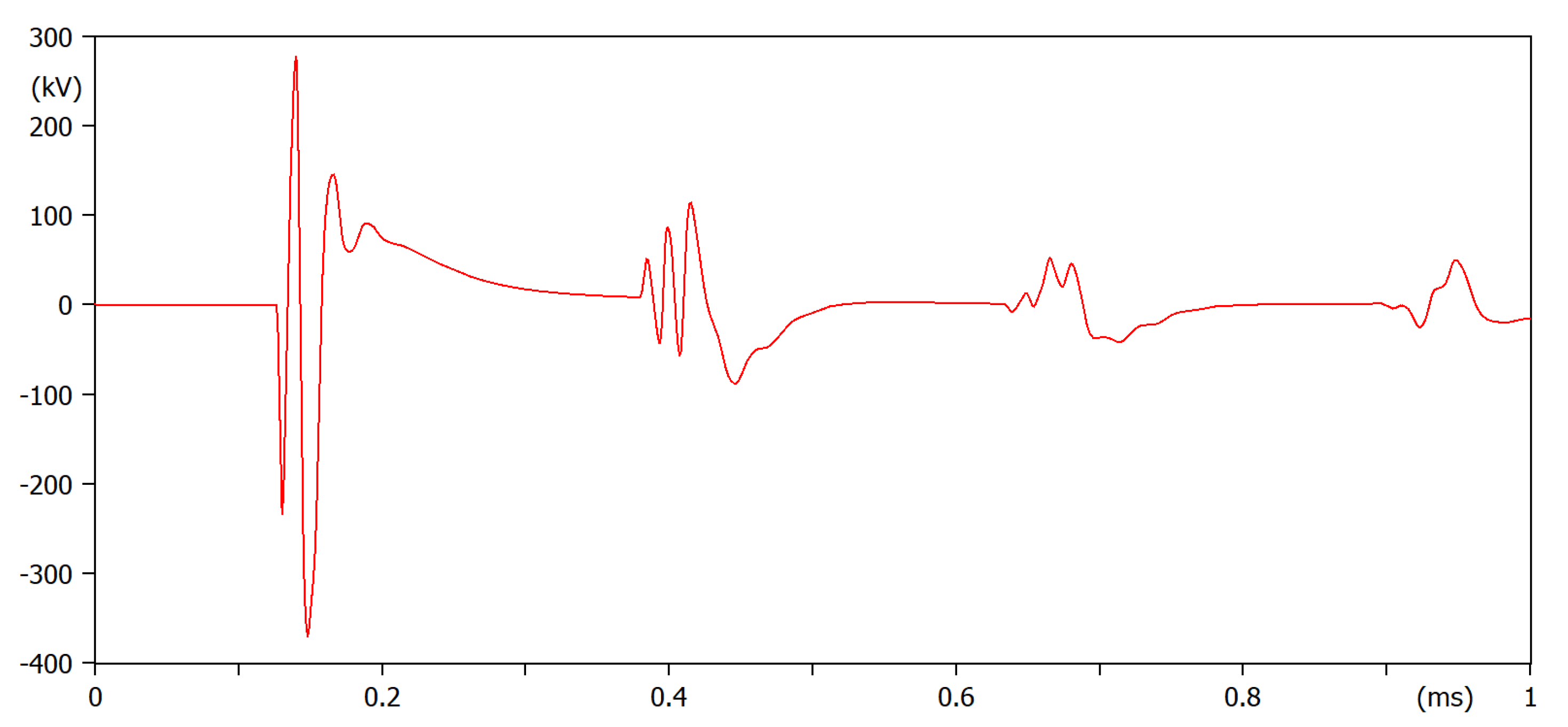
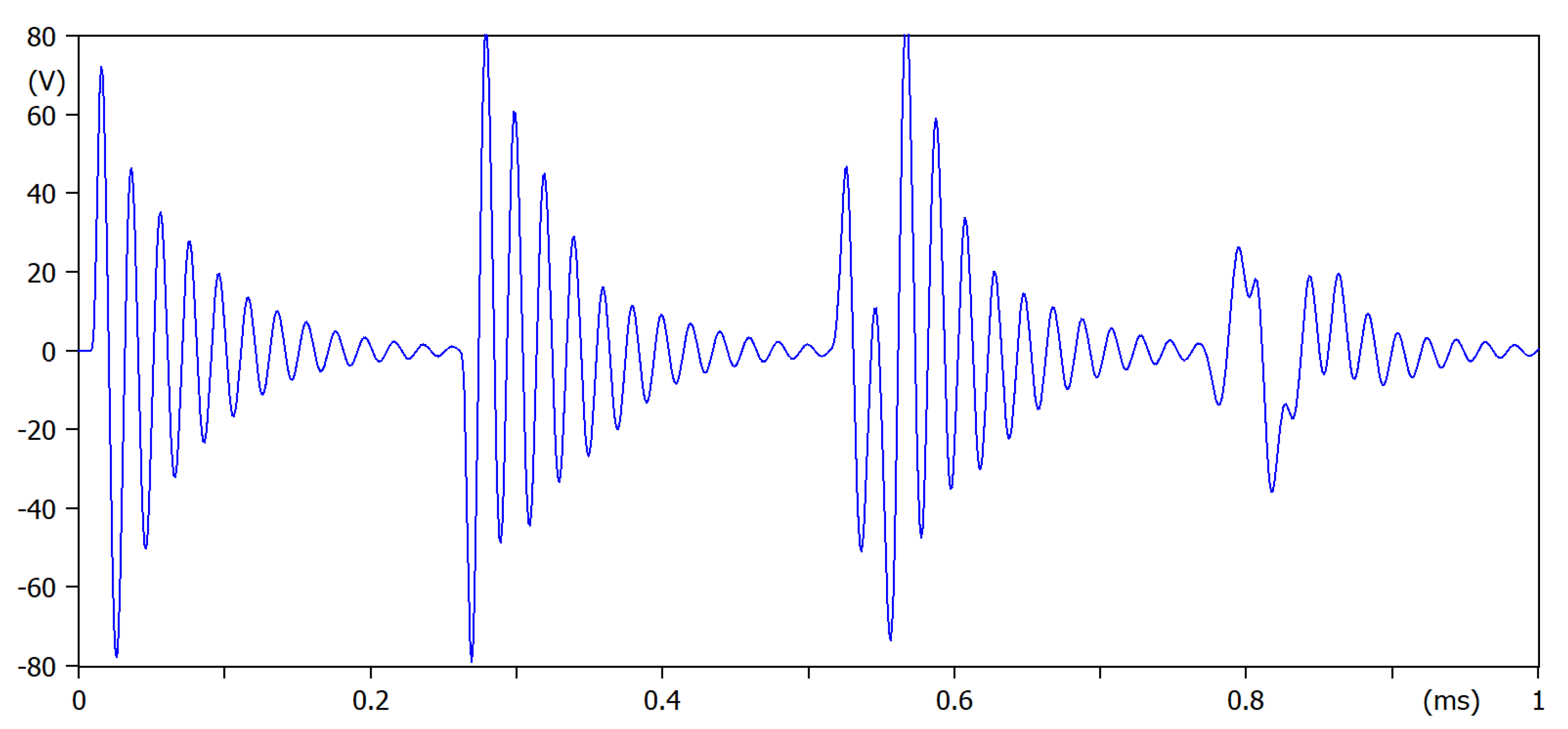
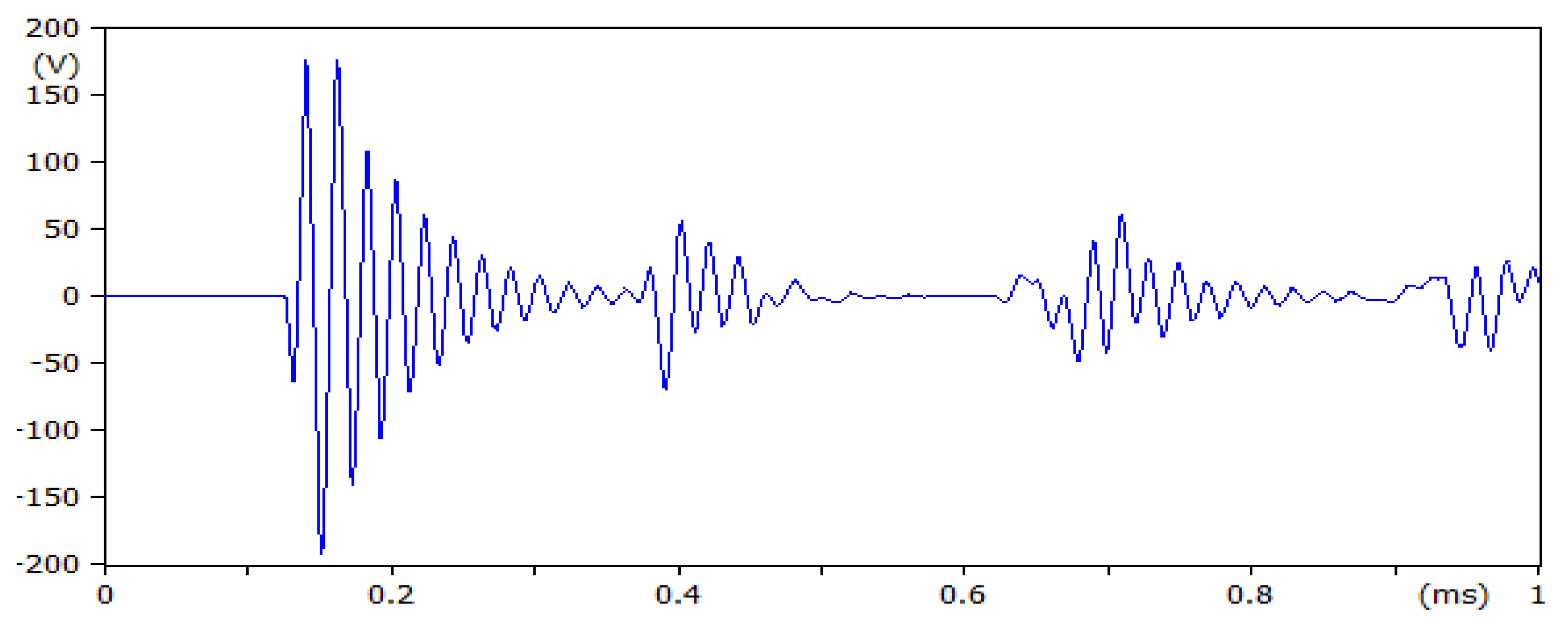
Figure 5 shows the inverter-terminal voltage waveform following a lightning strike at 2 km on the transmission line. The waveform exhibits high-frequency oscillations that decay rapidly. The initial sharp transition marks the arrival of the traveling wave and serves as a key indicator for determining the arrival time (
ti).
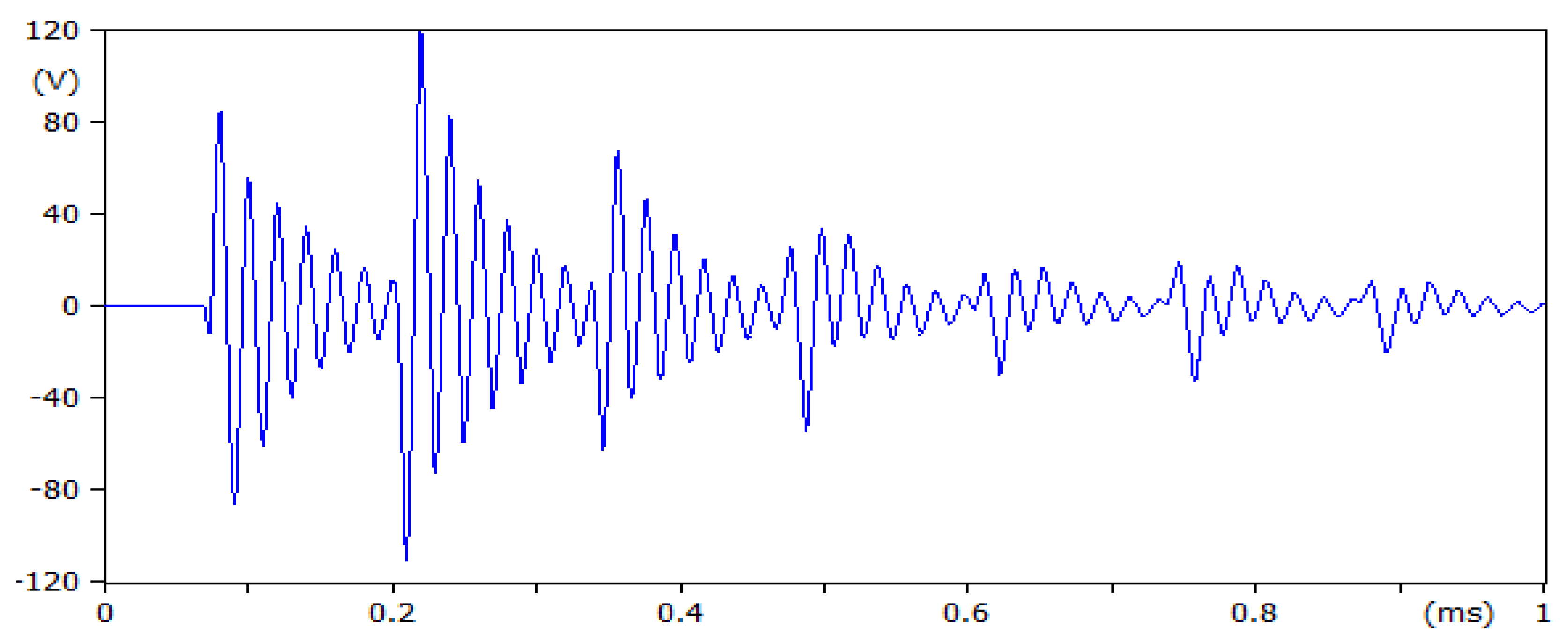
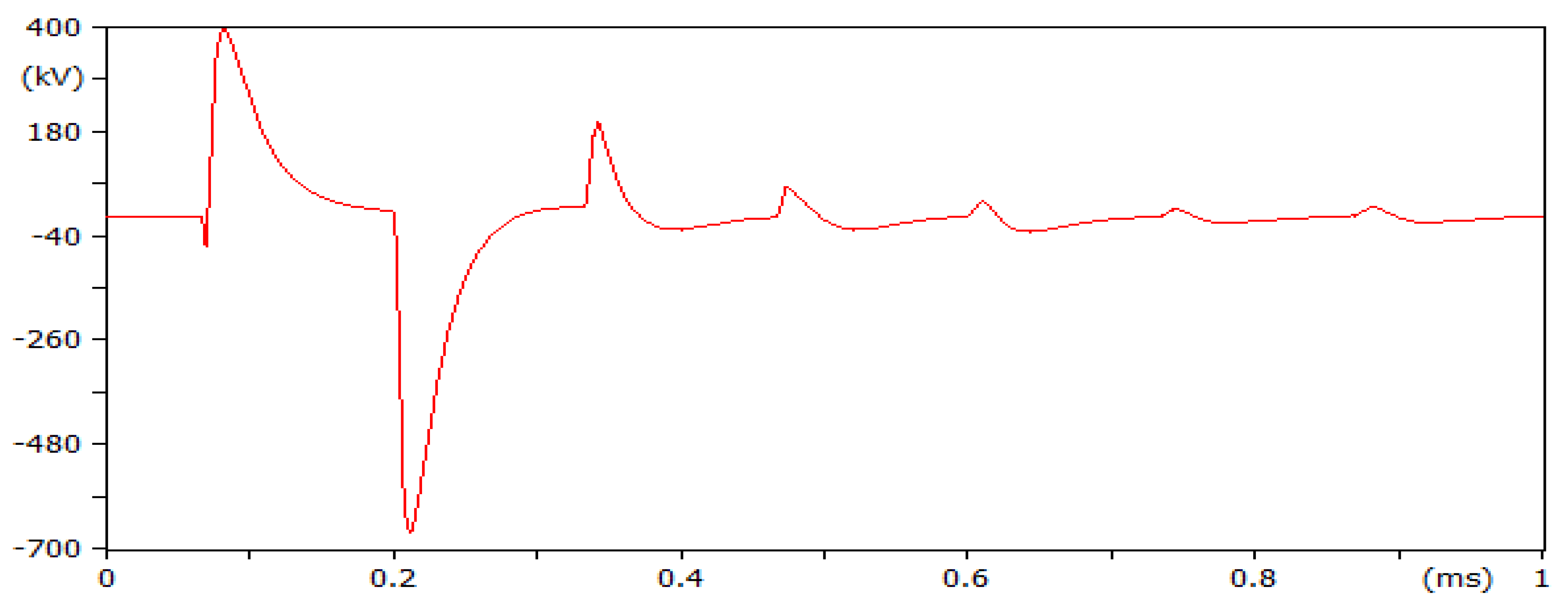
Figure 6 shows the voltage waveform measured at the load terminal following a lightning strike at the 2 km point. Compared to the inverter side, the load terminal exhibits a transient response with a higher amplitude. This abrupt voltage change marks the arrival of the traveling wave, enabling the precise determination of the arrival time (
ty).
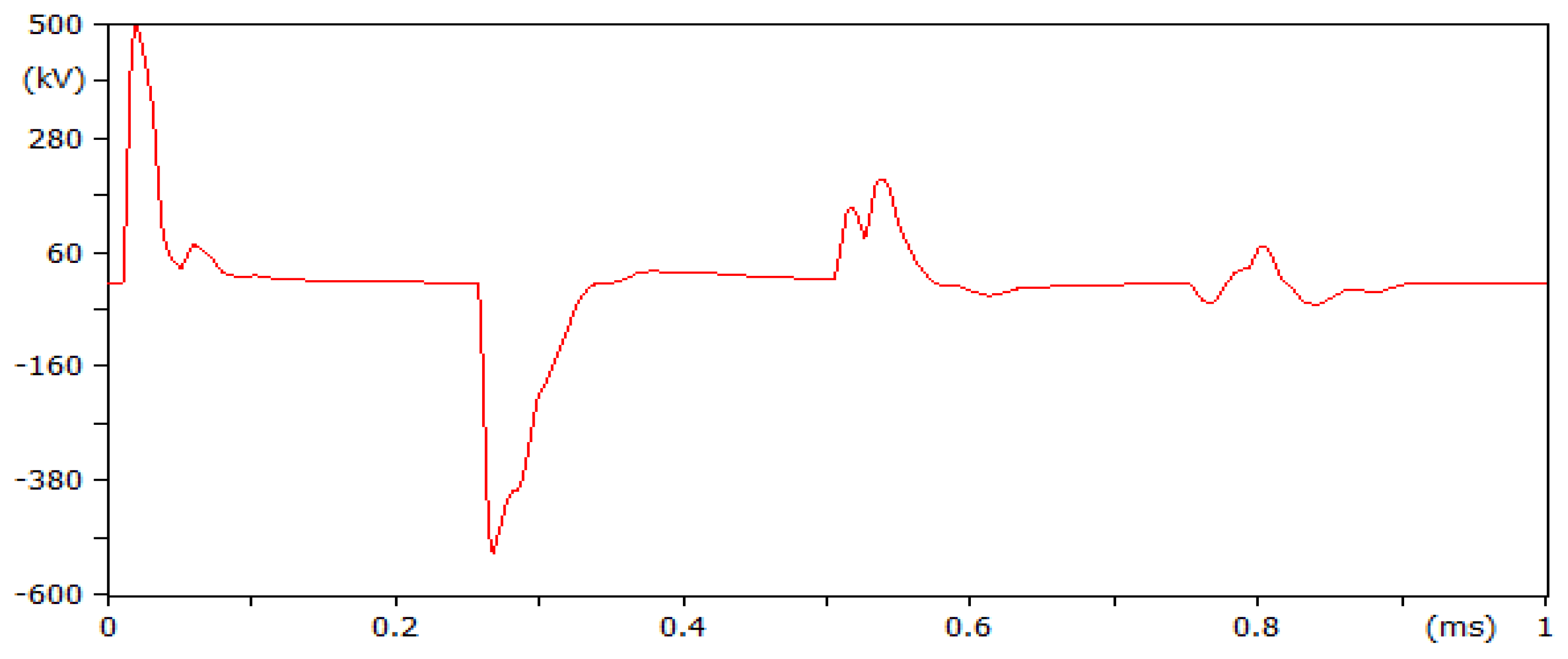
Figure 7 shows the inverter-side voltage waveform for a lightning strike at 20 km. The increased distance from the inverter results in a more pronounced arrival delay, with the signal clearly reflecting line propagation and attenuation effects. This delay behavior confirms the relationship between wave arrival times and line length, validating the time difference analysis for fault localization.
Figure 8 shows the load-terminal voltage waveform for a lightning strike at 20 km. Following the initial wavefront, secondary components emerge due to reflection effects along the transmission line. These reflections emphasize the necessity of precise arrival time detection in two-point measurements to ensure the accuracy of fault localization.
Figure 9 shows the inverter-side voltage waveform for a lightning strike at 37 km. The increased distance results in a more pronounced propagation delay and signal attenuation. The first distinct amplitude shift identifies the wave’s arrival, providing the critical (
ti) timestamp for the proposed method.
Figure 10 shows the load-side voltage waveform for a lightning strike at 37 km. The surge induces a high-amplitude initial wavefront followed by secondary components originating from line reflections. This sharp transition identifies the wave’s arrival time at the load terminal (
ty). When integrated with the inverter-side arrival time (
ti), these temporal data facilitate a more precise estimation of the lightning strike position.
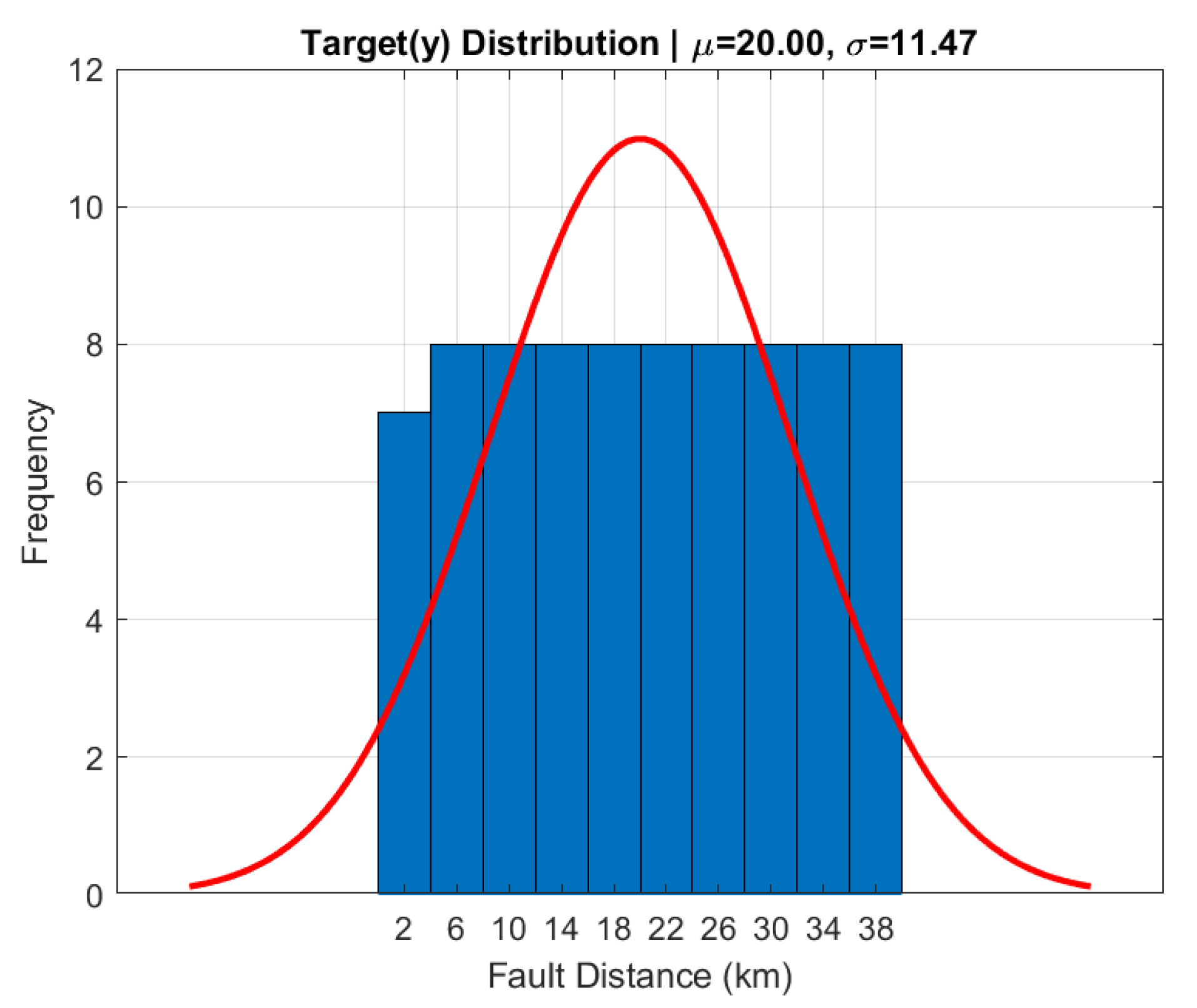
Figure 11 presents the frequency distribution of fault locations generated during the simulations. The dataset is distributed across the entire transmission line with a uniform spatial resolution. This balanced data structure helps the machine learning models learn the relationship between traveling wave arrival times and fault locations within the investigated simulation range.
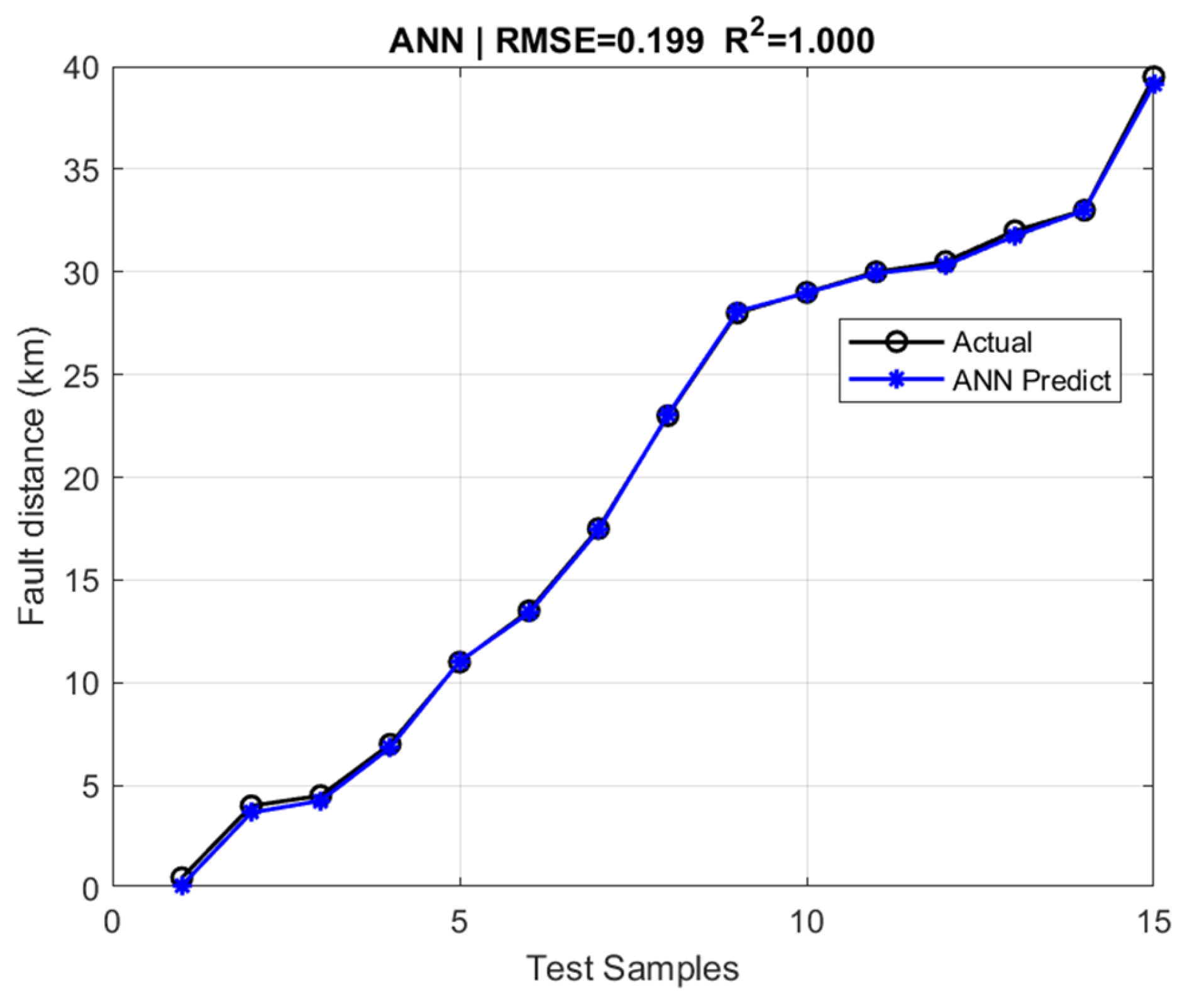
Figure 12 illustrates the correlation between the ANN-predicted fault distances and the actual values. The model shows an exceptional fit, as evidenced by the performance metrics (RMSE = 0.199, R
2 ≈ 0.9997). These results confirm that the ANN effectively learns the features derived from traveling wave arrival times, providing high precision in lightning-induced fault localization.
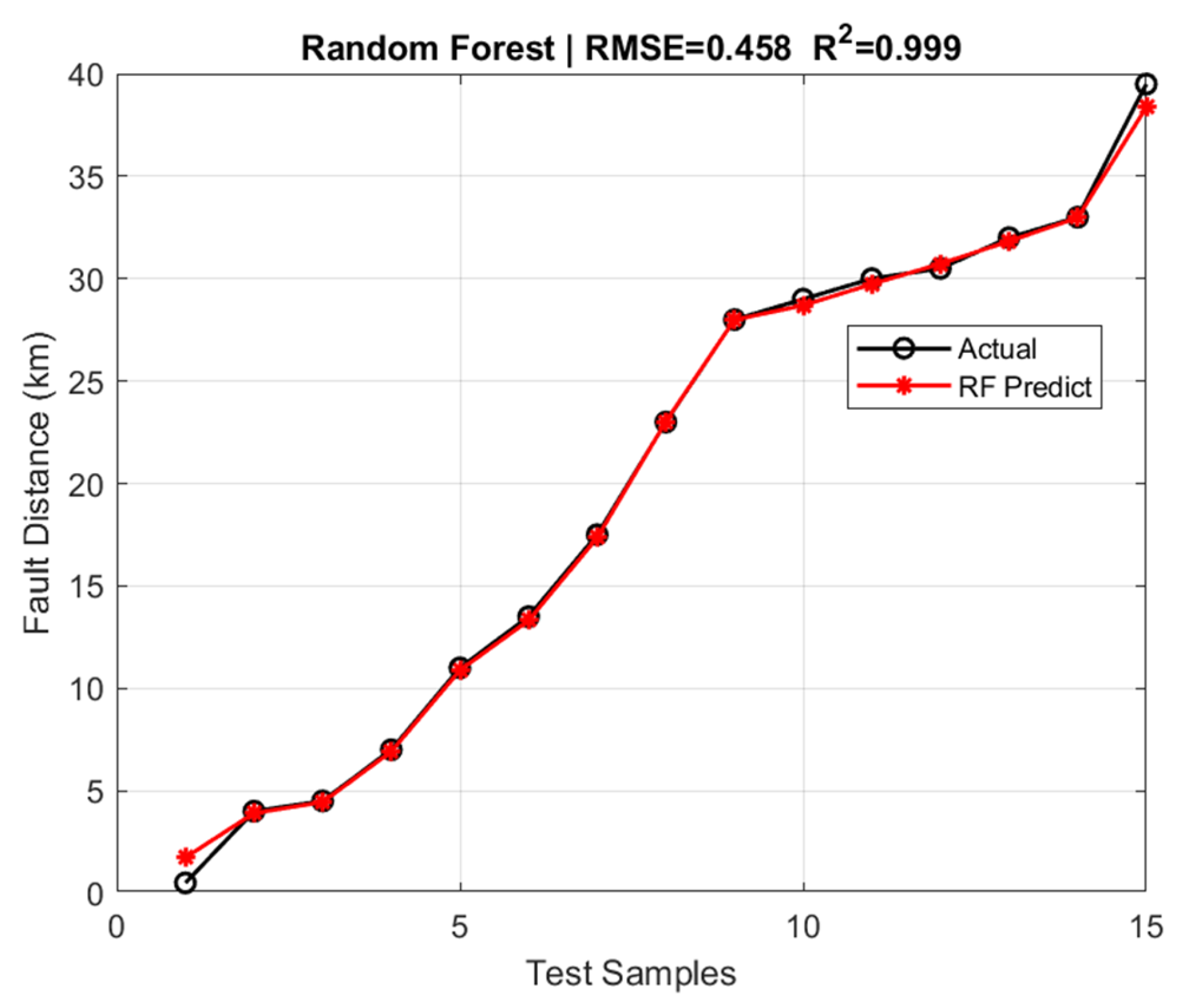
Figure 13 evaluates the performance of the Random Forest (RF) algorithm in estimating fault distances. The model demonstrates strong predictive consistency, as reflected by an RMSE of 0.458 and an R
2 of 0.9987. Despite minor deviations in specific scenarios, the RF algorithm effectively leverages traveling wave data to provide reliable fault localization.
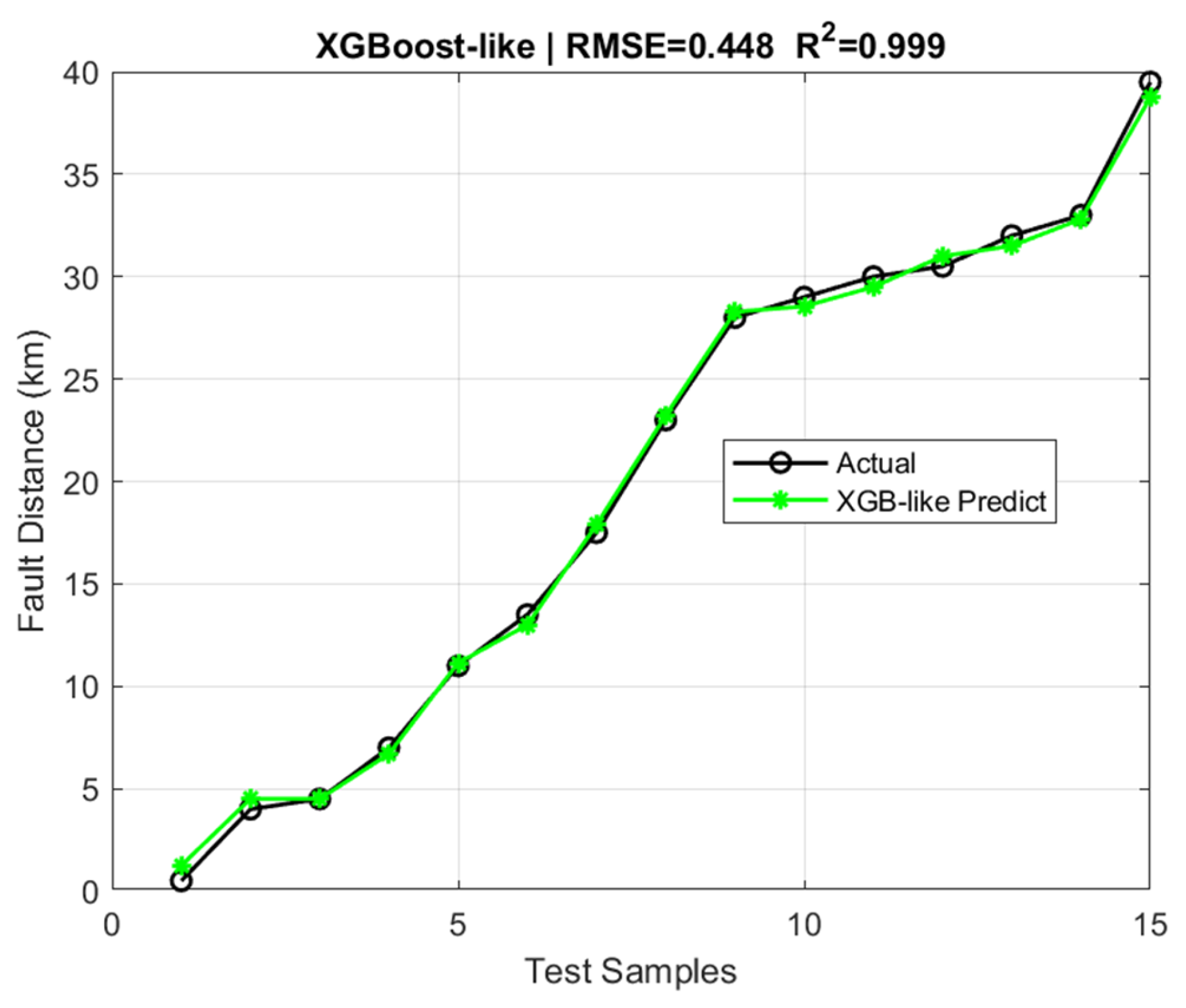
Figure 14 presents the correlation between XGBOOST-predicted fault distances and actual values. The model exhibits high predictive accuracy, evidenced by an RMSE of 0.448 and an R
2 of 0.9986. The alignment between the predicted and actual curves confirms the model’s proficiency in capturing the non-linear relationships inherent in traveling wave arrival data.
Table 2 compares the fault distance predictions of the ANN, RF, and XGBOOST algorithms based on traveling wave arrival times (
ti and
ty). All models demonstrate high predictive accuracy, with ANN and XGBOOST consistently yielding the lowest error rates across most scenarios. While the RF algorithm exhibits slightly higher deviations at specific points, the results confirm that machine learning effectively leverages traveling wave data for precise fault localization.
Table 3 presents a comparative analysis of the performance of the machine learning algorithms used, based on the MSE, RMSE, MAE, and R
2 metrics. Upon examining
Table 3, it can be seen that the ANN algorithm has the lowest error values (RMSE = 0.1987, MAE = 0.1555) and the highest R
2 value (0.9997). The conventional double-ended fault location method also demonstrated high prediction capability with an R
2 value of 0.9906; however, its error metrics (MSE = 1.1567, RMSE = 1.0755, MAE = 0.8993) remained significantly higher than those of the ANN-based approach. This indicates that the ANN model demonstrates higher accuracy in predicting fault locations compared to other algorithms. The XGB-like and Random Forest algorithms also achieved high accuracy values; the fact that their R
2 values exceed 0.998 demonstrates that the proposed method can produce reliable and consistent results in the problem of lightning-induced fault location. The superior performance of the ANN model can be attributed to its strong capability to capture complex nonlinear relationships between the input and output variables. Owing to its multilayer architecture and nonlinear activation functions, the ANN model was able to learn these hidden patterns more effectively than the other evaluated models. In contrast, tree-based ensemble methods such as Random Forest and XGBoost, although powerful for many regression tasks, may exhibit sensitivity to limited dataset size and localized data partitioning behavior. These characteristics can reduce their ability to model subtle continuous variations with the same precision achieved by the ANN model. Furthermore, the ANN model demonstrated a stronger generalization capability for small error margins, resulting in lower RMSE values and stronger coefficient of determination (R
2) performance.
Table 3 compares the predictive performance of the machine learning algorithms using MSE, RMSE, MAE, and R
2 metrics. The ANN algorithm achieves the highest precision, evidenced by the lowest error rates (RMSE = 0.1987, MAE = 0.1555) and a near-perfect correlation (R
2 = 0.9997). Although XGBOOST and Random Forest also yielded high accuracy, with R
2 values exceeding 0.998, the ANN model provides the most robust results for lightning-induced fault localization.
5. Conclusions
In this study, a hybrid fault location approach has been developed that combines a traveling-wave-based two-point measurement method with machine learning algorithms to determine the location of lightning strikes in grid-connected photovoltaic panel systems. As part of the study, a PV panel-connected transmission line model was created in the ATP/EMTP environment, and various simulation scenarios were carried out for lightning strikes occurring at different points along the line. The traveling wave arrival times obtained from these simulations were used as a dataset. Using the obtained data, fault location estimation was performed using ANN, Random Forest, and XGBOOST algorithms, and the performance of the models was evaluated using various error metrics. The analysis results demonstrate that the evaluated algorithms achieved promising fault location prediction performance under the simulated operating conditions considered in this study.
Upon examination of the performance metrics, it was observed that the ANN algorithm had the lowest error values (RMSE = 0.1987, MAE = 0.1555) and the highest coefficient of determination (R2 = 0.9997). The Random Forest and XGBOOST algorithms also achieved similarly high accuracy values, and the results demonstrate that data derived from traveling wave arrival times can be effectively learned by machine learning algorithms. The findings reveal that the use of the traveling-wave-based dual-ended measurement approach in conjunction with machine learning algorithms enables high-accuracy predictions in lightning-induced fault location problems. From a practical standpoint, the proposed method can be integrated into existing traveling wave monitoring infrastructures with minimal additional hardware requirements. Although machine learning-based processing introduces additional computational complexity, the proposed approach shows potential for improving operational reliability and supporting maintenance planning through faster fault location estimation in photovoltaic-integrated transmission systems. The obtained results indicate that combining traveling-wave-based fault location techniques with machine learning algorithms may provide an effective approach for estimating lightning-induced fault locations in PV-integrated transmission systems under the investigated simulation conditions. However, the proposed method has been evaluated using a relatively limited simulation-based dataset, and its robustness under realistic noisy measurement conditions has not been comprehensively investigated in the present study. Therefore, further validation using larger datasets, different operating scenarios, noisy measurements, and field-recorded transient data is required before broader practical generalization.