Article

Performance Investigation of Novel Desiccant Evaporative Cooling Systems Integrating with Shallow Geothermal Energy


1
School of Engineering, University of Tasmania, Hobart, TAS 7001, Australia
2
School of Mechanical Engineering, The University of Adelaide, Adelaide, SA 5005, Australia
3
Biological and Environmental Science and Engineering, King Abdullah University of Science and Technology, Thuwal 23955-6900, Saudi Arabia
*
Author to whom correspondence should be addressed.
Appl. Sci. 2026, 16(10), 4736; https://doi.org/10.3390/app16104736
Submission received: 24 April 2026 / Revised: 3 May 2026 / Accepted: 6 May 2026 / Published: 10 May 2026
(This article belongs to the Special Issue Modern Trends and Applications in Thermal Energy Storage)

Abstract

This paper proposed a novel desiccant evaporative cooling system integrated with shallow geothermal energy with three different configurations. The first two configurations (I and II) employed shallow geothermal energy for precooling and post-cooling, respectively, while Configuration III utilised geothermal energy for both precooling and post-cooling. The performance of these systems was examined and compared to a benchmark system, a conventional solid desiccant M-cycle cooling system, under various operating conditions. Furthermore, a case study was conducted to evaluate the viability of these schemes under a hot and humid climate in Darwin, Australia. The results indicated that all three configurations outperformed the benchmark system regarding supply air conditions and required a lower regeneration temperature to achieve similar cooling performance. Configurations I and III could maintain the supply air humidity rate below 15 g/kg and contribute up to 30.46% of dehumidification performance through the condensation effect in humid conditions. Configuration III exhibited the highest energy efficiency, with a thermal COP up to 0.82 under different humidity levels, and this system also consumed 37.27% less water than the benchmark system.

1. Introduction

According to the report released by International Energy Agency (IEA), the building sectors worldwide are responsible for consuming 36% of the total energy around the world, and more than 50% of this energy consumption results from heating, ventilation, and air-conditioning (HVAC) systems [1]. Therefore, it is imperative to seek sustainable cooling solutions to replace the traditional vapour-compression cooling system, given its energy-intensive feature and potential contribution to global warming concerns [2]. Evaporative cooling is often considered an effective replacement for the traditional cooling system owing to its energy-efficient and environmentally benign features [3]. Evaporative cooling technology can be classified into two major groups, direct evaporative cooling (DEC) and indirect evaporative cooling (IEC), based on the working principles [4]. In DEC, the supply air undergoes evaporative cooling as it directly flows over a wetted cooling pad, resulting in a reduction in temperature but a rise in humidity [5]. In order to mitigate the impact of the supply air humidity increment, the IEC has been developed because it can cool the product air to the same temperature level as the DEC, which is equivalent to the wet bulb temperature of the inlet air, without introducing additional moisture [6]. Then, a novel flow configuration of IEC was proposed by Valery Maisotsenko, also named M-cycle, which can further reduce the supply air temperature close to the dew point temperature of the inlet air [7]. Nonetheless, the utilisation of stand-alone M-cycle is restricted in hot and wet areas, especially when the ambient relative humidity ratio is below 70% because less water can be evaporated [8,9]. Therefore, there has been a growing research interest in coupling a solid dehumidification process with an M-cycle to deal with the latent heat load, aiming to enhance its applicability and efficiency.
Gao et al. [10] numerically investigated the performance of a solid desiccant-based IEC system in humid conditions. The findings revealed that the ideal operating specifications for ambient humidity and temperature should be no more than 18 g/kg and 35 °C, respectively. Gadalla and Saghafifar [11] developed three novel two-stage desiccant-assisted M-cycle IEC cooling configurations and tested them in hot and humid regions. Their findings indicated that the TS-PMD system, which utilised M-cycle IEC for precooling, showed promising potential for residential cooling purposes. Pandelidis et al. [12] performed a comparative numerical study of three hybrid desiccant cooling systems combined with various forms of IEC. They pointed out that the system with cross-flow M-cycle IEC produced the lowest supply air temperature and largest cooling capacity compared to the other two schemes. Lin et al. [13] examined the cooling performance improvement in a dew point cooler by introducing a dehumidification process. They concluded that integrating a dehumidification procedure could enhance the cooling capacity and energy efficiency by 70–135%. Kashif Shahzad et al. [14] experimentally evaluated a hybrid solid desiccant and cross-flow M-cycle cooling system under various operating conditions. The outcome displayed that the investigated system was 62.96% more efficient than the traditional desiccant air conditioning system in coefficient of performance (COP). Caliskan et al. [15] applied exergy, energy, and sustainability analysis approaches to investigate a novel solid desiccant M-cycle system. It was found that the system could be significantly improved by considering exergy analysis. Delfani and Karami [16] modelled three innovative solar-assisted desiccant cooling systems with different M-cycle arrangements under three weather conditions. It was demonstrated that all the newly devised cooling systems presented advanced cooling performance compared to conventional desiccant cooling systems. Pandelidis et al. [17] assessed four precooled desiccant cooling systems with numerical and experimental methods. They concluded that the optimal configuration involved a cross-flow M-cycle for precooling and a counter-flow M-cycle post-cooling. Harrouz et al. [18] comparatively investigated two desiccant evaporative cooling systems designed for poultry houses. They reported that system II, which incorporated an M-cycle IEC, could achieve air quality criteria and thermal comfort with 35% less operating cost than system I. Lai et al. [19] carried out a numerical study to test the recirculation air impact on the performance of a solid desiccant evaporative cooling system. The results indicated that elevating the recirculation air ratio led to a lower supply air humidity ratio and temperature but also resulted in a substantial increase of up to 57.94% in water usage. Güzelel et al. [20] numerically modelled a desiccant-assisted M-cycle system for a school building. They highlighted that the implemented system could keep thermal comfort throughout the entire cooling season within the building, with a seasonal thermal COP of 0.43.
Improving the system performance can be achieved not only via optimisation of the system configuration and control strategy but also by integrating renewable energy. In this case, scholars have explored various solar energy-based approaches for regenerating the desiccant wheel or supplying power to electrical devices [21,22]. Furthermore, in recent years, some researchers have also started investigating the potential of hybridising the desiccant cooling system with shallow geothermal energy. Shallow geothermal energy is regarded as a clean energy resource that can be harnessed from depths 3 to 100 m below the ground surface [23]. In this region, the soil temperature can be maintained almost as a constant value, and it barely changes throughout the year due to the soil’s high heat capacity [24].
El-Agouz and Kabeel [25] proposed a desiccant evaporative cooling system utilising geothermal energy containing a geothermal cooling coil and a DEC for sensible cooling. Their findings demonstrated that the hybrid system could produce a supply air stream with temperatures ranging from 12.7 to 21.7 °C in various climatic conditions. Rayegan et al. [26] performed a transient simulation and multi-objective optimisation of a desiccant evaporative cooling system incorporated with a ground source heat exchanger to precool the supply air before entering a DEC for final cooling. An economic analysis was also presented, which showed that the payback period was 5.7 years. Guo et al. [27] applied ground heat exchangers to precool and post-cool the supply air of a desiccant cooling system. The modelling results revealed that the regeneration temperature could be reduced to 43 to 62 °C. A similar configuration was also examined under three humidity levels (high, moderate and low humidity) by Chen and Tan [28]. It was found that the product air temperature met the desired requirements at each humidity level when the regeneration temperature was above 80 °C.
From the literature, it can be concluded that the solid desiccant M-cycle cooling system shows superior cooling performance than the stand-alone ECTs and conventional desiccant evaporative cooling systems. Furthermore, integrating shallow geothermal energy with the desiccant cooling system exhibits promising potential in further enhancing the system’s performance and reducing energy consumption. However, the research on the combined utilisation of shallow geothermal energy and desiccant evaporative cooling technology is still limited, and several research gaps can be identified. Firstly, the research about hybridising shallow geothermal energy with a solid desiccant M-cycle system is insufficient, with the existing literature mainly focused on conventional desiccant evaporative cooling systems combined with geothermal energy. Moreover, the placement of the geothermal cooling unit in the process air stream, whether it be precooling or post-cooling, can significantly affect the system’s performance. However, the literature lacks related investigations, as prior studies primarily fixed the geothermal cooling units as post-cooling devices in conjunction with the evaporative cooler. Furthermore, the precooling process in humid conditions can result in condensation, which removes a certain portion of air moisture. However, this aspect is often ignored in the literature. In addition, the information on the performance of such a hybrid system in a hot and humid climatic condition specific to Australia is inadequate.
In order to bridge the identified gaps, this study introduces three novel configurations of ground-assisted desiccant M-cycle (GDM) cooling systems. The key distinction among the three developed systems lies in the arrangement of the geothermal cooling unit, which serves for (a) precooling, (b) post-cooling, and (c) both pre and post-cooling purposes. With TRNSYS 18.0 software, the numerical models of the proposed systems are set up to compare the cooling performance with a solid desiccant M-cycle (SDM) cooling system under diverse operating conditions. In this phase, the moisture removal rate resulting from the condensation phenomenon caused by the geothermal precooling and dehumidification via the desiccant wheel will be investigated, along with the supply air conditions, water consumption rate, and thermal COP. Lastly, a case study of one representative hot and humid Australian climatic condition is undertaken to evaluate the feasibility of the systems.

2. Description of the Systems

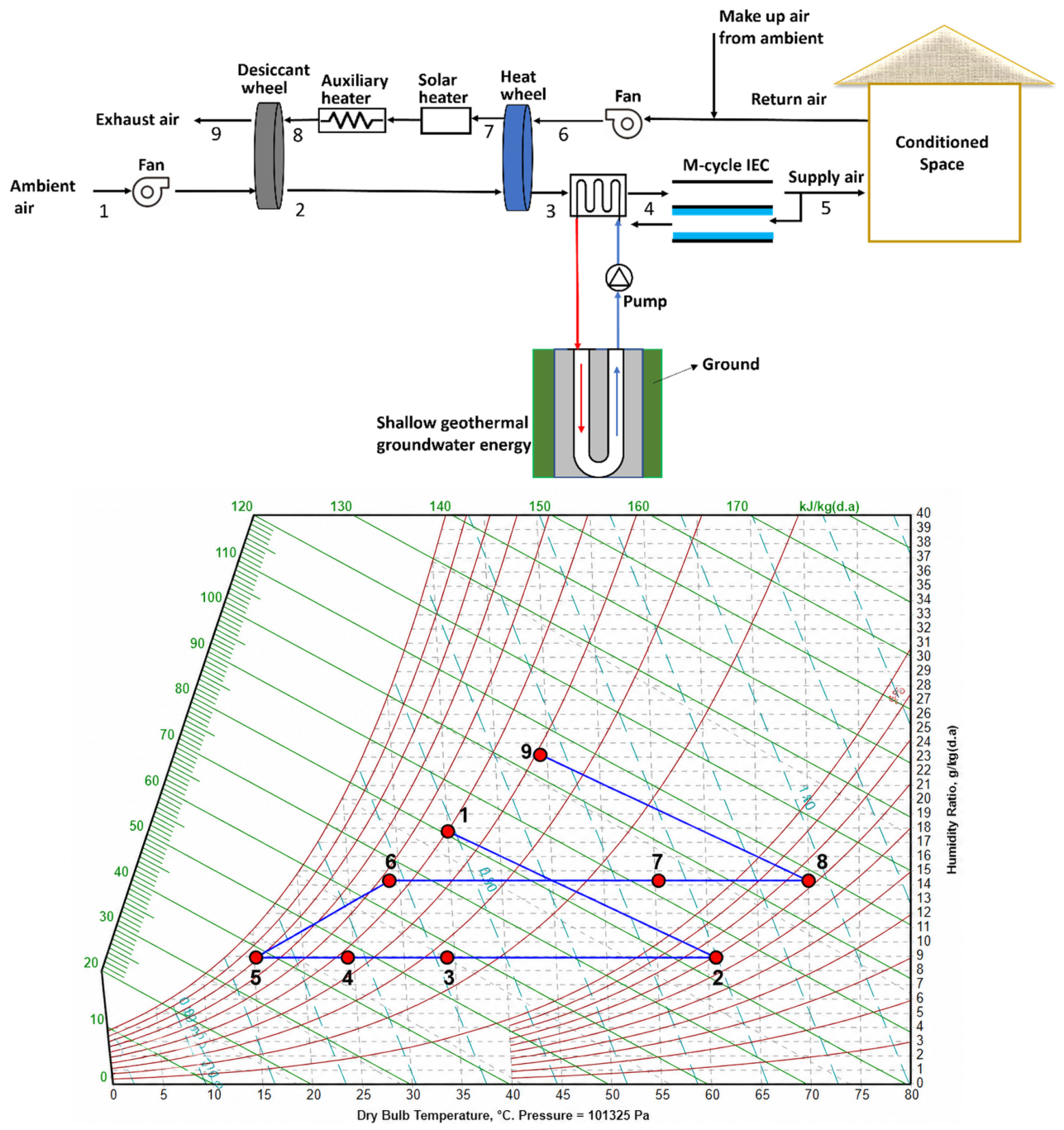
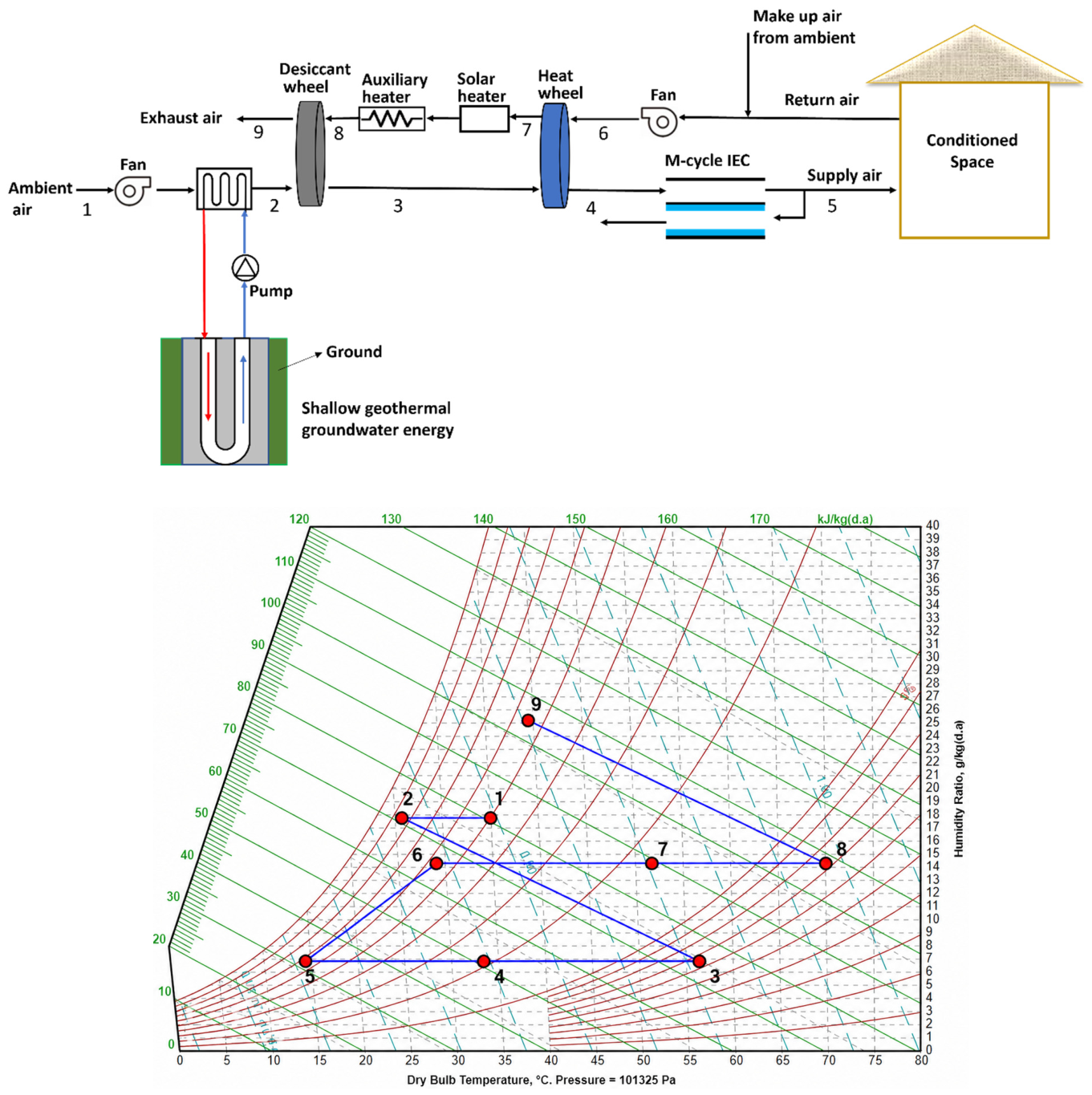
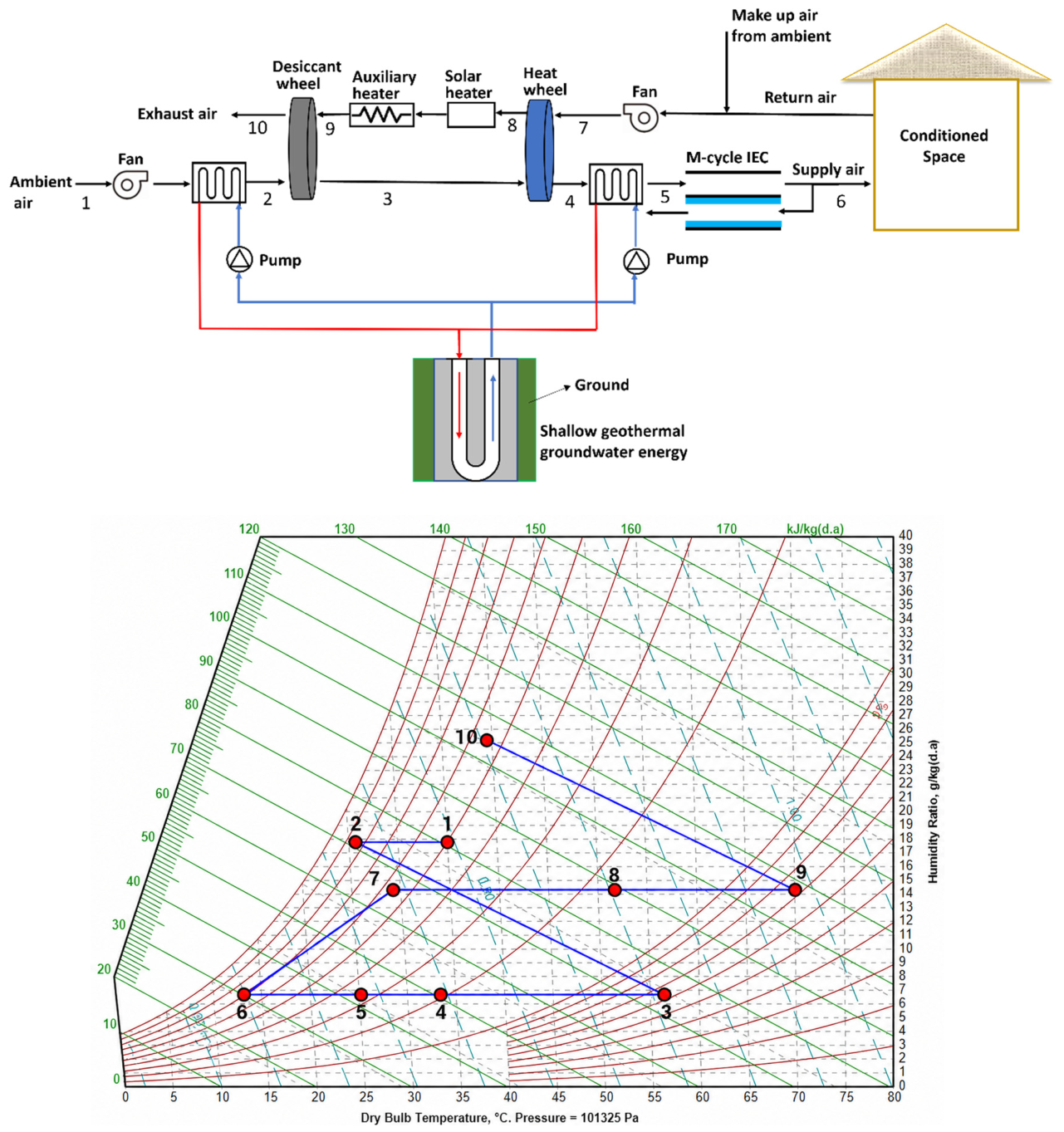
The main components of the GDM cooling systems are the solid desiccant wheel, rotary heat wheel, shallow geothermal groundwater system, M-cycle IEC, and regeneration heating system. In this study, three configurations are proposed and investigated, with each configuration varying in the placement of the shallow geothermal groundwater system. Configuration I employs geothermal energy to precool the inlet air before the desiccant wheel dehumidifies the air. In Configuration II, geothermal energy is only applied to post-cool the supply air after dehumidification. Configuration III incorporates geothermal cooling units for both precooling and post-cooling. The systems’ schematic layouts and corresponding psychrometric diagrams are presented in Figure 1, Figure 2 and Figure 3. The working principle of the proposed three systems is explained in detail below.

2.1. Configuration I

The operating process of Configuration I is shown in Figure 1. Firstly, the ambient air is precooled through a geothermal cooling unit (1–2). Then, the precooled supply air is subjected to dehumidification through a rotary solid desiccant wheel (2–3). Following the dehumidification step, the hot and dry supply air stream flows over a heat wheel to preheat the regeneration air stream (3–4). After that, an M-cycle IEC is employed to further lower the supply air temperature before delivering it to the conditioned space (4–5). As the desiccant wheel operates continuously, moisture accumulates in its adsorbent material, deteriorating dehumidification performance. Therefore, a regeneration process is suggested to maintain the uninterrupted functionality of the dehumidification unit. The regeneration air stream consists of the make-up air sourced from the environment and the return air from the conditioned space to guarantee an adequate airflow rate. Subsequently, the regeneration flow is preheated by the heat wheel (6–7) and then raised to the designed temperature through a solar heater and an auxiliary heater (7–8). Then, the high-temperature regeneration air passes over the desiccant wheel, carrying away the water vapour and thus completing the regeneration cycle (8–9).

2.2. Configuration II

Figure 2 presents the schematic layout and psychrometric process of Configuration II. Unlike Configuration I, the outdoor air enters the desiccant wheel directly for dehumidification without geothermal precooling (1–2). The dehumidified air then passes through the rotary heat wheel, where heat is exchanged with the regeneration air stream (2–3). After this process, the geothermal cooling unit is used as a post-cooling device to reduce the temperature of the process air before it enters the M-cycle IEC (3–4). The M-cycle IEC then provides the final cooling effect before the supply air is delivered to the conditioned space (4–5).
The regeneration process is similar to that in Configuration I. The regeneration air stream is first preheated by the rotary heat wheel and then further heated to the required regeneration temperature by the solar heater and auxiliary heater (6–8). The heated regeneration air then passes through the desiccant wheel to remove the absorbed moisture, and the warm and humid exhaust air is discharged to the ambient environment (8–9).

2.3. Configuration III

Figure 3 presents the schematic layout and psychrometric process of Configuration III. This configuration combines both geothermal precooling and post-cooling. First, the outdoor air is precooled by a geothermal cooling unit before entering the desiccant wheel (1–2). The precooled air is then dehumidified by the desiccant wheel (2–3) and subsequently passes through the rotary heat wheel for heat recovery (3–4).
After heat recovery, the process air is further cooled by a secondary geothermal cooling unit, which acts as a post-cooling device (4–5). The air then enters the M-cycle IEC, where the final cooling process is completed before the supply air is delivered to the conditioned space (5–6). The regeneration process follows the same procedure as in Configurations I and II.

3. Mathematical Modelling

The performance of the GDM cooling systems is simulated using the commercial software TRNSYS 18, a flexible and graphically based software widely used for evaluating the thermal performance of various systems [29,30]. The TRNSYS built-in library and TESS supplementary library provide over 500 validated components [29]. Users can also construct custom components with Matlab or EES by calling an external function in case of unavailability. A brief summary of the TRNSYS components used in this study is listed in Table 1, while the modelling details of the key components are explicated in the subsequent sections.

3.1. Groundwater Temperature Profile

The geothermal cooling unit is regarded as a groundwater-powered cooling coil. The groundwater temperature is assumed to have little fluctuations and approximate the annual mean temperature of the surrounding environment at specific subsurface depths [27,31]. Consequently, Type 77 is employed to simulate the ground temperature, developed based on the equation proposed by Kusuda and Achenbach [32], as shown below:
T Z , t = T ¯ G T a m p e x p ( Z π 365 α 0.5 ) × c o s ( 2 π 365 ( t t 0 Z 2 ( 365 π α ) 0.5 ) )
where T Z , t denotes the soil temperature at a specific depth and time, T ¯ G represents the average ground temperature, T a m p shows the amplitude of surface temperature, Z represents the depth, α means the soil thermal diffusivity, t is the current day of the year, and t 0 denotes the day of the year corresponding to the minimum surface temperature.

3.2. Solid Desiccant Wheel

The desiccant wheel operates as a rotary dehumidifier, playing an important role in extracting moisture from the process air. Type 1716 is selected to simulate this component in this research, utilising silica gel as the adsorbent material due to its good performance and low cost [32,33]. The TRNSYS module is developed based on two potential functions, F 1 and F 2 , which were proposed by Jurinak [34], as shown in Equations (2) and (3). Then, these two potential functions can be adjusted using ε F 1 and ε F 2 , taking into account the system’s non-idealities, as displayed in Equations (4) and (5). After that, the outlet condition of the desiccant wheel can be expected based on the following governing equations.
F 1 = 2865 T 1.49 + 4.34 ω 0.8644
F 2 = T 1.49 6360 1.127 ω 0.07969
ε F 1 = F 1 D F 1 P F 1 R F 1 P
ε F 2 = F 2 D F 2 P F 2 R F 2 P
where T means the temperature, and ω denotes the humidity of airflow.

3.3. Rotary Heat Wheel

The rotary heat wheel operates as a sensible heat exchanger, enabling the transfer of sensible heat between two distinct air streams. This component is also available in the TRNSYS library, Type 760. This component is built up based on the constant effectiveness-minimum capacitance method, and the governing equations are presented below:
C m i n = M I N ( m ˙ 1 c p 1 , m ˙ 2 c p 2 )
Q ˙ s e n s = ε s e n s C m i n | T 1 , i n T 2 , i n |
where C m i n denotes the minimum capacitance, m ˙ 1 and m ˙ 2 represent the mass flow rate of the two air streams that are introduced into the heat wheel, c p 1 and c p 2 symbolise the specific heat of air for each air stream, Q ˙ s e n s is the total heat transfer rate, and ε s e n s represents the effectiveness of the heat wheel.

3.4. M-Cycle Evaporative Cooler

Another fundamental system element is the M-cycle, which serves to provide sensible cooling to the indoor space. However, due to the unavailability of the M-cycle model in the TRNSYS library, an external software called EES version 10.561 is employed to create a model based on the mass and heat balance equations of the M-cycle. Once the numerical model is constructed in EES, Type 66 is utilised to establish a connection between the external programme and the TRNSYS. Several assumptions are made prior to deriving the governing equations as follows:
The wet channel is fully saturated with water.
Heat loss to the ambient surroundings is considered to be negligible.
Air is modelled as an incompressible fluid in the analysis.
Uniform fluid properties are assumed within each control volume.
The temperature variation between channels is negligible because of the low wall thickness.
According to the working principle of the M-cycle, the transfer of sensible heat in the product air solely occurs via the channel wall and water film to the adjacent wet channels. Thus, the equation of energy balance inside the dry channel can be stated as follows:
m ˙ d r y c p , d r y d T d r y = h c , d r y ( T d r y T w f ) d A
where m ˙ d r y is the mass flow rate of the air from the dry channel, c p , d r y means the specific heat of air in the dry channel, T d r y represents the dry channel air temperature, h c , d r y means the coefficient of heat transfer in the dry channel, T w f is the water film temperature, and A is the heat transfer area.
In contrast to the dry channel, the wet channel not only enables sensible heat transfer but also allows mass exchange due to the occurrence of the water evaporation phenomenon within it. Therefore, it is imperative to consider both energy and mass balance equations when analysing the wet channel.
m ˙ d r y c p , d r y d T d r y = h c , d r y ( T d r y T w f ) d A
m ˙ w e t d ω w e t = h m ( ω w f ω w e t ) d A
where m ˙ w e t is the mass flow rate of wet channel air, c p , w e t means the wet channel air’s specific heat, h c , w e t denotes the heat transfer coefficient of moist wet channel air, L represents the latent heat of water evaporation, h m shows the coefficient of mass transfer inside the wet channel, ω w f means the saturated air humidity near the water film, and ω w e t shows the wet channel air humidity.

4. Performance Evaluation Index

In light of the fact that evaporative cooling relies on water consumption to achieve its cooling effect, the rate at which water is utilised assumes a significant role in the system performance assessment. This value can be calculated by multiplying the mass flow rate of air within the wet channel by the difference in humidity levels between the inlet and outlet of the wet channel, which is shown below.
m ˙ w c = m ˙ w e t ( ω w e t , o u t ω w e t , i n )
The dehumidification performance is usually assessed by comparing the product air humidity ratios among different systems. However, this approach has limitations when investigating the moisture removal rate of the individual component within a hybrid system. This is particularly relevant in cases when the hybrid system is equipped with a precooling arrangement and operates in humid conditions, as the dehumidification effect may also be attributed to condensation [35]. Therefore, to better understand the role played by the geothermal cooling unit in the dehumidification process, φ g e o is introduced. This parameter represents the ratio of the moisture removal rate attributed to the geothermal cooling unit to the overall moisture removal rate of the system.
φ g e o = ω g e o ω o v e r a l l
The overall thermal COP is defined as the ratio of the cooling capacity provided by the system to the amount of energy input required to drive the regeneration process:
C O P t h e r m a l = Q ˙ c Q ˙ h e a t
where Q ˙ c represents the cooling capacity, which can be determined by the enthalpy difference between the conditioned space and supply air, and Q ˙ h e a t means the total required regeneration heat loads, which can be calculated by multiplying the mass flow rate of regeneration air by the enthalpy variation due to the solar and electrical heating process, shown as:
Q ˙ c = m ˙ s a ( h c s h s a )
Q ˙ h e a t = m ˙ r e g ( h 8 h 7 )

5. Model Validation

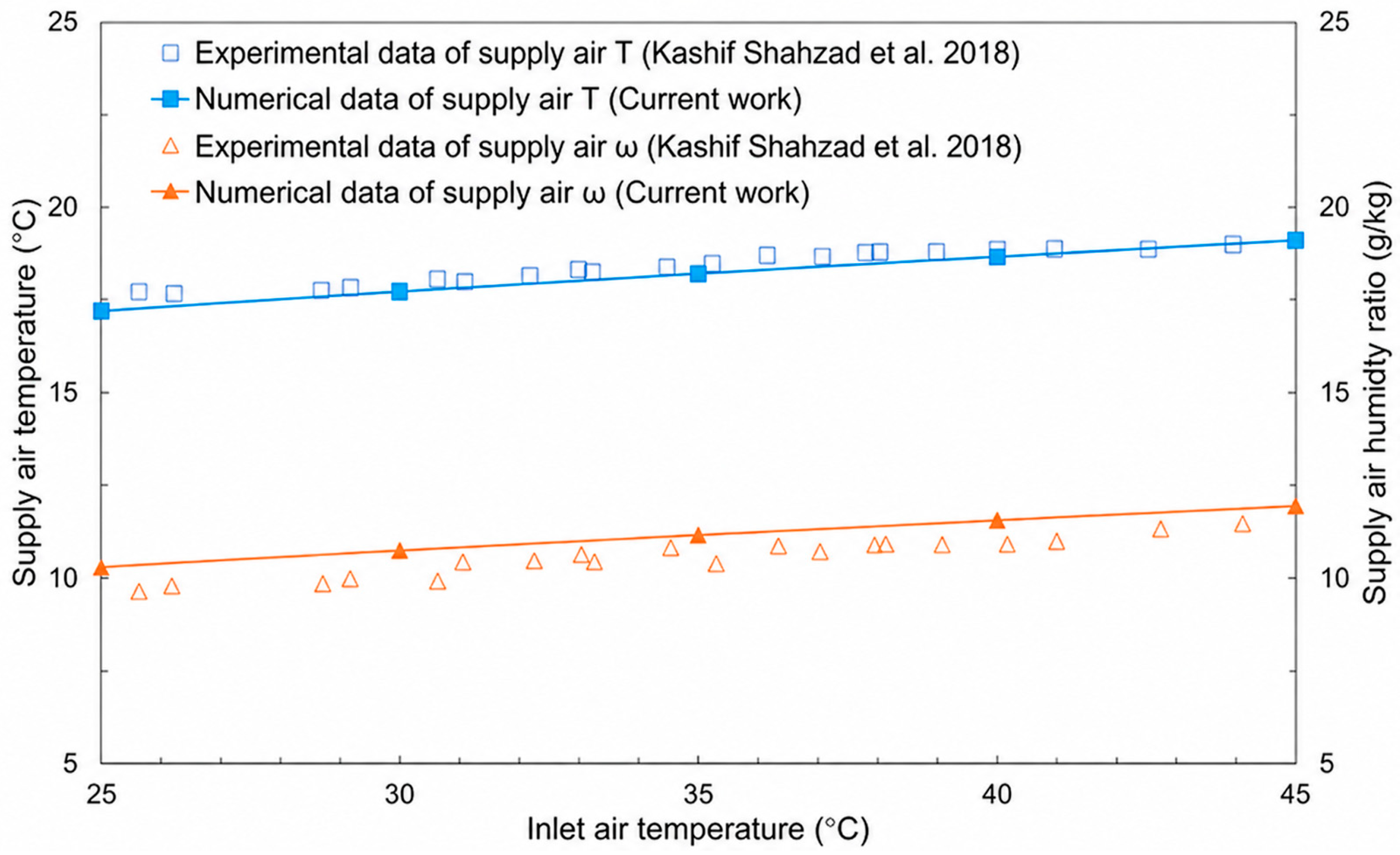
The systems investigated in this study consist of a solid desiccant M-cycle (SDM) and geothermal cooling units. To the best of the authors’ knowledge, no experimental study is currently available for the proposed integrated systems. Therefore, the validation of the overall model was considered in two parts: the validation of the solid desiccant M-cycle subsystem and the validation basis of the geothermal cooling unit. The geothermal cooling unit used in this research is simulated using a validated TRNSYS module. Therefore, the main focus of system model validation is to verify the SDM model. To achieve this objective, the experimental work conducted by Kashif Shahzad et al. [14] is selected as a benchmark. The experimental data of supply air conditions are compared with the numerical results obtained at identical operating conditions, including outdoor air temperature spanning from 25 to 45 °C, air humidity of 14 g/kg, a regeneration temperature of 70 °C, and the M-cycle has a size of 0.9 m × 0.28 m × 0.48 m (L × W × H). The comparison results are presented in Figure 4, showing a good agreement between experimental and numerical results. The maximum discrepancies were found to be 2.6% and 9.1% for the temperature and humidity, respectively.

6. Results and Discussions

In this study, the performance of the three proposed systems is investigated comprehensively under various operating conditions, utilising TRNSYS 18 software. In addition, a case study is introduced to facilitate a deeper comprehension of the novel hybrid systems under a typical Australian climate. A detailed explanation is presented in the following sections, and the preliminary values of the operational parameters are shown in Table 2.

6.1. Sensible Cooling Performance Analysis

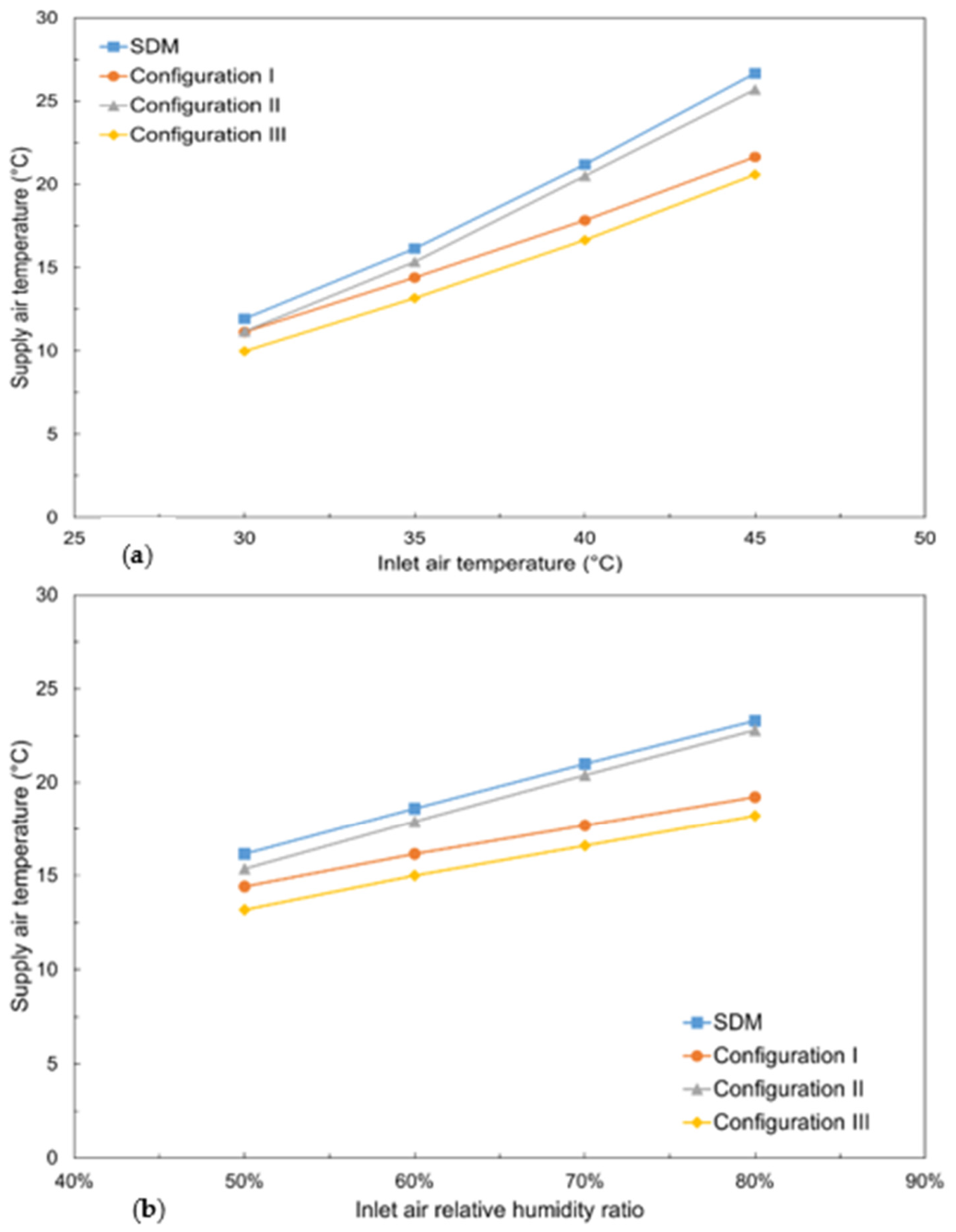
The sensible cooling performance of the three proposed systems is evaluated by analysing the product air temperature across a range of distinct ambient conditions. Furthermore, the SDM system is also examined as a benchmark for comparison against the proposed system, and the corresponding results are illustrated in Figure 5. In Figure 5a, it is observed that all three geothermal-assisted configurations yield lower supply air temperatures compared to the SDM system at various ambient temperatures. Configuration III demonstrates the lowest supply air temperature among the three schemes, ranging from 10.01 to 20.60 °C. For Configuration I and II, a similar product air temperature of around 11 °C is achieved when the ambient temperature is 30 °C. However, as the ambient temperature climbs, the supply air temperature for Configuration I and II rises, and the temperature variation between the two systems also rises. The product air temperature of Configuration II reaches 25.71 °C while the ambient temperature rises to 45 °C, while Configuration I maintains the temperature below 22 °C under the same conditions. This is because the precooling arrangement in Configuration I significantly lowers the desiccant wheel’s inlet air temperature, leading to enhanced dehumidification performance and increased water evaporation potential, ultimately resulting in a lower supply air temperature. Similar findings are found in Figure 5, where all three proposed configurations exhibit superior sensible cooling performance than the SDM system at different humidity levels. Configuration III presents the highest sensible cooling performance, with an average value of 15.74 °C, followed by Configuration I and II, with average values of 16.87 °C and 19.12 °C, respectively.

6.2. Latent Cooling Performance Analysis

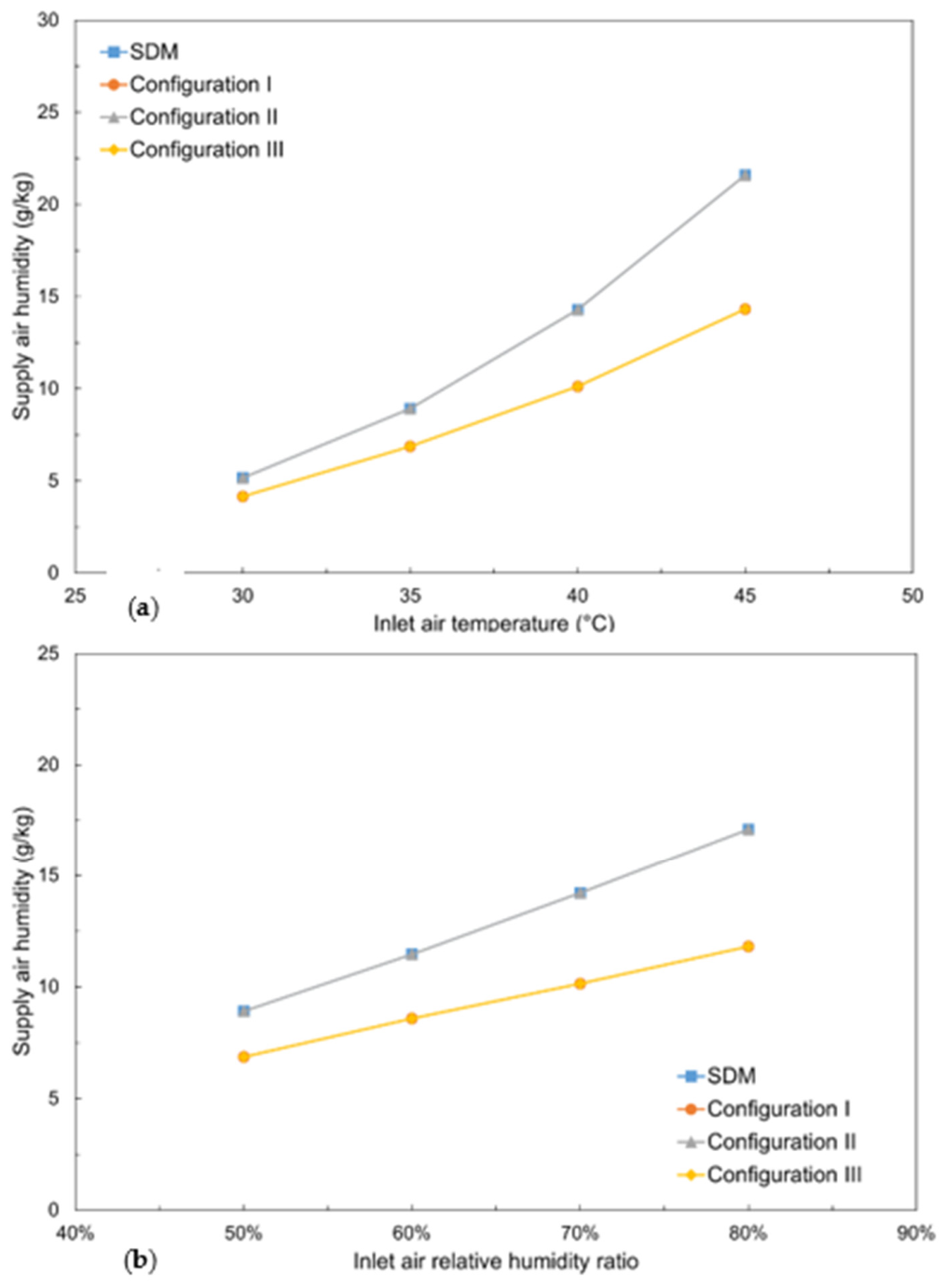
Figure 6 illustrates the impact of outdoor air conditions on the humidity ratio of product air. It can be identified that product air humidity values are overlapped between SDM and Configuration II, as well as between Configuration I and III. This phenomenon provides evidence that the precooling process has a positive effect on the dehumidification performance of the system. Specifically, in Figure 6a, it can be observed that for SDM and Configuration II, the product air humidity can exceed 20 g/kg when the outdoor temperature is 45 °C, surpassing the thermal comfort limits defined by the ASHRAE standard [36]. On the other hand, Configuration I and III are capable of maintaining the product air humidity below 15 g/kg under the same extreme conditions. Similar trends can be noticed for the product air humidity under varying ambient humidities, as depicted in Figure 6b. As the environmental humidity ratio rises, the product air humidity ratio for all the studied systems also rises. This is because the dehumidification performance of the desiccant wheel may deteriorate in humid environments. However, it is noteworthy that the systems equipped with precooling settings (Configuration I and III) are less affected by the changes in outdoor humidity, with a supply air humidity ratio ranging from 6.86 to 11.81 g/kg, which is up to 30.89% drier than that of SDM and Configuration II.
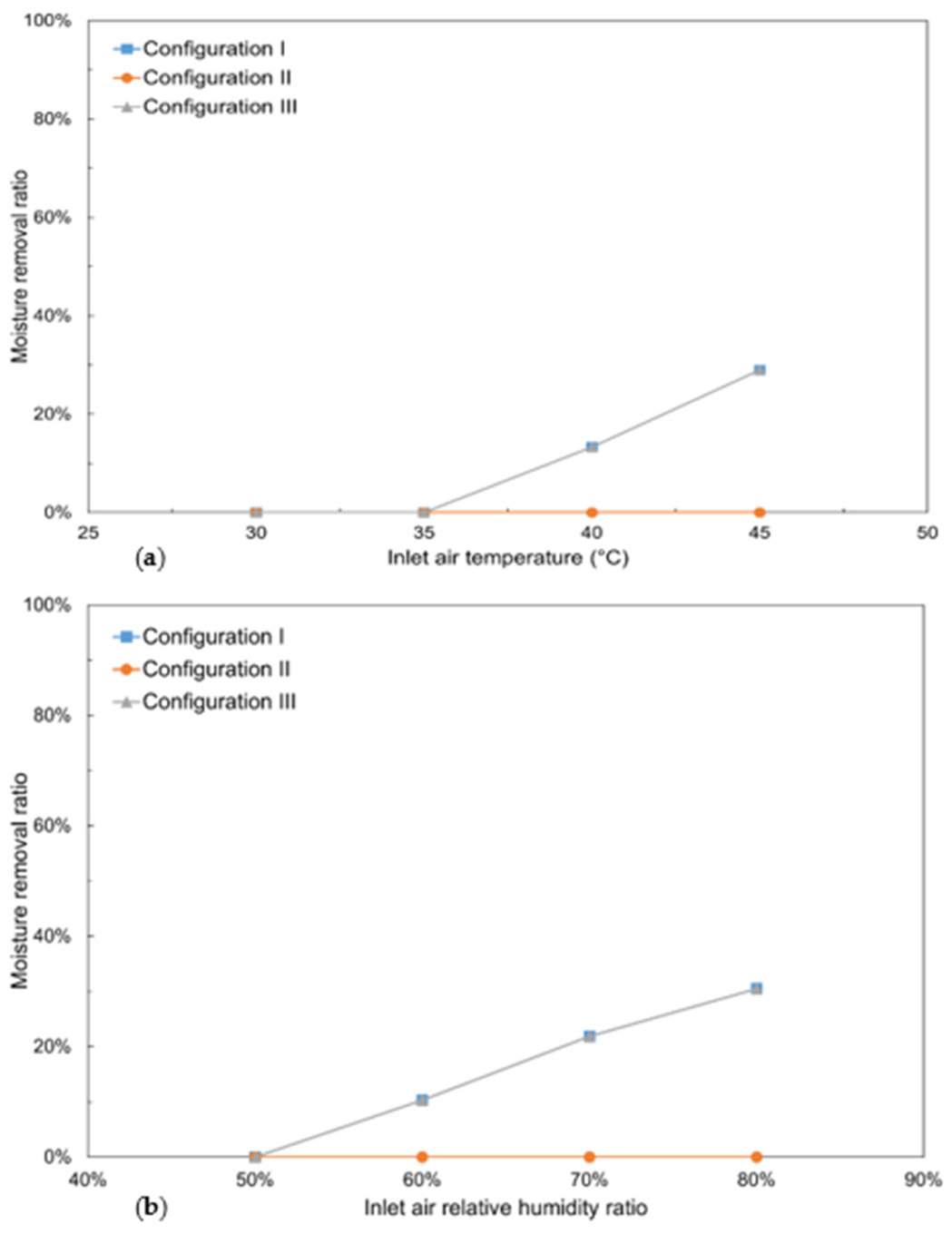
Figure 7 indicates the dehumidification effect of the geothermal cooling units caused by the condensation phenomenon. It is easy to identify that the moisture removal ratio maintains 0% for Configuration II under different inlet air conditions. It reveals that the geothermal cooling unit served for post-cooling cannot contribute to any dehumidification. This is due to the considerable reduction in dew point temperature of the process air as it passes through the desiccant wheel, limiting the post-cooling unit to merely reducing the sensible temperature of the air stream. In contrast, the systems with precooling arrangements display some dehumidification performance under specific conditions. Figure 7a denotes that Configuration I and III both maintain a moisture removal ratio of 0% while the inlet air temperature is below 35 °C. This is mainly attributed to the geothermal precooling unit, which reduces the temperature of the hot and humid inlet air to or below its dew-point temperature. Once the air reaches saturation, part of the water vapour condenses on the cooling coil surface, thereby removing moisture from the inlet air stream before it enters the desiccant wheel. However, as the ambient temperature increases to 40 °C and 45 °C, the moisture removal ratio also rises to 13.28% and 28.98%, respectively. Similarly, in Figure 7b, the systems with geothermal precooling show an increasing trend of moisture removal ratio, varying from 0 to 30.46%, as the ambient humidity changes from 50 to 80%, respectively.

6.3. Effect of Regeneration Temperature

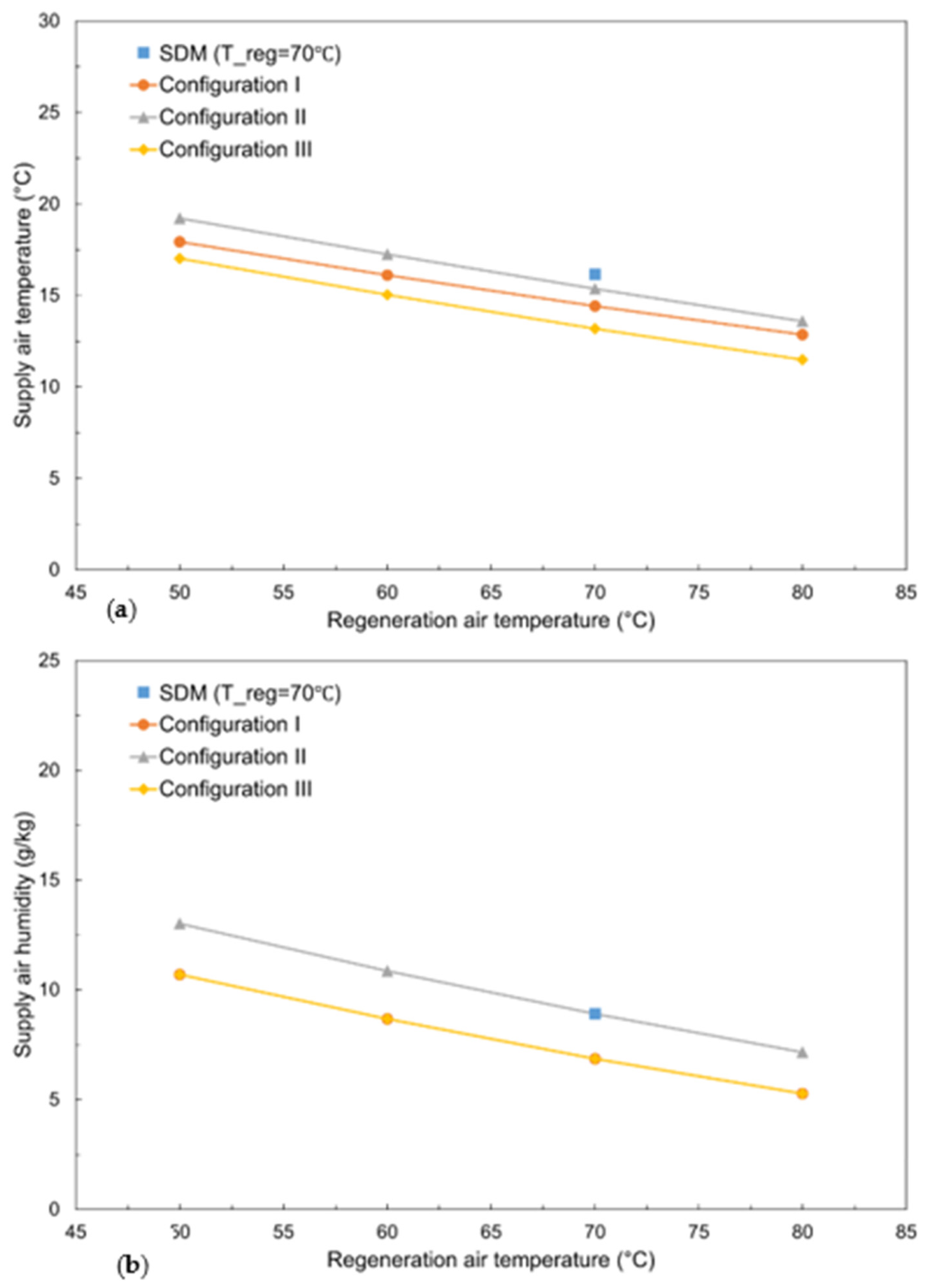
The influence of the regeneration temperature on the systems’ product air states is displayed in Figure 8. Figure 8a demonstrates that the product air temperature declines as the regeneration temperature increases. Configuration II can attain the same supply air temperature level as the SDM system with a lower regeneration temperature of 64.2 °C, compared to the 70 °C regeneration temperature required for the SDM system. For Configuration I and III, the regeneration temperature values can be even lower, 60.1 °C and 54.3 °C, respectively, to achieve comparable supply air temperature levels. Figure 8b reveals that the systems with a precooling process present a better dehumidification capability than those without precooling across a range of regeneration temperatures. On average, the supply air humidity ratio of Configuration I and III is 2.11 g/kg lower than that of SDM and Configuration II. Notably, Configuration I and III require only 59.3 °C regeneration air temperature to achieve the same dehumidification performance as SDM and Configuration II at a 70 °C regeneration temperature.

6.4. Water Consumption Rate Analysis

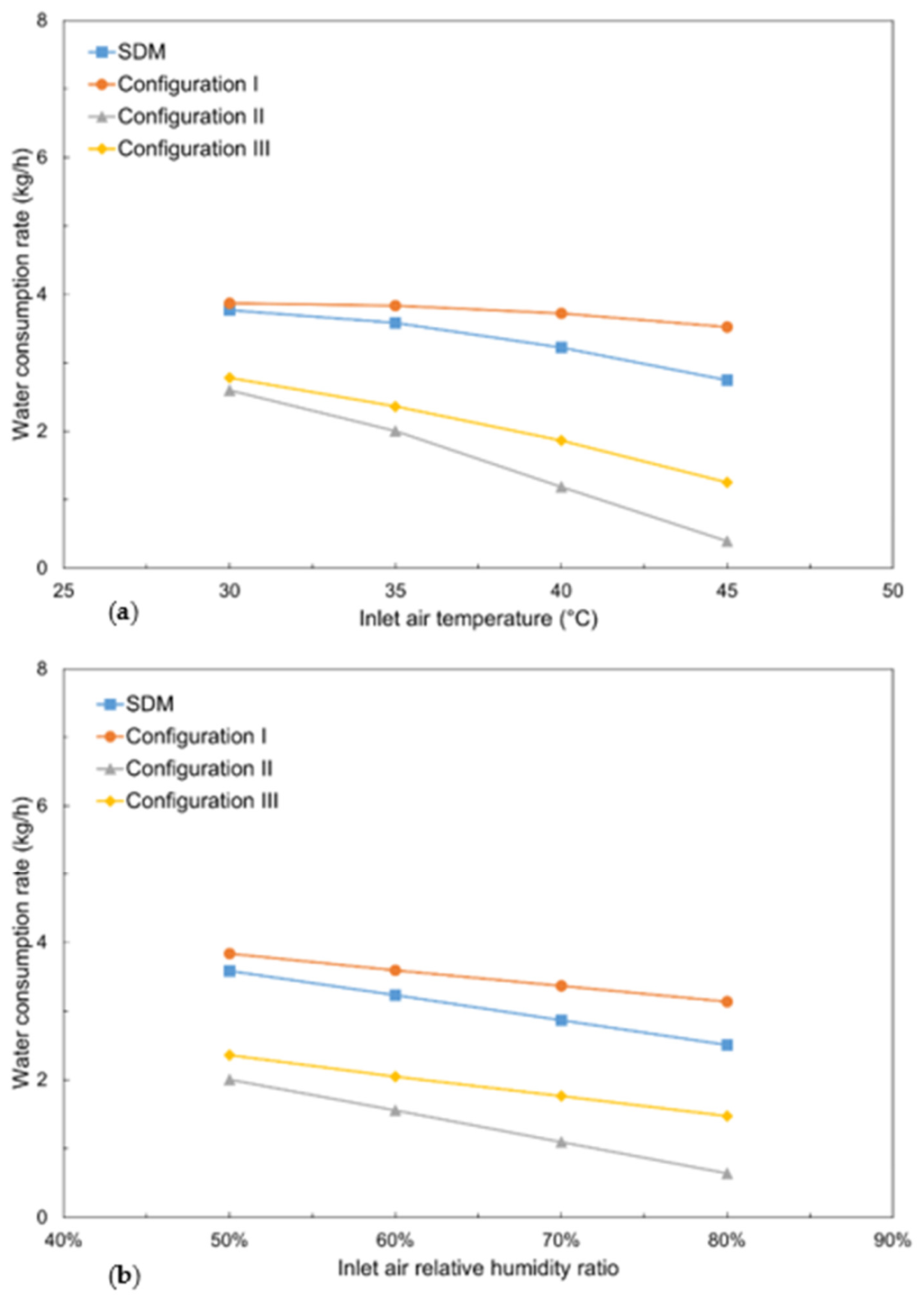
Figure 9 depicts the water consumption rates of the systems under varying ambient conditions. The findings indicate that the M-cycle evaporative cooler experiences a reduction in water consumption as the outdoor air humidity levels and temperature increase. This can be attributed to the limitations imposed on the dehumidification performance of the solid desiccant wheel by the humid and hot environment, which consequently diminishes the water evaporation rate in the evaporative cooler. From Figure 9a, it can be found that Configuration II and III consume less water than SDM, with respective mean values of 1.55 kg/h and 2.07 kg/h. This behaviour can be attributed to the geothermal unit functioning as a post-cooling unit, which effectively reduces the air temperature delivered to the M-cycle. In contrast, Configuration I presents the largest water usage rate with an average value of 3.74 kg/h among all the systems. As shown in Figure 9b, Configuration I consumes an average of 14.23% more water than the SDM system, while Configuration II and III use 56.49% and 37.27% less water than the SDM system, respectively.

6.5. System Thermal COP Analysis

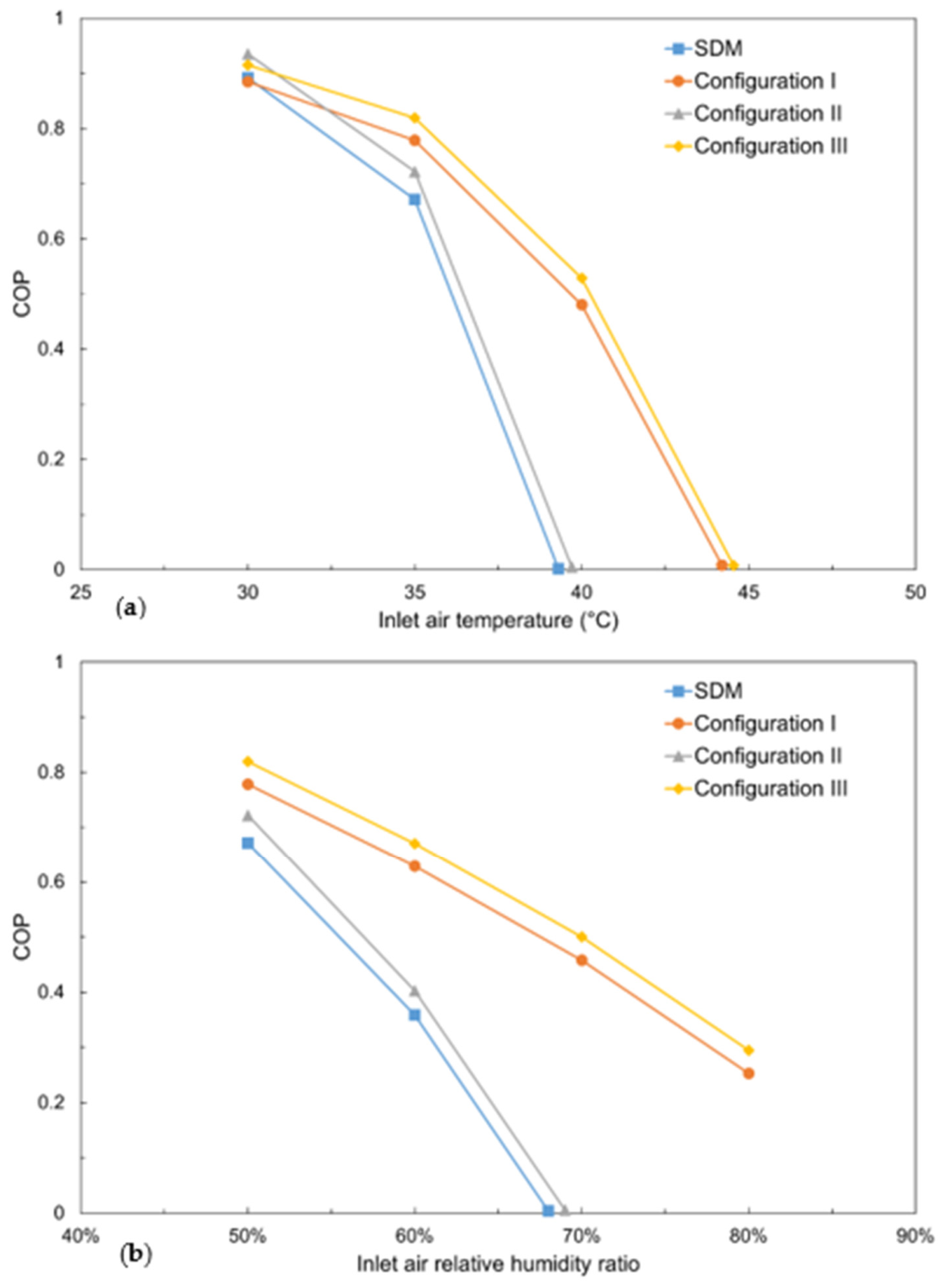
Figure 10 displays the impact of inlet air states on system thermal COP. It is evident that both inlet air temperature and humidity ratio have an adverse effect on thermal COP. When thermal COP declines to zero, the system fails to produce cooling loads to maintain indoor thermal comfort. As illustrated in Figure 10a, while the ambient temperature is 30 °C, the thermal COP values for all the systems hover around 0.9. A degradation trend in thermal COP is observed with an increase in ambient temperature, and this deterioration becomes more evident when the outdoor temperature exceeds 35 °C. Configuration I and III can maintain a thermal COP of approximately 0.5 when the ambient temperature reaches 40 °C, while the other two systems without precooling settings fail to provide any cooling loads. Moreover, Figure 10b indicates that Configuration III exhibits the highest thermal COP values, ranging from 0.82 to 0.29, while the ambient humidity ratio varies from 50 to 80%. Configuration I and II display a higher thermal COP than the SDM system. However, Configuration I shows superior performance in humid environments, with a thermal COP value of 0.25 when the humidity level is 80%, whereas the thermal COP of Configuration II decreases to zero when the outdoor humidity is 69%.

6.6. Comparison with Previous Studies

To further highlight the contribution of the present study, the main findings are compared with previous geothermal-assisted desiccant cooling studies, as summarised in Table 3.

6.7. Case Study

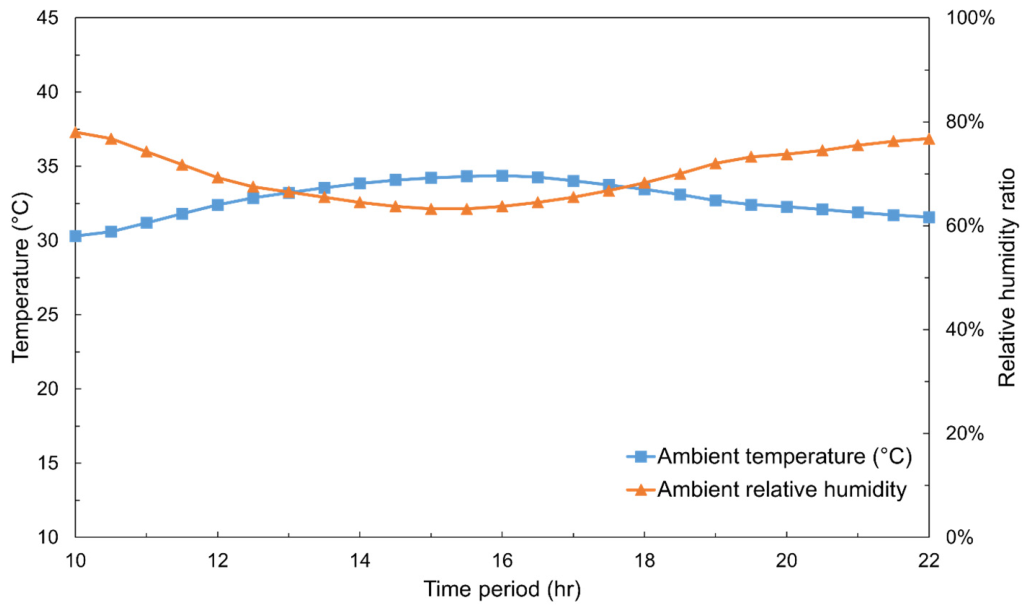
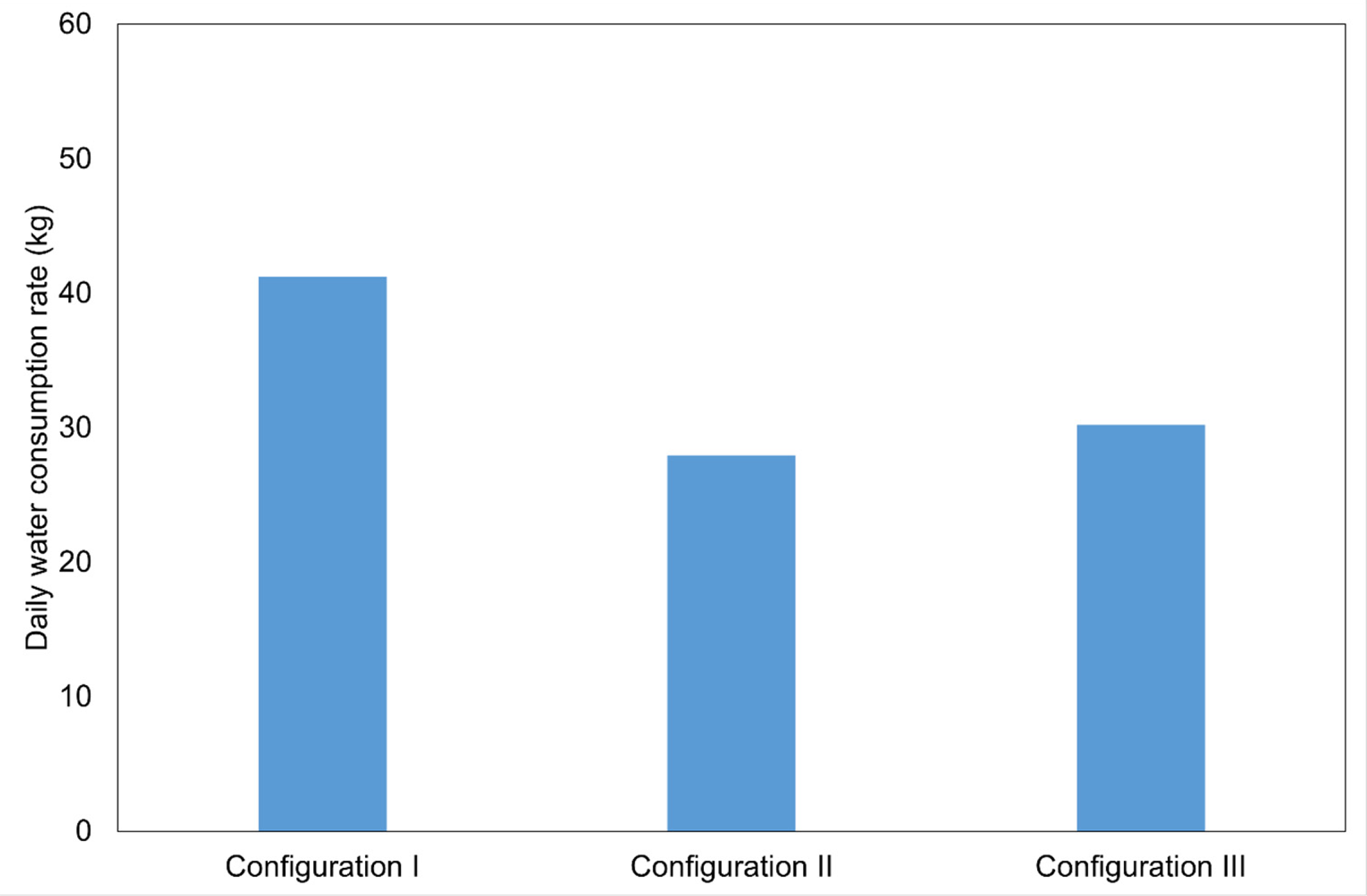
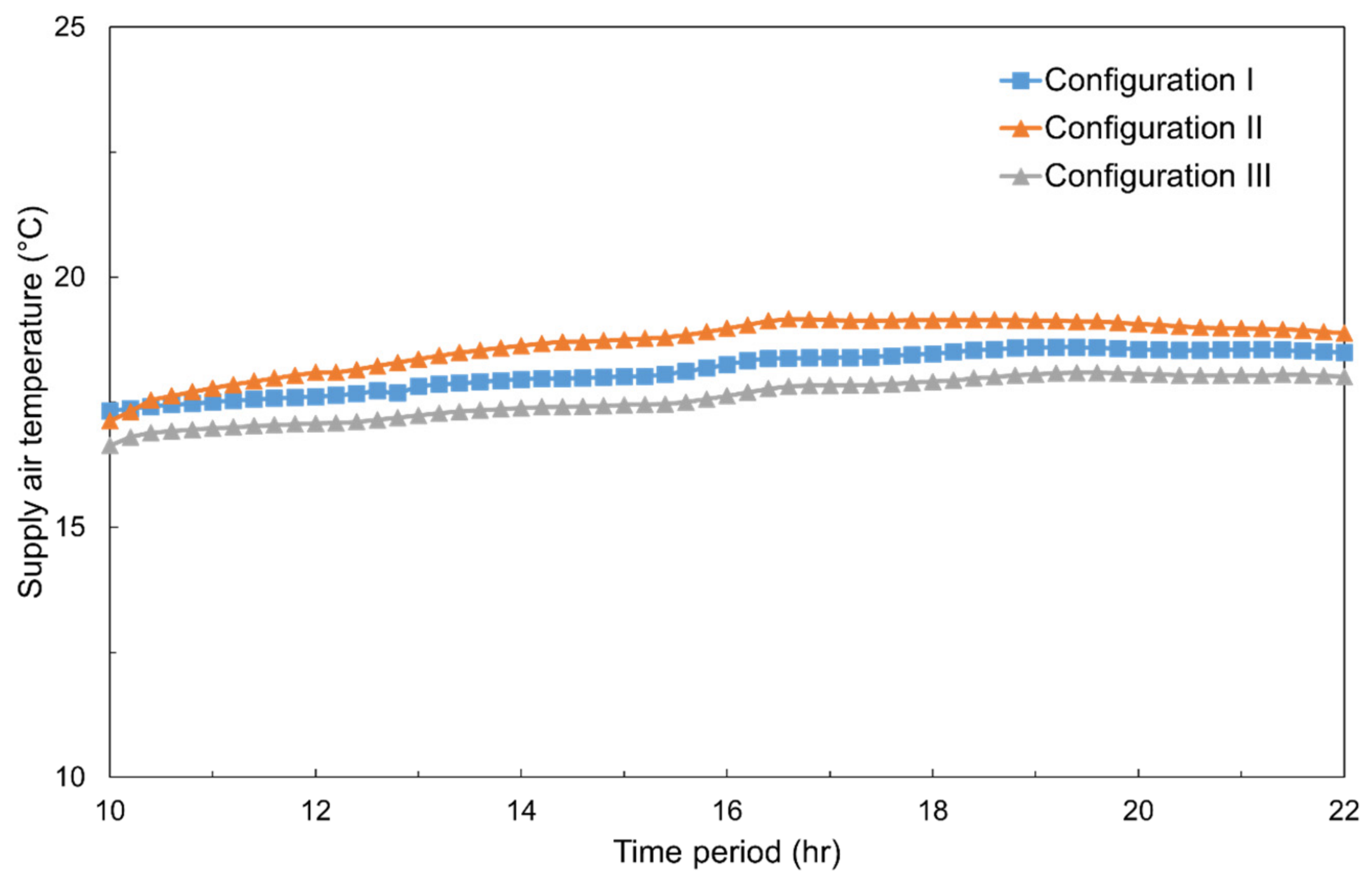
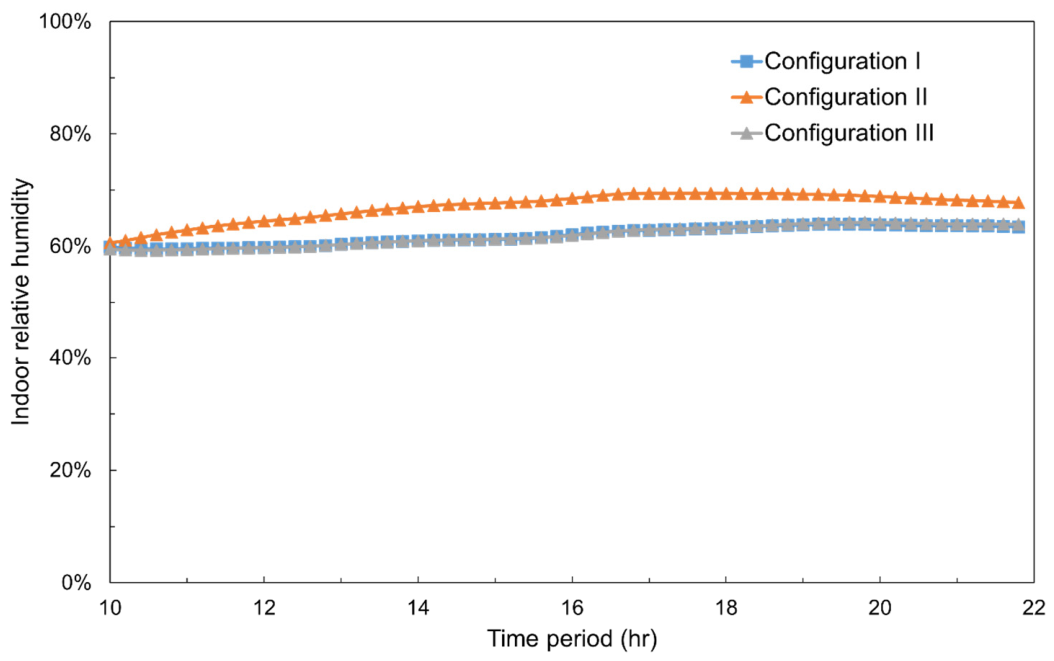
In this part, a case study is designed and conducted to evaluate the viability of the proposed systems in Darwin, Australia. This region is characterised by a tropical savanna climate, representing hot and humid conditions. The simulation is undertaken for a typical summer day, spanning from 8:00 to 20:00, using the meteorological data acquired from TRNSYS, as depicted in Figure 11. The outdoor temperature is observed to reach up to 35 °C, accompanied by an ambient humidity ratio that surpasses 60% throughout the entire day. The dynamic simulation of the product air temperature and indoor humidity ratio of the proposed systems is presented in Figure 12 and Figure 13, respectively. The results indicate that all three configurations can maintain the product air temperature below 20 °C under Darwin’s hot and wet conditions. Configuration I and III can also keep the indoor relative humidity ratio stable at around 60%, while Configuration II yields an indoor humidity ratio close to 70%, failing to satisfy the thermal comfort requirement. The daily water usage rate of the systems is implied in Figure 14. Configuration II consumes the lowest amount of water, at 27.95 kg per day, followed by Configuration III, at 30.22 kg. Configuration I uses 47.6% more water than Configuration II, with a value of 41.25 kg.

7. Conclusions and Future Studies

This study presented a numerical investigation into three novel ground-assisted M-cycle (GDM) cooling systems via TRNSYS. The primary difference between the three schemes was the placement of the shallow geothermal cooling unit. In Configuration I, the geothermal energy was used for precooling, while in Configuration II, the energy was utilised for post-cooling. Lastly, Configuration III employed geothermal energy for both precooling and post-cooling. This paper evaluated the proposed systems against a solid desiccant M-cycle cooling (SDM) system under various operating conditions. The investigation also included an analysis of the dehumidification due to the geothermal precooling arrangement. In addition, a case study was carried out to assess the feasibility of the proposed systems in Australia’s hot and humid climate. The main results can be summarised as follows:
  • All three GDM configurations demonstrated superior sensible cooling performance compared to the SDM system. Configuration III showed the lowest supply air temperature among the three schemes, varying from 10.01 to 20.60 °C with an inlet air temperature variation from 30 to 45 °C. Configuration I and II could maintain an average supply air temperature of 16.87 °C and 19.12 °C, respectively. This is because the precooling arrangement in Configuration I improved the dehumidification performance and evaporative cooling potential, leading to a lower supply air temperature than in Configuration II.
  • In relation to the latent cooling capability, Configuration I and III could sustain the product air humidity below 15 g/kg during the diverse ambient conditions. Conversely, Configuration II exhibited a supply air humidity level identical to the SDM since the post-cooling adjustment had no impact on the dehumidification performance of the system. Additionally, the precooling arrangement yielded a dehumidification contribution of up to 30.46% due to the condensation effect in conditions where the ambient humidity ratio was 80%.
  • The proposed systems could achieve a cooling performance similar to that of SDM when operated at a regeneration temperature of 70 °C but with a reduced regeneration temperature requirement ranging from 54.3 to 64.2 °C. Configuration I consumed 14.23% more water, while Configuration II and III only required 56.49% and 37.27% less water, respectively, than the SDM. Configuration III demonstrated the highest energy efficiency among the three configurations, with the highest thermal COP, ranging from 0.82 to 0.29 across varying humidity levels.
  • A case study was performed to evaluate the viability of the proposed systems under typical hot and humid environments. The findings showed that all three configurations could deliver supply air temperatures lower than 20 °C. However, solely the systems with a precooling arrangement could maintain the indoor relative humidity ratio around 60%, which aligned with the thermal comfort requirement. Regarding water consumption, the daily rate was 41.25 kg, 27.95 kg, and 30.22 kg for Configuration I, II, and III, respectively.
In summary, the proposed geothermal-integrated desiccant evaporative cooling systems demonstrate strong potential for improving cooling performance and reducing water consumption. However, the present study is limited to a thermodynamic performance assessment. Further experimental validation and techno-economic analysis are required to evaluate the practical feasibility of the proposed systems. In addition, future work should investigate the influence of local soil and hydrogeological conditions, including soil thermal properties, groundwater availability, installation depth, heat exchanger configuration, and long-term soil thermal balance. The dynamic performance of the solar subsystem, including solar energy contribution, collector efficiency variation, and heat storage behaviour, should also be further evaluated.

Author Contributions

Conceptualisation, L.L.; methodology, L.L. and X.W.; software, L.L.; validation, L.L.; formal analysis, L.L., X.W., G.K., E.H. and K.C.N.; investigation, L.L., X.W., G.K., E.H. and K.C.N.; writing—original draft preparation, L.L.; writing—review and editing, X.W., G.K., E.H. and K.C.N.; visualisation, L.L.; supervision: X.W., G.K., E.H. and K.C.N.; project administration, L.L. and X.W. All authors have read and agreed to the published version of the manuscript.

Funding

This research received no external funding.

Institutional Review Board Statement

Not applicable.

Informed Consent Statement

Not applicable.

Data Availability Statement

The data presented in this study are available on request from the corresponding author.

Conflicts of Interest

The authors declare no conflicts of interest.

Nomenclature

Aarea (m2)Subscripts
COPcoefficient of performancedrydry channels
c p specific heat of air (kJ/kg·K)evapevaporation
DECdirect evaporative cooling ccooling
GDMground-assisted desiccant M-cyclecsconditioned space
h c heat transfer coefficient (W/m2·K)geogeothermal
h enthalpy (J/kg)Gground
h m mass transfer coefficient (m/s)regregeneration process
IECindirect evaporative coolingsenssensible load
Lwater evaporation latent heat (J/kg)sasupply air
m ˙ mass flow rate (kg/s)WCwater consumption
Q ˙ rate of heat transfer (kW)wfwater film
SDMsolid desiccant M-cyclewetwet channels
Ttemperature (℃)
Zdepth (m)
Greek
α thermal diffusivity (m2/s)
ε effectiveness
φ moisture removal ratio
ω humidity ratio (g/kg)

References

  1. IEA. Global Status Report for Buildings and Construction 2019; IEA: Paris, France, 2019; Available online: https://www.iea.org/reports/global-status-report-for-buildings-and-construction-2019 (accessed on 7 July 2023).
  2. Zhou, X. Thermal and energy performance of a solar-driven desiccant cooling system using an internally cooled desiccant wheel in various climate conditions. Appl. Therm. Eng. 2021, 185, 116077. [Google Scholar] [CrossRef]
  3. Nemati, N.; Omidvar, A.; Rosti, B. Performance evaluation of a novel hybrid cooling system combining indirect evaporative cooler and earth-air heat exchanger. Energy 2021, 215, 119216. [Google Scholar] [CrossRef]
  4. Sajjad, U.; Abbas, N.; Hamid, K.; Abbas, S.; Hussain, I.; Ammar, S.M.; Sultan, M.; Ali, H.M.; Hussain, M.; Rehman, T.; et al. A review of recent advances in indirect evaporative cooling technology. Int. Commun. Heat Mass Transf. 2021, 122, 105140. [Google Scholar] [CrossRef]
  5. Dizaji, H.S.; Hu, E.J.; Chen, L. A comprehensive review of the Maisotsenko-cycle based air conditioning systems. Energy 2018, 156, 725–749. [Google Scholar] [CrossRef]
  6. Lai, L.; Wang, X.; Kefayati, G.; Hu, E. Analysis of a novel solid desiccant evaporative cooling system integrated with a humidification-dehumidification desalination unit. Desalination 2023, 550, 116394. [Google Scholar] [CrossRef]
  7. Sohani, A.; Sayyaadi, H.; Mohammadhosseini, N. Comparative study of the conventional types of heat and mass exchangers to achieve the best design of dew point evaporative coolers at diverse climatic conditions. Energy Convers. Manag. 2018, 158, 327–345. [Google Scholar] [CrossRef]
  8. Lai, L.; Wang, X.; Kefayati, G.; Hu, E. Evaporative Cooling Integrated with Solid Desiccant Systems: A Review. Energies 2021, 14, 5982. [Google Scholar] [CrossRef]
  9. Baakeem, S.S.; Orfi, J.; Mohamad, A.; Bawazeer, S. The possibility of using a novel dew point air cooling system (M-Cycle) for A/C application in Arab Gulf Countries. Build. Environ. 2019, 148, 185–197. [Google Scholar] [CrossRef]
  10. Gao, W.; Worek, W.; Konduru, V.; Adensin, K. Numerical study on performance of a desiccant cooling system with indirect evaporative cooler. Energy Build. 2015, 86, 16–24. [Google Scholar] [CrossRef]
  11. Gadalla, M.; Saghafifar, M. Performance assessment and transient optimization of air precooling in multi-stage solid desiccant air conditioning systems. Energy Convers. Manag. 2016, 119, 187–202. [Google Scholar] [CrossRef]
  12. Pandelidis, D.; Anisimov, S.; Worek, W.M.; Drąg, P. Comparison of desiccant air conditioning systems with different indirect evaporative air coolers. Energy Convers. Manag. 2016, 117, 375–392. [Google Scholar] [CrossRef]
  13. Lin, J.; Wang, R.Z.; Kumja, M.; Bui, T.D.; Chua, K.J. Modelling and experimental investigation of the cross-flow dew point evaporative cooler with and without dehumidification. Appl. Therm. Eng. 2017, 121, 1–13. [Google Scholar] [CrossRef]
  14. Shahzad, M.K.; Chaudhary, G.Q.; Ali, M.; Sheikh, N.A.; Khalil, M.S.; Rashid, T.U. Experimental evaluation of a solid desiccant system integrated with cross flow Maisotsenko cycle evaporative cooler. Appl. Therm. Eng. 2018, 128, 1476–1487. [Google Scholar] [CrossRef]
  15. Caliskan, H.; Lee, D.-Y.; Hong, H. Enhanced thermodynamic assessments of the novel desiccant air cooling system for sustainable energy future. J. Clean. Prod. 2019, 211, 213–221. [Google Scholar] [CrossRef]
  16. Delfani, S.; Karami, M. Transient simulation of solar desiccant/M-Cycle cooling systems in three different climatic conditions. J. Build. Eng. 2020, 29, 101152. [Google Scholar] [CrossRef]
  17. Pandelidis, D.; Pacak, A.; Cichoń, A.; Drąg, P.; Worek, W.; Cetin, S. Numerical and experimental analysis of precooled desiccant system. Appl. Therm. Eng. 2020, 181, 115929. [Google Scholar] [CrossRef]
  18. Harrouz, J.P.; Katramiz, E.; Ghali, K.; Ouahrani, D.; Ghaddar, N. Comparative analysis of sustainable desiccant—Evaporative based ventilation systems for a typical Qatari poultry house. Energy Convers. Manag. 2021, 245, 114556. [Google Scholar] [CrossRef]
  19. Lai, L.; Wang, X.; Kefayati, G.; Hu, E. Performance evaluation of a solar powered solid desiccant evaporative cooling system with different recirculation air ratios. Energy Build. 2022, 270, 112273. [Google Scholar] [CrossRef]
  20. Güzelel, Y.E.; Olmuş, U.; Büyükalaca, O. Simulation of a desiccant air-conditioning system integrated with dew-point indirect evaporative cooler for a school building. Appl. Therm. Eng. 2022, 217, 119233. [Google Scholar] [CrossRef]
  21. Guo, J.; Lin, S.; Bilbao, J.I.; White, S.D.; Sproul, A.B. A review of photovoltaic thermal (PV/T) heat utilisation with low temperature desiccant cooling and dehumidification. Renew. Sustain. Energy Rev. 2017, 67, 1–14. [Google Scholar] [CrossRef]
  22. Misha, S.; Mat, S.; Ruslan, M.H.; Sopian, K. Review of solid/liquid desiccant in the drying applications and its regeneration methods. Renew. Sustain. Energy Rev. 2012, 16, 4686–4707. [Google Scholar] [CrossRef]
  23. Liang, J.-D.; Kao, C.-L.; Tsai, L.-K.; Chiang, Y.-C.; Tsai, H.-C.; Chen, S.-L. Performance investigation of a hybrid ground-assisted desiccant cooling system. Energy Convers. Manag. 2022, 265, 115765. [Google Scholar] [CrossRef]
  24. Olabi, A.G.; Mahmoud, M.; Soudan, B.; Wilberforce, T.; Ramadan, M. Geothermal based hybrid energy systems, toward eco-friendly energy approaches. Renew. Energy 2020, 147, 2003–2012. [Google Scholar] [CrossRef]
  25. El-Agouz, S.A.; Kabeel, A.E. Performance of desiccant air conditioning system with geothermal energy under different climatic conditions. Energy Convers. Manag. 2014, 88, 464–475. [Google Scholar] [CrossRef]
  26. Rayegan, S.; Motaghian, S.; Heidarinejad, G.; Pasdarshahri, H.; Ahmadi, P.; Rosen, M.A. Dynamic simulation and multi-objective optimization of a solar-assisted desiccant cooling system integrated with ground source renewable energy. Appl. Therm. Eng. 2020, 173, 115210. [Google Scholar] [CrossRef]
  27. Guo, J.; Bilbao, J.I.; Sproul, A.B. A novel solar cooling cycle—A ground coupled PV/T desiccant cooling (GPVTDC) system with low heat source temperatures. Renew. Energy 2020, 162, 1273–1284. [Google Scholar] [CrossRef]
  28. Chen, L.; Tan, Y. The performance of a desiccant wheel air conditioning system with high-temperature chilled water from natural cold source. Renew. Energy 2020, 146, 2142–2157. [Google Scholar] [CrossRef]
  29. Klein, S.A. TRNSYS 18: A Transient System Simulation Program; Solar Energy Laboratory, University of Wisconsin: Madison, WI, USA, 2017; Available online: http://sel.me.wisc.edu/trnsys (accessed on 1 July 2024).
  30. Farooq, A.S.; Badar, A.W.; Sajid, M.B.; Fatima, M.; Zahra, A.; Siddiqui, M.S. Dynamic simulation and parametric analysis of solar assisted desiccant cooling system with three configuration schemes. Sol. Energy 2020, 197, 22–37. [Google Scholar] [CrossRef]
  31. Khalajzadeh, V.; Farmahini-Farahani, M.; Heidarinejad, G. A novel integrated system of ground heat exchanger and indirect evaporative cooler. Energy Build. 2012, 49, 604–610. [Google Scholar] [CrossRef]
  32. El Loubani, M.; Ghaddar, N.; Ghali, K.; Itani, M. Hybrid cooling system integrating PCM-desiccant dehumidification and personal evaporative cooling for hot and humid climates. J. Build. Eng. 2021, 33, 101580. [Google Scholar] [CrossRef]
  33. Zheng, X.; Ge, T.S.; Wang, R.Z. Recent progress on desiccant materials for solid desiccant cooling systems. Energy 2014, 74, 280–294. [Google Scholar] [CrossRef]
  34. Jurinak, J.J. Open Cycle Solid Desiccant Cooling—Component Models and System Simulations. Ph.D. Thesis, The University of Wisconsin, Madison, Ann Arbor, MI, USA, 1982. [Google Scholar]
  35. Min, Y.; Chen, Y.; Yang, H. Numerical study on indirect evaporative coolers considering condensation: A thorough comparison between cross flow and counter flow. Int. J. Heat Mass Transf. 2019, 131, 472–486. [Google Scholar] [CrossRef]
  36. ASHRAE. 2017 ASHRAE Handbook Fundamentals, Chapter 8 Thermal Comfort; American Society of Heating, Refrigerating, and Air-Conditioning Engineering: Peachtree Corners, GA, USA, 2017. [Google Scholar]
Figure 1. Schematic and psychrometric charts for Configuration I (GDM with geothermal energy for precooling).
Applsci 16 04736 g001
Figure 2. Schematic and psychrometric charts for Configuration II (GDM with geothermal energy for post-cooling).
Applsci 16 04736 g002
Figure 3. Schematic and psychrometric charts for Configuration III (GDM with geothermal energy for both precooling and post-cooling).
Applsci 16 04736 g003
Figure 4. Comparison of experimental data [14] with the numerical model at an ambient air humidity ratio of 14 g/kg.
Applsci 16 04736 g004
Figure 5. Influence of inlet air conditions, (a) temperature and (b) relative humidity ratio, on supply air temperature.
Applsci 16 04736 g005
Figure 6. Influence of inlet air conditions, (a) temperature and (b) relative humidity ratio, on supply air humidity.
Applsci 16 04736 g006
Figure 7. Influence of inlet air conditions, (a) temperature and (b) relative humidity ratio, on moisture removal ratio by geothermal cooling.
Applsci 16 04736 g007
Figure 8. Influence of regeneration temperature on supply air (a) temperature and (b) humidity ratio.
Applsci 16 04736 g008
Figure 9. Impact of ambient (a) temperature and (b) humidity ratio on systems’ water usage rate.
Applsci 16 04736 g009
Figure 10. Thermal COP of the systems under various inlet air (a) temperature and (b) humidity ratio.
Applsci 16 04736 g010
Figure 11. Outdoor condition of a typical summer day in Darwin.
Applsci 16 04736 g011
Figure 12. Product air temperature under Darwin summer conditions.
Applsci 16 04736 g012
Figure 13. Indoor relative humidity under a summer day in Darwin.
Applsci 16 04736 g013
Figure 14. Daily water consumption on a typical summer day in Darwin.
Applsci 16 04736 g014
Table 1. The main modules used in the simulation.
TRNSYS ModuleComponent NameDescription
Type 15-2Weather informationProvide meteorological data for the selected region
Type 1Solar collectorFlat-type solar thermal collector;
Area: 15 m2
Type 158Water tankSolar thermal energy storage tank;
Volume: 0.3 m3
Type 114PumpCirculate the water in the solar water heating system;
Flow rate: 560 kg/h
Type 77Soil temperature profileObtain the vertical temperature distribution of the ground;
Depth at point: 5 m
Type 508aCooling coilGeothermal groundwater cooling coil;
Bypass fraction: 0.15
Type 1716Solid desiccant wheelRotary desiccant dehumidifier containing nominal silica gel;
ε F 1 : 0.05
ε F 2 : 0.95
Humidity mode: 1
Type 760Rotary heat wheelHeat exchanger between process and regeneration air flows;
ε s e n s : 0.85
Type 6Electrical heaterAn auxiliary heater that raises the temperature to the desired value;
Set point: 70 °C
Type 66M-cycle IECM-cycle cooler, built with EES and connected with TRNSYS by calling an external programme function;
Height: 0.48 m
Length: 0.9 m
Width: 0.28 m
Type 148Flow mixerCombine two air flows into one air flow;
Humidity mode: 1
Type 112aFanConstant speed fan;
Airflow rate: 660 kg/h
Efficiency of motor: 0.9
Type 690Conditioned spaceInitial humidity ratio: 60%
Initial temperature: 25 °C
Type 65Online plotterPresent the selected variables
Table 2. The preliminary value of operational parameters.
Working ParametersPreliminary Value
Outdoor temperature 35 °C (Range: 30–45 °C)
Outdoor relative humidity (%)50% (Range: 50–80%)
Regeneration temperature (°C)70 °C (Range: 50–80 °C)
Process/regeneration air flow rate660 kg/h
Conditioned space temperature25 °C
Conditioned space humidity60%
Table 3. Key comparison of the literature and the present study outcomes.
StudyIntegration ArrangementKey Reported ResultComparison with the Present Study
El-Agouz and Kabeel [25]Geothermal cooling coil (post-cooling) + desiccant DEC coolingSupply air temperature: 12.7–21.7 °CPresent study further incorporates M-cycle cooling and the supply air temperature can be as low as 10.01 °C
Rayegan et al. [26]Geothermal cooling unit (post-cooling) + desiccant DEC coolingOptimisation study showed that payback period is 5.7 yearsPresent study focuses on thermodynamic comparison rather than economic analysis, and additionally compares precooling, post-cooling, and combined modes
Guo et al. [27]Geothermal cooling units (pre-cooling and post-cooling) + desiccant wheelRegeneration temperature reduced to 43–62 °CPresent study similarly confirms regeneration temperature reduction and further quantifies water consumption and condensation-based dehumidification
Chen and Tan [28]Natural cold source + desiccant wheelRequired regeneration temperature above 80 °CPresent study shows lower regeneration temperature requirements for comparable performance, especially 54.3 °C for Configuration III
Present studyThree GDM configurations with different geothermal locationsUp to 30.46% dehumidification contribution by condensation; thermal COP up to 0.82; 37.27% water saving versus SDMExtends previous studies by systematically comparing geothermal placement and quantifying both thermal and moisture-related benefits
Disclaimer/Publisher’s Note: The statements, opinions and data contained in all publications are solely those of the individual author(s) and contributor(s) and not of MDPI and/or the editor(s). MDPI and/or the editor(s) disclaim responsibility for any injury to people or property resulting from any ideas, methods, instructions or products referred to in the content.