Article

Integrated Bi-Objective Scheduling of an Assembly Job Shop with Synchronous Assembly, Blocking, and Restricted Material Handling Resources


1
Shenyang Institute of Automation, Chinese Academy of Sciences, 114 Nantajie, Shenyang 110016, China
2
University of Chinese Academy of Sciences, 19 Yuquanlu, Beijing 100049, China
*
Author to whom correspondence should be addressed.
Appl. Sci. 2026, 16(11), 5343; https://doi.org/10.3390/app16115343
Submission received: 23 March 2026 / Revised: 31 March 2026 / Accepted: 3 April 2026 / Published: 26 May 2026
(This article belongs to the Section Applied Industrial Technologies)

Abstract

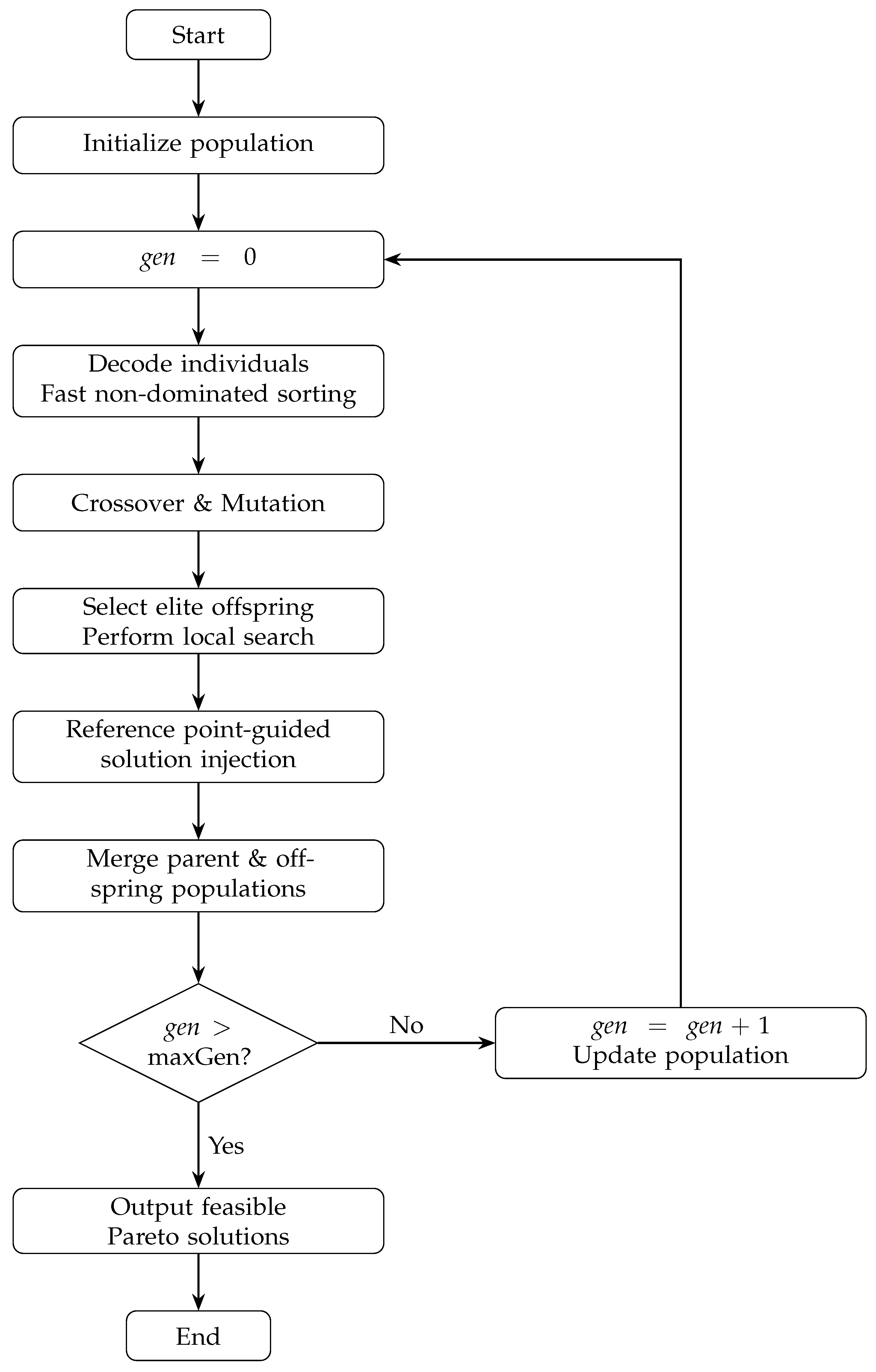
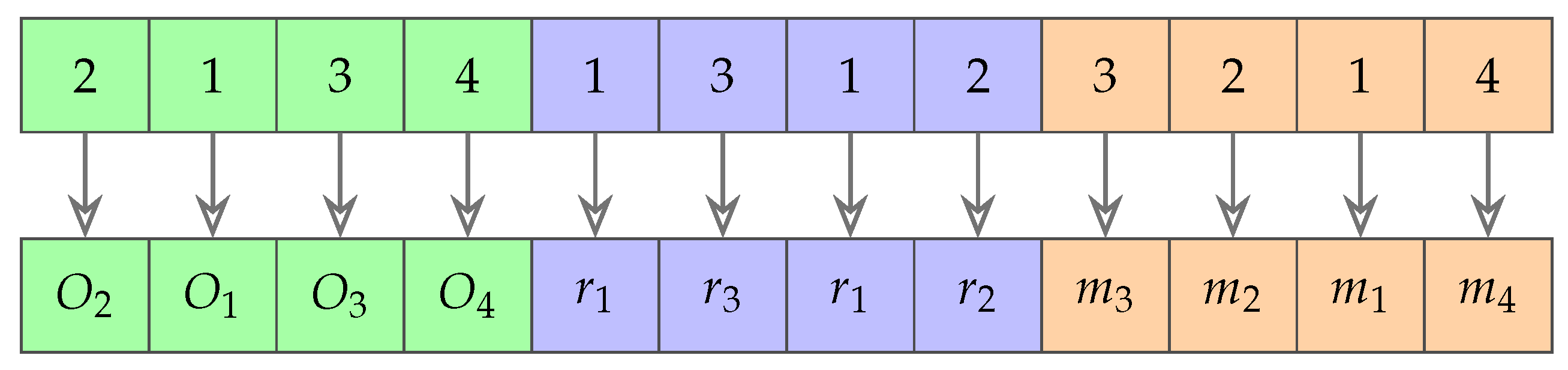
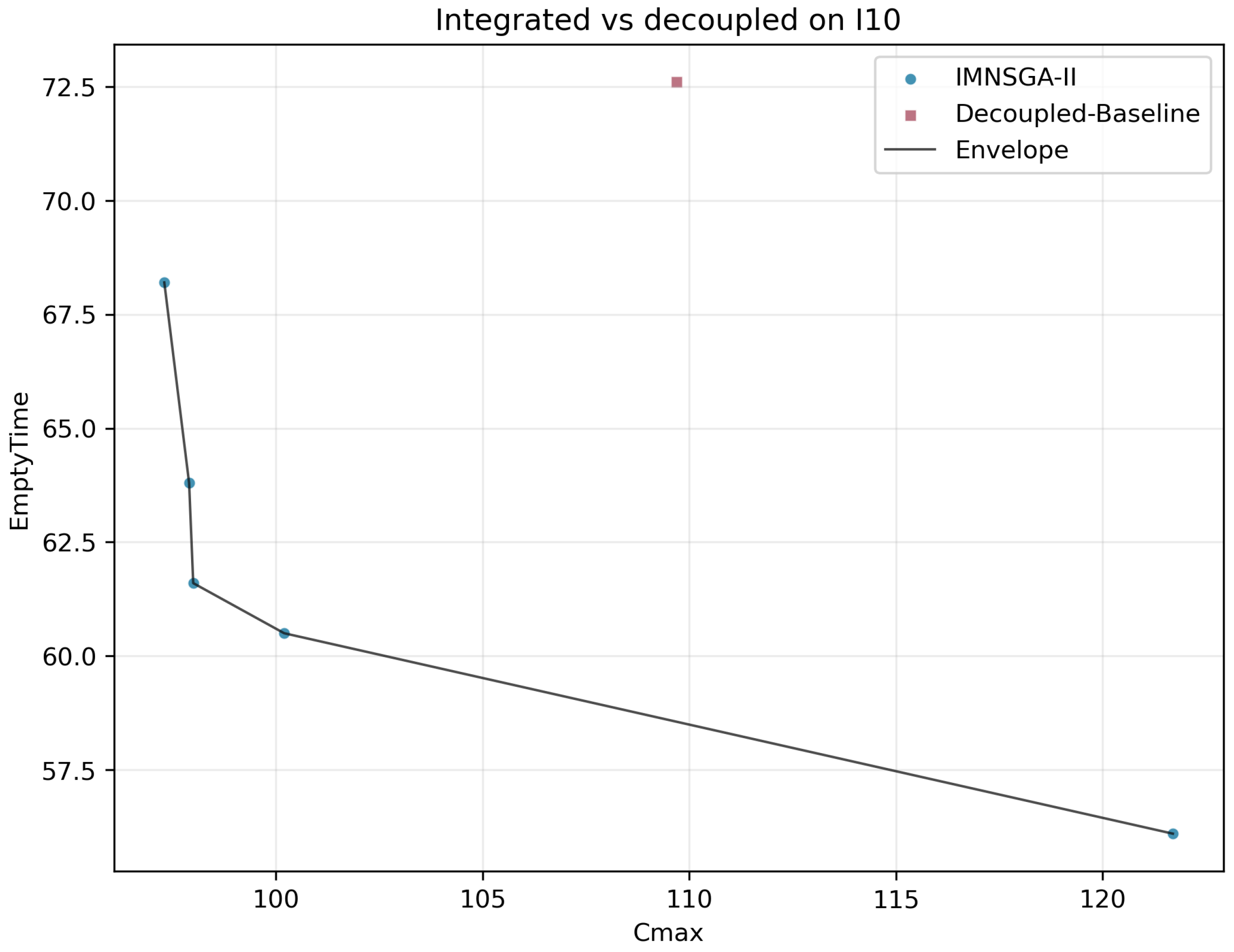
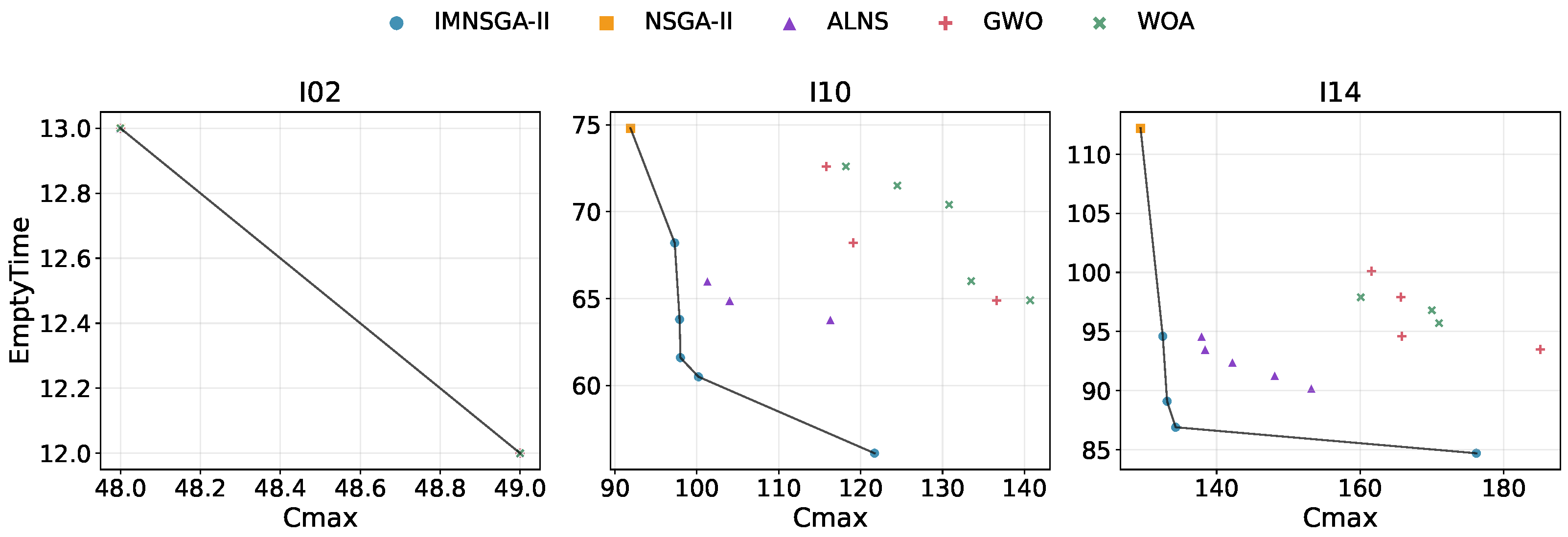
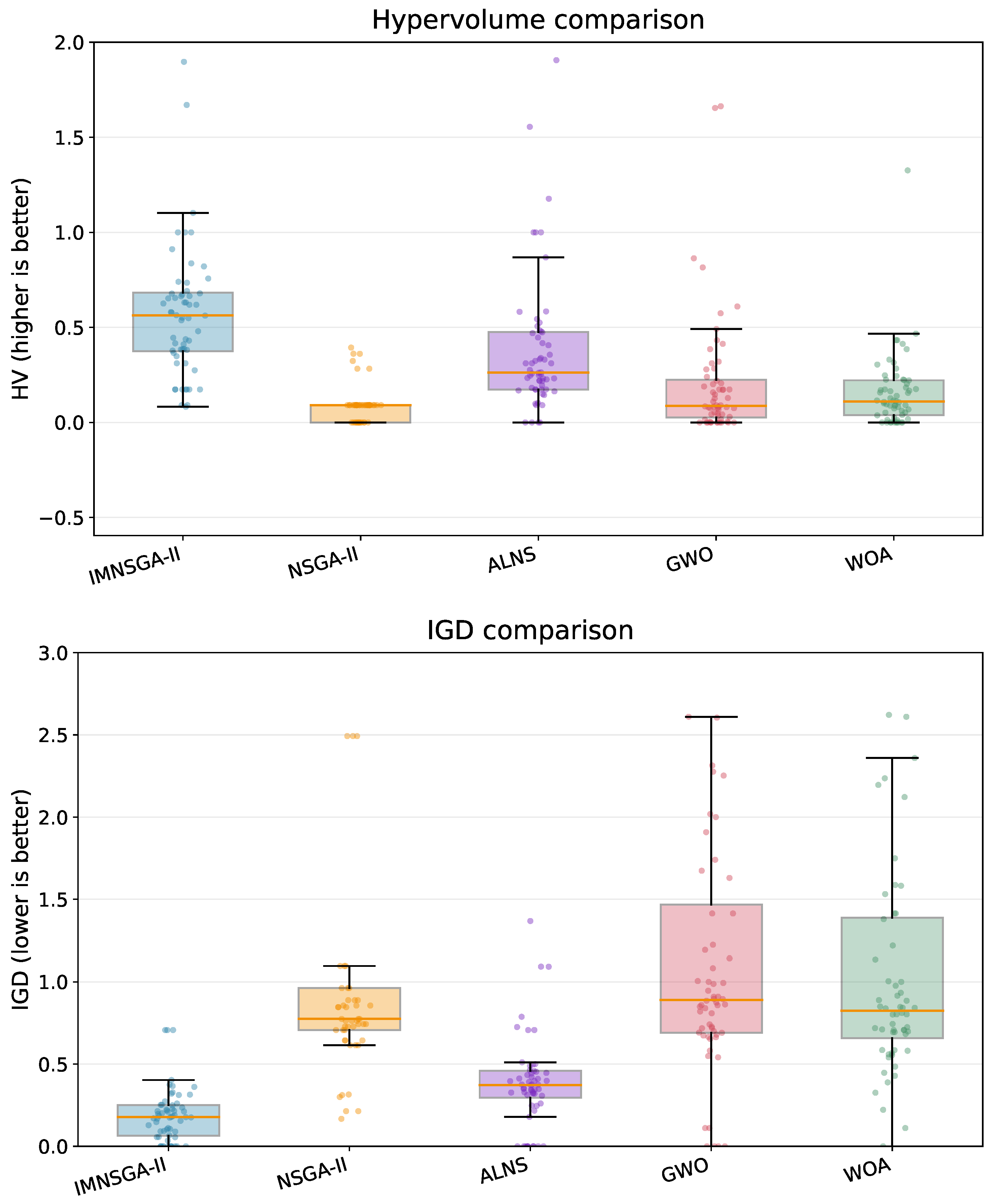
This paper addresses an integrated production–transportation scheduling problem in assembly workshops, encompassing the processes of part machining, material handling via handling resources, and final synchronous assembly. The finite buffer capacities of production resources can cause blocking, thereby reducing efficiency. Material handling resources are subject to different service area restrictions, and some share safety zones with production resources, preventing simultaneous processing. To address this, a mixed-integer programming model is formulated with makespan and total empty travel time as bi-objective optimization targets. Since the mixed-integer linear programming (MILP) model faces difficulties in solving medium- and large-scale instances, an improved memetic NSGA-II algorithm (IMNSGA-II) is proposed. The algorithm adopts a three-segment chromosome encoding and incorporates a VNS-SA local search mechanism within the global evolutionary framework of NSGA-II. Small-scale computational experiments using Gurobi are first used to verify the correctness of the model. Decoupling experiments further demonstrate the necessity of integrated optimization: compared with phased baseline methods, IMNSGA-II reduces makespan and empty travel time by approximately 10.16% and 12.33%, respectively. In ablation and comparative experiments, results based on hypervolume (HV) and inverted generational distance (IGD) show that the proposed method achieves better convergence, diversity, and overall Pareto front quality than multiple baseline algorithms. These experiments confirm the effectiveness of the proposed model and algorithm.
Keywords: integrated scheduling; assembly job shop; blocking buffer; AGV; multi-objective optimization; memetic algorithm integrated scheduling; assembly job shop; blocking buffer; AGV; multi-objective optimization; memetic algorithm