Article

Compositional Characterization of Milk Thistle (Silybum marianum) Seeds and Press Cake with Emphasis on Press Cake Valorization


by
Sina Makouie
1,
Jolanta Małajowicz
1,
Agata Gόrska
1,*,
Iga Piasecka-Lenartowicz
1,
Barbara Strojny-Cieślak
2,
Michał Pruchniewski
2,
Bartłomiej Zieniuk
1 and
Joanna Bryś
1
1
Department of Chemistry, Institute of Food Sciences, Warsaw University of Life Sciences—SGGW, 159C Nowoursynowska Str., 02-776 Warsaw, Poland
2
Department of Nanobiotechnology, Institute of Biology, Warsaw University of Life Sciences—SGGW, 8 Ciszewskiego Str., 02-786 Warsaw, Poland
*
Author to whom correspondence should be addressed.
Appl. Sci. 2026, 16(11), 5265; https://doi.org/10.3390/app16115265
Submission received: 20 April 2026 / Revised: 14 May 2026 / Accepted: 21 May 2026 / Published: 24 May 2026
(This article belongs to the Special Issue Advancements in Food Nutrition and Bioactive Compounds)

Abstract

Milk thistle (Silybum marianum) oil production generates substantial quantities of seed cake, an underutilized by-product with potential as a source of nutrients and bioactive compounds. This study aimed to characterize milk thistle cakes from two industrial sources (MTC1 and MTC2) and their corresponding seeds (MTS1 and MTS2), focusing on compositional properties, fatty acid profile, and antioxidant activity assessed using the DPPH scavenging assay. Proximate analysis showed that the cakes retained significant residual oil (9.26–14.51 g 100 g−1) and protein (16–19 g 100 g−1), with low water activity (<0.33), indicating good storage stability. Fatty acid analysis revealed a predominance of polyunsaturated fatty acids (49–52%), mainly linoleic acid (C18:2 n-6), confirming their nutritional value. Differences between industrial sources indicated variability associated with raw material and processing conditions. Extraction solvent significantly affected bioactive compound recovery from the oil fraction. Dichloromethane extracts exhibited higher total phenolic content (up to 8.87 mg GAE g−1) and stronger DPPH radical scavenging activity (up to 28.07%) compared to hexane extracts, which may be attributed to a greater extraction of moderately polar phenolic compounds, including flavonolignan-type constituents potentially associated with silymarin complex. Overall, milk thistle cake represents a promising raw material for the recovery of natural antioxidants and valuable lipids, supporting its application in functional food or feed products and sustainable biorefinery processes.

1. Introduction

The transition toward a circular bioeconomy has intensified the search for underutilized agro-industrial by-products as sustainable resources [1]. Among these, oilseed processing by-products represent a particularly abundant and underexploited resource. In the oil-processing sector, solid residues generated during seed pressing are often treated as waste, despite retaining substantial nutrition al and functional value [2]. The valorization of these materials is therefore important for improving both sustainability and economic performance.
Recent studies on oilseed press cakes further support the high valorization potential of mechanically processed by-products. Carrà et al. [3] demonstrated that flaxseed and hempseed cakes obtained through screw pressing are characterized by higher protein and dietary fiber content, as well as increased levels of phenolic compounds and antioxidant activity compared to the corresponding raw seeds. The authors also highlighted that processing parameters, particularly screw speed, temperature, and residence time, can significantly influence oil recovery efficiency, residual lipid content, and the stability of bioactive compounds, especially those sensitive to thermal degradation. In an industrial context, it should be emphasized that differences observed between press cakes originating from different production facilities may result from variations in technological parameters applied during oil extraction, such as press type, rotational speed, temperature conditions, and raw material moisture. These factors affect not only extraction efficiency but also the microstructure of the resulting matrix and the accessibility and stability of bioactive constituents. Consequently, variations in the chemical composition of press cakes may reflect complex interactions between processing conditions and raw material properties, which justifies a more in-depth analysis and interpretation of the observed differences, particularly in relation to industrial processing variability.
Milk thistle (Silybum marianum L.), a member of the Asteraceae family, is widely cultivated for its seeds, which are recognized as a valuable source of edible oil and silymarin, a hepatoprotective complex composed mainly of flavonolignans such as silybin, silychristin, and silydianin [4,5]. The species is cultivated across Europe, Asia, North and South America, and southern Australia, and demonstrates considerable adaptability to diverse environmental and climatic conditions. Poland is considered an important European producer, with the cultivated area estimated at approximately 2000 ha [6]. Under cultivation, it is mostly grown as an annual crop, although under wild conditions it is commonly classified as biennial. The species is adapted to a wide range of environments, including semi-arid Mediterranean regions, and prefers soils with a pH of approximately 5.5–7.6 [6]. Reported seed yields typically range from 0.25 to 1.80 t ha−1, while silymarin yields may range from 10 to 40 kg ha−1, depending on genotype, environmental conditions, and agronomic practices [6]. According to pharmacopoeial requirements, mature fruits should contain at least 1.5–2.0% silymarin on a dry matter basis. However, cultivation and industrial utilization are challenged by fruit shattering, asynchronous flowering and ripening, spiny plant habit, and variability in silymarin content [6]. In recent years, industrial interest in milk thistle has increased due to the growing demand for silymarin-containing products in the pharmaceutical, nutraceutical, and functional food sectors. The plant has a long history of use in traditional medicine, particularly in the treatment of liver disorders, which has contributed to its continued scientific and industrial interest. In addition to these well-characterized bioactive compounds, milk thistle seeds contain proteins with a favorable amino acid profile, carbohydrates, minerals, and essential fatty acids, indicating broader nutritional and functional potential [7,8]. They may also provide other minor constituents, including phenolic compounds, which can contribute to antioxidant activity. After oil extraction, the resulting press cake may still retain significant amounts of residual lipids, proteins, and bioactive compounds, making it a promising and underutilized raw material for further valorization. Despite this well-documented composition, the post-extraction residue has received comparatively less attention.
Although some studies have investigated residual silymarin and selected components in milk thistle cake [9,10,11], its broader valorization potential remains insufficiently characterized. Most of the available research has focused on isolated aspects of its composition, while a more comprehensive evaluation of its nutritional and functional properties is still lacking.
The quality and physicochemical composition of grains are strongly influenced by cultivar type and cultivation conditions, including soil and climate. These factors also indirectly affect the composition and quality of the resulting press cake. Additionally, methodological aspects related to analytical extraction may further impact the determined composition and bioactive profile of the cake [6].
Extraction conditions should also be carefully considered when evaluating oilseed by-products, as the choice of solvent affects not only the efficiency of lipid recovery but also the qualitative composition of the obtained extracts. In particular, solvent polarity plays a key role in determining the selectivity toward different groups of compounds, influencing the extraction of neutral lipids as well as more complex or minor constituents. As a result, alongside lipids, various bioactive compounds—such as phenolic compounds and molecules with antioxidant activity—may be co-extracted to different extents depending on the solvent used [12,13]. These differences can significantly impact the interpretation of both nutritional value and functional properties of the analyzed material. Therefore, comparative analyses employing solvents with differing physicochemical properties may provide a more comprehensive and reliable assessment of the overall potential of milk thistle cake as a source of valuable compounds.
The physicochemical characterization of milk thistle (Silybum marianum) seeds and the comparison of their composition with the corresponding press cake provide valuable insights into the quality and potential applicability of this by-product. Such analyses may support the assessment of press cake suitability for applications in food systems, animal feed, and functional ingredients. In this context, the characterization of milk thistle seeds and press cake is scientifically justified and aligned with current strategies focused on resource efficiency, by-product valorization, and waste minimization.
The aim of this study was to evaluate the physicochemical properties of milk thistle (Silybum marianum) seeds obtained from two different sources and to compare them with the corresponding press cakes. In addition, the study aimed to characterized the fatty acid profile of the oil and to assess the phenolic content and antioxidant activity of the oil fraction obtained using different solvents, in order to better understand the composition and potential of bioactive compounds associated with the extracted oil. The findings of this study may support the development of higher-value applications for milk thistle cake, including functional feed ingredients, bioactive extracts, and biorefinery streams, thereby contributing to more sustainable agro-industrial practices.

2. Materials and Methods

2.1. Sample Collection and Preparation

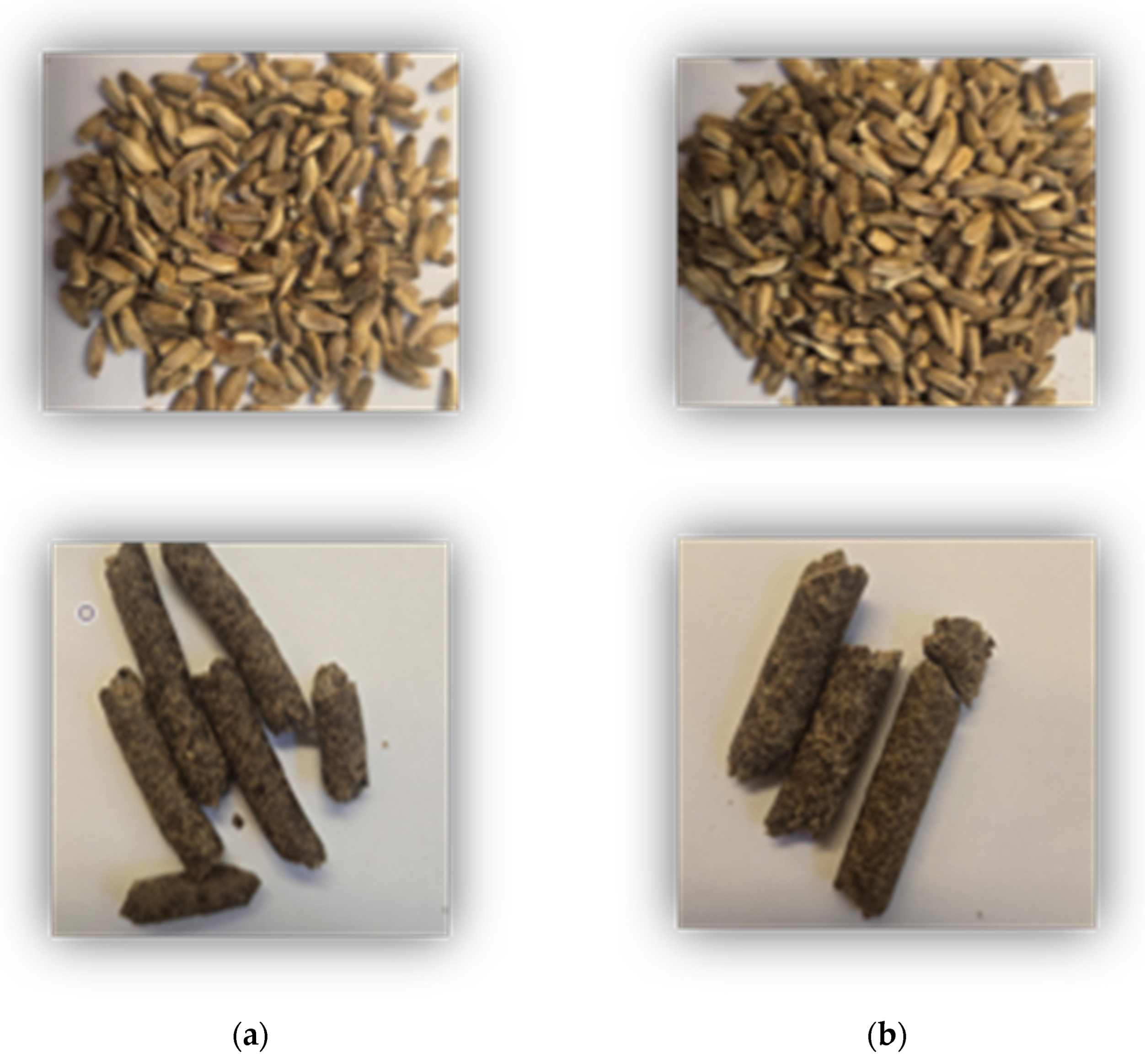
Milk thistle cake samples (MTC1 and MTC2) were obtained from two independent Polish oil producers, and represented commercially relevant materials derived from commonly cultivated milk thistle varieties in Poland. MTC1 originated from the Silma cultivar (Pliczko farm, Woźniki, Poland), while MTC2 was derived from the Silyb cultivar (Sosta Sp. z o.o., Racibórz, Poland). For comparative analysis, corresponding seed samples (MTS1 and MTS2) from the same producers were included (Figure 1). Prior to analysis, all samples were ground using a laboratory mill, passed through a sieve to obtain uniform particle size, and stored in airtight containers at 4 °C to maintain sample integrity. Because samples originated from commercial producers, differences observed between sources may reflect the combined effects of cultivar and processing conditions. Although detailed industrial parameters were not disclosed, differences between producers likely reflect variations in pressing temperature, pressure intensity, and oil recovery efficiency. These factors may influence residual oil content, structural characteristics of the matrix, and the retention of bioactive compounds.
Hexane (≥95%) and dichloromethane (≥99.8%) used for solvent extractions were purchased from Sigma-Aldrich (St. Louis, MO, USA). All other reagents and chemicals, including gallic acid, Folin–Ciocalteu reagent, DPPH (2,2-diphenyl-1-picrylhydrazyl), sodium carbonate, and methanol, were of analytical grade and obtained from Merck (Darmstadt, Germany). Distilled water was used throughout all analyses.

2.2. Extraction Method

Prior to extraction, milk thistle seeds and seed cakes were ground to obtain a homogeneous material. Oil extraction was performed using the Soxhlet method with two different solvents, namely n-hexane and dichloromethane, used as extraction solvents with differing polarity. Of the two solvents used, hexane is the more popular and permitted in extraction processes from food raw materials (while maintaining residue limits).
About 15 g of ground sample was placed in a cellulose thimble and extracted with 150 mL of solvent (1:10, w/v) using a standard Soxhlet apparatus. Extraction was carried out under continuous solvent reflux for 6 h, based on conditions previously reported [14], at the respective boiling point of each solvent (approximately 69 °C for n-hexane and 40 °C for dichloromethane), ensuring repeated washing of the solid matrix and efficient recovery of lipid fractions. After extraction, the system was allowed to cool to room temperature, and the solvent was removed under reduced pressure using a rotary evaporator at 40 °C to minimize thermal degradation. The extracted oils were weighed to determine extraction yield and subsequently stored in sealed containers at 4 °C in the dark until further analysis The obtained extracts were further analyzed for lipid yield, fatty acid composition, total phenolic content, and antioxidant activity [14]. All extractions were performed in triplicate for each sample, and the obtained extracts were used for subsequent physicochemical and bioactive analyses.

2.3. Water Activity

Water activity was measured using a calibrated water activity meter at 25 ± 1 °C [15]. Approximately 2.0 ± 0.1 g of ground sample was placed in the sample cup, ensuring full coverage of the base. Measurements were recorded after equilibrium had been reached (5–10 min).

2.4. Dry Matter Content

Dry matter content was determined gravimetrically by oven-drying [16]. Approximately 5.0 ± 0.1 g of homogenized sample was weighed into pre-dried aluminum dishes and dried at 105 ± 2 °C until constant weight was achieved (16–18 h). Samples were cooled in a desiccator containing CaCl2 before reweighing. Dry matter content was expressed as a percentage based on weight loss.

2.5. Protein Content

Protein content was determined using the Kjeldahl method [17]. Approximately 0.5 g of sample was weighed into a heat-resistant digestion tube and mineralized with 10 mL of concentrated sulfuric acid in the presence of a catalyst. Digestion was continued at elevated temperature until a clear solution was obtained, indicating complete digestion of organic material in the sample. After cooling, the digest was diluted with distilled water and subjected to ammonia distillation following the addition of sodium hydroxide solution. The liberated ammonia was quantified by titration with 0.1 M HCl to the endpoint. Total nitrogen content was calculated from acid consumption and converted to crude protein using a nitrogen-to-protein conversion factor of 6.25. Results were expressed as g protein per 100 g of sample.

2.6. Reducing Sugar Content

Reducing sugars were measured using the 3,5-dinitrosalicylic acid (DNS) method [18]. Approximately 4 g of finely ground material was placed in falcons and mixed with 40 mL of distilled water. The samples underwent vortexing for 1 min before being moved to a water bath at 40 °C for 30 min. Following this, they were set on a rotary mixer for 15 min. The samples were then transferred to 100 mL volumetric flasks, where Carrez solution I and Carrez solution II were added, along with water to reach the mark. After thorough mixing, the samples were filtered. The resulting liquid was employed to measure the reducing sugars content via the 3,5-dinitrosalicylic acid (DNS) method.

2.7. Fat Content

Residual oil content was determined by Soxhlet extraction using two solvents: hexane and dichloromethane [19]. Approximately 60 g of ground sample was extracted in each Soxhlet apparatus, using four parallel extraction units operated under identical conditions over a 6 h period. Solvent was removed via rotary evaporation (Büchi Rotavapor R-300, Flawil, Switzerland), and the residue was dried at 105 °C. Fat content was calculated gravimetrically and expressed as g/100 g dry weight.

2.8. Calorific Value

Calorific value (gross heat of combustion) was determined using the bomb calorimetry method [20]. Approximately 1.0 g of dried and ground sample was compressed into a pellet and combusted by electrical ignition in pure oxygen under pressurized conditions. The heat of combustion was determined based on the temperature increase in the water surrounding the calorimetric bomb and the exact sample mass. Calorific value was calculated automatically by the calorimeter software and expressed as kJ/kg.

2.9. NaCl Content

Sodium chloride content was determined by argentometric titration using a potentiometric titrator with silver nitrate (AgNO3) as titrant [21]. Approximately 2.0 g of sample was dissolved in 50 mL of distilled water and filtered prior to analysis. Chloride content was quantified by potentiometric titration with standardized AgNO3 solution, and sodium chloride content was calculated automatically based on titrant consumption. Results were expressed as g NaCl per 100 g of sample.

2.10. Ash Content

Ash content was determined by dry ashing [22]. A known amount (approximately 3.0–5.0 g) of dried sample was weighed into pre-dried and pre-weighed porcelain crucibles and incinerated in a muffle furnace at 550 ± 15 °C in an air atmosphere until complete combustion and formation of white ash were achieved. After cooling to room temperature in a desiccator, crucibles were reweighed. Ash content was calculated gravimetrically and expressed as a percentage of the initial sample weight.

2.11. Fatty Acid Composition

Fatty acid composition was determined by gas chromatography (GC–FID) following the EN ISO 12966-2:2011 standard [23]. Oils were converted to fatty acid methyl esters (FAME) using methanolic esterification and analyzed using a YL6100 GC–FID system (Young Lin Instruments, Anyang, South Korea) equipped with a BPX-70 capillary column (60 m × 0.25 mm, 0.25 µm film thickness). Nitrogen was used as the carrier gas. The oven temperature program ranged from 70 °C to 225 °C, and injector and detector temperatures were set to 225 °C and 250 °C, respectively. Fatty acids were identified by comparing retention times with those of commercial fatty acid methyl esters standards (Supelco, Sigma Aldrich, St. Louis, MO, USA).

2.12. Total Phenolic Content

Total phenolic content (TPC) was determined in oil extracts obtained from milk thistle seeds and cakes. Prior to analysis, phenolic compounds were extracted from the oil fraction using methanol. Briefly, an appropriate amount of oil sample was mixed with methanol, vortexed, and centrifuged to separate the methanolic phase. The collected methanolic extract was then used for analysis. TPC was assessed using the Folin–Ciocalteu method [24]. An aliquot of the methanolic extract (0.5 mL) was mixed with 2.5 mL of 10% Folin–Ciocalteu reagent. After 5 min, 2.0 mL of 7.5% Na2CO3 was added, and the mixture was incubated in the dark at 25 °C for 30 min. Absorbance was measured at 765 nm, and TPC was expressed as mg gallic acid equivalents (GAE)/g of oil.

2.13. Antioxidant Activity

Antioxidant activity was determined in the same methanolic extracts obtained from oil fraction using the DPPH radical scavenging assay [25]. An aliquot of methanolic extract (0.1 mL) was mixed with 3.9 mL of 0.1 mM DPPH solution. After incubation in the dark at 25 °C for 30 min, absorbance was measured at 517 nm. Radical scavenging activity (%) was calculated according to the following equation:
Inhibition (%) = ((A0 − AS)/A0) × 100
where A0 is the absorbance of the control and As is the absorbance of the sample. Results were expressed as mean ± standard deviation of triplicate measurements.

2.14. Statistical Analysis

All measurements were performed in triplicate (analytical replicates), and results are expressed as mean ± standard deviation. Statistical differences between samples were evaluated using one-way ANOVA followed by Tukey’s post hoc test (p < 0.05).

3. Results

The compositional analysis of milk thistle seeds (MTS1, MTS2) and cake (MTC1, MTC2) revealed distinct differences in nutritional and functional properties, highlighting the valorization potential of cake as a co-product. The observed differences between MTC1 and MTC2 can be attributed, at least in part, to variations in industrial pressing conditions. Processing parameters such as temperature, pressure, and screw speed are known to influence both the efficiency of the oil extraction and the retention of bioactive compounds [3]. Elevated temperatures may promote thermal degradation of phenolic compounds and accelerate lipid oxidation, whereas higher pressure and oil recovery efficiency may reduce the residual oil fraction and associated lipophilic constituents in the cake matrix. Moreover, mechanical processing intensity may alter the structural integrity of the plant matrix, thereby affecting the accessibility and extractability of bioactive constituents. A limitation of the present study is the inclusion of only two industrial sources, which may restrict the broader generalizability of the findings. Therefore, the observed differences should be interpreted as indicative of potential variability associated with both raw material characteristics and processing conditions, rather than as universally representative trends. Further studies including a larger number of samples from different regions and processing facilities, are recommended to confirm the observed trends and improve representativeness.

3.1. Proximate Composition and Stability

The proximate composition of milk thistle seeds (MTS1 and MTS2) and cakes (MTC1 and MTC2) revealed significant differences in their macronutrient profiles (Table 1). As expected, oil extraction resulted in a substantial reduction in lipid content in cakes (9.26–14.51 g 100 g−1) compared to seeds (19.74–23.86 g 100 g−1). Despite this decrease, the cakes retained appreciable amounts of residual oil, which may contribute to energy value and may also support the retention of lipophilic bioactive compounds. The compositional differences observed between the two industrial sources further indicate that industrial source variability, reflecting combined cultivar and processing effects, should be considered when evaluating the valorization potential of these by-products.
Protein content differed significantly among all samples (p < 0.05), with values ranging from 16.17 to 18.76 g 100 g−1. Milk thistle cakes (MTC1: 18.76 ± 0.02 g 100 g−1; MTC2: 18.48 ± 0.01 g 100 g−1) exhibited significantly higher protein content than the corresponding seeds (MTS2: 16.24 ± 0.01 g 100 g−1; MTS1: 16.17 ± 0.01 g 100 g−1), consistent with concentration of the protein fraction following oil removal. This enrichment is a characteristic effect of oilseed processing, where removal of lipids increases the relative proportion of non-lipid constituents, including proteins. Statistically significant differences between producers further suggest an influence of raw material origin and/or processing conditions on protein levels. The protein values obtained for cake samples were slightly lower than the 19–22% reported for unsieved milk thistle cake flour by Bárta et al. [7] and Bedrníček et al. [26], but remain within ranges reported for partially defatted materials [27,28]. Differences between studies may be associated with cultivar-specific traits, degree of oil removal, and processing conditions, all of which may affect the final composition of the press cake. From a nutritional perspective, the relatively high protein content observed in milk thistle cake may increase its value as a plant-derived protein source and support its potential use in functional food, feed, or other value-added applications. In addition, the coexistence of protein with residual oil and other bioactive constituents may further enhance the multifunctional character of this by-product.
Ash content differed significantly among all samples (p < 0.05), ranging from 3.63 to 4.97%. Cakes exhibited higher ash levels (MTC2: 4.97 ± 0.02%; MTC1: 4.84 ± 0.01%) than seeds (MTS2: 4.33 ± 0.02%; MTS1: 3.63 ± 0.02%), indicating enrichment of mineral constituents after oil extraction. This increase is consistent with the concentration of non-lipid components following lipid removal and suggests that milk thistle cake may retain valuable mineral fractions. Significant differences between producers suggest that industrial source variability may also affect mineral composition, potentially reflecting differences in cultivar, seed composition, or processing conditions.
A similar pattern of significant variation was observed for NaCl content (p < 0.05), although without a consistent seed–cake trend, suggesting a stronger influence of source-specific factors than oil removal alone. This may indicate that chloride-related differences are associated more with raw material characteristics or technological factors than with the defatting process itself. Although NaCl represented a minor fraction of total ash, its variability may still be relevant when considering ionic composition and potential technological properties of the material.
From a nutritional perspective, elevated ash content may indicate the presence of macro- and trace minerals, such as Ca, Mg, Fe, and Zn, which may contribute to the overall value of the by-product [29,30,31]. The ash values observed for cake samples are also consistent with literature data for defatted milk thistle fractions [11,32]. In addition, mineral-rich compositions may be relevant for applications in feed materials or as ingredients where mineral contribution is desirable, further supporting the valorization potential of milk thistle cake.
Reducing sugar content differed significantly among samples (p < 0.05), ranging from 5.26 to 10.13%. Seed samples exhibited significantly higher levels (MTS2: 10.13 ± 0.06%; MTS1: 9.30 ± 0.01%) compared to cake samples (MTC1: 5.29 ± 0.01%; MTC2: 5.26 ± 0.01%), while no significant difference was observed between cakes from different producers. This reduction in sugar content after oil extraction may be attributed to processing steps and the redistribution or partial loss of soluble carbohydrates. It may also reflect changes in the relative proportion of low-molecular-weight compounds within the residual solid matrix following oil removal.
From a technological perspective, the lower reducing sugar content in cake samples suggests reduced susceptibility to non-enzymatic browning reactions, which may enhance stability during processing and storage. The values obtained are generally higher than the ~0.9 g/100 g reported for reducing sugars in defatted seed pressings by Denev et al. (2020), likely reflecting differences in analytical methods and the contribution of free sugars such as glucose, fructose, and sucrose, which have been previously identified in milk thistle [28]. Overall, the presence of measurable reducing sugar fractions, despite their lower levels in cake, may still be relevant for both nutritional characteristics and technological functionality of this by-product.
Water activity differed significantly between sample types (p < 0.05), with seed samples (MTS1: 0.357 ± 0.006; MTS2: 0.353 ± 0.006) exhibiting higher values than the corresponding cake samples (MTC2: 0.327 ± 0.006; MTC1: 0.323 ± 0.006), while no significant differences were observed within the same sample type. This reduction in water activity in cake samples may be attributed to structural changes and reduced moisture-binding capacity following oil extraction. According to storage stability criteria, water activity values below 0.6 effectively inhibit microbial growth, confirming the excellent microbiological stability of all samples [33]. Such low aw values may also support overall storage stability by limiting moisture-related deteriorative changes, reducing the potential for undesirable biochemical activity, and potentially contributing to oxidative stability during storage.
Dry matter content showed statistically significant differences among samples (p < 0.05), although the variation range was very narrow (93.64–93.68%). The highest value was observed for MTS2 (93.68 ± 0.01%), while MTC2 exhibited the lowest (93.64 ± 0.01%). However, according to Tukey’s test, some groups did not differ significantly from each other, indicating that the observed differences, although statistically detectable, are limited in practical relevance. The consistently high dry matter content across all samples reflects low moisture levels and is favorable from the perspective of storage stability. These results are also consistent with the low water activity values observed, further supporting the suitability of both seeds and cakes for storage.
The calorific value differed significantly among all samples (p < 0.05), with a clear decreasing trend from seeds to cakes. The highest energy value was recorded for MTS1 (19,916 ± 2 kJ kg−1), followed by MTS2 (19,487 ± 2 kJ kg−1), MTC1 (18,734 ± 1 kJ kg−1), and MTC2 (17,593 ± 1 kJ kg−1), with all groups being significantly different from each other. This reduction in calorific value in cake samples is primarily attributed to the removal of oil during extraction, as lipids are the most energy-dense macronutrients. Despite this decrease, the cakes still retain considerable energy value, reflecting the presence of residual lipids together with other energy-contributing components, including proteins and carbohydrates. The calculated energy value contributes to the overall nutritional characterization of milk thistle cake and may be relevant for its potential incorporation into food and feed formulations. Additionally, the observed differences between industrial sources indicate that source variability may also influence the energetic characteristics of the final by-product. The obtained values are consistent with those reported for other oilseed by-products, such as sunflower and pumpkin seed cakes [34,35], further supporting the relevance of milk thistle cake as a valuable agro-industrial resource.

3.2. Lipid Content and Fatty Acid Profile

Differences in total lipid content between seeds and cakes provide important context for interpreting the fatty acid profile of the extracted oils. The oil content observed in milk thistle seeds (19.74–23.86 g 100 g−1) was within the range of 19–31% reported for different cultivars in the literature [32,36,37], while the residual oil content detected in cakes (9.26–14.51 g 100 g−1) was comparable to values reported for cold-pressed milk thistle by-products [28]. The retention of appreciable residual oil in cake samples is particularly relevant, as it indicates that these by-products remain a meaningful source of lipid-derived nutritional components, including fatty acids. This provides a basis for further evaluation of differences in fatty acid composition between seed- and cake-derived oils.
The fatty acid composition of the extracted oils was significantly influenced by sample type, extraction solvent, and their interaction for most fatty acids (p < 0.05), although minor components such as α-linolenic acid (C18:3 n-3) showed no significant variation. Clear differences were observed between seed-derived (MTS1, MTS2) and cake-derived (MTC1, MTC2) oils, reflecting the impact of mechanical oil extraction on lipid composition and highlighting differences in the distribution of individual fatty acid fractions (Table 2).
Linoleic acid (C18:2 n-6) was the predominant fatty acid in all samples, accounting for approximately 49–50% of total fatty acids. Under hexane extraction, seed samples exhibited significantly higher levels (50.11–50.21%) compared to cake samples (49.37–49.41%) (p < 0.05), whereas under dichloromethane (DCM) extraction, these differences were less pronounced. The significant interaction between solvent and sample type suggests that solvent-dependent differences may be influenced by matrix characteristics and extraction behavior of polyunsaturated fatty acids.
Oleic acid (C18:1 n-9), the second most abundant fatty acid, accounted for approximately 26–27% of total fatty acids across all samples. Under hexane extraction, cake samples exhibited slightly higher levels (26.55–26.65%) compared to seeds (25.98–26.14%) (p < 0.05), although the differences were relatively small. Similar values were observed in dichloromethane extracts, indicating limited sensitivity of this fatty acid to solvent type. Despite minor variation among samples, the relative stability of oleic acid suggests that mechanical oil extraction had little effect on the distribution of this major monounsaturated fatty acid.
Among saturated fatty acids, palmitic acid (C16:0) was significantly higher in cake samples (13.32–13.44%) than in seeds (11.01–11.46%) under hexane extraction, while dichloromethane reduced its apparent concentration in seed samples. In contrast, stearic acid (C18:0) was more abundant in seeds (up to 6.27%) than in cakes (≈5.71–5.81%), indicating differential retention of saturated lipid fractions during oil processing.
Long-chain fatty acids, including arachidic (C20:0), eicosenoic (C20:1), arachidonic (C20:4 n-6), and lignoceric acid (C24:0), exhibited significant differences between samples and solvents. These compounds were generally higher in seed oils compared to cake oils (p < 0.05), which may reflect differences in distribution and recovery during oil extraction. In contrast, α-linolenic acid (C18:3 n-3) showed only minor variations among samples and was not significantly affected by solvent type (p > 0.05), indicating a relatively stable distribution across matrices and extraction conditions.
The unsaturated-to-saturated (U/S) fatty acid ratio further supported these findings. Seed oils exhibited significantly higher U/S ratios (3.76–3.84) compared to cake oils (3.50–3.52) (p < 0.05), indicating a more favorable nutritional profile. The overall effect of sample type appeared to be greater than that of extraction solvent.
The grouping of fatty acids into PUFA, MUFA, and SFA classes (Table 3) provided a complementary summary of the compositional patterns observed for individual fatty acids in Table 2. This classification confirmed the predominance of polyunsaturated fatty acids (PUFAs), followed by monounsaturated (MUFAs) and saturated fractions (SFAs). Linoleic acid (C18:2, n-6) was the predominant PUFA, accounting for approximately 49–52% of total fatty acids, while oleic acid (C18:1 n-9) was the major MUFA (~26–27%), and palmitic acid (C16:0) represented the principal SFA. These findings are consistent with previous reports on milk thistle seed oil and related Asteraceae species [9,21,30].
PUFA content ranged from 50.58 to 52.07% (hexane) and 50.63 to 52.07% (DCM). Two-way ANOVA indicated that sample type, solvent, and their interaction significantly affected PUFA levels (p < 0.05). Seed samples exhibited significantly higher PUFA content than cakes, which may reflect differences in the distribution of polyunsaturated lipids following pressing. Although dichloromethane extracts showed slightly higher PUFA values, the differences between solvents were relatively small, indicating comparable extraction efficiency for these compounds.
MUFA levels varied within a narrow range (26.81–27.27%), with statistically significant effects of sample type, solvent, and their interaction (p < 0.05). Despite statistical significance, these variations were quantitatively small, indicating a relatively stable MUFA profile across samples and extraction conditions.
SFA content ranged from 20.19 to 21.61% (hexane) and 16.81 to 21.70% (DCM). Unlike PUFA and MUFA, no significant effects of sample type or solvent were observed (p > 0.05), indicating that saturated fatty acids remained relatively stable regardless of extraction conditions. Slightly higher SFA values observed in cake samples may reflect concentration effects associated with partial oil removal, although these differences were quantitatively small.
The predominance of PUFA, particularly linoleic acid, highlights the strong nutritional value of milk thistle oil as a source of essential fatty acids. However, the high degree of unsaturation also implies increased susceptibility to oxidative degradation. In this context, the presence of natural antioxidants such as flavonolignans (e.g., silymarin), and phenolic compounds may contribute to stabilizing the oil matrix [32].
Importantly, the fatty acid distribution remained largely unchanged after oil pressing, indicating that mechanical extraction primarily reduces total lipid content without significantly altering lipid composition. The PUFA/SFA ratio (~2.3–2.6) remained within nutritionally favorable ranges and was well above the threshold value of 0.45 as desirable for edible oil, supporting the nutritional relevance of both seeds and their derived cakes [38]. A higher PUFA/SFA ratio is associated with improved lipid profiles and reduced cardiovascular risk [8]. Raw material origin and processing conditions may nevertheless contribute to variability in lipid quality, emphasizing the importance of controlled processing conditions [36].

3.3. Total Phenolic Content and Antioxidant Activity

The total phenolic content (TPC) and antioxidant activity (AA) of milk thistle seed and cake extracts are presented in Table 4. Both parameters were significantly affected by sample type, extraction solvent, and their interaction (p < 0.05), with solvent showing a particularly strong effect.
Dichloromethane (DCM) extracts exhibited substantially higher TPC values (6.67–8.87 mg gallic acid equivalents (GAE) g−1) compared with hexane extracts (1.73–2.70 mg GAE g−1). This difference reflects the greater ability of DCM, a moderately polar solvent, to solubilize phenolic compounds, including moderately polar and matrix-associated phenolics. These findings suggest that a fraction of phenolics in milk thistle exists in bound or lipid-associated forms that are not efficiently extracted by non-polar solvents such as hexane.
Although the observed DPPH radical scavenging activity can be considered moderate, the values remain relevant given that milk thistle cake is a residual by-product after oil extraction, in which partial depletion of bioactive compounds is expected. When compared with other oilseed by-products, including flaxseed and hempseed press cakes reported in the literature [7,30,38], the antioxidant activity observed in milk thistle cake can be considered moderate but still functionally relevant. A similar trend was observed for antioxidant activity, determined by the DPPH radical scavenging assay. DCM extracts demonstrated markedly higher activity (21.43–28.07%) compared to hexane extracts (6.10–9.17%). The strong correspondence between TPC and antioxidant activity indicates that phenolic compounds are major contributors to the radical scavenging capacity of the extracts. Notably, the effect of solvent on antioxidant activity was particularly pronounced, highlighting the importance of extraction conditions in evaluating bioactive potential.
Across all samples, cake extracts (MTC1 and MTC2) exhibited higher TPC and antioxidant activity than seed extracts, despite the higher lipid content of seeds. This observation can be attributed to the concentration of phenolic compounds in the solid residue following oil extraction, as well as the partial release of bound phenolics during mechanical processing.
The TPC values obtained for DCM extracts (6.67–8.87 mg GAE g−1) were lower than those reported for whole milk thistle plant extracts (10–22 mg GAE g−1) by Sulas et al. [39], which is likely due to differences in solvent polarity. Polar solvent systems, such as acetone/water mixtures, are more effective in extracting a broader range of phenolic compounds, including hydrophilic fractions. In contrast, DCM may favor the extraction of moderately polar phenolic compounds, including some flavonolignan-type constituents associated with the silymarin complex.
Despite the relatively lower TPC values, the antioxidant activity observed in DCM extracts may be partly explained by the presence of antioxidants compounds of intermediated polarity, including flavonolignan—type constituents of the silymarin complex, such as silybin, silychristin, and silydianin. Previous studies have confirmed the high concentration of these compounds in milk thistle pressings, supporting their contribution to antioxidant capacity [26,40]. Denev et al. [28] (2020) confirmed the presence of a high concentration of this complex (3050 mg/100 g) in partially defatted milk thistle pressings, providing a strong rationale for the high antioxidant capacity of the extracts, even when measured with non-polar solvents.
Overall, the results demonstrate that milk thistle cakes, often considered an industrial by-product, retain significant amounts of bioactive compounds with strong DPPH radical scavenging activity. This highlights their suitability for valorization as functional ingredients in food systems or as natural antioxidants, contributing to sustainable resource utilization and circular bioeconomy strategies.

4. Conclusions

This study provides a comprehensive evaluation of the physicochemical, lipid, and bioactive properties of milk thistle (Silybum marianum) seeds and their industrial cakes, highlighting their potential for sustainable valorization. The results demonstrate that milk thistle cakes retain considerable nutritional and functional value, characterized by appreciable residual oil content (9–15 g/100 g) and protein levels (16–19 g/100 g), along with low water activity (<0.33), indicating good storage stability. Fatty acid profiling revealed that both seed and cake oils are rich in polyunsaturated fatty acids, particularly linoleic acid, which accounted for approximately 49–52% of total fatty acids, confirming their nutritional relevance. Importantly, the overall fatty acid composition remained largely unaffected by mechanical oil extraction, indicating that cakes preserve a representative lipid profile. Dichloromethane extracts exhibited significantly higher total phenolic content and antioxidant activity compared to hexane extracts, which may be related to the greater ability of this moderately polar solvent to extract phenolic compounds of intermediate polarity, including flavonolignan-type constituents potentially associated with the silymarin complex, as suggested by literature data. However, these compounds were not directly quantified in the present study. Future studies should include targeted chromatographic analysis of individual flavonolignans to better characterize the contribution of silymarin constituents to the observed bioactive properties. The strong association between phenolic content and DPPH radical scavenging activity further emphasizes the role of these compounds in enhancing oxidative stability. Differences observed between industrial sources additionally indicate that raw material and processing conditions may influence the compositional quality of the resulting cakes. Although n-hexane and dichloromethane are effective extraction solvents and are commonly used at the laboratory scale, their application in food systems is constrained by safety, environmental, and regulatory considerations. Therefore, future studies should explore safer, more sustainable, and food-grade extraction approaches, as well as alternative techniques that do not rely on organic solvents. Overall, the compositional richness of milk thistle cakes supports their potential as valuable raw materials for the recovery of natural antioxidants and nutritionally important lipids. Their incorporation into functional foods, feed applications, or as natural antioxidant additives represents a promising strategy for waste valorization and contributes to the development of a circular bioeconomy within the oilseed processing sector.

Author Contributions

Conceptualization, S.M. and J.B.; methodology, S.M., J.M., I.P.-L., B.S.-C., M.P. and B.Z.; software, S.M., I.P.-L. and B.Z.; investigation, S.M., B.Z. and J.B.; data curation, S.M., J.M. and B.Z.; writing—original draft preparation, S.M., B.S.-C., M.P. and B.Z.; writing—review and editing, J.M., A.G., I.P.-L. and J.B.; visualization, S.M. and B.Z.; supervision, J.M., A.G. and J.B.; project administration, J.M., A.G. and J.B. All authors have read and agreed to the published version of the manuscript.

Funding

Research equipment was purchased as part of the “Food and Nutrition Centre—modernisation of the WULS campus to create a Food and Nutrition Research and Development Centre (CŻiŻ)” project co-financed by the European Union from the European Regional Development Fund under the Regional Operational Programme of the Mazowieckie Voivodeship for 2014–2020” (Project No. RPMA.01.01.00-14-8276/17).

Institutional Review Board Statement

Not applicable.

Informed Consent Statement

Not applicable.

Data Availability Statement

The original contributions presented in this study are included in the article. Further inquiries can be directed to the corresponding author (A.G.).

Acknowledgments

The authors gratefully acknowledge SOSTA Sp. zo.o., Gospodarstwo Rolne Pliczko and WITPOL Sp. z o.o. for supplying the samples used in this study and for their valuable support in the development of the experimental methodology.

Conflicts of Interest

The authors declare no conflicts of interest.

References

  1. Friedrichsen, J.D.S.A.; Bruni, A.R.S.; da Silva, G.A.R.; da Silva Gomes, E.; Silva, J.F.; Ientz, G.D.A.S.; Baeta, F.S.; Piacquadio, N.M.; Bulla, M.K.; Santos, O.O. O uso adequado dos resíduos da agroindústria sucroalcooleira para o desenvolvimento de subprodutos: Uma revisão. Res. Soc. Dev. 2022, 11, e597111336082. [Google Scholar] [CrossRef]
  2. Castrica, M.; Rebucci, R.; Giromini, C.; Tretola, M.; Cattaneo, D.; Baldi, A. Total phenolic content and antioxidant capacity of agri-food waste and by-products. Ital. J. Anim. Sci. 2019, 18, 336–341. [Google Scholar] [CrossRef]
  3. Carrà, F.; Disca, V.; Colasanto, A.; Arlorio, M.; Bordiga, M.; Coïsson, J.D.; Locatelli, M.; Travaglia, F. Impact of pressing process on the chemical and nutritional characteristics of flaxseed and hempseed cakes. Sustain. Food Technol. 2026, advance article. [Google Scholar] [CrossRef]
  4. Abenavoli, L.; Izzo, A.A.; Milić, N.; Cicala, C.; Santini, A.; Capasso, R. Milk thistle (Silybum marianum): A concise overview on its chemistry, pharmacological, and nutraceutical uses in liver diseases. Phytother. Res. 2018, 32, 2202–2213. [Google Scholar] [CrossRef]
  5. Mastron, J.K.; Siveen, K.S.; Sethi, G.; Bishayee, A. Silymarin and hepatocellular carcinoma: A systematic, comprehensive, and critical review. Anti-Cancer Drugs 2015, 26, 475–486. [Google Scholar] [CrossRef]
  6. Marceddu, R.; Dinolfo, L.; Carrubba, A.; Sarno, M.; Di Miceli, G. Milk thistle (Silybum marianum L.) as a novel multipurpose crop for agriculture in marginal environments: A review. Agronomy 2022, 12, 729. [Google Scholar] [CrossRef]
  7. Bárta, J.; Bártová, V.; Jarošová, M.; Švajner, J.; Smetana, P.; Kadlec, J.; Filip, V.; Kyselka, J.; Berčíková, M.; Zdráhal, Z.; et al. Oilseed cake flour composition, functional properties and antioxidant potential as effects of sieving and species differences. Foods 2021, 10, 2766. [Google Scholar] [CrossRef]
  8. Orsavova, J.; Misurcova, L.; Ambrozova, J.V.; Vicha, R.; Mlcek, J. Fatty acids composition of vegetable oils and its contribution to dietary energy intake and dependence of cardiovascular mortality on dietary intake of fatty acids. Int. J. Mol. Sci. 2015, 16, 12871–12890. [Google Scholar] [CrossRef]
  9. Dockalova, H.; Zeman, L.; Baholet, D.; Batik, A.; Skalickova, S.; Horky, P. Dose effect of milk thistle (Silybum marianum) seed cakes on the digestibility of nutrients, flavonolignans and the individual components of the silymarin complex in horses. Animals 2021, 11, 1687. [Google Scholar] [CrossRef]
  10. Stastnik, O.; Pavlata, L.; Mrkvicova, E. Milk thistle seed cakes and hempseed cakes as potential feed for poultry. Animals 2020, 10, 1384. [Google Scholar] [CrossRef] [PubMed]
  11. Apostol, L.; Iorga, S.; Mosoiu, C.; Racovita, R.C.; Niculae, O.M. The effects of partially defatted milk thistle (Silybum marianum) seed flour on wheat flour. Agric. Food 2017, 5, 74–84. [Google Scholar]
  12. Makouie, S.; Bryś, J.; Małajowicz, J.; Gruczyńska-Sękowska, E.; Obranović, M. Comparative evaluation of the physicochemical and antioxidant properties of milk thistle seed cake oils extracted via Soxhlet and microwave-assisted methods. Biol. Life Sci. Forum 2026, 56, 9. [Google Scholar] [CrossRef]
  13. Danlami, J.M.; Arsad, A.; Zaini, M.A.A. Characterization and process optimization of castor oil (Ricinus communis L.) extracted by the Soxhlet method using polar and non-polar solvents. J. Taiwan Inst. Chem. Eng. 2015, 47, 99–104. [Google Scholar] [CrossRef]
  14. Wallace, S.N.; Carrier, D.J.; Clausen, E.C. Extraction of nutraceuticals from milk thistle. Appl. Biochem. Biotechnol. 2003, 108, 891–903. [Google Scholar] [CrossRef]
  15. Bogusz, R.; Nowacka, M.; Bryś, J.; Rybak, K.; Szulc, K. Quality assessment of yellow mealworm (Tenebrio molitor L.) powders processed by pulsed electric field and convective drying. Sci. Rep. 2024, 14, 27792. [Google Scholar] [CrossRef] [PubMed]
  16. Małajowicz, J.; Fabiszewska, A.; Zieniuk, B.; Bryś, J.; Kozłowska, M.; Marciniak-Lukasiak, K. Valorization of oil cakes in a two-pot lactone biosynthesis process. Foods 2025, 14, 187. [Google Scholar] [CrossRef] [PubMed]
  17. Ezeagu, I.E.; Petzke, K.J.; Metges, C.C.; Akinsoyinu, A.; Ologhobo, A. Seed protein contents and nitrogen-to-protein conversion factors for some uncultivated tropical plant seeds. Food Chem. 2002, 78, 105–109. [Google Scholar] [CrossRef]
  18. Lam, H.-H.; Nguyen, T.-M.-T.; Do, T.-A.-S.; Dinh, T.-H.; Dang-Bao, T. Quantification of total sugars and reducing sugars of dragon fruit-derived samples by UV–Vis spectrophotometric method. IOP Conf. Ser. Earth Environ. Sci. 2021, 947, 012041. [Google Scholar] [CrossRef]
  19. Zhang, Z.-S.; Wang, S.; Liu, H.; Li, B.-Z.; Che, L. Constituents and thermal properties of milk thistle seed oils extracted with three methods. LWT 2020, 126, 109282. [Google Scholar] [CrossRef]
  20. Gheorghe, D.; Neacsu, A. Heat of some plant biomass species for biofuels production. Rev. Roum. Chim. 2019, 64, 633–639. [Google Scholar] [CrossRef]
  21. Zöllner, T.; Schwarz, M. Herbal reference standards: Applications, definitions and regulatory requirements. Rev. Bras. Farmacogn. 2013, 23, 1–21. [Google Scholar] [CrossRef]
  22. Apostol, L.; Iorga, C.S.; Moşoiu, C.; Mustatea, G.; Cucu, S. Nutrient composition of partially defatted milk thistle seeds. Sci. Bull. Ser. F. Biotechnol. 2017, 21, 165–172. [Google Scholar]
  23. Zaborskienė, G.; Stimbirys, A.; Zakarienė, G.; Juknienė, I. Evaluation of fatty acids composition and quantity in raw and processed fish products in the Lithuanian market. Vet. Zootech. 2021, 79, 57–64. [Google Scholar]
  24. Mukhtar, S.; Xiaoxiong, Z.; Khalid, W.; Moreno, A.; Lorenzo, J.M. In vitro antioxidant capacity of purified bioactive compounds in milk thistle seed (Silybum marianum) along with phenolic profile. Food Anal. Methods 2023, 16, 651–663. [Google Scholar] [CrossRef]
  25. Javeed, A.; Ahmed, M.; Sajid, A.R.; Sikandar, A.; Aslam, M.; Hassan, T.U.; Samiullah; Nazir, Z.; Ji, M.; Li, C. Comparative assessment of phytoconstituents, antioxidant activity and chemical analysis of different parts of milk thistle (Silybum marianum L.). Molecules 2022, 27, 2641. [Google Scholar] [CrossRef]
  26. Bedrníček, J.; Lorenc, F.; Jarošová, M.; Bártová, V.; Smetana, P.; Kadlec, J.; Jirotková, D.; Kyselka, J.; Petrášková, E.; Bjelková, M.; et al. Milk thistle oilseed cake flour fractions as a source of silymarin. Antioxidants 2022, 11, 2022. [Google Scholar] [CrossRef]
  27. Shahsavan, M.; Salari, S.; Ghorbani, M. Effect of dietary inclusion of Silybum marianum oil extraction byproduct on growth performance, immune response and cecal microbial population of broiler chicken. Biotechnol. Anim. Husb. 2021, 37, 45–64. [Google Scholar] [CrossRef]
  28. Denev, P.N.; Ognyanov, M.H.; Georgiev, Y.N.; Teneva, D.; Klisurova, D.; Yanakieva, I. Chemical composition and antioxidant activity of partially defatted milk thistle (Silybum marianum L.) seeds. Bulg. Chem. Commun. 2020, 52, 182–187. [Google Scholar]
  29. Vichare, S.A.; Morya, S. Exploring waste utilization potential: Nutritional, functional and medicinal properties of oilseed cakes. Front. Food Sci. Technol. 2024, 4, 1441029. [Google Scholar] [CrossRef]
  30. Kaur, M.; Singh, B.; Kaur, A.; Singh, N. Proximate, mineral, amino acid composition, phenolic profile, antioxidant and functional properties of oilseed cakes. Int. J. Food Sci. Technol. 2021, 56, 6732–6741. [Google Scholar] [CrossRef]
  31. Acar, R.; Geçgel, Ü.; Dursun, N.; Hamurcu, M.; Nizamlıoğlu, A.; Özcan, M.M.; Özcan, M.M. Fatty acids, minerals contents, total phenol, antioxidant activity and proximate analyses of Nigella sativa seed cake and seed cake oil. J. Agroaliment. Process. Technol. 2016, 22, 35–38. [Google Scholar]
  32. Bártová, V.; Bárta, J.; Jarošová, M.; Bedrníček, J.; Lorenc, F.; Stupková, A.; Švajner, J.; Smetana, P.; Kyselka, J.; Filip, V.; et al. Milk thistle (Silybum marianum L. Gaertner) oilseed cake flour functional, nutritional and antioxidant characteristics as effect of cultivar and preparation process. Food Biosci. 2025, 63, 105735. [Google Scholar] [CrossRef]
  33. Tapia, M.S.; Alzamora, S.M.; Chirife, J. Effects of water activity (aw) on microbial stability as a hurdle in food preservation. In Water Activity in Foods; John Wiley & Sons: Hoboken, NJ, USA, 2020; pp. 323–355. [Google Scholar] [CrossRef]
  34. Petraru, A.; Ursachi, F.; Amariei, S. Nutritional characteristics assessment of sunflower seeds, oil and cake: Perspective of using sunflower oilcakes as a functional ingredient. Plants 2021, 10, 2487. [Google Scholar] [CrossRef]
  35. Zdunczyk, Z.; Minakowski, D.; Frejnagel, S.; Flis, M. Comparative study of the chemical composition and nutritional value of pumpkin seed cake, soybean meal and casein. Food Nahr. 1999, 43, 392–395. [Google Scholar] [CrossRef]
  36. Marszałkiewicz, S.; Siger, A.; Gawrysiak-Witulska, M.; Kmiecik, D.; Rudzińska, M. The effect of drying temperature of milk thistle seeds on quality and bioactive compounds in the lipid fraction. J. Food Sci. Technol. 2020, 57, 4003–4013. [Google Scholar] [CrossRef]
  37. Fathi-Achachlouei, B.; Azadmard-Damirchi, S. Milk thistle seed oil constituents from different varieties grown in Iran. J. Am. Oil Chem. Soc. 2009, 86, 643–649. [Google Scholar] [CrossRef]
  38. Kamińska, W.; Grygier, A.; Rzyska-Szczupak, K.; Przybylska-Balcerek, A.; Stuper-Szablewska, K.; Neunert, G. Nutritional quality, fatty acids profile, and phytochemical composition of unconventional vegetable oils. Molecules 2025, 30, 3269. [Google Scholar] [CrossRef] [PubMed]
  39. Sulas, L.; Re, G.A.; Bullitta, S.; Piluzza, G. Chemical and productive properties of two Sardinian milk thistle (Silybum marianum (L.) Gaertn.) populations as sources of nutrients and antioxidants. Genet. Resour. Crop Evol. 2016, 63, 315–326. [Google Scholar] [CrossRef]
  40. Köksal, E.; Gülçin, İ.; Beyza, S.; Sarikaya, Ö.; Bursal, E. In vitro antioxidant activity of silymarin. J. Enzym. Inhib. Med. Chem. 2009, 24, 395–405. [Google Scholar] [CrossRef]
Figure 1. Milk thistle seed and cake: (a) Silma cultivar, (b) Silyb cultivar.
Applsci 16 05265 g001
Table 1. Proximate composition and energy value of milk thistle seeds (MTS) and cake (MTC).
ParametersMilk Thistle Seed 1Milk Thistle Seed 2Milk Thistle Cake 1Milk Thistle Cake 2
Protein (%)16.17 ± 0.01 d16.24 ± 0.01 c18.76 ± 0.02 a18.48 ± 0.01 b
Ash (%)3.63 ± 0.02 d4.33 ± 0.02 c4.84 ± 0.01 b4.97 ± 0.02 a
NaCl (%)0.050 ± 0.001 d0.075 ± 0.001 b0.060 ± 0.001 c0.095 ± 0.001 a
Reducing sugar (%)9.30 ± 0.01 b10.13 ± 0.06 a5.29 ± 0.01 c5.26 ± 0.01 c
Water activity0.357 ± 0.006 a0.353 ± 0.006 a0.323 ± 0.006 b0.327 ± 0.006 b
Dry matter (%)93.65 ± 0.10 ab93.68 ± 0.01 a93.66 ± 0.01 ab93.64 ± 0.01 b
Calorific value (kJ/kg)19916 ± 2 a19487 ± 2 b18734 ± 1 c17593 ± 1 d
Values are expressed as mean ± standard deviation (n = 3). Different superscript letters (a–d) within a row indicate significant differences between samples (p < 0.05) according to Tukey’s test.
Table 2. Fatty acid composition of milk thistle seed and cake oils extracted with hexane and dichloromethane (DCM).
SampleMilk Thistle Seed 1Milk Thistle Seed 2Milk Thistle Cake 1Milk Thistle Cake 2
Fatty acidHexaneDCMHexaneDCMHexaneDCMHexaneDCM
C16:011.02 ± 0.01 d9.85 ± 0.03 d11.47 ± 0.01 c10.11 ± 0.04 c13.33 ± 0.01 b13.42 ± 0.00 b13.44 ± 0.01 a13.56 ± 0.00 a
C18:05.94 ± 0.02 b6.12 ± 0.01 b6.06 ± 0.01 a6.27 ± 0.01 a5.74 ± 0.01 d5.71 ± 0.01 c5.81 ± 0.01 c5.72 ± 0.01 c
C18:1 n-925.98 ± 0.01 d26.04 ± 0.01 d26.14 ± 0.01 c26.13 ± 0.01 c26.55 ± 0.02 b26.50 ± 0.01 b26.65 ± 0.01 a26.58 ± 0.01 a
C18:2 n-650.11 ± 0.01 b49.37 ± 0.02 c50.21 ± 0.02 a49.41 ± 0.01 b49.37 ± 0.01 d49.41 ± 0.02 b49.41 ± 0.01 c49.49 ± 0.01 a
C18:3 n-30.15 ± 0.01 b0.15 ± 0.01 a0.16 ± 0.01 ab0.17 ± 0.01 a0.17 ± 0.01 ab0.17 ± 0.02 a0.18 ± 0.01 a0.16 ± 0.01 a
C20:02.63 ± 0.02 b3.44 ± 0.01 b2.70 ± 0.01 a3.50 ± 0.01 a2.11 ± 0.01 d2.10 ± 0.01 d2.15 ± 0.01 c2.21 ± 0.01 c
C20:10.84 ± 0.01 a1.11 ± 0.01 a0.86 ± 0.01 a1.11 ± 0.01 a0.65 ± 0.01 b0.61 ± 0.01 b0.62 ± 0.01 c0.61 ± 0.01 b
C20:4 n-61.66 ± 0.02 b2.44 ± 0.01 b1.70 ± 0.01 a2.50 ± 0.01 a1.04 ± 0.01 c1.06 ± 0.01 c1.02 ± 0.01 c1.06 ± 0.01 c
C24:00.60 ± 0.01 a0.75 ± 0.01 a0.62 ± 0.01 a0.77 ± 0.01 a0.21 ± 0.01 b0.21 ± 0.02 b0.22 ± 0.01 b0.23 ± 0.02 b
U/S ratio3.76 ± 0.01 b3.81 ± 0.01 b3.79 ± 0.01 a3.84 ± 0.01 a3.50 ± 0.01 c3.51 ± 0.01 c3.52 ± 0.02 c3.52 ± 0.01 c
Values are mean ± SD (n = 3). Different letters (a–d) within the same row and solvent indicate significant differences (p < 0.05).
Table 3. Composition of PUFA/MUFA/SFA (% of total fatty acids).
SampleMilk Thistle Seed 1Milk Thistle Seed 2Milk Thistle Cake 1Milk Thistle Cake 2
HexaneDCMHexaneDCMHexaneDCMHexaneDCM
PUFA51.92 ± 0.01 b51.95 ± 0.01 b52.07 ± 0.01 a52.07 ± 0.01 a50.58 ± 0.02 d50.63 ± 0.01 c50.60 ± 0.01 c50.70 ± 0.01 c
MUFA26.81 ± 0.01 d27.15 ± 0.01 b27.00 ± 0.01 c27.25 ± 0.01 a27.20 ± 0.01 b27.12 ± 0.01 c27.27 ± 0.01 a27.20 ± 0.01 b
SFA20.19 ± 0.01 c20.16 ± 0.01 c20.84 ± 0.01 b20.65 ± 0.01 c21.39 ± 0.01 b21.42 ± 0.01 a21.61 ± 0.01 a21.70 ± 0.01 a
Values are mean ± SD (n = 3). Different superscript letters (a–d) within the same row indicate significant differences between samples (p < 0.05) according to Tukey’s test.
Table 4. TPC and AA of milk thistle seed and cake oils extracted with hexane and dichloromethane (DCM).
SampleMilk Thistle Seed 1Milk Thistle Seed 2Milk Thistle Cake 1Milk Thistle Cake 2
HexaneDCMHexaneDCMHexaneDCMHexaneDCM
TPC 11.73 ± 0.06 c6.67 ± 0.06 d2.00 ± 0.10 b7.13 ± 0.06 c2.53 ± 0.06 a8.87 ± 0.06 a2.70 ± 0.10 a8.47 ± 0.06 b
AA 26.10 ± 0.10 d21.43 ± 0.06 d6.83 ± 0.06 c22.37 ± 0.06 c8.67 ± 0.06 b28.10 ± 0.06 a9.17 ± 0.06 a26.87 ± 0.06 b
TPC 1: Total phenolic content; AA 2: Antioxidant activity. Values are expressed as mean ± standard deviation (n = 3). Different letters (a–d) within each solvent indicate significant differences between samples (Tukey test, p < 0.05).
Disclaimer/Publisher’s Note: The statements, opinions and data contained in all publications are solely those of the individual author(s) and contributor(s) and not of MDPI and/or the editor(s). MDPI and/or the editor(s) disclaim responsibility for any injury to people or property resulting from any ideas, methods, instructions or products referred to in the content.