1. Introduction
To assess the quality of agricultural products, several spectroscopic technologies are currently available. The most important are:
Hyperspectral imaging (HSI);
Visual near-infrared (Vis-NIR);
Near-infrared spectroscopy (NIRS);
Mid-infrared spectroscopy (MIRS);
Raman spectroscopy (Raman);
X-ray computed tomography (X-ray CT);
Surface-enhanced Raman spectroscopy (SERS);
Fluorescence imaging (FI);
Terahertz time-domain spectroscopy (THz-TDS);
Electrochemical impedance spectroscopy (EIS).
Table 1 presents a comparative analysis of the characteristics, advantages, and disadvantages of spectroscopic technologies [
1]. This article emphasizes terahertz (THz) technology for its ability to detect internal moisture in thin, live tissues without causing damage. For instance, whereas near-infrared (NIR) spectroscopy is generally more sensitive to surface or near-surface moisture, THz radiation can penetrate deeper, thereby revealing internal moisture distribution.
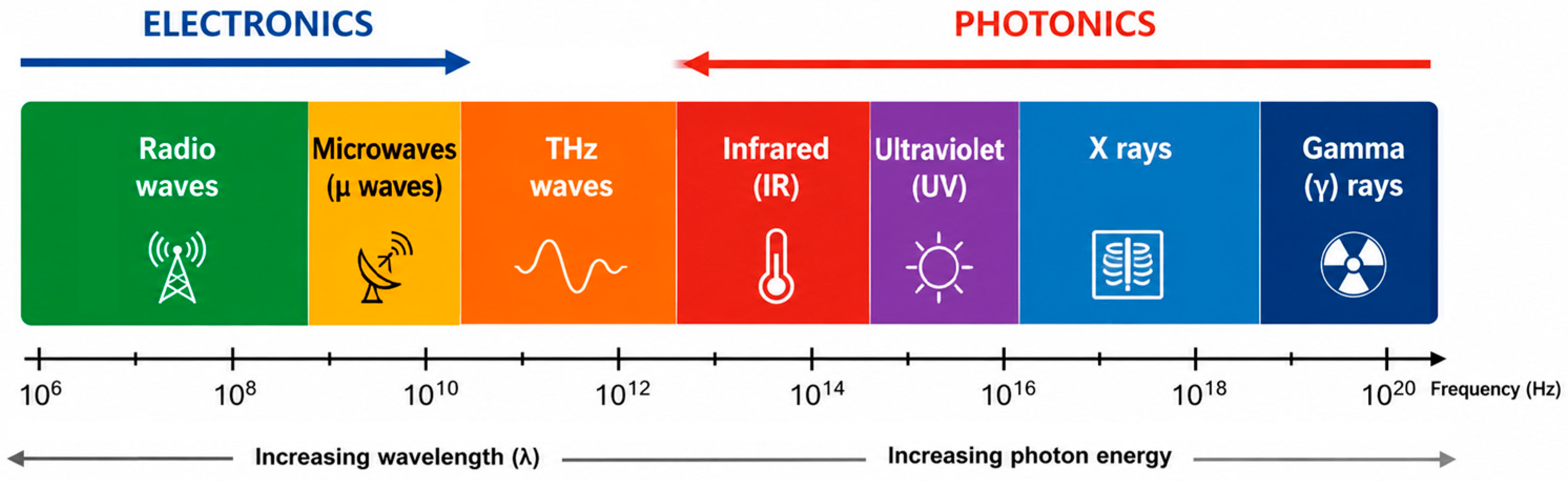
However, THz technology is not new and has been studied for over 70 years. It operates between the microwave and infrared regions, as shown in
Figure 1. THz waves span a frequency range of 0.1 to 10 THz, corresponding to wavelengths of 3 mm to 30 µm. They can be manipulated with mirrors or lenses, enhancing their utility.
This spectral range has recently attracted considerable attention for its unique properties, which have significantly impacted various industries and scientific fields. Recent advances in terahertz sources have enabled the generation of perfectly synchronized THz waves with high spectral purity and tunability. The latest advances in detector sensitivity have enabled high-sensitivity THz detection using technologies such as Schottky diodes, field-effect transistors, bolometers, and superconducting devices. These technological advancements have made THz technology highly applicable in diverse fields, including security scanning, wireless networking, quality control, material characterization, environmental monitoring, and biomedical research. This article specifically focuses on the last of these fields.
Low-energy, non-ionizing terahertz radiation is safe for use in living tissues. Unlike other forms of radiation, such as X-rays or gamma rays, THz radiation lacks the energy to cause harm. To date, no gene has been identified that reliably explains the patterns of gene expression observed under THz exposure [
2]. It can be used in medical detection, neuroscience [
3], plant water status detection [
4], water content detection in rapeseed leaves [
5], and moisture detection [
6]. This characteristic makes it particularly suitable for examining organic tissues without posing any health risks. A notable attribute of THz radiation is its ability to penetrate materials such as paper, plastic, and even clothing, thereby facilitating the testing and imaging of obscured objects. This efficacy arises because molecules in various materials vibrate at specific frequencies in the terahertz range. Consequently, this property enables the analysis of material structures using terahertz waves, which is advantageous for a wide range of applications [
7]. For instance, THz sensors have the potential to enhance our understanding of food nutrient content, plant tissue structure, and the chemical composition of materials.
Furthermore, because water is highly sensitive to terahertz radiation, this radiation is particularly effective for detecting moisture. Water interacts extremely strongly with THz radiation because THz frequencies match the natural dynamical timescales of molecular dipole motion and hydrogen-bond network fluctuations. Water is a polar molecule. The oxygen side is partially negative, and the hydrogen side is partially positive. Under the rapid oscillations of the THz field, a torque is exerted on molecules, and water molecules tend to continuously reorient to follow the field [
8]. Because hydrogen bonds restrict motion, viscous damping dissipates energy, converting electromagnetic energy into heat. Thus, the rapid absorption of relatively weak THz waves is due to intermolecular vibrations, rotational motion, and thermal agitation.
THz technology is still predominantly used in research because of the high cost and complexity of the equipment. However, significant progress is expected in fields such as agriculture and materials science as the technology advances.
We have developed a cost-effective THz sensor based on the bolometer principle [
9] that operates at ambient temperature to explore the potential of THz technology for nondestructive testing. This THz sensor operates within the 0.1–1 THz frequency range. The selected bolometer structure consists of a small titanium wire suspended in air. The sensitivity of this structure depends on the temperature coefficient of the titanium resistance and on the heat losses inherent in the structure.
In this study, we used a standard Complementary Metal-Oxide-Semiconductor (CMOS) microelectronic fabrication process. These nanobolometers can be used individually or integrated into nanobolometer arrays or matrices. The sensor array size depends on the antenna size. We employed several antenna types, including dipole, dual-dipole, and wideband antennas in different sizes. Each antenna has a characteristic impedance of approximately 1 kΩ to match the nanobolometer resistance. When interfaced with purchased external video capture hardware, these components form the basis of our THz camera.
Nanobolometers detect small amounts of electromagnetic radiation, which heats the device and produces a significant change in its resistance. By precisely measuring the nanobolometer’s resistance, we can correlate it with the absorbed electromagnetic energy. To enable rapid, precise resistance measurements, we also developed a dedicated application-specific integrated circuit to efficiently and precisely control the nanobolometer sensor. This circuit includes a four-channel low-noise amplifier (LNA) with digital gain and digital bolometer bias-current settings. Our primary focus was on producing cost-effective, compact, high-sensitivity nanobolometer sensors with an integrated LNA.
2. Materials and Methods
A nanobolometer is a resistor whose electrical resistance varies with temperature. It operates using a dipole or a wideband antenna to collect energy. The collected energy heats the nanobolometer, thereby changing its resistance [
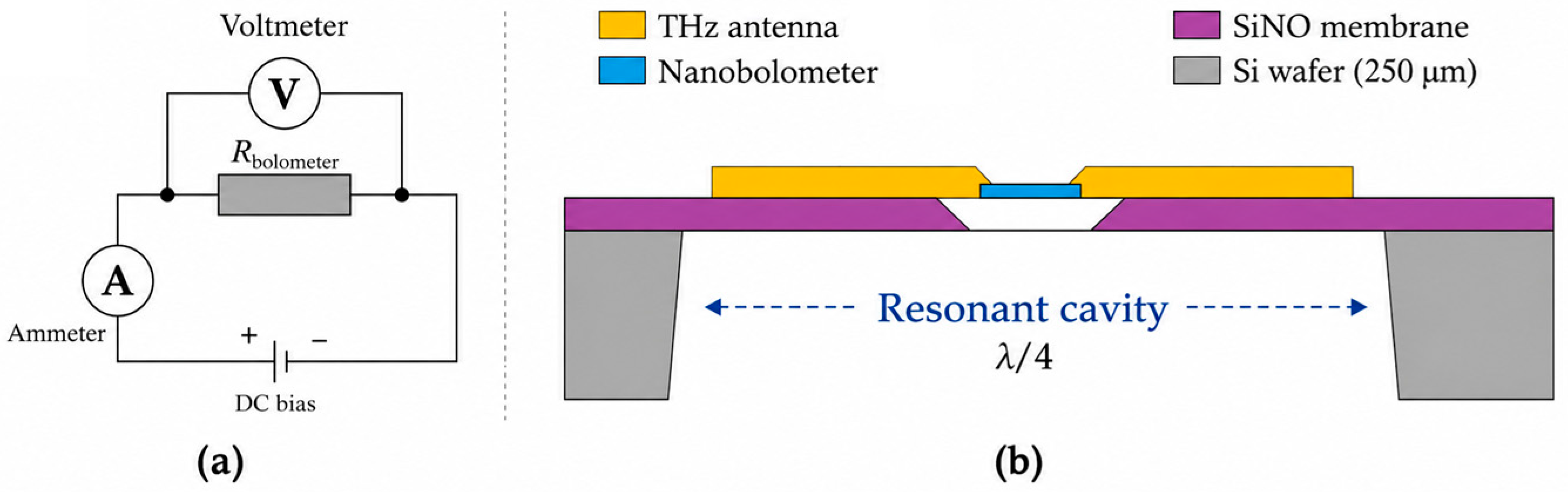
9]. A nanobolometer is shown as an equivalent circuit model in
Figure 2a. When produced in large quantities, the cost of a nanobolometer sensor can be as low as a few cents per unit—thanks to its fabrication in a CMOS microelectronics process.
To maximize the sensor’s temperature change, it is essential to enhance the nanobolometer’s thermal conductivity. We achieved this by etching the wafer from the back side of the sensor, removing the silicon beneath the nanobolometer structure. This process creates a small hole in the silicon substrate, forming a resonant cavity that boosts the antenna’s performance. Consequently, the nanobolometer is surrounded by an insulating medium, air.
We fabricate our nanobolometers on 4-inch silicon wafers, polished on both sides and with a standard (100) crystal orientation, ensuring consistent material properties in all directions. After initial wafer cleaning, we protect the wafers with a layer of SiO2 (approximately 0.5 µm thick) and a primary layer of Low-Pressure Chemical Vapor Deposition (LPCVD) silicon nitride (approximately 0.03 µm thick). To create a dimple beneath the tiny titanium wire, we first photolithographically transfer a geometric pattern onto the wafer to form the dimple. We then remove the unprotected silicon nitride using chemical plasma and eliminate the photoresist with oxygen plasma. Next, we perform LPCVD of secondary silicon nitride (approximately 0.12 µm thick) and deposit phosphosilicate glass (approximately 0.3 µm thick) to counteract the stress in the subsequent layers. On these layers, we apply Plasma-Enhanced Chemical Vapor Deposition (PECVD) to deposit silicon oxynitride (approximately 5 µm thick) and form a thin membrane. Subsequently, we photolithographically transfer the geometric resonant-cavity shape to the opposite side of the wafer and etch the exposed material. After aging the photoresist in oxygen plasma, we apply additional photoresist layers in the well to form a flat, sacrificial photoresist pad. This pad serves as the foundation for the Physical Vapor Deposition (PVD) of a thin titanium layer. We then photolithographically transfer a geometric pattern representing a nanobolometer and plasma-etch the unprotected titanium oxide.
After shaping the nanobolometer, we map the aluminum contacts and the wideband antenna geometry on the wafer, perform selective aluminum etching, and apply a protective layer to the wafer. At the bottom, we conduct anisotropic etching with hot potassium hydroxide until we reach the sensor membrane. This process completes the resonant cavity below the titanium bolometer. The dimensions of the resonant cavity are dictated by the wavelength, which in this case, is λ/4. The resonant cavity roughly doubles the sensitivity. However, it influences the response time only indirectly. We have sensors equipped with antennas designed for 0.1, 0.3, 0.6, and up to 3 THz. After the resonant cavity is finished, we cut the wafer and separate the sensor chips from the foil. The final step is to remove the sacrificial photoresist pad in an oxygen plasma. This photoresist pad served as a support for the tiny titanium wire, or nanobolometer, during manufacturing and dicing.
Figure 2b illustrates the cross-section of the nanobolometer.
The proposed CMOS fabrication technique has a minor impact on sensor-to-sensor variability, primarily affecting sensor resistance and sensitivity. To mitigate this effect, wafers are sorted and sensors are categorized using an automatic wafer prober. During this process, the bolometer’s sensitivity is assessed at two distinct heating current levels. Devices with similar properties are identified on the wafer map to enable effective grouping within the sensor array. Subsequent calibration of the sensor array is performed using low-noise amplifiers and image-acquisition software (LabVIEW 2025, Q3; National Instruments: Austin, TX, USA), if deemed necessary. Each batch shows marginally different sensitivity values as we continue refining the processing parameters to enhance sensitivity.
Further details on the manufacturing steps are provided in our previous work [
9].
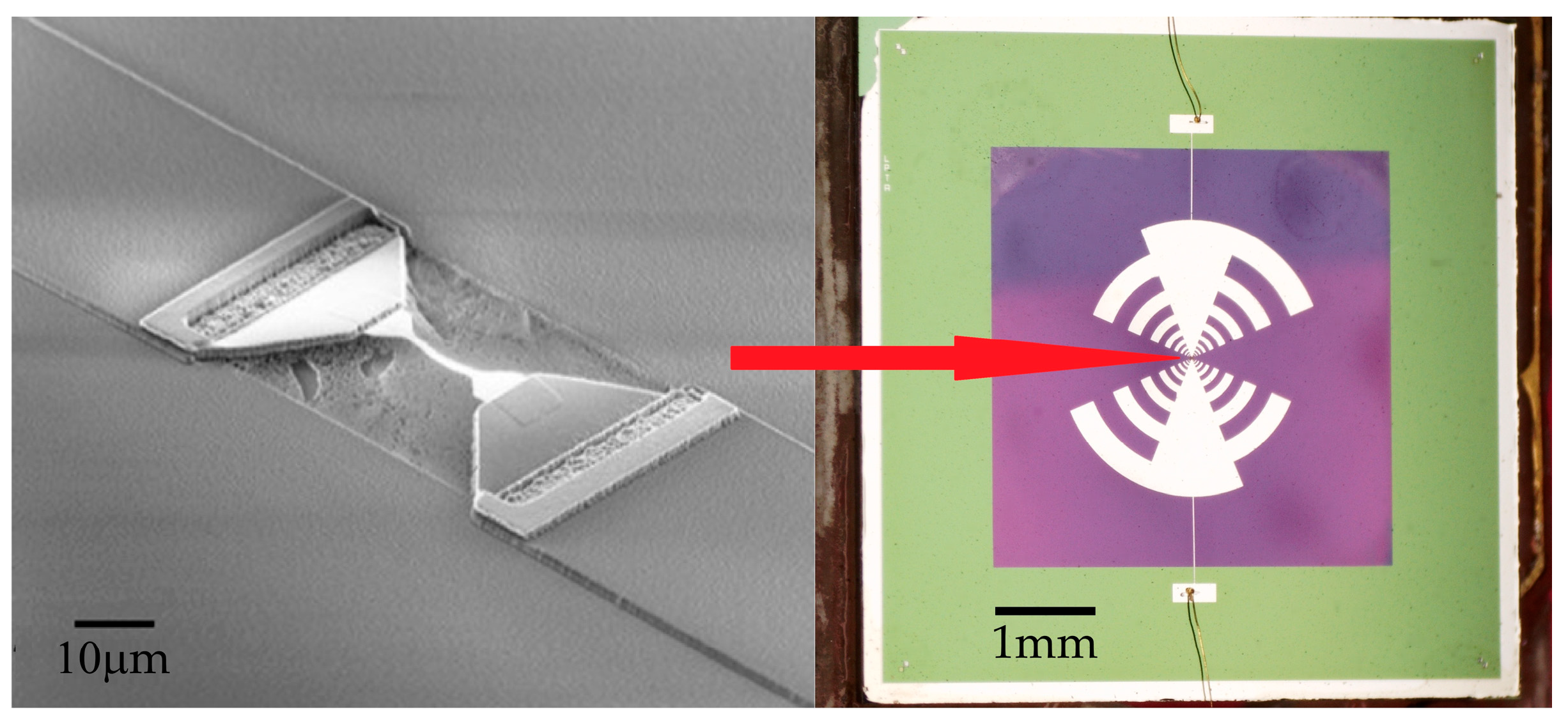
Figure 3 presents an enlarged view of the nanobolometer and wideband antenna, with the nanobolometer at the center. Equations (1)–(3) outline the key properties of the nanobolometer, including the Noise Equivalent Power (NEP) and sensor dimensions. The linear dynamic range of the sensor with LNA is 50 μV to 4 V, comparable to other alternatives. The sensor’s response is strongly dependent on the incident waves. This dependency is typical of THz sensors, mainly due to the antennas used. We use dipole or log-periodic antennas integrated with the sensor. At the sensor design stage, they can be optimized for specific frequencies by appropriately dimensioning the dipole structure. A dipole antenna offers narrow frequency band selection, while a log-periodic antenna offers broad frequency band selection. Both types of antennas exhibit linear polarization and are strongly dependent on the polarization of the incident waves. Even if the antenna is considered wideband, it does not respond uniformly across the frequency band. Therefore, sensor calibration is important. The calibration data is the experimentally obtained relationship between the known incident THz source power, P
THz, and the measured sensor output signal,
Vout. This relationship is described by Equation (4).
The limit of detection (LoD) is the minimum incident THz power that produces a measurable output signal distinguishable from noise at a specified confidence level. It was evaluated using the THz source power and the sensor’s NEP and can be approximated by Equation (5). The sensor’s sensitivity corresponds to its responsivity. Drawing on our expertise and recent findings in this research area, this sensor remains among the best of its kind at room temperature [
10]. A good bolometer is expected to exhibit high responsivity, low NEP, a broad spectral range, rapid response time, ease of fabrication, and the capability to operate at room temperature.
where
V0 is the offset or baseline.
where
B = measurement bandwidth (Hz).
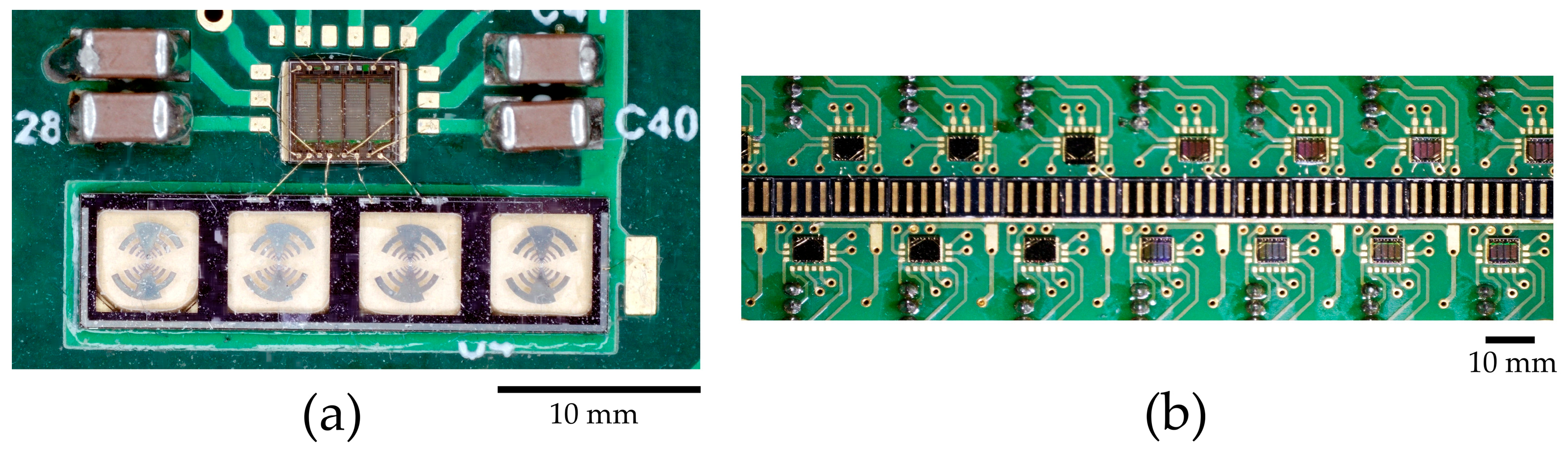
The described terahertz sensor can rapidly capture images because its thermal time constant is less than 1 ms. This time constant enables us to capture multiple images at room temperature in near real time. Image quality depends on the size of each picture element and its response speed. In our setup, the pixel size can be as small as 1 mm × 1 mm. Each pixel includes a nanobolometer, a low-noise amplifier (to stabilize and enhance the signal), and a multiplexer.
Figure 4 shows examples of nanobolometer arrays with LNAs.
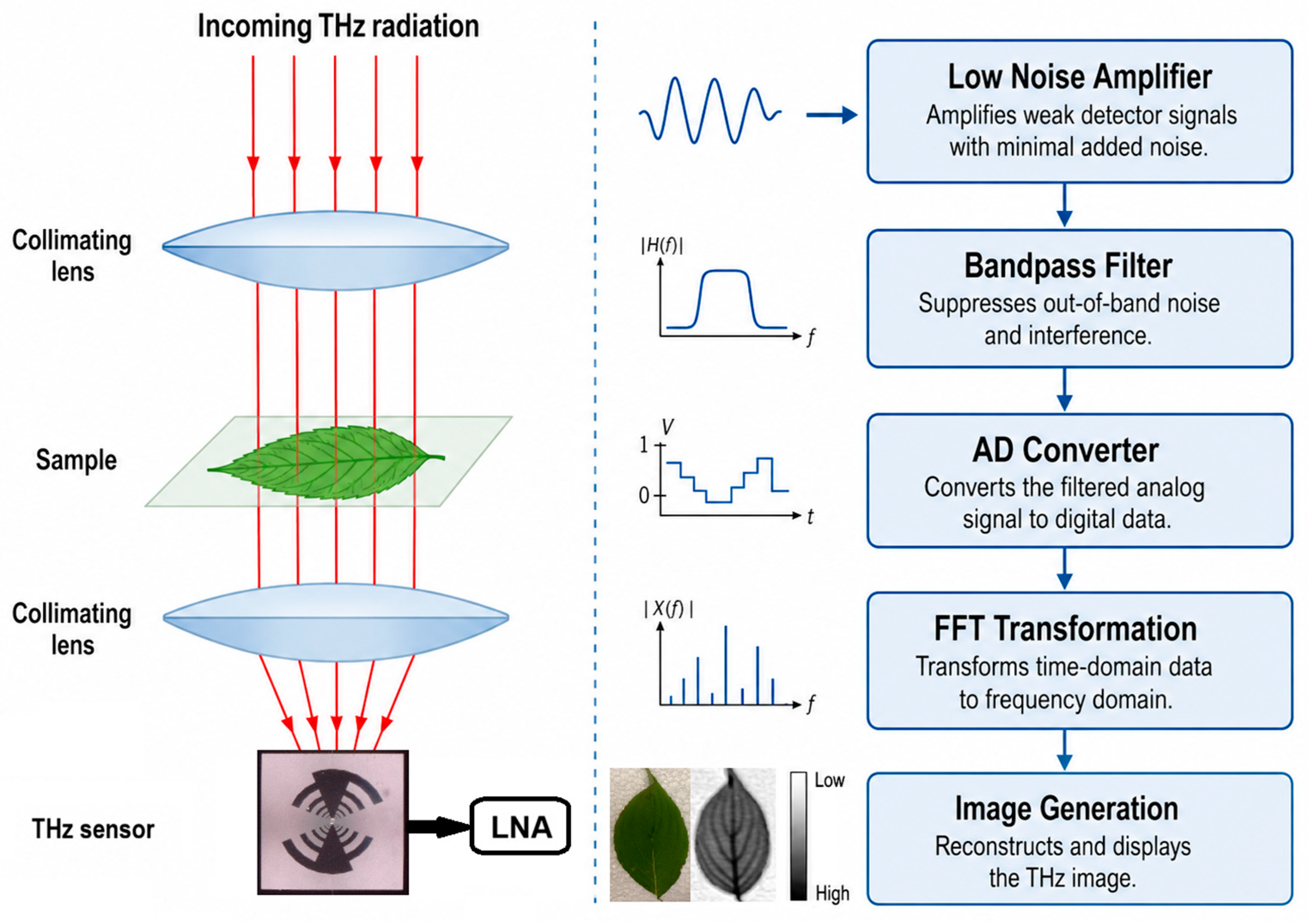
Figure 5 demonstrates how these components are integrated into the terahertz imaging system. We are currently experimenting with nanobolometer arrays containing 32, 64, and 128 pixels.
We used an in-house-developed THz system to capture THz images of the objects. The system comprises a purchased THz source, a terahertz acquisition system, and a separately purchased digital signal processing element. We have a 0.3 THz solid-state continuous-wave source that uses a cascade of planar Schottky diode frequency multipliers, delivering approximately 1 mW of power with a narrow linewidth. Additionally, a 0.1 THz W-band gun oscillator delivers approximately 20 mW of output power. With further refinement, the system could become portable and suitable for on-field operations.
We have developed several prototypes for image acquisition. In our preferred prototype, images are obtained by raster-scanning the area with a 100 × 100 grid of positions corresponding to the image’s pixels. In this setup, data are acquired using a fast, freely available Universal Serial Bus (USB) signal acquisition card. For each pixel, we capture 3000 samples at 60 kHz. The acquisition time is 50 ms per pixel. A fast Fourier transform is performed on each pixel dataset, and the amplitude peak at 1 kHz is used to determine each pixel’s brightness. Signal processing must be synchronized with the X-Y stage movement rate. Thanks to efficient software (LabVIEW 2025, Q3), we can perform digital signal processing on a typical laptop computer.
During raster-scanning acquisition, the primary limitation to real-time imaging is the relatively slow readout electronics and high data throughput. However, this issue can be addressed using suitable algorithms and hardware. The simplest way to accelerate image capture is to use a linear array of sensors, each with its own dedicated data channel. Consequently, the imaging frame rate depends on the image-capture setup.
The raster-scanning setup is slow, taking approximately 10 min, but it offers low system noise and high spatial resolution. In contrast, array scanning takes about 3 s. Because of the lens’s characteristics, it produces higher system noise and lower spatial resolution. The signal-to-noise ratio is generally 4 V/100 μV. However, it can be affected by environmental noise, humidity, signal absorption, scattering, reflection loss, and frequency. Low frequencies yield a better signal-to-noise ratio for thick samples but produce poorer spatial resolution. Conversely, higher frequencies yield lower signal-to-noise ratios and better spatial resolution but typically require averaging, which can increase acquisition time.
3. Results
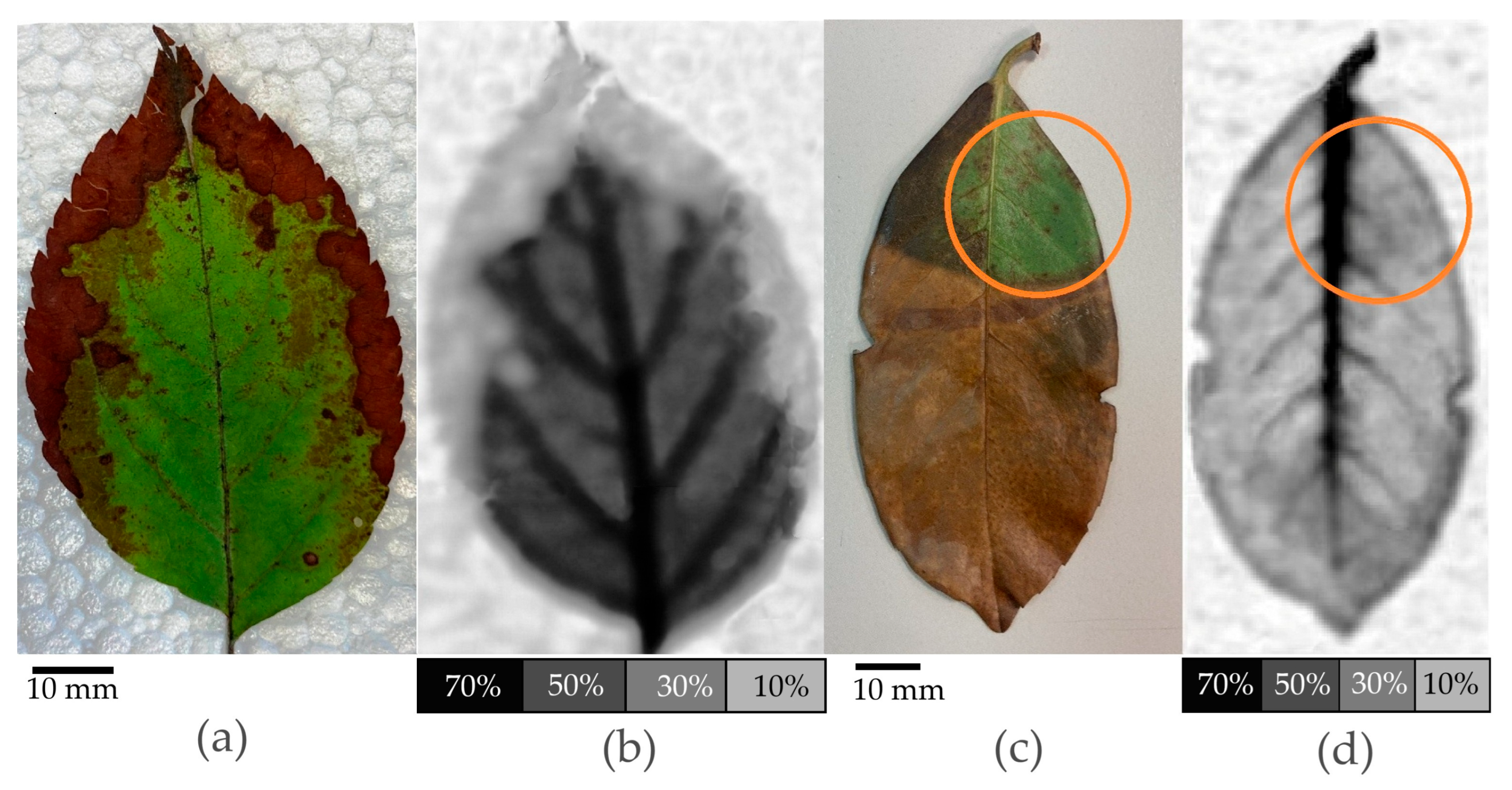
When examining images of plant leaves, such as those shown in
Figure 6a,c, a conventional image on the left is paired with a THz image on the right. THz imaging is effective for assessing leaf moisture content.
Figure 6a shows a partially dry leaf with more moisture in the veins and less in the green and dry areas. In
Figure 6c, although there is still a green area on the leaf (circle), the leaf is almost dehydrated except for the leaf veins. Interestingly, the green area on the dry leaf in
Figure 6c appears slightly darker in the corresponding THz image in
Figure 6d. In contrast, the completely dry area on the left side is brighter.
These subtle differences in gray levels demonstrate the camera’s high sensitivity to moisture in leaves, which can be useful for assessing leaf hydration. For example, if a plant’s condition is worsening, we might notice that it is losing moisture in certain areas. If a plant receives excessive water, it may retain too much moisture [
11]. Such an approach may support future applications, such as disease detection and the evaluation of fertilizer effects on plants [
12]. The images in
Figure 6 were captured at 0.3 THz, and the humidity percentage is approximate, measured with an inductive moisture meter.
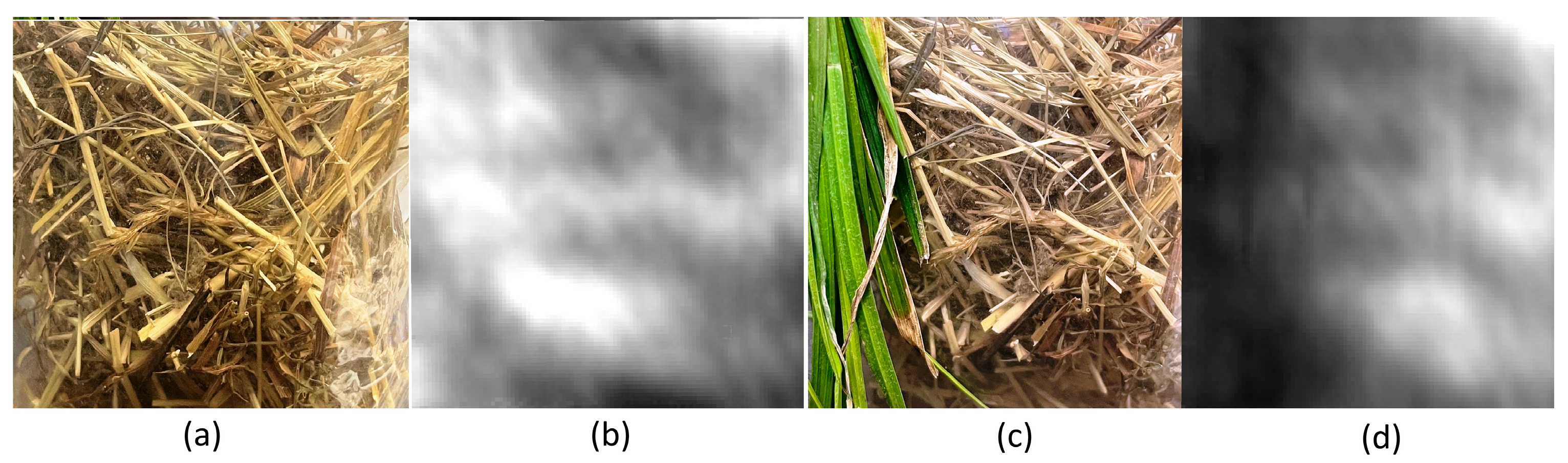
We also took pictures of several other objects, including a thick plastic bag of hay with some wet grass placed behind it. The THz images in
Figure 7 clearly show a difference, with a darker area in the THz image in
Figure 7d indicating the wet grass behind the dry hay. This THz image was acquired at 0.1 THz to improve penetration through the dry hay. The compressed hay thickness was about 6 cm.
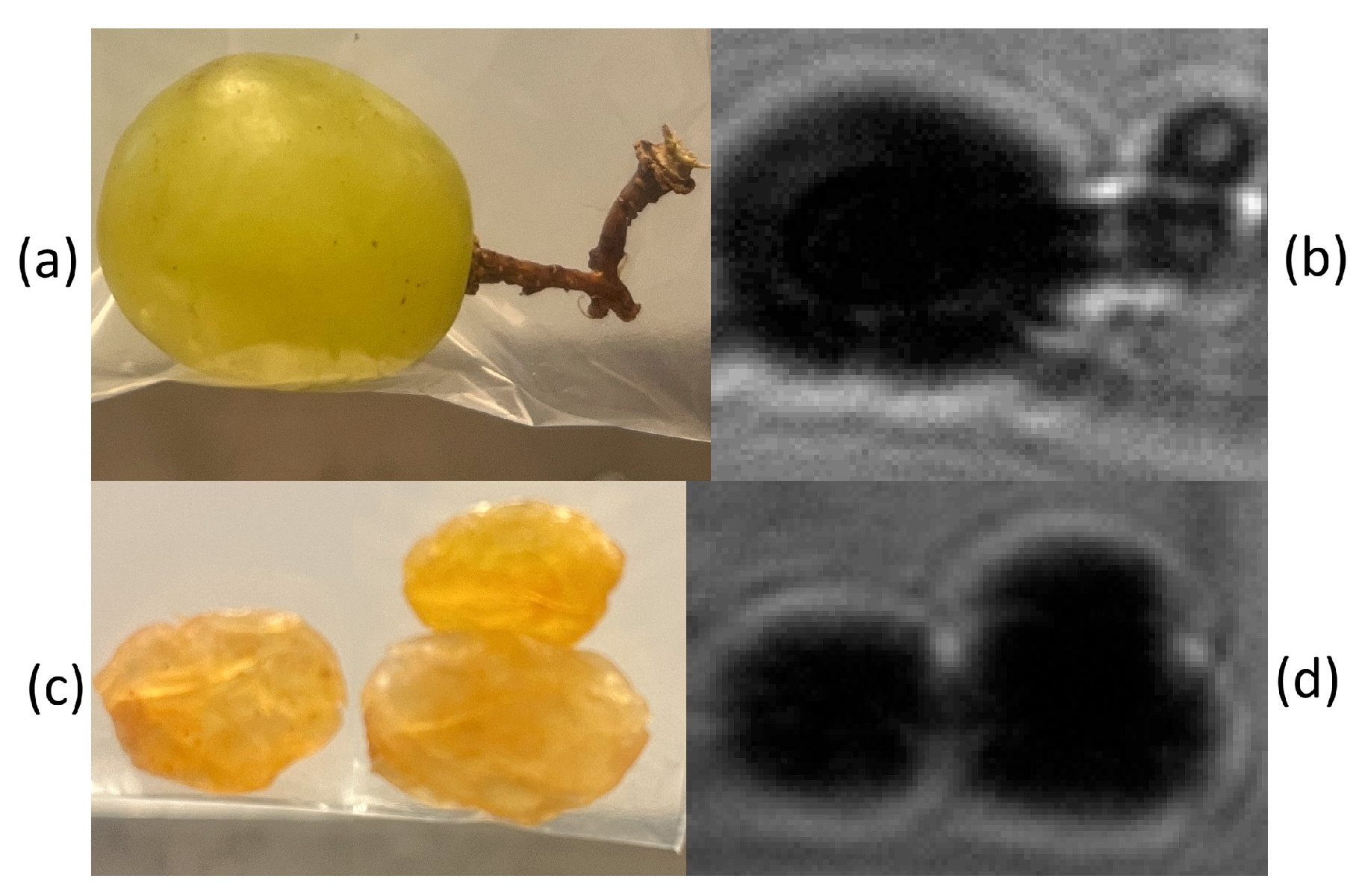
We also experimented with photographing dry raisins and fresh grapes, but the results were not as expected. THz waves could not penetrate these materials. In
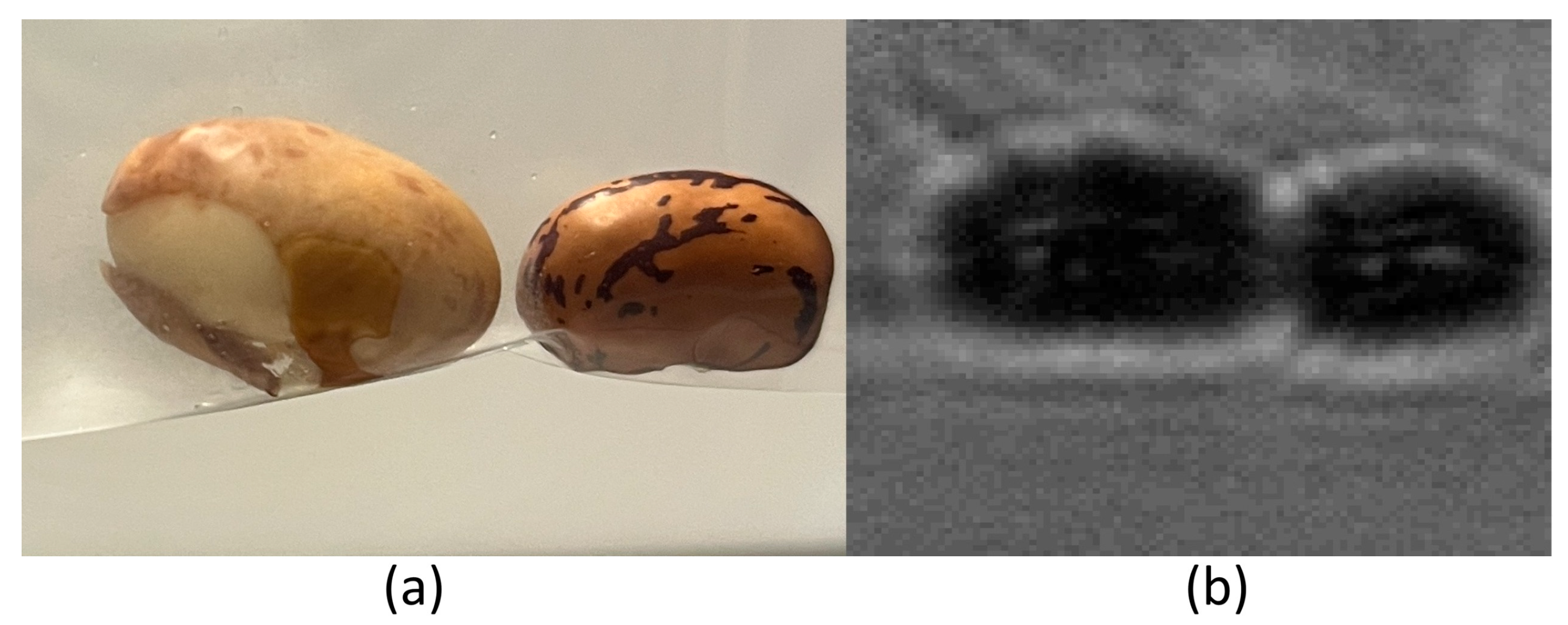
Figure 8, dry raisins and fresh grapes appear with the same grayscale in the THz image on the right. A similar pattern was observed when photographing soaked, sprouting beans (left) and dry beans, as shown in
Figure 9. Even with much thinner soybeans, the gray-level difference did not improve. Our THz source could not penetrate such objects.
These photos were captured at 0.3 THz. We also captured identical photos at 0.1 THz, but the results were marginally sharper at 0.3 THz. Although we expected a more pronounced grayscale difference between the dry and wet samples in
Figure 8 and
Figure 9, this expectation was not met. Visually, there was no noticeable difference among multiple images of the same sample.
In summary, a 0.3 THz source clearly differentiates moisture in leaf samples. Although our 0.1 THz source is more powerful, its resolution is inferior because of the longer wavelength. Higher frequencies produce shorter wavelengths and smaller focal spots, yielding sharper images. In contrast, the 0.1 THz source produces blurrier images. Reflective or thick objects scatter THz waves into the surrounding area, further degrading image quality. For instance, a 2 mm-thick slice of dry beans could not be penetrated by our 0.1 THz source.
A low-resolution THz image is shown in
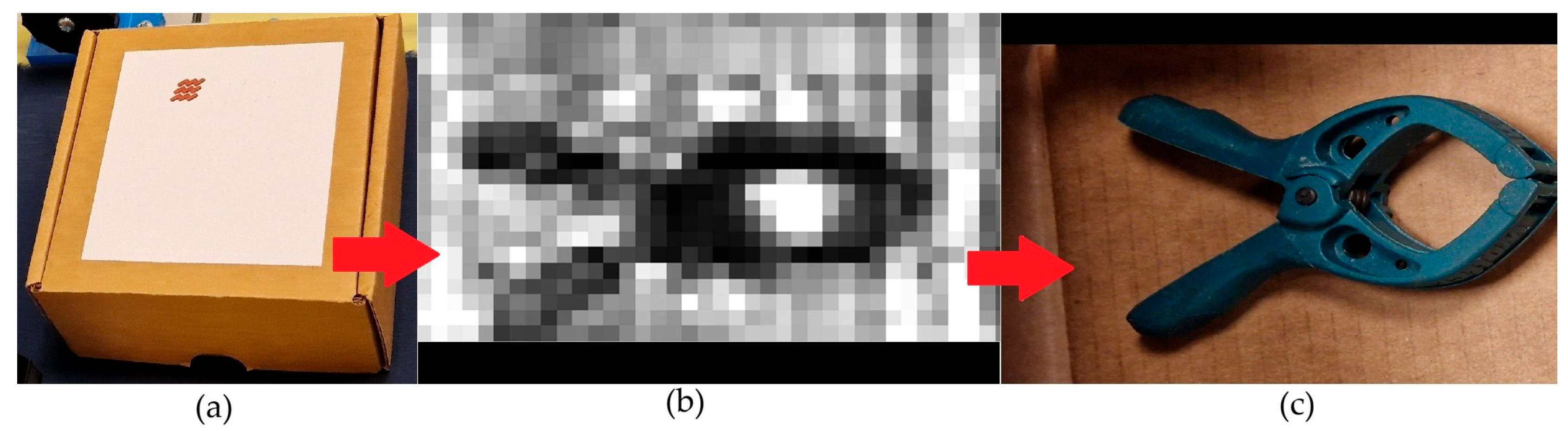
Figure 10. The plastic spring clamp is clearly visible inside the closed cardboard box. Low-resolution imaging is fast and sufficient for machine vision applications that require a quick inspection of otherwise invisible contents. This approach is useful for THz-transparent materials such as styrofoam, paper, cloth, glass, and plastic.
Some THz raw image pixel datasets in text file format are publicly available on Zenodo. The values in these datasets represent the THz transparency of an object at each pixel.
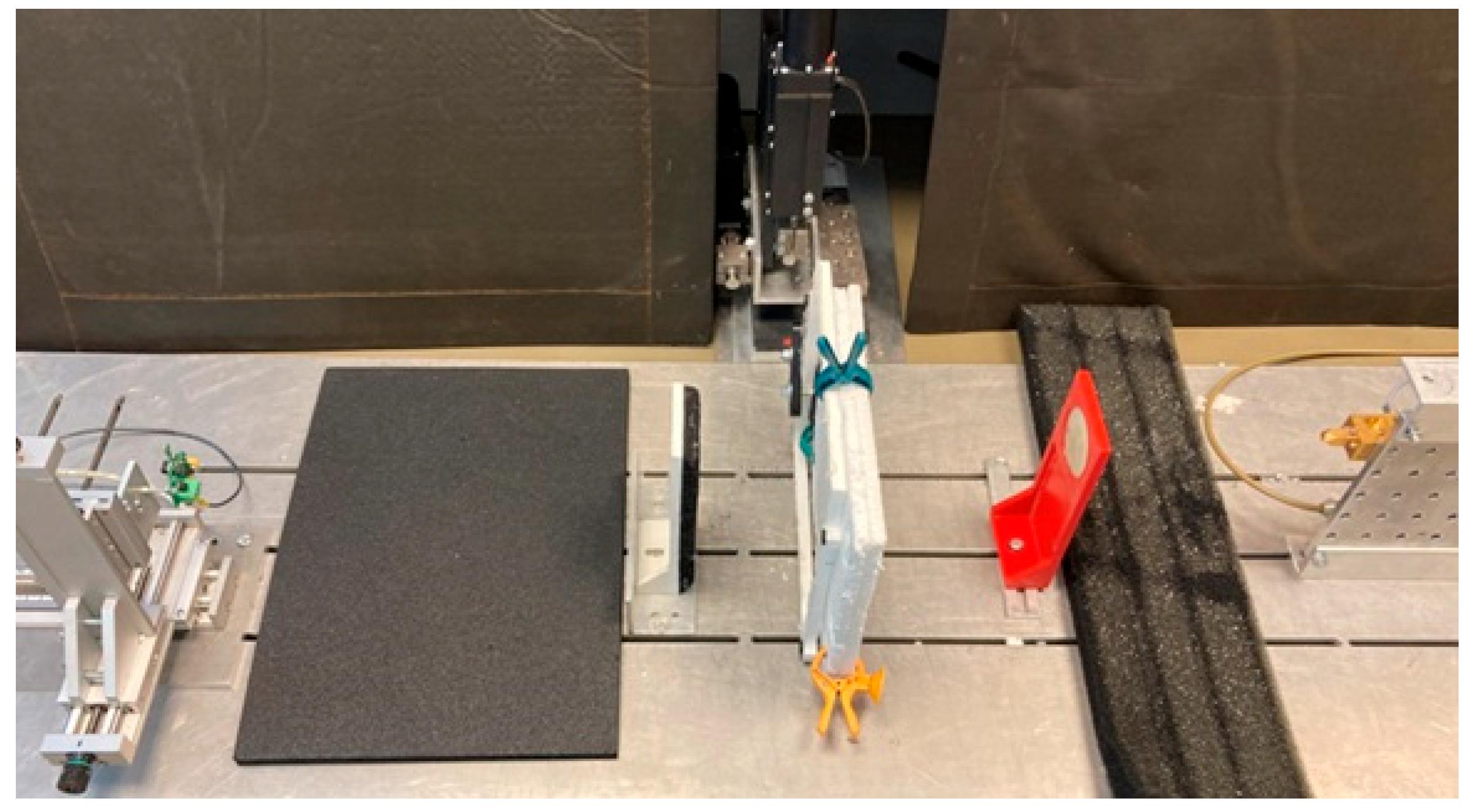
Figure 11 shows one of our THz imaging setups, which we used to image leaves, hay, grapes, and beans.
Overall, our terahertz vision system may be an effective tool for understanding plant health. It is non-invasive, so we do not harm the plants when using it, and it can provide information about moisture distribution inside plant leaves. In agriculture, this technology could help detect problems early and determine the best way to care for plants. We are quite encouraged by this technology’s potential and think it could make a big difference in how we understand plant care. A new generation of advanced robots may use it to care for our plants.
4. Discussion
We have also developed a cost-effective, highly sensitive, wideband terahertz antenna capable of detecting radiation up to 3 THz at room temperature. It is currently being characterized, and we are evaluating its potential to detect trace amounts of pesticides and counterfeit pills containing paracetamol or ibuprofen.
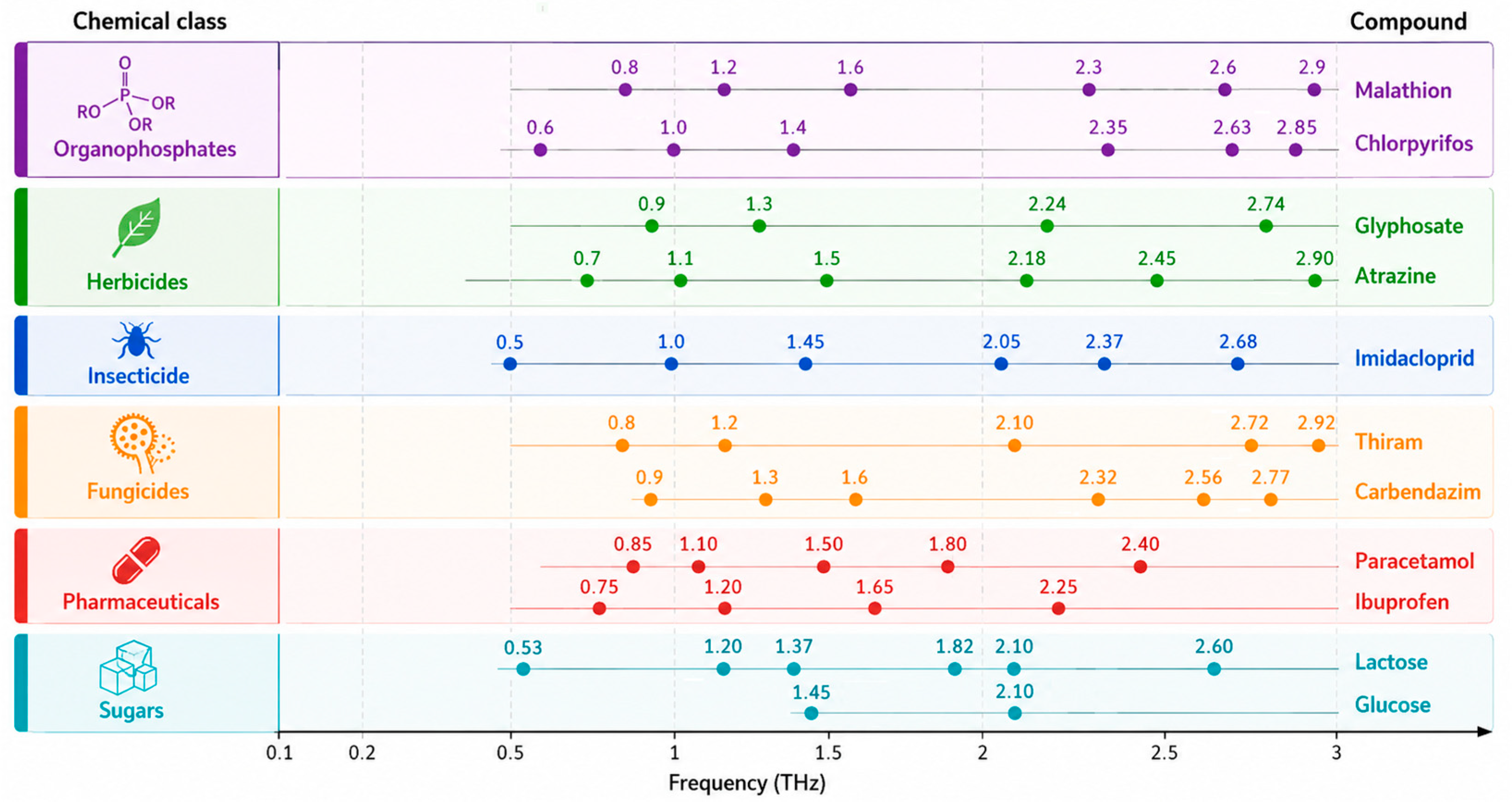
Spectral fingerprints typically appear in the 0.5–3 THz range, as illustrated in
Figure 12, which shows the expected THz absorption peaks. The numbers near the dots indicate the absorption peaks within the THz range. Various sources in the literature report different values for pesticides [
13,
14] and pharmaceuticals [
15,
16], suggesting the need for further experimental studies. We anticipate that by using chemometrics and machine-learning-assisted design of THz metamaterials [
17], and by integrating fingerprint terahertz spectroscopy with machine learning [
18], we will be able to reliably detect pesticide traces on agricultural commodities and distinguish counterfeit pharmaceuticals from authentic ones.
These advanced data analyses and THz metasensors have begun to improve outcomes in THz research in recent years. Metasensors address the challenge of detecting weak interactions between THz waves and materials by enabling easier detection of a larger sensor response in the resonant state. Systems for detecting pesticide residues [
19] have been reported, demonstrating the superiority of metasensors over traditional chromatography and biosensors for pesticide detection in wheat flour. Similarly, a published metasensor design [
20] for detecting imidacloprid claims superiority over traditional chromatography and near-infrared spectroscopy. A systematic review [
21] examined the use of THz in food safety standards and asserts that, with the continued advancement of AI-driven approaches, terahertz spectroscopy is poised to become a core tool for food quality and safety monitoring, ultimately driving the transformation of the global food industry. Another metasensor for the successful detection of ibuprofen is described in [
22].
Significant efforts have recently been made to design various types of THz metasensors based on several physical mechanisms in the THz band. Among other materials, graphene could be a suitable candidate due to its high carrier density and mobility, offering multiple tuning mechanisms [
23] and exhibiting exceptional optoelectronic and plasmonic properties. However, the practical realization of such sensors currently falls short of theoretical predictions. Manufacturing is both costly and challenging to execute correctly. An intriguing article discusses a study of a tunable terahertz metamaterial absorber with an ultrahigh quality factor (Q), featuring a continuous, pattern-free graphene sheet [
24]. The resonance modes of its absorption peaks can be adjusted by altering geometric parameters. Thanks to its rotational symmetry, its absorption properties remain unaffected by polarization angles, offering enhanced sensing capabilities for gases and liquids. Another very interesting analysis of the current state, quality factor, sensitivity, and figure of merit (FoM) for THz sensors operating in transmissive and reflective modes is detailed in [
25]. It also provides a critical review of the real-world usability of modern THz sensors described in the literature. The interaction between the analyte and the THz wave is very weak when detecting analytes such as DNA/RNA, proteins, or other small biomolecules. The wavelength of the THz wave is large and does not correspond to the scale of the analyte. We need a novel, highly sensitive, and specialized biosensing technique operating in the THz band to accurately trace these analytes [
25]. So, future research is required to investigate new materials and micro and nanoarchitectures for THz sensors. Sensitivity needs a substantial boost, and the scalability of THz sensors for biomedical and other industrial electronics applications must be enhanced.
To summarize, recent studies have confirmed that THz spectroscopy enables rapid, nondestructive analysis and can detect a wide range of compounds. However, in certain areas, it still lags behind classical reference methods in sensitivity. Consequently, the primary challenges include detecting trace concentrations in complex real-world samples and addressing issues arising from moisture, complex matrices, and the lack of robust models.
5. Conclusions
Our sensor is considered low-cost because it can be mass-produced using a standard CMOS process on a silicon wafer. To the best of our knowledge, no nanobolometer sensor with comparable or superior sensitivity at room temperature has been reported in the literature [
10]. Terahertz (THz) imaging systems have remarkable capabilities for detecting moisture on and beneath surfaces. For instance, at 0.3 THz, moisture in leaves can be identified. At 0.1 THz, we successfully detected a layer of wet hay beneath six centimeters of dry hay. However, to achieve deeper penetration into dry hay, THz must be combined with microwave technology, as THz alone is limited to detecting near-surface condensation in a hay pile.
Our experiment, which aimed to detect differences in moisture levels among grapes, raisins, and both dry and caliche beans, was unsuccessful. Even when the dry beans were thinly sliced, the THz waves were strongly reflected, and a similar outcome was observed with dry soybeans.
Significant advancements in THz technology have been observed, particularly in the chemical sciences and biology. This technology is increasingly important for non-invasive imaging and for analyzing the reflection spectra of various materials. Current efforts have also focused on developing smaller, more cost-effective THz transmitters and receivers.
Recent advances have enabled the development of highly sensitive metamaterial-based THz metasensors. These sensors effectively address the challenge of detecting weak interactions between THz waves and various materials by identifying significant changes in the resonant state. They are well-suited to real-world samples and conditions. By employing our 0.1–3 THz wideband antennas and a more powerful THz source, we aim to cover a broader portion of the THz spectrum, as shown in
Figure 12. This approach facilitates the identification of the “fingerprint” of each observed substance, enabling the development of metasensor structures tailored to selected biological samples.