Article

Dolomite Formation Driven by the Synergy of Hydrothermal Activity, Biology, and Climate: A Case Study from the Lucaogou Formation in the Jimsar Sag

1
State Key Laboratory of Continental Shale Oil, Beijing 100083, China
2
Oil & Gas Survey, China Geological Survey, Beijing 100083, China
3
College of Geoscience, China University of Petroleum, Beijing 102249, China
*
Author to whom correspondence should be addressed.
Appl. Sci. 2026, 16(11), 5215; https://doi.org/10.3390/app16115215
Submission received: 18 April 2026 / Revised: 17 May 2026 / Accepted: 18 May 2026 / Published: 22 May 2026

Abstract

Typical saline lacustrine mixed sedimentary strata are developed in the Middle Permian Lucaogou Formation (P2l) in the Jimsar Sag, with frequent interbedding of mudstone, dolomitic mudstone, and argillaceous dolomite. The widespread development of dolomite is a key factor controlling the quality of shale oil reservoirs. To reveal the formation mechanism of dolomite in mixed sedimentary rocks and its constraint on lithological assemblages, this study focuses on comparing the differences in mineralogy, geochemistry, and sedimentary environment of the three types of lithologies based on systematic tests such as thin-section observation, X-ray diffraction, major and trace element analysis, organic petrology, and biomarker analysis. The results indicate that dolomite formation in the study area is not controlled by a single factor, but instead results from the combined control of hydrothermal activity, microbial metabolism, and paleoclimatic fluctuations. Hydrothermal activity provided a source of Mg2+, and together with evaporation driven by an arid climate, elevated the Mg/Ca ratio of the lake water, establishing the hydrochemical basis favorable for dolomite development. Metabolic activities of lower aquatic organisms, such as bacteria and algae, promoted the formation of a sustained alkaline environment, creating favorable conditions for dolomite precipitation. Against a background of a relatively arid climate, the alternation of extreme arid and extreme precipitation events caused frequent fluctuations in lake water saturation, potentially providing ideal dynamic conditions for rapid and abundant dolomite formation. This combined control governed dolomite development and produced the interbedded lithological succession in the P2l mixed sedimentary strata. This study integrates the dominant controlling factors and synergistic mechanisms of dolomite development in mixed sedimentary strata of continental saline lacustrine basins, which helps predict the occurrence and distribution of high-quality reservoir lithologies within such strata and has important implications for the optimization of “sweet spots” in shale oil exploration.

1. Introduction

In continental lacustrine basins, the mixed deposition of terrigenous clastics and carbonates serves as an important reservoir for unconventional oil and gas, and previous work has revealed close relationships among lithological assemblages, diagenetic evolution, and hydrocarbon enrichment [1,2,3,4]. In recent years, as the exploration and development of shale oil have advanced, mixed sedimentary strata have gradually become a key target for continental shale oil exploration due to their unique characteristics such as integrated source-reservoir configuration [5] and high brittle mineral content [6]. The Middle Permian Lucaogou Formation (P2l) in the Jimsar Sag of the Junggar Basin develops a typical set of fine-grained mixed sediments in a saline lacustrine basin, characterized by the interbedded distribution of mudstone, dolomitic mudstone, and argillaceous dolomite [7], which has become a key interval for continental shale oil exploration and development in China [8]. Numerous studies [9,10] have demonstrated that the content and distribution of dolomite in mixed sedimentary strata directly affect rock brittleness, the development of dissolved pores, and source-reservoir configuration, thus acting as a key factor in the formation of high-quality shale oil reservoirs.
Although dolomite plays an important role in controlling the reservoir quality of mixed sedimentary strata, the understanding of its genesis remains significantly inadequate [10]. Previous studies on mixed sedimentary strata in several basins have noted that dolomite formation is related to arid climate, hydrothermal activity, or microbial processes and have proposed different genesis interpretations such as evaporative concentration, hydrothermal supply, and microbial catalysis [11,12]. However, most existing research has focused on single factors, with limited analysis of how multiple factors work together [13,14]. Furthermore, for the P2l in the Jimsar Sag, previous work [1,7] has mainly concentrated on sedimentary environment and source rock evaluation, with insufficient systematic comparison of the differences in dolomite development conditions among the three main lithologies—mudstone, dolomitic mudstone, and argillaceous dolomite. The variation patterns of dolomite content among different lithologies and their controlling factors remain unclear.
In addition, the rapid precipitation of dolomite under ambient temperature conditions has long been a challenging issue in sedimentology [15]. Traditional synthesis experiments have difficulty forming ordered dolomite in constantly supersaturated solutions [16,17], yet extensive dolomite is widely developed in ancient saline lacustrine basins—a contradiction that has not yet been satisfactorily explained. In recent years, significant breakthroughs have been made in in-situ liquid transmission electron microscopy experiments, confirming that dynamic fluctuations in water supersaturation can increase the growth rate of dolomite by seven orders of magnitude [18], providing a novel perspective for interpreting the rapid precipitation of dolomite under natural conditions.
In view of this, this study takes the three lithologies of the P2l as the core research objects, focusing on petrological, mineralogical, and geochemical differences, systematically analyzing the combined controls of hydrothermal activity, microbial processes, and paleoclimatic evolution on dolomite formation. This paper aims to address the following three scientific questions: What systematic differences exist in the conditions favoring dolomite development among different lithologies? What are the respective roles of hydrothermal activity, microbial processes, and paleoclimatic fluctuations in dolomite formation? How do these three factors interact synergistically to ultimately result in the interbedded distribution of mudstone, dolomitic mudstone, and argillaceous dolomite within mixed sedimentary strata? By addressing these questions, this study is expected to provide an integrated understanding of hydrocarbon exploration of mixed sedimentary rocks in this area and analogous saline lacustrine basins.

2. Geological Background

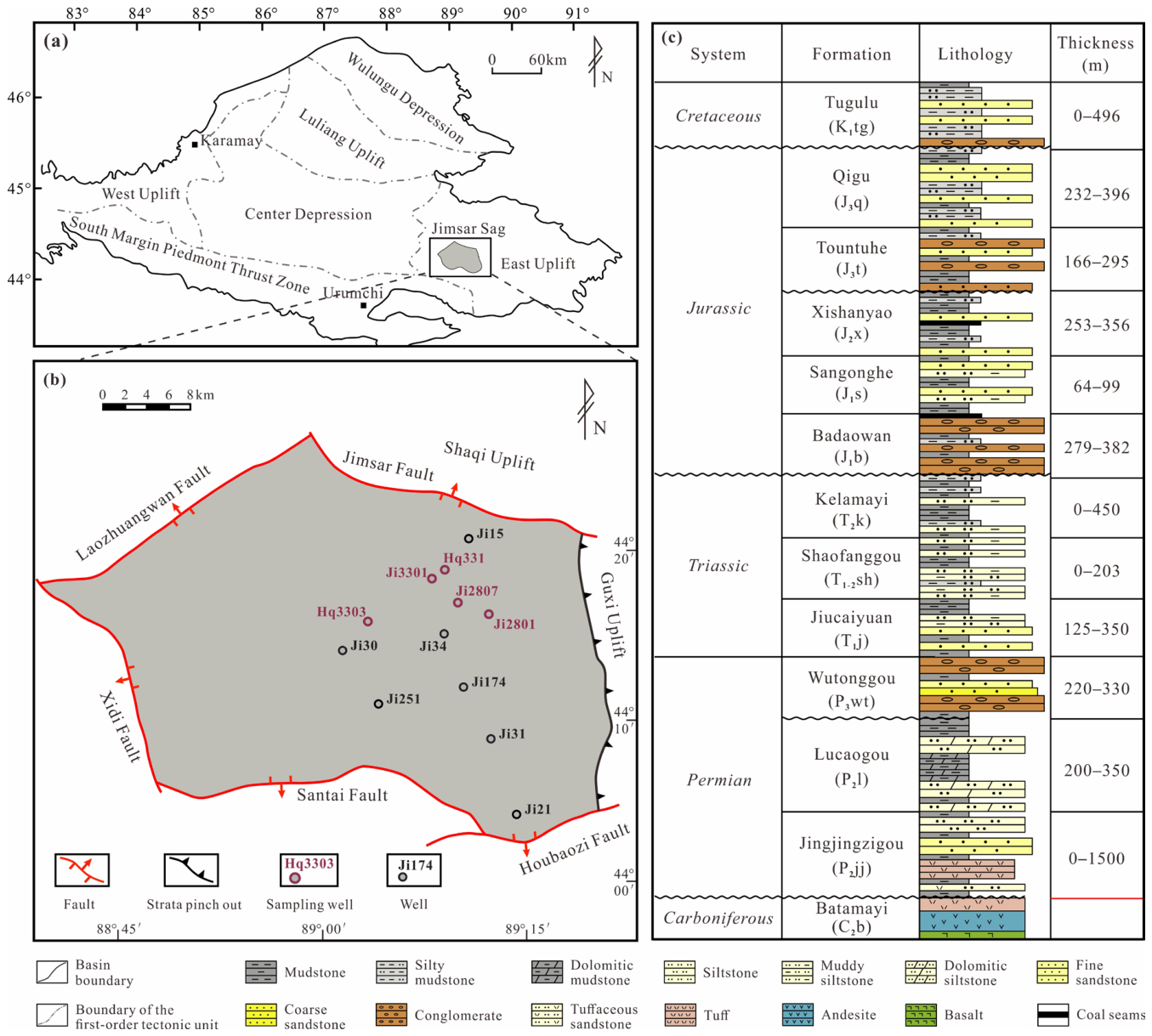
The Jimsar Sag is situated on the southwestern margin of the eastern uplift belt in the Junggar Basin (Figure 1a) [19]. As a relatively independent half-graben fault depression surrounded by boundary faults and uplifts, it exhibits a structural framework characterized by steep slopes in the southeast and gentle slopes in the northwest [20]. Covering an area of approximately 1278 km2, the Jimsar Sag is one of the most shale-oil-enriched tectonic units in the eastern Junggar Basin (Figure 1b) [21]. Regionally, the sag formed during the Late Paleozoic and has since undergone multiple phases of tectonic overprinting, including the Hercynian, Indosinian, and Yanshanian orogenies [1,22]. Well-developed internal faults provide important conduits for the upwelling of hydrothermal fluids [23,24]. During the Middle Permian, the study area was in an extensional tectonic setting following collisional orogeny, with stable subsidence of the lacustrine basin [25,26]. Fine-grained sediments of deep to semi-deep lacustrine facies were widely deposited, forming the thick and laterally continuous P2l, which ranges from 200 to 350 m in thickness [26].
The P2l as a whole is a typical mixed sedimentary succession of a saline lacustrine basin [1]. Its lithology mainly consists of dark gray to black mudstone, dolomitic mudstone, and argillaceous dolomite, which rapidly alternate and interbed vertically, with local thin interlayers of siltstone and fine sandstone (Figure 1c) [27]. In terms of sedimentary evolution, the first member of the P2l is dominated by semi-deep lacustrine to deep lacustrine facies, whereas the extent of fan delta and shore-shallow lacustrine facies increased during the deposition of the second member of the P2l [23]. The P2l is the most important source rock series and the major shale oil reservoir in the Jimsar Sag, with its upper and lower sweet spot intervals demonstrating enormous resource potential [28,29]. Previous studies have indicated that the lacustrine basin was characterized by high salinity during this period, accompanied by the influence of volcanic and hydrothermal activities [30].

3. Samples and Methods

Samples for this study were taken from the P2l cores of five key wells in the Jimsar Sag, with lithologies including mudstone, dolomitic mudstone, and argillaceous dolomite, covering the main oil-bearing intervals across the study area. A total of 48 core samples were collected, comprising 23 mudstone samples, 16 dolomitic mudstone samples, and 9 argillaceous dolomite samples (Table A1). It should be noted that the number of argillaceous dolomite samples is smaller than that of mudstone and dolomitic mudstone, which is primarily due to the relatively limited thickness and frequency of argillaceous dolomite in the cored intervals.
Multiple complementary analytical methods were used to achieve different research objectives: petrological and mineralogical analyses were applied to characterize mineral compositions and dolomite content; major and trace element analyses were performed to trace paleoclimatic variations and hydrothermal activity signatures; organic petrology and biomarker analyses were utilized to identify organic matter sources and microbial activities. The integrated results from these methods allow us to clarify the coupling mechanism of hydrothermal activity, microbial metabolism, and paleoclimate on dolomite formation.

3.1. Mineralogical and Petrological Analysis

Quantitative mineral composition was determined using a Panalytical X’Pert PRO X-ray diffractometer (XRD) (Malvern Panalytical, Almelo, The Netherlands), following the Chinese petroleum industry standard SY/T 5163-2018. Data processing and mineral content calculations were performed using the HighScore Plus 4.8 software based on the RIR (Reference Intensity Ratio, i.e., the K-value method) for semi-quantitative analysis. Petrographic observations were performed using a Leica DM 4500P multi-purpose microscope (Leica Microsystems, Wetzlar, Germany) under transmitted and reflected light to identify mineral composition, texture, and diagenetic features. Organic maceral observation was conducted using a Leica DM 4500P multi-function microanalyzer (Leica Microsystems, Wetzlar, Germany) under reflected white light and fluorescence. At least 500 points were counted per sample.

3.2. Biomarker Analysis

Representative samples of different lithologies were selected for Soxhlet extraction and group separation of organic matter. After obtaining the saturated hydrocarbon fraction, biomarker detection was performed using an Agilent 6890 gas chromatograph coupled with an Agilent 5975i mass spectrometer (GC–MS) (Agilent Technologies, Santa Clara, CA, USA). A HP-5MS capillary column was used with helium as the carrier gas under a programmed temperature ramp. The scan range was set to 50–550 m/z.

3.3. Major and Trace Element Analysis

Major element oxides were analyzed using an Axios-mAX X-ray fluorescence spectrometer (XRF) (Malvern Panalytical, Almelo, Netherlands), and trace elements were determined using a NexION 300D inductively coupled plasma mass spectrometer (ICP–MS) (PerkinElmer, Waltham, MA, USA), following the national standards GB/T 14506.28-2010 and GB/T 14506.30-2010, respectively. After crushing, the samples were digested in a mixture of nitric and hydrofluoric acids in sealed polytetrafluoroethylene (PTFE) digestion vessels at 150 °C for 48 h. The digested solutions were evaporated to dryness, redissolved, and diluted to volume before instrumental analysis. All samples were diluted prior to analysis, and the detection limits for each element ranged from 0.1 ppb to 9 ppb.

4. Results

4.1. Petrological and Mineralogical Characteristics

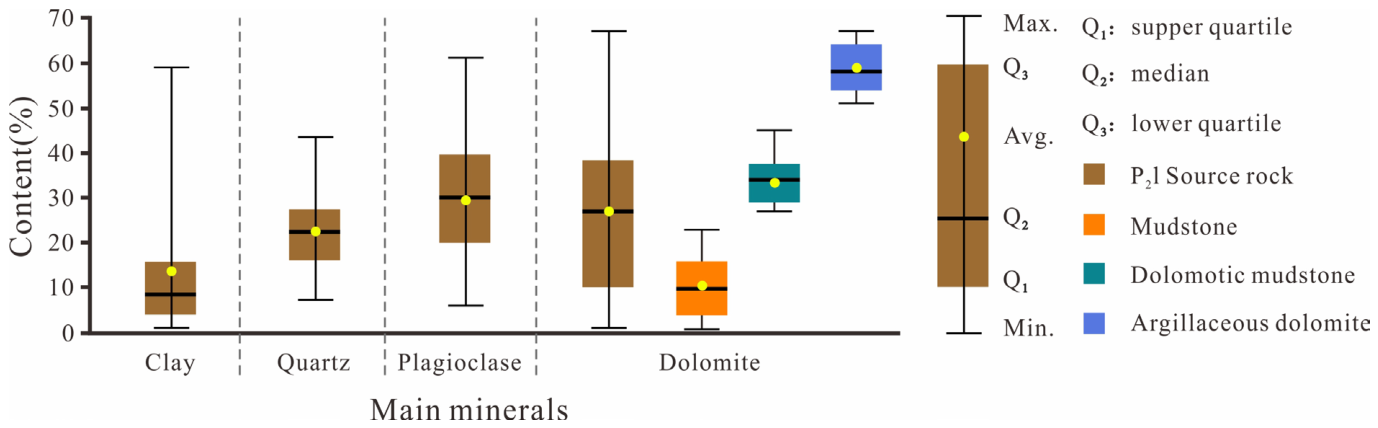
The lithologies of the mixed sedimentary strata in the P2l mainly include mudstone, dolomitic mudstone, argillaceous dolomite, and minor amounts of siltstone/fine sandstone. The lithological classification follows the established criteria for mixed siliciclastic-carbonate sediments [31,32]. XRD analysis results indicate that the dominant minerals in the rocks are quartz, plagioclase, clay minerals, and dolomite (Table 1, Figure 2), whereas calcite, pyrite, and analcime are present in relatively low contents. Dolomite content varies significantly among different lithologies, being the lowest in mudstone (1.00–23.00%, average 10.43%), intermediate in dolomitic mudstone (27.00–45.00%, average 33.50%), and highest in argillaceous dolomite (51.00–67.00%, average 58.56%).
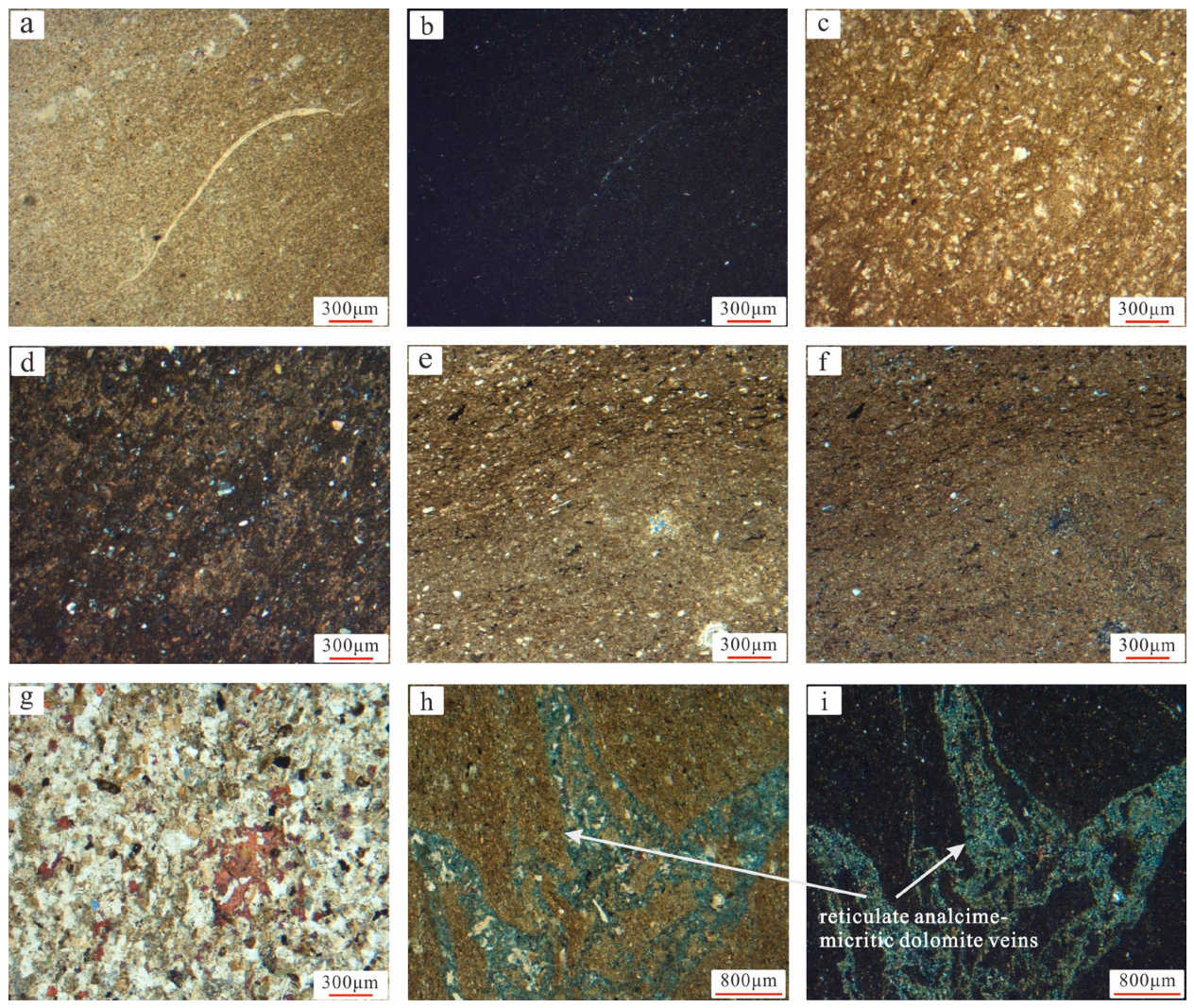
Thin-section observation shows that mudstone is dominated by clay matrix and terrigenous clastic grains, with organic matter distributed in bands or lenses. The organic-rich bands are typically parallel to bedding, indicating a low-energy depositional environment. In dolomitic mudstone, micritic dolomite is mixed with clay minerals, and dolomite mostly occurs as xenomorphic to hypidiomorphic microcrystals. Argillaceous dolomite is dominated by micritic to microcrystalline dolomite with a relatively high idiomorphic degree, and some dolomite crystals intergrow with organic laminae. In addition, reticular analcime-micritic dolomite veins are observed in some samples, which are interpreted as hydrothermal in origin based on their cross-cutting relationships and the presence of analcime. (Figure 3). Previous studies have also documented typical hydrothermal mineral assemblages in the samples, including zoned ferroan dolomite and zoned dolomite with bitumen or aegirine aggregates in inner zones [33,34]. In addition, combined with petrological observations and previous studies [35], the dolomite in the P2l is predominantly a product of syngenetic to pene-syngenetic formation stages.

4.2. Paleoclimatic Characteristics

The Sr/Cu ratio and C-value derived from elemental geochemical analyses are commonly used to assess paleoclimatic variations [36,37,38]. Their applicability in the P2l of the Jimsar Sag has also been validated by previous studies [39,40]. The C-value is calculated as Σ(Fe + Mn + Cr + Ni + V + Co)/Σ(Ca + Mg + Sr + Ba + K + Na) [41,42]. Elemental geochemical analysis results show that the Sr/Cu ratios of the P2l source rocks range from 1.79 to 22.60 with an average of 9.52, and the C-values range from 0.11 to 0.46 with an average of 0.26, indicating that the source rocks were deposited under relatively arid paleoclimatic conditions overall [36].
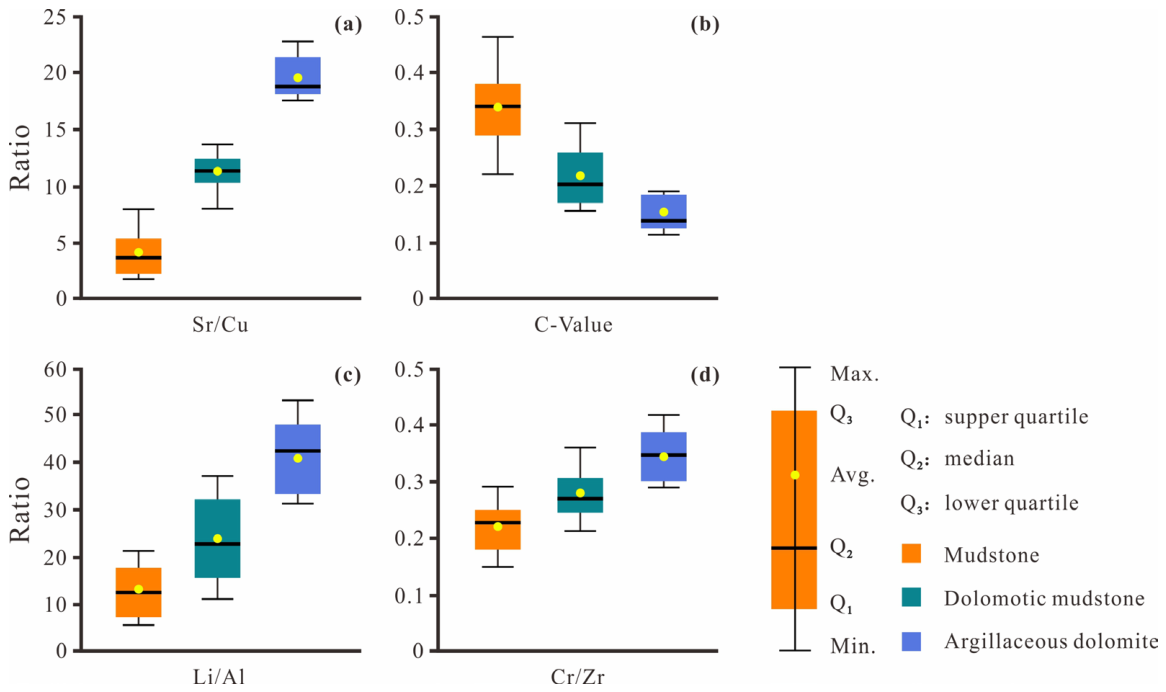
In addition, significant differences in paleoclimatic characteristics are observed among different lithologies. From mudstone to dolomitic mudstone to argillaceous dolomite, the Sr/Cu ratio gradually increases (average 4.01 for mudstone, 11.19 for dolomitic mudstone, and 19.38 for argillaceous dolomite), while the C-value gradually decreases (average 0.34 for mudstone, 0.22 for dolomitic mudstone, and 0.15 for argillaceous dolomite) (Figure 4a,b). These data clearly indicate that the paleoclimate was the least arid during mudstone deposition, followed by dolomitic mudstone deposition and the most arid during argillaceous dolomite deposition.

4.3. Hydrothermal Activity Characteristics

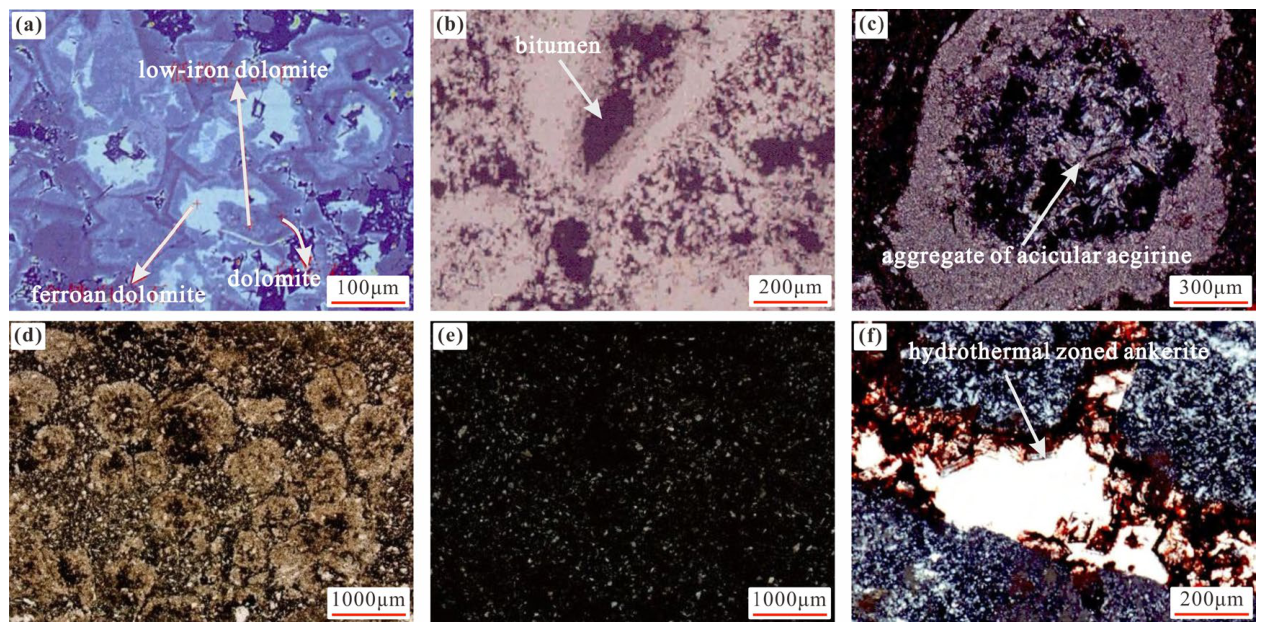
The existence of hydrothermal activity in the P2l source rocks is supported by clear petrological and geochemical evidence. Firstly, a large number of typical hydrothermal minerals have been observed in thin sections of the P2l source rocks from both the Jimsar Sag and its adjacent Santanghu Sag, including reticular analcime-micritic dolomite veins (Figure 3h,i), hydrothermal zoned ferroan dolomite, and zoned dolomite with bitumen or acicular aegirine aggregates in the inner zones (Figure 5). This indicates frequent hydrothermal activity during the deposition of the P2l in the Jimsar Sag and its surrounding areas.
Secondly, previous studies have shown that Li/Al and Cr/Zr ratios can reflect the intensity of hydrothermal activity in fine-grained sedimentary rocks [43,44,45]. It should be noted that, although these ratios may theoretically be influenced by provenance supply and weathering processes, the provenance and weathering conditions during the P2l deposition in the study area were relatively stable with limited terrigenous disturbance [46]. Therefore, variations in these ratios primarily indicate differences in hydrothermal activity intensity.
The results show that from the P2l mudstone to dolomitic mudstone to argillaceous dolomite, both the Li/Al ratio (averages: 12.77, 23.36, 40.89) and the Cr/Zr ratio (averages: 0.22, 0.28, 0.34) increase sequentially (Figure 4). This reflects that the intensity of hydrothermal activity gradually increased during the deposition of mudstone, dolomitic mudstone, and argillaceous dolomite, with the influence of hydrothermal activity becoming increasingly strong.
Furthermore, Zhang et al. [10] reported that dolomites from the Lucaogou Formation have relatively heavy δ13CPDB values (average 6.94) and light δ18OPDB values (average −8.12), indicating that dolomite formation was influenced by hydrothermal activity, which is consistent with our petrographic observations and elemental geochemical analyses. However, anomalously positive δ13C values in lacustrine dolomites can also result from microbial methanogenesis or intense evaporation [47,48]. Therefore, the isotopic signature is consistent with, but not uniquely diagnostic of, hydrothermal involvement. In this study, the interpretation of hydrothermal activity is based on multiple lines of evidence, including petrographic observations (e.g., reticular analcime-micritic dolomite veins, zoned dolomite) and elemental geochemical proxies (e.g., Li/Al, Cr/Zr ratios).

4.4. Organic Matter Source Characteristics

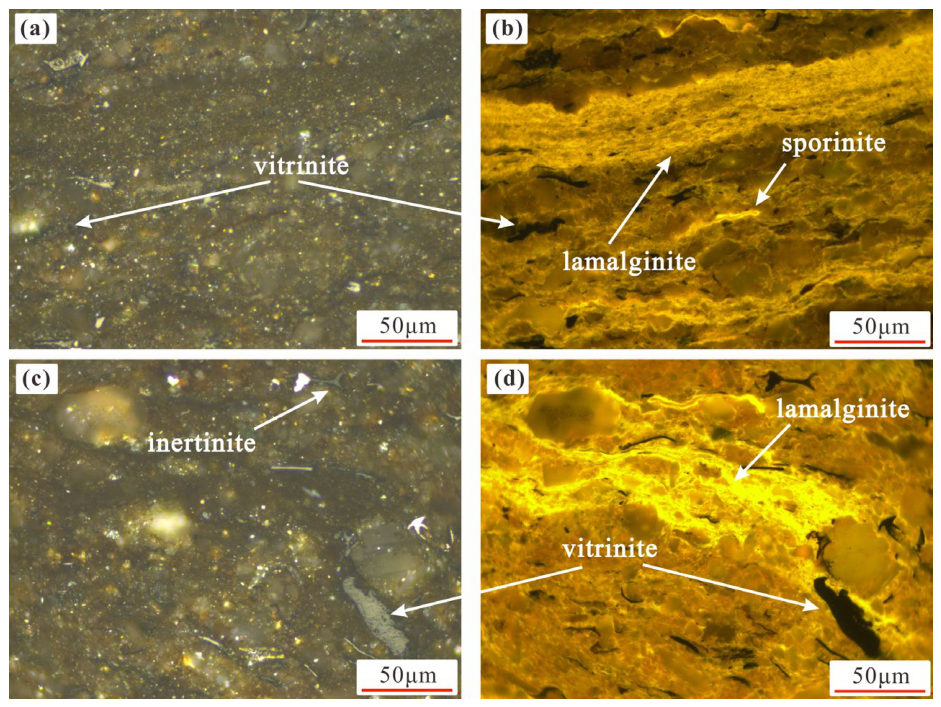
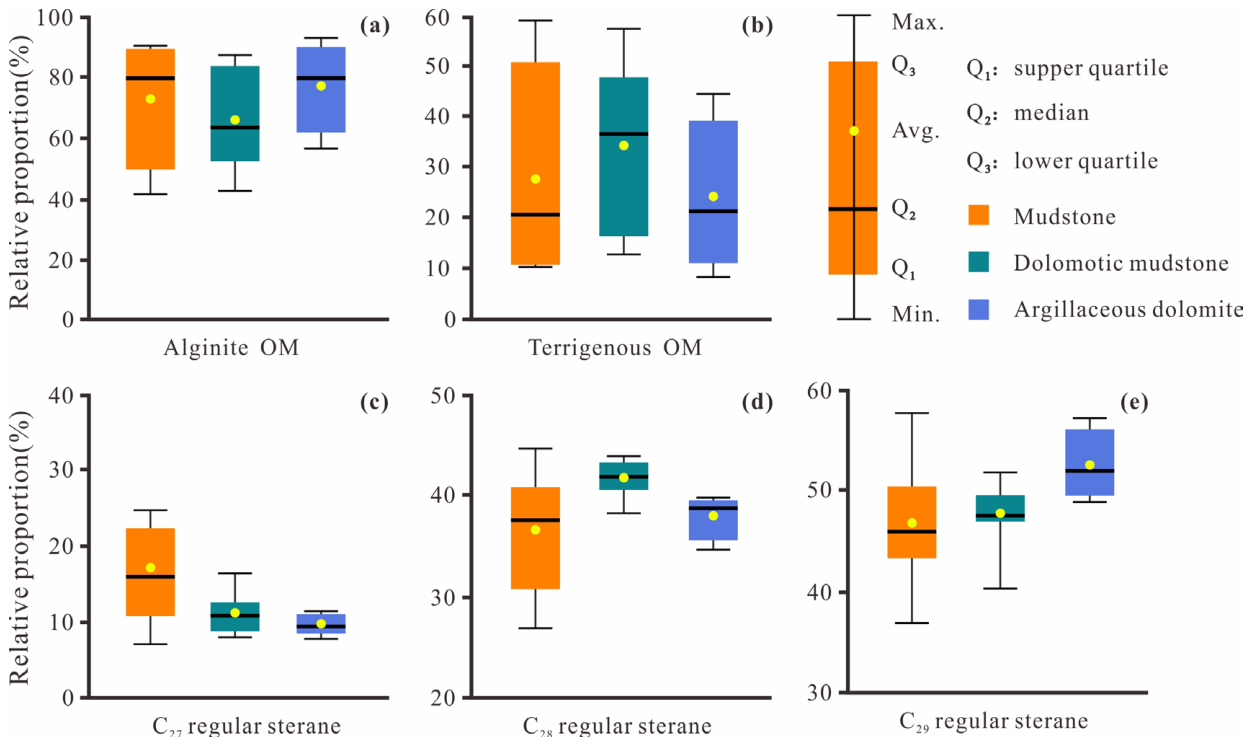
Organic petrological analysis indicates that the organic macerals in the P2l source rocks are dominated by alginite (Figure 6), with relative contents ranging from 41.27% to 92.34% and an average of 71.08% (Figure 7a). In contrast, the contents of terrigenous organic macerals (sporinite, vitrinite, and inertinite) are low, ranging from 7.66% to 58.73% with an average of only 28.92% (Figure 6 and Figure 7b). Among the alginite, lamalginite is overwhelmingly dominant (Figure 6). The high content of alginite indicates that planktonic algae made a significant contribution to organic matter input. From mudstone to dolomitic mudstone to argillaceous dolomite, the relative content of alginite is relatively high without significant differences (average 72.40% for mudstone, 65.69% for dolomitic mudstone, and 76.85% for argillaceous dolomite), suggesting that the organic matter is primarily derived from aquatic algae in all three lithologies.
Biomarker analysis further reveals details of organic matter sources. Abundant C27–C29 regular steranes are detected in all samples, and their relative abundances show systematic variations among different lithologies. From mudstone to dolomitic mudstone to argillaceous dolomite, the relative abundance of C27 regular steranes decreases progressively (average of 17.03% for mudstone, 11.05% for dolomitic mudstone and 9.59% for argillaceous dolomite) (Figure 7c), while that of C29 regular steranes increases progressively (average of 46.67% for mudstone, 47.26% for dolomitic mudstone and 52.43% for argillaceous dolomite) (Figure 7e). The relative abundance of C28 regular steranes first increases and then decreases (average of 36.30% for mudstone, 41.69% for dolomitic mudstone, and 37.98% for argillaceous dolomite) (Figure 7d). Combined with previous studies [27,49,50], C27 regular steranes in the P2l source rocks of the study area are mainly derived from non-halotolerant algae, C28 regular steranes are mainly derived from slightly halotolerant cyanobacteria, and C29 regular steranes are mainly derived from halotolerant green algae (e.g., Dunaliella). Therefore, variations in water salinity during deposition led to differential development of algae with different halotolerances, which in turn resulted in systematic variations in the relative proportions of C27–C28–C29 regular steranes among different lithologies of the source rocks.

5. Discussion

5.1. Hydrochemical Basis for Dolomite Formation

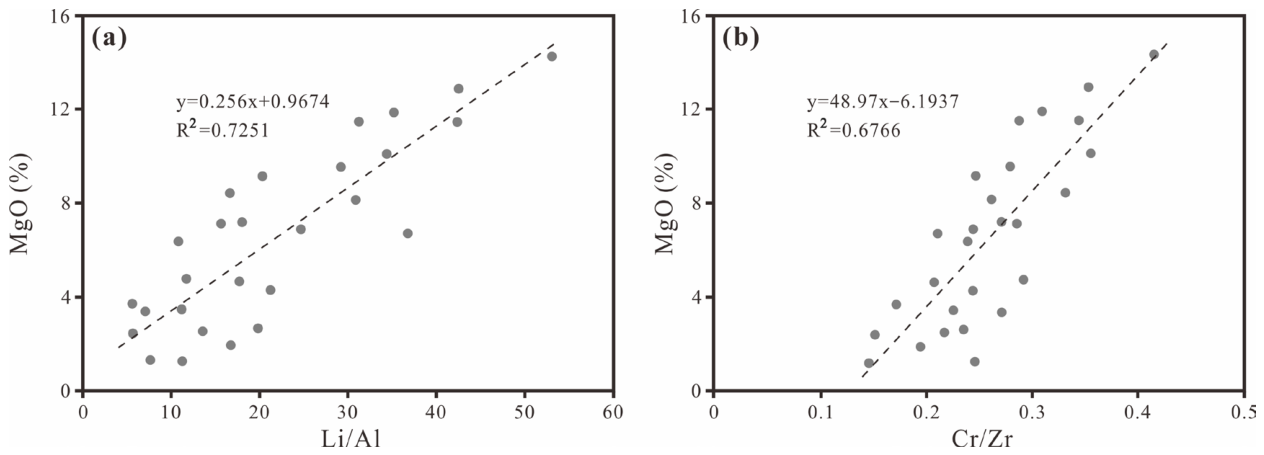
Hydrothermal activity is an important factor controlling the development of dolomite in the P2l, and its core contribution lies in providing the necessary Mg2+ source for dolomite formation, which, together with evaporation under an arid climate, lays the hydrochemical foundation for dolomite precipitation. Previous studies have shown that the P2l in the Santanghu Basin and the Jimsar Sag, as stratigraphic units formed during the same period, both contain certain amounts of analcime in their source rocks [33,34]. In addition, hydrothermal minerals such as hydrothermally zoned ankerite and zoned dolomite are observed in the source rocks, indicating that the formation of the P2l source rocks in the study area and adjacent regions was influenced by deep-sourced materials brought by magmatic-hydrothermal activity under an extensional setting during the depositional period. Furthermore, the hydrothermal activity intensity parameters (Li/Al, Cr/Zr) show a significant positive correlation with MgO content (Figure 8), suggesting that hydrothermal fluids were an important source of Mg2+ in the lake basin. This is mainly because hydrothermal fluids are typically alkaline, accompanied by high contents of Mg2+, Ca2+, and CO32−.
However, the presence of a Mg2+ source alone is not sufficient to guarantee large-scale dolomite precipitation; a sufficiently high Mg/Ca ratio in the lake water is also required. Paleoclimatic data indicate that from mudstone to argillaceous dolomite, the climate gradually became more arid (as evidenced by increasing Sr/Cu ratios and decreasing C-values) (Figure 4a,b). Under arid climatic conditions, intense evaporation led to a reduction in lake water volume, increasing both Ca2+ and Mg2+ concentrations. However, because Mg2+ has a higher solubility in solution and is more difficult to be consumed by biological or chemical processes, its concentration tends to increase more than that of Ca2+, thereby elevating the Mg/Ca ratio. Thus, hydrothermal activity provided an ample supply of Mg2+, while evaporative concentration under an arid climate increased the Mg/Ca ratio. The synergistic effect of these two factors together created the hydrochemical basis favorable for dolomite formation.

5.2. Alkaline Environment for Dolomite Precipitation

If hydrothermal activity and climate address the issues of material sources and favorable hydrochemical conditions, microbial activities resolve the problem of whether dolomite can crystallize readily under ambient temperature kinetic conditions. Through metabolic processes, microbes create a sustained and favorable alkaline environment for dolomite precipitation, thereby overcoming the kinetic barrier to dolomite formation.
During the deposition of the P2l, lower aquatic organisms such as bacteria and algae were highly abundant in the lacustrine basin. Recent studies from the same basin have also reported anomalously positive δ13CPDB values and well-preserved methanogen microfossils in Lucaogou Formation dolomites, independently supporting the involvement of microbial activities in dolomite formation [47,48]. These microbes significantly altered the chemical properties of the water column during their metabolic activities through the following pathways. First, photosynthesis or chemosynthesis directly consumes CO2 or HCO3, elevating the water pH [51,52]. Second, anaerobic microbes such as sulfate-reducing bacteria reduce SO42− to H2S during the degradation of organic matter [53,54]. This process consumes H+, further increasing pH, while simultaneously decreasing SO42− concentration. Notably, SO42− can form ion pairs with Mg2+, inhibiting dolomite nucleation. Consequently, microbial activities create an alkaline environment characterized by high pH, low SO42− concentration, and high alkalinity, which is favorable for dolomite precipitation. Similarly, in Salinas Lake (southern Iberia), halophilic microbial communities and their secreted extracellular polymeric substances (EPS) generate alkaline conditions that facilitate dolomite precipitation under arid, evaporative environments [55].

5.3. Dynamic Crystallization Conditions for Rapid Dolomite Precipitation

In addition to providing hydrochemical conditions with a high Mg/Ca ratio via evaporative concentration, paleoclimate at a deeper level offers ideal dynamic crystallization conditions for the rapid and massive precipitation of dolomite through its fluctuations. Traditional dolomite synthesis experiments have long faced a conundrum: in constant supersaturated solutions at room temperature and pressure, ordered dolomite cannot precipitate even after years or decades, even when the degree of supersaturation reaches 1000-fold [56]. However, in the geological record, particularly in ancient saline lacustrine basins, dolomite can be widely distributed. This contradiction has recently received a breakthrough explanation. Recent studies demonstrate that frequent cycling between supersaturated and undersaturated states can accelerate the growth rate of dolomite by up to seven orders of magnitude [18]. In other words, dynamic, non-equilibrium crystallization conditions are far more favorable for dolomite formation than static equilibrium conditions.
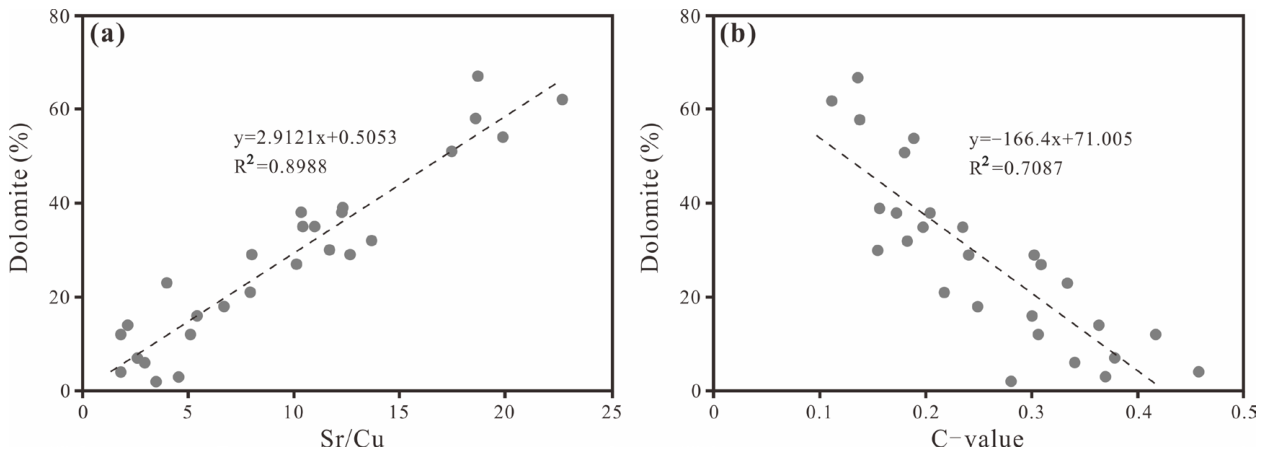
As shown in Figure 9, with increasing Sr/Cu ratios and decreasing C-values (i.e., progressively more arid paleoclimatic conditions), dolomite content in the source rocks displays a gradual increasing trend. The main reason is that the entire Junggar region was under a relatively warm climatic regime during the Permian. Warm climate intensified the extremity of the hydrological cycle, leading to increased frequency and intensity of extreme drought and extreme precipitation events [57]. Such climatic conditions caused high-frequency fluctuations in lake water chemistry, potentially resulting in rapid switching of fluid saturation around dolomite crystals between supersaturation and undersaturation. This greatly overcame the kinetic barrier to dolomite growth, ultimately enabling rapid and massive dolomite precipitation. A natural analog is found in alkaline Lake Van (Turkey), where hydrochemical mixing zones and fluctuating saturation states—rather than persistent supersaturation—trigger early diagenetic dolomite formation [58].

5.4. Dolomite Formation Under Multi-Factor Synergistic Effects

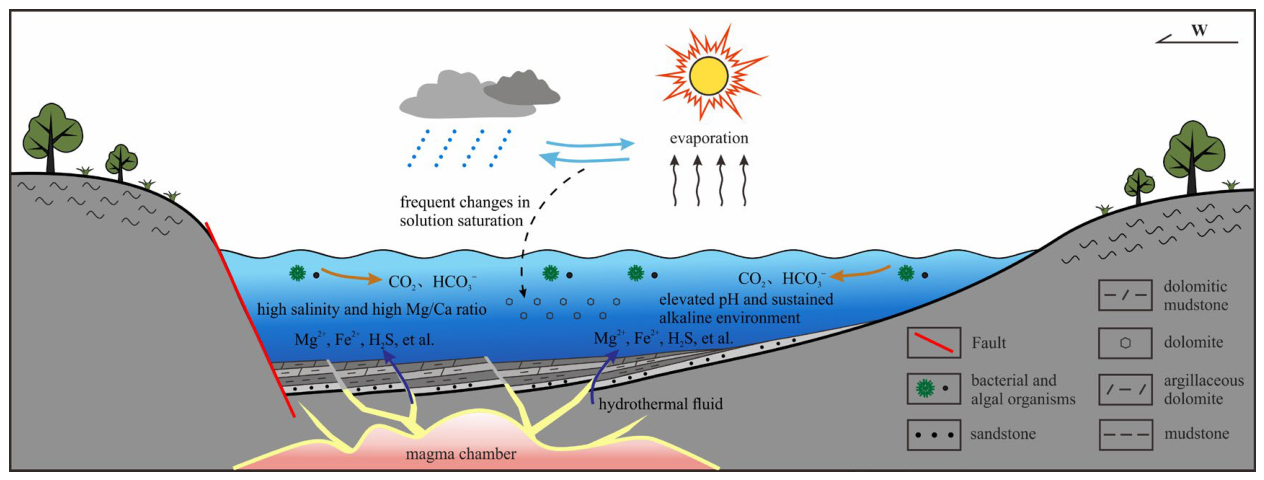
Synthesizing the above analyses, the widespread development of dolomite in the mixed sedimentary strata of the P2l in the Jimsar Sag is the result of the spatial and temporal coupling of multiple geological processes. Among these, the establishment of the hydrochemical basis, the formation of an alkaline precipitation environment, and the realization of ideal dynamic conditions each play distinct yet synergistic roles, collectively controlling the entire process of dolomite formation from material preparation to nucleation to rapid precipitation (Figure 10).
Firstly, hydrothermal activity and arid evaporation jointly construct the hydrochemical foundation for dolomite formation. Hydrothermal activity provides a sufficient source of Mg2+, while arid evaporation increases the Mg/Ca ratio of the lake water. The synergy of these two factors lays the necessary hydrochemical foundation for dolomite formation.
Secondly, microbial metabolic activities create a favorable alkaline environment for dolomite precipitation. Lower aquatic organisms, such as bacteria and algae, were highly prosperous in the lacustrine basin. Through metabolic pathways such as photosynthesis and sulfate reduction, they significantly increase pH and decrease SO42− concentration. The high pH helps break the hydration shell around Mg2+ and lowers the nucleation energy barrier, while the low SO42− concentration reduces ion pairing with Mg2+, allowing more free Mg2+ to combine with CO32−. Thus, microbial activities actively modify the local water chemistry, creating a kinetically favorable alkaline microenvironment for dolomite precipitation.
Thirdly, the alternation of extreme arid and extreme precipitation events constructs ideal dynamic conditions for rapid dolomite formation. Against a relatively arid background, droughts and heavy precipitation alternate frequently, leading to high-frequency fluctuations in water saturation and providing pulsed crystallization conditions for dolomite. Therefore, it is this climatic fluctuation, rather than simply persistent aridity, that could have helped to overcome the kinetic barrier to dolomite growth, which may help explain the large-scale formation of dolomite under normal temperature conditions.
In summary, hydrothermal activity and arid climate jointly solve the problems of material source and chemical ratio (hydrochemical foundation), microbial activities solve the kinetic barrier problem of nucleation at normal temperature (alkaline precipitation environment), and climate fluctuation solves the problem of crystallization rate (ideal dynamic conditions). However, quantitatively distinguishing the relative contributions of hydrothermal, microbial, and climatic factors remains challenging with the current dataset, and is a worthwhile topic for future investigation.
This understanding not only deepens the insight into the depositional–diagenetic processes of mixed sedimentary strata in saline lacustrine basins, providing a more comprehensive framework for studying dolomite genesis under similar geological settings [55,58,59], but also has important practical implications for exploration. Dolomitic mudstone and argillaceous dolomite are not only the lithologies where high-quality source rocks develop, but also become favorable reservoir intervals for shale oil due to their high brittleness and easy development of dissolution pores. Clarifying their formation mechanism helps predict the spatial distribution of such “sweet spot” lithologies, thereby providing a scientific basis for the exploration and deployment of Permian shale oil in the Jimsar Sag and surrounding areas.

6. Conclusions

(1)
In the mixed sedimentary strata of the P2l in the Jimsar Sag, from mudstone to dolomitic mudstone to argillaceous dolomite, the dolomite content increases significantly, the paleoclimate becomes progressively more arid, and the intensity of hydrothermal activity gradually increases. These three types of source rocks exhibit systematic variations in mineralogical and geochemical characteristics.
(2)
The formation of dolomite is controlled by the synergistic coupling of hydrothermal activity, microbial metabolism, and paleoclimatic fluctuations. Hydrothermal activity and arid climate provide the necessary hydrochemical basis for dolomite formation. Microbial activities create an alkaline environment and overcome the nucleation kinetic barrier. Climatic fluctuations provide dynamic conditions for rapid dolomite precipitation.
(3)
The hydrochemical foundation, alkaline environment, and ideal dynamic conditions act synergistically, jointly controlling dolomite formation. This explains the large-scale development of dolomite and its interbedding with mudstone in mixed sedimentary strata of saline lacustrine basins, and provides a useful reference for predicting “sweet spots” in shale oil.

Author Contributions

Conceptualization, W.Z.; methodology, Z.Z.; software, C.Z. and R.F.; validation, W.C.; formal analysis, W.Z.; investigation, B.T. and Y.Z.; data curation, W.Z.; writing—original draft preparation, W.Z.; writing—review and editing, W.Z.; visualization, Z.W. and H.L.; supervision, Z.Z.; project administration, Z.Z.; funding acquisition, Z.Z. All authors have read and agreed to the published version of the manuscript.

Funding

This study was supported by the National Natural Science Foundation of China (Grant Nos. U2244208, 42302177).

Institutional Review Board Statement

Not applicable.

Informed Consent Statement

Not applicable.

Data Availability Statement

All data and materials are available on request from the corresponding author. The data are not publicly available due to ongoing research using a part of the data.

Conflicts of Interest

The authors declare that they have no known competing financial interests or personal relationships that could have appeared to influence the work reported in this paper.

Appendix A

Table A1. Sample information of the analyzed samples from the P2l, Jimsar Sag.
SampleWellDepth (m)LithologySampleWellDepth (m)Lithology
JL-1HQ33033832.12AJL-25HQ33033963.86B
JL-2HQ33033833.16AJL-26HQ33033969.86B
JL-3HQ33033833.83AJL-27HQ33033970.76B
JL-4HQ33033834.70AJL-28HQ33033979.10B
JL-5HQ33033835.72AJL-29HQ33033988.04B
JL-6HQ33033836.45AJL-30HQ33033992.00B
JL-7HQ33033840.42AJL-31J28012908.20B
JL-8HQ33033845.42AJL-32J28012911.48B
JL-9HQ33033972.30AJL-33J28012942.00B
JL-10HQ33033975.54AJL-34J28013059.53B
JL-11HQ3313292.95AJL-35J28013069.20B
JL-12J28012904.04AJL-36J33013400.15B
JL-13J28012929.10AJL-37J33013433.06B
JL-14J28013047.25AJL-38J33013541.80B
JL-15J28013049.40AJL-39J33013551.67B
JL-16J28013055.52AJL-40HQ33033841.10C
JL-17J28022930.23AJL-41HQ33033976.92C
JL-18J28073451.48AJL-42HQ3313295.60C
JL-19J33013397.68AJL-43J28012929.94C
JL-20J33013402.56AJL-44J28073453.16C
JL-21J33013546.42AJL-45J33013399.12C
JL-22J33013548.40AJL-46J33013542.16C
JL-23J33013558.49AJL-47J33013547.72C
JL-24HQ33033831.72BJL-48J33013554.42C
Note: A. Mudstone; B. Dolomitic mudstone; C. Argillaceous dolomite.

References

  1. Kuang, L.C.; Tang, Y.; Lei, D.W.; Chang, Q.S.; Ouyang, M.; Hou, L.H.; Liu, D.G. Formation conditions and exploration potential of tight oil in the Permian saline lacustrine dolomitic rock, Junggar Basin, NW China. Pet. Explor. Dev. 2012, 39, 700–711. [Google Scholar] [CrossRef]
  2. Warren, J.K. Evaporites: A Geological Compendium; Springer: Berlin/Heidelberg, Germany, 2016. [Google Scholar]
  3. Xu, S.; Wang, Y.X.; Bai, N.; Wu, S.Q.; Liu, B.C. Organic matter enrichment mechanism in saline lacustrine basins: A review. Geol. J. 2023, 59, 155–168. [Google Scholar] [CrossRef]
  4. Zhang, W.Q.; Song, C.B.; Shi, X.P.; Li, M.; Yang, Y.M.; Li, C.; Jing, C.L.; Ye, M.S. Formation mechanism of high-quality Palaeogene “compositional mixing” reservoirs in lacustrine rift basins: A case from the offshore Bohai Bay Basin, China. Mar. Pet. Geol. 2024, 166, 106956. [Google Scholar] [CrossRef]
  5. Wang, B.Y.; Liu, B.; Sun, G.X.; Bai, L.H.; Chi, Y.A.; Liu, Q.; Liu, M. Evaluation of the shale oil reservoir and the oil enrichment model for the first member of the Lucaogou Formation, Western Jimusaer Depression, Junggar Basin, NW China. ACS Omega 2021, 6, 12081–12098. [Google Scholar] [CrossRef]
  6. Guo, X.S.; Shen, B.J.; Li, M.W.; Liu, H.M.; Li, Z.M.; Zhang, S.C.; Yang, Y.; Guo, J.Y.; Liu, Y.L.; Li, P.; et al. Research progress and key research directions of shale oil in lacustrine rift basins. Pet. Explor. Dev. 2025, 52, 1113–1127. [Google Scholar] [CrossRef]
  7. Wu, H.; Hu, W.; Cao, J.; Wang, X.; Wang, X.; Liao, Z. A unique lacustrine mixed dolomitic-clastic sequence for tight oil reservoir within the middle Permian Lucaogou Formation of the Junggar Basin, NW China: Reservoir characteristics and origin. Mar. Pet. Geol. 2016, 76, 115–132. [Google Scholar] [CrossRef]
  8. Wang, J.; Zhou, L.; Liu, J.; Zhang, X.Y.; Zhang, F.; Zhang, B.Z. Acid-base alternation diagenesis and its influence on shale reservoirs in the Permian Lucaogou Formation, Jimusar Sag, Junggar Basin, NW China. Pet. Explor. Dev. 2020, 47, 962–976. [Google Scholar] [CrossRef]
  9. Feng, J.L.; Cao, J.; Hu, K.; Peng, X.Q.; Chen, Y.; Wang, Y.F.; Wang, M. Dissolution and its impacts on reservoir formation in moderately to deeply buried strata of mixed siliciclastic–carbonate sediments, northwestern Qaidam Basin, northwest China. Mar. Pet. Geol. 2013, 39, 124–137. [Google Scholar] [CrossRef]
  10. Zhang, S.; Liu, Y.Q.; Li, H.; Jiao, X.; Zhou, D.W. Hydrothermal-sedimentary dolomite—A case from the Middle Permian in eastern Junggar Basin, China. J. Palaeogeogr. 2020, 22, 111–128. [Google Scholar] [CrossRef]
  11. Yu, N.; Xu, Y.Y.; Liu, D.; Qiu, X.; Fan, Q.G.; Wang, H.M. The catalytic role of anaerobic bacteria in dolomite formation in Lake Jibuhulangtu Nuur, Inner Mongolia. Earth Sci. 2018, 43, 53–62. [Google Scholar]
  12. Li, H.; Liu, Y.Q.; Yang, K.; Liu, Y.J.; Niu, Y.Z. Hydrothermal mineral assemblages of calcite and dolomite–analcime–pyrite in Permian lacustrine Lucaogou mudstones, eastern Junggar Basin, northwest China. Miner. Petrol. 2021, 115, 63–85. [Google Scholar] [CrossRef]
  13. Yang, Z.; Whitaker, F.F.; Liu, R.C.; Phillips, J.C.; Zhong, D.K. A new model for formation of lacustrine primary dolomite by subaqueous hydrothermal venting. Geophys. Res. Lett. 2021, 48, e2020GL091335. [Google Scholar] [CrossRef]
  14. Manche, C.J.; Kaczmarek, S.E. Dolomite mineralogy as a proxy record for lake level fluctuations: A case study from the Eocene Uteland Butte Member of the Green River Formation, Uinta Basin, Utah, U.S.A. J. Sediment. Res. 2023, 93, 431–452. [Google Scholar] [CrossRef]
  15. Montes-Hernandez, G.; Findling, N.; Renard, F. Dissolution-precipitation reactions controlling fast formation of dolomite under hydrothermal conditions. Appl. Geochem. 2016, 73, 169–177. [Google Scholar] [CrossRef]
  16. Montes-Hernandez, G.; Findling, N.; Renard, F.; Auzende, A.L. Precipitation of ordered dolomite via simultaneous dissolution of calcite and magnesite: New experimental insights into an old precipitation enigma. Cryst. Growth Des. 2014, 14, 671–677. [Google Scholar] [CrossRef]
  17. Pimentel, C.; Pina, C.M. Reaction pathways towards the formation of dolomite-analogues at ambient conditions. Geochim. Cosmochim. Acta 2016, 178, 259–267. [Google Scholar] [CrossRef]
  18. Kim, J.; Kimura, Y.; Puchala, B.; Yamazaki, T.; Becker, U.; Sun, W. Dissolution enables dolomite crystal growth near ambient conditions. Science 2023, 382, 915–920. [Google Scholar] [CrossRef]
  19. Bao, H.J.; He, W.J.; Fei, L.Y.; Jia, X.Y.; Zheng, M.L.; Yang, H.B.; Guo, X.G. Characteristics and main controlling factors of tight oil reservoir in the Jimsar Sag of Junggar Basin. Acta Geol. Sin. 2015, 89, 182–183. [Google Scholar] [CrossRef][Green Version]
  20. Cao, Z.; Liu, G.D.; Kong, Y.H.; Wang, C.Y.; Niu, Z.C.; Zhang, J.Y.; Geng, C.B.; Shan, X.; Wei, Z.P. Lacustrine tight oil accumulation characteristics: Permian Lucaogou Formation in Jimusaer Sag, Junggar Basin. Int. J. Coal Geol. 2016, 153, 37–51. [Google Scholar] [CrossRef]
  21. Xie, Z.B.; Qu, Y.Q.; Wu, T.; Wang, T.H.; Liu, Y.T.; Hei, C.L.; Tao, H.F. Discussion on the sedimentary paleoenvironment and biological source of Permian Lucaogou Formation in Jimusar Sag, Junggar Basin. Nat. Gas. Geosci. 2023, 34, 1328–1342. [Google Scholar]
  22. Tao, H.F.; Qiu, Z.; Qu, Y.Q.; Liu, J.; Qin, Z.; Xie, Z.B.; Qiu, J.L.; Liu, B. Geochemistry of middle permian lacustrine shales in the Jimsar Sag, Junggar Basin, NW China: Implications for hydrothermal activity and organic matter enrichment. J. Asian Earth Sci. 2022, 232, 105267. [Google Scholar] [CrossRef]
  23. Kong, X.Y.; Zeng, J.H.; Tan, X.F.; Ding, K.; Luo, Q.; Wang, Q.Y.; Wen, M.; Wang, X.; Wang, M.Y. Natural tectonic fractures and their formation stages in tight reservoirs of Permian Lucaogou Formation, Jimsar Sag, southern Junggar Basin, NW China. Mar. Pet. Geol. 2021, 132, 105269. [Google Scholar] [CrossRef]
  24. Dai, K.; Xia, Y.; Liu, T.E.; Zhang, H.; Fu, P.; Yuan, H.W.; Ren, S.J.; Liu, C. Geochemical and geophysical constraints on deep fluid activities in sedimentary basins: A study of Jimsar Sag in Junggar Basin. Front. Earth Sci. 2026, 14, 1751788. [Google Scholar] [CrossRef]
  25. Fang, S.H.; Jia, C.Z.; Guo, Z.J.; Song, Y.; Xu, H.M.; Liu, L.J. New view on the Permian evolution of the Junggar Basin and its implications for tectonic evolution. Earth Sci. Front. 2006, 13, 108–121. [Google Scholar]
  26. Tang, Y.; Wang, X.T.; Wang, T.; Hei, C.L.; Liang, S.; Cheng, H. Reconstruction of sedimentary paleoenvironment of Permian Lucaogou Formation and its implications for the organic matter enrichment in south-eastern Junggar Basin, China. Front. Earth Sci. 2024, 18, 526–537. [Google Scholar] [CrossRef]
  27. Zeng, W.R.; Zhang, Z.H.; Wang, B.R.; Chen, X.; Zheng, R.H.; Fu, G.B.; Jin, Y. Formation mechanism of organic-rich mixed sedimentary rocks in saline lacustrine basin, Permian Lucaogou Formation, Jimsar Sag, Junggar Basin, Northwest China. Mar. Pet. Geol. 2023, 156, 106452. [Google Scholar] [CrossRef]
  28. Kang, J.L.; Wang, J.H.; Ma, Q.; Li, C.Q.; Chen, X.X. Fine-grained sublacustrine fan deposits and their significance in shale oil reservoirs in the Lucaogou Formation in the Jimsar Sag, Junggar Basin. Bull. Geol. Sci. Technol. 2023, 42, 82–93. [Google Scholar]
  29. Meng, Z.Y.; Liu, Y.Q.; Jiao, X.; Ma, L.T.; Zhou, D.W.; Li, H.; Cao, Q.; Zhao, M.R.; Yang, Y.Y. Petrological and organic geochemical characteristics of the Permian Lucaogou Formation in the Jimsar Sag, Junggar Basin, NW China: Implications on the relationship between hydrocarbon accumulation and volcanic-hydrothermal activities. J. Pet. Sci. Eng. 2022, 211, 110078. [Google Scholar] [CrossRef]
  30. Jiao, X.; Liu, Y.Q.; Yang, W.; Li, H.; Meng, Z.Y.; Zhao, M.R.; Li, Z.X. Microcrystalline dolomite in a Middle Permian volcanic lake: Insights on primary dolomite formation in a non-evaporitic environment. Sedimentology 2023, 70, 48–77. [Google Scholar] [CrossRef]
  31. Sha, Q.A. Discussion on mixing deposit and Hunji rock. J. Palaeogeogr. 2001, 3, 63–66. [Google Scholar]
  32. Dong, G.Y.; Chen, H.D.; He, Y.B.; Qin, Z.Y.; Luo, J.X.; Xin, C.J. Some thoughts on the study of mixed siliciclastic-carbonate sediments. Adv. Earth Sci. 2007, 22, 931–939. [Google Scholar]
  33. Liu, Y.Q.; Zhou, D.W.; Jiao, X.; Feng, Q.; Zhou, X.H. A preliminary study on the relationship between deep-sourced materials and hydrocarbon generation in lacustrine source rocks: An example from the Permian black rock series in Jimusar sag, Junggar Basin. J. Palaeogeogr. 2019, 21, 983–998. [Google Scholar]
  34. Meng, Z.Y. Study on Lacustrine Source Rocks Enriched in Deep-Sourced Materials and Their Relationship with Organic Matter Enrichment. Ph.D. Thesis, Northwest University, Xi’an, China, 2023. [Google Scholar]
  35. Zhang, S.; Liu, Y.Q.; Jiao, X.; Zhou, D.W.; Zhang, X.; Lu, S.T.; Zhou, N.C. Sedimentary environment and formation mechanisim of dolomitic rocks in the Middle Permian Lucaogou Formation, Jimusar Depression, Junggar Basin. J. Palaeogeogr. 2018, 20, 33–48. [Google Scholar]
  36. Lerman, A. Lakes: Chemistry, Geology, Physics; Springer: New York, NY, USA, 1978; pp. 237–289. [Google Scholar]
  37. Zhao, Z.Y.; Zhao, J.H.; Wang, H.J.; Liao, J.D.; Liu, C.M. Distribution characteristics and applications of trace elements in Junggar basin. Nat. Gas Explor. Dev. 2007, 30, 30–33. [Google Scholar]
  38. Moradi, A.V.; Sarı, A.; Akkaya, P. Geochemistry of the miocene oil shale (hançili formation) in the Çankırı-Çorum basin, Central Turkey: Implications for paleoclimate conditions, source–area weathering, provenance and tectonic setting. Sediment. Geol. 2016, 341, 289–303. [Google Scholar] [CrossRef]
  39. Liu, D.D.; Fan, Q.Q.; Zhang, C.; Gao, Y.; Du, W.; Song, Y.; Zhang, Z.Y.; Luo, Q.; Jiang, Z.X.; Huang, Z.X. Paleoenvironment evolution of the Permian Lucaogou Formation in the southern Junggar Basin, NW China. Palaeogeogr. Palaeoclimatol. Palaeoecol. 2022, 603, 111198. [Google Scholar] [CrossRef]
  40. Sun, S.J.; Zhang, B.; Wang, X.M.; Xiao, W.Y.; Tian, H.; Hou, G.T.; Zhang, S.C. High-resolution geochemistry in the Lucaogou Formation, Junggar Basin: Climate fluctuation and organic matter enrichment. Mar. Pet. Geol. 2024, 162, 106734. [Google Scholar] [CrossRef]
  41. Turgeon, S.; Brumsack, H.J. Anoxic vs. dysoxic events reflected in sediment geochemistry during the Cenomanian–Turonian boundary event (Cretaceous) in the Umbria–Marche Basin of central Italy. Chem. Geol. 2006, 234, 321–339. [Google Scholar] [CrossRef]
  42. Algeo, T.J.; Tribovillard, N. Environmental analysis of paleoceanographic systems based on molybdenum-uranium covariation. Chem. Geol. 2009, 268, 211–225. [Google Scholar] [CrossRef]
  43. Marchig, V.; Gundlach, H.; Möller, P.; Schley, F. Some geochemical indicators for discrimination between diagenetic and hydrothermal metalliferous sediments. Mar. Geol. 1982, 50, 241–256. [Google Scholar] [CrossRef]
  44. Pisarsky, B.I.; Konev, A.A.; Levi, K.G.; Sarota, J.; Delvaux, D. Carbon dioxide-bearing alkaline hydrotherms and strontium-bearing travertines in the Songwe River valley (Tanzania). Geol. Geofiz. 1998, 39, 941–948. [Google Scholar]
  45. Pujol, F.; Berner, Z.; Stüben, D. Palaeoenvironmental changes at the Frasnian/Famennian boundary in key European sections: Chemostratigraphic constraints. Palaeogeogr. Palaeoclimatol. Palaeoecol. 2006, 240, 120–145. [Google Scholar] [CrossRef]
  46. Li, B.Q.; Zhang, X.G.; Liu, X.F.; Wu, C.; Zhou, J.B.; Ma, X.P. Mineralogical and geochemical composition of Middle Permian Lucaogou Formation in the southern Junggar Basin, China: Implications for paleoenvironment, provenance, and tectonic setting. Arab. J. Geosci. 2016, 9, 174. [Google Scholar] [CrossRef]
  47. Zhao, Z.Y.; Lin, S.H.; Luo, X.; Zhang, L.J. Paleo-Sedimentary Environment and Formation Mechanism of the Organic-Rich Shale of the Permian Lucaogou Formation, Jimsar Sag, Junggar Basin, China. Minerals 2024, 14, 635. [Google Scholar] [CrossRef]
  48. Sun, F.N.; Hu, W.X.; Wang, X.L.; Cao, J.; Fu, B.; Wu, H.G.; Yang, S.C. Methanogen microfossils and methanogenesis in Permian lake deposits. Geology 2021, 49, 13–18. [Google Scholar] [CrossRef]
  49. Liu, S.J.; Gao, G.; Jin, J.; Gang, W.Z.; Xiang, B.L. Source rock with high abundance of C28 regular sterane in typical brackish-saline lacustrine sediments: Biogenic source, depositional environment and hydrocarbon generation potential in Junggar Basin, China. J. Pet. Sci. Eng. 2022, 208, 109670. [Google Scholar] [CrossRef]
  50. Zhi, D.M.; Xiang, B.L.; Zhou, N.; Li, E.T.; Zhang, C.J.; Wang, Y.C.; Cao, J. Contrasting shale oil accumulation in the upper and lower sweet spots of the lacustrine Permian Lucaogou Formation, Junggar Basin, China. Mar. Petrol. Geol. 2023, 150, 106178. [Google Scholar] [CrossRef]
  51. Warthmann, R.; van Lith, Y.; Vasconcelos, C.; McKenzie, J.A.; Karpoff, A.M. Bacterially induced dolomite precipitation in anoxic culture experiments. Geology 2000, 28, 1091–1094. [Google Scholar] [CrossRef]
  52. Deng, S.C.; Dong, H.L.; Lv, G.; Jiang, H.C.; Yu, B.S.; Bishop, M.E. Microbial dolomite precipitation using sulfate reducing and halophilic bacteria: Results from Qinghai Lake, Tibetan Plateau, NW China. Chem. Geol. 2010, 278, 151–159. [Google Scholar] [CrossRef]
  53. Wright, D.T.; Wacey, D. Precipitation of dolomite using sulphate-reducing bacteria from the Coorong Region, South Australia: Significance and implications. Sedimentology 2005, 52, 987–1008. [Google Scholar] [CrossRef]
  54. Bontognali, T.R.R.; McKenzie, J.A.; Warthmann, R.J.; Vasconcelos, C. Microbially influenced formation of Mg-calcite and Ca-dolomite in the presence of exopolymeric substances produced by sulphate-reducing bacteria. Terra Nova 2014, 26, 72–77. [Google Scholar] [CrossRef]
  55. Li, G.L.; Naim, Z.; Gibert, L.; Stuut, J.B.; Waajen, A.C.; Jiménez-Moreno, G. Microbial mediation and climatic control on dolomite precipitation in a hypersaline lake: Insights from Salinas Lake, southern Iberia. Depos. Rec. 2025, 12, e70058. [Google Scholar] [CrossRef]
  56. Land, L.S. Failure to precipitate dolomite at 25 °C from dilute solution despite 1000-fold oversaturation after 32 years. Aquat. Geochem. 1998, 4, 361–368. [Google Scholar] [CrossRef]
  57. Rodell, M.; Li, B.L. Changing intensity of hydroclimatic extreme events revealed by GRACE and GRACE-FO. Nat. Water 2023, 1, 241–248. [Google Scholar] [CrossRef]
  58. McCormack, J.; Baldermann, A.; Bontognali, T.R.R.; Wolf, A.; Kwiecien, O. Hydrochemical mixing-zones trigger dolomite formation in an alkaline lake. Sedimentology 2024, 71, 871–886. [Google Scholar] [CrossRef]
  59. Adineh, S.; Závada, P.; Mukherjee, S.; Bruthans, J.; Zare, M. Multistage dolomitization and fluid evolution of the late Ediacaran cap carbonates, Hormuz complex, Paskhand salt diapir, southern Iran: Insights into the dolomite problem. Mar. Pet. Geol. 2025, 173, 107228. [Google Scholar] [CrossRef]
Figure 1. Structure location map and stratigraphic column of the Jimsar Sag, Junggar Basin. (a) The Jimsar Sag is located in the southeastern Junggar Basin; (b) Structural map of the Jimsar Sag, showing major faults, uplifts, and key Wells; (c) Composite stratigraphic column in the Jimsar Sag (modified from [1,7,27]).
Applsci 16 05215 g001
Figure 2. Box plot of major mineral contents in source rocks of the P2l, Jimsar Sag.
Applsci 16 05215 g002
Figure 3. Petrographic characteristics of source rocks in the P2l, Jimsar Sag. (a,b) Well Ji3301, 3435.12 m, mudstone; (c,d) Well Ji3301, 3535.28 m, dolomitic mudstone; (e,f) Well Ji3301, 3549.66 m, argillaceous dolomite; (g) Well Ji3301, 3532.35 m, fine sandstone; (h,i) Well Ji3301, 3435.85 m, showing reticulated analcime-micritic dolomite veins.
Applsci 16 05215 g003
Figure 4. Box plot of paleoclimatic and hydrothermal activity parameters of source rocks in the P2l, Jimsar Sag. (a) Sr/Cu ratio; (b) C-value; (c) Li/Al ratio; (d) Cr/Zr ratio.
Applsci 16 05215 g004
Figure 5. Hydrothermal activity indicator diagram of the P2l source rocks in the Jimsar Sag and Santanghu Sag [33,34]. (a) Zoned ferroan dolomite in the Jimsar Sag; (b) Well Ji174, Jimsar Sag, 3317.8 m, zoned dolomite with bitumen in the inner zone; (c) Well Ji174, Jimsar Sag, 3318.9 m, ooid-like zoned dolomite with fine acicular aegirine aggregates in the inner zone; (d,e) Well ML1, Malang Sag, Santanghu Basin, 3466.8 m, developed analcime; (f) Hydrothermal zoned ferroan dolomite in Yuejinggou, Santanghu Basin.
Applsci 16 05215 g005
Figure 6. Photomicrographs of organic macerals in source rocks of the P2l, Jimsar Sag. (a,b)vitrinite, lamalginite and sporinite, under reflected ‘white’ light and UV light; (c,d) inertinite, vitrinite and lamalginite, under reflected ‘white’ light and UV light.
Applsci 16 05215 g006
Figure 7. Box plot of organic matter source parameters of source rocks in the P2l, Jimsar Sag. (a) Relative proportion of alginite organic matter; (b) Relative proportion of terrigenous organic matter; (c) Relative proportion of C27 regular sterane; (d) Relative proportion of C28 regular sterane; (e) Relative proportion of C29 regular sterane.
Applsci 16 05215 g007
Figure 8. Cross plot of hydrothermal activity parameters versus MgO content in source rocks of the P2l, Jimsar Sag [27]. (a) MgO versus Li/Al ratio; (b) MgO versus Cr/Zr ratio.
Applsci 16 05215 g008
Figure 9. Cross plot of paleoclimatic parameters versus dolomite content in source rocks of the P2l, Jimsar Sag [27]. (a) Dolomite content versus Sr/Cu ratio; (b) Dolomite content versus C-value.
Applsci 16 05215 g009
Figure 10. Formation background diagram of dolomite in source rocks of the P2l mixed sedimentary strata in the Jimsar Sag.
Applsci 16 05215 g010
Table 1. Mineral composition and geochemical characteristics of source rocks with different lithologies in the P2l, Jimsar Sag.
ParametersLithology
MudstoneDolomitic MudstoneArgillaceous Dolomite
Quartz (%)12.00–43.00 (27.22)11.00–27.00 (19.50)7.00–22.00 (12.44)
Plagioclase (%)6.00–61.00 (34.09)11.00–42.00 (29.31)12.00–25.00 (18.78)
Clay (%)1.00–59.00 (18.22)4.00–26.00 (11.44)2.00–14.00 (6.11)
Dolomite (%)1.00–23.00 (10.43)27.00–45.00 (33.50)51.00–67.00 (58.56)
Sr/Cu1.79–7.90 (4.01)7.97–13.61 (11.19)17.38–22.60 (19.38)
C-Value0.22–0.46 (0.34)0.15–0.31 (0.22)0.11–0.19 (0.15)
Li/Al5.62–21.23 (12.77)10.84–36.80 (23.36)33.24–53.08 (40.89)
Cr/Zr0.15–0.29 (0.22)0.21–0.36 (0.27)0.29–0.42 (0.34)
MgO (%)1.20–7.12 (3.19)4.74–10.10 (7.72)11.48–14.29 (12.41)
Alginite OM (%)41.27–89.63 (72.40)42.56–87.18 (65.69)56.27–92.34 (76.85)
Terrigenous OM (%)10.37–58.73 (27.60)12.82–57.44 (34.31)7.66–43.73 (23.15)
C27 regular sterane (%)6.97–36.27 (17.03)7.94–16.43 (11.05)8.23–11.39 (9.59)
C28 regular sterane (%)26.92–44.40 (36.30)38.25–43.82 (41.69)34.73–39.75 (37.98)
C29 regular sterane (%)36.81–57.59 (46.67)40.36–51.56 (47.26)48.87–57.04 (52.43)
Note: A–B (C), where A is the minimum value, B is the maximum value, and C is the average value.
Disclaimer/Publisher’s Note: The statements, opinions and data contained in all publications are solely those of the individual author(s) and contributor(s) and not of MDPI and/or the editor(s). MDPI and/or the editor(s) disclaim responsibility for any injury to people or property resulting from any ideas, methods, instructions or products referred to in the content.