Article

Drying Time and Moisture Removal as Function of Temperature in Polyamide-Based Composite Filament


1
Department of Food Process Engineering, Institute of Food Science and Technology, Hungarian University of Agriculture and Life Sciences, H-1118 Budapest, Hungary
2
Hungarian Chamber of Agriculture, H-1115 Budapest, Hungary
*
Author to whom correspondence should be addressed.
Appl. Sci. 2026, 16(10), 5056; https://doi.org/10.3390/app16105056
Submission received: 15 March 2026 / Revised: 8 April 2026 / Accepted: 5 May 2026 / Published: 19 May 2026

Abstract

This study investigates the drying behavior of three polyamide-based 3D printing filaments (PA6-GF, PA6-CF, and PPA-CF) under varying temperature conditions. A comparative approach was applied using both segment-based and spool-based drying experiments. Moisture loss was recorded at 70 °C, 95 °C, and 120 °C, and the drying kinetics were modeled using a four-parameter logistic (4PL) function. Results revealed temperature-dependent differences in the drying rates and equilibrium moisture levels, with PPA-CF exhibiting the highest thermal resistance. The segment-based measurements enabled a precise kinetic evaluation, while the spool-based tests provided insights into real-world drying performance using hobbyist equipment. This study highlights that, while all three filaments benefit from pre-drying, optimal conditions vary significantly depending on the polymer matrix and reinforcement. The proposed 4PL-based modeling approach proved effective for characterizing the moisture removal process and can support improved drying protocols prior to fused filament fabrication. These findings contribute to a better understanding and optimization of filament conditioning practices in additive manufacturing.

1. Introduction

The emergence of additive manufacturing (AM), commonly known as 3D printing, has fundamentally transformed product development and manufacturing across numerous industries [1]. It is increasingly essential in sectors such as consumer electronics, biomedical engineering, automotive, and aerospace due to its advantages, including geometric freedom, customization, material efficiency, and rapid prototyping [2,3]. Among AM technologies, fused filament fabrication (FFF), also referred to as fused deposition modeling (FDM), is one of the most widely used processes, characterized by the layer-by-layer deposition of thermoplastic filaments through a heated nozzle [4,5]. Polyamide (PA), commonly known as nylon, has emerged as a prominent engineering-grade polymer in this field due to its excellent mechanical properties, wear resistance, flexibility, and thermal stability [6,7].
However, the hygroscopic nature of polyamides presents a major challenge in FFF processes [8,9,10,11]. Due to the presence of amide groups in their molecular backbone, polyamides readily form hydrogen bonds with water molecules, unlike less polar polymers such as polylactic acid (PLA) or acrylonitrile butadiene styrene (ABS) [12,13,14]. Consequently, PA filaments rapidly absorb moisture from the environment [15]. The extent of the moisture uptake depends on factors such as the temperature, ambient humidity, polymer structure, and storage conditions [11,15,16]. When inadequately dried filaments are processed, the absorbed moisture vaporizes in the heated nozzle, leading to defects such as bubbling, porosity, inconsistent extrusion, and poor interlayer adhesion. These issues significantly compromise the mechanical performance, dimensional accuracy, surface quality, and overall reliability of printed parts [17,18].
To mitigate these issues, the pre-drying of PA filaments has become an essential step prior to printing [19]. The goal is typically to reduce the moisture content below 0.2 wt% to minimize printing defects. Drying is commonly performed at controlled temperatures between 60 °C and 90 °C using laboratory ovens, vacuum dryers, or commercial filament dryers [20,21]. Despite its importance, there is still considerable variability in recommended drying conditions, particularly temperature, with manufacturers often providing inconsistent guidelines. As a result, users frequently rely on trial-and-error approaches [22]. Excessive drying temperatures can also be detrimental, potentially causing thermal oxidation, chain scission, and the embrittlement of the polymer before processing [23].
Previous studies have demonstrated that proper filament drying significantly improves the performance of printed PA components. Dried filaments exhibit reduced porosity, enhanced thermal stability, and improved tensile and flexural properties compared to undried or improperly dried materials [24,25,26]. For example, drying PA12 at approximately 70 °C for 6–8 h has been shown to improve interlayer adhesion and reduce warping, whereas insufficient drying leads to an increased void content and reduced elongation at break [24]. Additionally, drying enhances dimensional stability by minimizing swelling and shrinkage associated with moisture evaporation. However, many studies do not isolate the effect of the drying temperature from other variables such as the drying time, filament composition, and printing parameters [10,19,26,27].
The presence of fiber reinforcement further complicates moisture behavior. Carbon fiber (CF) and glass fiber (GF) fillers influence water absorption, thermal conductivity, and interfacial adhesion differently [28,29]. While CF may reduce the overall moisture uptake and increase thermal conductivity, GF can promote moisture ingress through capillary effects at the fiber–matrix interface [30,31]. Moreover, moisture sensitivity varies across polyamides; for instance, PA6 absorbs moisture more readily than PA12 due to its higher polarity and amorphous content, necessitating more stringent drying conditions [32].
Glass-fiber-reinforced PA6 filaments, such as Polymaker PA6-GF, are designed for applications requiring high strength, stiffness, and heat resistance [25]. The addition of glass fibers enhances rigidity and reduces warping, making these materials suitable for engineering applications [33]. However, their hygroscopic nature requires careful moisture control, as absorbed water can lead to poor layer adhesion, surface defects, and reduced mechanical performance [34]. Manufacturers typically recommend drying at approximately 80 °C for 6–12 h and maintaining low-humidity conditions during storage and printing [35].
Similarly, carbon-fiber-reinforced PA6 (PA6-CF) offers improved stiffness, dimensional stability, and reduced shrinkage compared to unfilled nylon [36,37]. Nevertheless, it remains highly sensitive to moisture, which can cause defects such as bubbling and surface roughness during printing [38]. Recommended drying conditions generally range from 80 to 90 °C for 6–12 h, along with controlled storage in dry environments to ensure consistent print quality [39].
For higher-performance applications, carbon-fiber-reinforced polyphthalamide (PPA-CF), such as Bambu Lab PPA-CF, provides superior thermal stability, strength, and dimensional accuracy [40,41]. Despite its enhanced thermal resistance, PPA-CF is also hygroscopic and requires thorough drying to prevent moisture-induced defects. Typical drying conditions range from 80 to 100 °C for 8–12 h, with storage in sealed, desiccated environments recommended to maintain material integrity [19,39,42].
The objective of this study is to investigate the effect of the drying temperature on moisture removal in polyamide-based composite filaments, specifically PA6-GF, PA6-CF, and PPA-CF. Due to their hygroscopic nature, these materials are prone to degradation, processing defects, and reduced mechanical performance when exposed to moisture. In this work, a four-parameter logistic (4PL) model is employed to analyze drying behavior, including the mass loss and time required to approach the theoretical dry mass. This study further quantifies the influence of temperature on moisture removal efficiency, the time required to reach 0.5 wt% residual moisture, and the accuracy of predictive modeling. The findings aim to provide practical guidelines for optimizing preprocessing conditions to ensure dimensional stability, mechanical performance, and the reliable processing of composite filaments.

2. Experimental Section

2.1. Materials and Preparation Methods

Three commercially available polyamide-based composite filaments were selected for this study: carbon-fiber-reinforced polyamide 6 (PA6-CF, Polymaker, Suzhou, China, 1.75 mm), glass-fiber-reinforced polyamide 6 (PA6-GF, Polymaker, Quanzhou, China, 1.75 mm), and carbon-fiber-reinforced polyphthalamide (PPA-CF, Bambulab, Shenzhen, China, 1.75 mm). All filaments were stored in resealable multilayer aluminum foil pouches containing silica gel desiccants for over 12 months under indoor conditions (22 ± 2 °C, with an estimated relative humidity of 35–50%). These materials were selected due to their widespread use in lightweight structural applications, particularly in the industrial, automotive, and aerospace sectors, where enhanced mechanical performance, dimensional stability, and thermal resistance are required.

2.1.1. Segment-Based Drying Experiments (PA6-CF)

To investigate the drying kinetics of polyamide under controlled conditions, a total of 50 segments of PA6-CF filament (1.75 mm diameter) were cut to a length of 80 mm using a 3D-printed cutting guide. To ensure a high initial moisture content, the samples were fully submerged in distilled water at ambient temperature (22 ± 1 °C) for 7 days. After removal, excess surface water was gently blotted with paper towels, and the segments were allowed to air dry for 20 min to remove residual surface moisture while maintaining elevated internal moisture levels for the drying trials.
For consistency, the pre-soaked filament segments were arranged in a single, non-overlapping layer on the drying tray in a mechanically stable configuration. No repositioning or agitation was applied during the drying process. The moisture content was determined gravimetrically using a halogen moisture analyzer (KERN MLS, KERN & SOHN GmbH, Balingen, Germany) equipped with a high-precision balance (±0.001 g). During each run, the analyzer continuously calculated and displayed the cumulative percentage of moisture removed (M [%]) based on the reduction in sample mass relative to its initial wet weight. The moisture removed was calculated using the following equation:
M   % = M i M c M i ×   100
where Mi is the initial moisture level (%) and Mc is the current moisture level (%).
Moisture loss was recorded at 10 min intervals until a plateau was reached. Drying was performed at three temperatures: 70 °C, representing the typical maximum for consumer-grade filament dryers, and 95 °C and 120 °C, included as reference conditions to simulate accelerated or ideal drying scenarios not achievable with standard devices.

2.1.2. Spool-Based Drying Experiments (PA6-GF, PA6-CF, and PPA-CF)

To complement the segment-based drying experiments with a practical perspective, full spools of three polyamide-based filaments (PA6-GF, PA6-CF, and PPA-CF) were dried under real-world conditions using equipment typically employed by hobbyist or semi-professional users. For direct comparison, the same drying temperatures (70 °C, 95 °C, and 120 °C) were applied as in the segment-based trials.
Polymaker PA6-GF (glass-fiber-reinforced polyamide 6) was dried at 70 °C using a Sovol SV02 filament dryer (Sovol, Shenzhen, China), corresponding to the device’s maximum supported temperature. The spool had been stored in a resealable bag for approximately two years prior to the experiment.
Polymaker PA6-CF (carbon-fiber-reinforced polyamide 6) was dried in a kitchen oven set to 95 °C. As no high-temperature filament dryer was available, a K-type thermocouple sensor was connected to an external controller, regulating the kitchen oven at 95 °C. to ensure consistent conditions. This spool had also been stored for two years in a resealable bag under ambient conditions (average relative humidity: 45–50%). For both PA6-GF and PA6-CF, the maximum allowable drying temperature was 100 °C, limited by the adhesive used in the cardboard spools.
Bambu Lab PPA-CF (carbon-fiber-reinforced polyphthalamide) was selected for high-temperature drying due to its superior thermal resistance. It was dried in the same kitchen oven at 120 °C. According to the manufacturer, this spool type can withstand temperatures up to 140 °C without degradation, making it suitable for more intensive drying.
In all cases, full spools were placed directly on a laboratory-grade analytical balance, Vevor, max 2 kg, precision 0.01g (HZ-B20002, Guangzhou, China) and their total mass was recorded periodically throughout the drying process. Care was taken to minimize external disturbances and maintain consistent positioning during measurements.
Total mass measurements were taken on the full spool; while cardboard can theoretically absorb or release moisture, the effect is generally very small compared to the filament, especially for hygroscopic filaments such as nylon or PVA. Based on the literature and practical experience, the mass change in the spool itself is typically negligible (on the order of <1%) relative to the filament’s moisture loss. Therefore, for simplicity and clarity, we did not perform separate tests on empty spools and considered the mass difference in the full spool as representative of the filament only.

2.2. Data Analysis

Curve fitting was performed using Microsoft Excel’s Solver add-in. The quality of the model fit was assessed based on the coefficient of determination (R2). Drying kinetics were modeled using a four-parameter logistic (4PL) regression, described by Equation (2). The 4PL model was used by [43] for drug concentration response.
y = D + A D 1 + x C B
where y represents the cumulative percentage of moisture removed from the filament (M%) at time x, expressed relative to the initial wet mass. Parameters A, B, and C are empirical constants determined by nonlinear curve fitting. Parameter D corresponds to the minimum asymptote, which represents the theoretical final (dry) mass. If we define the 0.5% moisture level as suitable for printing, we calculate the target mass as D × 1.005. Substituting this value into the equation gives us the estimated drying time needed to reach printable moisture levels. For segment-based experiments, the 0.6% moisture level was chosen as it is the industry standard for printing, while 0.2% was used for spool-based experiments to ensure optimal print quality for high-performance applications.

3. Results and Discussion

3.1. Segment-Based Drying Experiments

To characterize moisture removal behavior in controlled material segments and identify variables influencing localized drying dynamics, segment-based drying experiments were conducted. This approach enabled an analysis of drying kinetics at different temperatures, allowing an assessment of temperature effects on internal mass transfer and moisture loss rates. In parallel, spool-based drying tests were performed to replicate continuous processing conditions, providing complementary insight into the drying performance under more realistic, industrially relevant configurations.
As expected, increasing the drying temperature significantly reduced the time required to reach a given level of moisture removal. Based on fitted four-parameter logistic (4PL) models, the estimated times to reach a target moisture content of 0.6% were approximately 67.3 h at 70 °C, 6.4 h at 95 °C, and 1.3 h at 120 °C. These results highlight the substantial advantage of elevated temperatures for reducing the drying time, particularly for highly hygroscopic materials such as PA6-CF.

3.1.1. Drying at 70 °C

At 70 °C, the moisture removal proceeded slowly, with the 4PL-fitted curve showing a gradual increase in cumulative moisture loss over time. The model predicted that approximately 67.3 h were required to reach a target moisture level of 0.6%. The curve exhibited a shallow slope and plateaued well below full desorption within the examined range, indicating limited drying efficiency at this temperature (Figure 1).
At 70 °C, the drying behavior of PA6-CF exhibited a relatively slow rate of moisture removal. Fitting a four-parameter logistic (4PL) model to the experimental data showed that the moisture release progressed gradually over time. The curve rose more rapidly during the initial phase and then gradually leveled off, indicating that the weakly bound surface and capillary water was removed quickly, while later stages became diffusion-controlled as the remaining moisture was more strongly bound within the polymer matrix. An equilibrium was not reached within the experimental timeframe, and the moisture loss continued to increase slowly over extended drying periods.
The model extrapolation indicated that approximately 67.3 h were required to reach the target moisture level of 0.6%. This extended drying time highlights the limitations of operating at 70 °C, where drying kinetics are governed primarily by slow internal diffusion rather than surface evaporation. Although moderate temperatures help prevent thermal degradation, they significantly reduce drying efficiency. In practical terms, prolonged drying at 70 °C may lead to increased energy consumption and reduced processing throughput.
Overall, the results suggest that drying PA6-CF at 70 °C is feasible but suboptimal when low final moisture levels are required. The long time needed to reach 0.6% moisture underscores the challenge of balancing the drying rate, temperature, and material stability. To enhance drying performance while preserving mechanical and structural integrity, alternative strategies—such as increasing the temperature, reducing the filament diameter, or applying vacuum-assisted drying—may be necessary.
For thin PA selective layers on polymeric substrates, brief curing at approximately 60 °C is documented, indicating that slight elevations (to ~70 °C) may be permissible with restricted exposure durations, provided that the substrate’s glass transition/softening temperature is not reached [44]. Carbon felt withstands elevated temperatures; however, issues are primarily associated with polymers (PA) and their binders or supports [44,45]. Temperatures exceeding 100 °C are employed in degradation scenarios, whereas 70 °C is regarded as a benign drying condition [44,46]. Carbon fibers exhibit a high thermal tolerance; however, the polymer and additives are the limiting factors due to potential softening or degradation when dried at high temperatures or for long times [47,48,49].
Existing studies show that polyamide membranes are commonly processed at around 60 °C, whereas carbon-felt-based materials are treated at higher temperatures. This suggests that drying a PA–CF system at 70 °C is generally acceptable, provided that the exposure time is controlled and the polymer substrate remains within its thermal limits. However, as no studies specifically evaluate PA6-CF performance at 70 °C, a small-scale validation is recommended to confirm that mechanical integrity and functional properties are maintained.

3.1.2. Drying at 95 °C

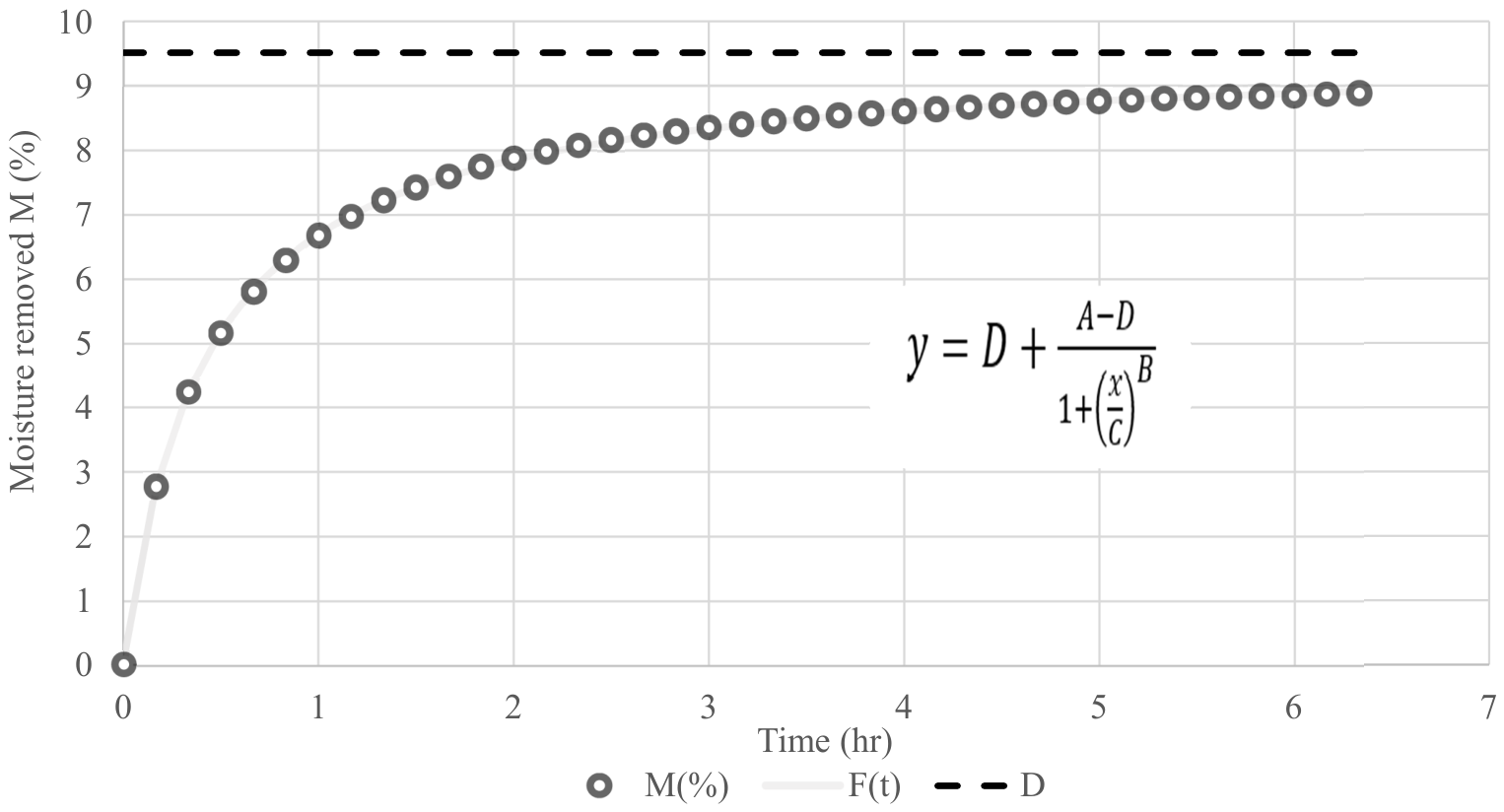
At 95 °C, a noticeably steeper drying curve was observed, indicating a more efficient drying process (Figure 2). The model estimated that 6.4 h were sufficient to reach 0.6% moisture, and 20.1 h were sufficient to reach 0.2%.
At 95 °C, the moisture removal from PA6-CF was significantly accelerated compared to lower-temperature conditions. The drying curve exhibited a much steeper rise, and the fitted four-parameter logistic (4PL) model provided clearer insight into the drying kinetics under these conditions.
The model predicted that the target moisture level of 0.6% was reached in approximately 6.4 h—nearly ten times faster than at 70 °C. Furthermore, it indicated that near-complete drying, with a residual moisture content of approximately 0.2%, could be achieved within 20.1 h. This improved efficiency makes 95 °C particularly suitable for applications requiring a low moisture content to maintain material performance and stability.
These results demonstrate that elevated temperatures can significantly reduce the processing time while achieving strict moisture targets in PA6-CF. However, although 95 °C is kinetically advantageous, the potential effects of higher temperatures on the mechanical and structural integrity of the material must be considered. When the risk of thermal degradation is low, 95 °C represents a practical compromise between drying efficiency and processing speed for industrial-scale applications.
Carbon-fiber-based composites can be safely dried or cured at elevated temperatures (60–80 °C). CF fabrics and modified CF were subjected to vacuum drying at 60 °C for 1 h, while polymer-modified CF composites underwent curing at 80 °C for 12 h to eliminate solvents and crosslink polydimethylsiloxane (PDMS), maintaining their mechanical and conductive properties [47]. A 95 °C dry step for PA6–CF is significantly below Tm, preventing melting. However, it is within a temperature range conducive to chain mobility and crystallization, which may enhance crystallinity, stiffness, and dimensional alterations if prolonged [49,50].
The carbon fibers exhibit a remarkable capacity to withstand elevated thermal conditions; however, the primary constraint arises from the PA6 polymer as well as any applied surface treatments or sizing associated with the fibers [47,50]. While carbon fibers themselves exhibit excellent thermal stability, the limiting factors are the PA6 matrix and any fiber surface treatments or sizing agents.
Extended drying at 95 °C may influence these components and alter material properties. Compared to PA6, polyphthalamide (PPA) exhibits greater thermal stability due to its aromatic structure, along with lower moisture absorption. In contrast, PA6 is a more flexible, moisture-sensitive aliphatic polyamide and is therefore more susceptible to property changes during drying. As a result, PPA-based composites are generally more resistant to high-temperature drying effects.
Overall, drying PA6-CF at 95 °C is thermally acceptable, provided that the exposure time is carefully controlled. For applications requiring tight dimensional tolerances or specific porosity characteristics, additional testing at lower temperatures (60–80 °C) and varying drying durations is recommended.

3.1.3. Drying at 120 °C

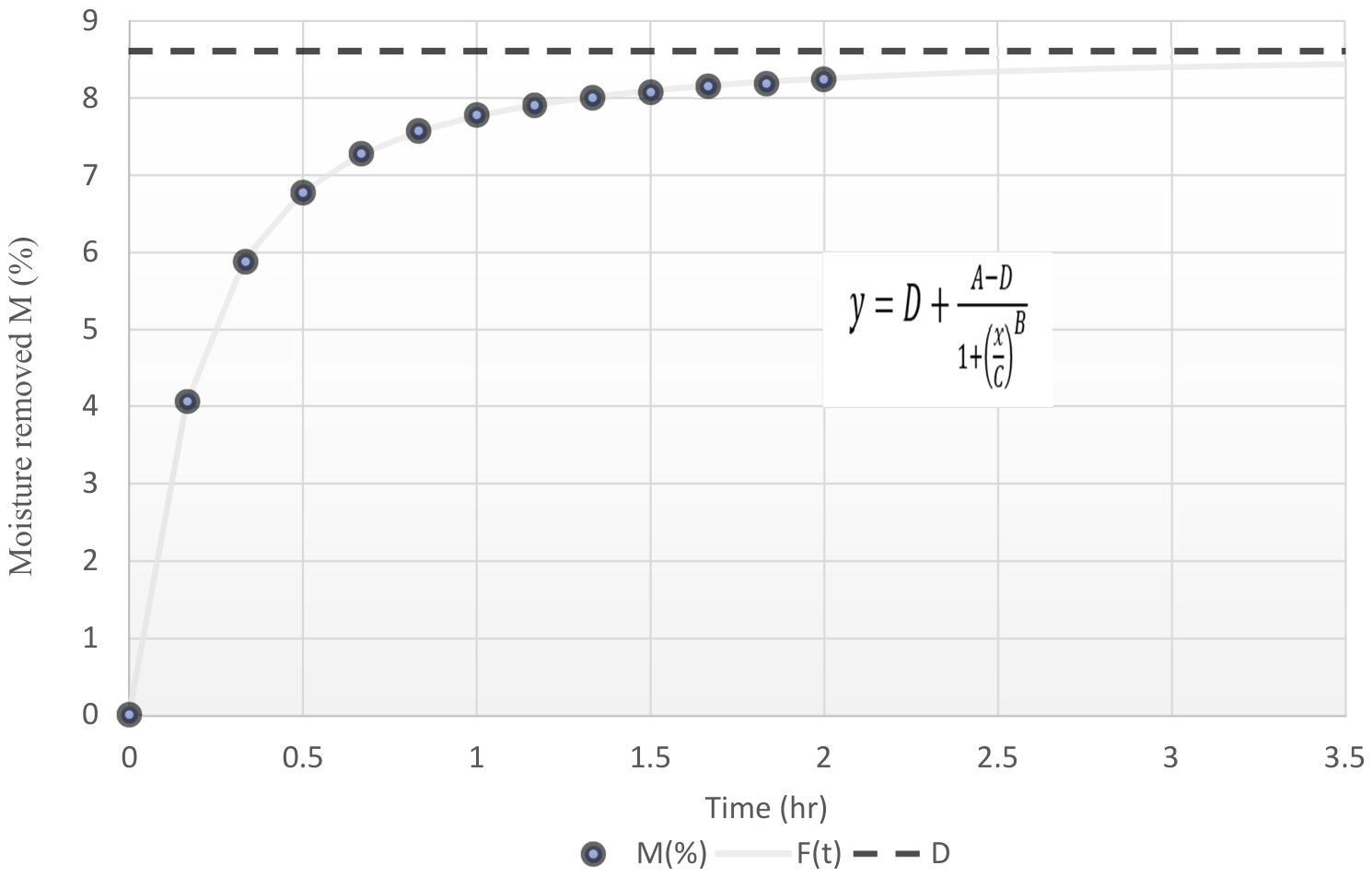
Drying at 120 °C resulted in the fastest moisture removal among the tested conditions (Figure 3). The steep initial slope of the drying curve indicated rapid desorption. The estimated drying times to reach 0.6% and 0.2% moisture were approximately 1.3 and 3.2 h, respectively.
Among the conditions examined, drying PA6-CF at 120 °C resulted in the fastest moisture removal. The drying curve exhibited a very steep initial slope, indicating a high desorption rate at the early stage. This reflects the rapid release of free and loosely bound water molecules under elevated thermal energy. As drying progressed, the rate gradually decreased and the curve approached equilibrium, suggesting that the remaining moisture was more strongly bound within the polymer matrix and therefore more difficult to remove.
Model predictions further confirmed the effectiveness of drying at 120 °C. The time required to reach a moisture level of 0.6% was estimated at approximately 1.3 h, while achieving a lower target of 0.2% required about 3.2 h. These results demonstrate that high-temperature drying significantly accelerates moisture removal, enabling PA6-CF to reach very low moisture levels within practical timeframes.
The findings indicate that drying at 120 °C is highly effective for rapid desorption and achieving a low residual moisture content. However, despite its superior drying performance, the potential for thermal degradation or structural changes during prolonged exposure must be considered. When the material’s thermal stability can be maintained, drying at 120 °C offers an effective balance between efficiency and processing speed.
Direct data on PA6–CF at 120 °C is unavailable, but nylon and carbon fiber composites provide useful insights. PA6 has a melting point of approximately 220–225 °C, and most polymer–CF systems begin thermal degradation above 200–300 °C; thus, 120 °C for a brief duration is within the thermal safety parameters for both chemistry and carbon fibers [47,51]. The general polymer literature indicates that engineering polymers undergo bulk degradation at temperatures significantly exceeding 120 °C [51,52]. The post-drying of nylon powders enhances mechanical properties via moisture removal; degradation occurs at elevated temperatures, not with mild drying [51]. The thermal analysis of polyamides reveals crystallization and melting above 120 °C, with crystallinity developing predominantly under prolonged heating or complete thermal cycles instead of short exposure [49].
The evidence suggests that drying at 120 °C effectively removes moisture without damaging PA6 or carbon fibers. The primary concern at this temperature is not chemical degradation but potential changes in crystallinity and dimensions with prolonged exposure; however, short exposures are anticipated to have minimal effects.

3.2. Spool-Based Drying Experiments

3.2.1. Drying at 70 °C

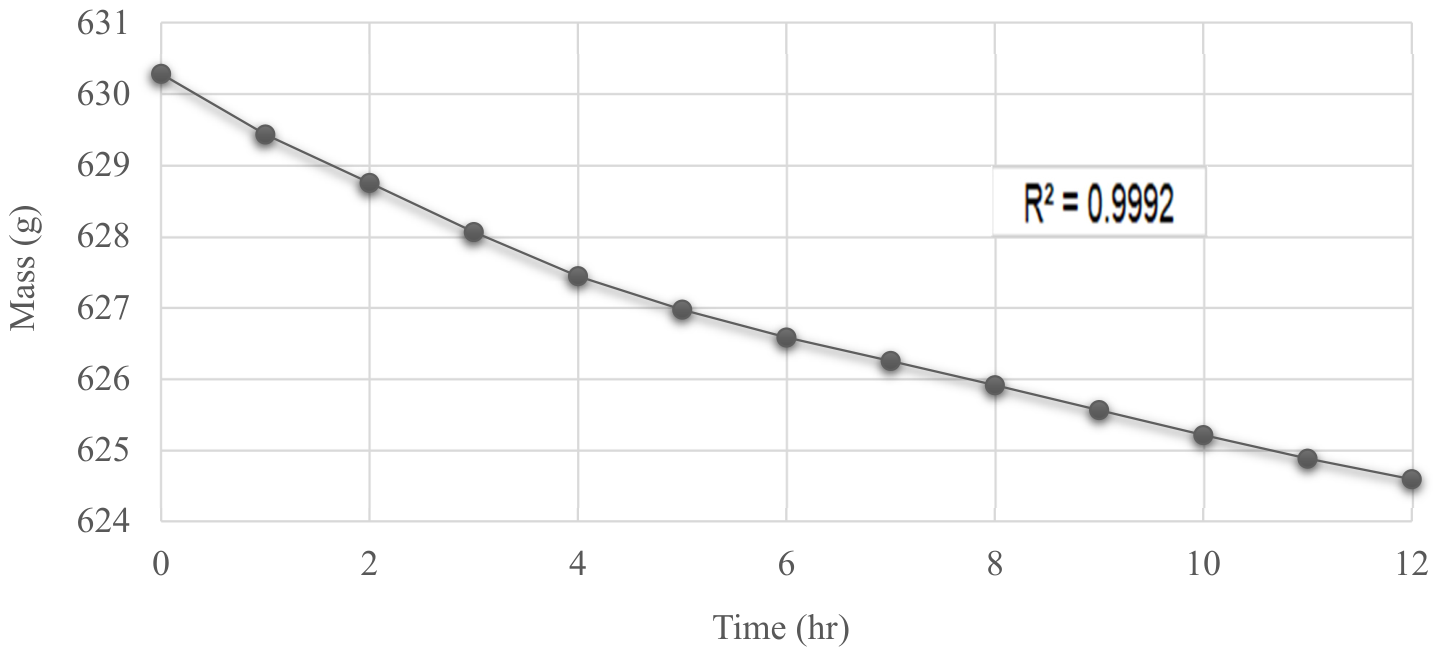
The 70 °C PA6-GF filament spool drying behavior, as depicted in Figure 4, confirms the steady decrease in the sample mass in the 12 h period. Initially, the weight of the material was nearly 630.28 g. With progressive drying, the mass steadily reduced to 624.59 g after 12 h, the final value. The slight reduction of almost 5.7 g is the absorbed or bound water in the polymer matrix, which is a common feature of hygroscopic materials such as polyamide.
The drying curve exhibits a typical profile, with a rapid initial mass loss followed by a gradual decrease in the drying rate. This behavior is attributed to the evaporation of the free surface moisture during the early stage, which is removed quickly. As drying progresses, the remaining water molecules are more strongly bound within the polymer structure, requiring greater energy and longer time to diffuse out. Consequently, the curve approaches a near-horizontal slope, indicating that the material is nearing equilibrium and that further drying yields minimal additional moisture removal.
Generally, these results highlight the importance of appropriate drying conditions for PA6-GF, a material widely used in engineering applications. The moisture content significantly affects the mechanical performance and processability of polyamide composites, potentially leading to reduced strength or hydrolytic degradation if not adequately removed. The observed drying behavior also indicates that extending the drying time beyond 12 h at 70 °C is inefficient, as most free moisture has already been eliminated and the rate of the mass loss becomes negligible. Notably, after two years of storage in a sealed bag, the filament absorbed only 0.96% of its weight in moisture.
The graph shows a typical behavior of drying, in which the mass loss rate was faster at the beginning and then decreased gradually. This phenomenon was due to the evaporation of the free surface moisture in the initial step, which is finished in a short time. With time, the water molecules that left were more tightly bound in the polymer structure and thus needed more energy and time to be able to diffuse out. As a result, the curve’s slope was almost horizontal, which means the material was nearing a point of balance where continued drying would have little effects.
All in all, this result demonstrates how drying conditions are important for PA6-GF, a material that finds broad applications in various engineering fields. Moisture substantially impacts the mechanical performance and processability of polyamide composites, frequently causing such problems as reduced strength or hydrolysis when not dried properly. Moreover, the described drying curve reveals that prolonged drying after 12 h at 70 °C was not effective, because the bulk of the free water had already been removed and the mass loss rate became minimal. In 2 years, the filament absorbed just 0.96% of its weight of water, even though it was in a water-tight bag.
The literature indicates that drying PA6–GF filament spools at approximately 70 °C effectively removes moisture prior to FDM/FFF printing [53,54]. This method enhances mechanical properties and print quality by mitigating hydrolytic degradation and defects [55]. The likelihood of thermal damage at this temperature for pre-print durations of 2–8 h is minimal. Nonetheless, it is crucial to adhere to the specified times and temperatures to prevent alterations in crystallinity or dimensional stability [56].
Direct studies on PA6–GF dried at 70 °C are scarce, yet nylon composite reviews offer substantial indirect support for this method [53,54,56]. Further focused investigations are necessary to quantify ideal drying durations in relation to residual moisture levels for glass-fiber-reinforced variants.

3.2.2. Drying at 95 °C

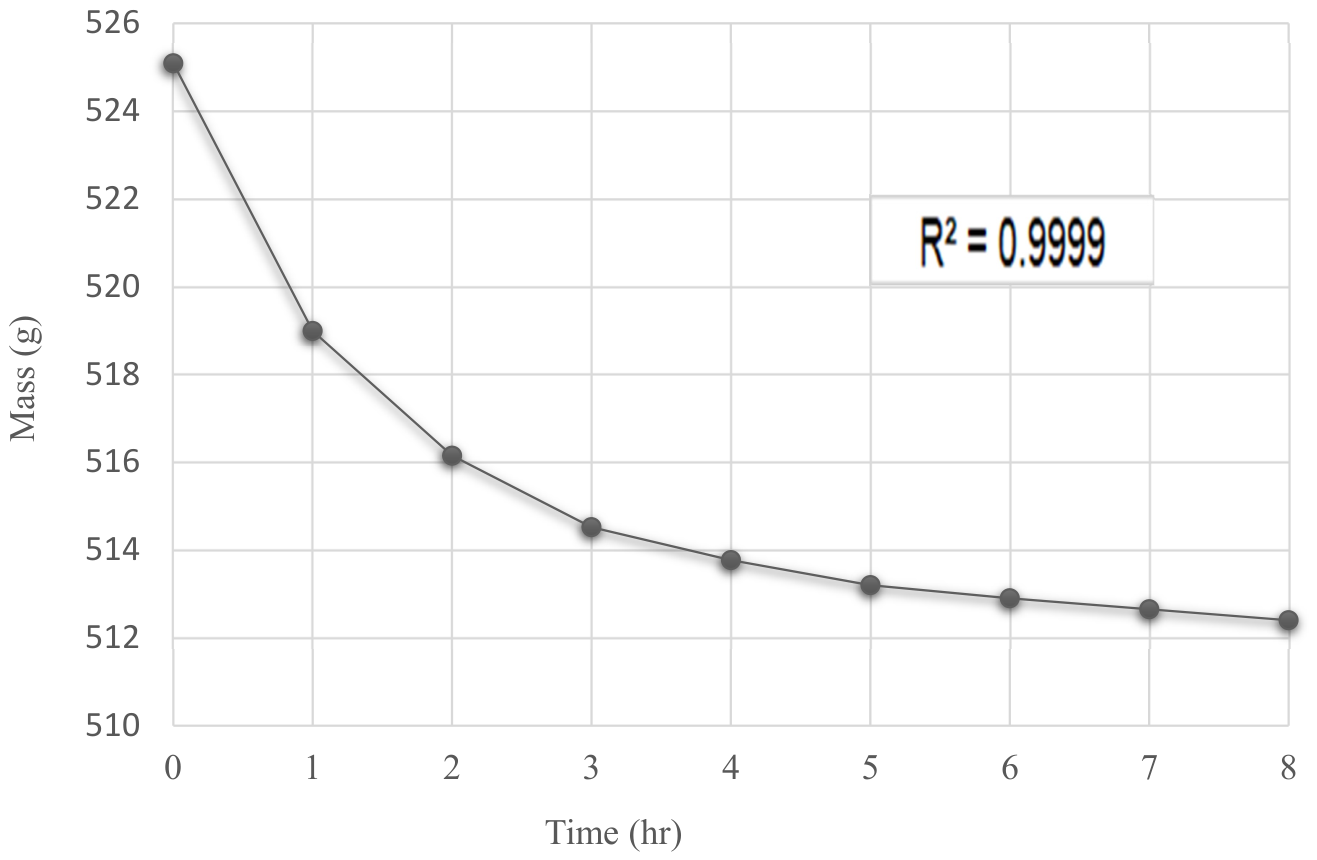
The drying curve at 95 °C revealed a specific pattern of moisture extraction for the PA6-CF sample from Polymaker. As seen in Figure 5, the starting mass of the filament was close to 525 g, and by the end of the 8 h, it steadily dropped to 512.4 g. Consequently, the total weight loss was close to 13 g or approximately 2.4% of the dry basis. Within the first two h, the mass declined most steeply, which implies that a large portion of the absorbed water was free or weakly bound moisture, and was able to rapidly leach out of the filament once it was presented to heat. Therefore, for the remaining period, the drying rate was significantly lower, stabilizing the mass close to 512 g.
The drying curve at 95 °C revealed a characteristic pattern of moisture removal for the PA6-CF filament from Polymaker. As shown in Figure 5, the initial mass of the spool was approximately 525 g and decreased steadily to 512.4 g after 8 h, corresponding to a total mass loss of about 13 g, or roughly 2.4% on a dry basis. The steepest decline occurred within the first two hours, indicating that a significant portion of the absorbed moisture was free or weakly bound and could be rapidly removed upon heating. Thereafter, the drying rate decreased markedly, and the mass stabilized near 512 g.
Despite being stored in a resealable bag, prolonged exposure to ambient conditions (45–50% relative humidity) allowed the moisture to diffuse deeply into the material. Carbon fiber reinforcement does not reduce moisture uptake as effectively as glass fiber, resulting in a higher overall absorption compared to PA6-GF. Consequently, the total mass loss observed here was significantly greater than in the PA6-GF drying experiment, and extended drying was required prior to printing.
The drying temperature of 95 °C was selected cautiously, as the maximum thermal resistance of the spool is approximately 100 °C, limited by the adhesive used in the filament winding. Operating close to this threshold enabled high drying efficiency while minimizing the risk of spool deformation or adhesive failure. The use of a kitchen oven with an external temperature sensor helped maintain stable conditions, ensuring near-optimal drying performance.
The plateau observed in the drying curve after approximately 6–7 h indicates that further drying would have a minimal effect. The total moisture loss of nearly 2.5% highlights the extent to which water can penetrate the polymer, potentially leading to printing defects such as bubbling, stringing, and reduced mechanical performance. Overall, the results demonstrate that drying at 95 °C for 6–8 h provides an effective balance between drying efficiency, processing time, and spool thermal safety for this material.
PA6 exhibits significant hygroscopic properties; moisture absorption induces hydrolysis in melt processing, thereby diminishing the molecular weight and mechanical integrity [57]. For PA6 and PA6-CF pellets, drying is conducted at 80–90 °C under a vacuum or dehumidified air for 4–8 h to achieve <0.05 wt% moisture prior to compounding or printing, mitigating voids and porosity and enhancing fiber–matrix adhesion [58]. High-strength PA6-CF AM parts with up to 35 wt% CF exhibit a tensile strength of 169.7 MPa at 25 wt% CF, attributed to low porosity (~2.9%) and strong interfacial bonding from well-dried pellets [57]. Adequate drying enhances the interlayer adhesion and mechanical strength in nylon composites by reducing steam bubbles and polymer chain scission. Insufficiently dried, highly filled nylon filaments (like CF-reinforced) demonstrate delamination and inadequate adhesion, which can be alleviated through post-drying and optimized printing parameters [51].
No literature exists detailing the drying of finished PA6-CF filament spools at specific temperatures and times; however, these conditions exceed typical parameters for PA6 pellets yet remain significantly below the melting point of PA6 (~220 °C), thus ensuring thermal safety under controlled oxidation.

3.2.3. Drying at 120 °C

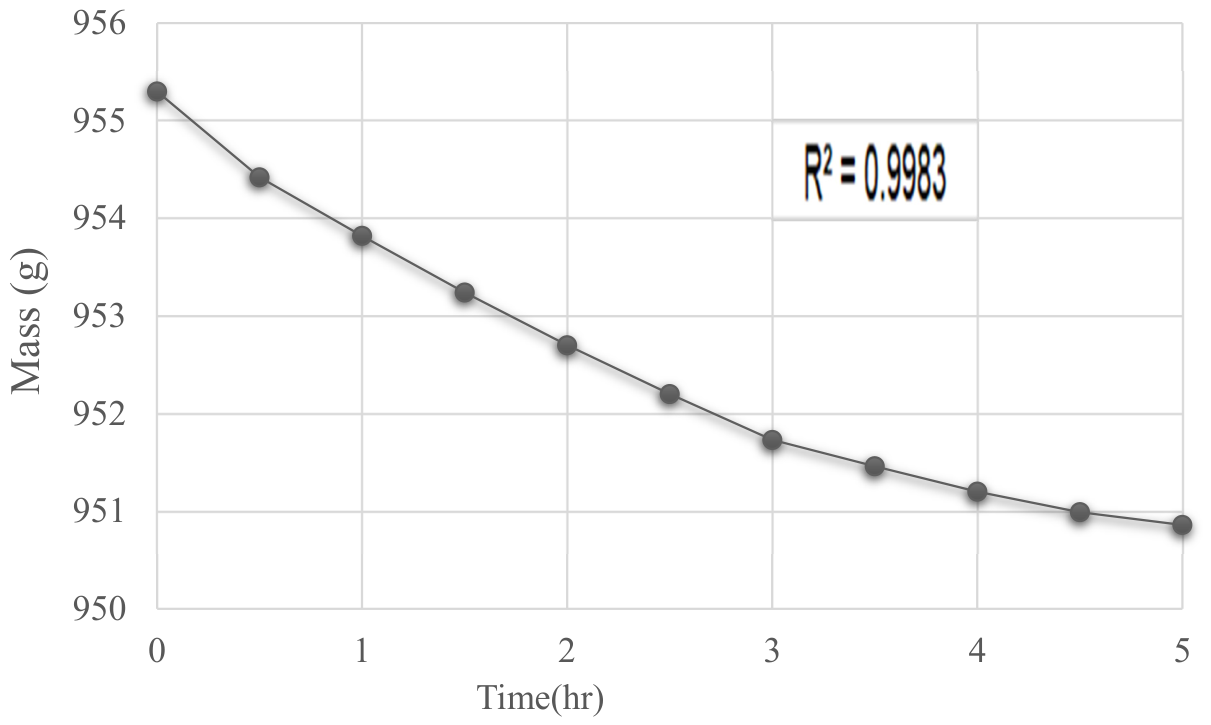
Figure 6 shows the drying behavior of BambuLab PPA-CF at 120 °C measured by recording the mass of the material over time. The sample initially had a mass of around 955.30 g. We observed a slight decrease in mass, as the sample lost some of its water content during drying. At the end of the fifth hr., it reached around 950.86 g, which equals to a weight loss of 0.47%.
The highest rate of mass loss occurred during the first hour, followed by a more gradual decline. This behavior is typical of hygroscopic polymers, in which free or weakly bound moisture is rapidly removed during the initial stage of drying. Beyond this phase, the rate of the mass loss decreased significantly, reflecting the removal of more strongly bound water molecules or trace volatile components entrapped within the polymer matrix. After approximately 4–5 h, the curve approached a plateau, indicating that minimal additional moisture could be removed under the applied drying conditions and that the material had reached near-equilibrium.
These results emphasize the importance of the adequate pre-drying of PPA-CF prior to processing, particularly in applications such as 3D printing, where moisture sensitivity can lead to defects including bubbling, poor layer adhesion, and increased surface roughness. The continuous reduction in mass demonstrates that carbon-fiber-reinforced composites such as PPA-CF can retain significant amounts of moisture, which must be removed to ensure dimensional stability and optimal mechanical performance. From a practical standpoint, drying at 120 °C for at least 4–5 h appears to be sufficient to achieve a low residual moisture content suitable for consistent and reliable manufacturing.
Drying PPA-CF filaments prior to 3D printing is essential due to their hygroscopic characteristics and moisture sensitivity. Although direct studies on drying PPA-CF spools at 120 °C are lacking, the existing literature underscores the necessity of moisture management for enhancing print quality and mechanical integrity [59,60]. Nevertheless, these sources caution against high drying temperatures, which can lead to thermal degradation or the embrittlement of the polymer matrix [61,62].
While effective drying is vital for PPA-CF filaments to mitigate moisture-related defects, there is no empirical evidence supporting the safety or efficacy of 120 °C whole-spool drying, with the literature suggesting moderate-temperature drying protocols specific to material characteristics.

3.2.4. 4PL-Modeled Drying Characteristics of Polyamide and PPA Composites

The drying properties of polyamide and PPA composites were investigated using four-parameter logistic (4PL) modeling to precisely explain their moisture loss behavior. This method enables the estimation of essential kinetic characteristics, such as the theoretical final mass and drying rates, allowing for a quantitative comparison of materials. Table 1 [given below] summarizes the drying performance of composites, including parameters and estimated times.
The drying behavior of PA6-GF at 70 °C was characterized by slow moisture diffusion, requiring approximately 2.5 days to reach the target printing threshold of 0.5% moisture. The theoretical dry mass was calculated as 616.86 g, while the corresponding target mass at 0.5% residual moisture was 619.94 g. This prolonged drying time can be attributed to the strong hygroscopicity of PA6 combined with the relatively low drying temperature, which limits both diffusion and evaporation rates. The relatively large margin of error (±2.089 g) further indicates variability in the model fit, suggesting less predictable drying behavior. These findings highlight the impracticality of low-temperature drying for PA6-GF in high-throughput production environments.
At 95 °C, PA6-CF reached the target moisture level of 0.5% within approximately 4 h, representing a substantial improvement over PA6-GF. The theoretical dry mass was determined to be 511.23 g, with a corresponding target mass of 513.79 g at 0.5% moisture. The accelerated drying behavior can be attributed to the elevated temperature and the comparatively lower moisture uptake associated with carbon fiber reinforcement. The small margin of error (±0.1388 g) indicates a strong agreement between the 4PL model and the experimental data, reflecting consistent and predictable drying kinetics. These results suggest that PA6-CF is more reliable than PA6-GF in applications where drying efficiency is critical.
Drying PPA-CF at 120 °C was extremely efficient, taking only 2 h to achieve the printable level of moisture. The theoretical dry weight was computed as being 948.06 g, while the target weight of 0.5% was 952.80 g. The relatively low intrinsic hygroscopicity of PPA, based on a comparison with PA6, as well as the high drying temperature, accounts for the fast desorption of the moisture. The margin of error (±0.8216 g) is moderate but acceptable, indicating that although the alignment of the model is far from optimal, as in the PA6-CF case, the model is strong enough to inform process choices. This finding indicates the applicability of PPA-CF in the context of industrial processes that demand compact drying times and high consistency.

4. Conclusions

The drying behavior of three polyamide-based composite filaments was systematically investigated using both segment-based and spool-based approaches across three temperature levels: 70 °C, 95 °C, and 120 °C. In both experimental configurations, the drying process followed the characteristic two-stage profile of hygroscopic polymers, consisting of rapid initial moisture removal followed by a slower, diffusion-controlled phase. Fitting the experimental data with four-parameter logistic (4PL) models enabled the estimation of the theoretical dry mass and the practical drying time required to reach a moisture level suitable for FDM printing (≤0.5%). In practical terms, PA6-GF dried at 70 °C required approximately 2.5 days to reach acceptable moisture levels, whereas PA6-CF dried at 95 °C achieved the same target within 4 h, and PPA-CF dried at 120 °C required only 2 h. These results clearly demonstrate that increasing the drying temperature not only accelerates moisture removal but also improves the predictability and stability of the drying process. Due to the limited availability of studies on fully assembled PA–CF systems, particularly at temperatures ≥ 70 °C, controlled, small-scale validation is recommended to ensure that drying conditions do not compromise structural integrity or functional performance. Overall, this study confirms that effective moisture control is a critical preprocessing step in the FDM printing of polyamide-based composites. Selecting an appropriate drying strategy that balances thermal constraints, equipment capabilities, and material sensitivity is essential for achieving reliable printability while preserving the mechanical performance of the final components.

Author Contributions

Conceptualization, A.C.; methodology, G.G.K., I.G. and K.A.; validation, K.A.; formal analysis, I.G.; investigation, G.G.K.; writing—original draft preparation, G.G.K.; writing—review and editing, A.K.; supervision, A.K. All authors have read and agreed to the published version of the manuscript.

Funding

This research received no external funding.

Institutional Review Board Statement

Not applicable.

Informed Consent Statement

Not applicable.

Data Availability Statement

The original contributions presented in this study are included in the article. Further inquiries can be directed to the corresponding author.

Conflicts of Interest

The authors declare no conflict of interest.

References

  1. Gibson, I.; Rosen, D.; Stucker, B.; Khorasani, M. Additive Manufacturing Technologies; Springer International Publishing: Cham, Switzerland, 2020. [Google Scholar] [CrossRef]
  2. Berman, B. 3-D printing: The new industrial revolution. Bus. Horiz. 2012, 55, 155–162. [Google Scholar] [CrossRef]
  3. Frazier, W.E. Metal additive manufacturing: A review. J. Mater. Eng. Perform. 2014, 23, 1917–1928. [Google Scholar] [CrossRef]
  4. Perez, A.R.T.; Roberson, D.A.; Wicker, R.B. Fracture surface analysis of 3D-printed tensile specimens of novel ABS-based materials. J. Fail. Anal. Prev. 2014, 14, 343–353. [Google Scholar] [CrossRef]
  5. Tymrak, B.M.; Kreiger, M.; Pearce, J.M. Mechanical properties of components fabricated with open-source 3-D printers under realistic environmental conditions. Mater. Des. 2014, 58, 242–246. [Google Scholar] [CrossRef]
  6. Aykol, M.; Isitman, N.A.; Firlar, E.; Kaynak, C. Strength of short fiber reinforced polymers: Effect of fiber length distribution. Polym. Compos. 2008, 29, 644–648. [Google Scholar] [CrossRef]
  7. Bikas, H.; Stavropoulos, P.; Chryssolouris, G. Additive manufacturing methods and modeling approaches: A critical review. Int. J. Adv. Manuf. Technol. 2016, 83, 389–405. [Google Scholar] [CrossRef]
  8. Dávila, C.G.; Camanho, P.P.; Rose, C.A. Failure criteria for FRP laminates. J. Compos. Mater. 2005, 39, 323–345. [Google Scholar] [CrossRef]
  9. Singh, S.; Ramakrishna, S.; Singh, R. Material issues in additive manufacturing: A review. J. Manuf. Process. 2017, 25, 185–200. [Google Scholar] [CrossRef]
  10. Spoerk, M.; Arbeiter, F.; Raguž, I.; Weingrill, G.; Fischinger, T.; Traxler, G.; Schuschnigg, S.; Cardon, L.; Holzer, C. Polypropylene Filled With Glass Spheres in Extrusion-Based Additive Manufacturing: Effect of Filler Size and Printing Chamber Temperature. Macromol. Mater. Eng. 2018, 303, 1800179. [Google Scholar] [CrossRef]
  11. Abacha, N.; Kubouchi, M.; Sakai, T. Diffusion behavior of water in polyamide 6 organoclay nanocomposites. Express Polym. Lett. 2009, 3, 245–255. [Google Scholar] [CrossRef]
  12. Drummer, D.; Drexler, M.; Wudy, K. Derivation of heating rate dependent exposure strategies for the selective laser melting of thermoplastic polymers. AIP Conf. Proc. 2015, 1664, 160006. [Google Scholar] [CrossRef]
  13. Hao, J.; Liu, Y.; Lu, C. Effect of acrylonitrile sequence distribution on the thermal stabilization reactions and carbon yields of poly (acrylonitrile-co-methyl acrylate). Polym. Degrad. Stab. 2018, 147, 89–96. [Google Scholar] [CrossRef]
  14. Miao, Z.; Jia, Z.; Yu, Z.; Chen, S.; Zhou, S.; Liu, P.; Zou, H. Preparation of polyimide/multi-walled carbon nanotubes composite aerogels with anisotropic properties. J. Appl. Polym. Sci. 2020, 137, 49357. [Google Scholar] [CrossRef]
  15. Park, S.H.; Song, B.Y.; Lee, T.G. Effects of surfactant/silica and silica/cerium ratios on the characteristics of mesoporous Ce-MCM-41. J. Ind. Eng. Chem. 2008, 14, 261–264. [Google Scholar] [CrossRef]
  16. Kikuchi, B.C.; de Silva Bussamra, F.L.; Donadon, M.V.; Ferreira, R.T.L.; de Cássia Mendonça Sales, R. Moisture effect on the mechanical properties of additively manufactured continuous carbon fiber-reinforced Nylon-based thermoplastic. Polym. Compos. 2020, 41, 5227–5245. [Google Scholar] [CrossRef]
  17. Hassanin, H.; Finet, L.; Cox, S.C.; Jamshidi, P.; Grover, L.M.; Shepherd, D.E.; Addison, O.; Attallah, M.M. Tailoring selective laser melting process for titanium drug-delivering implants with releasing micro-channels. Addit. Manuf. 2018, 20, 144–155. [Google Scholar] [CrossRef]
  18. Takaichi, A.; Suyalatu; Nakamoto, T.; Joko, N.; Nomura, N.; Tsutsumi, Y.; Migita, S.; Doi, H.; Kurosu, S.; Chiba, A.; et al. Microstructures and mechanical properties of Co-29Cr-6Mo alloy fabricated by selective laser melting process for dental applications. J. Mech. Behav. Biomed. Mater. 2013, 21, 67–76. [Google Scholar] [CrossRef]
  19. Aniskevich, A.; Bulderberga, O.; Stankevics, L. Moisture Sorption and Degradation of Polymer Filaments Used in 3D Printing. Polymers 2023, 15, 2600. [Google Scholar] [CrossRef]
  20. Es-Said, O.S.; Foyos, J.; Noorani, R.; Mendelson, M.; Marloth, R.; Pregger, B.A. Effect of layer orientation on mechanical properties of rapid prototyped samples. Mater. Manuf. Process. 2000, 15, 107–122. [Google Scholar] [CrossRef]
  21. Szykiedans, K.; Credo, W. Mechanical properties of FDM and SLA low-cost 3-D prints. Procedia Eng. 2016, 136, 257–262. [Google Scholar] [CrossRef]
  22. Lanzotti, A.; Grasso, M.; Staiano, G.; Martorelli, M. The impact of process parameters on mechanical properties of parts fabricated in PLA with an open-source 3-D printer. Rapid Prototyp. J. 2015, 21, 604–617. [Google Scholar] [CrossRef]
  23. Wu, H.; Kafi, A.; Kim, H.; Shah, R.; Bateman, S.; Koo, J.H. Additive manufacturing of flame-retardant polyamide 6 nanocomposites via fused filament fabrication (fff). In Proceedings of the SAMPE 2019, Charlotte, NC, USA, 20–23 May 2019. [Google Scholar] [CrossRef]
  24. Andreozzi, M.; Gentili, S.; Forcellese, P.; Bellezze, T.; Corinaldesi, V.; Luzi, F.; Vita, A. Effect of Moisture level on the mechanical performance of 3D printed continuous reinforced two-matrix composite. Int. J. Adv. Manuf. Technol. 2024, 133, 5117–5126. [Google Scholar] [CrossRef]
  25. Ichakpa, M.; Goodyear, M.; Duthie, J.; Duthie, M.; Wisely, R.; MacPherson, A.; Keyte, J.; Pancholi, K.; Njuguna, J. Investigation on Mechanical and Thermal Properties of 3D-Printed Polyamide 6, Graphene Oxide and Glass-Fibre-Reinforced Composites under Dry, Wet and High Temperature Conditions. J. Compos. Sci. 2023, 7, 227. [Google Scholar] [CrossRef]
  26. Spina, R.; Cavalcante, B. Hygromechanical performance of polyamide specimens made with fused filament fabrication. Polymers 2021, 13, 2401. [Google Scholar] [CrossRef]
  27. Banjo, A.D.; Agrawal, V.; Auad, M.L.; Celestine, A.D.N. Moisture-induced changes in the mechanical behavior of 3D printed polymers. Compos. Part C Open Access 2022, 7, 100243. [Google Scholar] [CrossRef]
  28. Zhang, W.; Zou, J.; Liu, M.; Han, Z.; Xiong, Y.; Liang, B.; Hu, N.; Zhang, W. Investigating the role of fibre-matrix interfacial degradation on the ageing process of carbon fibre-reinforced polymer under hydrothermal conditions. Compos. Sci. Technol. 2025, 259, 110922. [Google Scholar] [CrossRef]
  29. Naguib, H.M.; Hou, G. Vinylester-glass fiber composite for water pipe: Processing and effect of fiber direction. Egypt. J. Pet. 2023, 32, 24–30. [Google Scholar] [CrossRef]
  30. Hassanpour, B.; Karbhari, V.M. Characteristics and Models of Moisture Uptake in Fiber-Reinforced Composites: A Topical Review. Polymers 2024, 16, 2265. [Google Scholar] [CrossRef]
  31. Ikbal, H.; Wang, Q.; Azzam, A.; Li, W. GF/CF hybrid laminates made through intra-tow hybridization for automobile applications. Fibers Polym. 2016, 17, 1505–1521. [Google Scholar] [CrossRef]
  32. Luyt, A.S.; Dramićanin, M.D.; Antić, Ž.; Djoković, V. Morphology, mechanical and thermal properties of composites of polypropylene and nanostructured wollastonite filler. Polym. Test. 2009, 28, 348–356. [Google Scholar] [CrossRef]
  33. Ksouri, I.; De Almeida, O.; Haddar, N. Long term ageing of polyamide 6 and polyamide 6 reinforced with 30% of glass fibers: Physicochemical, mechanical and morphological characterization. J. Polym. Res. 2017, 24, 133. [Google Scholar] [CrossRef]
  34. Kim, S.E.; Ahn, J.-G.; Ahn, S.; Park, D.-H.; Choi, D.-H.; Lee, J.-C.; Yang, H.-I.; Kim, K.-Y. Development of PA6/GF Long-Fiber-Reinforced Thermoplastic Composites Using Pultrusion and Direct Extrusion Manufacturing Processes. Appl. Sci. 2022, 12, 4838. [Google Scholar] [CrossRef]
  35. Salvi, A.; Marzullo, F.; Ostrowska, M.; Dotelli, G. Thermal Degradation of Glass Fibre-Reinforced Polyamide 6,6 Composites: Investigation by Accelerated Thermal Ageing. Polymers 2025, 17, 509. [Google Scholar] [CrossRef]
  36. Wang, Y.; Li, F.; Sun, Z.; Gu, C.; Fu, K.; Zhao, X. Effect of Fiber Content on the Preparation and Mechanical Properties of 3D Printed Short Carbon Fiber Reinforced PA Composites. Polymers 2025, 17, 671. [Google Scholar] [CrossRef]
  37. Al Rashid, A.; Ikram, H.; Koç, M. Effect of carbon fiber reinforcement on dimensional variations of 3D printed polyamide-6 composites: A simulation study. Turk. J. Chem. 2023, 47, 33–39. [Google Scholar] [CrossRef] [PubMed]
  38. Faust, J.L.; Kelly, P.G.; Jones, B.D.; Roy-Mayhew, J.D. Effects of coefficient of thermal expansion and moisture absorption on the dimensional accuracy of carbon-reinforced 3D printed parts. Polymers 2021, 13, 3637. [Google Scholar] [CrossRef]
  39. Lendvai, L.; Jakab, S.K.; Fekete, I.; Rigotti, D.; Pegoretti, A. Effect of filament humidity on the properties of material extrusion 3D-printed acrylonitrile butadiene styrene/hexagonal boron nitride composites. Emergent Mater. 2025, 8, 6791–6806. [Google Scholar] [CrossRef]
  40. Dul, S.; Fambri, L.; Pegoretti, A. High-Performance Polyamide/Carbon Fiber Composites for Fused Filament Fabrication: Mechanical and Functional Performances. J. Mater. Eng. Perform. 2021, 30, 5066–5085. [Google Scholar] [CrossRef]
  41. Lupone, F.; Padovano, E.; Venezia, C.; Badini, C. Experimental Characterization and Modeling of 3D Printed Continuous Carbon Fibers Composites with Different Fiber Orientation Produced by FFF Process. Polymers 2022, 14, 426. [Google Scholar] [CrossRef] [PubMed]
  42. Mohan, N.; Senthil, P.; Vinodh, S.; Jayanth, N. A review on composite materials and process parameters optimisation for the fused deposition modelling process. Virtual Phys. Prototyp. 2017, 12, 47–59. [Google Scholar] [CrossRef]
  43. Sebaugh, J.L. Guidelines for accurate EC50/IC50 estimation. Pharm. Stat. 2011, 10, 128–134. [Google Scholar] [CrossRef] [PubMed]
  44. Zhao, G.; Gao, H.; Qu, Z.; Fan, H.; Meng, H. Anhydrous interfacial polymerization of sub-1 Å sieving polyamide membrane. Nat. Commun. 2023, 14, 7624. [Google Scholar] [CrossRef]
  45. Wang, C.; Shi, P.; Guo, C.; Guo, R.; Qiu, J. CuCo2O4/CF cathode with bifunctional and dual reaction centers exhibits high RhB degradation in electro-Fenton systems. J. Electroanal. Chem. 2024, 956, 118072. [Google Scholar] [CrossRef]
  46. Kowalska, M.; Woźniak, M.; Kijek, M.; Mitrosz, P.; Szakiel, J.; Turek, P. Management of validation of HPLC method for determination of acetylsalicylic acid impurities in a new pharmaceutical product. Sci. Rep. 2022, 12, 1. [Google Scholar] [CrossRef]
  47. Zhou, M.; Tan, S.; Wang, J.; Wu, Y.; Liang, L.; Ji, G. “Three-in-One” Multi-Scale Structural Design of Carbon Fiber-Based Composites for Personal Electromagnetic Protection and Thermal Management. Nanomicro Lett. 2023, 15, 176. [Google Scholar] [CrossRef] [PubMed]
  48. Xu, Y.; Zhang, F.; Zhai, W.; Cheng, S.; Li, J.; Wang, Y. Unraveling of Advances in 3D-Printed Polymer-Based Bone Scaffolds. Polymers 2022, 14, 566. [Google Scholar] [CrossRef]
  49. Al-Abduljabbar, A.; Farooq, I. Electrospun Polymer Nanofibers: Processing, Properties, and Applications. Polymers 2023, 15, 65. [Google Scholar] [CrossRef]
  50. Han, W.; Kong, L.; Xu, M. Advances in selective laser sintering of polymers. Int. J. Extrem. Manuf. 2022, 4, 042002. [Google Scholar] [CrossRef]
  51. Iftekar, S.F.; Aabid, A.; Amir, A.; Baig, M. Advancements and Limitations in 3D Printing Materials and Technologies: A Critical Review. Polymers 2023, 15, 2519. [Google Scholar] [CrossRef]
  52. Satchanska, G.; Davidova, S.; Petrov, P.D. Natural and Synthetic Polymers for Biomedical and Environmental Applications. Polymers 2024, 16, 1159. [Google Scholar] [CrossRef]
  53. Zhou, L.; Miller, J.; Vezza, J.; Mayster, M.; Raffay, M.; Justice, Q.; Al Tamimi, Z.; Hansotte, G.; Sunkara, L.D.; Bernat, J. Additive Manufacturing: A Comprehensive Review. Sensors 2024, 24, 2668. [Google Scholar] [CrossRef]
  54. Park, S.; Shou, W.; Makatura, L.; Matusik, W.; Fu, K. 3D printing of polymer composites: Materials, processes, and applications. Mater 2022, 5, 43–76. [Google Scholar] [CrossRef]
  55. Cheng, P.; Peng, Y.; Li, S.; Rao, Y.; Le Duigou, A.; Wang, K.; Ahzi, S. 3D Printed Continuous Fiber Reinforced Composite Lightweight Structures: A Review and Outlook. Compos. Part B Eng. 2022, 250, 110450. [Google Scholar] [CrossRef]
  56. Wong, J.; Altassan, A.; Rosen, D.W. Additive manufacturing of fiber-reinforced polymer composites: A technical review and status of design methodologies. Compos. Part B Eng. 2023, 255, 110603. [Google Scholar] [CrossRef]
  57. Li, X.; He, J.; Hu, Z.; Ye, X.; Wang, S.; Zhao, Y.; Wang, B.; Ou, Y.; Zhang, J. High strength carbon-fiber reinforced polyamide 6 composites additively manufactured by screw-based extrusion. Compos. Sci. Technol. 2022, 229, 109707. [Google Scholar] [CrossRef]
  58. Du, H.; Xian, G.; Tian, J.; Ma, Z.; Li, C.; Xin, M.; Zhang, Y. Effect of fiber surface treatment with silane coupling agents and carbon nanotubes on mechanical properties of carbon fiber reinforced polyamide 6 composites. Polym. Compos. 2025, 46, 1267–1283. [Google Scholar] [CrossRef]
  59. Islam, M.A.; Mobarak, M.H.; Rimon, M.I.H.; Al Mahmud, M.Z.; Ghosh, J.; Ahmed, M.M.S.; Hossain, N. Additive manufacturing in polymer research: Advances, synthesis, and applications. Polym. Test. 2024, 132, 108364. [Google Scholar] [CrossRef]
  60. Markandan, K.; Lai, C.Q. Fabrication, properties and applications of polymer composites additively manufactured with filler alignment control: A review. Compos. Part B Eng. 2023, 256, 110661. [Google Scholar] [CrossRef]
  61. Boey, J.Y.; Lee, C.K.; Tay, G.S. Factors Affecting Mechanical Properties of Reinforced Bioplastics: A Review. Polymers 2022, 14, 3737. [Google Scholar] [CrossRef]
  62. Gad, M.M.; Fouda, S.M. Factors affecting flexural strength of 3D-printed resins: A systematic review. J. Prosthodont. 2023, 32, 96–110. [Google Scholar] [CrossRef] [PubMed]
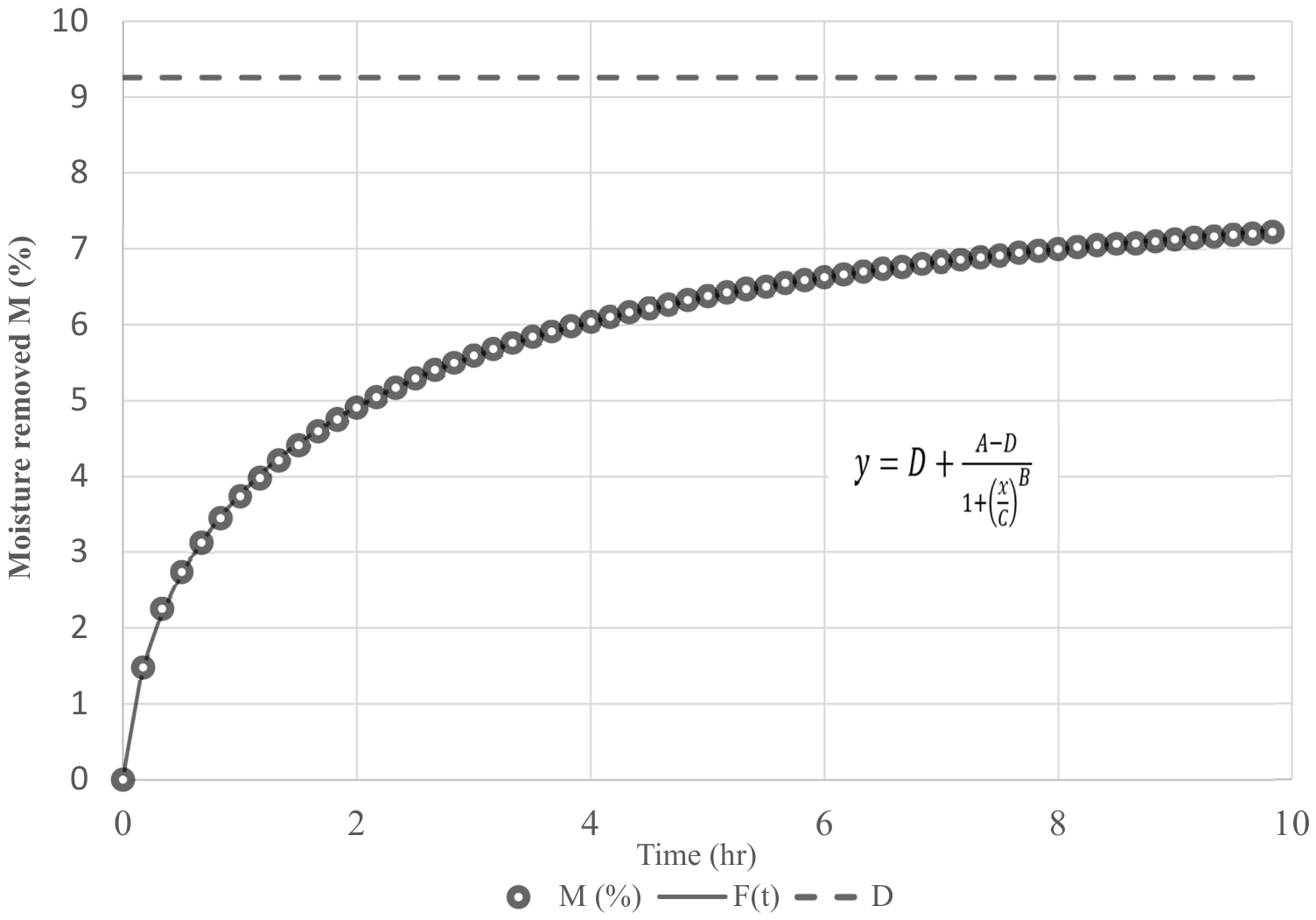
Figure 1. Moisture removed M (%) as function of time (h), drying PA6-CF at 70 °C.
Applsci 16 05056 g001
Figure 2. Moisture removed M (%) as function of time (h), drying PA6-CF at 95 °C.
Applsci 16 05056 g002
Figure 3. Moisture removed M (%) as function of time (h), drying PA6-CF at 120 °C.
Applsci 16 05056 g003
Figure 4. Drying PA6-GF at 70 °C.
Applsci 16 05056 g004
Figure 5. Drying PA6-CF at 95 °C.
Applsci 16 05056 g005
Figure 6. Drying PPA-CF at 120 °C.
Applsci 16 05056 g006
Table 1. Experimental and 4PL-modeled drying characteristics of polyamide and PPA composites.
Drying T (°C)MaterialStart Mass (g)Theoretical Dry, D (g)Dry with 0.5% Moisture (g)Time to Reach 0.5%D Accuracy
70PA6-GF630.28616.8578619.94212.5 days±2.089 g
95PA6-CF525.09511.2345513.79074 h±0.1388 g
120PPA-CF955.30948.0578952.79812 h±0.8216 g
Disclaimer/Publisher’s Note: The statements, opinions and data contained in all publications are solely those of the individual author(s) and contributor(s) and not of MDPI and/or the editor(s). MDPI and/or the editor(s) disclaim responsibility for any injury to people or property resulting from any ideas, methods, instructions or products referred to in the content.