1. Introduction
The treatment of varroosis, a disease caused by the
Varroa destructor mite (
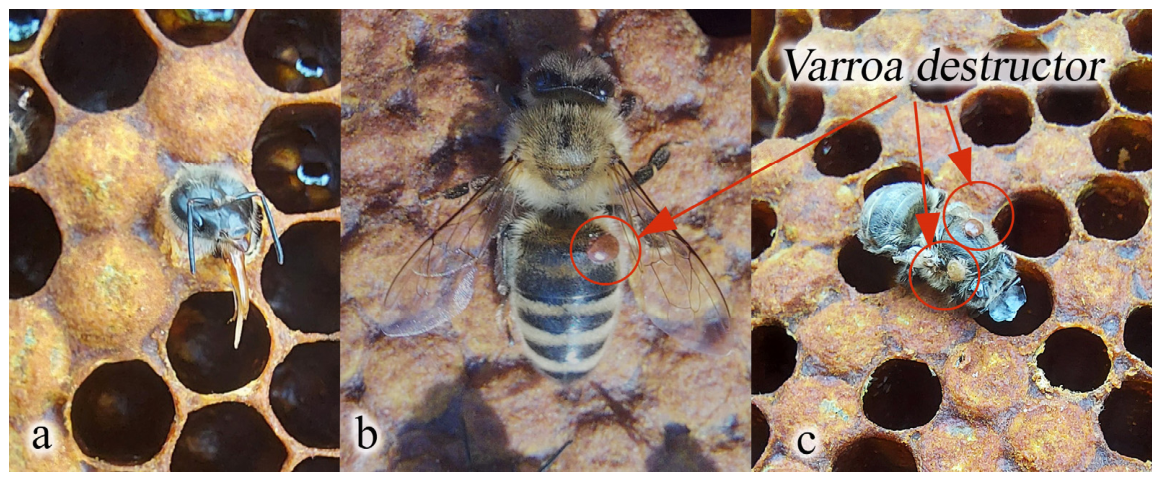
Figure 1), is currently one of the main tasks of beekeepers, as this disease poses the greatest threat to modern beekeeping [
1]. This parasite of the honeybee (
Apis mellifera L.) jumped from its original host, the eastern honeybee (
A. cerana L.), and quickly spread throughout the world [
2]. Gregorc cites the invasion of
V. destructor mites as the main cause of bee colony collapse during the winter [
3]. Numerous viruses, whose vector of infection is
V. destructor, also contribute to the decline of bee colonies infected with varroosis. By 2023, 128 viruses affecting honey bees had been recorded in the NCBI GenBank database, the most dangerous of which are: acute bee paralysis virus (ABPV), chronic bee paralysis virus (CBPV), deformed wing virus (DWV), Israeli acute paralysis virus (IAPV), Kashmir bee virus (KBV), black queen cell virus (BQCV), sacbrood virus (SBV), the apis rhabdovirus (ARV) group, and Lake Sinai virus (LSV) [
4,
5]. The coexistence of mites and viruses affects bee health in a deeper sense, as it has been proven that mites carrying specific viruses behave differently, including moving faster [
6]. The direct impact of mites on worker bee mortality stems from the fact that they do not feed on hemolymph (as originally thought) but on the fat body [
7]. The level of
Varroa mite infestation also has a significant impact on bee microbiota, more so than infestation with
N. ceranae,
N. apis, and
L. passim [
8]. Another extremely important and dangerous element in the management of varroosis is reinfestation, especially as a result of robbing weak colonies and empty hives after swarming [
9]. It is clear that the decline in bee colony numbers is not caused solely by
Varroa mites and viruses, but this factor is the main driver [
10].
Methods for controlling
V. destructor mites can be divided into three categories: chemical control methods using acaricides, biotechnical methods, and bee breeding programs. Commonly used synthetic chemicals to control mites are failing due to the emergence of resistant mites. On the other hand, breeding programs have not yet yielded satisfactory results and still require a lot of field work; therefore, the implementation of biotechnical methods represents a reasonable solution [
11]. This article aims to summarize biotechnical methods and present an overview of their use in practice.
The aim of this review is to provide an overview of the biotechnical methods used to control V. destructor mites, analyze the effects of their practical application, identify the most effective methods, and outline protocols for controlling varroasis using these methods.
2. Review Methodology
The literature search was performed using Google Scholar and Web of Science databases. Initially, the search was limited to publications from the last 10 years (2016–2025); however, in justified cases, earlier key studies were included to provide essential background and context.
A combination of keywords was used, including: Varroa destructor, varroa mite control, biotechnical methods, integrated pest management (IPM), biological control of Varroa, and chemical control of varroa.
The review included publications that met the following criteria: scientific articles published in peer-reviewed journals, experimental studies, review papers, and meta-analyses, as well as publications in English (and selected works in Polish). The following were excluded: popular science articles, reports without access to full texts, and studies of insufficient methodological quality.
3. Biotechnical Methods
Biotechnical methods in the treatment of varroosis are defined as all beekeeping practices aimed at inhibiting the development of the
V. destructor population by interfering with the natural development cycle of bees and parasites without the use of synthetic drugs. These methods are considered ecological and can be supported by the use of natural substances such as essential oils and organic acids. The combination of one or more biotechnical methods with the use of natural anti-
Varroa substances is referred to as integrated pest management (IPM) [
12].
3.1. Why Are Biotechnical Methods Important?
3.1.1. A Controlled Alternative to the Natural Swarming Process
Swarming has always been a natural part of bees’ biology and development, and beekeepers who run intensive apiaries eliminate it through anti-swarming measures. In Poland, bees currently swarm most often in May; however, allowing this conflicts with the goals of achieving high production. It should be noted that swarming, in addition to its reproductive function, promotes hygiene and health in colonies, acts as a kind of quarantine, and significantly reduces brood and bee diseases, including varroosis. It is therefore justifiable to replace natural swarming with a biotechnical procedure that induces an interruption in the presence of brood in the colony, performed at the most optimal time for the apiary [
13].
3.1.2. Climate Change Contributing to Longer Queen-Rearing Seasons
Between 1991 and 2020, the impact of climate change on mite infestation levels in bee colonies was analyzed in Central Europe. The results show that the higher the average temperature in spring (March–May) and autumn (October), the more intense the autumn mite infestation. This is due to the prolonged availability of bee brood, providing conditions conducive to mite reproduction [
14].
It is not yet entirely clear what exactly initiates brood rearing in a bee colony, but both temperature and day length (photoperiod) have an impact. Therefore, global temperature increases and changes in seasonal patterns make it difficult to synchronize the development of the bee colony with flower resources [
15].
3.1.3. Drug Resistance
The first studies on drug resistance were conducted by Milani in 1995. He developed a biological test to validate the hypothesis of mite resistance to fluvalinate, flumethrin, and acrinathrin. The results showed there were no significant differences between the various developmental stages of mites from the same source, but the LC50 coefficient for mites from areas where fluvalinate treatments were no longer effective was 25–50 times higher than for susceptible mites. For flumethrin and acrinathrin, this value was 10–60 times higher [
16].
Bahreini et al. (2025) studied bee populations in Canada (Alberta) and concluded that
V. destructor mutates rapidly and becomes resistant to drugs. Due to the fact that the parasite originally had a host other than the honey bee (
A. mellifera), its adaptive abilities when feeding on its original host (
Apis cerana) are also being studied [
17]. According to Rinkevich (2020), mites have developed widespread resistance to the acaricides fluvalinate and coumaphos, while remaining relatively sensitive to amitraz, despite its long and intensive history of use. However, results of studies conducted in large commercial apiaries in the USA showed considerable variation in the level of resistance to amitraz, ranging from low to very high [
18]. Since oxalic acid is also a very popular agent used to control mites, resistance to it has also been studied. The aim of one such study was to assess the sensitivity of the
V. destructor population in a commercial apiary where 64 consecutive control treatments with this acid were carried out. The results showed that over the next 8 years, the mite remained sensitive to the acid [
19]. Even if some substances remain relatively effective in different regions of the world, there is no guarantee that this will persist or apply in other locations. Therefore, the use of biotechnical methods is entirely justified.
3.1.4. Residues of Drugs in Bee Products
From the beginning of the fight against varroosis, chemical agents such as pyrethroids (flumethrin, fluvalinate, and acrinathrin), organophosphorus compounds (coumaphos and bromfenvinphos), and formamidines (amitraz and cymazol) have been used. These agents appear on the market in the form of preparations with various application methods, such as strips to be hung in the hive, substances to be poured over the bees, and tablets to be burned, among others. Suspicions regarding the accumulation of active acaricide substances in the hive environment arose when mites began to show resistance to these treatments [
20].
The danger of chemical accumulation in the hive environment was demonstrated by Albero et al. (2023), who conducted field tests on 16 colonies that were treated with various agents and examined residues in wax, honey, and brood. The substances found in the highest concentrations in the wax were coumaphos and amitraz (6.0 mg/kg and 0.8 mg/kg, respectively) in December, and by June, these levels had decreased by 73% and 64%, respectively. In addition to these, chlorfenapyr, chlorfenvinphos, acrinathrin, and cypermethrin were also detected. It has also been proven that these acaricides are able to migrate from the wax into the honey and brood. The authors of these studies suggest the need to reduce the use of heavy chemicals in the treatment of varroosis and to seek alternative and ecological methods to ensure healthy bee products [
21].
3.2. Available Biotechnical Methods for Controlling V. destructor
3.2.1. Queen Bee Isolation
Interrupting the queen’s egg-laying is a commonly used biotechnical method to limit
V. destructor populations by inducing a broodless period in the colony. As the mite reproduces in capped brood, its absence significantly increases the effectiveness of subsequent treatment [
13].
A large-scale study by Büchler et al. (2019) showed that queen caging for 25 days followed by a single oxalic acid treatment resulted in high efficacy, reaching 87.5% for the standard application (4.2% solution, 5 mL per comb). Lower dosages reduced effectiveness to 80.1% and 48.6%, while sublimation achieved a similar level of 88.9%, indicating the importance of both dosage and application method. The study also confirmed that brood interruption does not significantly weaken the colony, as its strength is usually restored within a few weeks. However, the method requires proper timing and management, which may limit its practical application. Interrupting the queen’s egg-laying is a fundamental and widely applied biotechnical method aimed at suppressing the population growth of
V. destructor. The method relies on inducing a broodless period in the colony, thereby disrupting the mite’s reproductive cycle, which is strictly associated with capped brood. A large-scale international study by Büchler et al. (2019) involving 370 colonies across 10 European countries demonstrated that queen caging for 25 days followed by a single oxalic acid treatment resulted in high mite control efficacy. The standard treatment (4.2% oxalic acid, 5 mL per comb applied by trickling) achieved an average efficacy of 87.5%, while lower dosages reduced effectiveness to 80.1% and 48.6%, respectively. Notably, oxalic acid sublimation reached a comparable efficacy of 88.9%, indicating that treatment success depends strongly on both dosage and application method. The high effectiveness of this approach can be explained by the concentration of mites in the phoretic phase during broodlessness, which increases their susceptibility to treatment. Importantly, the study did not report significant losses of queens or colonies, and no substantial negative effects on colony development were observed, as colony strength was generally restored within weeks after treatment. However, the method requires precise timing and management, and its effectiveness may vary depending on environmental conditions and apiary practices [
22].
Interrupting queen rearing in summer also affects the reproductive capacity of mites [
23]. Various methods are used to interrupt queen rearing, but in general, the type of isolator used has little effect on the outcome of varroosis control.
Queen Caging
This is one of the most common methods of isolating the queen bee without brood and is particularly popular in Eastern European countries. The isolator itself was developed by Dr. Petr Chmara and has the surface area of a brood frame and a width of one centimeter. It is enclosed on both sides by a grid, allowing the queen to move inside it without access to the honeycomb cells where she could lay eggs. Research on the use of the Chmara isolator as a tool for treating varroosis in the summer and as a queen bee isolator for the fall and winter did not confirm this theory; during the three years of the experiment, only three isolated queens died in the experimental group and two in the control group, accounting for 3.8% of all queens. The experiments were conducted in Dadant hives in two apiaries in Warsaw between 2016 and 2019. Each of the two apiaries housed 12 to 14
Apis mellifera carnica bee colonies during the winter. In each of these two apiaries, half of the queens were confined in Chmara isolators for a period of 5 to 6 months, with the isolation ending at the first flight [
24]. Mortality in Chmara isolators is probably due to the swarm leaving the isolator and can be easily prevented by adjusting the number of frames or inspections.
Queen Caging (Small Cages)
A small cage, no more than 10 cm long, can be used to isolate the queen bee. These cages are made of plastic or wood with metal or plastic mesh. This method of isolation, combined with oxalic acid treatment, was tested in a large project involving 178 colonies in nine apiaries across six Mediterranean countries. The colonies were divided into three groups: QC1 (queen isolation for 28 days, starting 28 days before honey harvest), QC2 (queen isolation for 28 days, starting 14 days before honey harvest), and C (control group, not isolated). Groups QC1 and QC2 were treated with oxalic acid after the queen was released, while group C underwent standard local anti-
Varroa treatments using preparations such as Apivar, Apitraz, CheckMite, formic acid, or total brood removal. At the beginning of the experiment, the level of infestation was roughly equal in all three groups within a given apiary. After 28 days, infestation levels were QC1 1.64, QC2 1.48, and C 1.52 (mites/100 bees). However, after 42 days, the levels shifted to QC1 0.44, QC2 0.63, and C 1.18 (mites/100 bees). It is therefore clear that infestation in the isolated groups was significantly lower than in the non-isolated group. The timing of isolation was of considerable importance for honey yield, as significantly less honey was obtained from group QC1 than from QC2. The data from the above experiment confirm the effectiveness of cages in isolating queen bees. An additional conclusion drawn from the research was that the number of adult bees in autumn is negatively correlated with the level of
V. destructor infestation in the previous summer. Consequently, the number of adult bees in spring is negatively correlated with the level of
V. destructor infestation in the previous October. It follows that an effective method of controlling the mite improves the number of adult bees needed for wintering [
25].
Queen Bee Ringing
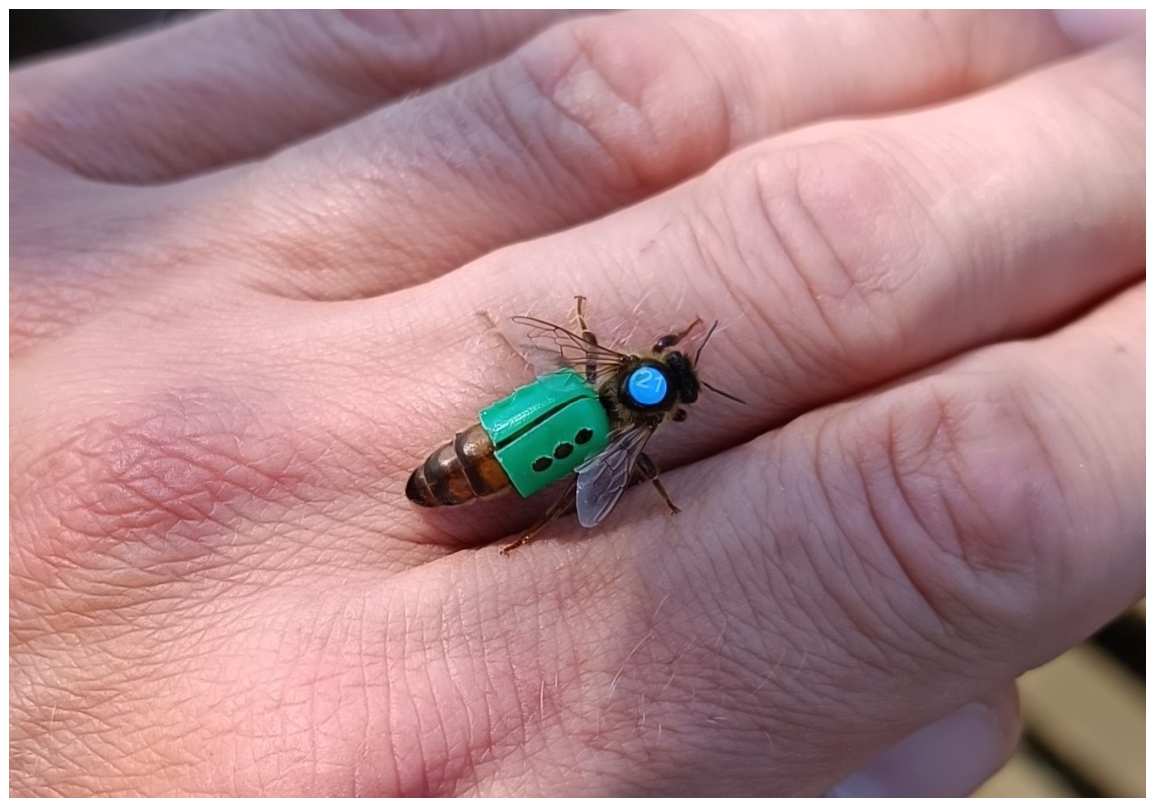
Queen bee ringing is a new method used in Europe, which involves placing a plastic ring on the queen bee’s abdomen, preventing her from bending it to lay eggs in the cell (
Figure 2). The method has been used in China for several years and has only recently reached Europe, where it is currently being intensively researched in several countries [
26]. Experimental results show that queen ringing can effectively induce a brood interruption similar to queen caging, with no significant negative effects on colony development, as colonies are able to compensate after the interruption period. However, some risks were observed, including possible queen loss or supersedure, likely related to handling or ring removal. Therefore, although the method appears promising, it still requires further research under different beekeeping conditions.
3.2.2. Reducing Brood (Frame Isolators, Trap Combs)
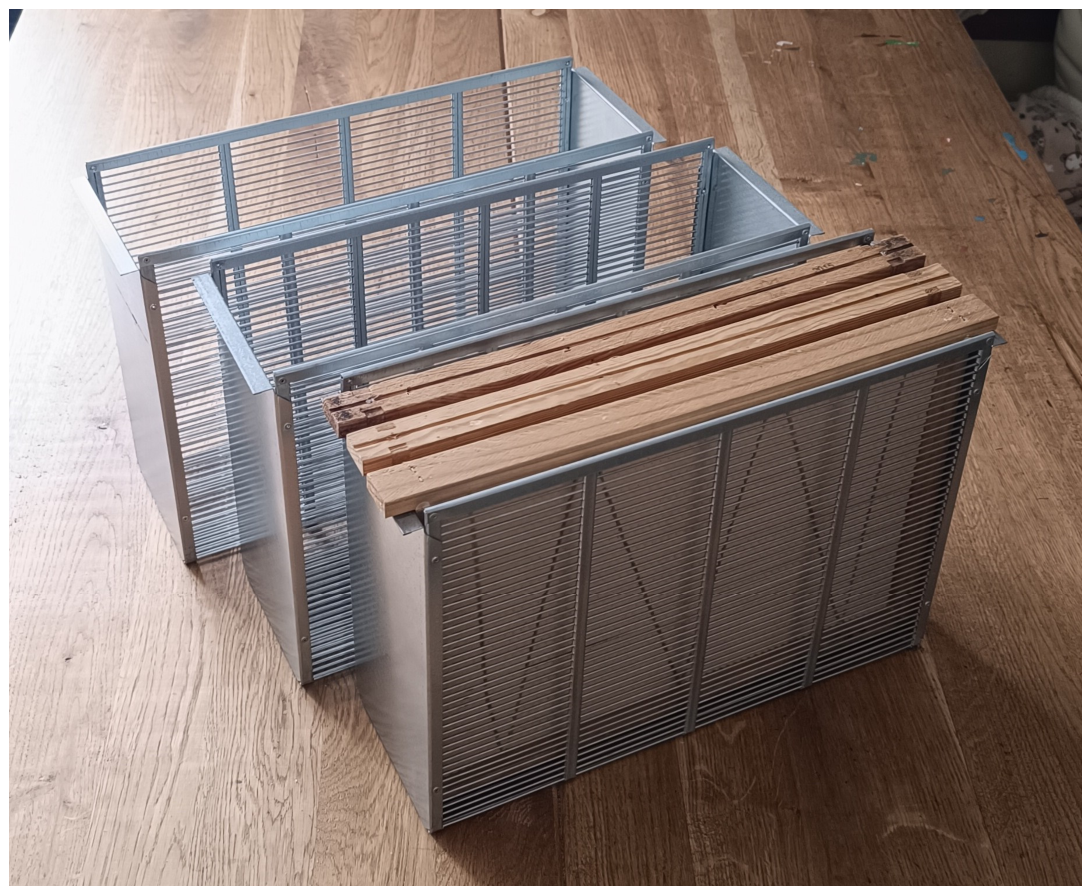
When the queen is confined in a frame isolator, egg-laying is restricted to combs placed inside the isolator (
Figure 3). As a result, mites emerging with young bees from the rest of the colony concentrate in this limited brood area, which acts as a trap. After removing these combs, a broodless state is achieved, and the overall infestation level is reduced.
A large-scale study by Büchler et al. (2020) confirmed the effectiveness of this approach. The average mite fall at the time of treatment was 191.3 for queen caging, 270.5 for the trapping comb method, 215.4 for its simplified version, and 352.8 for total brood removal. These results correspond to high overall efficacy of brood interruption methods, reaching around 89.6% when the queen was caged prior to treatment with 4.2% oxalic acid and about 88.3% for sublimation, while lower concentrations were significantly less effective (48–80%). Although all methods reduced mite infestation, the higher mite fall observed in the brood removal group suggests a stronger immediate reduction. However, no significant differences between methods were found overall, indicating comparable effectiveness under proper management [
27]. There are various methods of dealing with both the parent hive and the removed brood, which can either be melted down or placed in another hive for hatching and treatment. These methods are described in detail by Olszewski [
13].
3.2.3. Royal Cell Insertion
This is one of the simpler methods, often combined with replacing the queen in the hive, as it involves removing the old queen and introducing a queen cell at the right moment for the unfertilized queen to hatch. To achieve a broodless state, the queen cell is introduced 8–9 days after removing the old queen so that the young queen will start laying eggs about 19 days after removing the old queen. This ensures that the entire brood hatches shortly after the young queen starts laying eggs, providing a few days for treatment [
13].
3.2.4. Removal of Drone Brood
Drone combs are used in bee colonies as working frames, and their reddening is the first sign of swarming. In addition, the level of mite infestation is 5 to 9 times higher in drone brood than in bee brood [
28].
In 2002, an effort was made to computer model the relationship between the level of
V. destructor infestation in drone brood and the level of parasite infestation in the bee colony, and an attempt was made to assess whether it is worthwhile to use drone combs as mite traps. The results of these computer simulations showed no direct and clear relationship. It was only shown that the level of
V. destructor infestation in drone brood always reached 25% before the total number of mites in the colony reached 2000. Therefore, uncapping drone brood and counting mites can be an excellent signal for deciding when to start treatment [
29].
In 2001, Huang, wanting to take advantage of the attractiveness of drone brood to mites and their sensitivity to high temperatures, developed a device called the Mite Zapper (LLC, Detroit, MI, USA), a mite trap combined with a heater; however, there is no information on the implementation of this project [
30].
Positive results for drone brood removal were reported by Calderone (2005), who compared colonies in which drone combs were regularly removed (June–September) with untreated controls. In early fall, the average mite-to-bee ratio was significantly lower in the treated group (0.025) compared to the control group (0.109), indicating a substantial reduction in infestation. The range of infestation was also narrower in treated colonies (0.000–0.070 vs. 0.012–0.441 in controls), suggesting more stable control of mite levels. Importantly, drone brood removal did not negatively affect colony strength, as similar worker populations were observed in both groups. In addition, honey production was equal or higher in treated colonies, with significantly greater weight gain during part of the season, which may be related to reduced parasite pressure [
31].
The positive effect of drone brood removal was also demonstrated by Wantuch and Tarpy (2009), although mainly in the early part of the season. Colonies subjected to this method showed significantly lower mite levels in summer, for example, in July (2.8 vs. 14.9 mites per frame of bees) and August (8.1 vs. 38.7) compared to untreated controls. However, this effect did not persist, as mite levels increased again later in the season, reaching values closer to the control group by September (17.8 vs. 22.1). This indicates that drone brood removal alone provides only temporary control and should be combined with additional treatments to maintain low infestation levels [
32].
3.2.5. Sugar Powder
Ellis et al. (2009) conducted fairly comprehensive research on the use of powdered sugar as a biotechnical method in Florida, but the results of their research were not very favorable for this method, as the treatment did not significantly reduce the mite population. The study involved applying 120 g of powdered sugar every two weeks for 11 months. The application of powdered sugar had virtually no effect on the number of adult bees (with powdered sugar 10,061.72, control group 10,691.00), the brood area (with powdered sugar 4521.91 cm
2, control group 4472.55 cm
2), or the number of mites (with powdered sugar 2112.15, control group 2197.80) [
33].
However, Berry et al. (2012) re-evaluated this method under field conditions, including a broodless period and different application techniques. Their results showed limited effectiveness, with significant mite reduction observed in only 25% of analyses. For example, the number of phoretic mites was reduced from 6.0 to 3.0 per 100 bees, and mite fall was reduced from 46.9 to 24.4 mites per day, but these effects were not consistent. The method was more effective when applied early in the season during broodless conditions and when powdered sugar was blown through the hive entrance rather than dusted over frames. However, no improvement in colony survival was observed, and overall effectiveness remained low. As a result, the authors concluded that powdered sugar is a weak control method and should only be used as part of a broader IPM strategy [
34].
3.2.6. Thermotherapy
The method of heating bee colonies to combat mites was first tested by Goras et al. in 2016. They heated bee colonies to temperatures above 42 degrees Celsius for periods ranging from 12 to 480 min, monitoring the number of mites dying over time. The first dead mites appeared in the sealed brood after 60 min, and after 480 min, all of them were dead. The effect of heating on bees was also studied, and it was observed that dead larvae appeared after 120 min, while the entire process did not fatally affect adult bees [
35].
In the same year, Bičík et al. (2016) concluded from their research that the most effective method is to heat the brood to a temperature of 40–47 degrees Celsius for a period of 2.5 h and, due to the fact that the treatment is performed during the flight of the bees, to repeat it after 10–12 days [
36].
The exact temperature ranges were specified in a 2024 publication, which showed that 36.5–41.0 °C significantly reduces the reproductive capacity of mites, while 41–44 °C kills them [
37].
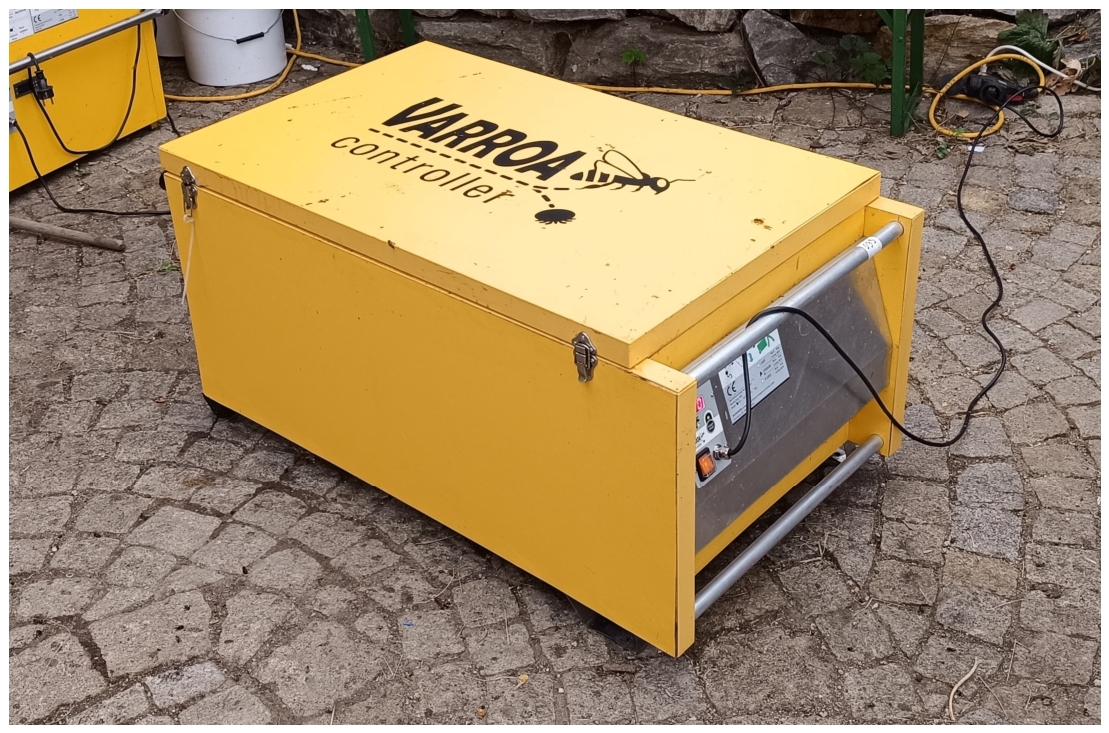
Research on the effect of temperature on mite mortality led to the development of a device called the
Varroa controller (ECODESIGN company GmbH, Vienna, Austria) (
Figure 4), which works on the principle of a simple incubator, in which frames with brood are placed for a specified time and exposed to a sufficiently high temperature. The use of this tool is very labor-intensive. A summary of the latest information on the use of temperature in the fight against varroosis is presented by Xu et al. (2025) [
38].
3.2.7. Small Cell Foundation
At one point, a claim appeared in beekeeping discussions suggesting that the natural size of a bee cell in wild bees is significantly smaller than the size of a bee cell built on a standard comb. As a result of these discussions, it was concluded that if the size were “returned” to its original size (approx. 4.9 mm), bees would be better able to cope with
Varroa mites [
39].
Ellis et al. (2009) evaluated the effect of small cell foundation on varroa infestation and found no significant differences compared to standard cell size. Mite levels per colony, per bee, and per brood cell remained similar throughout the study, and population growth followed the same pattern in both groups. Importantly, colonies in both treatments reached the economic threshold of infestation at a similar time, indicating that small cell size did not slow mite population growth. Based on these results, the authors concluded that this method is not effective for varroa control and cannot be recommended as part of an IPM strategy [
39].
In three independent field studies, Berry et al. (2010) compared colonies maintained on small cell combs (4.9 mm) and standard combs (5.3–5.4 mm). The results showed that reducing cell size did not limit mite populations, and, in several parameters, infestation was even higher in small cell colonies. For example, mites per 100 adult bees were higher in small cell colonies (5.1 vs. 3.3), as well as the number of mites in brood (359.7 vs. 134.5) and their proportion in brood (49.4% vs. 26.8%). These results, consistent across three independent experiments, indicate that small cell combs do not reduce varroa infestation and may even favor mite population growth under certain conditions [
40]. In the same year, Coffey et al. (2010) confirmed the lack of correlation between cell size in the comb and the level of
V. destructor infestation [
41].
Studies from Norway showed a slight effect of smaller cells on the reproductive capacity of mites, but the authors correlated this with natural selection of mites, and it was difficult to draw clear and unambiguous conclusions [
42].
3.2.8. Artificial Brood Decapping
The artificial brood decapping method was proposed and tested in Romania in 2017/2018 and proved to be very effective in combination with formic acid. It involves gently uncapping the entire brood in the colony so as not to damage it. In the study cited, a honey uncapping fork was used for this purpose, but there are also reports of the use of, for example, a cloth dipped in hot wax. After uncapping the combs, formic acid was used (in concentrations of 60–85% administered on cardboard for 14, 15, and 36 h). In both experiments (2017, 2018), the mortality rate of mites in the protonymph and deutonymph stages was observed to be 80%, which shows that this treatment effectively interrupts the development cycle of
V. destructor, while mortality in other stages—males, queens, founders, and daughters—also occurred, but with high variability, 0–100% [
43].
3.2.9. Screen Floor
A detailed study on screened bottom boards was conducted by Harbo and Harris (2004), who compared colonies kept on mesh and solid bottoms in both winter and summer conditions. The results showed that colonies with open-screen floors had lower mite populations and a reduced proportion of mites in brood cells (57% vs. 74%), indicating a slower rate of reproduction. This effect is likely related to a longer phoretic phase, as mites remained on adult bees for a longer period (about 9.4 vs. 4.4 days), which reduced their chances of entering brood cells. As a result, screened bottoms can slow the growth of mite populations, although the effect is moderate and should be considered part of a broader control strategy [
44].
A similar study was conducted in India in 2009. The number of mites shed after treatment was compared in hives with hygienic bottoms and in a control group with solid, closed bottoms. During this three-week study, the number of mites was assessed, along with the effectiveness of treatment, the increase in the number of adult bees, brood production, and the surface area of honey and pollen. The use of hygienic bottoms significantly increased the number of mites falling compared to the control group (90.8% reduction in mites). The use of these bottoms had no effect on the strength of the bee colony or on honey and pollen reserves. Screen floors proved to be highly effective, with a ratio of dead mites of 17.2:6.76 compared to the control group [
45].
3.2.10. Ultrasound
In recent years, there have been reports of attempts to combat mites using ultrasound; however, at present, there are no reliable results on this method.
4. Biological Methods
Recent studies have further expanded the understanding of microbiological control of
V. destructor. A biological survey conducted in North America, based on the analysis of over 2600 mites, identified a wide range of natural enemies, including 21 fungal species, 25 bacterial species, one parasitic nematode, and several arthropod predators. Among these, selected entomopathogenic microorganisms showed high efficacy. The fungus
Beauveria bassiana caused up to 100% mite mortality, while
Metarhizium species reached 75–85% and actinomycete bacteria achieved about 70% mortality in laboratory assays. In addition, the identified nematode resulted in over 90% mortality of infected mites. These results confirm that fungi and bacteria represent the most promising group of biological control agents. At the same time, the diversity of organisms identified across different regions suggests the existence of a broader ecological network of natural enemies that could be exploited in future control strategies. However, despite high efficacy observed under laboratory conditions, their practical application in beekeeping still requires further development and validation in field conditions [
46].
4.1. Bacillus thuringiensis
Entomopathogenic bacteria are successfully isolated and used to control many pests. The most commonly studied and used are spore-forming bacteria, especially those from the
Bacillaceae family, such as
Bacillus thuringiensis,
B. sphaericus, and
Paenibacillus popilliae, because they can more easily infect healthy host organisms. Of the species mentioned,
Bacillus thuringiensis is most commonly used for biological pest control. In a study by Alquisira-Ramírez et al. (2014), 54
Bacillus strains were isolated from dead
V. destructor mites, of which nine showed high pathogenicity, causing over 80% mite mortality. The most effective isolate (EA26.1) achieved 96.7% mortality within 36 h, while other strains (EA3 and EA11.3) caused over 93% mortality within 48–60 h. These isolates were identified as
B. thuringiensis and showed high virulence even at low concentrations (LC50 as low as 1.5 μg/mL). Importantly, no significant negative effects were observed in adult bees or larvae, indicating its potential as a biological control agent. However, these results were obtained under laboratory conditions and require further validation in the field [
47].
4.2. Entomopathogenic Fungi
The effect of the entomopathogenic fungus
B. bassima on mites was studied in Egypt. The results were very positive, i.e., spraying colonies with a product containing this fungus significantly damaged the mites without affecting the bees. The most effective concentration (5 × 10⁶ conidia/g) was also found, and it was recommended to repeat the treatment on days 6 and 10 [
48]. For different concentrations of the fungus: 1, 2.5, 5, and 7.5 (×106 conidia/g), a reduction in mite infestation was achieved by 47.68, 33.44, 70.00, and 46.38%, respectively. Kanga et al. (2002) presented the fungi
Metarhizium anisopliae and
Hirsutella thompsoni (a polyplastic strain isolated from citrus mites was used) as effective microorganisms in controlling
V. destructor. They determined the exact time needed for these fungi to kill the mite. 90% of the mites died after 4.16 days for
Hirsutella thompsoni and 5.85 days for Metarhizium anisopliae [
49].
The effect of the fungus
Metarhizium anisopliae var.
anisopliae BIPESCO 5 on the body of worker bees and on the host selection by adult females of
V. destructor was studied, and the fungal spores had a repellent effect on the mites [
50].
The same fungus had already been tested many years earlier in field conditions, where its effectiveness was compared with that of Apistan, and it was found to be equally effective and not to have a negative impact on bees or colony development [
51]. Through selection and targeted evolution, strains of
Metarhizium brunneum were created that thrived best at the temperatures found in the hive. The JH1078 strain in particular proved to be very virulent to mites [
52].
4.3. Predatory Mites
Stratiolaelaps scimitus (Mesostigmata:
Laelapidae) preys on
V. destructor and is capable of killing it. It is a predatory mite, several times smaller than
V. destructor, living in the soil and preying on various types of arthropods, mites, larvae, and nematodes. It is also bred and used to control pests in horticulture. It has been shown that 24 h after confining
V. destructor mites in vials with
S. scimitus mites, their mortality rate was 97.1%, while in vials without
S. scimitus mites, only 6.85% of
V. destructor died. When these studies were transferred to field conditions,
V. destructor mites could not be effectively controlled. However, the authors remain optimistic about this line of research, noting that it needs to be continued and more experiments are needed [
53].
Other studies have found that
S. scimitus does indeed prey on
V. destructor mites, but not when they are attached to the body of bees, only when they fall off. This may therefore be an additional weapon in the fight against varroosis, but with limitations and low effectiveness [
54].
5. Chemical Methods Including Natural Substances
5.1. Sugar Syrup with Natural Additives
Hygienic behavior is one of the mechanisms of resistance to
V. destructor [
55]. Attempts to enhance hygienic behavior using sugar syrup with drone larvae or propolis extracts were evaluated by Abou-Shaara (2017). The results showed that none of these treatments significantly increased grooming behavior, indicating that this trait remained relatively stable under the tested conditions. At the same time, propolis extract had a negative effect on worker survival, with mortality reaching up to 54% after 7 days, compared to 29% for drone larvae extract and 16% for sugar syrup alone. Although propolis slightly increased mite fall, its negative impact on bees limits its practical use. In contrast, spraying colonies with sugar syrup alone may help reduce mite levels without harming bees [
56].
5.2. Bee Venom
Bee venom is used to protect against pathogens and parasites, as it contains antibacterial substances, mainly melittin. It has been confirmed that cleaning by worker bees causes the venom to spread throughout the body, and there was significantly more of it in bees infected with
V. destructor mites, as no venom was found in drones, newly born worker bees, or worker bees with blocked stingers, so the venom is not obtained from outside their own venom sacs. The deterrent effect was inferred by comparing the proportion of melittin on the bees’ bodies to its total amount on the body and in the venom sac, and this proportion increased significantly in bees infected with mites. On the other hand, mites feeding on bees had a negative effect on the production of melittin, the main peptide in bee venom [
57].
5.3. Mite Saliva
Parasitism by
Varroa destructor involves feeding on host body fluids through a wound in the cuticle, which also serves as a potential route for pathogen transmission. During feeding, the mite injects saliva into the host, although its exact role has long remained unclear. Recent studies have identified salivary components that modulate host physiology, among which chitinase (Vd-CHIsal) appears to play a key role. This enzyme is highly expressed in the salivary glands and is essential for the effective feeding and survival of the mite. It likely contributes to maintaining the feeding wound open and modulating host immune responses, thereby facilitating prolonged parasitism. Experimental silencing of Vd-CHIsal significantly reduced mite survival and led to increased expression of immune-related genes in the host, suggesting that this protein suppresses or modulates host defense mechanisms. These findings indicate that interactions at the mite–host interface are regulated by specific salivary factors and represent a promising target for future biological control strategies against varroosis [
58].
5.4. Impairment of the Sense of Smell in Mites
Smell is generally one of the most important senses in arthropods, and studies have shown that the sensitivity of mites to the “smell” of eggs can have a significant impact on their development cycle [
59]. In order for a female
V. destructor to reproduce successfully, it must receive and correctly interpret the chemical signal sent by the brood. This signal is a combination of many volatile substances that have been described and analyzed and in the future may be used as part of a biotechnical approach to combating varroosis [
60]. Nganso et al. showed that blocking the mite’s olfactory organ by painting it with nail polish significantly reduced its ability to reach its host [
61].
5.5. Essential Oils
Essential oils have been extensively studied as potential agents for
Varroa control, with more than 150 oils and their components evaluated in laboratory tests. In these screenings, over 24 oils caused mite mortality exceeding 90% after 72 h, although only a small number proved effective under field conditions. Thymol and its mixtures were identified as the most promising compounds, with mite mortality typically exceeding 90% and in some cases approaching 100% in hive conditions. Laboratory assays also showed that relatively low concentrations of thymol (5–15 µg/L of air) were sufficient to achieve near-complete mite mortality without significant bee losses. However, results varied considerably depending on environmental conditions, application method and colony characteristics, and a single treatment with essential oils was generally insufficient to maintain mite populations below the economic threshold. Therefore, essential oils are considered most effective when used as part of an integrated pest management strategy rather than as a standalone treatment [
62].
It has long been known that essential oils have acaricidal properties and have been used by beekeepers around the world. Given that there are many oils available, each with varying degrees of effectiveness, the most commonly used ones were tested.
Under laboratory conditions, 30 essential oils were tested for their effect on both mites and bees. The tests were carried out by placing five bees and five mites in a Petri dish and applying the oils. The results were checked after 4, 24, 48, and 72 h. The results, based on the selectivity ratio (SR) for each essential oil, showed that the best essential oils for controlling
V. destructor are those obtained from peppermint (SR 9.65) and manuka (SR 9.33), followed by oregano (SR 5.83) and litsea (SR 5.35). Other suitable candidates for acaricides appear to be oils obtained from the following plants: carrot, savory, thyme, and cinnamon. All of these oils showed better SR values at the end of the experiment than the control group. In addition, these oils showed an upward trend in selectivity ratio values. Thymol showed a very good SR at the beginning of the experiment, but this value decreased with each subsequent measurement. At the end of the experiment, the SR value was lower than that of most of the essential oils tested. This trend was also observed for essential oils from pelargonium and thyme. In addition to well-known substances such as thymol, menthol, and carvacrol, other components appear to be potentially interesting in combating
Varroa, especially citral, limonene, calamenene, leptospermon, p-cymene, and cinnamaldehyde as the main compounds of the most effective essential oils. In 2017, oregano and clove oils were tested. Three different agents were used in three groups to treat varroosis (T1—oxalic acid in sucrose solution, T2—a mixture of oregano and clove oils in ethanol and gelatin, and T3—oregano oil alone delivered by an electric vaporizer). The effectiveness in the subsequent groups was as follows: 76.5%, 57.8%, and 97.4%, which showed that oregano oil has a very large impact on mite mortality and can be used as an effective ecological tool in the fight against varroosis [
63].
Thymol has been shown to influence hygienic behavior in honey bees, particularly by increasing the rate of brood uncapping and removal. In experimental conditions, colonies treated with thymol uncapped and removed significantly more dead brood compared to control colonies, with an increase of approximately 24–36% in brood removal after 48 h. In practical terms, this means that the presence of thymol in the hive can stimulate workers to more intensively remove compromised brood, which may indirectly contribute to reducing the Varroa population, as mites reproduce within capped brood cells. However, this effect is not consistent over time and appears to be strongest shortly after application, suggesting a temporary stimulation of hygienic responses rather than a long-term behavioral change [
64].
5.6. Costic Acid from Dittrichia viscosa
Costic acid, isolated from the plant
Dittrichia viscosa, has demonstrated significant efficacy against Varroa destructor and can be considered a promising natural alternative for varroosis control. This plant, commonly found on the island of Crete, has traditionally been used by local beekeepers as a natural remedy against mite infestations, which prompted further investigation into its chemical composition and biological activity. Spectroscopic analysis identified costic acid as the main active compound responsible for the observed acaricidal effects. Laboratory and field studies confirmed its effectiveness against mites, with dose-dependent increases in mortality observed under experimental conditions. In field trials conducted in apiaries, the extract containing costic acid showed substantial efficacy, reaching approximately 80% of the effectiveness of conventional treatments such as Bayvarol (flumethrin) and oxalic acid. Importantly, the treatment did not cause mortality in bees and showed no cytotoxic effects in tested human cell lines, indicating that costic acid may represent a safe, environmentally friendly, and cost-effective alternative for controlling
Varroa infestations [
65].
5.7. Lithium Chloride
Lithium chloride is an effective remedy against varroosis. It was discovered by accident, as it was used to precipitate RNA and other lithium compounds in research on RNA-related methods. Moreover, it is an effective remedy in itself when administered to the host in low, millimolar concentrations. The pilot study involved placing bees in cages and feeding them sugar syrup containing dsRNA of potentially relevant
Varroa genes. A syrup with dsRNA based on the sequence encoding the green fluorescent protein GFP was used as a control. The results in these two groups were similar, suggesting that either RNA has some as yet unknown effect or another component of the solution affects mite mortality. It was decided to test lithium chloride as the main component of the solution. The study used 2 kg of bee packages, which were first treated with lithium chloride in two concentrations (25 mM and 50 mM) for a period of 3 days. The mite fall was counted, then Perizin was applied, and the remaining mites that were not killed by lithium chloride were counted. Both concentrations of lithium chloride effectively killed 90% of the mites in the packages [
66].
6. Economic Aspects of Using Ecological Methods to Treat Varroosis
The economic performance of farms that used different methods to combat
V. destructor was studied in Italy by Vercelli et al. (2023) [
67]. The study involved nine apiaries that used the following techniques:
TBR—total brood removal
QC—queen caging
CI—royal cell insertion
THY—use of thymol
CT—chemical treatment
The apiaries participating in the study used the above techniques in various configurations, as shown in the final table (
Table 1) with economic results (NI—net income, EUR/Hive):
The results of these studies show that biotechnical methods, especially TBR and QC, ensure higher and more stable profitability of apiaries than the use of chemicals alone. Differences can be seen both between individual farms and within each of them, depending on the methods used. In general, the best income was obtained on average by completely removing the brood (€157–181/hive), followed by isolating the queen (€106–155/hive), while the least profitable was the use of chemicals without any biotechnical methods, although in 1 in 3 apiaries the result was surprisingly high (€194/hive).
The conclusions drawn from this study coincide with the results of other Italian studies, in which the revenues dependent on the use of biotechnical methods were examined in even greater detail, as they took into account aspects such as the time and labor intensity of the methods, labor costs, equipment prices, prices of bee products (including their dependence on chemical residues), and many others. The results of these studies showed that the use of biotechnical methods, including primarily TBR (total brood removal), resulted in an increase in profit per hive of 11–28% (
Table 2).
The general conclusions drawn from the article were as follows:
The increase in revenue in apiaries using TBR was 11–28%, and the difference was due to factors such as: average honey production per hive, diversity of bees, types of production and methods of selling products, and product prices (honey, wax, pollen, royal jelly, and propolis). The prices of these products were 10–30% higher due to the absence of residues. In general, an increase in interest in biotechnical methods was observed, precisely because of the possibility of running organic farms and, as a consequence, selling organic products at a higher price.
Obviously, the economic viability of using biotechnical methods is significantly affected by the costs of labor, additional equipment, and a certain reduction in the amount of honey produced, but this can be compensated for by creating new colonies that can be used to replenish one’s own apiary after winter losses or sold.
The need to increase labor and time expenditure for biotechnical methods was estimated at 37–134%, with TBR requiring the most labor of all methods. The high variability in costs and labor time is primarily due to the size of the apiary.
A large part of the expenses incurred in apiaries is due to the need to feed bee colonies, which in turn depends largely on the availability of nectar in a given season and the number of frames given to the bees for rebuilding them.
The results of the application of biotechnical methods are influenced by external factors (climatic conditions, sources of nectar and pollen, etc.), conditions related to bee colonies, and the knowledge, education, and technical skills of beekeepers.
These results were influenced, among other things, by the fact that bee products obtained from apiaries that replaced chemical treatment with biotechnical methods were sold at a higher price as healthier products without residues [
68].
7. Discussion
7.1. Comparison of the Effectiveness of the Methods Discussed
To systematize the presented information and facilitate comparison of the individual methods for controlling
Varroa destructor, they were compiled in a tabular format (
Table 3), taking into account their effectiveness, advantages, limitations, and conditions of application:
The comparison presented in
Table 3 shows clear differences not only in effectiveness but also in practical applicability under field conditions. The highest efficacy is associated with methods that interrupt or eliminate brood, such as total brood removal (TBR) and queen caging, which directly target the reproductive cycle of the parasite. Despite their effectiveness, these methods are labor-intensive and require precise timing, which may limit their use in larger apiaries.
Methods of moderate effectiveness, such as drone brood removal or essential oils, show greater variability in results. Their performance is strongly influenced by environmental conditions, infestation levels, and application methods, which reduce their reliability as standalone treatments. As a result, they are better suited as complementary tools rather than primary control strategies.
In contrast, chemical treatments, including oxalic acid and synthetic acaricides, remain the most practical and widely used solutions due to their high and predictable efficacy. However, their limitations, particularly resistance development and residue concerns, highlight the need for alternative or supporting approaches.
Biological methods, such as entomopathogenic fungi or Bacillus thuringiensis, show promising results under laboratory conditions but currently lack sufficient field validation. This gap between experimental outcomes and practical application indicates that their role in Varroa control remains limited at present.
Overall, the analysis confirms that no single method provides a fully reliable solution under all conditions. The most effective approach is based on integrated pest management (IPM), combining biotechnical, chemical, and biological methods, while taking into account local conditions, colony status, and operational constraints.
7.2. IPM—Integrated Pest Management
Biotechnical methods constitute an important component of integrated pest management (IPM) strategies against
Varroa destructor, but their effectiveness depends on their integration with other control elements. IPM is based on combining multiple approaches, including systematic monitoring, the use of economic thresholds, preventive actions, and the application of appropriate control methods only when necessary. In practice, treatment decisions are typically guided by infestation levels expressed as mites per 100 bees, with commonly accepted action thresholds ranging from approximately 2–5 mites/100 bees, although these values may vary depending on season and region. Regular monitoring is therefore essential, most commonly based on samples of ~300 bees, which allow estimation of infestation rates, or on natural mite fall measured over 72 h. These data form the basis for selecting control strategies and timing interventions. Within this framework, biotechnical methods such as brood interruption (e.g., queen caging or brood removal) act primarily by disrupting the reproductive cycle of the mite; on their own, they are rarely sufficient for long-term control. Consequently, their highest efficacy is achieved when combined with other IPM components, including cultural practices (e.g., hygienic bee stocks), mechanical methods, and selective use of chemical treatments. Such an integrated approach reduces reliance on acaricides, limits the development of resistance in mite populations, and allows for more sustainable and adaptive control of varroosis under field conditions [
12]. Many studies have shown the high effectiveness of using a therapeutic agent after applying an appropriate biotechnical method, most often organic acids, as IPM aims to eliminate heavy chemicals.
The effectiveness of integrated control strategies combining biotechnical methods with oxalic acid (OA) was evaluated by Gregorc et al. (2017) in a field study involving 22 honey bee colonies. The colonies were divided into three groups: (1) total brood removal (
n = 7), (2) queen caging for 25 days (
n = 7), and (3) repeated OA treatment in colonies with brood (
n = 8). Colonies in groups 1 and 2 were treated once with OA after achieving broodless conditions, whereas group 3 received four consecutive OA applications. Sugar shake assessments showed a significant reduction in infestation from 3.22% (±2.51%) before treatment to 0.25% (±0.51%) after treatment (
p < 0.001). The average mite reduction across all groups reached 86.0% (±26.7%), with no significant differences in overall efficacy between treatments. Despite differences in the dynamics of mite fall between groups, all approaches resulted in comparable final levels of infestation reduction. These results indicate that both integrated strategies (brood interruption combined with OA) and repeated OA applications in colonies with brood can provide similarly high levels of mite control under field conditions [
69].
The effectiveness of a thymol-based product (Apiguard
®) in combination with isolating queens in cages and each of these methods separately was also tested, and here the results showed a clear advantage for the combined methods. The use of Apiguard
® killed 76.1% of mites; queen isolation alone killed 40.6% of mites, while the combination of these methods killed 96.7% of mites. No queen mortality was reported in any of the methods [
70].
8. Conclusions
The analysis of biotechnical, biological and chemical methods for the control of Varroa destructor demonstrates that their effectiveness varies not only in terms of effectiveness but also in their reliability and applicability under field conditions. Methods based on brood interruption, such as total brood removal (TBR) and queen caging, consistently show the highest efficacy, as they directly target the reproductive cycle of the parasite. However, their practical use is limited by high labor requirements and the need for precise timing, particularly in large-scale apiaries.
Methods of moderate effectiveness, including drone brood removal and the use of essential oils, are characterized by significant variability in results. Their performance depends strongly on environmental conditions, infestation level and application method, which reduces their predictability and limits their use as standalone control strategies.
Chemical treatments, especially organic acids and synthetic acaricides, remain the most widely applied solutions due to their high and relatively consistent efficacy. At the same time, the growing problem of resistance and the risk of residues in bee products highlight the need to reduce reliance on these substances and to develop alternative approaches.
Biological methods, such as entomopathogenic fungi or Bacillus thuringiensis, represent a promising direction for research, but their application is currently limited by insufficient field validation and inconsistent results under hive conditions. This indicates a clear gap between laboratory findings and practical implementation.
An important aspect influencing the choice of control method is not only biological effectiveness but also economic and operational factors. Although some biotechnical methods require increased labor input, they may improve the economic performance of apiaries by reducing chemical residues and enabling the production of higher-value products.
Overall, no single method provides a fully reliable solution for controlling Varroa destructor. The results clearly indicate that the most effective strategy is based on integrated pest management (IPM), combining different approaches while adapting them to local environmental conditions, colony status and production scale. Future research should focus on improving the practical applicability and consistency of biotechnical methods, particularly under field conditions.