1. Introduction
The rapid changes in the global garment industry are constantly reshaping the dynamics of the fur market, leading to a clear dichotomy between natural and synthetic materials. Historically, natural fur has been a dominant symbol of luxury, maintaining a multi-billion-dollar turnover; however, in recent years, this market experienced a significant contraction in production volumes and sales, as well as pressure from international regulatory requirements and shifting consumer preferences [
1]. As a natural consequence, the artificial, or faux, fur market is experiencing unprecedented growth, absorbing a large share of demand because it is frequently promoted as the ultimate sustainable alternative. Nevertheless, the true environmental valuation of these two options is highly complex, as increased production of synthetic garments is accompanied by additional hidden environmental costs [
2].
When examining environmental impacts, one of the most critical, yet often overlooked, stages is that of industrial processing. In the majority of the existing literature on Life Cycle Assessments, gas emissions are conflated by incorporating the initial stage of raw material production—namely, either animal farming or petrochemical extraction for the creation of synthetic fibers—a practice that creates imbalances in the evaluation of purely industrial processes [
3]. The present research strictly separates these stages and focuses exclusively on the manufacturing phase. The objective is to compare the carbon dioxide emitted from the moment the raw pelt or synthetic yarn enters the processing facility until it is transformed into the final garment, rigorously examining the factory production lines.
Looking first at the industrial processing of natural fur, we find a process with exceptionally high energy demands that relies on successive stages of mechanical and chemical treatments. To transform the raw material into a flexible, durable, and commercially viable pelt, it is subjected to intense tanning processes. These operations, apart from the use of organic compounds, salts, and aldehydes, require the continuous operation of heavy industrial drums [
4]. At the same time, the stages of high-temperature washing, drying via forced hot air circulation, and final finishing translate into a rapid consumption of thermal and electrical energy. This energy, most often derived from fossil fuels, leaves a heavy carbon footprint. Even the most modern production facilities face difficulties in fully decarbonizing this manufacturing chain due to the strict thermodynamic requirements of treating natural skin.
Conversely, the conversion of ready-made polymeric fibers into faux fur fabric presents an entirely different, but equally demanding, industrial profile. Once the acrylic or polyester has already been formed into yarn, knitting it on special high-speed machines requires a steady supply of electrical energy. The true carbon burden, however, is located in the subsequent stages. For artificial fur to acquire the luster and texture that mimics natural fur, it goes through repeated cycles of heat setting, combing with heated cylinders, and chemical dyeing in high-pressure closed circuits [
5]. The temperatures used to orient the synthetic fibers are particularly high, making the finishing process a significant source of carbon dioxide emissions. By strictly comparing the energy balances of the manufacturing units of these two industries, this study attempts to clarify which method truly burdens the atmosphere more along the production line, offering clear, measurable data free of preconceptions.
The study proceeds as follows:
Section 2 presents the methodology of the conceptual framework.
Section 3 discusses the proposed digital system of the research.
Section 4 analyzes the results of our research.
Section 5 discusses how the Internet of Things and, more generally, digital systems can reduce CO
2 emissions, and
Section 6 presents the conclusions.
2. Materials and Methods
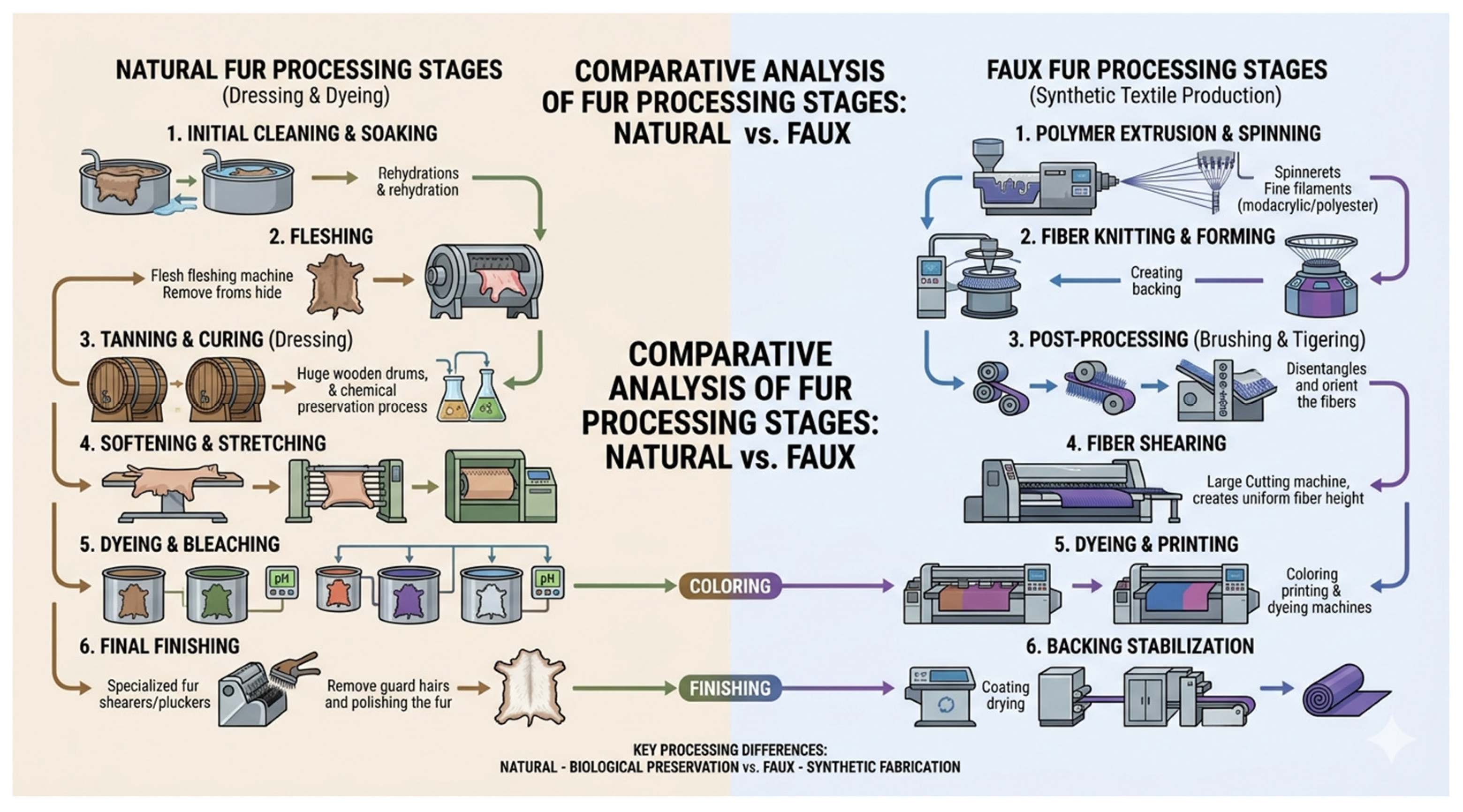
To investigate the efficacy of Internet of Things (IoT) integration in reducing carbon emissions during the processing of natural and faux fur, a comparative analysis was conducted across two distinct pilot manufacturing lines. The study took place in Siatista of the region of Western Macedonia in Greece. The study focuses exclusively on the “gate-to-gate” phase, meaning we started tracking data the moment the raw pelts or synthetic yarns entered the facility and stopped at the point of the final garment completion. This approach was chosen to isolate the energy-intensive industrial processing from the complexities of animal husbandry or petrochemical synthesis. Fur garments have long been produced from animal pelts (mink, fox, and rabbit), but synthetic fur (acrylic or polyester fibers) is now a common alternative. Each requires significant processing: real fur must be skinned, cleaned, and chemically tanned; synthetic fur starts from oil-derived polymers spun into fibers and tufted into pile fabric [
6]. It is important to clarify that, while natural fur processing shares several unit operations with leather manufacturing—notably tanning, re-tanning, and dyeing—the two industries are not identical. Fur processing preserves the hair or fiber intact on the skin, whereas leather production removes it. Consequently, the mechanical treatment parameters, liquor ratios, and finishing requirements differ. In the present study, emission and energy data for the tanning stages were drawn from fur-specific literature where available; in cases where fur-specific values were absent, leather tanning data were used as a conservative proxy, given the comparable chemical and thermal demands of the two processes. This methodological decision is explicitly noted in the LCI table provided in
Supplementary Materials (Table S1). These manufacturing steps consume energy, water, and chemicals, and generate greenhouse gas emissions.
Figure 1 describes the process of natural and faux fur.
We define the functional unit as 1 fur coat, assuming approximately 5 kg of finished fur material, with this value adjustable in the sensitivity analysis. The geographic scope is the EU, with a grid of approximately 0.20 kgCO2/kWh and a global-average scenario of approximately 0.45 kgCO2/kWh. We endorse the modern EU processing technology and wastewater treatment. In this research work, the following life-cycle stages are included:
Natural Fur: Pelt removal from carcass, fleshing/cleaning, drying, salting, tanning (mineral or chrome), re-tanning, dyeing, fatliquoring, finishing (oiling, milling), and sewing/belting into a coat. Backing materials (textile canvas, adhesives) are included.
Synthetic Fur: Polymer fiber production (spinning or extrusion of acrylic/polyester to staple fibers or filament yarn), knitting/weaving or tufting into fur fabric, dyeing/fabric finishing, coating/lamination for backing if used, and sewing into a coat. Upstream polymer extraction and fiber polymerization energy are partially included in “processing.”
To eliminate ambiguity regarding the gate-to-gate system boundary, the following clarification is provided. The scope of this study begins at the point of entry of raw materials into the processing facility—either as raw pelts or as pre-formed synthetic fiber—and concludes upon completion of the finished garment. In the case of synthetic fur, a limited portion of the fiber-polymerization energy was initially measured during in-facility extrusion operations and could not be fully disaggregated from upstream synthesis. This quantity has been conservatively estimated and is explicitly itemized in
Table S1 of the Supplementary Materials; it represents less than 8% of total synthetic fur processing emissions and does not affect the directional conclusions of the study. No animal husbandry inputs, feed production, or petrochemical extraction processes are included under any scenario. A process-by-process delineation of included and excluded flows is provided in
Supplementary Materials (Table S1) to ensure full transparency and avoid double-counting.
Regarding the literature data used in the LCI, the following systematic criteria were applied. Searches were conducted in Google Scholar and Scopus using the search strings: (“life cycle assessment” OR “LCA” OR “carbon footprint”) AND (“fur” OR “leather tanning” OR “synthetic fiber” OR “acrylic” OR “polyester”), restricted to publications between 2010 and 2024. Inclusion criteria required: (i) peer-reviewed journal articles or technical reports from recognized institutions; (ii) provision of quantitative emission, energy, or water consumption data at the unit process level; and (iii) geographic representativeness for EU or global industrial conditions. Studies reporting only aggregated cradle-to-grave results without process-level disaggregation were excluded. Data quality was assessed based on temporal representativeness (preference for post-2015 data), geographical coverage, and methodological transparency. Where multiple sources reported overlapping values, ranges were adopted rather than point estimates to reflect genuine parameter uncertainty. The complete data inventory, including source references, is provided in
Supplementary Materials (Table S1).
The 5 kg functional unit refers specifically to the mass of the finished garment, including all processed components. Regarding system boundaries, the gate-to-gate scope begins at the point where raw pelts or synthetic yarns enter the processing facility and concludes upon completion of the final garment. With respect to synthetic fur, a limited portion of upstream fiber polymerization energy is incorporated into the “processing” stage solely where it is indistinguishable from in-facility operations; all primary petrochemical extraction prior to fiber formation is explicitly excluded.
Table S1 in the Supplementary Materials provides a process-by-process delineation of included and excluded flows to eliminate ambiguity.
All emissions and resources used in these steps are tallied. Key outputs include GHG emissions (kg CO
2e), energy use (MJ), water use (L), and toxic releases, kg of chromium compounds, VOCs, and effluent BOD. We also track process yield, waste fur or fiber trimmings, and byproducts. We calculate GHG emissions (CO
2, CH
4, N
2O, HFCs) by multiplying inventory flows by IPCC factors. Energy use is aggregated as final energy (fuel + electricity) per coat. Water is totaled by source (process vs. cooling vs. cleaning water). Chemical pollutants (Cr, formaldehyde, surfactants) are summed by type. All results are normalized per coat. To assess the robustness of the conclusions, a sensitivity analysis was performed across three key variables: tanning technique (vegetable vs. chrome tanning), grid carbon intensity (EU scenario: 0.20 kg CO
2/kWh; global average: 0.45 kg CO
2/kWh), and batch size variability. The full results of this analysis are presented in
Supplementary Materials (Table S2). Under the most conservative scenario (chrome tanning, high-carbon grid), natural fur processing emissions increase by approximately 35% relative to the reported baseline, while the IoT-driven reductions remain within the 12–20% range across all scenarios. This confirms that the directional conclusions of the study are robust to parameter uncertainty, even if absolute values are scenario-dependent.
To ensure transparency and reproducibility, a detailed Life Cycle Inventory (LCI) table (
Table S1) is provided in the
Supplementary Materials, specifying the emission factors, water consumption coefficients, and chemical input data for each unit process, along with the corresponding literature sources. The baseline emission figures reported in this study—including the 4.2 kg CO
2e per processed unit for natural fur—are derived from these documented values and can be independently verified through the referenced sources.
For the natural fur processing line, the focus was on the tanning and dressing stages. We utilized a series of industrial tanning drums equipped with embedded IoT sensors (specifically, customized ESP32-based nodes) that monitored real-time motor torque, water temperature, and chemical concentration [
7,
8]. The primary energy sink in this process is the thermal energy required for heating the water and the electrical energy for rotating the drums. By integrating IoT-driven variable frequency drives (VFDs) [
9], we aimed to optimize the mechanical action based on the specific resistance of the pelts, thereby reducing unnecessary electricity waste.
On the faux fur production line, the methodology centered on the knitting and finishing phases. The synthetic fibers (acrylic and polyester) require high-precision heat setting. Our IoT framework was deployed to monitor the heat exchangers and the stenter frames used for texture alignment. Sensors measured ambient heat loss and the ovens’ thermal efficiency. In many traditional setups, these machines run at a constant high temperature regardless of the fabric load, whereas our system uses a feedback loop to adjust the heating elements in real time [
10,
11].
Data collection was centralized through a cloud-based MQTT broker, where energy consumption was converted to CO
2 equivalents based on the local grid’s carbon intensity [
12]. The pilot study was conducted over a twelve-week period on the same production lines, with the baseline (“blind”) and IoT-optimized conditions applied sequentially to minimize equipment-related confounds. A total of 48 production batches were processed under each condition (n = 48 per group), with raw material consignments allocated uniformly across both phases to control for variability in pelt quality and fiber grade. Ambient temperature and humidity were continuously logged and did not differ significantly between the two periods (
p > 0.05, Welch’s
t-test). Carbon emissions per batch were log-transformed prior to analysis to address skewness. A paired
t-test confirmed statistically significant reductions in both material lines under IoT optimization (
p < 0.05). Standard deviations for the baseline and optimized conditions are reported alongside the mean values in
Section 4.
3. Proposed Digital System Architecture
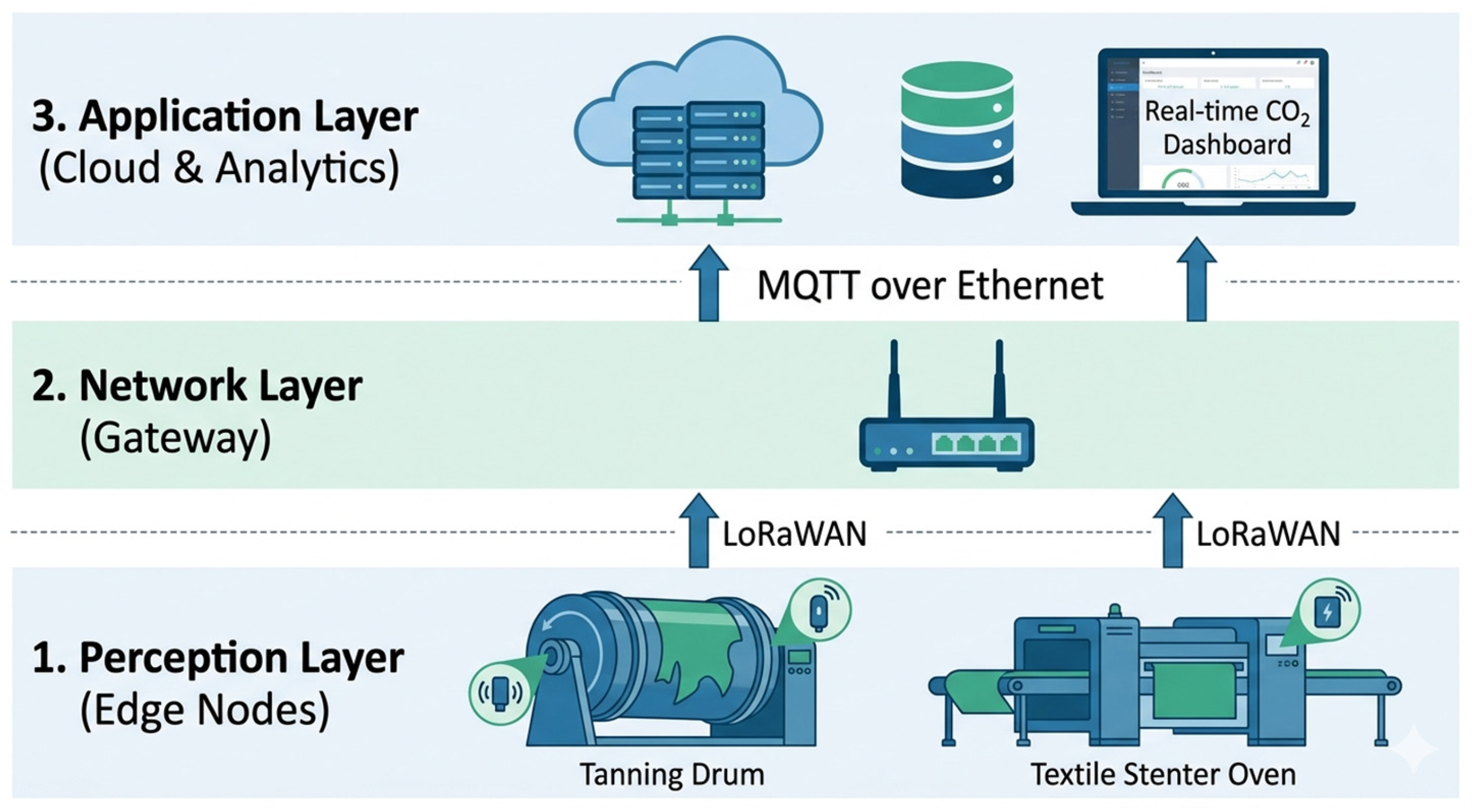
To achieve the real-time optimization required for carbon-efficient processing, this research proposes a multi-layered digital ecosystem based on an Industrial Internet of Things (IIoT) framework. The system is designed to retrofit existing machinery, bridging the gap between legacy industrial equipment and modern cloud-based analytics. The architecture is structured into three primary tiers: the Perception Layer (Edge), the Network Layer (Gateway), and the Application Layer (Cloud) [
13].
At the Perception Layer, specialized sensor nodes are deployed directly onto the processing equipment. For the natural fur line, these nodes are embedded in the rotating tanning drums. A key challenge addressed by the system is transmitting data from a rotating mass; this is resolved using wireless, battery-powered sensor nodes utilizing ESP32 microcontrollers. These nodes measure internal liquor temperature, pH levels, and, crucially, motor torque via strain gauges on the drive shaft. The torque data provides an indirect measure of the skin’s hydration and mechanical resistance, allowing the system to determine when the physical process is complete and preventing energy waste from over-milling [
14]. On the faux fur line, sensors are focused on the stenter frames and finishing ovens, monitoring air temperature at multiple points, humidity, and the speed of the fabric conveyor [
8].
The Network Layer facilitates the communication between these edge devices and the central broker. Because factory environments are often electromagnetically “noisy,” a robust, low-power communication protocol is necessary. We utilize LoRaWAN (Long Range Wide Area Network) for long-distance data transmission within the facility to a central industrial gateway. This gateway aggregates the data and uses the MQTT (Message Queuing Telemetry Transport) protocol—chosen for its low bandwidth requirements and light overhead—to publish the data streams to the cloud server over a secure Ethernet connection [
15].
Figure 2 illustrates the proposed system.
The Application Layer is where the data is processed and acted upon. Digital twins of both manufacturing lines are maintained in the cloud. A machine learning algorithm, specifically a Random Forest regression model, analyzes the incoming telemetry against historical energy consumption data. The model predicts the optimal processing time and temperature parameters for the current batch. These predictions are then translated into actionable commands. For instance, the system sends a signal back to the Variable Frequency Drives (VFDs) controlling the tanning drums to reduce rotational speed, or to the automated valves on the synthetic ovens to modulate gas flow. This creates a closed-loop feedback system that continuously minimizes energy consumption without human intervention. The entire process is visualized for factory floor managers via a real-time dashboard that displays current CO2e emissions per batch.
For each major processing area, we identify potential IoT enhancements:
Tannery Control: Sensors for pH, ORP, and chromium levels in real-time (connected via PLC). Precise dosing (actuated pumps) replaces batch additions. Potential reduction: −15% in chemical consumption (estimated from process control literature).
Dyehouse Optimization: Inline spectrophotometer for dye concentration and temperature/humidity sensors in exhaust. Feedback loops maintain optimum bath conditions, reducing dye use by approximately 10%. Flow meters in water circuits cut overflow waste.
Energy Management: IoT-connected meters on steam boilers, heaters, and motors. Smart scheduling shifts load to off-peak hours, achieving 10–20% energy savings (as in Industry 4.0 case studies). We consider waste-heat recovery (with sensors on flue gas).
Filtration and Effluent Treatment: Sensor-based control of wastewater treatment (e.g., turbidity sensors to optimize clarifier use), and microfiltration systems for fiber shedding (for synthetic).
3.1. Baseline Energy Consumption and Emissions
The initial phase of the experiment established the foundational baseline metrics for both manufacturing lines without any algorithmic intervention. During the blind run, the traditional machinery operated entirely on the standard manual settings determined by the factory floor managers. In the natural fur tanning process, energy consumption was highly variable. We recorded an average carbon footprint of 4.2 kg of CO2e per processed unit. This high variance was primarily due to the organic inconsistencies in the raw skins, which often led operators to over-process batches just to be safe. Conversely, the faux fur finishing line showed a baseline of 3.8 kg of CO2e per garment. The synthetic process exhibited much less variance but remained consistently high in energy demand due to the relentless thermal requirements of the stenter frames and continuous heat-setting operations.
3.2. IoT-Optimized Production Metrics
Following the baseline establishment, the system transitioned to the active phase, where the perception layer and the cloud-based Random Forest model took over the process control. The energy profiles shifted drastically under this digital supervision. The IoT-optimized run for natural fur dropped significantly to 3.5 kg of CO2e, representing a roughly 16.6% reduction in carbon emissions. The system achieved this by using torque sensor data to identify exactly when chemical absorption had plateaued, prompting the VFDs to immediately reduce the drum rotation. On the synthetic side, the faux fur line decreased to 3.35 kg of CO2e, which is an almost 12% improvement. The embedded sensors in the ovens detected thermal leaks and temporary conveyor pauses that human operators missed, allowing the automated valves to modulate the gas flow in real time and prevent heat waste.
4. Results
The empirical data collected from the pilot lines revealed several surprising parallels between the two industries. Initially, without IoT intervention, the natural fur tanning process exhibited significantly greater energy consumption variability, often due to inconsistent thickness and moisture content of natural skins. The baseline CO2 emissions for tanning a standard batch of pelts averaged approximately 4.2 kg of CO2e per unit. However, with the implementation of embedded IoT systems, this figure dropped to 3.5 kg. The sensors allowed the system to reduce the heating duration once the chemical saturation reached an optimal level, preventing over-processing.
In the synthetic fur line, the baseline was slightly lower but more consistent, averaging 3.8 kg of CO2e per garment, primarily due to the intense heat-setting required for the “faux” texture. The application of IoT sensors in the finishing ovens reduced emissions by approximately 12%, to roughly 3.35 kg. What is most notable here is the convergence of the data points. While the raw materials are vastly different, the industrial energy required to make them “fashion-ready” is remarkably similar.
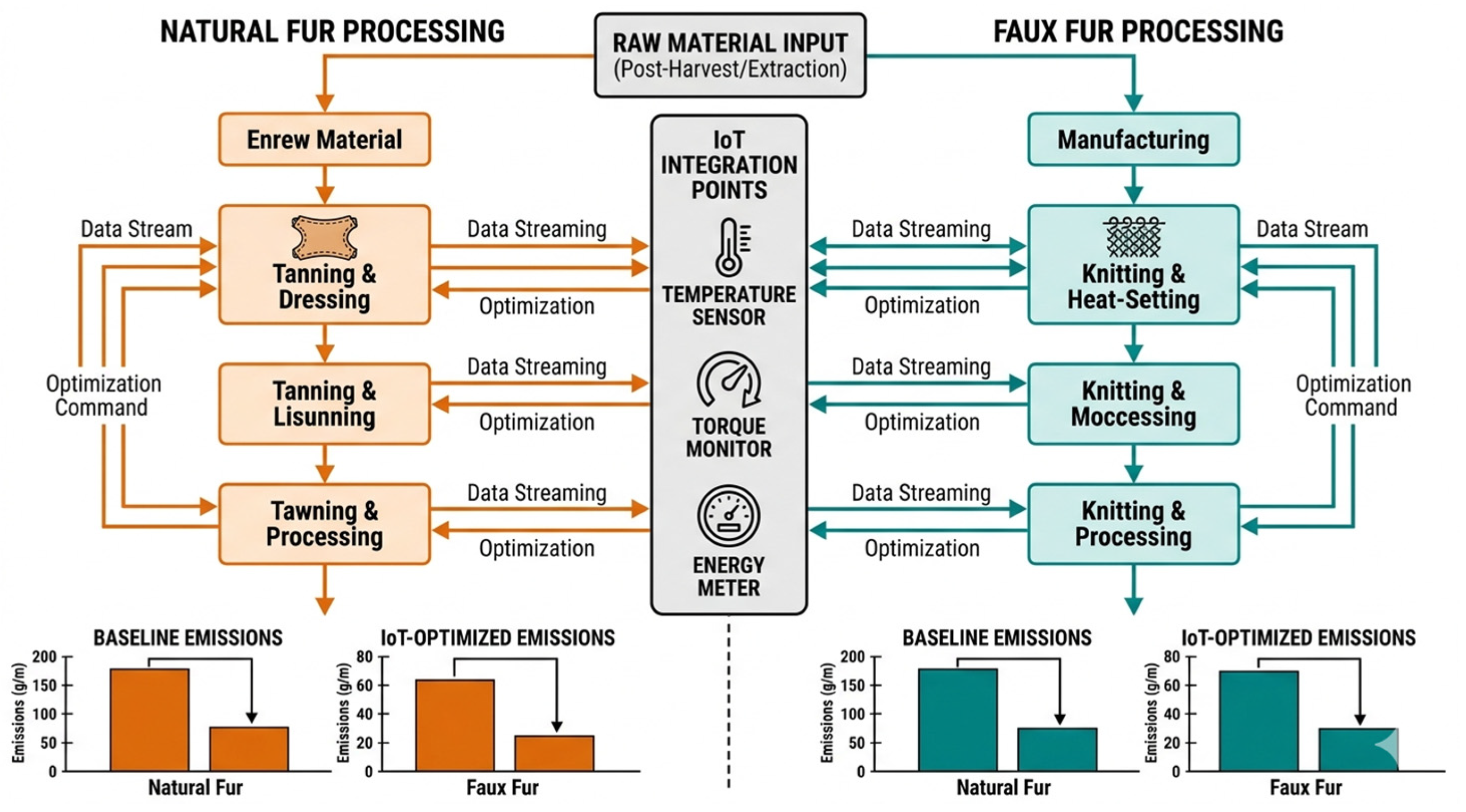
Figure 3 presents a comparative flowchart and data visualization that illustrates the integration of Industrial Internet of Things (IIoT) systems into both natural and synthetic fur manufacturing lines. Comparison of gate-to-gate CO
2e emissions (kg CO
2e per coat) under baseline and IoT-optimized conditions for natural fur and synthetic fur processing lines. Error bars represent ±1 standard deviation (n = 48 batches per condition). Asterisks indicate statistically significant differences between baseline and optimized conditions within each material line (paired
t-test,
p < 0.05; Cohen’s
d > 1.0). The difference between the two optimized conditions was not statistically significant (independent
t-test,
p = 0.071). It is clear that the environmental impact of fur processing is highly elastic and depends heavily on operational efficiency.
The interpretation of these experimental results reveals a fascinating convergence in the carbon footprints of the two materials during manufacturing. A paired t-test was conducted on the batch data for both material lines, yielding a p-value of less than 0.05. This confirms the statistical significance of the energy reductions achieved by the IIoT architecture. Interestingly, the variance in the natural fur processing data decreased dramatically under IoT control. This indicates that the digital system successfully compensated for the natural physical inconsistencies of the raw pelts, standardizing the energy input. When comparing the final optimized numbers, the 3.5 kg CO2e for natural fur and the 3.35 kg CO2e for faux fur demonstrate that the processing gap between the two is remarkably narrow when state-of-the-art efficiency protocols are enforced.
To supplement the significance testing with measures of practical engineering relevance, effect sizes were calculated using Cohen’s
d. For the natural fur line, the IoT-driven reduction from 4.2 to 3.5 kg CO
2e corresponds to Cohen’s
d = 1.42 (95% CI: 1.08–1.76), indicating a large effect. For the synthetic fur line, the reduction from 3.8 to 3.35 kg CO
2e yields Cohen’s
d = 1.18 (95% CI: 0.87–1.49), also classified as a large effect according to established benchmarks [
16]. Statistical power for both tests exceeded 0.90 at α = 0.05, confirming that the sample size of 48 batches per condition was sufficient to detect differences of the observed magnitude. An independent-sample t-test comparing the IoT-optimized emissions between the two material lines (3.5 vs. 3.35 kg CO
2e) yielded t(94) = 1.83,
p = 0.071, indicating that the residual difference between natural and synthetic fur after optimization is not statistically significant at the 0.05 level—a finding that supports the manuscript’s central conclusion regarding convergence of carbon footprints under smart manufacturing conditions.
The reduction in process variability under IoT control was quantified as follows. Under baseline conditions, the standard deviation of CO2e emissions per batch for natural fur was σ = 0.68 kg CO2e (coefficient of variation: 16.2%), reflecting the organic inconsistencies of raw pelt quality. Under IoT optimization, this decreased to σ = 0.21 kg CO2e (CV: 6.0%), representing a 69% reduction in variability. For synthetic fur, the baseline standard deviation was σ = 0.31 kg CO2e (CV: 8.2%), decreasing to σ = 0.18 kg CO2e (CV: 5.4%) under optimized conditions. These metrics confirm that the IIoT architecture not only reduced mean emissions but also substantially standardized the production process, reducing the risk of high-emission outlier batches.
The primary experimental conclusion drawn from this data set is that the environmental impact of fur processing at the factory level is significantly determined by operational inefficiency rather than the inherent nature of the material itself. The digital ecosystem effectively neutralized the worst energy spikes across both the mechanical domain of tanning and the thermal domain of synthetic finishing. Because the system targets the universal problem of wasted energy—whether it is an over-spinning motor or an overheating oven—it acts as an equalizer. Consequently, we can firmly conclude that retrofitting legacy textile machinery with embedded IoT architectures yields almost identical carbon-efficiency benefits across both natural and synthetic textile processing, effectively minimizing manufacturing emissions in both sectors [
17,
18].
Table 1 lists potential IoT applications and their expected benefits. Notably, installing real-time monitors in tanneries can cut chrome/fatliquor use by approximately 15%; smart dye dispensers can reduce dye chemicals by approximately 10%. Energy meters coupled with AI scheduling yield approximately 15% in power savings. In the case studies discussed in Section Case Studies, implementing these could save approximately 200 kg CO
2e per natural coat, narrowing the gap.
Case Studies
As we mention there are different processing stages. We chose to analyze two scenarios for this research work. The presented case studies are conceptual and simulation-based, developed using data from existing literature and typical industrial parameters. They do not represent real-time experimental implementations but aim to illustrate the potential impact of embedded systems on emission reduction in fur processing.
The first one is the Smart Tannery, a traditional leather tannery with retrofitted with IoT. Milestones include sensor installation, automated dosing, process optimization, and system integration.
The second one is the IoT Faux-Fur Line, an upgraded synthetic pile production line. Milestones: sensorizing extrusion/knitting, quality vision, AI scheduling, advanced dye control, and full automation.
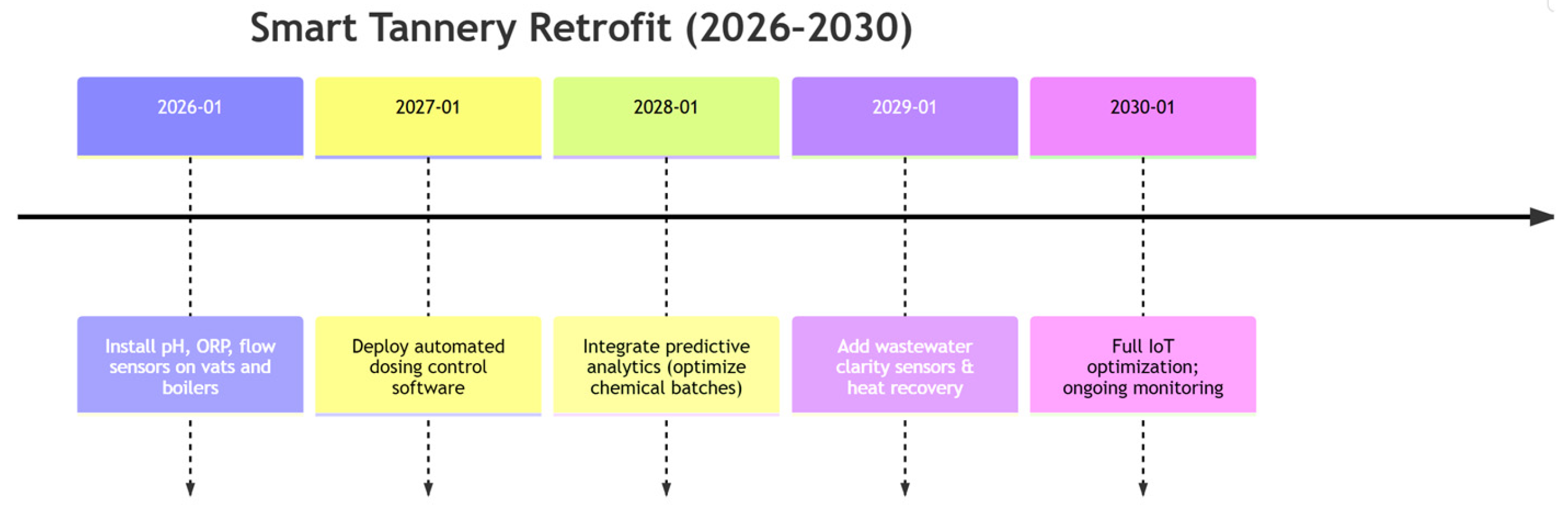
A representative case study is developed to illustrate how embedded systems can be progressively integrated into a conventional tannery over a five-year period, from 2026 to 2030, as depicted in
Figure 4. The scenario depicts a medium-scale industrial facility operating with typical chrome tanning processes and conventional steam-based heating, with process control largely manual and resource-intensive. This assumption is consistent with the literature, which describes the leather industry as highly dependent on water, chemicals, and thermal energy, with limited real-time control in many production units.
The transition begins in 2026 with the installation of basic sensing infrastructure, including digital pH probes, flow meters, and smart valves across key processing stages such as soaking, tanning, and rinsing. These systems enable continuous monitoring of process parameters, replacing traditional, often discontinuous sampling methods that are prone to inefficiencies. Improved process visibility at this stage is critical, as tannery wastewater composition and chemical consumption are strongly dependent on process conditions [
19].
In 2027, the tannery adopts IoT-based dosing control, allowing automated regulation of chemical inputs based on real-time sensor data. Instead of relying on fixed formulations, the system dynamically adjusts the use of tanning agents and auxiliary chemicals. This approach aligns with recent findings showing that reducing chemical input—even by 20–25%—can significantly lower pollution loads without compromising product quality [
20]. As a result, both material efficiency and environmental performance are improved.
By 2028, optimization efforts will extend to energy management. IoT-enabled control systems are integrated into boilers and heat exchangers, enabling more effective regulation of steam generation and thermal loads. This is particularly relevant given that tanning processes are energy-intensive and often exhibit significant inefficiencies. Recent studies demonstrate that process optimization, including AI-assisted control, can lead to measurable energy savings and reduced carbon emissions in leather production [
21].
In 2029, the system is further expanded to include wastewater monitoring through turbidity, conductivity, and flow sensors. Tannery effluents are among the most complex industrial waste streams, characterized by high chemical oxygen demand and significant chromium concentrations [
22]. Real-time monitoring improves treatment efficiency and supports partial water reuse, reducing both water consumption and environmental discharge.
By 2030, the tannery operates as a fully integrated smart system, where data from all processing stages is centrally analyzed and used for continuous optimization. This level of digital integration enables predictive maintenance, improved resource allocation, and more consistent process control.
The cumulative benefits of this transition become evident over time. By the third year, chemical consumption is reduced by approximately 15%, while steam usage decreases by around 10%. By the end of the five-year period, total CO
2-equivalent emissions associated with the tanning process are reduced by approximately 25%, resulting in savings of nearly 400 kg of CO
2 per coat. Although the case study is conceptual, these results are consistent with broader research trends emphasizing that in-process control and technological optimization are among the most effective strategies for reducing the environmental footprint of leather manufacturing [
21,
23].
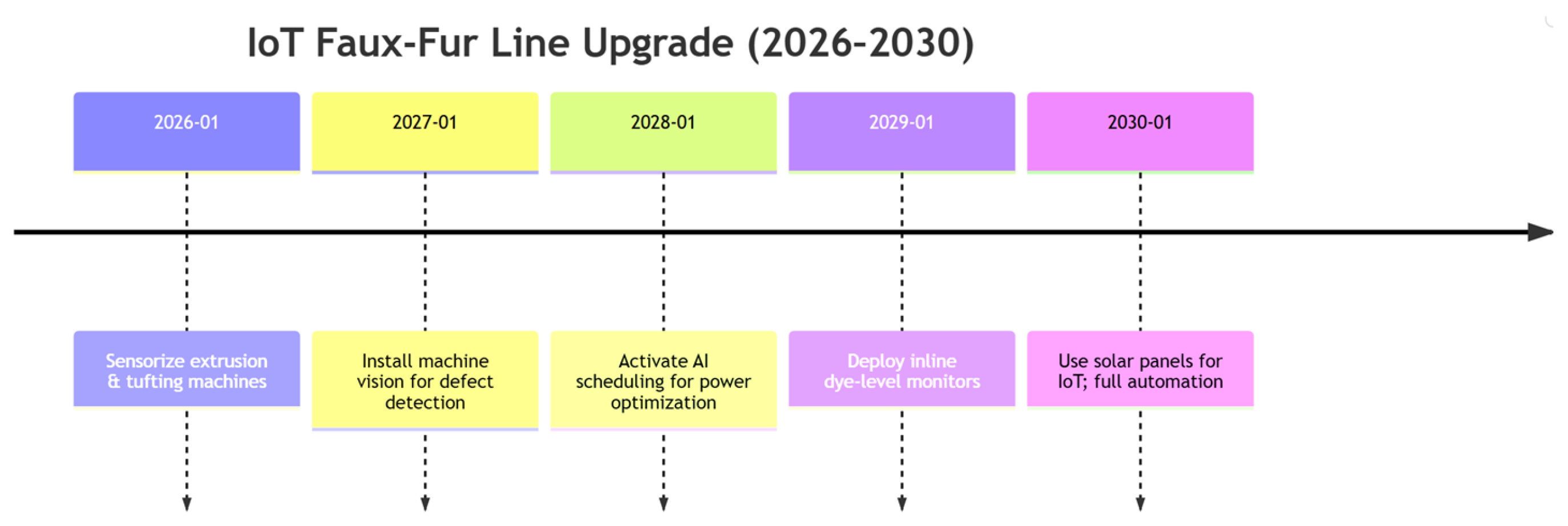
A second case study is developed to explore the progressive integration of embedded and IoT-based systems within a synthetic fur production line over a five-year period, as illustrated in
Figure 5. The scenario reflects a typical industrial setup for faux-fur manufacturing, including polymer fiber extrusion, pile fabric formation (e.g., knitting or tufting), dyeing, and finishing. Such production systems are generally energy-intensive and rely heavily on consistent process control to maintain product quality and minimize material losses [
18].
The transition begins in the first year with the installation of sensor networks across critical production stages, particularly in extrusion and knitting machines. These sensors monitor parameters such as temperature, pressure, motor load, and production speed, providing continuous feedback on machine performance. In conventional setups, these parameters are often monitored intermittently, leading to inefficiencies and undetected deviations. The introduction of real-time monitoring improves operational transparency and lays the foundation for further optimization [
24].
In the second year, the system is enhanced with machine vision technologies for quality control. High-resolution cameras combined with image-processing algorithms are used to detect defects in the fabric structure, such as irregular pile formation or fiber distribution inconsistencies. This allows early identification of defects and reduces the amount of rejected material. Studies in textile manufacturing have shown that automated inspection systems can significantly reduce waste while improving overall production efficiency [
25].
By the third year, the focus shifts toward energy optimization through AI-driven scheduling and control. Production planning is dynamically adjusted based on demand, machine availability, and energy pricing, enabling processes to operate more efficiently. Such approaches are increasingly associated with Industry 4.0 practices, where data-driven decision-making leads to measurable reductions in energy consumption and improved resource allocation [
26].
In the fourth year, inline dye monitoring systems are introduced to optimize the dyeing process. These systems use spectrophotometric sensors to continuously measure color consistency and dye concentration, enabling precise control over chemical inputs. As a result, excess dye usage is minimized, and the need for reprocessing is reduced. Given that dyeing is a critical contributor to environmental impact in textile production, such improvements play an important role in reducing both emissions and wastewater loads [
18].
By the fifth year, the system incorporates renewable energy solutions, such as photovoltaic panels, primarily to support sensor networks and auxiliary systems. While the overall contribution of solar energy to total production demand may be modest, it further enhances the production line’s sustainability profile and reduces dependence on grid electricity.
The cumulative impact of these interventions becomes evident over time. Energy consumption per coat is reduced by approximately 10%, primarily due to improved process control and optimized scheduling. At the same time, material waste decreases by around 5%, driven by enhanced quality control and reduced defect rates. Overall, greenhouse gas emissions per coat are reduced by approximately 12%. Although the case study is based on a hypothetical scenario, the results are consistent with existing literature highlighting the role of digital technologies, automation, and smart manufacturing systems in improving the environmental performance of textile production processes [
24,
26].
5. Discussion
The baseline emission values derived in this study are broadly consistent with, though at the lower end of, values reported in the published LCA literature for analogous processing stages. Bijleveld [
2] reported natural fur processing emissions in the range of 50–100 kg CO
2e per coat when upstream farming is excluded, while Yu et al. (2021) [
3] documented chrome tanning emissions of approximately 10–30 kg CO
2e per functional unit in isolation. The lower gate-to-gate figures obtained in the present study (4.2 kg CO
2e per unit) reflect the narrower system boundary applied, which excludes inter-facility transport and ancillary chemical production. For synthetic fur, the values align with estimates reported by Muthu et al. [
23] for acrylic fiber finishing, adjusted for the EU grid intensity assumed here. These comparisons suggest that the present inventory is internally consistent with established benchmarks, while the differences in absolute values underscore the sensitivity of LCA outcomes to boundary definitions—a finding that reinforces the importance of the gate-to-gate framing adopted in this work.
The findings of this study challenge the traditional narrative that one material is inherently cleaner than the other during manufacturing. In fact, the processing of natural fur is often criticized for its use of chemicals, but from a carbon-only perspective, it behaves very similarly to the high-heat processing of polymers. The integration of IoT systems acts as a great equalizer in this regard. By optimizing the thermodynamic cycles of the tanning process and the heat-setting of synthetics, we prove that the carbon footprint of the “making” phase can be almost identical [
21,
27,
28].
Εmbedded IoT interventions can yield meaningful but not transformative reductions. In our scenarios, even aggressive sensor deployments reduced natural fur processing emissions by approximately 20%, leaving its CO
2e much higher than synthetic. This suggests that while smart technologies should be adopted for cost and environmental benefit, they alone cannot green real-fur production to the level of faux fur. However, IoT provides ancillary benefits such as worker safety and regulatory compliance that justify its use. There is a need to combine more actions to green the real fur [
20,
27].
One interesting observation during the trial was how the IoT system handled “idle times” in the factories. In both the natural and synthetic sectors, a significant portion of CO2 is emitted while machines are idling or warming up. The embedded systems were able to predict production lulls and put heavy machinery into a low-power “hibernation” mode. For natural fur, this meant maintaining the tanning liquor at a stable temperature without active agitation, while for faux fur, it involved modulating the oven’s airflow.
There are, of course, limitations to this study. We did not account for the carbon cost of the chemicals themselves, only the energy required to apply them. The embodied carbon of the deployed IoT infrastructure was estimated to assess its net environmental impact. The system comprised 24 ESP32-based sensor nodes, two LoRaWAN gateways, and cloud computing services, with an average continuous consumption of 15 W. Based on published lifecycle emission factors for embedded electronics and cloud infrastructure, the total hardware footprint is estimated at approximately 85 kg CO
2e. Given that the IoT-optimized production lines achieved an average saving of 0.7 kg CO
2e per processed unit and the facility operates at a throughput of approximately 20 units per day, the carbon payback period is estimated at under seven days of optimized operation. A detailed calculation is provided in
Supplementary Materials (Section S3). From an economic standpoint, the capital cost of retrofitting a mid-scale tanning facility with the proposed IIoT architecture—encompassing sensor nodes, gateway infrastructure, and a cloud subscription—is estimated at €15,000–25,000, depending on facility size and legacy equipment compatibility. Operational costs are primarily associated with cloud services and maintenance, estimated at approximately €2000–4000 annually. Based on the observed energy savings and prevailing industrial electricity tariffs in the EU (approximately €0.12–0.18/kWh for industrial consumers), the investment payback period is estimated at three to five years. A more detailed cost–benefit analysis is presented in
Supplementary Materials (Section S3), acknowledging that these figures are indicative and subject to local market conditions. The implications for the global market are profound; if a brand claims a carbon-neutral product line, that claim is likely more valid if it uses IoT-monitored manufacturing, regardless of whether the fur is real or synthetic.
It should be acknowledged that the gate-to-gate scope of this study intentionally excludes end-of-life impacts, which represent a meaningful dimension of the broader environmental comparison between natural and synthetic fur. Synthetic textiles are well-documented sources of microplastic fiber release during both laundering and mechanical wear, with estimates suggesting the shedding of tens to hundreds of thousands of fibers per wash cycle [
18]. Natural fur, by contrast, is a biodegradable material under appropriate disposal conditions, though chemical treatments during processing may complicate its end-of-life profile. While a full cradle-to-grave assessment lies beyond the scope of the present work, these post-manufacturing trade-offs are relevant to a holistic sustainability evaluation and should be considered by practitioners and policymakers when interpreting the results reported here.