1. Introduction
The world is rapidly inventing new technologies that offer solutions to many global challenges. However, the existing systems, infrastructure, and people are not always ready to accommodate them. The fact that safety risks are often recognized after technology has spread widely while regulations and safety measures tend to evolve in response to social needs exacerbates the issue. Consequently, this gap can result in a high number of accidents, injuries, and even fatalities. This phenomenon occurs in the development of electric scooters (e-scooters). E-scooters is offering a new accessible, affordable, and environmental friendly transportation mode [
1,
2]. Particularly in urban area, e-scooters are seen as a solution to short-distance daily transportation demands and a replacement for walking [
3,
4]. E-scooters are considered environmentally benign because they do not use combustion engines and create zero tailpipe emissions while in operation [
5]. They not only serve as a realistic commuting alternative and are ecologically sound, but they also play an important role in reducing urban density by reducing parking demand and traffic congestion [
6,
7]. Even compared to other electric vehicles, such as electric bikes and electric cars, e-scooters have better aerodynamics due to their lightweight design and lower maintenance costs. They are also more affordable, produce less pollution, and charge faster [
8]. All these benefits drive a sudden rapid rise in e-scooters use. However, the growing popularity of e-scooters use has been accompanied by a significant number of accidents and public safety concerns [
9,
10]. Various issues have emerged including infrastructure conflict, unclear speed limit, and illegal parking [
11]. A large number of accidents have been reported worldwide, including in the United States [
12], the United Kingdom [
13], and South Korea [
14]. At the same time, city planners have had to rely on trial and error to adapt existing urban infrastructure to this emerging mode of transport [
11,
15]. Considering their positive aspects and the potential of EVs in the future, e-scooter use is likely to continue increasing [
15]. Therefore, rigorous accident studies are required to prevent e-scooter-related accidents.
Falls are the most common type of e-scooter accident in many reports [
16,
17,
18,
19]. Although much of the literature does not provide detailed explanations or causation, several studies do define fall accidents in e-scooter riding as loss-of-balance events where riders become unstable and are thrown off the e-scooter, typically occurring without direct exterior contact or collision with other vehicles or stationary objects and often resulting in sudden high-energy trauma [
16,
17,
18,
19]. This distinct feature distinguishes e-scooter falls from other type of accidents and accidents involving other electric personal mobility device (ePMD) types, as the loss of balance can be associated with subtle interactions between several factors, such as rider behavior [
17,
19,
20,
21], vehicle dynamics [
7,
22], and environmental conditions [
7,
17,
19,
20,
21,
23,
24,
25,
26,
27,
28]. The intrinsic instability of e-scooters, as evidenced by their riding posture and vehicle design, leaves riders especially vulnerable to loss of control in bad conditions [
7,
22,
29]. Furthermore, the relatively new nature of e-scooter technology means that many riders lack proper expertise and training, increasing the risk of falling. Understanding these multifactorial characteristics is essential because effective prevention strategies must address the complex interaction of contributing factors, not single risk elements.
Despite the fact that e-scooter falls are multifactorial, existing studies have frequently concentrated on single-factor analyses or accident outcomes without thoroughly investigating the complex relationships that led to the fall. Medical studies have generally focused on injury patterns and clinical outcomes, often using hospital-based data that provide limited insight into the circumstances and situations leading up to the accident [
23,
24]. Transportation and engineering research, on the other hand, has concentrated on crash conditions, vehicle dynamics, and infrastructure-related risks; nevertheless, these studies frequently examine individual aspects in isolation, without taking account of their dynamic relationships [
30,
31]. These many disciplinary approaches have provided valuable insights, but they have not yet reached a common understanding of how numerous factors combine to cause e-scooter falls. For these reasons, it is important to develop a comprehensive understanding of how different elements interact and consequently lead to e-scooter falls. Here, the Haddon Matrix can be considered a possible strategy to address the need for a more comprehensive understanding of e-scooter fall accidents.
The Haddon Matrix is a widely recognized framework for categorizing factors in accident prevention. This two-dimensional framework analyzes accidents across three major factors (human, vehicle, and environment) and three temporal phases (pre-event, event, and post-event) [
32,
33]. The first dimension captures three interconnected perspectives: human factors (e.g., rider behavior [
34,
35] and experience [
34]), vehicle factors (e.g., design characteristics [
36] and mechanical conditions [
34,
35]), and environmental factors (e.g., road conditions [
34,
35] and weather [
34,
36]). These factors are based on the Epidemiological Triangle in public health, which represents the interacting elements of the accident process [
33]. The second dimension concerns the time phases of accident occurrence. The pre-event phase is the time period preceding an accident, and it focuses on factors that enhance the risk of being engaged in an accident, including inexperience, brake malfunctions, and slippery road conditions [
26,
28]. The event phase refers to the instant the accident occurs, with factors influencing injury severity but not the likelihood of accidents such as not wearing protective gear [
26,
28]. The post-event phase focuses on mitigating the accident’s consequences through emergency response and rehabilitation [
26,
29]. However, studies focusing on accident prevention often emphasize the pre-event and event phases, which provide greater opportunities to identify risk factors and implement preventive measures [
34,
35]. These stages are known as pre-crash, crash, and post-crash in road safety research [
34]. The Haddon Matrix structure allows for the analysis of HVE-related factor interactions during the pre-fall and fall phases, uncovering factors that increase accident chance as well as those that influence accident severity.
Given that falls are among the most common type of e-scooter accidents and that these incidents result from the complex interaction among human, vehicle, and environmental factors rather than any single cause, a more comprehensive study of the causes is required for developing effective prevention strategies. The existing literature on e-scooter accidents has predominantly focused on injury-related outcomes, such as injury type, severity [
37,
38], and patterns [
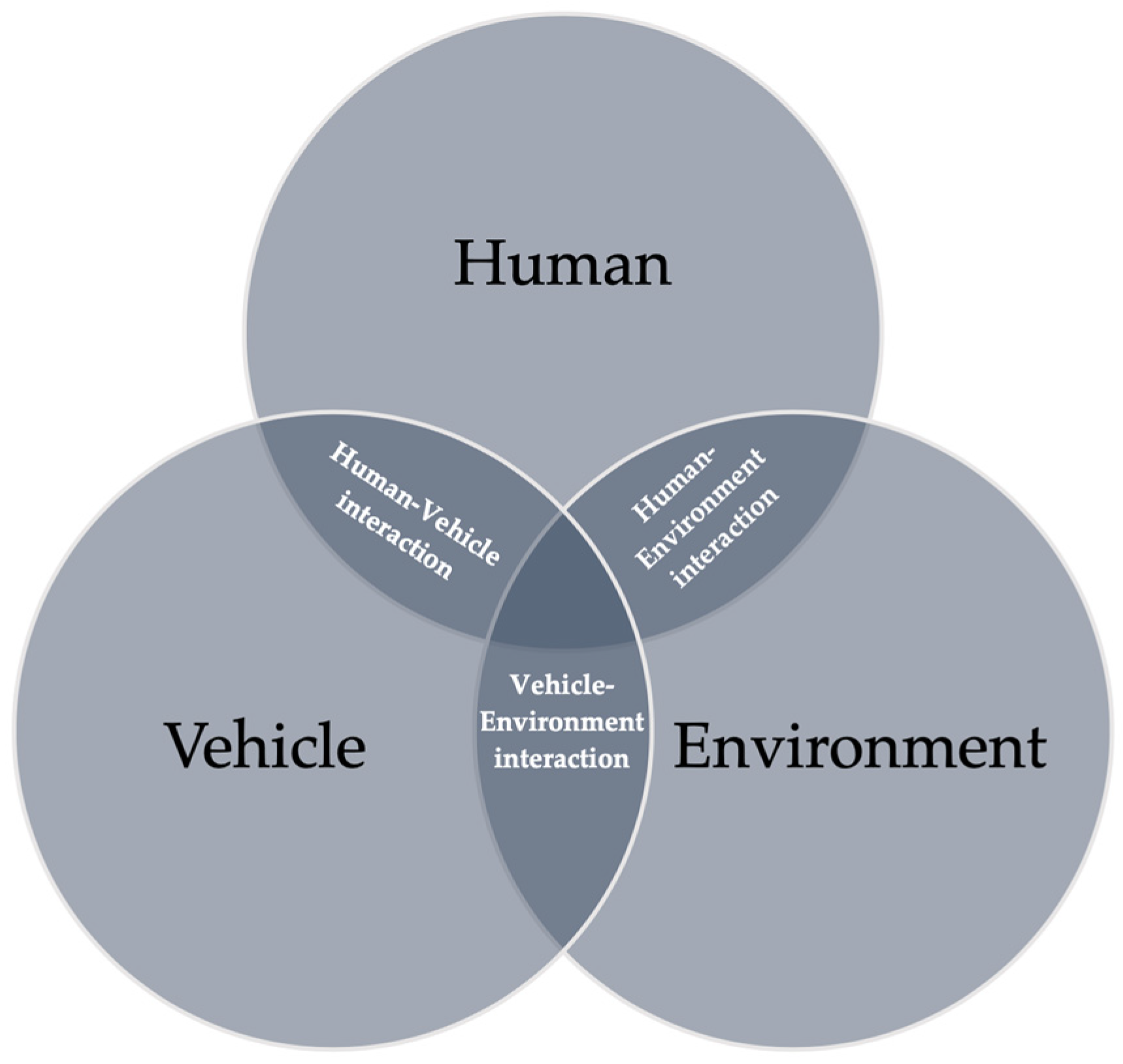
39], while a limited number of systematic literature reviews have addressed risk factors. Therefore, this systematic review aimed to investigate how HVE-related factors and their interactions contribute to e-scooter fall accidents (
Figure 1). To achieve this objective, an SLR was conducted to identify HVE-related risk factors, which were then organized using the Haddon Matrix as a classification framework across the pre-fall and fall phases. The post-event (or post-fall) phase was excluded, as it focuses on the consequences of accidents and was considered beyond the scope of this study. In this study, the pre-fall phase refers to conditions or factors that may contribute to a loss of balance or control before the fall, whereas the fall phase refers to factors present during the actual fall. This is consistent with previous research that further explains the distinction between pre-crash and crash phases, where the pre-crash phase focuses on accident avoidance or causation, while the crash phase focuses on injury prevention or causation [
40]. However, distinguishing between these phases is complex as accidents happen as a chain of events, rather than a single moment. In many cases, the “event” could be defined differently depending on one’s perspective [
33]. To ensure consistency,
Table 1 provides the specific definitions and examples used to clarify how each phase is regarded in this review. Additionally, to facilitate consistent categorization, this study utilized a diagnostic question, “If this risk factor were removed, would the accident still have occurred?”. If the answer is no, the factor is classified in the pre-fall phase as it directly influences the likelihood of an accident. If the answer is yes, it is assigned to the fall phase, as the factor primarily affects the accident’s outcome or severity rather than its occurrence.
Accordingly, the systematic review addressed the following research questions (RQs):
RQ1. What human-related factors are associated with e-scooter fall accidents?
RQ2. What vehicle-related factors are associated with e-scooter fall accidents?
RQ3. What environment-related factors are associated with e-scooter fall accidents?
2. Method
2.1. Protocol and Registration
The current SLR was carried out in compliance with the Preferred Reporting Items for PRISMA 2020 guidelines [
41], ensuring a transparent and systematic selection process by identifying studies, removing duplicates, screening titles and abstracts, assessing retrieval, assessing eligibility, and finalizing inclusion [
42,
43]. The PRISMA 2020 checklist is provided as a
Supplementary Material (see File S1). Although this systematic review was not registered in PROSPERO or any other prospective registry, it followed a structured and predefined methodology with clearly defined objectives, eligibility criteria, and data extraction procedures, with the entire process documented and provided as a
Supplementary Material (see File S2) to ensure transparency, consistency, and reproducibility.
2.2. Eligibility Criteria
This systematic review focused specifically on fall accidents involving e-scooters. To ensure relevance and consistency, studies were considered eligible if fall accidents were identified as the primary reported accident type within the study outcomes and provided a clear discussion, rather than only briefly mentioning them. Also, only studies in which e-scooters were the main focus, or one of the primary focuses, were included, while research centered on seated e-scooters, bicycles, motorcycles, or other forms of micromobility was excluded. In addition, eligible studies were required to provide sufficient detail on the characteristics, causes, or circumstances of fall accidents, enabling meaningful synthesis within the HVE framework. Studies that primarily addressed collision-based accidents without clear differentiation of fall mechanisms or that did not specifically focus on e-scooter users were excluded from the review.
To ensure that the search process was transparent and reproducible, search limitations and filters were used and reported in accordance with established recommendations [
29,
30]. The search was limited to studies published in or after 2020, written in English and journal articles only. Studies published before 2020 were removed to ensure relevance to recent breakthroughs in e-scooter research and to capture the latest safety problems. Furthermore, document kinds other than journal papers were excluded, including reviews, conference papers, letters, editorials, and book chapters.
2.3. Search Strategy
This systematic review include two databases to reduce the possibility of missing relevant studies [
44]. Therefore, this study retrieved the literature in February 2026 from Scopus and Web of Science, two world-leading academic databases widely regarded as the most comprehensive citation databases and commonly used in reviews and meta-analyses. The keywords in this study were divided into three categories, as shown in
Table 2. The keyword grouping strategy sought to maximize sensitivity while maintaining reasonable precision [
45]. Sensitivity and specificity are widely accepted indices of search performance, reflecting the capacity to find relevant research while excluding irrelevant ones [
46]. Although this review focused solely on e-scooters, the wide range of terminology used across research made keyword selection challenging (e.g., e-scooter, electric scooters, powered scooters, motorized scooters, and electric standing scooters). To increase search coverage, the keywords “scooter” and “kickboard” were used without the term “electric,” followed by manual screening to exclude non-electric scooter studies. In addition, wildcard symbols (*) were applied to selected keywords to capture variations, such as “injury” and “injuries”. These selected keywords were combined using Boolean operators (AND and OR) and applied to the title, abstract, and keywords fields—e.g., TITLE-ABS-KEY((“scooter*” OR “kickboard*”) AND (“factor*” OR “determinant*” OR “predict*”) AND (“fall*” OR “slip*” OR “accident*” OR “injur*”)).
No supplementary search techniques, such as citation tracking, reference list screening, or snowballing, were used. This approach ensured a systematic, standardized, and replicable identification process based exclusively on predefined database searches, thereby minimizing potential biases.
2.4. Data Extraction
Data collection, screening, and extraction were conducted by two independents reviewers (C.J.N. and J.L.) using a predefined criterion. After completing the database searches, all records were exported and imported into Zotero (Corporation for Digital Scholarship, Vienna, Austria), which facilitated automatic duplicate removal. For data extraction, a structured spreadsheet was developed using Google Sheets (Google LLC, Mountain View, CA, USA) to collect key information from each included study. During the screening process, both reviewers independently assessed the titles, abstracts, and full texts, with any discrepancies resolved through discussion. All extracted data were manually reviewed and cross-checked against the original publications by the reviewers to ensure accuracy and consistency.
2.5. Quality Assessment and Risk of Bias
The methodological quality of included studies was assessed using the Joanna Briggs Institute (JBI) Critical Appraisal Checklist for Analytical Cross-Sectional Studies [
47]. Two reviewers (C.J.N. and J.L.) independently evaluated each study across eight criteria: (1) clear inclusion criteria, (2) detailed description of subjects and setting, (3) valid and re-liable exposure measurement, (4) objective outcome measurement, (5) identification of confounding factors, (6) strategies to address confounding, (7) valid and reliable outcome measurement, and (8) appropriate statistical analysis. Disagreements were resolved through discussion, with a third reviewer (H.Z.) available if consensus could not be reached. Studies were categorized as High quality (≥75% criteria met), Moderate quality (50–74%), or High risk (<50%) based on the proportion of “Yes” responses.
Of the 18 included studies, 15 (83.3%) were rated as High quality, 3 (16.7%) as Moderate quality, and none as High risk. Detailed quality assessments for each study are provided as a
Supplementary Material (see File S3). The most common limitations were unclear exposure measurement (Q3) and inadequate strategies to address confounding factors (Q6), particularly in observational retrospective studies.
3. Results
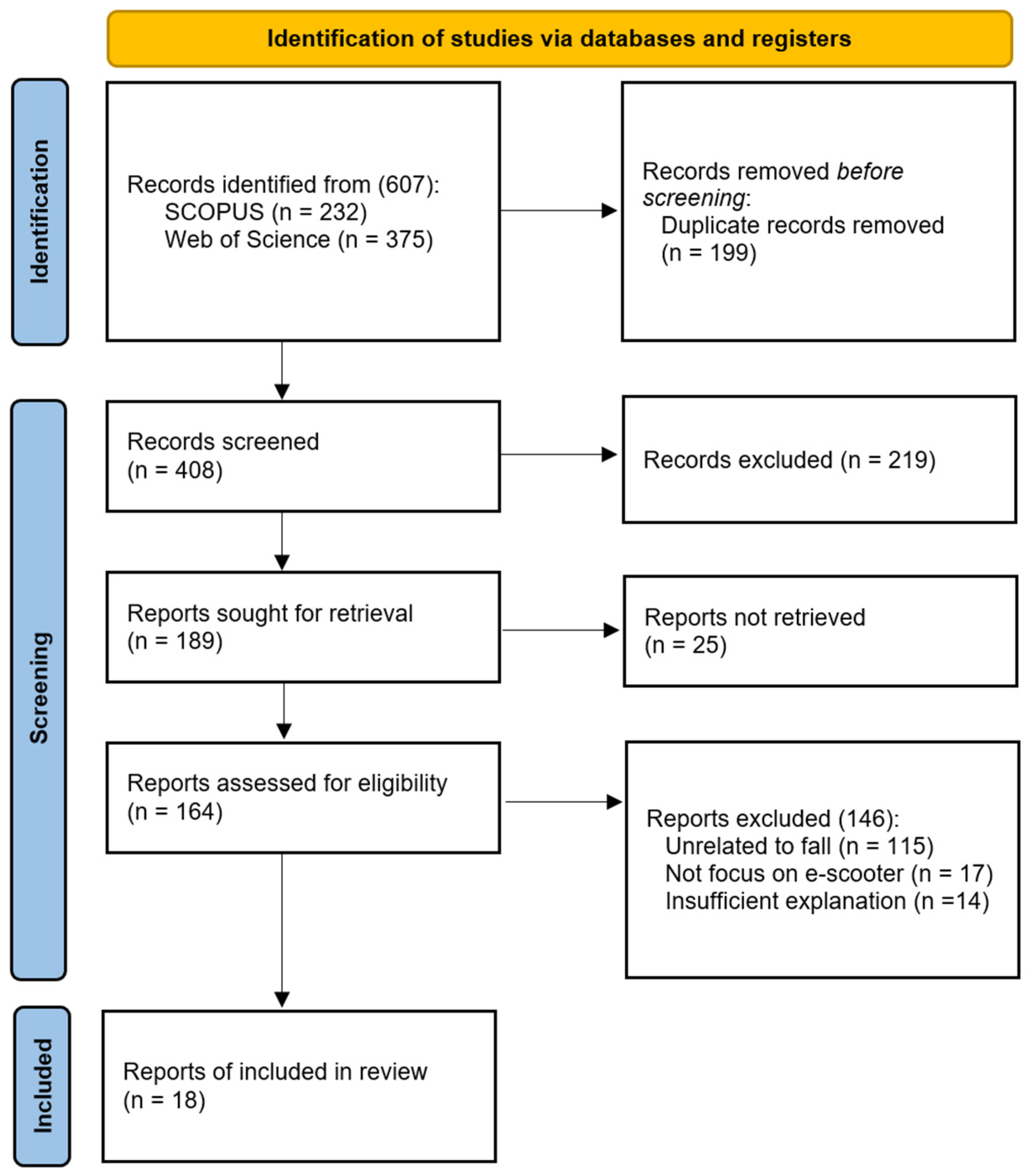
A total of 607 records were identified through database searches, including 232 from Scopus and 375 from Web of Science, as shown in
Figure 2. After removing 199 duplicate data, 408 records remained for title and abstract screening. During the screening process, 219 records were excluded, and 189 reports were sought for retrieval. A total of 25 of these reports could not be retrieved, resulting in 164 full-text publications examined for eligibility. Following full-text assessment, 146 reports were excluded because they were unrelated to the fall accident (
n = 115), did not focus on e-scooters (
n = 17), or lacked adequate explanation (
n = 14). Ultimately, 18 reports met the inclusion criteria and were included in the final review. Detailed information on the whole process is provided as a
Supplementary Material (see File S2), to ensure transparency and allow a comprehensive understanding of the study selection and screening procedures.
Eighteen reports met the inclusion criteria and were included in this review. Based on these studies, twenty risk factors related to e-scooter fall accidents were identified. The Haddon Matrix was used to categorize the risk factors, resulting in a 3 × 2 framework with three factors (human, vehicle, and environment) and two phases (pre-fall and fall). In this study, human-related factors refer to e-scooter rider behaviors and characteristics that may contribute to fall accidents. Vehicle-related factors refer to the physical design and operational characteristics of e-scooters that can lead to fall accidents. Environmental factors refer to external conditions in the riding context that may contribute to the occurrence of fall accidents, such as road conditions, infrastructure, temporal conditions, and the surrounding traffic environment. As for time phases, the pre-fall phase refers to the period before the fall occurs, during which risk factors primarily act by increasing the likelihood of losing balance or control, while the fall phase refers to the moment when the fall takes place, during which risk factors mainly influence how the fall unfolds and its consequences. These two phases are temporally sequential rather than mutually exclusive; thus, the distinction is useful for organizing risk factors according to when they are most likely to play a role in the accident process.
As shown in
Table 3, eight human-related risk factors were found. Seven of them were identified as pre-fall, including risky riding behavior, inexperience, gender, age, shared e-scooter use, tandem riding, and intoxication. One factor was identified during the fall phase: not wearing a helmet. Four vehicle-related risk factors were found and classified in the pre-fall phase, encompassing high-speed features, small-wheeled design, standing design, and speed fluctuation. Eight environmental risk factors were identified, and all were categorized in the pre-fall phase, including night riding, weekend riding, pedestrians, slippery roads, inappropriate parking, road surface irregularities, unsuitable infrastructure, and road surface type.
3.1. RQ1: What Human-Related Factors Are Associated with E-Scooter Fall Accidents?
3.1.1. Pre-Fall Phase
Table 4 shows the human-related risk factors identified in the included studies. These risk factors represent e-scooter rider behaviors and characteristics that may contribute to the occurrence of e-scooter falls during the pre-fall phase.
Risky riding behavior. This refers to any actions or intentions of e-scooter riders that increase the likelihood and severity of fall accidents. Risky riding behavior has been found to be favorably associated with unsafe riding attitudes, previous accident experience, perceived enjoyment, and perceptions of operational and traffic risks but negatively associated with riding confidence and infrastructure suitability [
20]. Among these factors, unsafe riding attitude plays a particularly important role since it acts as a mediator, influencing how other factors contribute to risky behavior. This suggests that efforts to reduce risky riding behavior should focus on addressing underlying attitudes and improving riders’ perceptions of safety [
20]. In addition, several external conditions, such as speed limits, road conditions, traffic awareness, the source of the e-scooter (shared or privately owned), and scooter quality, may contribute to the severity of accidents, as well as risky riding behavior [
19].
Rider inexperience. This is another human-related factor associated with e-scooter fall accidents that occurs during operation [
17]. A previous study reported that accidents were more common among riders using rental e-scooters, with 73.5% of accidents involving occasional users rather than privately owned scooters, suggesting that limited riding experience may contribute to accident occurrence [
21]. In addition, previous findings indicate that accident experience is connected with risky riding behavior [
20].
Tandem riding. As riders become more familiar and experienced with e-scooter operations, they may be more likely to engage in risky riding behavior. Tandem riding is one of the examples. Tandem riding, involving two or more individuals riding a single e-scooter simultaneously, has been identified as a risky activity that may lead to fall accidents [
25,
48]. As dangerous as it appears, tandem riding can influence the scooter’s balance, stability, and maneuverability, thereby increasing the likelihood of an accident. Furthermore, tandem riding has been recognized as one of the riding situations that may contribute to e-scooter fall accidents, along with other factors such as nighttime riding and alcohol-impaired riding [
25]. Although prior study reported that almost 90% of recorded accidents involved only one rider, the remaining 10% of cases involving multiple riders is considered problematic [
48].
Age and gender. Rider characteristics, such as age and gender, have been repeatedly identified as human-related factors associated with electric scooter falls. Several studies indicate that younger riders are more frequently involved in e-scooter accidents, particularly those in their late teens to late thirties, with the highest proportion of injuries occurring among riders aged 15 to 29 years [
17,
19,
29]. This group is deemed more vulnerable, possibly due to riskier riding behavior and lower levels of riding or road experience. In line with these findings, accident involvement tends to decrease as rider age increases [
19]. While younger riders are more likely to be engaged in accidents, older riders tend to experience more severe injuries when accidents occur, with higher age being associated with a higher chance of major or severe injuries [
21,
23]. Similarly, in terms of the age, several studies consistently report that they are more likely to be involved in e-scooter accidents than women. Many studies found that the majority of injured riders were men, with proportions ranging from roughly two-thirds to more than 80% of accident cases [
19,
21,
24,
27]. These data suggest that men may have a higher exposure to e-scooter use or are more likely to engage in riding behaviors that increase accident risk. Although males are more commonly involved in accidents, some evidence indicates that gender does not always influence the likelihood of sustaining certain specific injuries [
29].
Rental e-scooter use. Whether the e-scooter is rented, shared, or privately owned has been identified as a factor that may influence the likelihood and severity of fall accidents, in addition to other conditions such as road environment, rider knowledge of traffic situation, and rider behavior [
19]. A study reported that 73.5% of accidents involved occasional users using rental e-scooters, suggesting that a lack of familiarity or experience with the vehicle may raise accident risk [
21].
Intoxication. Alcohol intoxication accounts for a high proportion of accident cases [
27,
48]. Alcohol consumption has been proven to impair cognitive function, including attention, reaction time, and coordination, potentially increasing the likelihood of accidents [
27]. In addition, alcohol intoxication might weaken neuromuscular reflexes that typically assist riders in protecting themselves during a fall, causing the head or face to be the first point of impact [
49]. As a result, alcohol consumption has been closely linked to more severe injuries, particularly those to the head, face, and neck [
17,
21,
23,
25]. Specifically, some studies found that a substantial number of riders who had severe head or maxillofacial injuries were under the influence of alcohol [
17,
25].
3.1.2. Fall Phase
Seven different studies reported “not wearing a helmet”, making this risk factor (and intoxication) the most reported risk factor in human factors (see
Table 4). “Not wearing a helmet” was categorized in the fall phase as it does not directly increase the likelihood of fall accidents but is associated with increased injury severity, according to the included studies.
Not wearing a helmet. Across seven studies, relatively low helmet wear among injured e-scooter riders was consistently reported. In many cases, only a small number of riders involved in accidents wore helmets at the time of the accident, with reported usage rates ranging from as low as 0.7% to 5.7% [
17,
21,
48]. This poor adoption of protective gear among e-scooter riders has been widely noted [
19,
25]. The lack of helmet use is particularly problematic because helmets have been found to reduce the risk and severity of head and facial injuries, such as traumatic brain injuries and craniofacial trauma [
24,
29,
48]. Additionally, a link has been shown between alcohol intoxication and failure to wear a helmet, with none of the drunk patients reported wearing helmets at the time of the accident [
21].
3.2. RQ2: What Vehicle-Related Factors Are Associated with E-Scooter Fall Accidents?
3.2.1. Pre-Fall Phase
Several vehicle-related risk factors were identified in the included studies and classified as occurring in the pre-fall phase, as shown in
Table 5. These include high-speed characteristics, small wheels, standing design of the scooter, and speed fluctuation.
High-speed characteristics. Speed was identified as an important vehicle-related factor associated with e-scooter fall accidents, mentioned by five different studies. Rather than referring to speeding behavior, included studies highlight the high-speed characteristics of e-scooters that may influence riding stability and accident outcomes. As riding speed increases, riders’ reaction time decreases while forces generated during a crash increase, potentially leading to more severe accident outcomes [
25]. In addition, e-scooter instability has been observed to increase as speed increases, particularly when riders encounter obstacles or uneven road conditions [
25]. Conversely, studies have shown that reducing e-scooter speed can significantly decrease the intensity of the collision. A previous study predicted that lowering the limit speed from 30 km/h to 20 km/h could reduce both head impact speed and impact force during crashes [
30]. Furthermore, increasing motor power and acceleration has been reported to affect stability and cause front-wheel lift while riding [
22].
Small-wheel and standing riding design. Two studies reported design-related risk factors for fall accidents associated with e-scooters: small-wheel and standing riding designs. ePMDs with small wheels are generally considered more difficult to balance and control, even at low to moderate speeds [
22]. Furthermore, e-scooters, which are equipped with smaller wheels than bicycles, tend to provide less stability and a less pleasant riding experience. As a result, riding an e-scooter can be more challenging, particularly on uneven or rough pavement surfaces [
7]. Smaller wheels are more sensitive to road obstacles such as potholes, uneven terrain, or strong winds, which can easily disrupt rider balance and increase the risk of falling. They are also more prone to skidding during sudden braking [
22]. In addition to the small-wheeled design, both studies identified standing riding posture as a vehicle-related factor associated with e-scooter fall accidents. Unlike many other vehicles where riders are seated, e-scooter riders operate the vehicle while standing on the deck, which can make them more vulnerable to being thrown off during sudden movements or instability [
7]. This riding posture results in a higher center of gravity than seated vehicles, which may further affect balance and stability when riding [
29]. When riders lose their balance, they are more likely to slip or fall immediately off the device, increasing the risk of impact injuries. This mechanism may also render specific body parts, particularly the face and surrounding areas, more susceptible to injury during accidents [
29].
Speed fluctuation was identified as vehicle-related risk factor in the pre-fall phase, as it influences the stability of the e-scooter and increases the risk of fall accidents. Sudden changes in speed may destabilize the vehicle and contribute to falling rather than the initial likelihood of an accident. Speed fluctuation was reported in the same study that also discussed the e-scooter’s small wheel and standing design. The experiment comparing bikes and e-scooters was conducted, and it was found that both have similar average speeds. However, e-scooters have greater acceleration variability, indicating more frequent changes in speed compared to bikes. Unlike bicycles, which achieve gradual acceleration through pedaling, e-scooters are propelled via handlebar-mounted power controls. Consequently, even minimal rider input can result in a rapid increase in motor output, leading to abrupt changes in speed. This sudden forward thrust may hinder riders’ ability to maintain smooth and stable speed control, particularly among less experienced users [
7].
3.2.2. Fall Phase
In this study, no vehicle-related factors were categorized under the fall phase. Vehicle-related factors, such as speed and vehicle design features, primarily influence the stability and controllability of the e-scooter; therefore, these factors contribute to the likelihood of fall accidents rather than the severity of accidents.
3.3. RQ3: What Environment-Related Factors Are Associated with E-Scooter Fall Accidents?
3.3.1. Pre-Fall Phase
Eight environment-related risk factors were identified in the included studies and classified as pre-fall phase, as shown in
Table 6. Due to the broad breadth of environmental factors, this study categorized environmental factors into three distinct groups: temporal characteristics [
50,
51,
52], interactions with other road users [
53], and road and infrastructure conditions [
54].
Riding time. Six studies identified nighttime and weekend riding as environmental risk factors associated with e-scooter fall accidents during the pre-fall phase. Many studies report that a high number of e-scooter accidents occur at night [
24,
25,
26]. A study suggested that even after the nighttime restrictions, evening peak hours when traffic volume is highest, between 4:00 PM and 9:00 PM, are associated with more severe injuries compared to other times of day [
23]. Similarly, another study found that accident occurrences tend to increase during the late afternoon and nighttime hours, peaking at around 8:00 PM [
19]. This pattern may be explained by conditions associated with nighttime riding, such as limited visibility from darkness [
21,
26]. In addition, alcohol consumption after work hours, along with darkness, may further impair riders’ ability to respond or protect themselves during an accident [
21].
Weekend riding has been mentioned several times as an environmental risk factor, although findings vary between studies. Many studies reported that accidents occurred more frequently on weekends [
19,
27]. A study found that the majority of patients (70%) were present during weekends, specifically on Saturdays. They also mentioned that all patients were using e-scooters for leisure rather than commuting [
27]. Another study suggests that increased use during leisure time, holidays, and favorable weather conditions may contribute to this pattern [
19]. This is supported by findings showing a reduction in accidents on Saturdays (83%) and Sundays (79%) following the implementation of nighttime riding restrictions on weekends in Istanbul [
23]. However, not all studies reported the same pattern. A study found that accidents were more common during weekdays due to the increased use of e-scooters for commuting during peak traffic hours [
17]. However, another study reported that the day of the week itself was not significantly associated with accidents [
26]. But, both opposing studies agreed that there is an increase in e-scooter-related accidents during nighttime.
In shared spaces, the presence of pedestrians may influence riding stability and increase the likelihood of accidents. Prior study found that pedestrian interactions, together with road surface conditions and level variances, can all contribute to e-scooter instability, particularly because sidewalk surfaces are often less common than regular roads. The effect may be more pronounced at higher riding speeds, suggesting that speed control is important for improving pedestrian safety in shared areas [
28]. In addition, accidents involving pedestrians highlight broader public safety concerns related to e-scooter use in shared urban spaces. Although such incidents are infrequent, they emphasize the need for better regulation and urban design to ensure safer coexistence between pedestrians and e-scooter riders [
17].
Inappropriate parking. Although inappropriate parking is only discussed by one study, these risk factors are important as obstacles caused by inappropriately parked vehicles or improperly parked bicycles and e-scooters can interfere with riders’ driving paths, forcing them to make quick turning maneuvers to escape collisions. Such sudden adjustments may lead the e-scooter to tilt or become unstable, increasing the likelihood of losing balance or overturning. The effect may be more noticeable at higher riding speeds, as riders must respond faster to avoid obstacles, which can lead to conflicts with neighboring vehicles and reduced vehicle stability [
28].
Unsuitable infrastructure. Many cities lack specific infrastructure for e-scooters, forcing riders to share the road with pedestrians, cyclists, and motor vehicles. The lack of designated paths may disrupt normal traffic flow and increase safety concerns for both riders and other road users [
7]. The absence of dedicated lanes has been associated with an increase in fall accidents due to loss of balance or forward momentum [
17]. Furthermore, infrastructure suitability has been found to be negatively associated with risky riding behavior, implying that better infrastructure conditions may help reduce unsafe riding practices [
20]. Given the poor quality of urban road surfaces and the predominance of hand injuries as the most frequently injured area, a prior study recommended that e-scooters be used only on designated roadways, including bike lanes [
24].
Slippery road conditions were briefly reported as an environmental risk factor. Along with uneven pavement conditions, riders frequently reported that falls occurred when traveling on slippery surfaces such as wet roads after rain or areas covered with foliage [
17].
Road surface irregularities. Falls without collision have been reported as the most common accident mechanism, often resulting from sudden loss of balance caused by irregular road surfaces, as well as a lack of proper infrastructure and rider inexperience [
17]. Uneven road conditions, such as cobblestones, pavement defects, and other surface irregularities, may disrupt riding stability and increase the likelihood of losing balance [
17,
21]. In some urban environments with uneven road structures, such as cobblestone streets, these conditions may further contribute to a higher number of fall accidents among e-scooter riders [
21]. In addition, road surface conditions have been identified as factors that influence riding stability and safety while operating e-scooter [
19,
28].
Road surface type. Similarly, differing pavement materials may influence riding stability and vibration levels. Studies have shown that riding on concrete pavements tends to produce more vibration occurrences than riding on asphalt surfaces, which may reduce riding comfort and stability [
7]. These vibration effects are more obvious in e-scooter riders than in cyclists, most likely due to e-scooters’ smaller wheels and quick acceleration. In addition, riding on sidewalks or pedestrian–bicycle combined paths may expose riders to uneven surfaces and level differences that can further affect vehicle stability [
28].
3.3.2. Fall Phase
In this study, all identified environmental-related factors were classified under the pre-fall phase, as they primarily influence the likelihood of fall occurrence rather than the severity of accident outcomes. These factors affect riders’ stability, hazard perception, and control, thereby increasing the probability of falls. Unlike protective factors such as helmet use, which directly influence injury severity during impact, environmental factors in this study mainly contribute to the occurrence of fall events.
4. Discussion
As a relatively new form of ePMDs, e-scooters and their unique operating characteristics have been associated with a high number of fall accidents, especially at the beginning of their introduction [
9,
10]. Understanding the factors related to HVE and their interaction is essential, as fall accidents are often caused by a combination of interacting elements rather than a single isolated cause. Therefore, this study aimed to investigate the complex interaction of HVE-related factors that contribute to e-scooter fall accidents. To achieve this, an SLR was conducted using the Haddon Matrix framework, which allowed for the identification and categorization of risk factors across three critical perspectives. The following sections discuss the interactions between HVE perspectives, along with recommendations for future research and practical interventions where relevant.
4.1. Human–Vehicle Risk Factor Interaction
This subsection highlights that the interaction between human factors and vehicle characteristics plays a critical role for the occurrence of e-scooter fall risk, particularly through the combined effects of riders’ inexperience, risky behavior, e-scooter instability due to small wheel and standing design, and high speed characteristics.
As the present study reveals, human-related risk factors of e-scooter fall accidents are frequently reported and are often linked to riders’ inexperience and risky riding behavior [
17,
19,
20,
21]. These findings appear to be interconnected. Rider inexperience with e-scooter operation has been shown to increase the risk of falls, as inexperienced riders may have limited ability to control the vehicle safely, especially given e-scooters’ unique design characteristics, such as their small wheels, standing riding posture, and sensitive acceleration mechanisms. These findings are similar to those from several other studies, which show that more than one-third of e-scooter-related accidents occurred during the rider’s first trip [
55,
56,
57]. This suggests that improving rider familiarity with e-scooter operation through training or education programs, particularly to assist new riders, or considering specialized e-scooter license requirements may be important for reducing fall risk. Therefore, future studies should look into the inexperience of e-scooter riders to support the development of such training or education.
Riders who are more familiar and experienced with e-scooter operations may find the vehicle design easier to control. Nonetheless, studies suggest that experienced riders may be more likely to engage in risky riding behaviors, which can increase the likelihood and severity of fall accidents. This phenomenon may be explained by compensatory behavior, where riders who perceive themselves as more experienced or skilled may engage in greater risk-taking behaviors [
56]. In an observational and survey study, Kim et al. [
58] identified several common risky behaviors among e-scooter riders, including not wearing a helmet, riding on sidewalks against traffic flow, and riding while listening to music. Riding while preoccupied is another major behavioral concern. Distraction has been reported to occur more frequently in e-scooter accidents than in walking or bicycling [
59]. The lack of clear restrictions governing phone use and music listening may exacerbate the problem. E-scooter riders need to actively watch their surroundings and adjust their behavior based on the predictability of potential hazards. This suggests that cognitive information processing plays an important role in anticipatory riding responses [
60]. Supporting this, other studies have also proven that limited traffic awareness may contribute to the occurrence and severity of accidents [
19]. However, another study reported that only a small proportion of riders perceived distraction as a direct contributing factor to their accidents [
61]. Taken together, these findings suggest that e-scooter riders’ attention and focus on their surroundings play an important role in maintaining stability and hazard perception while riding, which may ultimately influence the likelihood of fall accidents. These findings may also provide a basis for safety education or awareness campaigns, regulation, and safety features aimed at reducing distracted e-scooter riding.
In the studies discussed, e-scooter speed characteristics were identified as vehicle risk factors, but speeding behavior was rarely discussed. However, speeding is widely acknowledged as a primary risk factor contributing to road traffic crashes, with higher speeds associated with increased risks of serious accidents [
62,
63]. Many motorcycle studies have revealed similar findings in which speeding is a significant risk factor associated with an increased likelihood of sing-vehicle crashes [
64,
65]. Speeding is often associated with alcohol use among young riders and risk-taking behavior [
66,
67]. Despite its well-established role in road safety research, relatively few studies have examined speeding among e-scooter riders. This gap underlines the need for future research to investigate the role of speeding in e-scooter accidents more comprehensively. In particular, the relationship between rider behavior and vehicle characteristics, such as speed fluctuation and rapid acceleration response, may be especially relevant in the context of e-scooters’ speeding tendencies. These interactions between human and vehicle risk factors significantly increase both the probability of a fall and the magnitude of the resulting impact force. Within this context, the fall phase risk factors, such as the absence of a helmet, further exacerbate accident outcomes, particularly by increasing the risk of severe head and facial injuries [
24,
29,
48].
4.2. Human–Environment Risk Factor Interaction
This subsection highlights the interaction between human factors and environment factors such as riders’ inexperience, road surface irregularities, environmental characteristics, lack of dedicated infrastructure, and shared urban spaces that play critical roles in the occurrence of e-scooter fall risk.
Inexperienced riders may have difficulty controlling e-scooters due to the vehicle design, and they may also struggle to adapt to complex riding settings. One of the studies included demonstrates that falls without collision, which are the most common mechanism of accidents in several studies, are often attributed to a combination of rider inexperience and environmental conditions such as surface irregularities or lack of dedicated infrastructure [
17]. A study found that experienced riders were better at detecting potential hazards than novice riders, although there were no significant differences in the detection of hazards that required immediate action [
68]. Therefore, future studies should delve deeper into the information processing abilities of e-scooter riders, including information acquisition, situation awareness, decision making, and action execution, comparing inexperienced and experienced riders. Understanding the differences in information processing between inexperienced and experienced riders may aid in improving understanding of e-scooter accident mechanisms as well as e-scooter riders’ perception abilities through the development of effective training or education programs for new e-scooter riders.
The interaction between human and environmental factors is also evident in shared urban spaces. The presence of pedestrians, as well as the lack of dedicated e-scooter infrastructure, may create complex and unpredictable riding environments that demand riders to maintain constant hazard perception and behavioral adjustment. When riders engage in risky behaviors or have limited traffic awareness, navigating such shared environments becomes more challenging and may increase accident risk [
17,
28]. In addition, obstacles such as inappropriately parked vehicles or bicycles may force riders to make sudden steering maneuvers to avoid collisions, increasing the likelihood of instability or loss of balance, particularly in densely populated urban areas [
28]. As for this problem, a previous study raised concerns about inappropriate shared e-scooter parking [
69,
70,
71,
72] and introduced several conceptual solutions. One solution is called “parking corral”, which refers to marked areas designated for E-PMD parking [
70]. However, parking corrals have received negative perceptions after their implementation, with a study reporting decreasing e-scooter riding by 72%. This decline has been attributed to issues such as poor placement of corrals, difficulty in locating them, frequent full occupancy, and additional time required for parking compliance. Another proposed solution concept is called “beautificators”, whereby sharing companies employ dedicated personnel to reposition and properly arrange inappropriate and disordered parking vehicles [
69]. Therefore, future studies are suggested to improve these existing solutions or explore alternative approaches that better address the identified limitations.
Road surface conditions further demonstrate the interaction between rider behavior and environmental characteristics. Slippery roads, uneven pavements, potholes, or cobblestone streets may diminish vehicle stability and increase the risk of falling. These environmental conditions may be particularly hazardous when riders speed, are inexperienced, or fail to anticipate surface irregularities in time [
17,
21]. This suggests that urban planning strategies may need to incorporate e-scooter use by developing dedicated lanes for e-scooters distinct from pedestrians, improving road maintenance, and enforcing clearer parking regulations. Compared to other suggestions, creating dedicated lanes for e-scooters may necessitate extensive planning and a significant amount of effort, cost, and time. Therefore, future studies are urged to explore the interaction between human and environmental factors, as well as the vehicle factors, to support an effective planning strategy while minimizing resources. The interaction between human and environmental factors plays a critical role in increasing the likelihood of e-scooter falls. Environmental conditions such as poor lighting, uneven road surfaces, or the presence of obstacles may challenge riders’ ability to maintain balance, especially when combined with human-related factors such as inexperience, distraction, or reduced situational awareness. In such contexts, the absence of helmet use can further exacerbate injury outcomes, as riders are more exposed to direct impact forces. This is particularly important for head and facial injuries, where a lack of protection has been associated with increased injury severity [
24,
29,
48]. Future studies are recommended to explore the types and design of helmets that are most effective in reducing injury severity in e-scooter fall accidents while remaining comfortable and appealing enough to encourage helmet use among riders.
4.3. Vehicle–Environment Risk Factor Interaction
This subsection highlights that e-scooter fall accidents are associated with the interaction between vehicle features and environmental conditions, particularly e-scooter high speed characteristics and vehicle design features combined with poor road conditions.
Many of the studies discussed in this review reported interactions between vehicle and environmental risk factors. High speeds were associated with greater vehicle instability, particularly when accompanied with poor road conditions, sudden steering maneuvers, or conflicts with surrounding traffic [
28]. Consistent with this, multiple studies found that riders involved in accidents frequently reported that riding too fast and losing control contributed to accidents and were often linked to greater accident severity [
56,
59,
61]. Several studies have focused on the impact of high speed and reported that it directly increases impact energy, resulting in more severe injury outcomes, especially head injuries [
30,
31]. Because of the nonlinear correlations between contact force and injury probability, even slight changes in speed can substantially increase the risk of damage [
31]. The maximum speed of e-scooters ranges between 24 and 32 km/h; however, many cities limit ridesharing e-scooter speeds to 15 to 25 km/h [
73]. However, Paudel et al. [
31] reported that e-scooter speeds between 10 and 15 km/h are critical for pedestrian safety, as the probability of severe head injuries rises significantly within this range. Yet, Posirisuk et al. [
30], in their simulation study of computational prediction of head–ground impact kinematics during e-scooter falls, discovered that decreasing e-scooter speeds from 30 km/h to 20 km/h led to a 14% reduction in mean impact speed and a 12% reduction in mean impact force.
Aside from speed, vehicle design features such as wheel size were associated with poorer stability and higher impact acceleration, making riders more vulnerable to losing balance when hitting potholes, uneven terrain, or sudden obstacles. In addition, small wheels are more prone to skidding during hard braking, especially in heavy traffic or adverse weather, further increasing the risk of falling [
22,
30]. Posirisuk et al. [
30] also found a drastic increase in fall events when pothole depth reached 6 cm for e-scooters with 10-inch diameter wheels. Similarly, Milan et al. [
22], in their evaluation of small-wheeled ePMD safety research, reported that lightweight small-wheel vehicles, including electric scooters, showed lower stability compared to larger-wheeled counterparts. Their findings suggest that current designs are not well optimized, and they recommend adopting a minimum wheel size of 14 inches. Smaller wheels may increase instability when encountering obstacles due to a steeper angle of contact, resulting in greater resistance and a higher likelihood of losing balance. From a human–machine system design perspective, these findings underscore the need for e-scooter design standards that account for the interaction between vehicle characteristics and environmental conditions. The integration of active safety systems, such as electronic stability control [
74] or terrain-adaptive speed regulation [
75], and rider–vehicle interfaces that provide real-time feedback on road conditions [
76], may support riders in responding to hazardous situations. Future studies are therefore encouraged to investigate how such design interventions interact with rider behavior and environmental conditions to create evidence-based safety standards.
4.4. Human–Vehicle–Environment Risk Factor Interaction
In this subsection, the interactions among HVE factors are discussed to provide a more integrated understanding of e-scooter fall accidents. Rather than occurring independently, these factors often interact and reinforce one another and may also interact simultaneously across all three domains, contributing to the likelihood of falls.
Rider inexperience and risky riding behavior may exacerbate the instability associated with e-scooter design features, such as small wheels and standing riding posture, particularly when riders encounter poor environmental conditions (uneven road surfaces, slippery conditions, or poorly maintained infrastructure). In such situations, the vehicle’s inherent instability becomes more pronounced, increasing the likelihood of a fall.
Speed-related factors highlight how all three domains interact. The vehicle factors of high-speed characteristics and rapid acceleration of e-scooters can reduce riders’ reaction time, but their impact depends on human factors including riding experience, risk perception, and intoxication. These effects become more pronounced in complex environments, such as during nighttime riding, in high-traffic areas, or in shared spaces, where visibility is lower and unexpected obstacles are more likely to appear.
Environmental constraints such as inadequate infrastructure or obstacles from inappropriate parking may force riders to make sudden maneuvers. How well riders respond in these situations depends on both rider capability (e.g., experience, alertness, and sobriety) and vehicle stability. Sudden steering or braking on an e-scooter with small wheels and a high center of gravity can easily lead to loss of balance, especially on uneven or slippery surfaces.
4.5. Limitations
This study has several limitations.
First, although this systematic review followed a predefined and structured methodology based on established systematic review guidelines, the absence of a formal review protocol represents a limitation of this study.
Second, this study retrieved studies solely from two databases, Scopus and Web of Science. Although a previous study has suggested that searching two or more databases can improve coverage and recall while reducing the risk of missing eligible studies, the use of only two databases may still be insufficient, which may result in the exclusion of relevant studies indexed in other sources. Different databases index different journals and publications. Limiting the search to only two databases may have led to missing relevant studies from other databases, such as PubMed, IEEE Xplore, or transportation-specific sources. In addition, the grey literature, including technical reports and government publications, was not included in this review, which may further limit the comprehensiveness of the findings. Future literature reviews should consider a broader search strategy to enhance literature coverage.
Third, e-scooter fall accidents are a very narrow area of study and the number of studies giving thorough explanations of fall mechanisms was restricted. This reflects the general status of the field limitation rather than a limitation of the review process itself. Many studies focus primarily on injury outcomes or descriptive statistics, with less emphasis on the underlying mechanisms that lead to fall events, and this resulted in exclusion to this study. In addition, variations in study design, data collection methods, and reporting standards make it challenging to draw consistent and comprehensive conclusions regarding fall mechanisms. Future research should be encouraged to investigate e-scooter accidents beyond descriptive analyses and focus on identifying the causal mechanisms underlying e-scooter fall accidents.
Fourth, this study focused on the occurrence of fall accidents from HVE perspectives using the Haddon Matrix framework. Consequently, aspects such as accident severity and the post-fall phase were beyond the scope of this review as they relate more closely to injury consequences and recovery processes rather than the mechanisms of fall occurrence. Additionally, sociodemographic characteristics and other contributing factors may offer further insights, but their inclusion also fell outside the scope of this study as the Haddon Matrix framework primarily emphasizes the interaction between HVE factors as key determinants of accident occurrence. Furthermore, temporal phases of the Haddon Matrix can be ambiguous for certain factors as accidents happen as a chain of events rather than a single moment. This creates the possibility of “cross-phase” effects that influence multiple phases simultaneously. Future research should further evaluate the dual-phase effects of such factors.
Fifth, while this review identified HVE-related factors and discussed their potential interactions, the strength and directionality of these correlations could not be fully determined from the available literature, suggesting a need for further empirical research.
Despite these limitations, this review lays the groundwork for future studies to increase the scope of e-scooter safety research, including additional accident types and a broader spectrum of contributing factors.