1. Introduction
Asphalt pavements, being a core component of transportation infrastructure, directly influence road longevity and traffic safety through their service performance. With China’s transport development strategy shifting from large-scale new construction to a balanced approach of construction and maintenance, this places heightened demands on the precision and timeliness of asphalt pavement maintenance. Among various pavement defects, cracking represents the most prevalent and initial form of deterioration. Research indicates that cracks are not only a visible manifestation of structural degradation but also a key factor in inducing secondary defects, such as water ingress [
1] and loss of base bearing capacity, which significantly accelerates pavement performance deterioration. Consequently, achieving early, precise identification and scientifically quantifiable assessment of pavement cracks is a decisive step in implementing preventive maintenance, optimizing maintenance resource allocation, and extending asset service life, carrying significant engineering and economic value.
However, traditional road condition surveys rely heavily on manual visual inspections and handwritten records, exhibiting inherent drawbacks such as inefficiency, high subjectivity, significant safety risks, and poor data standardization and traceability. Faced with an ever-expanding road network and demands for more refined management, this traditional approach has become unsustainable. Developing automated and intelligent road inspection and assessment technologies has thus become both an industry consensus and an urgent necessity.
Presently, pavement crack detection technology is undergoing a profound transformation from traditional manual methods towards intelligent automation [
2]. Automated evaluation systems integrating deep learning with multi-source sensing have emerged as a recent research focus, demonstrating the potential for high-precision automated systems [
3]. Within this process, the selection and application of technical parameters [
4] and performance metrics prove crucial for effective pavement management [
5]. Conventional PCI assessments rely heavily on experienced engineers conducting field surveys and manual documentation, exhibiting numerous drawbacks including inefficiency, high subjectivity, significant safety risks, and poor data traceability. Although existing research has attempted automated assessment through integrated multi-sensor systems, such as the REMS system developed by Setyawan et al. [
6], which combines accelerometers, cameras, and laser sensors to synchronously capture IRI and damage imagery—these systems have yet to establish automated computational logic linking damage identification to PCI scoring. Consequently, they fail to form a complete inspection-evaluation closed loop. This reflects a common deficiency in current automated assessment systems regarding the deep integration of evaluation models, rendering them ill-suited to meet the demands of modern, large-scale road network maintenance management.
Computer vision technologies, exemplified by deep learning, provide robust support for automated crack detection. In recent years, automated pavement distress detection based on vision technology has become a research focus, with numerous reviews and practices on deep learning-based methods emerging [
7,
8]. Single-stage object detection and instance segmentation models such as the YOLO series have gained widespread application in this field due to their favorable balance of speed and accuracy [
9]. To accommodate deployment requirements on mobile platforms like drones, lightweight model design has also emerged as a research focus. For instance, Meng et al. [
10] employed knowledge distillation to achieve lightweight adaptation of the YOLOv8 model, enhancing inference speed while maintaining high detection accuracy. Nevertheless, such research remains focused on model compression and acceleration, failing to deeply integrate lightweight detection outcomes with pavement maintenance evaluation systems. Consequently, a complete closed-loop system encompassing “lightweight detection–detailed assessment” has yet to be established. Regarding evaluation models, some studies have attempted to simplify PCI computation using machine learning methods. For instance, Kheirati and Golroo [
11] grouped 20 pavement defects into four categories via cluster analysis and constructed an ANN model to fuse multi-dimensional pavement data for evaluation, markedly improving assessment efficiency. Furthermore, Elhadidy et al. [
12] established a high-precision regression model between IRI and PCI based on the LTPP database, offering a novel approach for indirectly assessing pavement condition using automatically collected smoothness data. However, such methods still rely on traditional inspection techniques to obtain IRI data, failing to achieve automated, refined PCI calculation directly from crack image recognition results.
With advances in computer technology, computer vision techniques represented by deep learning have provided powerful solutions for automated crack detection [
13]. Researchers have also begun attempting to establish preliminary closed-loop systems spanning detection to assessment [
14]. Recently, Ranjbar et al. [
15] developed an integrated system for identifying, segmenting, and classifying the severity of oil bleeding defects in road surfaces. Nevertheless, such approaches either remain confined to single defect types or fail to integrate deeply with standardized PCI evaluation models covering multiple crack types, nor do they achieve automated PCI calculation based on geometric parameters.
It is noteworthy that despite the rapid advancement of automated detection technologies, their accuracy in identifying low-contrast cracks—such as light-colored, minute fissures and fatigue cracks—remains suboptimal. This represents not only an algorithmic challenge but is also intrinsically linked to the microstructural evolution resulting from asphalt material ageing [
16]. Furthermore, effectively translating detection outcomes into maintenance decision support—achieving the transition from “data visualization” to “intelligent decision-making”—represents an urgent research priority. At the micro-mechanism level, asphalt ageing involves changes in micelle size and surface activity, with these microstructural evolutions directly influencing macroscopic cracking behavior [
17]. Consequently, establishing a closed-loop system integrating micro-mechanism understanding with macro-level intelligent assessment will be pivotal to advancing pavement maintenance from “perception” to “cognition”.
The evolution from bounding-box-based detection to pixel-level crack segmentation is a critical step in improving parameter extraction accuracy, an approach validated in related studies [
18]. The YOLOv11l-seg model optimized in the preliminary phase of this study incorporates the DynamicHead detection head [
19] within its original framework to enhance multi-scale feature fusion capabilities. It further replaces the original C2f and Bottleneck structures with dilation-wise residual (DWR) modules [
20] to improve feature extraction for small targets and complex-shaped cracks. This optimized model demonstrated outstanding performance in crack segmentation tasks, achieving an mAP50-95 of 0.63. It significantly improved crack recognition and contour extraction accuracy under complex lighting and noisy conditions while maintaining high inference speed.
A significant issue across existing research is that most studies terminate at the endpoint of automated crack detection—that is, they conclude after locating and classifying cracks within images, failing to integrate with maintenance evaluation systems such as the Pavement Condition Index [
21,
22]. These precisely identified crack datasets remain unintegrated with the Pavement Condition Index—a critical maintenance assessment framework in engineering practice. Consequently, an automated closed-loop process spanning detection to evaluation remains unattainable.
Moreover, existing research predominantly focuses on the macroscopic identification and classification of cracks, with insufficient attention paid to the micro-mechanisms of crack formation, material degradation pathways, and the energy evolution process of structural defects. For instance, at the micro-level, the topological structure of the aggregate skeleton within asphalt mixtures and the force chain transmission mechanism directly influence its crack resistance and rutting resistance [
23]; while the degradation of asphalt-resin adhesion capacity is closely linked to the diminished stability of micelle structures during ageing [
24]. The crack-resistance performance of pavement base materials is similarly rooted in their microstructure at the macroscopic level. For instance, microstructural characterization studies of crack-resistant base materials such as cement-stabilized crushed stone have revealed intrinsic relationships between material composition, interfacial transition zones, and micro-mechanical properties. This provides a fundamental understanding of mechanisms for preventing reflective cracking at the material design level [
25]. Regarding structural cracks, the formation mechanism of reflective cracks can be rationally explained from an energy evolution perspective [
26], and the development of embedded strain sensors has provided new avenues for synchronous monitoring of dynamic strain and modulus in asphalt layers [
27]. Although these studies do not directly address automated identification systems, they provide crucial microstructural and mechanistic foundations for understanding crack genesis, progression, and their impact on pavement performance. They also point the way towards further optimization of intelligent assessment systems—such as incorporating material state parameters and coupling micro-damage models. Consequently, establishing a closed-loop system that integrates micro-level mechanistic understanding with macro-level intelligent assessment will be pivotal to advancing pavement maintenance from mere “sensing” to true “cognition”.
To address the aforementioned issues and bridge the gap between automated recognition and intelligent evaluation, this paper endeavors to construct an integrated system for intelligent crack recognition and automated PCI assessment. The contributions of this research are as follows: (1) This paper focuses on building an integrated system, utilizing an optimized, high-performance recognition model as the core of the entire system to achieve automated extraction of crack parameters. (2) An enhanced, more refined PCI evaluation model is proposed, incorporating geometry-based adjustment factors (derived from multiple linear regression) and differentiated deduction rules with severity-dependent deduction ceilings, enabling more scientifically weighted quantification of crack impacts on pavement performance. (3) Through field experiments using unmanned aerial vehicles (UAVs), the feasibility of the entire workflow—from data acquisition to result visualization—is validated, providing intuitive support for maintenance decision-making.
The subsequent sections of this paper are organized as follows:
Section 2 clarifies the objectives and scope of this research;
Section 3 details the system’s overall framework, crack recognition and parameter extraction modules, accuracy validation protocols, optimized PCI model design, and data acquisition and visualization workflows;
Section 4 describes image acquisition methods and image library construction;
Section 5 presents and discusses results, including recognition accuracy validation, PCI evaluation comparisons, statistical analysis of recognition outcomes, and visualization effects;
Section 6 summarizes the paper and outlines future research directions.
4. Image Acquisition Methods and Image Library Construction
4.1. Data Acquisition and Visualization Process
To ensure the quality of system input data and the feasibility of subsequent processing, this study designed a standardized workflow for unmanned aerial vehicle data acquisition and processing, ultimately presenting evaluation results through intuitive visualization.
(1) Data Acquisition Experiment
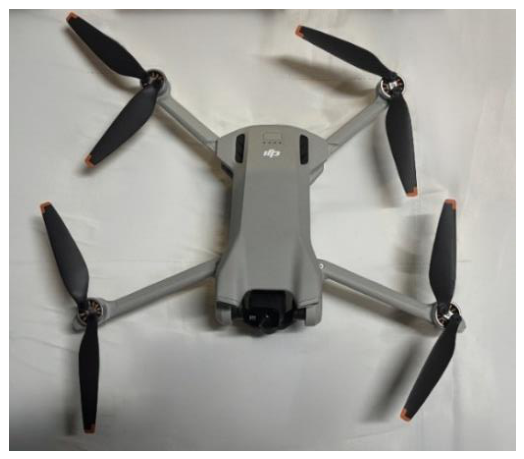
This study employed the DJI Mini 3 drone (Shenzhen, China) as the data acquisition platform (
Figure 5), conducting experiments on two sections of asphalt pavement exhibiting distinct road surface characteristics (
Figure 6). The flight mission was meticulously designed with the following key parameters: Flight altitude was set at 7 m, with a flight speed of 0.75 m/s. Video resolution was maximized at 3840 × 2160 pixels, featuring an aperture of f/1.7, an equivalent focal length of 24 mm, and a field of view of 82.1°. These parameters were chosen to achieve sufficient ground resolution for identifying minute cracks while ensuring image clarity and freedom from motion blur, and to provide adequate overlap for subsequent image stitching.
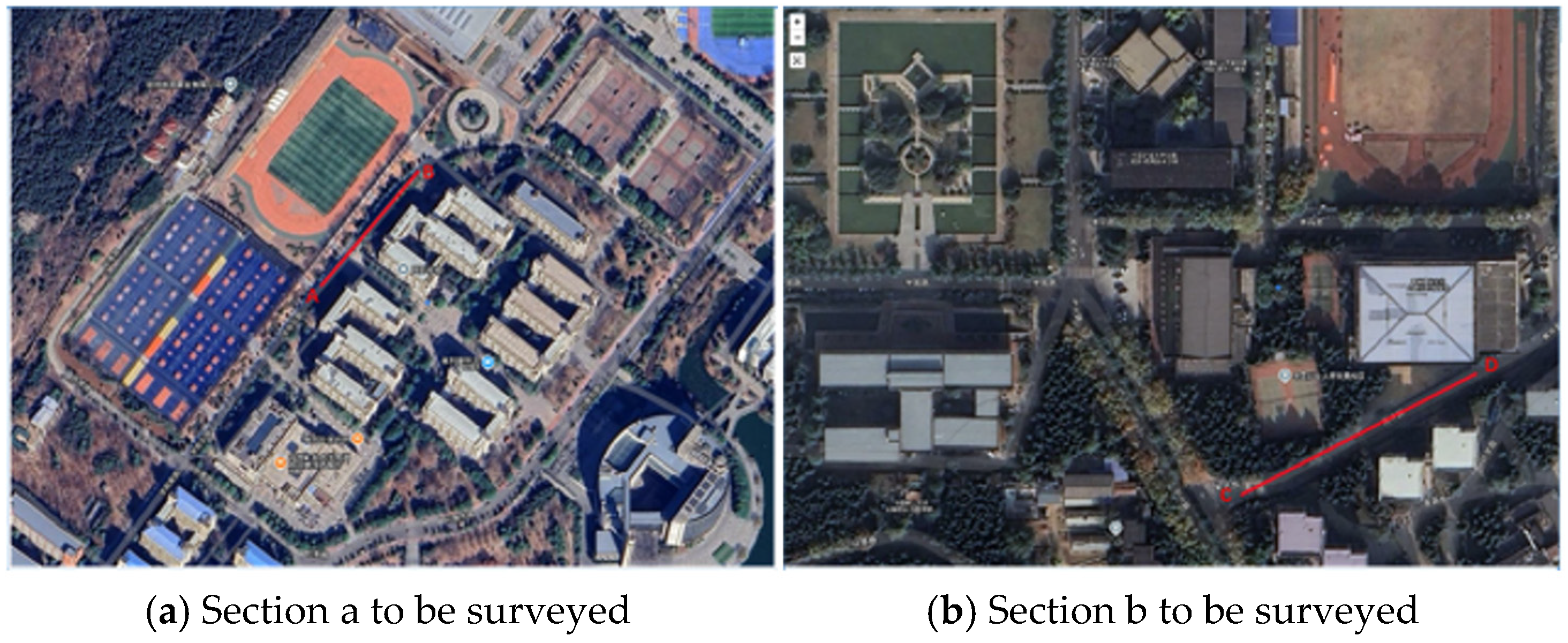
Figure 6 presents the satellite aerial image of the road section under investigation (In
Figure 6a, segment AB represents test section A; in
Figure 6b, segment CD represents test section B), with an original resolution of 3840 × 2160 pixels, corresponding to actual physical dimensions of 1.35 m (length) × 0.76 m (width). The assessment area for this study is at single-lane scale, measuring 200 m in length and 7.5 m in width, encompassing the typical distribution range of road defects within this section.
(2) Image stitching and crack detection
Upon acquiring road surface video footage, key frames are first extracted at fixed intervals (e.g., every 10 frames) to eliminate redundant frames while covering the entire assessment section. Subsequently, an image stitching algorithm based on feature point matching synthesizes these key frames into a complete orthophoto of the road section (
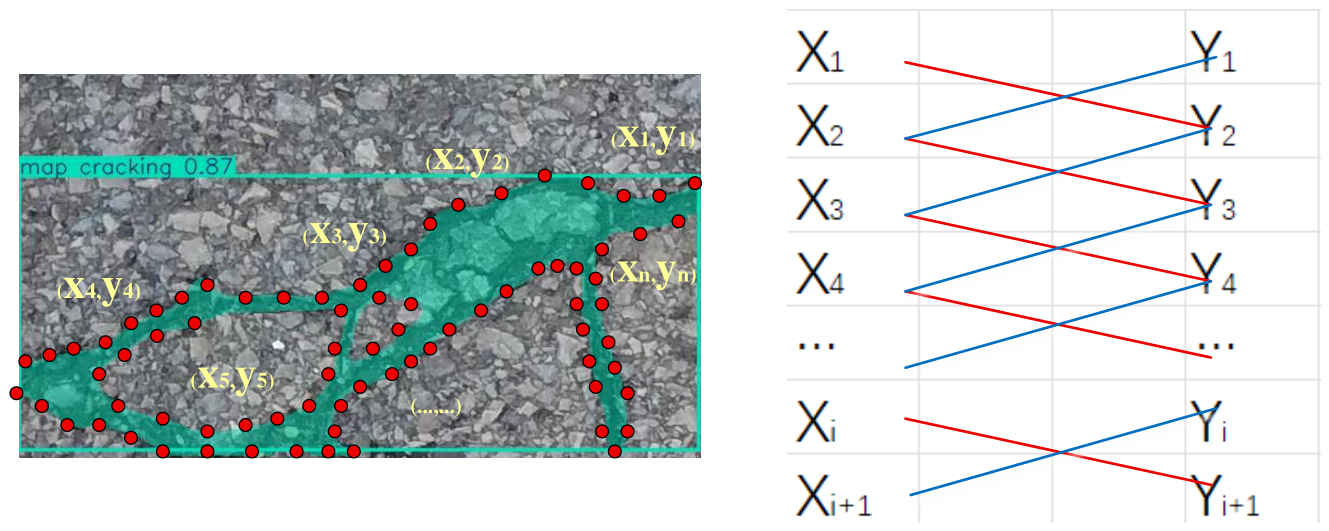
Figure 7). This panoramic image forms the foundation for subsequent automated analysis. Finally, the stitched panoramic image is input into the pre-trained DH-DWR-YOLOv11l-seg model to complete the identification, classification, and contour segmentation of all cracks, automatically extracting their geometric parameters.
(3) Visualization of Results
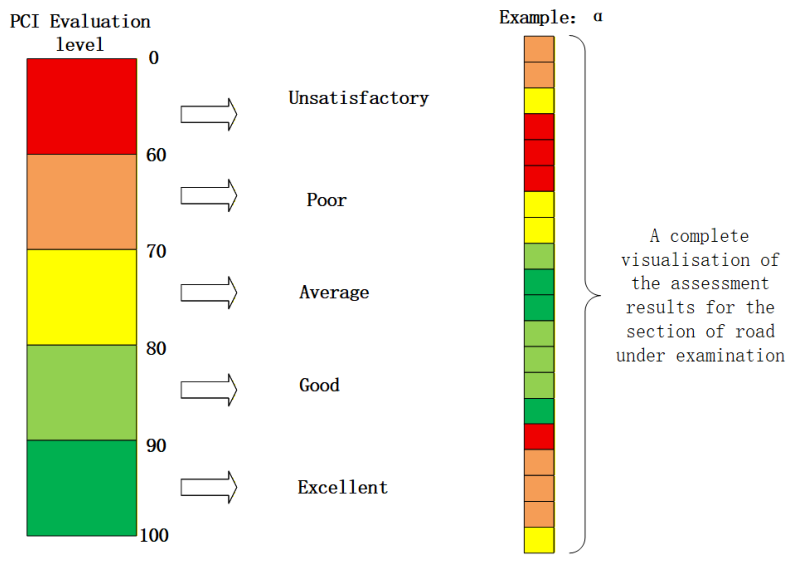
To achieve an at-a-glance evaluation, this study combined the calculated PCI scores with spatial location data to generate a color-coded evaluation mosaic panorama (
Figure 8). Following industry convention, the system maps PCI score ranges to five color categories: 90–100 (Excellent) corresponds to dark green, 80–90 (Good) to light green, 70–80 (Average) to yellow, 60–70 (Poor) to orange, and 0–60 (Very Poor) to red.
This visualization approach has revolutionized traditional decision-making models reliant on paper reports. Maintenance managers can now directly identify deteriorating road sections (red/orange segments) from the map without interpreting complex data, enabling swift formulation of precise maintenance plans. For instance, red sections receive priority repairs while green sections undergo routine inspections, significantly enhancing the efficiency and scientific rigor of maintenance decisions.
4.2. Asphalt Section Comparative Test Setup
To validate the effectiveness and applicability of the proposed system, this study selected two asphalt pavement sections with distinct road condition characteristics as test sections (as shown in
Figure 6) for comparative analysis.
Test Section A (117°8′30.145 E, 34°13′1.502 N): This section exhibits prolonged service life with multiple crack types visible, including pronounced transverse cracks, longitudinal cracks, and localized network cracking. Its relatively poor condition provides an ideal sample for verifying the discriminatory capability of the PCI evaluation model.
Test Section B (117°12′2.704 E, 34°13′8.443 N): This section comprises newly constructed or recently maintained pavement in overall good condition, exhibiting only minor fine cracks. It serves to test the system’s identification accuracy and evaluation stability under favorable road conditions.
The assessment areas for both sections comprise standard lanes measuring 200 m in length and 7.5 m in width. Data collection utilized the DJI Mini 3 unmanned aerial vehicle platform, with specific parameters as detailed previously. The flight altitude was set at 7 m to balance image resolution with capture efficiency, ensuring clear identification of cracks exceeding 1 mm in width. The flight speed of 0.75 m per second, combined with high-resolution video recording (3840 × 2160 pixels), ensured sufficient overlap between consecutive frames, laying the foundation for subsequent high-quality image stitching.
4.3. System Experimental Procedure
This study developed and implemented an automated pavement evaluation system spanning data acquisition to maintenance decision support. The system’s overall workflow constitutes a tightly integrated closed-loop process, designed to achieve full automation from asphalt pavement crack identification and analysis through to evaluation and visualization. The experimental steps correspond to system modules as follows:
System Initialization and Data Acquisition: The experiment commenced with system initialization and data collection. Two test sections exhibiting distinct road condition characteristics were selected. UAV imaging parameters were calibrated to ensure acquisition of high-quality pavement video data suitable for subsequent stitching and recognition. Operations utilized the DJI Mini 3 UAV platform during clear weather with favorable lighting conditions. The drone was manually controlled to maintain a constant altitude of 7 m directly above the test section, flying at a uniform speed of 0.75 m/s along the centerline of the carriageway. This captured high-definition video covering the entire 200-metre assessment area.
Data Processing and Crack Analysis Core Module: The captured video data enters the data processing and crack analysis core module. First, key frames are extracted at fixed intervals to eliminate redundant frames while covering the entire assessment section. Subsequently, these key frames are automatically stitched into a complete orthophoto panorama of the road section using feature point matching algorithms. We tested both SIFT and ORB; ORB was ultimately adopted due to its higher computational efficiency and sufficient accuracy for UAV-based image sequences, whereas SIFT produced comparable stitching quality but required approximately 30% longer processing time. This panorama forms the foundation for subsequent automated analysis. The stitched panorama is then input into an optimally trained YOLOv11l-seg model, which automatically identifies, classifies, and performs instance segmentation for all cracks while extracting their geometric parameters.
Upon obtaining reliable crack parameters, the process proceeds to the automated PCI calculation and evaluation stage. The system automatically assigns base penalty values to cracks based on their type and severity according to a predefined evaluation table, applying geometry-based adjustment factors for refinement. Finally, an optimized PCI calculation formula synthesizes all crack information to derive the final PCI score for the study section.
Result Visualization and Decision Support: The system’s final output comprises result visualization and decision support. Firstly, it stitches key frame images of identified cracks into a panoramic view of the road section. This is overlaid with a visualized evaluation map color-coding PCI scores and crack distribution, providing an intuitive overview of overall road condition and localized deterioration zones. Concurrently, it generates detailed assessment reports for the tested road sections, providing maintenance departments with intuitive, scientifically grounded evidence for formulating precise and efficient maintenance decisions.
Through this standardized system workflow and experimental methodology, this study has successfully established a comprehensive, reproducible technical framework, laying an empirical foundation for a closed-loop system spanning from data acquisition to intelligent evaluation.
5. Results and Discussion
5.1. Verification of Recognition and Parameter Extraction Accuracy
To quantitatively assess the reliability of crack geometric parameters extracted using the YOLOv11l-seg model, this study conducted a detailed comparison between manual field measurements of 20 linear cracks and the model’s automated identification results. Sample data for selected cases is presented in
Table 8. For the four planar cracks (Samples 21–24), due to the absence of manually measured physical areas as ground truth, this comparison is not intended as an accuracy validation. Instead, it is redefined as a morphological fitting index, calculated as the ratio of the model-predicted area to the bounding rectangle area, which reflects the regularity of the crack shape rather than the absolute accuracy of area extraction.
To provide a more intuitive representation of the model’s error fluctuations in length and width extraction, the mean absolute error (MAE) was employed as the core metric for precision calculation. An error curve analysis diagram was plotted:
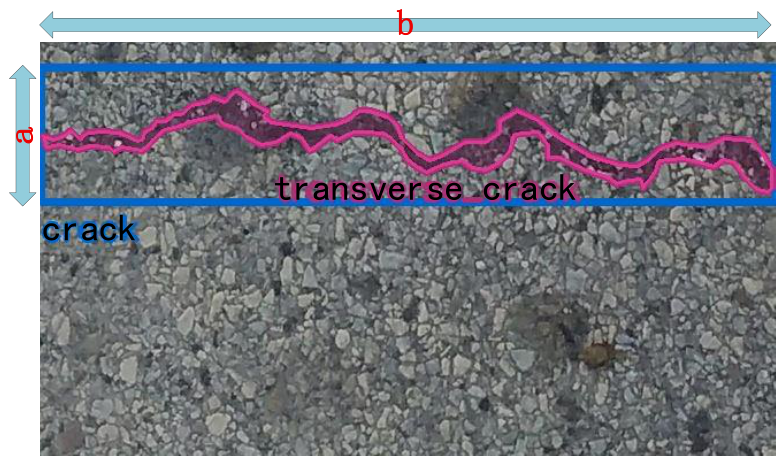
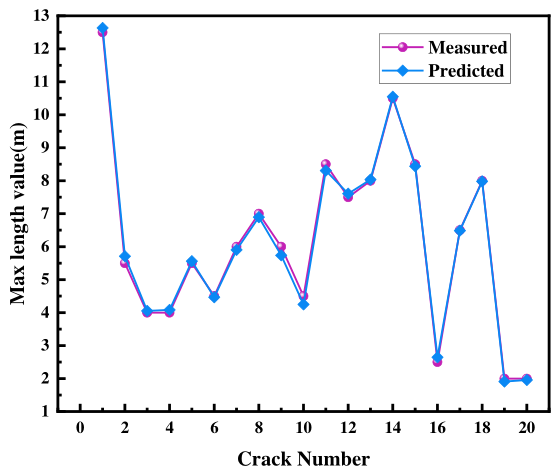
Length Extraction Accuracy: The relative error ranges for longitudinal and transverse crack lengths are concentrated within 1–2% and below 2%, respectively. As observed in
Figure 9 (Linear Crack Length Error Trend Analysis Chart), the model’s predicted crack lengths closely align with actual measurements. Errors are consistently maintained at low levels with minimal fluctuation, demonstrating the model’s high stability and accuracy in crack length extraction.
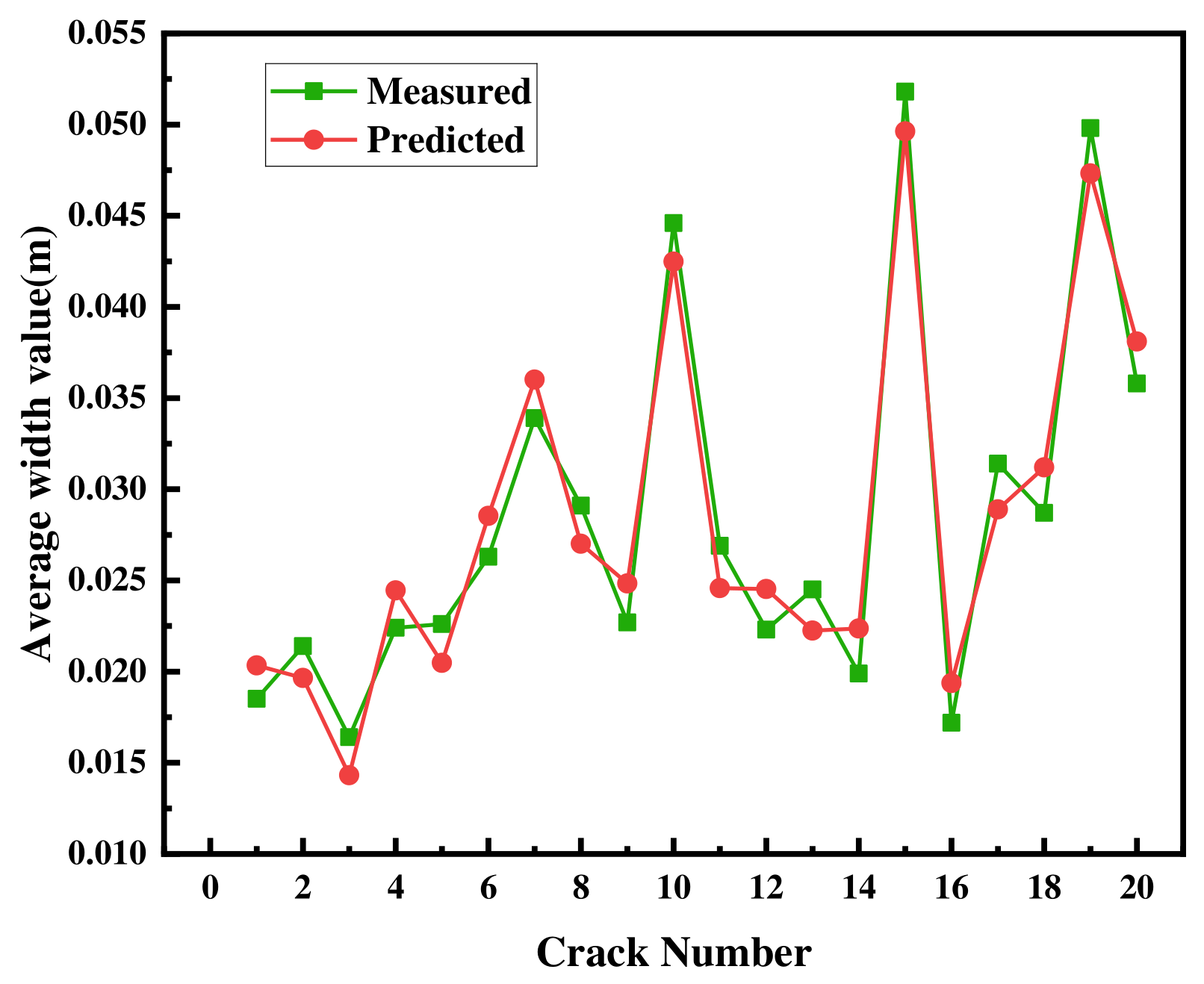
Width Extraction Accuracy: As depicted in
Figure 10 (Linear Crack Width Error Curve Analysis), the width extraction error is marginally greater than that for length. However, its Mean Absolute Error (MAE) values (2.1 mm for longitudinal cracks and 2.6 mm for transverse cracks) remain within the permissible range for engineering applications. The fluctuation in error primarily stems from pixel-level deviations inherent to image resolution limitations and the subjective nature of measurement point selection during manual surveys.
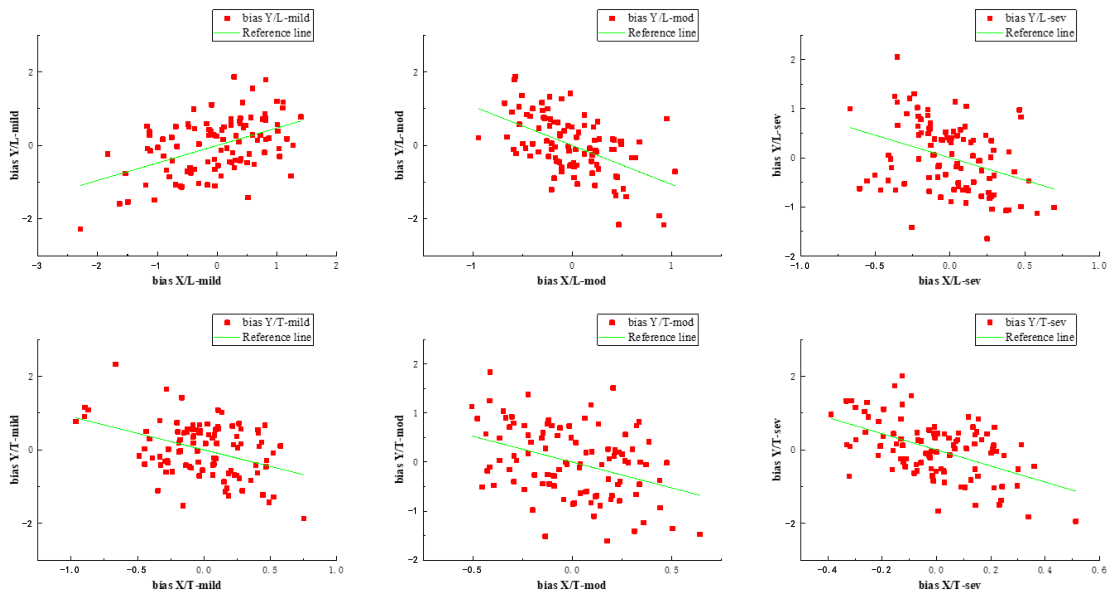
Error analysis indicates that minor discrepancies primarily stem from: (1) pixel-level errors due to image resolution limitations; (2) minor pixel deviations at model segmentation boundaries; (3) measurement inaccuracies when manually tracing cracks that cannot perfectly follow their natural curvature; (4) inherent width variations in cracks and subjective measurement point selection.
In summary, despite these unavoidable errors, the Mean Absolute Error (MAE) for all key parameters remains within an acceptable range for engineering applications. Accuracy validation confirms that the crack geometric parameters extracted using the YOLOv11l-seg optimized model are reliable and precise, establishing a robust data foundation for subsequent automated PCI calculation and evaluation. Verification of the accuracy in extracting the area of planar cracks will be analyzed in conjunction with specific data within the subsequent
Section 5. Findings indicate the model demonstrates high accuracy in extracting crack geometric parameters.
5.2. PCI Evaluation Results and Comparative Analysis
To verify the scientificity and superiority of the optimized PCI model, this study took the road section A (with poor road conditions) as an example and conducted a detailed comparison of the evaluation results between the optimized model and the traditional PCI model.
(1) Refinement and rationalization of evaluation results
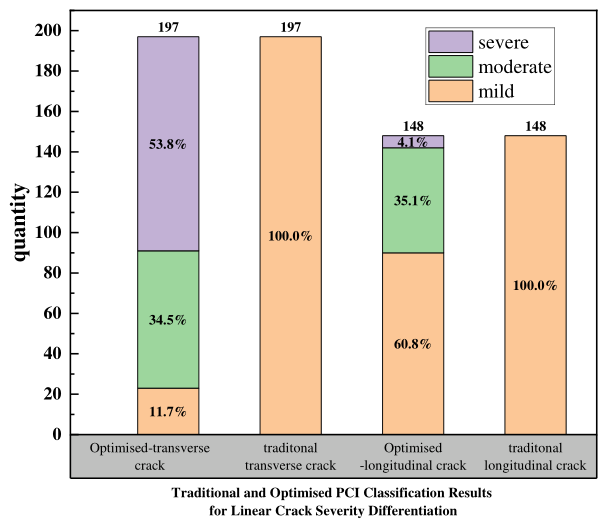
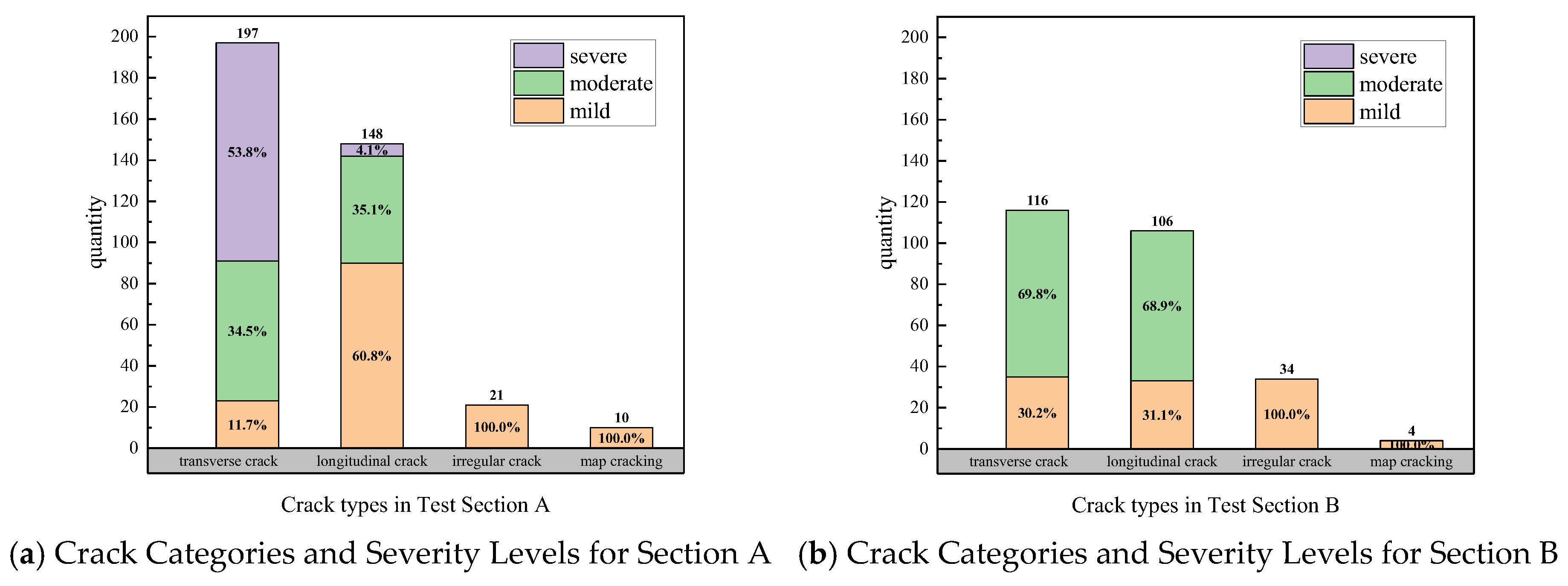
Figure 11 visually demonstrates the significant differences in crack statistics for the same road section between the two models. In the traditional model, all 197 transverse cracks and 148 longitudinal cracks were simply classified as “minor”. However, the optimized model, by introducing geometric feature adjustment factors based on width and length, achieved a refined distinction of crack severity. The results show that only 12% of the transverse cracks were rated as minor, while 35% and 54% were classified as moderate and severe, respectively; for longitudinal cracks, 35% and 4% were classified as moderate and severe, respectively. This distribution more accurately reflects the actual severity of cracks on this road section, proving a significant improvement in qualitative accuracy of the optimized model. This refined classification directly leads to a total deduction value closer to the actual road conditions, making the final PCI score more distinguishable and valuable for engineering reference.
(2) Scientific Adjustment of Explicit Weights
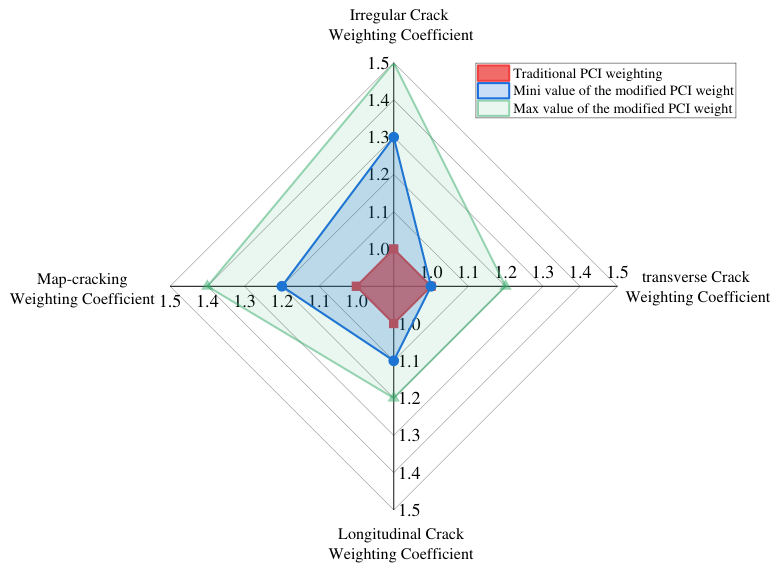
The optimized model’s refinement of explicit weights is clearly illustrated in the radar chart of
Figure 12. In the traditional model, all crack types were assigned a weight of 1, failing to reflect the differential impact of various crack types on pavement performance. Following optimization, the model assigns differentiated weight ranges to distinct crack types: network cracks (1.2–1.4) and irregular cracks (1.3–1.5) receive the highest weights, longitudinal cracks (1.1–1.2) follow, while transverse cracks (1.0–1.2) carry the lowest relative weight. This weighting distribution aligns entirely with pavement engineering principles: network and irregular cracks typically signify reduced structural bearing capacity and severe material deterioration, posing the greatest threat to pavement service life and thus warranting the highest deduction weights.
(3) Comprehensive Incorporation of Implicit Weights
Beyond explicit weights, the optimized model introduces multiple implicit weights through its computational logic:
Size Weighting: Adjustable factors enable the system to automatically assign higher effective values to longer and wider cracks, achieving a nuanced assessment where same type and grade, but differing sizes yield differing impacts;
Morphological weighting: By adopting the “damage area ratio” as the core metric for planar cracks and setting higher deduction ceilings, this inherently assigns greater morphological weighting than linear cracks; severity weighting: within the same crack type, the deduction values and ceilings for severe grades far exceed those for minor grades, constituting an exponential weighting increase.
The optimized PCI model integrates explicit and implicit weights to construct a multidimensional, multi-tiered comprehensive evaluation system. This framework not only quantifies crack “quantity” but also deepens into a holistic assessment of crack quality. Ultimately, the conventional PCI model assigned a score of 92.6 to the test section A, whereas the optimized model yielded a score of 77.8. It should be noted that no independent PCI survey following ASTM D6433 was conducted for this test section. Therefore, the superiority of the optimized model is argued based on: (i) its ability to differentiate crack severities (
Figure 13), (ii) the more reasonable score distribution (
Figure 14), and (iii) the visual plausibility that a section with numerous severe cracks (
Figure 15a) should not receive an “excellent” rating of 92.6. The optimized score of 77.8 (“moderate”) is far more consistent with the observed visual condition. The latter more accurately revealed the presence of significant structural damage in this section, closely aligning with the actual pavement condition. This provides precise and scientific grounds for formulating maintenance decisions prioritizing repairs.
5.3. Recognition and Parameter Extraction Results
The crack identification and parameter extraction module of this system demonstrated outstanding effectiveness and stability across both test road sections.
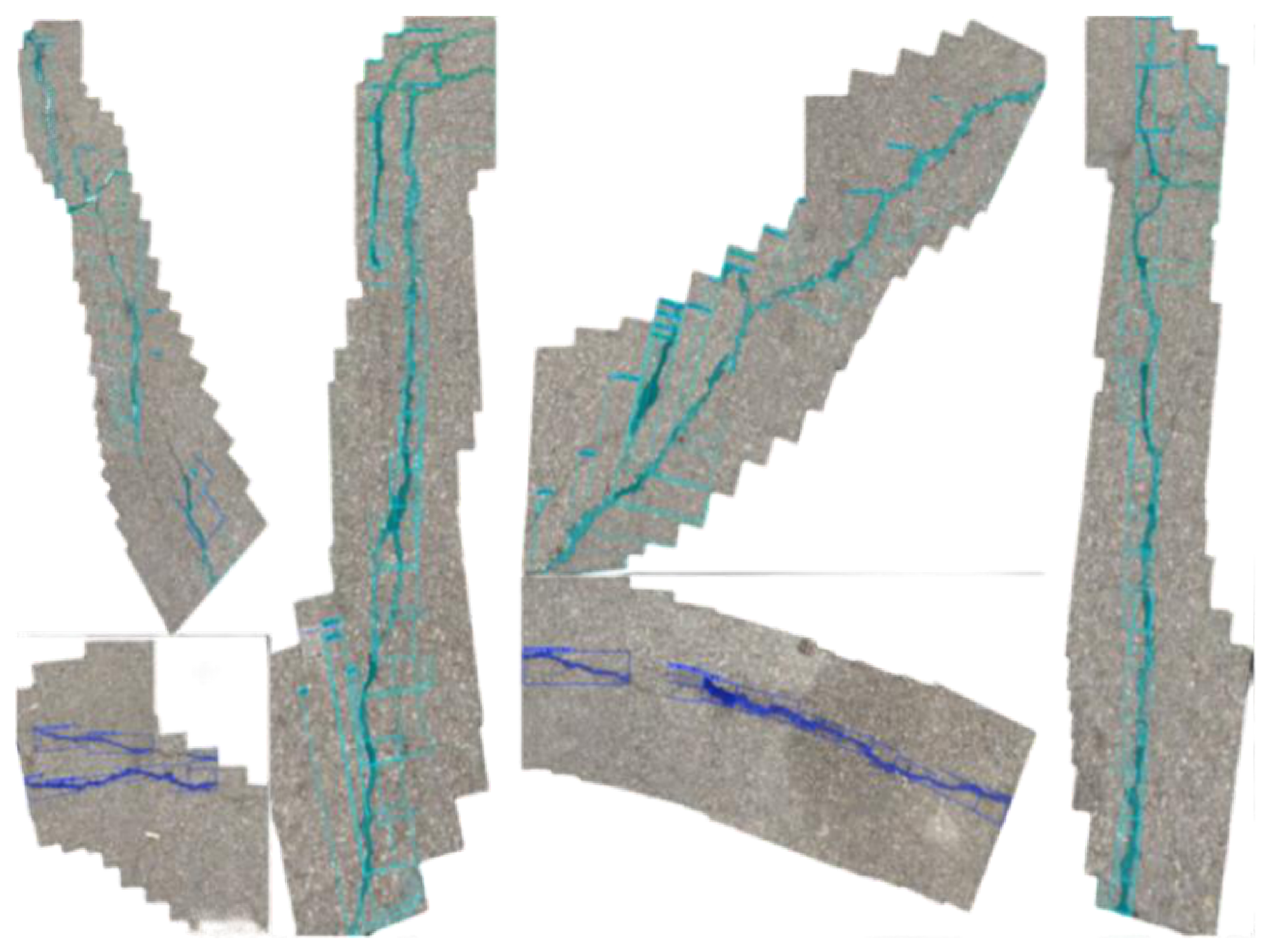
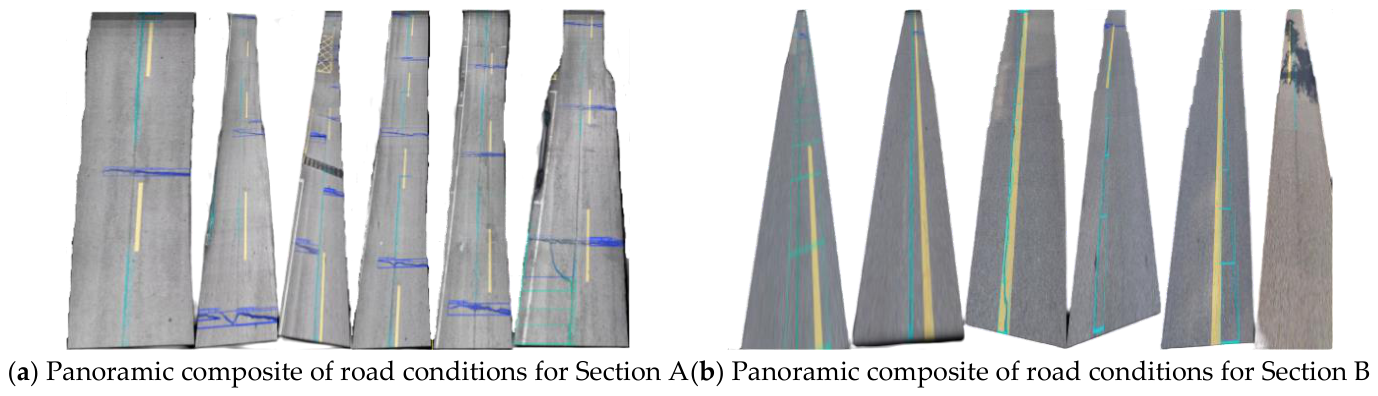
Figure 13 presents a panoramic image featuring image stitching and overlaid model prediction boxes, providing the most intuitive visual evidence for road condition assessment.
Figure 13a clearly shows that the road section A under examination is covered with numerous successfully identified cracks, with densely clustered prediction boxes. Among these are several long and wide severe cracks, visually indicating a concerning road condition. In stark contrast,
Figure 13b depicts road section B under examination, where the road surface appears largely intact. The identified cracks are fewer in number and exhibit minor forms, intuitively reflecting its favorable road condition.
To enable quantitative comparison of road conditions, the system automatically counted and categorized all cracks across both sections. The results are presented in
Figure 14.
The statistical findings for test section A (
Figure 14a) corroborate its poor road condition: not only is the total number of cracks high, but more significantly, the proportion of cracks classified as severe is exceptionally high. Among the 197 transverse cracks, medium and severe grades collectively accounted for 89% (35% + 54%); similarly, medium and severe grades constituted 39% of longitudinal cracks. This indicates that the damage to this section extends beyond superficial phenomena, deeply affecting the pavement structure and necessitating prompt maintenance measures.
Statistical results for Section B (
Figure 14b) reveal markedly different characteristics: while cracks are present, their severity predominantly falls within mild and moderate categories. No severe cracks were identified in either transverse or longitudinal cracks, with moderate cracks accounting for 70% and 69% respectively. This distribution of defects indicates that this section is in the early to mid-stages of performance degradation, making it suitable for preventive maintenance planning rather than requiring immediate large-scale repairs.
In summary, the identification and statistical results not only visually demonstrate the differences in road condition between the two sections but, more importantly, provide detailed and reliable data inputs for the optimized PCI evaluation model developed in this study. These automatically extracted, refined parameters form a robust foundation for generating subsequent scientific evaluation conclusions and visualization outputs.
5.4. Visualization of Results and Decision Support
The system’s final output—a color-coded PCI assessment panorama—integrates all preceding analytical findings into a single, readily comprehensible “road condition diagnostic map”.
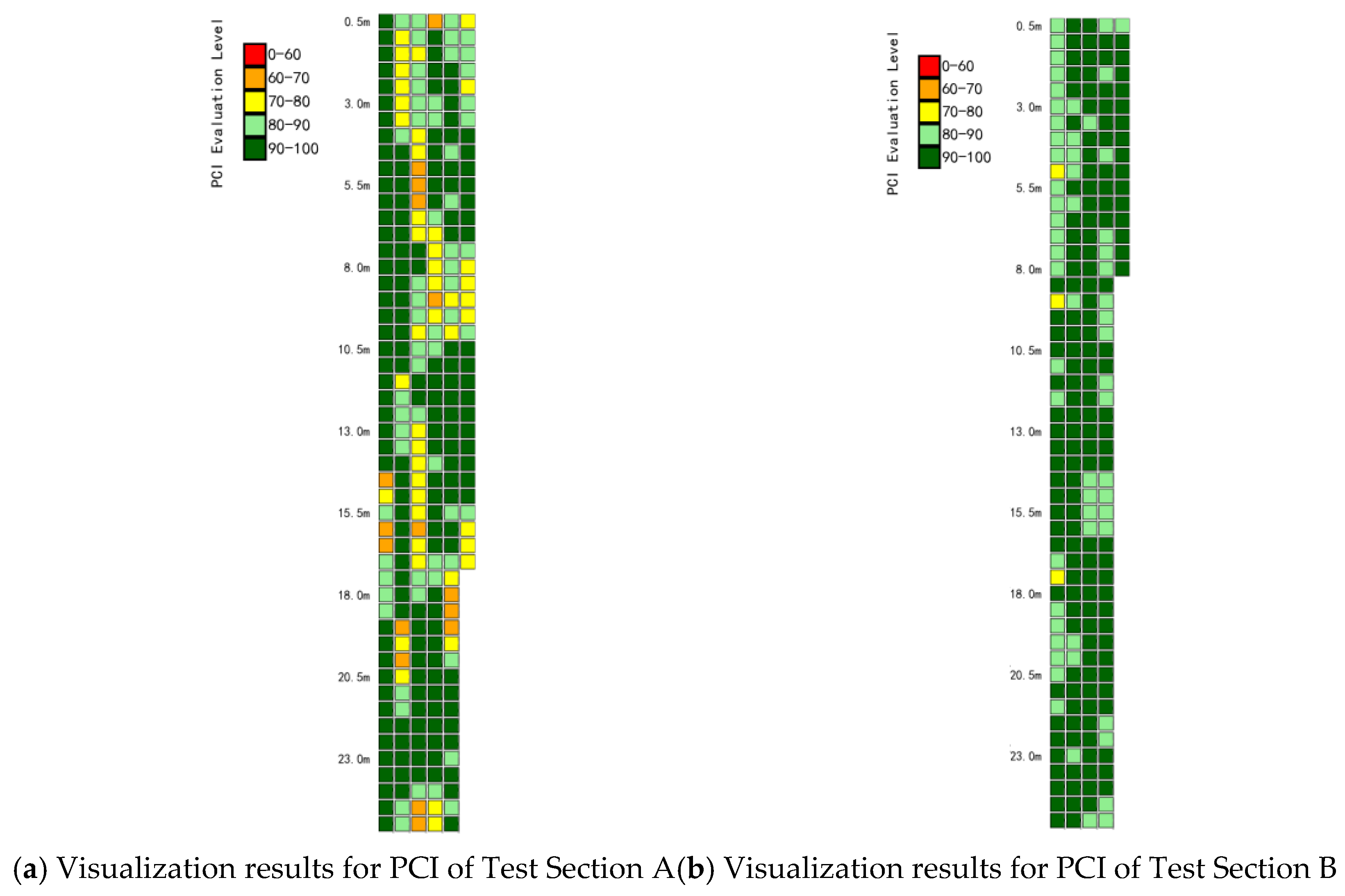
Figure 15 presents the final visualization results for the two test road sections.
Each colored unit corresponds to a keyframe image (with approximately 30% overlap between adjacent units)
This visualization approach divides continuous road sections into multiple contiguous assessment units. The system calculates an independent PCI score for each unit based on the total penalty points from all cracks within it. These scores are then colored according to predefined mapping rules (Excellent—dark green, Good—light green, Fair—yellow, Poor—orange, Very Poor—red), ultimately assembling into a comprehensive full-color visual spectrum of the entire road section.
The results for
Figure 15a (Road Section A under assessment) align closely with the identification statistics in
Figure 13a and
Figure 14a, clearly visualizing the road condition: numerous orange and yellow units indicate areas where the pavement has deteriorated to a “Poor” or “Fair” level, signifying critical zones with severe structural damage requiring immediate priority repair. Concurrently, the presence of light green units in certain sections indicates that these segments warrant heightened attention.
Conversely,
Figure 15b (Section B under assessment) displays an overall healthy green coloration, with only scattered yellow units in localized areas. This aligns perfectly with the statistical findings in
Figure 13b (indicating sparse cracks) and
Figure 14b (showing cracks predominantly of light to moderate severity). This visualization provides an intuitive maintenance recommendation: “No immediate intervention required; maintain routine inspections”.
This visualization approach fundamentally transforms traditional decision-making reliant on numerical reports. Maintenance managers can now grasp the macro-level health status of entire road sections within seconds, precisely pinpointing specific degraded segments, without needing to interpret complex crack statistics tables or PCI score lists. It converts scientific data into intuitive actionable guidance, significantly enhancing the efficiency and scientific rigor of maintenance decisions, thereby achieving a true closed-loop transition from “intelligent identification” to “intelligent decision-making”.
Time efficiency comparison: To quantify the time savings of the proposed automated system, we compared the total data acquisition and processing time with that of conventional manual crack measurement for the same 200 m test section. Manual inspection (including on-site walking, crack identification, length/width measurement, and paper recording) typically takes about 90 min by an experienced engineer. In contrast, our UAV-based system requires approximately 12 min for drone flight (including takeoff, landing, and data transfer) and 8 min for automated post-processing (keyframe extraction, stitching, crack segmentation, PCI calculation, and visualization), totaling 20 min. This corresponds to a time reduction of about 78% (70 min saved per 200 m section). For longer road networks, the efficiency gain would be even more substantial due to the automated batch processing capability.
A rough cost estimate indicates that the one-time hardware investment (UAV + workstation) is about 1550U SD, while the per-kilometer operational cost is approximately 5, compared to $22.5 for manual inspection, representing a cost reduction of over 75%.
6. Conclusions
This study focuses on establishing a complete technological closed-loop system, progressing from automated identification to intelligent evaluation. It successfully constructs and validates an integrated system for intelligent crack detection and automated PCI assessment in asphalt pavement maintenance. By utilizing drone-based field data acquisition, the research implemented a fully automated workflow encompassing video frame extraction, image stitching, crack identification and parameter extraction, automated PCI calculation, and result visualization. This effectively addresses the core issues of inefficient traditional methods and the disconnect between “identification” and “evaluation” in existing research.
The primary contributions of this research are threefold:
- (1)
Construction and validation of an end-to-end integrated system: Overcoming the limitation that current research often stops at “identification”, this study developed an end-to-end system Centered on an optimized YOLOv11l-seg model. This system achieves unmanned processing from raw UAV video to final PCI scores and visualized panoramic maps, providing an efficient, engineered solution for pavement maintenance management.
- (2)
Introduction of a refined PCI evaluation model: Addressing the inadequate differentiation of crack types and severity in traditional PCI models, this study proposes an improved, more granular evaluation framework. By incorporating geometry-based adjustment factors and differentiated deduction weights with upper limits, the model scientifically quantifies the actual impact of cracks of varying types, dimensions, and severity on pavement performance. This significantly enhances the engineering rationality and decision-making value of evaluation outcomes.
- (3)
Innovative Visualization and Decision Support: The system generates color-coded PCI panoramic maps, transforming complex multidimensional data into intuitive “road condition diagnostic diagrams”. This output format significantly enhances result interpretability, enabling maintenance departments to pinpoint deteriorated sections at a glance and formulate precise maintenance strategies, achieving an intelligent transition from data to decision-making.
Although this study has yielded anticipated outcomes, the system retains scope for optimization.
Sample size limitation: The accuracy verification of crack geometric parameters was based on 20 crack samples. While this sample size is acceptable for a proof-of-concept study, it limits the statistical generalizability of the results. Broader validation across diverse pavement textures, lighting conditions (e.g., low light, strong shadows, glare), and crack morphologies (e.g., finer or more complex patterns) is necessary before the system can be deployed at scale. Future work should therefore include larger and more varied datasets to further substantiate the robustness of the proposed approach.
Current models require improved accuracy in identifying low-contrast cracks (e.g., light-colored, minute fissures, fatigue cracks), this represents not only an algorithmic challenge but is intrinsically linked to microstructural evolution in ageing asphalt materials, such as changes in micelle size and surface activity. A limitation of this study is the absence of an independent ground-truth PCI measurement obtained by trained engineers following ASTM D6433. The validation of the optimized PCI model therefore relies on internal comparison and visual plausibility. Future research should incorporate formal field surveys to further substantiate the model’s accuracy. Future research will focus on:
- (1)
Incorporating multi-source data (e.g., vehicle-mounted LiDAR point clouds) to construct richer multi-modal datasets, enhancing model generalization capabilities;
- (2)
Expanding defect types and integrating mechanisms: Future systems must extend to identifying and assessing structural defects like reflective cracking. Drawing from research on crack-resistant base course material design and microstructural characterization to understand crack-resistance mechanisms will enhance the predictive capability of assessment models regarding crack progression;
- (3)
Deepening multi-scale assessment models: The ultimate goal is to construct an intelligent platform encompassing “perception-cognition-decision-making”. To this end, assessment models must be refined by integrating macro-level crack data with micro-level material models, such as asphalt ageing states and crack-resistant properties of base materials. Through multi-scale information linkage, this approach achieves a cognitive leap from identifying “where cracks occur” to understanding “why and how cracks develop”, thereby providing scientific grounds for lifecycle-based preventive maintenance decisions.