Integrating Remote Sensing Indices and Ensemble Machine Learning Model with Independent HEC-RAS 2D Model for Enhanced Flood Prediction and Risk Assessment in the Ottawa River Watershed


Abstract
1. Introduction
2. Materials and Methods
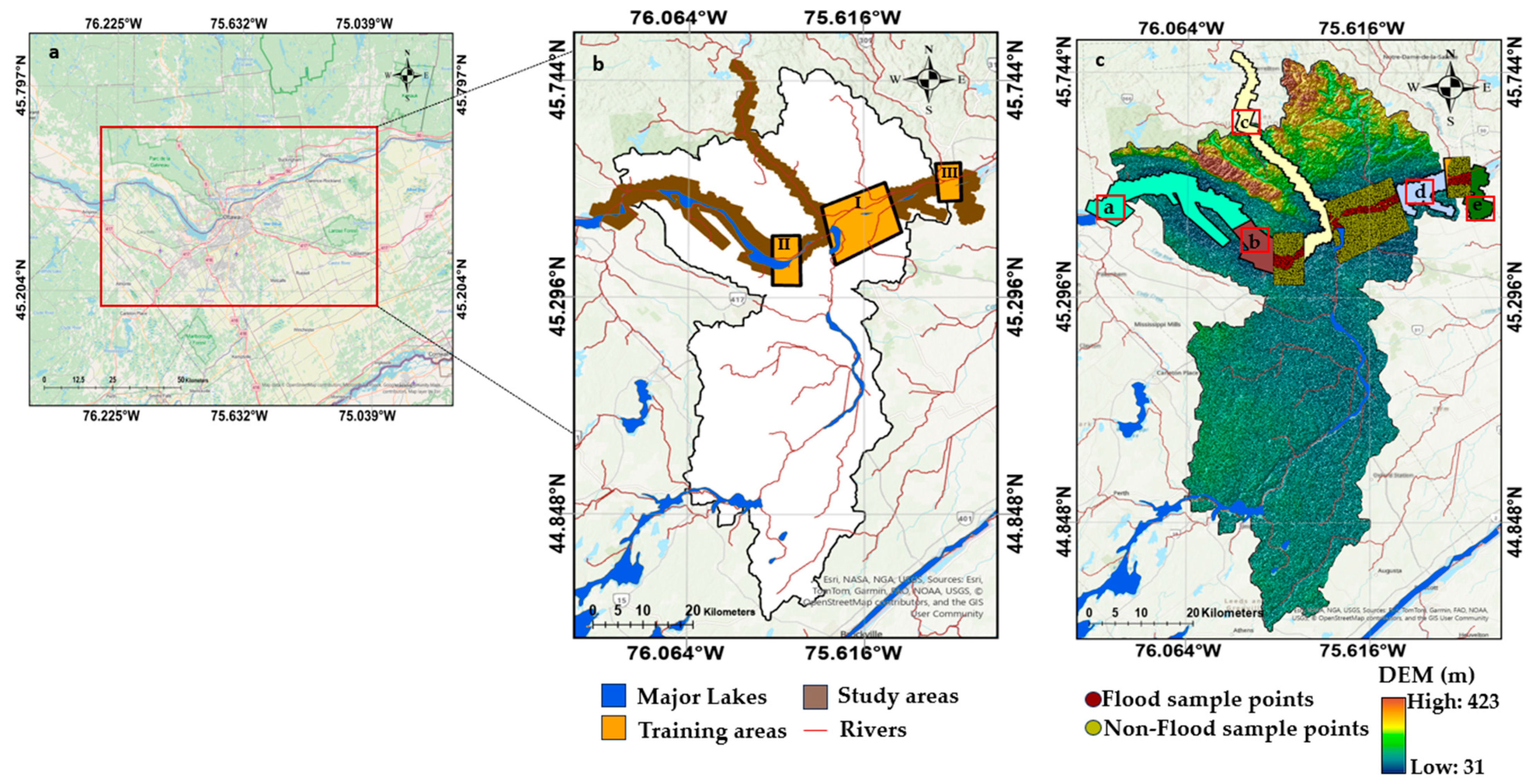
2.1. Study Area
2.2. Geospatial Data
2.2.1. Flood Inventory
2.2.2. Flood Conditioning Factors
3. Model Feature Importance (MFI) and ML Ensemble Models
3.1. Recursive Feature Elimination Algorithm
| Algorithm 1. RFE Algorithm in Pseudocode with Bars for Routines and Tabulation. |
| Input: I—Feature matrix (q_samples x q_features) J—Target vector model: ML Model with feature importance n: Desired number of features to select Initialize: I_remaining ← I // Start with the full dataset feature_set ← All feature indices while len (I_remaining) > n: // Continue until n features remain Train Phase: Model.fit (I_remaining, j) Ranking Phase: importance_scores ← model.feature_importances ranked_features ← argsort (importance_scores) Elimination Phase: least_important ← ranked_features [0] feature_set ← feature_set\{least_important} I_remaining ← I [:, feature_set] Output: I_remaining—Feature matrix with top n features |
3.2. Methodology Flowchart and ML Models
3.2.1. Random Forest (RF) Model
3.2.2. Support Vector Machines (SVM) Model
3.2.3. Extreme Gradient Boosting (XGBoost) Model
3.3. Ensemble Modeling
3.4. Numerical Modeling
3.5. Estimating Flood Risk at 100-Year Return Periods
Computation Procedures
3.6. Model Performance Metrics
4. Results and Discussion
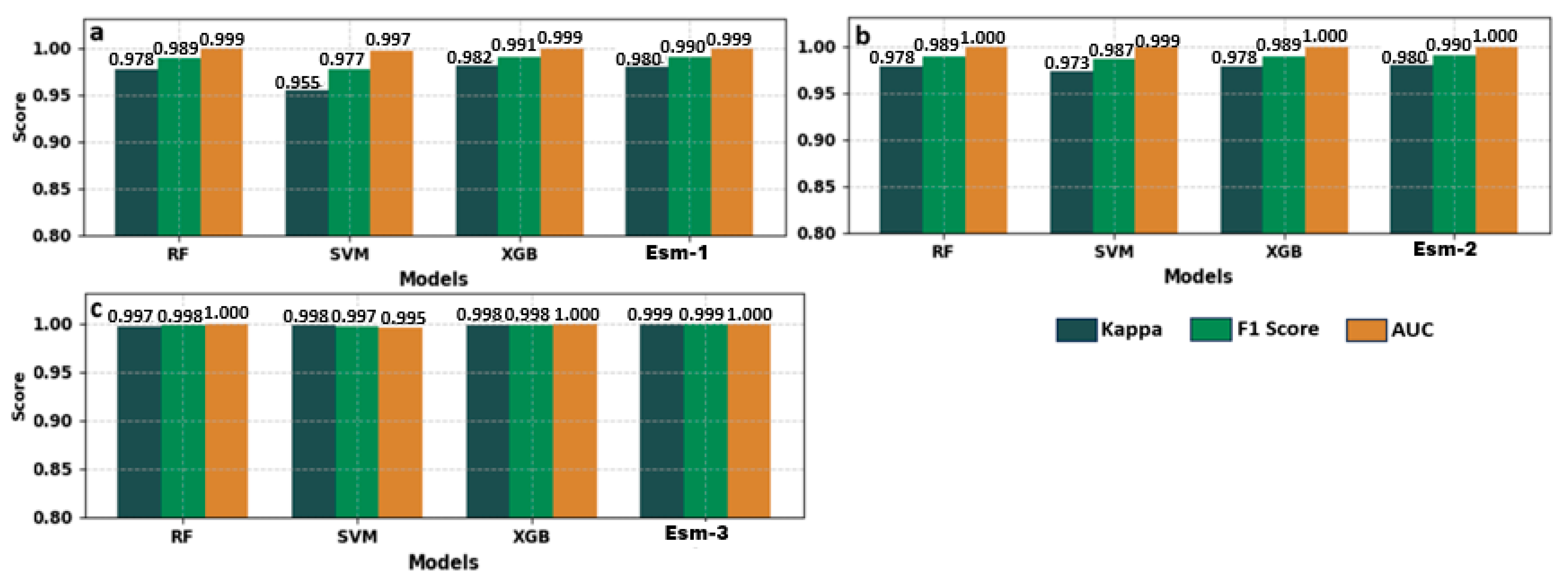
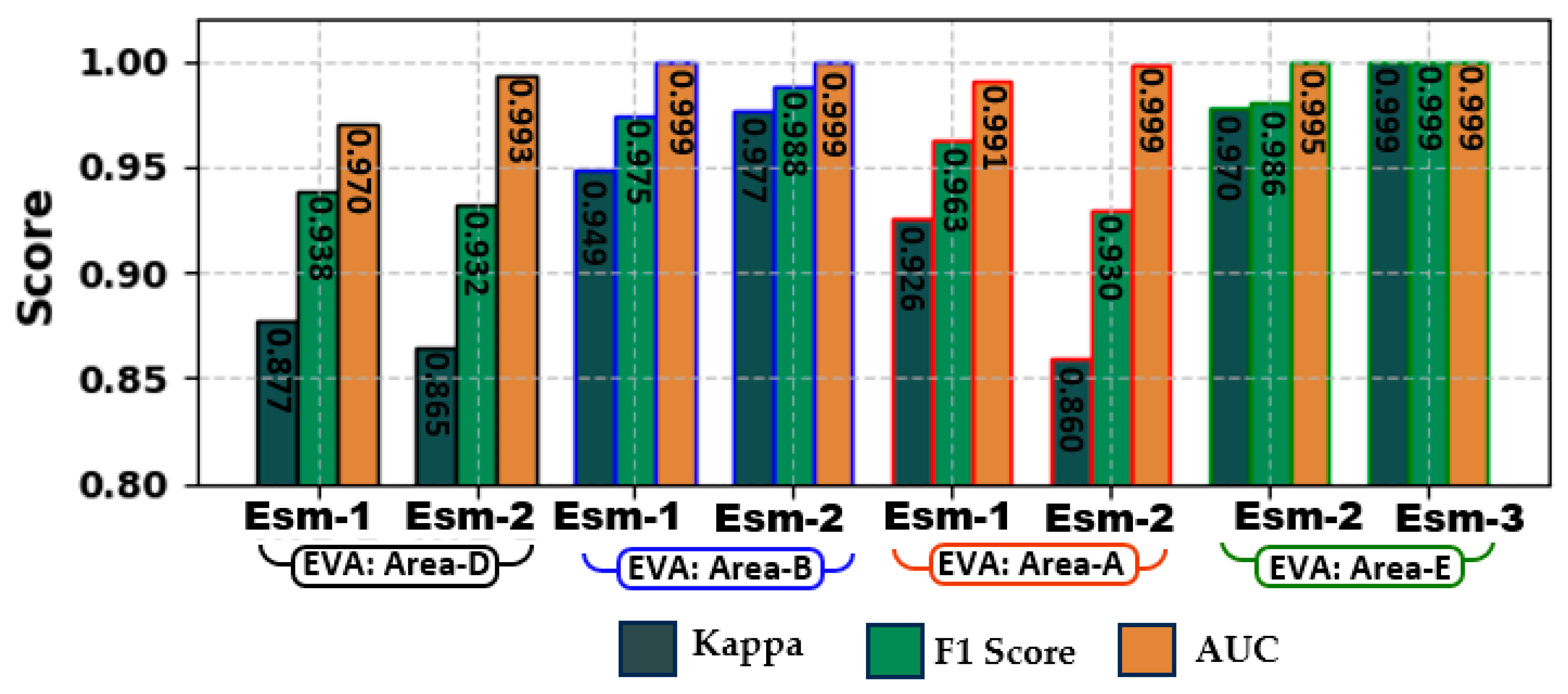
4.1. Model Performance Comparison and Validation
4.2. Models’ Uncertainties and Limitations
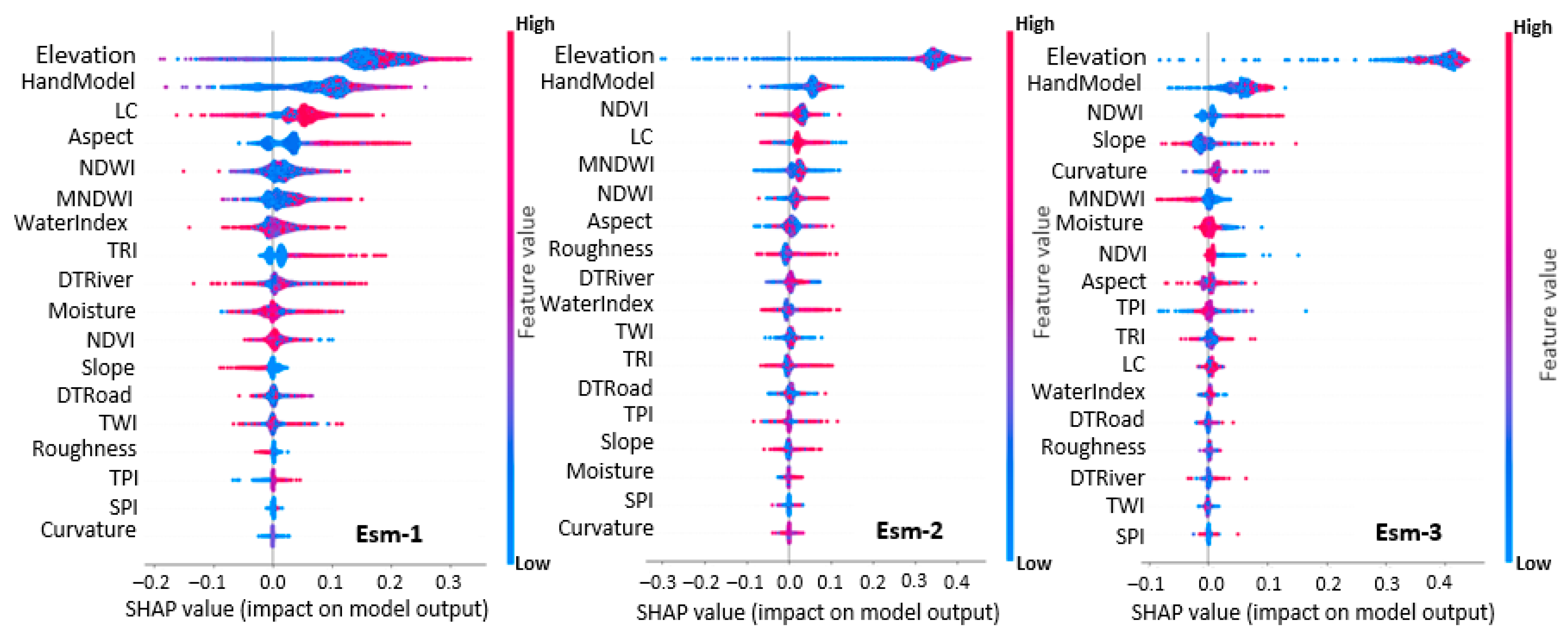
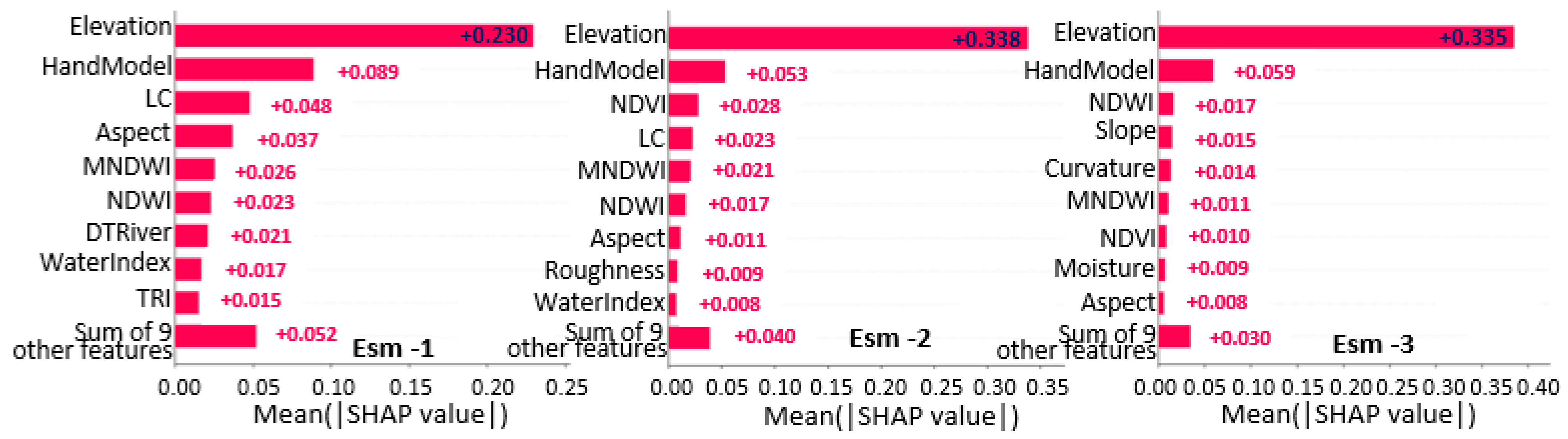
4.3. Model Feature Importance Assessment
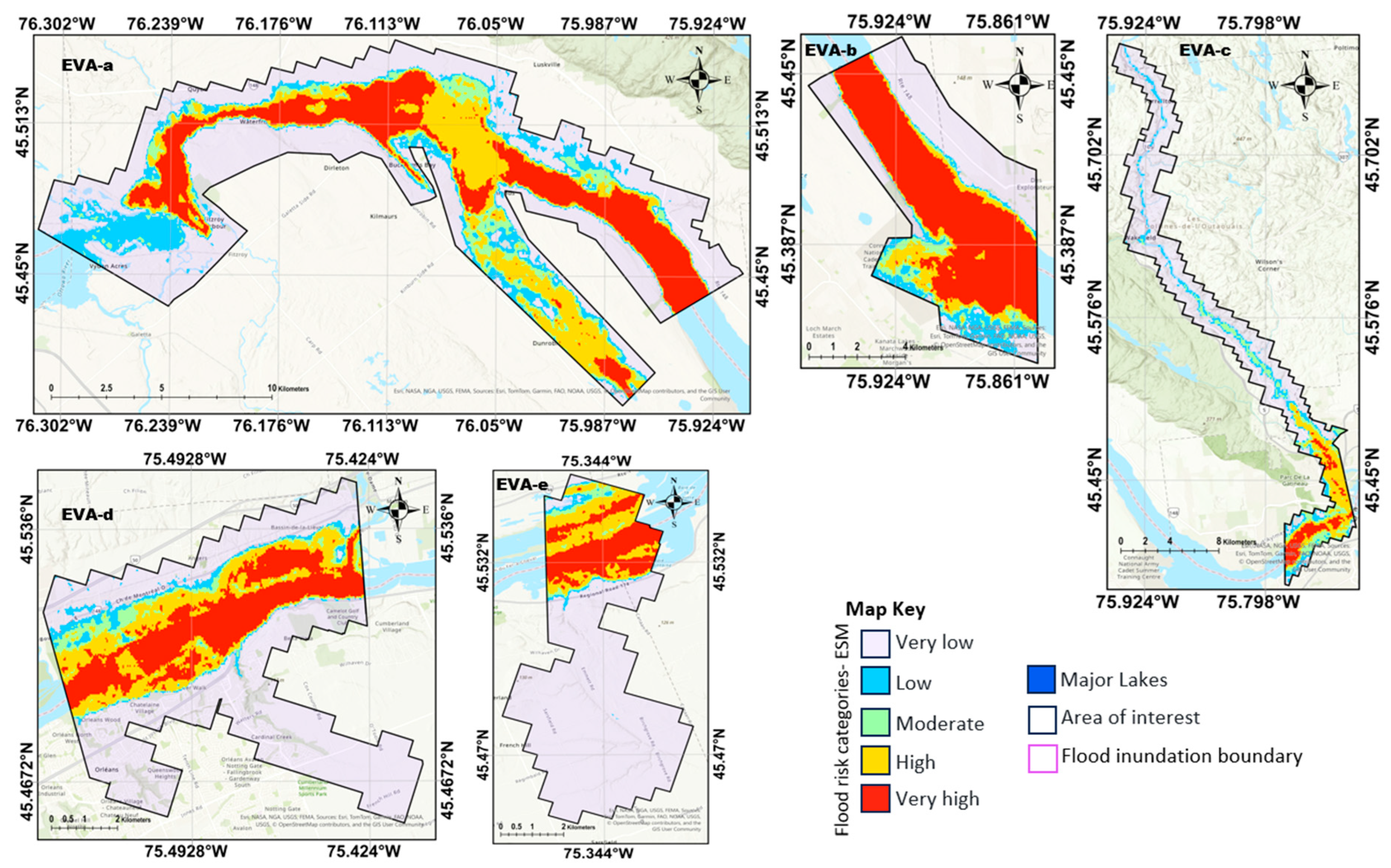
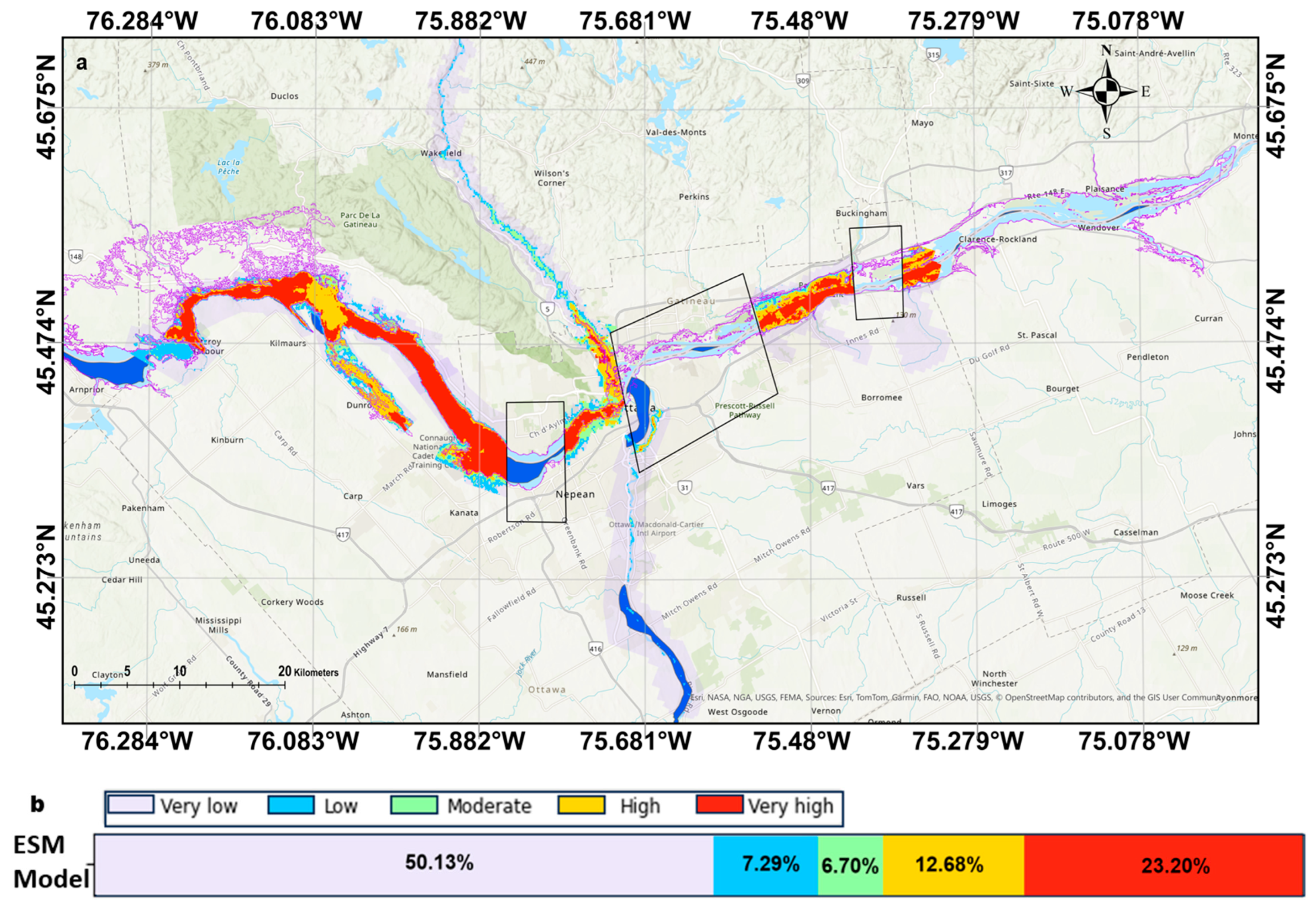
4.4. Flood Susceptibility for Ottawa–Gatineau Sub-Region
4.5. Flood Frequency Analysis and 100-Year Return Period in the Ottawa–Gatineau Sub-Region
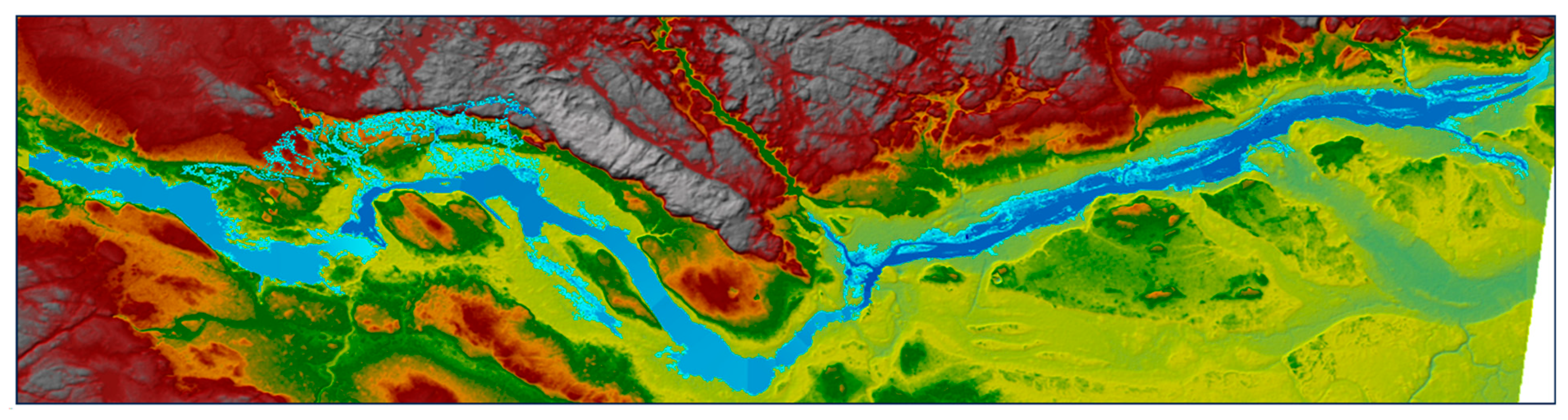
4.6. Ottawa–Gatineau Sub-Region Flood Simulation
Flood Vulnerability Assessment
5. Conclusions
Author Contributions
Funding
Institutional Review Board Statement
Informed Consent Statement
Data Availability Statement
Acknowledgments
Conflicts of Interest
References
- Kundzewicz, Z.W.; Kanae, S.; Seneviratne, S.I.; Handmer, J.; Nicholls, N.; Peduzzi, P.; Mechler, R.; Bouwer, L.M.; Arnell, N.; Mach, K.; et al. Flood risk and climate change: Global and regional perspectives. Hydrol. Sci. J. 2013, 59, 1–28. [Google Scholar] [CrossRef]
- Insurance Bureau of Canada. Severe Weather in 2023 Caused Over $3.1 Billion in Insured Damage. 2024. Available online: https://www.ibc.ca/news-insights/news/severe-weather-in-2023-caused-over-3-1-billion-in-insured-damage (accessed on 25 August 2025).
- Government of Ontario. Independent Review of the 2019 Flood Events in Ontario: Region Specific Situations. 2019. Available online: https://www.ontario.ca/document/independent-review-2019-flood-events-ontario/region-specific-situations (accessed on 25 August 2025).
- Ottawa River Regulation Planning Board. Spring 2019 Freshet and Flood Summary Report. 2019. Available online: https://ottawariver.ca/ (accessed on 25 August 2025).
- Douglas McNeil: An Independent Review of the 2019 Flood Events in Ontario Available. 2019. Available online: https://files.ontario.ca/mnrf-english-ontario-special-advisor-on-flooding-report-2019-11-25.pdf (accessed on 29 May 2025).
- Ontario Independent Review Report of Flood Events. “Region-Specific Situations-Including in 2017 and 2019”. Available online: https://www.ontario.ca/document/independent-review-2019-flood-events-ontario/region-specific-situations?utm_source=chatgpt.com (accessed on 29 September 2025).
- Mosavi, A.; Ozturk, P.; Chau, K.-W. Flood Prediction Using Machine Learning Models: Literature Review. Water 2018, 10, 1536. [Google Scholar] [CrossRef]
- Meyer Oliveira, A.; Fleischmann, A.S.; Paiva, R.C.D. On the Contribution of Remote Sensing-Based Calibration to Model Hydrological and Hydraulic Processes in Tropical Regions. J. Hydrol. 2021, 597, 126184. [Google Scholar] [CrossRef]
- Rahmati, O.; Zeinivand, H.; Besharat, M. Flood hazard zoning in Yasooj region, Iran, using GIS and multi-criteria decision analysis (MCDA). Geomat. Nat. Hazards Risk 2015, 7, 1000–1017. [Google Scholar] [CrossRef]
- Khosravi, K.; Shahabi, H.; Pham, B.T.; Adamowski, J.; Shirzadi, A.; Pradhan, B.; Dou, J.; Ly, H.-B.; Gróf, G.; Ho, H.L. A Comparative Assessment of Flood Susceptibility Modeling Using Multi-Criteria Decision-Making Analysis and Machine Learning Methods. J. Hydrol. 2019, 573, 311–323. [Google Scholar] [CrossRef]
- Yin, J.; Yu, D.; Wilby, R.L. Modelling the Impact of Land Subsidence on Urban Pluvial Flooding: A Case Study of Downtown Shanghai, China. Sci. Total Environ. 2016, 544, 744–753. [Google Scholar] [CrossRef]
- Liu, Y.; Wang, H.; Shao, J. Advances in Hydrological Modeling with GIS and RS Integration for Flood Assessment and Management. J. Hydrol. 2021, 598, 126456. [Google Scholar] [CrossRef]
- Bhuiyan, S.A.; Bataille, C.P.; McGrath, H. Harmonizing and Extending Fragmented 100 Year Flood Hazard Maps in Canada’s Capital Region Using Random Forest Classification. Water 2022, 14, 3801. [Google Scholar] [CrossRef]
- Farhadi, H.; Najafzadeh, M. Flood Risk Mapping by Remote Sensing Data and Random Forest Technique. Water 2021, 13, 3115. [Google Scholar] [CrossRef]
- Cardi, J.; Dussel, A.; Letessier, C.; Ebtehaj, I.; Gumiere, S.J.; Bonakdari, H. Modeling Hydrodynamic Behavior of the Ottawa River: Harnessing the Power of Numerical Simulation and Machine Learning for Enhanced Predictability. Hydrology 2023, 10, 177. [Google Scholar] [CrossRef]
- Oluwadare, T.S.; Ribeiro, M.P.; Chen, D.; Babadi Ataabadi, M.; Tabesh, S.H.; Daomi, A.E. Applying Machine Learning Algorithms for Spatial Modeling of Flood Susceptibility Prediction over São Paulo Sub-Region. Land 2025, 14, 985. [Google Scholar] [CrossRef]
- Amarnath, G. An algorithm for rapid flood inundation mapping from optical data using a reflectance differencing technique. J. Flood Risk Manag. 2013, 7, 239–250. [Google Scholar] [CrossRef]
- Sajjad, A.; Lu, J.; Chen, X. Rapid assessment of riverine flood inundation in Chenab floodplain using remote sensing techniques. Geoenvironmental Disasters 2023, 10, 9. [Google Scholar] [CrossRef]
- Muhammad, K.K.; Ponrahono, Z.; Ash’aari, Z.H.; Barau, A.S. Flood risk prediction and modeling in Bauchi: Leveraging machine learning models and explainable AI for urban resilience. J. Clim. Change Health 2025, 26, 100490. [Google Scholar] [CrossRef]
- Razavi-Termeh, S.V.; Sadeghi-Niaraki, A.; Abba, S.I. Flood-prone area mapping using a synergistic approach with swarm intelligence and gradient boosting algorithms. Sci. Rep. 2025, 15, 27924. [Google Scholar] [CrossRef]
- Quang, N.H.; Hanh, L.N.; Van An, N. Boosting vs. traditional machine learning models for flood susceptibility mapping: Insights from a case study in central Vietnam. Adv. Space Res. 2025, 76, 5058–5084. [Google Scholar] [CrossRef]
- Waleed, M.; Sajjad, M. Advancing flood susceptibility prediction: A comparative assessment and scalability analysis of machine learning algorithms via artificial intelligence in high-risk regions of Pakistan. J. Flood Risk Manag. 2025, 18, e13047. [Google Scholar] [CrossRef]
- Shirmohammadi, M.; Pirasteh, S.; Li, W.; Mafi-Gholami, D. Flood risk mapping and performance efficiency evaluation of machine learning algorithms: Best practice in northern Iran. Int. Arch. Photogramm. Remote Sens. Spatial Inf. Sci. 2025, 48, 1347–1352. [Google Scholar] [CrossRef]
- Vashist, K.; Singh, K.K. HEC-RAS 2D modeling for flood inundation mapping: A case study of the Krishna River Basin. Water Pract. Technol. 2023, 18, 831. [Google Scholar] [CrossRef]
- Djafri, S.A.; Cherhabil, S.; Hafnaoui, M.A.; Madi, M. Flood modeling using HEC-RAS 2D and IBER 2D: A comparative study. Water Supply 2024, 24, 3061. [Google Scholar] [CrossRef]
- Neal, J.C.; Bates, P.D.; Fewtrell, T.J.; Hunter, N.M.; Wilson, M.D.; Horritt, M.S. Distributed whole city water level measurements from the Carlisle 2005 urban flood event and comparison with hydraulic model simulations. J. Hydrol. 2009, 368, 42–55. [Google Scholar] [CrossRef]
- Faghfouri, A.; Hentati, A.; Fortin, G.; Germain, D. A novel statistical model for flood prediction in the Eel River watershed, New Brunswick, Canada. Water Sci. 2023, 37, 251–268. [Google Scholar] [CrossRef]
- Zhang, Z.; Stadnyk, T.A.; Burn, D.H. Identification of a preferred statistical distribution for at-site flood frequency analysis in Canada. Can. Water Resour. J./Rev. Can. Des Ressour. Hydr. 2019, 45, 43–58. [Google Scholar] [CrossRef]
- Neri, A.; Villarini, G.; Napolitano, F. Statistically-based projected changes in the frequency of flood events across the U.S. Midwest. J. Hydrol. 2020, 584, 124314. [Google Scholar] [CrossRef]
- Environment and Climate Change Canada. An Examination of Governance, Existing Data, Potential Indicators and Values in the Ottawa River Watershed; Environment and Climate Change Canada: Gatineau, QC, Canada, 2019; ISBN 9780660310534.
- Water Science School. Impervious Surfaces and Flooding. Available online: https://www.usgs.gov/special-topics/water-science-school/science/impervious-surfaces-and-flooding (accessed on 22 July 2022).
- Ottawa River Regulation Planning Board. Summary of the 2017 Spring Flood. 2017. Available online: https://ottawariver.ca/wp-content/uploads/2019/02/2017-Spring-Flood-Summary.pdf (accessed on 25 August 2025).
- Ottawa Citizen. One Flood, Five Stories: Heartbreak, Battle and Hope on the Ottawa River. 19 May 2019. Available online: https://ottawacitizen.com/feature/one-flood-five-stories-heartbreak-battle-and-hope-on-the-ottawa-river (accessed on 25 August 2025).
- City of Gatineau. Road Network. Available online: https://www.gatineau.ca/portail/default.aspx?p=publications_cartes_statistiques_donnees_ouvertes/donnees_ouvertes/jeux_donnees/details&id=872107914&ref=fil-d-Ariane (accessed on 13 April 2025).
- City of Ottawa. Road Centrelines. Available online: https://open.ottawa.ca/datasets/road-centrelines/explore (accessed on 13 April 2025).
- Tehrany, M.S.; Jones, S.; Shabani, F. Identifying the essential flood conditioning factors for flood prone area mapping using machine learning techniques. Catena 2019, 175, 174–192. [Google Scholar] [CrossRef]
- Aristizabal, F.; Chegini, T.; Petrochenkov, G.; Salas, F.; Judge, J. Effects of High-Quality Elevation Data and Explanatory Variables on the Accuracy of Flood Inundation Mapping via Height Above Nearest Drainage. Hydrol. Earth Syst. Sci. 2024, 28, 1287–1315. [Google Scholar] [CrossRef]
- Al-Juaidi, A.E.M. The Interaction of Topographic Slope with Various Geo-Environmental Flood-Causing Factors on Flood Prediction and Susceptibility Mapping. Environ. Sci. Pollut. Res. 2023, 30, 59327–59348. [Google Scholar] [CrossRef] [PubMed]
- Nguyen, H.D. Spatial Modeling of Flood Hazard Using Machine Learning and GIS in Ha Tinh Province, Vietnam. J. Water Clim. Change 2023, 14, 200–222. [Google Scholar] [CrossRef]
- Moazzam, M.F.U.; Vansarochana, A.; Rahman, A.U. Analysis of Flood Susceptibility and Zonation for Risk Management Using Frequency Ratio Model in District Charsadda, Pakistan. Int. J. Environ. Geoinform. 2018, 5, 140–153. [Google Scholar] [CrossRef]
- Altunel, A.O. The Effect of DEM Resolution on Topographic Wetness Index Calculation and Visualization: An Insight to the Hidden Danger Unraveled in Bozkurt in August, 2021. Int. J. Eng. Geosci. 2022, 7, 153–164. [Google Scholar] [CrossRef]
- Yochum, S.E.; Sholtes, J.S.; Scott, J.A.; Bledsoe, B.P. Stream Power Framework for Predicting Geomorphic Change: The 2013 Colorado Front Range Flood. Geomorphology 2017, 292, 178–192. [Google Scholar] [CrossRef]
- Hu, A.; Demir, I. Real-Time Flood Mapping on Client-SideWeb Systems Using HAND Model. Hydrology 2021, 8, 65. [Google Scholar] [CrossRef]
- Merwade, V.; Liu, Z. Investigating the Role of Model Structure and Surface Roughness in Generating Flood Inundation Extents Using One-and Two-Dimensional Hydraulic Models. J. Flood Risk Manag. 2019, 12, e12347. [Google Scholar] [CrossRef]
- Khoshkonesh, A.; Nazari, R.; Nikoo, M.R.; Karimi, M. Enhancing Flood Risk Assessment in Urban Areas by Integrating Hydrodynamic Models and Machine Learning Techniques. Sci. Total Environ. 2024, 938, 175859. [Google Scholar] [CrossRef]
- Bashir, B. Morphometric Parameters and Geospatial Analysis for Flash Flood Susceptibility Assessment: A Case Study of Jeddah City along the Red Sea Coast, Saudi Arabia. Water 2023, 15, 870. [Google Scholar] [CrossRef]
- Brody, S.D.; Zahran, S.; Highfield, W.E.; Grover, H.; Vedlitz, A. Identifying the impact of the built environment on flood damage in Texas. Disasters 2008, 32, 1–18. [Google Scholar] [CrossRef] [PubMed]
- Merz, B.; Hall, J.; Disse, M.; Schumann, A. Fluvial flood risk management in a changing world. Nat. Hazards Earth Syst. Sci. 2010, 10, 509–527. [Google Scholar] [CrossRef]
- Alves, P.B.R.; Amanguah, E.; McNally, D.; Espinoza, M.; Ghaedi, H.; Reilly, A.C.; Hendricks, M.D. Navigating the Definition of Urban Flooding: A Conceptual and Systematic Review of the Literature. Water Sci. Technol. 2024, 90, 2796–2812. [Google Scholar] [CrossRef]
- USGS. NDVI, The Foundation for Remote Sensing Phenology. 2018. Available online: https://www.usgs.gov/special-topics/remote-sensing-phenology/science/ndvi-foundation-remote-sensing-phenology (accessed on 15 September 2025).
- De La Iglesia Martinez, A.; Labib, S.M. Demystifying normalized difference vegetation index (NDVI) for greenness exposure assessments and policy interventions in urban greening. Environ. Res. 2023, 220, 115155. [Google Scholar] [CrossRef] [PubMed]
- Wang, Y.; Zhao, H.; Fan, J.; Wang, C.; Ji, X.; Jin, D.; Chen, J. A Review of Earth’s Surface Soil Moisture Retrieval Models via Remote Sensing. Water 2023, 15, 3757. [Google Scholar] [CrossRef]
- Wang, X.; Guo, Y. Spatio-temporal analysis of water area variability in Poyang Lake (2012–2021) using remote sensing. J. Comput. Methods Sci. Eng. 2024, 25, 1432–1447. [Google Scholar] [CrossRef]
- Acharya, T.D.; Subedi, A.; Lee, D.H. Evaluation of Water Indices for Surface Water Extraction in a Landsat 8 Scene of Nepal. Sensors 2018, 18, 2580. [Google Scholar] [CrossRef]
- Seleem, O.; Ayzel, G.; de Souza, A.C.T.; Bronstert, A.; Heistermann, M. Towards Urban Flood Susceptibility Mapping Using Data-Driven Models in Berlin, Germany. Geomatics Nat. Hazards Risk 2022, 13, 1640–1662. [Google Scholar] [CrossRef]
- Pal, S.C.; Deswal, S. Flash Flood Susceptibility Modeling Using New Approaches of Hybrid and Ensemble Tree-Based Machine Learning Algorithms. Remote Sens. 2020, 12, 3568. [Google Scholar] [CrossRef]
- Chen, T.; Guestrin, C. XGBoost: A scalable tree boosting system. In Proceedings of the ACM SIGKDD International Conference on Knowledge Discovery and Data Mining, San Francisco, CA, USA, 13–17 August 2016; Association for Computing Machinery: New York, NY, USA, 2016; pp. 785–794. [Google Scholar] [CrossRef]
- Gul, E. Urban flood hazard assessment using FLA-optimized boost algorithms in Ankara, Türkiye. Appl. Water Sci. 2025, 15, 78. [Google Scholar] [CrossRef]
- Habibi, A.; Delavar, M.R.; Nazari, B.; Pirasteh, S.; Sadeghian, M.S. A novel approach for flood hazard assessment using hybridized ensemble models and feature selection algorithms. Int. J. Appl. Earth Obs. Geoinf. 2023, 122, 103443. [Google Scholar] [CrossRef]
- Engineering ToolBox. Manning’s Roughness Coefficients for Open Channel Flow. 2025. Available online: https://www.engineeringtoolbox.com/mannings-roughness-d_799.html (accessed on 2 September 2025).
- Ye, A.; Zhou, Z.; You, J.; Ma, F.; Duan, Q. Dynamic Manning’s roughness coefficients for hydrological modelling in basins. Hydrol. Res. 2018, 49, 1379–1395. [Google Scholar] [CrossRef]
- Quiroga, V.M.; Kure, S.; Udo, K.; Mano, A. Application of 2D numerical simulation for the analysis of the February 2014 Bolivian Amazonia flood: Application of the new HEC-RAS version 5. RIBAGUA 2016, 3, 25–33. [Google Scholar] [CrossRef]
- Qureshi, M.U.A.; Amiri, A.; Ebtehaj, I.; Guimere, S.J.; Cunderlik, J.; Bonakdari, H. Coupling HEC-RAS and AI for River Morphodynamics Assessment Under Changing Flow Regimes: Enhancing Disaster Preparedness for the Ottawa River. Hydrology 2025, 12, 25. [Google Scholar] [CrossRef]
- Brunner, G. CEIWR-HEC. HEC-RAS 5.0 2D Modeling User’s Manual; US Army Corps Engineers, Hydrologic Engineering Center: Davis, CA, USA, 2016. [Google Scholar]
- Kurugama, K.M.; Kazama, S.; Hiraga, Y.; Samarasuriya, C. A Comparative Spatial Analysis of Flood Susceptibility Mapping Using Boosting Machine Learning Algorithms in Rathnapura, Sri Lanka. J. Flood Risk Manag. 2024, 17, e12980. [Google Scholar] [CrossRef]
- Viera, A.J.; Garrett, J.M. Understanding interobserver agreement: The kappa statistic. Fam. Med. 2005, 37, 360–363. [Google Scholar]
- Sahraei, R.; Kanani-Sadat, Y.; Safari, A.; Homayouni, S. Flood Susceptibility Modelling using geospatial-based multi-criteria decision making in large scale areas. ISPRS Ann. Photogramm. Remote Sens. Spat. Inf. Sci. 2023, 10, 677–683. [Google Scholar] [CrossRef]
- El Haou, M.; Ourribane, M.; Ismaili, M.; Abdelrahman, K.; Fnais, M.S.; Krimissa, S.; El Oudi, H.; Hajji, S.; El Bouzkraoui, M.; Tarchi, F.; et al. Advanced GIS-based modeling for flood hazards mapping in urban semi-arid regions: Insights from Beni Mellal, Morocco. Front. Environ. Sci. 2025, 13, 1585926. [Google Scholar] [CrossRef]
- Ottawa River Regulation Planning Board. Summary of the 2017 Spring Flood. 2018. Available online: https://ottawariver.ca/wp-content/uploads/2024/02/2017-Spring-Flood-Summary-vers.a.pdf (accessed on 30 August 2025).
- Ottawa Riverkeeper. 2019. Available online: https://ottawariverkeeper.ca/6-things-you-should-know-about-the-2019-flooding/ (accessed on 30 August 2025).
- Gomez, V.M.Q.; Kure, S.; Udo, K.; Mano, A. Analysis of exposure to vector-borne diseases due to flood duration, for a more complete flood hazard assessment: Llanos de Moxos, Bolivia. Ribagua 2017, 5, 48–62. [Google Scholar] [CrossRef]
- Udmale, P.; Tachikawa, Y.; Kobayashi, K.; Sayama, T. Flood hazard mapping in Japan. Cat. Hydrol. Anal. Asia Pac. 2019, 1, 16–36. [Google Scholar]
- Guo, Y.; Yang, Y.; Yang, D.; Zhang, L.; Zheng, H.; Xiong, J.; Ruan, F.; Han, J.; Liu, Z. Warming leads to both earlier and later snowmelt floods over the past 70 years. Nat Commun. 2025, 16, 3663. [Google Scholar] [CrossRef] [PubMed] [PubMed Central]
- Gu, X.; Cheng, N.; Guan, Y.; Kong, D. Seasonal diversity of global flood changes and their drivers. J. Hydrol. 2025, 662, 133976. [Google Scholar] [CrossRef]
- Liang, W.; Duan, W.; Chen, Y.; Fang, G.; Zou, S.; Li, Z.; Qiu, Z.; Lyu, H. Shifted dominant flood drivers of an alpine glacierized catchment in the Tianshan region revealed through interpretable deep learning. npj Clim. Atmos. Sci. 2025, 8, 33. [Google Scholar] [CrossRef]
- Huang, W.; Zhang, Y.J.; Liu, Z. Simulation of compound flooding in Japan using a nationwide model. Nat. Hazards 2023, 117, 2693–2713. [Google Scholar] [CrossRef]
- Álvarez, M.; Puertas, J.; Peña, E.; Bermúdez, M. Two-Dimensional Dam-Break Flood Analysis in Data-Scarce Regions: The Case Study of Chipembe Dam, Mozambique. Water 2017, 9, 432. [Google Scholar] [CrossRef]
- Khaing, Z.M.; Zhang, K.; Sawano, H.; Shrestha, B.B.; Sayama, T.; Nakamura, K. Flood hazard mapping and assessment in data-scarce Nyaungdon area, Myanmar. PLoS ONE 2019, 14, e0224558. [Google Scholar] [CrossRef] [PubMed]
- Haile, E.S.; Worku, H.; De Paola, F. Flood hazard mapping using FLO-2D and local management strategies of Dire Dawa city, Ethiopia. J. Hydrol. Reg. Stud. 2018, 19, 224–239. [Google Scholar] [CrossRef]



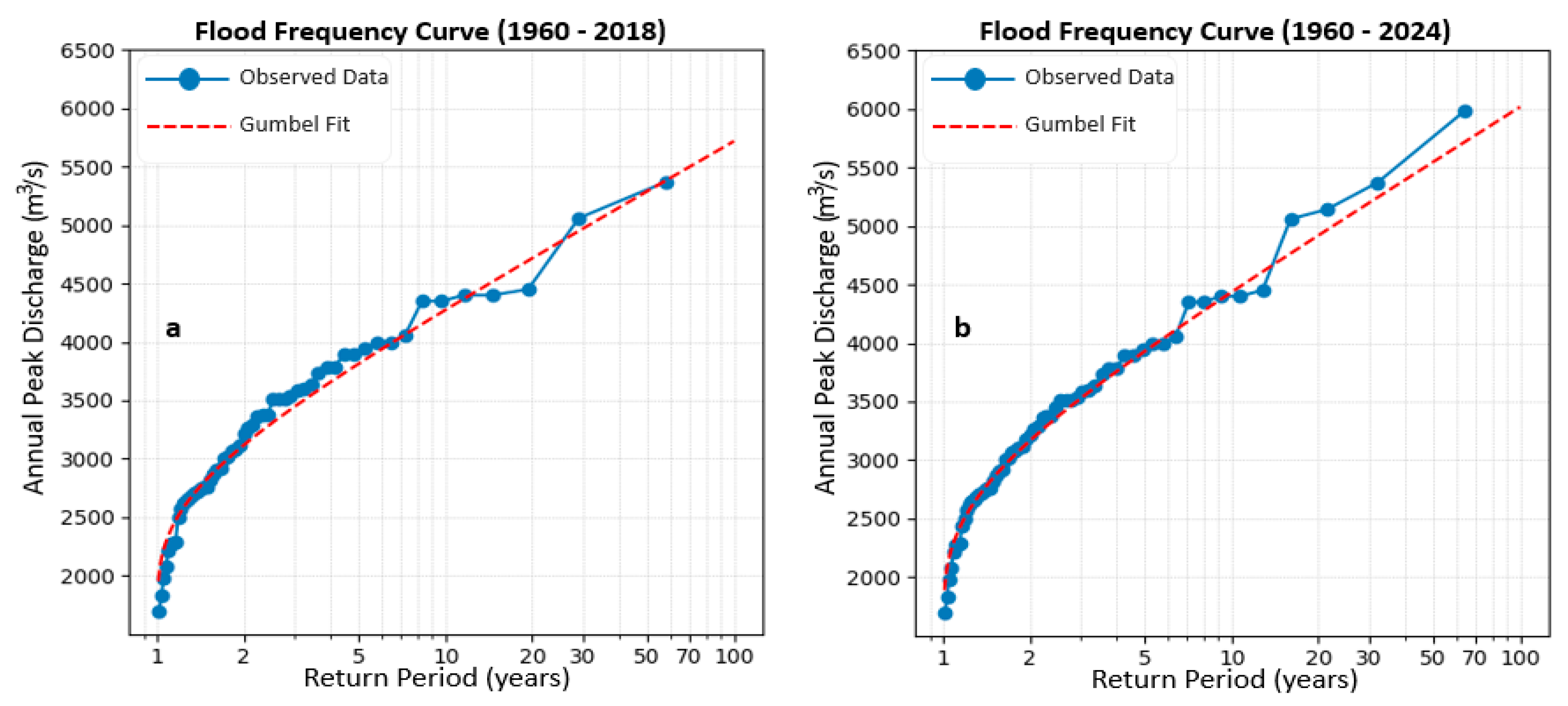



| Return Period (Years) | Annual Probability (%) | Hypothetical Flow (m3/s) 1960–2024 |
|---|---|---|
| 2 | 50 | 3165.50 |
| 5 | 20 | 3929.16 |
| 10 | 10 | 4434.77 |
| 25 | 4 | 5073.61 |
| 50 | 2 | 5547.54 |
| 100 | 1 | 6017.97 |
| 150 | 0.67 | 6292.29 |
| 200 | 0.50 | 6486.68 |
| 250 | 0.40 | 6637.37 |
| 300 | 0.33 | 6760.43 |
| Flood Depth Hazard | Depth [m] | Hazard Category | Flood Hazard Implications/Remarks |
|---|---|---|---|
| Hz1 | <0.5 | Low | Floodwater depths do not pose hazard to people and on-foot evacuation is possible. |
| Hz2 | 0.5–1.0 | Medium | Floodwater poses a hazard for infants, and on-foot evacuation of adults becomes difficult; evacuation becomes more complicated. |
| Hz3 | 1.0–2.0 | High | Flood depth is capable of drowning people. However, people may be safe inside their homes. |
| Hz4 | 2.0–5.0 | Very High | People are exposed to flood hazard even inside their homes. It is suggested to evacuate people via the roof of their homes. |
| Hz5 | >5.0 | Extreme | Built-up structures may get covered by the flood; people may drown, even if they evacuate through the roof of their homes. |
Disclaimer/Publisher’s Note: The statements, opinions and data contained in all publications are solely those of the individual author(s) and contributor(s) and not of MDPI and/or the editor(s). MDPI and/or the editor(s) disclaim responsibility for any injury to people or property resulting from any ideas, methods, instructions or products referred to in the content. |
© 2025 by the authors. Licensee MDPI, Basel, Switzerland. This article is an open access article distributed under the terms and conditions of the Creative Commons Attribution (CC BY) license.
Share and Cite
Oluwadare, T.S.; Chen, D.; McGrath, H. Integrating Remote Sensing Indices and Ensemble Machine Learning Model with Independent HEC-RAS 2D Model for Enhanced Flood Prediction and Risk Assessment in the Ottawa River Watershed. Appl. Sci. 2026, 16, 70. https://doi.org/10.3390/app16010070
Oluwadare TS, Chen D, McGrath H. Integrating Remote Sensing Indices and Ensemble Machine Learning Model with Independent HEC-RAS 2D Model for Enhanced Flood Prediction and Risk Assessment in the Ottawa River Watershed. Applied Sciences. 2026; 16(1):70. https://doi.org/10.3390/app16010070
Chicago/Turabian StyleOluwadare, Temitope Seun, Dongmei Chen, and Heather McGrath. 2026. "Integrating Remote Sensing Indices and Ensemble Machine Learning Model with Independent HEC-RAS 2D Model for Enhanced Flood Prediction and Risk Assessment in the Ottawa River Watershed" Applied Sciences 16, no. 1: 70. https://doi.org/10.3390/app16010070
APA StyleOluwadare, T. S., Chen, D., & McGrath, H. (2026). Integrating Remote Sensing Indices and Ensemble Machine Learning Model with Independent HEC-RAS 2D Model for Enhanced Flood Prediction and Risk Assessment in the Ottawa River Watershed. Applied Sciences, 16(1), 70. https://doi.org/10.3390/app16010070