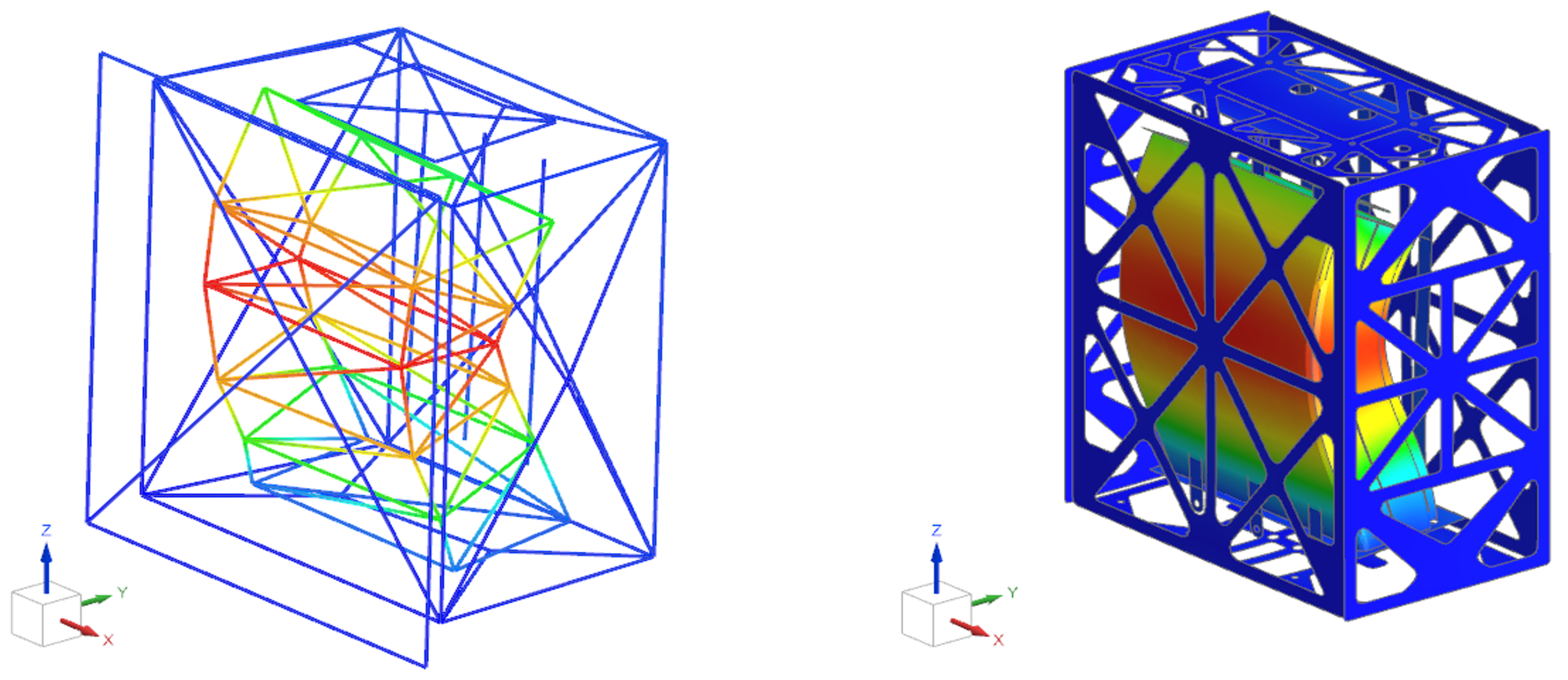
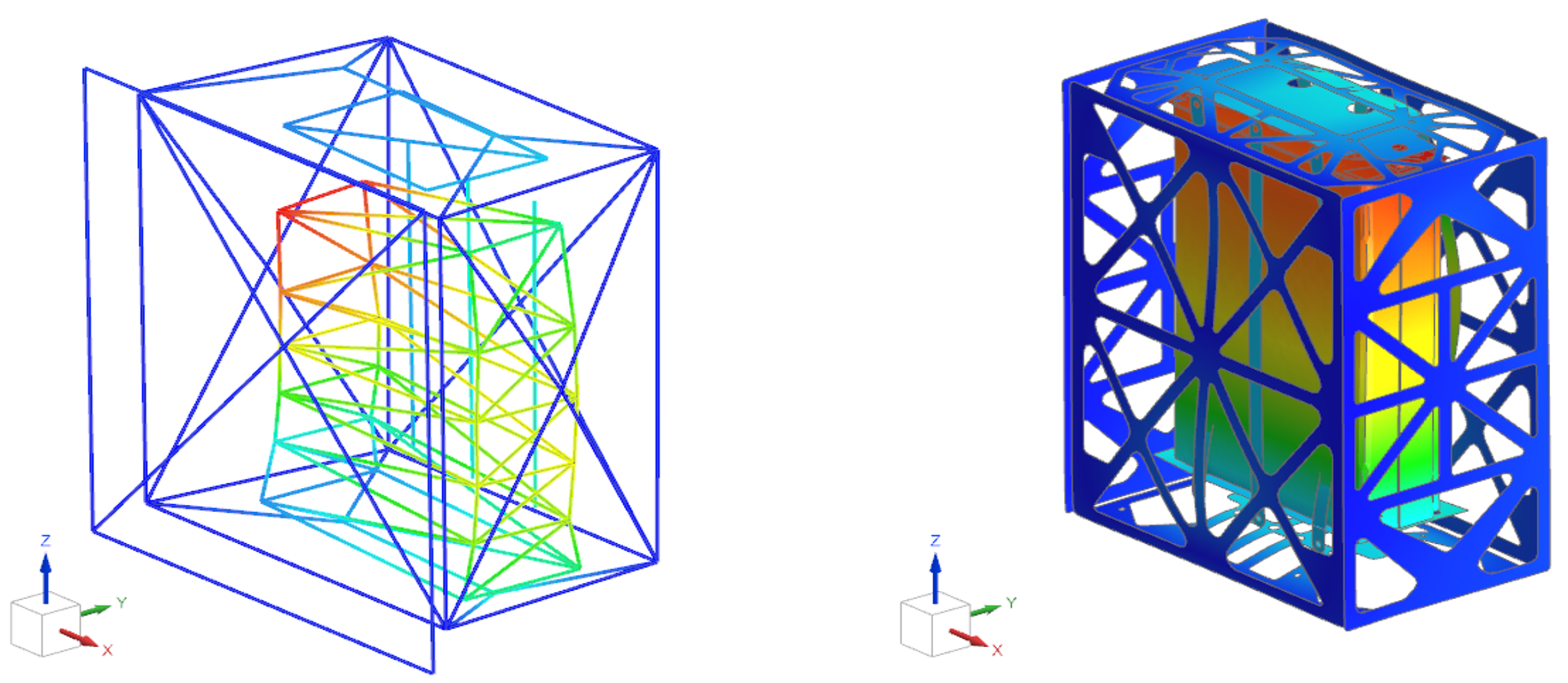
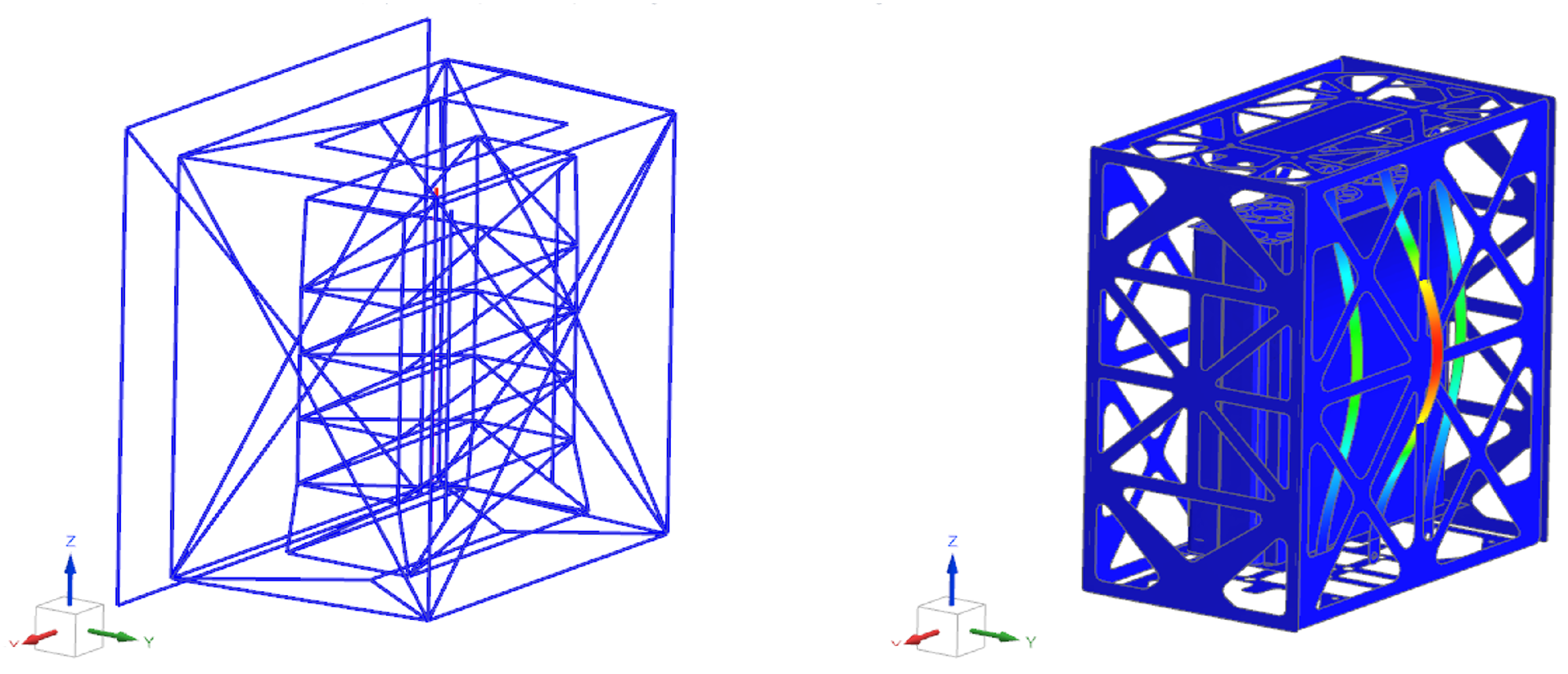
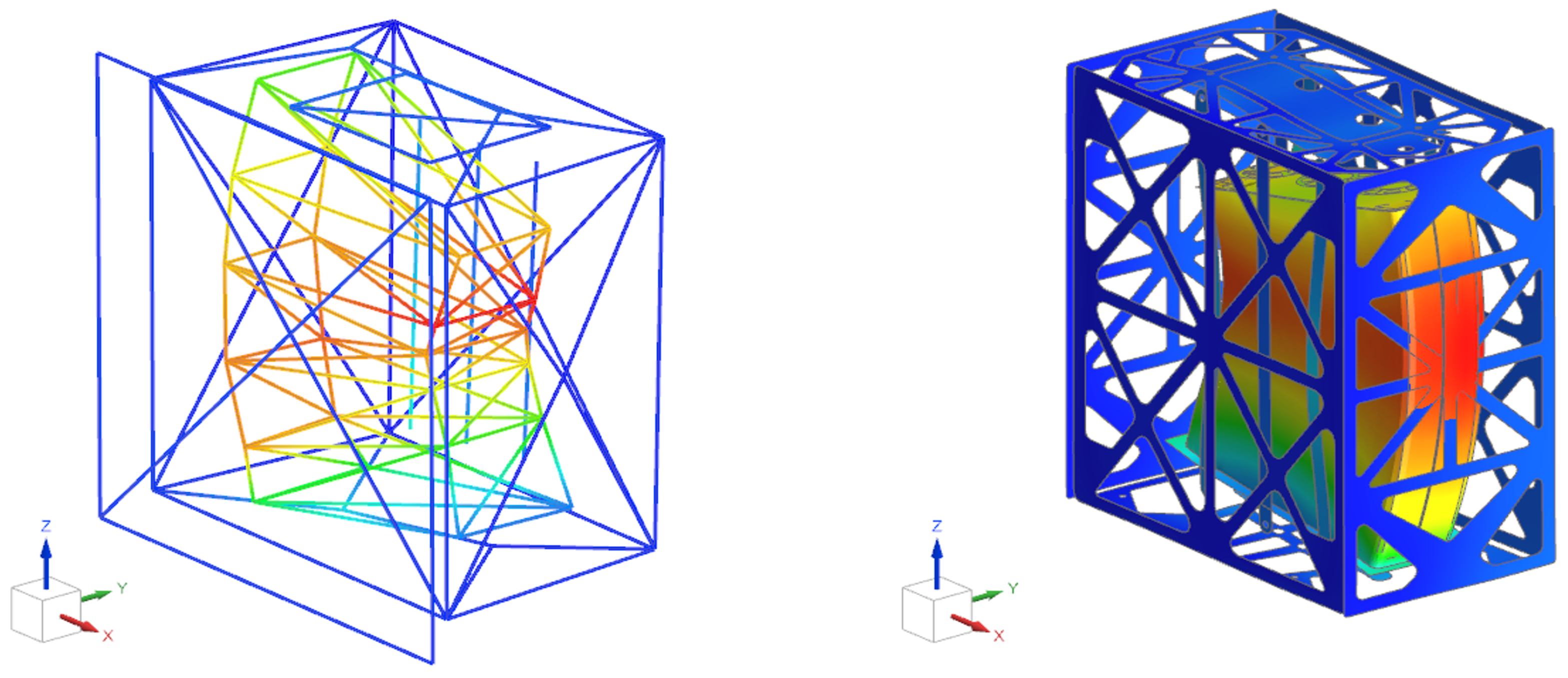
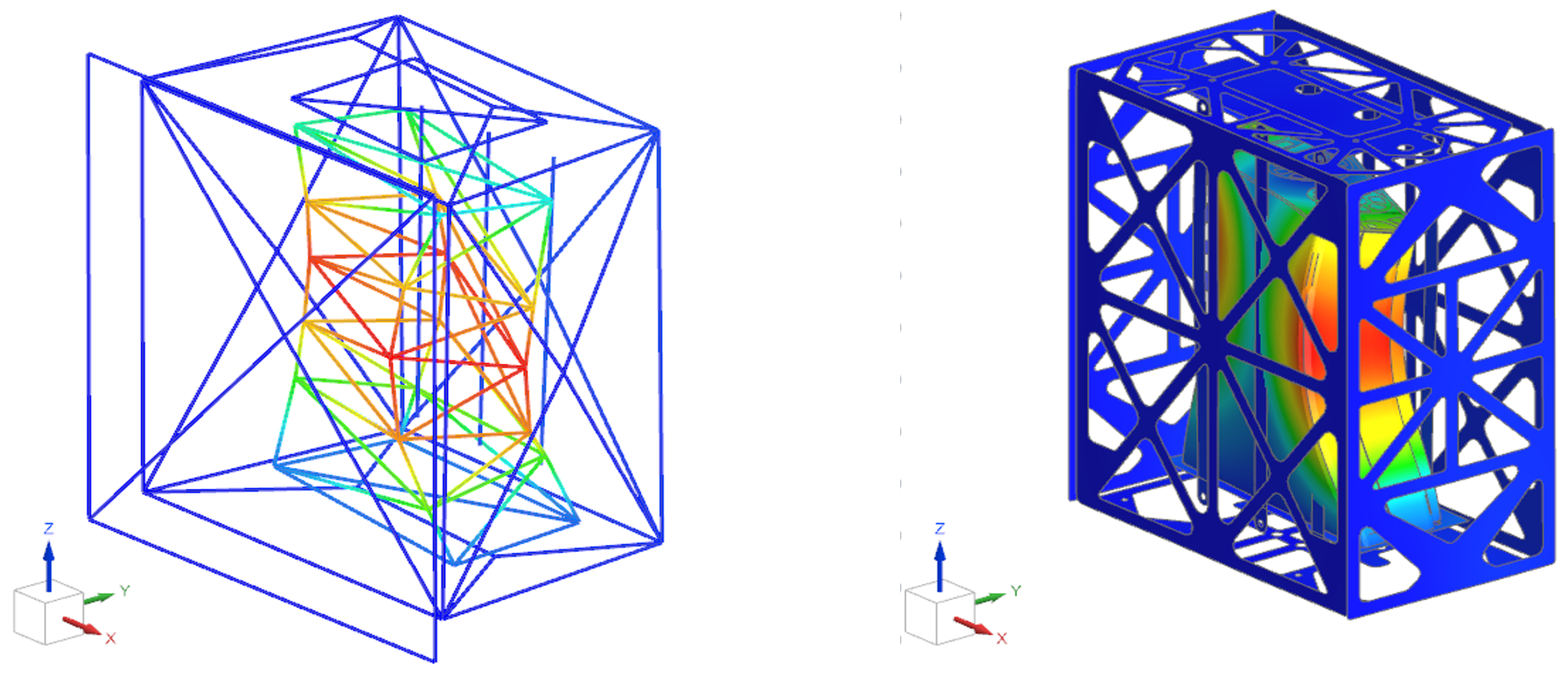
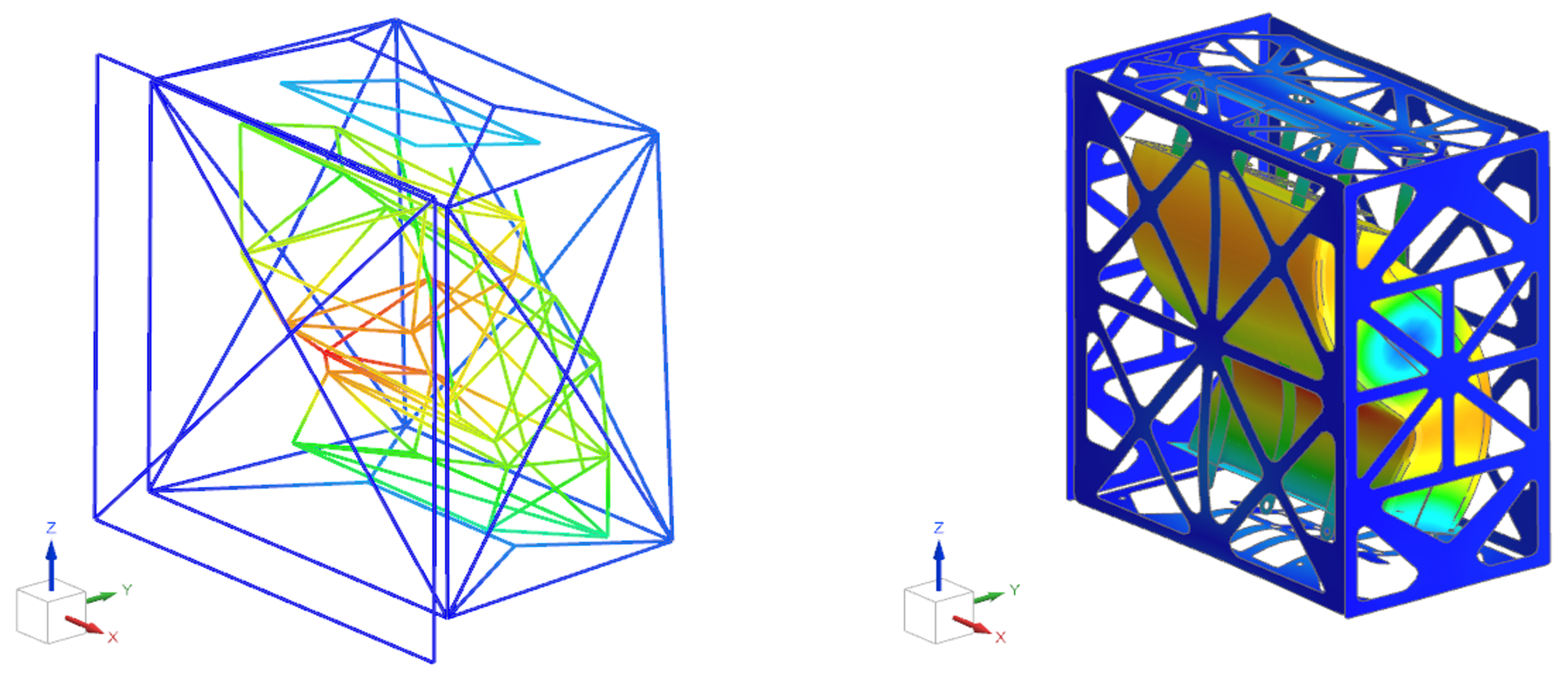
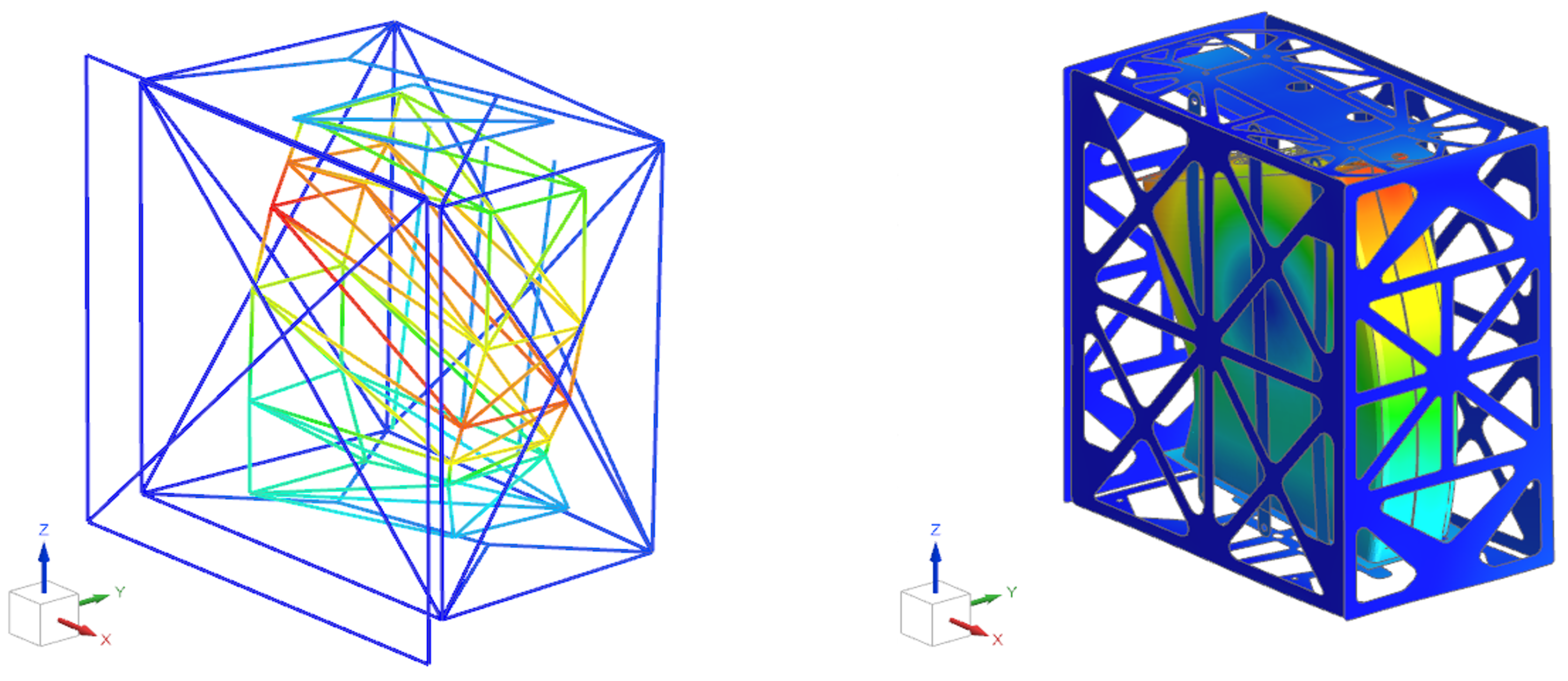
3.1. Numerical–Experimental Comparison of the FC Stack Dynamic Response
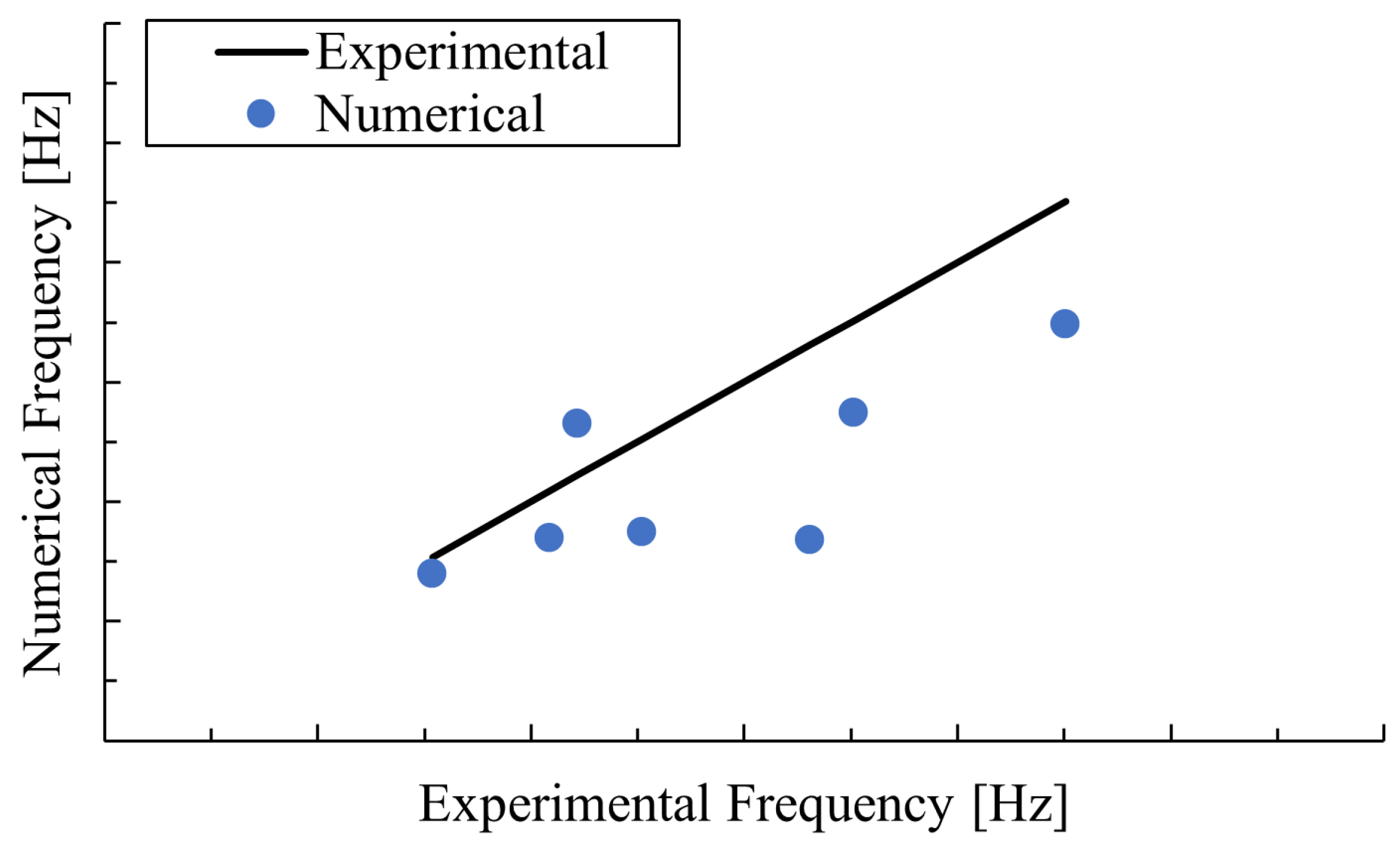
Damping values were selected based on experimental results from random vibration tests. Since these damping values correspond to the experimental resonant frequencies, slight frequency shifts were applied to better align the numerical resonant frequencies. The data were then linearly interpolated to cover the entire range from 0 to 300 Hz. For the dynamic analysis, a modal approach was adopted using a modal basis up to 600 Hz, twice the highest frequency investigated. Specifically, the responses were computed over a frequency range using a non-uniform step size, with finer resolution near the resonant frequencies to ensure precise evaluation while balancing accuracy with computational efficiency.
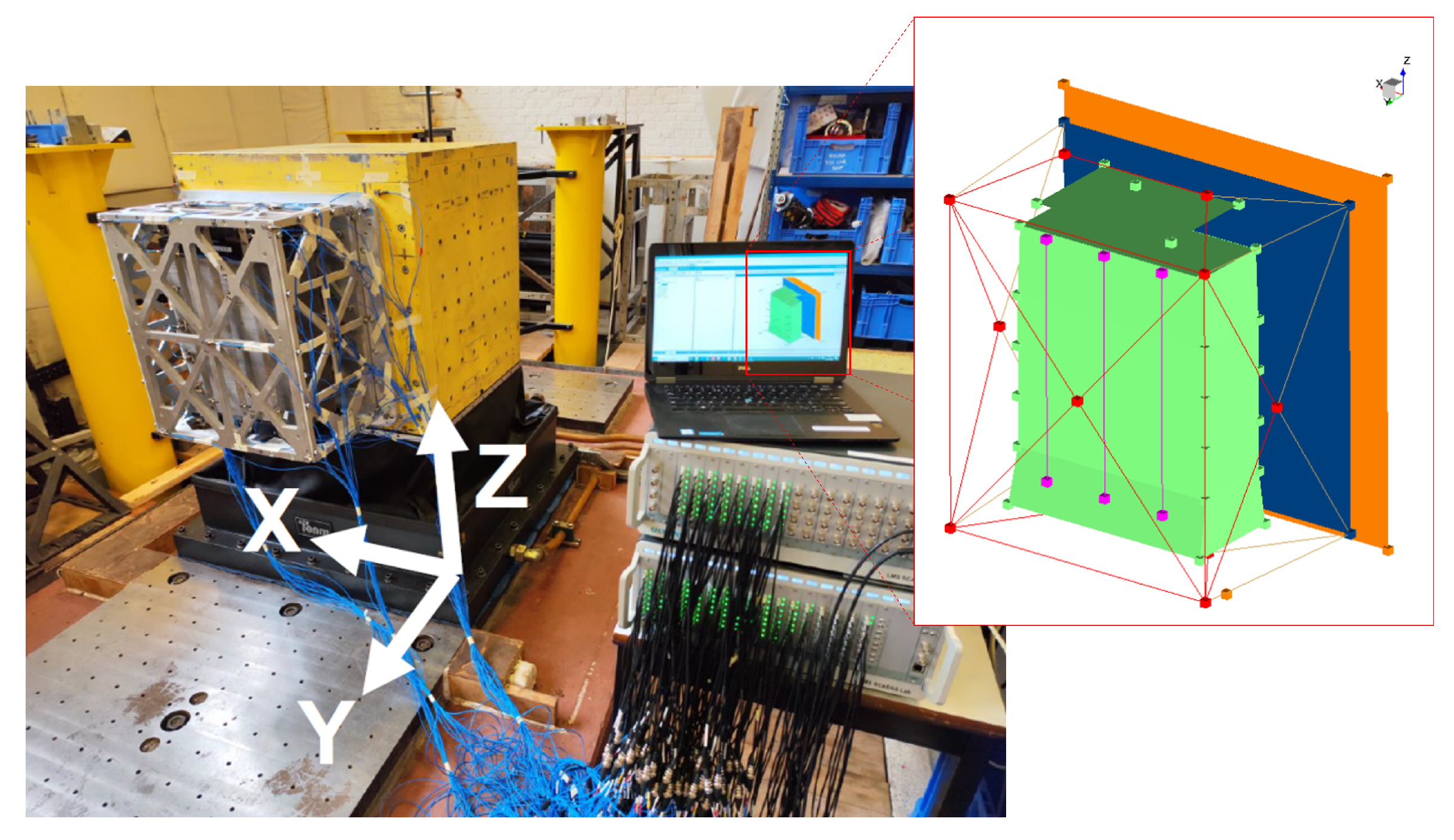
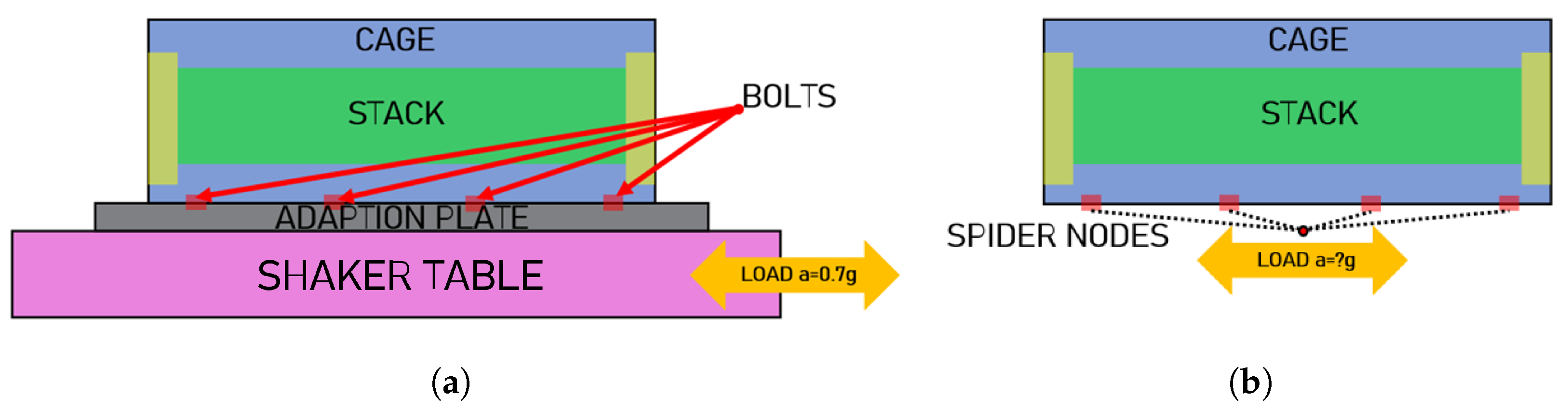
During the experimental campaign, a harmonic base excitation of 0.7 g was applied over the 10–300 Hz bandwidth, sequentially in the x, y and z directions. A control accelerometer mounted on the cube shaker table ensured that the desired input was accurately reproduced in the analyzed direction. The tuning of the FE model natural frequencies relied exclusively on the open-loop pseudo-random excitation run in the z direction, whereas the sine sweep tests in all three directions provide the comparison dataset discussed in the following. This choice allows residual numerical–experimental discrepancies to be more clearly attributed to unmodelled nonlinearities (e.g., bolted joints and contact interfaces) and to limitations in the representation of the test boundary conditions.
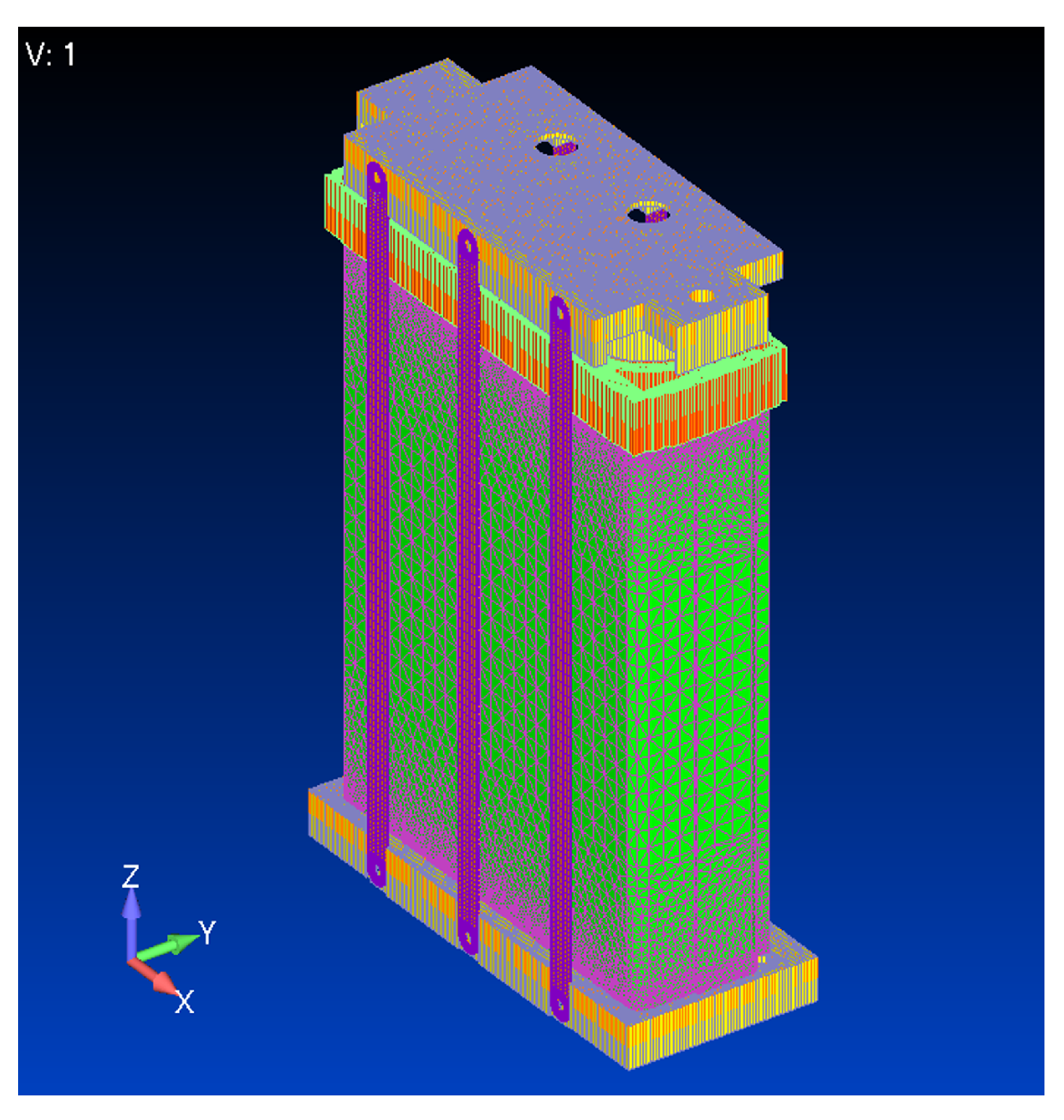
In the FE model, the adaptation plate was idealized as rigid and constrained with fully fixed boundary conditions (
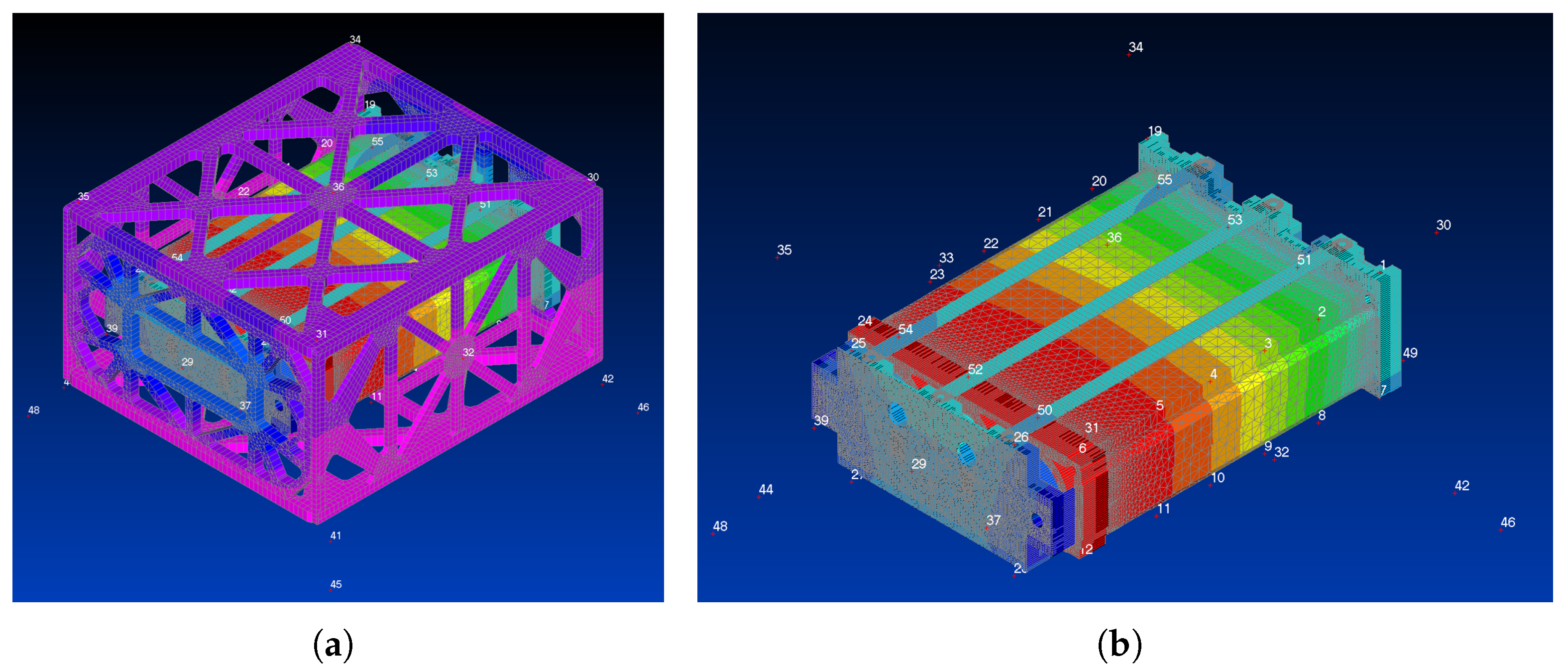
Figure 16). The bolt locations were kinematically coupled to a single reference node via spider links, and both the clamped constraint and the prescribed base acceleration were applied at this node for the dynamic analyses. This modeling choice effectively assumes that the adaptation plate undergoes a purely translational, spatially uniform base motion, thereby neglecting any rotational motion and spatial variability, even though the experimental data clearly indicate that the plate experiences both rotations and cross-axis motion.
The control system operates with a single-input single-output (SISO) strategy, regulating only the acceleration measured by one accelerometer in a single direction. As a result, the actual motion of the stack boundary is not straightforward to reproduce numerically. The four accelerometers mounted on the plate recorded non-zero acceleration components along the axes orthogonal to the intended input, revealing residual cross-axis motion, and their signals were not identical, indicating the presence of a rotational component in the plate motion.
To apply a realistic input to the numerical model and enable a meaningful comparison of dynamic responses, an approximate representation of the plate excitation was therefore constructed from the four accelerometer signals. Two averaging strategies were investigated:
Mean of the absolute amplitudes, namely the average of the magnitude of each plate sensor measurement (discarding phase information);
Magnitude of the mean signal, namely the absolute value of the complex-averaged time histories.
The resulting input differs, and in both cases the derived signal must be regarded as an approximation of the true plate excitation, since the use of averaged accelerometer data, although including the x, y, and z components, still neglects the spatial variability of the motion over the plate and the associated rotational degrees of freedom.
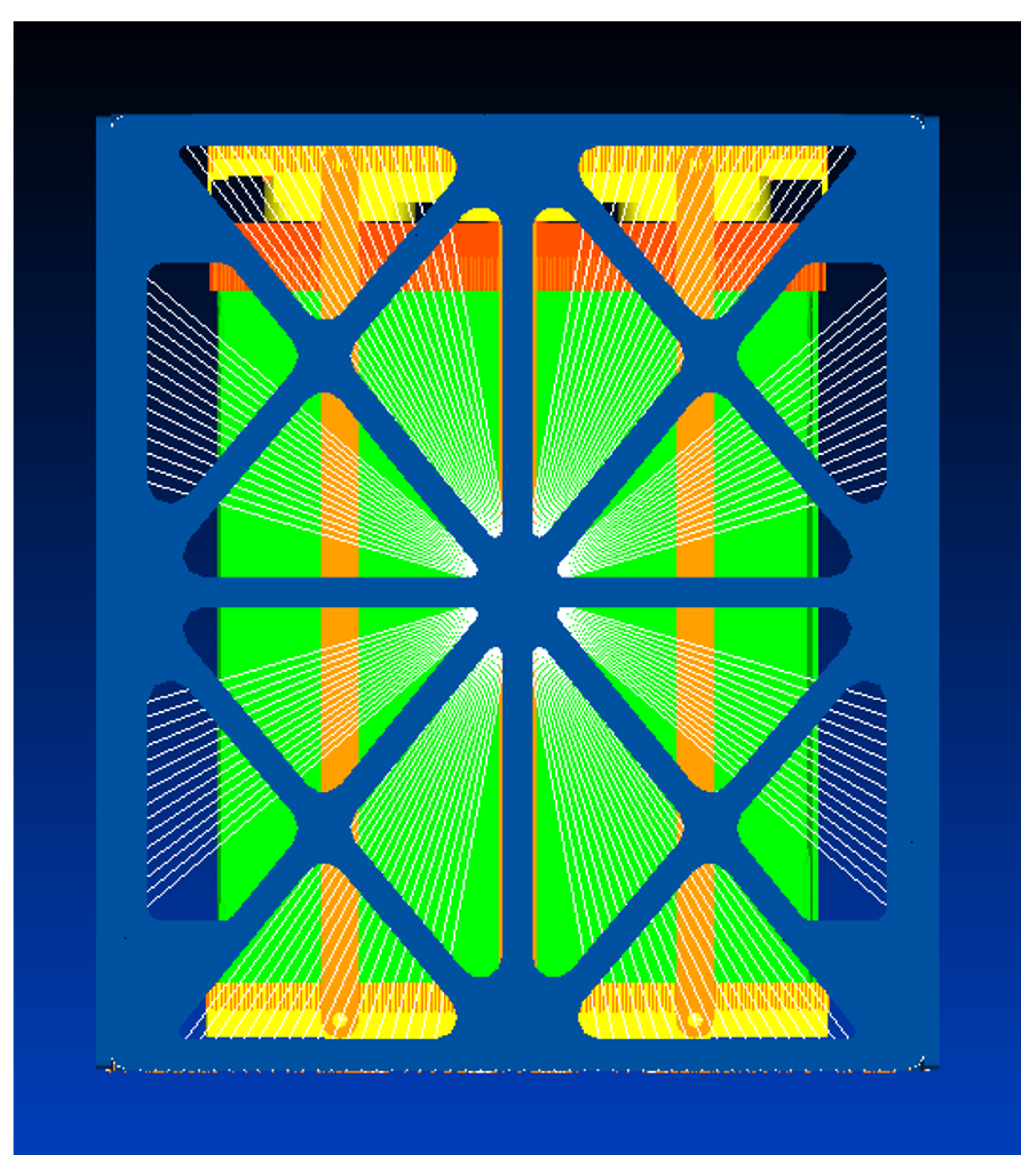
The following
Figure 17 identifies the sensor locations used to calculate the numerical dynamic responses and to compare them with the experimental measurements.
The curves derived from the arithmetic mean of the absolute plate accelerations reproduce the experimental trend more faithfully than the curve based on the absolute value of the complex-averaged signal. Moreover, since the phase information was purposely discarded in this approach, the comparison is only meaningful in the direction of excitation, where the imposed acceleration is controlled. Accordingly, when the stack is excited along the
x-axis, only the
x-axis response is analyzed, and when excited along the
y-axis, only the
y-axis response is examined and the same procedure is applied for
z-axis excitation.
Figure 18,
Figure 19,
Figure 20,
Figure 21,
Figure 22,
Figure 23,
Figure 24,
Figure 25 and
Figure 26 compare the predicted acceleration spectra in the
x,
y, and
z directions with the corresponding experimental measurements at each principal instrumentation location, namely, the stack, top end-plate, compression plate, bottom end-plate, cage, and compression bands.
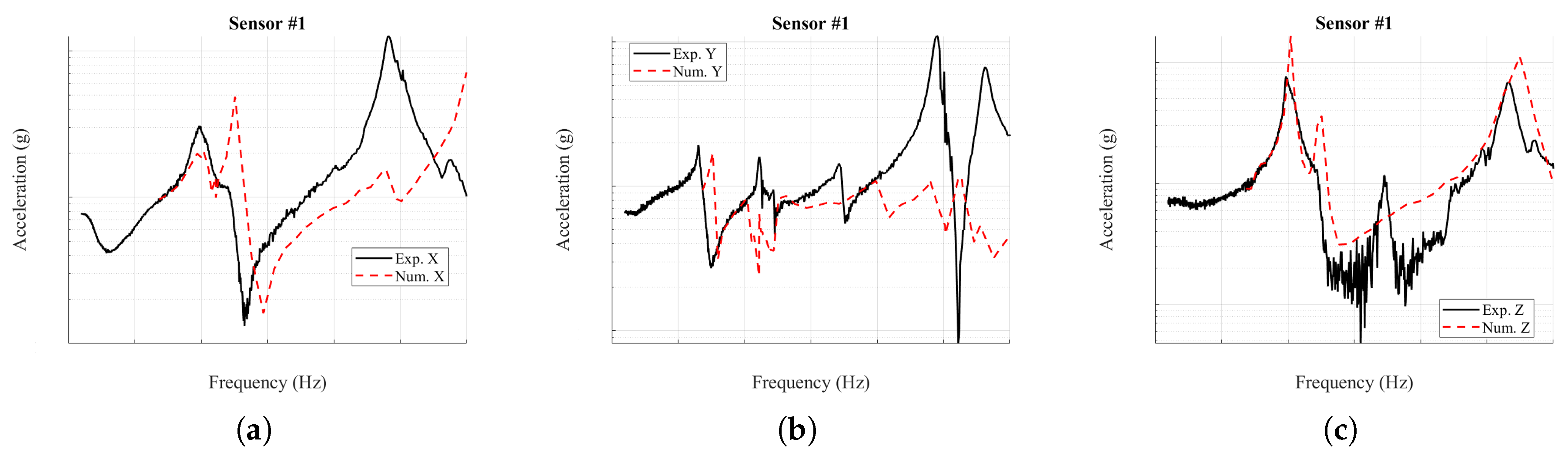
Figure 18 juxtaposes the experimental acceleration spectrum (solid black) with the finite element prediction (red dashed) obtained from accelerometer #1 on the bottom end plate. In the
x-direction, two resonant features dominate the response. The first, at low frequency, corresponds to the fundamental bending mode of the stack around the
x-direction. Because the imposed excitation is not perfectly uniaxial, small components in the orthogonal directions appear as well. The model reproduces this resonance at the correct frequency but slightly underestimates its amplitude, a discrepancy consistent with the approximations adopted for the input definition. A second resonance, associated with the fundamental bending mode of the stack around the
y-direction, appears clearly in the simulation yet is scarcely discernible in the test data, a difference that may stem from the actual manner in which the bottom end plate is attached to the cage. At higher frequency, a sharper peak representing the second
y-direction bending mode, in which the cage significantly participates, is located accurately, though its numerical amplitude remains below the measured value. Immediately after the first prominent numerical peak, the experimental trace reveals a deep anti-resonance. The simulation also captures this feature, albeit with a frequency shift. In the
y-direction, the experimental spectrum displays a cluster of closely spaced, low-amplitude peaks. The first of these is associated with the fundamental bending mode of the stack around the
x-direction. Although this resonance (from pseudo-random analysis) was used for tuning and the numerical model does exhibit a peak at the calibrated frequency, a residual frequency offset remains, attributable to the stack’s nonlinear behavior, which is not characterized in the simulation. The peak magnitude, however, is reproduced accurately. Two further resonances follow, the second
y-bending mode and the second
x-bending mode. As observed for the previous axis, the largest high-frequency peak evident in the test data is underestimated by the finite element prediction. Along the
z-axis, the low-frequency response is governed by the stack’s fundamental axial mode. The numerical analysis pinpoints this resonance with great accuracy, but its amplitude is slightly over-predicted, implying that the real structure is marginally stiffer than assumed. The simulation also shows a secondary peak arising from the fundamental
y-bending mode, most likely excited by small out-of-plane components of the shaker input. Coherently, the immunity test results discussed in the next subsection, where only
z-axis excitation was applied, exhibit no peak at this frequency. A complementary situation is observed at mid band, where the second
y-bending mode of the stack makes a small contribution to the measured z response, yet this feature is absent in the numerical spectra, again suggesting that the idealized input in the model lacks the cross-axis components present in the experiment. At higher frequency, the second axial mode is captured with good fidelity, though both its frequency and amplitude are modestly overestimated.
Figure 19,
Figure 20,
Figure 21 and
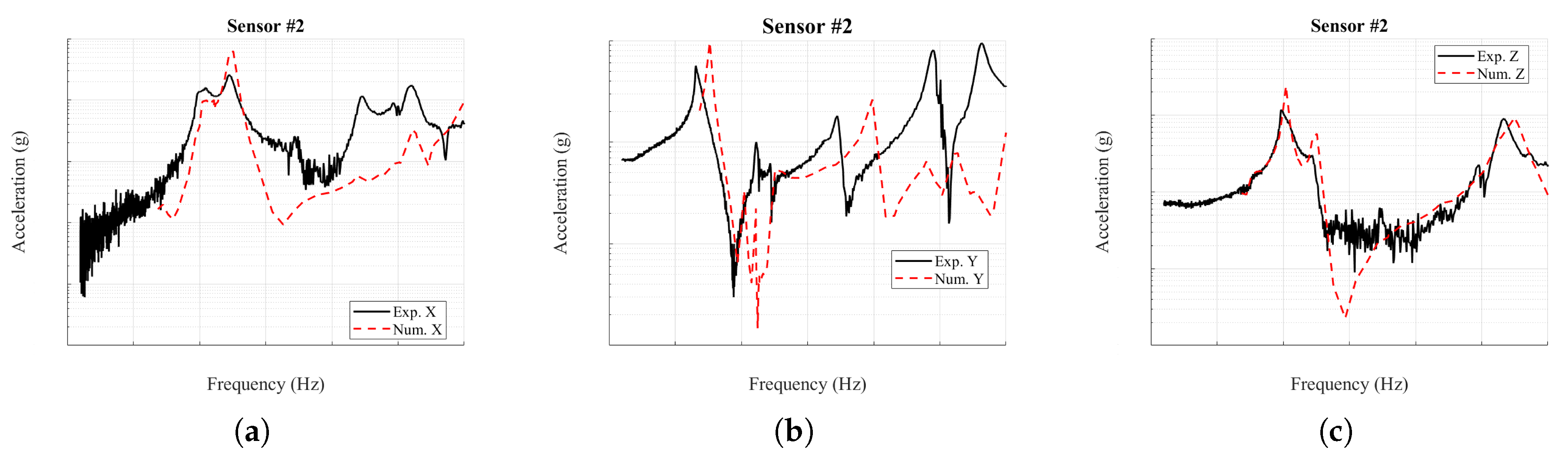
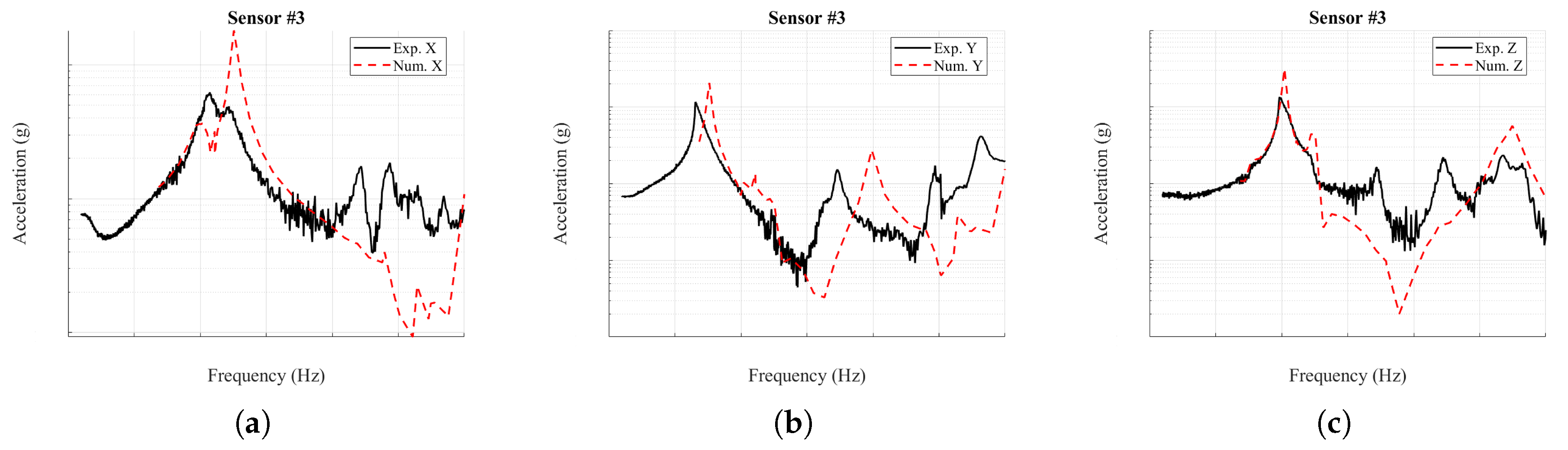
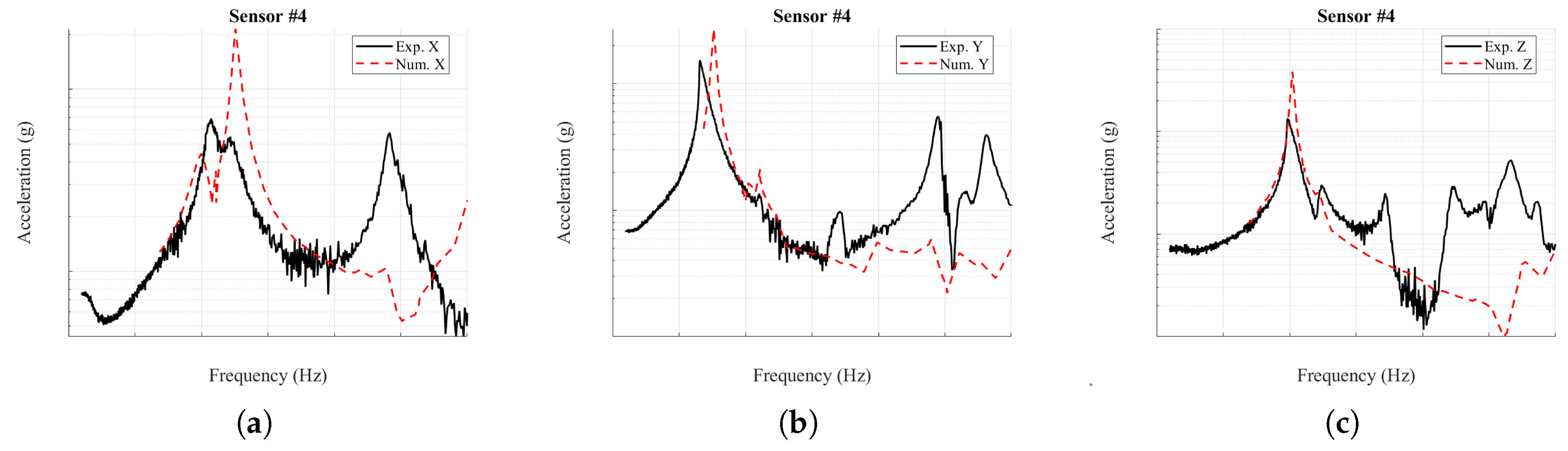
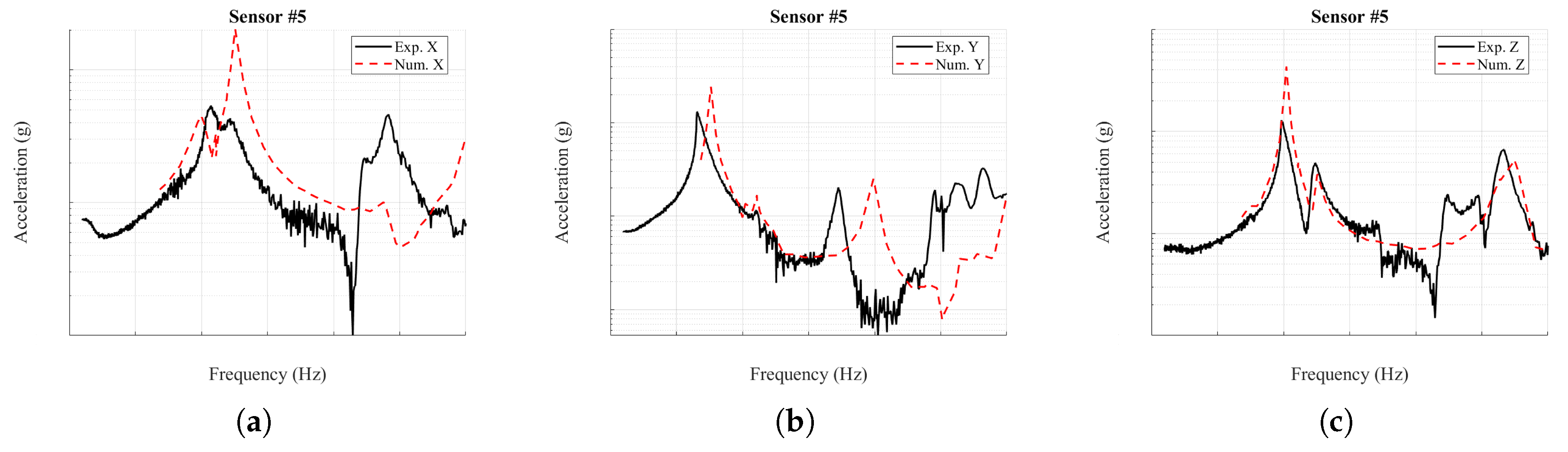
Figure 22 present the measured and simulated dynamic responses at sensors #2 to #5, which are positioned progressively from the base to the top of the cell package. Although each subplot refers to a different transducer and one of the three orthogonal directions, the graphs provide similar insights. In every case, the finite element model identifies the fundamental resonances with notable accuracy. The first global mode, namely the stack bending around the
x and
y directions and stack extension for
z, appears at almost the same frequency in both experiment and simulation. The main variation from one sensor to the next lies in amplitude rather than frequency. For the
x and
y components, the acceleration at the first bending resonance increases from sensor #2 near the base, peaks mid height, and then diminishes toward sensor #5 at the top. The numerical curves reproduce the same distribution, confirming that the model captures the modal shape, yet they slightly overestimate the growth, so the simulated peaks exceed the measurements, most noticeably in the
x-response. The
z-component behaves differently, specifically, its first resonance amplitude remains almost uniform along the height, a feature that the model replicates, although with a systematic overprediction. At higher frequencies, additional modes govern the response. For the
x-direction, the second
x-bending mode of the stack is prominent experimentally but is only partially reproduced numerically. In the
y-direction, the first
y-bending and second
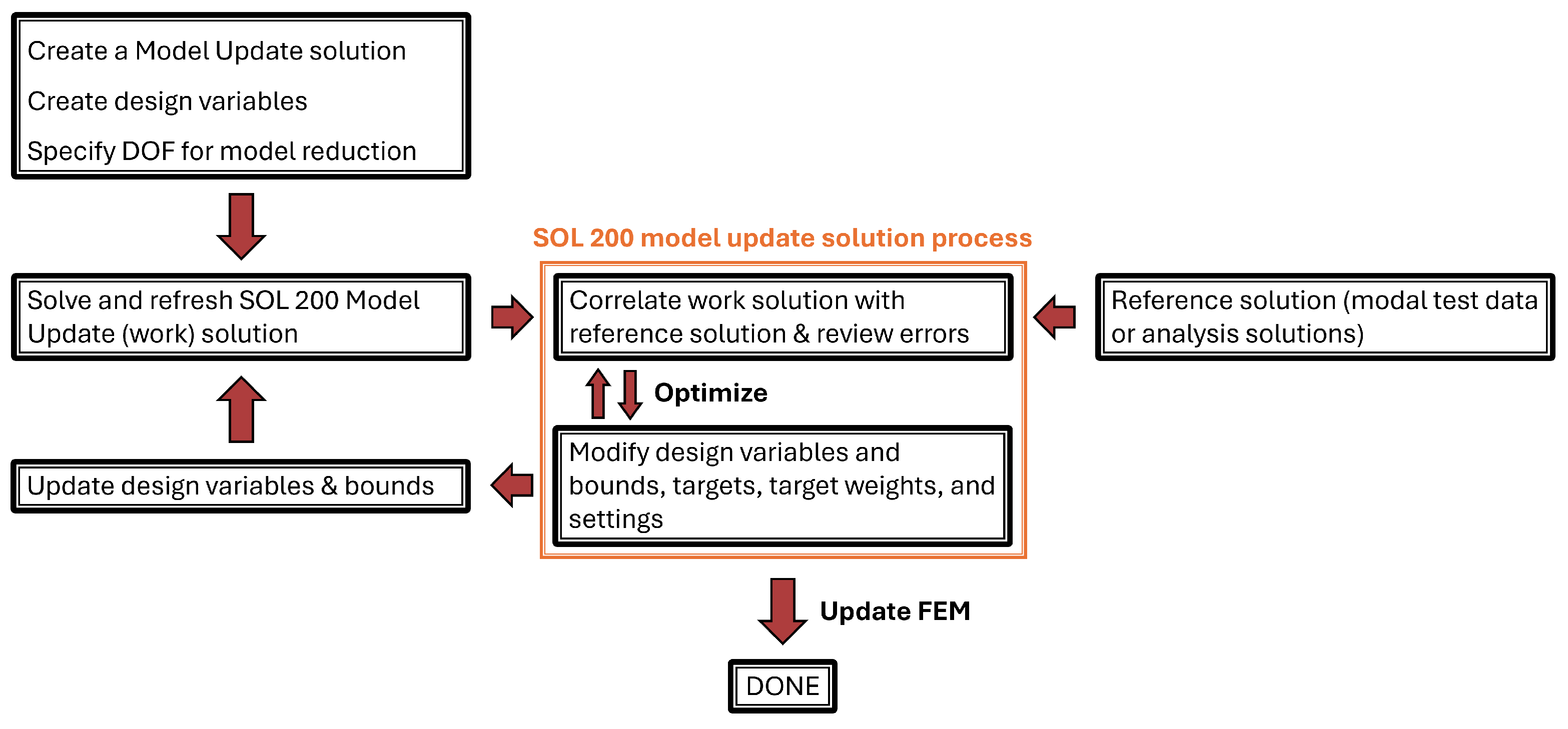
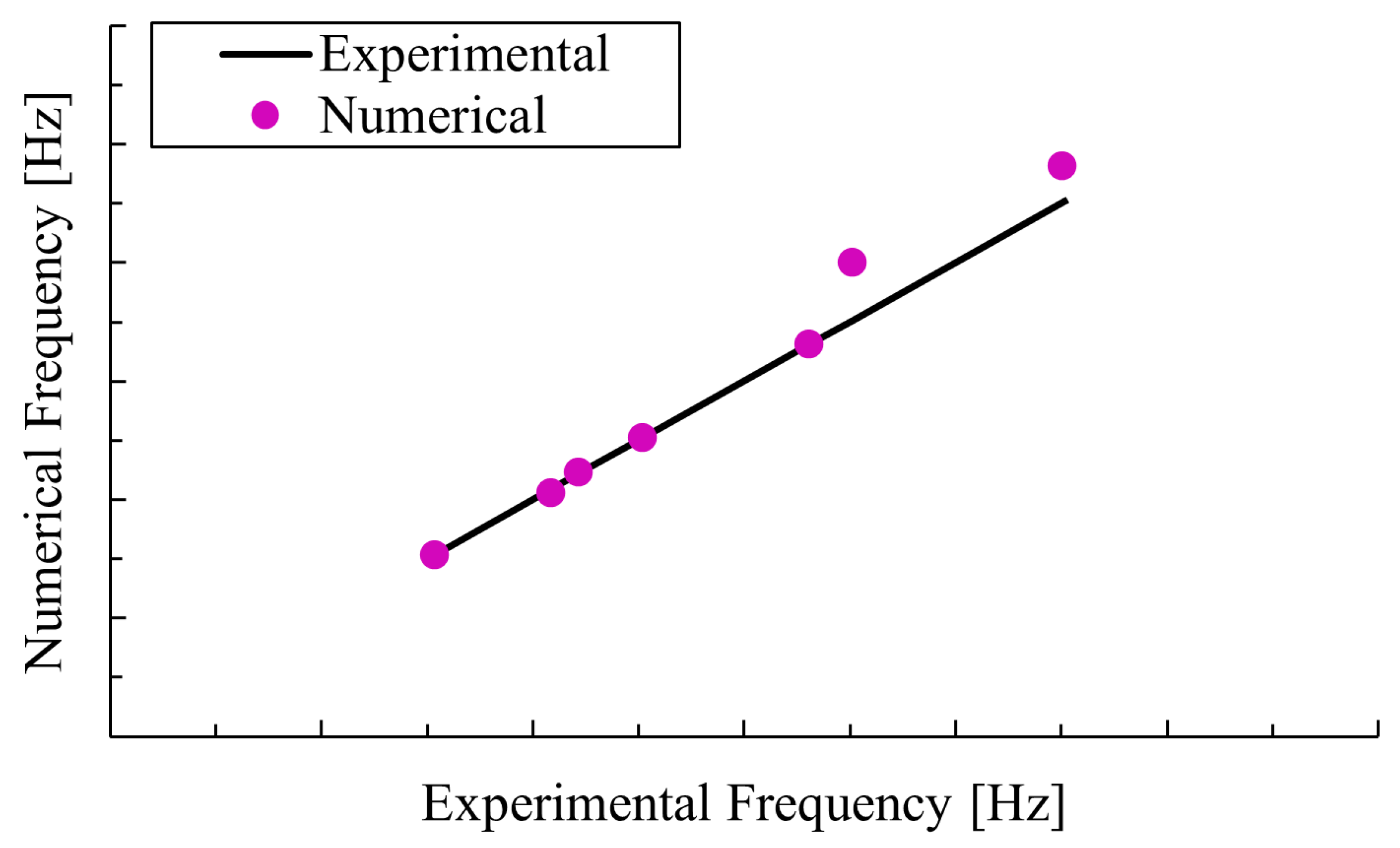
y-bending modes appear. The former is matched in amplitude but shows a slight frequency shift, while the latter is poorly represented. This discrepancy can be attributed in part to cross-axis input components that are only approximately prescribed in the numerical model, allowing certain experimentally excited modes to go unpredicted. Furthermore, the model updating procedure calibrated only the first seven experimental modes, those below approximately 300 Hz, leaving modes in the 300-600 Hz range untuned. Although the influence of these higher modes diminishes with frequency, they still affect the spectra beyond 150 Hz, so their exclusion could account for much of the residual discrepancy observed at higher frequencies. In the
z-direction, the response is captured reasonably well except at sensor #4, where the model predicts a nodal plane inconsistent with the experiment. Smaller peaks produced by mixed-axis excitation appear in the measurements but are absent from the simulations, reflecting the idealized nature of the imposed input in the numerical analysis.
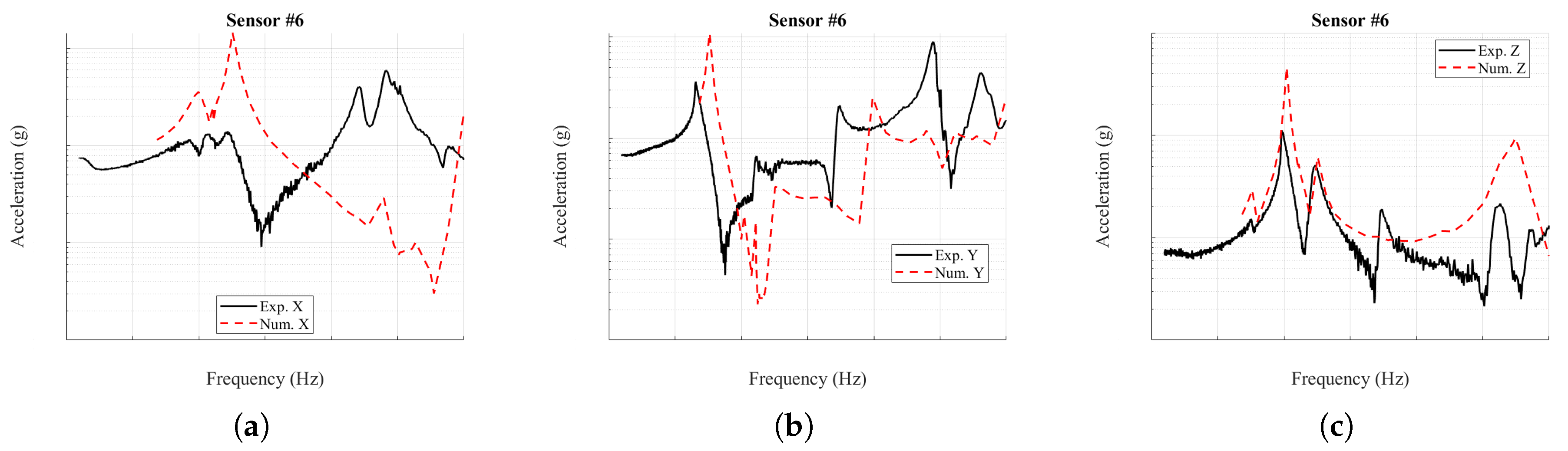
Figure 23 compares the experimental and numerical acceleration spectra obtained from sensor #6 on the compression plate. Along the
x-axis, the prediction diverges appreciably from the test data, even though the principal resonance is positioned correctly in frequency. In the
y-direction, the response is dominated by the same low-frequency component observed at the bottom end-plate mounted sensors. The simulation, instead, reproduces the sequence of resonance and anti-resonance, but the entire pattern is shifted in frequency, and the computed amplitudes, while of the correct order of magnitude, remain systematically higher. For the
z-axis, the model identifies the fundamental and second axial modes within a few hertz of their measured positions yet overestimates the peak amplitudes, most notably at the fundamental.
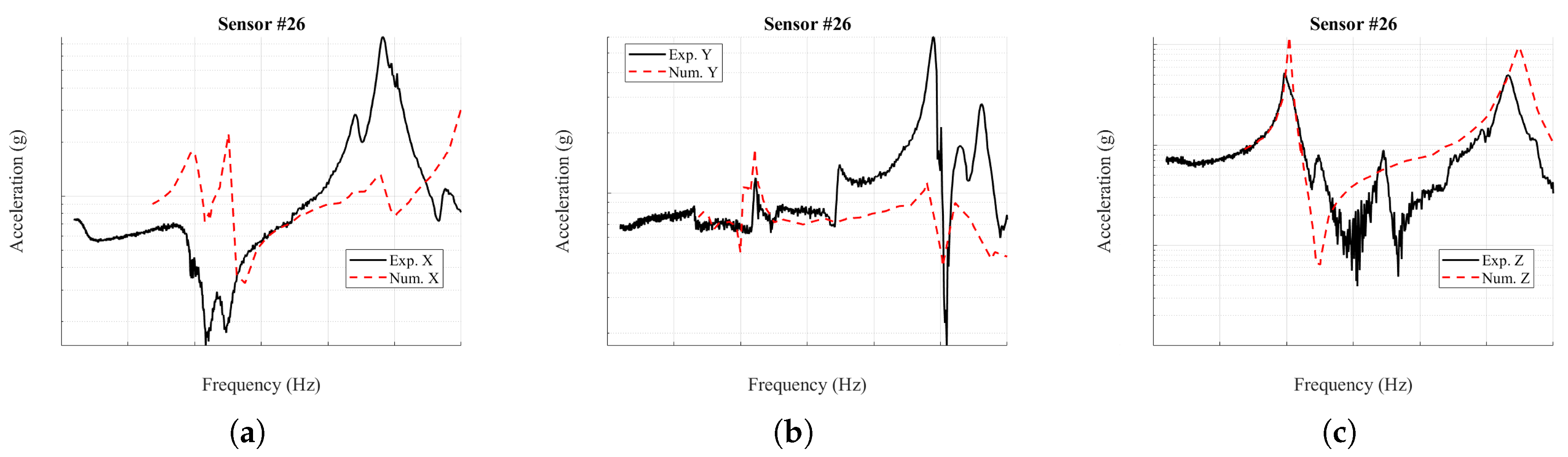
Figure 24 compares the experimentally acquired and numerically simulated acceleration spectra for sensor #26, which is mounted on the stack’s top end-plate. Along the
x-axis, the finite element model reproduces the principal resonant behavior. Specifically, the first resonance is matched in frequency, the anti-resonant trough evident in the test data appears but is less pronounced, the following peak is overestimated, and the model subsequently underpredicts the amplitude of the highest frequency resonance. In the
y-direction, the simulation reflects the low-frequency broadband content and the first resonance with comparable accuracy, yet, at higher frequencies, it mirrors the trend seen for the
x-axis by underestimating the dominant resonance, notwithstanding its correct frequency prediction. For the
z-axis, the response is governed by two marked resonances corresponding to the fundamental and the second axial mode of the stack. Both frequencies are captured with high fidelity, although their peak amplitudes are slightly overpredicted.
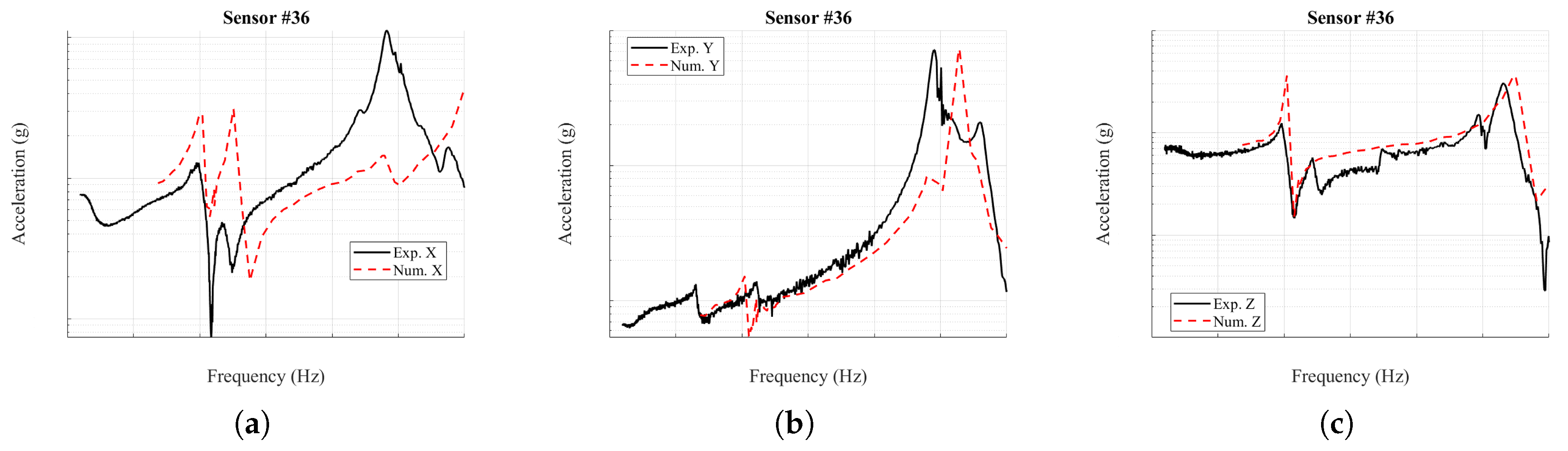
Figure 25 compares the measured and simulated acceleration spectra recorded by sensor #36, mounted on the external cage. Along the
x-axis, the behavior mirrors that already discussed for sensor #26. For the
y-axis, the numerical response traces the gradual broadband rise observed in the test and replicates the first resonance with satisfactory amplitude, though with a slight upward frequency shift. Beyond this, the simulation continues to track the experimentally observed attenuation at higher frequencies. The
z-axis again exhibits the strongest agreement. Two dominant resonances govern the response, and both are predicted within a few hertz of the test values. The model slightly overestimates the amplitude of the first peak, matches the second peak almost exactly, and reproduces the intervening anti-resonance with good fidelity.
Finally,
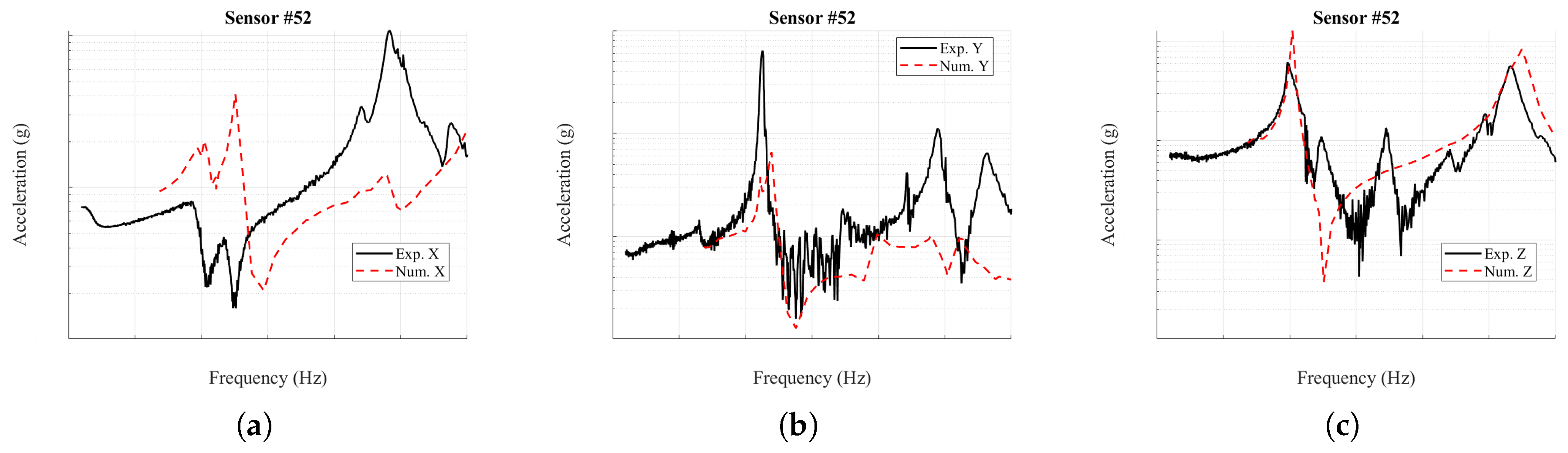
Figure 26 presents the acceleration spectra recorded by sensor #52 on the compression band alongside the corresponding FE predictions. Along the
x-direction, the model exhibits the same trends already noted for sensors #26 and #36. In the
y-direction, the experimental response is dominated by a pronounced low-frequency resonance. The simulation locates this peak slightly higher in frequency and markedly underestimates its amplitude, and it continues to underpredict the response over the rest of the band. The
z-direction is again controlled by two principal resonances whose frequencies are reproduced within a few Hertz, while both peak amplitudes are marginally overestimated.
In summary, the FE model captures the fundamental resonant frequencies of the stack with remarkable accuracy across all sensors, correctly identifying bending modes around the x- and y-directions and axial modes in z. Consistency in amplitude is weaker. Responses along z are generally over-predicted, whereas high-frequency peaks in the in-plane directions tend to be underestimated. Even so, the simulation reproduces the overall dynamic behavior of the stack. The remaining gaps are chiefly attributable to the real structure’s nonlinear response, the idealized constraints assumed in the analysis, and the simplified characterization of the base excitation, particularly with regard to the cross-axis input components.
3.2. Preliminary Immunity Analysis
A preliminary immunity assessment of the tuned fuel cell stack was conducted in accordance with RTCA/DO-160G standards. The evaluation considered both harmonic and shock pulse excitations, applied independently along the
x,
y, and
z axes. In each scenario, a single excitation was applied in the positive direction of the considered axis, under the assumption of geometric and boundary condition symmetry, so that the corresponding response to a negative pulse would be identical in magnitude. The dynamic response was measured at the same location used for the experimental–numerical comparison.
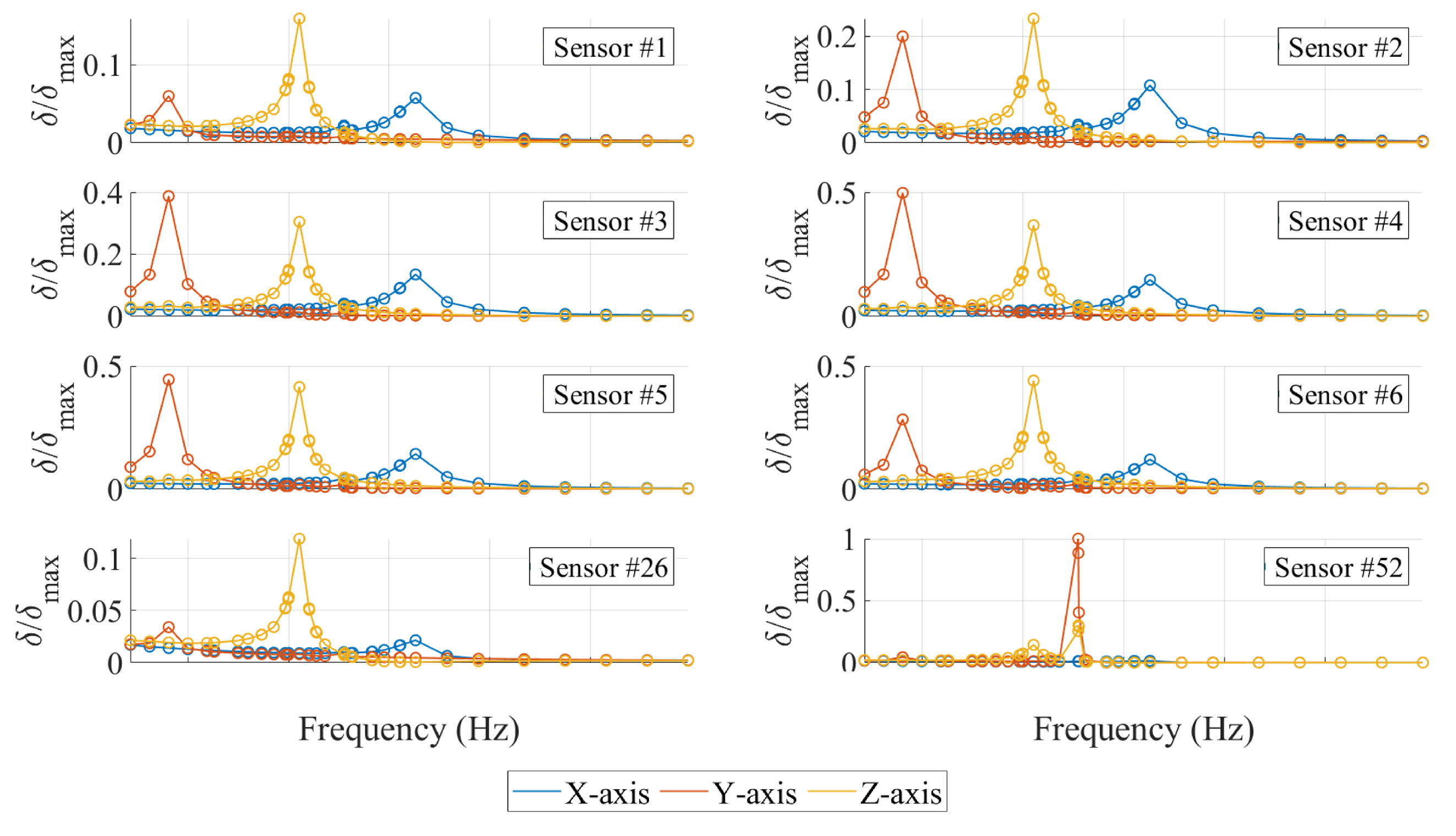
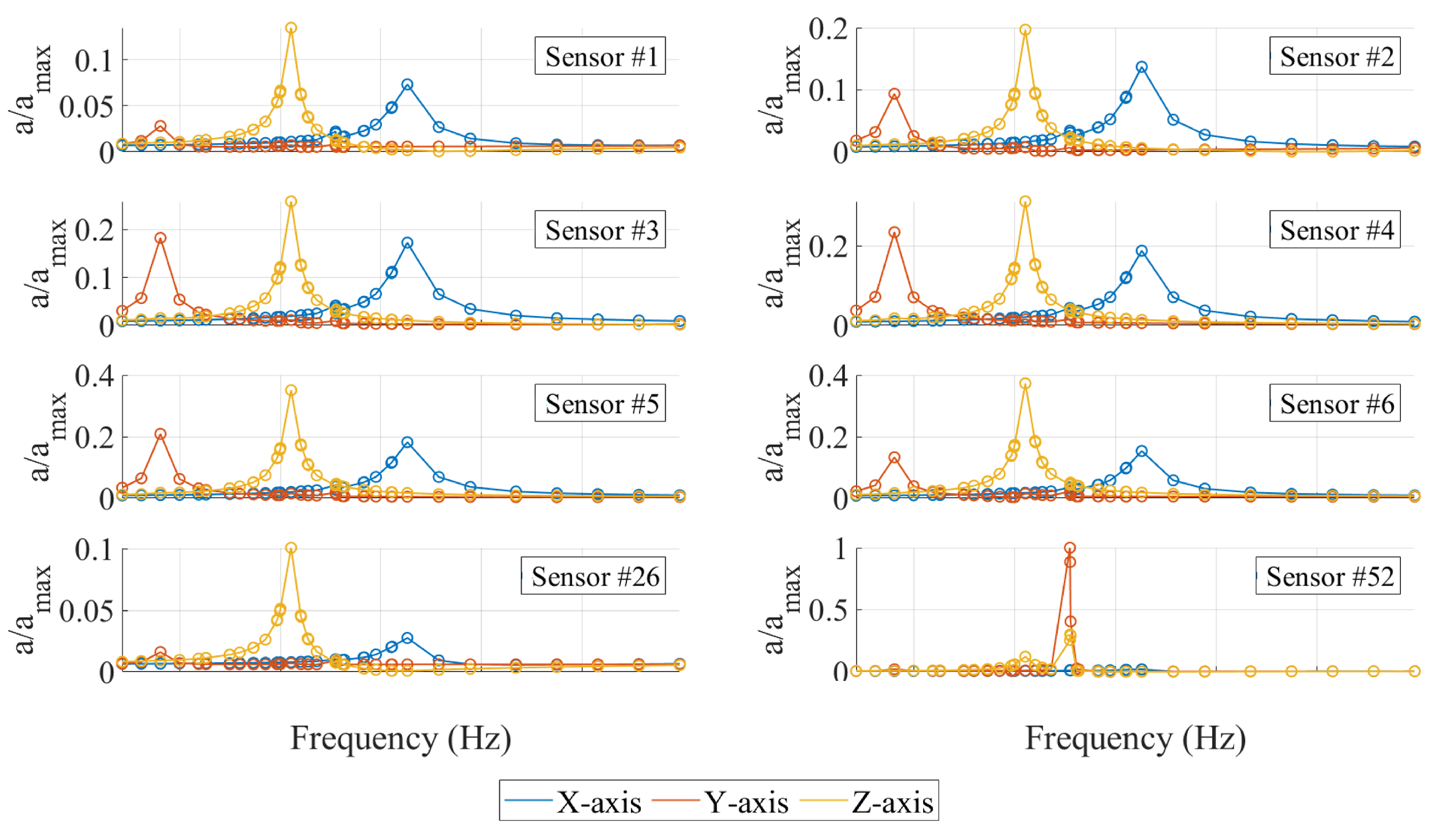
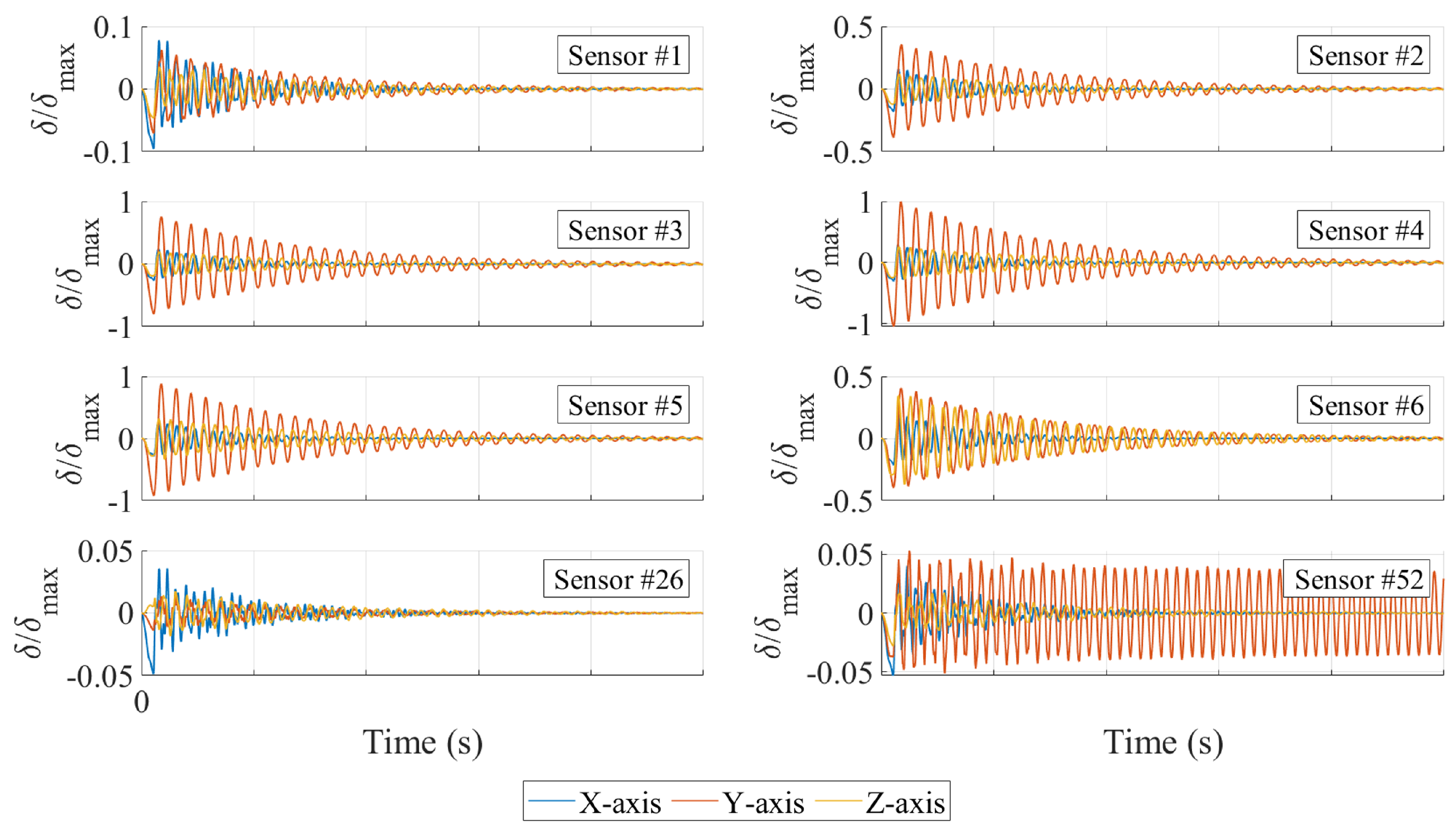
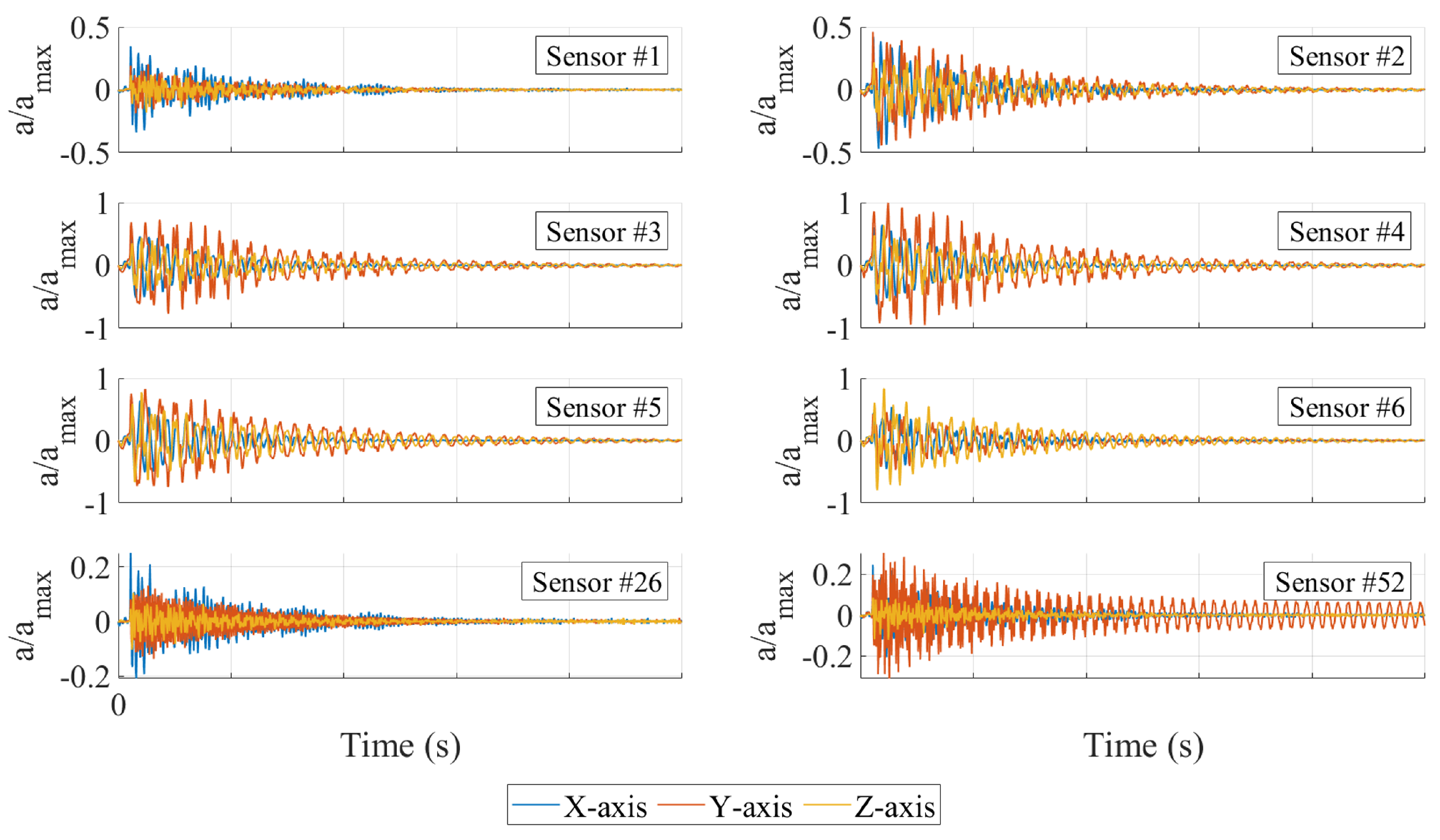
Figure 27 presents a summary of the harmonic response results, showing the ratio of total displacement amplitudes. This ratio is defined as the measured displacement at a given sensor relative to the maximum displacement observed across all sensors. The corresponding acceleration ratio spectra in the three orthogonal directions are shown in
Figure 28.
Figure 27 exhibits three distinct resonance clusters within the frequency range of interest. The lowest frequency peak is governed by bending around the
x-axis. At this mode sensor #4, positioned at mid height of the cell package, records the largest normalized displacement for that component. In the compression bands the response is determined mainly by the first bending of the bands themselves rather than by global stack modes. Because of the comparatively large moment of inertia, the
x-axis contribution remains almost negligible, whereas the
y-axis shows the greatest relative displacement and therefore serves as the reference for the normalization of the displacement ratios. The second intermediate frequency peak is associated with the axial (
z-direction) mode and is particularly relevant for the top and bottom end plates. The third and highest frequency peak results from bending around the
y-axis. The amplitudes rarely exceed a ratio of 0.2, indicating that this mode is less critical than the others, yet careful control of the
y-axis response remains essential because it defines the upper bound of the displacement envelope. In contrast to the displacement results, the acceleration response is dominated by the
z-axis. Outside the compression band resonances, it consistently attains the largest normalized amplitudes across the stack. Within the compression bands, however, the dynamics differ. There the
y-axis still produces the highest levels, mirroring its behavior in the displacement plots. The remaining two resonant peaks associated with bending around the
y- and
x-axes remain of comparable magnitude at all sensor locations (except for sensor #52).
For completeness,
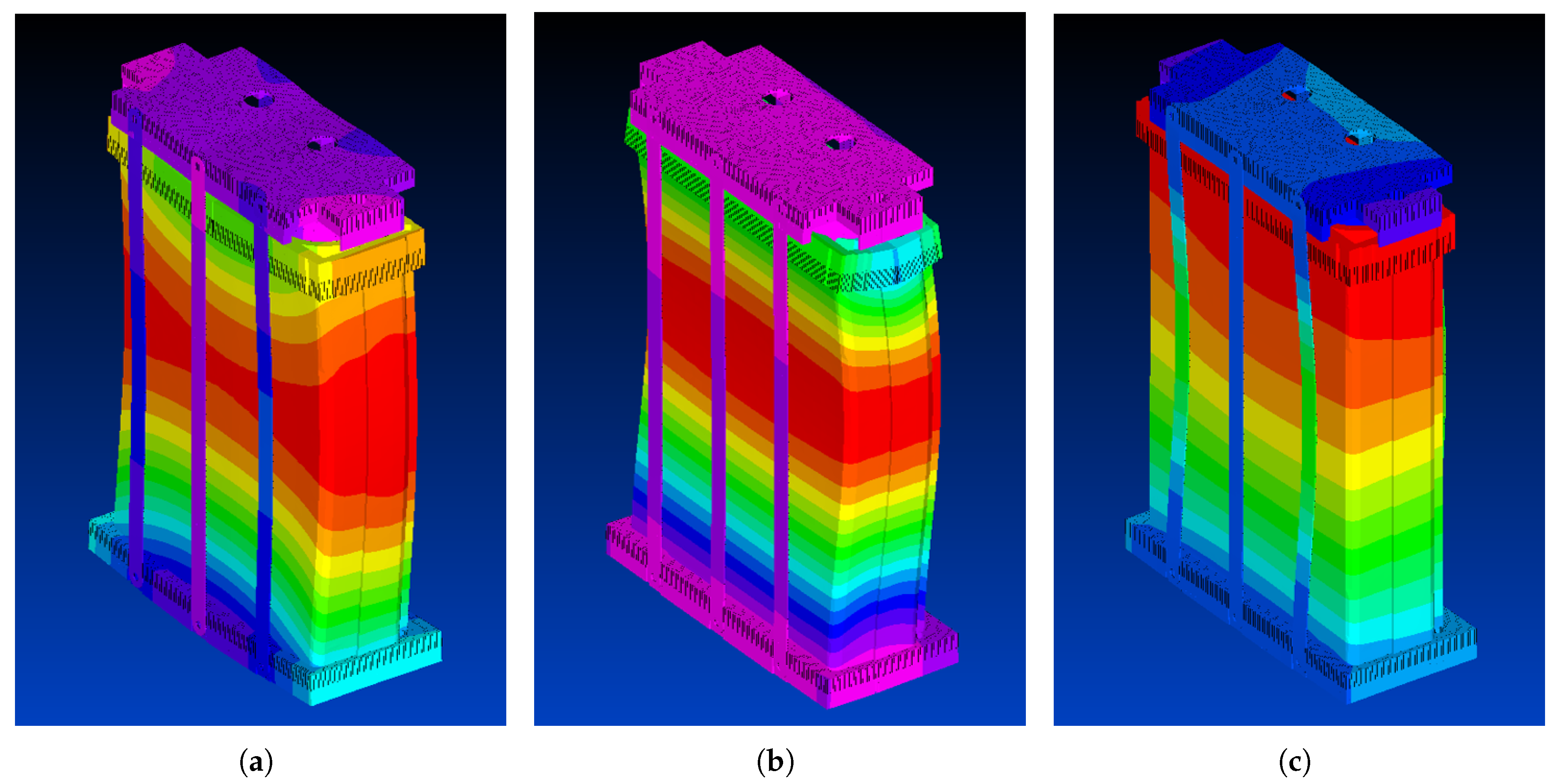
Figure 29 illustrates contour plots of the total displacement extracted at the resonance frequency corresponding to each of the three principal axis excitations in the standard immunity harmonic analysis.
The shock pulse immunity of the stack was evaluated with the RTCA/DO-160G saw-tooth profile, applying a 6 g peak acceleration for the prescribed 11 ms duration. To isolate the intrinsic response of the stack from that of the supporting cage, the cage motion, recorded at a node adjacent to the central spider where the load was applied, was subtracted from the time-history of every sensor. The resulting relative displacements were then normalized in the same manner adopted for the harmonic immunity study (
Figure 30). The accelerations were subsequently derived by finite difference differentiation of the displacement records and were normalized using the same procedure described above (
Figure 31).
Figure 30 demonstrates that the 6 g/11 ms saw tooth shock predominantly excites the lightly damped fundamental bending mode around the
x-axis. This response is most pronounced at the stack mid height, where sensor #4 attains the reference amplitude. Throughout the cell package the
y- and
z-axis motions remain secondary and of comparable magnitude, becoming significant only at the top and bottom end plates, a behavior already anticipated from the harmonic study. At those end plate sensors the records depart from a purely sinusoidal shape, indicating that additional modes participate in the transient response. Overall, the largest displacements occur within the cell package and the attached compression plates, whereas the end plates and the compression band experience much smaller oscillations. These findings confirm that the cell package, and in particular its
y-axis motion, constitutes the most critical element under the prescribed RTCA/DO-160G shock pulse. The acceleration time-histories follow the same spatial trend observed in the displacement plots, although with less pronounced axis to axis difference. Within the cell package the
y-direction still exhibits the largest oscillatory content, yet the peak levels on the
x- and
z-axes now differ by only a few points, indicating that all three directions must withstand nearly comparable inertial loads under the 6 g/11 ms shock. In contrast, the end plates and compression band experience substantially lower acceleration magnitudes, confirming that the cell package remains the critical component from a shock immunity standpoint.
It is important to note that all dynamic simulations in this work are based on a linearized representation of the stack. In addition to the compression bands and disc springs, which are explicitly linearized through a fictitious modulus and a tangent stiffness at the nominal preload, other components and interfaces (e.g., the cell package, gasket contacts and bolted joints) may also exhibit amplitude-dependent behavior. The material and stiffness parameters used in the FE model were tuned using modal data obtained at specific excitation levels, so that the resulting properties are strictly valid in a neighborhood of these operating conditions. For substantially different load amplitudes, both under sinusoidal excitation and under shock pulses, some deviation from purely linear behavior is expected, for instance in the form of modest frequency shifts or changes in effective damping. The preliminary immunity results presented in the following should therefore be interpreted as quasi-linear predictions, which are appropriate for assessing relative trends and critical locations but do not capture all possible non-linear effects at extreme load levels.




 ,
,