Article

Overlying Strata Settlement in Subsea Mine Stopes: A Study on the Effects of Backfill Compression


1
School of Mines, China University of Mining and Technology, Xuzhou 221116, China
2
Backfill Engineering Laboratory, Shandong Gold Mining Technology Co., Ltd., Laizhou 261441, China
3
State Key Laboratory of Digital Intelligent Technology for Unmanned Coal Mining, Anhui University of Science & Technology, Huainan 232001, China
4
Shandong Key Laboratory of Deep-Sea and Deep-Earth Metallic Mineral Intelligent Mining, Jinan 250000, China
5
School of Resources Environment and Safety Engineering, University of South China, Hengyang 421001, China
*
Author to whom correspondence should be addressed.
Appl. Sci. 2026, 16(1), 45; https://doi.org/10.3390/app16010045
Submission received: 9 November 2025 / Revised: 11 December 2025 / Accepted: 15 December 2025 / Published: 19 December 2025
(This article belongs to the Special Issue Advances in Rock Excavation and Underground Construction Technology)

Abstract

This study investigates the settlement characteristics of overlying strata in backfilled stopes at the Sanshandao Gold Mine, focusing on the compaction behavior of backfill materials. Integrating laboratory tests, numerical modeling, and field monitoring, we analyzed the particle size distribution and fractal dimensions of tailings (2.1525) and C material (2.1994), with tailings showing better gradation. Systematic compaction tests examined the effects of mix ratio, water content, and curing time. Results indicate that compression follows a viscous sliding model with exponential curves, progressing through three stages—pore compaction, structural deformation, and elastic/plastic deformation—with energy dissipation ratios of 1:5:18. Water content was the most influential factor, with optimal compaction occurring at 5~8%. Coupled Midas-Flac3D simulations estimated a theoretical compaction rate of 0~2% in filled stopes, excluding seepage and equipment effects. Field monitoring at the −480 m level revealed non-uniform settlement, with maximum subsidence of 63.75 mm above stopes and initial settlement rates of 12~20 mm/month. At the −520 m mining level, the backfill compaction rate reached 0.31%, with minor future increases expected. These findings offer valuable guidance for backfill mixture design and strata control in mining engineering.

1. Introduction

Underground mining is a process of extracting mineral deposits from crustal rock formations and transporting them to the surface through the construction of shafts, roadways, and stopes. The excavation of ore bodies results in the formation of goafs (mined-out areas), leading to the redistribution of in situ stress, which may cause stress concentration or unloading. If the goafs are not well treated by certain measurements, the surrounding rock will be highly prone to collapse, triggering overlying strata deformation and failure. As a method for goaf treatment, backfilling not only improves the stress state of the surrounding rock, effectively controls ground pressure, suppresses overlying strata movement and surface subsidence, and protects groundwater system balance, but also significantly reduces ore loss and dilution [1,2,3]. Additionally, the reuse of tailings and waste rock as backfill materials avoids environmental pollution caused by solid waste discharge. Furthermore, backfill mining contributes to the prevention and control of various mining hazards, such as mine ventilation leakage, thermal hazards, spontaneous combustion of ore, rockbursts, mining-induced seismicity, water inrushes, and roof falls. Consequently, backfilling has been increasingly adopted in mining operations.
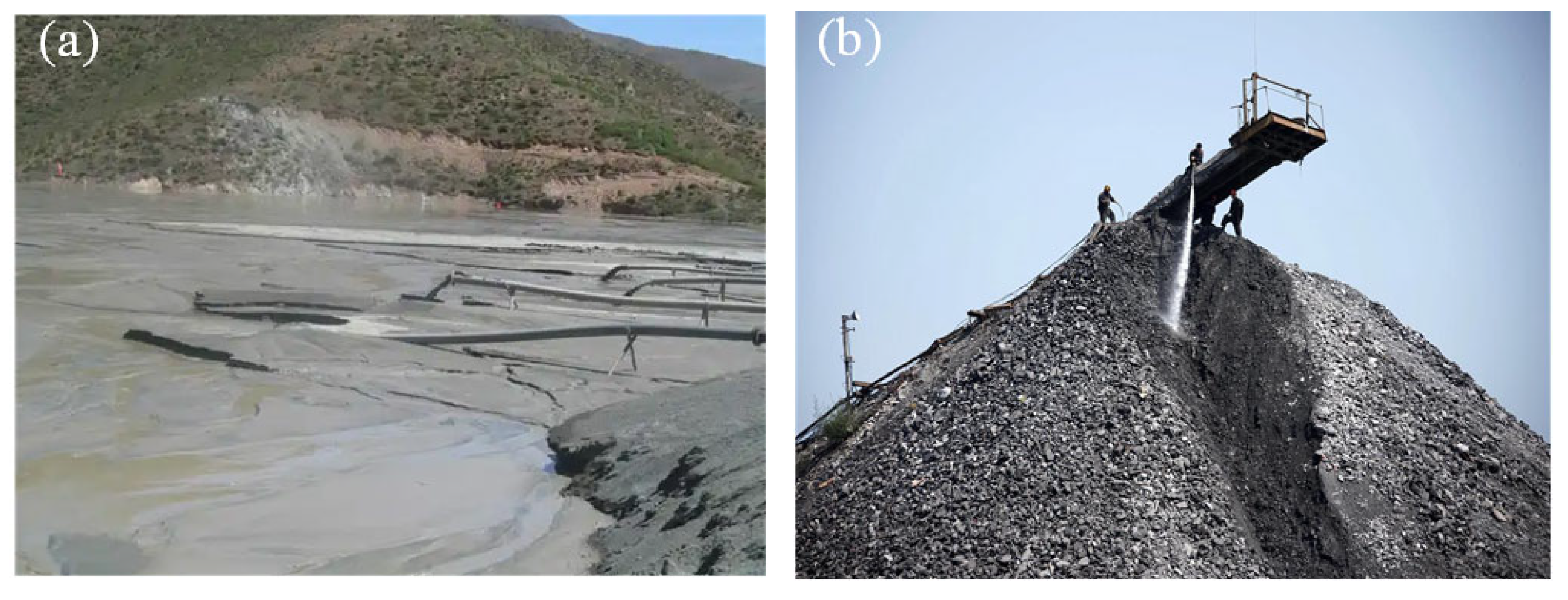
In China, coal mines generate over 800 million tons of coal gangue annually, while non-coal mines produce approximately 1.5 billion tons of tailings, as presented in Figure 1. Nowadays these materials are commonly used as backfill aggregates in goafs. Examples include the Consolidated Solid Backfill Mining Method and the Paste Backfilling Method developed in coal mines using gangue, as well as hydraulic sand filling and tailings slurry backfilling with various cement-to-tailings ratios in non-coal mines. Since the designed strength of the backfill is generally lower than that of the original rock mass, the backfill undergoes compression deformation under geostatic stress, leading to subsequent movement and deformation of the surrounding rock. For instance, the maximum surface settlement and horizontal deformation monitored by the GPS system in a Chinese gold mine using the upward drift fill mining method reach 210.7 mm and 115.0 mm, respectively [4]. Given this, research into the compressive properties of tailings backfill is of paramount importance, as it directly informs the analysis of strata movement laws, control of surface subsidence, and optimization of backfilling and ground pressure strategies.
Gangue, the primary solid waste from coal mining, is increasingly used in mechanized backfilling for its benefits in controlling strata movement and reducing surface subsidence and land occupancy for storage. Zhou et al. [5] applied a SANS testing system along with a steel cylinder to perform compressive experiments on crushed gangue, and found that the gangue underwent three deformation stages (rapid, slow, and stable) together with revealing the particle size effect and energy dissipation characteristics. Afterwards, the influence of water content, loading rate, gangue lithology, particle Talbot index on the compaction deformation of crushed gangue under confined uniaxial compression were experimentally analyzed in detail [6,7,8,9]. Considering that the filling material is subjected to repeated compaction by the hydraulic support, Li et al. [10] employed MTS815 testing system and a stainless steel chamber to study the macroscopic deformation and particle crushing characteristics of crushed gangue under constant amplitude cyclic loading (CACL) and continuously loading again after CACL, and concluded that cyclic loading can significantly improve the deformation resistance of crushed gangue. Li et al. [11] conducted lateral and axial loading on crushed gangue and observed that the more cycles of lateral loading applied, the greater the lateral strain and the reduction in lateral porosity of samples. Since the crushed gangue backfilled in the goaf will be subjected to long-term overburden loads, Li et al. [12] further tested the creep compression properties of broken coal gangue and derived a corresponding constitutive equation, and then performed numerical modeling of Tangshan coal mine using solid backfilling method to explore the effect of gangue creep durations on surface deformation. Wen et al. [13] applied AE technique to study the effect of particle size on the re-crushing characteristics of crushed gangues of different lithologies, stated that the compression deformation of crushed gangue results from the failures of the large particle skeleton, the sliding flow of medium particles, and the filling of pores by small particles. Given that the backfill material is also affected by the groundwater environment, Kong et al. [14] tested the permeability characteristics of crushed gangues under compaction and argued that the nonlinear seepage velocity and permeability are associated with the particle size, porosity, pore structure and pressure, particle distribution and compaction degree. Yuan et al. [15] hold that flow characteristics of granular gangue under compaction treatment are related to compaction level, grain size distribution, crushing and fracture structure. Qi et al. [16] believed that hydro-chemical damage in coal gangues is more sensitive to small particle size and stronger acidity, and the bearing capacity decreases as the particle sizes decrease and acidity increase. Zhang and Spiers [17] conducted compaction tests on crushed limestone and granular calcite using different pore fluids and realized that the measured strain rates increased with decreasing grain size and with increasing effective stress, creep must have involved calcite dissolution or precipitation. The above findings prompt the understanding of the compaction characteristics of crushed gangue.
To deeply figure out the compaction properties of crushed gangue, a series of numerical study was conducted. Zhu et al. [18] proposed a modeling method for the waste rocks under uniaxial loading and divided the compaction process into five stages: load transfer, porosity reduction, two-elastic deformation, bulking and fracturing. Zhang et al. [19] applied PFC code to realize the re-crushing feature of gangue under compression and the influence of particle shape and location on the compression and crushing of gangue. Yadav et al. [20] proposed a double-yield material model embedded in FLAC3D program to simulate the gob compaction process in longwall mining, the research results corroborate well with the on-site observations. Chen et al. [21] established a digital 3D model of crushed gangue on the basis of CT scanning, image processing and 3D reconstruction techniques, and then employed the FLAC/PFC coupled software to simulate the microscopic structure evolution and macroscopic deformation response of crushed gangue with different shapes under various confining pressures, which provides a scientific basis for the design of mine backfill parameters. In addition to the gangue generated during roadway excavation, other solid wastes can also be utilized as mine backfill materials, such as fly ash, furnace slag, and coal seam gangue. By conducting compaction experiments on broken coal-rock mass, Li et al. [22] divided the compaction process into three stages, i.e., structural re-arrangement and crushing of particles under low stresses, particle breakage under moderate stress, and compression of particles under high stresses. Kaminska and Dzierw [23] stated that the settlements and compression moduli of the fly ash rely on the initial compaction and water conditions, and this material can be used as filling materials in earthworks. Yao et al. [24] investigated the shear stress and plastic viscosity of fly ash slurry by conducting lateral compression and viscosity test and deemed that the stress increases exponentially with the compression strain, and both shear stress and plastic viscosity decrease negatively with the increase in the water-ash ratio. In addition, Zhang et al. [25] measured the true deformation modulus of filling waste rocks in Tangshan mine by pre-installing stress and displacement sensors and thus mastered the hardening process. Wang et al. [26] further measured the on-site deformation modulus of gangue backfilling body under the conditions of different inclination angles and mining heights. It is found that the field results agree well with the laboratory results, which made significant progress in controlling surface subsidence, with monitoring conducted via the BeiDou system. He et al. [27] developed an electrical resistivity method for measuring the compaction characteristic of coal waste rock, and observed that stress change trend is consistent with the electrical resistivity under confined compression, followed by the electrical resistivity value increases with the increase in particle size ratio in a later stage of loading. These provide new avenues for measuring the actual compressive properties of mine-fill materials.
In contrast to coal mines where gangue is the main solid waste, non-coal mines primarily generate tailings, and their mining methods differ significantly from the longwall method used in coal mining [28,29]. Actually, the choice of the backfilling method for eliminating excavation voids is largely based on determining the proppant’s movement capacity [30]. Currently, studies on tailings compaction and strata movement characteristic in metal mines remain scarce, with only limited work such as Consoli et al. [31] on fiber-reinforced cemented gold tailings, motivating the present investigation into their compaction behavior. Building on previous research [32], this study systematically examines tailings-cement mixtures from Sanshandao Gold Mine—China’s sole undersea metal mine—where complex geology and seawater cover pose significant water-inrush risks, making understanding of backfill compaction and strata movement essential for safe mining. Through characterization of material properties, confined compaction tests under varying moisture contents, and sensitivity analysis of curing age, cement-to-tailings ratio, and moisture content, we evaluated the compaction rates of stope backfills, providing practical insights for backfill design and strata deformation control.

2. Engineering Background

2.1. Geographical Location and Geological Conditions

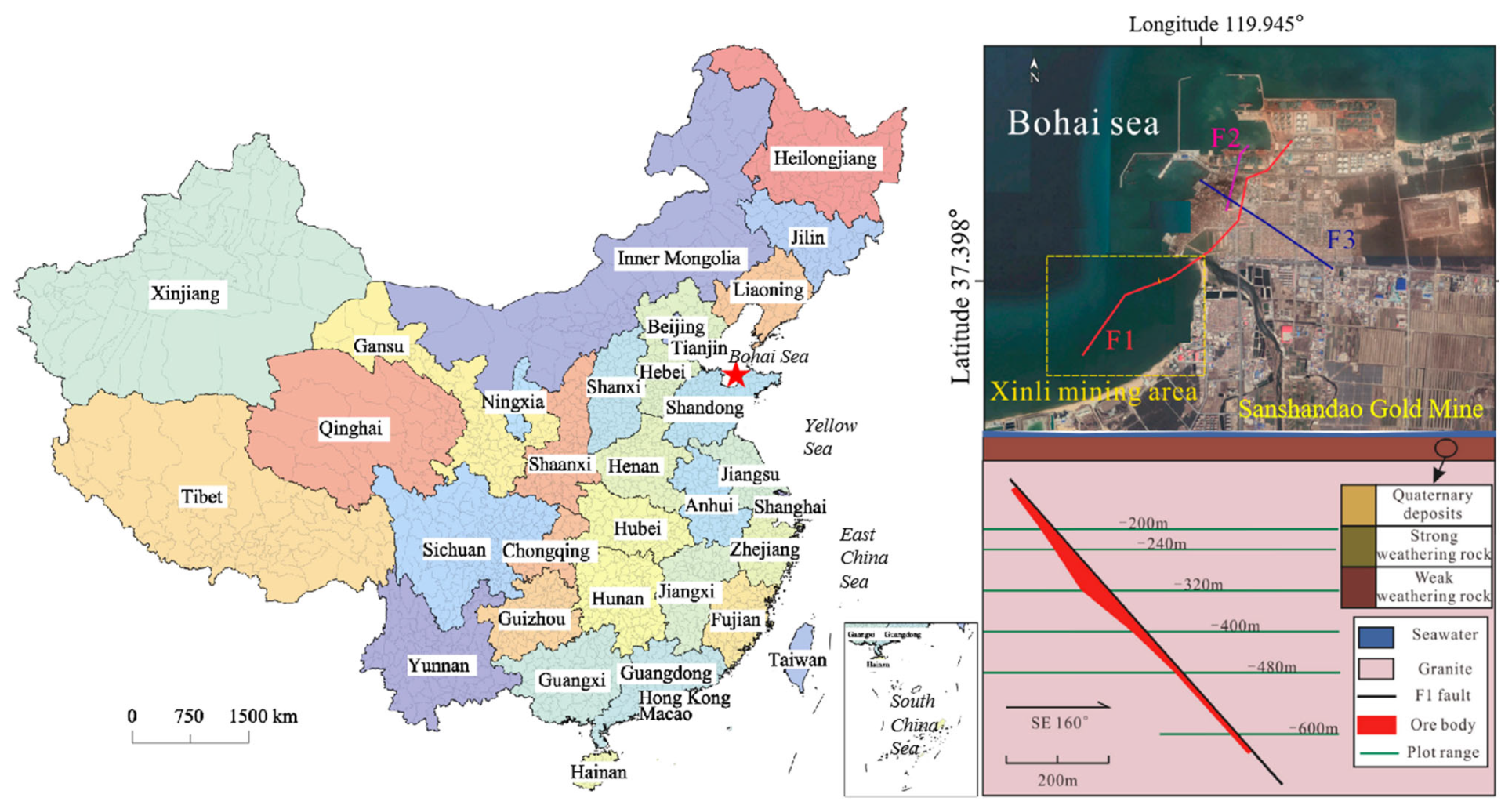
Sanshandao Gold Mine, a key operation under Shandong Gold Group Co., Ltd., is located in Laizhou City, Shandong Province, China. Commissioned in 1984, the mine has undergone continuous expansion and resource integration, achieving a current daily ore production capacity of 10,000 tons. It comprises four mining areas: the Zhishu mining area, Xinli mining area, Cangshang mining area, and Pinglidian mining area. Among these, the Xinli mining area was established in 2005 with a designed capacity of 1500 tons per day. It is geographically characterized by its northern and western boundaries adjoining the Bohai Sea, with only its southeastern portion connected to the mainland. The surface is largely covered by Quaternary unconsolidated sediments and overlain by seawater with depths ranging from 1.5 m to 6.5 m, while the general ground elevation varies between 1.2 and 4.5 m above sea level, as illustrated in Figure 2.
The ore bodies in the Xinli mining area occur within altered rock zones along the footwall of the Sanshandao–Cangshang Fault (F1), primarily hosted in pyrite–quartz and quartz veins. These ore bodies are mainly distributed at elevations between −30 m and −710 m, generally striking northeast (NE) and dipping southeast (SE) at an average angle of 46°. They have an average thickness of 25 m and an average gold grade of 3.26 g/t. The ore body is relatively fragmented, and the overall stability of the hanging wall and footwall rock mass is moderate.

2.2. Mining Technical Conditions

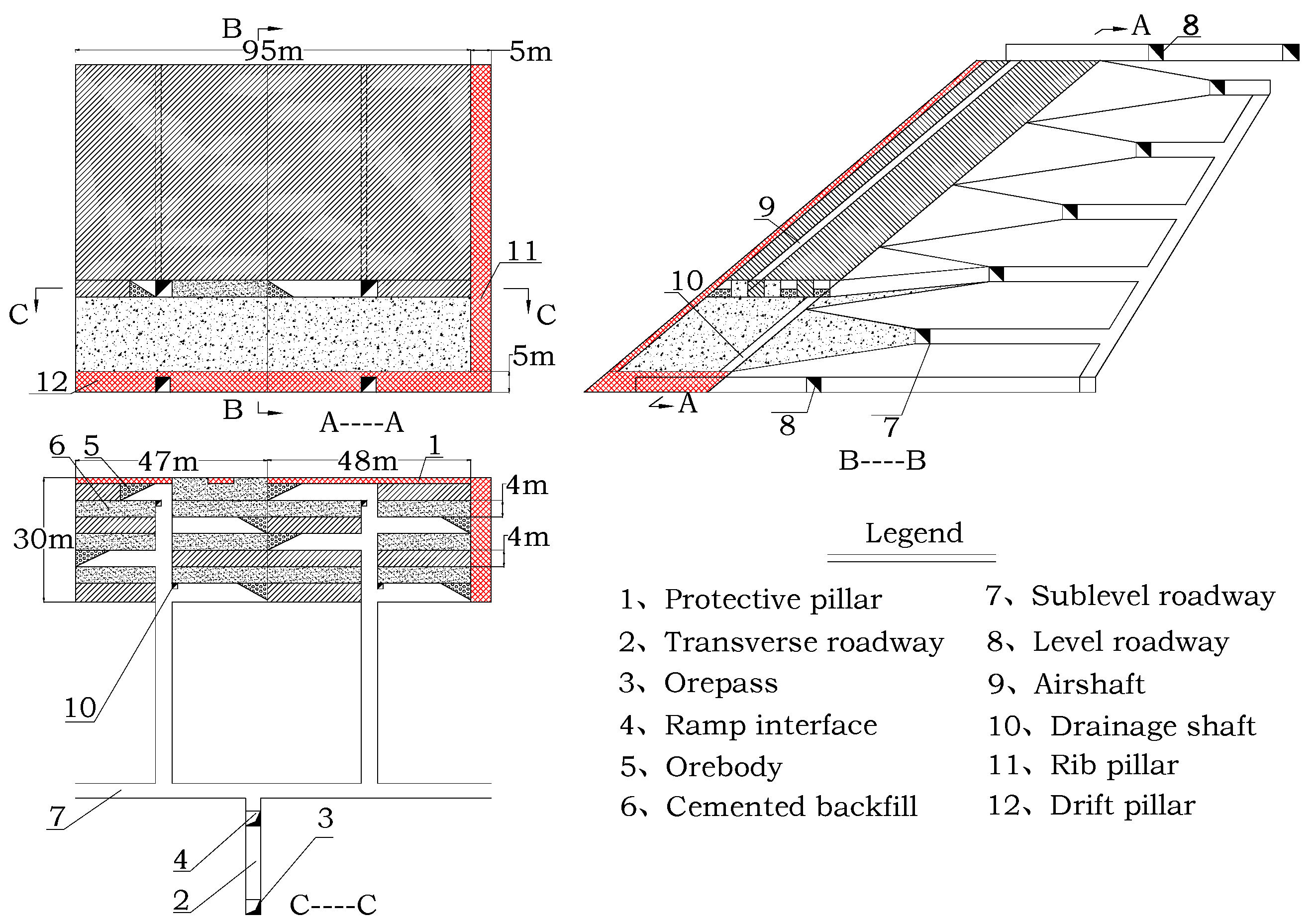
The Xinli mining area utilizes a combined development system of vertical shafts, crosscuts, and ramps to access ore bodies below the −165 m level, ensuring a sufficiently thick protective pillar (about 93 m) to prevent seawater intrusion into underground stopes through mining-induced fractures or water-conducting structures. Due to the marine overburden, large-scale geological structures (F1), and high water inrush risks, which necessitate the minimization of strata movement, the mechanized upward drift-and-fill mining method was adopted, as shown in Figure 3. It is noted that the red zones in Figure 3 indicate the pillars left in place, and A-A, B-B and C-C represent the directions of the sectional views. Stopes are arranged along the ore body strike, with widths matching the ore body width. Each sublevel has a height of 40 m, topped with a 2 m top pillar and underlain by a 5 m drift pillar. Continuous rib pillars of 3–5 m width are set between adjacent stopes along the dip. When the hanging wall is unstable, a protective pillar about 1 m thick is left near it. Backfilling employs classified tailings to a height of 2.5 m, leaving a 1.5 m void as compensation space for subsequent blasting operations. The designed production capacity of each stope is 100 t/d. The mining process employs a high level of mechanization, with drilling performed by jumbos, ore transported by scrapers, and rock bolting automated using rock bolter. Following the completion of mining activities, the stopes of the primary and secondary drifts within the same sublevel are sequentially backfilled with tailored tailings mixtures of varying proportions to achieve specific backfilling objectives. The filled slurry concentration is around 70% with a typical cement-to-sand ratio of 1:8 for one-step drift. With regard to two-step drift, the hydraulic backfill method or the cemented tailings backfill method with a low material C-to-tailings ratio (e.g., 1:16) was selected for application. The backfill slurry delivery route in the Xinli Mining Area of the Sanshandao Gold Mine operates as follows: First, the slurry is prepared at the surface backfill station. It is then transported through steel pipelines from the surface station via a dedicated filling borehole down to the −135 m mining level. Subsequently, the slurry is conveyed through a pipe shaft to the haulage roadways on each mining level and finally pumped via the backfill-ventilation raise to the sub-level stopes for filling operations.
The mechanical properties of the rock masses and filling body were also tested in our previous work, including the density ρ, Young’s modulus E, Poisson’s ratio μ, bulk modulus K, shear modulus G, friction angle φ, cohesion C and tensile strength σt, as listed in Table 1. In addition, the geo-stress distribution law was also measured using borehole stress relief method, as expressed by [34]:
σ hmax = 0.0539 h + 0.11 σ hmin = 0.0181 h + 0.13 σ z = 0.0315 h + 0.08
where σhmax denotes the maximum horizontal principal stress perpendicular to the strike of the ore body, MPa; σhmin represents the minimum horizontal principal stress along the strike of the ore body, MPa; σz means the vertical stress, MPa; h is the mining depth, m.

3. Experimental Materials and Testing Methods

3.1. Physical Properties of Mining Filling Materials

3.1.1. Classified Tailings

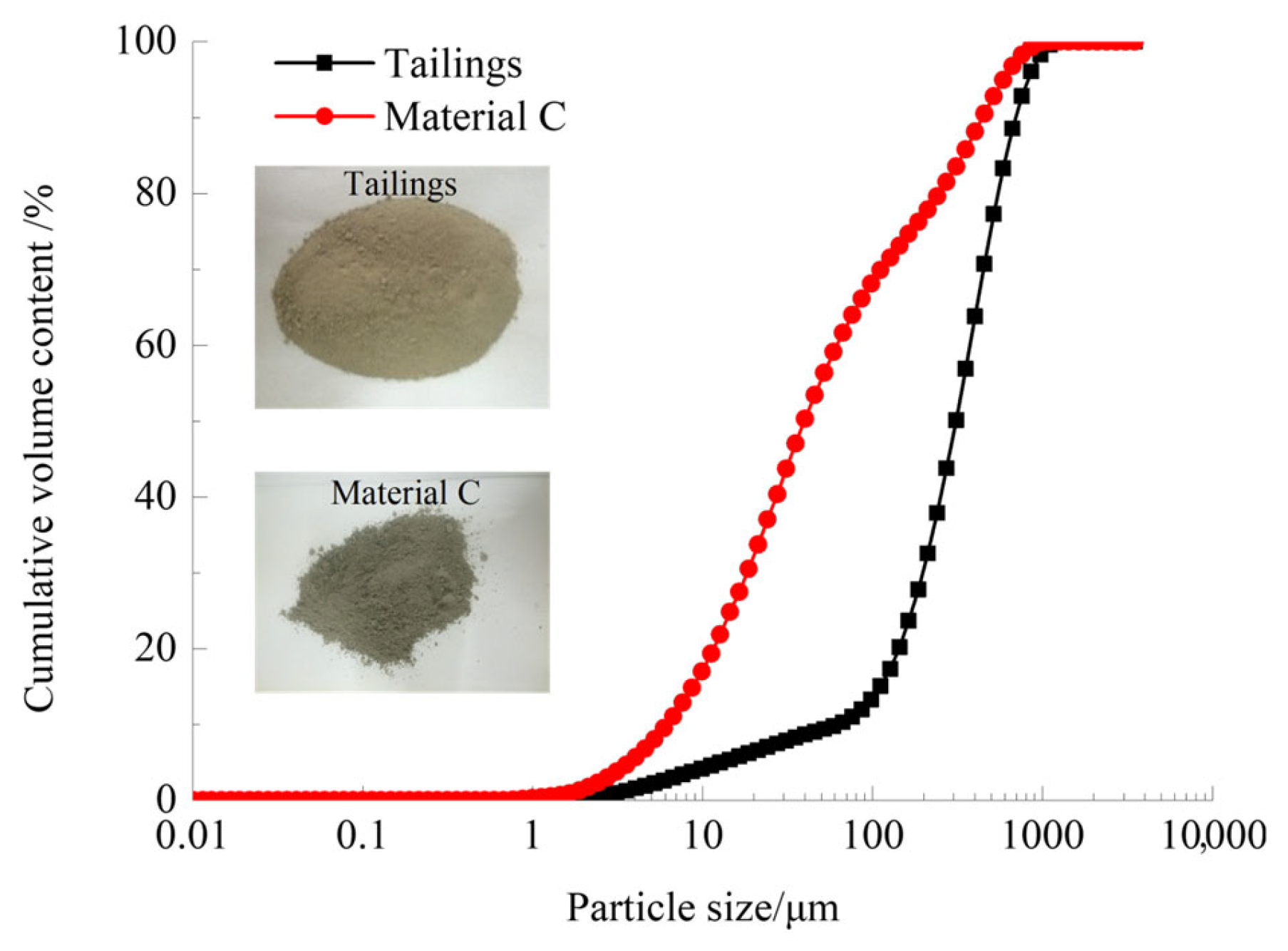
The experimental materials consisted primarily of classified gold tailings (particle size < 37 μm) and Material C, both obtained from the Sanshandao Gold Mine in Shandong Province, China. According to the laboratory testing results of our previous work, the classified tailings had the following physical properties: a bulk density of 15.58 kN/m3, a dry density of 2.55 g/cm3, a moisture content of 2.14%, a porosity of 47.70%, a permeability coefficient of 14.04 cm/h (at 20 °C), and a specific surface area of 104.00 m2/kg [32]. Chemical composition and particle size distribution of the tailings were analyzed using a Siemens D500 X-ray diffractometer and a Mastersizer 3000 laser diffraction particle size analyzer, respectively; the results are summarized in Table 2 and Figure 4. Based on the particle size distribution curve (Figure 4), the characteristic particle sizes d10, d30, d50, d60, and d90 were determined as 65.10 μm, 199.70 μm, 306.78 μm, 375.44 μm, and 700.00 μm, respectively, where dx represents the particle size at x% cumulative passing. The non-uniformity coefficient Cu (Cu = d60/d10) was calculated as 5.77, exceeding the threshold of 5. The curvature coefficient Cc (Cc = (d30)2/(d10∗d60)) was 1.63, which lies between 1 and 3. These values indicate a well-graded and continuous particle size distribution with a relatively broad range of particle sizes.

3.1.2. Material C

The cementitious material utilized in the Sanshandao Gold Mine is based on Material C, a tailings-specific consolidating agent independently developed by the Jiaojia Gold Mine under Shandong Gold Group Co., Ltd. Its main constituents comprise slag, pozzolanic material, lime, gypsum, and additives. In comparison with ordinary Portland cement, Material C demonstrates superior solidification performance, excellent slurry fluidity, and a dosage reduction of approximately 50%, offering significant cost efficiency. Material C has a maximum particle size of 1110 μm and a specific surface area of 389.00 m2/kg. The characteristic particle sizes d10, d30, d50, d60, and d90 are 6.17 μm, 18.00 μm, 39.70 μm, 62.00 μm, and 442.00 μm, respectively. The resulting non-uniformity coefficient (Cu) is 10.05, and the curvature coefficient (Cc) is 0.85. These parameters indicate a highly non-uniform and discontinuously graded particle size distribution, with fine particles (below 30 μm) accounting for more than 30% of the total volume, as illustrated in Figure 4.

3.1.3. Fractal Dimension

Currently, the gradation distribution of backfill materials is primarily characterized using either the weighted average particle size or the coefficient of uniformity. However, studies have shown that neither parameter adequately accounts for the proportional content of individual particle size fractions. A comprehensive representation of particle size distribution requires statistical analysis of the relationship between all particle sizes and their corresponding contents. Graded tailings display self-similarity and fractal characteristics comparable to those of river sand. A higher fractal dimension in the particle size distribution generally indicates a greater proportion of finer particles. Therefore, this study applies fractal dimension theory to characterize the gradation distribution of tailings. Assuming approximately uniform particle densities within the backfill material [35], the following relationship is obtained:
V d V = d d max 3 D
where Vd represents the cumulative volume of particles smaller than particle size d; V denotes the total particle volume; dmax is the maximum particle size; D is the fractal dimension of the particle size distribution of the filling material.
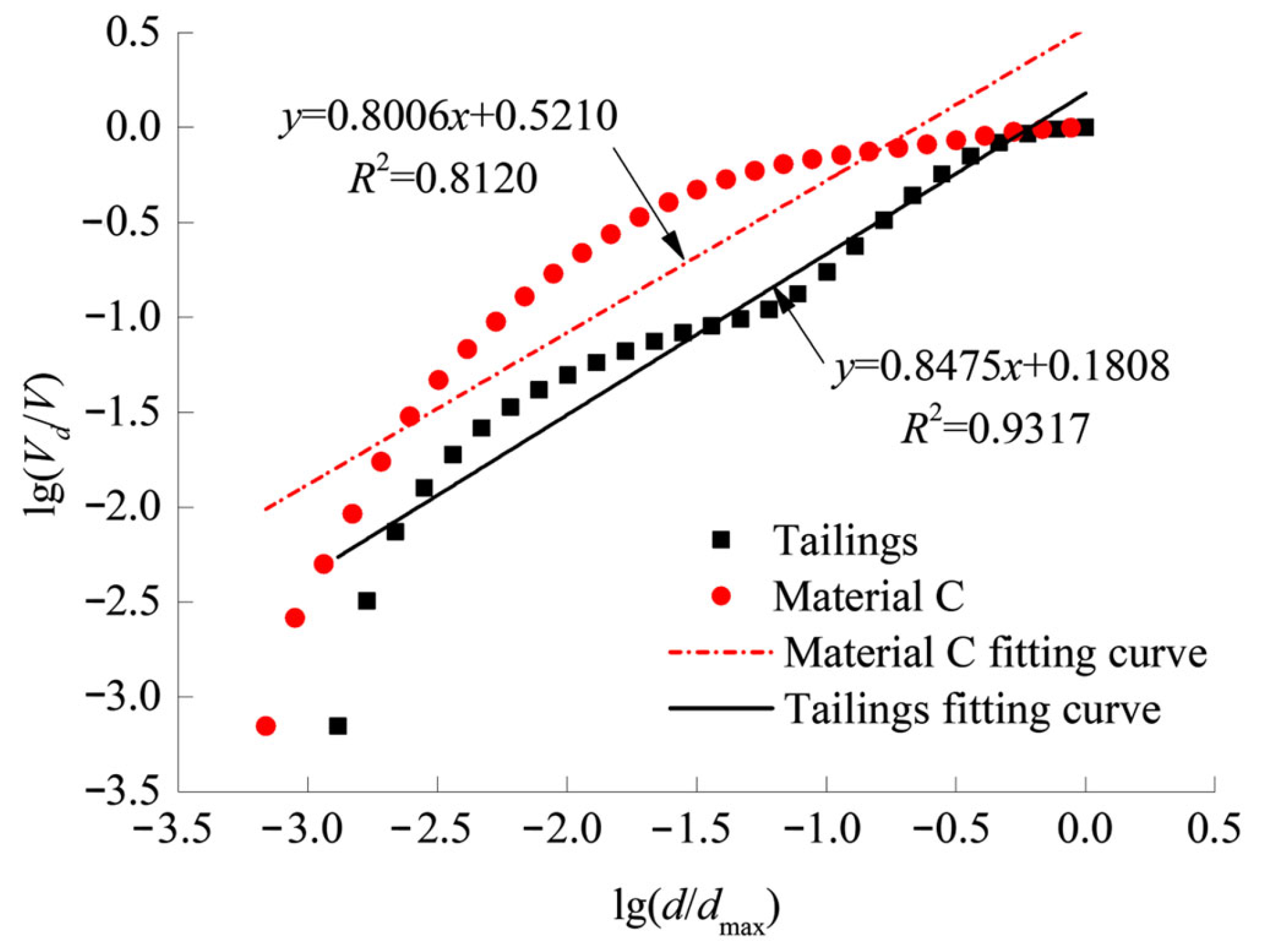
Based on Equation (2), the term (3−D) represents the slope of the line in the plot of lg(Vd/d)) versus lg(d/dmax). Using a maximum particle size of 126.0 μm measured from the tailings sample and combining it with the particle size distribution curve, the fractal dimension of the tailings was calculated, as illustrated in Figure 5. The results show that the fractal dimension of fine-grained tailings is larger than that of coarse-grained tailings. Moreover, the fractal dimension exhibits a distinct “V”-shaped trend, initially decreasing and then increasing with particle size. The average fractal dimension of the tailings is 2.1525, reflecting a well-graded particle size distribution.
The fractal dimension of the pore structure in tailings characterizes their porosity features. Based on Equation (3) [36], the pore fractal dimension Df is calculated to be 0.9608. In comparison, the fractal dimension of Material C is 2.1994, while its fractal dimension of pore structure is 0.9484. The fractal dimension of pore structure is inversely correlated with the particle size fractal dimension of the tailings. A higher particle size fractal dimension corresponds to a greater proportion of fine particles, which tend to fill the voids between larger particles more effectively. This process reduces the irregularity of the pore shapes and decreases the overall porosity, leading to a lower pore fractal dimension. Conversely, a higher pore fractal dimension (closer to 1) indicates more complex surface roughness and greater irregularity in pore morphology, along with poorer distribution uniformity.
D f = 2 D D 2 D + 2

3.2. Experimental Instruments and Methods

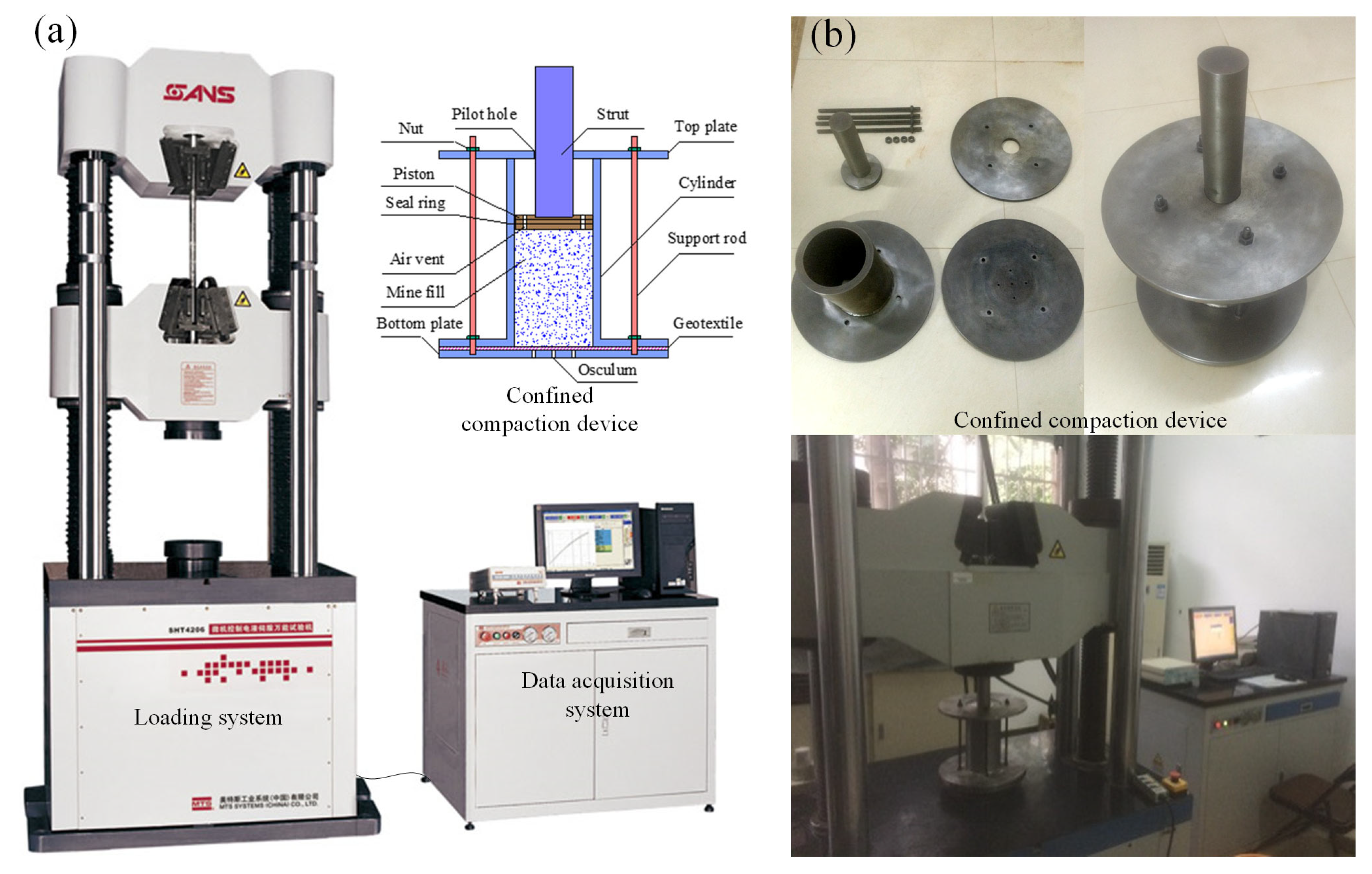
In this study, confined compaction tests on mine backfill materials were performed using a self-designed experimental setup integrated with a SANS SHT4206 microcomputer-controlled electro-hydraulic servo universal testing machine, as illustrated in Figure 6. According to the ISRM suggested methods for uniaxial compression tests, the loading speed is set at 4 kN/s, equivalent to approximately 0.5 MPa/s. The changes in parameters such as displacement, load and time during the compression process are monitored by a DSP-based fully digital high-response measurement system. To simulate the mechanical constraints encountered by backfill in mining stopes, the compaction device was designed in a cylindrical configuration. The assembly primarily consists of a top plate, bottom plate, cylinder, strut, piston, and support rods. Both the top and bottom plates have a diameter of 305 mm and a thickness of 10 mm. In accordance with the required ratio of the cylinder inner diameter to the maximum particle size and the specimen aspect ratio [17], the cylinder was manufactured with an inner diameter of 105 mm, a height of 250 mm, and a wall thickness of 10 mm. The pressure strut is 200 mm in height and 50 mm in diameter, while the piston measures 104 mm in diameter with a thickness of 20 mm. All structural components are made of quenched 45# steel, which has an elastic modulus of 210 GPa and a Poisson’s ratio of 0.23. This material offers high hardness, stiffness, and wear resistance, allowing radial and circumferential deformations of the cylinder wall to be considered negligible. To minimize friction between the sealing rings, the backfill material, and the cylinder wall, the inner surface of the sleeve and the pressure strut were polished and coated with emulsified oil before testing. A number of air vents integrated into the piston allow the escape of air from the backfill material during compression, thereby eliminating the influence of pore air pressure. Meanwhile, some oscula embedded in the bottom plate enable the drainage of expelled water, facilitating the study of the lateral compression response of the backfill under drained conditions. To prevent the loss of fine particles with the expressed water, a layer of geotextile was placed at the bottom of the cylinder.
The SHT4206 testing machine provides a maximum load capacity of 2000 kN (approximately 200 tons), with a test force accuracy of ±0.5% and a displacement measurement error within ±0.5%. It is suitable for a variety of mechanical tests on solid materials, including tension, compression, bending, and shear experiments. The compression device was coupled with a SANS SHT4206 microcomputer-controlled electro-hydraulic servo universal testing machine to perform compression tests on the backfill material. A DSP-based fully digital high-response measurement system was used to monitor real-time variations in displacement, load, time, and other relevant parameters during the compression process, as depicted in Figure 4. The tests were conducted under load-controlled mode. Taking into account the in situ stress conditions at kilometer-depth mining stopes, the target load was set to 259,770 N (corresponding to 30 MPa). Each test procedure was repeated three times, and the average values of the experimental results were adopted for analysis.

4. Compression Bearing Mechanism of Tailings

4.1. Compaction Bearing Model of Tailings

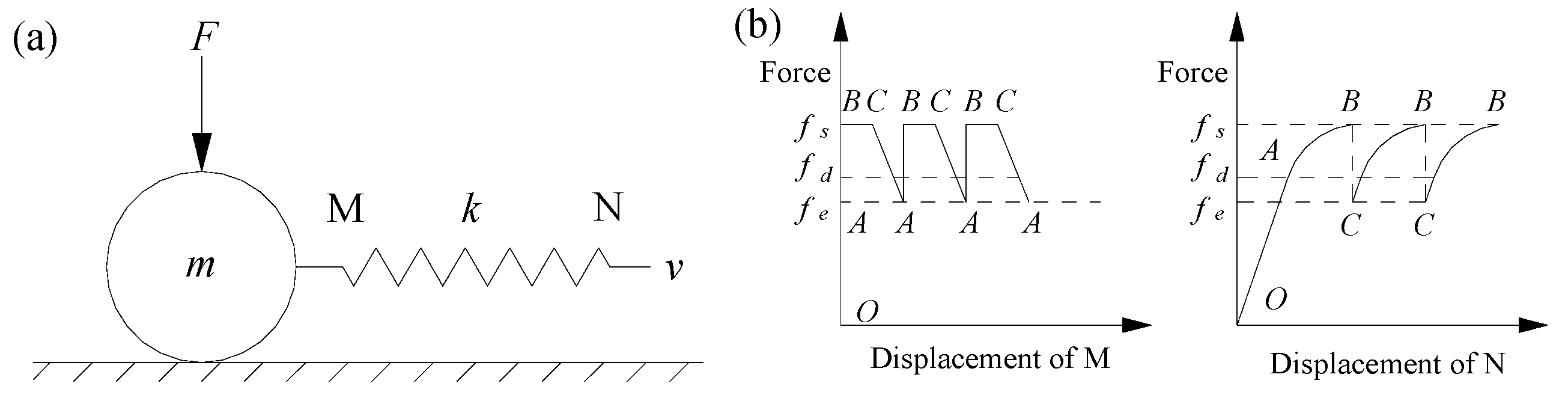
Confined compaction tests were first performed on dry tailings to study their compression deformation mechanisms and mechanical behavior. Tailings are granular materials composed of numerous discrete particles. When external loading reaches a critical level, particles that are in contact or interlocked undergo sudden forward sliding before re-locking. With continued loading, particles overcome frictional resistance again and resume sliding, consistent with the stick-slip mechanical model. The compression mechanical model of the tailings is depicted in Figure 7.

4.2. Compaction Deformation Characteristics of Tailings

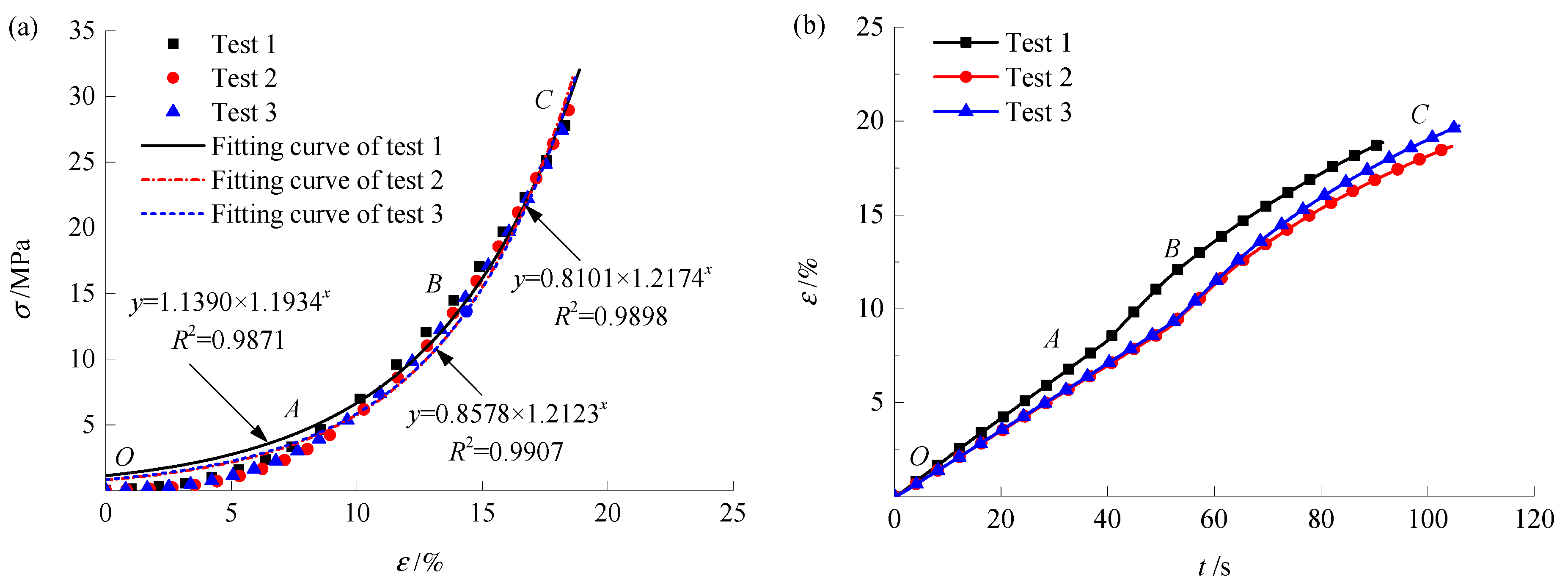
In this study, the filling height of the tailings was set to 210 mm (held constant for all tests). During the filling process, slight vibration was applied to minimize errors caused by artificially induced pores. The experiment followed the sequence of “scheme design, material preparation, device assembly, material filling, test execution, and result analysis”. The compaction characteristics of the tailings were evaluated in terms of the compaction rate ε, as defined in Equation (4). Figure 8a presents the applied stress–strain curves of the dry tailings obtained from three repeated tests, while Figure 8b shows the corresponding compaction rate versus time curves.
ε = Δ h h × 100 %
where ε represents the compaction ratio, %; Δh denotes the axial compression displacement, mm; h indicates the filling height of the filling materials, uniformly set at 210 mm.
As indicated by the fitted function of the curves in Figure 8a, the axial stress–compaction rate characteristic follows an exponential distribution. The compaction rates obtained from the three sets of tailings show no significant differences, confirming the scientific reliability of the experimental results. Based on Figure 8, the compaction deformation process of the tailings can be divided into three distinct stages:
(1)
Pore Compaction and Closure Stage
In the initial state, the dry tailings are highly porous and loosely structured. Under applied load, a large number of interparticle voids are rapidly closed. This stage exhibits an approximately linear response, accompanied by a notable increase in compaction modulus. Corresponding to segment OA in Figure 8, the tailings reach a maximum compaction rate of approximately 8% and a maximum axial stress of about 5 MPa within a duration of about 40 s. The compaction rate varies nearly linearly with time, indicating substantial deformation and low bearing capacity of the material. It should be noted that due to the particulate nature of the medium, the actual loading rate varied during compaction. Based on recorded load–time data, the average actual loading rate across the three tests was approximately 1162.92 N/s, equivalent to 0.13 MPa/s.
(2)
Structural Deformation Stage
After the initial pore consolidation, tailings particles establish full contact with each other. Forces within the tailings mass are transmitted and distributed through contact points via force chains, leading to the formation of various macroscopic structural configurations. Under continued loading, particles undergo rearrangement and recombination, resulting in structural deformation as illustrated in segment AB of Figure 8 Assuming spherical particles, the bulk structure may transition from the most porous cubic packing to denser rhombohedral packing. Geometric calculations suggest a porosity of approximately 25.95% in this stage. This stage lasts for a relatively short period (about 10 s), during which the compressive modulus increases gradually. The maximum compressibility reaches about 13%, with a peak bearing stress of approximately 8 MPa.
(3)
Elastoplastic Deformation Stage:
In this stage, particles are tightly interconnected through point contacts or interlocking. Stress concentration at contact points leads to elastoplastic failure of particles. The resulting fine particles fill the remaining pores, gradually reducing porosity and significantly enhancing the material’s resistance to deformation. As the external load increases, the number of contact points rises, necessitating a greater pressure increment to sustain further deformation. Concurrently, contact geometry evolves from sharp angular interactions to obtuse-angle, spherical, or interlocking contacts, which reduces the average interparticle stress and gradually improves load-bearing capacity. The tailings progressively transition into a continuous medium and undergo hardening. Corresponding to segment BC in Figure 8, the compression modulus remains relatively stable during this stage, and the compaction rate gradually stabilizes.

4.3. Energy Dissipation Characteristics During Tailings Compaction

During the compaction of tailings, energy is dissipated through several mechanisms, including the closure of interparticle voids, frictional sliding, particle crushing, and wall friction against the cylinder. This energy dissipation is influenced by factors such as material composition, particle strength, size distribution, gradation, particle morphology, packing arrangement, and the state of interparticle contacts. The work input by the testing machine during compression corresponds to the energy dissipated throughout the compaction process, which can be expressed as:
W = A H σ d ε
where W denotes dissipated energy; A represents the cross-sectional area of the cylinder; H indicates the tailings filling height; σ is the axial stress; ε denotes axial strain, i.e., the compaction ratio.
It should be noted that in laterally confined compression tests, a portion of the energy dissipated during tailings compaction is consumed in overcoming friction between the tailings and the inner wall of the cylinder. When the axial stress is σ, the frictional resistance generated by the compressive displacement of the tailings can be expressed as λμσ, where λ is the lateral pressure coefficient (taken as 0.225) and μ is the friction coefficient (taken as 0.25). The corresponding frictional energy dissipation, denoted as wm, can be formulated as follows:
w m = μ λ π D H 2 4 d ε = μ λ H D w
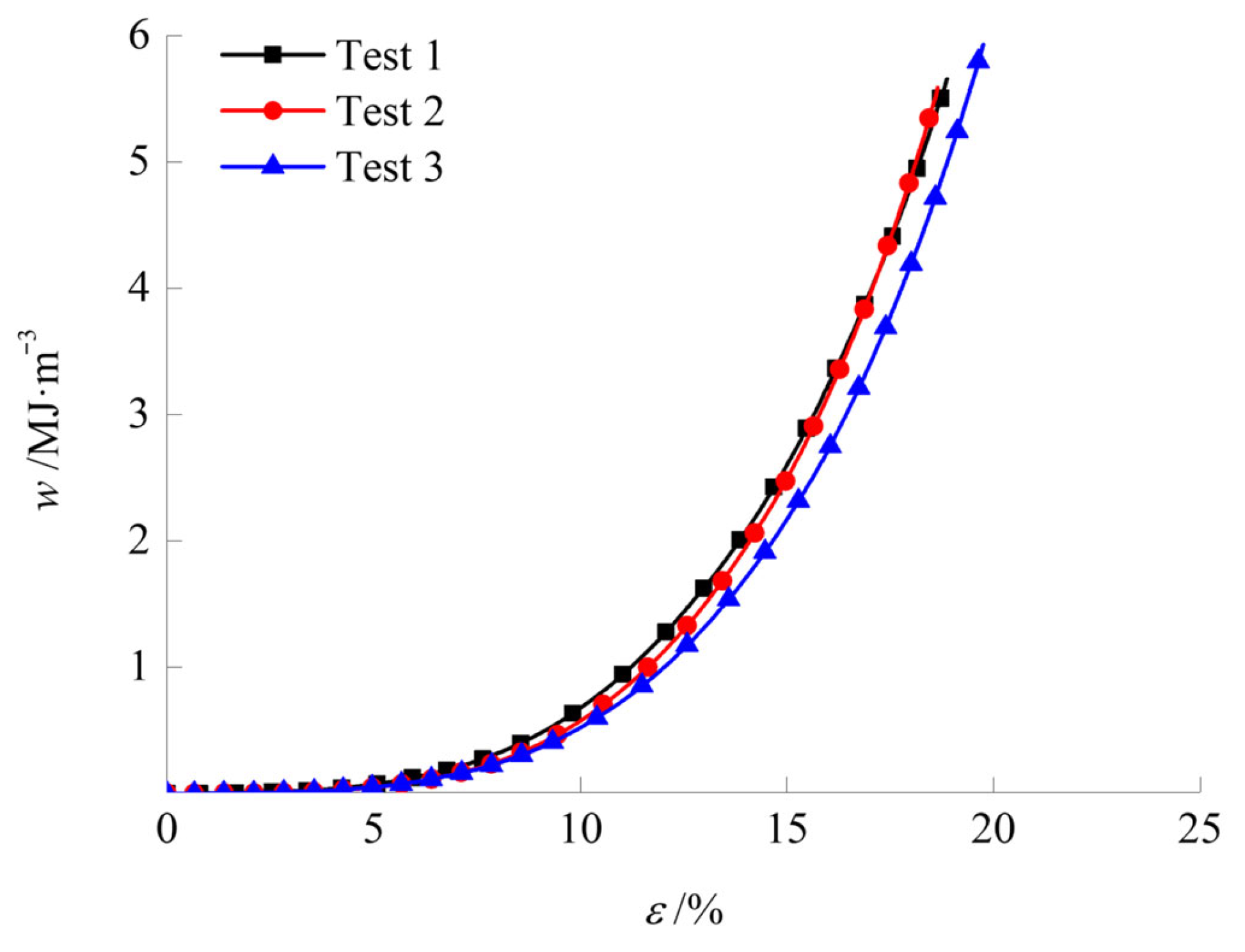
According to Equation (6), 11.25% of the total energy is dissipated through friction, while the remaining 88.75% is utilized for the compaction deformation of the tailings. The relationship between energy dissipation per unit volume and the compaction rate is shown in Figure 9. The results indicate that the energy dissipated during compaction exhibits an exponential dependence on the compaction rate, and the energy evolution aligns consistently with the identified deformation stages. Specifically, the energy dissipation during the pore compaction closure stage is approximately 0.25 MJ/m3, increases to about 1.25 MJ/m3 in the structural deformation stage, and reaches its highest value of about 4.50 MJ/m3 during the elastoplastic deformation stage. These findings strongly support the proposed mechanism and characteristics of tailings compaction deformation.

4.4. Compaction Characteristics of Tailings at Different Water Contents

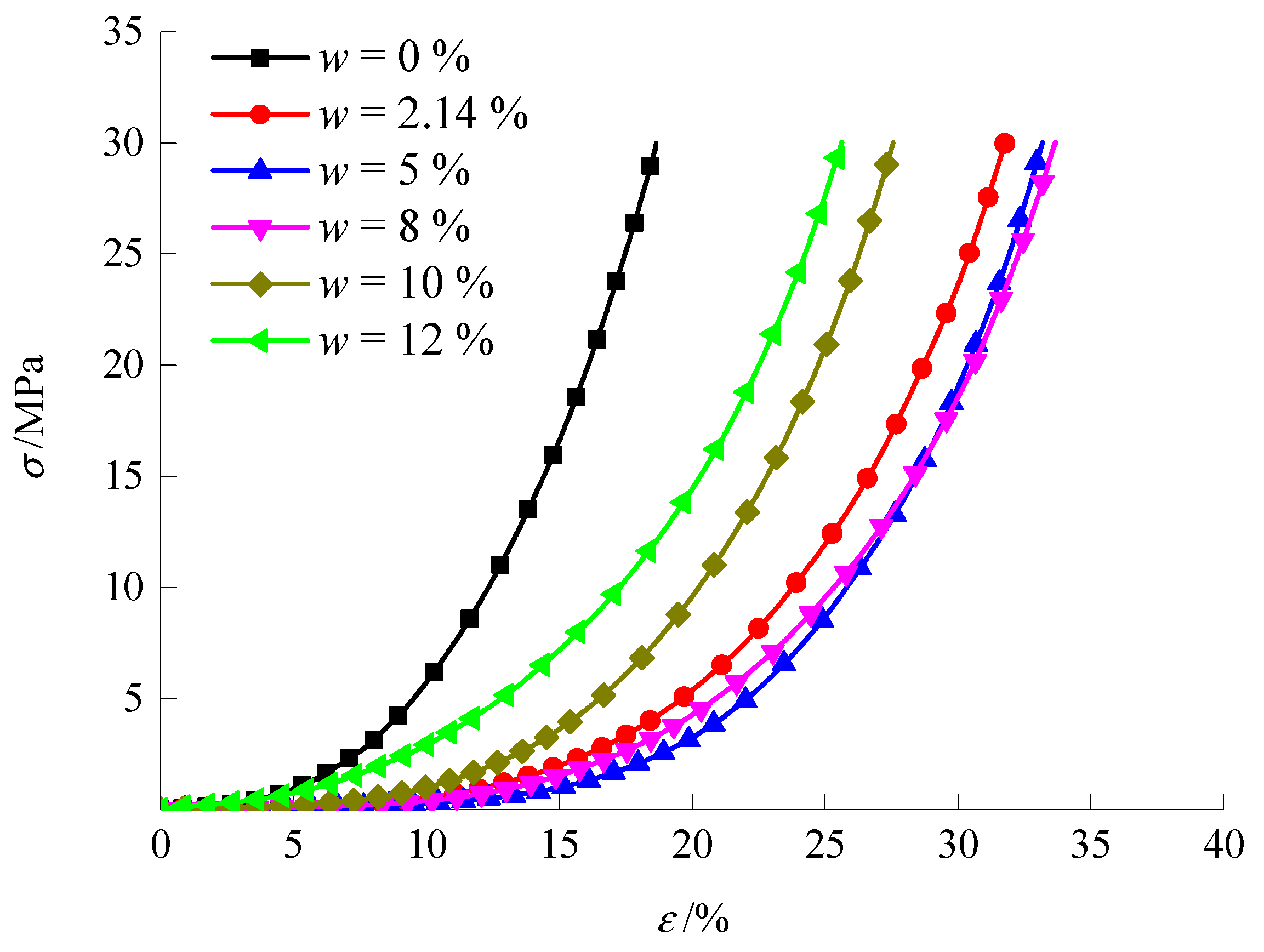
To evaluate the influence of water content on the compaction behavior of tailings, laterally confined compression tests were performed on samples with varying water contents, in conjunction with previous results from dry tailings. Figure 10 illustrates the compaction characteristics curves for tailings with moisture contents w of 2.14%, 5%, 8%, 10%, and 12%, while Figure 11 presents the physical states of the corresponding samples after compaction.
ε = a e σ b + c
Figure 10 indicates that the compaction characteristic curves still conform to an exponential functional distribution. The compaction rate ε and stress σ can be effectively characterized by an exponential function (Equation (7)), where parameters a, b, and c are constants whose values are listed in Table 3. The compaction rate initially increases and then decreases with rising water content, reaching its maximum within the moisture content range of 5–8%. Beyond a certain moisture threshold, the compaction ratio tends to stabilize. The underlying mechanisms can be explained as follows:
(1)
Water infiltration thickens the adsorbed water film on tailings particles. The resulting lubrication effect reduces interparticle friction, facilitating particle sliding and rolling.
(2)
Water-induced effects such as wedging, dissolution, and softening weaken particle strength, promote particle breakage, and consequently increase the compaction rate.
(3)
With further increase in water content, the bound water around particles reaches saturation, and excess water exists as free water. Higher water content leads to greater pore water pressure due to free water. During compaction, the inability to drain free water promptly causes it to be carried along with solid particles, enhancing the load-bearing behavior of the tailings.
Additionally, as shown in Figure 11, water overflow occurs at the bottom of the device when the water content exceeds 8%.

5. Compaction Characteristics of Cemented Tailings

5.1. Experimental Scheme

To investigate the compaction characteristics of tailings containing cementitious materials, and taking into account the hydration effect of Material C, the mass ratio of tailings to Material C, moisture content, and curing time were selected as influencing factors, denoted as x1, x2, x3, respectively. Based on the in situ stress conditions in kilometer-deep backfill shafts, the compaction rate under an axial stress of 30 MPa was adopted as the characteristic index to evaluate the compaction behavior of cement-treated tailings. The experimental scheme was designed using the uniform design method, which offers the advantage of reducing the number of required tests under multiple factors and levels. The mathematical foundation of uniform design lies in the theory of uniform distribution from number theory, falling under the category of pseudo-Monte Carlo methods. This approach focuses solely on achieving uniform dispersion of test points within the experimental domain, prioritizing “uniform scattering” over “regular comparability,” thereby ensuring that the selected points exhibit uniform distribution in a statistical sense.
A mixed-level experimental design was employed: the tailings-to-Material C mass ratio was set to six levels (4–14), water content to six levels (0–15%), and curing time to twelve levels (0–168 h). After each mixture was prepared and compacted, the device was placed in an HSB-40B curing chamber maintained at 22 °C and 85% relative humidity for curing. The uniform design deviation D was 0.0643, and the full experimental layout with corresponding results is provided in Table 4.

5.2. Experimental Results and Analysis

5.2.1. Fitting of the Compaction Rate Function

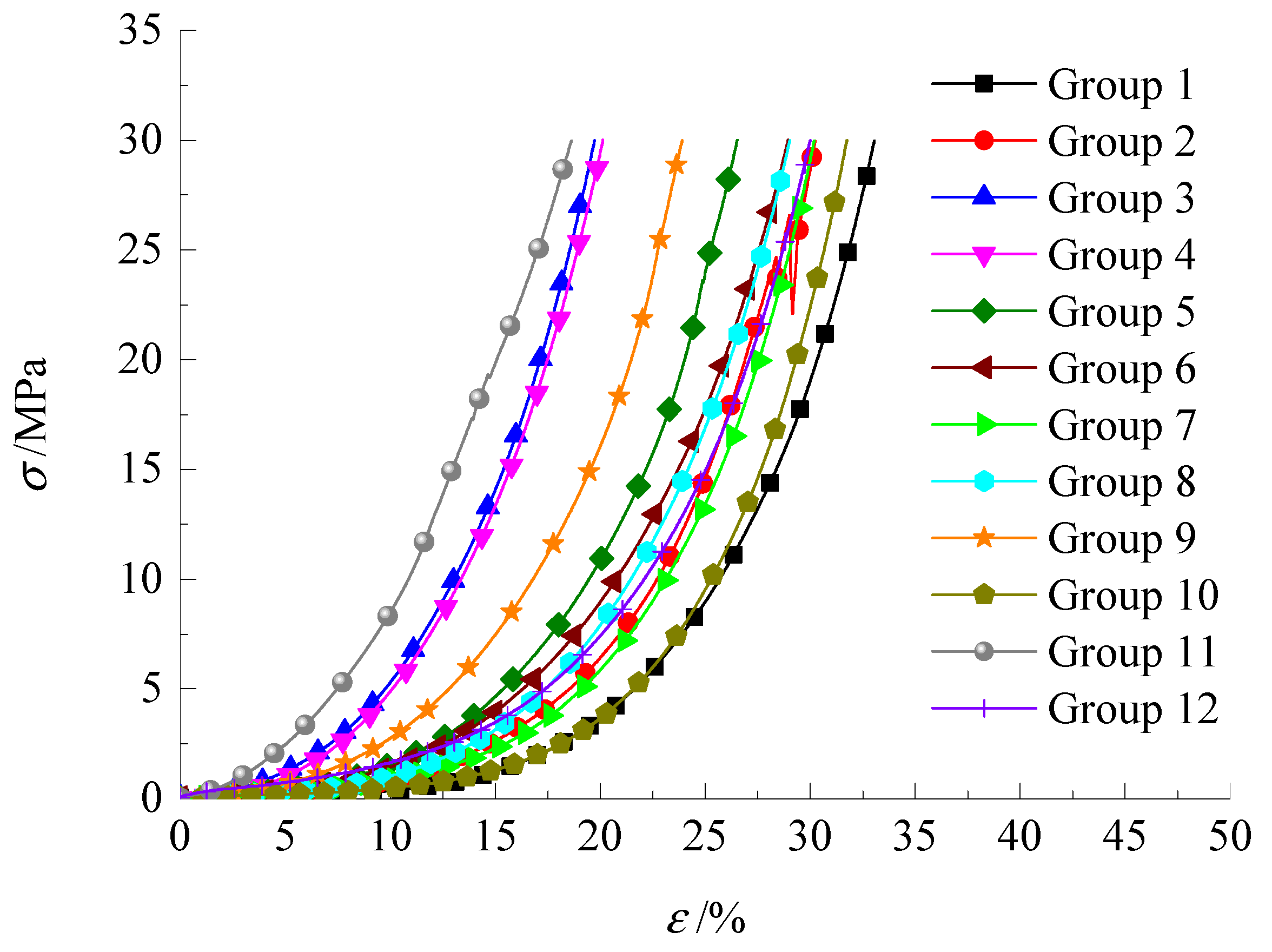
The axial stress versus compaction rate curves of the 12 groups of backfill materials are presented in Figure 12. Based on the experimental results obtained from the designed scheme, it is observed that the compaction rate exhibits a nonlinear relationship with the mass ratio of tailings to Material C, water content, and curing time. Data processing and analysis indicated that the quadratic polynomial stepwise regression provided a better fit compared to nonlinear regression methods such as power function, exponential, and logarithmic regression. The relationship between the fitted compaction rate ε and the three influencing factors can be expressed by the following quadratic polynomial function:
ε = 0.09 x 1 2 0.24 x 2 2 + 0.004 x 3 2 0.13 x 1 x 2 + 0.10 x 1 x 3 0.02 x 2 x 3 2.27 x 1 + 4.87 x 2 1.14 x 3 + 34.74
The fitted Equation (8) yields a coefficient of determination (R2) of 0.9942, with a significance level of p = 0.0414 < 0.05. By substituting the experimental data into Equation (8), the predicted compaction rates for each test group were calculated, as summarized in Table 5. Except for samples 2 and 8, which exhibited slightly larger fitting errors, the predicted values show good agreement with the experimental values, with an average relative error of 1.15%. These results demonstrate the rationality and reliability of the fitting model.

5.2.2. Sensitivity Analysis of Factors Affecting Compaction Rate

An analysis of variance (ANOVA) was performed on the experimental results of the mixed tailings’ compaction characteristics, as presented in Table 5. A p-value below 0.05 was considered indicative of a statistically significant influence of the corresponding factor.
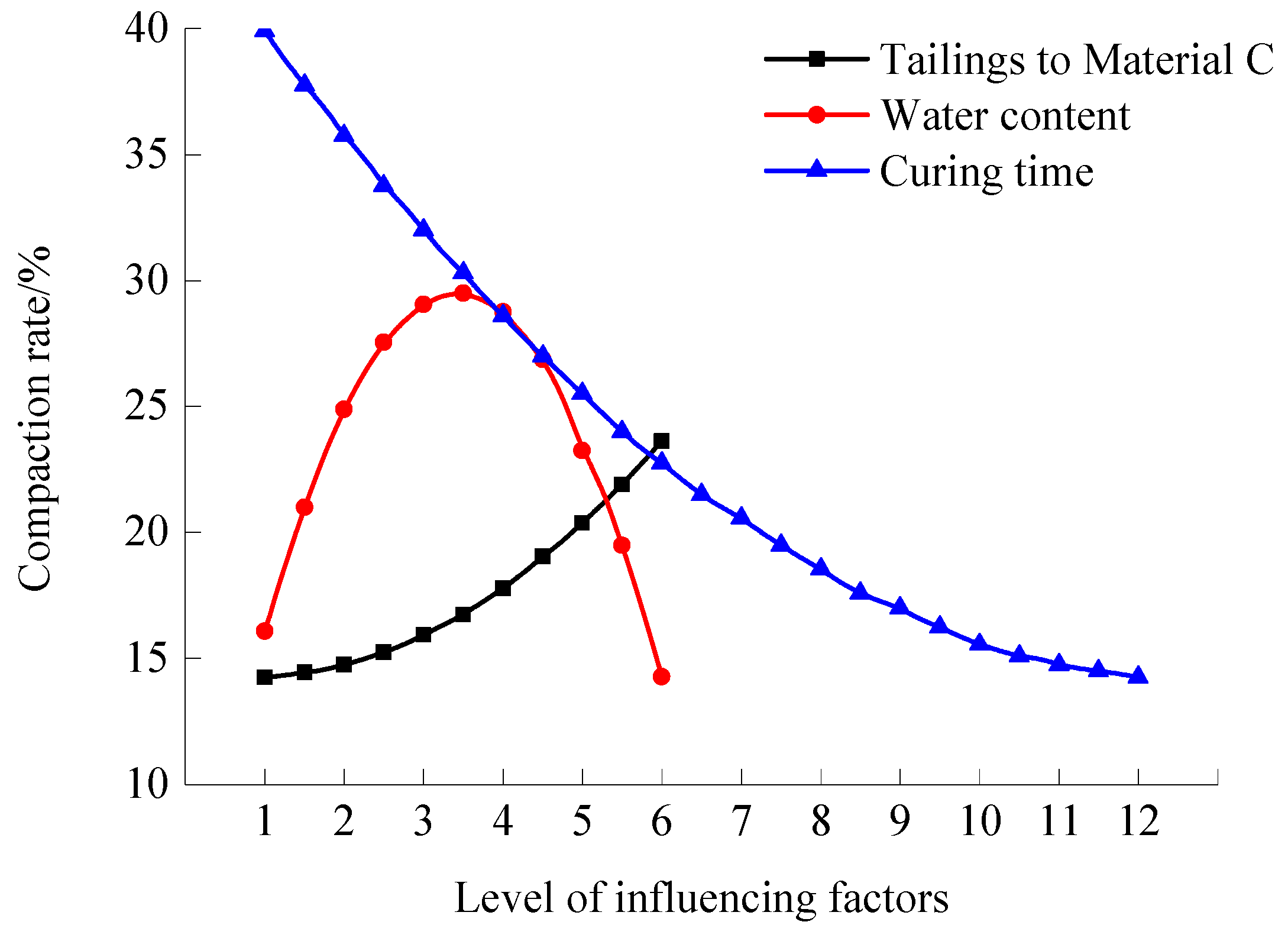
As indicated in Table 5, the mass ratio of tailings to Material C, water content, and curing time all exert significant influences on the compaction rate of the backfill material. Among these factors, water content exhibits a more pronounced effect than the other two. The individual influence of each factor on the compaction rate across different levels is illustrated in Figure 13.
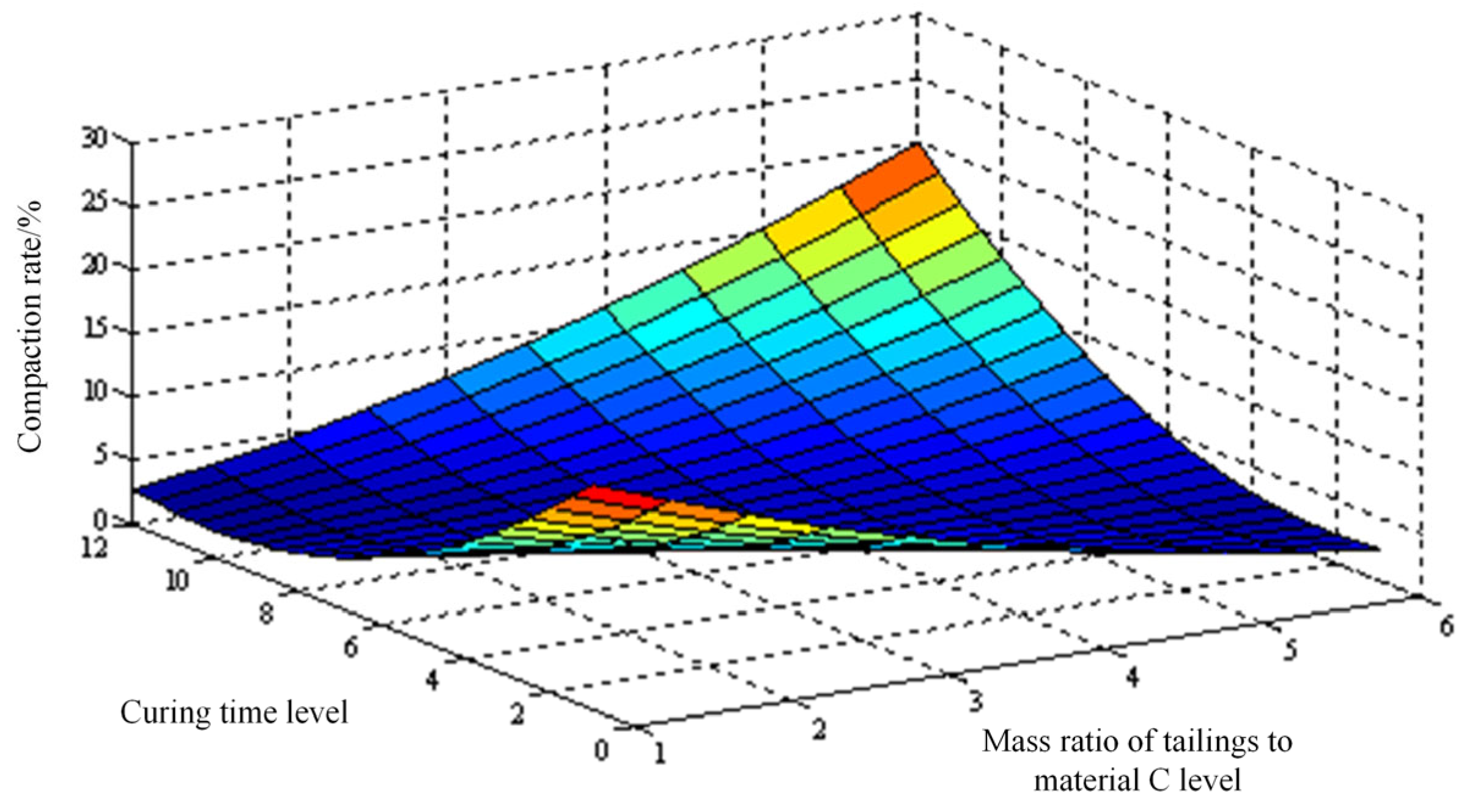
The relationship between the compaction rate and the tailings-to-C material mass ratio follows an increasing parabolic trend. A higher mass ratio corresponds to a lower content of Material C, which weakens the cohesive and crystalline structures formed between particles, thereby leading to a greater compaction rate. The compaction rate initially increases and then decreases with rising water content, peaking at approximately 7%. The underlying mechanism aligns with that previously described for tailings without cementitious additives. A nonlinear negative correlation is observed between compaction rate and curing time. As curing time increases, the compaction rate gradually declines. Significant changes in compaction rate occur within the first 6 h, while beyond 24 h, the effect of curing time becomes minimal. This behavior is attributed to the fact that the hydration and solidification processes between Material C and the tailings are largely completed within 5~6 h, with subsequent hardening progressing at a slower rate. Furthermore, a significant interaction effect between the tailings-to-C material mass ratio and curing time is evident, as shown in Figure 14. A higher mass ratio or a shorter curing duration results in an increased compaction rate. This can be explained by two main mechanisms: shorter curing times lead to an underdeveloped coagulation structure of the cementitious material and reduced interparticle cohesion, while a higher mass ratio implies less cementitious content, similarly diminishing cohesive forces between particles and facilitating greater compaction.

6. Calculation and Verification of Compaction Rate of Underground Backfill

Based on Equation (8) in Section 5, the final compaction rate of the cemented tailings backfill with early age and low material C-to-tailings ratios can be calculated for any combination of the three factors: mass ratio of tailings to Material C, water content, and curing time. Therefore, the compaction of the stope backfill in Sanshandao Gold Mine can be calculated if the applied vertical stress on the backfill is known. In this work, the numerical simulation method is employed to solve the mining stress posing on the backfill.

6.1. Numerical Modeling

6.1.1. Three-Dimensional Modeling

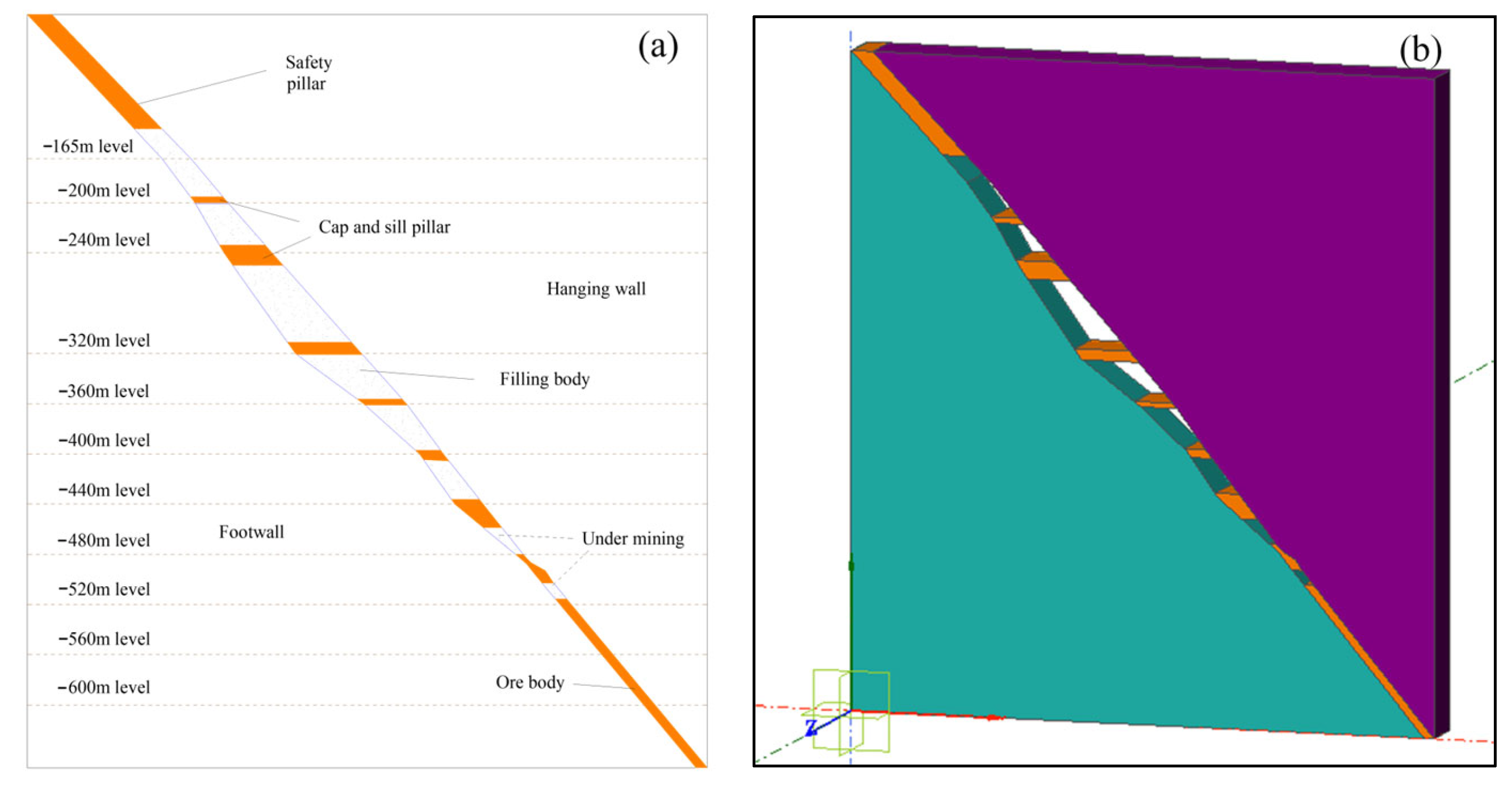
To determine the mining stresses acting on the backfill material at various mining levels, a three-dimensional numerical model was developed using a coupled Midas-Flac approach based on the geological exploration line profile. The Midas/GTS software has powerful functions in the pre-processing aspects such as building three-dimensional models and meshing, while the Flac3D software has powerful capabilities in setting up constitutive models, assigning material parameters, defining boundary conditions, and performing excavation and filling operations as well as post-processing analysis by writing command streams. Therefore, we utilized the Midas/GTS-Flac3D interface program developed by predecessors to import the three-dimensional mesh model established in Midas/GTS into Flac3D for post-processing analysis, thereby enabling rapid and accurate simulation and calculation of the surrounding rock response under different filling mining conditions. As stated above, the mining levels of Sanshandao Gold Mine are established at approximately 40 m intervals vertically below the −165 m level, with multiple stopes across multiple levels being extracted simultaneously. The levels currently under extraction include the −165 m, −200 m, −240 m, −280 m, −320 m, −360 m, −400 m, −440 m, −480 m (active), and −520 m (active) mining levels. The model was constructed in Midas for geometry generation and mesh design, while Flac was employed for subsequent mechanical calculation and analysis. The established model has dimensions of 550 m × 50 m × 550 m (length × width × height), and consists of 24,633 nodes and 121,312 elements, as shown in Figure 15. In numerical simulations of mine excavation, the Mohr-Coulomb model is selected because it is a classic, practical, and efficient engineering model. It can effectively analyze shear-dominated failure problems in rock and soil masses using concise parameters, providing a reliable basis for evaluating engineering stability. With regard to the model, the parameters of the materials were determined according to Table 1, and the applied geo-stress on the model can be calculated by Equation (1). For the displacement boundary condition, the bottom surface of the rectangular model was fixed in all directions, the front, back, and side surfaces are fixed in their normal directions, and the top surface is free.
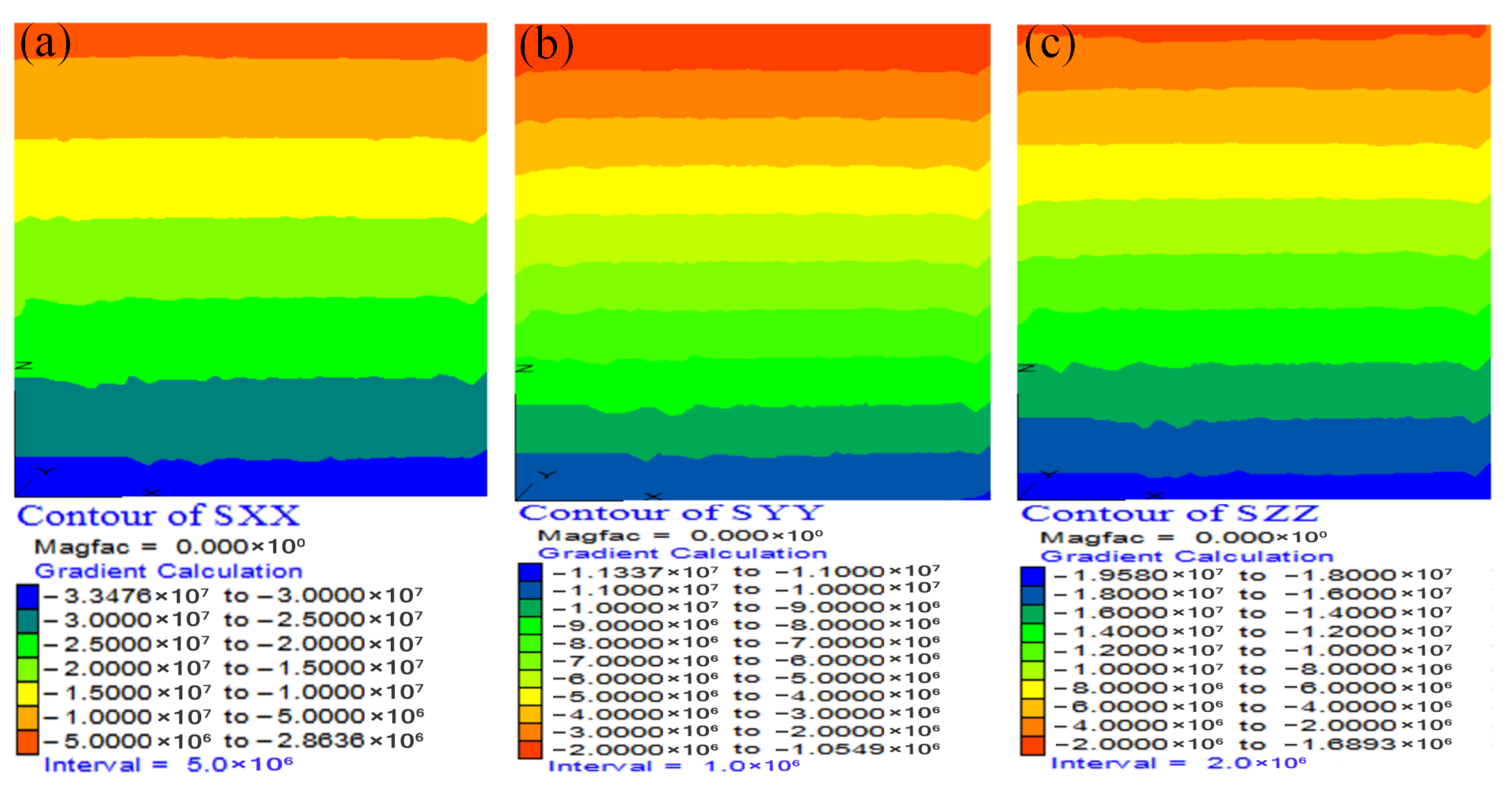
During the numerical simulation, stress boundary conditions were prescribed to the model boundaries according to Equation (1), enabling the generation of the initial geostress field, as shown in Figure 16. The simulation results show that the maximum vertical stress, maximum horizontal principal stress, and minimum horizontal principal stress are 19.58 MPa, 33.48 MPa, and 11.33 MPa, respectively. These values are in close agreement with the corresponding theoretical values of 18.51 MPa, 31.64 MPa, and 10.72 MPa. Furthermore, the distribution characteristics of the simulated in situ stress field are consistent with those predicted by the theoretical formulation, validating the applicability of the theoretical formulation in representing the in situ stress conditions.

6.1.2. Stress Characteristics of Backfill at Different Mining Levels

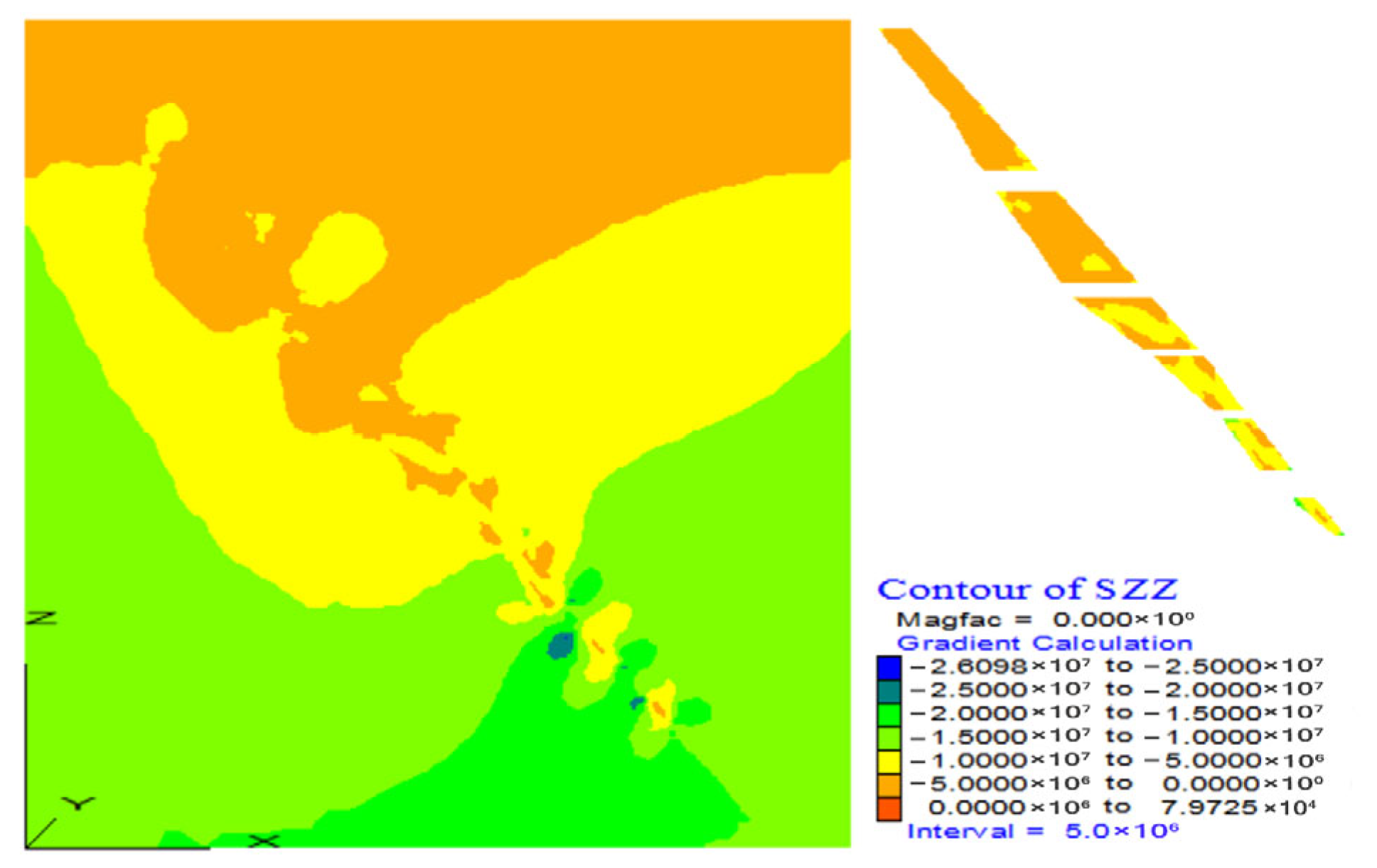
A comprehensive numerical model was established to simulate the overall mining configuration across all active levels in the mining area, with top and drift pillars considered in the analysis. Based on the current mining layout along the No. 55 exploration line, the following levels are included: −165 m, −200 m, −240 m, −280 m, −320 m, −360 m, −400 m, −440 m, −480 m (active), and −520 m (active). All mined-out goafs at these levels are assumed to be completely filled with cemented backfill material. The resulting stress distribution around the stopes is shown in Figure 17.
Due to the confinement provided by the hanging wall and footwall, the mechanical state of the backfill approximates that of the material in the compaction device. The simulated vertical stresses acting on the backfill are approximately 5 MPa at the −165 m and −200 m levels; 10 MPa at the −240 m to −440 m levels; and 15 MPa at the −480 m and −520 m levels.

6.2. Compaction Rate Calculation of Backfill at Different Mining Levels

Following backfilling of the goaf, the placed backfill is initially compacted by shovel loaders. In addition, the loose filling material undergoes bleeding and shrinkage upon water saturation. Therefore, the actual compression ratio of the filling material must satisfy the following relationship:
ξ z = ξ ξ 1 ξ 2
where ε denotes the laboratory test value of compaction rate, %; ε1 represents the compaction rate caused by bleeding shrinkage of the backfill material, %; ε2 is the shrinkage rate resulting from compaction by the shovel loader, %; εz means the ultimate compaction rate of the backfill, %.
The bleeding characteristics of backfill materials vary with the tailings-to-material C ratio. In this study, dry tailings were used to measure ε1, as they exhibit the maximum bleeding shrinkage rate. The sedimentation volume of saturated tailings was measured using a graduated cylinder and water, yielding an average ε1 value of 5.02%. In the backfill mining method, the stope is filled immediately after each layer is excavated. Following a curing period, the backfill is compacted by a shovel loader. This initial compaction under the shovel loader’s load must be accounted for to accurately predict the final compaction rate of the backfill at various mining levels. Various scrapers are used in mining operations. Taking the commonly applied Atlas ST3.5 at Sanshandao Gold Mine as an example, it has a tare weight of 17.1 t, a payload capacity of 6 t, and tire widths of 0.4445 m. The contact area between the tires and the ground depends on tire pressure, ranging from 0.04 to 0.14 m2, resulting in ground pressures between 0.26 MPa and 0.65 MPa. Considering the case of high pressure, the calculated compaction rates for cement-free tailings with water contents of 0%, 2.14%, 5%, 8%, 10%, and 12% under shovel loader loading are 4.29%, 10.53%, 13.27%, 11.72%, 8.63%, and 4.60%, respectively. Research indicates that the rheological behavior of cemented tailings backfill slurry at concentrations ranging from 69% to 81% follows a yield-pseudoplastic model [37]. At concentrations exceeding 81%, the slurry exhibits Bingham plastic behavior. Thus, 81% is defined as the critical concentration for paste slurry, with the typical paste filling concentration ranging from 81% to 88%. Due to minimal bleeding in paste filling, the slurry can be considered saturated, corresponding to a water content of 12–19%. As stated in Section 5.2.2, the impact of water content on compaction rate is very little when the filling materials are already water-saturated. Moreover, the maximum compaction rate of water-saturated filling materials at a stress level of 15 MPa is less than 15% according to the laboratory testing results. After accounting for the compaction rate caused by bleeding shrinkage of the backfill material and compaction of the shovel loader, the final maximum compaction rate of the backfill at Sanshandao Gold Mine under mining-stress is between 0% and 2%. In fact, the actual compaction rate of the backfill may be less than this value because of the cyclic compaction on the backfill resulted from the shovel loader round-trip movement and the enhanced load-bearing capacity by the subsequent cement hydration.

6.3. Settlement Measurement of Crosscut Roof

Underground goafs are similar to black boxes, where the state of the enclosed backfill cannot be visually observed, making it difficult to directly measure the compressive deformation of the backfill. As the various-level crosscuts are located directly above the lower stopes, the settlement measurement of the crosscut can serve as an indicator of the compaction rate of the backfill in the underlying goaf. The orebody in the Xinli mining area is inclined, with stopes across multiple levels and sublevels being mined simultaneously. Consequently, the settlement of the crosscut is evidently influenced by the superimposed compressive deformation of backfill from underlying stopes at various levels. To eliminate this compounding settlement effect, we selected the backfill from the current stope at the deepest level (−520 m) to study its compaction characteristics, using the settlement of the cross-cut at the −480 m level as the monitoring target.
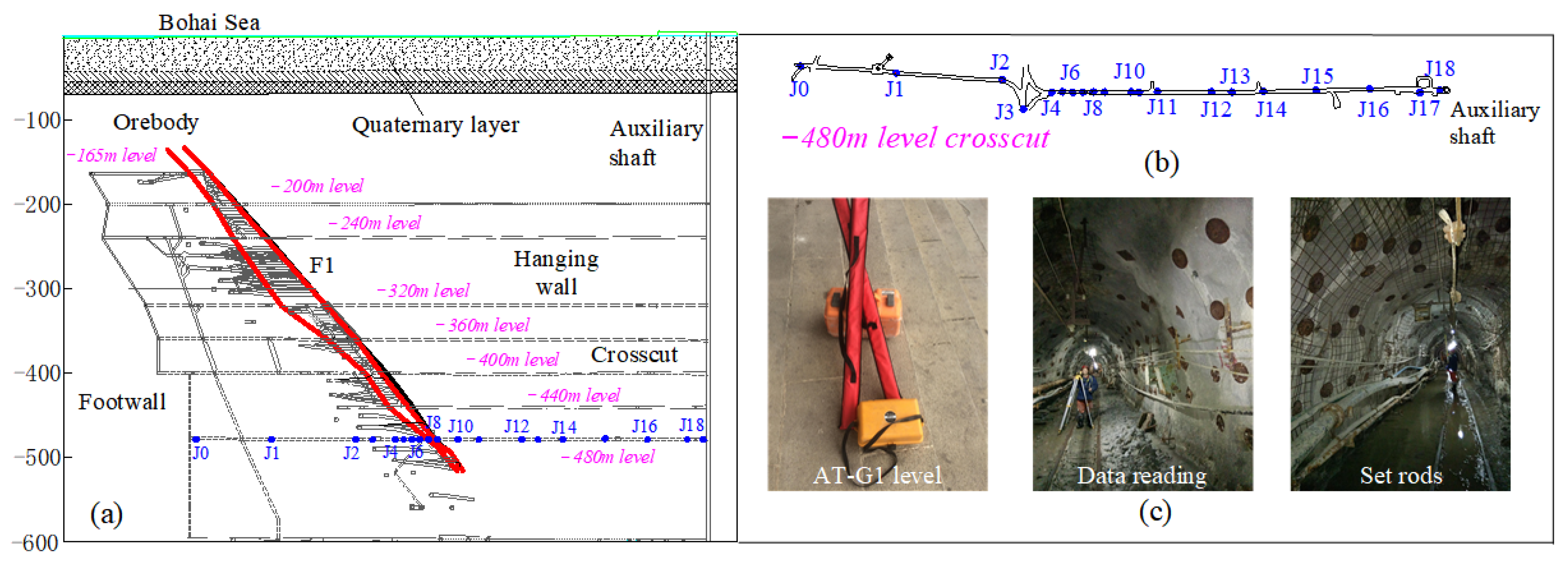
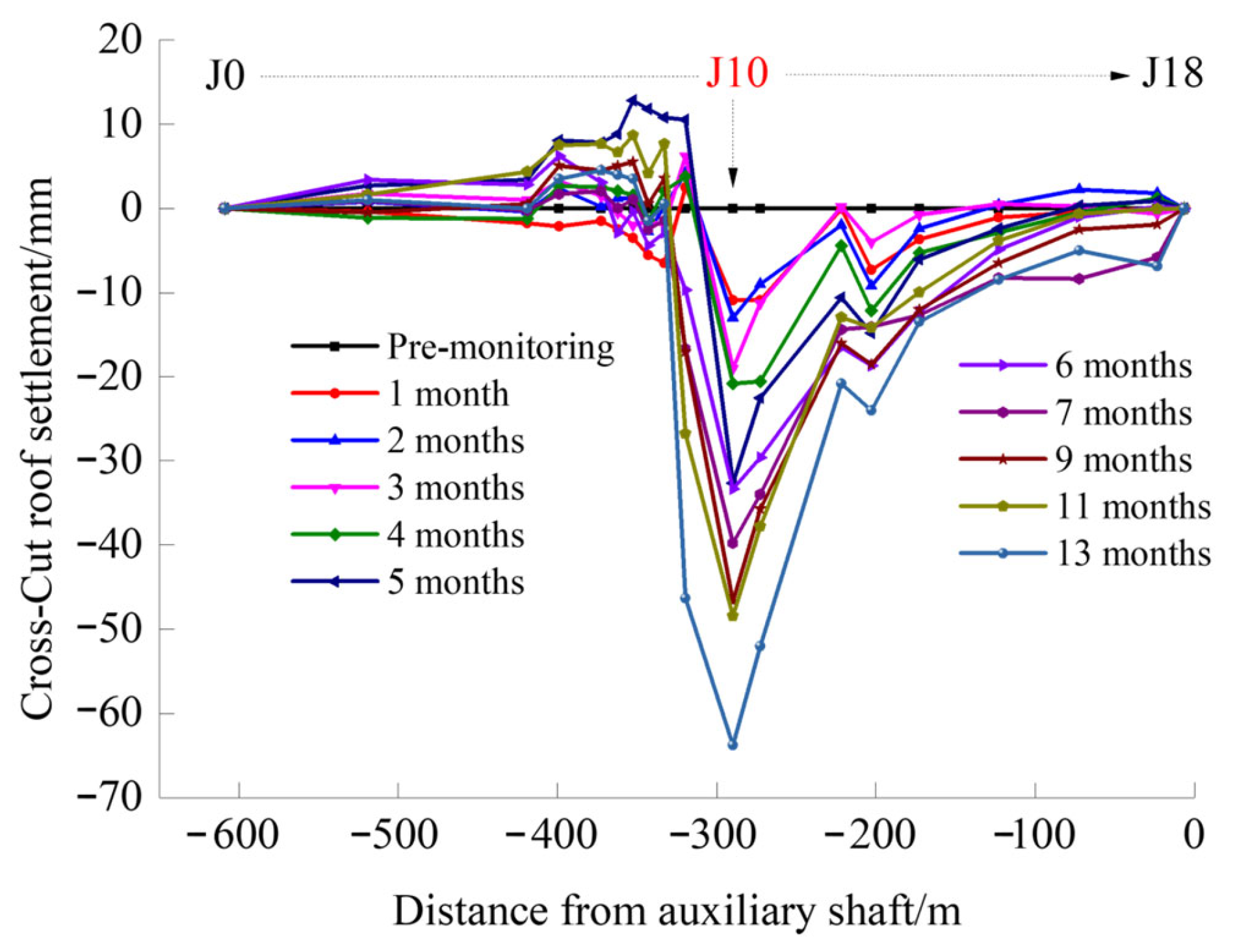
Due to production activities such as equipment transport and personnel traffic, installing monitoring points on the roadway floor would make them highly susceptible to damage. Therefore, 19 settlement monitoring points (J0–J18) were installed at unequal intervals (10–50 m) along the roof of the cross-cut at the −480 m level, covering the entire length of the crosscut across the footwall, orebody, and hanging wall. At each monitoring point, a hole is to be drilled for the installation of an expansion bolt (M10 type) to serve as a marker. The reference point J0 was placed in the footwall, 86 m from the footwall-orebody interface, an area unaffected by mining activity. Monitoring points J8 and J9 were located within the orebody, while J18 was installed near the intersection of the auxiliary shaft and the crosscut, as illustrated in Figure 18. Based on the principle of geometric leveling, a Topcon AT-G1 level was used to periodically monitor the cumulative settlement at each monitoring point, with measurements taken approximately once per month. Initial elevation readings were recorded before stope excavation to establish baseline data. After more than one year of monitoring, the cumulative settlement at each monitoring point over time was plotted, as shown in Figure 19.
The results reveal non-uniform settlement of the crosscut roof in the hanging wall, orebody, and footwall, with the settlement curve exhibiting a conical funnel shape. Therefore, the deformation and fracturing of the roadway are relatively intense, and the surrounding rock requires repeated reinforcement. The maximum settlement (63.75 mm) occurred at monitoring point J10, located directly above the backfilled stope, with settlement gradually decreasing toward both sides. The footwall segment experienced minor and slow settlement, whereas the hanging wall segment settled more rapidly. Figure 19 also indicates negative settlement values at monitoring points near the orebody-footwall interface, suggesting roof uplift. This is likely attributable to rock fracturing-induced heaving in this area. Settlement data analysis further shows that the settlement rate was highest during the first five months, with the maximum settlement point sinking at 12–20 mm per month, after which the rate gradually decelerated. Based on the backfill height in the −520 m level stope, the maximum compaction rate of the backfill was calculated to be 0.31%, which aligns with the range estimated in Section 6.2. It should be noted that, considering the creep effects of backfill under long-term loading and the delayed response of overlying strata movement, the final compaction rate of the backfill is expected to increase slightly, though not significantly. The monitoring period was limited to one year because mining activities commenced at the −560 m level during this time, which would introduce superimposed settlement effects at the −480 m level. Therefore, settlement data beyond this period cannot be solely attributed to the compression of backfill in the −520 m level stope.

7. Conclusions

In this study, the settlement characteristics of overlying strata in backfilled stopes of Sanshandao Gold Mine as well as the compaction response of backfill materials considering various influence factors were explored comprehensively. The following conclusions can be drawn from the results presented in this work:
(1)
This study details the geological characteristics and mining technical conditions of the Sanshandao Gold Mine. The classified tailings exhibit a fractal dimension of 2.1525 for particle size distribution and a porosity dimension of 0.9608. These values indicate a relatively broad particle size distribution with well-graded characteristics. In contrast, Material C shows a higher fractal dimension of 2.1994 for particle size and a lower porosity dimension of 0.9484. This suggests a significantly wider and more uneven particle size distribution with discontinuous grading, coupled with lower porosity compared to the tailings.
(2)
The movement of tailings particles follows a viscous sliding mechanics model, and the compaction characteristic curve exhibits an exponential distribution, which can be divided into three distinct stages: pore compaction and closure, structural deformation, and elastic-plastic deformation. The corresponding energy dissipation values for these stages are 0.25 MJ/m3, 1.25 MJ/m3, and 4.50 MJ/m3, respectively, with frictional dissipation accounting for 11.25% of the total. Water content significantly influences the compaction behavior of tailings. The compaction rate initially increases and then decreases with rising water content, peaking when the moisture content ranges between 5% and 8%.
(3)
Compaction tests on the backfill mixture reveal that the compaction rate increases parabolically with the tailings-to-C-material mass ratio. Furthermore, the compaction rate exhibits a non-monotonic relationship with water content, initially increasing before decreasing, while demonstrating a positive correlation with curing time. A significant interaction effect is also observed between water content and curing time.
(4)
The actual orebody model of the Sanshandao Gold Mine was established by the coupled Midas-Flac software, and the mining-stress distribution acting on the backfill at different mining levels were revealed. Thus, the theoretical compaction rate of the backfill in the stopes is calculated to be 0–2% by eliminating the shrinkage caused by water seepage of the backfill and the compaction effect of the shovel loader.
(5)
An indirect method was developed to measure backfill compression in inclined stopes at Sanshandao Gold Mine. Long-term leveling revealed non-uniform settlement in the −480 m crosscut: maximum subsidence above the stope reached 63.75 mm, with early-stage rates of 12–20 mm/month before deceleration. Footwall settlement was milder than hanging wall, with localized uplift near the ore-contact zone due to rock fracturing. The backfill compaction rate at −520 m was calculated as 0.31%, with a slight further increase anticipated.
(6)
The next step of research should be combined with the actual filling conditions of the mine, and further consider the coupled compression settlement of the fully tailings cemented filling body at early age and after 28 days of curing time, in order to provide scientific basis for guiding the proportion of filling materials. At the same time, further exploration is needed on the spatiotemporal characteristics of the deformation of the overlying strata in the mining area under the superposition of settlement of the filling bodies in the upper and lower mining areas.

Author Contributions

Conceptualization, H.W. and Y.K.; methodology, G.Z. and Y.C.; software, H.W.; validation, H.N.M., Y.C. and Y.K.; investigation, H.W., H.N.M., Y.K., G.Z. and Y.C.; resources, H.W., Y.K. and G.Z.; data curation, H.W., Y.K. and Y.C.; writing—original draft preparation, H.W.; writing—review and editing, H.N.M., Y.K., G.Z. and Y.C.; supervision, H.N.M., Y.K. and Y.C.; project administration, G.Z.; funding acquisition, H.W. All authors have read and agreed to the published version of the manuscript.

Funding

This research was funded by the National Natural Science Foundation of China (52204160), the National Science and Technology Major Project (2024ZD1004003), Open Fund of State Key Laboratory of Mining Response and Disaster Prevention and Control in Deep Coal Mines (Grant No. SKLMRDPC21KF07) and Jiangsu Province Youth Science and Technology Talent Support Project (JSTJ-2024-393).

Data Availability Statement

The author claims that all the data presented in this study are available within the paper.

Conflicts of Interest

Authors Yunpeng Kou and Gengjie Zhu were employed by the Shandong Gold Mining Technology Co., Ltd. The remaining authors declare that the research was conducted in the absence of any commercial or financial relationships that could be construed as a potential conflict of interest.

References

  1. Sheshpari, M. A review of underground mine backfilling methods with emphasis on cemented paste backfill. Electron. J. Geotech. Eng. 2015, 20, 5183–5208. [Google Scholar]
  2. Wang, Y.L.; Kong, D.Z.; Wu, G.Y.; Cheng, Z.B.; Song, G.F.; Shang, Y.Q. Failure mechanism and movement characteristics of overlying strata in longwall mining face with thick aquifer. Rock Mech. Rock Eng. 2024, 57, 6787–6809. [Google Scholar] [CrossRef]
  3. Makarov, V.V.; Guzev, M.A.; Odintsev, V.N. Development of geomechanics of highly compressed rocks and rock masses in Russia. Geohazard Mech. 2025, 3, 42–58. [Google Scholar] [CrossRef]
  4. Ma, F.S.; Gu, H.Y.; Guo, J.; Lu, R. Analysis of ground deformation based on GPS in Sanshandao gold mine, China. J. Nepal Geol. Soc. 2018, 55, 7–14. [Google Scholar] [CrossRef]
  5. Zhou, N.; Han, X.L.; Zhang, J.X.; Li, M. Compressive deformation and energy dissipation of crushed coal gangue. Powder Technol. 2016, 297, 220–228. [Google Scholar] [CrossRef]
  6. Liang, P.; Yang, Y.; Liu, J.; Xin, C.; Sun, Y. Experimental study on confined compaction deformation of crushed gangue under different water content conditions. Appl. Sci. 2023, 13, 4538. [Google Scholar] [CrossRef]
  7. Li, J.M.; Huang, Y.L.; Zhai, W.; Li, Y.S.; Ouyang, S.Y.; Gao, H.D.; Li, W.; Ma, K.; Wu, L.W. Experimental study on acoustic emission of confined compression of crushed gangue under different loading rates: Disposal of gangue solid waste. Sustainability 2020, 12, 3911. [Google Scholar] [CrossRef]
  8. Li, M.; Zhang, J.X.; Wu, Z.Y.; Liu, Y.; Li, A.L. An experimental study of the influence of lithology on compaction behaviour of broken waste rock in coal mine backfill. Roy. Soc. Open Sci. 2019, 6, 182205. [Google Scholar] [CrossRef]
  9. Wang, C.X.; Shen, B.T.; Chen, J.T.; Tong, W.X.; Jiang, Z.; Liu, Y.; Li, Y.Y. Compression characteristics of filling gangue and simulation of mining with gangue backfilling: An experimental investigation. Geomech. Eng. 2020, 20, 485–495. [Google Scholar]
  10. Li, J.M.; Huang, Y.L.; Chen, Z.; Zhang, J.X.; Jiang, H.Q.; Zhang, Y.C. Characterizations of macroscopic deformation and particle crushing of crushed gangue particle material under cyclic loading: In solid backfilling coal mining. Powder Technol. 2019, 343, 159–169. [Google Scholar] [CrossRef]
  11. Li, M.; Zhang, J.X.; Sun, K.; Zhang, S. Influence of lateral loading on compaction characteristics of crushed waste rock used for backfilling. Minerals 2018, 8, 552. [Google Scholar] [CrossRef]
  12. Li, M.; Peng, Y.F.; Ding, L.W.; Zhang, J.X.; Ma, D.; Huang, P. Analysis of surface deformation induced by backfill mining considering the compression behavior of gangue backfill materials. Appl. Sci. 2023, 13, 160. [Google Scholar] [CrossRef]
  13. Wen, P.; Han, S.; Guo, W.B.; Yang, W.Q.; Bai, E.H. Study of the internal rebreaking characteristics of crushed gangue in mine goaf during compression. Appl. Sci. 2024, 14, 1682. [Google Scholar] [CrossRef]
  14. Kong, H.L.; Chen, Z.Q.; Wang, L.Z.; Shen, H.D. Experimental study on permeability of crushed gangues during compaction. Int. J. Min. Process. 2013, 24, 95–101. [Google Scholar] [CrossRef]
  15. Yuan, R.; Ma, D.; Zhang, H.W. Flow Characteristics and grain size distribution of granular gangue mineral by compaction treatment. Adv. Mater. Sci. Eng. 2017, 30, 2509286. [Google Scholar] [CrossRef]
  16. Qi, W.Y.; Zhang, J.X.; Zhang, Q. Compression of aggregates of acid-leached coal gangues: Implications for coal mine backfill. Adv. Mater. Sci. Eng. 2018, 2018, 7056430. [Google Scholar] [CrossRef]
  17. Zhang, X.; Spiers, C.J. Compaction of granular calcite by pressure solution at room temperature and effects of pore fluid chemistry. Int. J. Rock Mech. Min. Sci. 2005, 42, 950–960. [Google Scholar] [CrossRef]
  18. Zhu, D.F.; Tu, S.H.; Ma, H.S.; Wei, H.M.; Li, H.C.; Wang, C. Modeling and calculating for the compaction characteristics of waste rock masses. Int. J. Numer. Anal. Met. 2019, 43, 257–271. [Google Scholar] [CrossRef]
  19. Zhang, C.; LI, B.; Song, Z.Y.; Liu, J.B.; Zhou, J.L. Breakage mechanism and pore evolution characteristics of gangue materials under compression. Acta Geotech. 2022, 17, 4823–4835. [Google Scholar] [CrossRef]
  20. Yadav, A.; Behera, B.; Sahoo, S.K.; Singh, G.S.P.; Sharma, S.K. An approach for numerical modeling of gob compaction process in longwall mining. Min. Metall. Explor. 2020, 37, 631–649. [Google Scholar] [CrossRef]
  21. Chen, L.; Li, J.M.; Zhang, D.S.; Fan, G.W.; Zhang, W.; Guo, Y.C. Microscopic fabric evolution and macroscopic deformation response of gangue solid waste filler considering block shape under different confining pressures. Sci. Rep. 2022, 12, 7388. [Google Scholar] [CrossRef] [PubMed]
  22. Li, B.; Yang, X.; Yuan, Y.; Liang, Y.P.; Li, S.Q.; Zhu, C.Q.; Peng, W.Q. Experimental research on the influence of different factors on the behaviour of broken coal and rock particles during compaction. Constr. Build. Mater. 2023, 367, 130127. [Google Scholar] [CrossRef]
  23. Kaminska, K.; Dzierw, P. The influence of compaction and saturation on the compressibility of colliery waste. Therm. Sci. 2019, 23, 1345–1355. [Google Scholar] [CrossRef]
  24. Yao, W.T.; Ma, Z.G.; Cai, C.C.; Hao, Y.K.; Liu, W.; Yue, P. Experimental study on lateral compression characteristics of fly ash slurry filled with separate layer. Therm. Sci. 2025, 29, 1509–1514. [Google Scholar] [CrossRef]
  25. Zhang, P.F.; Zhang, Y.B.; Zhao, T.B.; Tan, Y.L.; Yu, F.H. Experimental research on deformation characteristics of waste-rock material in underground backfill mining. Minerals 2019, 9, 102. [Google Scholar] [CrossRef]
  26. Wang, J.Q.; Zhang, Q.; Yin, W.; Qi, S.M.; Gao, D.F.; Ma, D. On-Site measurement on compaction characteristics of coal gangue and surface subsidence disaster in deep backfilling mining. Front. Earth Sci. 2021, 9, 724476. [Google Scholar] [CrossRef]
  27. He, Z.Q.; Ju, F.; Xiao, M.; Ning, P.; Zhou, C. An experimental investigation on the compaction characteristic of coal waste rock backfilling material using electrical resistivity method. Sci. Rep. 2022, 12, 7388. [Google Scholar] [CrossRef]
  28. Zhang, J.X.; Zhang, Q.; Huang, Y.L.; Liu, J.W.; Zhou, N.; Zan, D.F. Strata movement controlling effect of waste and fly ash backfillings in fully mechanized coal mining with backfilling face. Int. J. Min. Sci. Technol. 2011, 21, 721–726. [Google Scholar] [CrossRef]
  29. Yang, K.; Zhao, X.; Wei, Z.; Zhang, J.Q. Development overview of paste backfill technology in China’s coal mines: A review. Environ. Sci. Pollut. Res. 2021, 28, 67957–67969. [Google Scholar] [CrossRef]
  30. Skrzypkowski, K. Determination of the backfilling time for the zinc and lead ore deposits with application of the backfillCAD model. Energies 2021, 14, 3186. [Google Scholar] [CrossRef]
  31. Consoli, N.C.; Nierwinski, H.P.; da Silva, A.P.; Sosnoski, J. Durability and strength of fiber-reinforced compacted gold tailings cement blends. Geotext. Geomembr. 2017, 45, 98–102. [Google Scholar] [CrossRef]
  32. Zhao, G.Y.; Wu, H.; Chen, Y.; Xu, Z.W.; Li, Z.Y.; Wang, E.J. Experimental study on load-bearing mechanism and compaction characteristics of mine filling materials. J. China Univ. Min. Technol. 2017, 46, 1251–1258+1266. [Google Scholar]
  33. Liu, J.; Ma, F.S.; Guo, J.; Li, G.; Song, Y.W.; Wan, Y. A field study on the law of spatiotemporal development of rock movement of under-sea mining, Shandong, China. Sustainability 2022, 14, 5864. [Google Scholar] [CrossRef]
  34. Liu, Z.X.; Dang, W.G.; He, X.Q.; Li, D.Y. Cancelling ore pillars in large-scale coastal gold deposit: A case study in Sanshandao Gold Mine, China. T. Nonferr. Metal. Soc. 2013, 23, 3046–3056. [Google Scholar] [CrossRef]
  35. Bagde, M.N.; Raina, A.K.; Chakraborty, A.K.; Jethwa, J.L. Rock mass characterization by fractal dimension. Eng. Geol. 2002, 63, 141–155. [Google Scholar] [CrossRef]
  36. Wu, A.X.; Yang, B.H.; Zhou, X. Fractal analysis of granular ore media based on computed tomography image processing. Trans. Nonferrous Met. Soc. China 2008, 18, 1523–1528. [Google Scholar] [CrossRef]
  37. Wu, A.X.; Ruan, Z.E.; Wang, J.D. Rheological behavior of paste in metal mines. Int. J. Min. Met. Mater. 2022, 29, 717–726. [Google Scholar] [CrossRef]
Figure 1. Solid waste in mines: (a) depicts the tailings discharged into the pond and (b) depicts the coal gangue stockpiled on the surface.
Applsci 16 00045 g001
Figure 2. Schematic plan and section of submarine ore body location at Sanshandao Gold Mine (After [33]).
Applsci 16 00045 g002
Figure 3. Schematic of mechanized upward drift-and-fill mining method at Sanshandao Gold Mine.
Applsci 16 00045 g003
Figure 4. Particle size distribution curve of filling material.
Applsci 16 00045 g004
Figure 5. Fractal dimension fitting curves of filling materials.
Applsci 16 00045 g005
Figure 6. The experimental equipment: (a) depicts a schematic diagram and (b) confined compaction equipment.
Applsci 16 00045 g006
Figure 7. Mechanical model of compacted tailings: (a) physical model and (b) motion curves. Consider a mass m subjected to a tensile force from spring MN, where end N moves at a constant velocity v, and the spring has stiffness k. Initially, m remains stationary under the combined action of force F and interfacial friction. The spring force increases linearly with the displacement of point N (stage OA). Starting from point A, relative sliding initiates between mass m and the interface, where fd represents the maximum static friction force. At point B, the friction reaches its peak, denoted as the sliding friction force fs. When m undergoes a sudden forward slip, the friction decreases as the spring shortens, eventually stabilizing at point C, where fe is the residual friction force. If point N continues to move, the spring tension increases again until another abrupt slip occurs.
Applsci 16 00045 g007
Figure 8. The dry tailings’ compaction characteristic curves analysis: (a) axial stress versus compaction rate and (b) compaction rate versus compaction time.
Applsci 16 00045 g008
Figure 9. Energy dissipation characteristic curves of tailings under compaction.
Applsci 16 00045 g009
Figure 10. Compaction curves analysis of tailings with various moisture content.
Applsci 16 00045 g010
Figure 11. Systematic post-compaction states of tailings containing different water content under uniaxial compression viewed from the bottom of the device.
Applsci 16 00045 g011
Figure 12. Axial stress versus compaction rate curves of 12 groups of backfill materials.
Applsci 16 00045 g012
Figure 13. Impact of a single factor on the compaction rate.
Applsci 16 00045 g013
Figure 14. Interaction effect of multiple factors on compaction rate.
Applsci 16 00045 g014
Figure 15. Analytical modeling of the Sanshandao Gold Mine: (a) longitudinal projection of stopes along the 55# exploration line and (b) three-dimensional model of orebody.
Applsci 16 00045 g015
Figure 16. Simulated initial geo-stress field: (a) maximum horizontal principal stress, (b) minimum horizontal principal stress and (c) vertical stress.
Applsci 16 00045 g016
Figure 17. Vertical stress model distribution in backfill at different mining levels.
Applsci 16 00045 g017
Figure 18. Roof settlement measurement for crosscut at −480 m level: (a) monitoring points layout profile along exploration line No. 55, (b) monitoring points layout plan and (c) surveying instruments and field applications.
Applsci 16 00045 g018
Figure 19. Cumulative settlement of monitoring points at different times.
Applsci 16 00045 g019
Table 1. Physical and mechanical properties of rock mass and filling body of Sanshandao gold mine.
Itemρ/kg·m−3E/GPaμ/[-]K/MPaG/MPaφC/MPaσt/MPa
Footwall26355.130.243288.462068.5536.9410.704.31
Ore body27104.510.192424.731894.9632.606.433.72
Hanging wall27064.030.202238.891679.1730.605.723.18
Filling body21000.230.19123.6696.6438.700.010.01
Table 2. Primary constituents of tailings (mass fraction of metallic elements).
ElementAlFeKCaNaMnPtZnCu
Content/%3.791.211.940.580.180.080.040.040.03
Table 3. Experimental scheme and results for compaction characteristics of mixed tailings.
Moisture Content w/%a/[-]b/[-]c/[-]Correlation Coefficient Square (R2)
01.85586.4590−2.72750.9982
2.140.41167.3398−0.84170.9990
50.20096.5792−0.58010.9986
80.38287.6567−0.82670.9991
100.54486.8040−1.05090.9988
121.46258.3298−1.79450.9997
Table 4. Experimental scheme and results for compaction characteristics of mixed tailings.
Numberx1/[-]x2/%x3/hActual Compaction Rate/%Predicted Compaction Rate/%
1126033.0732.74
28121226.5325.41
343831.7531.49
4492030.1930.32
5615230.2430.36
61002420.1319.73
780419.7320.13
810121023.9025.02
912157218.6318.51
10149628.9628.83
111431629.0429.30
126616830.0030.33
Table 5. Variance analysis of compaction rate regression model.
Source of VariationStandard DeviationMean ValuePartial Correlationt-Test Valuep-Value
x11.789.00−0.94364.03230.0274
x21.787.500.97566.28330.0081
x33.6126.83−9.04143.94740.0290
x1  x29.0267.50−0.63661.16750.3274
x1  x317.43221.000.91823.27870.0465
x2  x318.43214.00−0.79961.88310.1562
x1212.7592.670.76351.67210.1931
x2212.7582.50−0.96935.57760.0114
x3248.152390.330.94854.23390.0241
Disclaimer/Publisher’s Note: The statements, opinions and data contained in all publications are solely those of the individual author(s) and contributor(s) and not of MDPI and/or the editor(s). MDPI and/or the editor(s) disclaim responsibility for any injury to people or property resulting from any ideas, methods, instructions or products referred to in the content.