1. Introduction
Mining-induced large-scale groundwater depletion is the primary cause of ecological degradation in mining areas [
1,
2]. Meanwhile, aquiclude failure triggered by mining disturbances frequently leads to catastrophic water-inrush accidents, endangering mine safety. A typical example is the incident at Xinhu Coal Mine in Anhui Province. There, mining-induced fractures penetrated the aquifer, resulting in a sudden water-inflow of 300 m
3/h, a production halt of over one year, and direct losses exceeding several million yuan [
3]. Fractures formed in the surrounding rock due to mining disturbances are crucial channels for groundwater migration [
4,
5]. Accurately characterizing the development of water-migration pathways and water-diffusion behaviors is essential for guiding low-impact and water-preserving mining practices [
6]. Under mining disturbance, the failure of water-resisting rock masses and groundwater migration are accompanied by changes in the multi-physical-field information of the rock mass, such as deformation, energy, and electrical resistivity. Monitoring the physical-field information of rock masses can help identify their failure and water-bearing conditions [
7,
8,
9], facilitating the understanding of the development of groundwater-migration pathways and the laws governing water migration within them. However, single-physical-field information is easily affected by the complex underground environment, making it difficult to accurately determine the failure and water-bearing status of the rock. Considering multi-physical-field information comprehensively during rock failure can more comprehensively reflect the rock’s damage and water-bearing status. Therefore, there is an urgent need to study the coupled response characteristics and interrelationships of multi-information during the failure process of water-bearing rocks.
Monitoring and analyzing the mechanical, acoustic, and electrical behaviors of rock fracture is critical for studying water-bearing rock damage and failure. Current research on water-bearing rock failure has made substantial progress by focusing on single-parameter response characteristics. Regarding mechanical responses, previous studies have clarified the correlation between water content and rock mechanical parameters [
10,
11], elucidated the influence of water saturation (
Sw) on rock damage and failure mechanisms [
12,
13], and proposed the use of energy dissipation indices [
14], elastic strain potential energy [
15], and elastic energy indices [
16] to characterize the rock damage and failure process. Quantitatively, as
Sw increases from 0% to 100%, rock mechanical properties deteriorate significantly: uniaxial compressive strength decreases by 30–90%, elastic modulus by 25–84%, while Poisson’s ratio increases by 15–30% [
17]. In terms of acoustic emission (AE) responses, prior studies show that with increasing
Sw, AE signal intensity, fracturing-induced energy release, and cumulative AE ring counts decrease, accompanied by temporal lag [
18,
19]. For instance, as water content increases from 0% to 2.62%, AE energy rate drops over 50%, AE events rate decreases by 20%, and the number of AE events with the peak frequency of less than 100 kHz decrease [
20]. Prior research on electrical resistivity responses reveals that the resistivity of sandstone and limestone exponentially decreases as
Sw rises [
21,
22]. Also, resistivity changes during rock loading can effectively mirror pore-structure and pore-water diffusion variations [
23,
24], and this has been applied to predict water-bearing rock masses failure [
25,
26]. Significantly, during the loading process of saturated rocks, the relative resistivity change rate (Δ
ρ/
ρ0) varies slightly by ±5% (elastic stage), decreases sharply by 80–90% (high-stress stage) [
27]. Testing via LCR meter can achieve relative error ≤8%. While existing studies have amassed substantial quantitative data on single-parameter responses to
Sw, they have yet to fully integrate
Sw into multi-parameter coupling models, particularly the quantitative connection between
Sw and parameter weights in integrated damage assessment has not been established.
However, the instability and failure process of rock masses in underground stopes involves complex multi-physical field changes, and relying solely on the response of a single parameter makes it difficult to fully characterize the degree of rock damage and predict instability; thus, researchers have attempted to adopt a combination of multiple monitoring methods to more comprehensively and accurately grasp the rock failure process, identifying the coupled response relationships and temporal characteristics of multi-information during this process. In recent studies on multi-method combined monitoring of rock failure, techniques such as AE have been integrated with ultrasonic testing [
28], digital image correlation (DIC) [
29], electromagnetic emission (EME) [
30], nuclear magnetic resonance (NMR) [
31], computed tomography (CT) [
32], infrared radiation [
33], and macro–micro mechanical analysis [
34] to overcome the limitations of single techniques, with key findings including: AE-DIC revealing a 69.1% peak load reduction in high-temperature granite [
29], AE-EME improving subcritical crack monitoring with an 8 × 10
−4 threshold [
30], AE-NMR clarifying 37% sandstone strength loss due to water [
31], AE-ultrasonic detecting deep shale crack initiation 3–10 MPa earlier [
32], and AE-CT capturing coal–rock cyclic loading crack area peaking at 110 mm
2 [
35]. Notably, existing studies on multi-parameter responses during rock fracture processes have given insufficient consideration to the influence of
Sw, while the water-bearing status is one of the key parameters affecting the damage and failure characteristics of rocks, making it essential to investigate the influence of
Sw on the multi-parameter-coupled response characteristics during rock failure processes.
This study aims to grasp the multi-information response law during the failure processes of water-bearing rocks, so as to characterize their damage state more comprehensively. Firstly, uniaxial compression tests were conducted on sandstones with Sw ranging from 0% to 100%, during which the temporal characteristics of multi-parameter responses, including strain (ε), acoustic emission energy (U), and electrical resistivity (ρ), during rock failure process were monitored. Next, the influence of Sw on the “ε-U-ρ” thresholds and precursor information of rock failure was analyzed. Then, a relationship equation of “ε-U-ρ” response for the rock deformation process, considering the effect of Sw, was established. On this basis, a segmented variable-weight-integrated damage constitutive model for water-bearing rocks was developed based on multi-parameter responses. Lastly, the theoretical curve of the integrated damage constitutive model was compared with that of the single damage variable to verify the comprehensiveness of the proposed model. This research presents an integrated rock damage evaluation method that makes up the limitations of single-parameter and Sw-neglecting assessment methods. It supports the stability analysis of rock masses during mining-induced groundwater migration. Moreover, it guides the optimization of water-preserving mining, the mitigation of environmental risks, and the sustainable development of mining areas.
2. Materials and Methods
2.1. Materials
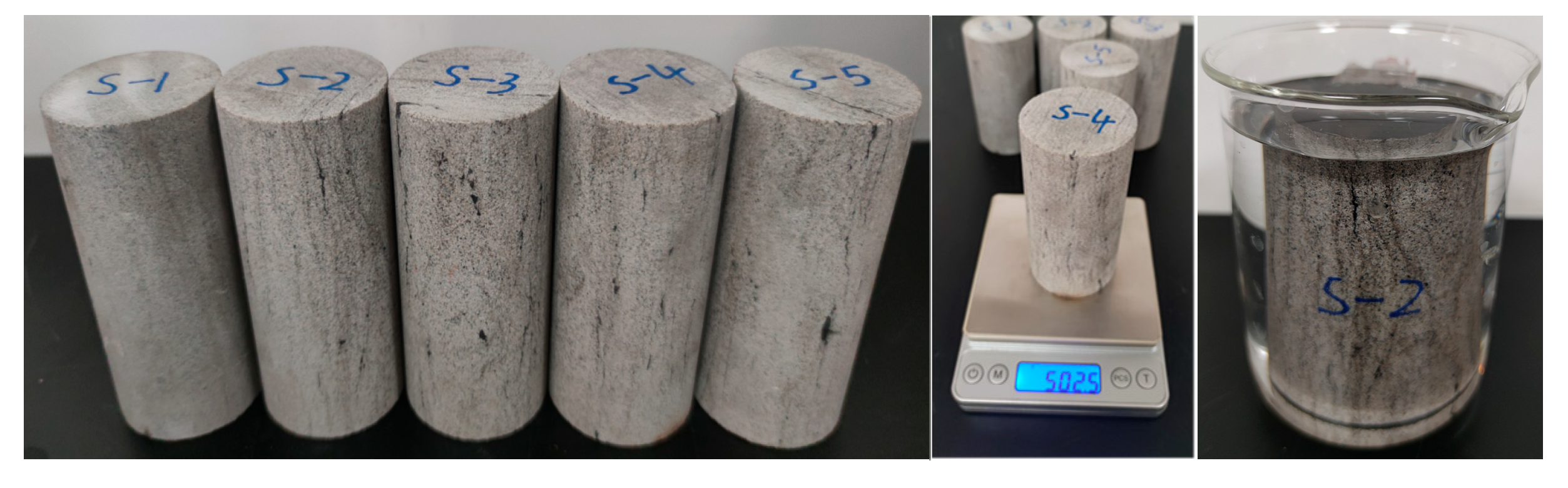
The sandstone samples used in this study were obtained from the bottom of the Middle Jurassic Yan’an Formation in Houliuwan Mine, Inner Mongolia Autonomous Region, China, and were drilled parallel to the bedding plane (vertical to stratification) with a 50 mm diameter to avoid structural anisotropy. After on-site drilling, the samples were immediately packaged and transported to the laboratory for subsequent specimen processing to minimize the impact of environmental factors on the sample properties.
Specimens were processed in accordance with the standards of the International Society for Rock Mechanics (ISRM) (with a height-to-diameter ratio of 2:1). They were cut into φ 50 mm × 100 mm cylinders using a diamond-wire cutting machine (with an accuracy of ±0.02 mm), and then both sides were ground with a lapping machine to achieve flatness. Dimensional accuracy was verified using a digital caliper (with an accuracy of ±0.01 mm). The diameter deviation was required to be within ±0.05 mm, the height deviation within ±0.10 mm, the end-face perpendicularity to be ≤0.1°, and the flatness to be ≤0.02 mm. To ensure specimen uniformity, specimens without obvious joints and fractures were first selected for wave-velocity testing. Only those specimens with a wave-velocity variation range not exceeding 5% relative to the mean wave velocity (2980 m/s) were retained. The prepared specimens have minimal errors and good uniformity, thus ensuring the reliability of subsequent test results.
In total, 15 qualified specimens were prepared. These were divided into five
Sw groups, namely 0%, 25%, 50%, 75%, and 100%, with three specimens in each group.
Sw was regulated through vacuum drying (for the 0%
Sw group, at 60 °C for 48 h) and water soaking. Actual
Sw was verified by the mass difference, with a control error of ±2%. To guarantee that the
Sw of the specimens remained constant during the experiment, the prepared specimens were promptly sealed with plastic wrap, and mechanical tests were carried out as soon as feasible. The prepared standard specimens are shown in
Figure 1. The dry resistivity of specimens with different
Sw and the initial resistivity (
ρ0) after preparation are listed in
Table 1.
2.2. Methods
To synchronously monitor the response laws of
ε,
U, and
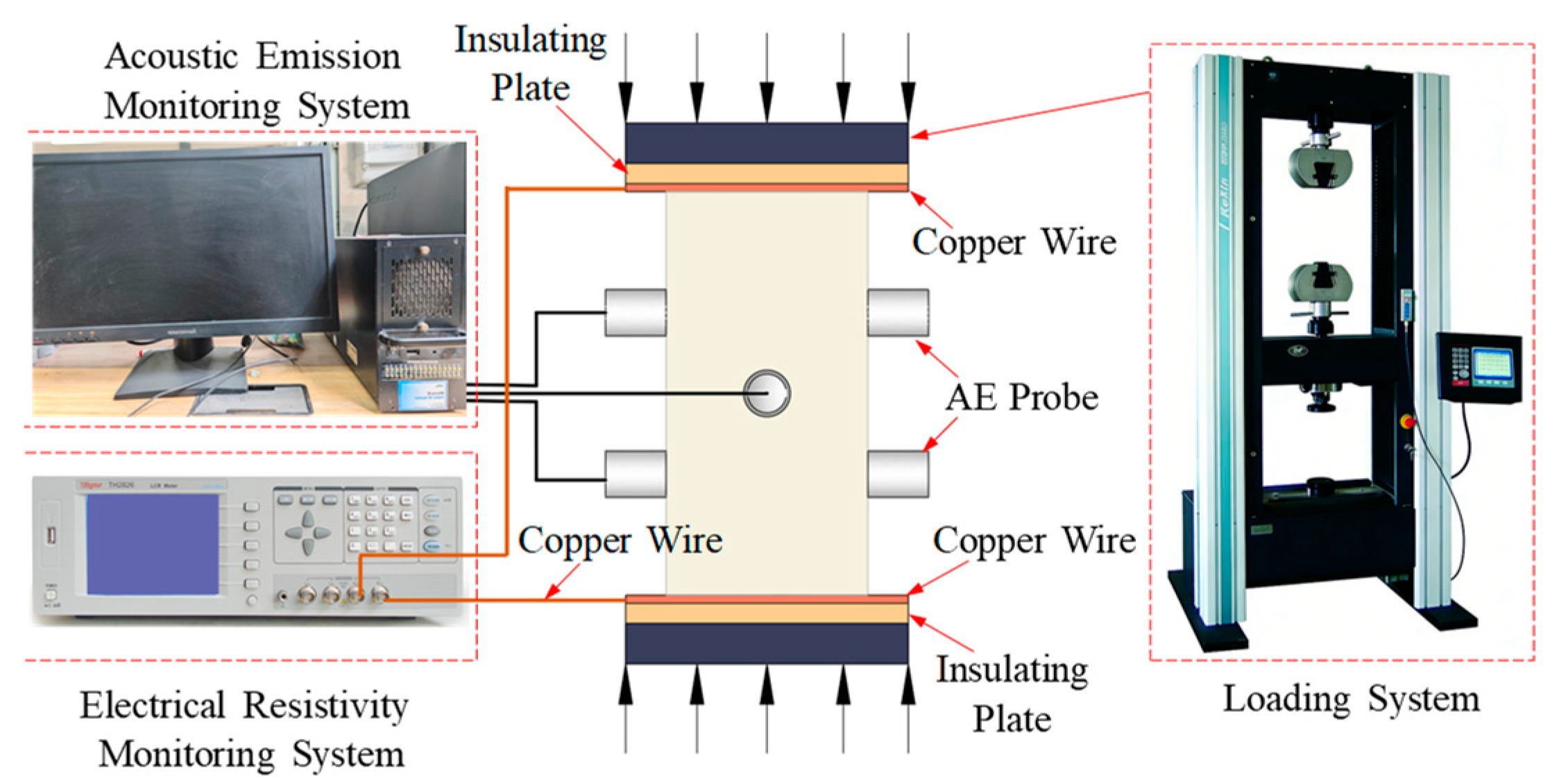
ρ of water-bearing specimens during uniaxial loading, a collaborative monitoring experimental system for “
ε-
U-
ρ” multivariate information during water-bearing rock damage was designed and experiments were carried out at China University of Mining and Technology, as shown in
Figure 2.
Mechanical tests on specimens with different Sw were conducted using the WDW-300 universal testing machine manufactured by Changchun Kexin Experimental Instrument Co., Ltd. in Changchun, China. Axial stress (σ) and displacement data were automatically recorded and processed. The loading was controlled by the axial-displacement loading method at a loading rate of 0.2 mm/min.
The Micro—II Express acoustic emission system manufactured by Physical Acoustics Corporation was employed to monitor the AE energy released by the specimens during the experiment. AE signals were collected using consistent acquisition parameters to guarantee data comparability among different samples: threshold = 40 dB, hit definition time = 1000 μs, preamplifier gain = 40 dB, and sampling rate = 1 MHz.
The TH2826 high-frequency LCR digital bridge produced by Changzhou Tonghui Electronics Co., Ltd. in Changzhou, China was used to track the changes in the ρ of the specimens throughout the test. The resistance measurement range of this instrument spans from 0.01 MΩ to 100 MΩ, boasting an accuracy of up to 0.1%. The acquisition frequency is set at 2 Hz. The two—electrode method is adopted to measure the overall resistivity of the sample. At both ends of the sample, conductive silver paste, which has a resistance value of 25 × 10−3 Ω, is used to bond with pure copper electrodes that are 100 mm in length, 100 mm in width, and 3 mm in thickness. A polytetrafluoroethylene rigid insulating plate, measuring 100 mm in length and 100 mm in width, is utilized to insulate the connection between the electrodes and the loading disk surface.
3. Results and Analysis
This chapter focuses on presenting and analyzing the experimental data of water-bearing sandstone under uniaxial loading. It divides the entire loading process into four stages based on deformation and failure characteristics, analyzes the “ε-U-ρ” multi-parameter response laws of specimens with different Sw in each stage, and reveals the internal connection between parameter evolution and rock damage.
3.1. Temporal Characteristics of “ε-U-ρ” Response
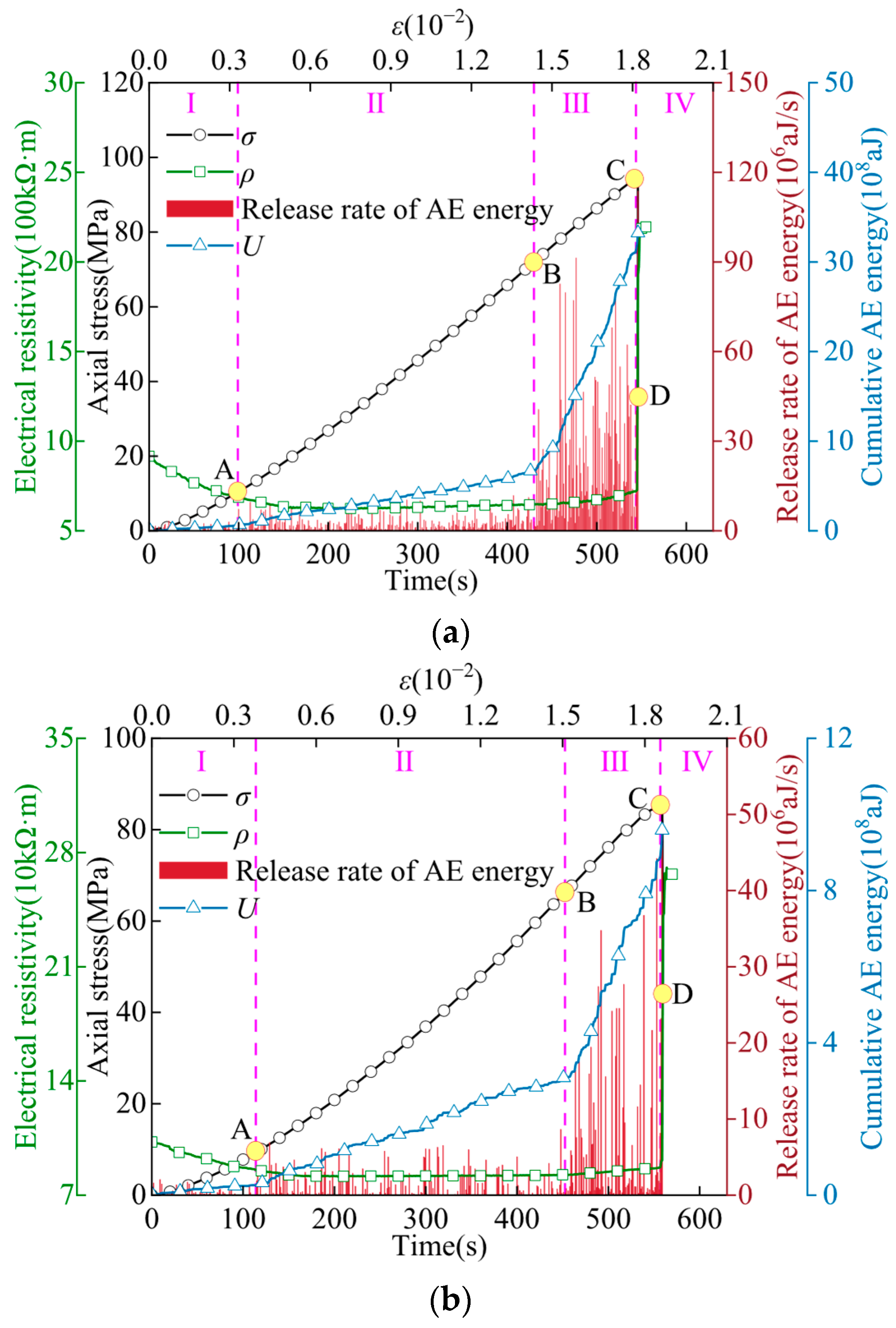
The “
ε-
U-
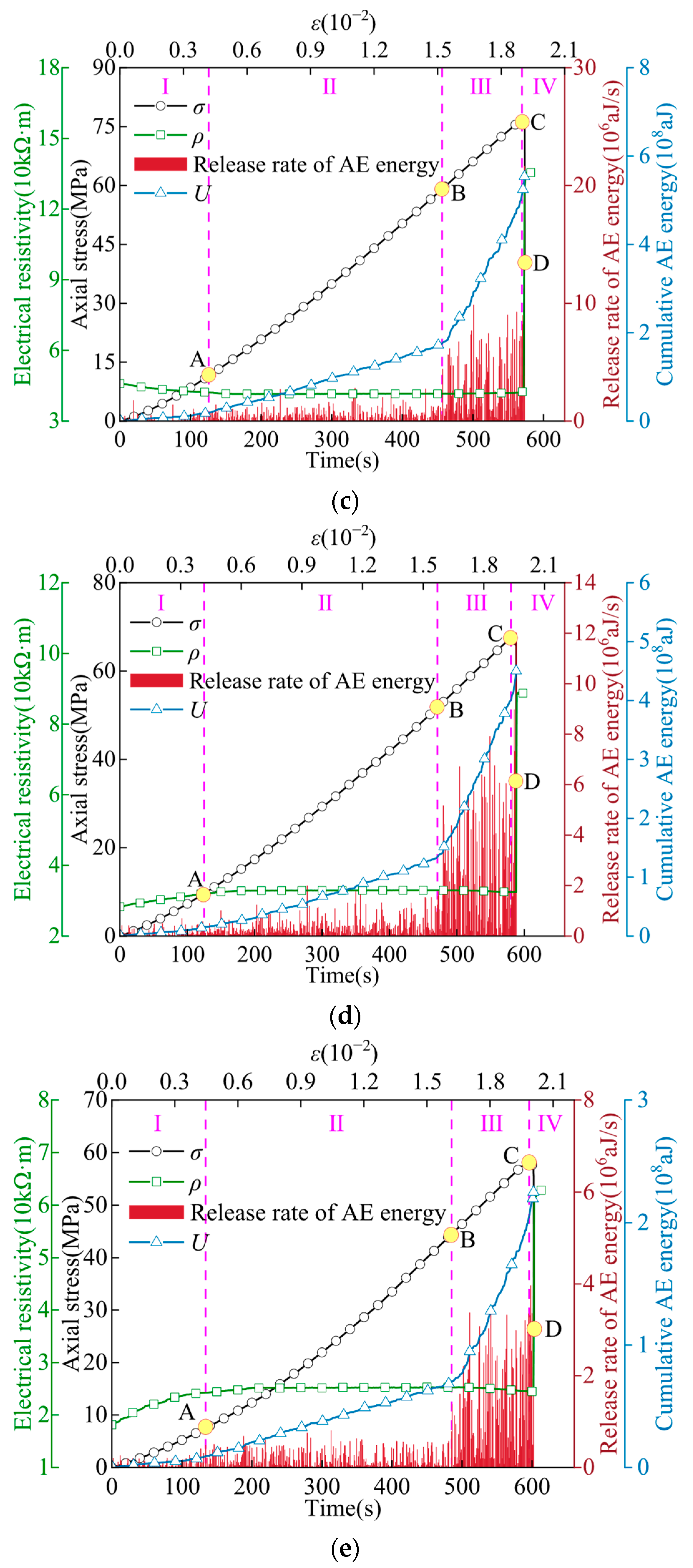
ρ” evolution law of each specimen during the loading process is shown in
Figure 3, with the characteristic values of their “
ε-
U-
ρ” curves presented in
Table 2.
In
Table 2,
t denotes loading time,
σ represents axial stress,
ε stands for axial strain;
σc and
εc, respectively, correspond to the peak stress and peak strain at the moment of specimen failure, serving as key indicators characterizing the mechanical strength of specimens;
U refers to the cumulative AE energy released in a specific stage of the experiment, while
Um denotes the total cumulative AE energy released throughout the entire loading cycle, both of which are used to reflect the energy evolution characteristics of internal specimen fractures; and
ρ is the electrical resistivity monitored in real-time during the experiment and
ρ0 is the initial electrical resistivity of the specimen, with both parameters indicating changes in rock porosity and pore water. Additionally, to intuitively compare the evolution degree of each parameter during the loading process, dimensionless ratio parameters are defined as follows:
kσ is the ratio of
σ to
σc,
kU is the ratio of
U to
Um, and
kρ is the ratio of
ρ to
ρ0.
According to the deformation and failure characteristics of specimens during the loading process, the entire test process can be divided into four stages: Stage I (OA segment), Stage II (AB segment), Stage III (BC segment) and Stage IV (CD segment). The “ε-U-ρ” responses of specimens in each stage mainly exhibit the following characteristics:
Stage I (OA segment): (a) The specimens are dominated by compaction deformation, with σ showing an upward concave growth trend. The duration of Stage I for specimens with different Sw ranges from 98 to 127 s, accounting for 17.95% to 21.10% of the total test duration. (b) Acoustic emission signals exhibit a weak response to specimen deformation, with the average release rate of AE energy ranging from 6.47 to 58.70 × 10⁴ aJ/s. The U curve increases slowly, with kU values only 0.02 to 0.04. AE events mainly originate from particle friction during the compaction and closure of original pores and microcracks. (c) The change in ρ is the most significant within the pre-peak stage (OC segment), with the variation in kρ values ranging from 0.08 to 0.33, accounting for 62.50% to 76.74% of the total cumulative variation in kρ values during the pre-peak stage (OC segment). The reduction in specimen porosity during Stage I induces changes in electrical conductivity: when Sw ≤ 50%, air in the pores is expelled, enhancing the overall conductivity and reducing ρ; when Sw ≥ 75%, water-bearing channels inside the specimens are compressed, pore water is squeezed out, and conductive channels are damaged, weakening the overall conductivity and increasing ρ.
Stage II (AB segment): (a) The specimens are dominated by elastic deformation, with σ increasing linearly. Microcracks initiate inside the specimens, and this stage has the longest duration among all stages. For specimens with different Sw, the duration of Stage II ranges from 334 to 353 s, accounting for 58.64% to 61.17% of the total test duration. (b) Acoustic emission signals respond synchronously and show enhanced intensity. Compared with Stage I, the release rate of AE energy increases but remains relatively low overall, with the average value rising to 1.69–18.61 × 10⁵ aJ/s. The U curve increases significantly, and the variation in kU values ranges from 0.18 to 0.28. (c) The overall fluctuation of ρ is small, with the variation in kρ values ranging from 0.02 to 0.06, accounting for 12.50% to 17.65% of the total cumulative variation in kρ values during the pre-peak stage (OC segment). (d) At the initial stage of Stage II, microcrack initiation is accompanied by the continued compaction of original pores and a reduction in porosity. AE energy signals respond promptly to microcrack initiation in the specimens, while the response of ρ lags behind the AE energy signals by 57–74 s.
Stage III (BC segment): (a) The specimens undergo plastic deformation, with σ showing yield growth. Internal microcracks generate rapidly and extend, and the duration of Stage III for specimens with different Sw ranges from 113 to 116 s, accounting for 18.94% to 20.70% of the total test duration. (b) Acoustic emission signals respond synchronously with a significant increase in intensity. The average release rate of AE energy rises to 1.16–22.40 × 10⁶ aJ/s, which is 6.33–12.04 times that of Stage II. The U curve exhibits a step-like jump, with the variation in kU values ranging from 0.59 to 0.77. After energy accumulation in Stage I and Stage II, a large number of microfissures develop inside the specimens in Stage III, leading to rapid release of AE energy. The sharp increase in U can be regarded as a precursor to plastic damage and failure of the specimens. (c) The fluctuation range of ρ is slightly larger than that in Stage II, with the variation in kρ values ranging from 0.01 to 0.10, accounting for 5.88% to 25.00% of the total cumulative variation in kρ values during the pre-peak stage (OC segment). When Sw ≤ 50%, the generation of numerous internal fractures damages the conductive channels, weakening conductivity and causing a rapid increase in ρ. When Sw ≥ 75%, the original pore water inside the specimens gradually fills the newly generated fractures, forming more conductive channels, enhancing conductivity and resulting in a rapid decrease in ρ. (d) Upon entering Stage III, AE energy signals respond more promptly to the development of microcracks in the specimens. However, the ρ of the specimens is comprehensively affected by the development of internal fractures (pores) and the flow of pore water, leading to a lag of 8–18 s in the response of ρ compared to AE energy signals.
Stage IV (CD segment): (a) After the specimens reach the peak stress, σ attenuates rapidly. A large number of macroscopic through-cracks are generated inside, and the structural integrity is severely damaged. The duration of Stage IV for specimens with different Sw is only 1–8 s, accounting for 0.18% to 1.33% of the total test duration. (b) Acoustic emission signals respond promptly to the macroscopic fracture of the specimens. The average release rate of AE energy jumps to 3.15–113.77 × 10⁶ aJ/s, with U increasing sharply in a short time and the variation in kU values ranging from 0.03 to 0.11. (c) At the moment of specimen fracture, the internal conductive channels suffer severe damage, leading to a significant reduction in conductivity and a sudden increase in ρ. This sudden increase in ρ can be regarded as a criterion for judging the macroscopic fracture of the specimens. The kρ value increases by 1.31–1.99, which is 3.28–15.50 times the total cumulative variation in kρ values during the pre-peak stage (OC segment). (d) Both AE energy signals and ρ respond synchronously to the macroscopic failure of the specimens.
By comparing the ε, U, and ρ response characteristics of specimens across all test stages, it is found that U and ρ exhibit distinct responses to deformation in Stage III and Stage IV, but remain insensitive to deformation in Stage I and Stage II. Therefore, a comprehensive consideration of the “ε-U-ρ” multi-parameter response allows for a fuller reflection of the rock damage evolution process under loading, encompassing damage accumulation, stable growth, gradual acceleration, and rapid growth.
3.2. Evolution Characteristics of Failure Precursor Information
By analyzing the evolutionary characteristics of mechanical properties, AE energy, and electrical resistivity parameters during the failure of sandstone specimens with different Sw, this study reveals the evolution law of rock failure precursor information under the influence of Sw. This provides support for reflecting the degree of rock damage through multi-parameters.
(1) Mechanical properties
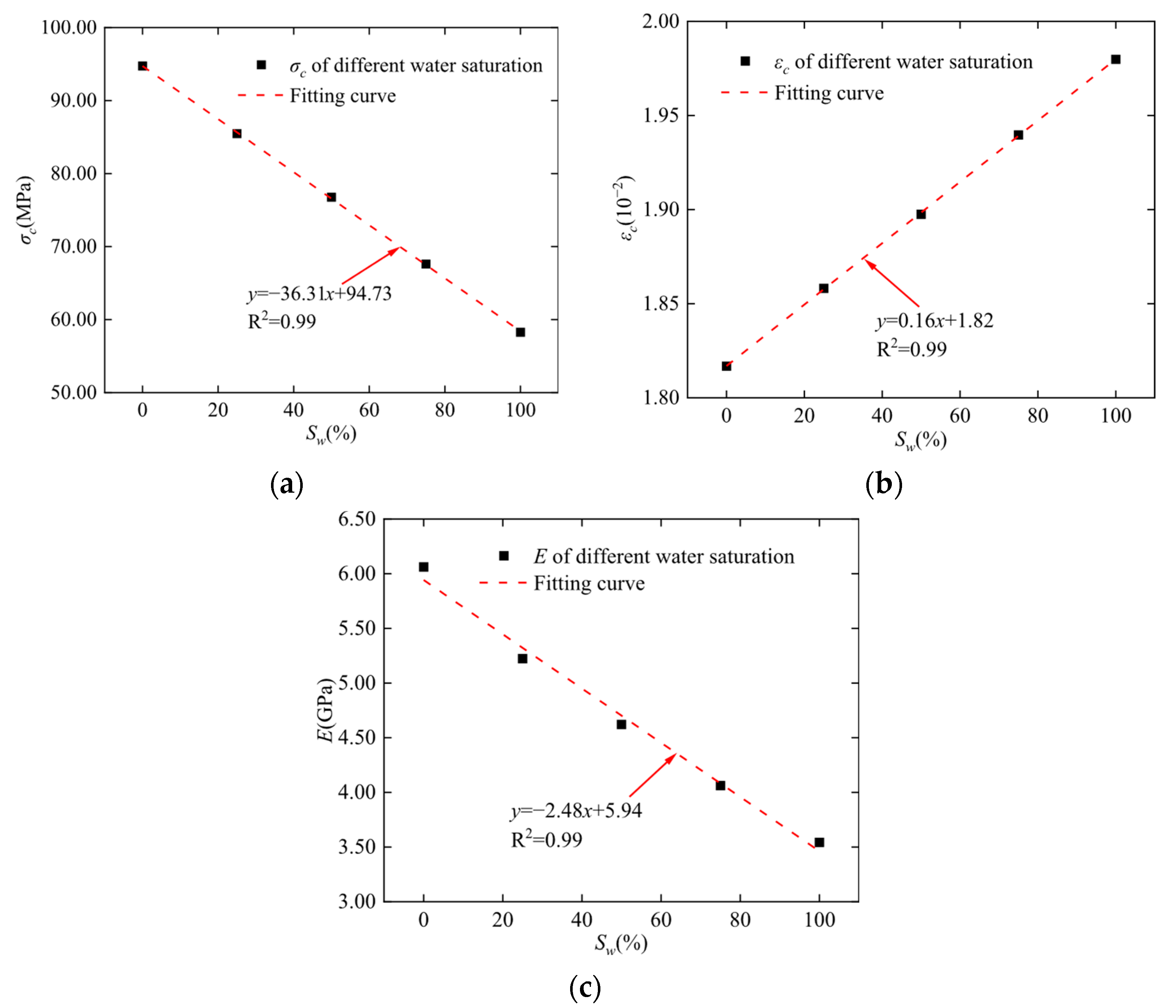
The peak stress (
σc) and peak strain (
εc) of rocks are important indicators for judging their failure. By processing and calculating the
σ-
ε experimental data of specimens, the variation curves of
σc,
εc, and elastic modulus (
E) with
Sw were obtained as shown in
Figure 4. Meanwhile, the relational equations between
σc,
εc,
E and
Sw were fitted, respectively.
As can be seen from
Figure 4, with
Sw increases from 0% to 100%, the specimens exhibit the characteristic of softened ductile failure:
σc decreases from 94.73 MPa to 58.27 MPa, with a reduction of 38.49%;
εc increases from 1.82 × 10
−2 to 1.98 × 10
−2, with an increase of 8.79%;
E decreases from 6.06 GPa to 3.54 GPa, with a reduction of 41.58%. This indicates that increasing
Sw reduces the rock’s load-bearing capacity and ability to resist deformation, while enhancing its capacity to withstand ultimate deformation.
(2) AE energy
The cumulative AE energy (
U) of the specimens can reflect the energy release and damage development processes during the test.
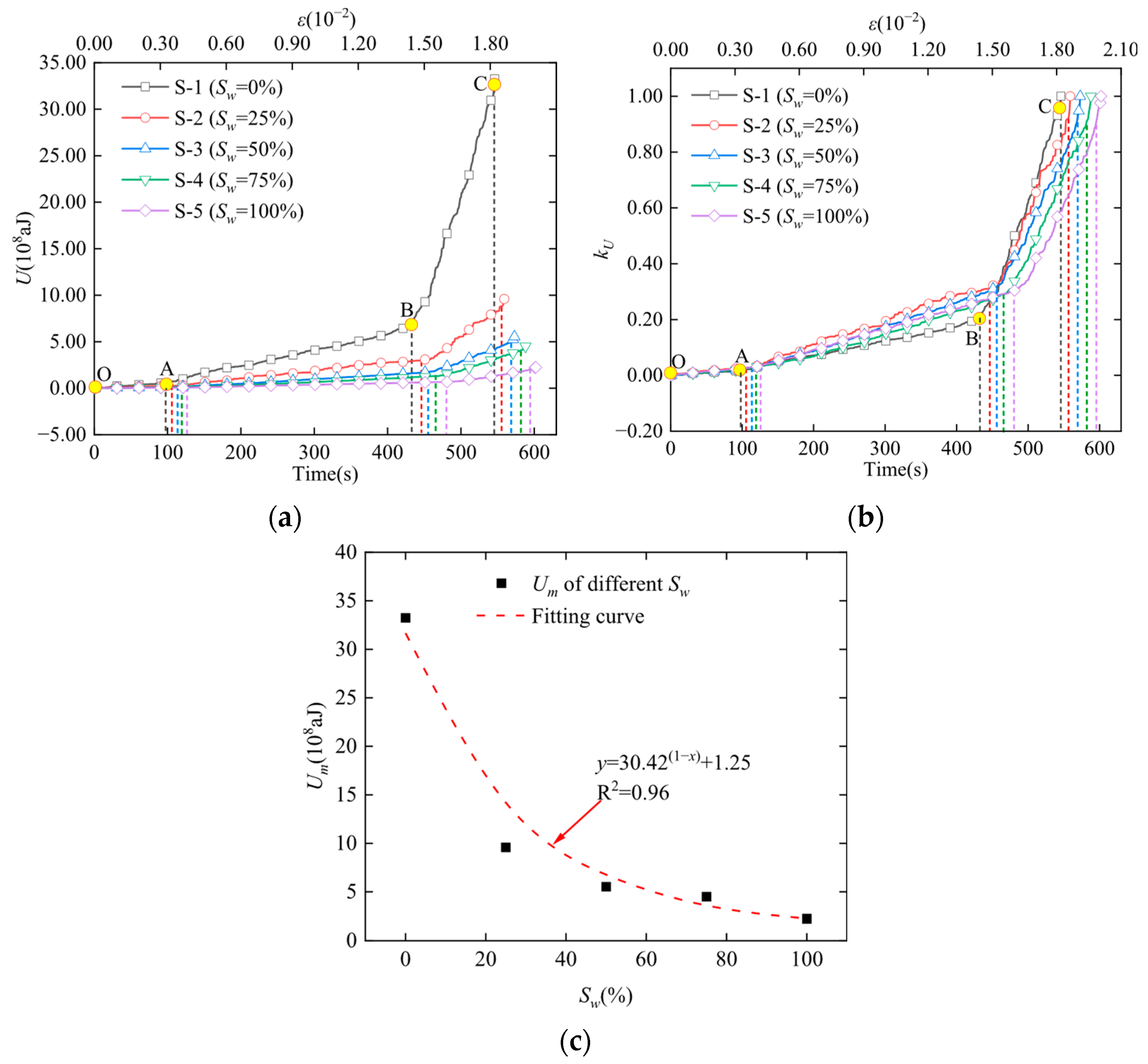
Figure 5a and
Figure 5b show the
U and
kU curves of specimens with different
Sw throughout the test, respectively. It can be observed that
U and
kU of all specimens exhibits a continuous increasing trend with the increase in
ε during the loading process.
When entering Stage III (Point B), the kU values of the sandstone specimens are 0.20 (Sw = 0%), 0.31 (Sw = 25%), 0.31 (Sw = 50%), 0.29 (Sw = 75%), and 0.30 (Sw = 100%), respectively. As Sw increases, the kU value of the rocks at Point B gradually increases. On this basis, kU > 0.20 can be regarded as a precursor to the impending damage and failure of the specimens in this experiment.
Figure 5c shows the total cumulative AE energy released throughout the entire loading cycle (
Um) curves of specimens with different
Sw. As
Sw increases from 0% to 100%,
Um shows a trend of decreasing sharply first and then gradually leveling off. Specifically,
Um decreases from 33.24 × 10
8 aJ to 2.25 × 10
8 aJ, with a total reduction of 93.23%. This indicates that an increase in
Sw reduces the energy required for rock specimens fracturing, and the rock transitions from “sudden” brittle failure to “stable” ductile failure. The reason is that pore water weakens the bonding force between rock particles, which reduces the rock’s energy storage capacity and strain energy release capacity, and this is manifested as weakened AE activity.
(3) Electrical resistivity
Under load, changes in the pore structure and pore water content of rock affect its electrical conductivity, and variations in rock electrical resistivity reflect its damage state.
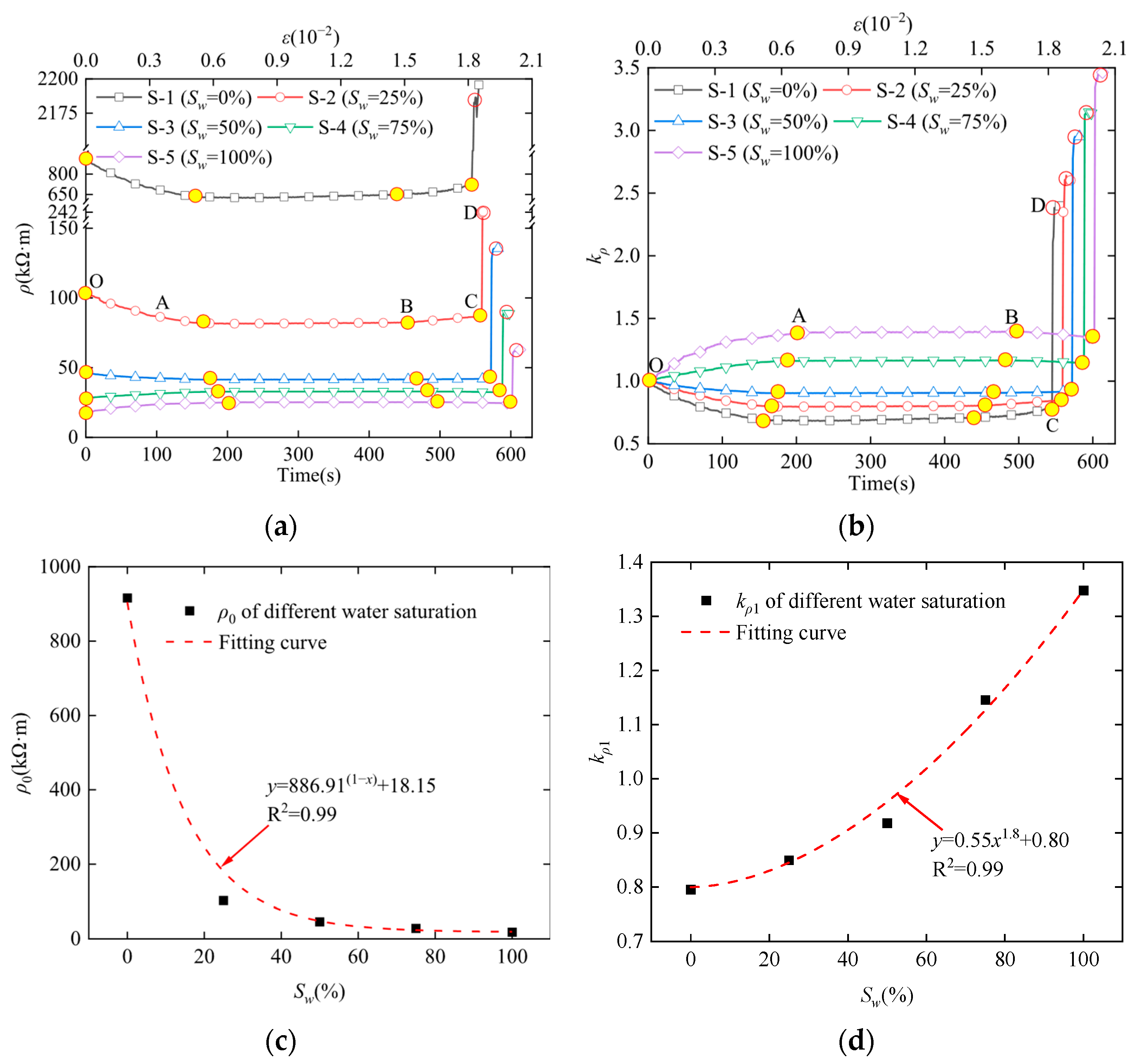
Figure 6a and
Figure 6b show the
ρ and
kρ curves of specimens with different
Sw throughout the test, respectively.
It can be observed that Sw affects the morphology of the ρ and kρ curves during the pre-peak stage. As Sw increases, the morphologies of the ρ and kρ curves gradually transition from the “decrease–stabilization–increase” pattern at Sw = 0% to the “increase–stabilization–decrease” pattern at Sw = 100%. During the pre-peak stage (OC segment), the fluctuation of the ρ value of the specimens is generally small. At the moment of specimen fracture (Point D), ρ increases abruptly, with the kρ value ranging from 2.11 to 3.34. Thus, kρ > 2.11 can be regarded as a precursor to the macroscopic failure of the sandstone specimens in this experiment.
The variation curves of the specimens’ initial electrical resistivity (
ρ0) and the ratio of electrical resistivity at peak stress to initial electrical resistivity (
kρ1) with
Sw are shown in
Figure 6c and
Figure 6d, respectively. Meanwhile, the relational equations between
ρ0,
kρ1 and
Sw were fitted respectively.
As Sw increases from 0% to 100%, ρ0 decreases from 915.83 kΩ·m to 18.15 kΩ·m, representing a reduction of 98.02%. This is because higher Sw transforms the rock’s internal conductive pathway from a solid–gas system to a solid–liquid system, with the latter having better electrical conductivity, thereby improving overall electrical conductivity and gradually lowering ρ0.
For kρ1, it rises from 0.80 to 1.35 (a growth of 68.75%) with increasing Sw. The trend stems from two distinct mechanisms: for specimens with Sw ≤ 50%, porosity decreases under load, and particle compaction creates more conductive pathways, reducing overall resistivity; for those with Sw ≥ 75%, pore water content declines under load, leading to increased overall resistivity.
3.3. Relationship of “ε-U-ρ” Response for Water-Bearing Sandstone During Loading
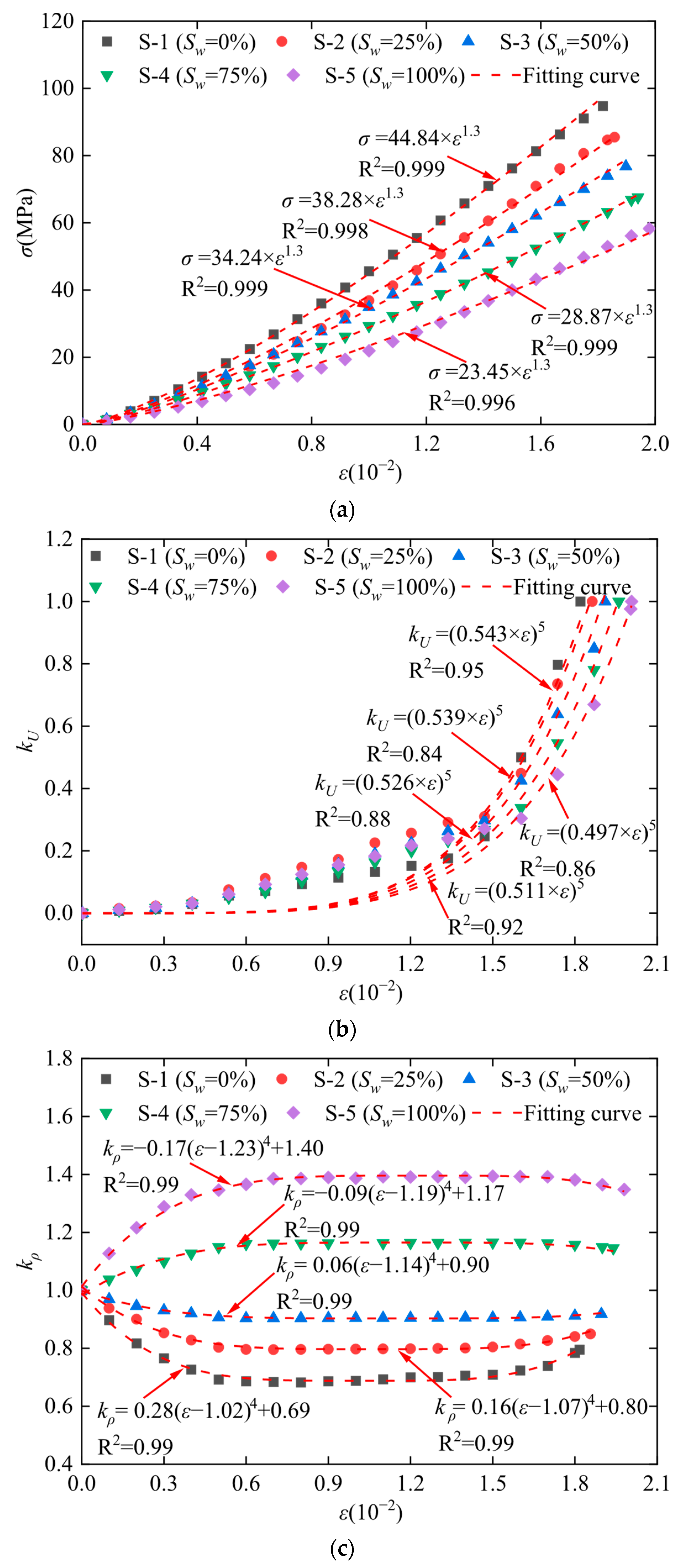
A fitting analysis was conducted on the pre-peak
σ-
ε curves,
kU-
ε curves, and
kρ-
ε curves of sandstone specimens with different
Sw obtained from the tests. Concerning the selection of the fitting relationship, we systematically examined multiple common function forms, such as linear, quadratic, power, logarithmic, and exponential functions, to quantify the correlation between
Sw and the “
ε-
U-
ρ” parameters. The function form adopted in the manuscript was ultimately determined because it not only attains the highest goodness of fit, accurately depicting the intrinsic change law of the specimens’ “
ε-
U-
ρ” responses to
Sw, but also prevents overfitting resulting from overly complex functions. This simple yet effective fitting relationship strikes a balance between the accuracy of quantitative description and the rationality of the model structure, providing a reliable foundation for subsequent establishment of the integrated damage constitutive model. The fitted relational equations for each specimen are presented in
Figure 7.
Accounting for the influence of
Sw, the relationship of “
ε-
U-
ρ” response for sandstone specimens with different
Sw during the pre-peak loading stage can be expressed as follows:
The proposed “ε-U-ρ” response relationship equation clarifies the coupled response among ε, U, and ρ of rocks with different Sw during loading. This can provide parameter support for research on the stability of water-resistant rock masses.
The multi-parameter response laws of water-bearing sandstone specimens during different loading stages, which are the core findings of this study, are applicable to specimens with similar geological conditions and lithology. For such analogous specimens, researchers can refer to the multi-parameter response characteristics (stress–strain, acoustic emission, and electrical resistivity) corresponding to each stage in this study to analyze the monitored physical field information, thereby accurately evaluating the damage state of the specimens. Beyond specimen evaluation, these response laws also guide on-site water-inflow risk assessment by facilitating an integrated analysis of multi-source data (e.g., microseismic, electrical methods). This integration enables an accurate evaluation of aquiclude damage and water-inflow status, thus supporting targeted water-inflow hazard prevention.
4. Discussion
Based on the evolutionary characteristics of the failure precursor information of water-bearing rocks, the monitored “ε-U-ρ” multi-variable precursor information can be used to reflect the damage and failure process of water-bearing rocks. An integrated damage model considering ε, U, and ρ responses has been established, providing basic parameters for rock mass instability evaluation and groundwater migration research.
4.1. Analysis of Single Damage Variables
(1) Strain damage variable (Dε)
Treating the failure process of water-bearing rocks as a continuous evolutionary process, a strain-based rock damage constitutive model was established in accordance with Lemaitre’s strain equivalence principle [
36]:
where
σc,
εc,
ε and
E denote the peak stress, strain at peak stress, strain and elastic modulus of rock, respectively.
Based on the experimental data of specimens with different
Sw, parameters
σc,
εc and
E were calculated. Substituting these parameters into Equation (2) gives the strain-based damage constitutive equations, which are presented in
Table 3.
(2) AE energy damage variable (DU)
The evolution process of microdefects in rocks exhibits random characteristics; thus, it can be regarded as a non-equilibrium statistical process, and a rock damage constitutive model based on cumulative AE energy was established [
37,
38,
39]:
Based on the AE experimental data of specimens with different
Sw, the AE energy-based damage constitutive equations were derived by substituting the data into Equation (3), as presented in
Table 4.
(3) Resistivity damage variable (Dρ)
A rock damage constitutive model characterized by resistivity variation was established based on Lemaitre’s strain equivalence principle [
37,
38,
39]:
(a)
Sw = 0
where
σ,
E, and
ε denote the effective stress, elastic modulus, and strain of rock with
Sw = 0, respectively.
(b)
Sw > 0
where
σ,
E, and
ε denote the effective stress, elastic modulus, and strain of rock with
Sw > 0, respectively.
Based on the resistivity experimental data of specimens with different
Sw, the resistivity-based damage constitutive equations were derived by substituting the data into Equations (4) and (5), as presented in
Table 5.
4.2. Integrated Damage Variable
(1) Definition of the integrated damage variable
Since a single parameter is insufficient to comprehensively describe the mechanical state of rocks during loading [
31], an integrated damage variable (
Dint.) is defined to more accurately characterize the damage evolution characteristics throughout the entire loading process of specimens. This definition leverages the complementarity of
Dε,
DU, and
Dρ across different failure stages.
First, the
Dε,
DU, and
Dρ data of the specimens were standardized using SPSS 26 software. Subsequently, the entropy weight method was applied to analyze the data at each loading stage, enabling the determination of segmented weights for each damage variable during the loading process of sandstone specimens with different
Sw. (The entropy weight method assigns weights based on the degree of variation in indicators: a larger difference among samples results in a smaller entropy value, indicating that the factor provides more valuable information for decision-making and thus merits a higher weight.) Finally,
Dint. can be calculated using the following formula:
where
,
and
denote the weights of
Dε in Stage I, Stage II and Stage III, respectively;
,
and
represent the weights of
DU in Stage I, Stage II and Stage III, respectively;
,
and
represent the weights of
Dρ in Stage I, Stage II and Stage III, respectively.
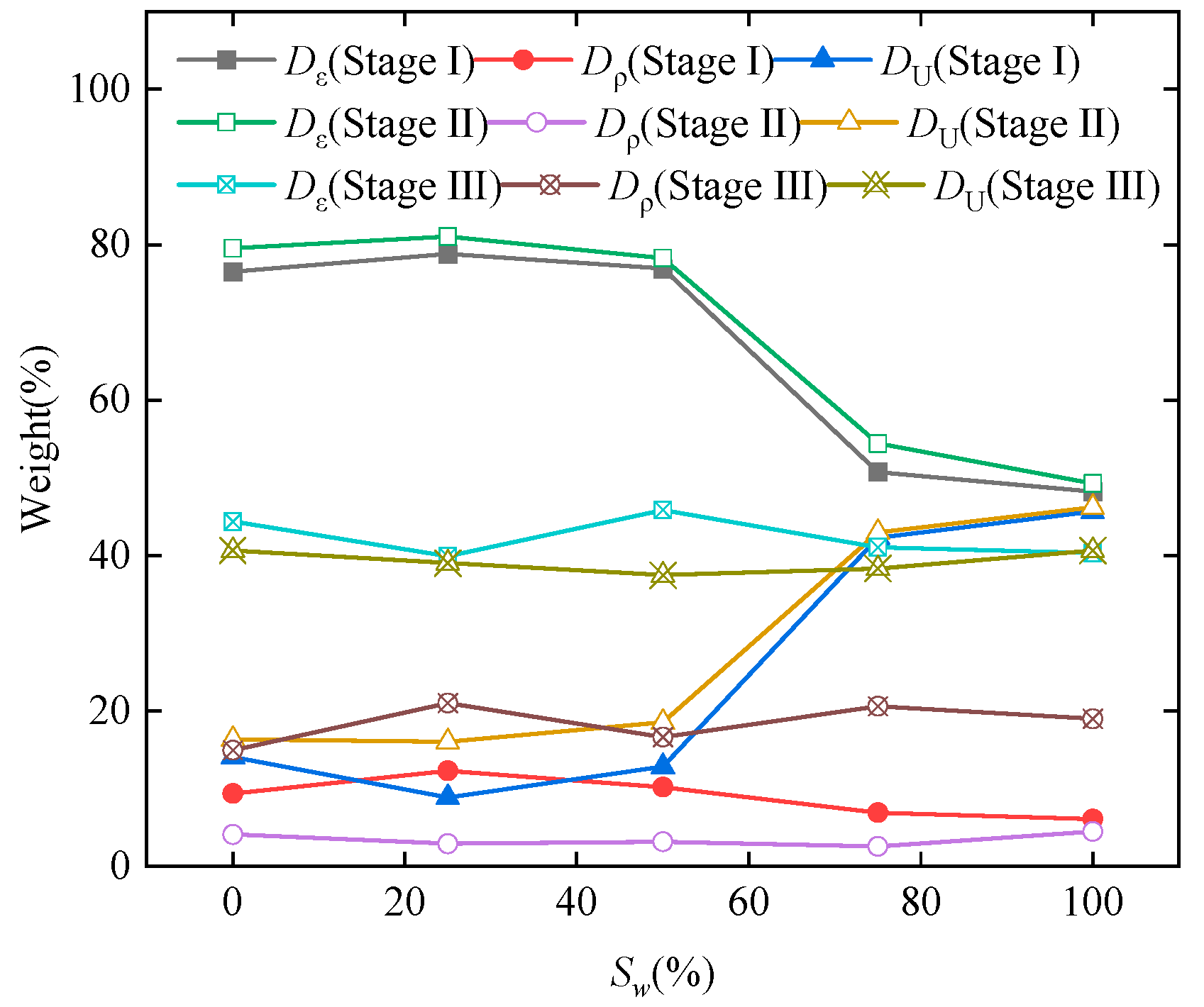
The variation patterns of the segmented weights of
Dε,
DU, and
Dρ for sandstone specimens with different
Sw are illustrated in
Figure 8. The order of the significant influence of
Sw on the weights of the damage variables is
DU >
Dε >
Dρ.
Sw exerts a minor influence on the weight of
Dρ at each loading stage, with the weight variation being less than 5%. The maximum variation in the segmented weights of sandstone damage variables is 31.57% (for
DU in Stage I). Additionally,
Sw has a relatively small impact on the weights of all damage variables in Stage III.
(2) Constitutive equation for the integrated damage variable
During Stage I and Stage II of the loading process for specimens with different
Sw, the experimental
σ-
ε curves exhibit a concave shape. In contrast, the theoretical
σ-
ε curves derived from Lemaitre’s strain equivalence hypothesis are convex, leading to significant errors when describing the mechanical properties of specimens in the early loading stage using the theoretical damage constitutive equation. Therefore, a compaction coefficient (
ξ) is introduced to modify the damage constitutive equation based on Lemaitre’s strain equivalence hypothesis, which is expressed as follows:
The compaction coefficient (
ξ) can be obtained using the following formula [
40]:
where
ε is the axial strain of the specimen;
εc denotes the axial strain of the specimen at peak stress; and
ξc represents the compaction coefficient of the specimen at full compaction, with a value of 0.96 adopted herein.
By calculating Dint. and ξ from the experimental results and substituting them into Equation (7), the theoretical σ-ε curves for specimens with different Sw can be obtained.
4.3. Validation and Discussion
(1) Validation of the integrated damage constitutive relationship
Relevant experimental data of stress, strain, AE energy, and electrical resistivity for each specimen were substituted into the aforementioned integrated damage constitutive equation for calculation, yielding the theoretical
σ-
ε curves of the specimens.
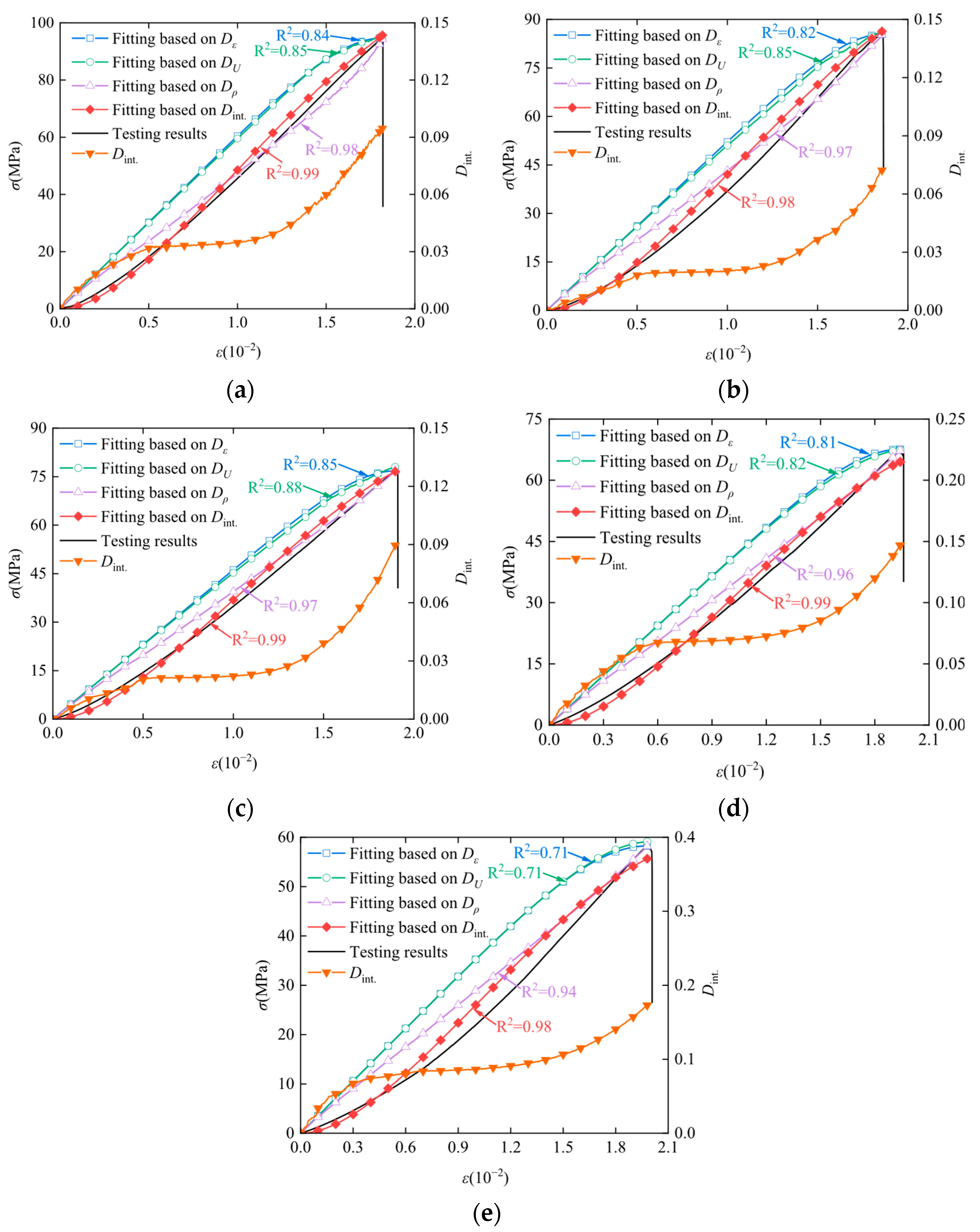
Figure 9 presents the experimental
σ-
ε curves of sandstone specimens with different
Sw, along with the theoretical
σ-
ε curves based on
Dε,
DU,
Dρ, and
Dint.
It can be observed that the variation curves of Dint. exhibit an evolutionary characteristic of rapid increase in Stage I, slow increase in Stage II, and rapid increase in Stage III. This characteristic corresponds to the stages of water-bearing rocks: fracture closure in Stage I, linear elastic deformation in Stage II, and rapid fracture development in Stage III, enabling Dint. to reflect the damage evolution process of water-bearing rocks during loading. Compared with the theoretical σ-ε curves based on Dε, DU, and Dρ, the theoretical σ-ε curve derived from Dint. shows better agreement with the measured curve, with the coefficient of determination (R2) reaching above 0.98. Notably, R2 is increased by up to 38% compared with that of the single-parameter theoretical curves, indicating that the integrated damage variable can more comprehensively characterize the loading-induced damage and failure process of water-bearing rocks.
(2) Discussion
The proposed “
ε-
U-
ρ” integrated damage model complements existing rock damage characterization methods by addressing specific gaps in multi-parameter coupling and
Sw constraint. As summarized in
Table 6, its key distinctions from representative prior studies are as follows.
Wang et al.’s [
36] segmented model for coal only takes into account mechanical parameters (stress–strain), overlooking acoustic emission (AE) and electrical resistivity. In contrast, the current model integrates strain (
ε), cumulative AE energy (
U), and resistivity (
ρ), thereby capturing multi-dimensional damage manifestations.
Li et al.’s [
37] AE-resistivity integrated model for sandstone lacks a
Sw constraint and merely qualitatively describes parameter complementarity. In contrast, our study not only quantifies the correlation between each parameter and
Sw but also considers the regulatory influence of
Sw on the segmented weights within the integrated model.
Furthermore, Ji et al.’s [
38] “AE—resistivity—wave velocity” model focuses on crack stage identification but uses fixed damage variables. Our model, on the other hand, utilizes segmented variable weights to adapt to the dynamic sensitivities of parameters.
It should be noted that this model is derived from uniaxial compression tests of sandstone at different Sw levels. Its applicability to other lithologies (like mudstone, limestone) needs to be verified through additional experiments. Another shortcoming is that the segmented weights are determined for five discrete Sw gradients. In actual underground stope situations, Sw changes dynamically during water inrush. Hence, further research is required to explore the dynamic adjustment of segmented weights under time-varying Sw.
Despite these limitations, the core strength of the proposed model lies in establishing a Sw-constrained “ε-U-ρ” coupling framework. This framework unifies the quantitative relationships between parameters and Sw and the stage-dependent weight allocation. As a result, it enables more accurate damage prediction for water-bearing sandstone compared to single-parameter or non-Sw-coupled models, offering valuable perspectives for water-preserving mining and early warning of stratum instability.
5. Conclusions
In this study, uniaxial compression tests were performed on sandstone specimens with different degrees of Sw. The temporal response characteristics of the “ε-U-ρ” multi-parameter monitored during the failure process of water-bearing rocks were analyzed. The influence law of Sw on the “ε-U-ρ” characteristic parameters of rock failure was revealed, and “ε-U-ρ” response–relationship equations taking into account the effect of Sw were established for the rock deformation process. Moreover, based on the multi-parameter response, a segmented variable-weight-integrated damage constitutive model for water-bearing rocks was developed and compared with the single-damage-variable model. The main conclusions are summarized as follows:
Based on the deformation and failure characteristics of the specimens during the loading process, the entire test process was divided into four stages: Stage I (OA segment), Stage II (AB segment), Stage III (BC segment) and Stage IV (CD segment). Through a comparison of the ε, U, and ρ response characteristics of the specimens across all test stages, it is discovered that U and ρ display distinct responses to deformation in Stage III and Stage IV, yet remain insensitive to deformation in Stage I and Stage II. AE signals can promptly respond to the instability and failure of the specimens, whereas the response of ρ shows a time-lag of 8 to 18 s. A comprehensive consideration of the “ε-U-ρ” multi-parameter response enables a more complete reflection of the rock damage evolution and pore-water migration processes under loading.
As Sw ranges from 0% to 100%, σc decreases by 38.49%, εc increases by 8.79%, E decreases by 41.58%, Um drops by 93.23%, ρ0 plummets by 98.02%, kρ1 rises by 68.75%, and the morphologies of the ρ and kρ curves shift from “decrease–stabilization–increase” to “increase–stabilization–decrease”. These findings confirm that a higher Sw deteriorates the rock’s load-bearing and deformation-resistance capacities while enhancing its ultimate deformation tolerance. It also weakens the rock’s energy-storage and release capacities, and causes the failure mode to shift from sudden brittleness to stable ductility. Regarding electrical properties, Sw transforms the internal conductive pathway of the rock from a solid–gas system to a more conductive solid–liquid system. Specifically, for specimens with Sw ≤ 50%, load-induced particle compaction and porosity reduction increase conductive pathways. For specimens with Sw ≥ 75%, load-driven pore-water loss results in an increase in resistivity.
Through the analysis using the entropy-weight method, the order of the significant influence of Sw on the weights of damage variables Dε, DU, and Dρ is determined to be DU > Dε > Dρ. The variation characteristics of the proposed comprehensive damage variable (Dint.) are in line with the deformation and fracture development characteristics of water-bearing rocks under loading. This variable can reflect the damage evolution process at each testing stage. When compared with the σ-ε theoretical curves based on Dε, DU, and Dρ, the σ-ε theoretical curve based on Dint. shows a higher degree of consistency with the measured curve. Specifically, the coefficient of determination (R2) exceeded 0.98.
The results of this study offer scientific support for the assessment of rock mass stability and the characterization of groundwater migration during mining, thereby facilitating optimized water-preserving mining practices and the sustainable development of mining regions. The limitations in this study are as follows: uniaxial compression tests are unable to comprehensively simulate the three-dimensional (3D) stress state and the effects of pore water pressure present in actual mining engineering. The absence of real-time microstructural data restricts an in-depth analysis of micromechanical mechanisms. For future research, expanding the scope to triaxial compression tests that incorporate confining and pore water pressures is planned, aiming to optimize the engineering applicability of the findings. Additionally, in situ microstructural testing techniques will be integrated to establish a connection between macro multi-parameter responses and microcrack evolutions.




 ,
,