Article

Modal Analysis and Optimization of Tractor Exhaust System

1
Department of Machinery and Metal Technologies, Soma Vocational School, Manisa Celal Bayar University, Manisa 45500, Türkiye
2
Department of Mechanical Engineering, Manisa Celal Bayar University Yunusemre, Manisa 45140, Türkiye
*
Author to whom correspondence should be addressed.
Appl. Sci. 2025, 15(4), 2070; https://doi.org/10.3390/app15042070
Submission received: 12 December 2024 / Revised: 10 January 2025 / Accepted: 14 February 2025 / Published: 16 February 2025
(This article belongs to the Special Issue Design and Optimization of Manufacturing Systems, 2nd Edition)

Abstract

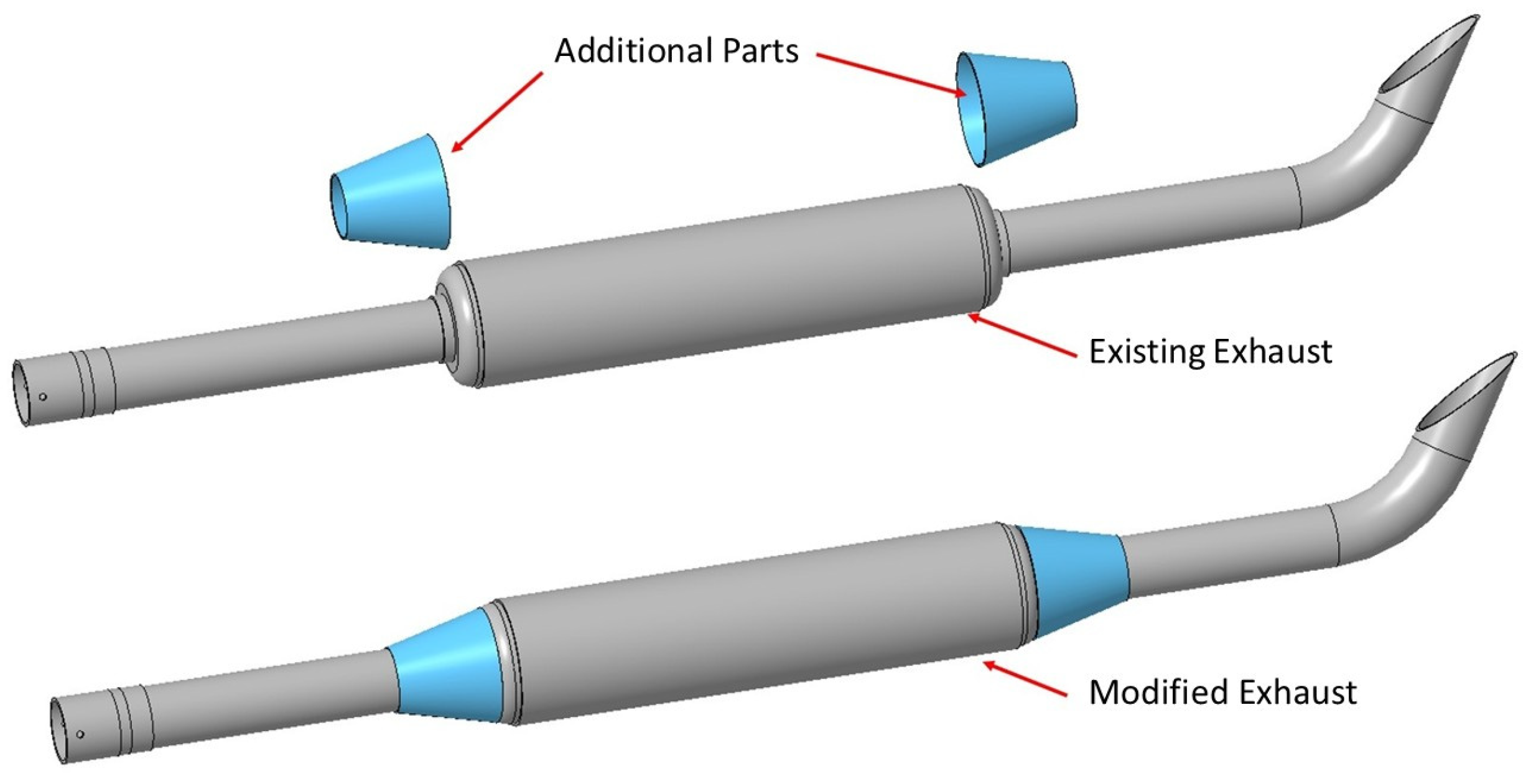
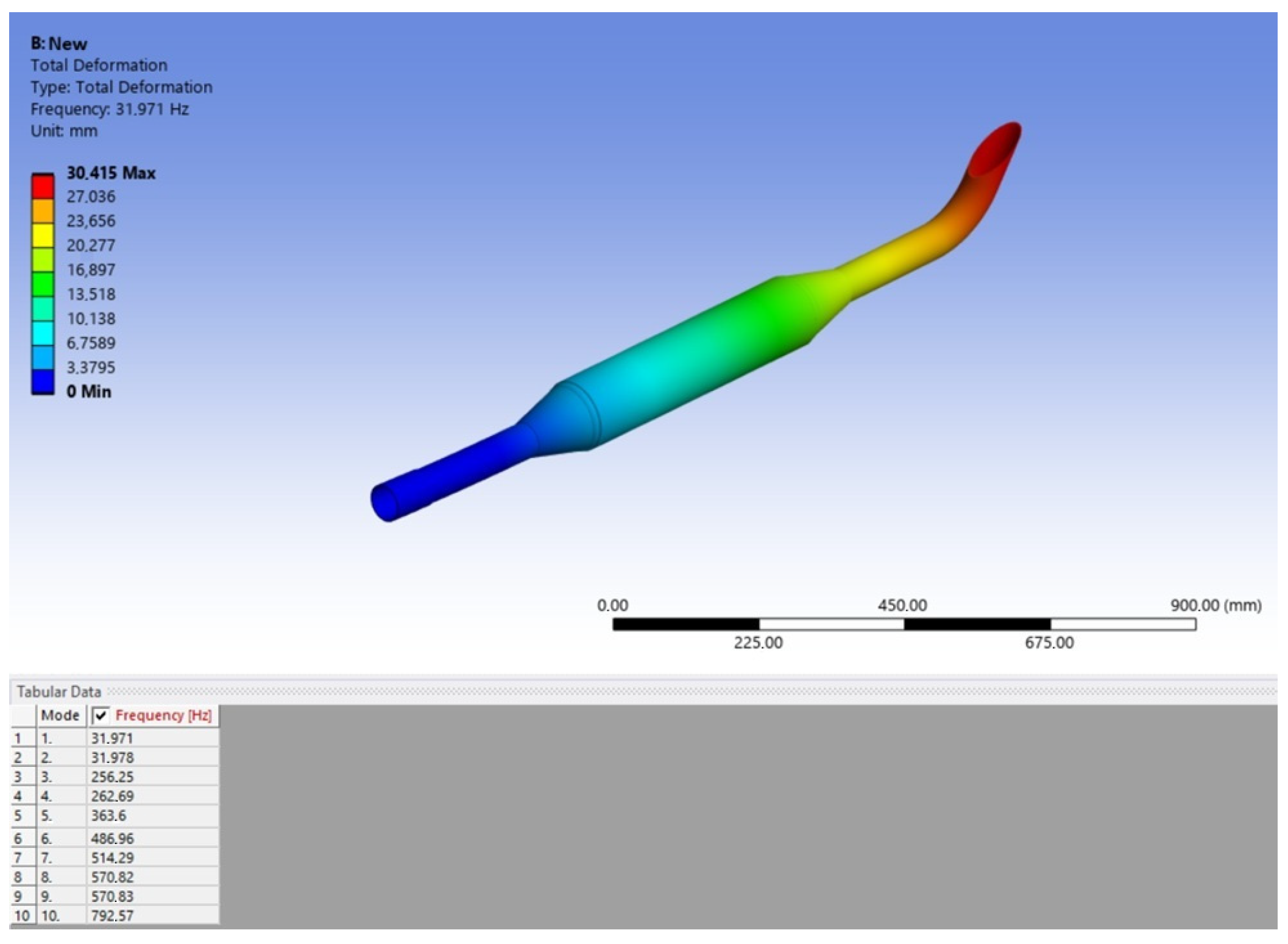
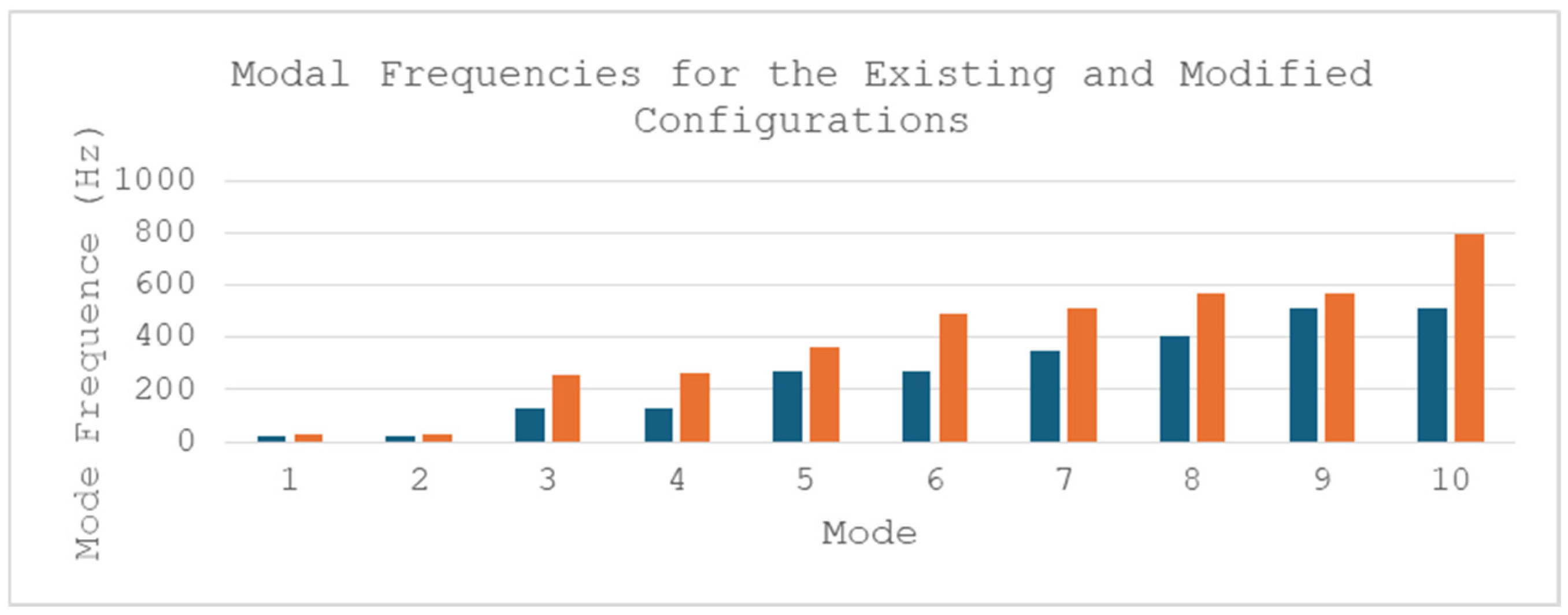
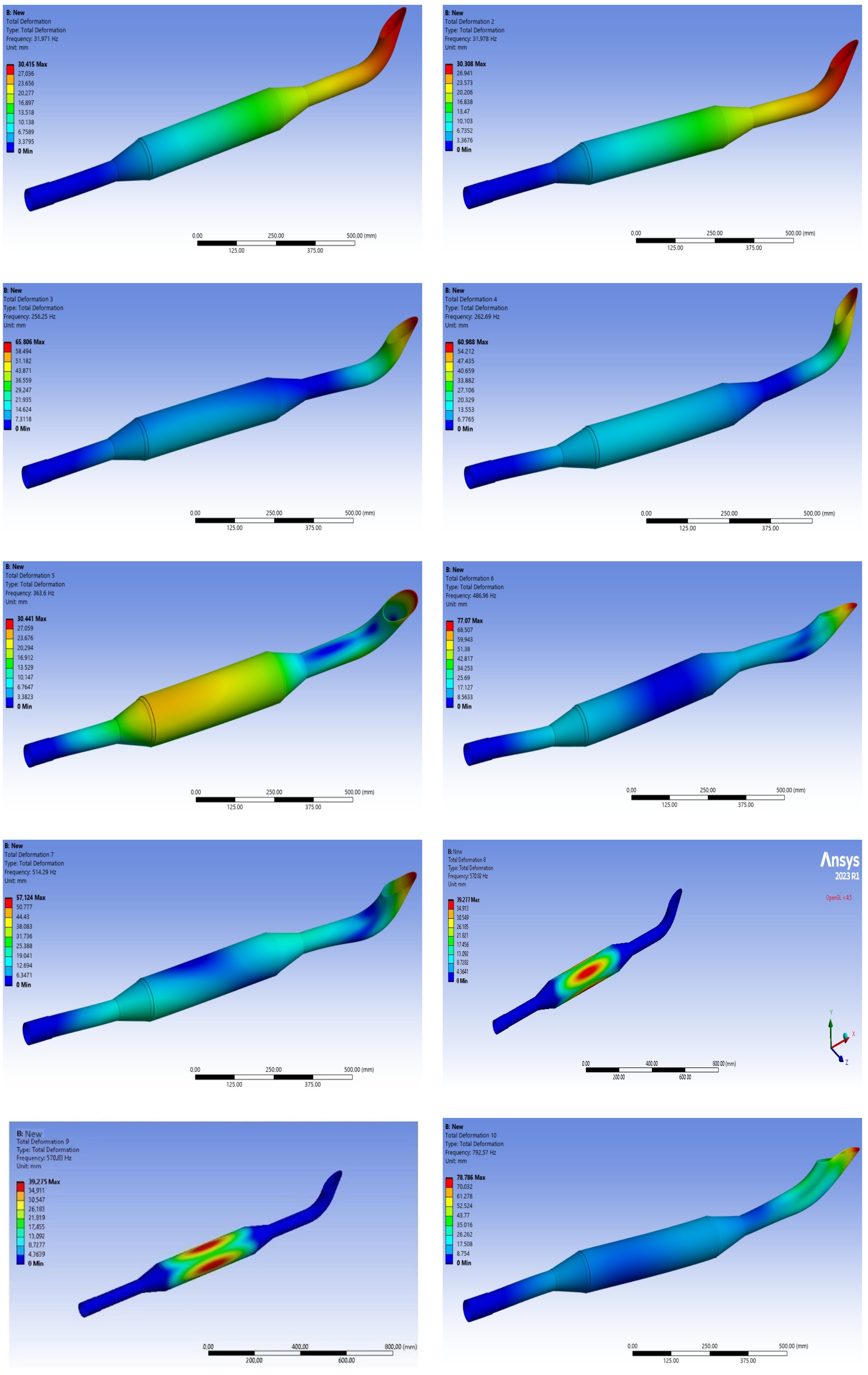
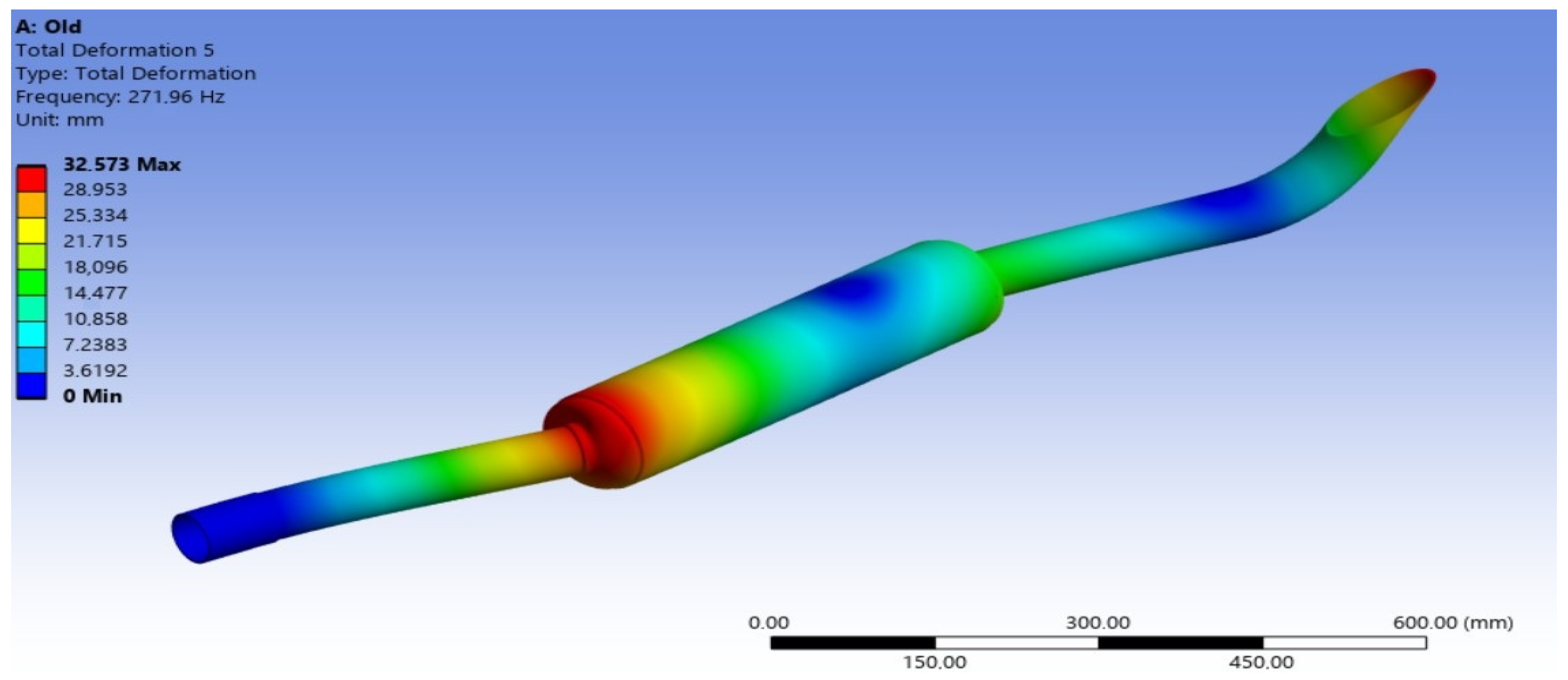
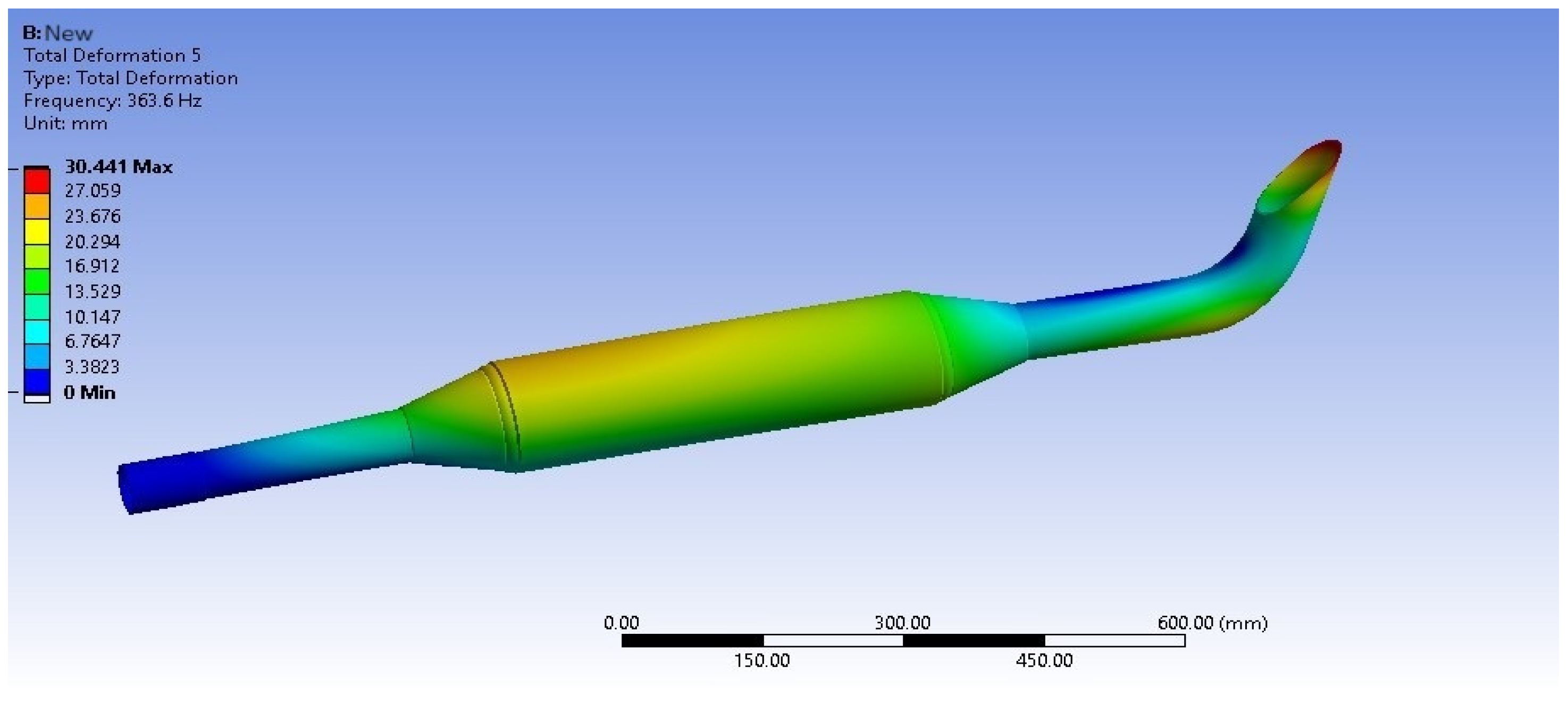
Excessive vibrations in exhaust systems can significantly reduce a vehicle’s lifespan and compromise performance. These vibrations, caused by factors such as engine operation and road conditions, lead to wear and tear. To address this issue, a finite element analysis (FEA) was conducted on a 90-horsepower tractor’s exhaust system. Using ANSYS WB®, a 3D model was created and modal analysis was performed to determine the system’s natural frequencies and mode shapes. Based on the results, geometric modifications were made to the exhaust system, increasing its stiffness and shifting vibration frequencies to higher values. Consequently, vibration levels, noise, and the risk of component failure were significantly reduced. The redesigned exhaust system was successfully implemented in production. This study demonstrates the effectiveness of FEA in analyzing exhaust system vibrations and facilitating design improvements. By extending vehicle lifespan and providing a quieter, more comfortable driving experience, this research offers valuable insights for automotive and mechanical engineers.
Keywords: tractor exhaust system; natural frequency; vibration; modal analysis; finite element method tractor exhaust system; natural frequency; vibration; modal analysis; finite element method