Article

Comparative Analysis of Metabolite Profiles of Perilla frutescens Britton var. acuta Kudo (Lamiaceae) Leaves Collected from Different Regions in South Korea

1
Department of Pharmaceutical Engineering, Institute of Agricultural and Life Science, Anti-Aging Bio Cell Factory Regional Leading Research Center, Gyeongsang National University, Jinju 52725, Republic of Korea
2
Gyeongnam Aerospace & Defense Institute of Science and Technology, Gyeongsang National University, Jinju 52828, Republic of Korea
*
Author to whom correspondence should be addressed.
Appl. Sci. 2025, 15(24), 13118; https://doi.org/10.3390/app152413118
Submission received: 11 September 2025 / Revised: 9 December 2025 / Accepted: 9 December 2025 / Published: 12 December 2025
(This article belongs to the Section Agricultural Science and Technology)

Abstract

Perilla frutescens Britton var. acuta Kudo leaves are widely consumed in East Asia due to their culinary and medicinal properties, which are largely attributed to their high levels of bioactive metabolites such as rosmarinic acid. In this study, we investigated the variation in rosmarinic acid content and overall metabolite profile of P. frutescens leaves collected from six different provinces in Republic of Korea. Quantitative analysis of the rosmarinic acid content was performed using HPLC, revealing significant regional differences, with the highest concentration observed in the leaves collected in Gyeongsangbuk-do and the lowest concentration in those from Jeollanam-do. HRESIMS and 1H-NMR spectrometry were used to determine the chemical structure of the isolated rosmarinic acid. LC-Q-TOF/MS analysis identified ten major metabolites, including phenolic acids, flavonoids, and triterpenoids. Multivariate statistics (OPLS-DA) revealed distinct clustering of populations, indicating a strong relationship between metabolites and environmental parameters. The distribution of the metabolite fingerprints and rosmarinic acid contents in P. frutescens leaves were also found to differ according to the cultivation region, suggesting that secondary metabolite expression is influenced by environmental and geographic factors. This work shows that metabolome profiles can be used in quality control and the development of high-quality products derived from P. frutescens.

1. Introduction

The Lamiaceae family, which includes Perilla, Salvia, Mentha, Ocimum, Rosmarinus, and Thymus spp., is a large family of plants that are widely distributed globally and are commonly used in functional foods and traditional medicine. These plants contain various secondary metabolites, which have been shown to have biological, pharmacological, and physiological activities [1,2,3]. For example, Perilla frutescens, Salvia officinalis, and Rosmarinus officinalis extracts are rich in polyphenols, flavonoids, and phenolic acids, which have strong antioxidant effects through ROS (reactive oxygen species) scavenging, thereby reducing oxidative stress [4,5,6]. Moreover, the essential oils of Thymus vulgaris, Origanum vulgare, Perilla frutescens, and Melissa officinalis predominantly contain terpenoids, which are responsible for their antibacterial and antiviral activities [7,8,9,10]. In addition, other biological activities—such as anti-obesity, anti-diabetic, hepatoprotective, anti-allergic, and antibiofilm activities—have also been described in Lamiaceae plants, demonstrating their versatile pharmacological potential [11,12].
Perilla frutescens Britton var. acuta Kudo (family Lamiaceae), also called perilla or shiso, is an annual herb that grows widely in East Asia, including in the Republic of Korea, Japan, and China [13,14]. The leaves, seeds, and oils of P. frutescens are prized for culinary as well as medicinal uses and, in traditional practice, they are administered to alleviate respiratory and digestive problems such as colds, coughs, asthma attacks, and indigestion [15,16,17]. Recently, the antioxidant and anti-inflammatory properties of P. frutescens leaves have been linked to the presence of secondary metabolites such as phenolic acids, terpenoids, flavonoids, and polyphenols [8,18,19,20,21].
One of the bioactive polyphenols in P. frutescens is rosmarinic acid, which is composed of caffeic acid and 3,4-dihydroxyphenyllactic acid linked by an ester linkage [22]. Rosmarinic acid is found in several Lamiaceae plant species, including P. frutescens, Salvia officinalis, and Rosmarinus officinalis, and has strong antioxidant and anti-inflammatory activities [23]. It has therapeutic applications in a variety of diseases, such as allergy, inflammation, and neurodegenerative diseases; thus, it has become a promising natural product for the development of functional foods and medicines [24,25].
Secondary metabolites biosynthesized by plants can accumulate in plant tissues. Their levels can vary due to different environmental conditions such as light intensity, temperature, soil composition, precipitation, and growing region [26], which can modulate metabolic pathways and result in differences in bioactive compound content and composition [27]. For example, phenolic acids and flavonoids generally exhibit a regionalized accumulation pattern in fruits as part of the plant’s adaptive responses to ecological stresses, including UV exposure, humidity, and nutrient availability [28,29,30]. The amount of rosmarinic acid and other phenolic compounds in P. frutescens was also reported to be influenced by the ecological environment and cultivation technique. Consequently, understanding the relationships between growing region and metabolite content is crucial for improving the overall quality and efficacy of P. frutescens as a functional food and medicinal plant [31,32].
In this study, we analyzed the rosmarinic acid content and metabolite composition of P. frutescens leaves collected from six provinces in the Republic of Korea to determine their regional differences. The rosmarinic acid in the samples was identified using chromatographic and spectroscopic methods; purified rosmarinic acid was used as the reference standard for quantitative calibration. The resulting data were subjected to multivariate statistical analysis to determine the regional differences and the environmental influences on the accumulation of metabolites.

2. Materials and Methods

2.1. Plant Materials

P. frutescens leaves were collected from local farms in six representative provinces in Republic of Korea: Gyeonggi-do, Gyeongsangnam-do, Gyeongsangbuk-do, Jeollanam-do, Jeollabuk-do, and Jeju-do. The leaves were randomly collected from more than 30 individual plants between August and early September 2024 during the harvest season. The P. frutescens leaves were washed to remove surface contaminants, dried in an oven at 45 °C in the dark, and ground into a fine powder with a grinder.

2.2. Isolation of Rosmarinic Acid from Perilla frutescens Leaves

P. frutescens leaves obtained from Gyeongsangbuk-do Province were used for chemical isolation of rosmarinic acid since they had the highest levels of rosmarinic acid. Three replicates of dried P. frutescens leaves (22 g) were extracted using 4 L of methanol for two weeks to obtain 4.2 g of crude extract. The crude extract was diluted with methanol and directly injected into an open column (50 × 50 × 1000 mm) packed with Diaion HP-20 (Sigma Aldrich, St. Louis, MO, USA), which was eluted with water, 80% methanol, and 100% methanol to yield an 80% methanol layer, which contained chlorophyll and extremely polar components. This fraction (2.4 g) was added to a silica-packed open column and diluted using a hexane and ethyl acetate gradient solvent system (100:1 → 1:1 Hex:EtOAc) to give five subfractions (Fr.A–Fr.E). Subfraction C (250 mg) was loaded into a column packed with Sephadex LH-20 (Santa Cruz Biotechnology Inc., Dallas, TX, USA) with 80% methanol to yield a purified single compound (98 mg). The isolated compound was analyzed using a nuclear magnetic resonance (NMR) spectrometer (AVANCE III 300; Bruker Corporation, Billerica, MA, USA) to determine its chemical structure. High-resolution electrospray mass spectrometry (HRESIMS) was conducted using an LC-Q-TOF/MS (X500R; ABSCIEX, Marlborough, MA, USA) to determine the chemical formula of the isolated compound. These spectroscopic data were compared with previous reports to identify the isolated compound as rosmarinic acid [33].
Rosmarinic acid; HRESIMS m/z 361.0935 [M+H]+ (calcd for C18H16O8, 361.0923); 1H-NMR (300 MHz, MeOD) δ 7.41 (d, J = 15.9 Hz, 1H, H-7), 6.93 (d, J = 2.0 Hz, 1H, H-2), 6.82 (dd, J = 8.2, 2.0 Hz, 1H, H-6), 6.67 (d, J = 2.0 Hz, 1H, H-5), 6.66 (d, J = 1.8 Hz, 1H, H-2′), 6.58 (d, J = 8.0 Hz, 1H, H-5′), 6.54 (dd, J = 8.0, 1.8 Hz, 1H, H-6′), 6.17 (d, J = 15.9 Hz, 1H, H-8), 4.98 (m, 1H, H-8′), 3.00 (m, 1H, H-7′a), 2.83 (m, 1H, H-7′b).

2.3. HPLC Analysis of Rosmarinic Acid from Perilla frutescens Leaves

All the samples collected from each province were divided into five replicates. Each sample was extracted and analyzed independently using HPLC to evaluate the biological variability. The powder of P. frutescens leaves from each province (1 g) was extracted with ethanol (50 mL) using a sonicator for 3 h and filtered through a 0.2 μm syringe filter. The isolated rosmarinic acid (5 mg) was dissolved in 1 mL of methanol and used as a stock solution for the quantitative analysis. HPLC analysis was performed using an Infinity 1260 instrument (Agilent Technologies, Santa Clara, CA, USA). The linearity of the HPLC results was tested using different concentrations of rosmarinic acid (31.25, 62.5, 125, 250, 500, 1000, and 2000 µg/mL). The P. frutescens leaf extracts and rosmarinic acid solutions were added to a column (XBridge HILIC, 5 μm, 4.6 × 150 mm; Waters Corporation, Milford, MA, USA) at an oven temperature of 30 °C. The mobile phases consisted of water containing 0.1% acetic acid (A) and acetonitrile (B); the gradient solvent system transitioned from 100% A to 100% B over 40 min at a flow rate of 1 mL/min. The wavelength was set at 330 nm. All the organic solvents were analytical grade and were obtained from Honeywell International Inc. (Charlotte, NC, USA).

2.4. LC-Q-TOF/MS Analysis

Metabolites in the methanol extract of P. frutescens leaves were analyzed using a liquid chromatography–quadrupole time-of-flight mass spectrometry (LC-Q-TOF/MS) system (NEXERA UHPLC; Shimadzu, Kyoto, Japan) coupled with a QTOF mass spectrometer (X500R; AB SCIEX, Framingham, MA, USA). The dried leaf powder (1 g) was extracted with 50 mL of 80% methanol (1:50, w/v) under sonication for 3 h, followed by filtration and centrifugation. The methanol extract (10 µL) was allowed to flow at a rate of 0.5 mL/min through the column (XBridge HILIC, 5 μm, 4.6 × 150 mm; Waters Corporation); simultaneous detection of peaks was performed using both the MS and diode array detectors at 330 nm. The mobile phases in the gradient system were water containing 0.1% acetic acid (A) and acetonitrile containing 0.1% acetic acid (B); the ratio of mobile phase B was increased from 0% to 100% over 30 min. The mass spectrometry (MS) conditions were set using SCIEX OS software (version 3.2) as follows: a capillary voltage of 5.5 kV; temperature of 450 °C; desolvation gas flow of 800 L/h in a positive ionization mode; and MS scan range of 50 to 1000 m/z. The LC-Q-TOF/MS analysis was validated more than seven times to ensure reproducibility between independent samples.

2.5. Data Acquisition and Multivariate Statistical Analysis

Based on the quantitative data from the HPLC analysis, the differences between the P. frutescens leaf samples were evaluated using quality control assessment, normalization, and transformation. Technical replicates and quality control (QC) samples were analyzed to assess the analytical precision. Peak areas were normalized for each value by dividing by all peak areas in the sample. Orthogonal Partial Least Squares Discriminant Analysis (OPLS-DA) was conducted using the SIMCA software (version 18.1; Sartorius Stedim Data Analytics AB, Umeå, Sweden). The preprocessed and scaled data matrix (samples × variables) was imported into SIMCA with the appropriate class labels for supervised analysis. Model validity was assessed using permutation testing in SIMCA. The Y-matrix (class labels) was randomly permuted while keeping the X-matrix unchanged. New OPLS-DA models were built for each permutation, and the resulting R2 and Q2 values were compared to the original model.

2.6. Statistical Analysis

A calibration curve for rosmarinic acid was created by testing each concentration in triplicate to assess linearity. HPLC was performed to quantify the regional differences in the P. frutescens leaf extracts; each sample was tested in triplicate. The rosmarinic acid contents are presented as the mean ± standard deviation based on biological replicates, rather than technical replicates only. OPLS-DA was conducted to visualize the six cultivation region clusters using 43 variables (metabolites). Permutation testing (200 permutations) was used to validate the OPLS-DA model using R2Y, R2X, and Q2 values as metrics. In the metabolomic analysis, each sample group consisted of more than seven biological replicates. Statistical comparisons of groups were conducted using ANOVA followed by Tukey’s HSD test, with the significance threshold set at a p value of 0.05.

3. Results and Discussion

3.1. Structural Identification of Rosmarinic Acid

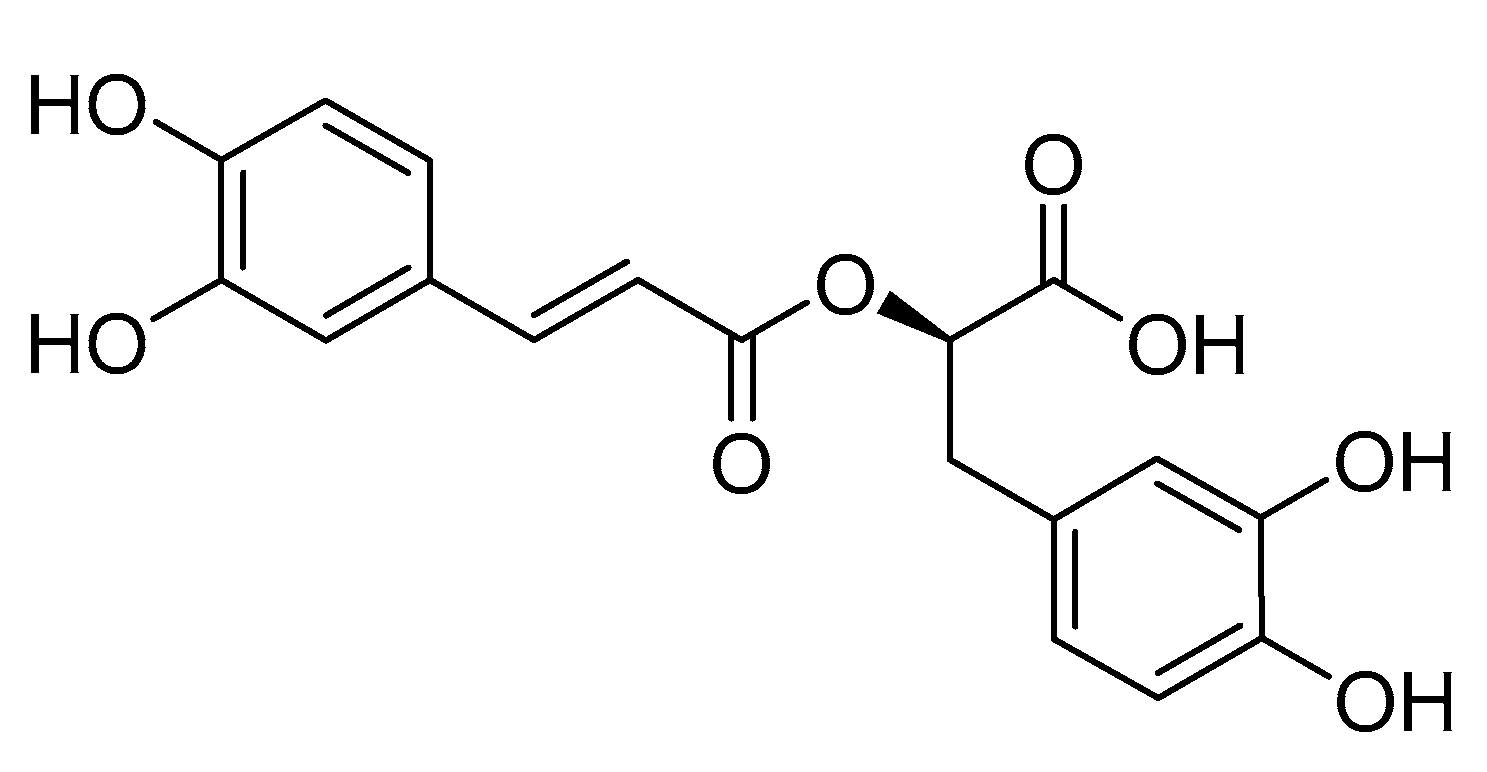
The dried leaves of P. frutescens from Gyeongsangbuk-do Province were extracted with methanol. The crude extract was subjected to open-column chromatography using Diaion HP-20. The fractions containing phenolic compounds were further purified using a silica gel column and Sephadex LH-20, yielding a pale-yellow amorphous powder (98 mg), which was denoted as compound 1. HRESIMS analysis of compound 1 found a molecular ion peak at m/z 361.0935 [M+H]+, which is in excellent agreement with the calculated value for the molecular formula C18H16O8 (calcd for C18H16O8: 361.0923). This result strongly suggested that compound 1 is a polyphenolic compound with 18 carbons, 16 hydrogens, and 8 oxygens, which is consistent with the structure of rosmarinic acid. The structure of compound 1 was further elucidated using 1H-NMR spectroscopy (300 MHz, MeOD). The two doublets at δ 7.41 (d, J = 15.9 Hz, H-7) and δ 6.17 (d, J = 15.9 Hz, H-8) are indicative of trans-olefinic protons, which are characteristic of the cinnamic acid moiety (caffeic acid part) in rosmarinic acid. The aromatic region displayed two sets of ABX-type patterns corresponding to the 3,4-dihydroxyphenyl groups of the caffeic acid and 3,4-dihydroxyphenyllactic acid moieties. The multiplet at δ 4.98 (H-8′) and the two multiplets at δ 3.00 (H-7′a) and δ 2.83 (H-7′b) were assigned to the methine and methylene protons of the phenyllactic acid side chain. The spectroscopic data obtained for compound 1 were in full agreement with those previously reported for rosmarinic acid in the literature. The combination of HRESIMS, which confirmed the molecular formula, and the detailed 1H-NMR analysis, which matched the expected proton environments and coupling patterns, unambiguously identified compound 1 as rosmarinic acid (Figure 1).

3.2. Quantitative Analysis of Rosmarinic Acid from P. frutescens Leaves

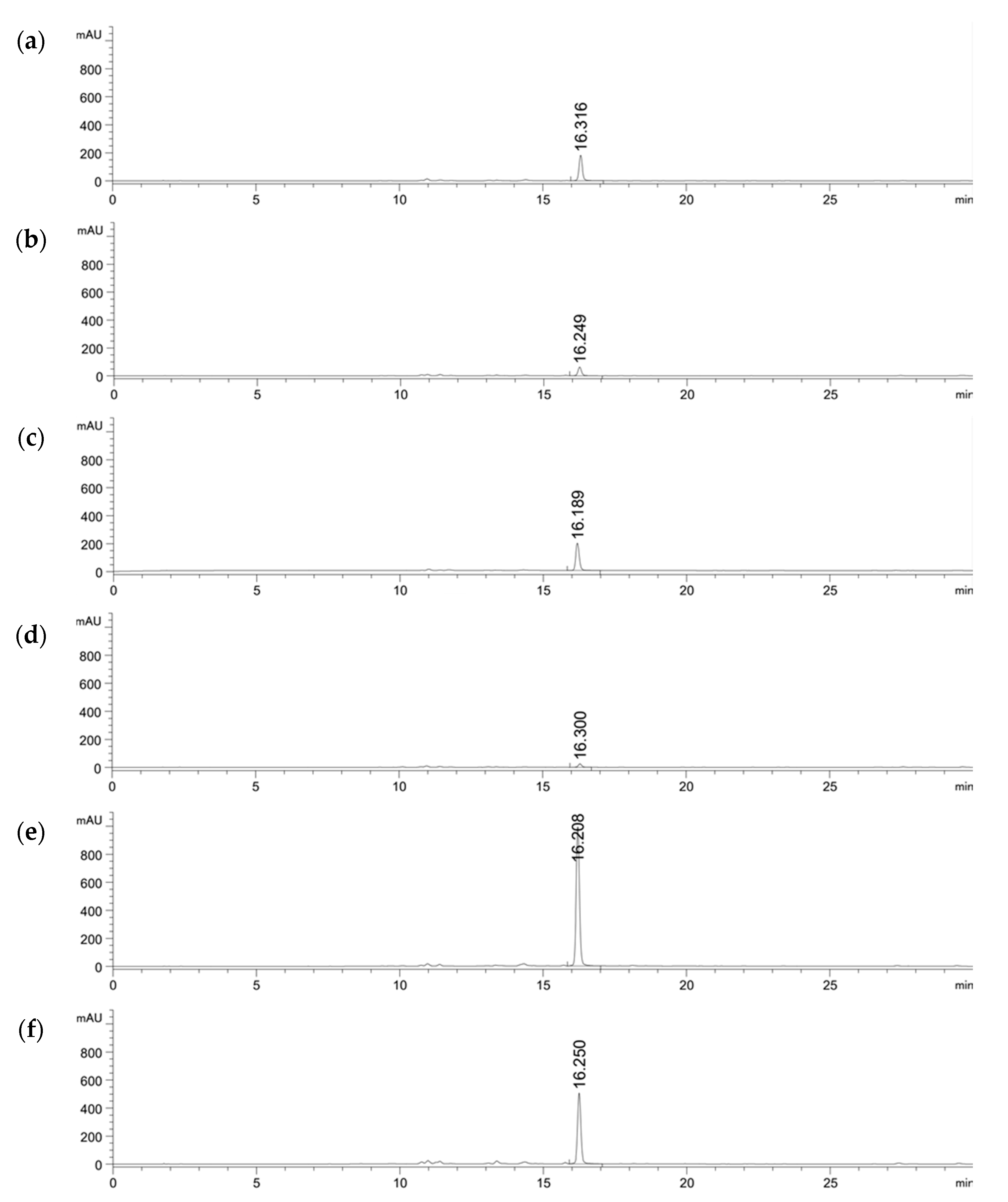
The values in Table 1 represent the mean ± standard deviation calculated from five biological replicates and reflect the natural plant-to-plant variability within each province. The six cultivation regions (Gyeonggi-do, Jeollabuk-do, Jeollanam-do, Gyeongsangbuk-do, Gyeongsangnam-do, and Jeju-do) investigated in this study were selected to represent the major agro-ecological regions of the Korean Peninsula. The cultivation regions differ in latitude, climate, precipitation, and soil type, providing a comprehensive gradient for environmental comparisons (Tables S1 and S2). The continental inland conditions of Gyeonggi-do and Gyeongsangbuk-do are characterized by well-drained, slightly acidic loamy soils and moderate rainfall. The fertile western province of Jeollabuk-do is characterized by high soil fertility and relatively well-balanced hydrothermal conditions. The warm and humid southern coastal regions of Jeollanam-do and Gyeongsangnam-do are characterized by low pH soils and high annual precipitation, whereas Jeju-do features an extremely maritime climate with strongly acidic volcanic ash soils. This differential geographical stratification enables an investigation of the influence of soil acidity and fertility on the production of rosmarinic acid in phenolic plants. The rosmarinic acid content in the P. frutescens leaves collected from the six provinces was quantitatively determined using a validated HPLC method (Figure 2). The method exhibited excellent linearity over the range of 31.25–2000 μg/mL with a regression equation of y = 5.2474x + 41.764 and a coefficient of determination (R2) of 0.9996, indicating high accuracy and reliability. The average slope (S) and standard deviation (intercept (σ)) were 5.2474 and 41.764, which were derived from the calibration equation. The limit of detection (LOD) and limit of quantification (LOQ) were calculated using following the equations: LOD = 3.3 × σ/S and LOQ = 10 × σ/S. The calculated LOD and LOQ were 26.3 μg/mL and 79.6 μg/mL, respectively. Rosmarinic acid content showed substantial variation between regions. The highest level of rosmarinic acid (1534 μg/g) was observed in the samples from Gyeongsangbuk-do. The rosmarinic acid content in the P. frutescens leaves cultivated in Gyeongsangnam-do (785.5 μg/g) was two-fold lower. The samples collected from Jeollabuk-do and Gyeonggi-do showed similar rosmarinic acid contents (314.92 μg/g and 277.2 μg/g, respectively) and those from Jeju-do had a content of 97.0 μg/g. The lowest content was from the Jeonllanam-do samples at 34.65 μg/g.

3.3. Identification of Compounds in P. frutescens Leaves Using LC-Q-TOF/MS

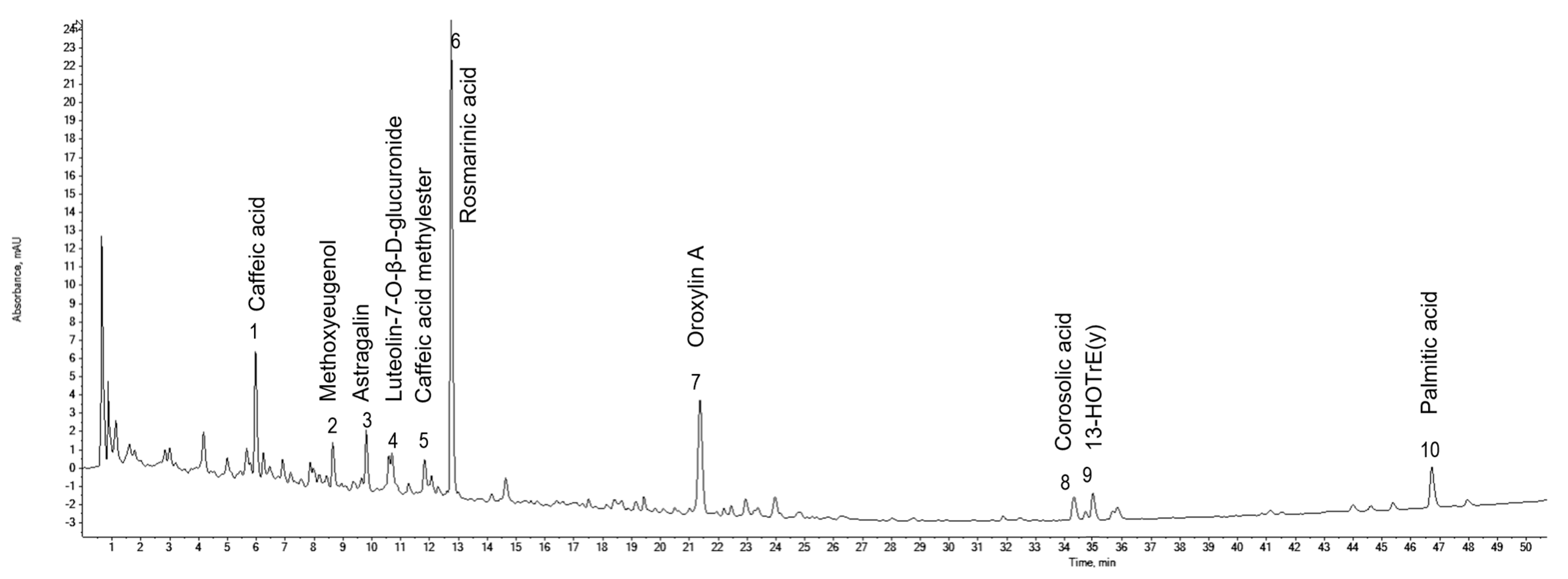
A total of ten distinct metabolites were well-separated and identified from the methanol extract of P. frutescens leaves from Gyeongbuk Province (Figure 3 and Table 2) within the retention time range of 5.98 to 46.74 min. The metabolites were confirmed to be phenolic acids, flavonoids, phenylpropanoid, triterpenoid, and fatty acids. The observed mass (m/z) values exhibited minimal deviation from the calculated theoretical masses, with the errors ranging from −0.39 to 4.68 ppm, indicating the high mass accuracy and reliability of the analytical method. The individual MS spectra and fragment patterns are shown in Figures S3–S12.
Caffeic acid (tR = 5.98 min, C9H8O4) and rosmarinic acid (tR = 12.75 min, C18H16O8) were the most abundant compounds in the P. frutescens leaf extracts. Peak 1 has a molecular ion peak at [M+H]+ = m/z 181.0504, which corresponds to the formula of caffeic acid (C9H8O4) in positive ion mode. Peak 6 has a molecular ion peak at [M+H]+ = m/z 361.0935 and fragment ion peak at [M+H]+ = m/z 163.0389, which indicates the loss of a caffeic acid and a water molecule from rosmarinic acid. Thus, the fragment pattern and error value confirmed the detection of rosmarinic acid. Caffeic acid methylester (tR = 11.83 min, C10H10O4) arising from caffeic acid through methylation processes was also detected. These phenolic acids are well-known compounds with potent antioxidant and anti-inflammatory effects [4]. The peak at m/z 195.1024 was assigned to a methylated derivative of eugenol, methoxyeugenol (C11H14O3); compared to the calculated mass of m/z 195.1021, there was an error of +1.54 ppm. Peaks 3, 4, and 7 were assigned to astragalin (tR = 9.81 min, C21H20O11), luteolin-7-O-β-D-glucuronide (tR = 10.69 min, C21H18O12), and oroxylin A (tR = 21.37 min, C16H12O5), which are glycosylated flavonoids and a flavone. Peak 3 has molecular ion peaks at [M+H]+ = m/z 449.1105 and fragment ion peaks at m/z 287.0552, which are consistent with kaempferol, indicating the separation of the glucose moieties. The precursor ion peak of peak 4 was observed at m/z 463.0890, with a daughter ion peak at m/z 287.0551, which was attributed to the separation of luteolin and glucuronide. Their presence is notable as these compounds are associated with radical-scavenging, anti-allergic, and anti-inflammatory activities [34,35]. Corosolic acid (tR = 34.33 min, C30H48O4) is a triterpenoid with documented anti-diabetic activity, influencing glucose metabolism [36]. Its late retention time reflects high hydrophobicity. Long-chain fatty acids were also detected and were identified as 13-HOTrE(y) and palmitic acid (peaks 9 (tR = 35.00 min) and 10 (tR = 46.74 min), respectively). Palmitic acid is ubiquitous in plants and plays structural roles in membranes, while 13-HOTrE(y) (a hydroxy octadecatrienoic acid) may be involved in plant defense responses and cell signaling [37,38]. The obtained metabolite profile contained many previously reported P. frutescens compounds including caffeic acid, methoxyeugenol, astragalin, luteolin-7-O-β-D-glucuronide, caffeic acid methylester, rosmarinic acid, oroxylin A, corosolic acid, 13-HOTrE(y), and palmitic acid (Table 2).

3.4. Multivariate Statistical Analysis of Samples

To evaluate the regional variation in metabolite composition of P. frutescens leaves, OPLS-DA (Orthogonal Partial Least Squares Discriminant Analysis) was performed using the metabolomic data obtained from the samples collected from six different provinces. The differences in soil characteristics (soil type and pH) and climate parameters (temperature and precipitation) are summarized in Tables S1 and S2. The six provinces differed markedly in soil properties. Gyeongbuk, which produced the extracts with the highest rosmarinic acid content, is characterized by typically brown to gray-brown forest soil and the highest soil acidity, which ranges from 5.8 to 6.5. The lowest level of rosmarinic acid was found in the samples from Jeju and Jeonnam Provinces. Jeju, as the only island region among the cultivation areas, has acidic volcanic ash soil (pH 4.8–5.5). Jeonnam has red, yellow, and alluvial soil, with a neutral soil pH ranging from 5.0 to 6.0. The climate conditions during the 2024 growing season also varied among regions. The southern provinces, particularly Jeju and Jeonnam, exhibited higher average temperatures and substantial summer precipitation, while the northern regions, such as Gyeonggi and Gyeongbuk, experienced cooler early-season temperatures and less rainfall.
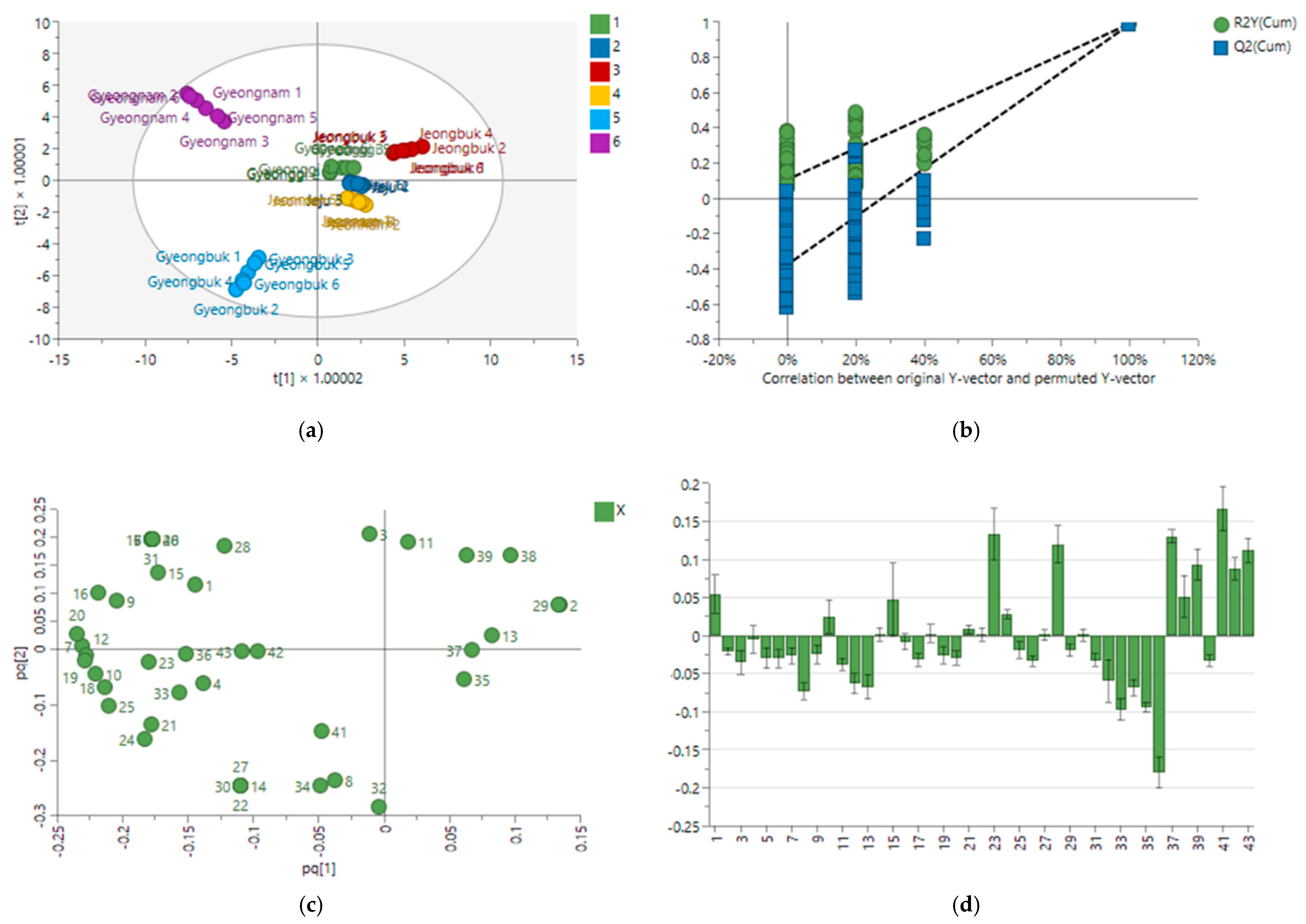
The OPLS-DA score plot (Figure 4a) shows a clear separation of samples according to their cultivation regions, suggesting that the metabolic profile of P. frutescens differs depending on the cultivation region. The permutation model (Figure 4b) was used to validate the predictability of the OPLS-DA model by testing it 200 times. The R2Y and Q2 values of the original model were significantly higher than those of the permuted models, confirming that the observed separation is not due to overfitting or random chance. The OPLS-DA model showed high goodness-of-fit and predictive ability (R2X = 0.992, R2Y = 0.989, Q2 = 0.983), demonstrating that the model explained nearly all the variance in both the X- and Y-matrices while maintaining excellent predictive accuracy. These parameters indicated a stable and reliable supervised classification. The loading plot (Figure 4c) shows the metabolites that contributed to distinguishing between regions. Variables (metabolites) with high absolute values on either axis were the ones with the highest contribution to the group separation in the score plot. Several metabolites (e.g., variables 11, 21, 36, 41, and 43) appear to play a pivotal role in differentiating between the provincial samples. The coefficient plot (Figure 4d) shows the relative importance and direction of each metabolite in the class separation. Metabolites with positive coefficients were more abundant in certain provinces, while those with negative coefficients were characteristic of others. For example, variables 39, 41, and 43 showed strong positive associations with specific regions, whereas variables 10, 33, and 38 were negatively correlated.
The OPLS-DA results demonstrated a pronounced region-dependent variation in the metabolite profiles of P. frutescens leaves. The strong separation between provinces suggested that metabolomic fingerprinting could be a reliable approach for tracing and authenticating P. frutescens raw materials.

4. Conclusions

This study evaluated the metabolite profiles of Perilla frutescens leaves from six provinces in the Republic of Korea. Ten metabolites (caffeic acid, methoxyeugenol, astragalin, luteolin-7-O-β-D-glucuronide, caffeic acid methylester, rosmarinic acid, oroxylin A, corosolic acid, 13-HOTrE(y), and palmitic acid) in P. frutescens leaves from Gyeongbuk Province, as a representative extract, were analyzed to determine the error values for the mass spectrometry analysis. Rosmarinic acid was the most abundant biological component in the plant, with varying levels between the samples from the different provinces, making it a suitable marker compound. Rosmarinic acid was isolated from the P. frutescens leaf extracts, and its chemical structure was identified using NMR and EIMS. The rosmarinic acid contents were measured using HPLC-DAD at 330 nm. The samples with the highest rosmarinic acid content were from Gyeongbuk (1534 μg/g), while the samples with the lowest contents were from Jeju (97.0 μg/g) and Jeonnam (34.65 μg/g). The results revealed substantial regional variation in rosmarinic acid levels, highlighting the importance of geographic origin in determining the bioactive potential of P. frutescens leaves. Gyeongbuk, which produced the leaves with the highest rosmarinic acid content, has brown/gray-brown forest soil and a soil pH 5.8–6.5, which is the highest among the six regions. Jeju and Jeonnam, which had relatively low rosmarinic acid contents, are characterized by unique soil conditions: Jeju has volcanic ash soil and Jeonnam has yellow soil. Comprehensive metabolite profiling using LC-Q-TOF/MS and multivariate analysis further demonstrated that environmental and cultivation factors influence the accumulation of key functional compounds. The ability to discriminate between regional samples using OPLS-DA suggests that metabolomic fingerprinting could be a valuable tool for quality control and authentication in the food and herbal medicine industries.

Supplementary Materials

The following supporting information can be downloaded at https://www.mdpi.com/article/10.3390/app152413118/s1, Tables S1 and S2: Regional soil and climate characteristics; Figure S1: HPLC chromatogram of isolated rosmarinic acid; Figure S2: Calibration curve for rosmarinic acid; Figures S3–S12: Individual mass spectra of metabolites detected from BPI spectra using LC-Q-TOF/MS analysis; Figure S13: Overlay of HPLC chromatograms of extracts of Perilla frutescens leaves from different provinces and isolated rosmarinic acid.

Author Contributions

N.R.K.: conceptualization, formal analysis, and investigation; Y.G.S., S.J. and S.L.: formal analysis and validation; J.Y.K.: writing—original draft preparation, resources, funding acquisition, and supervision. All authors have read and agreed to the published version of the manuscript.

Funding

This work was supported by the Research Resurgence Project under the Glocal University 30 Project at Gyeongsang National University in 2024.

Institutional Review Board Statement

Not applicable.

Informed Consent Statement

Not applicable.

Data Availability Statement

The data presented in this study are available on request from the corresponding author. The data are not publicly available due to privacy and ethical reasons.

Conflicts of Interest

The authors declare no conflicts of interest.

References

  1. Da Silva, L.R.R.; Ferreira, O.O.; Cruz, J.N.; De Jesus Pereira Franco, C.; Oliveira Dos Anjos, T.; Cascaes, M.M.; Da Costa, W.A.; De Aguiar Andrade, E.H.; De Oliveira, M.S. Lamiaceae Essential Oils, Phytochemical Profile, Antioxidant, and Biological Activities. Evid. Based. Complement. Alternat. Med. 2021, 2021, 6748052. [Google Scholar] [CrossRef]
  2. Carović-Stanko, K.; Petek, M.; Grdiša, M.; Pintar, J.; Bedeković, D.; Ćustić, M.H.; Satovic, Z. Medicinal Plants of the Family Lamiaceae as Functional Foods-A Review. Czech J. Food Sci. 2016, 34, 377–390. [Google Scholar] [CrossRef]
  3. Raja, R.R. Medicinally Potential Plants of Labiatae (Lamiaceae) Family: An Overview. Res. J. Med. Plant 2012, 6, 203–213. [Google Scholar] [CrossRef]
  4. Skowyra, M.; Falguera, V.; Azman, N.A.M.; Segovia, F.; Almajano, M.P. The Effect of Perilla frutescens Extract on the Oxidative Stability of Model Food Emulsions. Antioxidants 2014, 3, 38–54. [Google Scholar] [CrossRef]
  5. Lu, Y.; Yeap Foo, L. Antioxidant Activities of Polyphenols from Sage (Salvia officinalis). Food Chem. 2001, 75, 197–202. [Google Scholar] [CrossRef]
  6. Dhouibi, N.; Manuguerra, S.; Arena, R.; Messina, C.M.; Santulli, A.; Kacem, S.; Dhaouadi, H.; Mahdhi, A. Impact of the Extraction Method on the Chemical Composition and Antioxidant Potency of Rosmarinus officinalis L. Extracts. Metabolites 2023, 13, 290. [Google Scholar] [CrossRef] [PubMed]
  7. Oliva, M.M.; Carezzano, M.E.; Giuliano, M.; Daghero, J.; Zygadlo, J.; Bogino, P.; Giordano, W.; Demo, M. Antimicrobial Activity of Essential Oils of Thymus Vulgaris and Origanum Vulgare on Phytopathogenic Strains Isolated from Soybean. Plant Biol. 2015, 17, 758–765. [Google Scholar] [CrossRef]
  8. Hou, T.; Netala, V.R.; Zhang, H.; Xing, Y.; Li, H.; Zhang, Z. Perilla frutescens: A Rich Source of Pharmacological Active Compounds. Molecules 2022, 27, 3578. [Google Scholar] [CrossRef]
  9. Tejada-Muñoz, S.; Cortez, D.; Rascón, J.; Chavez, S.G.; Caetano, A.C.; Díaz-Manchay, R.J.; Sandoval-Bances, J.; Huyhua-Gutierrez, S.; Gonzales, L.; Chenet, S.M.; et al. Antimicrobial Activity of Origanum vulgare Essential Oil Against Staphylococcus aureus and Escherichia coli. Pharmaceuticals 2024, 17, 1430. [Google Scholar] [CrossRef]
  10. Saeb, K.; Gholamrezaee, S. Variation of Essential Oil Composition of Melissa officinalis L. Leaves during Different Stages of Plant Growth. Asian Pac. J. Trop. Biomed. 2012, 2, S547–S549. [Google Scholar] [CrossRef]
  11. Mrva, M.; Malíková, L.; Garajová, M. Plants of the Family Lamiaceae as a Source of Therapeutic Agents against Acanthamoeba Infections. Mem. Inst. Oswaldo Cruz 2024, 119, e240171. [Google Scholar] [CrossRef]
  12. Diab, F.; Zbeeb, H.; Baldini, F.; Portincasa, P.; Khalil, M.; Vergani, L. The Potential of Lamiaceae Herbs for Mitigation of Overweight, Obesity, and Fatty Liver: Studies and Perspectives. Molecules 2022, 27, 5043. [Google Scholar] [CrossRef]
  13. Ahmed, H.M. Ethnomedicinal, Phytochemical and Pharmacological Investigations of Perilla frutescens (L.) Britt. Molecules 2018, 24, 102. [Google Scholar] [CrossRef]
  14. Yu, H.; Qiu, J.F.; Ma, L.J.; Hu, Y.J.; Li, P.; Wan, J.B. Phytochemical and Phytopharmacological Review of Perilla frutescens L. (Labiatae), a Traditional Edible-Medicinal Herb in China. Food Chem. Toxicol. 2017, 108, 375–391. [Google Scholar] [CrossRef]
  15. Huang, S.; Nan, Y.; Chen, G.; Ning, N.; Du, Y.; Lu, D.; Yang, Y.; Meng, F.; Yuan, L. The Role and Mechanism of Perilla frutescens in Cancer Treatment. Molecules 2023, 28, 5883. [Google Scholar] [CrossRef] [PubMed]
  16. Adam, G.; Robu, S.; Flutur, M.M.; Cioanca, O.; Vasilache, I.A.; Adam, A.M.; Mircea, C.; Nechita, A.; Harabor, V.; Harabor, A.M.; et al. Applications of Perilla frutescens Extracts in Clinical Practice. Antioxidants 2023, 12, 727. [Google Scholar] [CrossRef]
  17. Dhyani, A.; Chopra, R.; Garg, M. A Review on Nutritional Value, Functional Properties and Pharmacological Application of Perilla (Perilla frutescens L.). Biomed. Pharmacol. J. 2019, 12, 649–660. [Google Scholar] [CrossRef]
  18. Tang, W.F.; Tsai, H.P.; Chang, Y.H.; Chang, T.Y.; Hsieh, C.F.; Lin, C.Y.; Lin, G.H.; Chen, Y.L.; Jheng, J.R.; Liu, P.C.; et al. Perilla (Perilla frutescens) Leaf Extract Inhibits SARS-CoV-2 via Direct Virus Inactivation. Biomed. J. 2021, 44, 293–303. [Google Scholar] [CrossRef] [PubMed]
  19. Lee, H.A.; Han, J.S. Anti-Inflammatory Effect of Perilla frutescens (L.) Britton Var. Frutescens Extract in LPS-Stimulated RAW 264.7 Macrophages. Prev. Nutr. Food Sci. 2012, 17, 109. [Google Scholar] [CrossRef]
  20. Kim, M.Y.; Kim, J.I.; Kim, S.W.; Kim, S.; Oh, E.; Lee, J.; Lee, E.; An, Y.J.; Han, C.Y.; Lee, H.; et al. Influence of Secondary Metabolites According to Maturation of Perilla (Perilla frutescens) on Respiratory Protective Effect in Fine Particulate Matter (PM2.5)-Induced Human Nasal Cell. Int. J. Mol. Sci. 2024, 25, 12119. [Google Scholar] [CrossRef]
  21. Sa, K.J.; Jang, S.J.; Lee, S.; Park, H.; Cho, J.; Sung, J.; Lee, J.K. Characterization of Volatile Compounds of Perilla Crop (Perilla frutescens L.) in South Korea. Appl. Biol. Chem. 2023, 66, 41. [Google Scholar] [CrossRef]
  22. Hayat, U.; Idrees Jilani, M.; Rehman, R.; Nadeem, F. A Review on Eucalyptus Globulus: A New Perspective in Therapeutics. IJCBS 2015, 8, 85–91. [Google Scholar]
  23. Guan, H.; Luo, W.; Bao, B.; Cao, Y.; Cheng, F.; Yu, S.; Fan, Q.; Zhang, L.; Wu, Q.; Shan, M. A Comprehensive Review of Rosmarinic Acid: From Phytochemistry to Pharmacology and Its New Insight. Molecules 2022, 27, 3292. [Google Scholar] [CrossRef] [PubMed]
  24. El Kantar, S.; Yassin, A.; Nehmeh, B.; Labaki, L.; Mitri, S.; Naser Aldine, F.; Hirko, A.; Caballero, S.; Monck, E.; Garcia-Maruniak, A.; et al. Deciphering the Therapeutical Potentials of Rosmarinic Acid. Sci. Rep. 2022, 12, 15489. [Google Scholar] [CrossRef] [PubMed]
  25. Luo, C.; Zou, L.; Sun, H.; Peng, J.; Gao, C.; Bao, L.; Ji, R.; Jin, Y.; Sun, S. A Review of the Anti-Inflammatory Effects of Rosmarinic Acid on Inflammatory Diseases. Front. Pharmacol. 2020, 11, 516846. [Google Scholar] [CrossRef] [PubMed]
  26. Reshi, Z.A.; Ahmad, W.; Lukatkin, A.S.; Javed, S. Bin From Nature to Lab: A Review of Secondary Metabolite Biosynthetic Pathways, Environmental Influences, and In Vitro Approaches. Metabolites 2023, 13, 895. [Google Scholar] [CrossRef]
  27. Isah, T. Stress and Defense Responses in Plant Secondary Metabolites Production. Biol. Res. 2019, 52, 39. [Google Scholar] [CrossRef]
  28. Kim, J.H.; Jeong, Y.J.; Lee, Y.H.; Shah, A.B.; Kim, C.Y.; Park, K.H. 1-Aminocyclopropane-1-Carboxylic Acid Enhances Phytoestrogen Accumulation in Soy Plants (Glycine max L.) by Its Acceleration of the Isoflavone Biosynthetic Pathway. J. Agric. Food Chem. 2023, 71, 10393–10402. [Google Scholar] [CrossRef]
  29. Lee, Y.H.; Kim, J.H.; Baiseitova, A.; Shah, A.B.; Im, S.Y.; Kim, J.Y.; Lee, Y.B.; Park, K.H. Selective Induction of Furanocoumarins in Angelica Acutiloba Roots by Signaling Molecule, Ethylene and Their Monoamine Oxidase Inhibition. Ind. Crops Prod. 2024, 213, 118418. [Google Scholar] [CrossRef]
  30. Kim, J.Y.; You, Y.H.; Park, J.E.; Byun, H.Y.; Kang, M.J.; Sim, H.S.; Son, Y.G.; Kim, K.D.; Son, K.H.; Kim, J.Y. Selective Enhancement of Caffeoylquinic Acid Derivative via UV Irradiation and Validation of Analytical Method in the Aerial Aster × Chusanensis Y. S. Lim. ACS Omega 2025, 10, 44260–44269. [Google Scholar] [CrossRef]
  31. Deguchi, Y.; Ito, M. Rosmarinic Acid in Perilla frutescens and Perilla Herb Analyzed by HPLC. J. Nat. Med. 2020, 74, 341–352. [Google Scholar] [CrossRef] [PubMed]
  32. Netala, V.R.; Hou, T.; Sana, S.S.; Li, H.; Zhang, Z. Rosmarinic Acid-Rich Perilla frutescens Extract-Derived Silver Nanoparticles: A Green Synthesis Approach for Multifunctional Biomedical Applications Including Antibacterial, Antioxidant, and Anticancer Activities. Molecules 2024, 29, 1250. [Google Scholar] [CrossRef] [PubMed]
  33. Tawfeeq, A.A.; Mahdi, M.F.; Abaas, I.S.; Alwan, A.H. Isolation, Quantification, and Identification of Rosmarinic Acid, Gas Chromatography-Mass Spectrometry Analysis of Essential Oil, Cytotoxic Effect, and Antimicrobial Investigation of Rosmarinus Officinalis Leaves. Asian J. Pharm. Clin. Res. 2018, 11, 126–132. [Google Scholar] [CrossRef]
  34. Youn, I.; Han, S.; Jung, H.J.; Noh, S.G.; Chung, H.Y.; Koo, Y.K.; Shin, S.; Seo, E.K. Anti-Inflammatory Activity of the Constituents from the Leaves of Perilla frutescens Var. Acuta. Pharmaceuticals 2023, 16, 1655. [Google Scholar] [CrossRef]
  35. Ueda, H.; Yamazaki, C.; Yamazaki, M. Luteolin as an Anti-Inflammatory and Anti-Allergic Constituent of Perilla frutescens. Biol. Pharm. Bull. 2002, 25, 1197–1202. [Google Scholar] [CrossRef]
  36. Cannarella, R.; Garofalo, V.; Calogero, A.E. Anti-Dyslipidemic and Anti-Diabetic Properties of Corosolic Acid: A Narrative Review. Endocrines 2023, 4, 616–629. [Google Scholar] [CrossRef]
  37. Adigun, O.A.; Pham, T.H.; Grapov, D.; Nadeem, M.; Jewell, L.E.; Cheema, M.; Galagedara, L.; Thomas, R. Phyto-Oxylipin Mediated Plant Immune Response to Colonization and Infection in the Soybean-Phytophthora Sojae Pathosystem. Front. Plant Sci. 2023, 14, 1141823. [Google Scholar] [CrossRef]
  38. Carta, G.; Murru, E.; Banni, S.; Manca, C. Palmitic Acid: Physiological Role, Metabolism and Nutritional Implications. Front. Physiol. 2017, 8, 306122. [Google Scholar] [CrossRef] [PubMed]
Figure 1. Chemical structure of rosmarinic acid from Perilla frutescens Britton var. acuta Kudo leaves.
Applsci 15 13118 g001
Figure 2. HPLC chromatograms of Perilla frutescens Britton var. acuta Kudo extracts of leaves collected from different regions at 330 nm: (a) Gyeonggi-do; (b) Jeju-do; (c) Jeonllabuk-do (d) Jeonllanam-do; (e) Gyeongsangbuk-do; (f) Gyeongsangnam-do. Rosmarinic acid was detected at a retention time of 16.2 min.
Applsci 15 13118 g002
Figure 3. Base peak intensity (BPI) spectrum from LC-Q-TOF/MS analysis for extract of Perilla frutescens Britton var. acuta Kudo leaves from Gyeongbuk Province. 1, caffeic acid; 2, methoxyeugenol; 3, astragalin; 4, luteolin-7-O-β-D-glucuronide; 5, caffeic acid methylester; 6, rosmarinic acid; 7, oroxylin A; 8, corosolic acid; 9, 13-HOTrE(y); 10, palmitic acid.
Applsci 15 13118 g003
Figure 4. OPLS-DA of metabolites in Perilla frutescens Britton var. acuta Kudo leaves from different regions. (a) OPLS-DA score plot. Gyeongnam (purple), Gyeongbuk (blue), Jeonbuk (dark red), Jeonnam (yellow), Gyeonggi (green), and Jeju (dark blue). (b) Permutation test plot for OPLS-DA model validation. R2Y (green dots) and Q2 (blue squares). (c) Loading plot. (d) Variable importance in projection plot.
Applsci 15 13118 g004
Table 1. Rosmarinic acid contents (μg/g) in the leaves of Perilla frutescens Britton var. acuta Kudo cultivated in different provinces.
Calibration Curve for Rosmarinic Acid
Linear range31.25–2000 μg/mL
Regression equationy = 5.2474x + 41.764
Coefficient of determination (R2)0.9996
Limit of detection (LOD)26.3 μg/mL
Limit of quantification (LOQ)79.6 μg/mL
ProvinceRosmarinic acid (μg/g, DW)
mean ± SD
CV (%)
Gyeonggi-do277.2 ± 15.25.48
Jeju-do97.0 ± 4.95.10
Jeonllabuk-do314.92 ± 38.512.22
Jeonllanam-do34.65 ± 5.616.20
Gyeongsangbuk-do1534 ± 129.18.42
Gyeongsangnam-do785.5 ± 69.58.90
Standard deviation (SD) reflects biological variability (n = 5).
Table 2. LC-Q-TOF/MS identification of metabolites from extract of Perilla frutescens Britton var. acuta Kudo leaves from Gyeongbuk Province.
PeaktR
(Min)
Observed
Mass (m/z)
Calculated
Mass (m/z)
Error
(ppm)
Chemical
Formula
Identification
16.01181.0504181.0501+1.66C9H8O4Caffeic acid
28.65195.1024195.1021+1.54C11H14O3Methoxyeugenol
39.81449.1105449.1084+4.68C21H20O11Astragalin
410.69463.0891463.0877+3.02C21H18O12Luteolin-7-O-β-D-glucuronide
511.83195.0662195.0657+2.56C10H10O4Caffeic acid methylester
612.75361.0935361.0923+3.32C18H16O8Rosmarinic acid
721.37285.0770285.0763+2.46C16H12O5Oroxylin A
834.33473.3645473.3631+2.96C30H48O4Corosolic acid
935.00295.2275295.2273+0.68C18H30O313-HOTrE(y)
1046.74257.2480257.2481−0.39C16H32O2Palmitic acid
Disclaimer/Publisher’s Note: The statements, opinions and data contained in all publications are solely those of the individual author(s) and contributor(s) and not of MDPI and/or the editor(s). MDPI and/or the editor(s) disclaim responsibility for any injury to people or property resulting from any ideas, methods, instructions or products referred to in the content.