1. Introduction
Video streaming has grown rapidly in recent years and now makes up more than 80% of global internet traffic. This increasing demand places significant pressure on network resources and energy consumption [
1]. The widespread availability of video streaming is largely enabled by the development of the Dynamic Adaptive Streaming over HTTP (DASH) standard [
2]. In DASH, the video content is divided into multiple segments. The streaming server generates a manifest file that describes the encoding parameters and URLs of these segments. The client first requests the manifest file, which it then uses to dynamically select and download video segments [
3]. ABR algorithms running on the client side determine the quality level of the next segment to be downloaded. The ABR algorithms make these decisions based on playback rate, buffer, and throughput measures [
4]. The objective of the ABR algorithms is to optimize the user experience.
In video streaming, quality is often objectively assessed using video quality metrics such as bitrate, start delay, rebuffering frequency, and video resolution [
5]. These technical metrics alone are insufficient to capture the user experience. It is essential to obtain feedback from real users to evaluate overall user satisfaction. As the Human Visual System (HVS) receives and views the streaming videos, subjective opinion and feedback are crucial and a reliable approach to evaluate the QoE of videos in the streaming domain [
6]. Multiple approaches have been proposed for the development of models to evaluate QoE in adaptive video streaming systems. These models have limitations such as a limited dataset and network distortion patterns [
7,
8]. The ABR algorithms should also be evaluated by real subjects. Moreover, these data sets should be made publicly available, in order to support other researchers in this domain to test and build robust models [
9,
10].
In recent years, the demand for low-latency video streaming has grown significantly due to the high demand of live-streaming, live-gaming, video conferencing, and virtual reality applications. MPEG-DASH (Dynamic Adaptive Streaming over HTTP) is a popular protocol to support adaptive streaming under varying network conditions [
5]. The latency in DASH can be reduced by decreasing the duration of the segment. It enables clients to request and decode segments more frequently and, in turn, reduces end-to-end delay. However, this approach presents new challenges, especially in terms of playback stability and bitrate fluctuation, which could lead to degradation of the user experience [
3]. While objective metrics provide valuable technical insights into performance, they may fail to capture user perception, particularly in low-latency scenarios where responsiveness is critical [
10]. Existing studies have evaluated and compared the QoE performance of low-latency algorithms; however, they have largely overlooked the subjective evaluation of these algorithms. Existing studies [
11,
12,
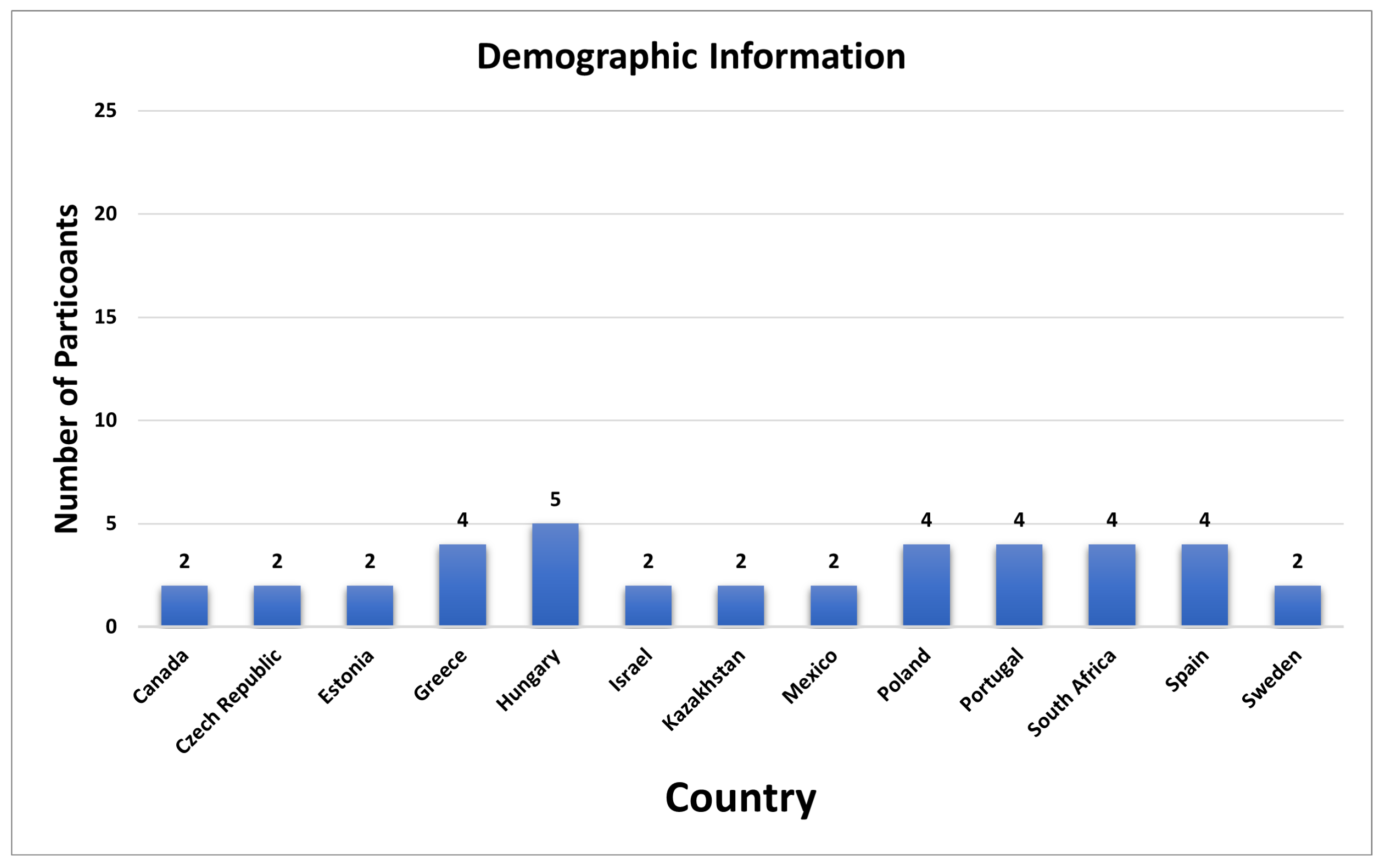
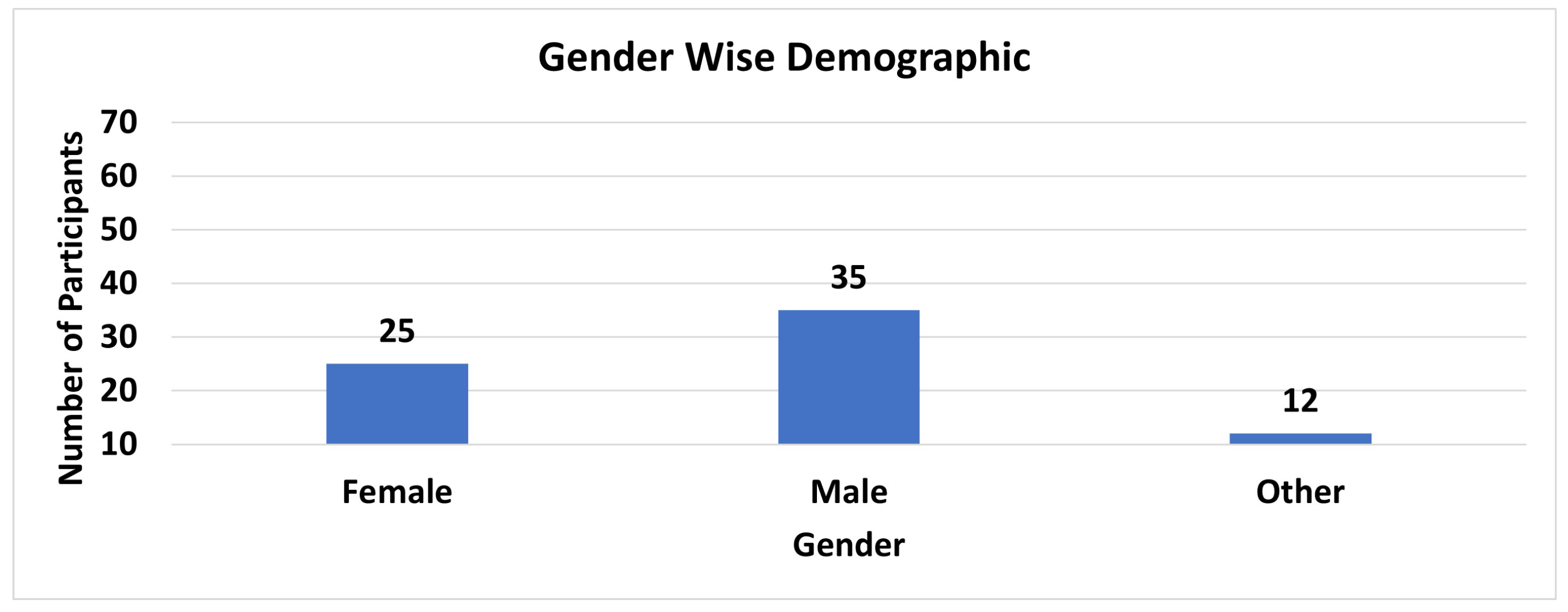
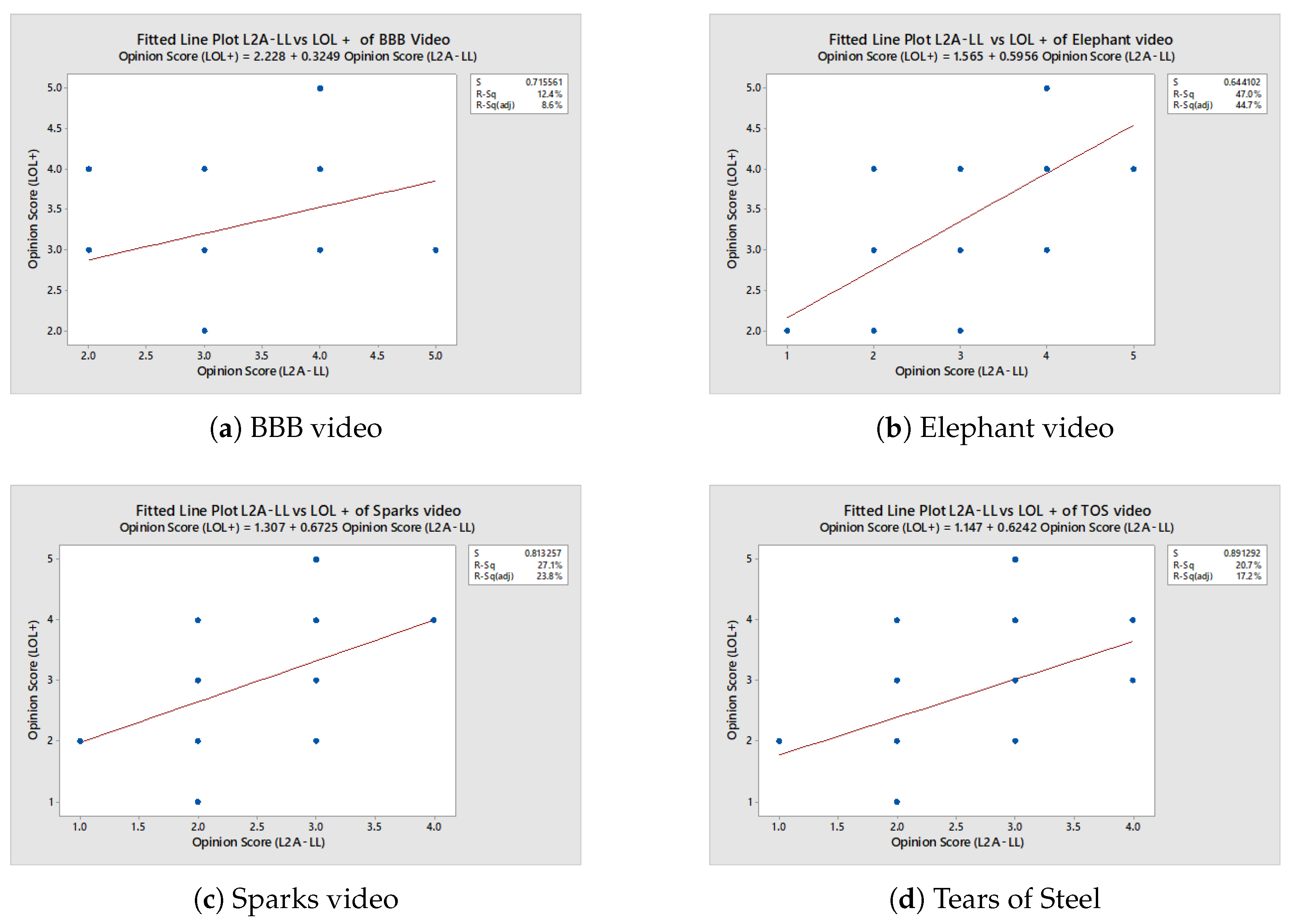
13] have evaluated and compared the QoE performance of low-latency algorithms; however, they have largely overlooked the subjective evaluation of these algorithms. Their focus has been on the objective evaluation of the ABR algorithms by comparing video quality metrics such as video quality, quality switches, and rebuffering. While objective evaluation provides quantitative metrics such as bitrate and video quality, subjective evaluation captures the user’s perceptual and emotional response to the content. To this end, this study focuses on evaluating user-perceived video quality in low-latency MPEG-DASH environments by examining the effects of short segment durations across traditional DASH and LL-ABR algorithms. The results from these experiments are used to create a video content based on source videos encoded under various network conditions. We perform both objective and subjective analyses on the data. For subjective analysis, the data is evaluated using a Prolific crowd-sourced platform. The test participants were asked to provide their opinion based on the video viewing experience. The Mean Opinion Scores (MOS) are collected in order to provide a view of user perception while watching the video sequences. This study presents a comprehensive subjective evaluation of both traditional and low-latency ABR algorithms in MPEG-DASH streaming environments.
The main contributions of this work are as follows:
We evaluated, compared, and analyzed the performance of low-latency and traditional ABR algorithms to determine whether low-latency algorithms can simultaneously optimize QoE metrics while prioritizing latency reduction.
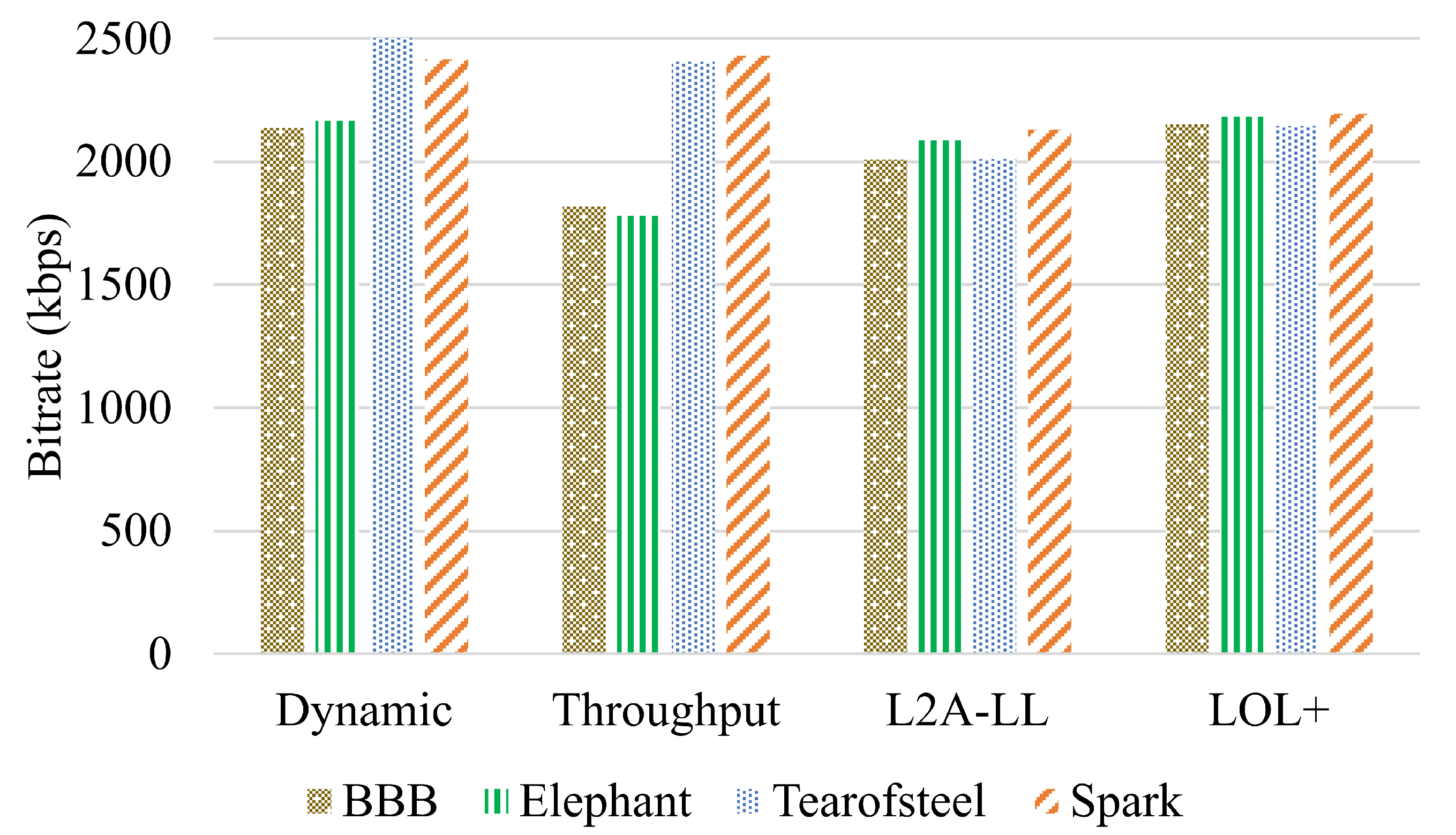
A comparative analysis is performed between conventional DASH algorithms (Dynamic, Throughput) and low-latency approaches (L2A-LL, LOL+) to determine their relative strengths in maintaining QoE under fluctuating bandwidth.
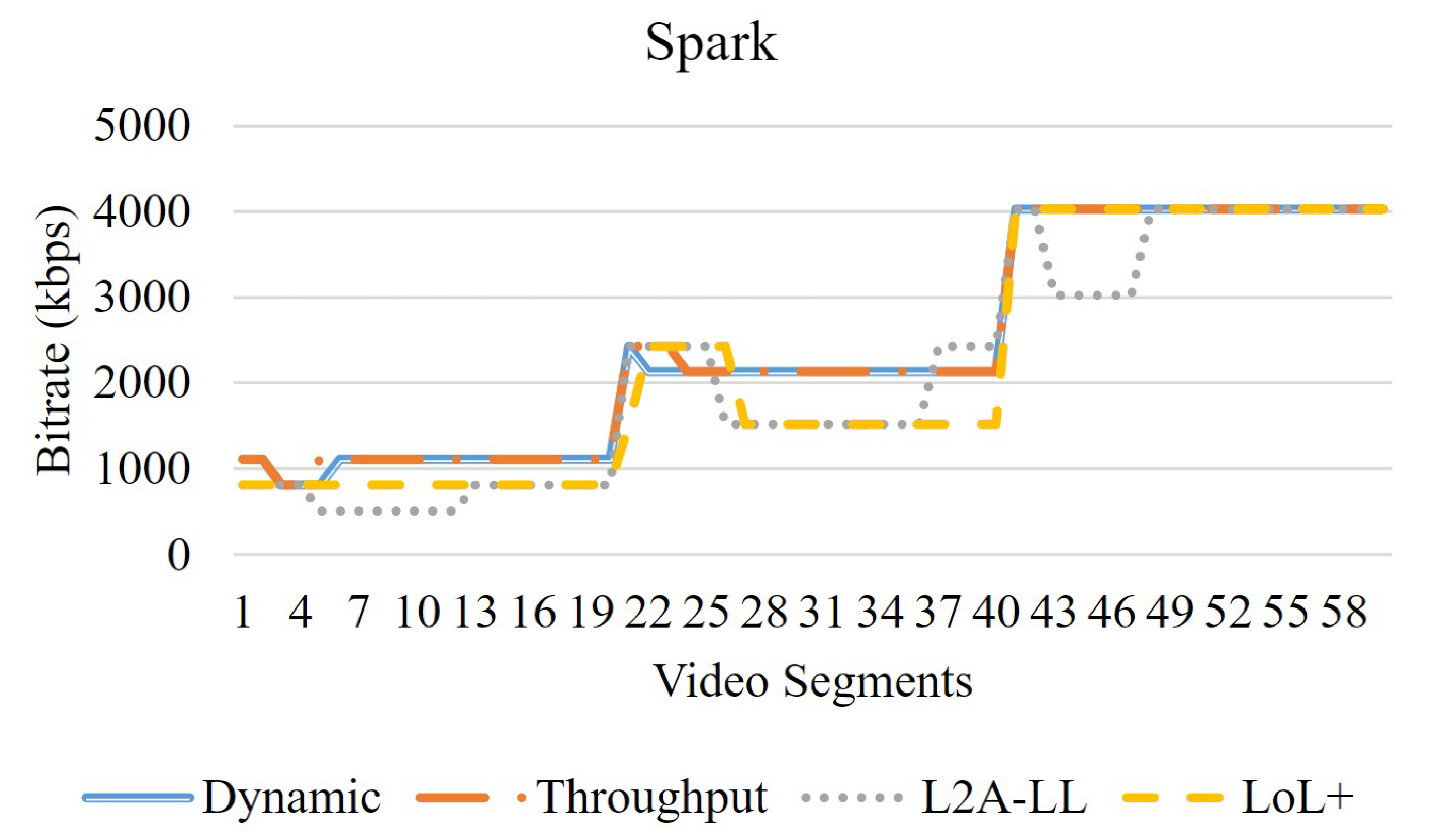
An ABR video dataset is created by running adaptive bitrate algorithms and capturing segment-level bitrate and resolution outputs using real-world testbed. This provides a foundation for both objective and subjective quality evaluation.
To our knowledge, this work is the first to use a crowd-sourced subjective evaluation to study the perceptual impact of low-latency ABR algorithms and network dynamics on user QoE. The crowd-source evaluation provides scalable and diverse participant feedback.
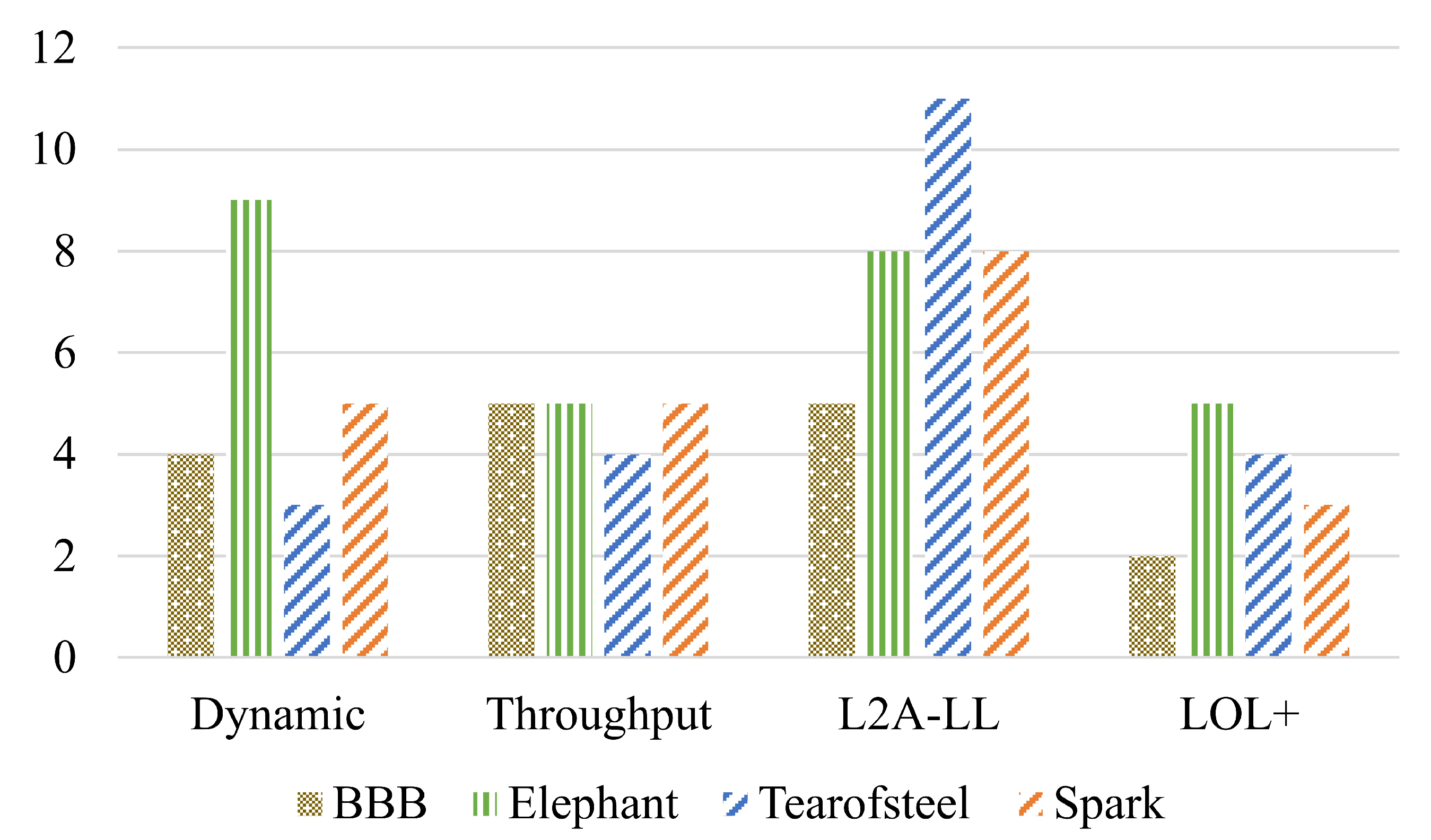
This work identifies critical limitations of current ABR algorithms, showing that both low-latency and traditional DASH-based approaches are unable to consistently maintain perceptual video quality under fluctuating network conditions. Our work highlights the need for content-aware and network-robust adaptive streaming strategies that maintain perceptual quality across diverse video types and network environments.
The paper is structured as follows.
Section 2 presents the background work,
Section 3 outlines the methodology,
Section 4 provides the discussion, and
Section 5 concludes the article.
2. Literature Review
Here, we present a detailed background on subjective research in video streaming. We also discuss the existing datasets and methods used to evaluate video quality.
The study in [
11] shows that the bit rate of the video and the interruption of playback affect the user experience the most. Additionally, frequent bitrate fluctuations negatively impact the QoE. However, there is a trade-off between selecting a high video rate and the risk of playback interruption [
14]. Evaluation [
15] is performed on the basis of ABR algorithms and user opinion is collected. The results indicate that objective quality metrics alone are insufficient and understanding human perception and behavior is equally important. In research [
16], subjective evaluation is carried out. The initial loading delay and its impact on user perception are measured. Based on these findings, a probability model is proposed to evaluate user unacceptability using logistic regression analysis. The authors in [
17] conducted a subjective evaluation for live streaming over mobile networks with MPEG-DASH. The Absolute Category Rating (ACR) was used to assess the impact of audio and video quality on the QoE. The findings reveal that providing low audio quality has a minimal impact on the QoE, compared to low video quality. In [
18], the authors proposed a model to assess the cumulative quality in HTTP Adaptive Streaming. The model is based on a sliding window of a video segment as the foundation. Through subjective testing and statistical analysis, the model identifies recency, average, minimum, and maximum window qualities as key factors, outperforming existing models while remaining efficient for real-time deployment.
The research work [
19] assesses the impact of stall events and quality switching on QoE. The results demonstrate that shorter duration stalls are not noticeable. The findings also mention that users prefer the quality of the video over the stall event. A study on latency [
19] investigates techniques to enhance user experience in adaptive video streaming with a focus on reducing latency. It evaluates the trade-offs between latency, video quality, and stability, proposing methods that achieve lower delays while maintaining smooth playback and consistent quality.
In [
13], a model is developed to measure video latency and its impact on QoE. The HAS and low-latency ABR algorithms were evaluated. The results demonstrate that the Dynamic algorithm outperforms low-latency algorithms.
Various data sets have been developed especially to evaluate video quality in the streaming domain. The data set in [
20] presents 208 distorted video sequences generated using mobile phones. In this research, subjective evaluation of video sequences is performed and several Video Quality Assessment (VQA) algorithms are evaluated. Another data set presented in [
7] includes 20 High Definition (HD) uncompressed source video sequences. The source videos are distorted in a streaming session, and a total of 450 distorted versions are acquired. The streaming sessions were created with various ABR algorithms. This work is evaluated both using objective and subjective assessment methods. The multicodec data set is produced in [
21]. The AVC, HEVC, VP9, and AV1 codecs were taken into account. The dataset was evaluated using a range of network profiles. The evaluation is performed to assess the encoding efficiency in the DASH streaming environment. The video dataset [
22] was also collected from mobile environments. The 174 video sequences were created in this database. In this dataset, stall events were generated and a subjective evaluation was performed to measure the impact of stalls on video QoE. The results reveal that stalls degrade the video quality and overall user experience.
An Ultra High Definition (UHD) video dataset was created in [
23]. The data set contains video encoded using H.264, HEVC, and VP9 codecs. This data set is evaluated using objective and subjective assessment methods. The results show a trade-off between bitrates, resolution, frame rate, and video content. A database [
24] presented 4K resolution video content. The content was encoded using the AVC, HEVC, VP9, AVS2, and AV1 codecs. The subjective assessment performed on videos to assess the video quality. The data set is also evaluated using objective models.
The video data set in [
25] consists of HD content. This data set was created using 12 source videos and 96 Processed Video Sequences (PVS). This data set is evaluated using subjective evaluation to measure video quality. The 4K resolution database [
26] is created by the Open Ultra Video Group. These video sequences are presented in the original RAW format (YUV). Encoding is performed by deploying HEVC and VVC codecs. The video sequences were assessed using objective and subjective evaluation methods. The MPEG-DASH dataset [
27] is made up of 8K video contents. The AVC, HEVC, AV1, and VVC codecs are deployed for the encoding process. The sequence is 322 s long and the segment is 4 s and 8 s in duration.
The research demonstrated that crowd-source methods can be used to measure high-resolution content. Researchers [
28,
29] demonstrate that patch-based and center-crop approaches enable accurate UHD quality evaluation on typical consumer devices, achieving correlations with lab results above 0.9. This work is complemented by [
30], as this research use large-scale crowdsourcing to reveal how screen size and viewing distance strongly influence perceived video quality, highlighting limitations of current objective models. Together, these works confirm that crowdsourcing is a practical and dependable approach for modern QoE and adaptive streaming research.
There are several gaps in the current literature concerning subjective evaluation in adaptive streaming. Existing studies have evaluated ABR algorithms; however, they have overlooked a comparative analysis between low-latency and conventional ABR approaches to determine whether low-latency algorithms can simultaneously optimize QoE metrics while minimizing latency. Furthermore, most subjective evaluation studies are not based on the actual outputs of ABR algorithms; instead, they rely on pre-distorted video sources that do not accurately reflect ABR-driven adaptations. This work addresses these limitations through comprehensive objective and subjective evaluations of DASH and low-latency ABR algorithms, employing video data produced by the algorithms themselves instead of using artificially distorted sources.
Table 1 presents a list of recent studies that analyze the performance of ABR algorithms, with a particular focus on low-latency approaches. Each study has its own limitations, as noted in the table. For instance, O’Hanlon et al. [
13] deployed a real-world testbed, but their primary focus was on understanding how latency targets impact the quality of experience. Their study did not include a subjective analysis. Lyko et al. [
5], on the other hand, conducted their evaluation using network simulations and focused exclusively on low-latency algorithms. In contrast, our work compared low-latency algorithms with traditional DASH-based ABR algorithms using real-world testbed. Additionally, while Lyko et al. [
5] used fixed video configurations, our evaluation incorporates a broader range of video settings, offering a more comprehensive assessment. In addition, our study represents the only crowd-sourced subjective evaluation of low-latency video streaming.
5. Conclusions and Future Work
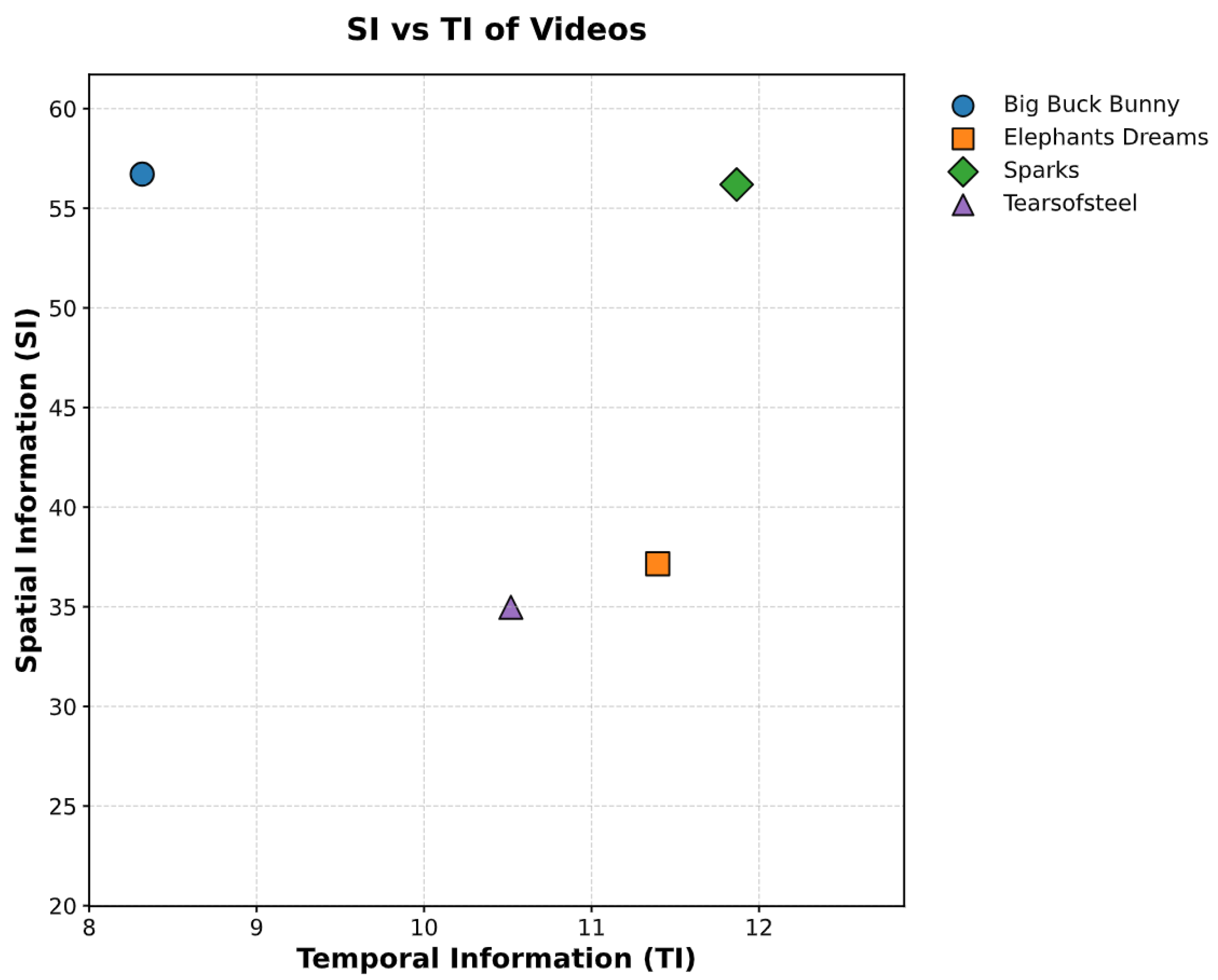
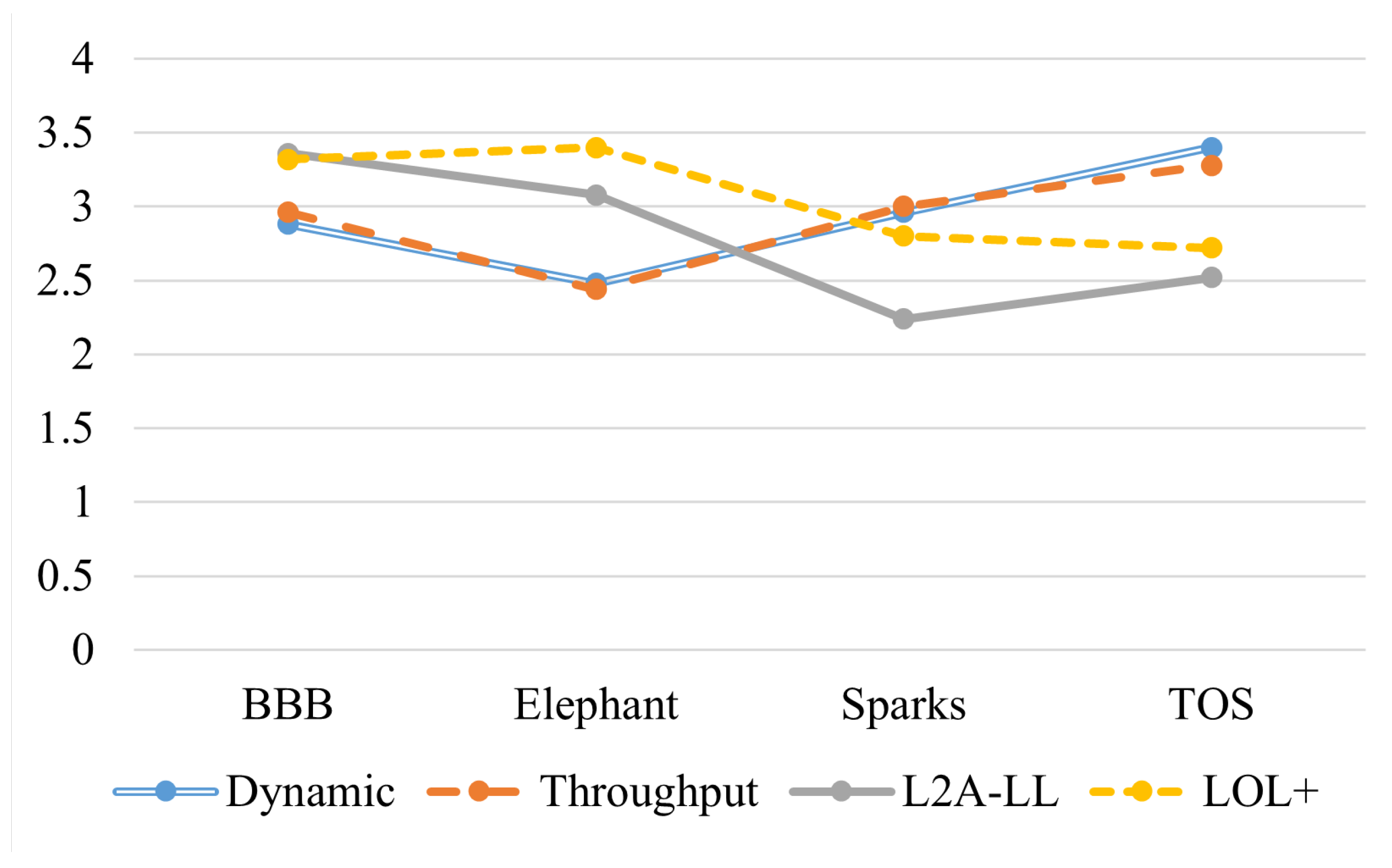
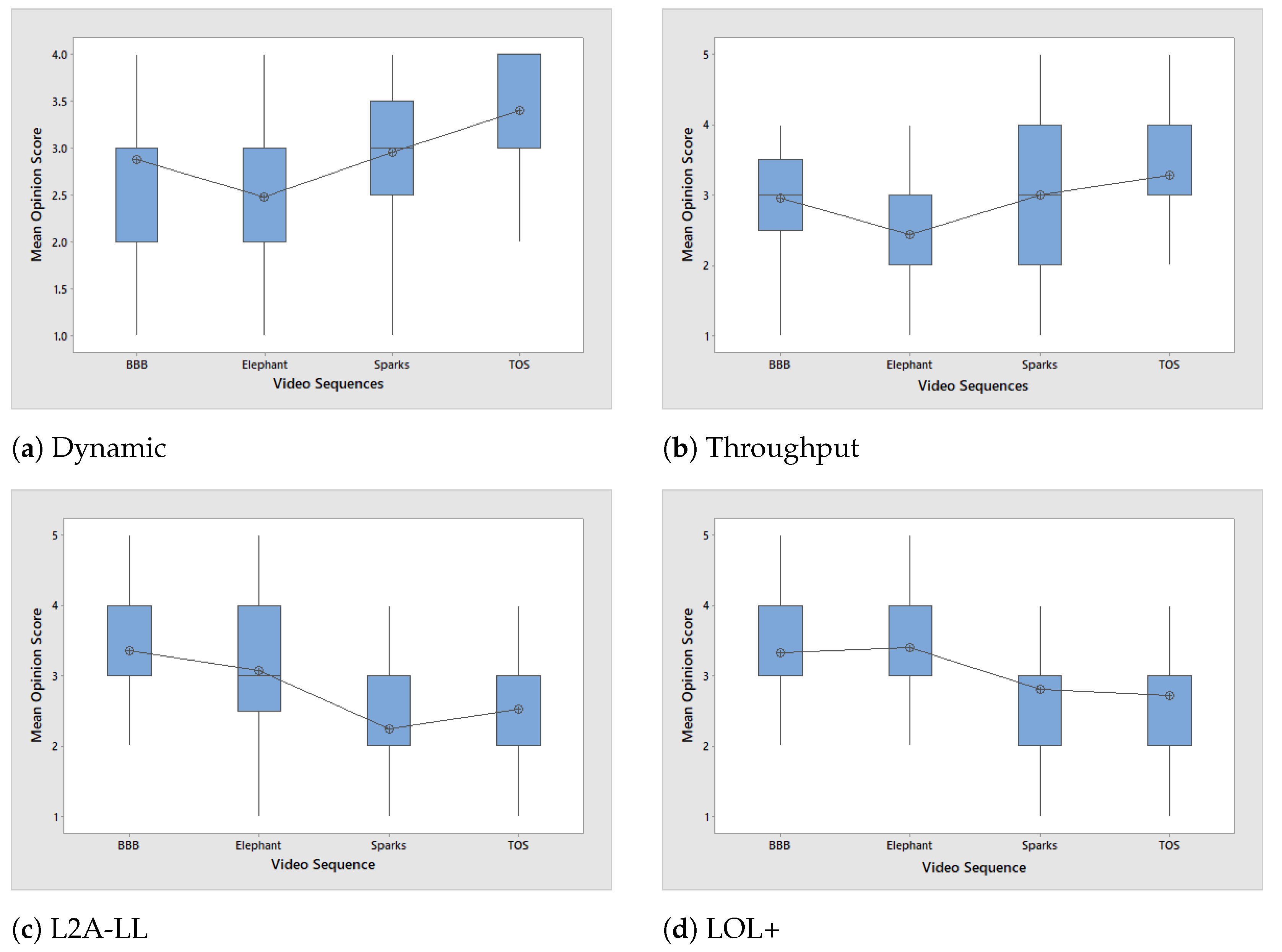
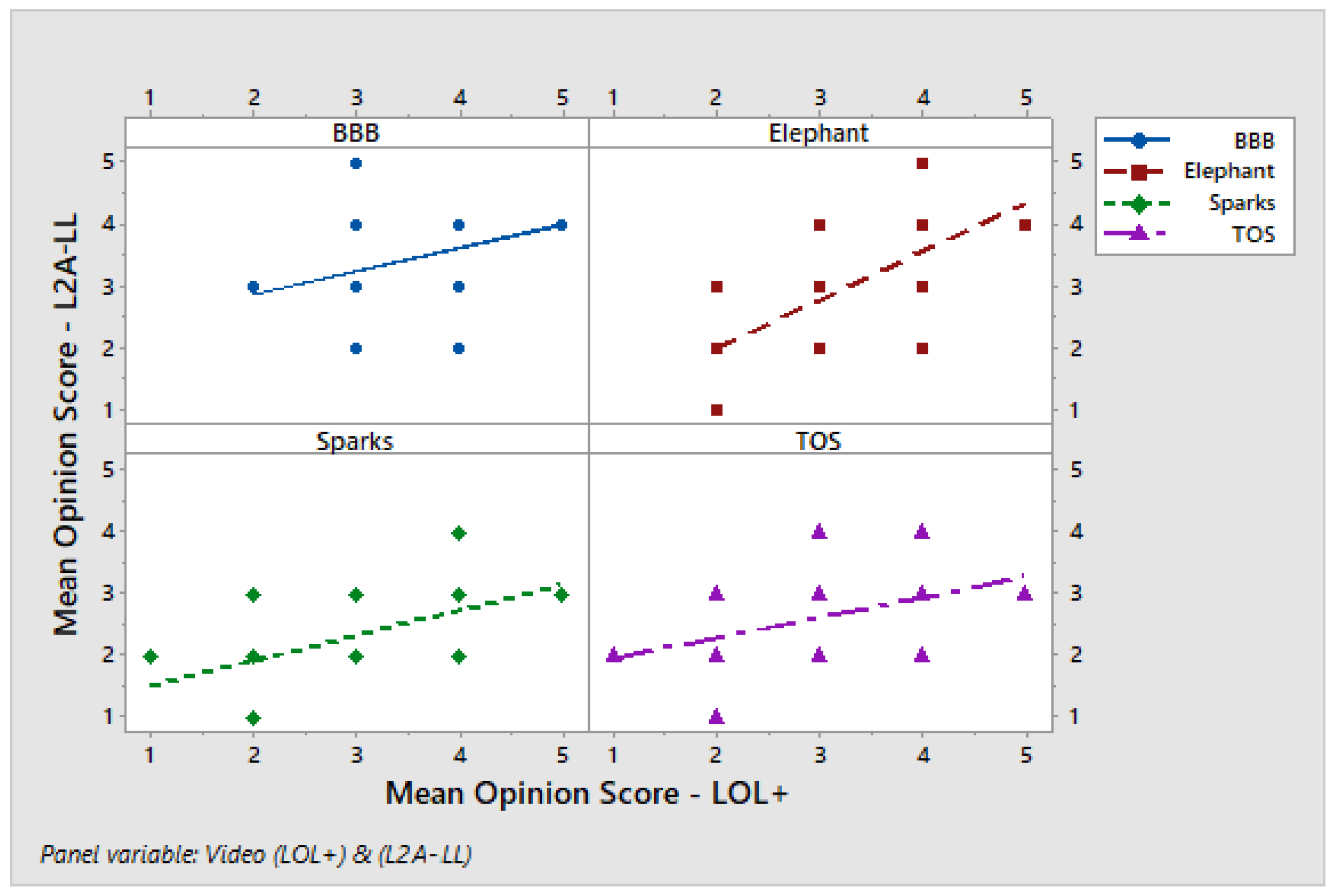
This study presents a comprehensive subjective evaluation of ABR algorithms in low-latency MPEG-DASH streaming environments. The work combines objective metrics with large-scale crowd-sourced subjective assessments to analyze user-perceived video quality across both traditional and low-latency ABR strategies. The ABR algorithms were tested using short two-second segments to simulate real-world low-latency streaming. The evaluation employed the ACR method following ITU-T P.910 standards, with data collected via the Prolific platform. Diverse video content was used, including animation and cinematic clips, to capture variations in spatial and temporal complexity. Results indicate that the Dynamic algorithm consistently achieved higher Mean Opinion Scores and exhibited greater robustness across network fluctuations. For low-latency algorithms, LOL+ outperformed L2A-LL, maintaining superior perceptual quality and playback stability. However, L2A-LL’s aggressive latency optimization resulted in greater bitrate variability and lower user satisfaction. The findings highlight that objective performance metrics alone do not fully capture user perception. Frequent quality switches and visual instability were found to reduce subjective QoE significantly. The study underscores the importance of designing ABR algorithms that balance responsiveness, stability, and perceptual quality rather than focusing solely on latency or bitrate.
Future research can advance in several directions. Additional content types and genres should be incorporated to capture a broader range of visual and motion characteristics. Increasing the number and diversity of participants would enhance the statistical reliability and representativeness of subjective evaluations. The dataset can be expanded by including more resolutions and network profiles to reflect real-world streaming environments more accurately. Furthermore, future subjective studies should focus on assessing video quality in ultra-low-latency scenarios to better understand user perception under extreme delay constraints. These efforts will contribute to the development of next-generation adaptive streaming systems that are both technically optimized and user-centric.