Article

Evaluating the Dietary Effects of White Grape Pomace Supplementation in Laying Hens Exposed to Thermal Stress: Hematological, Biochemical, Cecal Fermentation Metabolites, Histomorphology Approaches


by
Gabriela Maria Cornescu
1,
Tatiana Dumitra Panaite
1,*,
Ana Elena Cișmileanu
1,
Claudiu Gal
2,
Elvira Gagniuc
2,
Cristina Gabriela Tudorică
1 and
Mihaela Dumitru
3
1
Laboratory of Animal Nutrition Physiology, National Research-Development Institute for Animal Biology and Nutrition, 1 Calea Bucuresti, 077015 Balotesti, Romania
2
Department of Pathology and Forensic Medicine, University of Agronomic Sciences and Veterinary Medicine of Bucharest, 011464 Bucharest, Romania
3
Laboratory of Animal Nutrition-Biotechnologies, National Research-Development Institute for Animal Biology and Nutrition, 1 Calea Bucuresti, 077015 Balotesti, Romania
*
Author to whom correspondence should be addressed.
Appl. Sci. 2025, 15(24), 12903; https://doi.org/10.3390/app152412903
Submission received: 14 October 2025 / Revised: 26 November 2025 / Accepted: 3 December 2025 / Published: 7 December 2025

Abstract

This study aimed to investigate the hematological, biochemical, short-chain fatty acids (SCFAs) content, and histomorphological responses of laying hens exposed to different thermal stress conditions and fed a diet supplemented with 6% white grape pomace (WGP). The research was part of a large six-week experimental trial conducted on 240 Lohmann Brown hens (58 weeks old), arranged in a 2 × 3 factorial design with two dietary treatments (control and WGP) conducted under thermoneutral (NT, 22 °C), high thermal stress (HST, 35 °C), and low thermal stress (LST, 10 °C) conditions. HST conditions significantly lowered the production performances of ALBW (average live body weight; p = 0.0001) and ACW (average carcass weight; p = 0.026) and significantly increased the heterophil/lymphocyte (H:L) ratio and platelets concentration (p < 0.05). Serum K values decreased and the Na/K ratio increased significantly (p = 0.001) under both HST and LST conditions; total protein (TP) decreased significantly under HST (p = 0.031). Significantly decreased (p < 0.001) feed intake and excreta were registered under HST conditions. Concerning SCFAs content, isobutyrate was higher under LST (p = 0.0001), while butyrate showed higher values under NT conditions for the WGP group (p = 0.002). Intestinal morphometry was highly influenced by high temperatures (shorter villi, deeper crypts). Overall, the 6% WGP supplementation, a natural high antioxidant resource, produced modest, context-dependent effects, with benefits under NT and LST conditions but insufficient to protect against the negative effects of chronic heat stress.

1. Introduction

Thermal stress presents one of the most difficult constraints in laying hens’ production, negatively affecting feed intake, egg production and quality, electrolyte balance, and survival rate, largely via metabolic and immune disruptions caused by oxidative stress [1]. Cold stress produces similar adverse effects, compromising homeostasis through increased energy demands and redox imbalance [2]. The avian physiological responses to stress are described within a three-phase process, consistent with the General Adaptation Syndrome (GAS): (i) an initial phase of acute disequilibrium, (ii) a resistance phase marked by compensatory responses, and (iii) a restoring homeostasis or an exhaustion phase [3,4].
Consequently, depending on host factors (genotype, age, and physiological state) and the nature, intensity, and duration of the stressors, birds may adapt to the altered environment or progress towards dysfunction and disease [5]. Excess reactive oxygen species (ROS) caused by oxidative stress impair intestinal integrity, immune function, and tissue health, increasing the heterophil-to-lymphocyte (H:L) ratio, reducing lymphocyte counts, and ultimately lowering productivity [6]. Supplements such as grape pomace, vitamin E, or selenium can improve the oxidative status, thereby protecting erythrocyte membranes and slightly enhancing hemoglobin stability [7]. Compared to mammals, the hematological profile of birds is more limited, and its values may vary depending on several physiological and environmental factors [8]. Among these, seasons/different temperature variations exert a notable influence, with higher erythrocyte counts and hemoglobin concentrations observed in autumn and lower values recorded during winter and spring [9]. In addition, hemoglobin levels may also be affected by the intensity of egg production and the composition of the dietary formula, particularly its content of proteins, iron, copper, and vitamins involved in erythropoiesis [10]. Similar seasonal variations and diet-related differences in hematological parameters have been reported in laying hens by other researchers [11,12]. Hematological parameters offer essential insights into the physiological and immune conditions of animals [13]. Nutritional strategies that fortify antioxidant defenses and modulate inflammation therefore remain a priority in climate-challenged systems [14]. White grape pomace (WGP), a circular bioresource from winemaking, is rich in polyphenols (e.g., flavan-3-ols, anthocyanins), dietary fiber, and micronutrients with documented antioxidant, anti-inflammatory, and antimicrobial activities [15]. In poultry, WGP supplementation has been associated with improved egg antioxidant status and increased egg quality traits, though responses vary with inclusion level, the diet composition, and environmental context [16]. Beyond antioxidant activity, grape pomace polyphenols and fibers can act as fermentable substrates that modulate the cecal microbiota and increase short-chain fatty acid (e.g., butyrate) production, supporting epithelial integrity and decreasing oxidative and inflammatory stress [17]. In laying hens, recent studies indicate that WGP can influence productivity and egg traits under different ambient temperatures, with benefits more evident under cold stress than during heat stress; however, hematological, biochemical, microbiological, and histopathological aspects remain under-characterized within the same thermal-challenge framework [18]. Therefore, there is still limited evidence of its influence on these parameters’ responses within an experimental design that includes various induced concomitant thermal stress conditions [19].
This study evaluated the hypothesis that dietary inclusion of 6% white grape pomace could alleviate the adverse physiological effects of different thermal stress conditions in Lohmann Brown laying hens by evaluating some hematological, biochemical, fermentative, and histomorphology parameters.

2. Materials and Methods

2.1. Experimental Design and Housing Conditions

The experiment was conducted over six weeks on 240 Lohmann Brown laying hens (58 weeks old) using a 2 × 3 factorial design, following the same protocol for feeding, handling, and slaughtering procedures (no. 601/5 February 2024) previously described by Cornescu et al. [19]. Birds were simultaneously housed in three climate-controlled rooms to impose three thermal conditions: normal temperature (NT, 22 ± 1.8 °C; 45 ± 1.0% RH), high thermal stress (HST, 35 ± 1.5 °C; 64 ± 6.0% RH), and low thermal stress (LST, 10 ± 1.5 °C; 40 ± 2.0% RH). In each experimental room, hens were allocated to two dietary treatments: a control group receiving a standard control diet (CON) and an experimental group receiving a diet supplemented with 6% white grape pomace (WGP), sourced from a local winery in Dâmbovița County, Romania. The 6% WGP inclusion level was chosen as a moderate, evidence-based dose that limits cellulose intake and prevents fiber-related decreases in feed intake and nutrient utilization/absorption, particularly under induced thermal stress. This design resulted in six treatment groups in total (CON and WGP under each thermal condition), with 40 hens per group housed in 10 cages of 4 birds. All groups followed identical feeding, handling, and general management procedures. The simultaneous implementation of the three induced thermal conditions minimized age- and season-related variability, improving the comparability and reliability of the thermal stress responses. The birds were housed in green Zucami F60-610 cages (610 mm front, 745 mm back) with a floor inclined at 8° (approximately 14%). Feed and water (via nipple drinkers) were provided ad libitum, and environmental parameters were monitored twice daily using a Big Dutchman® computer system. The lighting program consisted of 16 h of light and 8 h of darkness per 24 h. Diets presented within Table 1 were formulated to be isoenergetic and isonitrogenous (18% CP, 2850 kcal ME/kg), following the Lohmann Brown feeding recommendations guide [20]. The diets and experimental design were the same as those described in Cornescu et al. [19].

2.2. Blood Sample Collection

At the end of the trial, blood samples (3 mL) to determine hematological and biochemical parameters analysis were collected from 8 randomly chosen hens/group, extracted from each experimental room (a total of 48 laying hens). Prior to collection, hens were fasted for 3 h with free access to water to minimize postprandial lipemia, avoiding hemolysis and ensuring the accuracy of biochemical analyses without compromising bird welfare or health status. Since the birds had been exposed to six consecutive weeks of heat/cold stress, each individual was clinically examined before sampling, and only those confirmed healthy by the attending veterinarian were selected. Also, as handling can increase hematological values, measures were taken to minimize stress before sampling. Therefore, birds were gently handled by trained personnel, with wings secured and the body supported to maintain stability and avoid thoracic compression. Blood was collected from the brachial vein using a 23 G butterfly needle connected to a vacuum collection system. Feathers were carefully plucked from the puncture site, which was then disinfected with 70% ethanol before inserting the needle. After blood collection, gentle pressure was applied for 30–60 s to minimize the risk of hematoma formation. To evaluate the hematological profile, some parameters: hematocrit (HCT), total leukocyte count (LEUK), heterophils (HETs), lymphocytes (LYMs), monocytes (MON)s, and eosinophils (EOSs) were determined using an ADVIA 2120i hematology analyzer (Siemens Healthineers/Siemens AG, Erlangen, Germany), which operates based on flow cytometry with peroxidase reaction and laser detection. Additionally, optical microscopy was employed for blood smear examination. A total of 48 blood samples were collected into 6 mL EDTA-coated vacutainer tubes (K2EDTA, purple top) to prevent coagulation prior to analysis. For biochemical assays, samples (48) were collected into gel-separator vacutainers (red top), allowed to clot at room temperature for 30–45 min, and centrifuged at 2700 RPM for 20 min. After blood centrifugation, the serum was transferred in sterile tubs (Eppendorf, 2 mL) and kept at −20 °C until further analysis to be performed in an ISO 15189-accredited [21] veterinary diagnostic laboratory SYNEVOVET. Plasma concentrations of total protein (TP), albumin (ALB), globulin (GLB), calcium (Ca), chloride (Cl), potassium (K), and sodium (Na) were analyzed using a spectrophotometer ABX PETRA 400 (HORIBA Medical, Montpellier, France).

2.3. Apparent Absorption Coefficients Assessment

Apparent nutrient absorption was evaluated by the balance technique (intake–excreta recordings) over five consecutive days during the last experimental week (the 6th week), as described by Panaite et al. [22]. Feed intake and total excreta output were recorded/collected daily at the same hour, weighed, and stored at 4 °C until further processing. For each group, weekly pooled samples (n = 8/group) were prepared, homogenized, and dried for 48 h at 65 °C in an Ecocell 111 drying oven (BMT, Brno, Czech Republic). Samples of the compound feeds and the weekly excreta were analyzed for dry matter (DM; 65–103 °C, gravimetric), crude protein (CP; Kjeldahl), ether extract (EE; organic solvent extraction), crude fiber (CF; sequential acid and alkaline hydrolysis), and ash (gravimetric) according to Regulation (EC) No. 152/2009 [23]. From the analytical data, OM (organic matter), NFE (nitrogen-free extractives), and GE (gross energy) were calculated as follows:
OM (%) = DM (%) − Ash (%);
NFE (%) = OM (%) − [CP (%) + EE (%) + CF (%)];
GE (kcal/kg) = [5.7 × CP + 9.5 × EE + 4.7 × CF + 4.17 × NFE] × 10;
where OM = organic matter; DM = dry matter; NFE = nitrogen-free extractives; CP = crude protein; EE = ether extractives; and CF = crude fiber.
Using daily compound feed intake/excreta data measurements and the quantified nutrient concentrations of feed and excreta, the nutrient balances were calculated. For each nutrient, the absorbed amount was defined as follows:
Nutrient absorption = Nutrient ingested − Nutrient excreted.
The apparent absorption coefficient (AAC, %) was then calculated as follows:
AAC (%) = [(Ingested − Excreted)/Ingested] × 100

2.4. Intestinal Microbiota Cecal Analysis

Cecal contents (8 caeca samples per bird) were collected aseptically into sterile plastic tubes and immediately stored at −20 °C until analysis. Bacterial groups targeted were Enterobacteriaceae, Lactobacilli, and Staphylococci. Counts were expressed as log10 colony-forming units (CFU) per gram of cecal content. Colonies were enumerated with a digital colony counter (Scan 300, Interscience, Saint Nom la Bretèche, France). Cecal samples were first transferred to lauryl sulfate broth, homogenized, and held for 20–30 min at 23–24 °C. Serial ten-fold dilutions were prepared to 10−5 in the same medium. Dilutions 10−2 to 10−5 were plated in duplicate onto Levine (EMB) agar (or G.E.A.M., as applicable) and incubated for 48 h at 37 °C.

2.5. Cecal Fermentation Metabolites Evaluation

A total of 48 cecal content samples (8 laying hens/group; 2 groups/experimental room; and 3 rooms in total) were collected aseptically and placed in sterile plastic tubes on ice until short-chain fatty acid (SCFA) analysis. The SCFAs were quantified in water extracts of cecum contents by gas chromatography. Extracts were obtained by mixing material with distilled water in a ratio of 1:4 (w:v) and then centrifuged at 3500× g for 10 min at 4 °C, then the supernatant was diluted 1:1 with distilled water and centrifuged at 13,000× g for 15 min at 4 °C. A 1 μL aliquot of the centrifuged extract was injected in split mode into Varian 430-GC gas chromatograph provided with Elite-FFAP capillary column: 30 m length, 320 μm inner diameter, and 0.25 μm film thickness, respectively (Perkin Elmer, Inc., Waltham, MA, USA). Hydrogen served as the carrier gas, with a flow rate of 1.5 mL/min. The injector was set to 250 °C, with 1:40 split ratio. The flame ionization detector (FID) was maintained at 200 °C, the column oven was set to 110 °C, increasing to 170 °C at a rate of 12 °C/min, then held at this temperature for 9.5 min. The total analysis time was 10 min. Sample concentrations were calculated based on a commercial standard mixture of volatile fatty acids (CRM46975, Supelco, Bellefonte, PA, USA), and results were expressed in micromoles per gram.

2.6. Histomorphological Analyses

A total of 48 samples of each intestinal segment (duodenum, jejunum, and ileum) were collected by sectioning and immediately immersed in 10% neutral-buffered formalin (NBF) for 24 h at room temperature for fixation. After fixation, tissues were trimmed into fragments approximately 2–4 mm in thickness, placed in labeled embedding cassettes, and re-immersed in 10% NBF until processing. Tissues were processed in an automated tissue processor: dehydration through six graded ethanol baths (progressing to absolute ethanol), clearing in three xylene baths, and paraffin infiltration in three baths of molten paraffin. Following processing, samples were embedded in paraffin to obtain blocks. Paraffin blocks were sectioned on a rotary microtome at a thickness of 1.5 μm. Sections were floated on a water bath, mounted on glass slides, and dried in an oven at 60 °C. Slides were then deparaffinized in three xylene baths and rehydrated through graded ethanol down to 70% ethanol. Sections were stained with hematoxylin and eosin (H&E), cleared in xylene, and cover slipped with mounting medium. Histological preparations were examined using an Olympus CX43 light microscope (Olympus Corp., Tokyo, Japan) equipped with a micro-photography system, employing 4×, 10×, and 20× objectives. All procedures were performed at room temperature unless otherwise specified. Villus height was measured from the villus tip to the villus–crypt junction. Crypt depth was measured from the villus–crypt junction to the base of the crypt.

2.7. Statistical Analysis

All data were subjected to analysis of variance using the GLM procedure of the Minitab software (version 17, Minitab® Statistical Software, PA, USA). The data obtained were analyzed by two-way ANOVA (analysis of variance) following this statistical model:
Yijk = µ + αi + βj + αiβj + eijk
where Yijk = the variable measured for the kth observation of the ith diet and jth temperature; μ is the sample mean; αi is the effect of the ith; βj is the effect of temperature; αiβj = the interaction of ith diet and jth diet; and εijk is the effect of error. The differences were highly significant when p < 0.001 and significant if p < 0.05.

3. Results

3.1. Hematological Parameters Profile Evaluation

Table 2 presents the hematological profile of laying hens exposed to different thermal stress conditions and fed diets with or without white grape pomace (WGP) supplementation.
Dietary inclusion of WGP had a significant impact on certain hematological parameters in laying hens. Hens fed the WGP-supplemented diet showed significant lower (p = 0.046) PLT values compared to those registered on the CON diet. A similar situation was noticed for the MON percentage, which was significantly reduced in the WGP group (p = 0.028). These results suggest that WGP supplementation can lower circulating platelet and monocyte levels. In contrast, other hematological parameters HCT, WBC, HET, LYM, and EOS were not significantly affected by diet (p > 0.05), indicating no significant difference between WGP-fed hens and CON for those indices. The temperature factor exerted a pronounced effect on several blood parameters. Platelet counts were highest under NT conditions and were significantly lower under both HST and LST temperature conditions (p < 0.0001). The heterophil percentage (HET) was also significantly influenced by temperature (p = 0.008) within the HST conditions, which had a significantly increased heterophil percentage compared to hens at NT and LST. Conversely, LYM percentages were lower under heat stress (p = 0.035), with HST birds showing lower LYM values compared to birds kept at NT or LST conditions. These changes in HET and LYM values under HST reflect the classic stress leukogram in poultry, where heat stress elevates heterophils and reduces lymphocytes. In contrast, ambient temperature did not significantly affect the HCT, WBC, MON, or EOS levels (p > 0.05 for each), suggesting that those particular measures remained relatively stable across thermal conditions. No significant interaction effects between diet and temperature were observed for any of the measured hematological parameters (p > 0.05).
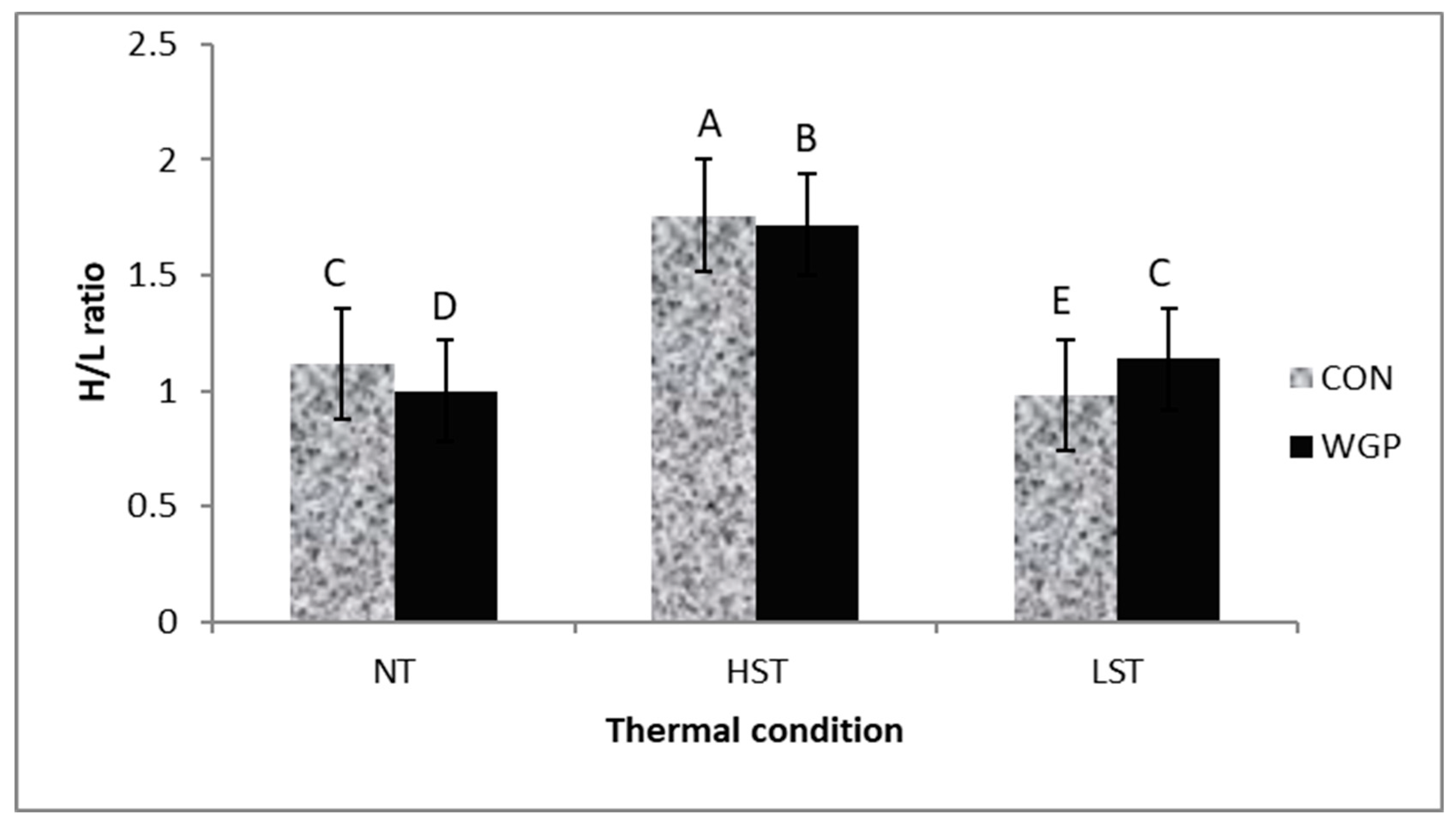
Figure 1 illustrates the effect of different thermal environments and dietary white grape pomace (WGP) supplementation on the heterophil-to-lymphocyte (H:L) ratio of laying hens. This indicator reflects the physiological stress response of birds exposed to hot or cold conditions and provides valuable insights into the potential modulating effect of dietary antioxidants under environmental challenges.
Under NT and HST conditions, the WGP groups registered a significantly lower H/L ratio compared to the CON group (p < 0.05), whereas under LST conditions, the WGP group registered a significantly higher (p < 0.05) H:L ratio compared to the CON group. Concerning the differences between the thermal regimes, under HST conditions, we observed the highest H/L values compared to NT and LST conditions, indicating that high thermal stress is the main factor triggering the stress response.

3.2. Serum Biochemical Parameters Evaluation

Table 3 presents the effects of thermal stress and dietary white grape pomace (WGP) supplementation on the main serum biochemical parameters of laying hens.
Overall, WGP inclusion at 6% did not significantly affect serum albumin, globulins, the ALB/GLOB ratio, calcium, chloride, potassium, sodium, the Na/K ratio, or total protein compared to the CON diet (p > 0.10). Across thermal conditions, hens fed the CON or WGP diets showed very similar values, and no D × T interactions were detected for any variable (p > 0.29), indicating that the biochemical response to temperature was not modified by WGP supplementation. In contrast, ambient temperature significantly influenced several serum parameters. Serum albumin was significantly affected by temperature (p = 0.006), with lower values under HST conditions compared to NT, while hens kept under LST conditions showed intermediate values. A similar pattern was observed for total protein (p = 0.031), which decreased under HST compared with NT, with LST birds not differing significantly from either group. Potassium concentration was also significantly affected (p = 0.001): birds maintained at NT had higher K values compared with those kept under HST or LST conditions, which exhibited similarly low K values. Consequently, the Na/K ratio was significantly higher under HST and LST conditions compared to NT (p = 0.001), reflecting the reduction in K at suboptimal temperatures. Temperature tended to influence globulins (p = 0.099), the ALB/GLOB ratio (p = 0.060), and calcium (p = 0.051), with numerically lower GLOB and Ca and a reduced ALB/GLOB ratio in HST hens compared with NT and/or LST. Chloride and sodium concentrations were not significantly affected by temperature (p > 0.10).

3.3. Nutrient Digestibility Evaluation

Table 4 presents how induced heat or cold stress influenced nutrient utilization efficiency compared with thermoneutral conditions, as well as whether dietary WGP supplementation modulated these responses.
Hens fed the WGP diet had a significantly lower feed intake compared to the CON diet (p = 0.020). Feed intake was highly decreased under HST conditions compared to NT and LST conditions (p < 0.001), with similar values at NT and LST. Excreta output was not affected by diet (p = 0.198) but was significantly reduced, as expected, due to the low feed intake at HST relative to NT and LST conditions (p < 0.001) with a significant D × T interaction (p = 0.023), reflecting the significant decrease in excreta only under HST in both dietary treatments. Dietary WGP significantly reduced the apparent digestibility of organic matter (OM), crude protein (CP), and crude fiber (CF) compared to the CON diet (OM: 73.16 vs. 74.82%; CP: 86.96 vs. 87.86%; CF: 18.07 vs. 26.23%; and p = 0.042, 0.031, and <0.001, respectively). WGP also reduced ash digestibility (p < 0.001) and showed a tendency to decrease gross energy (GE) digestibility (80.55 vs. 81.55%; p = 0.095). Gross energy (GE) digestibility, ether extract (EE), and nitrogen-free extract (NFE) digestibility were not significantly influenced by diet (p > 0.10). Thermal conditions had a significant influence on several digestibility coefficients. Hens exposed to HST showed higher OM and CP digestibility compared to NT conditions (p = 0.023 and 0.003). The EE digestibility was lowest at LST and higher at NT and HST (p < 0.001). CF digestibility was highest under HST compared to NT and LST conditions (p = 0.002). For NFE, HST and LST registered as having higher digestibility compared to NT conditions (p < 0.001). GE digestibility was also improved at HST compared to NT conditions (p = 0.044). Ash digestibility was not significantly affected by temperature (p = 0.228) nor the D × T interaction (p = 0.075), suggesting that the decreasing effect of WGP on ash digestibility tended to be more pronounced at lower temperatures.

3.4. Cecal Intestinal Microbiota Evaluation

To evaluate the intestinal microflora, cecal content samples were also collected, and the results are presented in Table 5.
Neither diet nor temperature nor their interaction significantly affected the cecal counts of Lactobacillus spp., Enterobacteriaceae, or Staphylococcus spp. (p > 0.10). Across temperatures, hens fed the CON diet and those receiving WGP had similar Lactobacillus spp. counts (p = 0.599) and Staphylococcus spp. counts (p = 0.654). WGP supplementation was associated with a numerically lower Enterobacteriaceae count compared with the CON diet (3.41 vs. 4.49 log10 CFU/g), but this difference did not reach statistical significance (p = 0.175). Regarding the main effect of temperature, Lactobacillus spp. counts remained stable across NT, HST and LST conditions (p = 0.761). Enterobacteriaceae counts showed only modest numerical variation (p = 0.548). Staphylococcus spp. counts tended to be lower at NT (3.81 log10 CFU/g) and higher under HST and LST (5.01 and 5.22 log10 CFU/g), but this effect was also not significant (p = 0.121). No significant D × T interactions were detected for any of the evaluated bacterial groups (p > 0.39), indicating that WGP supplementation did not differentially influence cecal microbiota composition under the different thermal conditions.

3.5. Cecal Short-Chain Fatty Acids Evaluation

Within Table 6, the effects of thermal conditions and dietary white grape pomace supplementation on the cecal short-chain fatty acids content are presented.
WGP supplementation did not significantly affect the cecal concentrations of any individual SCFA (p > 0.48). Mean values for acetate (34.97 vs. 34.40), propionate (13.95 vs. 13.31), isobutyrate (2.01 vs. 1.99), butyrate (8.62 vs. 8.74), isovalerate (1.547 vs. 1.516), and valerate (1.52 vs. 1.28) were very similar between the control and WGP diets. In contrast, thermal conditions significantly influenced several SCFA. Acetate concentration was higher under NT than under HST or LST thermal stress conditions (p = 0.004). Isobutyrate was significantly increased under LST compared with NT and HST conditions (p < 0.0001). Isovalerate was also affected by temperature (p = 0.028), with the highest values at NT and the lowest at LST (1.17). Propionate, butyrate, and valerate showed no differences between temperatures (p = 0.181). No significant D × T interactions were detected for any SCFA (p ≥ 0.224), indicating that WGP supplementation did not differentially modulate cecal SCFA profiles under different thermal conditions.

3.6. Intestinal Morphometry Evaluation

Table 7 presents the average live body weight, the average carcass weight, and the intestinal length of laying hens exposed to different thermal stress conditions and fed diets with or without white grape pomace (WGP) supplementation.
Dietary WGP did not significantly influence ALBW, ACW, or the length of any intestinal segment (p > 0.22). In contrast, the thermal environment had a marked effect on ALBW and ACW (p < 0.001). Hens exposed to HST showed the lowest ALBW and ACW, whereas birds kept at NT and LST maintained higher values. A significant diet × temperature interaction was detected for both ALBW and ACW (p = 0.026 and 0.044), indicating that the response to WGP depended on the following thermal condition: under NT, CON and WGP hens had similar body and carcass weights; under HST, both diets resulted in a marked reduction in ALBW and ACW; while under LST, hens fed WGP reached the highest live body weights (1850.8 g), with carcass weights comparable to NT-CON birds. Regarding intestinal morphology, thermal conditions significantly influenced several gut segments. Duodenum length was greater in NT hens than in those subjected to HST or LST (p = 0.017). Jejunum length was also higher at NT compared with HST and LST, while ileum length was relatively less affected, showing only modest numerical variation across temperatures. Birds kept at NT additionally tended to have a longer ceca and colon than those exposed to HST or LST (p < 0.05). No significant diet × temperature interactions were observed for intestinal lengths (all p > 0.19), indicating that the WGP supplementation did not differentially modify the gut segment length within each thermal condition.

3.7. Intestinal Morphology Evaluation

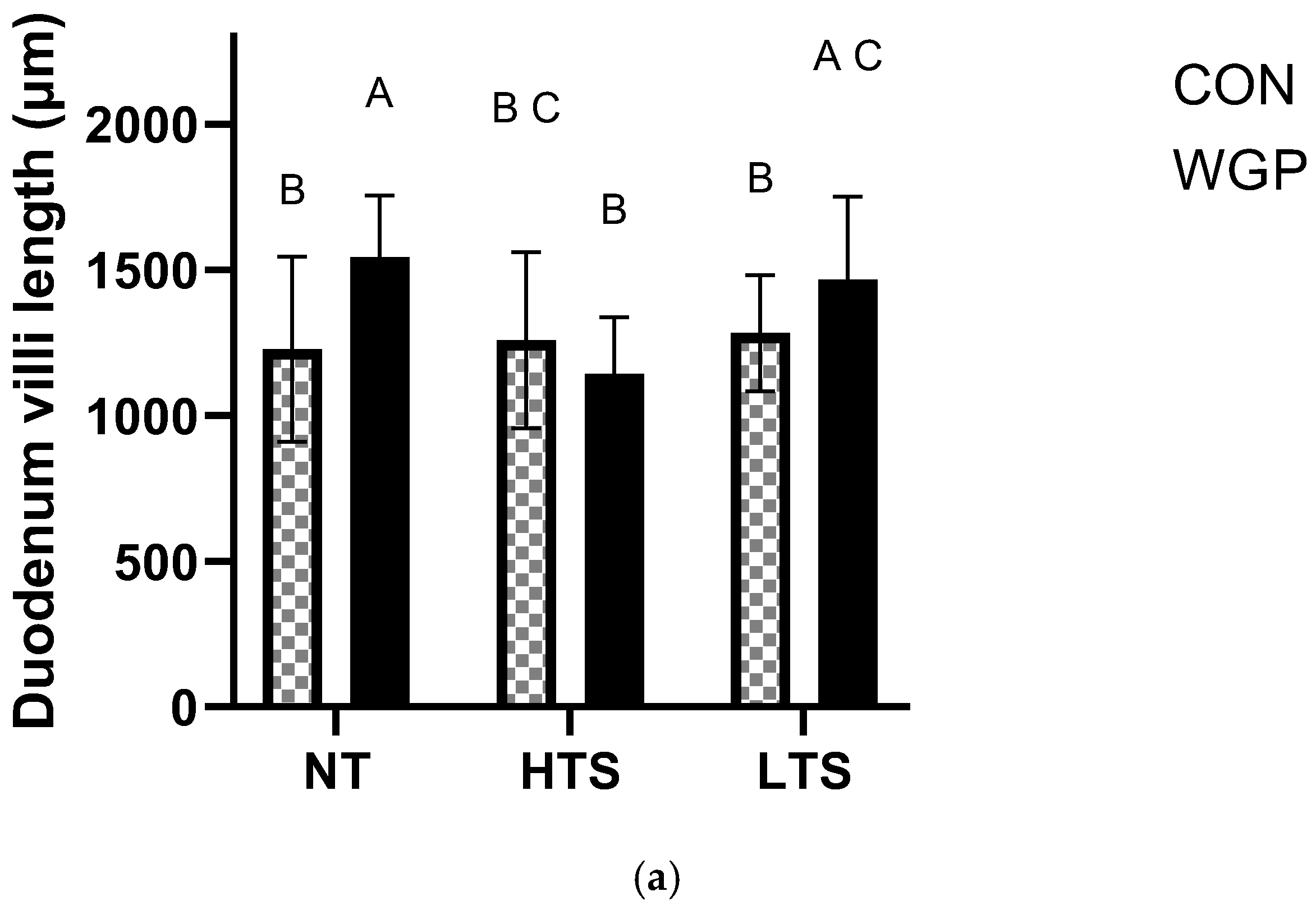
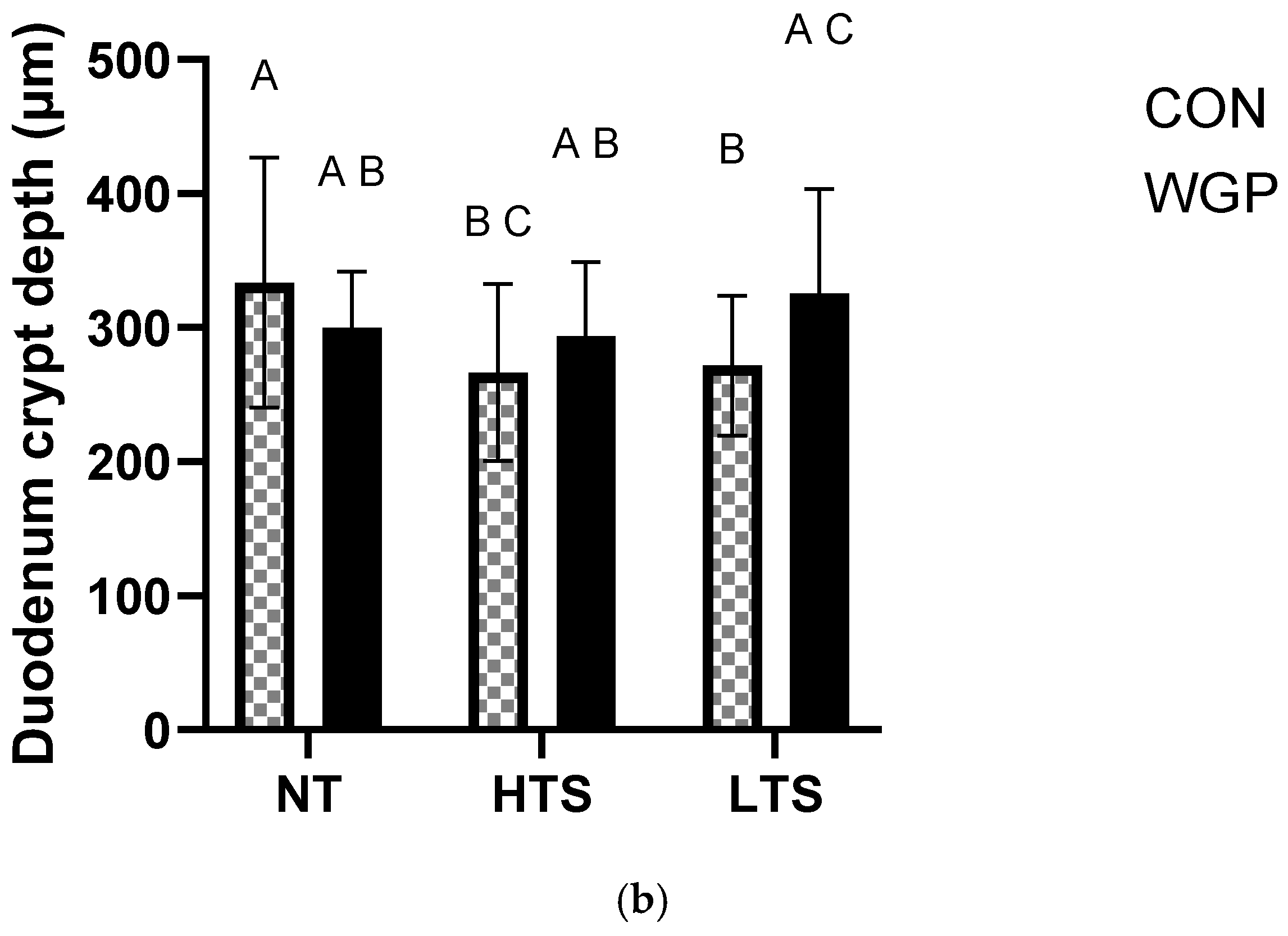
Figure 2 shows the villi length within duodenum, with significant high values (p < 0.05) observed in the WGP group during thermoneutral conditions, compared to both groups in HTS conditions and the CON group in LTS conditions. Concerning the duodenum crypts, the highest statistically significant value (p < 0.05) was noticed in the NT condition for the CON group compared to the CON group in HTS conditions and the CON group in LTS conditions.
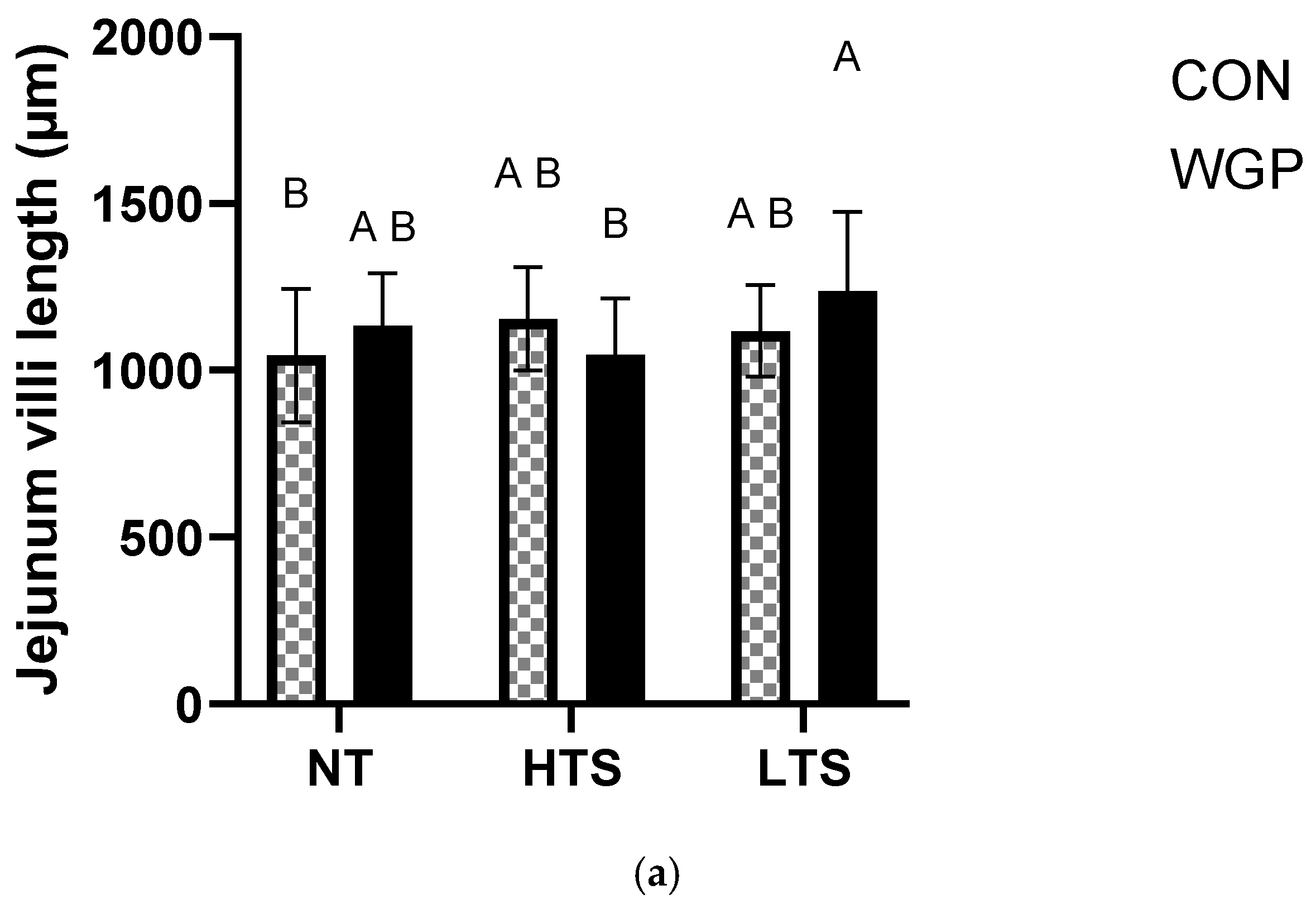
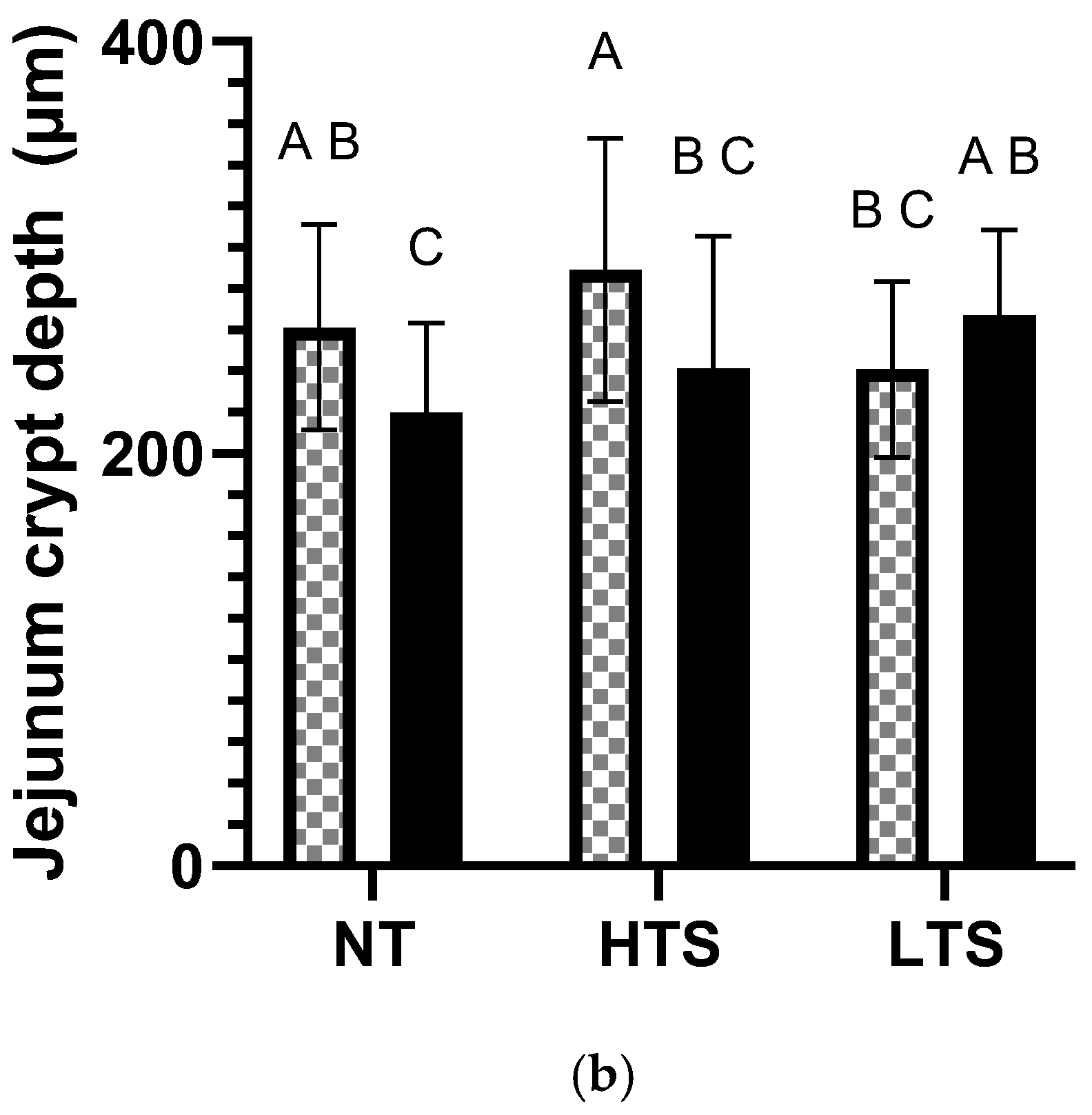
Figure 3 shows the villi length within jejunum, with significant high values (p < 0.05) observed during low-stress conditions for the WGP group compared to the CON group in NT conditions and the WGP group in HTS conditions. The crypt depths within jejunum showed significant high values (p < 0.05) observed during HTS conditions in the CON group compared to the WGP group in NT and HTS conditions, as well as the CON group in LTS conditions.
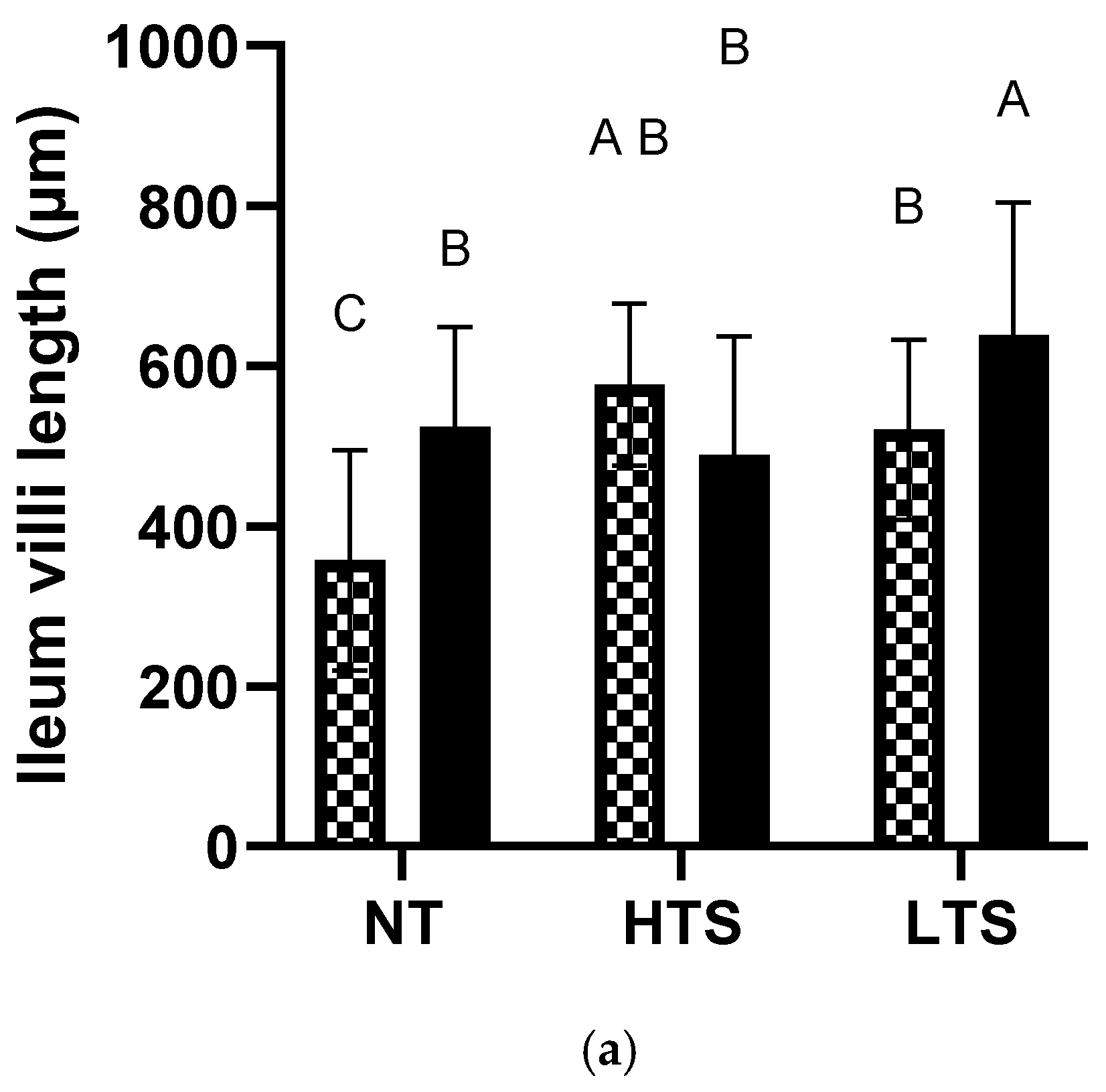
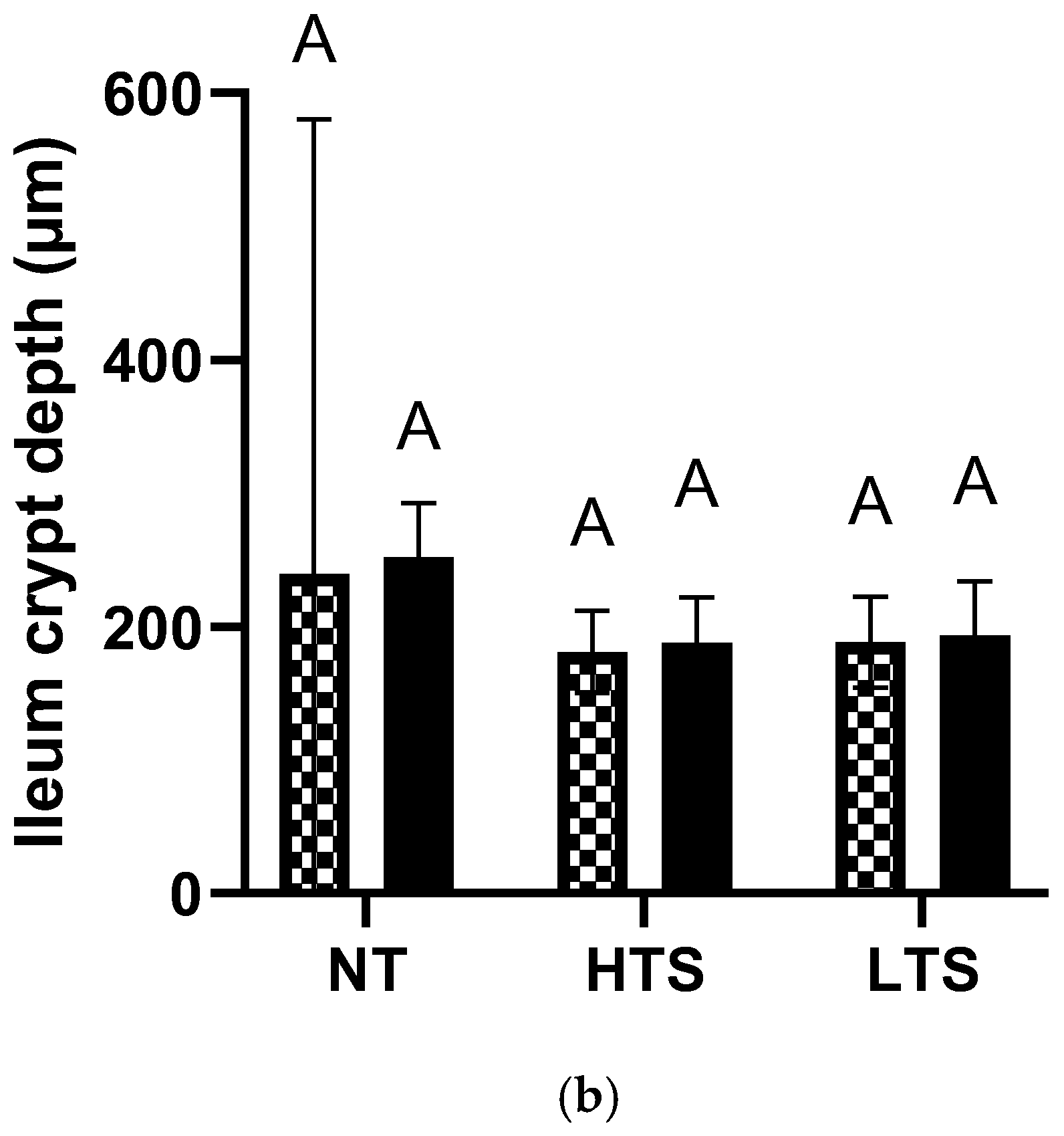
Figure 4 shows the villi length within ileum, with significant high values (p < 0.05) observed during low-stress conditions for the WGP group compared to CON and WGP in NT conditions and the WGP group in HTS conditions, as well as the CON group in LTS conditions. The crypt depths within ileum registered no significant values (p > 0.05) during thermoneutral, heat, or low-stress temperature conditions for the WGP group compared to the C group.

4. Discussion

4.1. Hematological Parameters Analysis

According to Bounous et al. [24], stress induced by environmental, nutritional, or pathological factors can be assessed through hematological parameters, which serve as indicators of health status. Temperature was the main factor of the hematological changes, surpassing the diet factor, which aligns with other heat-stress studies’ conclusions conducted in laying hens’ nutrition and physiology studies. The HCT obtained values in our study were consistent with the reference range for laying hens, typically reported between 25% and 28% [25,26]. According to another author, Pârvu Gh. [27] the reference value for HCT for laying hens is reported as 29% ± 3.5. Normally, during thermal stress, especially heat stress, the HCT values would decrease significantly due to red cell production suppression [28]. In our study, HCT values did not differ across groups or thermal conditions, indicating no evidence of significant dehydration during heat exposure. This pattern is consistent with reports that HCT responses to heat are context-dependent and can vary with bird age, exposure duration, and hydration management [29]. No significant effect on WBC was detected. Ribeiro et al. [30] considers that WBC morphology can be used as a diagnostic tool for health indicators and welfare assessment. The WBC counts and the H/L ratio have been used as markers of stress and as indicators of chronic distress [31]. Especially, heat exposure typically produces a stress leukogram characterized by increased heterophil/neutrophil rations and reduced lymphocytes, mediated by corticosterone and leukocyte redistribution [32]. The increasing level of HET concentrations and decreasing level of LYM under HST conditions registered in our study are therefore consistent with other reports in chickens [33]. Recent studies in laying hens have demonstrated that heat stress significantly disrupts blood profiles and immune competence, with an evident increase in the H/L ratio, which is regarded as the most important indicator of chronic stress, more than circulating plasma corticosteroid levels [18]. The H/L ratio near 0.2 suggests minimal stress, whereas ratios approaching or exceeding 0.8 indicate substantial stress [34]. Our PLT concentration was highest within NT conditions and lowest under HST/LST, which is in accordance with other studies that observed that heat exposure can alter the platelets [35]. Ali et al. [35] proposed that platelets contribute to the induction of adaptive immune responses, supporting the activation and maintenance of long-term protective immunity. Also, Hata et al. [36], in some experimental rodent models, indicated that prolonged cold environmental stress can both reduce the platelet count by 25% and impair their function. According to some authors, the reference values for laying hens for HET is reported as 27% ± 6, but we registered higher values, especially under heat stress conditions [27]. Cold exposure also challenges immune homeostasis and PLT morphology, implying that both thermal extremes can change the leukocyte dynamics [37,38,39,40].
Dietary effects on hematology were limited. This contrasts with reports that grape pomace (or derivative products) can improve antioxidant status and selected health/egg outcomes yet aligns with evidence that leukocyte differentials often show only modest, context-specific shifts, particularly under severe heat [41].

4.2. Serum Biochemical Parameters Analysis

Under heat stress, ALB and TP values were similar to NT/LST conditions. Our findings agree with reports that chronic heat stress lowers circulating proteins in layers—mainly from hemodilution, changes in liver protein synthesis, and, in severe cases, renal effects—often showing reduced albumin and altered blood chemistry [42]. Kaiser et al. [42] reported a connection between seasons and changes in serum reference values for laying hens: sodium 153 vs. 156 mEq/L (summer/winter), potassium 3.70 vs. 3.86 mEq/L, chloride 114.4 vs. 113.5 mEq/L, calcium 184 vs. 186 mg/dL, albumin 4.1 vs. 4.2 mg/dL, and total protein 5.3 vs. 5.2 g/dL. Electrolyte alterations under thermal stress were mainly attributable to K+ concentration. Potassium was significantly lower in HST and LST conditions compared to NT conditions, significantly increasing the Na/K ratio. According to Livingston et al. [43] lower K+ during heat exposure is well documented—especially in broilers—and is attributed to panting-induced respiratory alkalosis and transcellular K+ changes; the Na/K ratio typically increases as the K+ concentration decreases. Our experimental data correspond with the reported heterogeneity of electrolyte outcomes under stress [18]. In calcium, we noticed lower values registered under HST and higher values in LST-WGP. Heat-related respiratory alkalosis reduces ionized Ca and compromises shell formation; layer studies document increased blood pH with decreased ionized Ca during HS conditions [44]. Na and Cl values registered no significant changes under the induced thermal stress conditions. This variability likely reflects differences in thermal stress intensity, exposure length, and sampling timing [18]. Again, dietary 6% WGP inclusion produced no significant biochemical effects. The biochemistry findings align with our hematology data, indicating that thermal stress disrupts protein and electrolyte homeostasis—evidenced by lower albumin/total protein, reduced K+, and a Na/K ratio increasing.

4.3. Apparent Absorption Coefficients Evolution

As expected, hens under HST registered a significant decrease of feed intake compared to NT or LST (strong D × T); therefore, the excreta output dropped accordingly. Reduced intake is a classic sign of heat stress and can overwhelm diet benefits when heat stress is very high [28,45]. By contrast, LST generally supports higher intake than thermoneutral conditions [18,46]. Despite lower intake under HST conditions, apparent absorption coefficients for OM and GE were higher, which can be explained as a consequence of a lower intake that can produce longer digesta retention and therefore a greater apparent absorption per unit feed [47]. Similar processes are described for energy and fat digestibility when passage rate slows [48]. An additional explanation may be that there is a favorable effect in the gut microbiota induced by grape bioactive compounds during HST. As anticipated, high fiber content WGP reduced the apparent CF coefficient compared to the CON at NT/LST conditions. This aligns with studies showing that dietary fiber often decreases protein and fat digestibility and can lower apparent fiber utilization in poultry [49,50]. Likewise, Panaite et al. [22] reported that including 2–4% grape meal in broiler diets under thermoneutral conditions increased the OM apparent absorption (to 78.10%) and ash (to 42.76%) compared with the values reported by Abdulla et al. [51] (75.84% and 36.43%, respectively). Brenes et al. [52] noticed that grape pomace in the broilers’ diet under NT conditions did not affect the apparent ileal digestibility of CP, but EE digestibility was reduced. A WGP 6% inclusion lowered the nutrient apparent digestibility of OM, NFE, ash, CF, and GE under thermal stress, while CP and EE under LST conditions were maintained or slightly improved.

4.4. Cecal Intestinal Microbiota Analysis

Our study’s results showed that neither diet, nor temperature, nor their interaction significantly altered Lactobacillus spp. or Enterobacteriaceae populations. Although without statistical significance, the WGP group under LST conditions showed a decrease (3.45 vs. 4.57), aligning with reports that grape-derived polyphenols can limit Enterobacteriaceae and support beneficial effects in poultry [53]. Consistent with our findings, Panaite et al. [54] reported that broilers fed 1.5% or 3% grape seed oil showed increased Lactobacillus populations in the intestinal content, whereas cecal counts of Enterobacteriaceae, Escherichia coli, and Staphylococci did not differ significantly. Previous studies showed that adding grape seed extract (GSE) or vitamin C reduced ileal coliforms and E. coli before heat exposure and that GSE continued to significantly lower these populations under chronic heat stress [55].

4.5. Cecal Short-Chain Fatty Acids Analysis

In our study, the acetic acid production was highest under NT conditions, particularly within the WGP group, indicating the significantly high active fermentation of fibrous compounds in normal conditions. Isobutyrate values increased considerably under LST in both diets, indicating greater protein fermentation, suggesting higher proteolytic activity in cold conditions. The SCFA profile was significantly influenced by temperature, showing reduced fermentation activity under heat stress. Diet had no significant effect on SCFA concentrations. SCFAs play a vital role in the maintenance of birds’ colonic integrity and metabolism. SCFA production depends on the presence of fermentable feed. Among the three major SCFAs, acetate is most abundant, followed by propionate and butyrate, and their concentrations tend to increase over time in hens’ cecal content [56]. Consistent with our results, heat-stressed hens showed lower acetate, propionate, and butyrate in cecal digesta, while a microalgae supplement mitigated these declines [57]. Alpha-lipoic acid and niacin supplementation under HS increased cecal acetate/propionate/butyrate concentrations, indicating that SCFA decreased content, is a typical HS response [58,59]. In broilers fed 2.5% grape pomace under NT conditions, cecal SCFAs remain unchanged [60].

4.6. Intestinal Morphometric Measurements

Temperature was the principal factor influencing intestinal morphology: heat stress shortened the duodenum and jejunum and significantly reduced live body and carcass weights, whereas low temperature produced only modest changes. Inclusion of 6% WGP maintained the intestinal length for the jejunum under NT. Overall, the HS-induced shortening of proximal small-intestine segments (DL, JL) and the decreasing in ALBW/ACW align with reports of villus atrophy and barrier compromise in chickens during heat stress [6]. Viveros et al. [61] and Güngör et al. [7] stated that raw/fermented grape pomace improved intestinal morphology and antioxidant status. An inclusion level of 2.5% grape pomace improved gut morphology and beneficially influenced cecal microbiota [60]. Brenes et al. [52] stated that grape pomace increased antioxidant activity without harming digestive organ size; hydrolyzable polyphenols were more bioavailable. A combination of chestnut wood and grape pomace extracts improved jejunum response in broilers [62]. Chamorro et al. [63] sustained that grape extract altered ileal microbes and mucin, implying better intestinal barrier/absorptive function. HST conditions cause oxidative and inflammatory responses, leading to villus atrophy and reduced epithelial renewal—consistent with our shorter DL and JL under both HST [61,64]. Although data on cold stress are scarcer compared to HST conditions, studies admit that thermal changes (hot or cold) perturb gut homeostasis and nutrient absorption, with heat exerting the stronger depressive effect on villus architecture, according to other researchers [65].

4.7. Intestinal Histomorphometry Measurements

Within the duodenum segment, the villus height presented higher values under NT and LST conditions but was significantly reduced under HST, while the crypt depth tended to increase under HST and LST conditions. These results are consistent with previous studies showing that heat stress shortens villi and compromises barrier integrity due to epithelial atrophy [65]. The crypt depth’s higher values recorded under heat and cold conditions may represent a compensatory response to increased epithelial cell loss and accelerated turnover, a mechanism similarly described by Kikusato and Toyomizu [66]. At the ileum level, villus height followed the same tendency, whereas crypt depth did not differ significantly. Similar studies also indicate that the duodenum and jejunum are more responsive to environmental stressors than distal intestinal regions [6]. The LST conditions exposure maintained villus height but produced a moderate crypt deepening versus NT conditions, suggesting an impact of cold on intestinal homeostasis [67,68]. These findings support the supposition that moderate cold allows partial physiological compensation through increased feed intake and metabolic adaptation, which limits epithelial damage [69]. Polyphenols content of WGP may enhance the mucosal structure by stimulating beneficial bacteria and promoting mucus secretion [70]. However, under heat stress, WGP failed to prevent villus shortening, confirming that the protective effects of polyphenols are weakened when epithelial renewal and intestinal perfusion are strongly suppressed [66]. This is consistent with reports that nutritional antioxidants and polyphenols mainly present efficiency under a moderate thermal stress intensity, whereas severe heat stress requires combined strategies (betaine, probiotics, or electrolytes) to maintain villus height, therefore facilitating the higher absorption of nutrients, which is extremely important, especially in heat/cold-stress conditions [65,70].

5. Conclusions

Chronic heat stress was the main factor impairing hens’ performances and physiology, as evidenced by the significantly reduced live body and carcass weights, an increased heterophil-to-lymphocyte ratio, variations in serum electrolytes and proteins, decreased feed intake and excreta output, shortened intestinal villi, and altered nutrient digestibility and short-chain fatty acid profiles. Cold stress induced a similar pattern of physiological changes, but it was generally less severe compared to the effects noticed under heat-stress conditions. Dietary supplementation with 6% WGP exerted only modest, context-dependent benefits, which were more apparent under thermoneutral and cold conditions than during continuous heat stress, indicating that high antioxidant by-products alone are insufficient to counteract the detrimental effects of long-term thermal challenges.

Author Contributions

Conceptualization, T.D.P. and G.M.C.; methodology, T.D.P.; software, G.M.C.; validation, T.D.P., G.M.C. and A.E.C.; formal analysis, A.E.C., C.G., E.G., M.D. and C.G.T.; investigation, G.M.C., A.E.C., C.G. and C.G.T.; resources, G.M.C. and T.D.P.; data curation, T.D.P. and G.M.C.; writing—original draft preparation, G.M.C. and T.D.P.; writing—review and editing, T.D.P. and G.M.C.; visualization, T.D.P.; supervision, G.M.C. All authors have read and agreed to the published version of the manuscript.

Funding

This paper was done and the project was financed through MADR PROGRAM–ADER/8.1.6./24 July 2023.

Institutional Review Board Statement

The animal study protocol was approved by the Ethics Committee of National Research and Development Institute for Biology and Animal Nutrition (IBNA-Balotesti, Romania; Protocol no. 4096/23 September 2022 following the Romanian legislation (Law 43/11 April 2014, Directive 2010/63/EU) for the feeding, handling, and slaughtering procedures of this study.

Informed Consent Statement

Not applicable.

Data Availability Statement

The original contributions presented in this study are included in the article. Further inquiries can be directed to the corresponding author.

Conflicts of Interest

The authors declare no conflicts of interest.

References

  1. Nawaz, A.H.; Amoah, K.; Leng, Q.Y.; Zheng, J.H.; Zhang, W.L. Poultry Response to Heat Stress: Its Physiological, Metabolic, and Genetic Implications on Meat Production and Quality Including Strategies to Improve Broiler Production in a Warming World. Front. Vet. Sci. 2021, 8, 699081. [Google Scholar] [CrossRef]
  2. Oluwagbenga, E.M.; Fraley, G.S. Heat Stress and Poultry Production: A Comprehensive Review. Poult. Sci. 2023, 102, 103141. [Google Scholar] [CrossRef]
  3. Selye, H. A Syndrome Produced by Diverse Nocuous Agents. Nature 1936, 138, 32. [Google Scholar] [CrossRef]
  4. von Faber, H. Stress and General Adaptation Syndrome in Poultry. World’s Poult. Sci. J. 1964, 20, 175–182. [Google Scholar] [CrossRef]
  5. Zmrhal, V.; Svoradova, A.; Venusova, E.; Slama, P. The Influence of Heat Stress on Chicken Immune System and Mitigation of Negative Impacts by Baicalin and Baicalein. Animals 2023, 13, 2564. [Google Scholar] [CrossRef]
  6. Nanto-Hara, F.; Kikusato, M.; Ohwada, S.; Toyomizu, M. Heat Stress Directly Affects Intestinal Integrity in Broiler Chickens. J. Poult. Sci. 2020, 57, 284–290. [Google Scholar] [CrossRef]
  7. Gungor, E.; Altop, A.; Erener, G. Effect of Raw and Fermented Grape Pomace on the Growth Performance, Antioxidant Status, Intestinal Morphology, and Selected Bacterial Species in Broiler Chicks. Animals 2021, 11, 364. [Google Scholar] [CrossRef] [PubMed]
  8. Hrabčáková, P.; Voslářová, E.; Bedáňová, I.; Pištěková, V.; Chloupek, J.; Večerek, V. Haematological and Biochemical Parameters during the Laying Period in Common Pheasant Hens Housed in Enhanced Cages. Sci. World J. 2014, 2014, 364602. [Google Scholar] [CrossRef] [PubMed]
  9. Cummings, A.; Cray, C.; Montiani-Ferreira, F.; Hess, L. Generation of Reference Intervals and Evaluation of Seasonal Variation in Clinical Pathology Parameters of Backyard Laying Hens. J. Avian Med. Surg. 2025, 39, 121–131. [Google Scholar] [CrossRef] [PubMed]
  10. Wagner, E.C.; Prevolsek, J.S.; Wynne-Edwards, K.E.; Williams, T.D. Hematological changes associated with egg production: Estrogen dependence and repeatability. J. Exp. Biol. 2008, 211, 400–408. [Google Scholar] [CrossRef]
  11. Elagib, H.A.; Elamin, K.M.; Ahmed, A.D.A.; Malik, H.E. Blood biochemical profile of males and females of three indigenous chicken ecotypes in Sudan. J. Vet. Adv. 2012, 2, 568–572. [Google Scholar]
  12. Mohamed, A.S.A.; Lozovskiy, A.R.; Ali, A.M.A. Nutritional strategies to alleviate heat stress effects through feed restrictions and feed additives (vitamins and minerals) in broilers under summer conditions. J. Anim. Behav. Biometeorol. 2019, 7, 123–131. [Google Scholar] [CrossRef]
  13. Král, I.; Suchý, P. Haematological studies in adolescent breeding cocks. Acta Vet. Brno 2000, 69, 189–194. [Google Scholar] [CrossRef]
  14. Oke, O.E.; Akosile, O.A.; Oni, A.I.; Opowoye, I.O.; Ishola, C.A.; Adebiyi, J.O.; Odeyemi, A.J.; Adjei-Mensah, B.; Uyanga, V.A.; Abioja, M.O. Oxidative Stress in Poultry Production. Poult. Sci. 2024, 103, 104003. [Google Scholar] [CrossRef]
  15. Blasi, F.; Di Mattia, C.; Martuscelli, M.; Di Giovanni, S.; Cossignani, L. Grape Pomace for Feed Enrichment to Improve the Quality of Animal-Derived Foods: A Review. Foods 2024, 13, 3541. [Google Scholar] [CrossRef]
  16. Surai, P.F.; Kochish, I.I.; Fisinin, V.I.; Kidd, M.T. Antioxidant defense systems and oxidative stress in poultry biology: An update. Antioxidants 2019, 8, 235. [Google Scholar] [CrossRef]
  17. Selim, S.; Abdel-Megeid, N.S.; Alhotan, R.A.; Ebrahim, A.; Hussein, E. Grape Pomace: Agrifood By-Product with Potential to Enhance Performance, Yolk Quality, Antioxidant Capacity, and Eggshell Ultrastructure in Laying Hens. Vet. Sci. 2023, 10, 461. [Google Scholar] [CrossRef]
  18. Kim, D.-H.; Song, J.-Y.; Park, J.; Kwon, B.-Y.; Lee, K.-W. The Effect of Low Temperature on Laying Performance and Physiological Stress Responses in Laying Hens. Animals 2023, 13, 3824. [Google Scholar] [CrossRef] [PubMed]
  19. Cornescu, G.M.; Panaite, T.D.; Cișmileanu, A.E.; Sărăcilă, M.; Untea, A.E.; Vârzaru, I. White Grape Pomace Effect on Laying Hens’ Productivity, Egg Quality Traits, and Antioxidant Capacity under Normal, Heat, and Cold Thermal Conditions. Agriculture 2024, 14, 2209. [Google Scholar] [CrossRef]
  20. Lohmann Tierzucht. Management Guide: Management Systems for Successful Egg Production. 2021. Available online: https://lohmann-breeders.com/media/2021/03/LTZ_MG_management-systems_EN.pdf (accessed on 20 November 2024).
  21. ISO 15189:2022; Medical Laboratories—Requirements for Quality and Competence. International Organization for Standardization (ISO): Geneva, Switzerland, 2022.
  22. Panaite, T.D.; Criste, R.; Olteanu, M.; Vlaicu, A.; Soica, C. Coefficients of Apparent Absorption of the Dietary Nutrients from Broiler Feeds that Include Oil Industry by-Products (Rapeseeds, Grapes, Buckthorn, Flax and Pumpkin Meals). Sci. Pap. Anim. Sci. Biotechnol. 2017, 50, 22. [Google Scholar]
  23. Commission Regulation (EC) No 152/2009 of 27 January 2009 Laying Down the Methods of Sampling and Analysis for the Official Control of Feed, O.J. L 54, 26.02.2009 (Annex III, F). Available online: https://eur-lex.europa.eu/eli/reg/2009/152/oj/eng (accessed on 20 November 2024).
  24. Bounous, D.I.; Wyatt, R.D.; Gibbs, P.S.; Kilburn, J.V.; Quist, C.F. Normal hematologic and serum biochemical reference intervals for juvenile wild turkeys. J. Wildl. Dis. 2000, 36, 393–396. [Google Scholar] [CrossRef]
  25. Altan, Ö.; Altan, A.; Çabuk, M.; Bayraktar, H. Effects of heat stress on some blood parameters in broilers. Turk. J. Vet. Anim. Sci. 2000, 24, 145–148. [Google Scholar]
  26. Nazifi, S.; Saeb, M.; Rowghani, E.; Kaveh, K. The influences of thermal stress on serum biochemical parameters of Iranian fat-tailed sheep and their correlation with T3, T4 and cortisol concentrations. Comp. Clin. Pathol. 2003, 12, 135–139. [Google Scholar] [CrossRef]
  27. Pârvu, G. Fiziologia Animalelor Domestice; Editura Didactică și Pedagogică: București, Romania, 1992. [Google Scholar]
  28. Lara, L.J.; Rostagno, M.H. Impact of Heat Stress on Poultry Production. Animals 2013, 3, 356–369. [Google Scholar] [CrossRef]
  29. Nwaigwe, C.U.; Ihedioha, J.I.; Shoyinka, S.V.; Nwaigwe, C.O. Evaluation of the Hematological and Clinical Biochemical Markers of Stress in Broiler Chickens. Vet. World 2020, 13, 2294–2300. [Google Scholar] [CrossRef]
  30. Ribeiro, L.R.R.; Sans, E.C.O.; Santos, R.M.; Taconelli, C.A.; de Farias, R.; Molento, C.F.M. Will the White Blood Cells Tell? A Potential Novel Tool to Assess Broiler Chicken Welfare. Front. Vet. Sci. 2024, 11, 1384802. [Google Scholar] [CrossRef]
  31. Kumar, P.; Ahmed, M.A.; Abubakar, A.A.; Hayat, M.N.; Kaka, U.; Ajat, M.; Goh, Y.M.; Sazili, A.Q. Improving Animal Welfare Status and Meat Quality through Assessment of Stress Biomarkers: A Critical Review. Meat Sci. 2023, 197, 109048. [Google Scholar] [CrossRef] [PubMed]
  32. Maxwell, M.H.; Robertson, G.W. The Avian Heterophil Leucocyte: A Review. World’s Poult. Sci. J. 1998, 54, 155–178. [Google Scholar] [CrossRef]
  33. Gross, W.B.; Siegel, H.S. Evaluation of the Heterophil/Lymphocyte Ratio as a Measure of Stress in Chickens. Avian Dis. 1983, 27, 972–979. [Google Scholar] [CrossRef]
  34. Aikpitanyi, K.U.; Imasuen, J.A. Evaluation of Blood Biochemical Indices and Egg Yolk Lipid Profile in Laying Hens Fed Diets with Black Pepper and Red Pepper Additives. Eur. J. Vet. Med. 2024, 4, 1–9. [Google Scholar] [CrossRef]
  35. Ali, R.A.; Wuescher, L.M.; Worth, R.G. Platelets: Essential components of the immune system. Curr. Trends Immunol. 2015, 16, 65–78. [Google Scholar]
  36. Hata, T.; Kawabata, A.; Itoh, E. Platelet hypoaggregability in rats exposed to SART stress (repeated cold stress). Thromb. Res. 1992, 65, 617–629. [Google Scholar] [CrossRef]
  37. Campo, J.L.; Prieto, M.T.; Davila, S.G. Effects of housing system and cold stress on heterophil-to-lymphocyte ratio, fluctuating asymmetry, and tonic immobility duration of chickens. Poult. Sci. 2008, 87, 621–626. [Google Scholar] [CrossRef] [PubMed]
  38. Xing, L.; Li, T.; Zhang, Y.; Bao, J.; Wei, H.; Li, J. Intermittent and mild cold stimulation maintains immune function stability through increasing the levels of intestinal barrier genes of broilers. Animals 2023, 13, 2138. [Google Scholar] [CrossRef] [PubMed] [PubMed Central]
  39. Herranz, B.; Romero, C.; Sánchez-Román, I.; García-Belenguer, E.; Mariscal, C.; Arija, I. Enriching Eggs with Bioactive Compounds through Inclusion of Grape Pomace in Laying Hens’ Diet: Effect on Internal and External Egg Quality Parameters. Foods 2024, 13, 1553. [Google Scholar] [CrossRef]
  40. Chedea, V.S.; Macovei, Ș.O.; Bocșan, I.C.; Măgureanu, D.C.; Levai, A.M.; Buzoianu, A.D.; Pop, R.M. Grape Pomace Polyphenols as a Source of Compounds for Management of Oxidative Stress and Inflammation—A Possible Alternative for Non-Steroidal An-ti-Inflammatory Drugs? Molecules 2022, 27, 6826. [Google Scholar] [CrossRef] [PubMed]
  41. Barrett, N.W.; Rowland, K.; Schmidt, C.J.; Lamont, S.J.; Rothschild, M.F.; Ashwell, C.M.; Persia, M.E. Effects of Acute and Chronic Heat Stress on Performance, Egg Quality, Body Temperature, and Blood Gas Parameters of Laying Hens. Poult. Sci. 2019, 98, 6684–6692. [Google Scholar] [CrossRef]
  42. Kaiser, J.C.; Reider, H.; Pabilonia, K.L.; Moore, A.R. Establishment of Biochemical Reference Values for Backyard Chickens in Colorado (Gallus gallus domesticus). Vet. Clin. Pathol. 2022, 51, 577–584. [Google Scholar] [CrossRef]
  43. Livingston, M.L.; Pokoo-Aikins, A.; Frost, T.; Laprade, L.; Hoang, V.; Nogal, B.; Phillips, C.; Cowieson, A.J. Effect of Heat Stress, Dietary Electrolytes, and Vitamins E and C on Growth Performance and Blood Biochemistry of the Broiler Chicken. Front. Anim. Sci. 2022, 3, 807267. [Google Scholar] [CrossRef]
  44. Teyssier, J.-R.; Brugaletta, G.; Sirri, F.; Dridi, S.; Rochell, S.J. A Review of Heat Stress in Chickens. Part II: Insights into Protein and Energy Utilization and Feeding. Front. Physiol. 2022, 13, 943612. [Google Scholar] [CrossRef]
  45. Li, D.; Tong, Q.; Shi, Z.; Zheng, W.; Wang, Y.; Li, B.; Yan, G. Effects of cold stress and ammonia concentration on productive performance and egg quality traits of laying hens. Animals 2020, 10, 2252. [Google Scholar] [CrossRef]
  46. Khalil, M.M.; Abdollahi, M.R.; Zaefarian, F.; Chrystal, P.V.; Ravindran, V. Broiler Age Influences the Apparent Metabolizable Energy of Soybean Meal and Canola Meal. Animals 2023, 13, 219. [Google Scholar] [CrossRef]
  47. Kang, H.K.; Park, S.B.; Jeon, J.J.; Kim, H.S.; Park, K.T.; Kim, S.H.; Hong, E.C.; Kim, C.H. Effect of Increasing Levels of Apparent Metabolizable Energy on Laying Hens in Barn System. Asian Australas. J. Anim. Sci. 2018, 31, 1766–1772. [Google Scholar] [CrossRef]
  48. Jha, R.; Mishra, P. Dietary fiber in poultry nutrition and their effects on nutrient utilization, performance, gut health, and on the environment: A review. J. Anim. Sci. Biotechnol. 2021, 12, 51. [Google Scholar] [CrossRef]
  49. Singh, A.K.; Kim, W.K. Effects of dietary fiber on nutrients utilization and gut health of poultry: A review of challenges and opportunities. Animals 2021, 11, 181. [Google Scholar] [CrossRef]
  50. Abdulla, N.R.; Loh, T.C.; Akit, H.; Sazili, A.Q.; Foo, H.L. Effects of Dietary Oil Sources and Calcium:Phosphorus Levels on Growth Performance, Gut Morphology and Apparent Digestibility of Broiler Chickens. S. Afr. J. Anim. Sci. 2016, 46, 42–53. [Google Scholar] [CrossRef]
  51. Brenes, A.; Viveros, A.; Goñi, I.; Centeno, C.; Sáyago-Ayerdi, S.G.; Arija, I.; Saura-Calixto, F. Effect of Grape Pomace Concentrate and Vitamin E on Digestibility of Polyphenols and Antioxidant Activity in Chickens. Poult. Sci. 2008, 87, 307–316. [Google Scholar] [CrossRef] [PubMed]
  52. Nardoia, M.; Romero, C.; Brenes, A.; Arija, I.; Viveros, A.; Ruiz-Capillas, C.; Chamorro, S. Addition of fermented and unfermented grape skin in broilers’ diets: Effect on digestion, growth performance, intestinal microbiota and oxidative stability of meat. Animal 2020, 14, 1371–1381. [Google Scholar] [CrossRef] [PubMed]
  53. Panaite, T.D.; Saracila, M.; Soica, C.; Tabuc, C.; Vlaicu, A.; Olteanu, M.; Turcu, R. Effect of the Inclusion of Grape Seed Oil in Broiler Diet on the Intestinal Microflora Balance. J. Hyg. Eng. Des. 2020, 33, 225–232. [Google Scholar]
  54. Hajati, H.; Hassanabadi, A.; Golian, A.; Nassiri-Moghaddam, H.; Nassiri, M.R. The effect of grape seed extract and vitamin C feed supplementation on some blood parameters and HSP70 gene expression of broiler chickens suffering from chronic heat stress. Ital. J. Anim. Sci. 2015, 14, 3273. [Google Scholar] [CrossRef]
  55. Dunkley, K.D.; Dunkley, C.S.; Njongmeta, N.L.; Callaway, T.R.; Hume, M.E.; Kubena, L.F.; Nisbet, D.J.; Ricke, S.C. Comparison of In Vitro Fermentation and Molecular Microbial Profiles of High-Fiber Feed Substrates Incubated with Chicken Cecal Inocula. Poult. Sci. 2007, 86, 801–810. [Google Scholar] [CrossRef]
  56. Chaudhary, A.; Mishra, P.; Al Amaz, S.; Mahato, P.L.; Das, R.; Jha, R.; Mishra, B. Dietary supplementation of microalgae mitigates the negative effects of heat stress in broilers. Poult. Sci. October 2023, 102, 102958. [Google Scholar] [CrossRef]
  57. Wasti, S.; Sah, N.; Mishra, B. Impact of heat stress on poultry health and performances, and potential mitigation strategies. Animals 2020, 10, 1266. [Google Scholar] [CrossRef]
  58. Mei, X.; Ma, B.; Zhai, X.; Zhang, A.; Lei, C.; Zuo, L.; Yang, X.; Zhou, C.; Wang, H. Florfenicol enhances colonization of a Salmonella enterica serovar Enteritidis floR mutant with major alterations to the intestinal microbiota and metabolome in neonatal chickens. Appl. Environ. Microbiol. 2021, 87, e0168121. [Google Scholar] [CrossRef]
  59. Erinle, T.J.; Oladokun, S.; MacIsaac, J.; Rathgeber, B.; Adewole, D. Dietary Grape Pomace—Effects on Growth Performance, Intestinal Health, Blood Parameters, and Breast Muscle Myopathies of Broiler Chickens. Poult. Sci. 2022, 101, 101519. [Google Scholar] [CrossRef]
  60. Viveros, A.; Chamorro, S.; Pizarro, M.; Arija, I.; Centeno, C.; Brenes, A. Effects of Dietary Polyphenol-Rich Grape Products on Intestinal Microflora and Gut Morphology in Broiler Chicks. Poult. Sci. 2011, 90, 566–578. [Google Scholar] [CrossRef]
  61. Pascual, A.; Pauletto, M.; Trocino, A.; Birolo, M.; Dacasto, M.; Giantin, M.; Bordignon, F.; Ballarin, C.; Bortoletti, M.; Pillan, G.; et al. Effect of the Dietary Supplementation with Extracts of Chestnut Wood and Grape Pomace on Performance and Jejunum Response in Female and Male Broiler Chickens at Different Ages. J. Anim. Sci. 2022, 13, 102. [Google Scholar] [CrossRef] [PubMed]
  62. Chamorro, S.; Viveros, A.; Rebolé, A.; Arija, I.; Romero, C.; Alvarez, I.; Rey, A.; Brenes, A. Impact of a Sustained Consumption of Grape Extract on Digestion, Gut Microbial Metabolism and Intestinal Barrier in Broiler Chickens. Food Funct. 2019, 10, 1444–1454. [Google Scholar] [CrossRef] [PubMed]
  63. Mazzoni, M.; Zampiga, M.; Clavenzani, P.; Lattanzio, G.; Tagliavia, C.; Sirri, F. Effect of chronic heat stress on gastrointestinal histology and expression of feed intake-regulatory hormones in broiler chickens. Animal 2022, 16, 100600. [Google Scholar] [CrossRef]
  64. Ahmad, R.; Yu, Y.-H.; Hsiao, F.S.-H.; Su, C.-H.; Liu, H.-C.; Tobin, I.; Zhang, G.; Cheng, Y.-H. Influence of Heat Stress on Poultry Growth Performance, Intestinal Integrity, and Immune Response, and Mitigation Strategies. Animals 2022, 12, 2297. [Google Scholar] [CrossRef] [PubMed]
  65. Kikusato, M.; Toyomizu, M. Mechanisms Underlying the Effects of Heat Stress on Intestinal Integrity, Inflammation, and Microbiota in Chickens. J. Poult. Sci. 2023, 60, 2023021. [Google Scholar] [CrossRef] [PubMed]
  66. Bi, Y.; Wei, H.; Chai, Y.; Wang, H.; Xue, Q.; Li, J. Intermittent mild cold acclimation ameliorates intestinal inflammation and immune dysfunction in acute cold-stressed broilers by regulating the TLR4/MyD88/NF-κB pathway. Poult. Sci. 2024, 103, 103637. [Google Scholar] [CrossRef] [PubMed]
  67. Gao, H.; Wang, Y.; Zhao, X.; Yu, Y.; Guo, Y.; Li, Z.; Zhou, Z. Growth performance and gut health of cold-stressed broilers in response to supplementation with a combination of sodium butyrate and vitamin D3. Animals 2025, 15, 861. [Google Scholar] [CrossRef] [PubMed]
  68. Su, Y.; Li, S.; Xin, H.; Li, J.; Li, X.; Zhang, R.; Li, J.; Bao, J. Proper Cold Stimulation Starting at an Earlier Age Can Increase Feed Intake and Ameliorate Intestinal Morphology Damage in Broilers. Poult. Sci. 2020, 99, 2570–2580. [Google Scholar] [CrossRef]
  69. Iqbal, Y.; Cottrell, J.J.; Suleria, H.A.R.; Dunshea, F.R. Gut microbiota–polyphenol interactions in chicken: A review. Animals 2020, 10, 1391. [Google Scholar] [CrossRef]
  70. Al-Qaisi, M.; Abdelqader, A.; Abuajamieh, M.; Abedal-Majed, M.; Al-Fataftah, A.R. Impacts of Dietary Betaine on Rectal Temperature, Laying Performance, Metabolism, Intestinal Morphology and Follicular Development in Heat-Exposed Laying Hens. J. Therm. Biol. 2023, 117, 103714. [Google Scholar] [CrossRef]
Figure 1. Effect of thermal conditions and dietary white grape pomace supplementation on the heterophil-to-lymphocyte (H:L) ratio of laying hens. Note: CON—control diet; WGP—control diet supplemented with 6% white grape pomace; different uppercase letters (A–E) above the columns indicate significant differences among treatments (p < 0.05); columns sharing the same letter are not significantly different; NT (normal temperature); HST (high-stress temperature); and LST (low-stress temperature).
Applsci 15 12903 g001
Figure 2. Duodenum villi length (a) and crypt depth (b) measurements. Note: CON—control diet; WGP—control diet supplemented with 6% white grape pomace; different uppercase letters (A–C) above the columns indicate significant differences among treatments (p < 0.05); columns sharing the same letter are not significantly different; patterned columns represent the CON diet; black plain columns represent the WGP diet; NT (normal temperature); HST (high-stress temperature); and LST (low-stress temperature).
Applsci 15 12903 g002aApplsci 15 12903 g002b
Figure 3. Jejunum villi length (a) and crypt depth (b) measurements. Note: CON—control diet; WGP—control diet supplemented with 6% white grape pomace; different uppercase letters (A–C) above the columns indicate significant differences among treatments (p < 0.05); columns sharing the same letter are not significantly different; patterned columns represent the CON diet; black plain columns represent the WGP diet; NT (normal temperature); HST (high-stress temperature); and LST (low-stress temperature).
Applsci 15 12903 g003aApplsci 15 12903 g003b
Figure 4. Ileum villi length (a) and crypt depth (b) measurements. Note: CON—control diet; WGP—control diet supplemented with 6% white grape pomace; different uppercase letters (A–C) above the columns indicate significant differences among treatments (p < 0.05); columns sharing the same letter are not significantly different; patterned columns represent the CON diet; black plain columns represent the WGP diet; NT (normal temperature); HST (high-stress temperature); and LST (low-stress temperature).
Applsci 15 12903 g004aApplsci 15 12903 g004b
Table 1. Diet formulation and proximal analysis results.
SpecificationsCE
Corn, %39.0649.66
Wheat, %20.00-
White grape pomace, %-6
Soybean meal, 46 CP %26.3328.25
Methionine, %0.230.26
L-Threonine, %0.010.01
Calcium carbonate, 38%9.209.16
Monocalcium phosphate, %0.560.66
Salt, %0.370.37
Vegetal oil, %3.194.58
Choline, 60%0.050.05
Premix *, 1%1.001.00
Total ingredients, %100.00100.00
Calculated composition
Metabolizable energy, kcal/kg2850.002850.00
Dry matter, %89.2990.10
Crude protein, % 18.0018.00
Crude digestible protein, %1514.50
Ether extract, % 5.537.14
Crude ash, % 2.262.58
Crude fiber, %4.715.65
Calcium, %4.194.19
Available phosphorus, %0.380.38
Calcium/phosphorus 11.0311.03
Sodium, %0.180.18
Chloride, %0.270.25
Lysine, %0.890.90
Digestible lysine, %0.800.81
Methionine, %0.500.52
Digestible methionine, % 0.480.50
Methionine + cysteine, %0.850.80
Methionine + cystine, %0.720.72
Threonine, %0.640.66
Tryptophan, %0.200.19
Arginine, %1.051.04
Linoleic acid (C18:2)2.863.69
Metabolizable energy/crude protein 158.33158.33
Total vitamin E (mg/kg)83.2396.40
DPPH (mM echiv Trolox)1.192.41
Total polyphenols, mg/g GAE2.343.71
Note: * 1 kg premix contains 1,100,000 IU/kg Vit. A; 200,000 IU/kg Vit. D3; 2700 IU/kg vit. E; 300 mg/kg Vit. K; 200 mg/kg Vit. B1; 400 mg/kg Vit. B2; 1485 mg/kg pantothenic acid; 2700 mg/kg nicotinic acid; 300 mg/kg Vit. B6; 4 mg/kg Vit. B7; 100 mg/kg Vit. B9; 1.8 mg/kg Vit. B12; 2000 mg/kg Vit. C; 8000 mg/kg manganese; 8000 mg/kg iron; 500 mg/kg copper; 6000 mg/kg zinc; 37 mg/kg cobalt; 152 mg/kg iodine; and 18 mg/kg selenium.
Table 2. The hematological profile of laying hens exposed to different thermal stress conditions.
SpecificationHCT, %WBC, %PLT, %HET, % LYM, %MON, %EOS, %
NT
CON28.8324.5312.55 ab48.0042.83 a6.332.50
WGP30.0024.0012.93 a45.5045.67 a6.332.00
HST
CON27.3326.9010.60 abc57.6732.83 b9.671.40
WGP28.1729.537.25 c59.8334.83 b4.831.50
LST
CON30.0828.678.90 bc44.0045.00 a9.171.67
WGP27.7525.337.48 c49.5043.33 a5.002.40
Main effect
Diet
CCON28.7526.7010.68 a49.8940.228.39 a1.86
WGP28.6426.299.22 b51.6141.285.39 b1.97
SEM D0.5392.0200.4972.3802.5300.9190.297
Temperature
NT29.4224.2712.74 a46.75 b44.25 a6.332.25
HST27.7528.228.92 b58.75 a33.83 b7.251.45
LST28.9227.008.19 b46.75 b44.17 a7.082.03
SEM T0.6612.480.6092.923.091.130.352
p-value
D0.8850.8870.0460.6130.7700.0280.819
T0.2040.521≤0.00010.0080.0350.8290.446
D × T0.1360.6990.1130.6260.8620.2730.492
Note: CON—control diet; WGP—control diet supplemented with 6% white grape pomace; SEM—standard error of the mean; a–c mean values within a row not sharing the same superscripts are significantly different at p < 0.05; NT (normal temperature); HST (high-stress temperature); LST (low-stress temperature); D (diet); T (temperature); hematocrit (HCT); white blood cells (WBC); platelets (PLT); heterophils (HET); lymphocytes (LYM); monocytes (MON); and eosinophils (EOS).
Table 3. The biochemical profile of laying hens exposed to different thermal stress conditions.
SpecificationALB, g/dLGLOB, g/dLALB/GLOBCa, mg/dLCl, mmol/LK, mmol/LNa, mmol/LNa/K RatioTP, g/dL
NT
CON2.133.150.68928.50117.259.17 a153.6223.43 b5.30
WGP2.153.170.68828.92116.106.87 ab155.9531.58 ab5.30
HST
CON1.782.900.61323.07132.883.60 b145.9840.55 a4.70
WGP1.792.820.63724.52116.583.80 b155.4041.05 a4.60
LST
CON2.003.370.59925.27118.483.64 b159.7344.07 a5.38
WGP2.003.150.63630.02120.903.79 b160.0542.12 a5.30
Main effect
Diet
CON1.973.140.63425.61122.875.47153.1136.025.13
WGP1.983.040.65427.82117.864.82157.1338.255.02
SEMD0.0590.1080.0181.163.580.7022.412.230.151
Temperature
NT2.14 a3.160.68828.71116.688.02 a154.7827.51 b5.30 a
HST1.78 b2.86 0.62523.79124.733.70 b150.69 40.80 a4.65 b
LST2.00 ab3.260.61827.65119.693.71 b159.8943.09 a 5.27 ab
SEMT0.0730.1320.0221.424.390.8602.962.730.185
p-value
D0.9220.5390.4370.1890.3300.5170.2480.4840.607
T0.0060.0990.0600.0510.4330.0010.1050.0010.031
D × T0.9990.8220.8290.5380.2920.5090.5270.4060.905
Note: CON—control diet; WGP—control diet supplemented with 6% white grape pomace; SEM—standard error of the mean; a,b mean values within a row not sharing the same superscripts are significantly different at p < 0.05; NT (normal temperature); HST (high-stress temperature); LST (low-stress temperature); D (diet); T (temperature); albumin (ALB); globulins (GLOB); calcium (Ca); chloride (Cl); potassium (K); sodium-to-potassium ratio (Na/K); and total protein (TP).
Table 4. Nutrient intake, excreta output, and apparent nutrient digestibility coefficients of laying hens exposed to different thermal conditions and fed diets with or without white grape pomace (WGP).
SpecificationFeed Intake (g/Head/Day)Excreta (g/Head/Day)Nutrient Digestibility (%)
OMCPEECFNFEASHGE
NT
CON121.25 a131.04 a72.72 ab86.80 b88.86 ab23.02 abc71.5747.46 bc80.08
WGP115.14 a118.40 a72.51 b86.51 b88.93 ab14.74 bc71.9644.35 c80.26
HST
CON96.94 b57.19 b76.71 a89.07 a89.89 a29.70 a74.7557.82 a82.90
WGP96.70 b61.63 b74.02 ab87.67 ab89.94 a25.06 ab72.2452.36 ab81.09
LST
CON123.23 a121.56 a75.02 ab87.71 ab86.84 b25.98 ab74.0956.47 a81.66
WGP113.44 a119.90 a72.95 ab86.70 b88.25 ab14.40 c72.1145.35 bc80.32
Main effect
Diet
CON113.81 a103.2674.82 a87.86 a88.5326.23 a73.4753.92 a81.55
WGP108.43 b 99.9873.16 b86.96 b89.0418.07 b72.1047.35 b80.55
SEMD1.621.800.5700.2920.3081.400.6041.030.418
Temperature
NT118.19 a124.72 a72.62 b86.65 b88.90 a18.88 b 71.7745.91 b80.17 b
HST96.82 b59.41 b75.37 a88.38 a89.91 a27.38 a73.4955.09 a82.00 a
LST118.33 a120.73 a73.99 ab87.21 ab87.54 b20.19 b73.1050.91 a80.99 ab
SEMT1.982.200.6990.3580.3771.790.7401.270.511
p-value
D0.0200.1980.0420.0310.2440.0000.1120.0000.095
T0.0000.0000.0230.0030.0000.0020.2280.0000.044
D × T0.2310.0230.4290.5450.35103710.3370.0750.356
Note: CON—control diet; WGP—control diet supplemented with 6% white grape pomace; SEM—standard error of the mean; a–c mean values within a row not sharing the same superscripts are significantly different at p < 0.05; NT (normal temperature); HST (high-stress temperature); LST (low-stress temperature); D (diet); T (temperature); organic matter (OM); crude protein (CP); ether extract (EE); crude fiber (CF); NFE (nitrogen-free extract); and GE (gross energy).
Table 5. Effect of different thermal conditions and dietary white grape pomace supplementation on cecal bacterial microbiota content.
SpecificationLactobacillus sp.
(log10 CFU/g)
Enterobacteriaceae
(log10 CFU/g)
Staphylococcus sp.
(log10 CFU/g)
NT
CON9.864.144.53
WGP8.814.224.08
HST
CON9.673.784.96
WGP9.733.005.05
LST
CON9.264.575.16
WGP9.573.455.28
Main effect
Diet
CON9.594.494.55
WGP9.373.414.80
SEMD0.2990.4890.391
Temperature
NT9.344.183.81
HST9.703.395.01
LST9.414.285.22
SEMT0.3660.5800.479
p-value
D0.5990.1750.654
T0.7610.5480.121
D × T0.3990.4080.933
Note: CON—control diet; WGP—control diet supplemented with 6% white grape pomace; SEM—standard error of the mean; NT (normal temperature); HST (high-stress temperature); LST (low-stress temperature); D (diet); T (temperature); and CFU (colony-forming units).
Table 6. Effect of different thermal conditions and dietary white grape pomace supplementation on the cecal short-chain fatty acids (SCFA).
SpecificationAcetate (C2)Propionate (C3)Isobutyrate (iC4)Butyrate (C4)Isovalerate (iC5)Valerate (C5)
NT
CON42.0313.921.44 b8.691.951.81
WGP46.5814.131.33 b14.422.321.55
HST
CON28.969.281.31 b7.811.251.39
WGP27.0011.241.12 b4.841.321.08
LST
CON33.9218.643.28 a9.361.441.36
WGP29.6014.563.52 a6.960.911.23
Main effect
Diet
CON34.9713.952.018.621.5471.52
WGP34.40 13.311.998.741.5161.28
SEM D2.311.630.1191.560.1940.228
Temperature
NT44.31 a14.031.39 b11.562.13 a1.68
HST27.98 b10.261.21 b6.331.29 ab1.23
LST31.76 b16.603.40 a8.161.17 b1.29
SEM T2.932.060.1511.980.2460.289
p-value
D0.8640.7880.9180.9580.9120.482
T0.0040.1410.00010.1810.0280.472
D × T0.5180.5810.5810.2240.4160.975
Note: CON—control diet; WGP—control diet supplemented with 6% white grape pomace; SEM—standard error of the mean; a,b mean values within a row not sharing the same superscripts are significantly different at p < 0.05; NT (normal temperature); HST (high-stress temperature); LST (low-stress temperature); D (diet); and T (temperature).
Table 7. The intestinal measurements of laying hens supplemented with WGP and exposed to different thermal stress conditions.
SpecificationALBWACWIntestinal Length (cm)
DLJLILCELCL
NT
CON1819.17 a1128.33 a28.6786.50 a53.1736.92 a11.75 ab
WGP1791.67 a1062.50 ab26.4073.00 ab68.0030.60 ab13.30 a
HST
CON1549.17 b928.33 bc22.3366.33 b59.5029.33 ab9.33 b
WGP1497.50 b901.67 c22.3366.33 b54.8329.67 ab8.33 b
LST
CON1612.50 ab978.33 abc22.8363.50 b56.3326.67 b9.00 ab
WGP1850.83 a1099.17 a21.8367.83 b62.3330.66 b9.00 ab
Main effect
Diet
CON1660.3 1011.724.2872.1156.3330.9710.02
WGP1713.3 1021.123.8669.0661.7230.3110.03
SEM D32.321.51.132.133.101.340.649
Temperature
NT1805.41095.4 a27.53 a79.75 a60.5833.7612.52 a
HST1523.3915.0 b22.33 b66.33 b57.1729.508.83 b
LST1731.71038.8 a22.33 b65.67 b59.3328.679.00 b
SEM T1713.326.41.342.613.671.640.77
p-value
D0.2550.7590.7900.3270.2210.7330.841
T0.0000.0000.0170.0010.8090.0900.004
D × T0.0260.0440.6950.0660.2020.1070.525
Note: CON—control diet; WGP—control diet supplemented with 6% white grape pomace; SEM—standard error of the mean; a–c mean values within a row not sharing the same superscripts are significantly different at p < 0.05; NT (normal temperature); HST (high-stress temperature); LST (low-stress temperature); D (diet); T (temperature); average live body weight (ALBW); average carcass weight (ACW); duodenum length (DL); jejunum length (JL); ileum length (IL); cecum length (CEL); and colon length (CL).
Disclaimer/Publisher’s Note: The statements, opinions and data contained in all publications are solely those of the individual author(s) and contributor(s) and not of MDPI and/or the editor(s). MDPI and/or the editor(s) disclaim responsibility for any injury to people or property resulting from any ideas, methods, instructions or products referred to in the content.