An Overview of Heavy Metals in Cosmetic Products and Their Toxicological Impact

 ,
,  ,
,
Abstract
1. Introduction
2. Methodology
3. Heavy Metals in Cosmetics
4. Heavy Metal Limits in Cosmetic Products
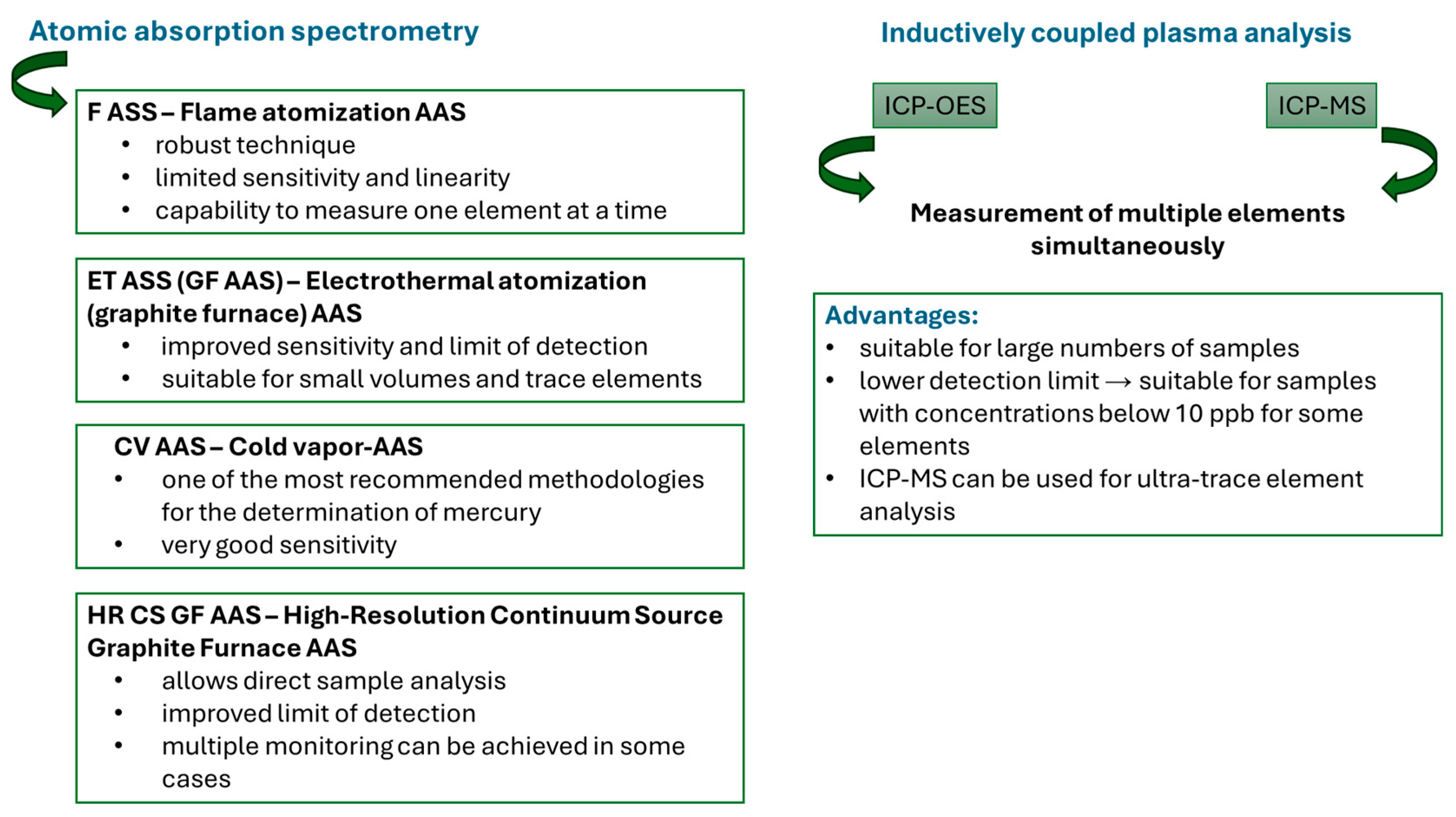
5. Analytical Methods to Identify and Quantify Heavy Metals (Hazard Identification)
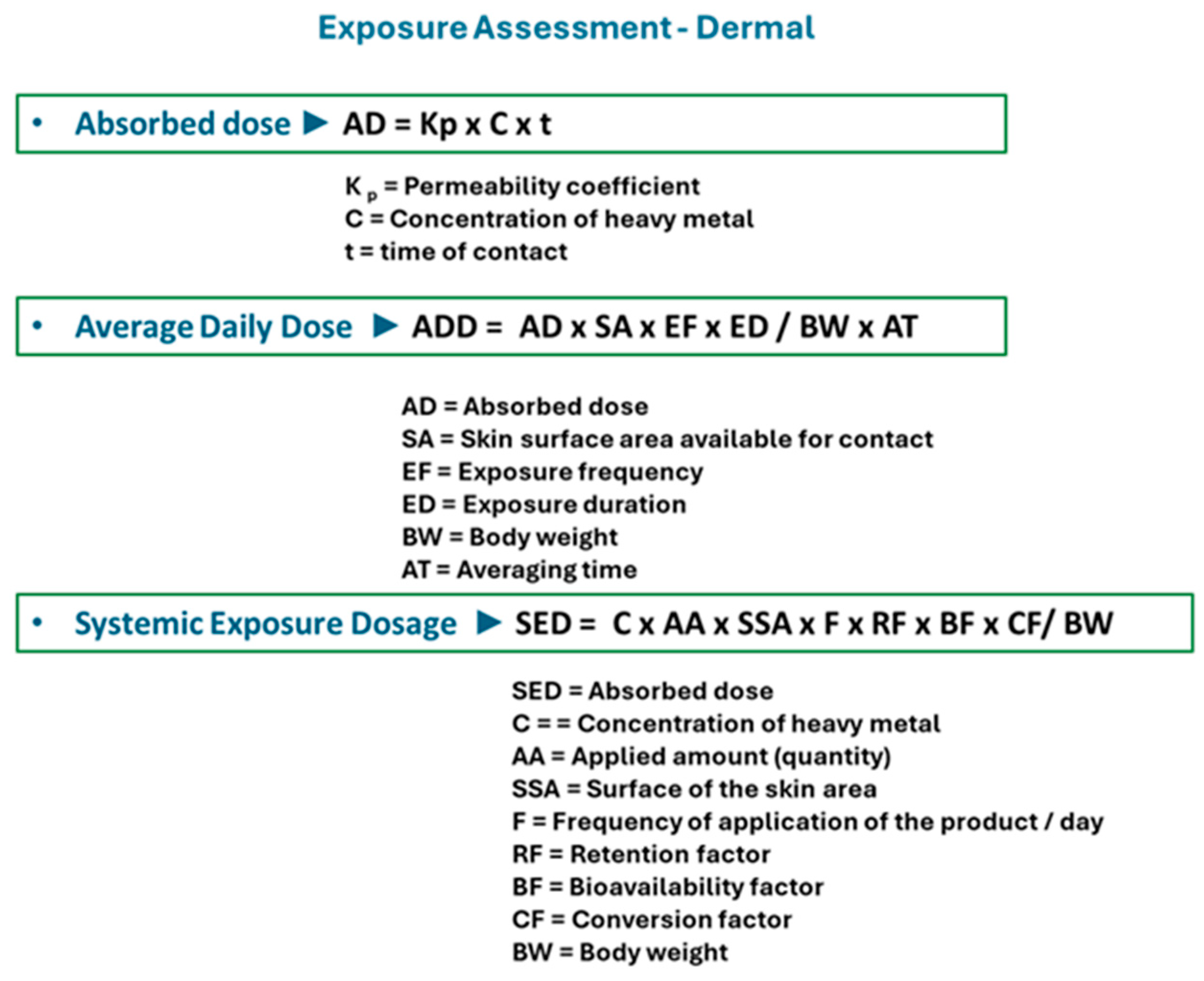
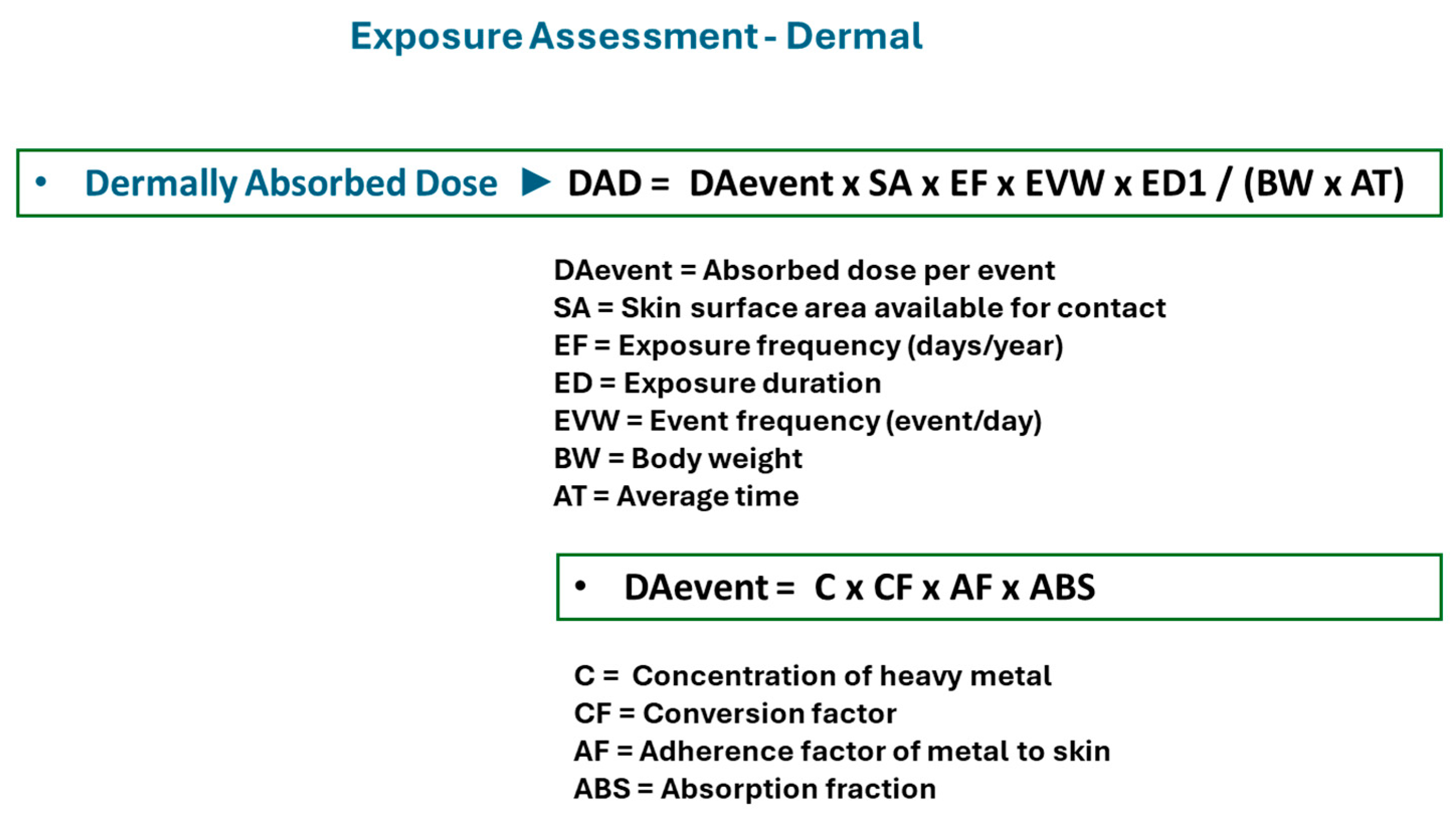
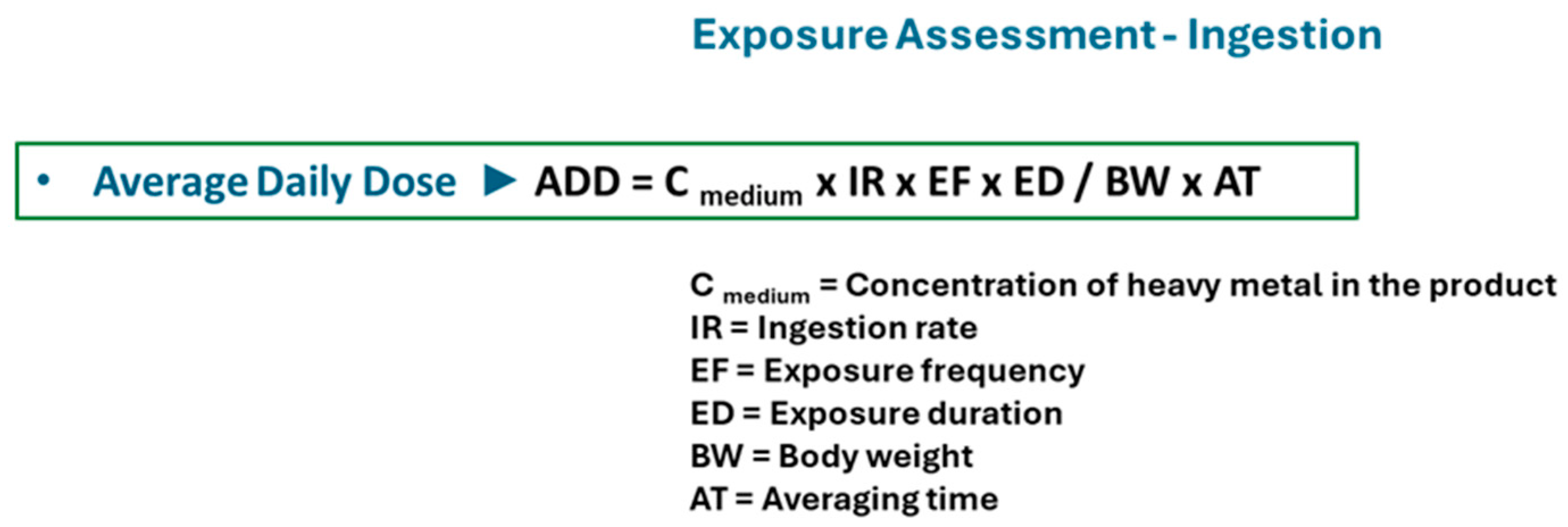
6. Exposure Assessment for Heavy Metals in Cosmetics
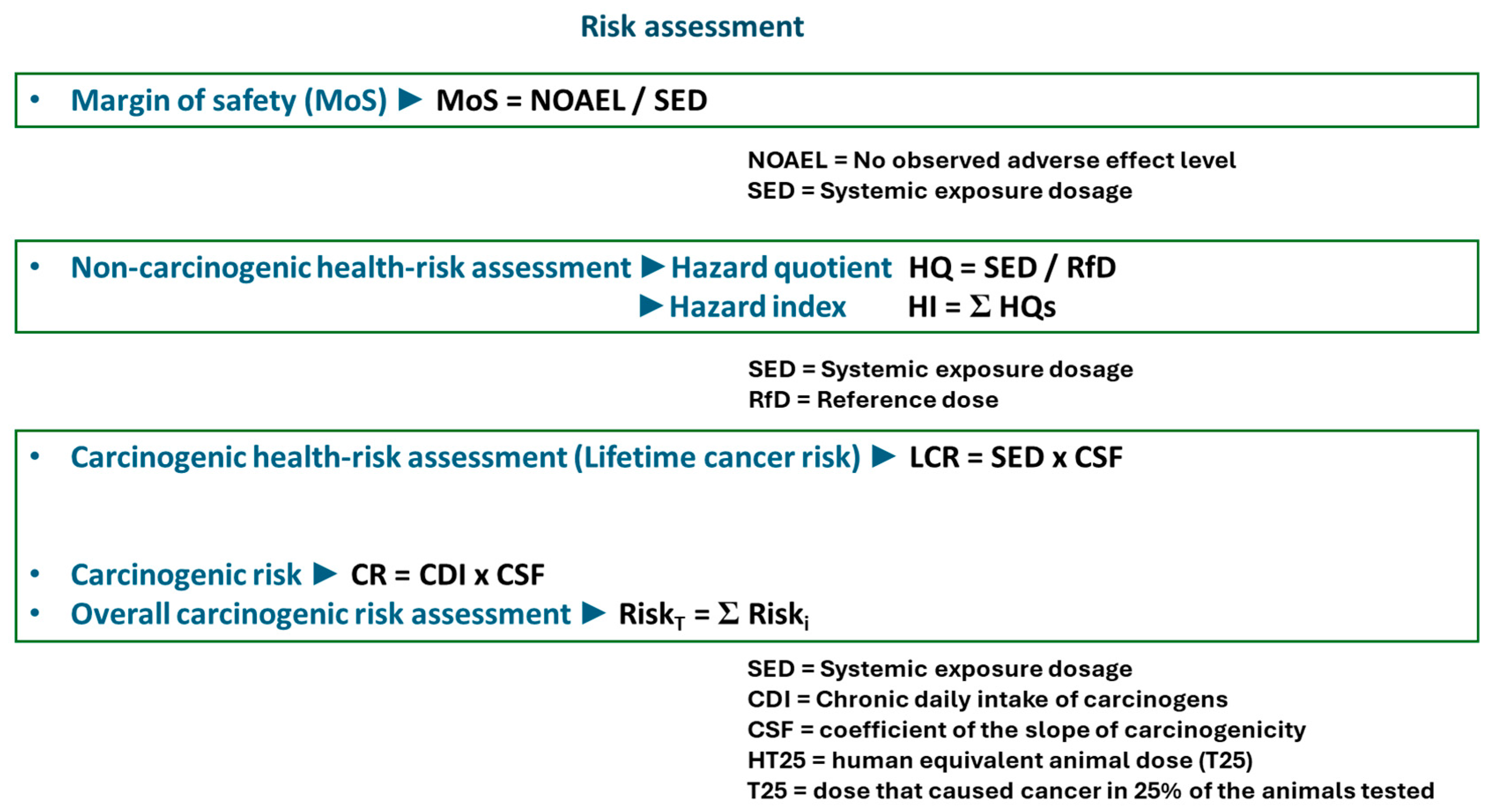
7. Health-Risk Assessment
8. New Approach Methods (NAMs) for Cosmetics Safety Assessment
8.1. Cytotoxicity
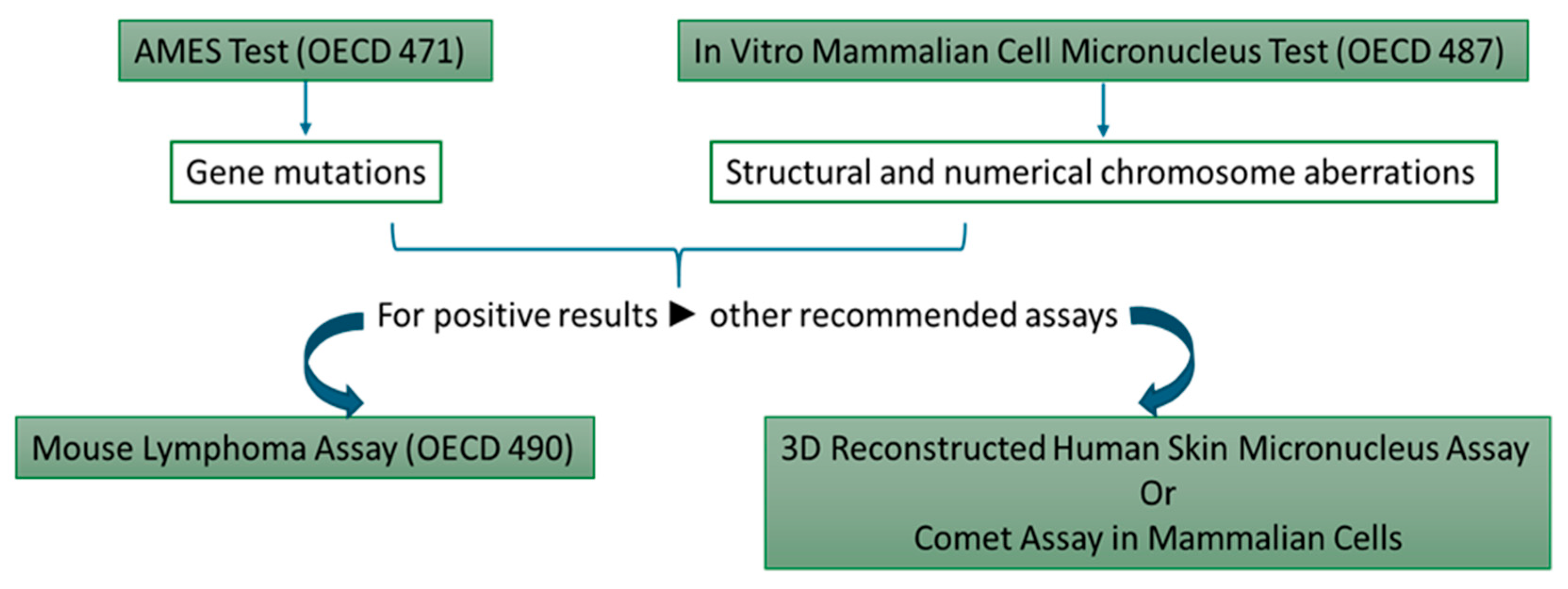
8.2. Genotoxicity and Carcinogenicity
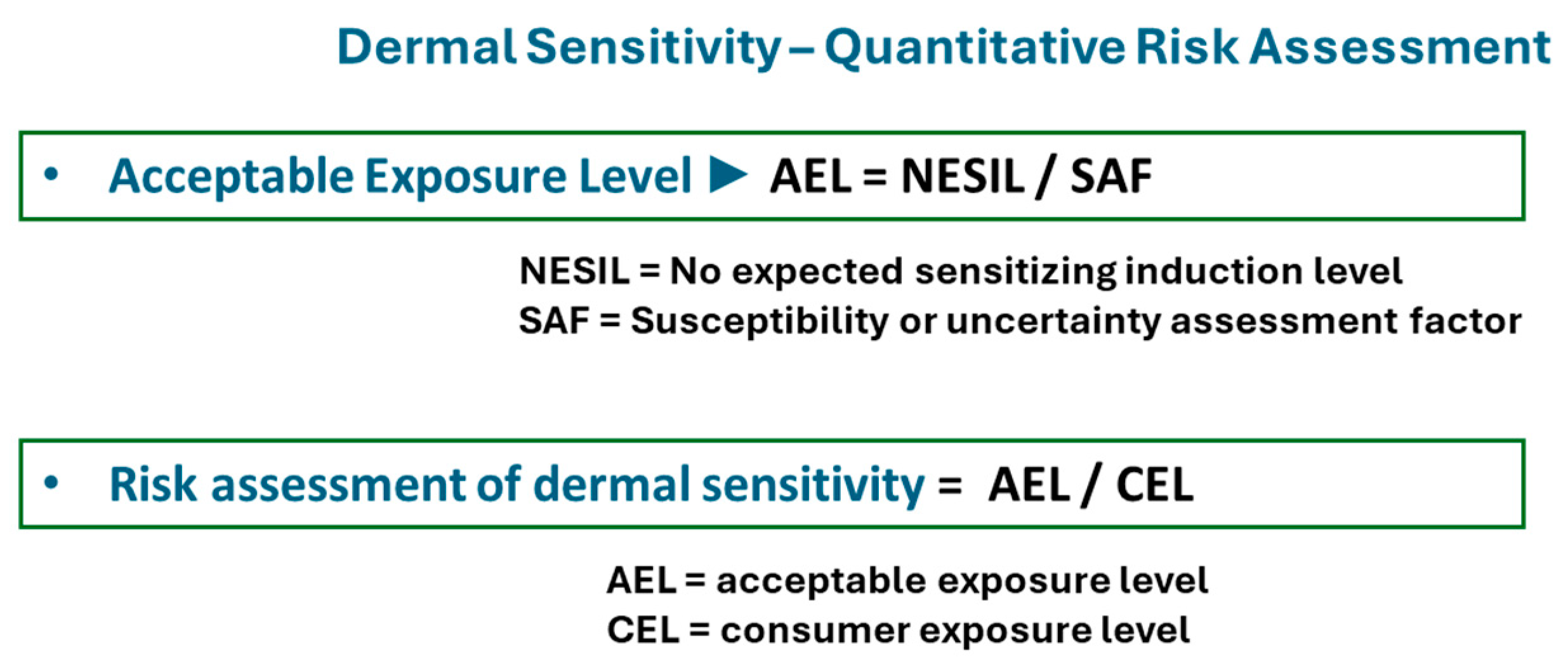
8.3. Irritation, Corrosivity, and Skin Sensitization
9. Conclusions
Author Contributions
Funding
Institutional Review Board Statement
Informed Consent Statement
Data Availability Statement
Conflicts of Interest
Abbreviations
| 5-Br-PAPS | 2-(5-bromo-2-pyridylazo)-5-[N-npropyl-N-(3-sulfopropyl)amino]phenol |
| 8-OHdG | 8-hydroxy-2′-deoxyguanosine |
| AAS | Atomic absorption spectrometry |
| AD | Absorbed dose |
| ADD | Average Daily Dose |
| ADRA | Amino Acid Derivative Reactivity Assay |
| AEL | Acceptable Exposure Level |
| AP-1 | Activator Protein 1 |
| APC | Activation of antigen-presenting cell |
| ARE | Antioxidant Response Element |
| CAT | Catalase |
| CCD | Charge-Coupled Device |
| CCK-8 | Cell Counting Kit-8 |
| CD | Dendritic Cells Maturation Marker |
| CDI | Chronic Daily Intake of Carcinogens |
| CEL | Consumer Exposure Level |
| CHOP | C/EBP Homologous Protein |
| CR | Carcinogenic risk |
| CV-AAS | Cold-vapor atomization atomic absorption spectroscopy |
| DCFH-DA | Dichlorofluorescin diacetate |
| DL | Detection limit |
| DPRA | Direct Peptide Reactivity Assay |
| DμPAD | Distance-based paper microfluidic device |
| EC50 | Half-maximal Effective Concentration |
| ET AAS | Electrothermal Atomic Absorption Spectroscopy |
| F AAS | Flame atomic absorption spectroscopy |
| FASL | Fas ligand |
| FDA | Food and Drug Administration |
| FDCA | Federal Food, Drug, and Cosmetic Act |
| FOSL1 | FOS-like 1 |
| FRET | Fluorescence resonance energy transfer |
| GF AAS | Graphite furnace atomic absorption spectroscopy |
| GHK-Cu | Glycyl-L-histidyl-L-lysine copper complex |
| GSH | Glutathione |
| HI | Hazard index |
| HQ | Hazard quotient |
| HPLC | High-performance liquid chromatography |
| HR CS GF AAS | High-Resolution Continuum Source Graphite Furnace Atomic Absorption Spectrometry |
| HSP27 | Heat shock protein 27 |
| HSPA1A | Gene that encodes Heat shock 70 kDa protein 1 |
| ICP-MS | Inductively coupled plasma mass spectrometry |
| ICP-OES | Inductively coupled plasma optical emission spectroscopy |
| IL | Interleukin |
| ISO | The International Organization for Standardization |
| Keap1 | Kelch-like ECH-associated protein 1 |
| LCR | Lifetime Cancer Risk |
| LDH | Lactate dehydrogenase |
| LIBS | Laser-induced breakdown spectroscopy |
| LOD | Limit of detection |
| LOQ | Limit of quantification |
| mBBr | Monobromobimane |
| MDL | Minimum detectable limit |
| MMP | Metalloproteinase |
| MoCRA | Modernization of Cosmetics Regulation Act |
| MoS | Margin of Safety |
| MT | Metallothionein |
| MTT | 3-(4,5-dimethylthiazol-2-yl)-2,5-diphenyltetrazolium bromide |
| NAM | New Approach Methodologies |
| NESIL | No Expected Sensitization Induction Level |
| NF-κB | Nuclear factor kappa-light-chain-enhancer of activated B cells |
| NOAEL | No-observed-adverse-effect level |
| NP | Nanoparticle |
| Nrf2 | Nuclear Factor, erythroid 2-related factor |
| NRU | Neutral Red Uptake |
| OECD | Organization for Economic Co-operation and Development |
| QRA | Quantitative Risk Assessment |
| QSAR | Quantitative Structure–Activity Relationship |
| RfD | Dermal Reference Dose |
| RHE | Reconstructed Human Epidermis |
| RNPC | Rhodamine-Naphthalimide Conjugate |
| mRNA | Messenger RNA |
| ROS | Reactive Oxygen Species |
| SCCS | Scientific Committee on Consumer Safety |
| SED | Systemic Exposure Dosage |
| SHEDS | Stochastic Human Exposure and Dose Simulation |
| SHEDS-HT | SHEDS-High throughput |
| SOD | Superoxide dismutase |
| TDI | Tolerable daily intake |
| TNF | Tumor Necrosis Factor |
| UPLC | Ultra-performance liquid chromatography |
| USEPA | U.S. Environmental Protection Agency |
| WST | Water-Soluble Tetrazolium salt |
| XRF | X-ray fluorescence |
References
- Zahra, M.; Riaz, L.; Kalsoom, S.; Saleem, A.R.; Taneez, M. Assessment and computational bioevaluation of heavy metals from selected cosmetic products. Environ. Monit. Assess. 2024, 196, 31. [Google Scholar] [CrossRef]
- Swafford, S. Cosmetics. In An Overview of FDA Regulated Products; Elsevier: Amsterdam, The Netherlands, 2025; pp. 257–279. [Google Scholar]
- Piccinini, P.; Piecha, M.; Torrent, S.F. European survey on the content of lead in lip products. J. Pharm. Biomed. Anal. 2013, 76, 225–233. [Google Scholar] [CrossRef] [PubMed]
- Pauwels, M.; Rogiers, V. Human health safety evaluation of cosmetics in the EU: A legally imposed challenge to science. Toxicol. Appl. Pharmacol. 2010, 243, 260–274. [Google Scholar] [CrossRef]
- Ashraf, T.; Taneez, M.; Kalsoom, S.; Irfan, T.; Shafique, M.A. Experimental calculations of metals content in skin-whitening creams and theoretical investigation for their biological effect against tyrosinase enzyme. Biol. Trace Elem. Res. 2021, 199, 3562–3569. [Google Scholar] [CrossRef]
- Jomova, K.; Makova, M.; Alomar, S.Y.; Alwasel, S.H.; Nepovimova, E.; Kuca, K.; Rhodes, C.J.; Valko, M. Essential metals in health and disease. Chem. Biol. Interact. 2022, 367, 110173. [Google Scholar] [CrossRef]
- Kerdoun, M.A.; Zergui, A.; Adjaine, O.E.-k.; Mekhloufi, S. Determination of Lead (Pb) in Kohl cosmetics sold in the south of Algeria. J. Trace Elem. Miner. 2024, 9, 100170. [Google Scholar] [CrossRef]
- Alhussaini, H.M.A.; Hossain, M.A.; Arputhanantham, S.S. Determination of toxic heavy metal content in a whitening creams by using inductively coupled plasma-optical emission spectrometry. Arab. J. Geosci. 2022, 15, 692. [Google Scholar] [CrossRef]
- Ahmad, M.N.; Ashraf, U.-e.-K.; Anjum, M.N.; Kiran, S.; Abrar, S.; Farid, M.F. Identification and quantification of selected heavy metals by ICP-OES in skin whitening creams marketed in Pakistan. Environ. Monit. Assess. 2025, 197, 263. [Google Scholar] [CrossRef]
- Massadeh, A.; El-Khateeb, M.; Ibrahim, S. Evaluation of Cd, Cr, Cu, Ni, and Pb in selected cosmetic products from Jordanian, Sudanese, and Syrian markets. Public Health 2017, 149, 130–137. [Google Scholar] [CrossRef] [PubMed]
- Kicińska, A.; Kowalczyk, M. Health risks from heavy metals in cosmetic products available in the online consumer market. Sci. Rep. 2025, 15, 316. [Google Scholar] [CrossRef]
- Arshad, H.; Mehmood, M.Z.; Shah, M.H.; Abbasi, A.M. Evaluation of heavy metals in cosmetic products and their health risk assessment. Saudi Pharm. J. 2020, 28, 779–790. [Google Scholar] [CrossRef]
- Abendrot, M.; Kalinowska-Lis, U. Zinc-containing compounds for personal care applications. Int. J. Cosmet. Sci. 2018, 40, 319–327. [Google Scholar] [CrossRef]
- Irfan, M.; Shafeeq, A.; Siddiq, U.; Bashir, F.; Ahmad, T.; Athar, M.; Butt, M.T.; Ullah, S.; Mukhtar, A.; Hussien, M. A mechanistic approach for toxicity and risk assessment of heavy metals, hydroquinone and microorganisms in cosmetic creams. J. Hazard. Mater. 2022, 433, 128806. [Google Scholar] [CrossRef]
- Mousavi, Z.; Ziarati, P.; Shariatdoost, A. Determination and safety assessment of lead and cadmium in eye shadows purchased in local market in Tehran. J. Environ. Anal. Toxicol. 2013, 3, 1000193. [Google Scholar]
- Abrar, A.; Nosheen, S.; Perveen, F.; Abbas, M. Evaluation of metals and organic contents in locally available eye shadow products in Lahore, Pakistan. Pak. J. Sci. Ind. Res. Ser. A 2018, 61, 51–55. [Google Scholar] [CrossRef]
- Gyamfi, O.; Aboko, J.; Ankapong, E.; Marfo, J.T.; Awuah-Boateng, N.Y.; Sarpong, K.; Dartey, E. A systematic review of heavy metals contamination in cosmetics. Cutan. Ocul. Toxicol. 2024, 43, 5–12. [Google Scholar] [CrossRef]
- Abed, M.S.; Moosa, A.A.; Alzuhairi, M.A. Heavy metals in cosmetics and tattoos: A review of historical background, health impact, and regulatory limits. J. Hazard. Mater. Adv. 2024, 13, 100390. [Google Scholar] [CrossRef]
- Filella, M.; Martignier, A.; Turner, A. Kohl containing lead (and other toxic elements) is widely available in Europe. Environ. Res. 2020, 187, 109658. [Google Scholar] [CrossRef]
- Al-Ashban, R.; Aslam, M.; Shah, A. Kohl (surma): A toxic traditional eye cosmetic study in Saudi Arabia. Public Health 2004, 118, 292–298. [Google Scholar] [CrossRef] [PubMed]
- Mokashi, A.; Fellows, K.M.; Chin, R.J.; Whittaker, S.G.; Simpson, C.D.; Ceballos, D.M. Lead in traditional eyeliners: An investigation into use and sources of exposure in King County, Washington. PLoS Glob. Public Health 2025, 5, e0004643. [Google Scholar] [CrossRef]
- McMichael, J.; Stoff, B. Surma eye cosmetic in Afghanistan: A potential source of lead toxicity in children. Eur. J. Pediatr. 2018, 177, 265–268. [Google Scholar] [CrossRef]
- Bruyneel, M.; De Caluwé, J.; Des Grottes, J.; Collart, F. Use of kohl and severe lead poisoning in Brussels. Rev. Med. Brux. 2002, 23, 519–522. [Google Scholar] [PubMed]
- Hepp, N.M. Determination of total lead in 400 lipsticks on the US market using a validated microwave-assisted digestion, inductively coupled plasma-mass spectrometric method. J. Cosmet. Sci. 2012, 63, 159–176. [Google Scholar]
- Lead in Cosmetic Lip Products and Externally Applied Cosmetics: Recommended Maximum Level Guidance for Industry. US Department of Health and Human Services Food and Drug Administration Center for Food Safety and Applied Nutrition. 2016. Available online: https://www.fda.gov/regulatory-information/search-fda-guidance-documents/draft-guidance-industry-lead-cosmetic-lip-products-and-externally-applied-cosmetics-recommended (accessed on 1 September 2025).
- Hepp, N.M.; Mindak, W.R.; Gasper, J.W.; Thompson, C.B.; Barrows, J.N. Survey of cosmetics for arsenic, cadmium, chromium, cobalt, lead, mercury, and nickel content. J. Cosmet. Sci. 2014, 65, 125. [Google Scholar]
- Hamann, C.R.; Boonchai, W.; Wen, L.; Sakanashi, E.N.; Chu, C.-Y.; Hamann, K.; Hamann, C.P.; Sinniah, K.; Hamann, D. Spectrometric analysis of mercury content in 549 skin-lightening products: Is mercury toxicity a hidden global health hazard? J. Am. Acad. Dermatol. 2014, 70, 281–287.e283. [Google Scholar] [CrossRef]
- Iwegbue, C.M.; Bassey, F.I.; Obi, G.; Tesi, G.O.; Martincigh, B.S. Concentrations and exposure risks of some metals in facial cosmetics in Nigeria. Toxicol. Rep. 2016, 3, 464–472. [Google Scholar] [CrossRef] [PubMed]
- Corazza, M.; Baldo, F.; Pagnoni, A.; Miscioscia, R.; Virgili, A. Measurement of nickel, cobalt and chromium in toy make-up by atomic absorption spectroscopy. Acta Derm. Venereol. 2009, 89, 130–133. [Google Scholar] [CrossRef] [PubMed]
- Wang, B.; Zheng, Z.; Chen, L.; Zhang, W.; He, Y.; Wu, B.; Ji, R. Transcriptomics reveals key regulatory pathways and genes associated with skin diseases induced by face paint usage. Sci. Total Environ. 2023, 890, 164374. [Google Scholar] [CrossRef]
- Wang, B.; Su, Y.; Tian, L.; Peng, S.; Ji, R. Heavy metals in face paints: Assessment of the health risks to Chinese opera actors. Sci. Total Environ. 2020, 724, 138163. [Google Scholar] [CrossRef]
- Salama, A.K. Assessment of metals in cosmetics commonly used in Saudi Arabia. Environ. Monit. Assess. 2016, 188, 553. [Google Scholar] [CrossRef]
- Balali-Mood, M.; Naseri, K.; Tahergorabi, Z.; Khazdair, M.R.; Sadeghi, M. Toxic mechanisms of five heavy metals: Mercury, lead, chromium, cadmium, and arsenic. Front. Pharmacol. 2021, 12, 643972. [Google Scholar] [CrossRef]
- Jaishankar, M.; Tseten, T.; Anbalagan, N.; Mathew, B.B.; Beeregowda, K.N. Toxicity, mechanism and health effects of some heavy metals. Interdiscip. Toxicol. 2014, 7, 60. [Google Scholar] [CrossRef]
- Mitra, S.; Chakraborty, A.J.; Tareq, A.M.; Emran, T.B.; Nainu, F.; Khusro, A.; Idris, A.M.; Khandaker, M.U.; Osman, H.; Alhumaydhi, F.A. Impact of heavy metals on the environment and human health: Novel therapeutic insights to counter the toxicity. J. King Saud. Univ. Sci. 2022, 34, 101865. [Google Scholar] [CrossRef]
- Borowska, S.; Brzóska, M.M. Metals in cosmetics: Implications for human health. J. Appl. Toxicol. 2015, 35, 551–572. [Google Scholar] [CrossRef]
- Borkow, G. Using copper to improve the well-being of the skin. Curr. Chem. Biol. 2014, 8, 89–102. [Google Scholar] [CrossRef] [PubMed]
- Gaetke, L.M.; Chow-Johnson, H.S.; Chow, C.K. Copper: Toxicological relevance and mechanisms. Arch. Toxicol. 2014, 88, 1929–1938. [Google Scholar] [CrossRef]
- Scott, L.N.; Fiume, M.; Zhu, J.; Bergfeld, W.F.; Belsito, D.V.; Hill, R.A.; Klaassen, C.D.; Liebler, D.C.; Marks, J.G., Jr.; Shank, R.C. Safety Assessment of Zinc Salts as Used in Cosmetics. Int. J. Toxicol. 2024, 43, 5S–69S. [Google Scholar] [CrossRef] [PubMed]
- Schoofs, H.; Schmit, J.; Rink, L. Zinc toxicity: Understanding the limits. Molecules 2024, 29, 3130. [Google Scholar] [CrossRef]
- Sanajou, S.; Şahin, G.; Baydar, T. Aluminium in cosmetics and personal care products. J. Appl. Toxicol. 2021, 41, 1704–1718. [Google Scholar] [CrossRef] [PubMed]
- Darbre, P.D. Aluminium and the human breast. Morphologie 2016, 100, 65–74. [Google Scholar] [CrossRef]
- Mohammed, T.; Mohammed, E.; Bascombe, S. The evaluation of total mercury and arsenic in skin bleaching creams commonly used in Trinidad and Tobago and their potential risk to the people of the Caribbean. J. Public Health Res. 2017, 6, 1097. [Google Scholar] [CrossRef] [PubMed]
- Naujokas, M.F.; Anderson, B.; Ahsan, H.; Aposhian, H.V.; Graziano, J.H.; Thompson, C.; Suk, W.A. The broad scope of health effects from chronic arsenic exposure: Update on a worldwide public health problem. Environ. Health Perspect. 2013, 121, 295–302. [Google Scholar] [CrossRef]
- Chung, J.-Y.; Yu, S.-D.; Hong, Y.-S. Environmental source of arsenic exposure. J. Prev. Med. Public Health 2014, 47, 253. [Google Scholar] [CrossRef]
- Tucovic, D.; Kulas, J.; Mirkov, I.; Popovic, D.; Zolotarevski, L.; Despotovic, M.; Kataranovski, M.; Aleksandrov, A.P. Oral cadmium intake enhances contact allergen-induced skin reaction in rats. Biomed. Environ. Sci. 2022, 35, 1038–1050. [Google Scholar]
- Raza-Naqvi, S.A.; Idrees, F.; Sherazi, T.A.; Anjum-Shahzad, S.; Ul-Hassan, S.; Ashraf, N. Toxicology of heavy metals used in cosmetics. J. Chil. Chem. Soc. 2022, 67, 5615–5622. [Google Scholar] [CrossRef]
- Kamal, S.; Malik, S.; Batool, F.; Rehman, K.; Akash, M.S.H. Metabolomics of heavy metal exposure. Adv. Clin. Chem. 2025, 128, 109–154. [Google Scholar] [PubMed]
- Li, H.; Toh, P.Z.; Tan, J.Y.; Zin, M.T.; Lee, C.-Y.; Li, B.; Leolukman, M.; Bao, H.; Kang, L. Selected biomarkers revealed potential skin toxicity caused by certain copper compounds. Sci. Rep. 2016, 6, 37664. [Google Scholar] [CrossRef]
- Lansdown, A. Iron: A cosmetic constituent but an essential nutrient for healthy skin. Int. J. Cosmet. Sci. 2001, 23, 129–137. [Google Scholar] [CrossRef]
- Sousa, L.; Oliveira, M.M.; Pessôa, M.T.C.; Barbosa, L.A. Iron overload: Effects on cellular biochemistry. Clin. Chim. Acta 2020, 504, 180–189. [Google Scholar] [CrossRef] [PubMed]
- Li, Y.; Fang, Y.; Liu, Z.; Zhang, Y.; Liu, K.; Jiang, L.; Yang, B.; Yang, Y.; Song, Y.; Liu, C. Trace metal lead exposure in typical lip cosmetics from electronic commercial platform: Investigation, health risk assessment and blood lead level analysis. Front. Public Health 2021, 9, 766984. [Google Scholar] [CrossRef]
- Almukainzi, M.; Alotaibi, L.; Abdulwahab, A.; Albukhary, N.; El Mahdy, A.M. Quality and safety investigation of commonly used topical cosmetic preparations. Sci. Rep. 2022, 12, 18299. [Google Scholar] [CrossRef]
- Flora, G.; Gupta, D.; Tiwari, A. Toxicity of lead: A review with recent updates. Interdiscip. Toxicol. 2012, 5, 47. [Google Scholar] [CrossRef] [PubMed]
- Abbas, H.H.; Sakakibara, M.; Sera, K.; Nurgahayu; Andayanie, E. Mercury exposure and health problems of the students using skin-lightening cosmetic products in Makassar, South Sulawesi, Indonesia. Cosmetics 2020, 7, 58. [Google Scholar] [CrossRef]
- Bjørklund, G.; Aaseth, J.; Ajsuvakova, O.P.; Nikonorov, A.A.; Skalny, A.V.; Skalnaya, M.G.; Tinkov, A.A. Molecular interaction between mercury and selenium in neurotoxicity. Coord. Chem. Rev. 2017, 332, 30–37. [Google Scholar] [CrossRef]
- Ahlström, M.G.; Thyssen, J.P.; Wennervaldt, M.; Menné, T.; Johansen, J.D. Nickel allergy and allergic contact dermatitis: A clinical review of immunology, epidemiology, exposure, and treatment. Contact Dermat. 2019, 81, 227–241. [Google Scholar] [CrossRef]
- Vella, A.; Attard, E. Analysis of heavy metal content in conventional and herbal toothpastes available at Maltese pharmacies. Cosmetics 2019, 6, 28. [Google Scholar] [CrossRef]
- Ullah, H.; Aslam, S.; Mustafa, G.; Waseem, A.; de Freitas Marques, M.B.; Gul, Z.; Usman Alvi, M.; Anwar, S.; Sabir, M.; Hamid, A. Potential toxicity of heavy metals in cosmetics: Fake or fact: A review. Int. J. Environ. Anal. Chem. 2024, 104, 8878–8909. [Google Scholar] [CrossRef]
- EUR-Lex. Regulation (EC) No. 1223/2009 of the European Parliament and of the Council; EUR-Lex: Luxembourg, 2009; Volume 342, p. 59. Available online: https://eur-lex.europa.eu/eli/reg/2009/1223/oj/eng (accessed on 9 September 2025).
- Axford, I.; Hill, D.S.; Bird, G.; Singh, D.S.; Macintyre, K. A feasibility study investigating action limits for certain heavy metal impurities in cosmetic products. In Office for Product Safety & Standards; GOV.UK: London, UK, 2023; pp. 1–67. [Google Scholar]
- Modernization of Cosmetics Regulation Act of 2022. US Food and Drug Administration. 2023. Available online: https://www.fda.gov/cosmetics/cosmetics-laws-regulations/modernization-cosmetics-regulation-act-2022-mocra (accessed on 9 September 2025).
- Available online: https://www.canada.ca/en/health-canada/services/consumer-product-safety/reports-publications/industry-professionals/guidance-heavy-metal-impurities-cosmetics.html (accessed on 10 September 2025).
- Shrader, D.; Hobbins, W. The determination of mercury by cold vapor atomic absorption. In Varian AA Work; Agilent Technologies, Inc.: Santa Clara, CA, USA, 1983; 5p. [Google Scholar]
- Ho, Y.B.; Abdullah, N.H.; Hamsan, H.; Tan, E.S.S. Mercury contamination in facial skin lightening creams and its health risks to user. Regul. Toxicol. Pharmacol. 2017, 88, 72–76. [Google Scholar] [CrossRef]
- Available online: https://www.iso.org/standard/70854.html (accessed on 10 September 2025).
- Marguí, E.; Eichert, D.; Jablan, J.; Bilo, F.; Depero, L.E.; Pejović-Milić, A.; Gross, A.; Stosnach, H.; Kubala-Kukuś, A.; Banaś, D. An overview of the applications of total reflection X-ray fluorescence spectrometry in food, cosmetics, and pharmaceutical research. J. Anal. At. Spectrom. 2024, 39, 1700–1719. [Google Scholar] [CrossRef]
- Resano, M.; Aramendía, M.; Belarra, M.A. High-resolution continuum source graphite furnace atomic absorption spectrometry for direct analysis of solid samples and complex materials: A tutorial review. Anal. Bioanal. Chem. 2014, 29, 2229–2250. [Google Scholar] [CrossRef]
- Zmozinski, A.V.; Pretto, T.; Borges, A.R.; Duarte, Á.T.; Vale, M.G.R. Determination of Pb and Cr in sunscreen samples by high-resolution continuum source graphite furnace atomic absorption spectrometry and direct analysis. Microchem. J. 2016, 128, 89–94. [Google Scholar] [CrossRef]
- Resano, M.; García-Ruiz, E. High-resolution continuum source graphite furnace atomic absorption spectrometry: Is it as good as it sounds? A critical review. Anal. Bioanal. Chem. 2011, 399, 323–330. [Google Scholar] [CrossRef]
- Krüger, D.; Butcher, D.J.; Baecker, D. Recent applications of graphite furnace atomic absorption spectrometry for the analysis of medicinal plants and plant-based remedies. Appl. Spectrosc. Rev. 2025, 60, 957–977. [Google Scholar] [CrossRef]
- Pasias, I.N.; Rousis, N.I.; Psoma, A.K.; Thomaidis, N.S. Simultaneous or sequential multi-element graphite furnace atomic absorption spectrometry techniques: Advances within the last 20 years. At. Spectrosc. 2021, 42, 310–327. [Google Scholar] [CrossRef]
- Gunduz, S.; Akman, S. Investigation of lead contents in lipsticks by solid sampling high resolution continuum source electrothermal atomic absorption spectrometry. Regul. Toxicol. Pharmacol. 2013, 65, 34–37. [Google Scholar] [CrossRef] [PubMed]
- Saah, S.A.; Boadi, N.O.; Sakyi, P.O.; Smith, E.Q. Human health risks of lead, cadmium, and other heavy metals in lipsticks. Heliyon 2024, 10, e40576. [Google Scholar] [CrossRef] [PubMed]
- Bairi, V.G.; Lim, J.-H.; Quevedo, I.R.; Mudalige, T.K.; Linder, S.W. Portable X-ray fluorescence spectroscopy as a rapid screening technique for analysis of TiO2 and ZnO in sunscreens. Acta B At. Spectrosc. 2016, 116, 21–27. [Google Scholar] [CrossRef]
- Shen, Y.; Nie, C.; Wei, Y.; Zheng, Z.; Xu, Z.-L.; Xiang, P. FRET-based innovative assays for precise detection of the residual heavy metals in food and agriculture-related matrices. Coord. Chem. Rev. 2022, 469, 214676. [Google Scholar] [CrossRef]
- Verma, A.K.; Noumani, A.; Yadav, A.K.; Solanki, P.R. FRET based biosensor: Principle applications recent advances and challenges. Diagnostics 2023, 13, 1375. [Google Scholar] [CrossRef]
- Ghosh, A.; Das, S.; Kundu, S.; Maiti, P.K.; Sahoo, P. Rapid estimation of lead in lipsticks. Sens. Actuators B Chem. 2018, 266, 80–85. [Google Scholar] [CrossRef]
- Radwan, A.; El-Sewify, I.; Azzazy, H. Monitoring of cobalt and cadmium in daily cosmetics using powder and paper optical chemosensors. ACS Omega 2022, 7, 15739–15750. [Google Scholar] [CrossRef]
- Almahri, A.; El-Metwaly, N.M. Smartphone-enabled mesoporous silica nanotube chemosensors for quick and selective mercury detection in water and cosmetics. Arab. J. Chem. 2024, 17, 105984. [Google Scholar] [CrossRef]
- Radwan, A.; El-Sewify, I.M.; Shahat, A.; Azzazy, H.M.; Khalil, M.M.; El-Shahat, M.F. Multiuse Al-MOF chemosensors for visual detection and removal of mercury ions in water and skin-whitening cosmetics. ACS Sustain. Chem. Eng. 2020, 8, 15097–15107. [Google Scholar] [CrossRef]
- Nuchtavorn, N.; Rypar, T.; Nejdl, L.; Vaculovicova, M.; Macka, M. Distance-based detection in analytical flow devices: From gas detection tubes to microfluidic chips and microfluidic paper-based analytical devices. TrAC Trends Anal. Chem. 2022, 150, 116581. [Google Scholar] [CrossRef]
- Lisowski, P.; Zarzycki, P.K. Microfluidic paper-based analytical devices (μPADs) and micro total analysis systems (μTAS): Development, applications and future trends. Chromatographia 2013, 76, 1201–1214. [Google Scholar] [CrossRef]
- Manmana, Y.; Macka, M.; Nuchtavorn, N. Distance-based paper microfluidic devices for rapid visual quantification of heavy metals in herbal supplements and cosmetics. RSC Adv. 2024, 14, 36142–36151. [Google Scholar] [CrossRef]
- Fakhri, N.; Hosseini, M.; Tavakoli, O. Aptamer-based colorimetric determination of Pb2+ using a paper-based microfluidic platform. Anal. Methods 2018, 10, 4438–4444. [Google Scholar] [CrossRef]
- Pai, S.; Binu, A.; Lavanya, G.; Harikumar, M.; Herga, S.K.; Citartan, M.; Mani, N.K. Advancements of paper-based microfluidics and organ-on-a-chip models in cosmetics hazards. RSC Adv. 2025, 15, 10319–10335. [Google Scholar] [CrossRef] [PubMed]
- Saadati, A.; Farshchi, F.; Hasanzadeh, M.; Liu, Y.; Seidi, F. Colorimetric and naked-eye detection of arsenic (iii) using a paper-based microfluidic device decorated with silver nanoparticles. RSC Adv. 2022, 12, 21836–21850. [Google Scholar] [CrossRef] [PubMed]
- Fu, L.-M.; Shih, M.-K.; Hsieh, C.-W.; Ju, W.-J.; Tain, Y.-L.; Cheng, K.-C.; Hsu, J.-H.; Chen, Y.-W.; Hou, C.-Y. Design of an integrated microfluidic paper-based chip and inspection machine for the detection of mercury in food with silver nanoparticles. Biosensors 2021, 11, 491. [Google Scholar] [CrossRef]
- Salvador, A.; Pascual-Martı, M.; Adell, J.; Requeni, A.; March, J. Analytical methodologies for atomic spectrometric determination of metallic oxides in UV sunscreen creams. J. Pharm. Biomed. Anal. 2000, 22, 301–306. [Google Scholar] [CrossRef]
- Ullah, H.; Noreen, S.; Rehman, A.; Waseem, A.; Zubair, S.; Adnan, M.; Ahmad, I. Comparative study of heavy metals content in cosmetic products of different countries marketed in Khyber Pakhtunkhwa, Pakistan. Arab. J. Chem. 2017, 10, 10–18. [Google Scholar] [CrossRef]
- Volpe, M.; Nazzaro, M.; Coppola, R.; Rapuano, F.; Aquino, R.P. Determination and assessments of selected heavy metals in eye shadow cosmetics from China, Italy, and USA. Microchem. J. 2012, 101, 65–69. [Google Scholar] [CrossRef]
- Rahil, S.; Elshara, I.; Ahmida, N.; Ahmida, M. Determination of some heavy metals in cosmetic products collected from Benghazi-Libya markets during 2016. Libyan Int. Med. Univ. J. 2019, 4, 10–17. [Google Scholar] [CrossRef]
- Ernest, E.; Onyeka, O.; Aniobi, C.; Ikedinobi, C.; Alieze, A. Analysis of heavy metals in different brands of lipsticks sold in Enugu Metropolis, Nigeria, and their potential health risks to users. J. Chem. Biol. 2019, 9, 402–411. [Google Scholar]
- Hoque, A.; Tanbi, T.A.; Saha, N.; Howlader, S.; Sarker, N.; Chowdhury, A.I.; Bandyopadhyay, A.; Islam, S.; Bakar, M.A.; Alam, N.E. Assessing trace metal-based human health risks for commonly used body soaps in Bangladesh. Biol. Trace Elem. Res. 2024, 202, 4802–4812. [Google Scholar] [CrossRef]
- Usman, U.L.; Danhauwa, S.A.; Sajad, S.; Banerjee, S. Assessment of heavy metal in some commonly used cosmetic product and associated health risk in Nigeria: Threat to public health. In Proceedings of the Macromolecular Symposia; Wiley Online Library: Hoboken, NJ, USA, 2021; p. 2100161. [Google Scholar]
- Iwegbue, C.M.; Bassey, F.I.; Tesi, G.O.; Onyeloni, S.O.; Obi, G.; Martincigh, B.S. Safety evaluation of metal exposure from commonly used moisturizing and skin-lightening creams in Nigeria. Regul. Toxicol. Pharmacol. 2015, 71, 484–490. [Google Scholar] [CrossRef] [PubMed]
- Baroi, A.; Siddique, M.A.B.; Akbor, M.A.; Chowdhury, F.N.; Jamil, M.A.; Uddin, M.K.; Rahman, M.M. Exposure and health risks of metals in imported and local brands’ lipsticks and eye pencils from Bangladesh. Environ. Sci. Pollut. Res. Int. 2023, 30, 46222–46233. [Google Scholar] [CrossRef] [PubMed]
- Alam, M.; Akhter, M.; Mazumder, B.; Ferdous, A.; Hossain, M.; Dafader, N.; Ahmed, F.; Kundu, S.; Taheri, T.; Atique Ullah, A. Assessment of some heavy metals in selected cosmetics commonly used in Bangladesh and human health risk. J. Anal. Sci. Technol. 2019, 10, 2. [Google Scholar] [CrossRef]
- Gyamfi, O.; Aboko, J.; Ankapong, E.; Marfo, J.T.; Awuah-Boateng, N.Y.; Agyei, V.; Sarpong, K.; Dartey, E. Heavy metals in local and imported cosmetics in Ghana and their health risk assessment. Cogent Public Health 2023, 10, 2217693. [Google Scholar] [CrossRef]
- Fischer, A.; Brodziak-Dopierała, B.; Jańska, W.; Jeyranyan, L.; Malara, B. Analysis of Mercury Concentration in Cosmetic Clays. Toxics 2025, 13, 507. [Google Scholar] [CrossRef] [PubMed]
- Orisakwe, O.E.; Otaraku, J.O. Metal concentrations in cosmetics commonly used in Nigeria. Sci. World J. 2013, 2013, 959637. [Google Scholar] [CrossRef] [PubMed]
- Castilho, I.N.; de Quadros, D.P.; Mior, R.; Welz, B.; Carasek, E.; Borges, D.L. Determination of aluminum in moisturizing body lotions using graphite furnace atomic absorption spectrometry. Anal. Methods 2015, 7, 9636–9640. [Google Scholar] [CrossRef]
- Soares, A.R.; Nascentes, C.C. Development of a simple method for the determination of lead in lipstick using alkaline solubilization and graphite furnace atomic absorption spectrometry. Talanta 2013, 105, 272–277. [Google Scholar] [CrossRef]
- Ricketts, P.; Knight, C.; Gordon, A.; Boischio, A.; Voutchkov, M. Mercury exposure associated with use of skin lightening products in Jamaica. J. Health Pollut. 2020, 10, 200601. [Google Scholar] [CrossRef]
- Agorku, E.S.; Kwaansa-Ansah, E.E.; Voegborlo, R.B.; Amegbletor, P.; Opoku, F. Mercury and hydroquinone content of skin toning creams and cosmetic soaps, and the potential risks to the health of Ghanaian women. SpringerPlus 2016, 5, 319. [Google Scholar] [CrossRef]
- Bocca, B.; Forte, G.; Petrucci, F.; Cristaudo, A. Levels of nickel and other potentially allergenic metals in Ni-tested commercial body creams. J. Pharm. Biomed. Anal. 2007, 44, 1197–1202. [Google Scholar] [CrossRef]
- Pawlaczyk, A.; Gajek, M.; Balcerek, M.; Szynkowska-Jóźwik, M.I. Determination of metallic impurities by ICP-MS technique in eyeshadows purchased in Poland. Part I. Molecules 2021, 26, 6753. [Google Scholar] [CrossRef]
- Almugren, K.; Sani, S.A.; Azim, M.M.; Ismail, N.; Khandaker, M.U.; Alsufyani, S.J.; Alkallas, F.; Almajid, H.F.; Bradley, D.; Naseer, K. The presence of NORMs and toxic heavy metals in talcum baby powder. J. Radiat. Res. Appl. Sci. 2023, 16, 100660. [Google Scholar] [CrossRef]
- Shaaban, H.; Issa, S.Y.; Ahmad, R.; Mostafa, A.; Refai, S.; Alkharraa, N.; Albaqshi, B.T.; Hussien, D.; Alqarni, A.M. Investigation on the elemental profiles of lip cosmetic products: Concentrations, distribution and assessment of potential carcinogenic and non-carcinogenic human health risk for consumer safety. Saudi Pharm. J. 2022, 30, 779–792. [Google Scholar] [CrossRef] [PubMed]
- Hepp, N.M.; Mindak, W.R.; Cheng, J. Determination of total lead in lipstick: Development and validation of a microwave-assisted digestion, inductively coupled plasma-mass spectrometric method. J. Cosmet. Sci. 2009, 60, 405. [Google Scholar] [CrossRef] [PubMed]
- Li, Y.; Liu, Z.; Zhang, Y.; Jiang, L.; Cai, Y.; Chen, X.; Zhou, X.; Li, H.; Li, F.; Zhang, J. Investigation and probabilistic health risk assessment of trace elements in good sale lip cosmetics crawled by Python from Chinese e-commerce market. J. Hazard. Mater. 2021, 405, 124279. [Google Scholar] [CrossRef]
- Lim, D.S.; Roh, T.H.; Kim, M.K.; Kwon, Y.C.; Choi, S.M.; Kwack, S.J.; Kim, K.B.; Yoon, S.; Kim, H.S.; Lee, B.-M. Non-cancer, cancer, and dermal sensitization risk assessment of heavy metals in cosmetics. J. Toxicol. Environ. Health A 2018, 81, 432–452. [Google Scholar] [CrossRef]
- Alvarez-Gonzales, R.L.; Yufra-Illanes, E.E.; Villanueva-Salas, J.A.; Choquenaira-Quispe, C.; Corzo-Salas-De-Valdivia, A.; Malpartida-Quispe, F.M.; Gonzales-Condori, E.G. Characterization of Commercial Eye Shadows with Emphasis on Heavy Metal Exposure Risks to Human Health. Cosmetics 2025, 12, 185. [Google Scholar] [CrossRef]
- Mercan, S.; Zengin, S.; Kilic, M.D.; Yayla, M. Theoretical health risk assessment based on potentially toxic element profiling of cosmetic products in Istanbul street bazaars. Biol. Trace Elem. Res. 2024, 202, 1816–1828. [Google Scholar] [CrossRef]
- Khalili, F.; Mahvi, A.H.; Nasseri, S.; Yunesian, M.; Yaseri, M.; Djahed, B. Health risk assessment of dermal exposure to heavy metals content of chemical hair dyes. Iran. J. Public Health 2019, 48, 902. [Google Scholar] [CrossRef]
- Lara-Torres, S.; Figueiredo, D.; Paz, S.; Gutiérrez, A.J.; Rubio, C.; González-Weller, D.; Revert, C.; Hardisson, A. Determination and risk assessment of toxic metals in lipsticks from Europe and China. J. Trace Elem. Med. Biol. 2021, 67, 126792. [Google Scholar] [CrossRef] [PubMed]
- Zakaria, A.; Ho, Y.B. Heavy metals contamination in lipsticks and their associated health risks to lipstick consumers. Regul. Toxicol. Pharmacol. 2015, 73, 191–195. [Google Scholar] [CrossRef]
- Kim, S.; Choi, C.; Lee, M.; Hwang, I. Determination of heavy metals and risk assessment in nail cosmetics sold in Seoul, Korea. Cutan. Ocul. Toxicol. 2023, 42, 131–136. [Google Scholar] [CrossRef]
- Mostafaii, G.; Karamali, F.; AbooSaedi, Z.; Atoof, F.; Hesami Arani, M.; Miranzadeh, M.B. Determination of heavy metals in hair dye sale in Iranian market: Dermal sensitivity and carcinogenicity assessment. Biol. Trace Elem. Res. 2022, 200, 1464–1472. [Google Scholar] [CrossRef] [PubMed]
- Dinake, P.; Motswetla, O.; Kereeditse, T.T.; Kelebemang, R. Assessment of level of heavy metals in cosmetics. Toxicol. Res. Appl. 2023, 7, 23978473231156620. [Google Scholar] [CrossRef]
- Ahmed, M.; Ahmad, M.; Sohail, A.; Sanaullah, M.; Saeed, A.; Qamar, S.; Wani, T.A.; Zargar, S.; Alkahtani, H.M.; Khalid, K. Multivariate statistical analysis of cosmetics due to potentially toxic/heavy metal (loid) contamination: Source identification for sustainability and human health risk assessment. Sustainability 2024, 16, 6127. [Google Scholar] [CrossRef]
- Daar, E.; Alsubaie, A.; Almugren, K.; Barnes, S.; Alanazi, A.; Alyahyawi, A.; Alomairy, S.; Al-Sulaiti, H.; Bradley, D. X-ray fluorescence analysis of Pb, Fe and Zn in kohl. Results Phys. 2017, 7, 3590–3595. [Google Scholar] [CrossRef]
- Bastos, C.M.; Rocha, F. Assessment of some clay-based products available on market and designed for topical use. Geosciences 2022, 12, 453. [Google Scholar] [CrossRef]
- Gondal, M.; Seddigi, Z.; Nasr, M.; Gondal, B. Spectroscopic detection of health hazardous contaminants in lipstick using laser induced breakdown spectroscopy. J. Hazard. Mater. 2010, 175, 726–732. [Google Scholar] [CrossRef]
- Weldon, M.M.; Smolinski, M.S.; Maroufi, A.; Hasty, B.W.; Gilliss, D.L.; Boulanger, L.L.; Balluz, L.S.; Dutton, R.J. Mercury poisoning associated with a Mexican beauty cream. West. J. Med. 2000, 173, 15. [Google Scholar] [CrossRef]
- Guillard, O.; Fauconneau, B.; Olichon, D.; Dedieu, G.; Deloncle, R. Hyperaluminemia in a woman using an aluminum-containing antiperspirant for 4 years. Am. J. Med. 2004, 117, 956–959. [Google Scholar] [CrossRef] [PubMed]
- Ramli, F.F. Clinical management of chronic mercury intoxication secondary to skin lightening products: A proposed algorithm. Bosn. J. Basic Med. Sci. 2021, 21, 261. [Google Scholar] [CrossRef] [PubMed]
- Lin, S.-H.; Wang, X.-R.; Yu, I.T.S.; Tang, W.N.; Li, J.; Liu, B.O. Lead powder use for skin care and elevated blood lead level among children in a Chinese rural area. J. Expo. Sci. Environ. Epidemiol. 2012, 22, 198–203. [Google Scholar] [CrossRef] [PubMed]
- Soo, Y.O.-Y.; Chow, K.-M.; Lam, C.W.-K.; Lai, F.M.-M.; Szeto, C.-C.; Chan, M.H.-M.; Li, P.K.-T. A whitened face woman with nephrotic syndrome. Am. J. Kidney Dis. 2003, 41, 250–253. [Google Scholar] [CrossRef]
- Dickenson, C.A.; Woodruff, T.J.; Stotland, N.E.; Dobraca, D.; Das, R. Elevated mercury levels in pregnant woman linked to skin cream from Mexico. Am. J. Obstet. Gynecol. 2013, 209, e4–e5. [Google Scholar] [CrossRef] [PubMed]
- Available online: https://www.epa.gov/expobox/exposure-assessment-tools-routes (accessed on 3 September 2025).
- Available online: https://www.epa.gov/chemical-research/stochastic-human-exposure-and-dose-simulation-sheds (accessed on 3 September 2025).
- Available online: https://www.cremeglobal.com/expert-models/ (accessed on 3 September 2025).
- Bernauer, U.; Bodin, L.; Chaudhry, Q.; Coenraads, P.; Dusinska, M.; Ezendam, J.; Gaffet, E.; Galli, C.; Panteri, E.; Rogiers, V. The SCCS Notes of Guidance for the Testing of Cosmetic Ingredients and Their Safety Evaluation-12th Revision-SCCS/1647/22; Commission Européenne: Luxembourg, 2023; Available online: https://health.ec.europa.eu/publications/sccs-notes-guidance-testing-cosmetic-ingredients-and-their-safety-evaluation-12th-revision_en (accessed on 1 September 2025).
- Available online: https://www.oecd.org/en/publications/2004/11/test-no-428-skin-absorption-in-vitro-method_g1gh4b52.html (accessed on 3 September 2025).
- Filon, F.L.; D’Agostin, F.; Crosera, M.; Adami, G.; Bovenzi, M.; Maina, G. In vitro absorption of metal powders through intact and damaged human skin. Toxicol. Vitr. 2009, 23, 574–579. [Google Scholar] [CrossRef]
- Midander, K.; Schenk, L.; Julander, A. A novel approach to monitor skin permeation of metals in vitro. Regul. Toxicol. Pharmacol. 2020, 115, 104693. [Google Scholar] [CrossRef]
- Tanojo, H.; Hostýnek, J.J.; Mountford, H.S.; Maibach, H.I. In vitro permeation of nickel salts through human stratum corneum. Acta Derm. Venereol. 2001, 81, 19–23. [Google Scholar] [CrossRef]
- Tibaldi, R.; ten Berge, W.; Drolet, D. Dermal absorption of chemicals: Estimation by IH SkinPerm. J. Occup. Environ. Hyg. 2014, 11, 19–31. [Google Scholar] [CrossRef]
- Hostýnek, J. Flux of a nickel (II) salt versus a nickel (II) soap across human skin in vitro. Exog. Dermatol. 2003, 2, 216–222. [Google Scholar] [CrossRef]
- Available online: https://www.epa.gov/expobox/exposure-assessment-tools-routes-dermal (accessed on 6 September 2025).
- Musazzi, U.M.; Santini, B.; Selmin, F.; Marini, V.; Corsi, F.; Allevi, R.; Ferretti, A.M.; Prosperi, D.; Cilurzo, F.; Colombo, M. Impact of semi-solid formulations on skin penetration of iron oxide nanoparticles. J. Nanobiotechnol. 2017, 15, 14. [Google Scholar] [CrossRef]
- Filon, F.L.; Mauro, M.; Adami, G.; Bovenzi, M.; Crosera, M. Nanoparticles skin absorption: New aspects for a safety profile evaluation. Regul. Toxicol. Pharmacol. 2015, 72, 310–322. [Google Scholar] [CrossRef]
- Franken, A.; Eloff, F.C.; Du Plessis, J.; Du Plessis, J.L. In vitro permeation of metals through human skin: A review and recommendations. Chem. Res. Toxicol. 2015, 28, 2237–2249. [Google Scholar] [CrossRef] [PubMed]
- Mohammed, Y.H.; Holmes, A.; Haridass, I.N.; Sanchez, W.Y.; Studier, H.; Grice, J.E.; Benson, H.A.; Roberts, M.S. Support for the safe use of zinc oxide nanoparticle sunscreens: Lack of skin penetration or cellular toxicity after repeated application in volunteers. J. Investig. Dermatol. 2019, 139, 308–315. [Google Scholar] [CrossRef] [PubMed]
- Wright, P.F. Realistic exposure study assists risk assessments of ZnO nanoparticle sunscreens and allays safety concerns. J. Investig. Dermatol. 2019, 139, 277–278. [Google Scholar] [CrossRef]
- Pineau, A.; Guillard, O.; Fauconneau, B.; Favreau, F.; Marty, M.-H.; Gaudin, A.; Vincent, C.M.; Marrauld, A.; Marty, J.-P. In vitro study of percutaneous absorption of aluminum from antiperspirants through human skin in the Franz™ diffusion cell. J. Inorg. Biochem. 2012, 110, 21–26. [Google Scholar] [CrossRef] [PubMed]
- Ernstoff, A.S.; Fantke, P.; Csiszar, S.A.; Henderson, A.D.; Chung, S.; Jolliet, O. Multi-pathway exposure modeling of chemicals in cosmetics with application to shampoo. Environ. Int. 2016, 92, 87–96. [Google Scholar] [CrossRef] [PubMed]
- Santini, B.; Zanoni, I.; Marzi, R.; Cigni, C.; Bedoni, M.; Gramatica, F.; Palugan, L.; Corsi, F.; Granucci, F.; Colombo, M. Cream formulation impact on topical administration of engineered colloidal nanoparticles. PLoS ONE 2015, 10, e0126366. [Google Scholar] [CrossRef]
- Meng, Y.; Li, Y.; Zheng, N.; Hou, S.; Li, Y.; Wang, S.; Sun, S.; Hua, X.; Liang, D. Potential health risks of metals in skin care products used by Chinese consumers aged 19–29 years. Ecotoxicol. Environ. Saf. 2021, 216, 112184. [Google Scholar] [CrossRef] [PubMed]
- Gomez-Berrada, M.-P.; Ficheux, A.-S.; Rakotomalala, S.; Guillou, S.; Bellec, M.; De Javel, D.; Roudot, A.-C.; Ferret, P.-J. Consumption and exposure assessment to sunscreen products: A key point for safety assessment. Food Chem. Toxicol. 2018, 114, 170–179. [Google Scholar] [CrossRef]
- Ficheux, A.; Chevillotte, G.; Wesolek, N.; Morisset, T.; Dornic, N.; Bernard, A.; Bertho, A.; Romanet, A.; Leroy, L.; Mercat, A. Consumption of cosmetic products by the French population second part: Amount data. Food Chem. Toxicol. 2016, 90, 130–141. [Google Scholar] [CrossRef]
- Ficheux, A.; Wesolek, N.; Chevillotte, G.; Roudot, A. Consumption of cosmetic products by the French population. First part: Frequency data. Food Chem. Toxicol. 2015, 78, 159–169. [Google Scholar]
- Ficheux, A.; Bernard, A.; Chevillotte, G.; Dornic, N.; Roudot, A. Probabilistic assessment of exposure to hair cosmetic products by the French population. Food Chem. Toxicol. 2016, 92, 205–216. [Google Scholar] [CrossRef]
- Sun, C.-C.; Wong, T.-T.; Hwang, Y.-H.; Chao, K.-Y.; Jee, S.-H.; Wang, J.-D. Percutaneous absorption of inorganic lead compounds. AIHA J. 2002, 63, 641–646. [Google Scholar] [CrossRef]
- Kettelarij, J.; Midander, K.; Lidén, C.; Bottai, M.; Julander, A. Neglected exposure route: Cobalt on skin and its associations with urinary cobalt levels. Occup. Environ. Med. 2018, 75, 837–842. [Google Scholar] [CrossRef]
- Klasson, M.; Lindberg, M.; Bryngelsson, I.L.; Arvidsson, H.; Pettersson, C.; Husby, B.; Westberg, H. Biological monitoring of dermal and air exposure to cobalt at a S wedish hard metal production plant: Does dermal exposure contribute to uptake? Contact Dermat. 2017, 77, 201–207. [Google Scholar] [CrossRef] [PubMed]
- Fallahizadeh, S.; Gousheh, S.N.H.; Zarei, M.; Rahimi, N.; Sadat, S.A. Health risk assessment of heavy metals in drinking water reservoirs of Yasuj Iran using Monte Carlo simulation and sensitivity analysis. J. Food Compos. Anal. 2025, 148, 108398. [Google Scholar] [CrossRef]
- Vaillancourt, E.; Mohamed, A.A.; Ansell, J.; Ashikaga, T.; Ayad, A.; Ayman, H.; Campos, M.V.; Chien, H.-S.; Giusti, A.; Hatao, M. Highlighting best practices to advance next-generation risk assessment of cosmetic ingredients. NAM J. 2025, 1, 100020. [Google Scholar] [CrossRef]
- IARC Monographs on the Identification of Carcinogenic Hazards to Humans. Available online: https://monographs.iarc.who.int/monographs-available/ (accessed on 15 November 2025).
- Kar, S.; Gajewicz, A.; Puzyn, T.; Roy, K.; Leszczynski, J. Periodic table-based descriptors to encode cytotoxicity profile of metal oxide nanoparticles: A mechanistic QSTR approach. Ecotoxicol. Environ. Saf. 2014, 107, 162–169. [Google Scholar] [CrossRef]
- Hu, X.; Cook, S.; Wang, P.; Hwang, H.-M. In vitro evaluation of cytotoxicity of engineered metal oxide nanoparticles. Sci. Total Environ. 2009, 407, 3070–3072. [Google Scholar] [CrossRef]
- Sharma, V.; Shukla, R.K.; Saxena, N.; Parmar, D.; Das, M.; Dhawan, A. DNA damaging potential of zinc oxide nanoparticles in human epidermal cells. Toxicol. Lett. 2009, 185, 211–218. [Google Scholar] [CrossRef] [PubMed]
- Li, J.-Y.; Cui, D.-L.; Xie, Y.-M.; Su, J.-Z.; Zhang, M.-Y.; Niu, Y.-Y.; Xiang, P. Mechanisms of Cd-induced cytotoxicity in normal human skin keratinocytes: Implication for human health. Int. J. Mol. Sci. 2022, 23, 11767. [Google Scholar] [CrossRef] [PubMed]
- Gao, X.; Topping, V.D.; Keltner, Z.; Sprando, R.L.; Yourick, J.J. Toxicity of nano-and ionic silver to embryonic stem cells: A comparative toxicogenomic study. J. Nanobiotechnol. 2017, 15, 31. [Google Scholar] [CrossRef]
- Hwang, J.-H.; An, G.J.; Kim, C.-H.; Chung, H.Y.; Lim, K.-M. Trivalent arsenicals induce skin toxicity through thiol depletion. Toxicol. Appl. Pharmacol. 2024, 492, 117115. [Google Scholar] [CrossRef]
- Liao, W.-T.; Chang, K.-L.; Yu, C.-L.; Chen, G.-S.; Chang, L.W.; Yu, H.-S. Arsenic induces human keratinocyte apoptosis by the FAS/FAS ligand pathway, which correlates with alterations in nuclear factor-κB and activator protein-1 activity. J. Investig. Dermatol. 2004, 122, 125–129. [Google Scholar] [CrossRef]
- Lee, C.-H.; Wu, S.-B.; Hong, C.-H.; Chen, G.-S.; Wei, Y.-H.; Yu, H.-S. Involvement of mtDNA damage elicited by oxidative stress in the arsenical skin cancers. J. Investig. Dermatol. 2013, 133, 1890–1900. [Google Scholar] [CrossRef]
- Wang, J.; Gao, P.; Li, M.-Y.; Ma, J.-Y.; Li, J.-Y.; Yang, D.-L.; Cui, D.-L.; Xiang, P. Dermal bioaccessibility and cytotoxicity of heavy metals in urban soils from a typical plateau city: Implication for human health. Sci. Total Environ. 2022, 835, 155544. [Google Scholar] [CrossRef]
- Nzengue, Y.; Steiman, R.; Guiraud, P. Characterization of the cell death induced by cadmium in HaCaT and C6 cell lines. Free Radic. Res. 2008, 42, 142–153. [Google Scholar] [CrossRef]
- Romashin, D.; Rusanov, A.; Tolstova, T.; Varshaver, A.; Netrusov, A.; Kozhin, P.; Luzgina, N. Loss of mutant p53 in HaCaT keratinocytes promotes cadmium-induced keratin 17 expression and cell death. Biophys. Res. Commun. 2024, 709, 149834. [Google Scholar] [CrossRef]
- Moon, S.; Lee, C.; Nam, M. Cytoprotective effects of taxifolin against cadmium-induced apoptosis in human keratinocytes. Hum. Exp. Toxicol. 2019, 38, 992–1003. [Google Scholar] [CrossRef]
- Kappus, H.; Reinhold, C. Heavy metal-induced cytotoxicity to cultured human epidermal keratinocytes and effects of antioxidants. Toxicol. Lett. 1994, 71, 105–109. [Google Scholar] [CrossRef] [PubMed]
- Ermolli, M.; Menné, C.; Pozzi, G.; Serra, M.-Á.; Clerici, L.A. Nickel, cobalt and chromium-induced cytotoxicity and intracellular accumulation in human hacat keratinocytes. Toxicology 2001, 159, 23–31. [Google Scholar] [CrossRef]
- Zhang, Q.; Zhang, L.; Xiao, X.; Su, Z.; Zou, P.; Hu, H.; Huang, Y.; He, Q.-Y. Heavy metals chromium and neodymium reduced phosphorylation level of heat shock protein 27 in human keratinocytes. Toxicol. Vitr. 2010, 24, 1098–1104. [Google Scholar] [CrossRef] [PubMed]
- Curtis, A.; Morton, J.; Balafa, C.; MacNeil, S.; Gawkrodger, D.J.; Warren, N.D.; Evans, G.S. The effects of nickel and chromium on human keratinocytes: Differences in viability, cell associated metal and IL-1α release. Toxicol. Vitr. 2007, 21, 809–819. [Google Scholar] [CrossRef]
- Wang, C.; Shang, H.; Zhang, S.; Wang, X.; Liu, D.; Shen, M.; Li, N.; Jiang, Y.; Wei, K.; Zhu, R. Hexavalent chromium disrupts the skin barrier by targeting ROS-mediated mitochondrial pathway apoptosis in keratinocytes. C Chem. Biol. Interact. 2023, 379, 110523. [Google Scholar] [CrossRef]
- Cammarota, M.; Lamberti, M.; Masella, L.; Galletti, P.; De Rosa, M.; Sannolo, N.; Giuliano, M. Matrix metalloproteinases and their inhibitors as biomarkers for metal toxicity in vitro. Toxicol. Vitr. 2006, 20, 1125–1132. [Google Scholar] [CrossRef]
- Hwang, T.-L.; Chen, H.-Y.; Changchien, T.-T.; Wang, C.-C.; Wu, C.-M. The cytotoxicity of mercury chloride to the keratinocytes is associated with metallothionein expression. Biomed. Rep. 2013, 1, 379–382. [Google Scholar] [CrossRef]
- Alarifi, S.; Ali, D.; Alakhtani, S.; Al Suhaibani, E.S.; Al-Qahtani, A.A. Reactive oxygen species-mediated DNA damage and apoptosis in human skin epidermal cells after exposure to nickel nanoparticles. Biol. Trace Elem. Res. 2014, 157, 84–93. [Google Scholar] [CrossRef] [PubMed]
- Horie, M.; Nishio, K.; Fujita, K.; Kato, H.; Nakamura, A.; Kinugasa, S.; Endoh, S.; Miyauchi, A.; Yamamoto, K.; Murayama, H. Ultrafine NiO particles induce cytotoxicity in vitro by cellular uptake and subsequent Ni (II) release. Chem. Res. Toxicol. 2009, 22, 1415–1426. [Google Scholar] [CrossRef]
- Mohamed, A.; Mahathi, P.; Nair, N.; DSouza, H. The toxic effects of lead nitrate on human keratinocytes (HaCaT). bioRxiv 2024. [Google Scholar] [CrossRef]
- Kocbek, P.; Teskač, K.; Kreft, M.E.; Kristl, J. Toxicological aspects of long-term treatment of keratinocytes with ZnO and TiO2 nanoparticles. Small 2010, 6, 1908–1917. [Google Scholar] [CrossRef]
- Tcheremenskaia, O.; Battistelli, C.L.; Giuliani, A.; Benigni, R.; Bossa, C. In silico approaches for prediction of genotoxic and carcinogenic potential of cosmetic ingredients. Comput. Toxicol. 2019, 11, 91–100. [Google Scholar] [CrossRef]
- Blevins, R.; Taylor, D. Mutagenicity screening of twenty-five cosmetic ingredients with the Salmonella/microsome test. J. Environ. Sci. Health A. 1982, 17, 217–239. [Google Scholar] [CrossRef]
- Gocke, E.; King, M.-T.; Eckhardt, K.; Wild, D. Mutagenicity of cosmetics ingredients licensed by the European Communities. Mutat. Res. Genet. Toxicol. 1981, 90, 91–109. [Google Scholar] [CrossRef]
- Ates, G.; Doktorova, T.Y.; Pauwels, M.; Rogiers, V. Retrospective analysis of the mutagenicity/genotoxicity data of the cosmetic ingredients present on the Annexes of the Cosmetic EU legislation (2000–12). Mutagenesis 2014, 29, 115–121. [Google Scholar] [CrossRef]
- Demir, E.; Demir, F.T. Genotoxicity responses of single and mixed exposure to heavy metals (cadmium, silver, and copper) as environmental pollutants in Drosophila melanogaster. Environ. Toxicol. Pharmacol. 2024, 106, 104390. [Google Scholar] [CrossRef]
- Balasubramanyam, A.; Sailaja, N.; Mahboob, M.; Rahman, M.; Misra, S.; Hussain, S.M.; Grover, P. Evaluation of genotoxic effects of oral exposure to aluminum oxide nanomaterials in rat bone marrow. Mutat. Res. Genet. Toxicol. Environ. Mutagen. 2009, 676, 41–47. [Google Scholar] [CrossRef]
- Horinouchi, M.; Arimoto-Kobayashi, S. Photomicronucleus assay of phototoxic and pseudophotoclastogenic chemicals in human keratinocyte NCTC2544 cells. Mutat. Res. Genet. Toxicol. Environ. Mutagen. 2011, 723, 43–50. [Google Scholar] [CrossRef]
- Demir, E.; Akca, H.; Kaya, B.; Burgucu, D.; Tokgün, O.; Turna, F.; Aksakal, S.; Vales, G.; Creus, A.; Marcos, R. Zinc oxide nanoparticles: Genotoxicity, interactions with UV-light and cell-transforming potential. J. Hazard. Mater. 2014, 264, 420–429. [Google Scholar] [CrossRef] [PubMed]
- Ghaderpoori, M.; Kamarehie, B.; Jafari, A.; Alinejad, A.A.; Hashempour, Y.; Saghi, M.H.; Yousefi, M.; Oliveri Conti, G.; Mohammadi, A.A.; Ghaderpoury, A. Health risk assessment of heavy metals in cosmetic products sold in Iran: The Monte Carlo simulation. Environ. Sci. Pollut. Res. 2020, 27, 7588–7595. [Google Scholar] [CrossRef] [PubMed]
- Cosert, K.M.; Kim, S.; Jalilian, I.; Chang, M.; Gates, B.L.; Pinkerton, K.E.; Van Winkle, L.S.; Raghunathan, V.K.; Leonard, B.C.; Thomasy, S.M. Metallic engineered nanomaterials and ocular toxicity: A current perspective. Pharmaceutics 2022, 14, 981. [Google Scholar] [CrossRef] [PubMed]
- Available online: https://www.who.int/news-room/fact-sheets/detail/mercury-and-health (accessed on 20 September 2025).
- Available online: https://www.gov.uk/government/publications/mercury-properties-incident-management-and-toxicology/elemental-mercury-and-inorganic-mercury-toxicological-overview (accessed on 20 September 2025).
- Ladizinski, B.; Mistry, N.; Kundu, R.V. Widespread use of toxic skin lightening compounds: Medical and psychosocial aspects. Dermatol. Clin. 2011, 29, 111–123. [Google Scholar] [CrossRef]
- Qudus, H.I.; Purwadi, P.; Holilah, I.; Hadi, S. Analysis of mercury in skin lightening cream by microwave plasma atomic emission spectroscopy (MP-AES). Molecules 2021, 26, 3130. [Google Scholar] [CrossRef]
- Alépée, N.; Grandidier, M.-H.; Cotovio, J. Usefulness of the EpiSkin™ reconstructed human epidermis model within Integrated Approaches on Testing and Assessment (IATA) for skin corrosion and irritation. Toxicol. Vitr. 2019, 54, 147–167. [Google Scholar] [CrossRef]
- Alépée, N.; Hibatallah, J.; Klaric, M.; Mewes, K.; Pfannenbecker, U.; McNamee, P. Assessment of cosmetic ingredients in the in vitro reconstructed human epidermis test method EpiSkin™ using HPLC/UPLC-spectrophotometry in the MTT-reduction assay. Toxicol. Vitr. 2016, 33, 105–117. [Google Scholar] [CrossRef]
- Kim, H.; Choi, J.; Lee, H.; Park, J.; Yoon, B.-I.; Jin, S.M.; Park, K. Skin corrosion and irritation test of nanoparticles using reconstructed three-dimensional human skin model, EpiDerm™. Toxicol. Res. 2016, 32, 311–316. [Google Scholar] [CrossRef]
- Losada-Fernández, I.; San Martín, A.; Moreno-Nombela, S.; Suárez-Cabrera, L.; Valencia, L.; Pérez-Aciego, P.; Velasco, D. In Vitro Skin Models for Skin Sensitisation: Challenges and Future Directions. Cosmetics 2025, 12, 173. [Google Scholar] [CrossRef]
- Wanibuchi, S.; Yamamoto, Y.; Sato, A.; Kasahara, T.; Fujita, M. The amino acid derivative reactivity assay with fluorescence detection and its application to multi-constituent substances. J. Toxicol. Sci. 2019, 44, 821–832. [Google Scholar] [CrossRef]
- Islas-Robles, A.; Ramani, M.; Phillips, J.; Costin, G.-E. New Horizons in Skin Sensitization Assessment of Complex Mixtures: The Use of New Approach Methodologies Beyond Regulatory Approaches. Toxics 2025, 13, 693. [Google Scholar] [CrossRef]
- OECD Test Guideline No. 442C. 2023. Available online: https://www.oecd.org/en/publications/test-no-442c-in-chemico-skin-sensitisation_9789264229709-en.html (accessed on 23 September 2025).
- Imai, N.; Takeyoshi, M.; Aizawa, S.; Tsurumaki, M.; Kurosawa, M.; Toyoda, A.; Sugiyama, M.; Kasahara, K.; Ogata, S.; Omori, T. Improved performance of the SH test as an in vitro skin sensitization test with a new predictive model and decision tree. J. Appl. Toxicol. 2022, 42, 1029–1043. [Google Scholar] [CrossRef]
- Mehling, A.; Adriaens, E.; Casati, S.; Hubesch, B.; Irizar, A.; Klaric, M.; Letasiova, S.; Manou, I.; Müller, B.; Roggen, E. In vitro RHE skin sensitisation assays: Applicability to challenging substances. Regul. Toxicol. Pharmacol. 2019, 108, 104473. [Google Scholar] [CrossRef]
- Gibbs, S.; Kosten, I.; Veldhuizen, R.; Spiekstra, S.; Corsini, E.; Roggen, E.; Rustemeyer, T.; Feilzer, A.J.; Kleverlaan, C.J. Assessment of metal sensitizer potency with the reconstructed human epidermis IL-18 assay. Toxicology 2018, 393, 62–72. [Google Scholar] [CrossRef]
- Cottrez, F.; Boitel, E.; Sahli, E.; Pellevoisin, C.; Groux, H. Applicability of the SENS-IS assay to assess skin sensitization of medical devices according the technical specification ISO/TS11796. Toxicol. Vitr. 2025, 105, 106032. [Google Scholar] [CrossRef]
- Cottrez, F.; Boitel, E.; Sahli, E.; Groux, H. Validation of a new 3D epidermis model for the SENS-IS assay to evaluate skin sensitization potency of chemicals. Toxicol. Vitr. 2025, 106, 106039. [Google Scholar] [CrossRef]
- OECD Test Guideline No. 442D. 2024. Available online: https://www.oecd.org/content/dam/oecd/en/publications/reports/2022/06/test-no-442d-in-vitro-skin-sensitisation_g1g507d0/9789264229822-en.pdf (accessed on 23 September 2025).
- Kim, S.-H.; Lee, D.; Lee, J.; Yang, J.-Y.; Seok, J.; Jung, K.; Lee, J. Evaluation of the skin sensitization potential of metal oxide nanoparticles using the ARE-Nrf2 Luciferase KeratinoSensTM assay. Toxicol. Res. 2021, 37, 277–284. [Google Scholar] [CrossRef] [PubMed]
- Kim, S.-H.; Lee, J.H.; Jung, K.; Yang, J.-Y.; Shin, H.-S.; Lee, J.P.; Jeong, J.; Oh, J.-H.; Lee, J.K. Copper and cobalt ions released from metal oxide nanoparticles trigger skin sensitization. Front. Pharmacol. 2021, 12, 627781. [Google Scholar] [CrossRef] [PubMed]
- OECD Test Guideline No. 442E. 2024. Available online: https://www.oecd.org/content/dam/oecd/en/publications/reports/2023/07/test-no-442e-in-vitro-skin-sensitisation_g1g6ece4/9789264264359-en.pdf (accessed on 23 September 2025).
- Hölken, J.M.; Friedrich, K.; Merkel, M.; Blasius, N.; Engels, U.; Buhl, T.; Mewes, K.R.; Vierkotten, L.; Teusch, N.E. A human 3D immune competent full-thickness skin model mimicking dermal dendritic cell activation. Front. Immunol. 2023, 14, 1276151. [Google Scholar] [CrossRef]
- Forreryd, A.; Gradin, R.; Larne, O.; Rajapakse, N.; Deag, E.; Johansson, H. The GARD™ skin assay: Investigation of the applicability domain for metals. ALTEX Altern. Anim. Ex. 2023, 40, 425–438. [Google Scholar] [CrossRef]
- OECD Test Guideline No. 437. 2025. Available online: https://www.oecd.org/content/dam/oecd/en/publications/reports/2023/07/test-no-437-bovine-corneal-opacity-and-permeability-test-method-for-identifying-i-chemicals-inducing-serious-eye-damage-and-ii-chemicals-not-requiring-classification-for-eye-irritation-or-serious-eye-damage_g1g34044/9789264203846-en.pdf (accessed on 25 September 2025).
- OECD Test Guideline No. 492. 2025. Available online: https://www.oecd.org/content/dam/oecd/en/publications/reports/2023/07/test-no-492-reconstructed-human-cornea-like-epithelium-rhce-test-method-for-identifying-chemicals-not-requiring-classification-and-labelling-for-eye-irritation-or-serious-eye-damage_g1g59947/9789264242548-en.pdf (accessed on 25 September 2025).
- Kolle, S.N.; Sauer, U.G.; Rey Moreno, M.C.; Teubner, W.; Wohlleben, W.; Landsiedel, R. Eye irritation testing of nanomaterials using the EpiOcular™ eye irritation test and the bovine corneal opacity and permeability assay. Part. Fibre Toxicol. 2015, 13, 18. [Google Scholar] [CrossRef] [PubMed]



| Metal | Health Risks | Cosmetic Products | References |
|---|---|---|---|
| Aluminum |
|
| [41,42] |
| Arsenic [inorganic species—As3+ is more toxic than As5+] |
|
| [43,44,45] |
| Cadmium |
|
| [33,46,47] |
| Chromium [Cr6+ is more toxic than Cr3+] |
|
| [47,48] |
| Copper |
|
| [49] |
| Iron |
|
| [50,51] |
| Lead |
|
| [52,53,54] |
| Mercury [inorganic salts] |
|
| [43,55,56] |
| Nickel |
|
| [36,57] |
| Zinc |
|
| [58,59] |
| Analytical Method | Cosmetic Products Number of Samples (n) | Country of Origin | Analyzed Metals’ LOQ/LOD | Results | Reference |
|---|---|---|---|---|---|
| F AAS | UV sunscreen creams (n = 3) | Not mentioned | Zn, Fe LODZn = 0.03 μg/mL LODFe = 0.02 μg/mL |
| [89] |
| Surma (n = 3) Shampoo (n = 3) Talc powders (n = 3) Lipsticks (n = 3) Creams (n = 3) | Pakinstan China India Dubai | Pb, Cd, Cu, Co, Fe, Cr, Ni, Zn LOQ/LOD not specified |
| [90] | |
| Eyeshadow cosmetics (n = 20) | China Italy USA | Pb LOQ/LOD not specified |
| [91] | |
| Eyeliner (n = 10) Eye pencil (n = 10) Mascara (n = 15) Lipstick (n = 10) Powder (n = 10) Face cream (n = 10) Body cream (n = 15) Sunscreen (n = 5) Vaseline (n = 5) Kohl (n = 3) | Syria Sudan Jordan | Cd, Cr, Cu, Ni, Pb LOQ/LOD not specified |
| [10] | |
| Kohl (n = 8) Eyeliner (n = 7) Lipsticks (n = 10) | India Pakistan Saudi Arabia China Germany France Turkey | Cr, Cu, Fe, Zn, Cd, Pb LOQ/LOD not specified |
| [92] | |
| Lipstick (n = 28) | SUA China India France South Korea UK | Cu, As, Pb, Ni LOQ/LOD not specified |
| [93] | |
| Body soaps (n = 21) | Not mentioned Study conducted in Bangladesh | Fe, Cu, Zn, Cr, Mn, Ni, Cd, Pb LOQ/LOD not specified |
| [94] | |
| Face powder (n = 5) Eyeliner (n = 5) Primer (n = 5) Mascara (n = 5) Lip gloss (n = 5) Lipstick (n = 5) Eye shadow (n = 5) Foundation (n = 5) | Not mentioned Study conducted in Nigeria | Pb, Ni, Co, Cu, Cr LOQ/LOD not specified |
| [95] | |
| Moisturizing cream (n = 30) Skin-lightening cream (n = 30) | Nigeria USA China Spain Thailand Argentina South Africa Cote d’Ivoire | Cd, Pb, Ni, Cr, Cu, Co, Fe, Mn, Zn, Al LODNi = 0.009 μg/g LOQNi = 0.03 μg/g LODCr = 0.03 μg/g LOQCr = 0.1 μg/g LODCd = 0.05 μg/g LOQCd = 0.15 μg/g LODPb = 0.006 μg/g LOQPb = 0.02 μg/g |
| [96] | |
| Lipsticks (n = 18) Eye pencils (n = 24) | Canada USA China Bangladesh | Pb, Cd, Cr, As, Co, Ni, Cu, Zn, Fe, Mn LODNi= 2.2 μg/L LOQNi= 25 μg/L LODCr = 0.4 μg/L LOQCr= 5 μg/L LODAs= 0.2 μg/L LOQAs= 2 μg/L LODPb= 1.2 μg/L LOQPb= 5 μg/L LODFe= 67.7 μg/L LOQFe= 100 μg/L |
| [97] | |
| Lotions (n = 90) Hair Dyes (n = 18) Foundations (n = 27) Whitening creams (n = 18) Lipsticks (n = 18) Sunblock (n = 18) | Dubai Pakistan USA EU India China Thailand | Cd, Cr, Fe, Ni, Pb LODFe= 6 μg/L LODPb= 10 μg/L LODCr = 6 μg/L LODNi= 2 μg/L LODCd= 4 μg/L |
| [12] | |
| Whitening creams (n = 9) | Pakistan Thailand | Pb, Cd, Cr, Ni, Zn LOQ/LOD not specified |
| [14] | |
| Creams (n = 6) | Not mentioned Study conducted in Bangladesh | Pb, Cd, Cr, Hg LODPb = 0.05 mg/kg LODCd = 0.1 mg/kg LODCr = 0.05 mg/kg LODHg = 0.02 mg/kg |
| [98] | |
| Lotions, creams, eyeliners, lipsticks (n = 21) | Not mentioned Study conducted in Ghana | Pb, Ni, Cd, Cr, As, Fe LODNi = 0.001 μg/g LOQNi = 0.05 μg/g LODCr = 0.015 mg/kg LOQCr = 0.05 mg/kg LODCd = 0.06 mg/kg LOQCd = 0.539 mg/kg LODPb = 0.16 mg/kg LOQPb = 0.539 mg/kg |
| [99] | |
| Cosmetic clays (n = 111) | Poland | Hg LOD = 0.01 ng Hg |
| [100] | |
| ET AAS (GF AAS) | Body cream, lotion (n = 28) Powder (n = 10) Soap (n = 3) Eye makeup (n = 5) Lipstick (n = 4) | USA China France Germany Malaysia | Pb, Cd, Ni, Cr, Hg LODPb = 0.2 ppm LODCd = 0.006 ppm LODNi = 0.18 ppm LODCr = 0.01 ppm LODHg = 0.02 ppm |
| [101] |
| Kohl (n = 16) | Algeria Saudi Arabia India Pakistan | Pb LOD = 15 μg/g |
| [7] | |
| HR-CS GF AAS | Sunscreen (n = 11) | Not mentioned Study conducted in Brazil | Pb, Cr LODPb = 3 μg/kg LOQPb = 9 μg/kg LODCr = 1 μg/kg LOQCr = 4 μg/kg |
| [69] |
| Body lotion (n = 15) | Not mentioned Study conducted in Brazil | Al LOD = 30 ng/g LOQ = 95 ng/g |
| [102] | |
| Lipstick (n = 22) | China Brazil Taiwan USA France | Pb LOD = 0.2 μg/g LOQ = 0.34 μg/g |
| [103] | |
| SS-HR-CS ET AAS | Lipsticks (n = 25) | Not mentioned Study conducted in Turkey | Pb LOD = 21.3 pg |
| [73] |
| CV-AAS | Skin lightening cream (n = 20) | India Malaysia Thailand Indonesia China Korea UK France Australia | Hg LOD = 0.0005 μg/g LOQ = 0.001 μg/g |
| [65] |
| Skin lightening products (n = 25) | Indonesia India EU UK Cote d’Ivoire Lebanon China Morocco | Hg LOQ/LOD not specified |
| [104] | |
| Skin-lightening cream (n = 54) Soap (n = 8) | Cote d’Ivoire Italy India USA Germany Nigeria Indonesia | Hg LOQ/LOD not specified |
| [105] | |
| Lotions, creams, eyeliners, lipsticks (n = 21) | Not mentioned Study conducted in Ghana | Hg LOD = 0.07 μg/g LOQ = 0.054 μg/g |
| [99] | |
| MP-AES | Toothpastes (n = 9) | Not mentioned Study conducted in Malta | Ag, Cd, Cr, Cu, Fe, Hg, Mn, Ni, Pb, Sn, Zn LODHg = 0.0789 μg/g LOQHg = 0.2391 μg/g LODCd = 0.0067 μg/g LOQCd = 0.0204 μg/g LODPb = 0.0169 μg/g LOQPb = 0.0511 μg/g LODZn = 0.0301 μg/g LOQZn = 0.912 μg/g LODCr = 0.0005 μg/g LOQCr = 0.0014 μg/g LODNi = 0.0056 μg/g LOQNi = 0.0169 μg/g |
| [58] |
| ICP-MS | Body creams (n = 11) | Italy France Switzerland USA | Ni, Co, Cr, Cd, Cu, Hg, Ir, Mn, Pd, Pb, Pt, Rh, V LOQNi = 0.15 ng/g LOQCd = 0.014 ng/g LOQPb = 0.2 ng/g LOQHg = 0.16 ng/g LOQCr = 0.13 ng/g LOQCo = 0.01 ng/g |
| [106] |
| Skin and hair products, makeup, toothpaste (n = 21) | Not mentioned Study conducted in Saudi Arabia | Pb, Al, Cd, Co, Cr, Mn, Ni, Zn, Fe, As LOQ/LOD not specified |
| [53] | |
| Soaps, toothpaste, skin creams, hair products (n = 31) | Emirates Saudi Arabia Germany India Turkey Egypt UK Thailand Italy | Al, Cu, Mn, Pb, Cr, Ni, Hg, Co, As, Cd LOQ/LOD not specified |
| [32] | |
| Lip products (lipsticks, lip glosses) (n = 223) | EU (88%) USA (6%) Japan (<1%) Canada (<1%) | Pb LOQ/LOD not specified |
| [3] | |
| Eye shadows (n = 94) | Poland China Italy Canada | Ag, Ba, Bi, Cd, Pb, Sr, Tl LOQCd = 0.11 μg/kg LOQPb = 0.25 μg/kg |
| [107] | |
| Talcum baby powder (n = 4) | Malaysia Thailand Indonesia | Ni, As, Pb, Cd, Cu, Co, Cr LOQ/LOD not specified |
| [108] | |
| Lip products (lip gloss, lip balm, lip pencil, lipstick) (n = 37) | Not mentioned Study conducted in Saudi Arabia | Al, Mn, Fe, Cr, Co, Cu, Zn, As, Se, Sr, Ag, Cd, Sn, Sb, Ba, Hg, Ti, Pb LODCd = 6.50 × 10⁻⁴ mg/kg LOQCd = 2.15 × 10⁻³ mg/kg LODPb = 4.00 × 10⁻⁵ mg/kg LOQPb = 1.32 × 10⁻⁴ mg/kg LODHg = 7.00 × 10⁻⁴ mg/kg LOQHg = 2.31 × 10⁻³ mg/kg |
| [109] | |
| Lipsticks (n = 20) | Not mentioned Study conducted in USA | Pb LOD = 0.04 μg/g |
| [110] | |
| Eye shadows (n = 20) | China Italy USA | Cd, Co, Cr, Ni LOQ/LOD not specified |
| [91] | |
| Foundations (n = 4) Blushes (n = 4) Lipsticks (n = 4) Creams (n = 4) Face masks (n = 4) Eye shadows (n = 3) | USA Poland France Germany The Czech Republic Russia Korea Great Britain | Cr, Fe, Ni, Mn, Zn DLCr = 5 × 10⁻³ mg/dm3 DLFe = 2 × 10⁻³ mg/dm3 DLNi = 1 × 10⁻³ mg/dm3 DLZn = 1 × 10⁻³ mg/dm3 |
| [11] | |
| Face paints (n = 91) | China Germany Japan | As, Cd, Cr, Co, Cu, Ni, Pb, Zn LODAs = 0.01 μg/L LODCd = 0.02 μg/L LODCr = 0.01 μg/L LODCo = 0.01 μg/L LODCu = 0.03 μg/L LODNi = 0.03 μg/L LODPb = 0.01 μg/L LODZn = 0.07 μg/L |
| [31] | |
| Lip products (n = 34) | China France Canada Italy USA Japan Germany | As, Cd, Cr, Cu, Ni, Pb LOQ/LOD not specified |
| [111] | |
| Eyeliner, eye shadow, facial makeup, lip products, body lotion, face cream, hair conditioner, makeup remover, shampoo, shower gel, sun cream (n = 200) | Not mentioned Study conducted in South Korea | Al, Cr, Mn, Fe, Co, Ni, Cu, Zn, As, Pb, Hg, Cd, Sb, Ti LOQ/LOD not specified |
| [112] | |
| Eye shadows (n = 12) | Not mentioned Study conducted in Peru | Al, Cu, Cr, Fe, Mn, Ni, Pb, Zn LOQ/LOD not specified |
| [113] | |
| Lip products (lipsticks, lip glosses, lip pencils) (n = 41) Eye shadows (n = 49) | Not mentioned Study conducted in Turkey | Pb, Cd, Cr, Ni, Co, As, Hg, Sb, Al LODPb = 0.04 ng/mL LOQPb = 0.12 ng/mL LODCd = 0.03 ng/mL LOQCd = 0.11 ng/mL LODCr = 0.04 ng/mL LOQCr = 0.12 ng/mL LODHg = 0.13 ng/mL LOQHg = 0.43 ng/mL LODAs = 0.03 ng/mL LOQAs = 0.11 ng/mL |
| [114] | |
| Hair dyes (n = 32) | Italy Spain Iran Germany | Fe, Ag, Co, Cr, Mn, Ba, Cd, Cu, Pb, Al LODCd = 0.05 ppb LODCr = 0.05 ppb LODCu = 0.1 ppb LODFe = 0.1 ppm LODPb = 1 ppb |
| [115] | |
| ICP-OES | Lipsticks (n = 30) | China EU | Al, Cd, Pb LODAl = 4 μg/L LOQAl = 12 μg/L LODCd = 3 μg/L LOQCd = 10 μg/L LODPb = 3 μg/L LOQPb = 10 μg/L |
| [116] |
| Lipsticks (n = 45) | Malaysia USA Korea UK France | Pb, Cd, Cr LODCr = 0.21 mg/kg LOQCr = 0.66 mg/kg LODCd = 0.06 mg/kg LOQCd = 0.23 mg/kg LODPb = 0.63 mg/kg LOQPb = 1.9 mg/kg |
| [117] | |
| Face creams (n = 2) | Oman | As, Cd, Co, Cr, Cu, Fe, Mn, Ni, Pb, Zn LOQ/LOD not specified |
| [8] | |
| Nail cosmetics (n = 45) | Korea | Pb, Cd, As, Sb LODPb = 0.037 mg/kg LODCd = 0.021 mg/kg LODAs = 0.094 mg/kg LODSb = 59.017 mg/kg |
| [118] | |
| Hair dyes (n = 36) | Iran Poland Italy | Pb, Cd, Cr, Ni, Co LODCr = 0.021 μg/g LOQCr = 0.063 μg/g LODCd = 0.028 μg/g LOQCd = 0.084 μg/g LODPb = 0.031 μg/g LOQPb = 0.093 μg/g LODNi = 0.014 μg/g LOQNi = 0.042 μg/g LODCo = 0.007 μg/g LOQCo = 0.02 μg/g |
| [119] | |
| Skin lightening cosmetics (n = 14) | Hong Kong China Italy South Africa Switzerland Spain Democratic Republic of Congo | Pb, Ni, Cr, As LODPb = 0.026 μg/g LOQPb = 0.085 μg/g LODNi = 0.006 μg/g LOQNi = 0.021 μg/g LODCr = 0.002 μg/g LOQCr = 0.005 μg/g LODAs = 0.093 μg/g LOQAs = 0.311 μg/g |
| [120] | |
| Whitening creams (n = 9) | Pakistan Thailand | Hg LOQ/LOD not specified |
| [14] | |
| Massage cream, cleaner, mud mask, skin polish, scrub, lipstick, foundation, lotion, face powder, highlighter (n = 100) | Not mentioned Study conducted in Pakistan | Al, Cr, Mn, Fe, Co, Ni, Cu, Zn, Sr, As, Sb, Cd, Pb, Bi, Hg LODPb = 9.44 μg/L LOQPb = 29.64 μg/L LODNi = 1.48 μg/L LOQNi = 4.65 μg/L LODCr = 1.79 μg/L LOQCr = 5.62 μg/L LODZn = 1.41 μg/L LOQZn = 4.42 μg/L LODHg = 0.56 μg/L LOQHg = 1.76 μg/L |
| [121] | |
| XRF | Lipstick (n = 12) | Not mentioned Study conducted in Ghana | Cr, Mn, Ni, Cu, Cd, Pb, As, Hg LODCr = 0.021 μg/g LOQCr = 0.063 μg/g LODCd = 0.028 μg/g LOQCd = 0.084 μg/g |
| [74] |
| Kohl (n = 135) | India Pakistan Study conducted in Saudi Arabia, Kuwait, Jordan and Qatar | Pb, Fe, Zn MDL= 20 μg/g |
| [122] | |
| Kohl (n = 23) | Pakistan India Morocco Turkey Yemen | Cd, Co, Cr, Cu, Fe, Pb, Ni, Zn DL= 20 μg/g |
| [19] | |
| Skin-lightening products (n = 549) | China Japan EU Taiwan USA Thailand Cote d’Ivoire Lebanon South Korea | Hg LOD = 200 ppm |
| [27] | |
| Skin lightening products (n = 60) | Indonesia India EU UK Cote d’Ivoire Lebanon China Morroco | Hg LOD = 10 ppm |
| [104] | |
| Cosmetic clays (n = 16) | Spain Italy France Portugal Argentine Israel Hungary | As, Cr, Ni, Pb, Zn LOQ/LOD not specified |
| [123] | |
| LIBS laser-induced breakdown spectroscopy | Lipstick (n = 4) | China India | Pb, Cr, Zn, Cd LODPb = 1.7 ppm LODCr = 2.3 ppm LODCd = 2 ppm |
| [124] |
| FRET-based chemosensor RNPC (Rhodamine-Naphthalimide Conjugate) for Pb detection | Lipstick (n = 9) | Not mentioned | Pb LOD = 30 ppb |
| [78] |
| Cosmetic Product | Estimated Daily Amount Applied (g/Day) | Calculated Relative Daily Exposure (mg/kg bw/Day) | Surface Area for Application (cm2) | Frequency of Application |
|---|---|---|---|---|
| Shower gel | 18.67 | 2.79 | 17,500 | 1.43/day |
| Shampoo | 10.46 | 1.51 | 1440 | 1/day |
| Hair styling | 4 | 5.74 | 1010 | 1.14/day |
| Body lotion | 7.82 | 123.2 | 15,670 | 2.28/day |
| Face cream | 1.54 | 24.14 | 565 | 2.14/day |
| Hand cream | 2.16 | 32.7 | 860 | 2/day |
| Foundation | 0.51 | 7.9 | 565 | 1/day |
| Lipstick | 0.057 | 0.9 | 4.8 | 2/day |
| Eye shadow | 0.02 | 0.33 | 24 | 2/day |
| Mascara | 0.025 | 0.42 | 1.6 | 2/day |
| Eyeliner | 0.005 | 0.08 | 3.2 | 2/day |
| Make-up remover | 5.00 | 8.33 | 565 | 1/day |
| Product | Investigated Metals | Results | Reference |
|---|---|---|---|
| Foundations, blushes, lipsticks, face creams, face masks, eye shadows | Cr, Fe, Ni, Mn, Zn |
| [11] |
| Lipsticks, eye pencils | Pb, Cd, Cr, As, Co, Ni, Cu, Zn, Fe, Mn |
| [97] |
| Hair dyes, foundations, whitening creams, lotions, sunblock creams, lipsticks | Cd, Cr, Fe, Ni, Pb |
| [12] |
| Whitening creams | Cd, Cr, Ni, Pb, Zn, Hg |
| [14] |
| Body soaps | Fe, Cu, Zn, Cr, Mn, Ni, Cd, Pb |
| [94] |
| Eyeliner, eye shadow, facial makeup, lip products, body lotion, face cream, hair conditioner, makeup remover, shampoo, shower gel, sun cream | Al, Cr, Mn, Fe, Co, Ni, Cu, Zn, As, Pb, Hg, Cd, Sb, Ti |
| [112] |
| Eye shadows | Al, Cu, Cr, Fe, Mn, Ni, Pb, Zn |
| [113] |
| Hair dyes | Pb, Cd, Cr, Ni, Co |
| [119] |
| Lipsticks | Pb, Cd, Cr |
| [117] |
| Lipsticks, lip glosses, lip pencils, eye shadows | Pb, Cd, Cr, Ni, Co, As, Hg, Sb, Al |
| [114] |
| Hair dyes | Fe, Ag, Co, Cr, Mn, Ba, Cd, Cu, Pb, Al |
| [115] |
| Lip cosmetics (lipsticks, lip glosses, lip balms) | As, Cd, Cr, Cu, Ni, Pb |
| [111] |
| Beauty creams | Pb, Cd, Cr, Hg |
| [98] |
| Lotions, creams, eyeliners, lipsticks | Pb, Cd, As, Fe, Ni, Cr, Hg |
| [99] |
| Massage creams, cleaners, lotions, masks, scrubs, lipsticks, foundations, face powders, highlighters | Al, Cr, Mn, Fe, Co, Ni, Cu, Zn, Sr, As, Sb, Cd, Pb, Bi, Hg |
| [121] |
| Lipsticks | Al, Cd, Pb |
| [116] |
| Metal Conc. Range | Cell Type | Investigated Aspects | Results | Reference |
|---|---|---|---|---|
| As [Sodium arsenite (AsIII)] 2.5–50 μM | Human keratinocytes (HaCaT) |
|
| [166] |
| As [Sodium arsenite (AsIII)] 0.1–10 μM | Human keratinocytes |
|
| [167] |
| As [Arsenic trioxide (As2O3)] 0.1–5 μM | Human keratinocytes |
|
| [168] |
| As [soil extracts in artificial perspiration] Bioaccessible concentrations ranged from 0.04 to 0.07 mg/kg | Human keratinocytes |
|
| [169] |
| Cd [Cadmium chloride] 15–100 μM | Human keratinocytes (HaCaT expressing a mutated p53) |
|
| [170] |
| Cd [Cadmium chloride] 10–50 μM | Human keratinocytes (normal and HaCaT expressing a mutated p53) |
|
| [171] |
| Cd [Cadmium chloride] 15–105 μM | Human keratinocytes (HaCaT) |
|
| [172] |
| Cd [Cadmium chloride] 2.5–10 μM | Human keratinocytes (HaCaT) |
|
| [164] |
| Cd [inorganic salt not mentioned] 50–1000 μM | Human keratinocytes |
|
| [173] |
| Co [Cobalt chloride] 3–1000 μM | Human keratinocytes (HaCaT) |
|
| [174] |
| Cr [Potassium bichromate] 3.7 μmol/L | Human keratinocytes (HaCaT) |
|
| [175] |
| Cr [Potassium dichromate] 0.01–1000 μM | Human keratinocytes |
|
| [176] |
| Cr [Sodium chromate] 3–1000 μM | Human keratinocytes (HaCaT) |
|
| [174] |
| Cr [Potassium dichromate] 2–8 μg/mL | Human keratinocytes (HaCaT) |
|
| [177] |
| Cr [Potassium dichromate] 10−5 and 10−7 M | Human keratinocytes (HaCaT) |
|
| [178] |
| Cu [inorganic salt not mentioned] 50–1000 μM | Human keratinocytes |
|
| [173] |
| Cu [copper peptide (GHK-Cu), copper chloride, copper acetate] 0.0058–5800 μM | Human keratinocytes (HaCaT) |
|
| [49] |
| Hg [Inorganic salt not mentioned] 10–500 μM | Human keratinocytes |
|
| [173] |
| Hg [Mercury chloride] 0.25–1.5 μM | Human Keratinocytes (HaCaT) |
|
| [179] |
| Ni [Nickel nanopowder] 2–20 μg/mL | Human epidermal cells |
|
| [180] |
| Ni [Nickel chloride] 0.01–10,000 μM | Human keratinocytes |
|
| [176] |
| Ni [NiO ultrafine nanoparticles] 0.1–50 mg/mL | Human keratinocytes (HaCaT) |
|
| [181] |
| Ni [Nickel chloride] 3–1000 μM | Human keratinocytes (HaCaT) |
|
| [174] |
| Ni [Nickel sulfate] 10−5 and 10−7 M | Human keratinocytes (HaCaT) |
|
| [178] |
| Pb [Lead nitrate] 50–800 µM | Human keratinocytes (HaCaT) |
|
| [182] |
| Zn [ZnO nanoparticles] 0.05–100 µg/mL | Human keratinocytes |
|
| [183] |
| Zn [ZnO nanoparticles] 0.001–5 μg/mL | Human epidermal cells |
|
| [163] |
| Zn [inorganic salt not mentioned] 5–400 μM Hg | Human keratinocytes |
|
| [173] |
| Products | Investigated Metals | Results | Reference |
|---|---|---|---|
| Lip cosmetics (lipsticks, lip glosses, lip balms) | As, Cd, Cr, Cu, Ni, Pb |
| [111] |
| Whitening creams | Cd, Cr, Ni, Pb, Zn, Hg |
| [14] |
| Beauty creams | Pb, Cd, Cr, Hg |
| [98] |
| Foundations, blushes, lipsticks, face creams, face masks, eye shadows | Cr, Fe, Ni, Mn, Zn |
| [11] |
| Hair dyes | Pb, Cd, Cr, Ni, Co |
| [119] |
| Lipsticks and eye pencils | Pb, Cd, Cr, As, Co, Ni, Cu, Zn, Fe, Mn |
| [97] |
| Hair dyes, foundations, whitening creams, lotions, sunblock creams, lipsticks | Cd, Cr, Fe, Ni, Pb |
| [12] |
| Body soaps | Fe, Cu, Zn, Cr, Mn, Ni, Cd, Pb |
| [94] |
| Eye liner, eye shadow, facial makeup, lip products, body lotion, face cream, hair conditioner, makeup remover, shampoo, shower gel, sun cream | Al, Cr, Mn, Fe, Co, Ni, Cu, Zn, As, Pb, Hg, Cd, Sb, Ti |
| [112] |
| Massage creams, cleaners, lotions, masks, scrubs, lipsticks, foundations, face powders, highlighters | Al, Cr, Mn, Fe, Co, Ni, Cu, Zn, Sr, As, Sb, Cd, Pb, Bi, Hg |
| [121] |
| Lotions, creams, eyeliners, lipsticks | Pb, Cd, As, Fe, Ni, Cr, Hg |
| [99] |
Disclaimer/Publisher’s Note: The statements, opinions and data contained in all publications are solely those of the individual author(s) and contributor(s) and not of MDPI and/or the editor(s). MDPI and/or the editor(s) disclaim responsibility for any injury to people or property resulting from any ideas, methods, instructions or products referred to in the content. |
© 2025 by the authors. Licensee MDPI, Basel, Switzerland. This article is an open access article distributed under the terms and conditions of the Creative Commons Attribution (CC BY) license (https://creativecommons.org/licenses/by/4.0/).
Share and Cite
Jităreanu, A.; Trifan, A.; Caba, I.-C.; Mârțu, I.; Agoroaei, L. An Overview of Heavy Metals in Cosmetic Products and Their Toxicological Impact. Appl. Sci. 2025, 15, 12883. https://doi.org/10.3390/app152412883
Jităreanu A, Trifan A, Caba I-C, Mârțu I, Agoroaei L. An Overview of Heavy Metals in Cosmetic Products and Their Toxicological Impact. Applied Sciences. 2025; 15(24):12883. https://doi.org/10.3390/app152412883
Chicago/Turabian StyleJităreanu, Alexandra, Adriana Trifan, Ioana-Cezara Caba, Ioana Mârțu, and Luminița Agoroaei. 2025. "An Overview of Heavy Metals in Cosmetic Products and Their Toxicological Impact" Applied Sciences 15, no. 24: 12883. https://doi.org/10.3390/app152412883
APA StyleJităreanu, A., Trifan, A., Caba, I.-C., Mârțu, I., & Agoroaei, L. (2025). An Overview of Heavy Metals in Cosmetic Products and Their Toxicological Impact. Applied Sciences, 15(24), 12883. https://doi.org/10.3390/app152412883