Article

Research on Construction Countermeasures for Freeze–Thaw Deformation of Permafrost Subgrade in Forest Regions of Northeast China


1
School of Civil Engineering and Transportation, Beihua University, Jilin 132013, China
2
School of Engineering and Technology, China University of Geosciences (Beijing), Beijing 100083, China
3
School of Forestry, Beihua University, Jilin 132013, China
*
Author to whom correspondence should be addressed.
Appl. Sci. 2025, 15(23), 12810; https://doi.org/10.3390/app152312810
Submission received: 9 November 2025 / Revised: 28 November 2025 / Accepted: 2 December 2025 / Published: 3 December 2025

Abstract

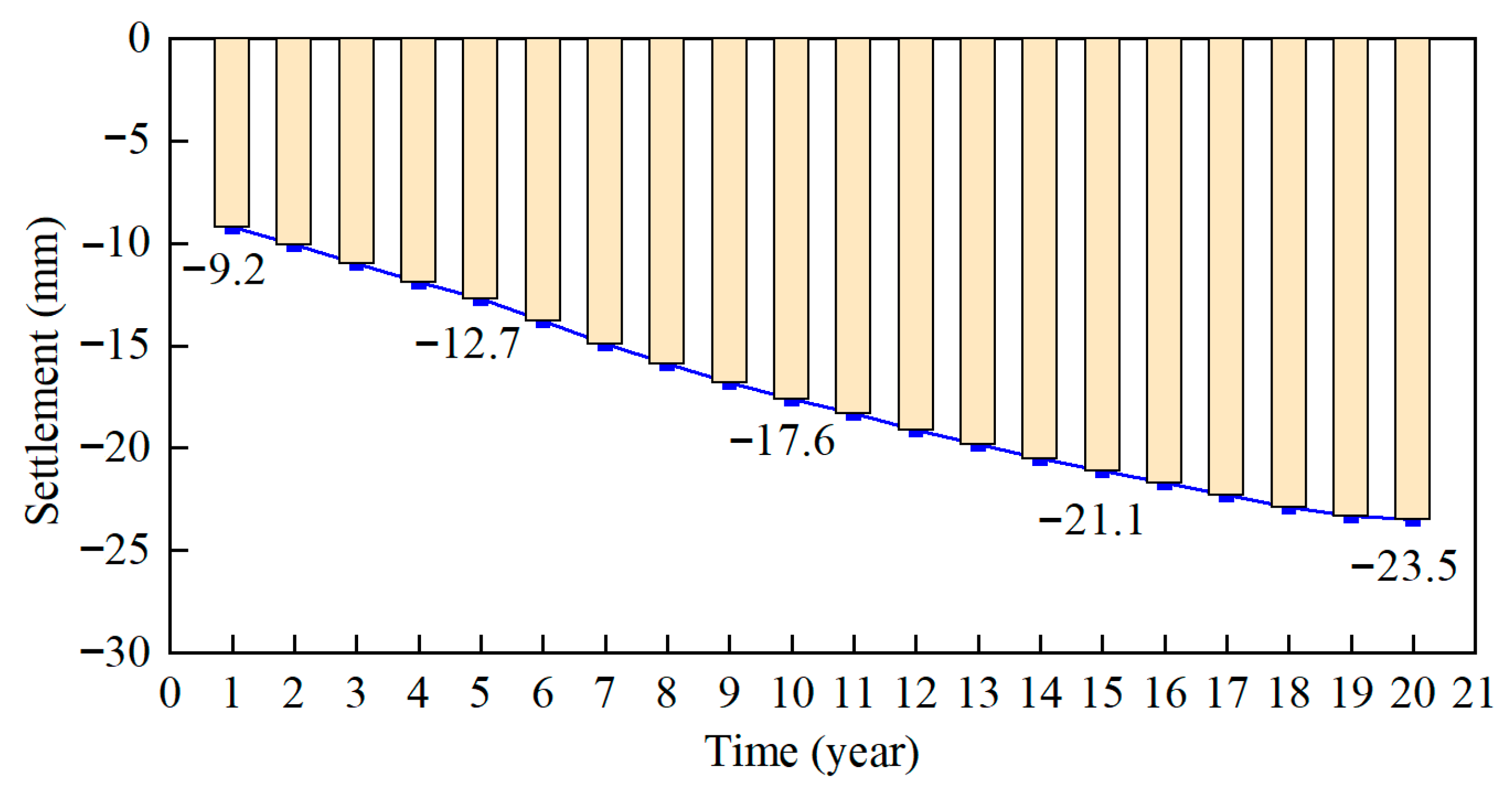
The permafrost in forest regions of Northeast China is very sensitive to the disturbance of subgrade construction, which will aggravate the degradation of the permafrost upper limit, leading to freeze–thaw deformation of the permafrost subgrade. Based on the road construction project of Highway 332 in forest regions in Northeast China, through theoretical analysis, indoor experiments, on-site monitoring, and numerical simulation methods, a thermo-hydro-mechanical coupling numerical model of the permafrost subgrade was established. A “two-step” construction countermeasure for freeze–thaw deformation of permafrost subgrade based on rubble stone subgrade structure was proposed. The study indicates that the addition of rubble stones to the subgrade structure has a significant cooling effect. The optimal thickness for filling rubble stones is 1 m. The optimal construction timing for subgrade is a two-step construction across the year. The stamping construction of the rubble stones is in November. The filling construction of rubble stones and gravel is in April and May of the next year. Based on the proposed construction countermeasure for permafrost subgrade, the settlement at the center of the subgrade surface is 12.7 mm in the 5th year, 17.6 mm in the 10th year, 21.1 mm in the 15th year, and 23.5 mm in the 20th year. The settlement deformation of the subgrade tends to stabilize, which can ensure the long-term stability and safety of road operations.

1. Introduction

Permafrost is widely distributed in the Greater Khingan Mountains in Northeast China, which is characterized by thin overburden, shallow natural upper limit, and high volume ice content [1,2]. The frozen soil is easier to be disturbed by the construction of subgrade, leading to the degradation of the permafrost upper limit and the freeze–thaw deformation of the subgrade [3]. After the field survey, it was found that the permafrost roads indeed suffered serious frost damage [4,5]. Therefore, the conventional subgrade construction countermeasures cannot effectively reduce the freeze–thaw deformation of the subgrade. It is necessary to put forward construction countermeasures that can alleviate the deformation of the subgrade in forest regions.
At present, the protective measures for permafrost subgrade widely used in engineering construction mainly include the following: ventilation pipe, heat rod, insulation board, and rubble stone [6,7,8,9,10,11]. Yuan et al. [12] took the hollow block ventilation subgrade as the research object and found that the hollow block ventilation structure can effectively take the heat inside the subgrade and reduce the temperature of the subgrade. Cheng et al. [13] found that the composite ventilated subgrade had a good hypothermal effect. However, during high-temperature periods, the function of the heat exchange of the ventilation pipe will increase the heat inside the roadbed [14]. Li et al. [15] found that the hot rod can effectively improve the upper limit of the frozen soil under the Qinghai–Tibet railway subgrade, and the effect is better when the hot rod is inserted obliquely. Liu et al. [16] studied the effective influence radius, duration, and depth of L-shaped and straight heat rods, as well as their cooling effect on frozen soil subgrade. The cooling effect produced by the hot rod can only affect part of the subgrade area near the hot rod. Tai et al. [17] analyzed the degradation law of the frozen soil upper limit of insulation board subgrade under various working conditions. Zhang et al. [18] found that the insulation board has a protective effect on permafrost. However, the function of the insulation board is conditional. The insulation board can only play its role in the warm season. At this time, the internal temperature of the permafrost is lower than the external temperature. Chen et al. [19] found that the rubble stone subgrade can effectively eliminate the melting interlayer along the Qinghai–Tibet highway. At the same depth, the temperature of ordinary subgrade is relatively higher than that of rubble stone subgrade. The rubble stones can effectively protect the underlying frozen soil. Ma et al. [20] analyzed and verified the effectiveness of rubble stone subgrade structure in improving subgrade settlement from the perspective of subgrade thermal stability.
Based on the interlocking effect of rubble stones in the roadbed, it can improve the bearing capacity of the roadbed and prevent capillary water from rising into the subgrade. Rubble stones can also remove the heat inside the subgrade through convection under low-temperature conditions, and absorb less heat under high-temperature conditions. The underlying soil of the roadbed can be effectively cooled [21,22]. The long winter and low temperature in Northeast China also contribute to the heat dissipation of rubble stone subgrade. In the aspect of economy, the cost of rubble stones is relatively low, especially in areas with abundant stone resources. Local stones can be used, greatly reducing the procurement and transportation costs of rubble stones. In addition, the construction process of rubble stones is relatively simple, and the technical requirements for construction personnel are not particularly high, resulting in relatively low labor costs. It can be seen that the rubble stones are more suitable for permafrost subgrade. In summary, the application objects of the subgrade protection measures studied by scholars are mostly the road engineering of the Qinghai–Tibet Highway and Qinghai–Tibet Railway. In the Northeast region, the natural conditions, permafrost characteristics, and vegetation coverage are different from those in the Qinghai–Tibet region. The rubble stone subgrade is mostly used in railway engineering, and is rarely used for high-grade roads in highway engineering. There is even less research on the rubble stone subgrade in permafrost forest regions in Northeast China.
Therefore, based on the road construction project of Highway 332 (referred to as G332) in forest regions in Northeast China, rubble stone was added to the subgrade structure to improve the stability of the subgrade and a “two-step” construction countermeasure for freeze–thaw deformation of permafrost subgrade, based on rubble stone subgrade structure, was proposed. It can alleviate the disturbance caused by subgrade construction to underground permafrost and help to maintain the long-term safety and stability of permafrost subgrade construction and operation in forest regions.

2. Materials and Methods

2.1. Study Area

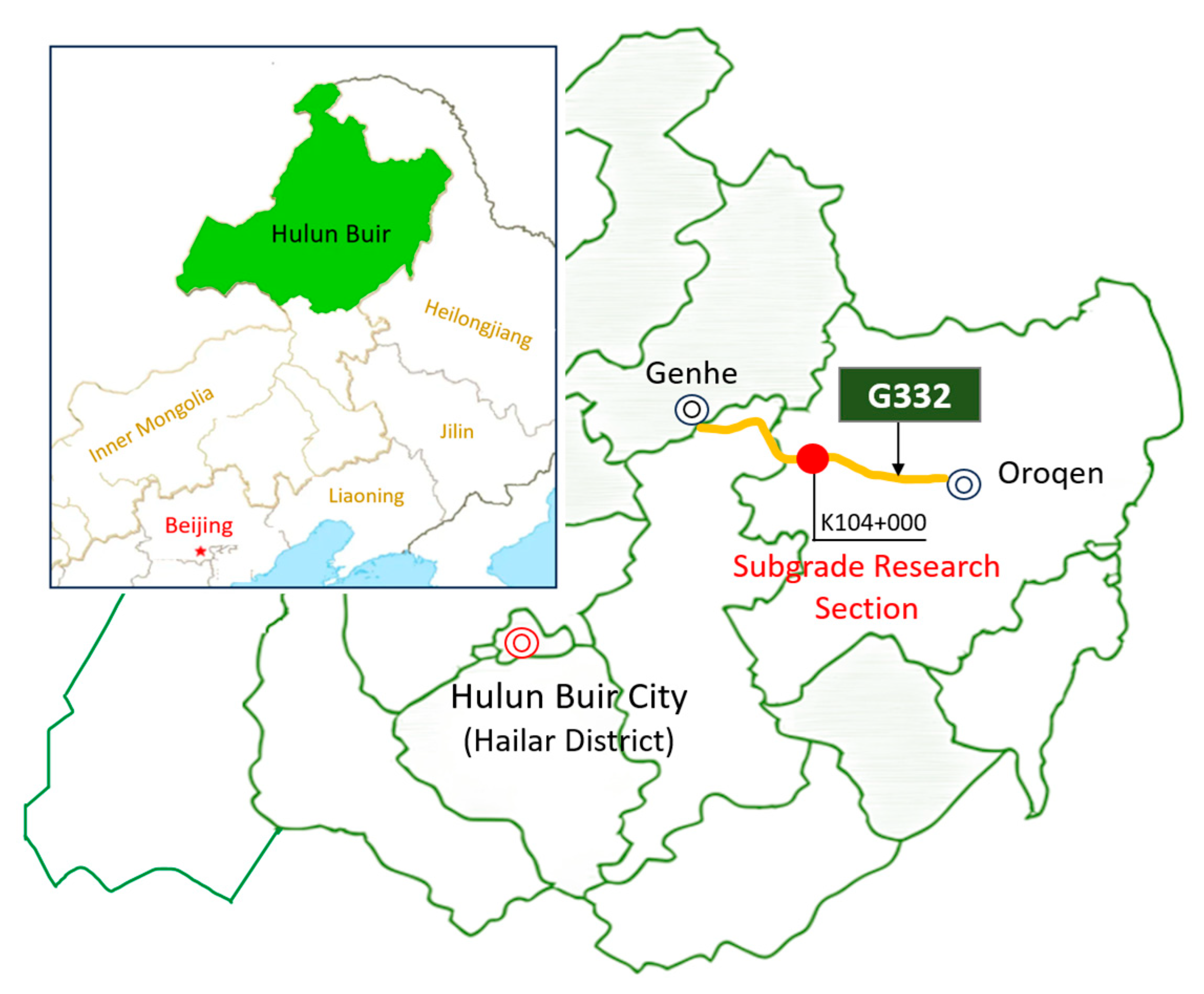
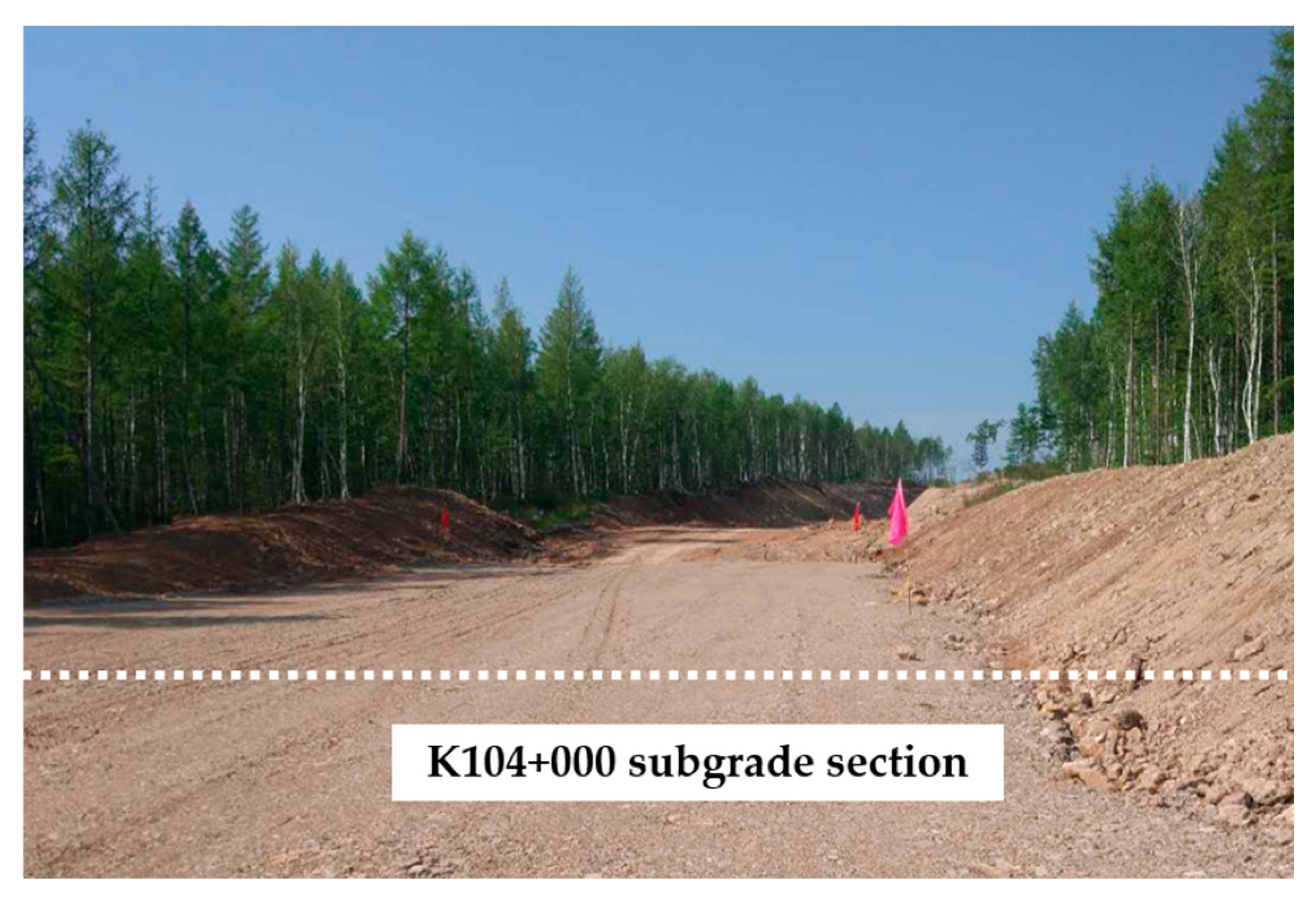
Figure 1 shows that the road construction project of G332 in this study is situated in the permafrost region of the Great Khingan Mountains in Northeast China, connecting Oroqen Autonomous Banner and Genhe City. The distance of the construction road in the forest region is 117 km. The design speed of the road is 80 km/h, and the design width of the subgrade is 12 m. As shown by the red mark in Figure 1, it is the K104+000 subgrade section researched in this study. Figure 2 shows the actual scene of the K104+000 subgrade section.
In the study area, the annual temperature difference is large, and the temperature changes dramatically [23]. Summer is short, and precipitation is concentrated. The winter is long and cold. The surface water system here is developed, and the groundwater is rich. Based on geological surveys conducted on site, the soil here is wet and soft. The surface layer is covered with thick humus soil. The underground is quaternary alluvial, proluvial clay, pebble, and volcanic breccia. The upper limit of frozen soil is −1.5 m, and the lower limit is −12 m. There are a large number of ice lenses.
The vegetation along the road is dense with a coverage rate of 83%, and the vegetation types are mainly Larix gmelinii and Betula platyphylla. The dense vegetation cover provides natural conditions for the preservation of permafrost. Permafrost and vegetation coexist and constrain each other. Vegetation can reduce the heat radiation of the sun to the ground and the thermal energy conducted to the underground frozen soil layer. It is helpful to reduce the degradation rate of frozen soil [24,25,26,27,28].

2.2. Field Observation Methods

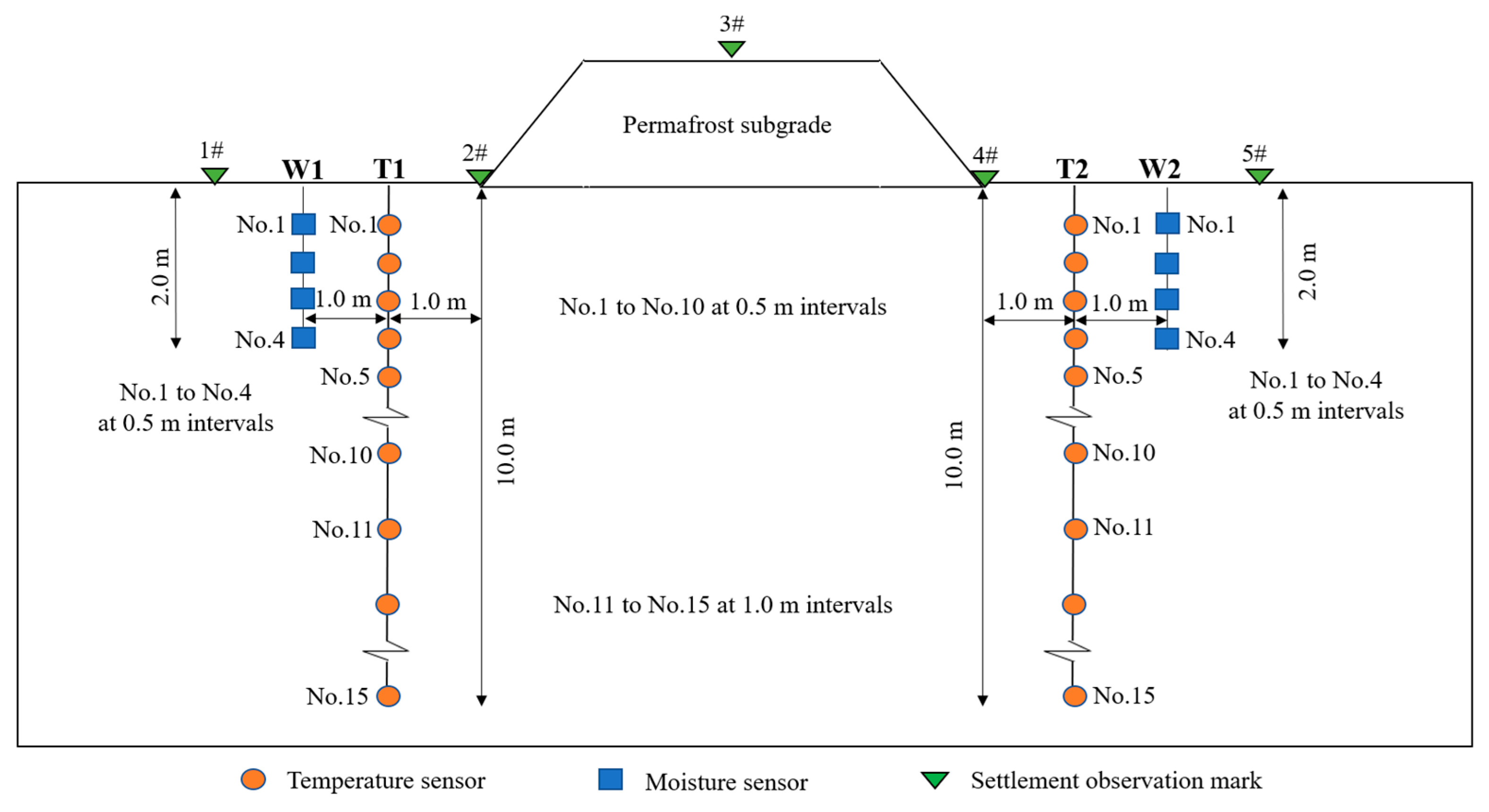
As shown in Figure 3, PT100 thermocouple temperature sensors, RS458 solid moisture sensors, and digital level were used to monitor the temperature, volumetric moisture content, and settlement of the K104+000 permafrost subgrade section [29,30,31,32,33,34]. T1 and T2 were boreholes for embedding temperature sensors. W1 and W2 were cross-sections for placing moisture sensors. The monitoring points for subgrade temperature and volumetric moisture content were placed outside the slope toe of the subgrade. The monitoring marks for subgrade settlement were evenly distributed on the surface of the subgrade. The temperature, volumetric moisture content, and settlement monitoring began in October 2019, among which the settlement monitoring in the center of the subgrade began after the completion of construction in May 2020.

2.3. Establishment of a Numerical Model for Permafrost Subgrade

In this study, the numerical model is based on the following assumptions: (1) the frozen soil is uniformly continuous and isotropic; (2) in the study of water field, it is assumed that the migration law of water follows the generalized Darcy’s law; (3) the water migration between unfrozen soil and frozen soil occurs in liquid form, ignoring gas-phase migration; and (4) the deformation of soil skeleton caused by temperature changes is not considered. The phase transition of ice water and the migration of water in unsaturated frozen soil were considered. Based on the thermal conduction, moisture migration, and stress–strain field control equation of permafrost, a thermo-hydro-mechanical coupling theoretical model for frozen soil in forest regions was established. Subsequently, the theoretical model was introduced into the partial differential equation (PDE) module of COMSOL Multiphysics 5.6 finite element software for secondary development. Finally, a numerical model of thermo-hydro-mechanical coupling for permafrost subgrade in forest regions was established [35,36,37].
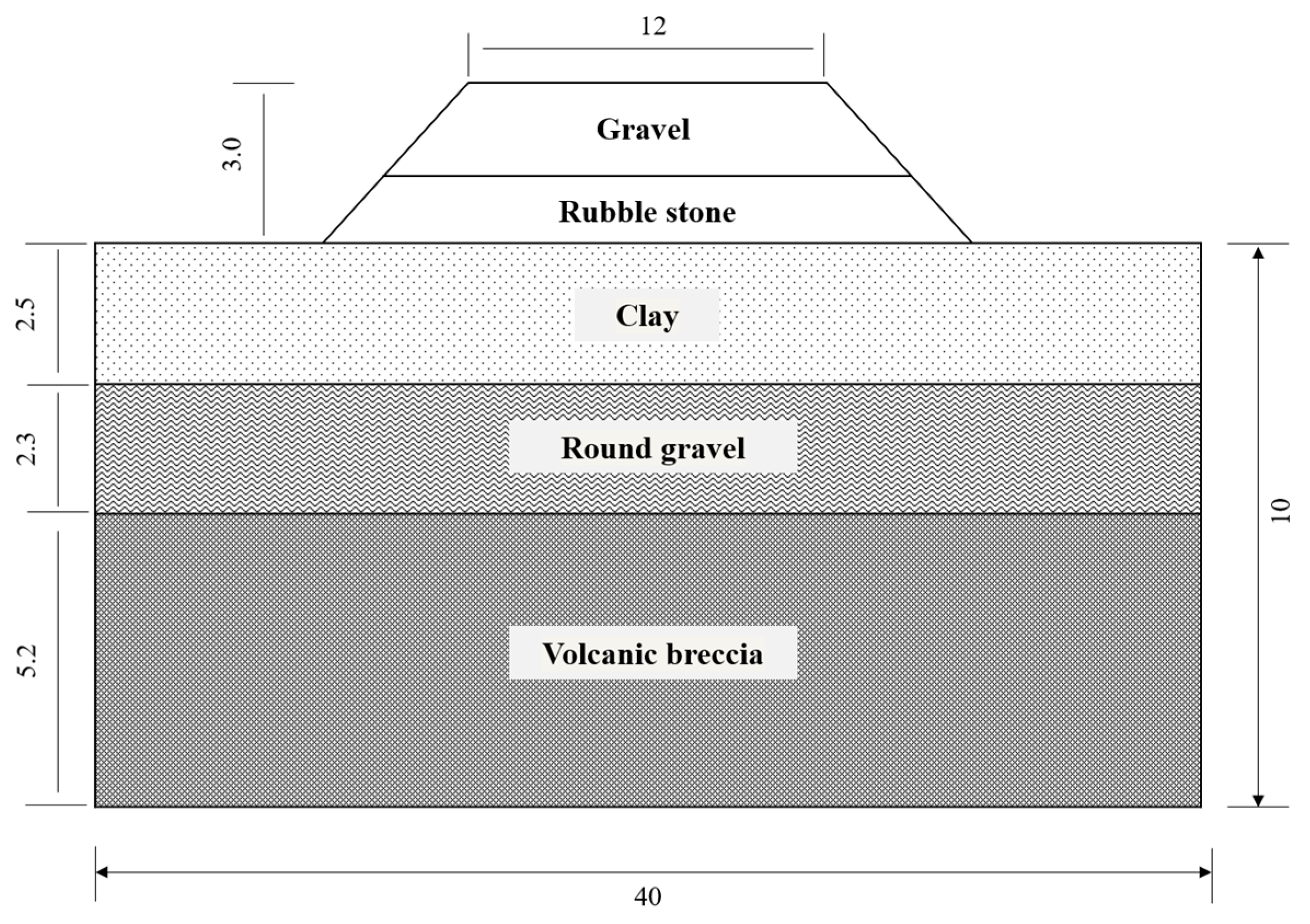
Based on the permafrost subgrade numerical model, a two-dimensional finite element model of the subgrade at the K104+000 section was established in COMSOL Multiphysics 5.6. As shown in Figure 4, the model is 40 m wide and 10 m high. The subgrade is 12 m wide and 3 m high. The subgrade filling is composed of gravel and rubble stones. According to geological survey data, the soil is relatively wet and soft. The underlying soil of the subgrade is composed of clay, round gravel, and fully weathered volcanic breccia. Therefore, in the model, soil from 0 to 2.5 m underground is clay, soil from 2.5 m to 4.8 m is a round gravel layer, and soil from 4.8 m to 10 m is weathered volcanic breccia.
In the subgrade model, the upper boundary condition was based on the boundary layer principle. The temperature monitoring data, which was 0.5 m below the surface, was used to calculate the temperature field. Both the left and right boundaries were thermal insulation. Based on the on-site temperature monitoring data, the lower boundary temperature was constant with a value of −1 °C. The moisture boundary conditions on both sides and the bottom were assumed to be impermeable, and the upper boundary was open. For displacement boundary conditions, only the upper boundary is free.

2.4. Material Parameters

The parameters of subgrade materials in the model were obtained through field and laboratory experiments, including the experiment of density, uniaxial compression, thermal conductivity, and specific heat capacity [38,39]. To simplify the calculation, the elastic modulus, thermal conductivity, and specific heat capacity were only considered in the freeze–thaw state in the model.
The density of the materials was determined by the ring knife method. The experimental instruments were a ring knife and a balance. The inner diameter of the ring knife is 50.46 mm and the height is 50 mm. The density of the materials is shown in Table 1.
The elastic modulus of the materials was determined through uniaxial compression experiments. The saturated material was placed in a fully automatic freeze–thaw testing machine for freeze–thaw testing. The freezing temperature was set as −25 °C and the melting temperature was set as 25 °C. Frozen and melted materials were subjected to uniaxial compression tests and loaded until material failure occurred. The elastic modulus of the materials under freeze–thaw conditions was measured. The elastic modulus of the materials is shown in Table 1.
The thermal conductivity of the materials was determined by the transient plane heat source method. The DRE-III multifunctional rapid thermal conductivity tester was used. This instrument used a Hot Disk probe, which can directly measure heat propagation without being affected by contact thermal resistance. The thermal conductivity of the materials in the freeze–thaw state was measured at −25 °C and 25 °C, respectively. The thermal conductivity of the materials is shown in Table 2.
The specific heat capacity of materials was determined by the cooling mixing method. The BRR specific heat capacity tester was used. This instrument adopted high-precision temperature-measuring thermocouples and temperature-measuring instruments, which can improve the accuracy of experiments. The specific heat capacity of the materials in the freeze–thaw state was measured at −25 °C and 25 °C, respectively. The specific heat capacity of the materials is shown in Table 2.

3. Results

3.1. Numerical Model Validation

After the establishment of the numerical model for the subgrade, the model can be solved. The time unit for numerical simulation is days, and the time step is 1 day.
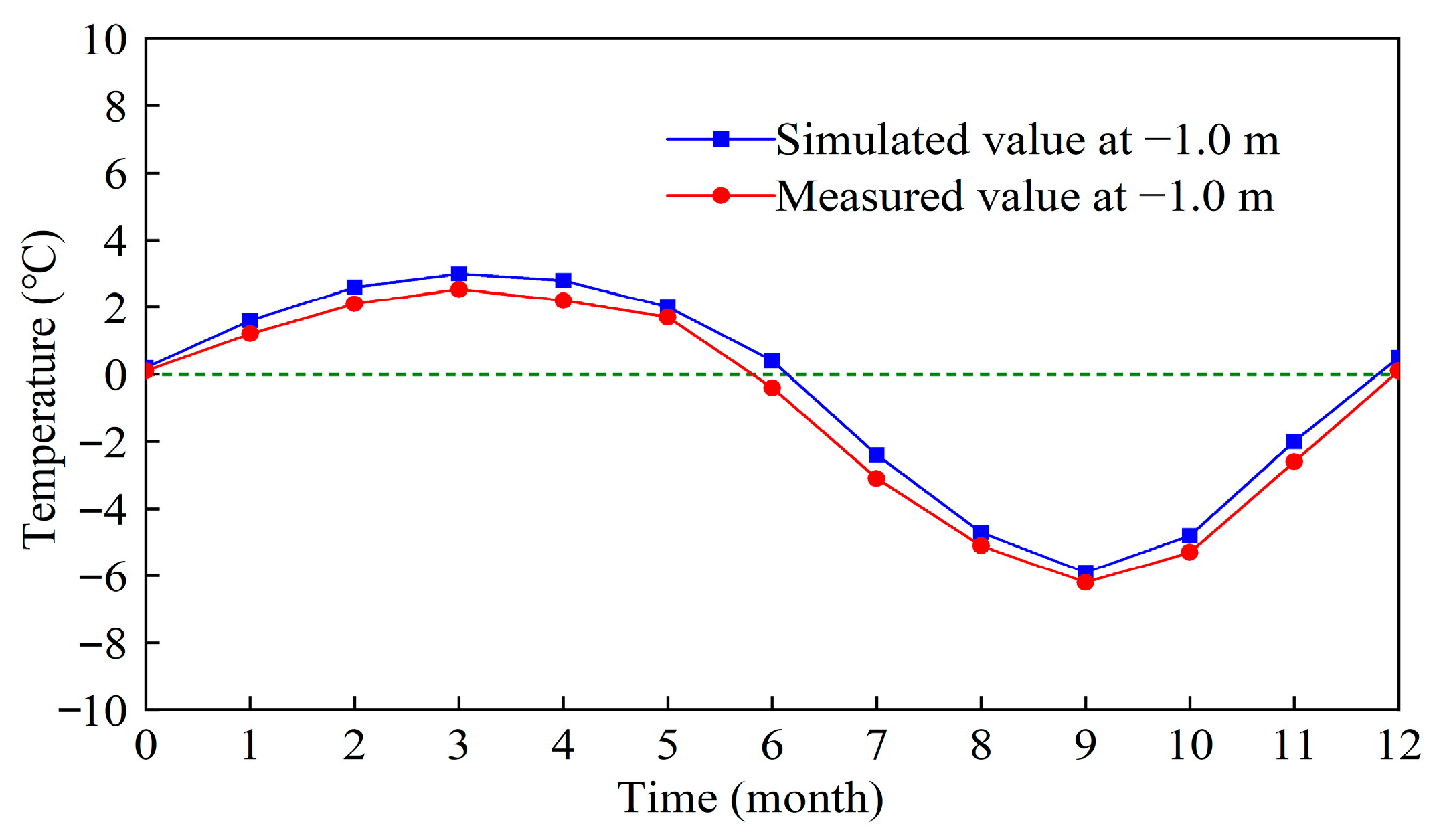
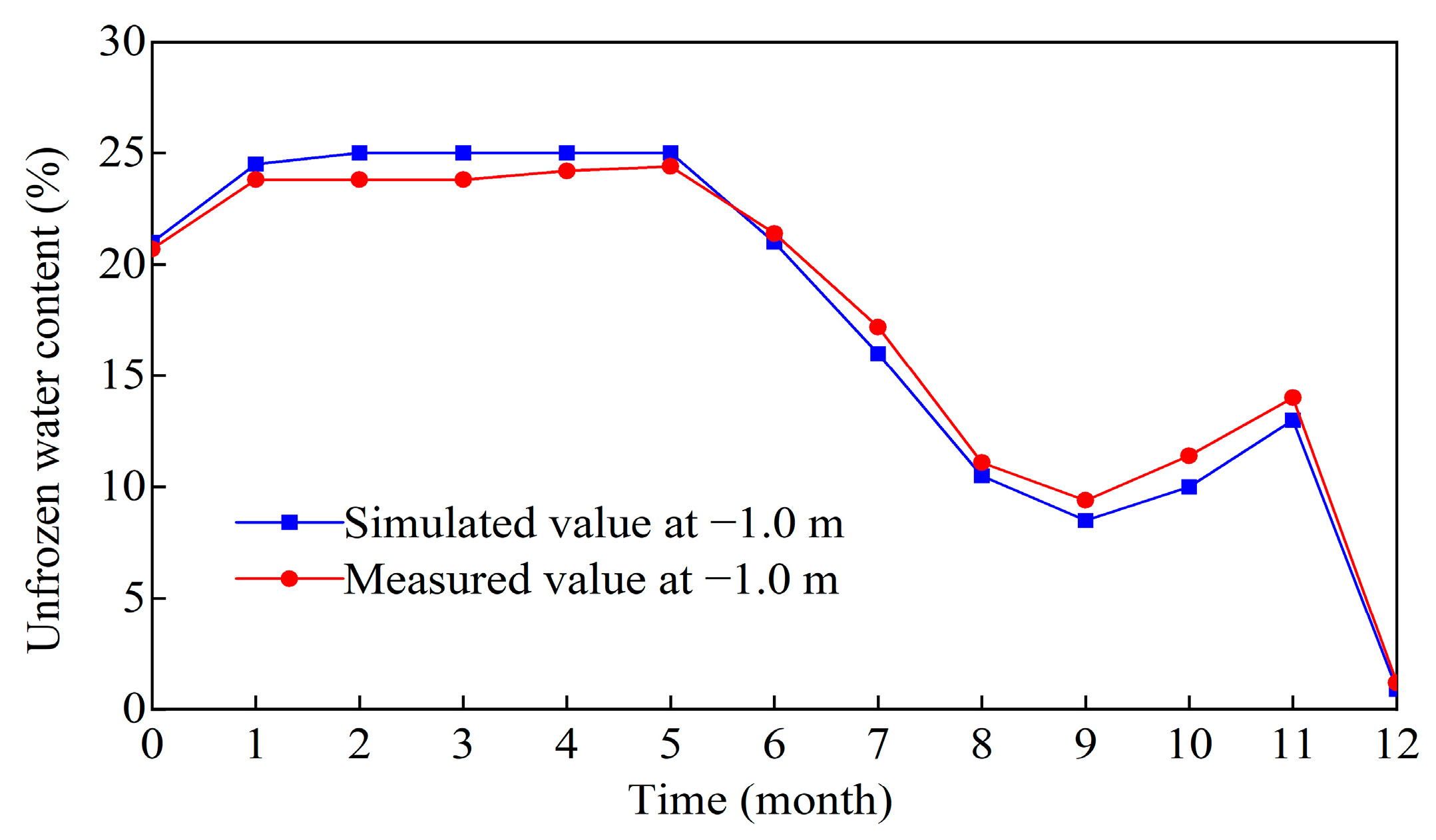
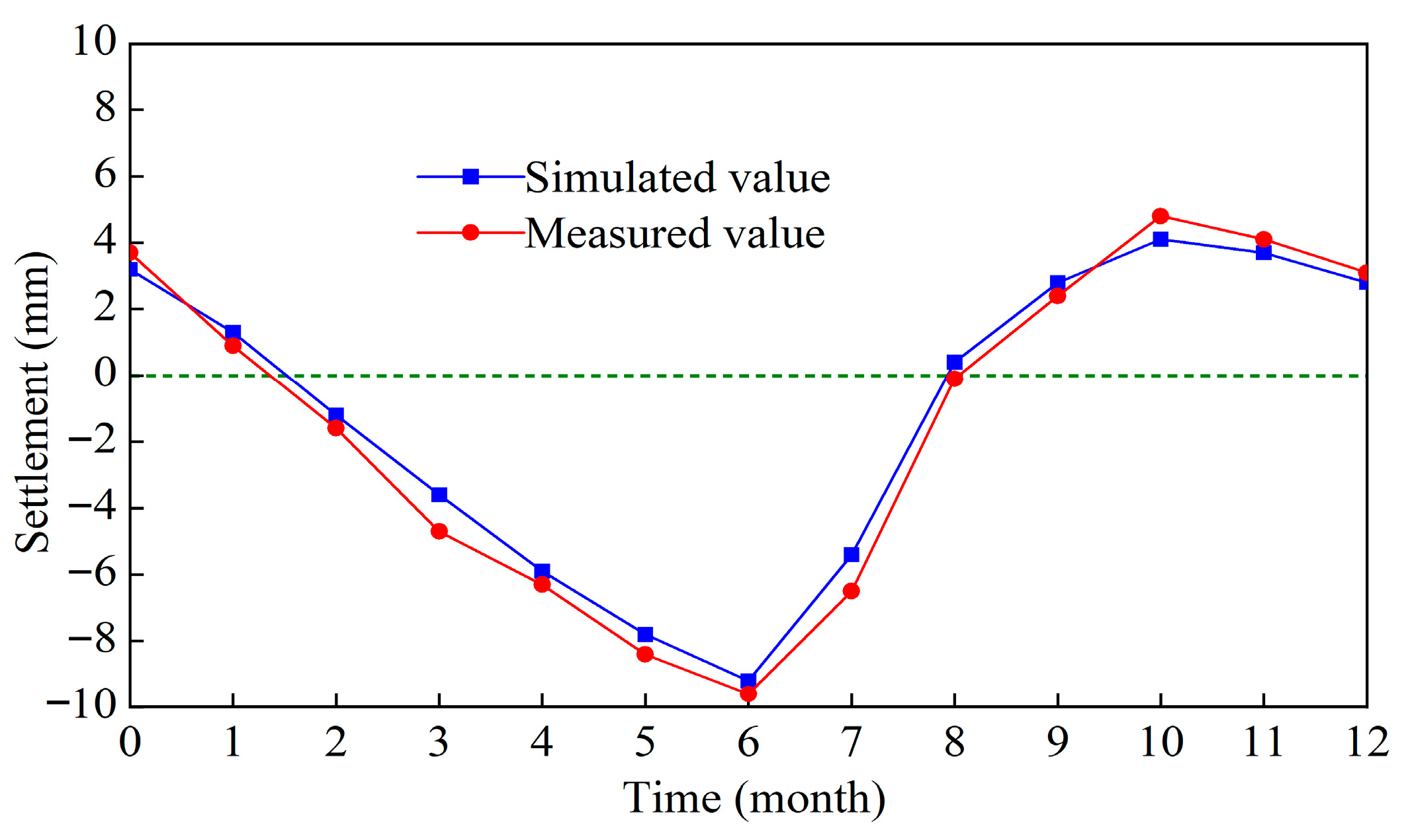
Due to the fact that the numerical model established in this study was used to calculate the stability of permafrost subgrade in forest regions under long-term operation, the accuracy of the model needed to be fully validated. The model calculation results and on-site monitoring data within one year after the completion of subgrade construction (from May 2020 to May 2021) were selected for comparison. The on-site monitoring data have been obtained in Section 2.2. The period within one year after the completion of subgrade construction was selected for numerical simulation, with a calculation time of 12 months (360 days). The temperature, unfrozen water content, and settlement of permafrost subgrade were calculated.
Figure 5 shows the numerical simulation and on-site measured temperature data at a distance of 10 m on the left side of the subgrade center (borehole T1) from May 2020 to May 2021. The simulated value and the measured value are basically the same. Figure 6 shows the numerical simulation and on-site measured unfrozen water content data at a distance of 11 m on the left side of the subgrade center (profile W1) from May 2020 to May 2021. The simulated value and the measured value are basically the same. Figure 7 shows the numerical simulation and on-site measured settlement in the center of the subgrade surface from May 2020 to May 2021. The simulated value and the measured value are basically the same. In summary, it can be seen that the numerical simulation calculations of the temperature, unfrozen water content, and settlement of the subgrade are correct and reliable.

3.2. Analysis of the Optimal Permafrost Subgrade Structure

Considering the characteristics of permafrost in forest regions, rubble stones were added to the subgrade structure to optimize it. Firstly, to enhance the strength of the roadbed, block stones can be impacted and compacted below the surface. Its interlocking effect can reduce the compression deformation caused by subsequent subgrade construction. Meanwhile, it can hinder capillary water from rising into the subgrade structure [40,41,42,43]. The thickness of the impact compaction layer was determined by the geological conditions on site. The thickness here was 1 m. Then, the rubble stones were filled on the compacted layer, which can play a role in ventilation and heat dissipation [44,45]. However, there was no unified construction standard for the thickness of the rubble stone filling layer of permafrost subgrade in forest regions. Further discussion was needed to determine the optimal filling thickness. Finally, the gravel layer was filled. The filling thickness of the gravel layer depended on the design elevation.
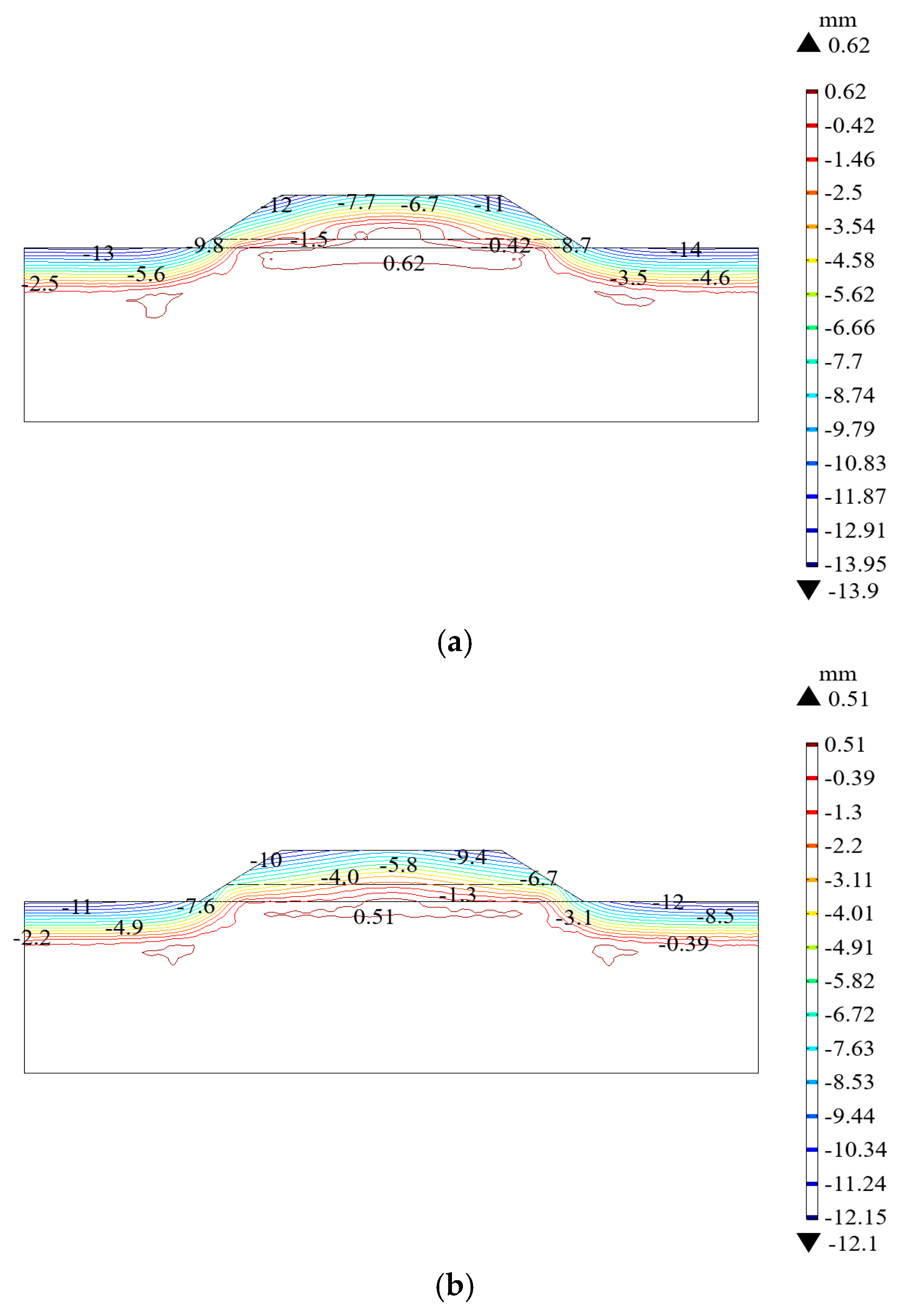
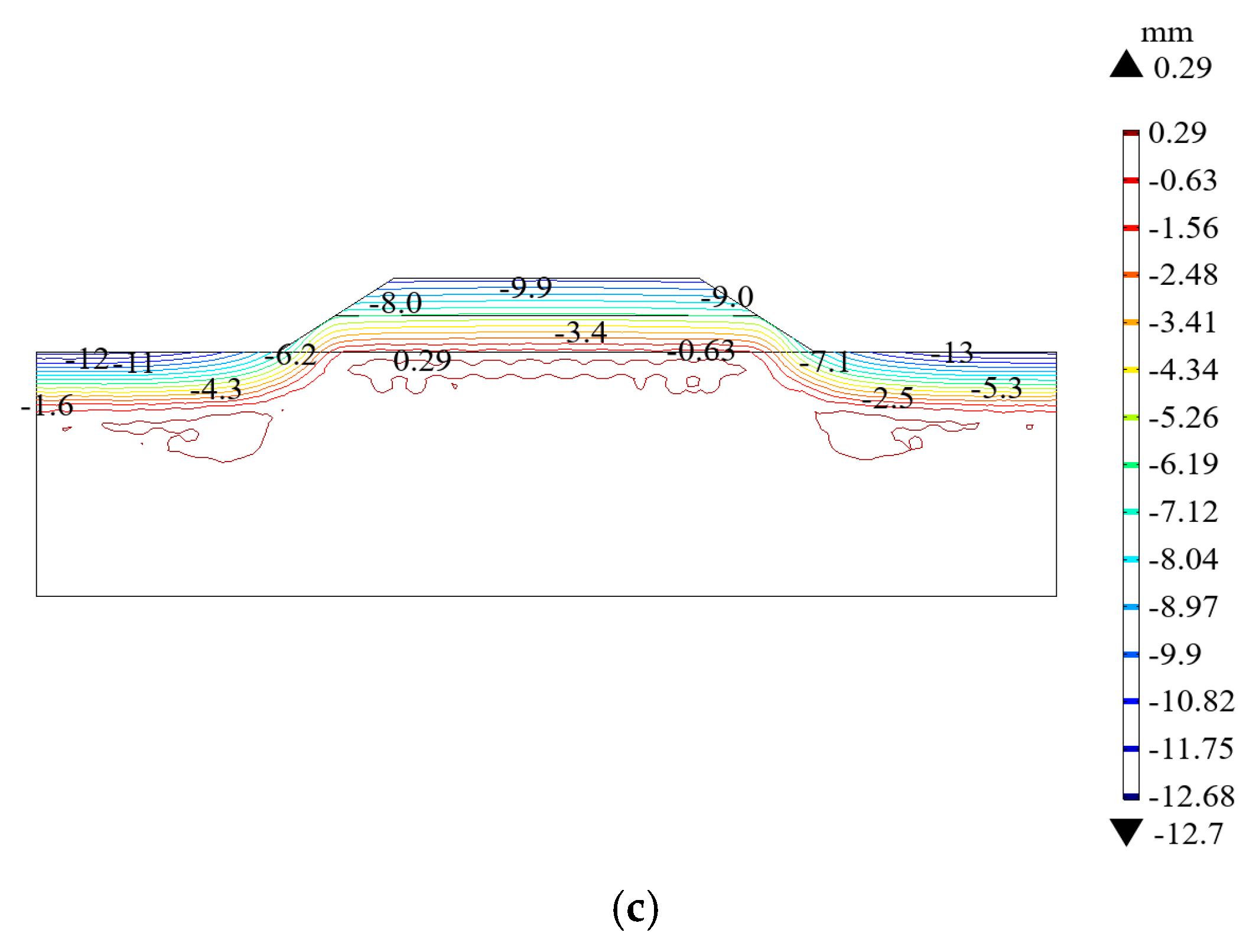
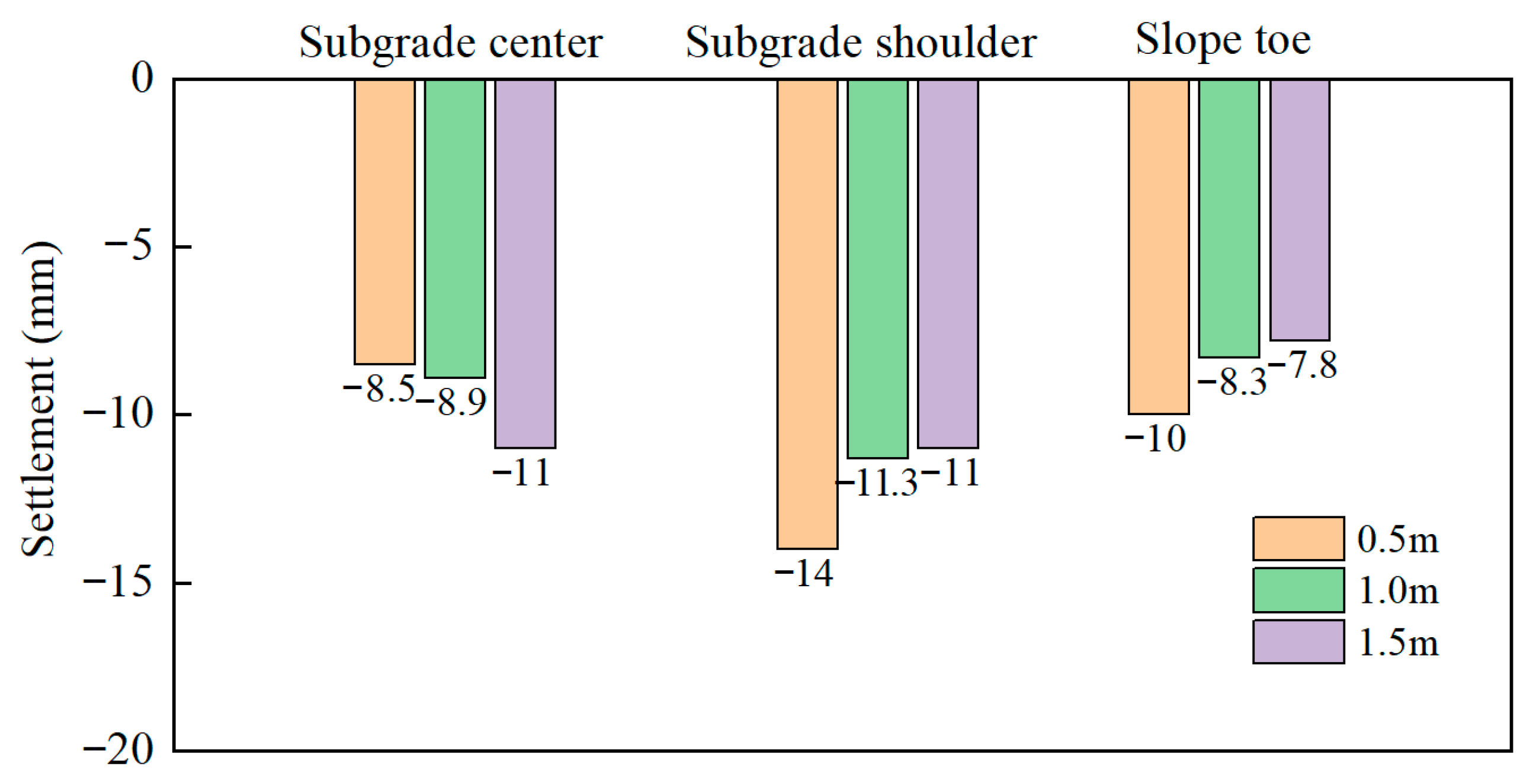
The thickness of the rubble stone filling layer was set to 0.5 m, 1.0 m, and 1.5 m, respectively. The average particle size of the rubble stones was set to 20 cm, and the porosity was between 25 and 30%. Based on the established subgrade model, a numerical simulation was carried out. The time of significant subgrade settlement within one year (1 November) was selected for comparative analysis of the distribution patterns of subgrade deformation fields. Figure 8 shows the settlement distribution of the subgrade with three different rubble stone filling layers on 1 November. A positive settlement value represents the uplift of the subgrade, while a negative settlement value represents the subsidence of the subgrade. Figure 9 shows the settlement at the center, shoulder, and slope toe of the subgrade with three different rubble stone filling layers on 1 November.
According to Figure 8 and Figure 9, it can be seen that, at the center of the subgrade, the settlement of filling 0.5 m and 1 m rubble stone subgrades was significantly smaller than that of filling 1.5 m rubble stones. At the shoulder of the subgrade, the settlement of filling 1.5 m and 1 m rubble stones was significantly smaller than that of filling 0.5 m rubble stones. At the slope toe of the subgrade, the settlement of filling 1.5 m and 1 m rubble stones was also less than that of filling 0.5 m rubble stones. Therefore, considering the protective effect and construction cost, the optimal thickness for filling rubble stones was determined to be 1 m.
The optimal permafrost subgrade structure in the forest region was obtained. Firstly, a one-meter-thick layer of rubble stones was crushed and impacted below the surface. Then, a one-meter-thick layer of rubble stones was filled, with an average particle size of 20 cm and a porosity between 25 and 30%. Finally, a two-meter-thick layer of gravel was filled. The total height of the subgrade is three meters.

3.3. Analysis of the Optimal Construction Timing for Subgrade

In order to minimize the construction damage to permafrost subgrade, the most suitable construction timing should be selected. Considering the experience of subgrade construction in permafrost regions and the actual construction conditions on site, it was determined that the optimized subgrade construction period would take approximately three or four months. At the same time, the winter in high-latitude forest regions is long, with extremely low temperatures and heavy snow blocking the mountains, making construction difficult from December to March each year. Therefore, continuous construction can be carried out from April to July. This type of construction timing was called continuous construction during the warm season.
In addition, considering the particularity of permafrost in forest regions, this study proposed a new two-step construction timing that spans years. The subgrade was cleared in October. The construction of rubble stone compaction was carried out before the freezing in November. No construction in winter. At that time, the temperatures were all negative, which can fully pre-cool the subgrade. In April of the next year, rubble stones were filled. The gravel was filled in May. This type of construction timing was called two-step construction across the year.
In this study, two types of construction timing, two-step construction across the year and continuous construction during the warm season, were simulated. The distribution pattern of subgrade settlement on November 1st of one year was analyzed. Their calculation results were compared to determine the optimal construction timing.
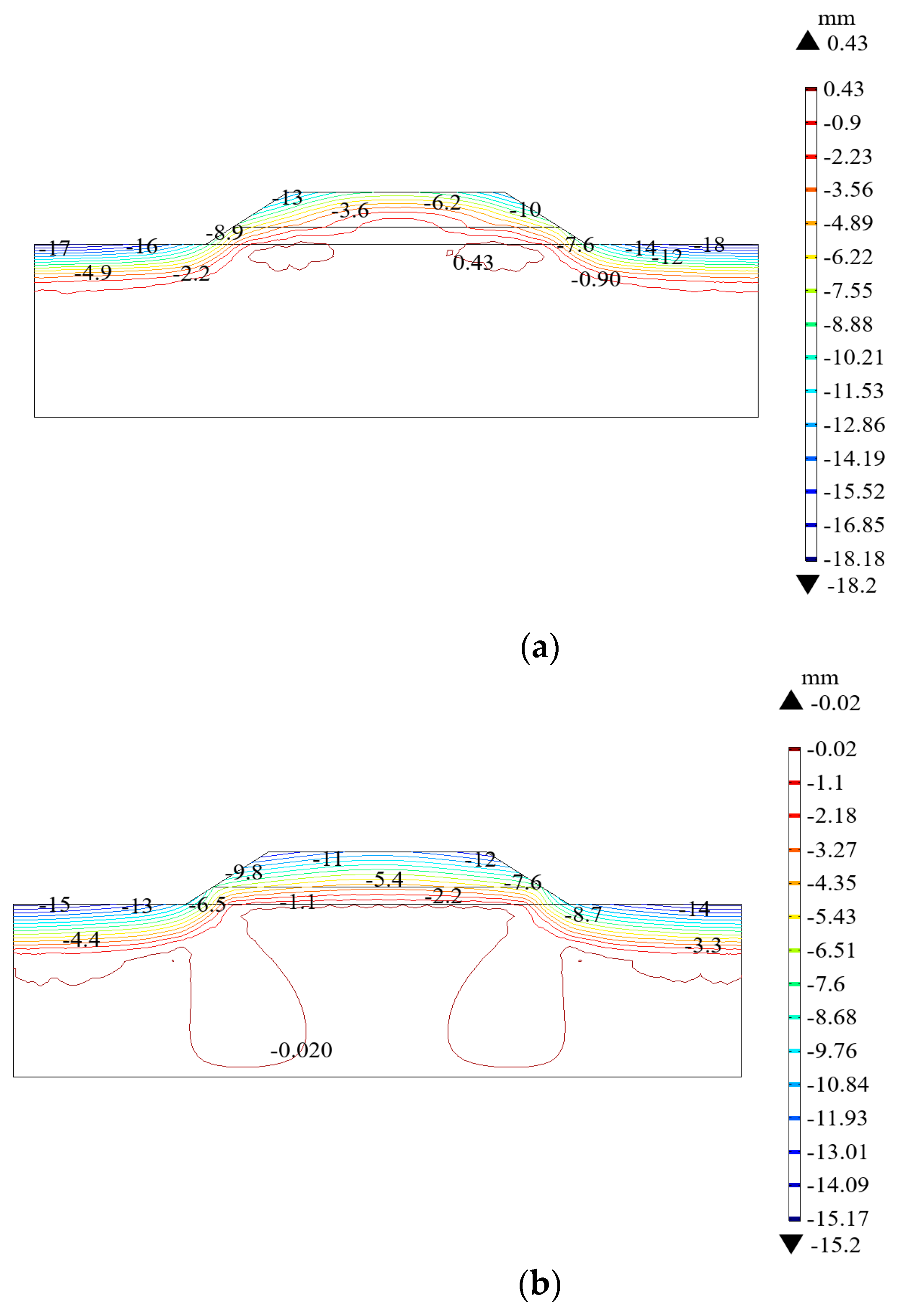
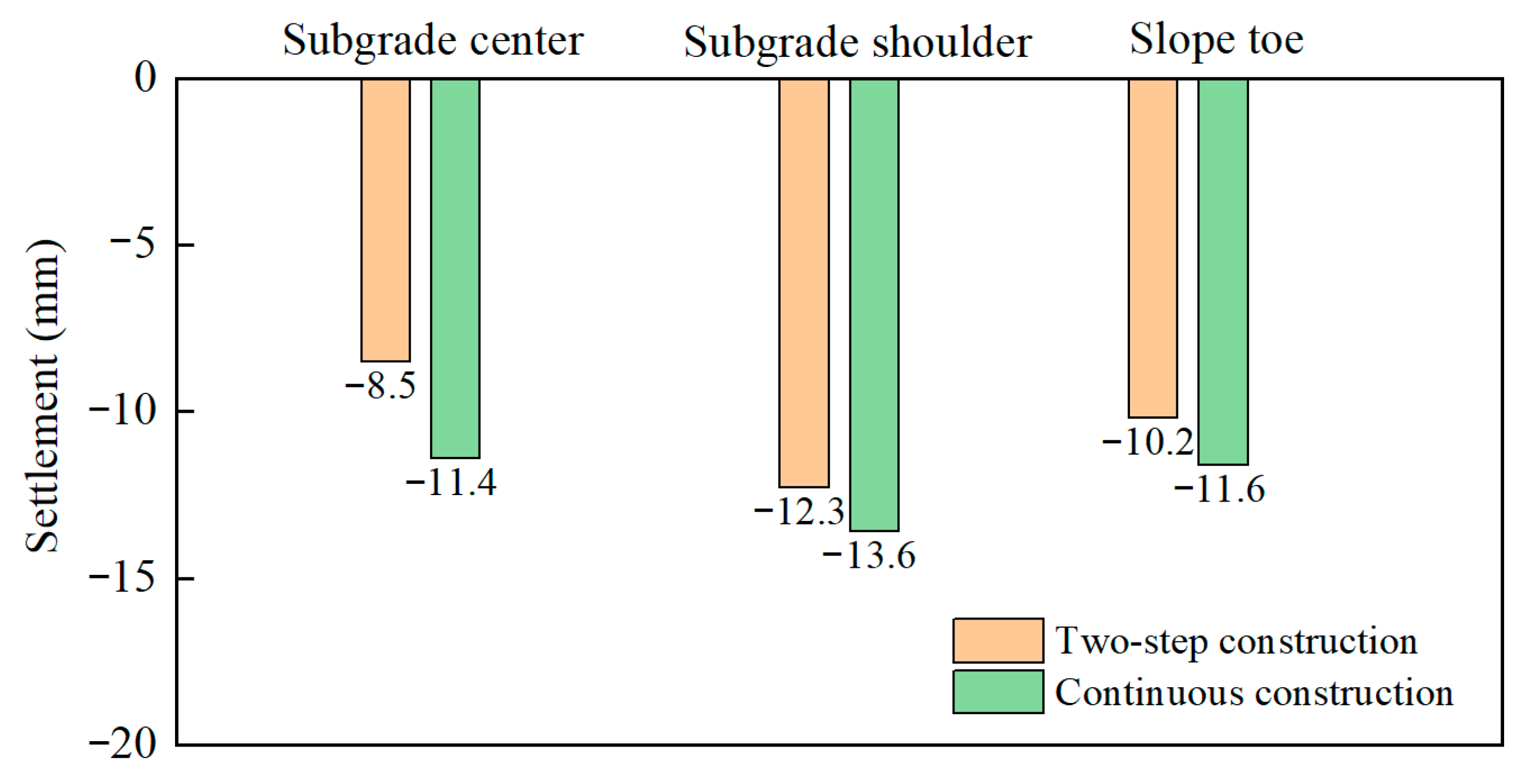
Figure 10 shows the settlement distribution of the subgrade after the two-step construction across the year and continuous construction during the warm season on November 1st. Figure 11 shows the settlement at different positions on the surface of the subgrades after the two-step construction across the year and continuous construction during the warm season on November 1st.
According to Figure 10 and Figure 11, it can be seen that the surface of the subgrade was in a state of melting and sinking on November 1st. At the center of the subgrade surface, the settlement constructed in two steps across the year was 8.5 mm and the settlement constructed continuously in the warm season was 11.4 mm. At the shoulder of the subgrade, the settlement constructed in two steps across the year was 12.3 mm and the settlement constructed continuously in the warm season was 13.6 mm. At the slope toe of the subgrade, the settlement constructed in two steps across the year was 10.2 mm and the settlement constructed continuously in the warm season was 11.6 mm.
According to the data above, the settlement of the subgrade after the two-step construction across the year was relatively smaller than that after continuous construction during the warm season. It was because the temperature of the subgrade constructed in two steps across the year was relatively low, and the disturbance to the underlying permafrost was relatively small. Therefore, the settlement was relatively small in warm seasons. However, the temperature of the subgrade constructed continuously during the warm season was relatively high, and the depth of permafrost melting was relatively large. Therefore, the settlement was relatively large in warm seasons, which caused serious damage to the road.
In summary, by comparing and analyzing two different construction timings, it was found that the two-step construction across the year was more conducive to the protection of frozen soil.

4. Discussion

After analyzing the optimal structure and construction timing of the permafrost subgrade in forest regions, a “two-step” construction countermeasure for freeze–thaw deformation of permafrost subgrade based on rubble stone subgrade structure was proposed. Firstly, the subgrade was cleared at 5 °C (in October). Secondly, a one-meter-thick layer of rubble stones was crushed and impacted below the surface at −4 °C (in November). Construction was stopped in winter. Thirdly, a one-meter-thick layer of rubble stones was filled when the temperature rose to 0 °C in the next year (in April). Finally, a two-meter-thick gravel layer was filled at 9 °C (in May).
The long-term applicability of the proposed construction countermeasure for permafrost subgrade should be discussed and evaluated. On November 1st of each year, within 20 years after the completion of the road, the variation law of settlement was discussed. Figure 12 shows the time-varying curve of settlement at the center of the subgrade surface on November 1st each year.
According to Figure 12, in November each year, the external temperature decreased to negative values. However, the temperature inside the subgrade was still relatively high and the depth of permafrost melting was still increasing. The surface settlement of the subgrade was approaching its maximum value. The settlement at the center of the subgrade surface was 12.7 mm in the 5th year, 17.6 mm in the 10th year, 21.1 mm in the 15th year, and 23.5 mm in the 20th year.
The water–heat balance of permafrost was disrupted by subgrade construction, resulting in continuous accumulation of heat inside the subgrade. The depth of permafrost melting continued to increase and the permafrost upper limit continued to degrade. In the early stage of operation after construction, the rate of subgrade settlement was relatively fast. The stability of the subgrade was relatively poor. At this time, the permafrost beneath the subgrade was in a degraded state. As time went by, the disturbance of permafrost by external environmental changes gradually weakened. The rate of increase in subgrade settlement gradually slowed down. In the end, the water and heat changes in permafrost gradually reached a new equilibrium state, and the degradation amplitude of the permafrost upper limit was relatively small. Afterwards, the settlement of the subgrade would remain stable for a long time. This indicated that the construction countermeasure for permafrost subgrade in forest regions was effective and feasible.
Two major limitations in this study could be addressed in future research. First, the stability of permafrost subgrade in forest regions is highly susceptible to climate change [46,47,48,49]. The model in this study is based on historical climate data and does not take into account the factor of climate change, which may lead to long-term prediction bias. Therefore, a remote long-term automatic monitoring system with automatic collection and transmission functions is planned to be developed. This system consists of a GPRS wireless communication system, solar power supply, and monitoring system. Among them, the monitoring system includes temperature sensors, moisture sensors, and layered settlement meters. Based on this system, remote monitoring and real-time collection of data from multiple cross-sections and measurement points can be achieved. Second, this study is based on the analysis of individual road sections, with a focus on the research of permafrost subgrades in forest regions. Moreover, only the construction countermeasures for filling the subgrade were discussed. In order to promote the research results more widely, various road sections, such as excavated subgrade, can be studied in the future.

5. Conclusions

Based on the road construction project of G332 in forest regions in Northeast China, through theoretical analysis, indoor experiments, on-site monitoring, and numerical simulation methods, a “two-step” construction countermeasure for freeze–thaw deformation of permafrost subgrade based on rubble stone subgrade structure was proposed. The conclusions are as follows:
(1)
The addition of rubble stones to the subgrade structure has a significant cooling effect. The optimal subgrade structure includes a one-meter-thick layer of rubble stone stamping, a one-meter-thick layer of rubble stone filling, and a two-meter-thick layer of gravel.
(2)
The settlement of the subgrade after the two-step construction across the year is relatively smaller than that after continuous construction during the warm season. The optimal construction timing for subgrade is a two-step construction across the year. The stamping construction of the rubble stones is in November. The filling construction of rubble stones and gravel is in April and May of the next year.
(3)
The settlement of the subgrade increases rapidly at the beginning of road operation; As time goes by, the rate of increase in settlement slows down significantly. Finally, the settlement of the subgrade gradually tends to stabilize. The proposed construction countermeasure for freeze–thaw deformation of permafrost subgrade can ensure the long-term stability and safety of road operations.

Author Contributions

Conceptualization, G.W.; formal analysis, Z.X. and Z.Y.; methodology, Z.X.; software, Z.X.; validation, Z.X.; investigation, Z.X. and Z.Y.; resources, G.W.; data curation, Z.X.; writing—original draft, Z.X. and Z.Y.; writing—review and editing, Z.X.; visualization, Z.Y.; supervision, G.W.; funding acquisition, Z.X. All authors have read and agreed to the published version of the manuscript.

Funding

This research was funded by the science and technology research project of the Jilin Provincial Department of Education. (NO. JJKH20240089KJ).

Institutional Review Board Statement

Not applicable.

Informed Consent Statement

Not applicable.

Data Availability Statement

The original contributions presented in this study are included in the article. Further inquiries can be directed to the corresponding author.

Acknowledgments

We would like to thank all staff members who contributed to this study who are not named here.

Conflicts of Interest

The authors declare no conflicts of interest.

References

  1. Gong, T.; Gao, B.; Ji, Z.; Cao, H. Variation of active layer thickness of permafrost in the Qinghai-Tibetan Plateau based on MODIS temperature product. Sci. Geogr. Sin. 2022, 42, 1848–1856. [Google Scholar] [CrossRef]
  2. Nitzbon, J.; Westermann, S.; Langer, M.; Martin, L.C.P.; Strauss, J.; Laboor, S.; Boike, J. Fast response of cold ice-rich permafrost in northeast Siberia to a warming climate. Nat. Commun. 2020, 11, 2201. [Google Scholar] [CrossRef]
  3. Grandpré, I.; Fortier, D.; Stephani, E. Degradation of permafrost beneath a road embankment enhanced by heat advected in groundwater. Can. J. Earth Sci. 2012, 49, 953–962. [Google Scholar] [CrossRef]
  4. Yang, L.; Shang, Y.; Dai, C.; Liu, Y.; Li, G.; Gao, K.; Wu, Y.; Wei, Y. Evaluating the effectiveness of high-frequency ground-penetrating radar in identifying active layer thickness in the Da Xing’anling Mountains. Remote Sens. 2025, 17, 3484. [Google Scholar] [CrossRef]
  5. Huang, Y.; Niu, F.; Chen, J.; He, P.; Yuan, K.; Su, W. Express highway embankment distress and occurring probability in permafrost regions on the Qinghai-Tibet Plateau. Transp. Geotech. 2023, 42, 101069. [Google Scholar] [CrossRef]
  6. Wang, X.; Petriaev, A.; Kolos, A.; Chetina, M. Prediction of thermal regime and frost heave deformations of subgrade soils during non-stationary heat and moisture transfer. Transp. Geotech. 2024, 48, 101338. [Google Scholar] [CrossRef]
  7. Ulitsky, V.; Gorodnova, E. The construction of transport infrastructure on permafrost soils. Procedia Eng. 2017, 189, 421–428. [Google Scholar] [CrossRef]
  8. Haghi, N.; Hashemian, L.; Bayat, A. Effects of seasonal variation on the load-bearing capacity of pavements composed of insulation layers. Transp. Res. Rec. 2016, 2579, 87–95. [Google Scholar] [CrossRef]
  9. Wang, Q.; Fang, J.; Zhao, X.; Hu, K. The influence of pavement type on the thermal stability of block-stone embankments in the warm permafrost region. Transp. Geotech. 2020, 23, 100334. [Google Scholar] [CrossRef]
  10. Huang, Y.; Niu, F.; He, P.; Pan, W.; Yuan, K.; Su, W. Effectiveness evaluation of cooling measures for express highway construction in permafrost regions based on GPR and ERT. Cold Reg. Sci. Technol. 2024, 228, 104339. [Google Scholar] [CrossRef]
  11. Hu, T.; Cui, C.; Yue, Z.; Liu, B.; Qi, L.; Cai, D. Literature review of prevention and control technologies of thermal thawing damage in subgrades of permafrost regions. China Rai. Sci. 2025, 46, 1–17. Available online: https://zgtk.publish.founderss.cn/thesisDetails#10.3969/j.issn.1001-4632.2025.02.01&lang=zh (accessed on 2 September 2025).
  12. Yuan, K.; Zhang, J.; Fan, K.; Zhu, D. Application effect and numerical simulation of hollow block ventilated roadbed in frozen soil areas. Hig. Transp. Technol. 2013, 30, 56–62. [Google Scholar] [CrossRef]
  13. Cheng, Z.; Zhang, Z.; Liu, G.; Wu, W. Study on the effect of non-linear ventilation pipe composite measures on the slope permafrost subgrade. Sustainability 2023, 15, 1180. [Google Scholar] [CrossRef]
  14. Jørgensen, A.; Ingeman-Nielsen, T. Optimization in the use of air convection embankments for the protection of underlying permafrost. Cold Reg. Eng. 2012, 10, 12–20. [Google Scholar] [CrossRef]
  15. Li, Y.; Wu, Z.; Wang, Y.; Sun, J. Test study on the application effect of the thermal pipes on the roadbed in the permafrost region along Qinghai-Tibet Railway. China Rai. Sci. 2008, 29, 6–11. [Google Scholar] [CrossRef]
  16. Liu, J.; Li, Z.; Li, Y.; Zhou, D. Research on the cooling control efficiency of hot rod roadbeds in permafrost regions. Highway 2021, 66, 20–27. Available online: https://link.cnki.net/urlid/11.1668.U.20210202.1606.008 (accessed on 7 May 2024).
  17. Tai, B.; Liu, J.; Fang, J.; Xu, A.; Liu, L. Calculation model of permafrost table of XPS insulated board subgrade in warm permafrost regions. J. Chang’an Univ. 2017, 37, 1–11. Available online: https://zzszrb.chd.edu.cn/oa/DArticle.aspx?type=view&id=201705026 (accessed on 9 June 2023).
  18. Zhang, B.; Fan, W. Application of insulation board in road engineering in permafrost regions of Inner Mongolia. J. Geomech. 2018, 24, 706–713. [Google Scholar] [CrossRef]
  19. Chen, D.; Wang, S.; Chen, J.; Dong, Y. Study of the factors influencing the thickness of residual thawed interlayers and cooling effect of block-stone embankment. J. Glaciol. Geocryol. 2014, 36, 854–861. [Google Scholar] [CrossRef]
  20. Ma, M.; Qi, Y.; Guo, Y.; Dong, Y. Numerical simulation of influence of different replacement materialson highway subgrade temperature in permafrost area. For. Eng. 2022, 4, 131–139. [Google Scholar] [CrossRef]
  21. Goering, D.J. Passively cooled railway embankments for use in permafrost areas. J. Cold Reg. Eng. 2003, 17, 119–133. [Google Scholar] [CrossRef]
  22. Pei, W.; Zhang, M.; Li, S.; Lai, Y.; Jin, L. Enhancement of convective cooling of the porous crushed-rock layer in cold regions based on experimental investigations. Int. Commun. Heat Mass Transfer. 2017, 87, 14–21. [Google Scholar] [CrossRef]
  23. Shang, Y.; Cao, Y.; Li, G.; Gao, K.; Zhang, H.; Sheng, J.; Chen, D.; Lin, J. Characteristics of meteorology and freeze-thaw in high-latitude cold regions: A case study in Da Xing’anling, Northeast China (2022–2023). Front. Earth Sci. 2025, 12, 1476234. [Google Scholar] [CrossRef]
  24. Anderson, J.; Douglas, T.; Barbato, R.; Saari, S.; Edwards, J.; Jones, R. Linking vegetation cover and seasonal thaw depths in interior Alaska permafrost terrains using remote sensing. Remote Sens. Environ. 2019, 233, 111363. [Google Scholar] [CrossRef]
  25. Szymański, W.; Jagi, K.; Drewnik, M.; Musielok, Ł.; Stolarczyk, M.; Gus-Stolarczyk, M.; Sikora, S. Impact of tundra vegetation type on topsoil temperature in central Spitsbergen (Svalbard, High Arctic). Geoderma 2022, 428, 116196. [Google Scholar] [CrossRef]
  26. Heijmans, M.M.P.D.; Magnússon, R.Í.; Lara, M.J.; Frost, G.V.; Myers-Smith, I.H.; van Huissteden, J.; Jorgenson, M.T.; Fedorov, A.N.; Epstein, H.E.; Lawrence, D.M.; et al. Tundra Vegetation Change and Impacts on Permafrost. Nat. Rev. Earth. Environ. 2022, 3, 68–84. [Google Scholar] [CrossRef]
  27. Grünberg, I.; Wilcox, E.; Zwieback, S.; Marsh, P.; Boike, J. Linking tundra vegetation, snow, soil temperature, and permafrost. Biogeosciences 2020, 17, 4261–4279. [Google Scholar] [CrossRef]
  28. Chang, X.; Jin, H.; Zhang, Y.; Li, X.; He, R.; Li, Y.; Lü, L.; Wang, H. Permafrost thermal dynamics at a local scale in northern Da Xing’anling Mountains. Environ. Res. Lett. 2024, 19, 064014. [Google Scholar] [CrossRef]
  29. Lara, R.; Berg, A.; Warland, J.; Tetlock, E. In situ estimates of freezing/melting point depression in agricultural soils using permittivity and temperature measurements. Water Resour. Res. 2020, 56, 5. [Google Scholar] [CrossRef]
  30. Watanabe, K.; Osada, Y. Simultaneous measurement of unfrozen water content and hydraulic conductivity of partially frozen soil near 0 °C. Cold Reg. Sci. Technol. 2017, 142, 79–84. [Google Scholar] [CrossRef]
  31. Li, C.; Vennapusa, P.K.R.; Ashlock, J.; White, D.J. Mechanistic-based comparisons for freeze-thaw performance of stabilized unpaved roads. Cold Reg. Sci. Technol. 2017, 141, 97–108. [Google Scholar] [CrossRef]
  32. Skierucha, W.; Wilczek, A.; Szypłowska, A.; Sławiński, C.; Lamorski, K. A TDR-based soil moisture monitoring system with simultaneous measurement of soil temperature and electrical conductivity. Sensors 2012, 12, 13545–13566. [Google Scholar] [CrossRef] [PubMed]
  33. Teltayev, B.; Oliviero Rossi, C.; Aitbayev, K.; Suppes, E.; Yelshibayev, A.; Nugmanova, A. Freezing and Thawing Processes of Highways in Kazakhstan. Appl. Sci. 2022, 12, 11938. [Google Scholar] [CrossRef]
  34. Hu, G.; Zhao, L.; Zhu, X.; Wu, X.; Wu, T.; Li, R.; Xie, C.; Hao, J. Review of algorithms and parameterizations to determine unfrozen water content in frozen soil. Geoderma 2020, 368, 114277. [Google Scholar] [CrossRef]
  35. Bai, Q.; Li, X.; Tian, Y.; Fang, J. Equations and numerical simulation for coupled water and heat transfer in frozen soil. J. Geotech. Eng. 2015, 37, 131–136. [Google Scholar] [CrossRef]
  36. Xu, Z.; Ma, M.; Chen, Y.; Shan, W.; Wu, K.; Ji, J. Study on hydrothermal migration and deformation characteristics of black soil during freeze-thaw processes driven by multi-factor couplings. Soils 2025, 57, 1152–1167. [Google Scholar] [CrossRef]
  37. Li, S.; Zhang, M.; Pei, W.; Lai, Y. Experimental and numerical simulations on heat-water-mechanics interaction mechanism in a freezing soil. Appl. Therm. Eng. 2018, 132, 209–220. [Google Scholar] [CrossRef]
  38. Wilczek, A.; Szypłowska, A.; Kafarski, M.; Skierucha, W. A time-domain reflectometry method with variable needle pulse width for measuring the dielectric properties of materials. Sensors 2016, 16, 191. [Google Scholar] [CrossRef]
  39. Chuvilin, E.; Davletshina, D.; Bukhanov, B.; Grebenkin, S. Thermal conductivity of frozen and unfrozen gas-saturated soils. Geosciences 2023, 13, 347. [Google Scholar] [CrossRef]
  40. Fu, J.; Zhu, D.; Zhang, H. Research on special subgrade base treatment method for Gonghe-Yushu Highway in permafrost regions. Highway 2016, 1, 36–42. Available online: https://xueshu.baidu.com/ndscholar/browse/detail?paperid=1698d9e2a213cc98c28c9fe22f649af1 (accessed on 4 March 2024).
  41. Liu, M.; Ma, W.; Niu, F.; Luo, J.; Yin, G. Thermal performance of a novel crushed-rock embankment structure for expressway in permafrost regions. Int. J. Heat Mass Transf. 2018, 127, 1178–1188. [Google Scholar] [CrossRef]
  42. Wu, Q.; Zhao, H.; Zhang, Z.; Chen, J.; Liu, Y. Long-term role of cooling the underlying permafrost of the crushed rock structure embankment along the Qinghai–Xizang railway. Permafr. Periglac. Process. 2020, 31, 172–183. [Google Scholar] [CrossRef]
  43. Li, X.; Ma, W.; Mu, Y.; Dong, J.; Chen, L. Wind field and thermal performances of an expressway constructed with two separated crushed-rock embankments in high-altitude permafrost zones. Transp. Geotech. 2021, 27, 100447. [Google Scholar] [CrossRef]
  44. Tian, Y.H.; Fang, J.H.; Shen, Y.P. Simulation on stability of large-width highway embankment in permafrost regions. China J. Highw. Transp. 2015, 28, 17–23. [Google Scholar] [CrossRef]
  45. Shan, W.; Ma, M.; Guo, Y.; Zhang, C. Numerical analysis of the influence of block-stone embankment filling height on the water, temperature, and deformation distributions of subgrade in permafrost regions. Water 2022, 14, 1382. [Google Scholar] [CrossRef]
  46. Schuur, E.A.G.; McGuire, A.D.; Schädel, C.; Grosse, G.; Harden, J.W.; Hayes, D.J.; Hugelius, G.; Koven, C.D.; Kuhry, P.; Lawrence, D.M.; et al. Climate change and the permafrost carbon feedback. Nature 2015, 520, 171–179. [Google Scholar] [CrossRef]
  47. Peng, X.; Zhang, T.; Frauenfeld, O.W.; Wang, K.; Cao, B.; Zhong, X.; Su, H.; Mu, C. Response of seasonal soil freeze depth to climate change across China. Cryosphere 2017, 11, 1059–1073. [Google Scholar] [CrossRef]
  48. Zhang, S.; Chen, J.; Huo, L.; Li, X.; Wu, C.; Zhang, H.; Feng, Q. The response of alpine permafrost to decadal human disturbance in the context of climate warming. Remote Sens. 2025, 17, 3482. [Google Scholar] [CrossRef]
  49. Wang, Y.; Zhao, Y.; Mao, X.; Yin, S. Impact of climate change on the performance of permafrost highway subgrade reinforced by concrete piles. Future Transp. 2023, 3, 996–1006. [Google Scholar] [CrossRef]
Figure 1. Location of the construction section of G332 in Northeast China.
Applsci 15 12810 g001
Figure 2. Actual scene of the K104+000 subgrade section.
Applsci 15 12810 g002
Figure 3. The distribution of monitoring points for K104+000 permafrost subgrade.
Applsci 15 12810 g003
Figure 4. The schematic diagram of the K104+000 subgrade model (unit: m).
Applsci 15 12810 g004
Figure 5. Comparison curve between simulated and measured temperature values at 1 m underground from May 2020 to May 2021.
Applsci 15 12810 g005
Figure 6. Comparison curve between simulated and measured underground unfrozen water content at 1 m underground from May 2020 to May 2021.
Applsci 15 12810 g006
Figure 7. Comparison curve between simulated and measured settlement in the center of the subgrade surface from May 2020 to May 2021.
Applsci 15 12810 g007
Figure 8. Settlement distribution of subgrade with different thicknesses of rubble stone filling layers on November 1st: (a) 0.5 m; (b) 1.0 m; (c) 1.5 m.
Applsci 15 12810 g008aApplsci 15 12810 g008b
Figure 9. Comparison of settlement at different positions on the surface of subgrades with different thicknesses of rubble stone filling on November 1st.
Applsci 15 12810 g009
Figure 10. Settlement distribution of subgrade after two construction timings on November 1st: (a) two-step construction across the year; (b) continuous construction during the warm season.
Applsci 15 12810 g010
Figure 11. Comparison of settlement at different positions on the surface of subgrades between two construction timings on November 1st.
Applsci 15 12810 g011
Figure 12. The time-varying curve of settlement at the center of the subgrade surface on November 1st each year.
Applsci 15 12810 g012
Table 1. Physical parameters of the model.
Material ρ d (kg/m3) μ E u (Mpa) E f (Mpa)
Gravel20000.3078110
Rubble stone24000.30150180
Clay17000.232.0558
Round gravel21000.25107140
Volcanic breccia19500.245398
Note: E u is the elastic modulus of unfrozen soil; E f is the elastic modulus of frozen soil.
Table 2. Thermal parameters of the model.
Material λ u (W/(m·°C)) λ f (W/(m·°C)) C u (J/(kg·°C)) C f (J/(kg·°C))
Gravel1.962.31880790
Rubble stone1.042.84820740
Clay1.321.8311901080
Round gravel1.561.971010920
Volcanic breccia1.782.19940840
Note: λ u is the thermal conductivity of unfrozen soil; λ f is the thermal conductivity of frozen soil; C u is the specific heat of unfrozen soil; C f is the specific heat of frozen soil.
Disclaimer/Publisher’s Note: The statements, opinions and data contained in all publications are solely those of the individual author(s) and contributor(s) and not of MDPI and/or the editor(s). MDPI and/or the editor(s) disclaim responsibility for any injury to people or property resulting from any ideas, methods, instructions or products referred to in the content.