Article

Development of a Coastal Erosion Monitoring Plan Using In Situ Measurements and Satellite Images


by
Víctor Castro-Quintero
1,
Moisés Lima-Delgado
1 and
Gisselle Guerra-Chanis
2,3,4,*
1
Facultad de Ingeniería Civil, Universidad Tecnológica de Panamá, Panama City 0819, Panama
2
Grupo de Investigación en Hidrodinámica Costera, Laboratorio Marino Costero, Centro de Investigaciones Hidráulicas e Hidrotécnicas, Universidad Tecnológica de Panamá, Panama City 0819, Panama
3
Sistema Nacional de Investigación, Secretaría Nacional de Ciencia, Tecnología e Innovación, Clayton 0843, Panama
4
Estación Científica Coiba AIP, Clayton 0843, Panama
*
Author to whom correspondence should be addressed.
Appl. Sci. 2025, 15(23), 12769; https://doi.org/10.3390/app152312769
Submission received: 31 October 2025 / Revised: 26 November 2025 / Accepted: 27 November 2025 / Published: 2 December 2025
(This article belongs to the Topic Coastal Engineering: Past, Present and Future)

Abstract

Coastal erosion affects nearly 70% of global beaches, threatening ecosystems and socio-economic development. This study proposes a monitoring framework integrating Differential GNSS RTK, RPA photogrammetry with PPK, and high-resolution satellite imagery to evaluate shoreline change and beach profiles along Panama’s Pacific coast. Short-term (3–5 months) and long-term (13 years) analyses were conducted using DSAS metrics—End Point Rate (EPR) and Net Shoreline Movement (NSM)—to quantify erosion trends. Results show Differential GNSS provides superior accuracy for sandy beach profiling, while RPA photogrammetry is effective in complex terrains such as rocky-bottom beaches. Combining RPA and satellite imagery enhances long-term shoreline monitoring. The proposed plan offers a scalable, cost-effective approach for coastal management, supporting evidence-based policy, land-use planning, and disaster risk reduction, while serving as a methodological reference for future research.

1. Introduction

Coastal erosion is a process interpreted as the advance of the sea over land, measured over a given period. This phenomenon is the negative balance between sediment sources and sinks in coastal areas, leading to morphological changes in the shoreline [1]. Natural and anthropogenic factors cause this variation in shorelines. Natural factors include strong waves, variations in wind speed, and rising mean sea levels. Changes in land-use in watersheds, decreased sediment input from rivers, and the construction of new infrastructure near the coast are anthropogenic causes of coastal erosion [1,2,3,4,5].
It is estimated that 70% of the world’s beaches are affected by coastal erosion [6,7]. This phenomenon affects coastal environments and urban, social, and economic development [8,9]. Coastal retreat alters residential use, increases sedimentation in ports, modifies fishing and tourism activities, and transforms the coastal landscape [9,10]. It has been revealed that between 1984 and 2016, 24% of the beaches exceeded an erosion rate of 0.5 m/yr [11].
Various techniques have been implemented in the study of coastal erosion in the past. Coastal changes have been monitored using historical photographs, coastal cartography, land-based surveys, and seabed maps, among other methods. Since the 1930s and 1940s, aerial photography has been the most widely used tool for calculating erosion rates. However, the implementation of new topographic techniques has enabled monitoring coastal erosion at large spatial and temporal scales, substantially reducing costs [12,13,14].
Panamá is a country exposed to the consequences of climate change, with rising average sea levels and coastal erosion. It is bordered by approximately 3000 km of shoreline, of which 1700.6 km are on the Pacific side. In the last decade, coastal erosion has increased along Panama’s Pacific coast, coinciding with projections indicating that this coast will be the most affected in the country due to this phenomenon. This phenomenon poses a challenge, as Panama has areas with higher population density on this coast. The change in the shoreline has increased risk and vulnerability in human settlements, leaving areas prone to flooding and coastal infrastructure damage. This damage also makes tourist attractions and sites of interest in this area of the country unsafe [15,16]. Currently, there is information on new approaches to coastal erosion protection (e.g., field erosion protection of tidal beach), including nature-based solutions [17,18].
Rising sea levels and their impact on coastal erosion increase the importance of regional and local studies and monitoring. Several countries have studied coastal erosion rates and identified critical erosion hotspots; however, Panamá lacks sufficient studies or coastal erosion monitoring plans. Due to limited information and a knowledge gap on this topic in Panamá, a medium- to long-term coastal erosion monitoring plan became necessary. Thus, the erosion process and its effects on the Panamanian coasts necessitated research to review and implement coastal regression estimation techniques. Modern techniques using remotely piloted aircraft (RPA), differential GNSS, and satellite imagery were studied, along with beach and shoreline profiling methodologies. Therefore, this research developed a coastal erosion monitoring plan by comparing topographic beach profiling techniques with Differential GNSS RTK, photogrammetry with RPA PPK, and satellite imagery. This study aims to apply several coastal erosion techniques in locations of the Panama’s Pacific shoreline and to discuss a coastal erosion monitoring plan. This plan will focus on answering three questions: how, when, and where to monitor coastal erosion.

2. Materials and Methods

2.1. Study Area

This study was conducted along Panama’s Pacific coast at three sites: Playa Farallón (Coclé), Playa San Carlos, and Playa Caracol (Panamá Oeste) (Figure 1). These areas feature Quaternary sedimentary formations, including conglomerates, tuffs, sandstones, and shales [19]. Playa San Carlos is characterized by a rocky bottom and dark sand with no dry beach exposure, while Playa Farallón and Playa Caracol are sandy beaches marked by a distinct vegetation line above the high-water level. Playa Farallón also receives freshwater and sediment input from the Río Farallón. Coastal dynamics in this region are influenced by tides reaching up to 6 m (semidiurnal), waves, storms, and wind [15,20]. According to Grimaldo (2014), the area between Playa San Carlos and Punta Chame experiences the highest wave energy convergence, driving significant shoreline changes [20]. These sites were selected based on documented erosion, accessibility, and suitability for year-round monitoring [16,21,22].

2.2. Methods

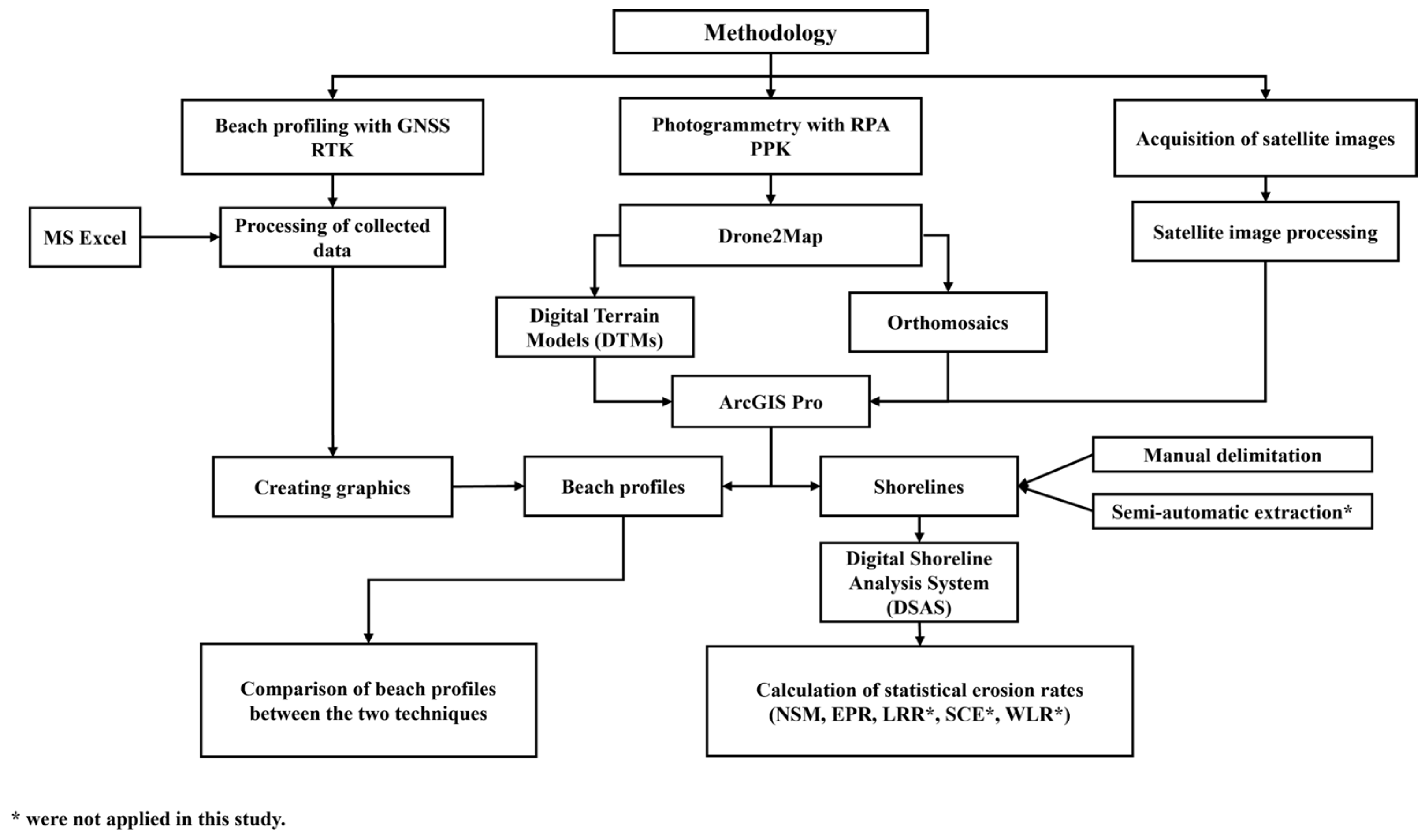
The methodology is summarized in Figure 2. It defines the analysis for beach profiles and shoreline evolution. For this study, the shoreline will follow the definition of the line of vegetation, as it is stated as a good erosion indicator from aerial photographs and long-term monitoring [23]. For a more understandable approach, the methodology is subdivided into data collection and data processing.

2.2.1. Data Collection

This research was carried out by obtaining historical information from satellite images and in situ data (i.e., beach profiles and RPA aerial photographs). For the three sites studied, topographic techniques were applied to survey beach profiles with DGNSS RTK and photogrammetry with RPA PPK and satellite images.
The satellite images used in this study were acquired from the commercial platform Maxar Technologies, dated 2010. These images were captured by the WorldView-2 and QuickBird satellite missions (50 cm spatial resolution) and processed in ArcGIS Pro v3.4.0. The images were used to evaluate the historical evolution of the shoreline at Playa Caracol, Playa Farallón, and Playa San Carlos.

Beach Profile Surveying with Differential GNSS RTK

The topographic surveys of beach profiles were measured using a South Galaxy G1 Differential GNSS RTK. These profiles were surveyed along the length and width of the corresponding area of the study sites during the dates shown in Table 1. For this technique, a ground control point (GCP) was georeferenced with the WGS 1984 UTM Zone 17N coordinate system. The GCP was necessary for the configuration of the DGNSS Base, as it requires a known fixed position on the ground to operate [24]. After establishing the base at the site, the mobile GNSS receiver’s “Rovers” were configured.
Beach profiles were surveyed following the methodology described by Vecchi et al. (2021) [25]. Their approach used cross-shore sections spaced 10–15 m, extending from the emerged beach to bathymetric depths of 0.7–0.8 m using a centimeter pole. In this study, section spacing was adjusted to 15–20 m along the shore to account for site geomorphology. Profiles began at the vegetation line (when present) or fixed structures and extended to the emerged bathymetry of 0.4–0.5 m. Points were recorded at 2–3 m intervals, with additional measurements at abrupt slope changes. To maximize coverage, surveys were conducted during low tide, allowing a larger offshore area to be captured with Differential GNSS.

Photogrammetry with RPA PPK

RPA captured aerial photographs with a DJI Mavic 3E over the three study sites on the dates shown in Table 1. These surveys were conducted using integrated PPK technology [26,27]. To execute these topographic surveys, the polygon of interest to be monitored at each study site was first drawn in Google Earth Pro and then exported as a KML file. These files were imported into the RPA remote control via an SD memory card, where the polygon was visualized, and a flight path was assigned for each study site using DJI Pilot 2.
At each study site, the drone’s GNSS base station was positioned at the designated ground control point, and flight parameters were configured, including altitude, speed, image overlap, and spatial resolution (1.00–3.50 cm/pixel). The RPA PPK flights were then executed in accordance with these specifications. Environmental conditions—such as precipitation, wind, temperature, tide level, and wave activity—were carefully assessed prior to each survey. Recommended limits include wind speeds below 40 km/h at altitudes under 200 m, precipitation less than 0.5 mm/hr, and temperatures not exceeding 35 °C. Flights should be conducted during daylight hours and under clear skies (0% cloud cover) for optimal image quality. In Panamá, the Civil Aviation Authority prohibits uncertified equipment from operating in adverse weather, including heavy rain, strong winds, or storms. To minimize errors caused by wave motion, surveys should be scheduled during low tide to maximize dry ground coverage.
The aerial photographs were processed using ArcGIS Drone2Map v2024.1. An educational license was provided by the School of Civil Engineering at the Universidad Tecnológica de Panamá. The processing of these images was carried out in three main phases: (1) Alignment of images, (2) Densification of point clouds and meshes, and (3) Construction of 2D products (orthomosaics and digital terrain models). This software first loads the images and then adjusts the projection parameters to WGS 1984 Zone 17N and the EGM2008 Geoid. Next, the standard image processing parameters were configured.
During the image alignment phase, the camera parameters were automatically calibrated using image metadata. The point cloud was densified to a high level, which improved the geometric detail of the resulting reconstruction. The 2D products obtained during these processes were orthomosaics and digital terrain models (DTMs).

2.2.2. Data Analysis

Estimating Coastal Erosion Using the DSAS Tool
The evolution of multiple shorelines was evaluated using a multitemporal analysis spanning two monitoring periods. A short-term period, which included an analysis for 3 months in Playa Caracol and 5 months in Playa Farallón. A long-term period evaluating shoreline movement over 13 years. The long-term analysis was performed at the three sites, Playa Farallón, Playa San Carlos, and Playa Caracol (Figure 1).
Shorelines were first digitized using orthomosaics from RPA PPK monitoring campaigns. This shoreline digitization was performed in ArcGIS Pro, and the line of vegetation was used as a proxy for the shoreline. The line of vegetation here is considered the seaward limit of vegetation and/or structures if present (i.e., wall, housing, fences) [1,23].
Coastal erosion was calculated using the Digital Shoreline Analysis System (DSAS v5.1) tool, compatible with ArcMap v10.4 to v10.7+. Coastal erosion was evaluated using Net Shoreline Movement (NSM) and End Point Rate (EPR) values. NSM defines the total movement of a shoreline between different dates. EPR, on the other hand, is the rate at which that shoreline is changing in time, with units of m/yr. To evaluate these statistical rates, an offshore baseline was established as the starting point for all transects generated by the DSAS tool. Transects intersect each shoreline to create a measurement point, and these measurement points are used to calculate shoreline change rates [28].
NSM and EPR values were estimated for the short- and long-term analyses at the studied sites, except at Playa San Carlos, where NSM and EPR were not calculated for the short-term analysis. Short-term analysis at Playa San Carlos was not feasible with one RPA PPK monitoring campaign. Ranges for coastal erosion/accretion used the reference values of Luijendijk et al. (2018) [7]. In these ranges, erosion occurs with EPR lower than −0.5 m/yr and accretion with EPR values above 0.5 m/yr. Stable shorelines will fall within the range of −0.5 to 0.5 m/yr. These thresholds are useful for management planning in coastal zones [29,30,31].
  • Short-term monitoring
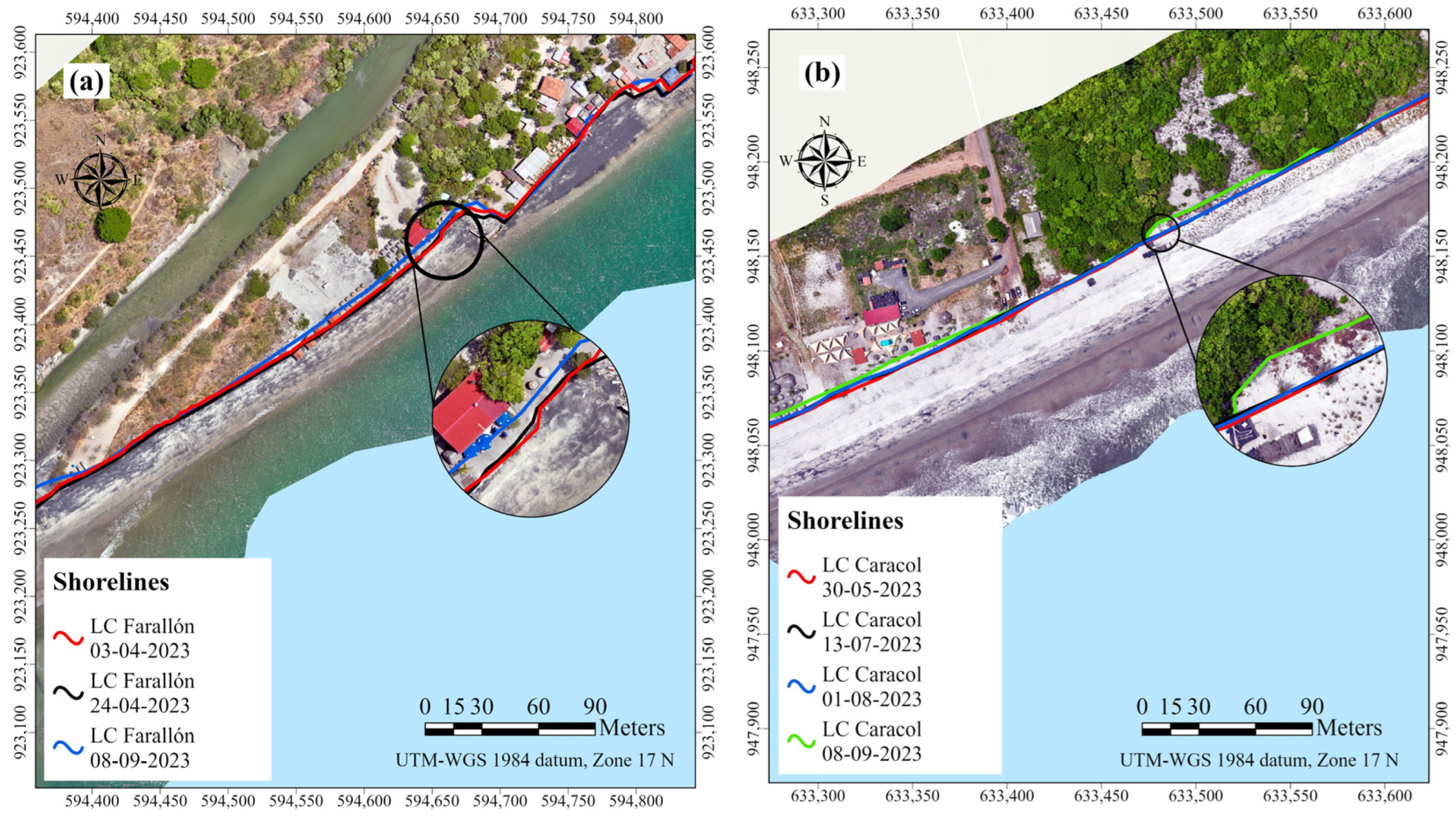
At Playa Farallón, the shoreline extended for 694 m (LC Farallon). NSM and EPR were calculated from RPA surveys between April 2023 (red shoreline) and September 2023 (blue shoreline) in Figure 3a, resulting in a 5-month period. The transect spacing length was 5 m, and a smoothing distance filter of 500 m. At Playa Caracol, the shoreline extended 425 m (LC Caracol). Here, NSM and EPR were calculated for a 3-month period, between May 2023 (red shoreline) and September 2023 (green shoreline) in Figure 3b. For the DSAS tool, the transect spacing length was 5 m, and the smoothing distance filter was 100 m. The smoothing distance filter is required to smooth the baseline and improve the accuracy of erosion rates [28].
  • Long-term monitoring
For the long-term monitoring analysis, all sites covered a 13-year period. For Playa Farallón, the 695 m shoreline change was analyzed between March 2010 and September 2023. The NSM and EPR were defined with a spacing length of 5 m and a smoothing distance filter of 500 m. Playa San Carlos covered 987 m of shoreline. The changes of this shoreline were covered between September 2010 and May 2023. NSM and EPR were estimated with a transect spacing of 5 m and a smoothing distance filter of 500 m. Playa Caracol, a linear stretch of 425 m of shoreline, was analyzed between January 2010 and September 2023. For both statistical rates (NSM and EPR), the transect spacing length was 5 m, and the smoothing distance filter was 100 m.
Beach Profiles Monitoring
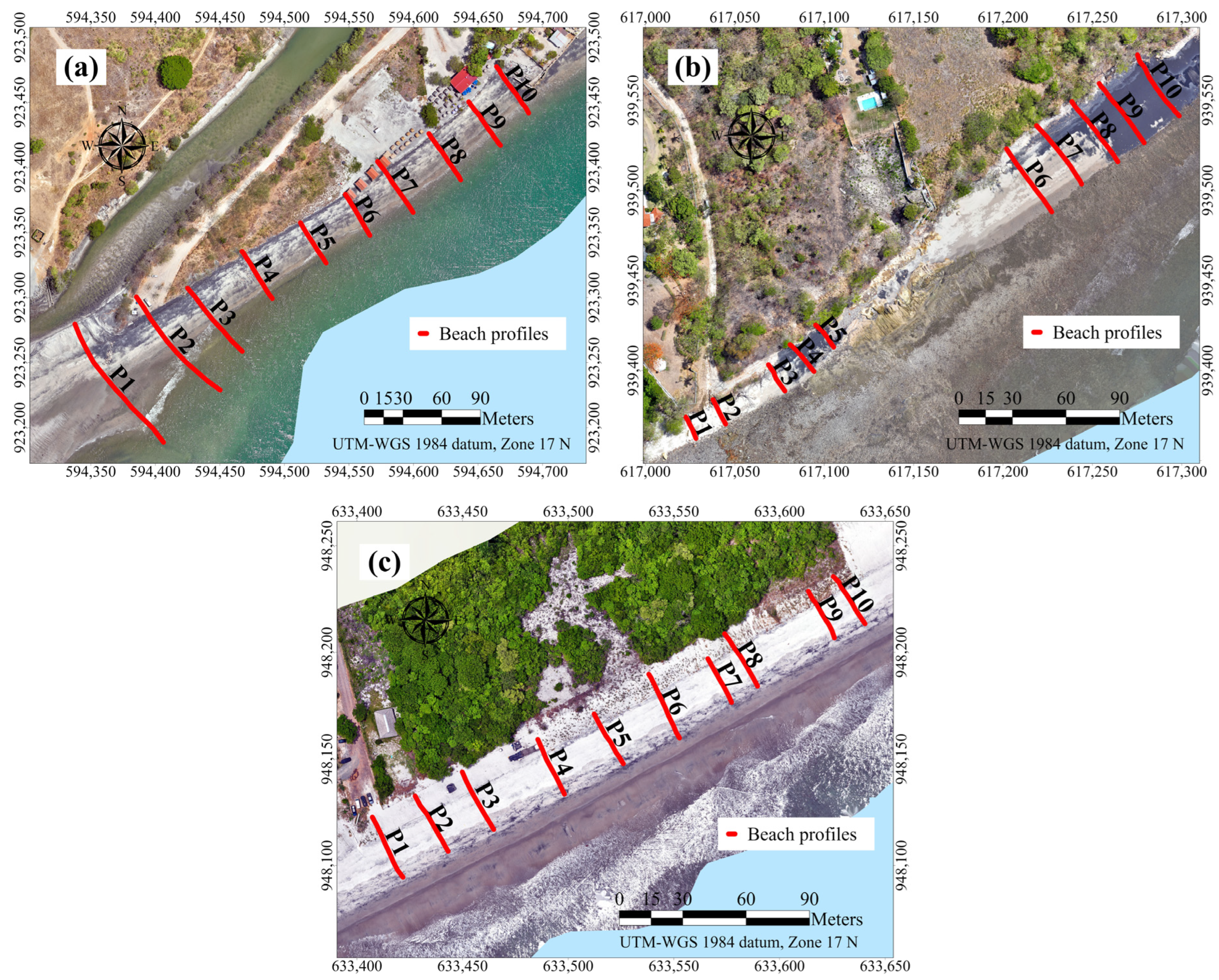
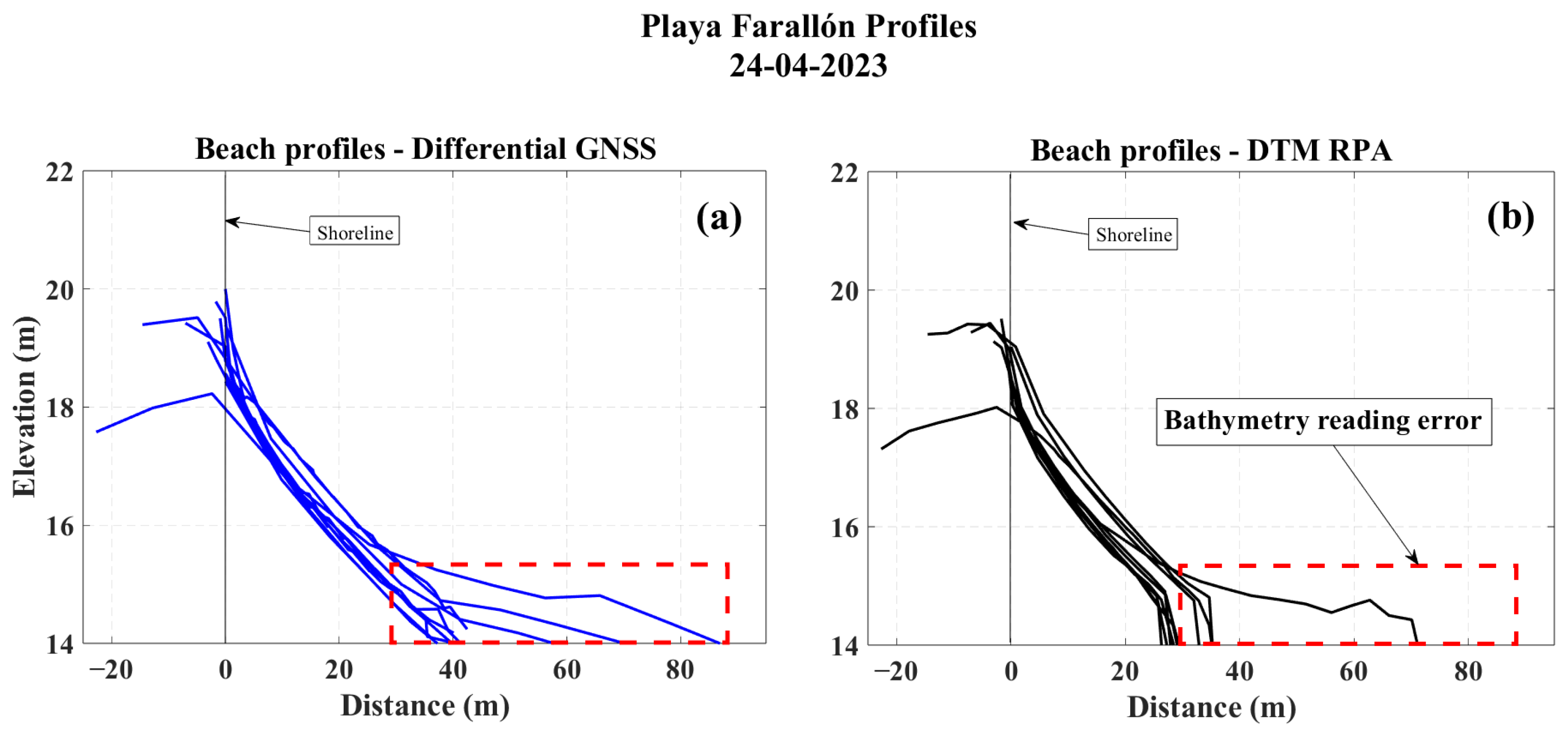
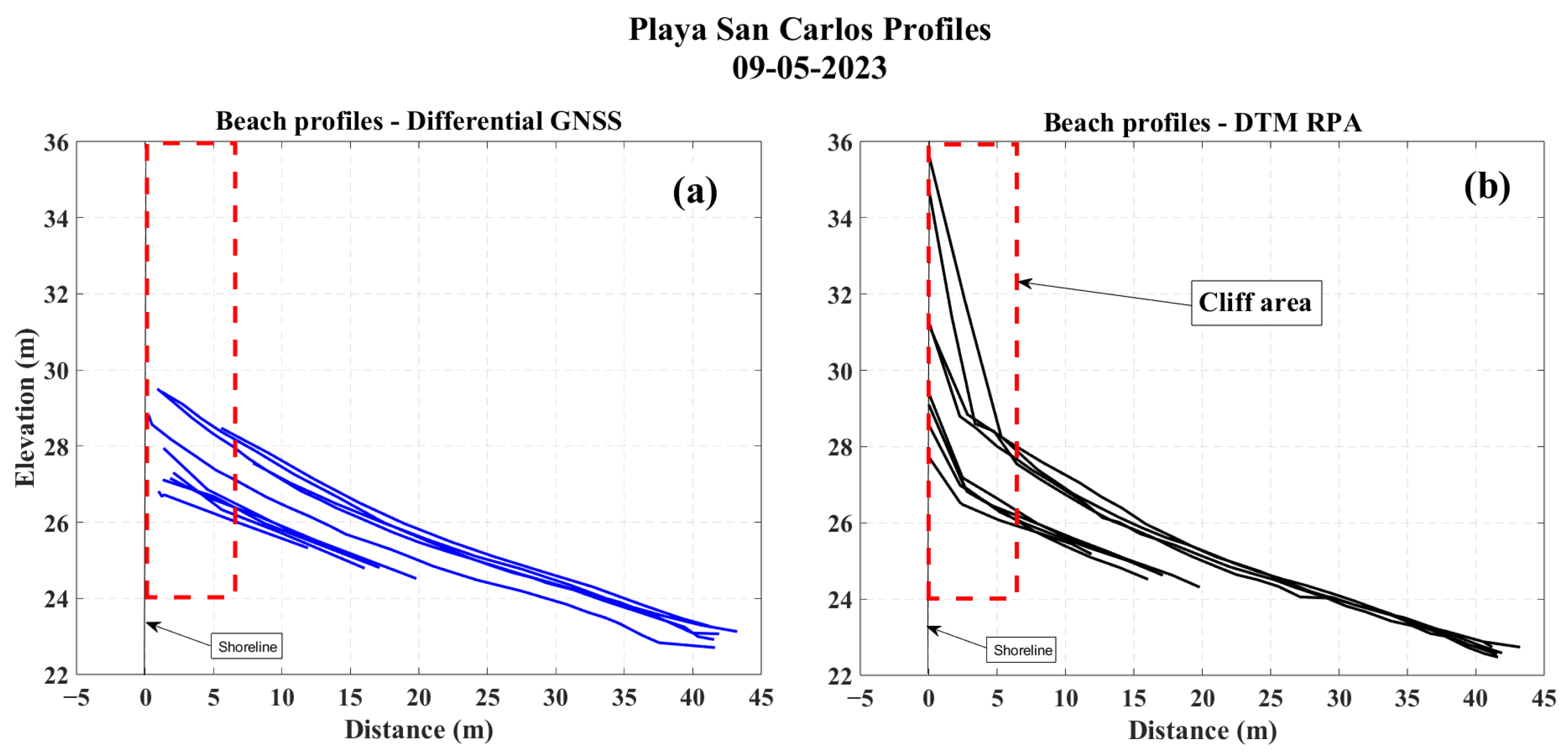
Beach profiles were obtained from digital terrain models (DTMs) and from topographic surveys using Differential GNSS. Ten beach profiles were selected at each study site to estimate differences in elevations across profiles between techniques. To make this comparison, one monitoring date per study site was selected. For Playa Farallón, the beach profiles are from 24 April 2023 (Figure 4a), for Playa San Carlos from 9 May 2023 (Figure 4b), and for Playa Caracol from 30 May 2023 (Figure 4c). The analysis was conducted with MATLAB vR2023a and MS Excel.

3. Results

3.1. Estimating Coastal Erosion

The estimation of shoreline movement was studied by analyzing two monitoring periods: The first period comprised a short-term 3-month monitoring period at Playa Caracol and a 5-month period at Playa Farallón. The second period was a long-term analysis spanning 13 years, from 2010 to 2023. In both monitoring periods, NSM and EPR were calculated, except at Playa San Carlos, for the short-term monitoring.

3.1.1. Short-Term Monitoring

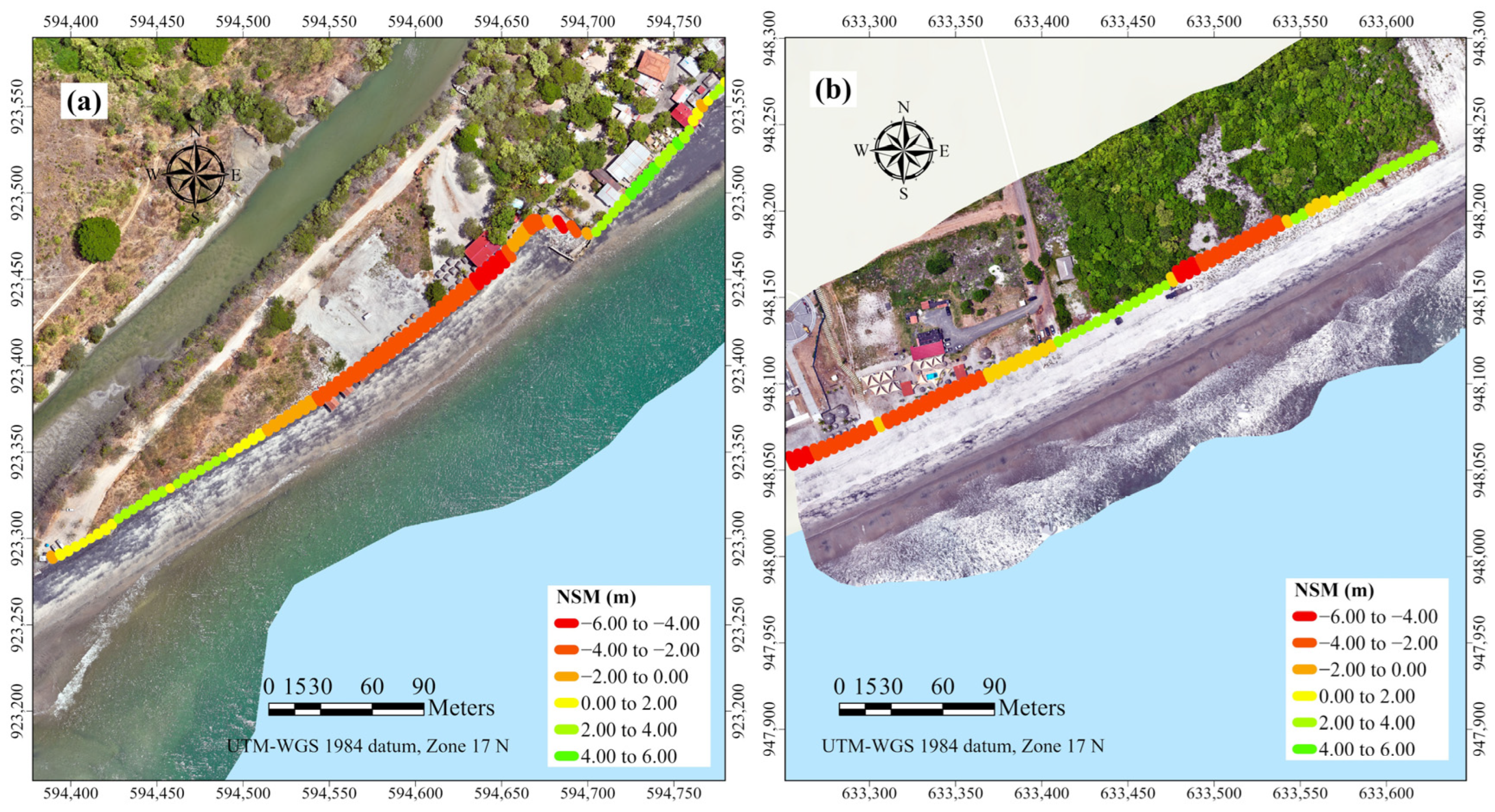
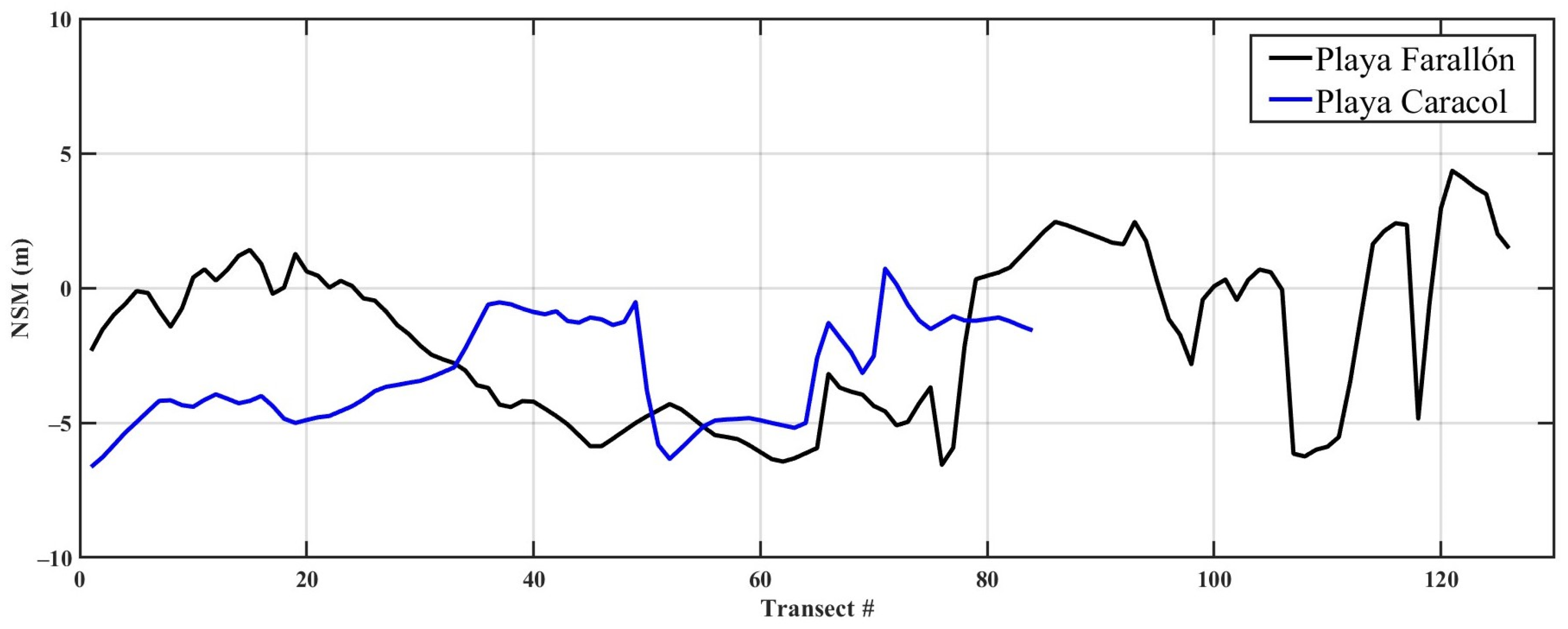
Short-term NSM for Playa Farallón (5 months) indicates spatial average values of −3.70 m for negative shoreline movement and 1.41 m for a positive shoreline movement. Maximum negative movement was −6.56 m and maximum positive movement of 4.35 m (Figure 5a). Short-term NSM for Playa Caracol (3 months) indicates spatial average negative movement of −3.26 m and 0.42 m of positive shoreline movement. In turn, a maximum negative distance of −6.64 m and a maximum positive distance of 0.71 m were calculated (Figure 5b).
Short-term shoreline movement (NSM) at Playa Farallón and Playa Caracol per transects is observed in Figure 6, where transects with values below zero receded during the monitoring period, while those with values above zero showed a beach recovery. These transects were analyzed from left (transect #1) to right (end) according to Figure 6.
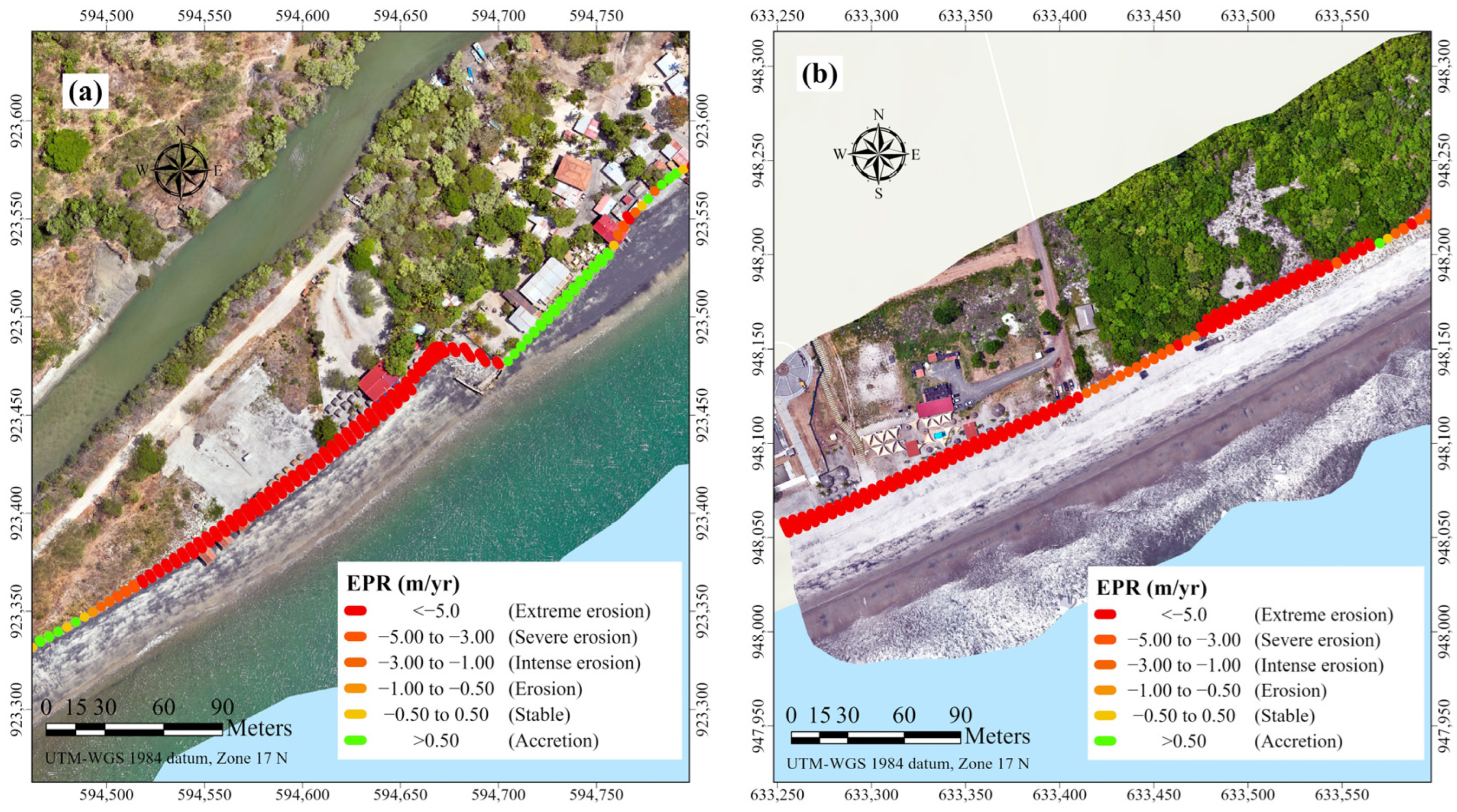
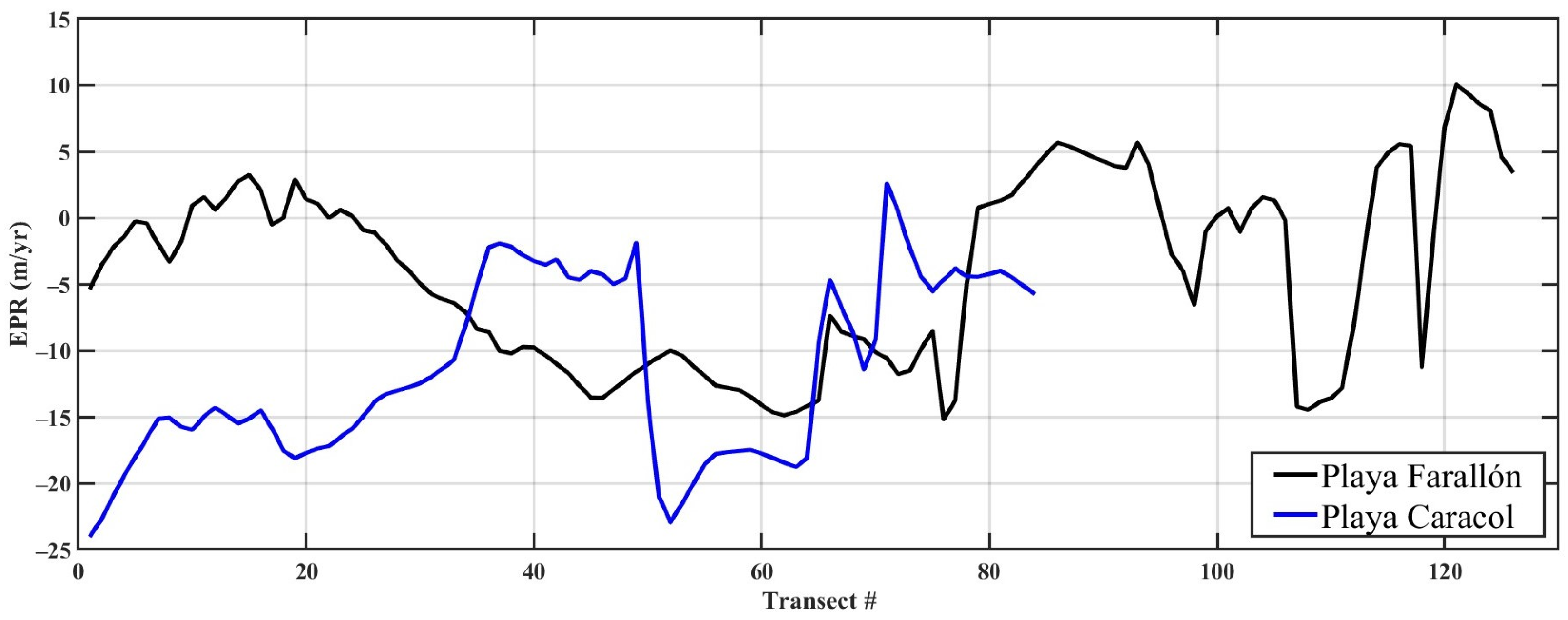
EPR results for Playa Farallón showed that of the transects studied, 60% showed erosion, 34% showed accretion, and 6% remained stable. A spatial average erosion rate of −8.88 m/yr (extreme erosion) and a spatial average accretion rate of 3.62 m/yr. Maximum erosion rates of −15.17 m/yr and maximum accretion of 10.06 m/yr (Figure 7a). EPR results for Playa Caracol showed that 98% of the transects had erosion, while accretion and stable sites accounted for 1% in each case. Spatial average erosion rate of −11.79 m/yr (extreme erosion) with a maximum of −24.03 m/yr and a spatial average accretion rate of 2.58 m/yr with a maximum accretion of 2.58 m/yr (Figure 7b).
EPR per transect for the short-term analysis shows that Playa Caracol shoreline has more erosion than Playa Farallón, where some transects had values of EPR above 0.5 m/yr (Figure 8). These transects were analyzed in position from left (transect #1) to right (end) according to Figure 7.
Table 2 summarizes the short-term coastal erosion results monitored at Playa Farallón and Playa Caracol, including eroded/accreted percentages of shorelines, maximum values, and spatial averages of erosion/accretion based on the NSM and EPR.

3.1.2. Long-Term Monitoring

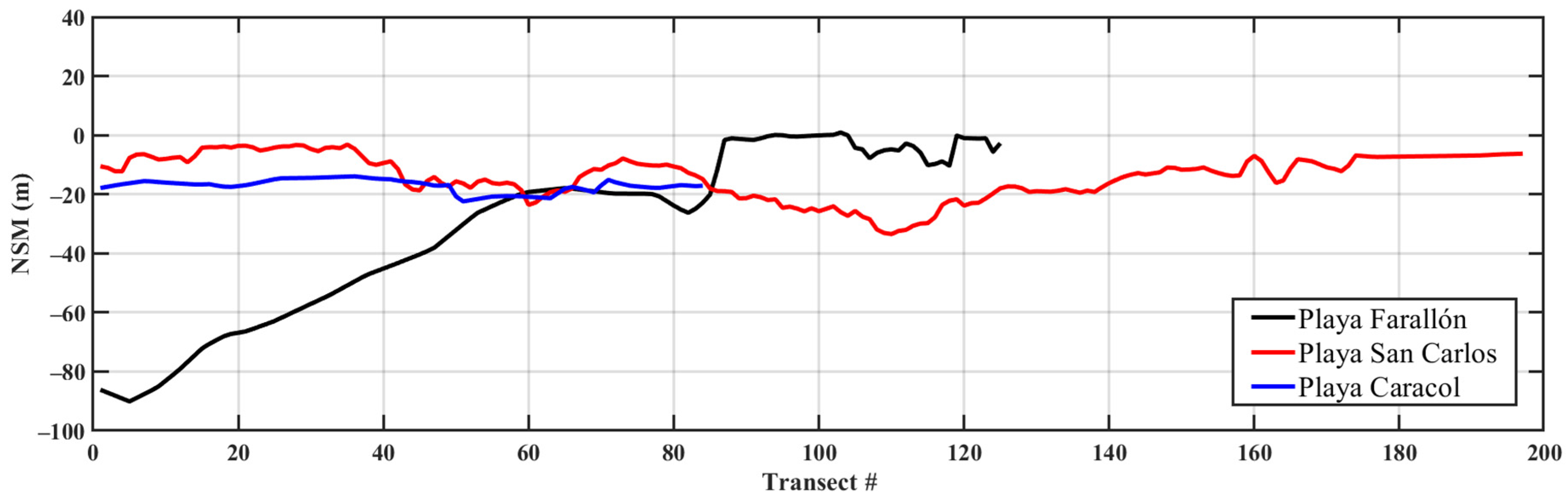
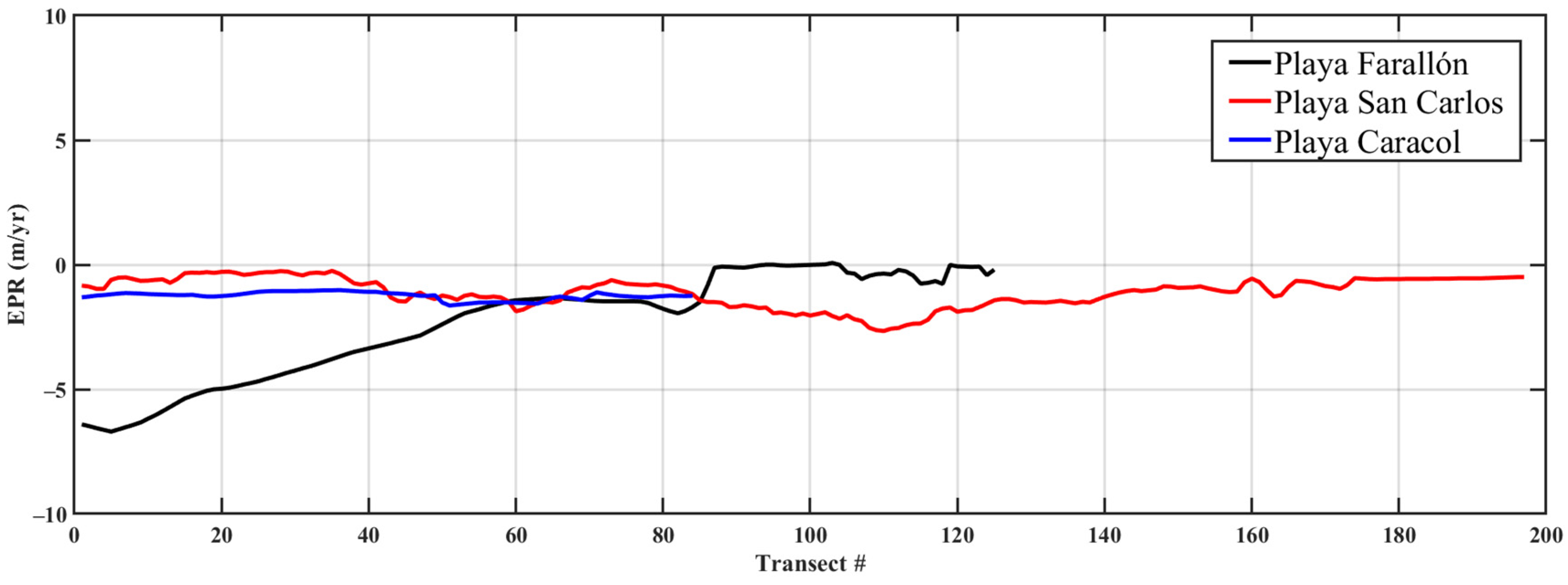
NSM and EPR were estimated for a 13-year period at the three beaches. All of them showed negative shoreline movement and erosional rates, indicating no sediment gain along the beach. Maximum negative shoreline movement (erosion) was recorded at Playa Farallón with a negative distance of −90.11 m, followed by Playa San Carlos with a value of −33.48 m, and then Playa Caracol with a negative shoreline movement of −22.43 m. Spatial average movement of shorelines had values of −32.17 m for Playa Farallón, −13.90 m for Playa San Carlos, and −17.10 m for Playa Caracol (Figure 9).
At Playa Farallón, 69% of transects showed erosion, and 31% remained stable, with a maximum rate of −6.70 m/yr and an average of −3.20 m/yr (severe erosion). At Playa San Carlos, 89% of transects eroded, and 11% were stable, with a maximum EPR of −2.66 m/yr and a spatial average of −1.20 m/yr (intense erosion). At Playa Caracol, all transects indicated erosion (100%), with a maximum EPR of −1.64 m/yr and a spatial average of −1.25 m/yr, classified as intense erosion (Figure 10).
Table 3 summarizes long-term coastal erosion results for Playa Farallon, Playa San Carlos, and Playa Caracol, including transect erosion/stability percentages and maximum and average NSM and EPR values.

3.2. Beach Profiles Comparison

Ten beach profiles were selected from the two techniques, RPA DTM vs. Differential GNSS (Figure 4). For Playa Farallón, beach profiles were selected from the 24 April 2023 campaign. Results showed that the beach profiles surveyed with DTM RPA present reading noise in the areas covered by water, since the submerged portion was partially surveyed (Figure 11).
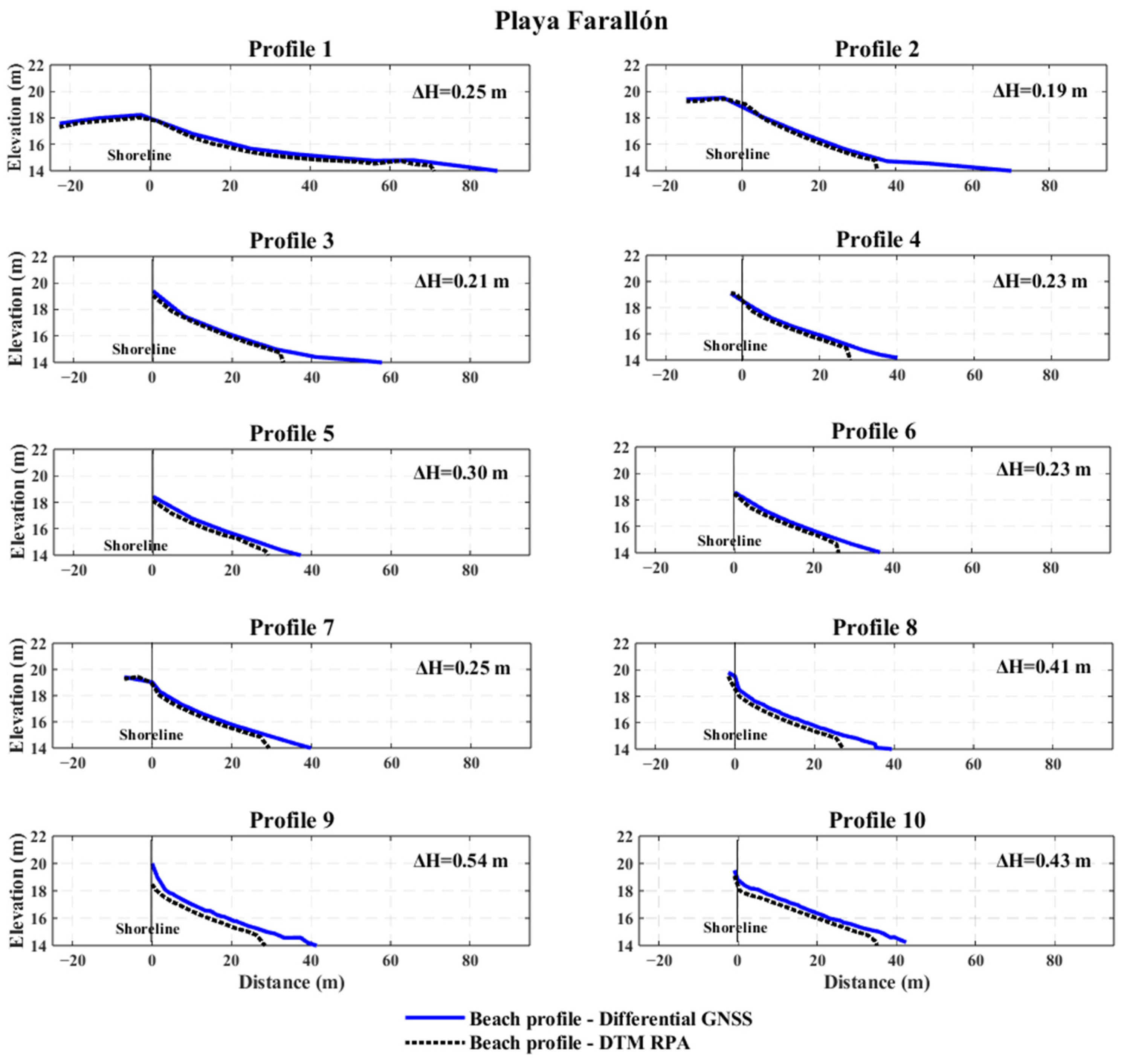
Submerged profiles were removed to reduce the noise in comparison between the two techniques. Results showed that elevation differences (ΔH) obtained between profiles 1–7 are below 0.30 m compared to the 8–10 beach profiles (Figure 12). However, the profiles that showed the most significant changes in ΔH had values above 0.25 m, reaching a difference of 0.54 m. All beach profiles show that the DTM RPA profiles show a change in elevation below those obtained with Differential GNSS. The average elevation difference (ΔH) between the two techniques was 0.31 ± 0.12 m.
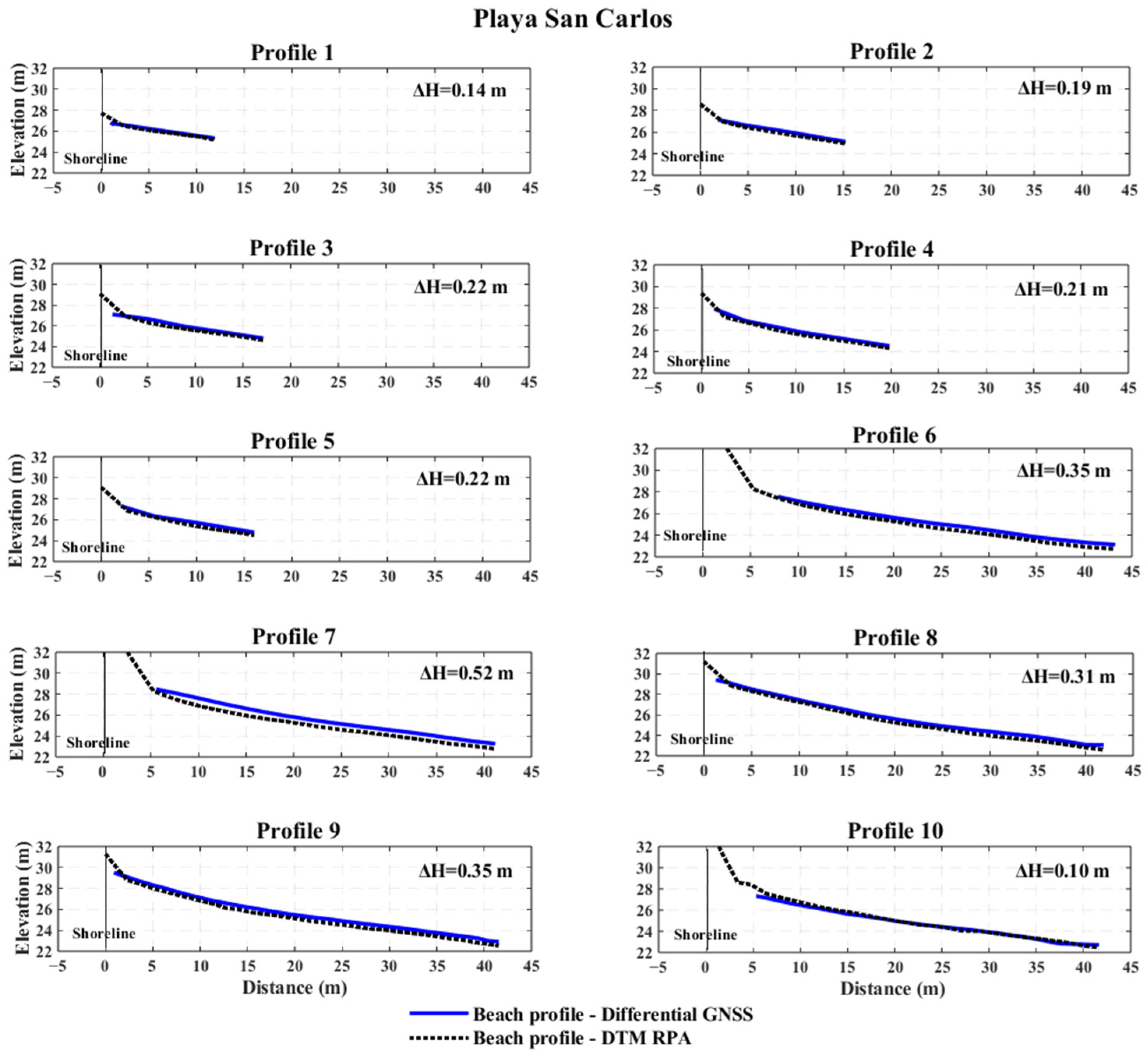
Beach profiles (10) were surveyed at Playa San Carlos from DGNSS and DTM RPA techniques (Figure 4). The profiles were surveyed on 9 May 2023, and show vast differences near the vegetation line. Playa San Carlos featured rocky bottoms and significant elevation changes between the beach and the vegetation line. The “cliff area” could not be surveyed using DGNSS (Figure 13).
Beach profiles showed minimum elevation differences (ΔH) between profiles 1–5 and 10, with values from 0.10 to 0.22 m (Figure 14). However, the remaining profiles showed greater changes in ΔH, with values of 0.52 m. The average elevation difference (ΔH) between the two techniques was calculated at this site and was 0.26 ± 0.12 m.
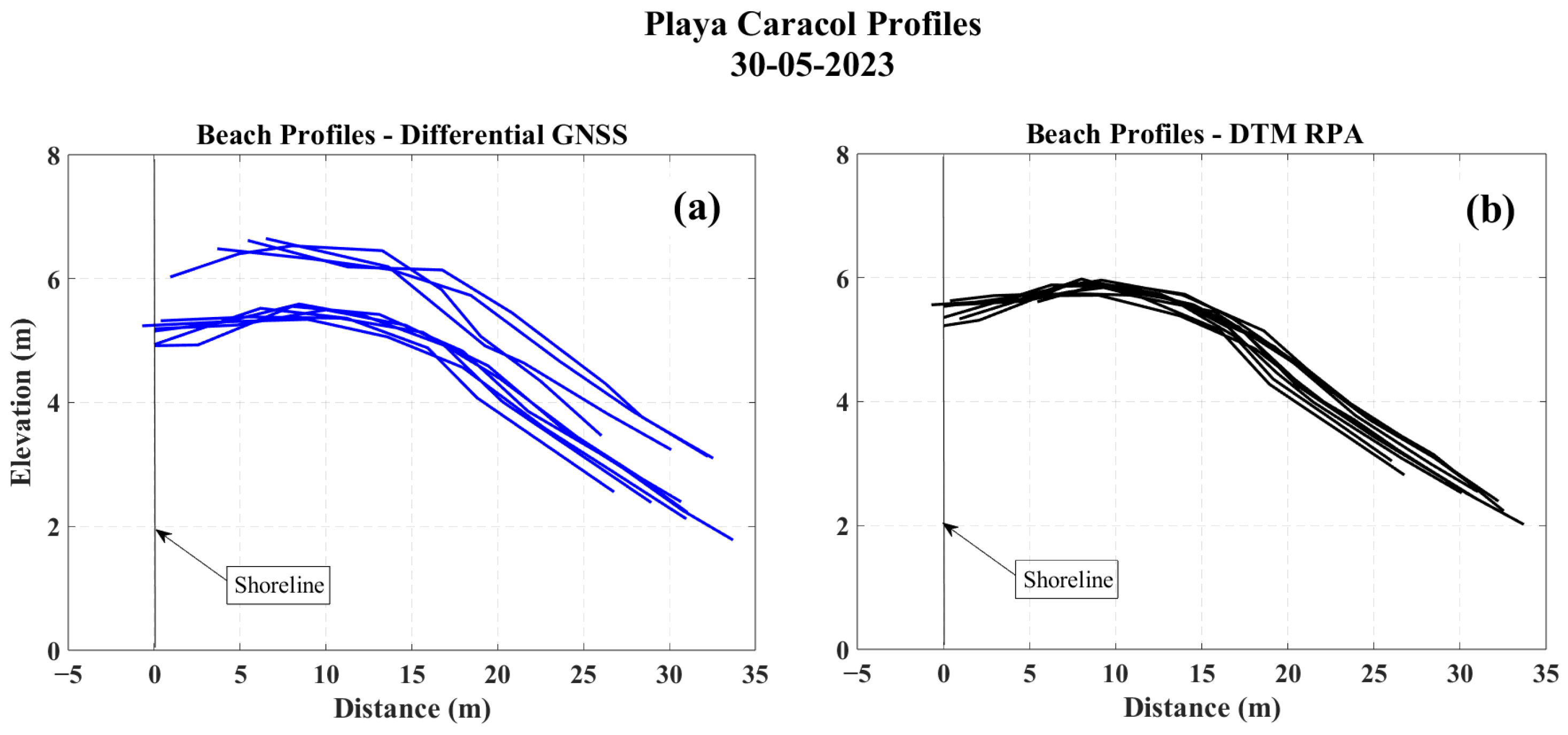
Beach profiles were captured during the 30 May 2023 campaign at Playa Caracol (Figure 15) using the DGNSS and the DTM RPA. At this study site, beach profiles were more consistent, with no abrupt changes, compared to the previous sites.
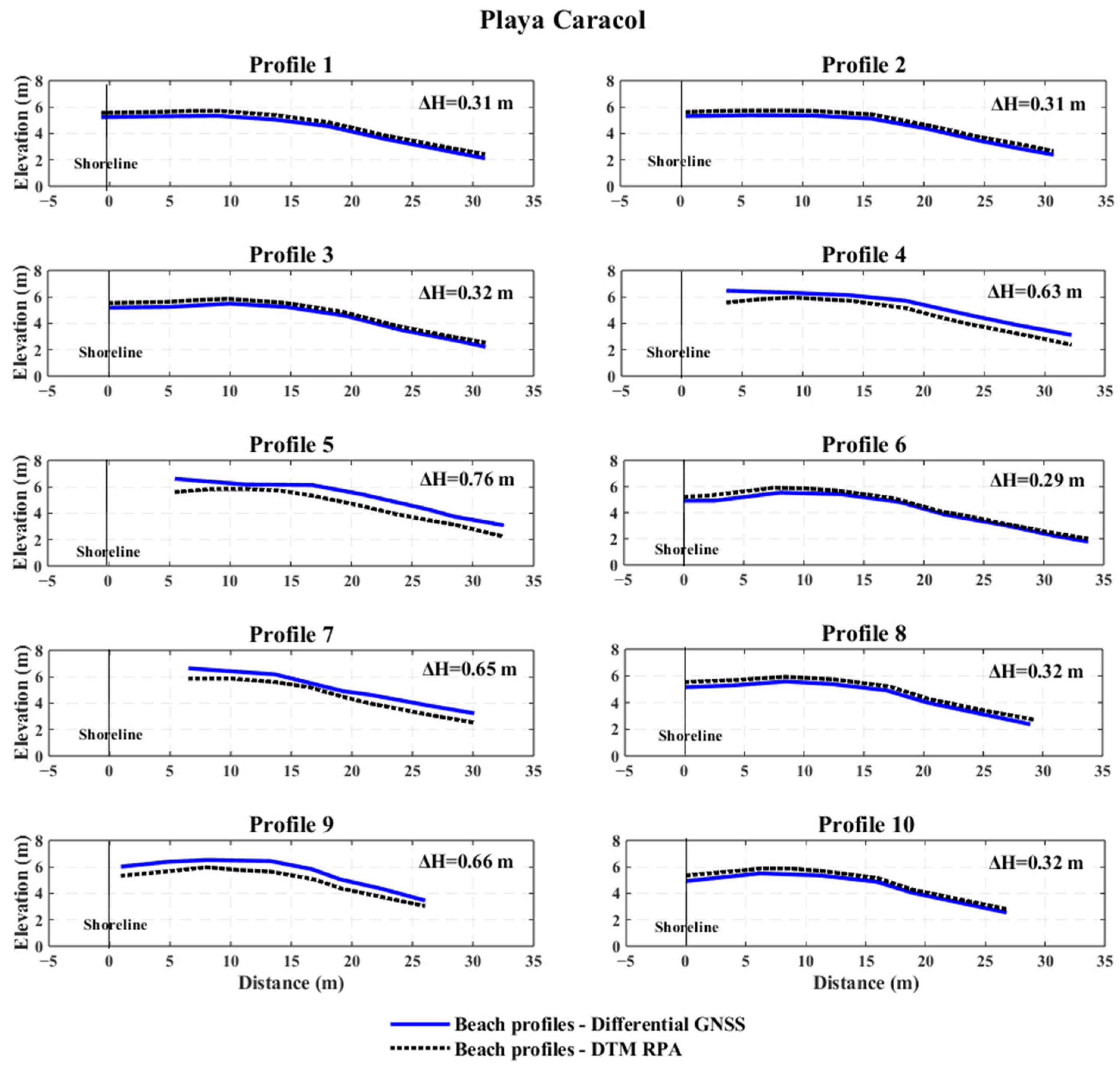
Beach profiles (10) from Playa Caracol showed minimal differences (ΔH) in elevation (0.29 to 0.32 m) for profiles 1–3, 6, 8, and 10. However, profiles 4, 5, 7, and 9 show greater changes in ΔH with values ranging from 0.63 to 0.76 m. For the above-mentioned profiles, the DTM RPA values were lower than the DGNSS. The average elevation difference (ΔH) between the two techniques was calculated at this site and was 0.46 ± 0.19 m (Figure 16).

4. Discussion

4.1. Analysis and Discussion of Results

4.1.1. Coastal Erosion

Short-term (3–5 months) coastal erosion monitoring showed markedly higher rates compared to long-term (13 years) analysis. For example, Playa Farallón recorded average erosion rates of −8.88 m/yr in the short term versus −3.20 m/yr in the long term, while Playa Caracol exhibited −11.79 m/yr and −1.25 m/yr, respectively. Playa San Carlos showed −1.20 m/yr for the long-term period. Elevated short-term rates likely reflect the influence of extreme events such as storms, heavy rainfall, and storm surges, combined with limited sediment replenishment, whereas long-term trends suggest partial recovery [32,33,34]. These findings confirm that short-term shoreline changes do not represent seasonal averages, as noted by Smith & Zarillo (1990), and caution against extrapolating short-term results to other periods [35].
Long-term erosion rates at Playa Caracol (−1.25 m/yr) and Playa San Carlos (−1.20 m/yr) align with Vallarino Castillo et al. (2022), who reported similar values (−1.12 to −1.08 m/yr) for nearby sites using Landsat imagery and automated shoreline extraction [15]. Despite methodological differences—manual delineation in this study versus automated extraction—the results are consistent. Similarly, Rodríguez et al. (2022) found Punta Chame experienced rates up to −6.60 m/yr between 2005 and 2017, while Playa Caracol remained below −2.00 m/yr [16], corroborating our findings.
The integration of RPA photogrammetry and satellite imagery proved effective for monitoring erosion in inaccessible areas such as Playa San Carlos, characterized by cliffs and rocky terrain. These results support previous findings by Vecchi et al. (2021), highlighting the capability of RPAs to capture complex surfaces [25]. For accurate shoreline delineation, high-resolution satellite imagery (50–60 cm/pixel) is essential. This study demonstrates that combining historical satellite data with RPA-derived orthomosaics enables reliable long-term shoreline monitoring.

4.1.2. Beach Profiles

Figure 12, Figure 14 and Figure 16 compare elevation differences (ΔH) between beach profiles surveyed with GNSS and RPA at each site. Average ΔH values were 0.31 ± 0.12 m at Playa Farallón, 0.26 ± 0.12 m at Playa San Carlos, and 0.46 ± 0.19 m at Playa Caracol, indicating greater discrepancies at Playa Caracol and smaller differences at Playa San Carlos. These variations may result from factors such as GNSS base positioning, pole handling, number of ground control points (GCPs), RPA flight altitude, weather conditions, GNSS signal interference, and data processing methods. Across all sites, the mean ΔH was 0.34 ± 0.10 m, comparable to Vecchi et al. (2021) [25], who reported differences up to 0.30 m, with 90% of points below 0.25 m. Previous studies confirm that Differential GNSS provides higher accuracy than RPA photogrammetry, which achieves decimeter precision (±0.34 m) versus centimeter accuracy for GNSS [27,36,37].
Profile shapes were also compared (Figure 11, Figure 13 and Figure 15). RPA photogrammetry provided a more detailed terrain representation due to its higher point density and enabled surveying of inaccessible areas, such as cliffs and rocky zones, unlike GNSS. For example, Playa San Carlos’ cliff-topography was captured using RPA, while GNSS could not access this area. However, profiles in water-covered zones showed greater shape variation and elevation differences with RPA.
Differential GNSS remains the most accurate method for beach profiling and requires no post-processing, but it is unsuitable for sites with cliffs, dense vegetation, or rocky terrain [27,36,37]. Its use is recommended for short- and long-term monitoring at quarterly intervals to capture seasonal changes (±10%), while monthly surveys are advised during ENSO or extreme events [32,38]. Despite its precision, GNSS involves higher labor and cost, limiting its feasibility for frequent or extended monitoring [39].

4.2. Coastal Erosion Monitoring Plan

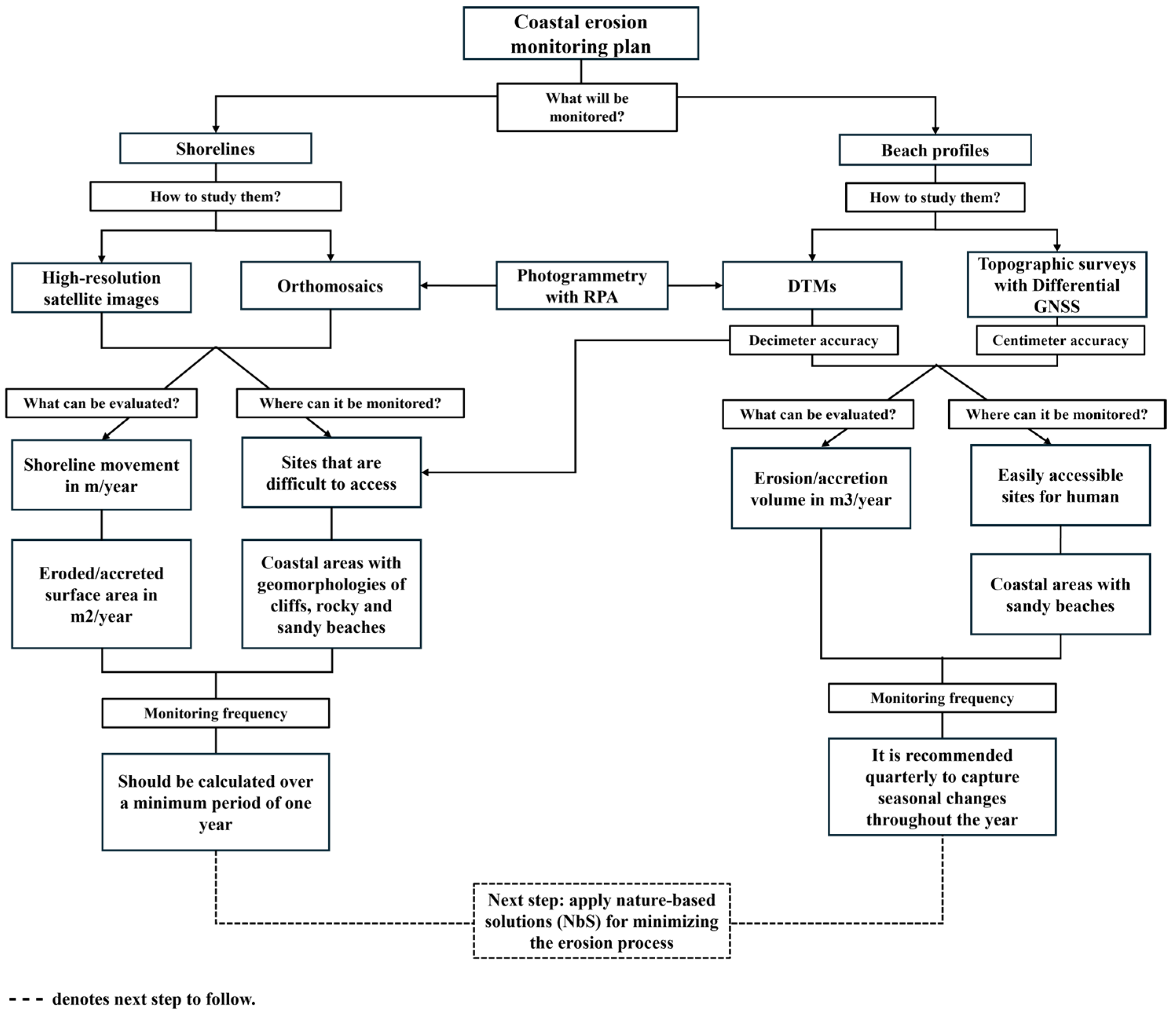
Based on the analysis and discussion of the results from this research, this section presents the coastal erosion monitoring plan developed. This plan focuses on answering three main questions: how, when, and where to monitor coastal erosion. The criteria selected to describe the coastal erosion monitoring plan are detailed in Figure 17.
Coastal erosion monitoring should align with site-specific geomorphology to ensure accurate results. Beaches with rocky or cliffed terrain are best surveyed using remotely piloted aircraft (RPA), as this method improves safety and accessibility while maintaining reliable elevation data. Conversely, sandy beaches should primarily be monitored with RTK-Differential GNSS for detailed beach profile analysis. When using this approach, include dune banks to capture full variability and establish fixed reference points (e.g., stakes or posts) for consistent long-term measurements.
RPA photogrammetry is ideal for remote or inaccessible areas, as it captures extensive spatial data and produces multiple outputs such as orthomosaics, digital terrain models, and 3D models. However, accuracy depends on proper flight planning—altitude, timing, image overlap, and ground control points (GCPs). Using Post-Processing Kinematic (PPK) technology minimizes GCP requirements and reduces GNSS errors caused by vegetation or obstructions. If PPK is unavailable, conventional RPA mode can be used with additional GCPs, though this increases fieldwork and post-processing time.
PPK technology is preferred over RTK for RPA operations because it reduces GNSS errors caused by vegetation or obstructions. If the RPA lacks RTK/PPK capability, conventional mode can be used with additional ground control points (GCPs), though this increases fieldwork and post-processing time. RPA technology is highly effective for tracking shoreline retreat or advance (m/yr) and calculating eroded or accreted areas (m2/yr) using temporal orthomosaics. High-resolution satellite imagery remains essential for accurate long-term assessments.
Differential GNSS surveys provide centimeter-level accuracy for spatial data collection but require significantly more field time than RPA photogrammetry. Unlike RPA methods, they do not involve post-processing, which offsets the extended fieldwork. This technique should be performed by at least two trained operators familiar with RTK technology. Measurements are recommended at 1 m intervals, including points at slope changes or abrupt profile variations. Additionally, this method can be applied to estimate volumetric erosion rates in cubic meters per year (m3/year), Vecchi et al. (2021) [25].
For shoreline erosion and accretion studies using orthomosaics from RPA photogrammetry and satellite imagery, the End Point Rate (EPR) is the preferred metric. EPR should be calculated over a minimum period of one year (≥1 year) to capture seasonal shoreline variability. This method requires only two shoreline positions, such as March 2015 and March 2025. When the objective is to measure shoreline displacement in meters over short or long periods, the Net Shoreline Movement (NSM) metric is recommended.
Monitoring frequency is critical for obtaining reliable erosion rates. It should reflect local environmental conditions—such as rainfall, wind, waves, and tidal levels—as well as the technical and economic feasibility of the study. Beach profile surveys are best conducted quarterly to capture seasonal changes. However, in areas affected by extreme events such as ground swells, storms, tropical waves, and/or ENSO, monthly monitoring is advised to ensure accurate representation of rapid changes.
Rising sea levels and their influence on coastal erosion, combined with emerging nature-based protection strategies, highlight the urgency of regional and local monitoring. Implementing sustainable materials and biomineralization processes using non-pathogenic soil bacteria offers a promising alternative to traditional engineering, strengthening tidal sands and reducing erosion risk [17,18]. Li et al. (2024) demonstrated that these techniques enhance sediment integrity, contributing to shoreline stability [17]. By integrating these approaches with the proposed coastal erosion monitoring plan, decision-makers can identify priority sites for intervention, ensuring that protective measures are applied where they are most needed.

5. Conclusions

Short-term (3–5 months) coastal erosion monitoring showed markedly higher rates compared to long-term (13 years) analysis. Playa Farallón recorded average erosion rates of −8.88 m/yr in the short term versus −3.20 m/yr in the long term, while Playa Caracol exhibited −11.79 m/yr and −1.25 m/yr, respectively. Playa San Carlos showed −1.20 m/yr for the long-term period. Elevated short-term rates are likely influenced by extreme events such as storms, heavy rainfall, and storm surges. Profiles surveyed with GNSS (Global Navigation Satellite System), and RPA (Remotely Piloted Aircraft) showed average elevation differences (ΔH) of 0.31 ± 0.12 m at Playa Farallón, 0.26 ± 0.12 m at Playa San Carlos, and 0.46 ± 0.19 m at Playa Caracol. These results indicate greater discrepancies at Playa Caracol and minor differences at Playa San Carlos.
These findings underscore the importance of geomorphology-driven selection of monitoring techniques for reliable coastal assessments. Differential GNSS remains the most accurate for sandy beaches across scales from short- to long-term monitoring. At the same time, RPA photogrammetry combined with satellite imagery is indispensable for rocky or inaccessible zones and enhances long-term shoreline change analysis. This approach ensures robust data for coastal management and policy decisions.
The proposed monitoring plan provides a practical framework for coastal management, offering scientific data to support national policies, land-use planning, and disaster risk reduction strategies. For research, it establishes a methodological framework for integrating high-resolution topographic techniques with remote sensing, enabling scalable, cost-effective monitoring of diverse coastal environments. This approach supports evidence-based decisions and enhances resilience against climate-driven coastal change.

Author Contributions

Conceptualization, G.G.-C.; methodology, G.G.-C., M.L.-D. and V.C.-Q.; software, G.G.-C.; validation, G.G.-C.; formal analysis, V.C.-Q.; investigation, V.C.-Q., M.L.-D. and G.G.-C.; resources, G.G.-C. and M.L.-D.; data curation, M.L.-D.; writing—original draft preparation, V.C.-Q.; writing—review and editing, G.G.-C.; visualization, G.G.-C.; supervision, G.G.-C.; project administration, G.G.-C.; funding acquisition, G.G.-C. All authors have read and agreed to the published version of the manuscript.

Funding

This research was funded by Secretaría Nacional de Ciencia, Tecnología e Innovación (SENACYT), through Project IDDS 22-18, “Estimación de la erosión en la línea costera del Pacífico de Panamá” PI: GG.

Data Availability Statement

The data presented in this study are available on request from the corresponding author due to university and funding copyrights.

Acknowledgments

The authors gratefully acknowledge the support of the Secretaría Nacional de Ciencia, Tecnología e Innovación (SENACYT), “Estimación de la erosion en la línea costera del Pacífico de Panamá”, who made this study possible. We extend our sincere thanks to the researchers at CIHH-UTP and the professors and students of the UTP School of Civil Engineering (FIC-UTP) for their assistance during fieldwork. Additional appreciation is given to Stephanie Arango for her guidance in the use of ArcGIS. Authors also thank the Sistema Nacional de Investigación (SNI) for its continued support. The first draft of this article was developed within the framework of the IMRAD 2025 UTP–CENAMEP AIP Course-Workshop. All authors have read and agreed to the published version of the manuscript.

Conflicts of Interest

The authors declare no conflicts of interest.

References

  1. Barrantes-Castillo, G.; Arozarena-Llopis, I.; Sandoval-Murillo, L.F.; Valverde-Calderón, J.F. Playas Críticas Por Erosión Costera En El Caribe Sur de Costa Rica, Durante El Periodo 2005–2016. Rev. Geogr. Am. Cent. 2019, 1, 95–122. [Google Scholar] [CrossRef]
  2. El-Mahdy, M.E.-S.; Saber, A.; Moursy, F.E.; Sharaky, A.; Saleh, N. Coastal Erosion Risk Assessment and Applied Mitigation Measures at Ezbet Elborg Village, Egyptian Delta. Ain Shams Eng. J. 2022, 13, 101621. [Google Scholar] [CrossRef]
  3. Ferrucho-Maloof, I.E.; Otero-Díaz, L.J.; Cueto-Fonseca, J.E. Recent Changes in the Coastline between Bocas de Ceniza and Puerto Velero (Atlántico, Colombia). Bol. Geol. 2022, 44, 159–178. [Google Scholar] [CrossRef]
  4. Guido Aldana, P.; Ramírez Camperos, A.; Godínez Orta, L.; Cruz León, S. Estudio de La Erosión Costera En Cancún y La Riviera Maya, México. Av. Recur. Hídr. 2009, 20, 41–55. [Google Scholar]
  5. Tassara, D.; García, M. Erosión Marina, Vulnerabilidad de Impactos Antrópicos En El Sudeste Bonaerense. Tiempo Espac. 2015, 15, 113–126. Available online: https://revistas.ubiobio.cl/index.php/TYE/article/view/1695 (accessed on 26 November 2025).
  6. Lizano, R.O.G. Erosión En Las Playas de Costa Rica, Incluyendo La Isla Del Coco. InterSedes 2013, 14, 6–27. [Google Scholar] [CrossRef]
  7. Luijendijk, A.; Hagenaars, G.; Ranasinghe, R.; Baart, F.; Donchyts, G.; Aarninkhof, S. The State of the World’s Beaches. Sci. Rep. 2018, 8, 6641. [Google Scholar] [CrossRef]
  8. IPCC. IPCC Fourth Assessment Report: Climate Change 2007. Report of Working Group II—Impact, Adaptation and Vulnerability; IPCC: Geneva, Switzerland, 2007. [Google Scholar]
  9. Sandoval-Murillo, L.; Barrantes-Castillo, G. Changes in Land Cover in Coastal Erosion Hotspots in the Southern Caribbean of Costa Rica, during the 2005–2017 Period. Uniciencia 2021, 35, 1–23. [Google Scholar] [CrossRef]
  10. Molina Gil, R.; Anfuso, G.; Manno, G. El Litoral Mediterráneo Andaluz: Características, Evolución y Respuesta Frente a Los Procesos Naturales y Las Actuaciones Antrópicas. Ph.D. Thesis, Universidad de Cádiz, Cádiz, Spain, 2020. [Google Scholar]
  11. Vallarino Castillo, R.; Negro Valdecantos, V.; del Campo, J.M. Understanding the Impact of Hydrodynamics on Coastal Erosion in Latin America: A Systematic Review. Front. Environ. Sci. 2023, 11, 1267402. [Google Scholar] [CrossRef]
  12. Jimenez Calero, N.M.; Magaña Monge, A.O.; Soriano Melgar, E. Análisis Comparativo Entre Levantamientos Topográficos Con Estación Total Como Método Directo y El Uso de Drones y GPS Como Métodos Indirectos; Universidad de El Salvador: San Salvador, El Salvador, 2019. [Google Scholar]
  13. Lappe, R.; Ullmann, T.; Bachofer, F. State of the Vietnamese Coast—Assessing Three Decades (1986 to 2021) of Coastline Dynamics Using the Landsat Archive. Remote Sens. 2022, 14, 2476. [Google Scholar] [CrossRef]
  14. Ojeda Zújar, J. Métodos Para El Cálculo de La Erosión Costera. Revisión, Tendencias y Propuesta. Bol. Asoc. Geógr. Esp. 2000, 30, 103–118. [Google Scholar]
  15. Vallarino Castillo, R.; Negro Valdecantos, V.; Moreno Blasco, L. Shoreline Change Analysis Using Historical Multispectral Landsat Images of the Pacific Coast of Panama. J. Mar. Sci. Eng. 2022, 10, 1801. [Google Scholar] [CrossRef]
  16. Rodríguez, E.; Avila, G.; Guerra-Chanis, G. Coastline Changes in the Pacific of Panama Due to Coastal Erosion. In Proceedings of the 2022 8th International Engineering, Sciences and Technology Conference, IESTEC 2022, Panama City, Panama, 19–21 October 2022; Institute of Electrical and Electronics Engineers Inc.: Piscataway, NJ, USA, 2022; pp. 440–444. [Google Scholar] [CrossRef]
  17. Li, Y.; Yue, P.; Zhu, Y.; Sun, X.; Guo, Z. Field Erosion Protection of Tidal Beach: Comparison and Synergy between Sulfide Aluminum Cementing Materials and Biomineralization Materials. Case Stud. Constr. Mater. 2024, 21, e04092. [Google Scholar] [CrossRef]
  18. Li, Y.; Guo, Z.; Wang, L.; Zhu, Y.; Rui, S. Field Implementation to Resist Coastal Erosion of Sandy Slope by Eco-Friendly Methods. Coast. Eng. 2024, 189, 104489. [Google Scholar] [CrossRef]
  19. Smithsonian Tropical Research Institute Physical Monitoring—GIS Laboratory. STRI GIS Portal. Available online: https://stridata-si.opendata.arcgis.com/maps/fdadd3da67ec4ab4a3045e218256b303/explore?location=7.949267%2C-79.694149%2C10 (accessed on 17 November 2025).
  20. Grimaldo, M.A. Plano de Las Olas Del Golfo de Panamá. Tecnociencia 2014, 16, 55–63. [Google Scholar]
  21. Buzard, R.M.; Overbeck, J.R.; Maio, C.V. Community-Based Methods for Monitoring Coastal Erosion. Alsk. Div. Geol. Geophys. Surv. Inf. Circ. 2019, 84, 30182. [Google Scholar] [CrossRef]
  22. González G., F.E.; Laguna, D. Análisis de La Estimación Del Índice de Vulnerabilidad Costera de Panamá Oeste Mediante Sistemas de Información Geográfica. Synergía 2023, 2, 113–126. [Google Scholar] [CrossRef]
  23. Boak, E.H.; Turner, I.L. Shoreline Definition and Detection: A Review. J. Coast. Res. 2005, 214, 688–703. [Google Scholar] [CrossRef]
  24. Łabuz, T.A. A Review of Field Methods to Survey Coastal Dunes—Experience Based on Research from South Baltic Coast. J. Coast. Conserv. 2016, 20, 175–190. [Google Scholar] [CrossRef]
  25. Vecchi, E.; Tavasci, L.; De Nigris, N.; Gandolfi, S. Gnss and Photogrammetric Uav Derived Data for Coastal Monitoring: A Case of Study in Emilia-Romagna, Italy. J. Mar. Sci. Eng. 2021, 9, 1194. [Google Scholar] [CrossRef]
  26. Kurniawan, S.; Hariyanto, T. Analysis of the Unmanned Aerial Vehicle (UAV) Accuracy Using Post-Processing Kinematic (PPK) Method for Measuring the Situation of Open Pit Mining in PT. Berau Coal. In Proceedings of the 2023 IEEE Asia-Pacific Conference on Geoscience, Electronics and Remote Sensing Technology: Global Challenges in Geoscience, Electronics, and Remote Sensing: Future Directions in City, Land, and Ocean Sustainable Development, AGERS 2023, Surabaya, Indonesia, 19–20 December 2023; Institute of Electrical and Electronics Engineers Inc.: Piscataway, NJ, USA, 2023; pp. 104–108. [Google Scholar] [CrossRef]
  27. Taddia, Y.; Stecchi, F.; Pellegrinelli, A. Coastal Mapping Using Dji Phantom 4 RTK in Post-Processing Kinematic Mode. Drones 2020, 4, 9. [Google Scholar] [CrossRef]
  28. Himmelstoss, E.A.; Henderson, R.E.; Kratzmann, M.G.; Farris, A.S. Digital Shoreline Analysis System (DSAS) Version 5.1 User Guide; Open-File Report 2021–1091; U.S. Geological Survey: Woods Hole, MA, USA, 2021. [Google Scholar] [CrossRef]
  29. Mentaschi, L.; Vousdoukas, M.I.; Pekel, J.F.; Voukouvalas, E.; Feyen, L. Global Long-Term Observations of Coastal Erosion and Accretion. Sci. Rep. 2018, 8, 12876. [Google Scholar] [CrossRef]
  30. Bozzeda, F.; Ortega, L.; Costa, L.L.; Fanini, L.; Barboza, C.A.M.; McLachlan, A.; Defeo, O. Global Patterns in Sandy Beach Erosion: Unraveling the Roles of Anthropogenic, Climatic and Morphodynamic Factors. Front. Mar. Sci. 2023, 10, 1270490. [Google Scholar] [CrossRef]
  31. Liu, L.; Sun, Y.; Liu, R.; Wei, X.; Li, Z. Evaluation of the Applicability of Beach Erosion and Accretion Index in Qiongzhou Strait of China. Front. Mar. Sci. 2024, 11, 1453439. [Google Scholar] [CrossRef]
  32. Mendoza, E.T.; Jiménez, J.A. Storm-Induced Beach Erosion Potential on the Catalonian Coast. J. Coast. Res. 2006, 48, 81–88. [Google Scholar]
  33. Lobeto, H.; Semedo, A.; Lemos, G.; Dastgheib, A.; Menendez, M.; Ranasinghe, R.; Bidlot, J.R. Global Coastal Wave Storminess. Sci. Rep. 2024, 14, 3726. [Google Scholar] [CrossRef]
  34. Morton, R.A.; Sallenger, A.H. Morphological Impacts of Extreme Storms on Sandy Beaches and Barriers. J. Coast. Res. 2003, 19, 560–573. [Google Scholar]
  35. Smith, G.L.; Zarillo, G.A. Calculating Long-Term Shoreline Recession Rates Using Aerial Photographic and Beach Profiling Techniques. J. Coast. Res. 1990, 6, 111–120. [Google Scholar]
  36. Casella, E.; Drechsel, J.; Winter, C.; Benninghoff, M.; Rovere, A. Accuracy of Sand Beach Topography Surveying by Drones and Photogrammetry. Geo-Mar. Lett. 2020, 40, 255–268. [Google Scholar] [CrossRef]
  37. Elkhrachy, I. Accuracy Assessment of Low-Cost Unmanned Aerial Vehicle (UAV) Photogrammetry. Alex. Eng. J. 2021, 60, 5579–5590. [Google Scholar] [CrossRef]
  38. Smith, R.K.; Benson, A.P. Beach Profile Monitoring: How Frequent Is Sufficient? 2001. Available online: https://www.jstor.org/stable/25736322?seq=1&cid=pdf- (accessed on 9 May 2025).
  39. Castro, V.; Guerra-Chanis, G. Implementation of Topographic Techniques for Monitoring Coastal Erosion. In Proceedings of the 2024 9th International Engineering, Sciences and Technology Conference, IESTEC 2024, Panama City, Panama, 23–25 October 2024; Institute of Electrical and Electronics Engineers Inc.: Piscataway, NJ, USA, 2024; pp. 314–318. [Google Scholar] [CrossRef]
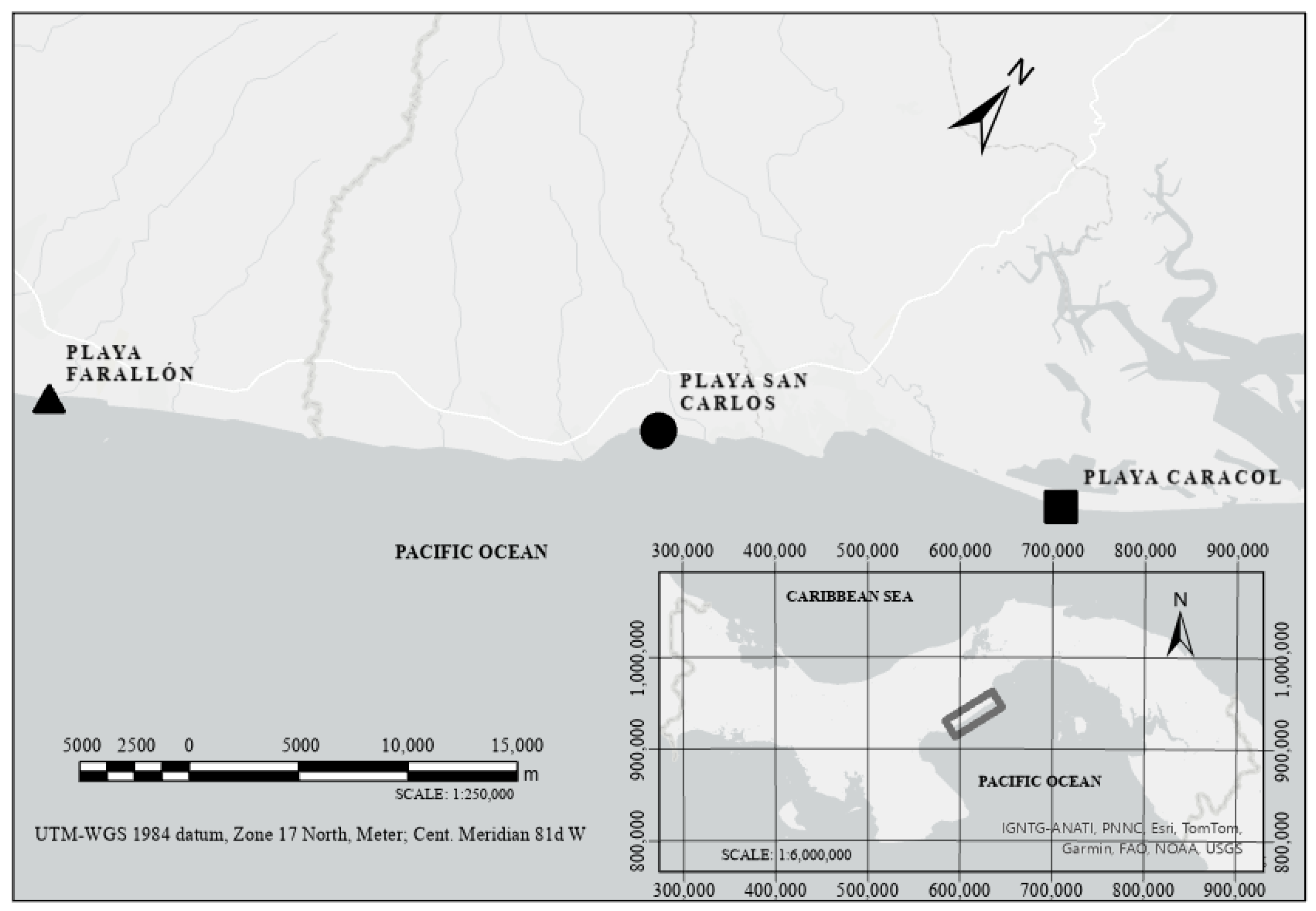
Figure 1. Regional location of Panamá with the study sites identified with (▲) Playa Farallón, Coclé; (●) Playa San Carlos, Panamá Oeste; and ( ) Playa Caracol, Panamá Oeste.
Applsci 15 12769 g001
Figure 2. Summary for Methodology.
Applsci 15 12769 g002
Figure 3. Chronological shorelines for: (a) Playa Farallón; and (b) Playa Caracol.
Applsci 15 12769 g003
Figure 4. Beach profiles studied in: (a) Playa Farallón; (b) Playa San Carlos; (c) Playa Caracol.
Applsci 15 12769 g004
Figure 5. NSM for the short-term analysis. (a) Playa Farallón. (b) Playa Caracol.
Applsci 15 12769 g005
Figure 6. NSM transects for short-term period analysis at Playa Farallón and Playa Caracol.
Applsci 15 12769 g006
Figure 7. EPR for the short-term analysis for: (a) Playa Farallón; (b) Playa Caracol.
Applsci 15 12769 g007
Figure 8. EPR per transects for the short-term period at Playa Farallón and Playa Caracol.
Applsci 15 12769 g008
Figure 9. NSM for long-term analysis between 2010 and 2023.
Applsci 15 12769 g009
Figure 10. EPR for long-term analysis between 2010 and 2023.
Applsci 15 12769 g010
Figure 11. Playa Farallón profiles surveyed with: (a) DGNSS; (b) DTM RPA. The red rectangle compares the underwater section of the beach profiles.
Applsci 15 12769 g011
Figure 12. Beach profiles at Playa Farallón, surveyed with DGNSS and DTM RPA.
Applsci 15 12769 g012
Figure 13. Playa San Carlos profiles surveyed with: (a) DGNSS; (b) DTM RPA. The red rectangle compares profiles and shows the higher-elevation ground, denoted as the “cliff area”.
Applsci 15 12769 g013
Figure 14. Beach profiles at Playa San Carlos were surveyed with DGNSS and DTM RPA.
Applsci 15 12769 g014
Figure 15. Playa Caracol profiles surveyed with: (a) Differential GNSS; (b) DTM RPA.
Applsci 15 12769 g015
Figure 16. Beach profiles at Playa Caracol were surveyed with DGNSS and DTM RPA.
Applsci 15 12769 g016
Figure 17. Coastal erosion monitoring plan.
Applsci 15 12769 g017
Table 1. DGNSS RTK and RPA PPK monitoring campaigns for the study sites.
Study SiteDGNSS RTK Campaign
(dd-mm-yyyy)
RPA PPK Campaign
(dd-mm-yyyy)
Playa Farallón24-04-2023
10-05-2023
03-04-2023
24-04-2023
08-09-2023
Playa San Carlos09-05-202309-05-2023
Playa Caracol09-02-2023
30-05-2023
01-08-2023
30-05-2023
13-07-2023
01-08-2023
08-09-2023
Table 2. Summary for the short-term analysis of coastal erosion/accretion.
ResultsPlaya FarallónPlaya Caracol
General Information
Length of shoreline studied (m)695425
Total number of transects analyzed12584
% of transects showing erosion6098
% of transects showing accretion341
% of stable transects61
Net Shoreline Movement (NSM)
Maximum negative movement (m)−6.56−6.64
Maximum positive movement (m)4.350.71
Spatial average negative movement (m)−3.70−3.26
Spatial average positive movement (m)1.410.42
End Point Rate (EPR)
Maximum erosion rate (m/yr)−15.17−24.03
Maximum accretion rate (m/yr)10.062.58
Spatial average erosion rate (m/yr)−8.88−11.79
Standard deviation (m/yr) 4.466.49
Spatial average accretion rate (m/yr)3.622.58
Table 3. Summary for the long-term analysis of coastal erosion/accretion.
ResultsPlaya FarallónPlaya San CarlosPlaya Caracol
General Information
Length of shoreline studied (m)695987425
Total number of transects analyzed12519784
% of transects showing erosion6989100
% of transects showing accretion--- *
% of stable transects3111-
Net Shoreline Movement (NSM)
Maximum negative movement (m)−90.11−33.48−22.43
Maximum positive movement (m)0.89--
Spatial average negative movement (m)−32.17−13.90−17.10
Spatial average positive movement (m)0.25--
End Point Rate (EPR)
Maximum erosion rate (m/yr)−6.70−2.66−1.64
Maximum accretion rate (m/yr)---
Spatial average erosion rate (m/yr)−3.20−1.20−1.25
Standard deviation(m/yr)1.860.550.16
Spatial average accretion rate (m/yr)---
* Values with the symbol; “-“ were not reported.
Disclaimer/Publisher’s Note: The statements, opinions and data contained in all publications are solely those of the individual author(s) and contributor(s) and not of MDPI and/or the editor(s). MDPI and/or the editor(s) disclaim responsibility for any injury to people or property resulting from any ideas, methods, instructions or products referred to in the content.