1. Introduction
A growing number of individuals in the United States are living with limb loss [
1], in large part due to complications of vascular disease or trauma. Regardless of etiology, individuals with lower limb loss require a prosthesis to help restore mobility and functional independence, thereby enabling reintegration and participation in occupational, recreational, and social activities. While studies have developed rating-based and self-report-based post-amputation mobility predictors and prosthesis using classifiers (e.g., Medicare Functional Classification Level (MFCL) [
2], Amputee Mobility Predictor (AMP) [
3]), tracking actual mobility outcomes in the community remains a critical challenge for device prescription, rehabilitation, and long-term care for persons with lower limb loss.
After amputation, many outcomes are obtained through in-lab or in-clinic evaluations. Such evaluations are typically performed in controlled environments (e.g., straight-line walking in the absence of obstacles). Moreover, these evaluations are commonly cross-sectional, providing only a brief snapshot of activity level and/or functional performance. Even when outcomes are evaluated longitudinally (i.e., at multiple time points), there is generally little context provided for what occurs between visits. Additionally, there is likely further in-lab bias that occurs when a person alters behavior when they are aware of observation (i.e., the Hawthorne effect) [
4]. Although patient-reported outcomes are frequently used to characterize physical function and mobility outcomes beyond the lab or clinic [
5], responses can be subjected to recall bias and other limitations (e.g., [
6]). As such, there often remains a disparity among mobility potential, objective and subjective functional performance measures, and real-world activity.
Wearable sensor technologies provide an opportunity for objective and longer-term monitoring of mobility outcomes in daily life [
7,
8,
9,
10]. Activity monitors, for example, can track step characteristics (e.g., counts, cadence), while inertial measurement units (IMUs) can add insights related to the quality of movement (e.g., motions of particular body segments, walking speed). Yet, activity monitors and IMUs still lack contextual information regarding the environment (e.g., climate, location) [
8,
9,
10]. Recent work [
11,
12] has remedied this by including geolocation data to add contextual details for the underlying location/environment (i.e., within vs. outside the home); however, there is currently no methodology for comprehensive and higher-resolution characterization of mobility outcomes following lower limb loss [
13].
Here, we use a custom sensor suite—including IMUs, global positioning system (GPS), and environmental sensors—to comprehensively evaluate real-world mobility among individuals with unilateral lower limb loss. We report a broad characterization of mobility, including the types, durations, movement characteristics, and location categories of activities. Importantly, our ecologically valid approach uses high-resolution IMU reconstruction methods, allowing for more detailed analyses relative to prior reports [
8,
9,
10,
11,
12,
13] while also capturing the underlying environmental and behavioral influences on device- and activity-specific factors that collectively contribute to mobility outcomes and quality of life.
In doing so, this study investigates the following research questions that have not previously been addressed in persons with unilateral lower limb loss: (1) What is the distribution of walking bouts in everyday life, including duration, step count, and walking speed? (2) Does time of day affect walking speed, e.g., through fatigue or intensity of time demands? (3) What is the distribution of turning behaviors, including extent (turn angle), number of strides, duration, and direction (prosthesis-inside or -outside)? (4) What is the distribution of stair navigation steps, including number and strategy for ascending and descending stairs? (5) How are bout, speed, and turn distributions different across home, community, and outdoor environments? Answers to these questions can inform both future research and clinical practices.
2. Methods
2.1. Participants
Fourteen individuals (8 male/6 female) with unilateral transtibial amputation participated in this study (mean ± SD age = 47.1 ± 13.8 yr, body mass = 87.2 ± 21.6 kg, stature = 172.3 ± 8.5 cm, time since amputation = 10.4 ± 12.1 yr) after providing written informed consent to procedures approved by the University of Wisconsin-Madison Health Sciences Institutional Review Board (Protocol No. 2019-0844). This study is registered at ClinicalTrials.gov as Evaluating Mobility Interventions in the Real World (NCT04275973). All participants used energy-storage and return ankle-foot prostheses, were independently ambulatory without the use of assistive devices, and used a prosthesis for at least six months prior to enrolling in the study. Notably, the two collection sites had slightly different protocols: one prescribed a series of commercially available prostheses to participants which were used for one week at a time; the other had participants use their already-prescribed prostheses for the duration of the study.
2.2. Experimental Protocol
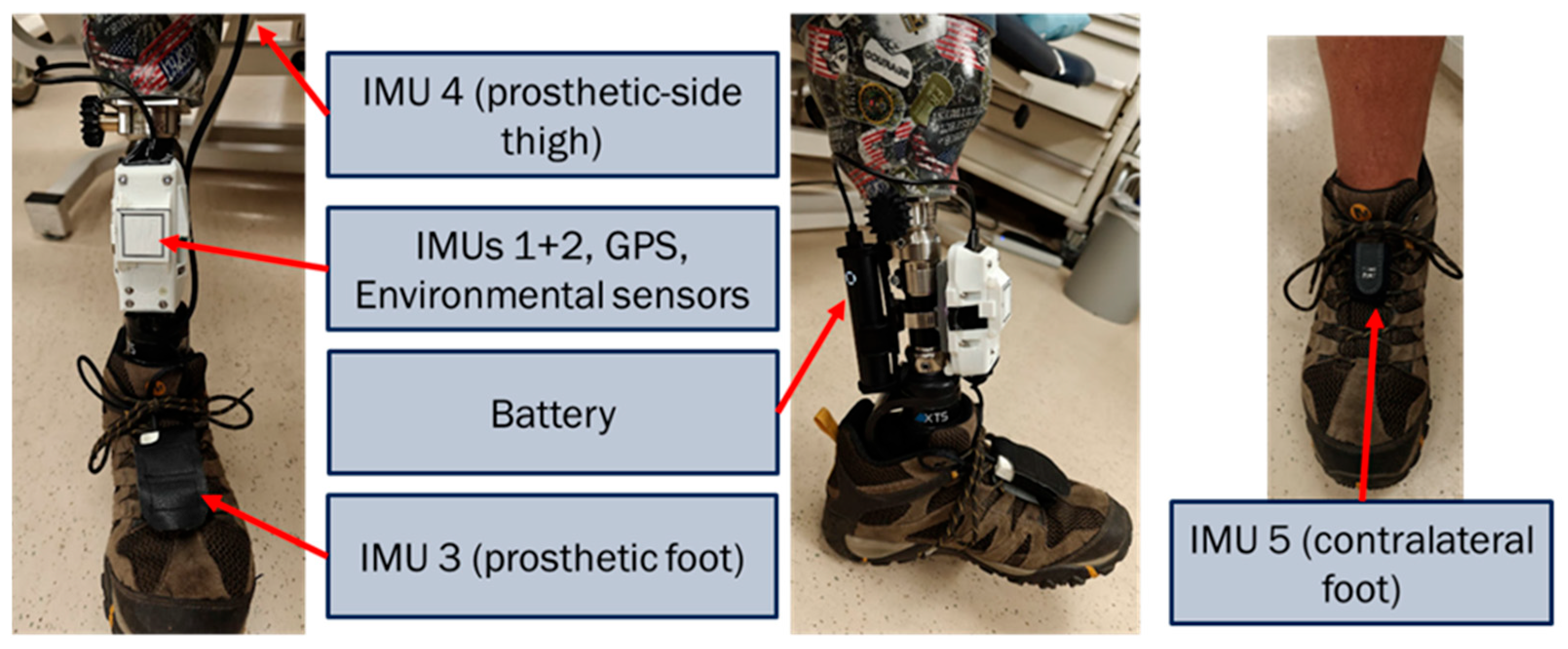
Each participant was fitted with a custom sensor suite (
Figure 1), consisting of five IMUs (Bosch Sensortec, Reutligen, Germany; Epson, Suwa, Nagano, Japan; Navigation Solutions LLC, Ann Arbor, MI, USA), a GPS receiver (SparkFun, Boulder, CO, USA), and environmental sensors (i.e., temperature, humidity, and barometric pressure, Bosch Sensortec, Reutligen, Germany). IMUs were mounted on the prosthetic-side foot, shank, and thigh, as well as the intact-side foot. Data were logged via an on-board Raspberry Pi Zero W+ microcomputer (Raspberry Pi Foundation, Cambridge, England, UK). After fitting the devices, participants were trained on the proper use of the sensors (e.g., donning/doffing, powering on/off) and provided with a take-home instructional manual. Participants were instructed to wear the sensors as much as possible, change the battery once during the day, charge the system overnight, and report a system-operation indicator via an online form at the start of each day. Participants wore the sensor suite for approximately four weeks.
2.3. Data Analyses and Outcomes
Prosthetic foot motion for each participant was reconstructed using data from the foot-mounted IMU. A detailed explanation of reconstruction methods can be found in
Appendix A. Briefly, the reconstruction method began with stance phase detection and stride segmentation [
14,
15]. Subsequently, the IMU orientation was estimated by an Error State Kalman Filter [
16,
17]. The resulting orientation data and stride segment data were then input into the reconstruction methods described in [
18] to generate 3D foot trajectories. Finally, the reconstructed trajectories were synchronized with GPS data to determine date, time, and location information.
Next, individual walking bouts were identified, with a minimum 3 s interval defining separate bouts [
19]. Bouts were placed into one of five categories according to bout duration: (1) less than 10 s, (2) 10–30 s, (3) 30–60 s, (4) 60–120 s, and (5) greater than 120 s. Strides were then grouped according to the bout duration category in which they occurred; total stride count and mean walking speed were determined for each bout category. Stride and walking bout data were also categorized by hour of the day at bout onset (i.e., 12:00 am–12:59 am, 1:00 am–1:59 am, etc., defined as hours 0.0–24.0). Stride count, bout count, and mean speed were determined for each active hour. Stride and bout counts were normalized by the total time during which data were recorded (“sensor-hours”).
Regression models were used to examine the relationship between walking speed and bout duration, with adjustment for hour of day. A nonlinear exponential mixed-effects model was fitted to relate walking speed to bout duration and time of day:
with
. Inside the equation,
are the coefficient for fitting, which intuitively represent asymptote, scale, rate with respect to Bout Duration and rate with respect to Hour. Hour is the variable representing the fixed effect of time of day, Bout Duration is the variable representing the fixed effect of walking bout duration, and (1|SubjectID) represents an individual random effect (asymptote and scale) for each subject. Before fitting this nonlinear exponent mixed-effects model, a variant of the model with quadratic Hour term was fitted to identify the time of peak walking speed (~2 pm); data prior to this time were eliminated before running the regression model, to evaluate any potential late-day speed decline (tested because it was observed in a few early cases).
To mitigate the unbalanced appearance of walking bout duration, where short-duration bouts occur much more frequently than long-duration ones, the data were grouped into duration bins and hour bins. The bin sizes were set at 5 s for durations under 60 s, 10 s for durations between 60 and 120 s, and 30 s for durations exceeding 120 s. Hour values were binned into 1 h intervals. Within each duration-hour bin, if at least two bouts were recorded, the duration, hour, and walking speed values were averaged before being used for nonlinear fitting.
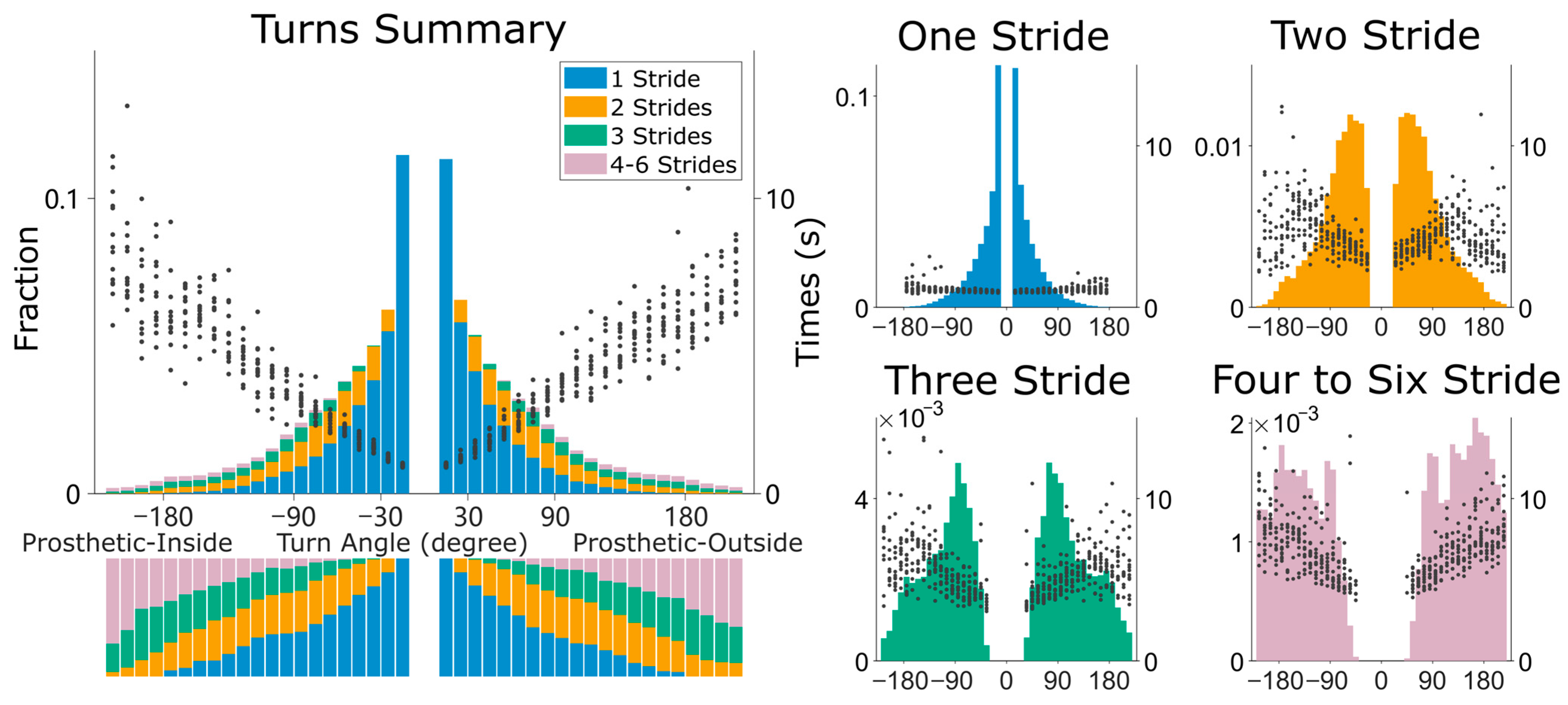
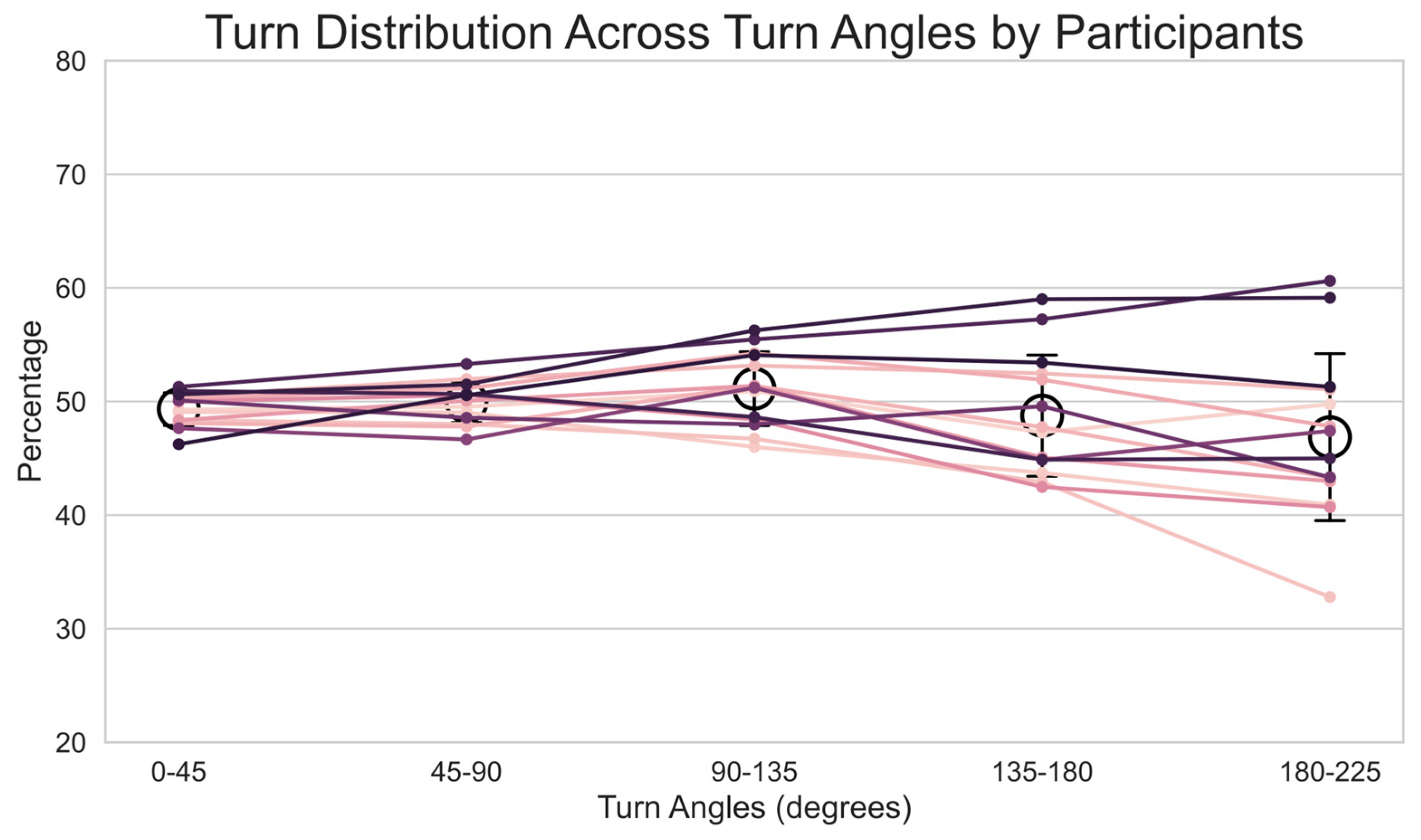
In addition to the overall stride data, instances of turns and stair ascent/descent were also characterized. Turns were identified when the heading change in the prosthetic foot IMU between two consecutive stance phases exceeded 10°. Multi-stride turns were then identified for the consecutive strides that were labeled as turns. The distribution of turns was summarized by a histogram of turn density (i.e., the fraction of total turns) in bins of 10° width. Turn direction was also categorized as either prosthetic-inside or prosthetic-outside. Turn direction distribution was determined for various turn angle ranges (0–45°, 45–90°, 90–135°, 135–180°, >180°) by computing the percentage of prosthetic-inside turns among all turns. For each angle range, the mean and standard deviation of prosthetic-inside turn percentage was computed across all participants.
The number of stairs ascended and descended was also counted in this analysis. As per the U.S. Occupational Safety and Health Standards (OSHA) standard 1910.25 [
20], standard stairs range between 0.17 and 0.24 m in rise (height) and 0.20 and 0.28 cm in tread run (depth). Instances of stair ascent/descent were identified when changes in the position of the prosthetic-foot IMU between consecutive stance phases were within 0.1–0.5 m up or down and 0.2–1.0 m in the anteroposterior direction. Vertical bounds were chosen to include single stairs at the minimum OSHA height as well as double-stair movements to twice the maximum height, with a small margin. Anteroposterior bounds were set to include minimum-tread-run stairs as well as long, low stairs that allow stride-like movements. Among these instances, strides within bouts of walking of less than ten seconds were removed from the dataset to account for non-stair changes in IMU position that satisfy these thresholds (e.g., moving the leg on/off an ottoman). Data were further reduced by removing isolated single stair-strides.
Stair-stepping strategies were discerned using a 0.27 m vertical position change threshold—three centimeters above the maximum single stair height per OSHA. This threshold was selected by visually inspecting foot displacement clustering around single and double steps and setting the threshold between them. Stair-strides with vertical position changes below this threshold were classified as step-by-step (SBS, i.e., both feet contact each stair) and those over this threshold were classified as step-over-step (SOS, i.e., alternating feet on successive stairs). These outcomes are normalized by sensor-day: each participant’s stair-stride count was first divided by the total sensor-hours recorded for that participant, then multiplied by the average daily sensor recording time across the entire cohort (~10.2 h). The distribution of using SOS vs. SBS strategy and climbing up vs. going down stairs is first computed for each individual subject, then averaged together across all participants, as in the procedure for computing the percentage of prosthetic-inside turns.
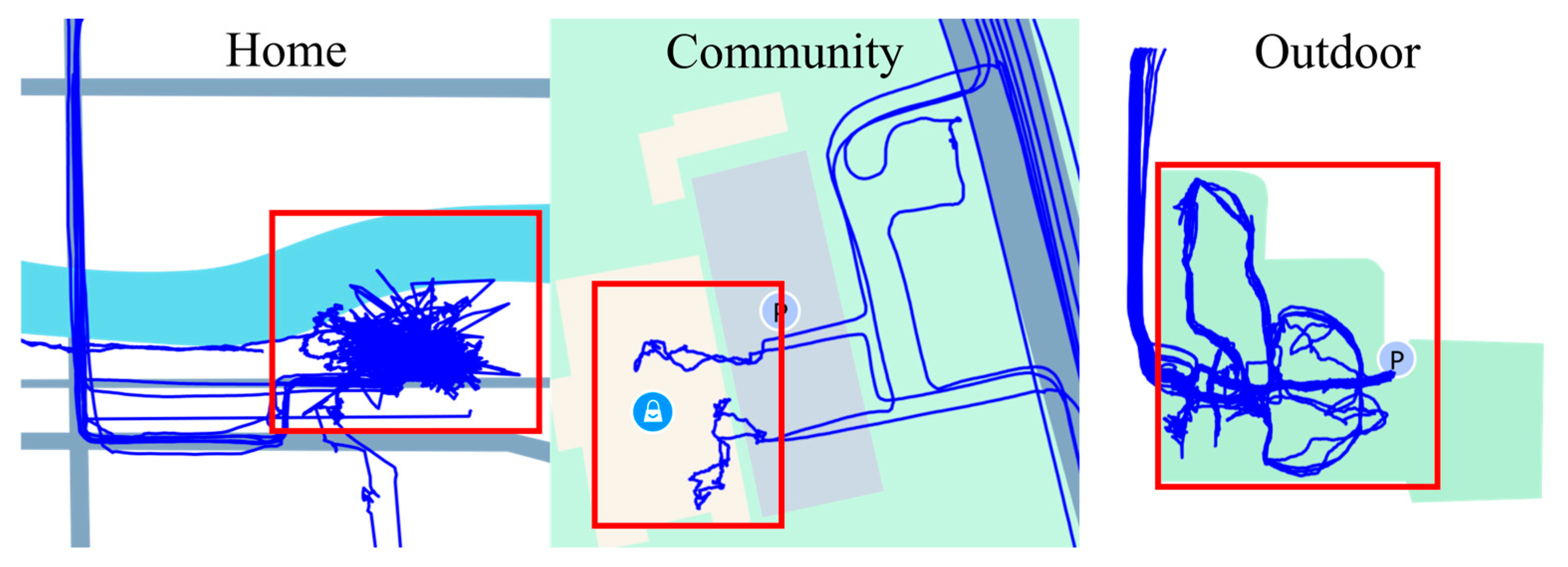
To further assess locomotion behaviors, GPS data were used to characterize walking bout and turn data by location (
Figure 2). Data were divided into three categories—home, community, and outdoor [
12]. Home is defined as the most common GPS location, allowing for movement within a small, localized area; home data included any walking done in or around the home, both indoors and outdoors (e.g., driveway, backyard). Community data included any walking data accumulated in or around indoor locations other than the home (e.g., offices, grocery stores, restaurants), including some outdoor walking (e.g., to/from the parking lot). Outdoor data included any walking completed in distinct outdoor venues (e.g., parks).
After identification, each stride, bout, turn, and stair-stride was stored with a unique index, along with relevant contextual information (e.g., bout duration, location, time of the day) for each participant, then compiled into a single dataset. The analysis in the next section was performed by querying the metric of interest under different combinations of contextual information. The usage of the sensor suite, the usage of the prosthetic foot, and total strides and active hours over the entire tracking period were determined for each participant.
3. Results
A mean of 204.3 ± 96.2 (mean ± standard deviation, SD) hours of data per participant were recorded, corresponding to 49,577 ± 30,468 (mean ± SD) total strides; individual participant summary data can be found in
Appendix B (
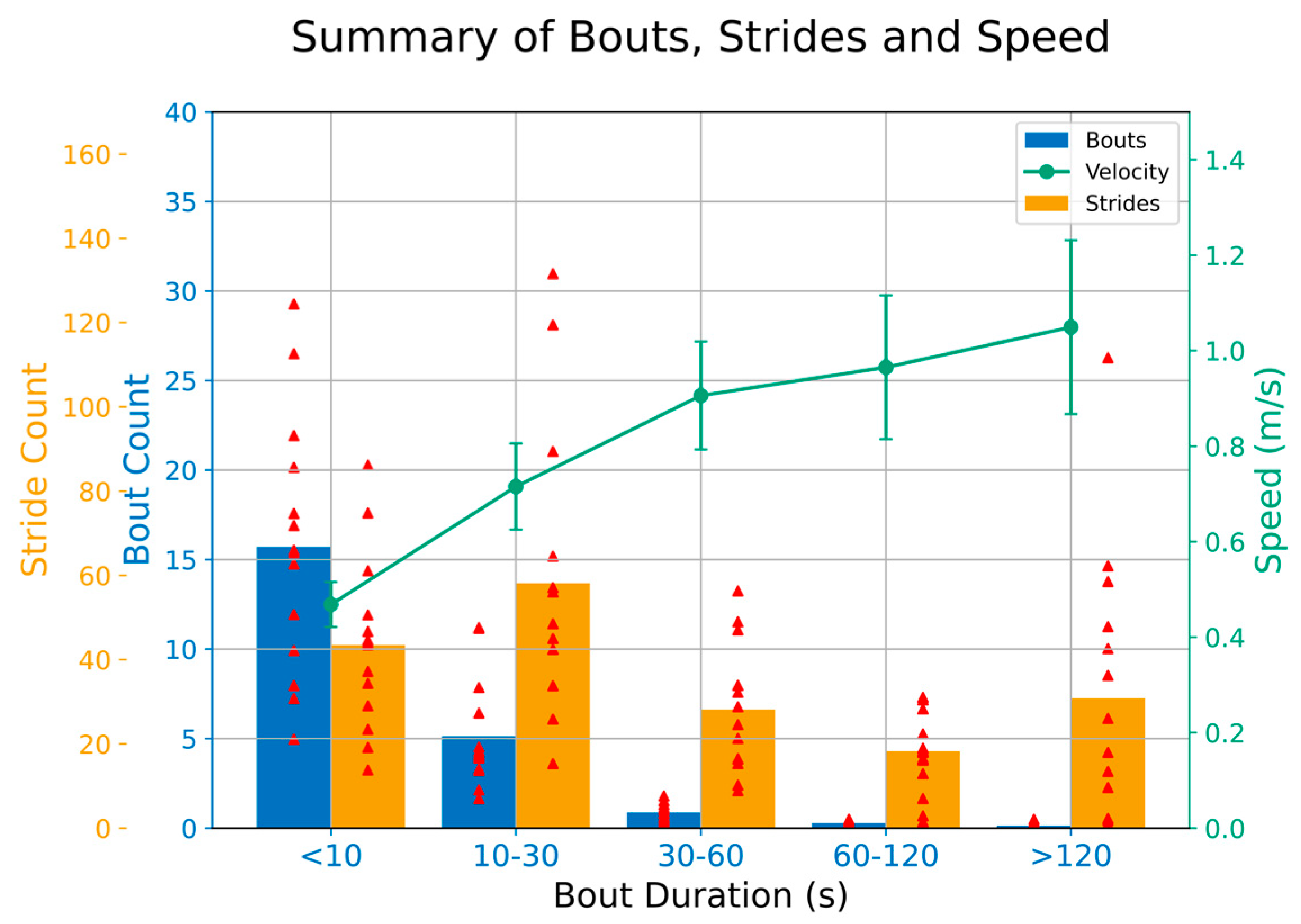
Table A1). Bout count, stride count, and mean walking speed for all participants within each bout duration are summarized in
Figure 3; analogous individual participant results are reported in the
Supplementary Materials (Figures S1–S14). The distribution of bouts was dominated by relatively short bouts of less than 30 s, with the most common bout duration less than 10 s (roughly 16 such bouts per sensor-hour). Stride count was more evenly distributed; all bout duration categories had stride counts of comparable scale, with bouts of 10–30 s having the most strides (roughly 58 strides per sensor-hour) and intermediate bouts of 60–120 s having the fewest (roughly 18 strides per sensor-hour). Mean walking speed within a bout steadily increased with bout duration, from 0.47 to 1.05 m/s. The mean and standard deviation of bout speed across all participants are summarized in
Table 1. On the one hand, standard deviation of mean bout speed increased as bout duration increased, indicating increased variability of mean walking speed in longer bouts across all subjects; on the other hand, mean of standard deviation of bout speed decreased as bout duration increased, suggesting that, on average, variation in bout speed within a bout category decreased as bout duration increased. Individual participant results are reported in
Supplementary Material (Tables S1 and S2).
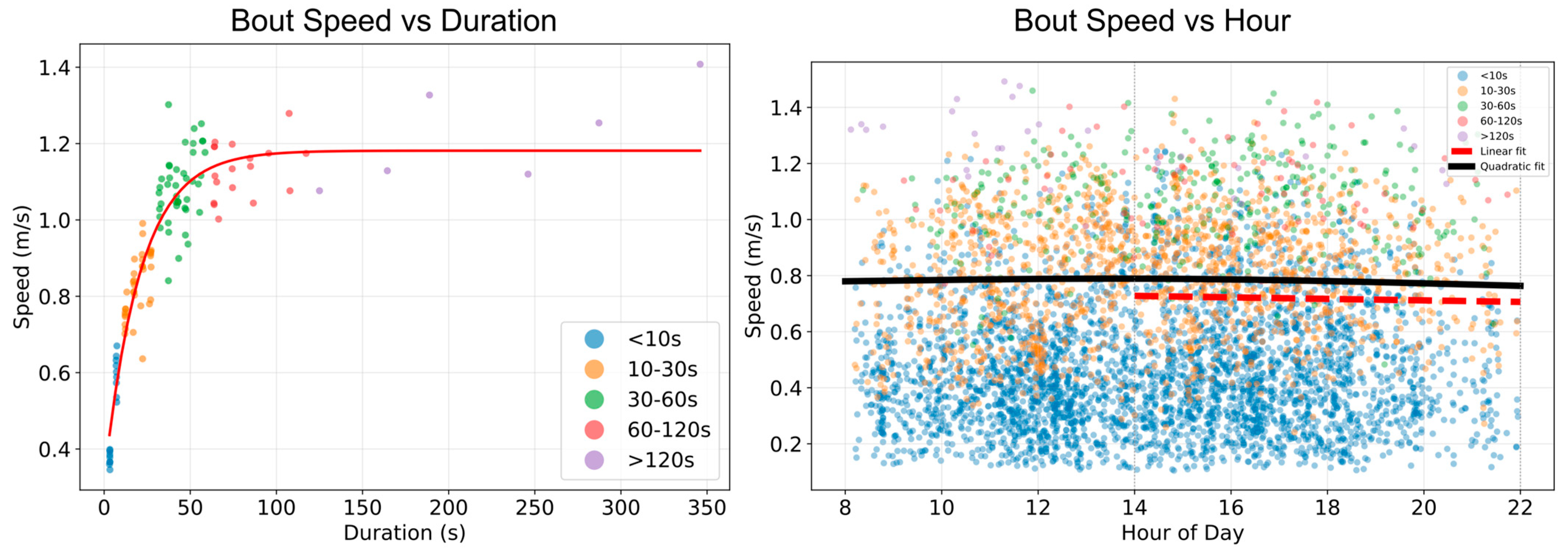
The results of nonlinear mixed models for walking speed as a function of bout duration and hour of day are shown in
Table 2. The nonlinear mixed-effects model revealed a strong association between walking speed and bout duration (marginal R
2 = 0.718, conditional R
2 = 0.87), with distinct effect magnitudes across model parameters (
Table 2). The individual-specific asymptote parameter (
a) was strongly nonzero as expected (mean value 1.04, 95% CI [0.97, 1.11]), which combines with the hour-of-day term (parameter
d, combined fit value −0.0027, 95% CI [−0.0045, −0.000897]); average value of Hour was 16.84, or 16:50) to approximate each individual’s steady-state speed. The scaling parameter (
b, mean value 0.673, 95% CI [0.601, 0.746]) couples with (
a) to describe the range of the exponential curve. The most important parameter is the exponential decay parameter (
c, combined fit value 0.0477, 95% CI [0.0442, 0.0511]). This value suggests that a bout of duration roughly 20.9 s will have an average speed about 68% of the way from the zero-duration speed (beginning of the exponential fit) to the steady speed. There was a statistically significant, yet small, decline in walking speed as the hour of day progressed past the hour of peak walking speed. Though this trend was observed in nine participants, no participants demonstrated clinically significant decreases in walking speed (threshold 0.21 m/s [
21]) over the course of 8 h. A representative figure for a single participant is provided in
Figure 4. Individual participant results for the nonlinear mixed-effects model are reported in
Appendix B (
Table A2) and
Supplementary Materials (Figures S29–S42). Although a medium effect size was observed (Cohen’s d = 0.51), the absolute difference in adjusted mean walking speed between the prescribed cohort (0.764 m/s) and the commercial cohort (0.736 m/s) was both statistically non-significant (
p = 0.416) and clinically negligible at only 0.028 m/s. Furthermore, differences in the individual model parameters for asymptote (
a,
p = 0.206) and scaling (
b,
p = 0.099) were not statistically significant. This collective evidence indicates that neither simple average speed nor the baseline characteristics of the exponential model distinguish these groups.
Ensemble turning outcomes are summarized in
Figure 5; individual participant turning outcomes are summarized in
Supplementary Materials (Figures S15–S28). Single-stride turns were most common at smaller turn angles, with multi-stride turns becoming more frequent as turn angle increased. The time to complete a turn also increased with turn angle (
Figure 5), particularly during multi-stride turns. In addition, single-stride turns showed less variability in completion time than multi-stride turns.
Turn direction distribution is summarized in
Figure 6. At turn angles of less than 90°, turns were about equally distributed between prosthetic-inside and prosthetic-outside turns. As the turn angle increased, an increased bias toward prosthetic-outside turns was observed, on average. The variation in turn percentage also increased, with some individual participants showing bias toward one direction and some toward the other. Notably, four of the participants show consistent bias toward prosthetic-outside turns for turns greater than 90°, while five of the participants show bias toward prosthetic-inside turns. The remaining five participants stay around 50% across all five turn angle categories.
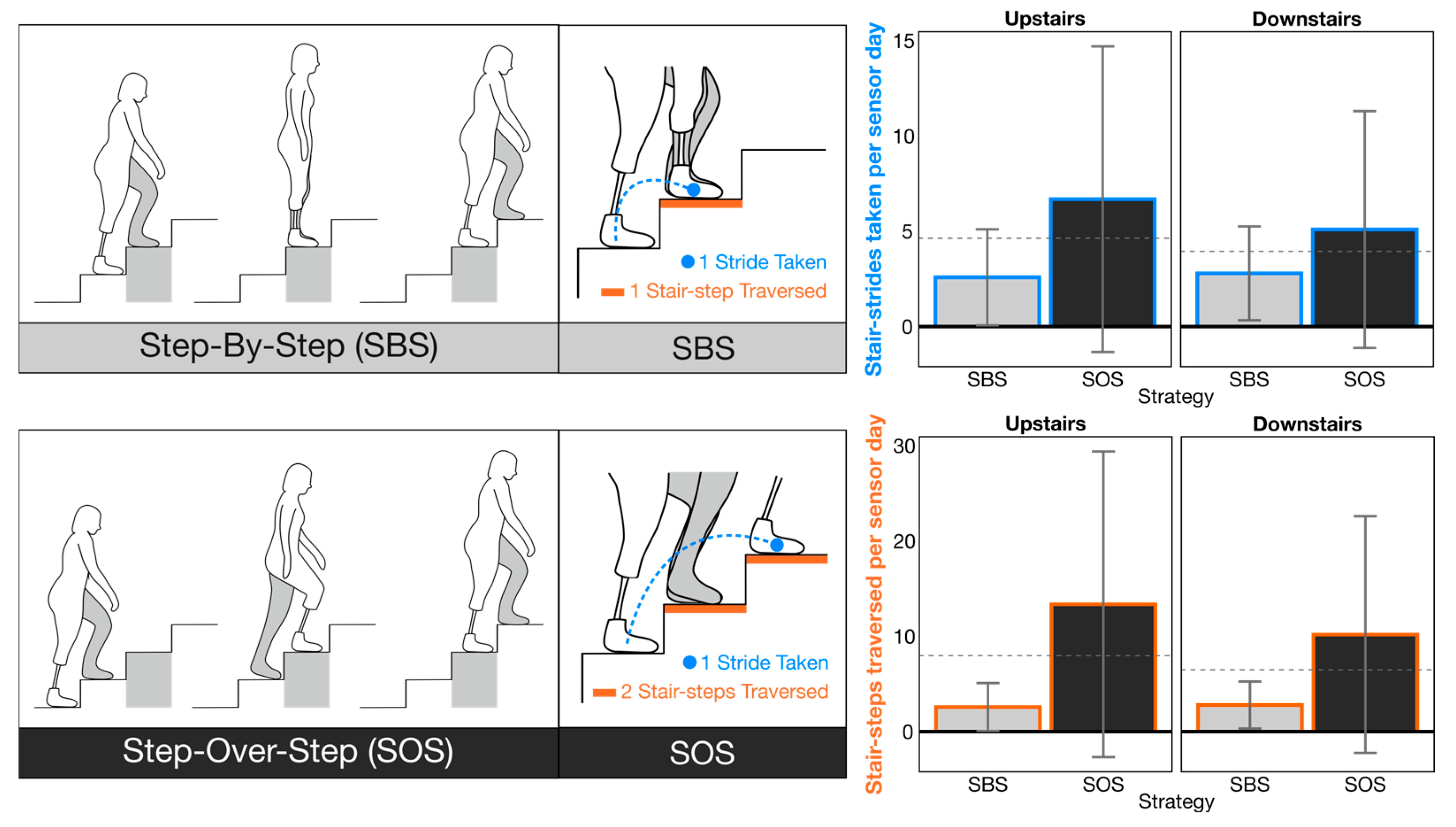
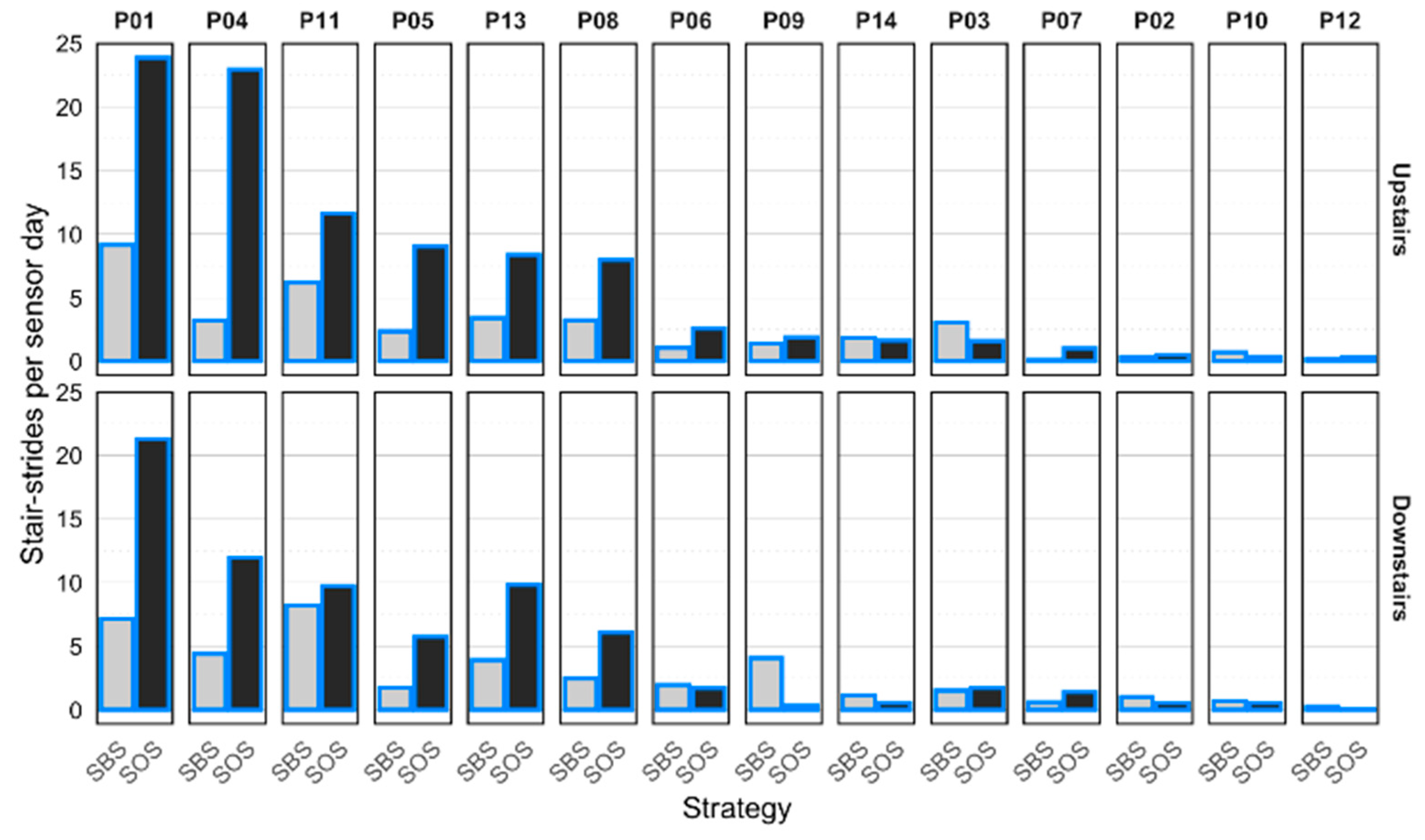
Strategies used by participants when ascending and descending stairs are summarized in
Figure 7; individual participant results are shown in
Appendix B (
Figure A1). On average, participants climbed up approximately 15.9 ± 18.1 stairs per sensor-day, including 2.6 ± 2.5 SBS stair-steps traversed, and 13.4 ± 16.0 SOS stair-steps traversed. Participants climbed down, on average, 13.0 ± 14.5 stairs per sensor-day, including 2.8 ± 2.5 SBS stair-steps traversed, and 10.2 ± 12.4 SOS stair-steps traversed. Participants climbed up more stairs vs. climbed down; after normalizing by sensor-day, an average of 54.0% of total stair-steps traversed were ascending. When climbing up stairs, participants used the SOS strategy to traverse an average of 76.9% (±13.9% SD) of the stair-steps they encountered. When descending stairs, participants used the SOS strategy for an average of 64.8% (±23.2% SD) of stair-steps traversed. A two-tailed
t-test found that the percent of stair-steps traversed using SOS was not statistically different when ascending vs. descending (
p = 0.053).
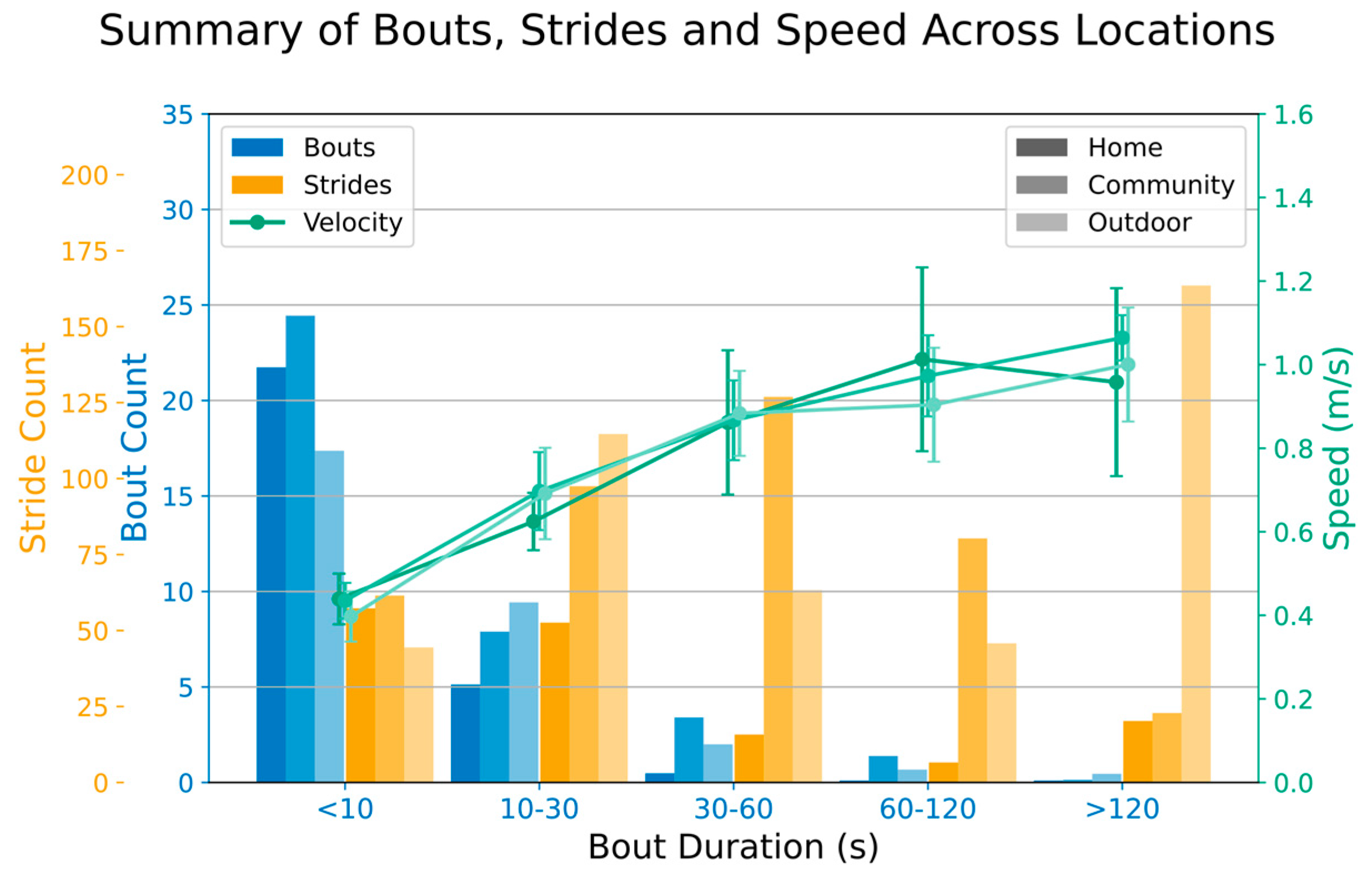
Bout counts and stride counts categorized by location are summarized in
Figure 8; complete results are reported in
Appendix B (
Table A3). For all locations, walking bouts of less than 10 s were the most common, in concurrence with the overall data (
Figure 3). Similarly, walking speed increased as walking bout duration increased at all locations, except in bouts greater than 120 s in home walking (note that seven participants had no home walking bouts greater than 120 s; these were treated as missing data in the speed computation). However, the differences in bout count and stride count across bout durations were not uniform across all locations. Bout count (19.50 ± 13.87) and stride count (49.95 ± 33.29) for less than 10 s walking bouts were greater in home walking compared with the other two locations. Greater stride count was observed in community vs. both home and outdoor locations during bouts of 10–30 s (88.44 ± 63.95), 30–60 s (86.13 ± 102.16), and 60–120 s (36.23 ± 37.55). The largest number of strides during walking bouts greater than 120 s was observed during outdoor walking (164.77 ± 261.35).
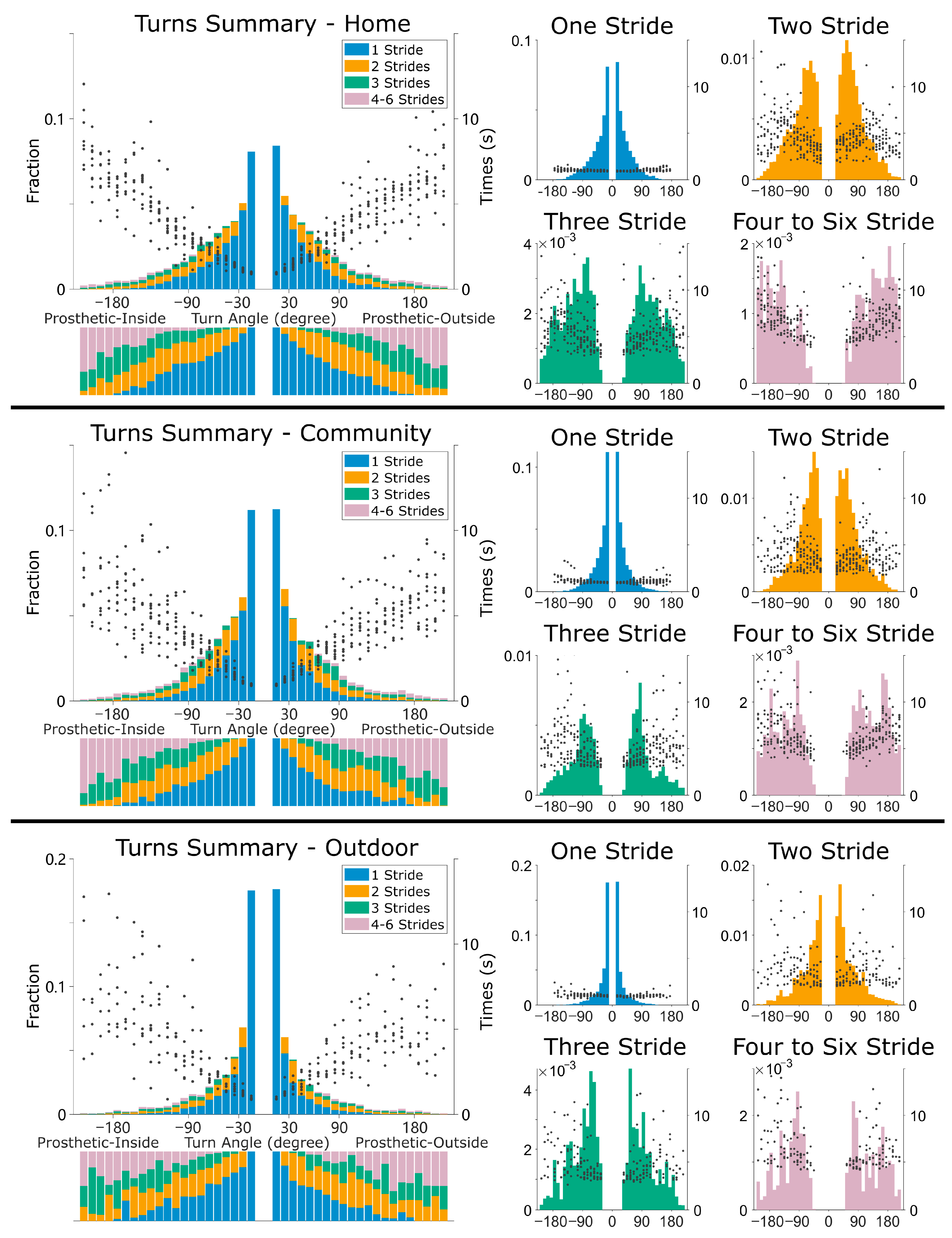
Across all locations, turn data followed similar trends to aggregate data with smaller, single-stride turns being most prevalent and larger turn angles necessitating multi-stride turns. The percentage of small (~10–50°) turns was highest during outdoor walking compared to home and community walking. Turn data for all locations can be found in
Appendix B (
Figure A2).
4. Discussion
Using a custom sensor suite, we comprehensively evaluated real-world mobility among individuals with unilateral transtibial limb loss, reporting a broad characterization of mobility with underlying environmental and behavioral contexts. This work goes beyond prior studies in three ways. First, we used a high-resolution IMU reconstruction to present analysis not just of bouts and speeds, but also of turns and stairs; this exceeds the level of detail and range of activities in prior work [
8,
9,
10,
11,
12,
13]. Second, we used location information to contextualize the walking behaviors and investigated differences among home, community, or outdoor environments; these multiple contexts are a step beyond prior real-world collections [
8,
9]. Third, we applied these advanced techniques to study persons with amputation; prior work in this population was less detailed [
11,
22]. Our findings advance the understanding of what locomotion activities are performed in this population and how they are performed, which can be used to frame and motivate future research into specific activities, such as in-home slow walking, step-over-step stair descent, or prosthetic-inside turns.
The total strides per hour reported here are comparable to prior reports in high-functioning (i.e., K3+) individuals with unilateral transtibial amputation [
11]. The observed differences in stride count and walking speed across bout durations provide valuable insights into walking behaviors. Despite having the least number of unique bouts, walking bouts greater than 120 s contain the second-highest number of total strides and fastest mean walking speed, suggesting that these bouts may be composed of activities in which maintaining speed might be a priority (e.g., exercise, commuting). On the other extreme, despite having the largest number of total bouts, the second-lowest number of strides was observed in the less-than-10 s bout duration category, as well as the slowest mean walking speed, suggesting these walking bouts may be performed with little urgency or other priorities (e.g., safely navigating the home with multiple obstructions and changes in direction). Meanwhile, overall stride counts were largest in 10–30 s bouts, which also contained the second-most walking bouts. This is primarily driven by home and, to a lesser extent, community walking (
Figure 8,
Table A3), suggesting that these walking bouts are likely in more structured environments (compared to outdoors) with defined pathways. We speculate that additional obstacles (e.g., turns, doorways) and/or visual stimuli may be present (e.g., grocery-store aisles), and that such environmental features may contribute to the slower walking speed observed in these bouts relative to both longer bouts reported here and prior reports of in-lab evaluations [
23,
24]. The effect could be biomechanical (e.g., accelerating/decelerating and turning), or driven by attentional tasks that take priority over walking. Indeed, prior work has observed slower preferred walking speeds when performing a secondary task [
25].
Notably, contrary to aggregate data, strides were most prevalent in 10–30 s and 30–60 s bouts during community walking. This intuitively makes sense because of the larger size of community indoor spaces compared to home environments. Similarly, strides were most prevalent in bouts greater than 120 s during outdoor walking. These environments are generally less structured (i.e., with fewer pre-determined pathways) than indoor settings, and may have fewer obstacles and transient movements compared to home environments, possibly contributing to the faster walking speeds as bout duration lengthens. However, despite walking speeds during bouts greater than 120 s being relatively faster compared to shorter walking bouts, they are notably still slower than previous reports during in-lab evaluations. This may be, in part, due to the Hawthorne effect, as well as transient movements (e.g., stairs, turns, ramps, etc.) that are generally not present in laboratory settings but are ubiquitous in the real world, as evidenced by the number of turns and stairs reported here. Whether psychological or physical in nature, findings of lower speed in real-world walking are commonly observed in a variety of populations [
26,
27,
28,
29,
30].
Characterization of turns by direction, magnitude, and location provide valuable insights into real-world walking. In general, individuals in the study performed smaller (i.e., lesser-magnitude) turns more frequently, with the 10–20° turns most frequently identified (
Figure 5). While this is the case regardless of location, the prevalence of these relatively small turn angles provides insights into the types of environments in which these individuals are walking in. The higher prevalence of these small turns during outdoor vs. home and community walking (
Figure A2) suggests that the less structured outdoor environments may allow for these smaller turns. The prevalence of these small turns may be indicative of cautious gait, as large, abrupt turns are inherently more challenging, or it may simply be a feature of the outdoor environment that less-abrupt turns are the norm when covering natural terrain or long distances.
One might expect to see a peak in turns of ~90°, corresponding to navigating structured floorplans with hallways, doorways, and other square obstructions. While a peak of ~90° does not appear in the overall turn data, this pattern emerges when focusing on two- and three-stride turns, particularly during home and community walking (
Figure A2); these turns are likely indicative of indoor walking in more structured environments (e.g., grocery stores, offices) ubiquitous to the real world. This pattern also emerges in 3–6 stride turns during outdoor walking (
Figure A2), with these turns potentially being indicative of walking in structured outdoor environments (e.g., city sidewalks).
The increasing number of strides as turn angle increases may be a means to maintain speed and/or stability while walking, as executing a change in direction across multiple strides helps to minimize disruptions to steady-state gait parameters (e.g., step length, cadence, etc.) and to minimize instability over a given individual step. Alternatively, the large number of strides for large turn angles may suggest a large-radius turn, such as walking around a substantial obstacle or feature, perhaps a car in a parking lot or the junction of intersecting paths. Notably, though the data are available, the present analyses did not explicitly investigate walking speed as it relates to turn magnitude.
The bias toward prosthetic-outside turns as turn magnitude increases may be a compensatory measure to maintain stability, as the intact leg is likely a more stable pivot limb due to the lack of ankle musculature in the prosthetic limb. Notably, these larger-angle turns provide the opportunity for choice in turn direction: turning 180° in either direction is viable, whereas smaller turns can only be reasonably made in one direction (e.g., a 90° right turn would be an impractical 270° left turn). This practical consideration may explain the lack of prosthetic-outside turn bias during turns smaller than 135°. While prior work did not observe differences in turn frequency by direction [
31], these reports did not account for turn magnitude. In addition to this hypothesized prioritization of stability, there is also evidence of optimizing mechanical efficiency as noted by the relatively small number of turn angles greater than ±180°. This finding suggests that, in general, participants opted for the shortest possible turn to complete each turn.
Stair-stepping is another transient movement encountered in everyday life that is often not captured during in-lab gait assessments. Here, we observed, on average, 29 stair-steps being ascended/descended each sensor-day, though this is markedly varied among participants. The average number of stair-steps per person ranged from 1 to 106 stair-steps per sensor-day; eight participants had fewer than 12 stair-steps per sensor-day. Among stair-steps, there was a notable bias toward an SOS strategy during both upstairs and downstairs walking in this cohort, with 65% of downstairs steps and 77% of upstairs steps traversed using SOS. Contrary to prior reports, which observed no differences in up vs. down stair-steps [
31], there is also a slight bias towards upstairs walking among this cohort, with 54% upstairs walking and roughly three more upstairs strides than downstairs strides observed per sensor-day. This may be a consequence of each individual’s unique environments and daily routines, but may also be indicative of a relatively cautious gait pattern in this cohort. While one would expect these numbers to be equal (i.e., what goes up, must come down), there are several possible reasons why they were not. It is possible that our data reconstruction and/or classification methods were inherently biased and eliminated a disproportionate number of downstairs vs. upstairs strides. Alternatively, these results could suggest that, when possible, these individuals may avoid going down stairs and may instead use other options such as elevators, escalators, or ramps. This idea is further supported by the greater prevalence of SBS steps during downstairs vs. upstairs walking (35% vs. 23%), suggesting these individuals were more cautious when walking down vs. up stairs. These findings in the observed data agree with the past literature suggesting that activity avoidance related to the fear of falling is a significant issue for persons with amputation [
32] and that stairs are an important contributor to this [
33]. Notably, however, the presence/usage of handrails during stair walking was not tracked; railings could have influenced not only stair strategy (i.e., SOS vs. SBS) but also the decision to use the stairs or an alternative route.
Limitations
One potential limitation of this study comes from the inevitable bias of IMU-based motion reconstruction methods. IMUs are known to have a 1–5% position error for distance traveled [
18,
34]. Although the method used here was previously validated and resulted in improved accuracy when compared with prior double-integration-based methods [
18,
35], those tests were performed in laboratory settings. Variable speed and terrain can alter the optimal reconstruction procedure or signal thresholds, and outdoor sloped or stepped terrain can have a much wider range than the built environment for classification. Despite this, IMU-based systems still offer the best trade-off between accuracy and portability compared to other existing solutions.
Additional limitations of this study include the relatively limited dataset, with respect to body segments and associated biomechanical outcomes, when compared to in-lab evaluations. The sensor suite limits data collected to a single prosthetic-side leg and the contralateral intact-side foot and, thus, key aspects of mobility, such as ground reaction forces and center of mass trajectories, cannot be quantified. Additional sensors (e.g., load cells, in-sole pressure sensors, additional IMUs) could be used to obtain this data, but it must be done in a way which maintains a low burden on the participant. Even the minimalist design reported here added considerable weight to the prosthesis (0.25 kg), with the battery in particular being significant (0.13 kg). Anecdotally, participants noted that the additional weight discouraged them from participating in certain activities (e.g., running) and also made them more aware of their prosthesis, which may have affected how much they walked in the community. In addition to the limited number of sensors, the reliability of the sensors also limited these analyses. Some sensors were subject to data dropout (e.g., GPS signal loss, time corruption) and none were waterproof, which precluded wear in wet conditions, potentially leading to an underestimation of mobility. Further contributing to this underestimation, the algorithms used to identify stair walking were quite restrictive in order to eliminate any false positives but, in turn, they likely also eliminated some real stair-steps.
Finally, the cohort of participants limits generalizability of the results. The cohort is biased toward highly functional users who walk enough to make a real-world mobility study worthwhile. The cohort was also heterogeneous, as the two sites’ participants differed in age, activity level, and prostheses used. Therefore, quantitative results (e.g., stride counts, speeds, stairs) for others can be expected to vary even beyond the range observed here. However, analysis showed that trends were the same in both groups, so we suggest that key trends such as bout distribution, speed vs. bout duration, turn distribution, and stair strategies are reasonable to expect in a wider sample of similar prosthesis users. Results for qualitatively different cohorts may differ more, e.g., for lower-mobility users (MFCL K1-K2). For further insight into the range of behaviors across individuals, we encourage readers to look in detail at
Supplementary Materials, in which we include data on the following: bouts of different duration (individuals’ mean speed,
Table S1; individuals’ standard deviation,
Table S2; individual plots of bout count, stride count, and speed,
Figures S1–S14, modeled after
Figure 3); turns of different angle (density and distribution of occurrence and mean time-to-complete,
Figures S15–S28, modeled after
Figure 5); and nonlinear mixed model fits (speed vs. bout duration and hour of day,
Figures S29–S42, modeled after
Figure 4).
Overall, we believe the greatest limitations in this study are the differences in sensor-use compliance across participants (hours per day, days of use), the difficult and imperfect process of classifying stair-strides, and the limited size and characteristics of the cohort. Despite these limitations, there is a great variety of additional analyses that can be explored in this dataset. For example, the wireless IMU on the intact foot could be used to do a symmetry analysis. Alternatively, the multiple sensors on the prosthetic leg could be used to estimate leg joint angles. The environmental sensors were not used in this analysis, but, with appropriate processing, they could potentially provide additional information about indoor/outdoor environments and weather conditions. Additional analysis could also generate further insight, such as exploring variations in speed during turns. These, and other analyses, could explore previously unobservable aspects of real-world, everyday movement.




 ,
,