1. Introduction
Geophysical prospecting is widely considered a fundamental tool in archaeological research thanks to its non-invasive nature, speed of execution, and continuous technological advances in instrumentation. In recent decades, various geophysical methodologies have been applied in the archaeological field, enabling accurate mapping of the location and geometry of buried archaeological targets, thus facilitating more targeted and effective excavation strategies [
1,
2,
3,
4].
Usually, the physical and mechanical properties of archaeological targets are different from those of the surrounding lithotypes, creating detectable contrasts. The anomalies produced by these contrasts make it possible to identify and outline previously unknown characteristics of the subsoil.
The most widely used geophysical methods for characterizing archaeological sites are Electrical Resistivity Tomography (ERT) [
4,
5,
6,
7,
8,
9]; magnetic method (MAG) [
10,
11], electromagnetic frequency domain method (FDEM) [
11,
12,
13,
14,
15,
16] and Ground Penetrating Radar (GPR) [
17,
18,
19]. Each of these methods responds to the variation in a specific physical parameter, allowing different types of targets to be identified underground without altering the underlying materials.
In karst environments, these methods are particularly valuable, as cavities, conduits, infilled voids and discontinuities often host archaeological deposits or influence past human settlement dynamics [
20,
21]. SRT, commonly used in geotechnical and engineering studies, has proven effective in detecting variations in substrate compactness and identifying voids or discontinuities associated with karst phenomena [
22], including paleo-cavities or collapsed chambers potentially associated with human use. ERT is especially suitable for mapping resistivity contrast related to wells, conduits and caves, allowing the recognition of stratigraphic boundaries and anthropically modified karst features [
23]. MAG surveys can detect cavities or filled voids containing materials with enhanced magnetic susceptibility, such as ceramic fragments, pottery or iron objects [
24], thereby helping to identify natural or anthropogenic karst features of archaeological interest. Finally, FDEM techniques, sensitive to near-surface variations in electrical conductivity and magnetic susceptibility, are effective for detecting shallow karstic cavities, fractures, and alteration zones, contributing to reconstruction of complex archaeological landscape in carbonate [
25].
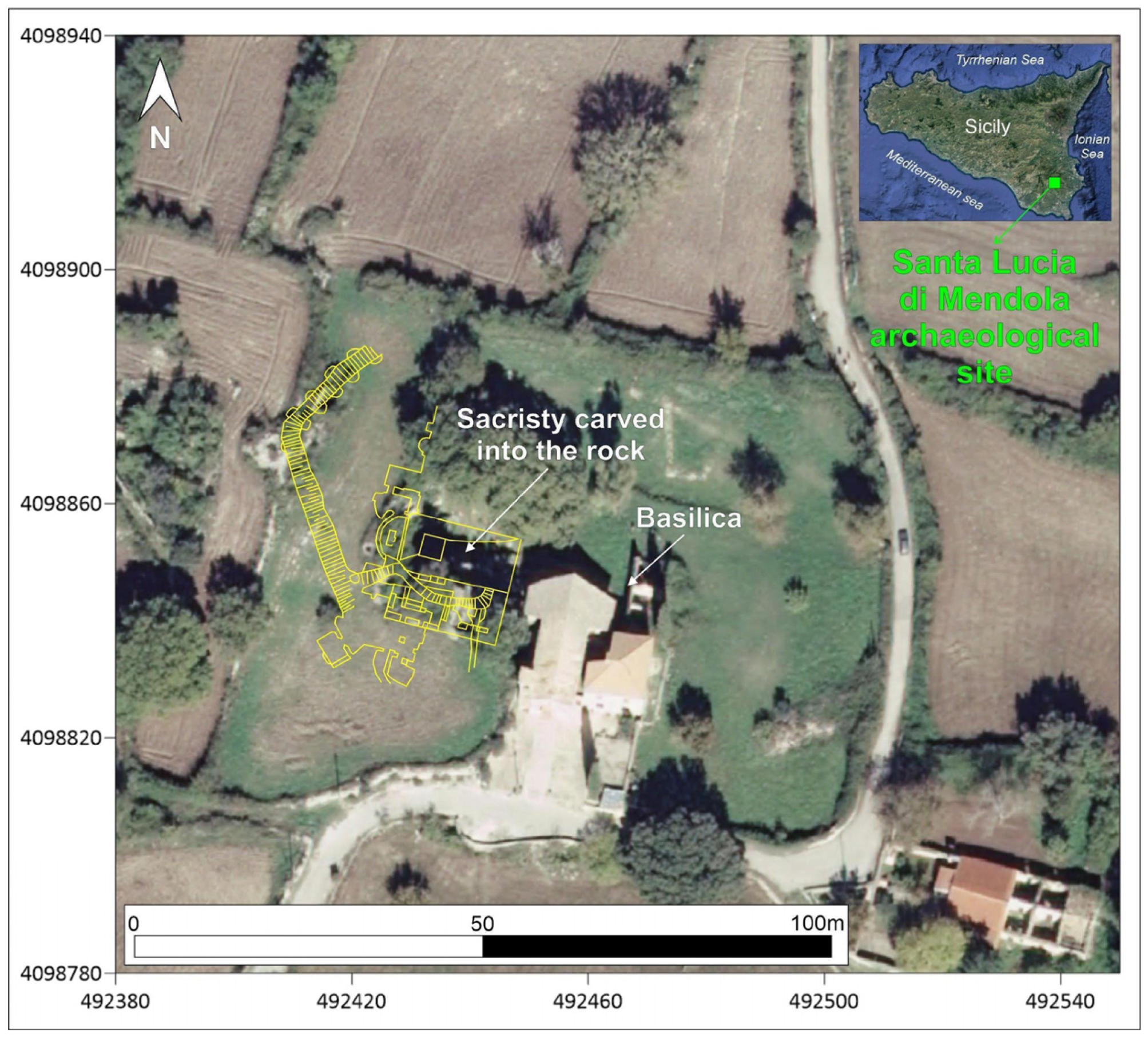
The “Santa Lucia di Mendola” site is an early Christian archaeological complex located between the cities of Palazzolo Acreide and Noto (Syracuse, Italy) (
Figure 1). The site includes a hypogeum dated to the 4th century A.D. (
Figure 1) containing the remains of a Byzantine rock basilica (6th–7th century A.D.) and a small sacristy excavated into the adjacent rock [
26].
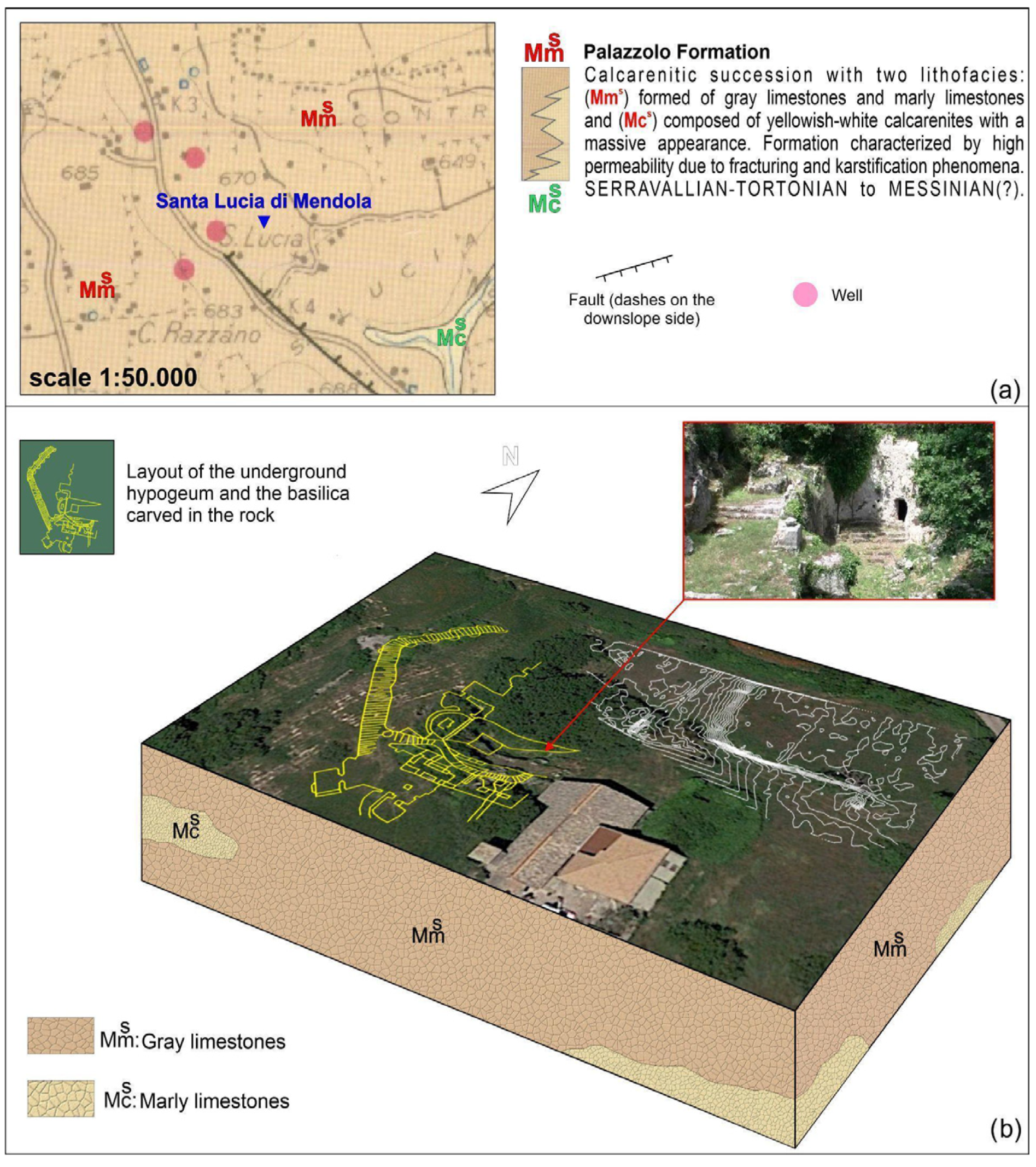
From a geological point of view, the site is carved into a karst system belonging to the Hyblaean Plateau, consisting mainly of Lower Triassic to Jurassic platform limestones interbedded with basic volcanic rocks [
27,
28]. The site exhibits a long history marked by several phases. Originally established in late antiquity as a Christian worship site with rupestrian features, it included a necropolis. The presence of Byzantine rock-cut architecture and burial practices suggests a significant religious and cultural influence during this period.
The site was revitalized during the Norman period with the foundation of a Benedictine abbey, reflecting its renewed religious and cultural significance. This phase of development incorporated architectural innovations, with the construction of monastic buildings and the church, which over time underwent several transformations to accommodate the evolving needs of the community. Over the centuries, the site underwent numerous architectural transformations, leaving behind a complex archaeological record that includes remains of the church, monastic structures, and other elements that offer valuable insights into the architectural and cultural transitions in the region.
In 2021, the restoration of the monument was considered and a virtual reconstruction of the Norman church was produced using a 3D Laser Scanner [
29]. This action marked the beginning of a multidisciplinary study aimed at establishing baseline data to support future conservation activities. To this purpose, an extensive geophysical field survey was carried out between 2023 and 2024.
At the investigated site, the following geophysical methods were applied: (1) seismic refraction tomography (SRT) aimed to characterize the physical-mechanical features of the lithotypes; (2) ERT, FDEM and MAG surveys were performed to identify the possible presence of archaeological targets underground. The GPR method was not considered suitable in this case, based on the geological features of the site, which is heavily affected by karst phenomena.
The main objective of these surveys was to achieve a deeper understanding of the subsurface conditions in order to support both archaeological interpretation and conservation planning. The integration of multiple geophysical techniques aimed to map the shallow stratigraphy and to identify potential anthropogenic or archaeological features that could provide new insights into the structural evolution of the site. The geophysical data can contribute not only to the physical characterization of the area but also to the reconstruction of the historical development and spatial organization of the ancient settlement. Reconstructing a geophysical model of the subsoil, therefore, represents a fundamental step toward the comprehensive characterization of the site, useful for guiding future excavation strategies, conservation measures, and historical interpretation.
Figure 1.
Location of “Santa Lucia di Mendola” Archaeological site. The yellow plan shows the layout of the underground hypogeum and the basilica carved into the rock (modified from [
30]).
Figure 1.
Location of “Santa Lucia di Mendola” Archaeological site. The yellow plan shows the layout of the underground hypogeum and the basilica carved into the rock (modified from [
30]).
2. Archaeological Site
The “Santa Lucia di Mendola” archaeological site is a place of pilgrimage from the early Christian period to the present day. The name derives from the early medieval toponym of Mende or Mèndola. Located between the cities of Palazzolo and Noto (province of Syracuse, Sicily), “Santa Lucia di Mendola” consists of a hypogeum (4th century A.D.) and the remains of a Byzantine Basilica (6th–7th century A.D.).
The complex also includes a Norman abbey (1103 A.D.), of which only a few remains are left, a hermitage, the current basilica [
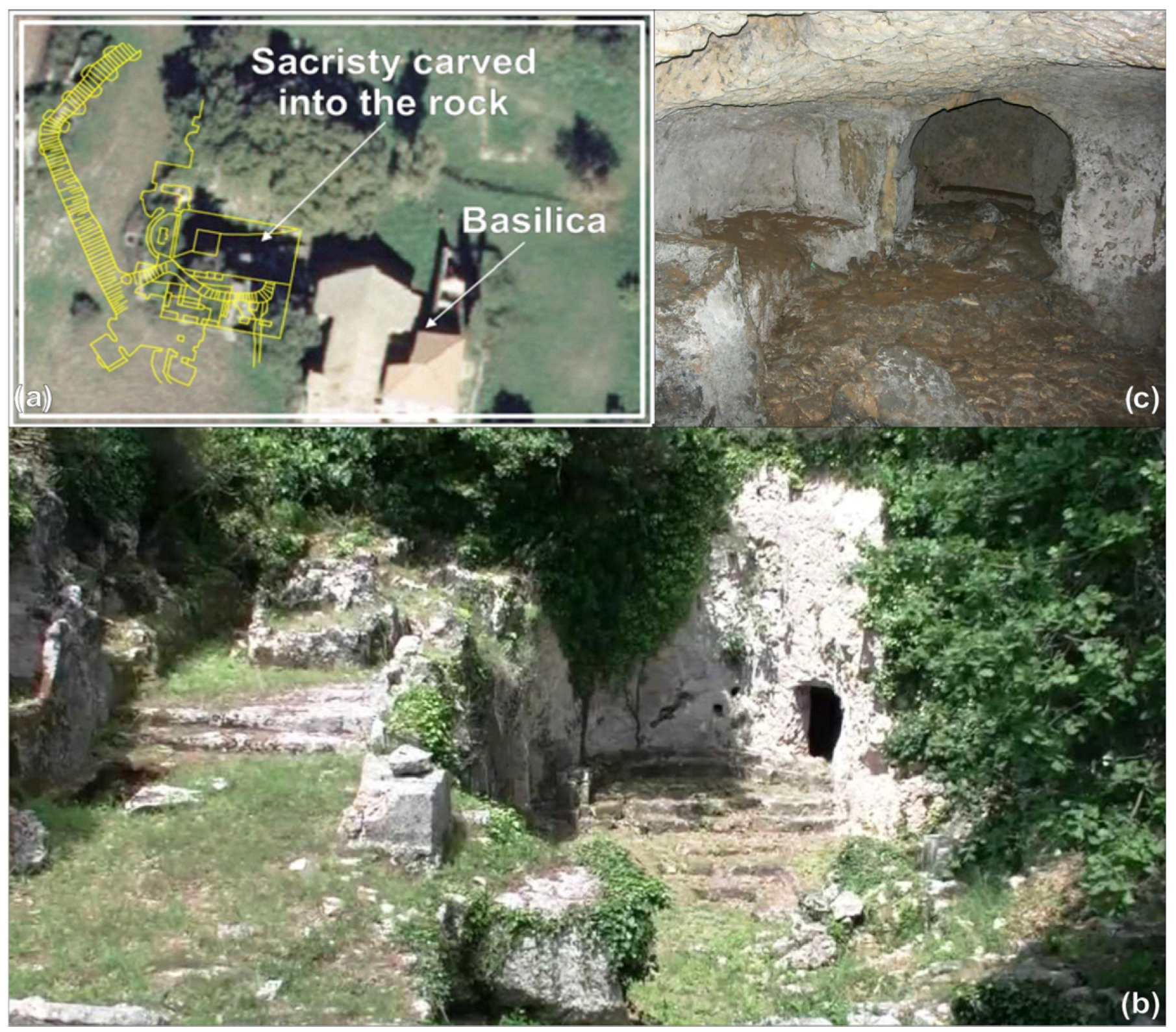
26] and a small sacristy carved into the rock (
Figure 2a,b). This space consists of an irregularly shaped room with large niches designed to hold sacred furnishings, and adjacent rooms connected by a corridor with traces of frescoes on the walls. This corridor, approximately 2.30 m high and 1.70 m wide, at its northern end, is partially walled up and visibly filled with rubble material. The thickness of the rock covering this excavated structure is approximately 2 m.
This place is linked to the cult of the martyr Lucia, a Roman widow, and to the noble Geminiano, persecuted at the end of the 3rd century A.D, under the reign of emperor Diocletian, as the Syracusan hagiographer Ottavio Gaetani attested [
31].
In the second half of the eighteenth century, the well-known French traveler Jean Houel, engraver, painter and architect, visited Santa Lucia di Mendola during the journey from Syracuse to Palazzolo Acreide. He writes about his trip in four volumes. In the third, in addition to the description of the site of Santa Lucia, he inserts an engraving documenting the monumental complex and the hypogeum [
32].
Two stairs carved into the rock allow you to reach the hypogeum, at a depth of several meters from the ground level, in which there is a rich spring of water, which has been recognized as having beneficial qualities. One of the two staircases, has a series of Christian sepulchral arcosolia on the walls (
Figure 2c). The Byzantine Basilica is dug into a rock bank, with annexed carved rooms. The presbytery facing west is preserved, raised by three steps from the central nave. The nave, concluded by a semicircular apse, must have had a wooden roof. We have a series of architectural reliefs belonging to the Norman Basilica, published by the scholar Giuseppe Agnello [
33] and exhibited in the Regional Gallery of Palazzo Bellomo in Syracuse.
The “Santa Lucia” site is still little known and presents various problems of interpretation, for which it is necessary to proceed by a multidisciplinary approach.
Figure 2.
(
a) Map of Santa Lucia di Mendola: the yellow plan shows the layout of the underground hypogeum and the basilica carved into the rock; views of the Byzantine Basilica (
b) and of the Hypogeum (
c) [
34].
Figure 2.
(
a) Map of Santa Lucia di Mendola: the yellow plan shows the layout of the underground hypogeum and the basilica carved into the rock; views of the Byzantine Basilica (
b) and of the Hypogeum (
c) [
34].
4. Methods and Data Acquisition
To characterize the subsurface and to obtain information on the geological and structural features of the investigated area, integrated geophysical surveys were carried out using SRT, ERT, MAG and FDEM.
The SRT is a geophysical technique based on the analysis of elastic waves propagation. This method provides information on the distribution of wave velocities in the subsoil, which are related to the physical-mechanical features of the lithotypes present in the subsoil [
37]. This technique relies on the principle that seismic waves generated by a controlled energy source propagate through the subsurface and undergo refraction at interfaces between materials with contrasting seismic velocities. The first-arrival travel times, recorded by an array of geophones, are subsequently processed through inversion algorithms to reconstruct high resolution two-dimensional sections of the P-wave velocity distribution [
37].
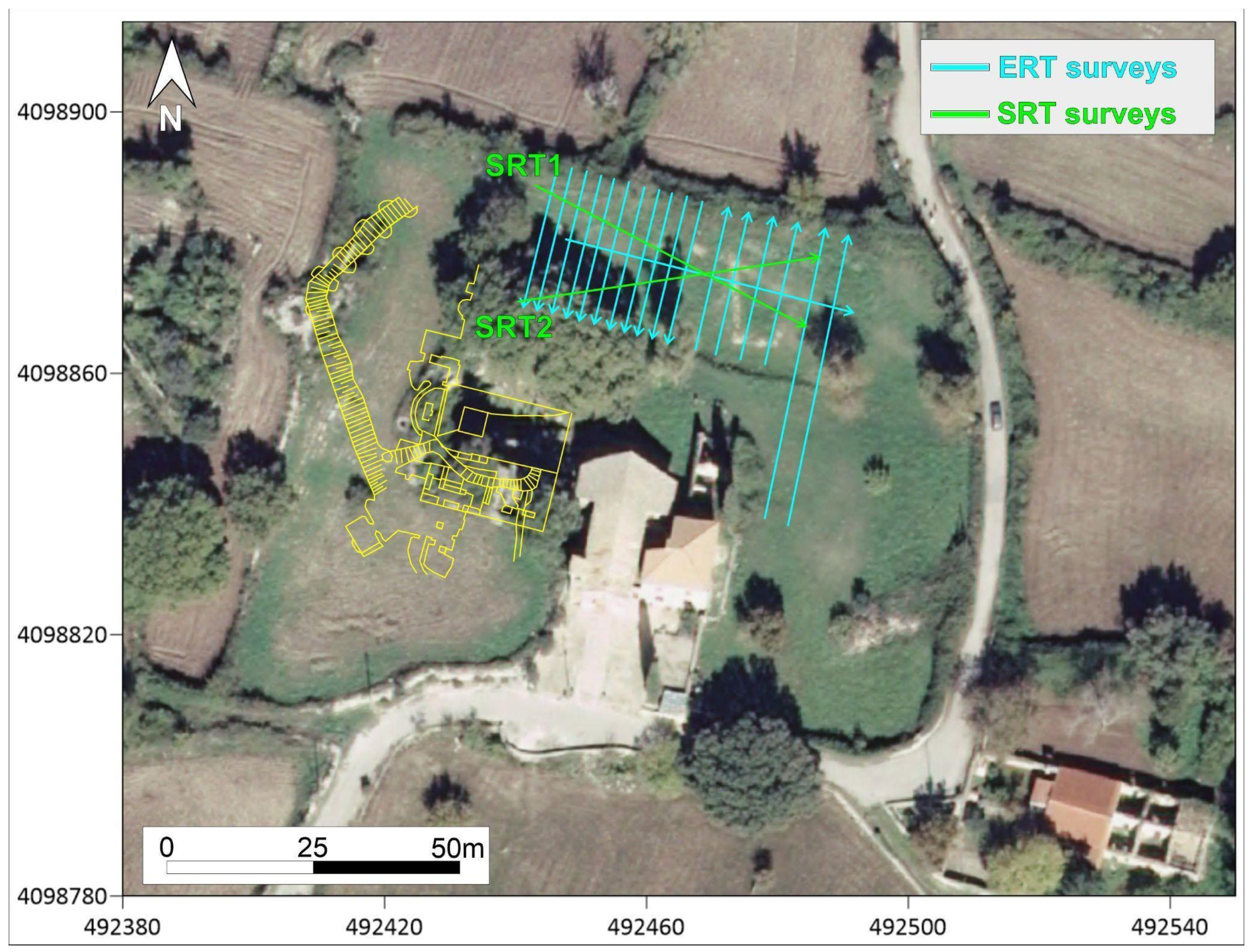
To reconstruct the geometry of the geological layers, two crossing seismic refraction tomography profiles were performed at the investigated site (
Figure 4). Each profile was carried out using 24 vertical geophones with a central frequency of 4.5 Hz, spaced 2 m apart, plus an additional geophone used as a trigger (Moho s.r.l, Marghera, Venice, Italy). The spacing chosen allows the identification of variations and discontinuities with minimum dimensions of 0.66 m. The energization source was an 8 kg hammer beating on a metallic plate coupled to the ground. For each profile, 14 shot points were performed, distributed uniformly along the survey line, with a distance of 4 m between consecutive energization points. The external shots were performed at a distance of 4 m from the first and last geophones. At each shot point, the stacking technique was applied to improve the signal-to-noise ratio. Seismic signals were recorded for 3000 ms using a sampling frequency of 1000 Hz (
Table 1).
The ERT is a well-established method in near surface characterization studies [
38,
39], it enables the determination of the electrical resistivity properties of rocks in the subsoil. The resistivity is strongly influenced by rock properties such as porosity, mineral composition, water content and filling material [
40]. In ERT surveys, a set of electrodes is placed along a profile or on a grid, a defined sequence of current injections and potential measurements is performed. The apparent resistivity data collected is then processed and inverted using numerical algorithms that minimise the difference between the observed and calculated values, producing a 2D or 3D resistivity model of the subsurface.
In the northern sector of the investigated site a total of 18 ERT profiles were carried out: 17 oriented in a NNE–SSW direction and one in a WNW–ESE direction, the last one placed to intersect the previous ones (
Figure 4). 15 of these ERT profiles were performed using 24 electrodes spaced 1 m apart, while the other three profiles were carried out using 48 electrodes, maintaining the same 1 m electrode spacing. A 1 m electrode spacing, relatively small for ERT surveys, was adopted to achieve high-resolution imaging of the subsurface, allowing detection of targets with minimum sizes of 0.33 m. For each profile, resistivity data were acquired using the Dipole–Dipole (DD) quadripole.
Table 1 summarises the main acquisition parameters for both methods.
Figure 4.
SRT and ERT acquisition scheme. The yellow plan shows the layout of the underground hypogeum and the basilica carved into the rock.
Figure 4.
SRT and ERT acquisition scheme. The yellow plan shows the layout of the underground hypogeum and the basilica carved into the rock.
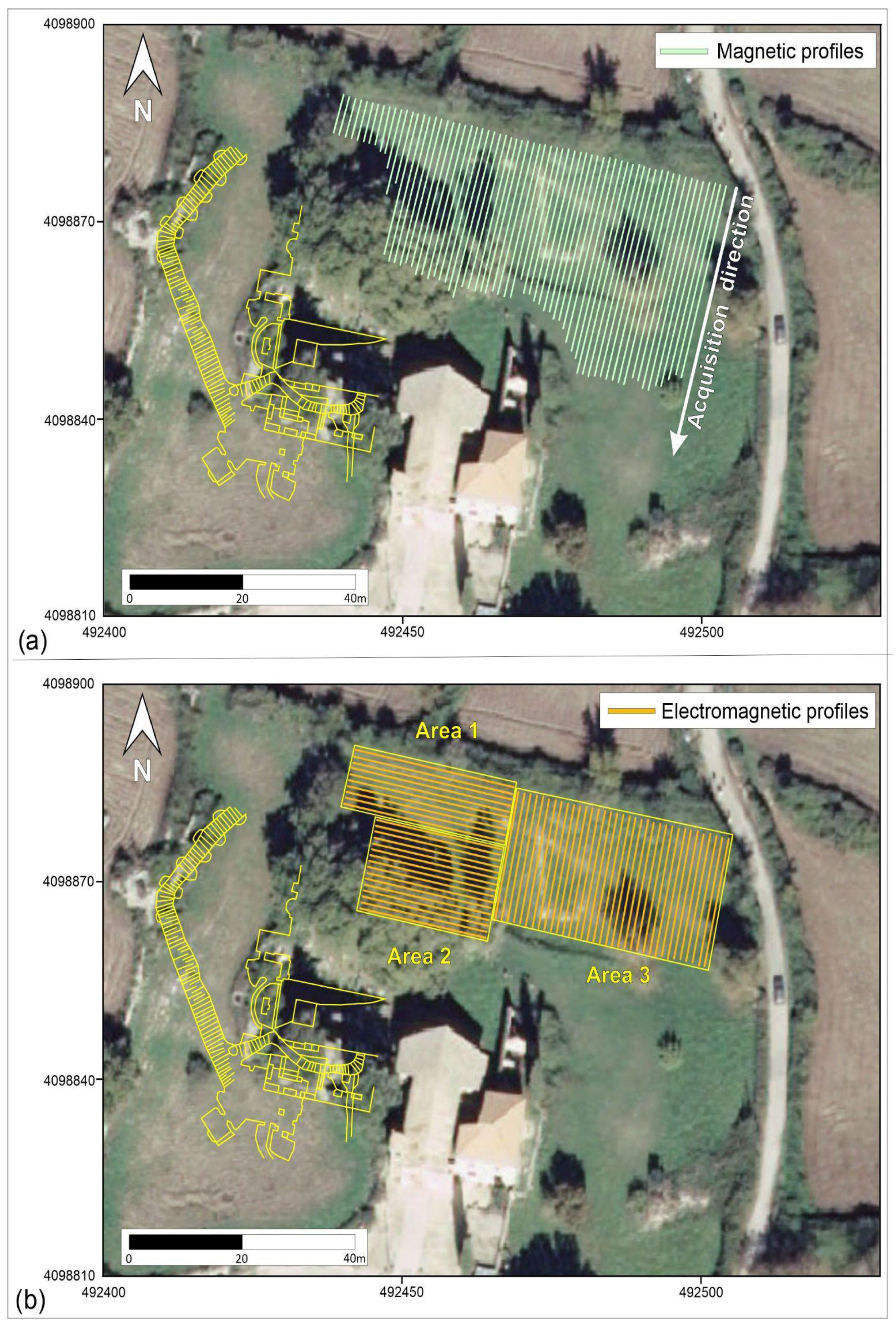
Two additional methods were employed in the investigated area (
Figure 5). The first one is the magnetic-gradient survey (MAG) that provides a magnetic anomalies map related to shallow buried structures [
41,
42,
43]. The gradiometric configuration is one of the most commonly adopted. This approach minimizes the influence of anthropogenic noise and temporal fluctuations in the geomagnetic field, thereby improving data reliability offering a greater horizontal resolution of detected anomalies, eliminates the necessity for daily corrections, and provides directly differential anomaly values. The technique consists of measuring the vertical gradient of the Earth’s magnetic field using a dual-sensor system (two coils). Since the intensity of the vertical magnetic gradient decays with the fourth power of the distance from the source of the anomaly, the method effectively enhances anomalies near the surface generated by archaeological features, while attenuating deeper and less relevant signals.
Usually, the presence in the subsurface of floors and walls can generate magnetic anomalies ranging between 1 and 20 nT, whereas anomalies linked with materials containing ferromagnetic fractions, such as furnaces and pottery, can vary within a broader range of 10–2000 nT [
41].
In this study, the acquisition scheme consisted of parallel lines (
Figure 5a), oriented NNE-SSW spaced 1 m apart, along which measurement points (1619 measures) were acquired every meter to obtain a coverage mesh-grid (1 m × 1 m). A PMG-2 type proton gradiometer with an accuracy of ±0.1 nT has been used to acquire the data (SatisGeo, Brno, Czech Republic). The instrument consists of two measuring coils, a central processing unit, and a supporting staff, with the coils positioned at a fixed distance of 2.30 m. This configuration enables the acquisition of vertical magnetic gradient values that are unaffected by diurnal variations in the Earth’s magnetic field. Data collection was performed in a single survey direction, with the coils oriented toward magnetic north, thereby minimizing noise and systematic errors typically linked to bidirectional measurements.
The coordinates of each measurement point were recorded using a GNSS device (STONEX Srl, Paderno Dugnano, Milan, Italy) operating in RTK mode (UTM WGS84–33N zone).
Figure 5.
Acquisition schemes for (a) MAG and (b) FDEM surveys. The yellow plan shows the layout of the underground hypogeum and the basilica carved into the rock.
Figure 5.
Acquisition schemes for (a) MAG and (b) FDEM surveys. The yellow plan shows the layout of the underground hypogeum and the basilica carved into the rock.
The frequency domain electromagnetic method (FDEM) is used to measure subsurface electric currents induced by electromagnetic fields, using transmitting and receiving coils operating in the frequency domain [
44,
45,
46]. The transmitting coil generates a primary electromagnetic field, which is capable of producing a flow composed of eddy currents within the materials in the subsoil, causing the production of a secondary electromagnetic field detected by the receiving coil. This method analyses both the imaginary (quadrature) and real (in-phase) components of the secondary electromagnetic field recorded respect to the ‘primary’ field. The quadrature component is very sensitive to electrically conductive materials and is expressed in the International System of unit in mS/m, while the in-phase component is more sensitive to materials with magnetic properties and is expressed in ppm (parts per million). Data acquisition was carried out using a multi-frequency AEMP14 device capable of producing electromagnetic waves with 14 frequencies in the range between 2.5 and 250 kHz (SiberGeo, Moscow, Russia). This device consists of a transmitting and two receiver coils spaced 1.5 m and 2.5 m. The survey was performed by dividing the site into three areas. For each area, data were collected along parallel profiles spaced 1 m apart, along which measurement points were acquired every meter, according to the acquisition scheme shown in
Figure 5b.
5. Data Processing and Results
P-wave travel time tomography is a well-established and widely used inversion scheme to resolve Vp velocity structure [
47,
48,
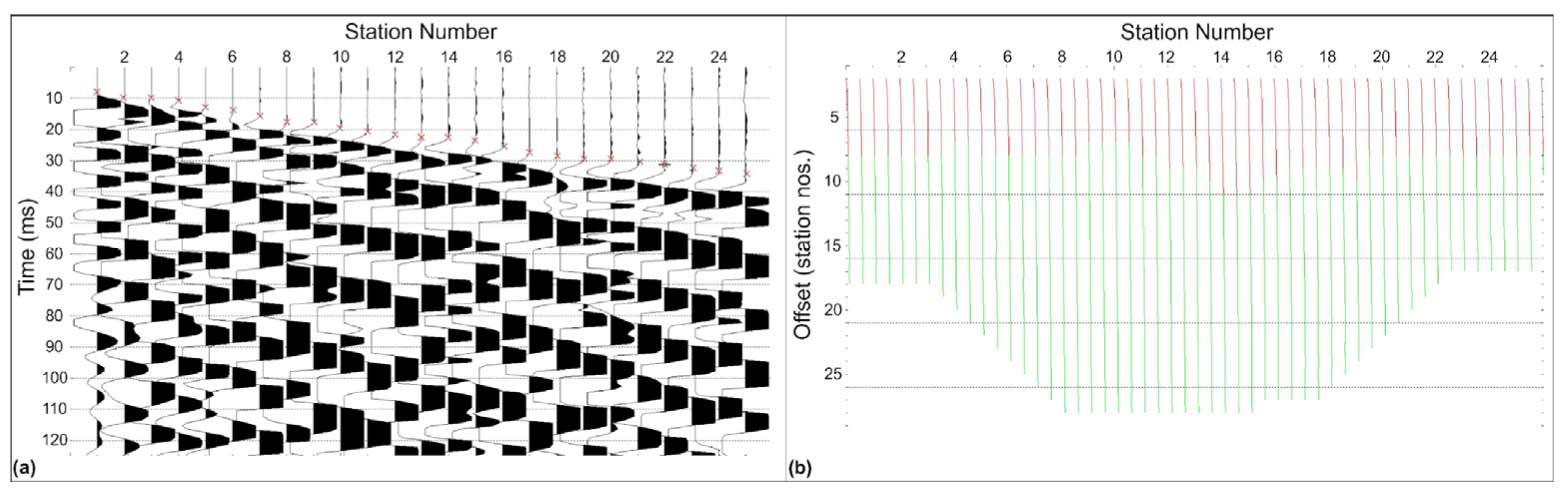
49]. Standard algorithms use the first arrival travel times and search the most plausible velocity model capable of reproducing the observed data by minimizing the misfit between the calculated and the measured travel times (
Figure 6a,b).
The processing of the SRT surveys was carried out in two main phases. The first phase involved the manual picking of P-waves first arrivals at the receivers for each shot point, ensuring precise identification of the wavefronts. No noise filtering was necessary, as the data were already sufficiently clean. To improve the signal-to-noise ratio, stacking with five energizations per shot point was performed, which significantly enhanced the signal quality. The maximum offset, defined as the distance between the shot point and the farthest receiver, was 52 m.
The second phase consisted of the inversion of the P-wave first arrivals to obtain 2D sections showing the variation in seismic wave velocity within the subsoil. During the inversion, topographic corrections were applied to account for terrain variations. Data inversion was conducted using SeisOptim v6.0 software, based on the Generalized Simulated Annealing Optimization (GSAO) approach [
50]. This global optimization algorithm reduces dependence on the initial velocity model, ensuring that the final solution is primarily controlled by the acquired data rather than by starting-model assumption. The inversion was carried out over ten iterations, sufficient to achieve convergence and a stable velocity model. To model the subsurface, a specific computational mesh was created, composed of quadrilateral cells measuring 0.9924284 × 0.9924284 m. For both SRT profiles, the mesh consisted of 59 cells along the x direction and 20 cells along the y direction. The RMS (Root Mean Square Error) is 23 × 10
−3 s for SRT1 and 20 × 10
−3 s for SRT2.
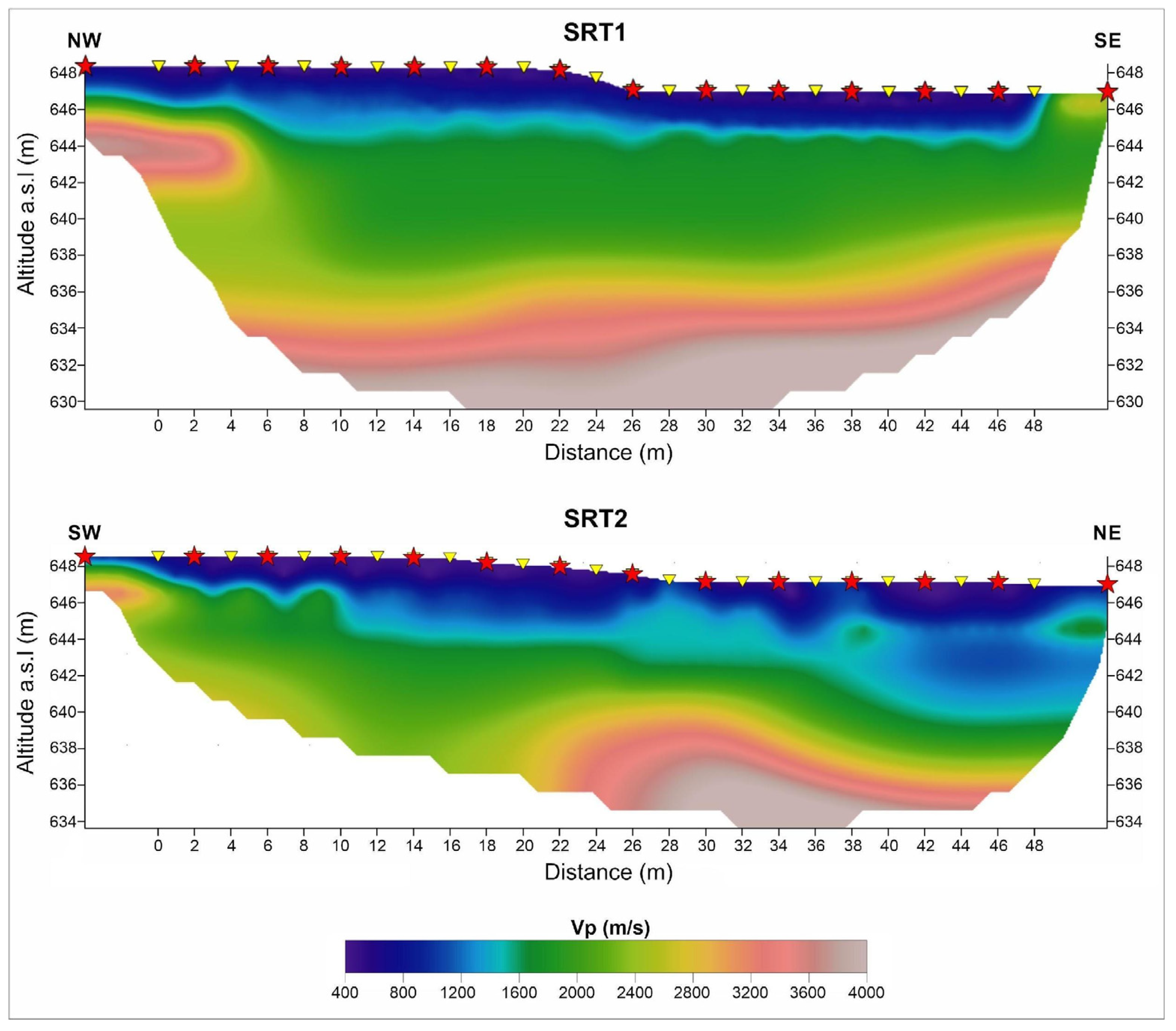
Figure 7 shows the P-wave velocity (Vp) final section for each tomography.
The SRT1 has provided information to a depth of 18 m (
Figure 7), it reveals a near surface layer characterised by low P-wave velocity values (Vp < 1000 m/s), extending to a depth of about 3 m. Below this layer, the subsoil is characterized by intermediate velocity values ranging between 1600 and 2500 m/s. From a depth of about 8 m, the section is characterised by Vp > 2800 m/s up to the maximum investigation depth. The SRR2 reached a depth of 14 m and shows a similar pattern to the previous one, a first layer with a thickness of about 3 m and Vp < 1000 m/s below which the speed tends to increase, reaching values greater than 2800 m/s at a depth of around 8 m.
Figure 7.
Section of SRT1 and SRT2. The yellow triangles show the location of the geophones, the red stars show the shot points.
Figure 7.
Section of SRT1 and SRT2. The yellow triangles show the location of the geophones, the red stars show the shot points.
The apparent resistivity datasets were processed using Res2Dinv v3.55.32 software. The data were filtered to remove any spikes (electrical noise peaks) and low-quality data points before proceeding with the inversion process. A topographic correction was applied to each ERT data set to adapt the final results to the real surface topography, ensuring that it accurately reflects the true morphology of the site. To model the subsoil, a mesh composed of trapezoidal cells with dimensions equal to a quarter of the distance between the electrodes (0.025 m), was used. The software uses the Least Squares Method (L.S.M.) as the data inversion algorithm, allowing to obtain 2D resistivity sections using finite difference and finite element mathematical functions. To define the accuracy of the resistivity sections obtained, we consider root mean square (RMS) error, which indicates the percentage difference between measured and calculated resistivity sections. [
39,
51,
52]. The average RMS for all ERTs is 9.1%.
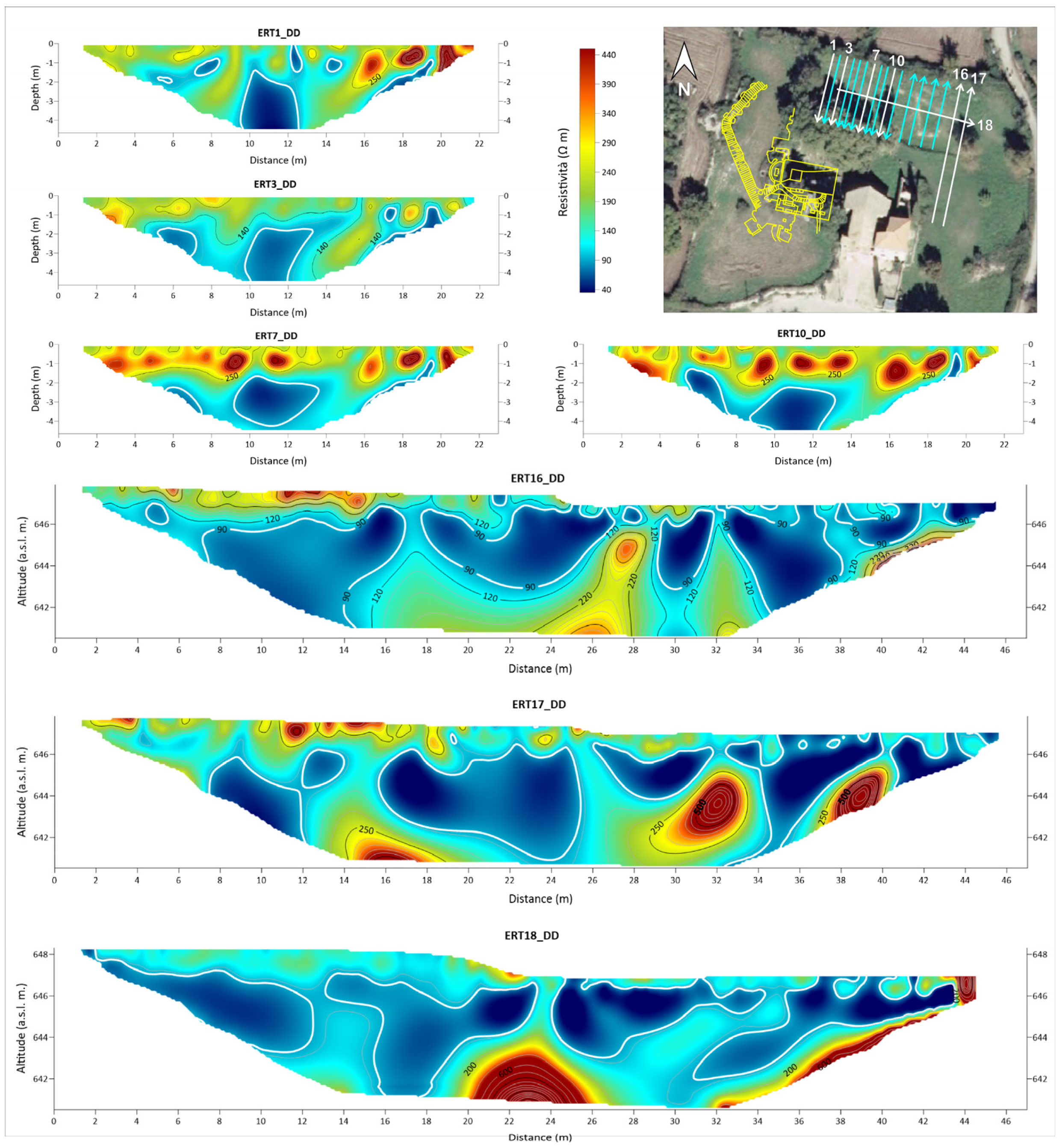
Figure 8 depicts some of the resistivity sections obtained from the data inversion process; all sections were plotted using a logarithmic contour graphic representation in the resistivity range 35–450 Ω·m. It is important to note that the shorter ERT profiles, with a total length of 24 m, reached a survey depth of about 4 m, while the longer ones reached depths of approximately 8 m. This variation in penetration depth is mainly related to the geometric configuration adopted during data acquisition.
Some sections, in the NW area, show the presence of anomalies characterized by high resistivity values, ρ > 250 Ω·m, that are localized in the first 2 m of depth. Particularly, these zones appear more pronounced from the ERT5 to ERT10 (
Figure 8). These anomalies are absent in the NE sector, whose topographic surface is located at an elevation approximately 1 m lower than the NW sector. Some high resistivity anomalies with the same characteristics as those seen previously are visible in the SE portion of the investigated area.
Another peculiar feature of the ERT sections relating to the acquisitions carried out in the NW part of the site is the presence of low resistivity anomalies (ρ < 90 Ω·m) at a depth of approximately 1.5–2 m from the surface, with a width of about two meters, which in this area show a systematic arrangement between adjacent sections. In the NE sector, these low resistivity areas are observed at a shallower depth from the surface and no longer appear to follow a regular pattern as that of the NW sector.
Figure 8.
Representative ERT sections acquired at the study site.
Figure 8.
Representative ERT sections acquired at the study site.
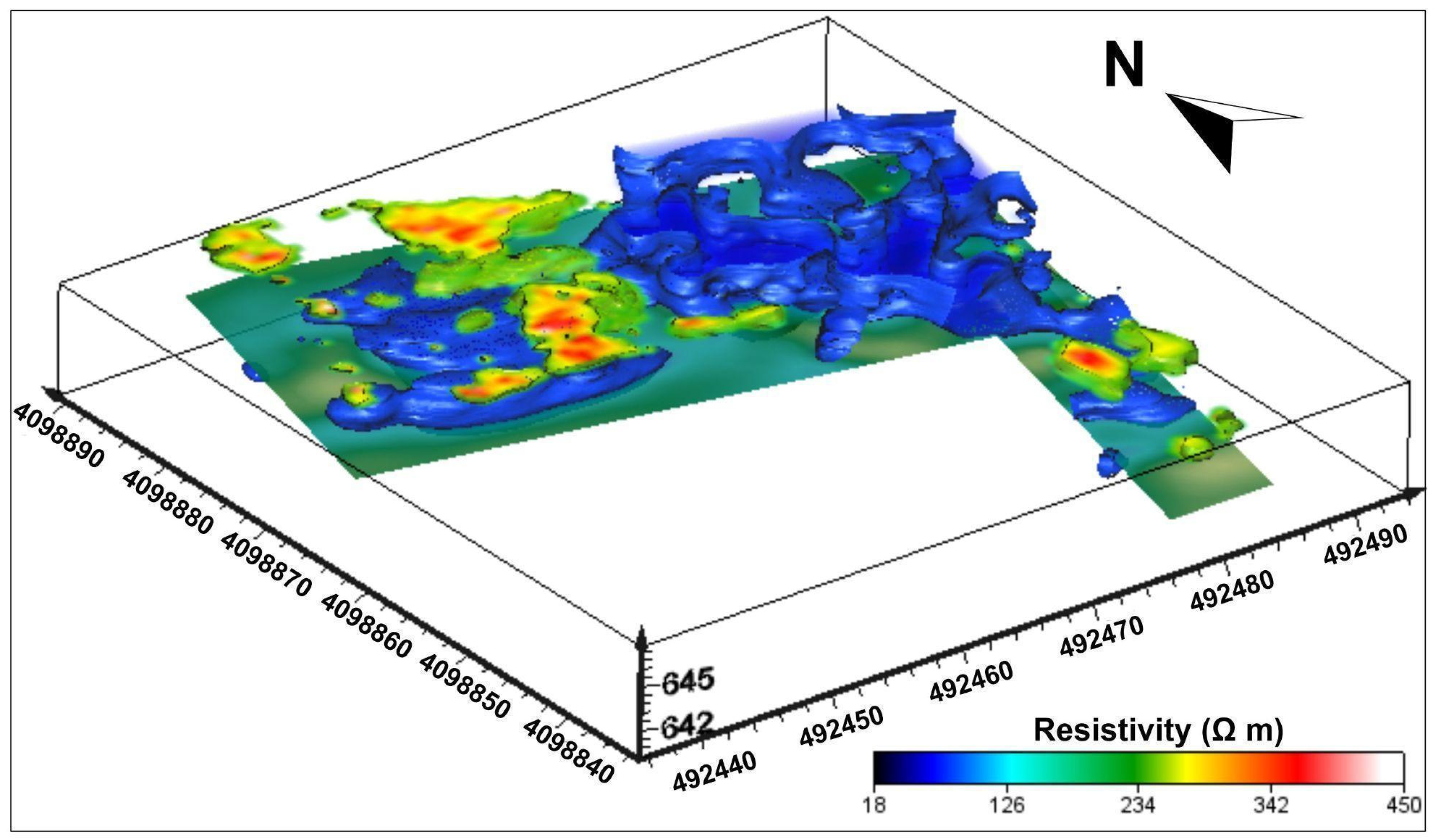
A 3D model (
Figure 9) showing the distribution of resistivity values below the investigated area was obtained by inverting the data acquired with ErtLab v 1.2.0 software (Geostudi Astier s.r.l., Livorno, Italy). This software applies an Occam-type regularization scheme designed to obtain the smoothest model that fits the data within their estimated uncertainties [
53,
54].
After a preliminary statistical filtering of the dataset, the software iteratively optimized the model parameters through successive inversion steps. The results of the iterative process showed a progressive reduction in the discrepancy between measured and calculated data. Consequently, the final model was selected for interpretation. According to the 2D sections, the 3D model shows the presence of a shallow high-resistivity zone in the northwestern sector (yellow-red areas in
Figure 9), emphasized by the isosurface at ρ = 250 Ω·m (
Figure 9). In contrast, low-resistivity zones (dark-blue areas in
Figure 9) characterized by ρ < 80 Ω·m, occur at depths of around 2 m in areas of higher topographic elevation. These conductive features display a relatively regular pattern, trending WNW–ESE in the western portion, while appearing more irregularly distributed in the eastern sector (dark-blue areas in
Figure 9). Furthermore, in this area the anomalies occur at shallower depths than those observed in the western part. Additional high-resistivity anomalies are observed in the southeastern sector (yellow-red areas in
Figure 9); these are also located close to the surface.
Figure 9.
3D resistivity model of the investigated area obtained using ERT surveys.
Figure 9.
3D resistivity model of the investigated area obtained using ERT surveys.
The magnetic data, acquired according to the scheme shown in
Figure 5a, were processed using Oasis Montaj v7.0 software. In the first step, the raw data were associated with topographic data and plotted to produce a preliminary magnetic gradient map, allowing for the identification of anomalies generated by isolated ferrous material such as metal fences that could interfere with the survey results. Subsequently, the dataset was processed through a filtering procedure based on the application of a bandpass filter.
Next, the Channel Math Expression Builder tool was used to truncate the data, setting the gradient interval between −5 and 15 nT as extreme values to the dataset. Based on the data acquisition mode described in
Section 4, it was not necessary to apply additional filters to remove the zigzag effect, which commonly arises from bidirectional acquisition data [
11,
15,
42]. The data were gridded using the Kriging method, applying a 0.1 × 0.1 m mesh, to obtain a total 2D magnetic gradient map of the investigated area. As observed by some authors (e.g., [
11,
43,
44]), the presence of buried limestone structures can produce negative magnetic anomalies.
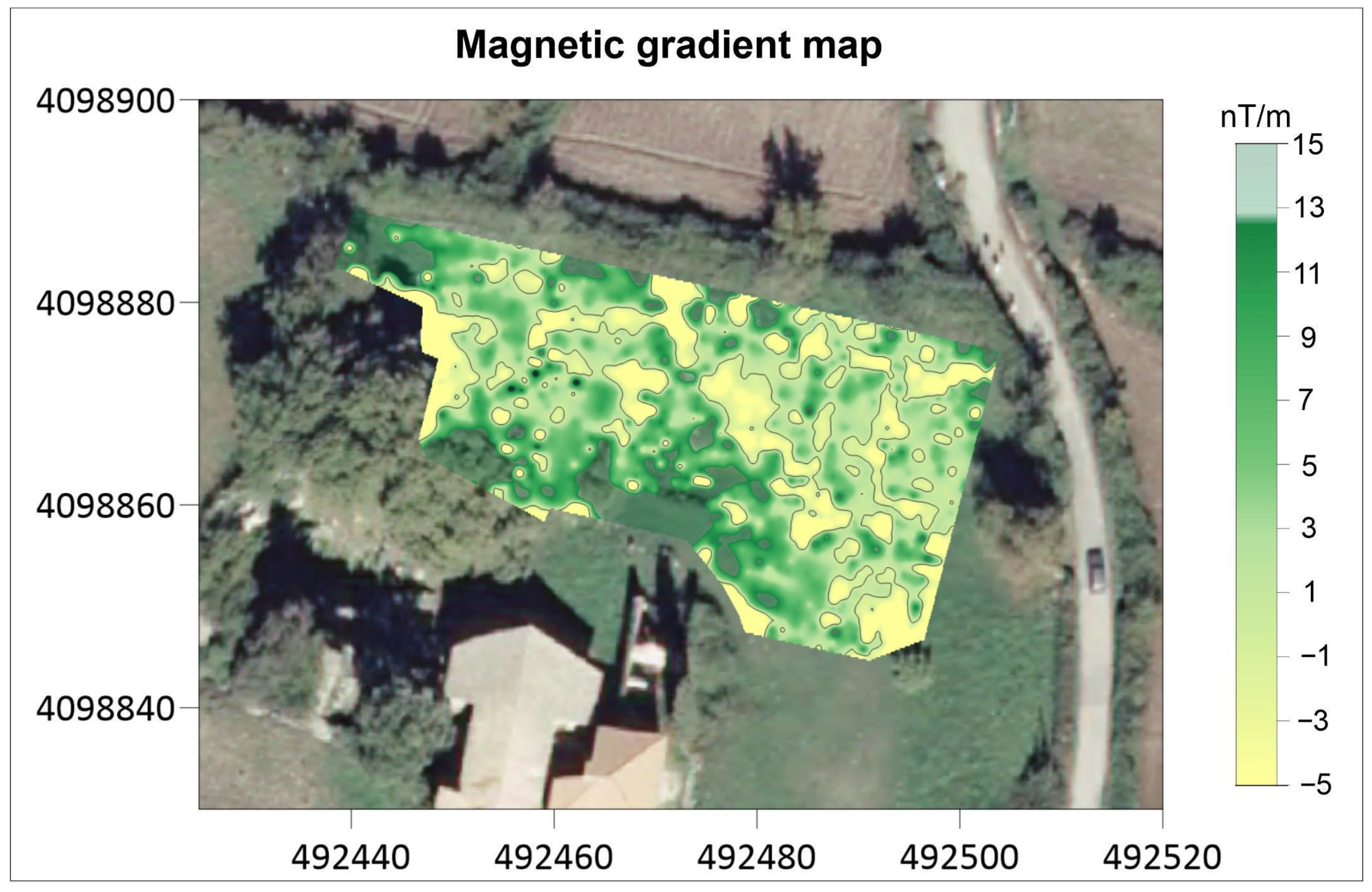
The magnetic gradient map shown in
Figure 10 reveals the presence of several anomalies characterized by negative magnetic gradient values. These anomalies are delineated by the isoline corresponding to a gradient value of 0.
A fairly extensive anomaly can be observed in the north of the area, extending for approximately 20 m in WNW–ESE direction. Another anomaly, characterised by negative magnetic gradient values, is located in the eastern sector of the investigated area, extending in a NW-SE direction for about 30–35 m. In addition to these main features, several negative anomalies can be observed, scattered and discontinuous.
Figure 10.
Magnetic gradient map: the grey line represents the isoline with magnetic gradient value equal to 0.
Figure 10.
Magnetic gradient map: the grey line represents the isoline with magnetic gradient value equal to 0.
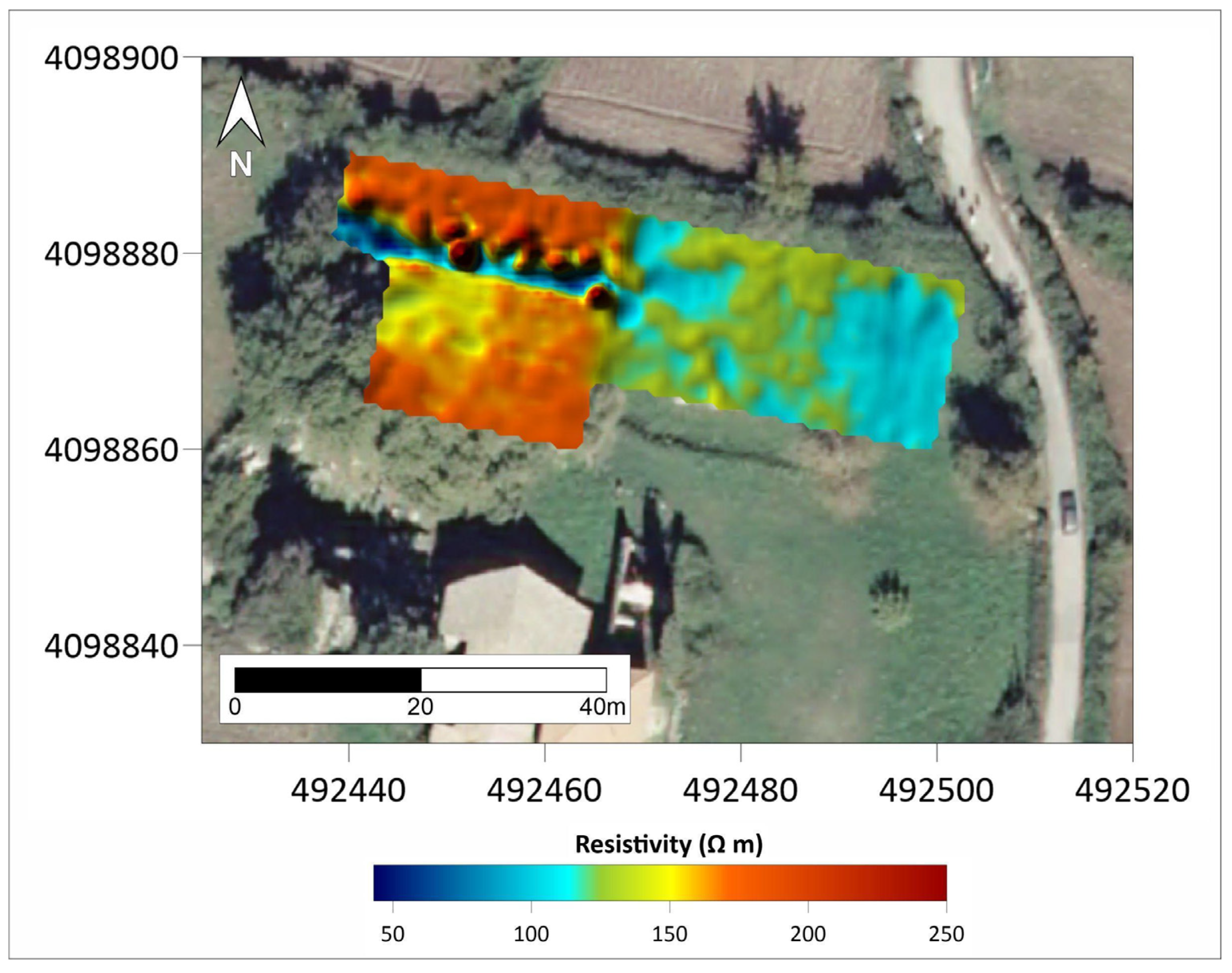
The FDEM data were processed using iiSystem v. 4.05 and Surfer 16 software. In the first step, the data were processed with iiSystem v. 4.05, which enables the georeferencing of individual measurement points. The conductivity measurements were converted into resistivity values to allow a direct comparison with the results of the ERT surveys. This approach ensures that both datasets are represented in the same physical parameter, facilitating the interpretation and comparison of subsurface features. Subsequently, the data were gridded using the Kriging method, applying a 0.1 × 0.1 m mesh, to generate maps for each surveyed area. The resistivity data were plotted in Ω·m and all the maps refer to measurements acquired using the highest frequency antenna (250 kHz), which provides information on the shallowest part of the subsoil. The maps relating to other frequencies were not considered because, at increasing depths, the performance of FDEM is limited due to the attenuation suffered by the electromagnetic signal.
The resistivity map generally shows values in the range of 50–250 Ω·m (
Figure 11). The western sector of the investigated area shows the highest resistivity values (ρ > 150 Ω·m). This high resistivity zone is interrupted by a distinct anomaly extending in a WNW–ESE direction, characterized by resistivity values below 100 ohm*m. The eastern sector of the surveyed area exhibits lower resistivity values compared to the sector described above. Specifically, it contains zones characterized by intermediate resistivity values ranging between 100 and 150 Ω·m, located between areas with lower resistivity < 100 Ω·m.
6. Discussion and Conclusions
The accuracy of geophysical responses in karst environments is strongly affected by the inherent heterogeneity of the subsurface. Complex karst stratigraphy, characterized by irregular bedrock surfaces, variable infilling materials, and the presence of cavities or conduits, often produces non-linear and ambiguous geophysical signatures. Electrical and electromagnetic methods are particularly sensitive to lateral resistivity variations; cavities can generate anomalies of opposite sign depending on their filling, e.g., clay-filled cavities and air-filled voids can generate conductive and resistive anomalies respectively, producing complex patterns that can complicate interpretation. Similarly, seismic methods are influenced by strong velocity contrasts and diffraction effects due to irregular stratification and small-scale voids, which can lead to misinterpretation.
Seismic tomography, while capable of achieving greater depth penetration and providing valuable insights into lithological and structural variations, faces significant challenges in karst terrains. The presence of cavities, fractures, and heterogeneous infill materials causes scattering, multiple reflections, and complex travel paths, all of which can obscure true subsurface features and reduce the reliability of the resulting models. Nevertheless, seismic tomography remains a powerful tool for detecting large-scale discontinuities and delineating subsurface morphology, provided that the survey geometry and data quality are adequate.
In contrast, ERT offers a highly effective approach for near-surface investigations in karst environments. This technique is particularly sensitive to resistivity contrasts caused by variations in moisture, porosity, and the presence of air- or water-filled cavities. However, the technique suffers from a rapid decrease in resolution with depth, non-unique inversion results due to the strong resistivity contrast typical of carbonate rocks, and possible distortions related to surface conductivity and topographic effects. Additionally, surface conductivity and topographic effects can distort the data. Despite these limitations, ERT remains valuable for mapping shallow conduits, detecting sinkholes, and delineating the soil–rock interface in complex karst settings, where other methods might struggle.
Similarly, FDEMs are advantageous due to their rapid data acquisition, non-invasive nature, and ability to cover large areas efficiently. These methods are particularly useful for preliminary surveys and for identifying lateral variations in conductivity associated with moisture changes, clay-rich zones, or shallow cavities. However, FDEM’s performance is limited in highly heterogeneous or conductive environments, where signal distortion and shallow depth penetration hinder interpretative accuracy. Despite these constraints, FDEM surveys can complement ERT and seismic data, providing valuable additional information that can help refine the overall subsurface model.
MAG surveys, though less commonly applied in carbonate terrains due to the generally weak magnetization of limestone, offer high spatial resolution and enhanced sensitivity to localized magnetic anomalies. The gradient configuration helps to suppress the regional magnetic field and cultural noise, improving the detection of small ferromagnetic features. However, the method is constrained by the low magnetic contrast typically found in karst formations, as well as the susceptibility to spurious anomalies from anthropogenic materials and distortions from irregular topography, all of which require careful correction to improve the data’s reliability.
In light of the above, it is evident that the complex stratigraphy of karst systems undermines the resolution and reliability of individual geophysical methods, thereby increasing the uncertainty of the interpretations. To mitigate these effects, integrated investigations combining multiple geophysical techniques, constrained by geological information and local evidence, are essential in order to further improve interpretative accuracy. Understanding and accounting for the influence of complex karst stratigraphy is therefore indispensable for obtaining realistic and consistent subsurface models in such challenging environments.
Analyzing the identified anomalies and variations in subsurface properties in relation to the geological and structural context of the study area, the results highlight key features of the subsurface and their significance for understanding subsurface structures and guiding potential future investigations. The criteria of geometrical consistency, spatial continuity of anomalies, correlation with site-specific archaeological evidence, and corroboration across different geophysical techniques were all essential for distinguishing between potential underground structures and natural heterogeneities.
The SRT surveys performed at the Santa Lucia di Mendola archaeological site reveal that the shallowest layer is characterized by low Vp values (<1000 m/s) (
Figure 7) according to the geological settings of the area (
Figure 3).
These values are probably related to the presence of lithotypes with poor physical–mechanical properties, which in this specific context are likely associated with the grey limestone outcropping in the region, characterized by possible fracturing and karstification phenomena. Below this layer, an increase in Vp values is observed (
Figure 7), suggesting an improvement of the physical-mechanical features of the lithotypes. Also in this case, the velocity values are consistent with the presence of grey limestone that characterizes the investigated area, but at depth greater than approximately 3 m, does not appear to have been affected by significant alteration processes.
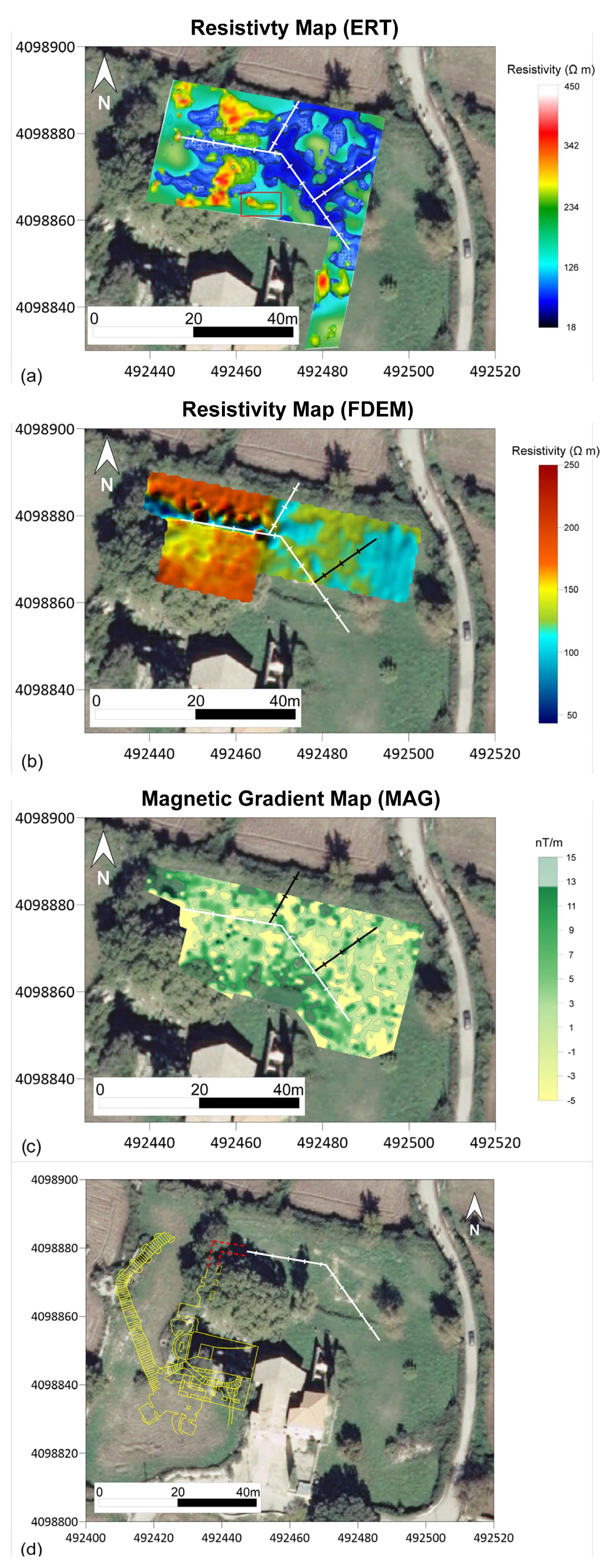
The resistivity map obtained from ERT surveys (
Figure 12a) shows the presence of a low resistivity anomaly elongated in a WNW-ESE direction, approximately 20 m long. This anomaly appears to be connected to another anomaly with the same resistivity characteristics but extending in a NNW-SSE direction for a length of approximately 30 m. Two other low resistivity anomalies, approximately 15 m long, are observed, extending in a NNE-SSW direction and appearing to be connected to the anomalies described above. The ERT survey also highlights the presence of some high-resistivity anomalies, located at very shallow depth, mainly in the western and southeastern parts of the surveyed area. Given the coincidence between one of these anomalies and the position of the remains of a wall in the area under investigation, it is possible to associate the other anomalies identified, also characterized by high resistivity values, with the remains of structures made of materials similar to those used to build the wall.
Also, the resistivity map obtained from the FDEM (
Figure 12b) survey confirms the presence of the first two low resistivity anomalies and one of the two anomalies extending in an NNE-SSW direction.
The magnetic gradient map (
Figure 12c) highlights the presence of two elongated magnetic anomalies, the first oriented in a WNW-ESE direction and the second in a NNW-SSE direction, which are consistent with the low resistivity anomalies shown in the central part of the area investigated by the resistivity maps obtained using the ERT and FDEMs (
Figure 12a,b). The other two resistivity anomalies identified using the ERT method, oriented in an NNE-SSW direction, are not reflected in the magnetic gradient map.
Overall, these results suggest the coexistence of different types of buried features within the investigated area. The correspondence between high-resistivity anomalies and known wall remains indicates the possible presence of additional stone-built structures, whereas the low-resistivity and magnetic anomalies may reflect areas affected by anthropogenic fills, compacted soils, or other construction-related activities.
The identification of anomalies that coincide in orientation and length in the results of all the surveys carried out indicate, with a good degree of certainty, the presence of geophysical targets in the subsoil of the surveyed area, with characteristics that make them interesting from an archaeological point of view. Given the geological features of the site, the regular pattern of the anomalies identified and the related resistivity values, cannot be attributed to lithostratigraphic variations within the site, but can only be explained as the result of the presence of man-made structures. The resistivity values associated with the anomalies identified are in fact low compared to those that usually characterize the lithotypes outcropping in the survey area. Even if we were to hypothesize the influence of karstification, which is particularly widespread in the study area, on the values found, it is not possible to explain the particularly regular pattern and specific directions that characterize the anomalies identified. On the contrary, these anomalies are comparable in terms of position and pattern to the excavated structures currently accessible at the site near the area under investigation. A hypothetical reconstruction of the possible connection between the carved structures currently accessible and the anomalies identified is shown in
Figure 12d.
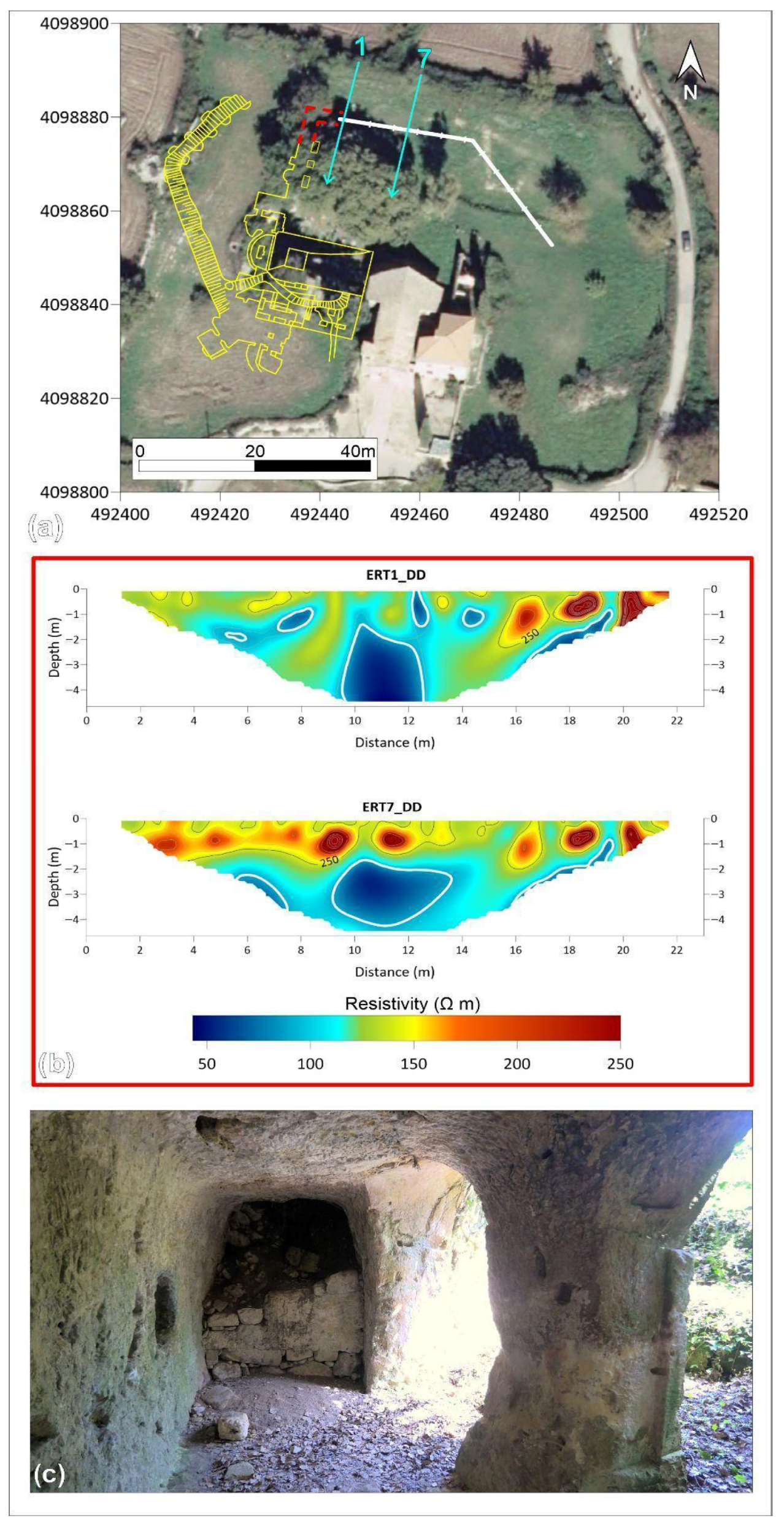
The hypothesis that the low resistivity anomalies identified may represent the continuation of the corridor connecting the sacristy rooms is supported by comparing the results of the 2D ERT sections, in terms of the size of the anomalies identified, with the geometric characteristics of the corridor (
Figure 13).
The ERT method provides information on the depth extension of the anomalies, unlike the other two methods. As shown, for example, in the two representative resistivity sections, ERT1 and ERT7 (
Figure 13a,b), the low resistivity anomaly extends from a depth of approximately 2 m below ground level with a height of just over 2 m and a width greater than 1.70 m.
The presence of filling material inside the cavities is consistent with the low resistivity values that characterise the anomaly identified by the ERT surveys. The presence of this section of corridor filled with rubble near the area under investigation suggests that the anomalies identified by geophysical surveys could represent a further excavated area filled with rubble in continuity with the structures currently accessible.
Figure 12.
Comparison between maps obtained from the different geophysical surveys: resistivity maps obtained from ERT (a) and FDEM (b) surveys, and (c) magnetic gradient map. The red rectangle, in the ERT resistivity map, highlights a high-resistivity anomaly located at the remains of an ancient wall visible at the site. The white lines point out the trend of the anomalies identified in the ERT map, which can also be observed in the FDEM and MAG maps; the black lines indicate the non-coincidence of the anomalies in the respective maps. (d) Layout of the underground hypogeum and the basilica carved into the rock (yellow plan) with the hypothetical reconstruction of the possible connection (red dashed lines) between the carved structures currently accessible and the anomalies identified by the surveys (white line).
Figure 12.
Comparison between maps obtained from the different geophysical surveys: resistivity maps obtained from ERT (a) and FDEM (b) surveys, and (c) magnetic gradient map. The red rectangle, in the ERT resistivity map, highlights a high-resistivity anomaly located at the remains of an ancient wall visible at the site. The white lines point out the trend of the anomalies identified in the ERT map, which can also be observed in the FDEM and MAG maps; the black lines indicate the non-coincidence of the anomalies in the respective maps. (d) Layout of the underground hypogeum and the basilica carved into the rock (yellow plan) with the hypothetical reconstruction of the possible connection (red dashed lines) between the carved structures currently accessible and the anomalies identified by the surveys (white line).
The integrated analysis of the results obtained from the geophysical surveys conducted at the archaeological site of Santa Lucia di Mendola has revealed subsurface anomalies with a regular spatial pattern that cannot be explained by the geological characteristics of the site. Given their high correspondence, in terms of size and geometry, with known archaeological structures at the site, it is plausible to infer that these anomalies may provide valuable insights into the spatial distribution and potential extent of other, still unexcavated, archaeological remains. The integration of the different datasets nonetheless provides a coherent picture of subsurface complexity, suggesting that the archaeological evidence in the area may be more extensive and functionally diverse than previously documented. However, at present, it is not possible to perform an archaeological interpretation of the anomalies found, as this would require specific dating procedures that can only be carried out following a careful and targeted archaeological dig.
Figure 13.
(a) Map with plan of the layout of the underground hypogeum and the basilica carved into the rock (in yellow), trend of the principal anomaly identified (white line) and location of the first and seventh ERT profiles performed (light blue lines); (b) ERT sections related to ERT1 and ERT7 showing the geometry of the main anomaly identified (low resistivity area with contour line corresponding to 90 Ω·m), in accordance with the dimensions of the structures carved into the rock that are currently accessible; (c) photo of the northern end of the sacristy partially walled up and visibly filled with rubble material which could represent the connection point to the identified anomalies.
Figure 13.
(a) Map with plan of the layout of the underground hypogeum and the basilica carved into the rock (in yellow), trend of the principal anomaly identified (white line) and location of the first and seventh ERT profiles performed (light blue lines); (b) ERT sections related to ERT1 and ERT7 showing the geometry of the main anomaly identified (low resistivity area with contour line corresponding to 90 Ω·m), in accordance with the dimensions of the structures carved into the rock that are currently accessible; (c) photo of the northern end of the sacristy partially walled up and visibly filled with rubble material which could represent the connection point to the identified anomalies.




 ,
,