


Featured Application
Provide a specific app for citizens to encourage participation in nature observation, with a particular focus on the invasive species Ambrosia artemisiifolia.
Abstract
Ambrosia artemisiifolia (ragweed) is a highly invasive species that produces large amounts of allergenic pollen. This poses a serious health risk to allergy sufferers. The “Ragweed Finder” is an Austrian citizen science platform (website and app) that enables the public to report occurrences of ragweed, which are then verified by experts. Over 90% of reports are confirmed as positive, with most originating from eastern Austria, where ragweed is widespread. The number of reports has generally increased over time, except in 2020 during the pandemic. Report frequency does not directly correlate with daily pollen concentrations, but peaks before and during pollen season. Most observations occur along traffic routes, likely due to seed dispersal by vehicle airflow or easier accessibility for users. Verified observations are displayed on an interactive map, helping allergy sufferers to avoid exposure and informing local authorities of the need for targeted control actions. The data are also used to raise awareness among policymakers and help to enact the first law for the control and prevention of ragweed in Burgenland (Austria), in 2021: the “Burgenland Ragweed Control Act”. This demonstrates the success of the “Ragweed Finder” as an important tool for monitoring this invasive species in Austria.
1. Introduction
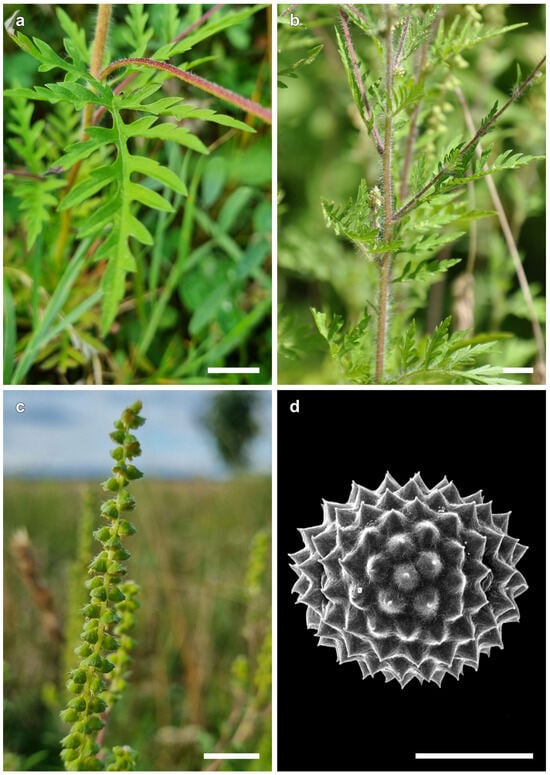
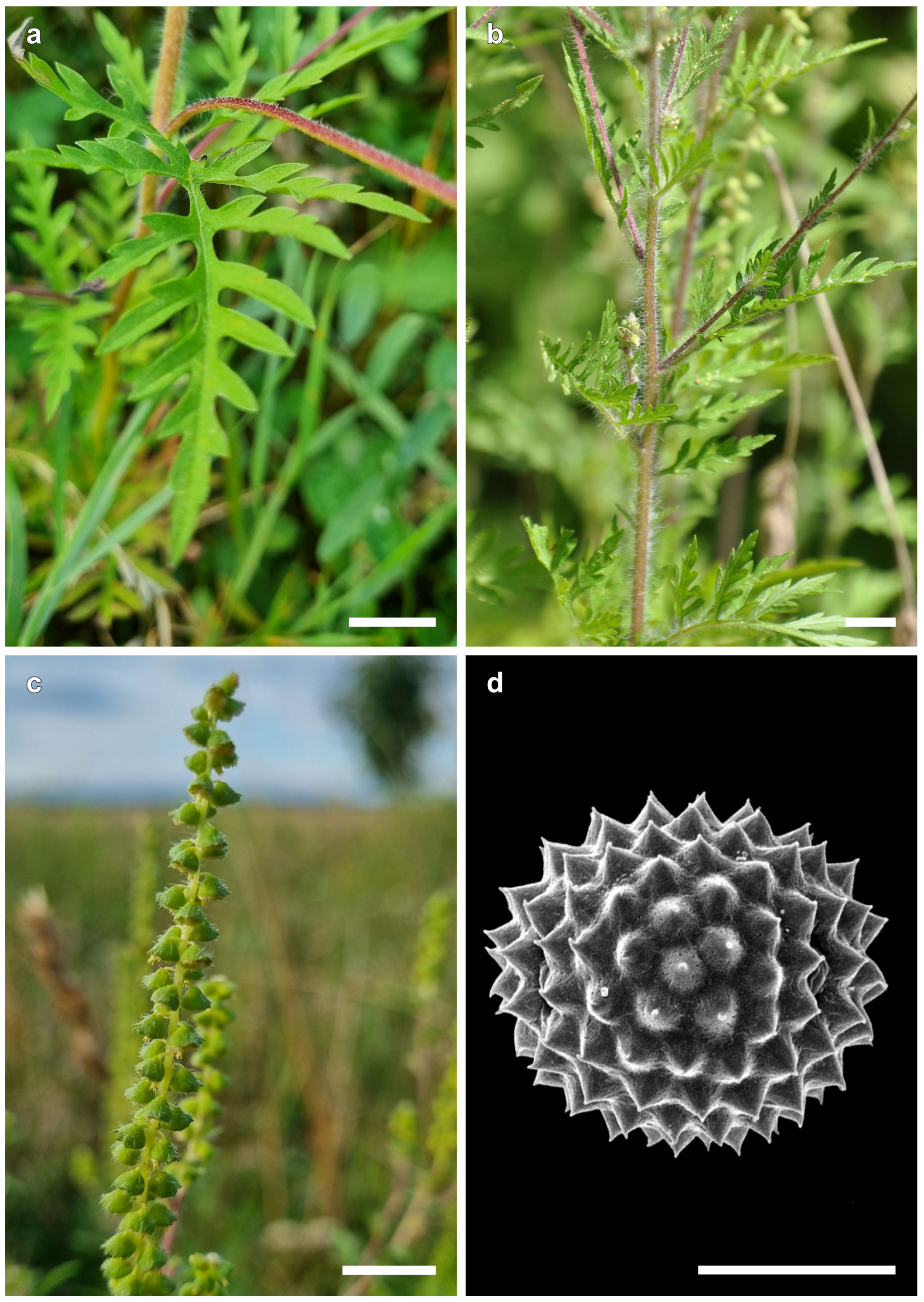
Ambrosia artemisiifolia L., commonly known as ragweed, is an annual, monoecious herb from the Asteraceae family that can reach heights of 50–150 cm [1]. Its leaves are pinnately 1–2-lobed (Figure 1a) and usually arranged in an alternate pattern on hairy axes (Figure 1b) [2]. In general, the habitus of ragweed differs strongly from other members of the Asteraceae, especially the inflorescence, which comprises small, unobtrusive, clustered capitula (Figure 1c) [1,2]. In North America, the continent of origin for ragweed, the plant is predominantly found in disturbed habitats, cropland, and urban ruderal areas [3]. After its introduction to Europe in the 19th century, most likely by the importation of infested seed consignments, A. artemisiifolia began to colonize croplands and roadsides. This process showed a substantial lag-phase in the mid-20th century [3,4]. Due to this behavior, ragweed has been classified as an alien invasive species by the European Regulation No.1143/2014 [5].
Figure 1.
Ragweed characteristics (a) leaf, (b) axis, (c) inflorescence, (d) pollen grain: Scanning Electron Microscope, hydrated, equatorial view; scalebars: (a–c) 1 cm, (d) 10 µm.
Information about the distribution of this neophyte is important for agriculture because A. artemisiifolia often infests fields of small, late-emerging crops, such as sugar beet and soy. These infestations can result in yield losses of up to 70% [6] and 80% [7], respectively. Similar observations have been made in larger crops, such as maize. However, these yield losses may only reach levels between 9% and 32%, depending on the level of ragweed infestation [8,9].
In addition to its agricultural importance, the location of A. artemisiifolia populations is also of major interest to pollen allergy sufferers. Approximately 33 million Europeans are sensitized to ragweed [10]. Its pollen appears in the light microscope as small (15–25 µm), spheroidal, and tricolporate with an echinate ornamentation (Figure 1d) [11]. Allergic symptoms can be triggered at pollen concentrations as low as 10 pollen grains per cubic meter (p/m3) of air [12]. A single ragweed plant can produce an average of 1.19 ± 0.14 billion pollen grains [13]. Its major allergen, Amb a1, is cross-reactive with other weeds, such as Artemisia vulgaris (L.) [12]. Therefore, ragweed pollen not only reduces the quality-of-life and socio-economic performance of allergy sufferers but also imposes significant costs for the healthcare system [14].
Aside from the Rhône-valley [15], the Pannonian Plain is the most severely ragweed-infected region in Europe [16]. Consequently, the eastern parts of Austria have a high habitat suitability for A. artemisiifolia, and numerous ragweed populations have already been recorded there [17]. Since the 1970s, its spread has been accelerating [17]. Ragweed continues to propagate in a westward direction along train tracks and highways [18]. Parallel to this expansion, the sensitization rate to ragweed pollen is also increasing, resulting in a prevalence of approximately 11% in Eastern Austria [19].
To gain a better understanding of how this highly allergenic plant spreads in Austria, a platform called “Ragweed Finder” was established in 2017. Its aim is to collect more data on ragweed distribution with the help of citizen-scientists. This platform encourages Austrian citizen-scientists to explore nature with open eyes, carefully observe the surrounding flora, and report any ragweed they spot. According to Muki Haklay’s classification, citizen-science participation can be divided into four levels of engagement [20]. Involvement in this project falls on the border between level 1, “Crowdsourcing” (citizens as sensors; volunteered computing), and level 2, “Distributed intelligence” (citizens as basic interpreters; volunteered thinking) [20].
Following an initial screening of the data presented in Dirr et al. [21], this study builds upon the dataset and offers additional analysis. It provides a detailed description of insights into ragweed observations collected between 2017 and 2023, including a comparison with pollen data from the European Aeroallergen Network (EAN) database [22]. The main focus is on the most affected biogeographic region in Austria: the Pannonian Plain. The study identifies ragweed observation hotspots in this area, showing where observations were made and how they changed over time. Additionally, it examines when citizen-scientists are more active by relating the number of reports to pollen monitoring data and evaluates the influence of the “Ragweed Finder” initiative on Austrian legislation.
2. Materials and Methods
2.1. Ragweed Finder Platform
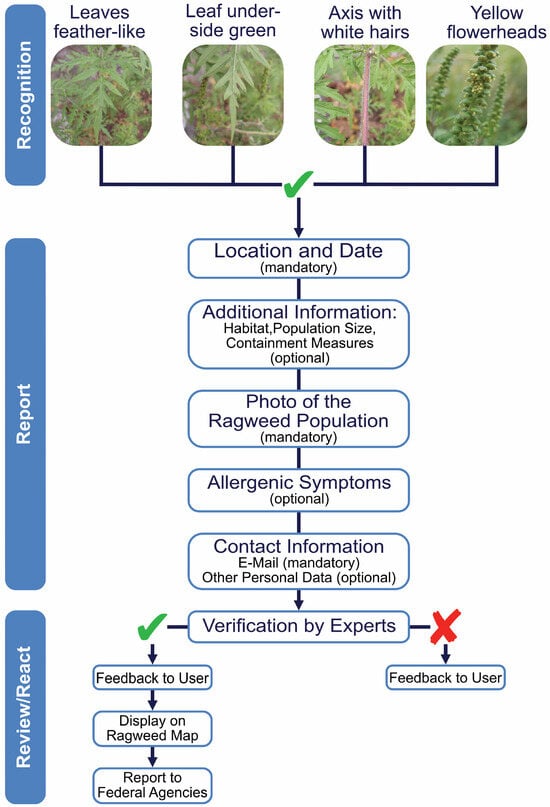
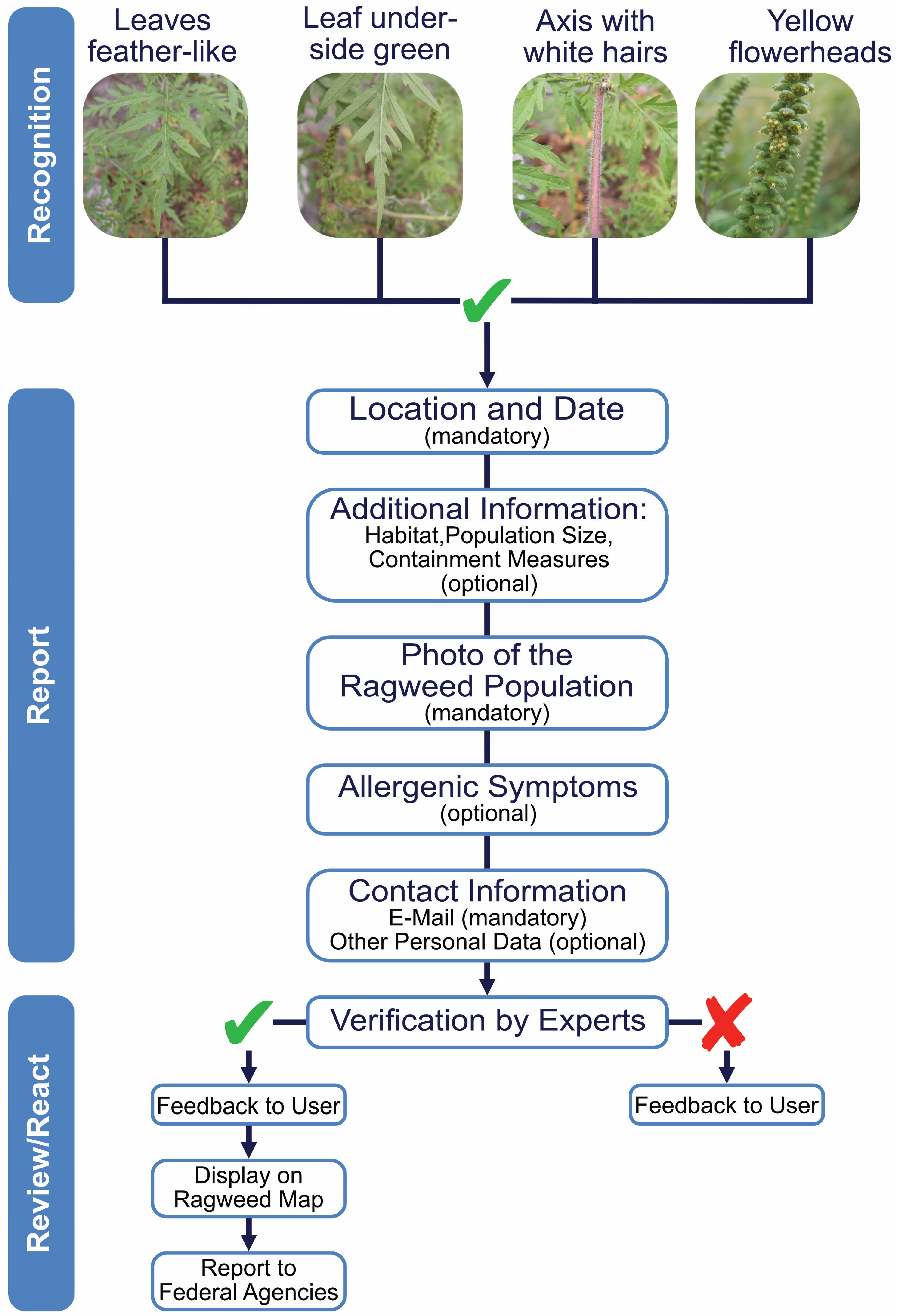
The Ragweed Finder was first launched in 2017 as a website (https://www.ragweedfinder.at; accessed on 31 October 2025) for citizen-scientists as centralized platform to collect ragweed observation data. A corresponding mobile application for the operating systems Android and iOS (Ragweed Finder App; used app versions: 1.0.12 on Android; 1.0.11 on iOS) was rolled out two years later, in time to track the 2019 ragweed pollen season. The website and app interfaces are designed similarly to provide a consistent user experience and are structured into three main sections (Figure 2).
Figure 2.
The Ragweed Finder flowchart.
2.1.1. Recognition
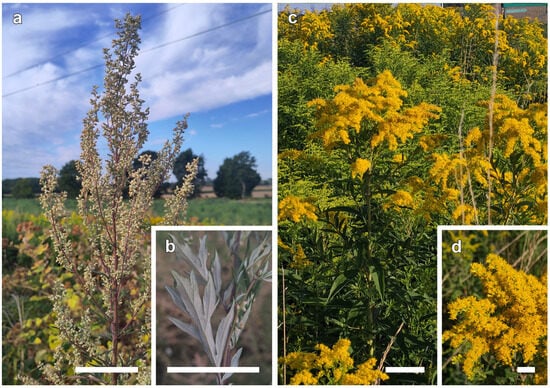
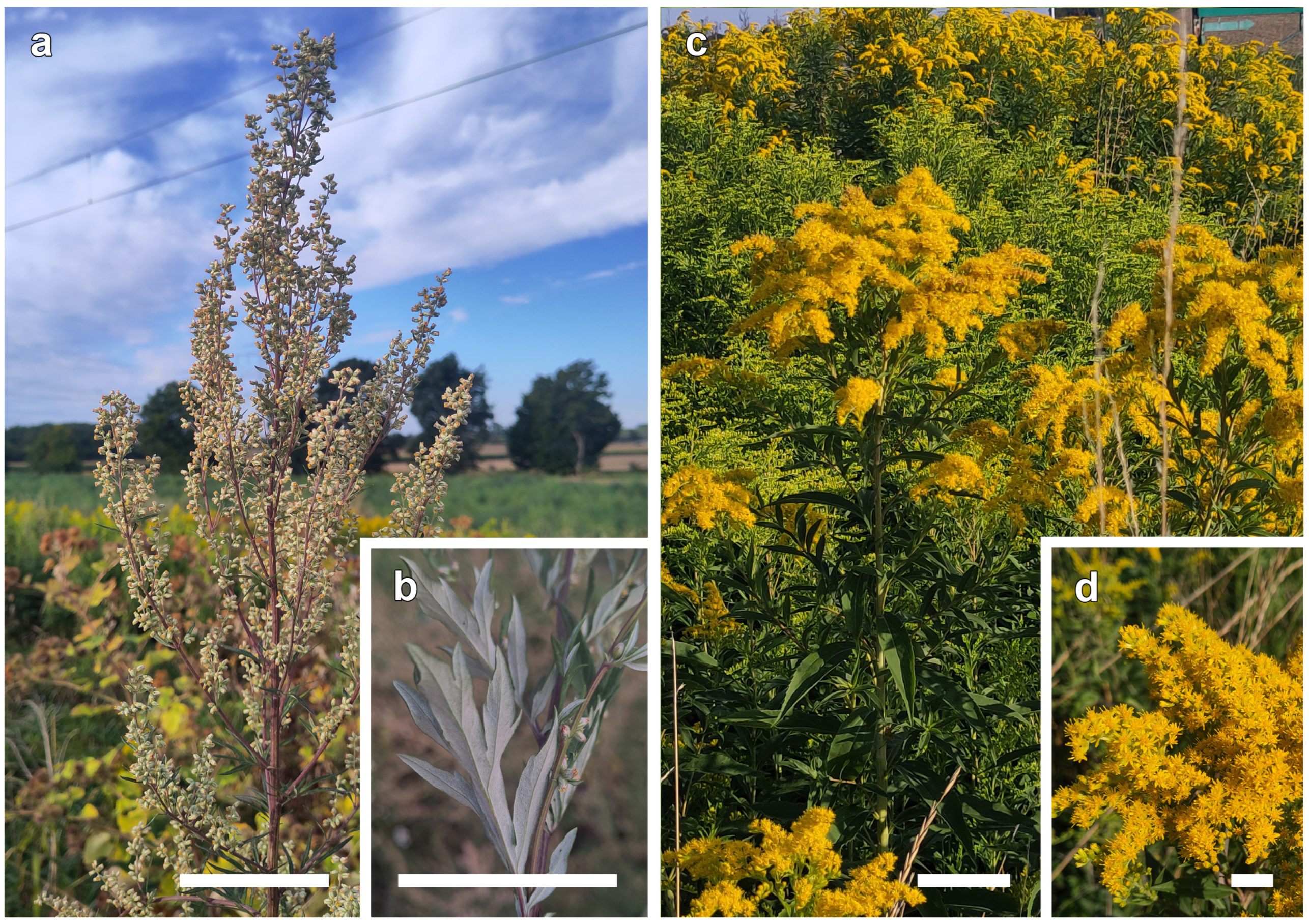
In a first step, citizen-scientists need to identify A. artemisiifolia correctly. Therefore, it is necessary to complete a checklist that consists of four questions concerning clearly discernible traits of the plant that can be assessed even without touching it. To better visualize these traits for citizen-scientists with different levels of botanical knowledge, explanatory images for all questions are provided in this checklist. Three of the questions are binary (yes/no), and one provides three possible options (yes/no/not yet developed). All of them have been selected to identify unique features that distinguish ragweed from other commonly confused plants. These include various mugwort species (Artemisia sp., Figure 3a,b) and Canadian goldenrod (Solidago canadensis, Figure 3c,d). The first two questions ask about the outline and the color of the leaves. If they are pinnately 1–2-lobed (Figure 1a) and have a bright green color on the underside, the plant is most likely ragweed [1]. For comparison, the leaves of S. canadensis are linear-lanceolate in shape (Figure 3c) [1]. While mugwort species may have leaves that look similar to ragweed, they are dark green on the adaxial side and whitish on the abaxial side (Figure 3b) [1]. The third question asks about the presence of white hairs on the plant’s axis. This is another trait that helps to correctly distinguish A. artemisiifolia (Figure 1b) from Artemisia sp. (Figure 3a). Finally, citizen-scientists are asked to observe the inflorescences. When developed, they appear as small, unobtrusive, clustered capitula (Figure 1c). They are much less prominent than the bright yellow inflorescences of S. canadensis (Figure 3d). The observer can be certain that the plant is ragweed and move to the next stage only when all questions have been answered with “yes” or “not yet developed”.
Figure 3.
Plants often mistaken for ragweed: (a,b) Artemisia vulgaris, (c,d) Solidago canadensis; scalebars: (a–c) 5 cm, (d) 1 cm.
2.1.2. Reporting
After passing the checklist, the users may enter more detailed information concerning the ragweed observation they are currently reporting. The provision of certain information is mandatory. Most importantly, the date and location where the observation was made. Both can be added manually by providing the address and date on the website. Alternatively, the mobile App allows users to use the smartphones real-time clock and GPS-module to record the exact position of the citizen-scientist in the field. Furthermore, the user is required to provide an image of the observed ragweed population, as this is the only way to verify the report after it has been submitted. For this step, citizen-scientists can upload images from their storage, which is possible on both the website and the mobile app. When using the smartphone, they can take a photo directly through the mobile app after granting the necessary permissions. For each report, it is possible to provide up to 4 images. Those images should not only show the habitus but also some of the characteristic traits of A. artemisiifolia in close-ups. For legal reasons, the users are then asked to transfer the image rights to the Ragweed Finder platform to process the ragweed report further. Lastly, the citizen-scientist needs to provide an e-mail address. This is used to inform the users about the status of their reports and allows further inquiries if additional information needed for verification during the last stage of the reporting process.
In addition to this obligatory information, citizen-scientists may add further information voluntarily. They can specify the location type using written text or by selecting one of the following options from a dropdown menu: construction site, field, forest, grassland, parkway, private garden, railway territory, roadside, waste disposal sites, waterside, or miscellaneous.
The estimated size of the observed population can also be specified using a dropdown menu with five size categories ranging from less than 10 to more than 10,000. Furthermore, users may indicate that they have removed the plant if they found it on their private property. Aside from the details on the location and population size the citizen-scientists may also add information on allergies. They can indicate whether they are allergic to ragweed pollen and, if so, rate the severity of their symptoms on a five-category scale ranging from “no burden” to “very high burden”.
2.1.3. Reviewing
Once an observation report has been finalized and saved on the platform, it is distributed to a list of experts. Each report is reviewed individually and gets verified or falsified based on the images provided by the citizen-scientist. Independent of the decision, the user is informed about the outcome of this review process. However, only positive reports are displayed on the ragweed map, which can be accessed from both the app and the website. Additionally, the positive reports are sent to the local Austrian authorities on a weekly basis, who may then decide on how to implement this information in their routine work.
2.1.4. Statistical Analysis
Stacked bar charts were analyzed and plotted in Microsoft® Excel for Mac (Version 16.103). Heatmaps showing hotspots of ragweed observations reported by citizen-scientists were created in QGIS (Version 3.42.1-Münster) [23] using Kernel Density Estimation with a pixel size of 250 m and a radius of 2000 m. A base map of Austria [24], a digital elevation model [25] and information on water bodies [26] were used for the visualization of ragweed observations. Figures were composed in Serif Ltd. Affinity Photo 2 (Version 2.6.5).
2.2. Pollen Data
This study used pollen data from the biogeographical region of the Pannonian Plain (ATR3). This region spans multiple countries and is monitored using up to nine volumetric pollen and spore traps of the Hirst design [27]. Three of these stations are located in Austria, four in Hungary, and one each in Slovenia and Slovakia (Figure S1).
The number of active sites varied throughout the years of interest. For the period from 2017 to 2019 the following sites provided data for the season calculation: Vienna, Illmitz, Oberpullendorf, Győr, Szombathely, Zalaegerszeg, Lendava, and Bratislava. From 2020 to 2022, the active sites were Vienna, Illmitz, Oberpullendorf, Győr, Sopron, Szombathely, Zalaegerszeg, Lendava, and Bratislava. In 2023, only Vienna, Győr, Sopron, Szombathely, Zalaegerszeg, Lendava, and Bratislava provided pollen data.
All monitoring stations operate in accordance with the European guideline for the detection of pollen and spores for allergy networks (EN 16868:2019-09) [22]. This ensures the comparability of daily mean pollen concentrations, expressed as pollen grains per cubic meter of air (p/m3), across Europe.
Daily mean ragweed pollen concentrations from these stations were queried from the EAN database (Version 3.5.4). This dataset was used to calculate the start and end dates of the pollen seasons, as well as the corresponding Annual Pollen Integral (APIn) [28], for the period 2017–2023. As this is a retrospective study, the EAN standard season definition [29] was applied to enable comparison of ragweed pollen concentrations with Ragweed Finder reports. If there were discrepancies between the calculated flowering season and the phenological observations, the main pollination period was used instead, which was calculated as a 90% definition of the APIn [28].
Statistical Analysis
Data for the daily mean pollen concentration, as well as start and end dates for the respective pollen seasons, were queried from the EAN database (Version 3.5.4) [22]. The graphical display of the ragweed pollen season in comparison with the daily Ragweed Finder report numbers was created in Microsoft® Excel for Mac (Version 16.103) and composed in Serif Ltd. Affinity Photo 2 (Version 2.6.5).
3. Results
3.1. Ragweed Finder Platform
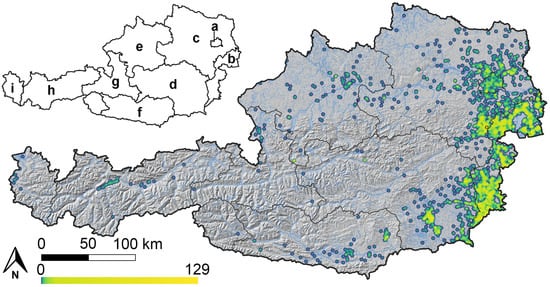
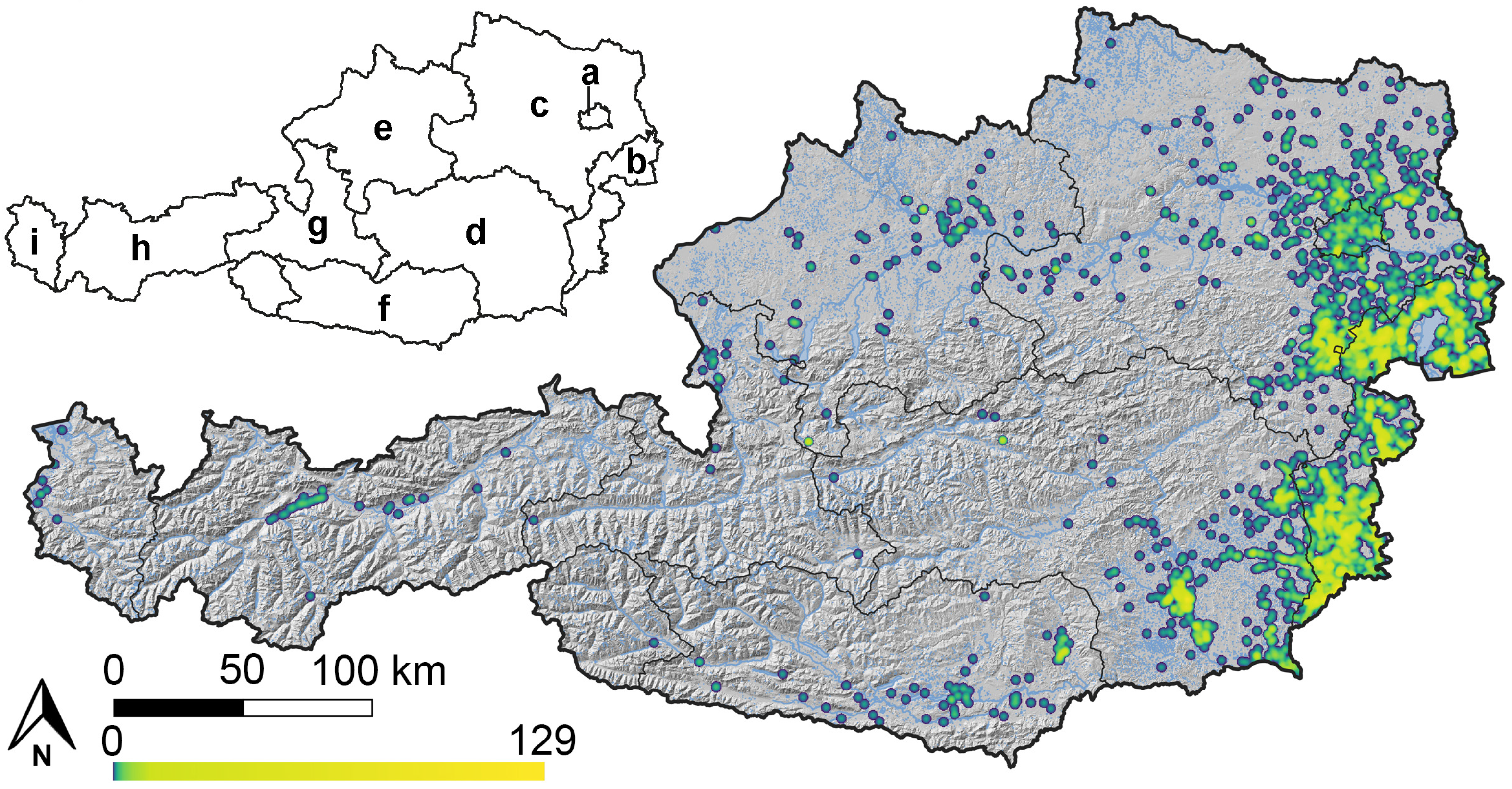
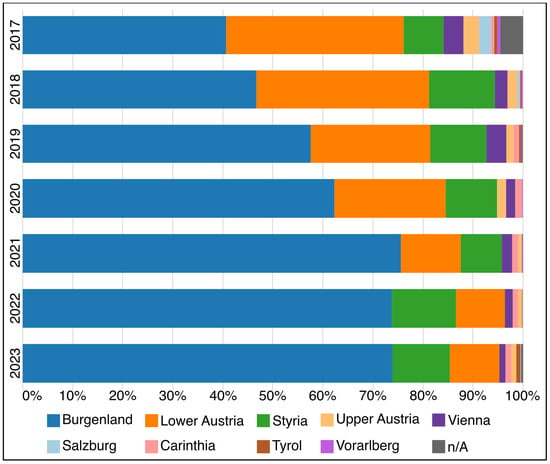
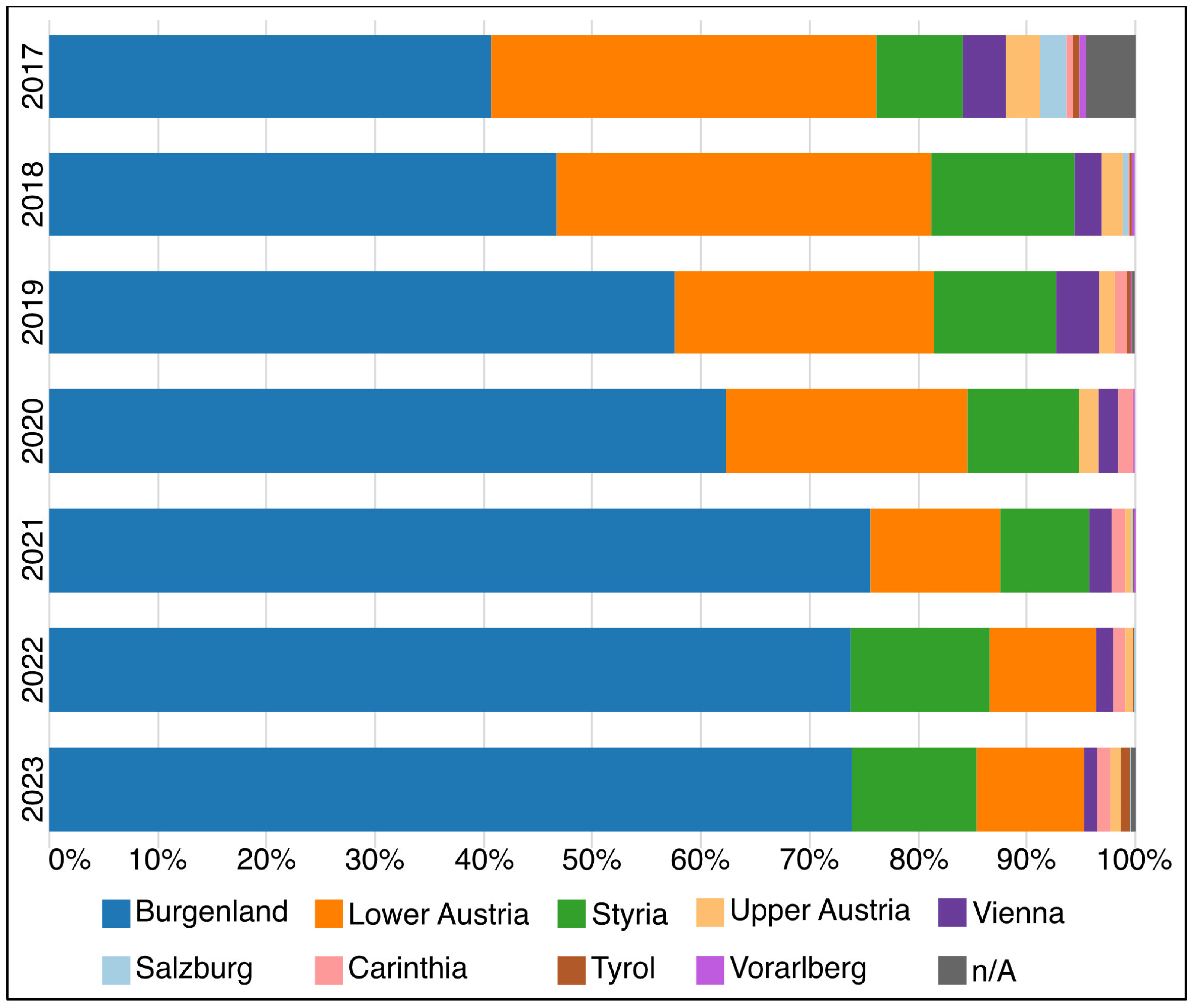
Between 2017 and 2023, users of the Ragweed Finder reported 10,259 alleged populations of A. artemisiifolia. Out of these reports 9476 have been verified by experts, resulting in an overall positivity rate of 92.4%. Except for the year 2020, this citizen-science platform has recorded a continuous increase in ragweed observations as well as a consistently high positivity rate between 79.9% and 96.3% (Table 1). The Austrian counties that contribute most to the area of the Pannonian plain are Burgenland, Lower Austria, and Vienna (Figure S1). 80.2% to 89.6% of all positive ragweed observations derive from these counties (Figure 4, Table 2). The highest number of observations were made in Burgenland for all years followed by Lower Austria and Styria (Figure 5). After six years in second place, Lower Austria was only displaced by Styria in 2022 (Figure 5). These three counties already account for 84.3% to 96.4% of all positive ragweed reports. Except for 2020, Vienna consistently follows with a share of 1.2% to 4.0% (Figure 5).
Table 1.
Ragweed Finder reports between 2017 and 2023.
Figure 4.
Heatmap of all positive Ragweed Finder reports from 2017–2023 calculated by a Kernel Density Estimation (pixel size = 250 m, radius = 2000 m); Austrian counties: (a) Vienna, (b) Burgenland, (c) Lower Austria, (d) Styria, (e) Upper Austria, (f) Carinthia, (g) Salzburg), (h) Tyrol, (i) Vorarlberg.
Table 2.
Ragweed Finder reports between 2017 and 2023 in the counties of the Pannonian plain.
Figure 5.
Positive Ragweed Finder reports, sorted by county. Stacked bars are in decreasing order.
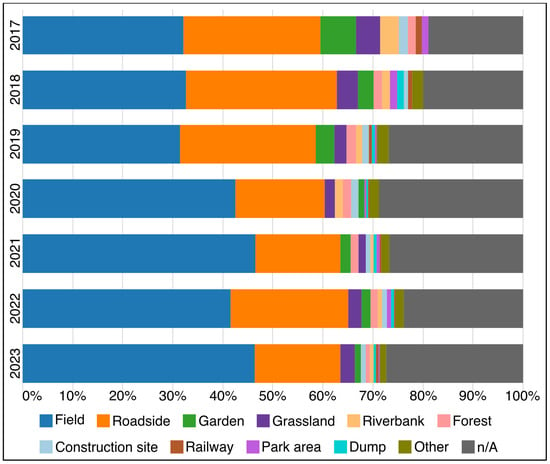
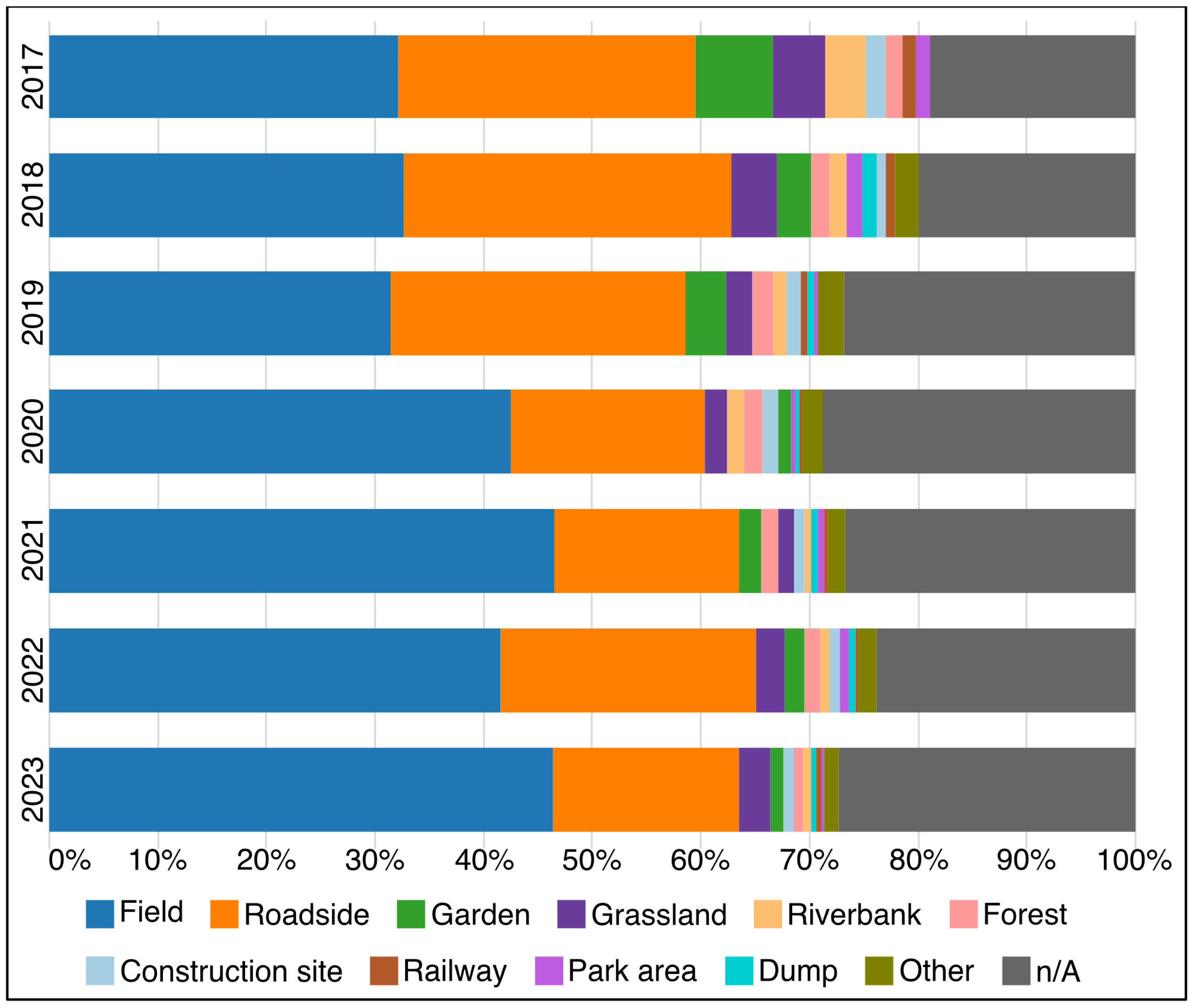
Regarding the location where ragweed populations were found, fields were stated most frequently, with percentages ranging from 31.5% in 2019 to 46.5% in 2023 (Figure 6). They are followed by roadside areas, which reached values between 17.2% in 2021/2023 and 30.2% in 2018 (Figure 6). However, the information on the location type is not mandatory; therefore, 18.8% to 28.7% of the positive reports did not include insights on the habitat.
Figure 6.
Ragweed Finder reports, sorted by location. Stacked bars are sorted in decreasing order.
3.2. Pollen Data
The characteristics of the pollen season calculated by the EAN standard definition are displayed in Table 3. The here presented dates fit the phenological observations, except for the year 2019. Here the EAN standard definition suggested a season start in February which is not meaningful when taking the vegetation period of ragweed into account. Therefore, the start of the main pollination period was used instead (90% of the APIn) [28].
Table 3.
Ragweed pollen seasons for ATR3; * Initial start date is not congruent to phenological observations and was replaced by the main pollination period.
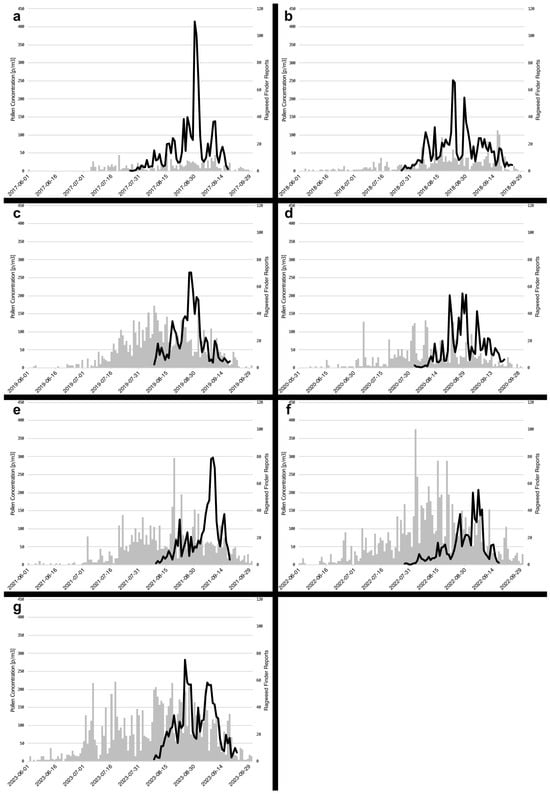
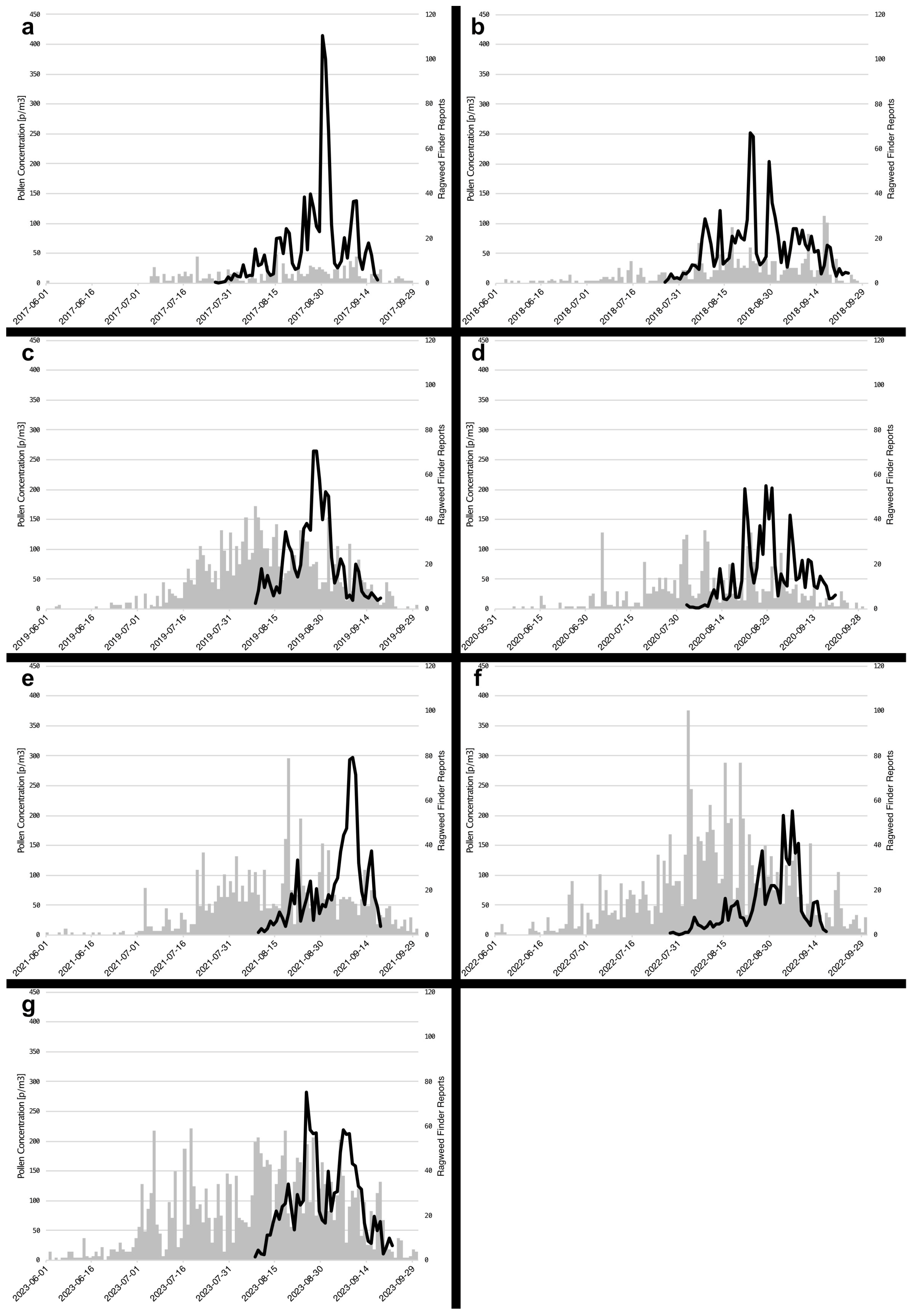
In an additional analysis, the Ragweed Finder Reports received per day were compared to the respective ragweed pollen concentration during the calculated pollen season. This showed that in the first years, only a small portion of observations was recorded before and after the actual season. In 2017 (Figure 7a), 21.0% of the observations were reported before the season and 9.0% after. In 2018 (Figure 7b) 12.5% of the observations were reported before the season and 2.8% after. Since then, the number of observations reported before the start of the pollen season has increased to between 22.4% (2022, Figure 7f) and 40.3% (2023, Figure 7g). The number of observations reported after the season has remained at 7.2% (2022, Figure 7f) or lower. Despite these shifts, most ragweed observations are still reported during the pollen season, with percentages ranging from 57.3% (2023, Figure 7g) to 84.7% (2018, Figure 7b).
Figure 7.
Ragweed Finder reports compared to the ragweed pollen season of the respective years (a) 2017, (b) 2018, (c) 2019, (d) 2020, (e) 2021, (f) 2022, (g) 2023. The black line shows the average daily pollen concentration data of the ragweed pollen season in ATR3 while the grey bars represent the daily positive Ragweed Finder reports.
4. Discussion
4.1. Development and Improvement of the Ragweed Finder Platform
The start of this citizen-science initiative in 2017 and 2018 got off to a slower start than expected and did not run smoothly. First, the positivity rate of the observations received in 2017 was lower than expected, at 79.9% (Table 1). Users were obviously struggling with the correct identification of the plant, so the checklist was improved by including more precise images (Figure 2) and clearer descriptions of ragweed’s unique characteristics. Already in 2018, this adaptation resulted in a much higher positivity rate of 91.2% but the number of total reports was still low (Table 1). This was most likely linked to the fact that the platform was only available as a website, requiring extra effort for citizen-scientists. After spotting a ragweed population, they had to note the location, take a picture of the plant, and record any other additional information before filing the report on their computers later. To reduce this effort and make the platform accessible to a wider range of citizen-scientists, the Ragweed Finder mobile app was launched for the operating systems Android and iOS in 2019. This resulted in nearly 1000 more positive reports, while maintaining a positivity rate close to 90% (Table 1). Following a significant increase in ragweed observations received in 2019, 2020 saw a decrease in reports for the first and only time (Table 1). With only 853 positive reports, the Ragweed Finder recorded approximately 41.9% fewer positive reports than in the previous years. This is undoubtedly linked to the outbreak of the coronavirus pandemic and the associated lockdowns in Austria. Although most reports of A. artemisiifolia populations were expected between June and September, when no lockdown was in place in Austria [30], citizen-scientists were probably less active than usual (Figure 7d). This assumption is supported by a study focusing on college/university students and academic staff in Austria, where a large proportion of participants reported a decrease in physical activity during the pandemic [31]. Nevertheless, the number of reported ragweed observations increased again in subsequent years, reaching its highest number by 2023, while maintaining a positivity rate above 90% (Table 1).
4.2. Temporal Pattern in Reporting
A comparison of daily received Ragweed Finder reports and the corresponding pollen seasons in the Pannonian Plain revealed a shift in reporting towards early stages of the pollen season or even to a time before the season has started (Figure 7). This shift has been particularly evident since 2019 (Figure 7c), when the Ragweed Finder app was launched, and has remained consistent since then. Between 22.4% (2022, Figure 7f) and 40.3% (2023, Figure 7g) of positive reports are now recorded before the start of the season. Considering that many pollen allergy sufferers may only consult pollen information services during periods of high burden [32], it is surprising that citizen-scientists who participate in this project begin reporting A. artemisiifolia observations when little to no allergenic burden is expected. This “participation eagerness” can be leveraged into a benefit for local authorities, as it results in a lag phase, which can be used to plan the removal of large ragweed populations and keep the allergenic burden low. However, it appears that none of the measures undertaken by the authorities in Eastern Austria have been timed appropriately to result in a reduced number of ragweed observations. They seem to maintain the status quo (Table 2).
4.3. Spatial Distribution and Data Limitation
Although their actions may not result in a visible reduction in pollen concentrations, the east–west dispersal gradient of ragweed observations may still be slowed down (Figure 5 and Figure 6). The current hotspots of ragweed observations are in Burgenland, Lower Austria and Styria, while Salzburg, Tyrol and Vorarlberg have had little to no observations reported (Figure 4 and Figure 5).
The three counties most closely associated with the Pannonian Plain, namely Burgenland, Lower Austria, and Vienna, are also responsible for the majority of observations reported via the Ragweed Finder (Table 2). However, by examining the distribution of Ragweed Finder observations over the reporting period, the conclusions made by Karrer et al. that ragweed is continuously invading the country, along main traffic routes [33] (Figure S2) can be supported. This is also the case for the habitat types mentioned in the reported observations (Figure 6), where “roadside” was placed constantly in second place only topped by “field”. These results fit the known distribution and habitat suitability calculations of A. artemisiifolia [17] and indicate that ragweed infestations may already cause severe yield losses in Austrian agriculture [6,7,8,9].
While all these observed trends align with the conclusions of previous studies on A. artemisiifolia distribution and the effects of ragweed infestations on agriculture, one limitation of the current data must be considered. This limitation is the inherent bias caused by opportunistic sampling [34]. It is an intentional trade-off designed to allow as many citizen-scientists as possible to report their ragweed observations without following complex protocols sometimes required in other citizen-science projects. More observations are likely to come from areas that are easily accessible and frequently visited for recreational purposes. While this may limit the value of the data for ecological research without comprehensive statistical modelling, it can still help pollen allergy sufferers to plan allergen-friendly leisure activities. By avoiding ragweed hotspots, they can reduce exposure, as allergen avoidance is a key-factor for preventing extensive allergenic reactions [35].
4.4. Collaboration with Local Authorities and Policymakers
Additionally, the Ragweed Finder platform was approved for cooperation with seven out of nine Austrian counties (Upper Austria and Carinthia refused to participate). The key feature that is responsible for getting so many counties on board is that each reported observation is reviewed by an expert. As part of the cooperation, local authorities receive weekly updates on new ragweed observations within their jurisdiction. They can use this information to adjust mowing schemes [36] when populations occur on public property or to notify private landowners so they can remove the plants before seed production.
A. artemisiifolia is classified as an alien invasive species by the European Regulation No.1143/2014 [5]. However, there is currently no active national legislation that mandates ragweed removal in Austria, with the exception of Burgenland. In 2021, Burgenland introduced the Ragweed Control Act [37], designating the Ragweed Finder as the official reporting tool and recruiting specially trained experts to enforce the law. Property owners are required either to remove ragweed directly or to submit a long-term control strategy to authorities within four years. While property owners must cover the removal costs, they face no additional penalties if infestations persist. Consequently, the effectiveness of this act may be limited, though this still requires evaluation. Based on the number of positive ragweed reports from Burgenland (Table 2), the increase appears to have slowed down at least partially between 2022 and 2023 following the law’s implementation.
To reduce unintentional spread via bird seed or other animal feed, a European regulation has limited ragweed seed contamination in commercial feed material since 2012 [3]. However, once populations are established, the most commonly applied management measure is mechanical control, particularly mowing [3]. Repeated mowing has been shown to significantly reduce plant growth and seed production, demonstrating its value as a management tool [38]. Combining mowing with efforts to establish a dense, competitive vegetation cover has also produced promising results, as this approach helps suppress regrowth and addresses the issue of ragweed’s long-lived seed bank [3,39,40].
In addition to mechanical measures, chemical control via herbicides [3] and biological control using specialist insects that feed on ragweed [3,41] have been explored. However, each of these approaches has substantial limitations underscoring the importance of early detection and mechanical removal as a reliable strategy to effectively limit ragweed population expansion.
5. Conclusions
The initial idea for the Ragweed Finder to report observations of A. artemisiifolia as an additional data source, providing more detailed information to pollen allergy sufferers, turned out to be a well-accepted and frequently used citizen-science platform. Despite the flaws of opportunistic sampling that come with this kind of citizen-science project, the collected data was greatly appreciated by most Austrian counties and even helped to enact the Burgenland Ragweed Control Act in the year 2021. The effect of this law on the distribution of ragweed, as well as on the burden of ragweed pollen allergy sufferers, still needs to be assessed in the future. However, the ongoing success of the Ragweed Finder platform demonstrates the potential of citizen-science in providing real-time observation data for documenting populations of the alien invasive species A. artemisiifolia.
Supplementary Materials
The following supporting information can be downloaded at: https://www.mdpi.com/article/10.3390/app152212333/s1, Figure S1: Austrian biogeographic regions and pollen monitoring stations delivering data for the Pannonian plain; Figure S2: Heat map of positive Ragweed Finder reports for the individual years 2017–2023.
Author Contributions
Conceptualization, L.D., K.B. and F.G.; methodology, L.D. and M.B.; formal analysis, L.D., M.B. and U.E.B.; investigation, L.D., M.B., U.E.B., A.K.S., D.M., T.S. and J.Š.; data curation, L.D. and M.B.; writing—original draft preparation, L.D. and K.B.; writing—review and editing, U.E.B. and F.G.; visualization, L.D. and J.M.B.; supervision, K.B., M.B. and F.G. All authors have read and agreed to the published version of the manuscript.
Funding
Open Access Funding by the University of Vienna.
Institutional Review Board Statement
Not applicable.
Informed Consent Statement
Not applicable.
Data Availability Statement
The original contributions presented in this study are included in the article/Supplementary Materials. Further enquiries can be directed to the corresponding authors.
Acknowledgments
We thank the University of Vienna for covering the APC and the two anonymous reviewers for their constructive remarks.
Conflicts of Interest
Authors Lukas Dirr, Uwe Edwin Berger and Johannes Martin Bouchal were employed by the company AZ Pollen Research GmbH. The remaining authors declare that the research was conducted in the absence of any commercial or financial relationships that could be construed as a potential conflict of interest.
Abbreviations
The following abbreviations are used in this manuscript:
| APIn | Annual Pollen Integral |
| ATR3 | Biogeographic Region of Austria 3, Pannonian Plain |
| EAN | European Aeroallergen Network |
References
- Fischer, M.A.; Oswald, K.; Adler, W. Exkursionsflora Für Österreich, Liechtenstein und Südtirol; Land Oberösterreich, Biologiezentrum der Oberösterr; Landesmuseen: Linz, Austria, 2008; Volume 3. [Google Scholar]
- WFO. Ambrosia artemisiifolia L. Available online: http://www.worldfloraonline.org/taxon/wfo-0000063493 (accessed on 11 December 2023).
- Essl, F.; Biró, K.; Brandes, D.; Broennimann, O.; Bullock, J.M.; Chapman, D.S.; Chauvel, B.; Dullinger, S.; Fumanal, B.; Guisan, A.; et al. Biological Flora of the British Isles: Ambrosia artemisiifolia. J. Ecol. 2015, 103, 1069–1098. [Google Scholar] [CrossRef] [Scilit]
- Richter, R.; Berger, U.E.; Dullinger, S.; Essl, F.; Leitner, M.; Smith, M.; Vogl, G. Spread of Invasive Ragweed: Climate Change, Management and How to Reduce Allergy Costs. J. Appl. Ecol. 2013, 50, 1422–1430. [Google Scholar] [CrossRef] [Scilit]
- The European Parliament and The Council of the European Union. Regulation on the Prevention and Management of the Introduction and Spread of Invasive Alien Species; Official Journal of the European Union: Luxembourg, 2014. [Google Scholar]
- Buttenschøn, R.M.; Waldispühl, S.; Bohren, C. Guidelines for Management of Common Ragweed, Ambrosia artemisiifolia; Aarhus University Press: Aarhus, Denmark, 2009; ISBN 9788779034549. [Google Scholar]
- Hall, R.M.; Urban, B.; Wagentristl, H.; Karrer, G.; Winter, A.; Czerny, R.; Kaul, H.-P. Common Ragweed (Ambrosia artemisiifolia L.) Causes Severe Yield Losses in Soybean and Impairs Bradyrhizobium Japonicum Infection. Agronomy 2021, 11, 1616. [Google Scholar] [CrossRef] [Scilit]
- Bullock, J.M.; Chapman, D.; Schafer, S.; Roy, D.; Girardello, M.; Haynes, T.; Beal, S.; Naturebureau, B.W.; Dickie, I.; Phang, Z.; et al. Assessing and Controlling the Spread and the Effects of Common Ragweed in Europe; Natural Environment Research Council: Swindon, UK, 2010; 456p. [Google Scholar]
- Zwerger, P.; Eggers, T. Ambrosia artemisiifolia in Mais: Entwicklung und Konkurrenz. In Dynamik der Synanthropen Vegetation: Festschrift für Prof. Dr. Dietmar Brandes; Evers, C., Ed.; Technische Universität Braunschweig: Braunschweig, Germany, 2008; Volume 9, pp. 531–538. [Google Scholar] [CrossRef]
- Lake, I.R.; Jones, N.R.; Agnew, M.; Goodess, C.M.; Giorgi, F.; Hamaoui-Laguel, L.; Semenov, M.A.; Solomon, F.; Storkey, J.; Vautard, R.; et al. Climate Change and Future Pollen Allergy in Europe. Env. Health Perspect 2017, 125, 385–391. [Google Scholar] [CrossRef] [Scilit]
- Sam, S.; Halbritter, H.; Heigl, H. Ambrosia artemisiifolia. Available online: https://www.paldat.org/pub/Ambrosia_artemisiifolia/304617 (accessed on 12 December 2023).
- Chen, K.-W.; Marusciac, L.; Tamas, P.T.; Valenta, R.; Panaitescu, C. Ragweed Pollen Allergy: Burden, Characteristics, and Management of an Imported Allergen Source in Europe. Int Arch Allergy Immunol 2018, 176, 163–180. [Google Scholar] [CrossRef] [Scilit]
- Fumanal, B.; Chauvel, B.; Bretagnolle, F. Estimation of pollen and seed production of common ragweed in France. Ann. Agric. Environ. Med. 2007, 14, 233–236. [Google Scholar] [PubMed]
- Zuberbier, T.; Lötvall, J.; Simoens, S.; Subramanian, S.V.; Church, M.K. Economic Burden of Inadequate Management of Allergic Diseases in the European Union: A GA2LEN Review. Allergy 2014, 69, 1275–1279. [Google Scholar] [CrossRef] [Scilit]
- Thibaudon, M.; Šikoparija, B.; Oliver, G.; Smith, M.; Skjøth, C.A. Ragweed Pollen Source Inventory for France—The Second Largest Centre of Ambrosia in Europe. Atmos. Environ. 2014, 83, 62–71. [Google Scholar] [CrossRef] [Scilit]
- Skjøth, C.A.; Smith, M.; Šikoparija, B.; Stach, A.; Myszkowska, D.; Kasprzyk, I.; Radišić, P.; Stjepanović, B.; Hrga, I.; Apatini, D.; et al. A Method for Producing Airborne Pollen Source Inventories: An Example of Ambrosia (Ragweed) on the Pannonian Plain. Agric. For. Meteorol. 2010, 150, 1203–1210. [Google Scholar] [CrossRef] [Scilit]
- Essl, F.; Dullinger, S.; Kleinbauer, I. Changes in the Spatio-Temporal Patterns and Habitat Preferences of Ambrosia artemisiifolia during Its Invasion of Austria. Preslia 2009, 81, 119–133. [Google Scholar]
- Karrer, G.; Skjøth, C.A.; Šikoparija, B.; Smith, M.; Berger, U.; Essl, F. Ragweed (Ambrosia) Pollen Source Inventory for Austria. Sci. Total Environ. 2015, 523, 120–128. [Google Scholar] [CrossRef] [Scilit]
- Hemmer, W.; Schauer, U.; Trinca, A.-M.; Neumann, C. Prävalenz der Ragweedpollen-Allergie in Ostösterreich; Umweltbundesamt GmbH: Vienna, Austria, 2009; pp. 1–52. [Google Scholar]
- Haklay, M. Citizen Science and Volunteered Geographic Information: Overview and Typology of Participation. In Crowdsourcing Geographic Knowledge; Springer: Dordrecht, The Netherlands, 2013; pp. 105–122. [Google Scholar]
- Dirr, L.; Bouchal, J.M.; Bastl, K.; Bastl, M.; Berger, U.E.; Grímsson, F. 5 Years Ragweed Finder: From the Idea to the Official Reporting Tool of Ambrosia artemisiifolia. In Proceedings of the Austrian Citizen Science Conference 2023—PoS (ACSC2023), Linz, Austria, 1–2 June 2023; p. 004. [Google Scholar] [CrossRef] [Scilit]
- Bastl, M.; Bastl, K.; Dirr, L.; Berger, M.; Berger, U. Methods and Standards of Pollen Monitoring—Significance of Pollen Measurements at Different Altitudes. Allergo J. Int. 2023, 32, 162–166. [Google Scholar] [CrossRef] [Scilit]
- QGIS Development Team. QGIS Geographic Information System 2024; QGIS: Grüt, Switzerland, 2024. [Google Scholar]
- Federal Office of Metrology and Surveying. Verwaltungsgrenzen (VGD) BEV 1:250 000 Stichtag 01.04.2021; Federal Office of Metrology and Surveying: Berlin, Germany, 2021. [Google Scholar] [CrossRef]
- Digitales 10m—Geländemodell Aus Airborne Laserscan Daten in Der Projektion EPSG:31287 (Lambert). Available online: https://www.data.gv.at/datasets/b5de6975-417b-4320-afdb-eb2a9e2a1dbf?locale=de (accessed on 28 August 2025).
- OpenStreetMap Contributors OpenStreetMap Data [Data Set]. Available online: https://www.openstreetmap.org (accessed on 28 August 2025).
- Hirst, J.M. An Automatic Volumetric Spore Trap. Ann. Appl. Biol. 1952, 39, 257–265. [Google Scholar] [CrossRef] [Scilit]
- Galán, C.; Ariatti, A.; Bonini, M.; Clot, B.; Crouzy, B.; Dahl, A.; Fernandez-González, D.; Frenguelli, G.; Gehrig, R.; Isard, S.; et al. Recommended Terminology for Aerobiological Studies. Aerobiologia 2017, 33, 293–295. [Google Scholar] [CrossRef] [Scilit]
- Bastl, K.; Kmenta, M.; Berger, U.E. Defining Pollen Seasons: Background and Recommendations. Curr. Allergy Asthma Rep. 2018, 18, 73. [Google Scholar] [CrossRef] [Scilit] [PubMed]
- Wisbauer, A.; Schuster, J.; Pohl, P. Auswirkungen der Corona-Pandemie auf die demographische Struktur Österreichs. Mitteilungen Osterr. Geogr. Ges. 2023, 1, 9–70. [Google Scholar] [CrossRef] [Scilit]
- Motevalli, M.; Drenowatz, C.; Wirnitzer, K.C.; Tanous, D.R.; Wirnitzer, G.; Kirschner, W.; Ruedl, G. Changes in Physical Activity during the COVID-19 Lockdown Based on the Sociodemographic Profile of 5569 Students and Academic Staff of Austrian Universities. Public Health 2023, 219, 102–109. [Google Scholar] [CrossRef] [Scilit]
- Kmenta, M.; Zetter, R.; Berger, U.; Bastl, K. Pollen Information Consumption as an Indicator of Pollen Allergy Burden. Wien. Klin. Wochenschr. 2016, 128, 59–67. [Google Scholar] [CrossRef] [Scilit]
- Karrer, G.; Vitalos, M. Dispersal of Ambrosia artemisiifolia Seeds along Roads: The Contribution of Traffic and Mowing Machines. In Proceedings of the Biological Invasions: Towards a Synthesis, Pruhonice, Czech Republic, 23–26 September 2009; pp. 53–60. [Google Scholar]
- Henckel, L.; Bradter, U.; Jönsson, M.; Isaac, N.J.B.; Snäll, T. Assessing the Usefulness of Citizen Science Data for Habitat Suitability Modelling: Opportunistic Reporting versus Sampling Based on a Systematic Protocol. Divers. Distrib. 2020, 26, 1276–1290. [Google Scholar] [CrossRef] [Scilit]
- Strzelczyk, Z.; Roszkowski, M.; Feleszko, W.; Krauze, A. Avoidance of Allergens as an Environmental Method in the Prevention of Inhaled Allergy Symptoms. Allergol. Immunopathol. 2020, 48, 745–752. [Google Scholar] [CrossRef] [Scilit]
- Milakovic, I.; Karrer, G. The Influence of Mowing Regime on the Soil Seed Bank of the Invasive Plant Ambrosia artemisiifolia L. NeoBiota 2016, 28, 39–49. [Google Scholar] [CrossRef] [Scilit]
- Bgld. LGBl. Nr. 58/2021; Burgenländisches Ragweed-Bekämpfungsgesetz (Bgld. RBG). Burgenland State Government: Eisenstadt, Austria, 2021.
- Krajšek, Z.; Jakoš, Š.; Strgulc Krajšek, S. The Impact of Mowing on the Growth and Blooming of Common Ragweed (Ambrosia artemisiifolia). Acta Biol. Slov. 2019, 62, 67–76. [Google Scholar] [CrossRef] [Scilit]
- MacDonald, A.A.M.; Kotanen, P.M. Leaf Damage Has Weak Effects on Growth and Fecundity of Common Ragweed (Ambrosia artemisiifolia). Botany 2010, 88, 158–164. [Google Scholar] [CrossRef] [Scilit]
- Karrer, G.; Milakovic, M.; Kropf, M.; Hackl, G.; Essl, F.; Hauser, M.; Mayer, M.; Blöch, C.; Leitsch-Vitalos, M.; Dlugosch, A.; et al. Ausbreitungsbiologie und Management Einer Extrem Allergenen, Eingeschleppten Pflanze–Wege und Ursachen der Ausbreitung von Ragweed (Ambrosia artemisiifolia) Sowie Möglichkeiten Seiner Bekämpfung; Umweltbundesamt GmbH: Vienna, Austria, 2011. [Google Scholar]
- Müller-Schärer, H.; E Lommen, S.T.; Rossinelli, M.; Bonini, M.; Boriani, M.; Bosio, G.; Schaffner, U. Ophraella Communa, the Ragweed Leaf Beetle, Has Successfully Landed in Europe: Fortunate Coincidence or Threat? Weed Res. 2014, 54, 109–119. [Google Scholar] [CrossRef] [Scilit]

Disclaimer/Publisher’s Note: The statements, opinions and data contained in all publications are solely those of the individual author(s) and contributor(s) and not of MDPI and/or the editor(s). MDPI and/or the editor(s) disclaim responsibility for any injury to people or property resulting from any ideas, methods, instructions or products referred to in the content. |
© 2025 by the authors. Licensee MDPI, Basel, Switzerland. This article is an open access article distributed under the terms and conditions of the Creative Commons Attribution (CC BY) license (https://creativecommons.org/licenses/by/4.0/).