Article

Experimental Study on Biodiesel Injection Characteristics and Spray Development Tendency

1
Faculty of Mechanical Engineering, University of Niš, A. Medvedeva 14, 18000 Niš, Serbia
2
Faculty of Mechanical Engineering, University of Maribor, Smetanova ul. 17, 2000 Maribor, Slovenia
3
Department of Structural Analysis, Berlin Institute of Technology, Strasse des 17, Juni 135, 10623 Berlin, Germany
4
Institute of Mechanical Science, Vilnius Gediminas Technical University, 10105 Vilnius, Lithuania
5
University College, Korea University, 145 Anam-ro, Seongbuk-gu, Seoul 02841, Republic of Korea
*
Author to whom correspondence should be addressed.
Appl. Sci. 2025, 15(22), 12261; https://doi.org/10.3390/app152212261
Submission received: 23 October 2025 / Revised: 16 November 2025 / Accepted: 17 November 2025 / Published: 19 November 2025
(This article belongs to the Special Issue Diesel Engine Combustion and Emissions Control)

Abstract

The conversion of biodiesel’s chemical energy into mechanical work in diesel engines is strongly influenced by the formation and quality of the fuel–air mixture. The physical and chemical properties of biodiesel, together with the operating characteristics of the fuel injection system, play a crucial role in this process. This study presents experimental findings on the injection behavior of a mechanically controlled injection system using three fuel types: pure rapeseed biodiesel, a 50% biodiesel–diesel blend, and conventional diesel fuel. The analysis focused on injection pressure, injection timing, injection duration, and fuel delivery under various operating conditions. In the second part of the experimental investigation, spray visualization was carried out by injecting fuels into a transparent liquid-filled chamber. A dedicated imaging and processing system was applied to capture and analyze spray development. From the recorded sequences, macroscopic spray parameters—including spray penetration length, spray cone angle, and projected spray area—were determined across different injection regimes. This approach allows clear identification of spray development tendencies and supports systematic comparison between fuels, particularly in relation to differences in injection pressure, injection duration, and delivered fuel quantity arising from the mechanically governed injection system. Correlation analysis between spray penetration length and peak injection pressure further highlights pressure-driven contributions to spray evolution. The findings contribute to better understanding of biodiesel spray behavior under realistic mechanically controlled conditions, supporting optimization of fuel injection performance and aiding in the selection or formulation of biodiesel fuels with improved spray characteristics.

1. Introduction

Research on the effects of biodiesel on diesel engines can be categorized into four main areas: (i) the influence of biodiesel fuel properties on fuel injection system characteristics; (ii) the enhancement of biodiesel properties through additives or blending; (iii) the impact of biodiesel on fuel spray formation; and (iv) the resulting effects on engine performance and emissions.
In addition, contemporary research increasingly interprets biodiesel spray behavior through fundamental fluid-dynamic parameters, such as Reynolds, Weber, and Ohnesorge numbers, enabling a deeper understanding of how fuel properties influence atomization and early-stage spray development.
A thorough evaluation of the effects of various physicochemical properties of biodiesel fuels (and blends) on the performance of fuel injection systems, relative to conventional diesel fuel, is essential. It must be considered that the properties of biodiesel can vary significantly depending on the biodiesel feedstock origin and the production process employed [1]. Such variations directly influence key injection characteristics, including pressure build-up, needle dynamics, and injection duration, which are especially relevant in mechanically controlled systems where injection pressure and duration cannot be adjusted independently.
These property differences can also be interpreted through non-dimensional fluid-dynamic parameters, since variations in density, viscosity, and surface tension systematically affect Reynolds, Weber, and Ohnesorge numbers, thereby altering spray formation mechanisms.
Some biodiesel fuels do not meet the requirements of regulatory standards (e.g., EN 14214 in the EU, ASTM D6751 in the USA, IS 15067 in India, JASO M360 in Japan, ANP 42 in Brazil, and SANS 1935 in South Africa) [1] and, as such, should not be used in research, as they can lead to misleading or inconsistent results. Even when the properties of various biodiesel samples conform to a given regulatory specification, this does not necessarily imply that their impact on fuel injection system behavior will be identical. This is due to the fact that certain physicochemical properties—such as bulk modulus, speed of sound, density, and surface tension, as functions of operating pressure and temperature—can significantly affect injection system performance [1], yet are either not included or not fully defined in existing biodiesel standards. These properties may also vary depending on the feedstock origin and the specific production process employed.
Furthermore, variations in these pressure- and temperature-dependent properties influence pressure build-up dynamics, needle motion, and the effective injection duration, which is particularly relevant for mechanically controlled systems where injection pressure and duration are inherently coupled.
From a spray formation standpoint, changes in density, viscosity, and surface tension directly affect non-dimensional spray parameters such as Reynolds, Weber, and Ohnesorge numbers. Consequently, even biodiesels that formally meet the same standard can exhibit substantially different atomization behavior and macroscopic spray development.
A thorough understanding of the biodiesel properties from diverse feedstocks, the characteristics of these feedstocks, the potential of additives, and technological processes for improving biodiesel performance, as well as the influence of biodiesel on diesel engine operation, establishes a comprehensive framework for applying multi-criteria decision-making and optimization techniques [2,3]. These tools can contribute to informed decision-making in biodiesel formulation, blending strategies, and process management.
According to Sadeq [4], understanding combustion processes across multiple scales—from molecular interactions to macroscopic spray and mixing phenomena—is essential for advancing alternative fuels and optimizing their application in compression-ignition engines. His work provides a broad conceptual foundation that links fuel chemistry, thermophysical behavior, and flow dynamics with combustion efficiency and emission characteristics. This theoretical framework reinforces the relevance of investigating how the physicochemical properties of biodiesel influence fuel injection, spray behavior, and the overall energy conversion process. Furthermore, interpreting the observed macrometrics through fundamental fluid-dynamic principles provides additional insight into how biodiesel properties govern momentum transfer and early-stage spray evolution.
A key contribution of this study lies in its dual experimental approach: the analysis of biodiesel injection characteristics using a mechanically controlled injection system, and the visualization of fuel sprays injected into a liquid medium. By combining these methods, the research provides a more comprehensive understanding of how biodiesel properties influence injection pressure, timing, duration, and spray development. A particular contribution of this work is the application of spray visualization in a liquid environment, which eliminates the complexities of atomization and air–fuel mixing, thus enabling clearer identification of macro-scale spray characteristics. Unlike most previous research conducted in gaseous environments, this method isolates property-driven effects from atomization and mixing, enabling clearer attribution of biodiesel influences on macroscopic spray behavior.
This dual approach also highlights the impact of property-driven variations in density, bulk modulus, and viscosity on pressure build-up and the resulting macroscopic spray behavior, which cannot be fully isolated in standard engine-like conditions. This methodological approach not only validates trends observed in real operating conditions but also offers a practical framework for assessing and optimizing biodiesel fuels and injection system performance.

2. Literature Review

For clarity, the literature review is structured into three thematic areas: influence of biodiesel on fuel injection operating characteristics; effect of injection pressure on macro spray characteristics (spray penetration length: SPL, spray cone angle: SCA, and spray-projected area: SPA); and influence of biodiesel on the macro characteristics of fuel spray.
This structure also facilitates a clearer distinction between property-driven effects related to biodiesel composition and pressure-driven effects arising from injection system dynamics, as emphasized in previous studies.

2.1. Influence of Biodiesel on Fuel Injection Operating Characteristics

Extensive research has shown that substituting diesel with biodiesel typically advances the start of injection, prolongs injection duration, and increases injection pressure, primarily due to higher density, viscosity, speed of sound, and bulk modulus [5,6].
In mechanically governed injection systems, these property-driven effects are further amplified because injection pressure and duration cannot be adjusted independently, which has been highlighted in several comparative studies.
Several studies have investigated injection delay, with contradictory findings. While Sathiyamoorthi et al. [7] reported shorter delays for diesel and prolonged duration for biodiesel blends, Ulu et al. [8] and Haq et al. [9] emphasized that the higher density, viscosity, and surface tension of biodiesel typically extend the delay. In mechanically actuated systems, biodiesel can advance injection timing due to its higher density and compressibility modulus, though the magnitude of deviation may be smaller than expected [10,11].
These discrepancies are often attributable to differences in injector design and to the fact that changes in Reynolds, Weber, and Ohnesorge numbers modify spray formation and hydraulic response across studies.
Injection characteristics depend not only on fuel properties but also on system design. In common-rail systems, injection timing and duration strongly influence performance and emissions [12]. Higher biodiesel content slightly shortens injection duration for the same fuel quantity, while increasing injection pressure produces a more pronounced reduction in injection duration [13]. Accurate density and compressibility data are critical for modeling and optimizing advanced injectors [14].
Optimization of injection pressure improves efficiency and emissions, even if fuel type alone has a limited influence [15]. Rakopoulos et al. [16] observed minor changes in injection parameters across biodiesel–diesel blends, but higher in-cylinder pressures and temperatures during early combustion improved emission profiles while slightly increasing specific fuel consumption.

2.2. Effect of Injection Pressure on Macro Spray Characteristics (SPL, SCA, and SPA)

The effect of injection pressure on key spray characteristics—including spray penetration length (SPL), spray cone angle (SCA), spray-projected area (SPA), and spray volume—is significant, but researchers’ conclusions vary. This inconsistency is partly due to the fact that injection pressure effects are often intertwined with property-driven influences such as density, viscosity, and bulk modulus, which differ across studies.
Geng et al. [17] reported that increasing injection pressure led to higher spray tip penetration and spray cone angle for biodiesel. Xie et al. [18] observed that SPL, SPA, and spray volume increased with injection pressure, while SCA showed a slight increase, becoming more pronounced at higher ambient pressures. Palani et al. [19] also found that SPL and SPA increased with injection pressure, though SCA decreased.
Visconti et al. [20] confirmed that higher injector pressures result in increased average SPL values but noted that spray penetration is more strongly influenced by injector opening time than by pressure alone. Sathiyamoorthi et al. [7] found that higher injection pressures increased SPL, spray volume, and spray area for all fuels tested. Hawi et al. [21] reported that vapor penetration increases with injection pressure but decreases with ambient gas density, while liquid penetration decreases with both injection pressure and ambient density, indicating improved atomization. They also observed that SCA increases with decreasing fuel density and viscosity, decreases with increasing injection pressure, and increases with increasing ambient density, demonstrating complex interdependence between fuel properties, injection, and ambient conditions.

2.3. Influence of Biodiesel on the Macro Characteristics of Fuel Spray

Based on experimental investigations and numerical simulations, groups of authors [5,6] compared the macroscopic spray characteristics—spray tip penetration and spray cone angle—as well as the mean Sauter diameter of droplets (microscopic characteristic). Fuel injection was carried out into an air-filled chamber at room temperature and atmospheric pressure, while a high-speed digital camera was used for spray imaging. The authors reported that biodiesel exhibited increased spray penetration and a narrower spray cone angle compared to diesel fuel. These differences were attributed to the distinct physical properties of biodiesel, such as higher density, viscosity, and surface tension, along with reduced volatility and inferior atomization quality. These findings are consistent with classical trends predicted by Weber and Ohnesorge numbers, where increased viscosity and surface tension hinder atomization and reduce cone angle.
Bari et al. [22] reported that canola oil biodiesel exhibits greater liquid and vapor penetration lengths, including a longer breakup length, with liquid penetration up to ~17% higher than that of diesel. These effects were attributed to the higher viscosity, greater density, and the presence of heavier molecular fractions in biodiesel. Chaudhari et al. [23] observed that diesel fuel, under both single and multiple injection strategies, produces a more developed and dispersed spray with reduced spray tip penetration and increased spray cone angle compared to neem biodiesel. Under elevated temperature conditions, biodiesel spray atomization improved, resulting in larger SCA and reduced SPL. This indicates that temperature-dependent viscosity reduction plays an important role in modifying penetration and cone-angle behavior. Consistent with these findings, Haq et al. [9] also reported longer SPL and smaller SCA for biodiesel relative to diesel. At higher temperatures, reductions in Ohnesorge number promote more effective primary breakup, which explains the improved SCA observed in these studies.
Palani et al. [19] found that the higher density and viscosity of biodiesel fuels (Karanja oil methyl ester and Jatropha oil methyl ester) lead to longer spray penetration and poorer atomization, although the spray tip penetration of JB20 and KB20 blends was similar to that of diesel across all injection pressures. Visconti et al. [20] likewise demonstrated deeper penetration for all tested biodiesel fuels compared to conventional diesel, which they attributed to the higher viscosity and surface tension of biodiesel. Sathiyamoorthi et al. [7] reported that SPL is lower, while SCA and SPA are higher for diesel than for Palmarosa biodiesel blends, owing to the lower density and viscosity of mineral diesel. Furthermore, they observed that a reduction in SCA is associated with an increase in STP. These results align with established correlations, showing that viscosity-driven increases in Ohnesorge number hinder atomization, thereby extending penetration and reducing cone angle.
A group of authors [24,25,26] reported that the spray cone angle of biodiesel is generally narrower compared to diesel fuel (injection into a chamber with elevated ambient pressure). According to [24], the dominant factors are the higher viscosity and density of biodiesel, with a partial contribution from elevated injection pressures; it was further noted that lower fuel viscosity leads to an increase in cone angle. Similarly, [25,26] identified viscosity differences among the tested fuels as the primary determinant of cone angle, whereas injection pressure was found to have a negligible effect. In contrast, higher ambient pressure consistently increases the spray cone angle for all fuels.
This reinforces the distinction between the influence of injection-pressure level and the more dominant role of fuel-property variations in determining cone-angle trends. The increased ambient density leads to an increase in the Weber number and promotes a wider spray dispersion, which explains the observed increase in cone angle under such conditions.
Several studies consistently reported that biodiesel exhibits longer spray tip penetration and narrower spray cone angles compared to diesel, mainly due to its higher viscosity and surface tension. Yu et al. [27] observed prolonged SPL and reduced SCA for biodiesel injected through a triangular nozzle at 90 MPa and ambient pressures of 1–3 MPa. Similarly, Kuti et al. [28] found that waste cooking oil (WCO) biodiesel produced larger droplet sizes, longer liquid spray lengths, extended SPL, and narrower SCA at injection pressures of 100–300 MPa and an ambient pressure of 1.36 MPa. These findings primarily reflect fuel-property effects, since differences in viscosity and surface tension dominate the hydraulic response when injection pressure is held constant across fuels. Chaudhari et al. [29] reported that neem biodiesel maintained high SPL and low SCA, in contrast to diesel and a 50% neem biodiesel–ethanol blend (BDE50), which exhibited wider SCA under high ambient gas density and injection pressures.
Xie et al. [18] showed that SPL decreased with increasing ambient pressure, while the effect of biodiesel blend ratio on SPL was minor; however, diesel consistently produced wider SCA compared to biodiesel and its blends. Lee et al. [30] also reported that higher blends of Karanja biodiesel increased SPL, while diesel sprays exhibited wider SCA, particularly in the initial phase of spray development at 2 MPa ambient pressure. These angle differences diminished with further increases in ambient pressure up to 4 MPa. Ulu et al. [8] extended these findings by demonstrating that under chamber pressures of 5–10 bar, biodiesels from various feedstocks (canola, corn, cottonseed, and sunflower) produced 3–20% longer SPL, 5–30% narrower SCA, and 5–18% smaller spray-projected area than diesel, while at 15 bar, the differences between biodiesel and diesel became negligible. Higher viscosity and density of CME20 (Castor methyl ester 20%, diesel 80%) led to higher SPL (+5.9%), the narrowest SCA (−21%), and smaller SPA (−19%) with respect to diesel fuel (injection pressure 500 bar, at 5 bar ambient pressure) [31].
In some studies, the reported findings on spray penetration length (SPL) and spray cone angle (SCA) differ from those previously mentioned.
In the studies of [32,33,34], the spray cone angle of biodiesel was found to be larger compared to diesel fuel. The authors of [33] attributed this to differences in the physical properties of the fuels, particularly the higher density of biodiesel, which tends to produce wider spray angles. They also noted that with increasing ambient pressure (40 and 60 bar, observed using a high-speed camera), the spray cone angle further increases while the spray tip penetration decreases. In [34], the wider spray angle was associated with the higher injection pressure observed for biodiesel. The authors of [32] reported that the spray cone angle increases with higher proportions of Jatropha biodiesel in the blend and also with increasing ambient pressure for all tested fuels. Additionally, they observed that the droplet concentration increases in the lower region of the spray due to the greater resistance of the surrounding air.
According to Senthil and Vijay [35], the physicochemical properties of biodiesel are generally less favorable for atomization compared to diesel. They reported that this limitation can be alleviated through preheating or by modifying ambient conditions, as well as by blending biodiesel with diesel, ethers, or alcohols (ethanol, butanol, or pentanol). Such measures, including the optimization of injection and geometrical parameters, can enhance atomization quality and improve spray characteristics, including SPL, SCA, and SPA.
Algayyim and Wandel [36] reported that, compared to diesel, cottonseed biodiesel exhibited shorter spray tip penetration and a wider spray cone angle, which the authors attributed to its higher viscosity (injection pressure of 300 bar, in atmospheric conditions).
Studies have also examined the influence of ethanol and other oxygenated additives on spray behavior. Geng et al. [37] reported that increasing the ethanol fraction in biodiesel–ethanol blends leads to a gradual increase in spray cone angle and a gradual decrease in spray tip penetration. Haq et al. [9] further noted that biodiesel and diesel blends can accommodate alcohols and ethers in volumetric ratios ranging from 5% to 40%. The increased cone angle with higher ethanol content corresponds to reduced viscosity and surface tension, which lowers the Ohnesorge number and promotes improved atomization.
Kafrawi et al. [38] highlight that investigating spray characteristics in real engines is expensive and technically challenging, which is why most studies are conducted in constant-volume transparent chambers using Mie-scattering and Schlieren imaging techniques. Experimental results show that palm biodiesel (B100) exhibits longer liquid penetration than diesel (on average 26.7%), due to higher viscosity, density, larger Sauter mean diameter (SMD), and the presence of heavier molecules. At the start of injection, the spray cone angle of diesel is larger because of its lower viscosity and higher volatility, while for B100 and B50, the SCA near TDC is on average 8.74% and 5.3% higher than diesel, respectively.
Visualization of fuel spray in a gaseous environment presents significant challenges and experimental difficulties. Lešnik et al. [39] conducted spray visualization in a high-pressure chamber using a high-speed camera. During injection, the fuel spray rapidly disintegrates into fine droplets and evaporates, forming a fuel fog that complicates precise measurement of spray length and cone angle, particularly toward the end of injection. These challenges highlight the experimental difficulty of accurately capturing spray morphology in gaseous environments. Such limitations are important when comparing gaseous-environment sprays to liquid-phase visualization, since measurement uncertainty increases significantly toward the end of injection.

3. Visualization of a Fuel Spray Injected into a Liquid Medium

When analyzing the previously mentioned studies by different authors and the influence of various parameters on the macro- (and micro-) scale spray characteristics, it is essential to consider the wide diversity of research approaches. These include differences in injection systems, configurations, operating parameters and modifications, testing conditions, injection pressures, and biodiesel fuels of different feedstock origins, as well as the application of different governing equations, models, and their variants in process simulations. This diversity clearly illustrates the complexity of investigating the macro- and micro-scale characteristics of fuel sprays.
Separating the influence of fuel-property differences from pressure-governed injection system effects is a recurring challenge across these studies.
Variations in experimental design also translate into different ranges of Reynolds, Weber, and Ohnesorge numbers, which further complicates direct comparison of spray behaviors reported in the literature.
In all of the referenced studies that investigate fuel injection into an air-filled chamber—whether at atmospheric or controlled elevated pressures—and employ spray visualization techniques to identify differences in the macro- and micro-scopic spray characteristics of various fuels, a common challenge arises: the clear detection and definition of the spray boundary. This task is considerably complicated by the simultaneous processes of fuel atomization, evaporation (particularly pronounced in experimental but also in numerical investigations), and subsequent mixing with the surrounding air. These effects substantially increase measurement uncertainty, especially toward the end of injection when droplet breakup and vapor formation intensify.
If the fuel is injected into a liquid medium rather than a gaseous environment, spray visualization allows clear observation of its penetration behavior and jet formation, without the complicating effects of atomization, fuel–air mixing, or residual combustion products. The feasibility of this approach has been experimentally verified, and the results are presented in this paper.
For spray visualization, diesel fuel was selected as the liquid bath because it is fully miscible with all three test fuels (D, B50, and B100), which minimizes interfacial-tension effects at the jet–bath interface and ensures comparable boundary conditions for all cases. The optical path length between the chamber and the camera was kept short, and reference scales mounted on the front wall of the chamber were used to check for geometric distortions and to perform dimensional calibration during image processing. The use of a diesel-filled chamber was, therefore, considered adequate for the comparative purpose of this study, although the absence of additional tests with RI-matched liquids is acknowledged as a limitation of the present visualization methodology.
This liquid-phase visualization method enables direct measurement of macroscopic spray parameters under conditions where fuel-property effects can be isolated from injection-system and evaporation influences.
The presented visualization method can be utilized as a preliminary framework for subsequent investigations in gaseous environments, while also serving as an experimental platform for optimization. By improving the physicochemical properties of biodiesel and/or optimizing the fuel injection system parameters, the spray characteristics of biodiesel can be tailored to more closely resemble those of diesel fuel (depending on the requirements or the specific scenario) or further enhanced, depending on specific performance requirements. Moreover, this method provides a valuable tool for gaining deeper insights into the interdependence between fuel properties and the tendency of spray development. It also allows a clearer separation of fuel-property effects from injection-system dynamics, supporting systematic optimization of biodiesel blends and injector operating parameters.
In the context of the experimental investigation related to spray visualization, the following definitions are established for clarity and consistency:
Spray penetration length (SPL) is defined as the axial distance measured from the nozzle tip to the farthest downstream location of the spray boundary.
The spray cone angle (SCA) is defined as the angle formed between two tangent lines drawn along the radial boundaries of the spray plume, measured at half of the spray penetration length (SPL) from the nozzle orifice.
The spray-projected area (SPA) corresponds to the area occupied by the spray, calculated from the total effective pixels in the processed visualization images.

4. Experimental Setup and Procedures

Measurements were conducted on a fuel injection system test bench equipped with a mechanically controlled injection system: Bosch (Gerlingem, Germany) PES 6A 95D410 LS2542 high-pressure pump (HPP) and Bosch DLLA 5S834 single-hole injectors (0.68 mm nozzle hole diameter with a maximal needle lift of 0.3 mm). Needle lift displacement (hn) was recorded using a specially designed variable-inductance sensor. The pressure in the high-pressure pipe, immediately downstream of the HPP, was measured using a diaphragm-type pressure transducer. The pressure pII in the high-pressure tube, directly upstream of the injector, was measured with a piezoelectric-type pressure transducer. The injected fuel quantity (expressed as mm3 per cycle, per cylinder) was determined volumetrically by collecting the injected fuel in a calibrated glass vessel over a defined number of cycles, with the cycle count obtained from the test bench counter. The camshaft speed (n) of the HPP was measured with an optical sensor equipped with a digital display, while the position of the top dead center (TDC) was detected by an optical sensor. Fuel temperature at both the pump inlet and outlet was measured and maintained within the range of 20–22 °C. All measurement signals were acquired simultaneously at a sampling frequency of 1 MHz. Data acquisition and processing were carried out within the LabView program environment.
This configuration retains the built-in linkage between injection pressure and duration inherent to mechanically governed systems, allowing the effects of biodiesel’s physical properties to appear directly, without any electronic control or compensation.
All tests were conducted at full engine load, defined by the pump rack position corresponding to the maximum fuel delivery for each operating regime. This ensured that the mechanically governed injection system operated under its fixed, design-defined limitations—with no electronic modulation of injection pressure or duration.
The experimental fuels included conventional diesel (D) conforming to EN 590 [1], rapeseed biodiesel (B100) conforming to EN 14214, and a 50% volumetric blend of biodiesel and diesel (B50).
Table 1 summarizes the key physicochemical properties of the tested fuels—diesel (D), biodiesel blend (B50), and pure biodiesel (B100)—measured [1,40] or taken from sources in the literature [1,5,6,33]. Density, speed of sound, and bulk modulus data correspond to 20 °C.
In the first part of the experimental investigation, the operating characteristics of the fuel injection system were measured directly or derived indirectly for all three fuels, across camshaft speeds ranging from 400 to 1075 rpm. Representative results are presented in Section 5.1.
These measurements reflect the combined influence of fuel properties and the fixed mechanical constraints of the injection system, where injection pressure, needle motion, and duration are all mechanically coupled and cannot be independently controlled.
All key information about the experimental methods and equipment used in the research is shown in Table 2.
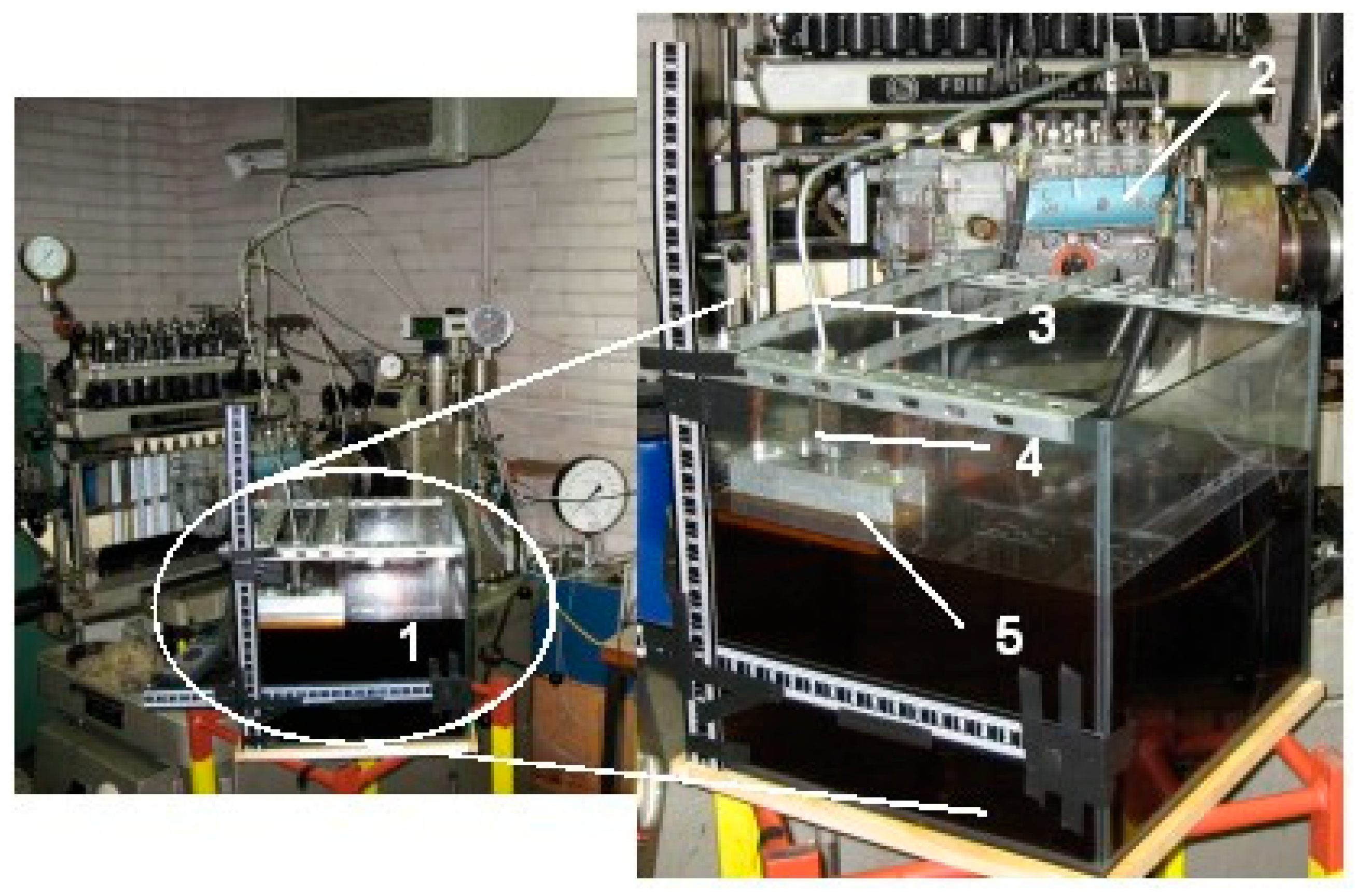
For the visualization of the injected fuel spray, the experimental setup was supplemented with additional components, as shown in Figure 1. Fuel was pressurized by a high-pressure pump, delivered through a high-pressure line to the injector, and subsequently injected into a transparent glass chamber filled with diesel fuel. The injector was mounted on a specially designed holder that was rigidly fixed to the chamber to eliminate vibrations during operation. Its position was carefully adjusted to ensure that the chamber walls did not influence the macroscopic spray characteristics, while simultaneously providing an optimal orientation for optical recording.
This configuration enables liquid-phase visualization, in which the spray boundary can be defined unambiguously, while atomization effects are removed, providing a much clearer characterization of macroscopic spray behavior compared with gaseous-environment imaging.
The fuel spray was recorded using a Canon SX150IS (Canon Inc., Tokyo, Japan) digital camera. Visualization of the spray was achieved by means of a stroboscope synchronized with the operation of the high-pressure pump and injector, thereby enabling the capture of the fuel spray in each periodic injection cycle. The camera was positioned at a controlled distance from the front wall of the chamber. Reference measuring scales, aligned vertically and horizontally, were mounted on the front wall of the chamber to verify the camera-to-chamber distance and to provide dimensional calibration during image processing.

5. Results and Discussion

5.1. Operating Characteristics of the Fuel Injection System

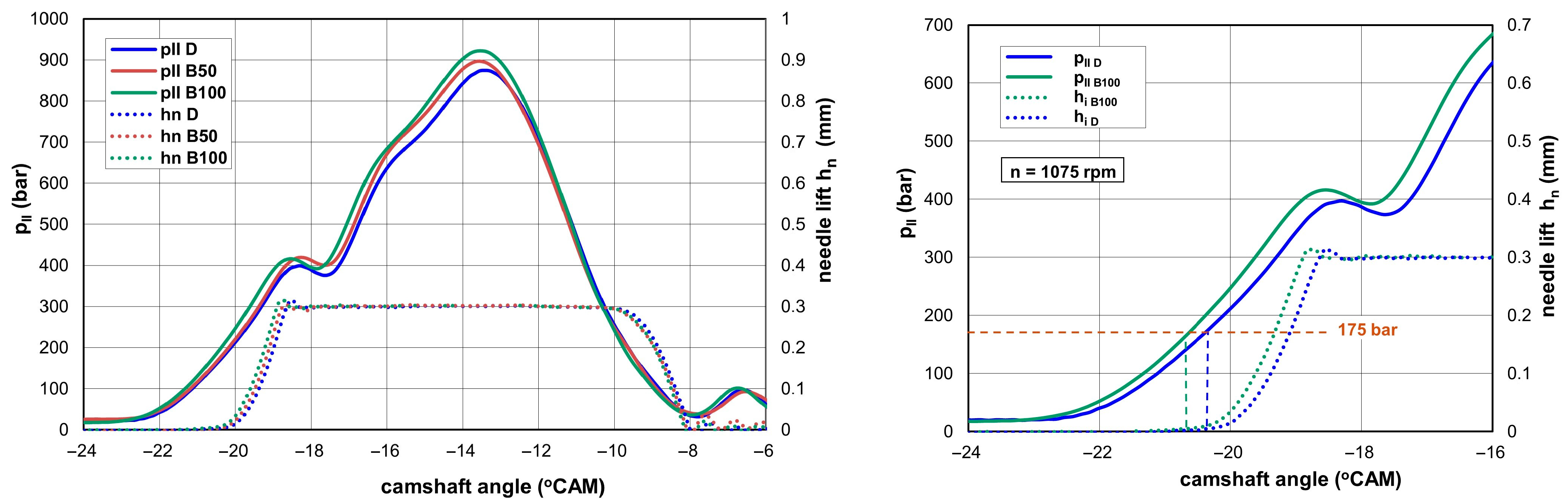
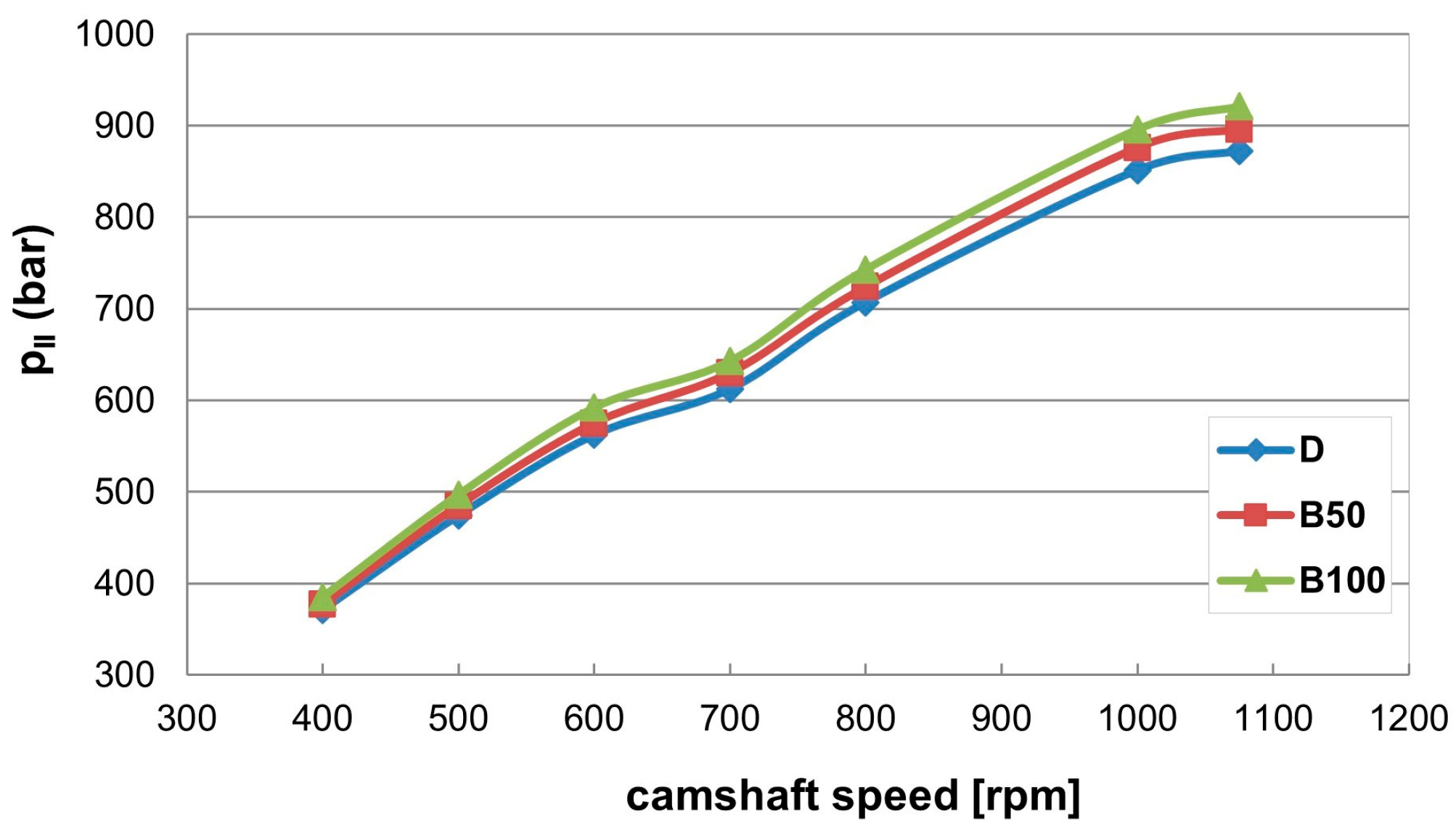
The pressure values pII increase with the rise in camshaft speed for all tested fuels. The values of pIImax for B100 are higher compared to D, with the differences increasing as the camshaft speed increases (Figure 2). The values for B50 lie between those of B100 and D. The maximum values of pII are reached at a camshaft speed of 1075 rpm, with pIImaxB100 = 921 bar, pIImaxB50 = 896 bar, and pIImaxD = 872 bar (Figure 2 and Figure 3).
The variation in injection pressure pII and injector needle lift hn for the tested fuels at a camshaft speed n = 1075 rpm is shown in Figure 3. The start of injection shifts further from TDC, as the injector opening pressure (175 bar) is reached earlier and the needle lift begins sooner. Additionally, the maximum pressure pIImax is reached slightly earlier when using B100 compared to diesel fuel. The pII(n) and hn(n) diagrams (Figure 3) are presented as representative examples. Each diagram corresponds to an average of multiple injection cycles recorded under identical test conditions.
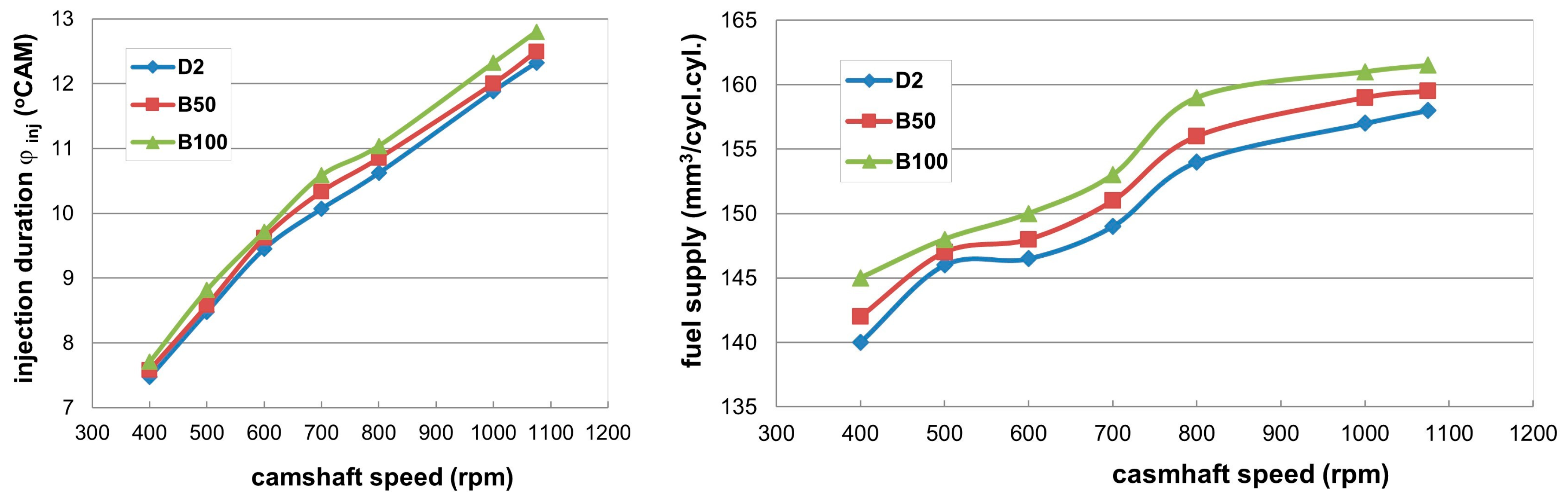
The influence of fuel type and camshaft speed on the injection duration φinj (°CAM) is shown in Figure 4 (left). With an increase in camshaft speed and biodiesel content in the fuel, the injection duration φinj (°CAM) increases. The influence of fuel type and camshaft speed on the amount of injected fuel (cyclical fuel supply) is presented in Figure 4 (right). At the same camshaft speed, a higher biodiesel content in the fuel results in a greater quantity of fuel being injected.
Earlier pressure rise (measured upstream of the injector), earlier start of injection, and earlier attainment of peak injection pressure are observed with increasing biodiesel fraction. These are accompanied by higher injection pressure, longer injection duration, and increased cycle fuel delivery. Such effects stem mainly from differences in the physicochemical properties of biodiesel compared with diesel—most notably higher density, kinematic viscosity, speed of sound, bulk modulus, and surface tension.
The physically coupled behavior between pressure build-up and injection duration arises from the hydraulic response of the mechanically controlled system, which does not allow independent regulation of these parameters.
A correlation analysis between the spray penetration length (SPL) and the maximum injection pressure pIImax revealed a consistent, nearly linear trend across all fuels, confirming that the variations in SPL are largely pressure-driven rather than purely governed by fuel properties. A correlation check performed between SPL/SCA/SPA and pIImax showed that only SPL scales strongly with injection pressure, whereas SCA and SPA exhibit weak sensitivity, reflecting their greater dependence on viscosity, density, and surface tension.
Because spray visualization in this study is performed near the stabilized maximum needle lift, the transient opening/closing rates of the needle do not govern the measured macroscopic spray parameters. The temporal evolution of hn and pII, shown in Figure 3, is included to illustrate the relative effects of biodiesel (earlier pressure rise and earlier needle opening), while detailed lift-rate extraction is not required for the liquid-phase macrometric analysis.
The stronger pressure rise in B100, combined with its higher compressibility and viscosity, leads to earlier needle opening, extended effective injection duration, and consequently, larger cycle fuel delivery.
Mechanically governed single-hole injectors, such as the one used in this study, operate in fundamentally different hydraulic and atomization regimes compared to modern CRDI multi-hole systems. These differences must be acknowledged when interpreting the applicability of property-driven spray trends. Such systems differ in injection-rate shaping, multi-pulse capability, Re/We/Oh scaling, and the influence of ambient density and temperature, meaning that the quantitative trends reported here should not be directly extrapolated to CRDI injectors.

5.2. Visualization and Macro Characteristics of Fuel Spray

Fuel spray visualization was performed under the same operating conditions as described in Section 3. Specifically, with the same high-pressure pump (HPP) settings—full load, identical HPP section, same HPP line, and the same injector—the spray of all fuels was recorded at engine speeds of 600, 800, and 1000 rpm. The spray was captured just before the injector needle began to close, starting from the position of maximum needle lift toward the seat, corresponding to the region of maximum pressure pII. This procedure allowed recording of the full spray development, similar to the method reported by [33,39].
For each operating condition and fuel, 20 spray cycles were recorded, from which 7–10 representative frames were retained after confirming statistical stability of the extracted macrometrics. Sensitivity analysis showed that including additional frames beyond this range changed SPL and SCA by less than ±1.5%, confirming that subsampling does not bias the results. The uncertainty model for SPL, SCA, and SPA includes pixel-scale accuracy (±1 pixel), segmentation repeatability, and composite-image reconstruction consistency. Each captured frame was processed using a threshold-based segmentation algorithm with subsequent morphological filtering to ensure consistent detection of the spray boundary. A comparative check performed on manually segmented reference images showed that the edge-tracking deviation did not exceed ±1 pixel, corresponding to less than 0.5% variation in the projected spray area.
During spray recording, synchronization between the stroboscope flash and the injection cycle was carefully adjusted and periodically verified. This procedure ensured that the recorded spray images corresponded to consistent phases of the injection event, so that differences between consecutive frames reflect actual spray development rather than timing mismatch. This combination of optical synchronization, threshold-based segmentation, and quantitative image-validation procedures increases confidence in the extracted macroscopic spray parameters and ensures reliable comparison between fuels with differing optical and physical properties.
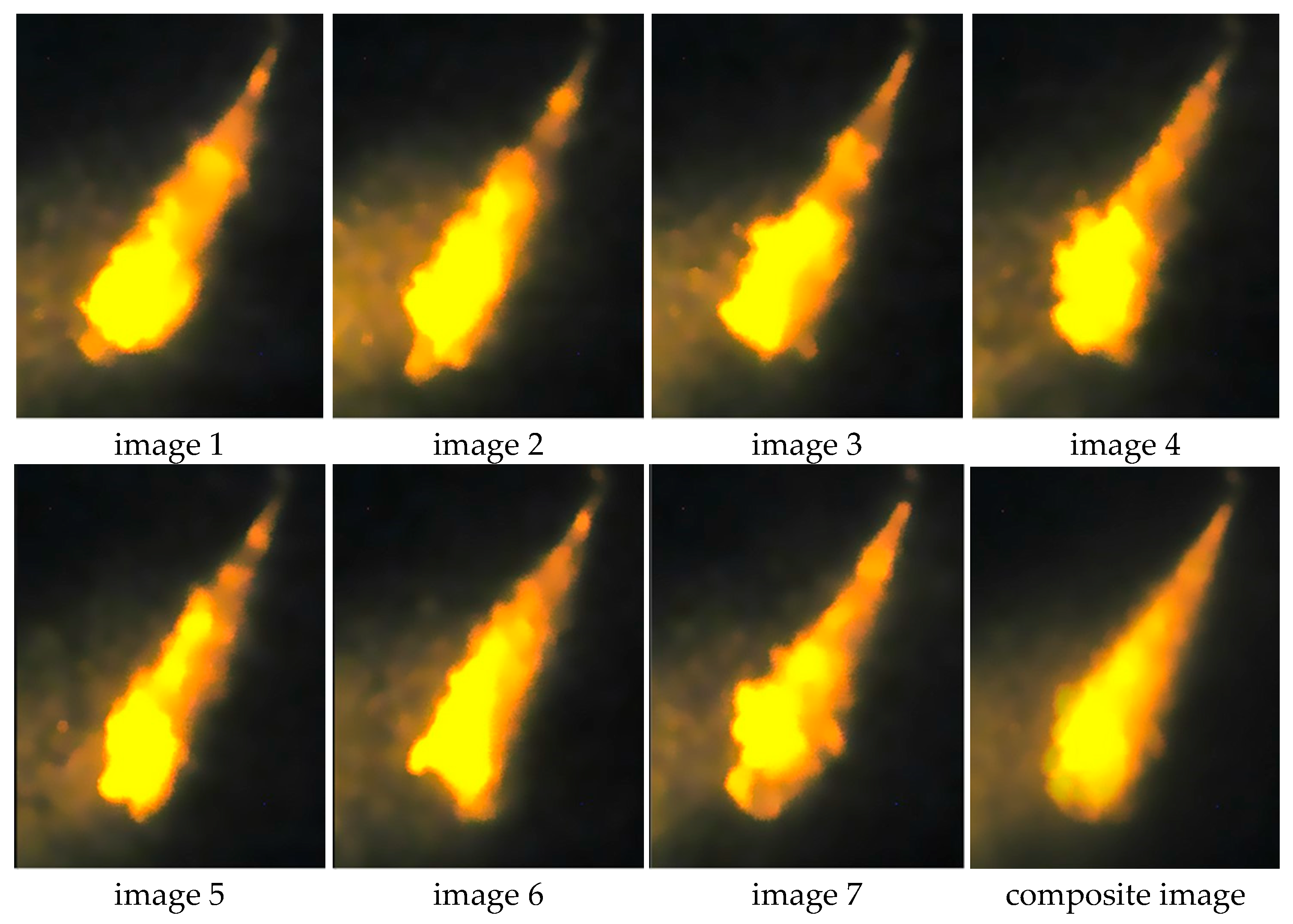
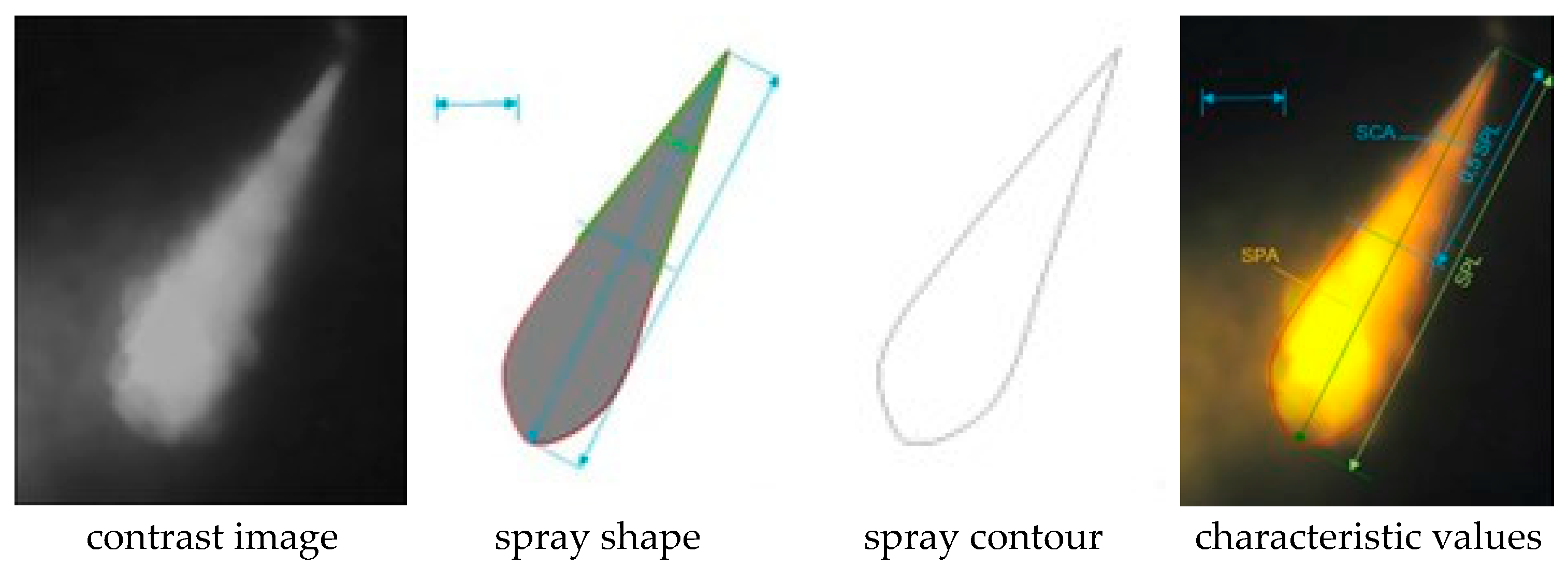
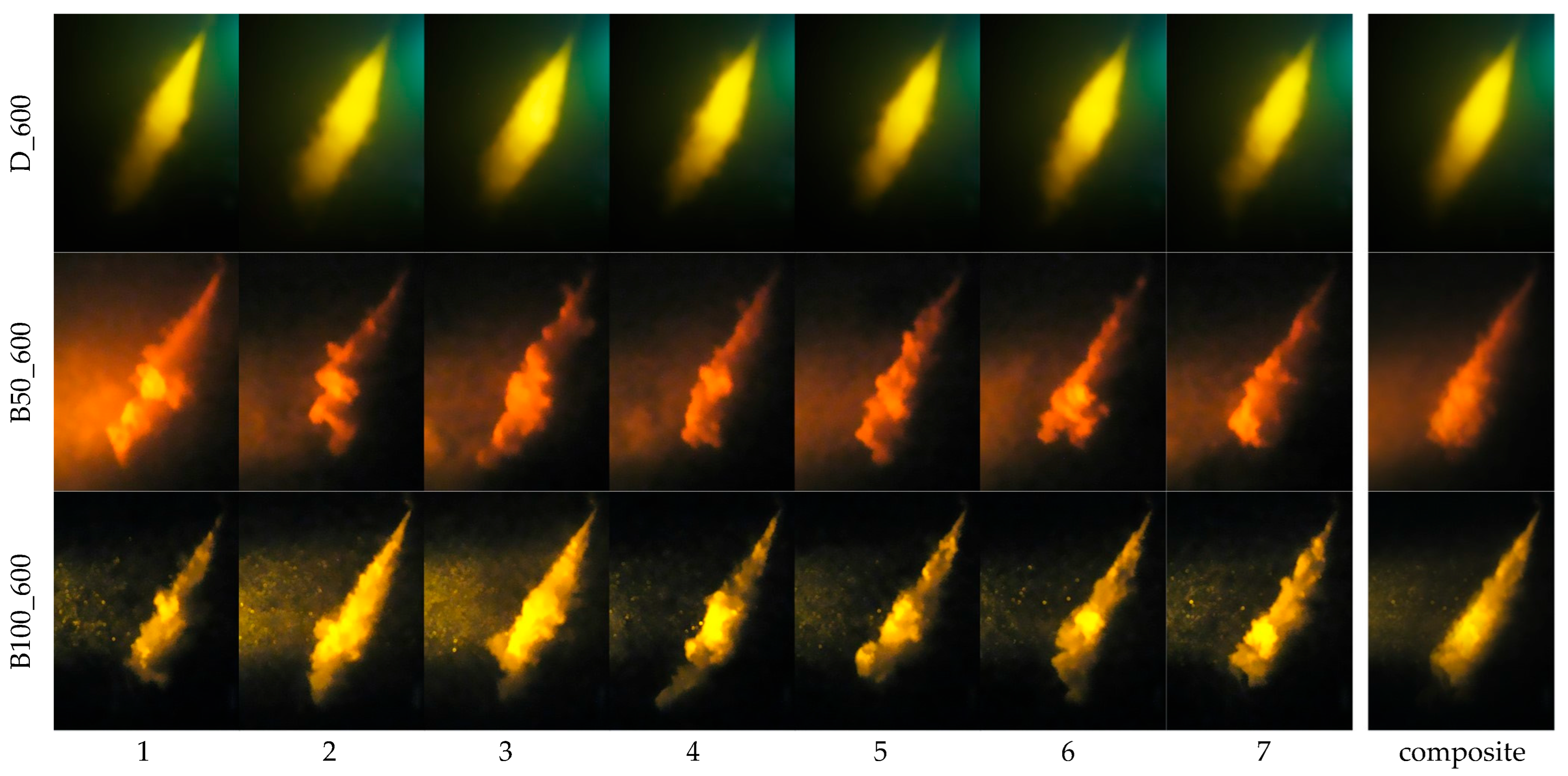
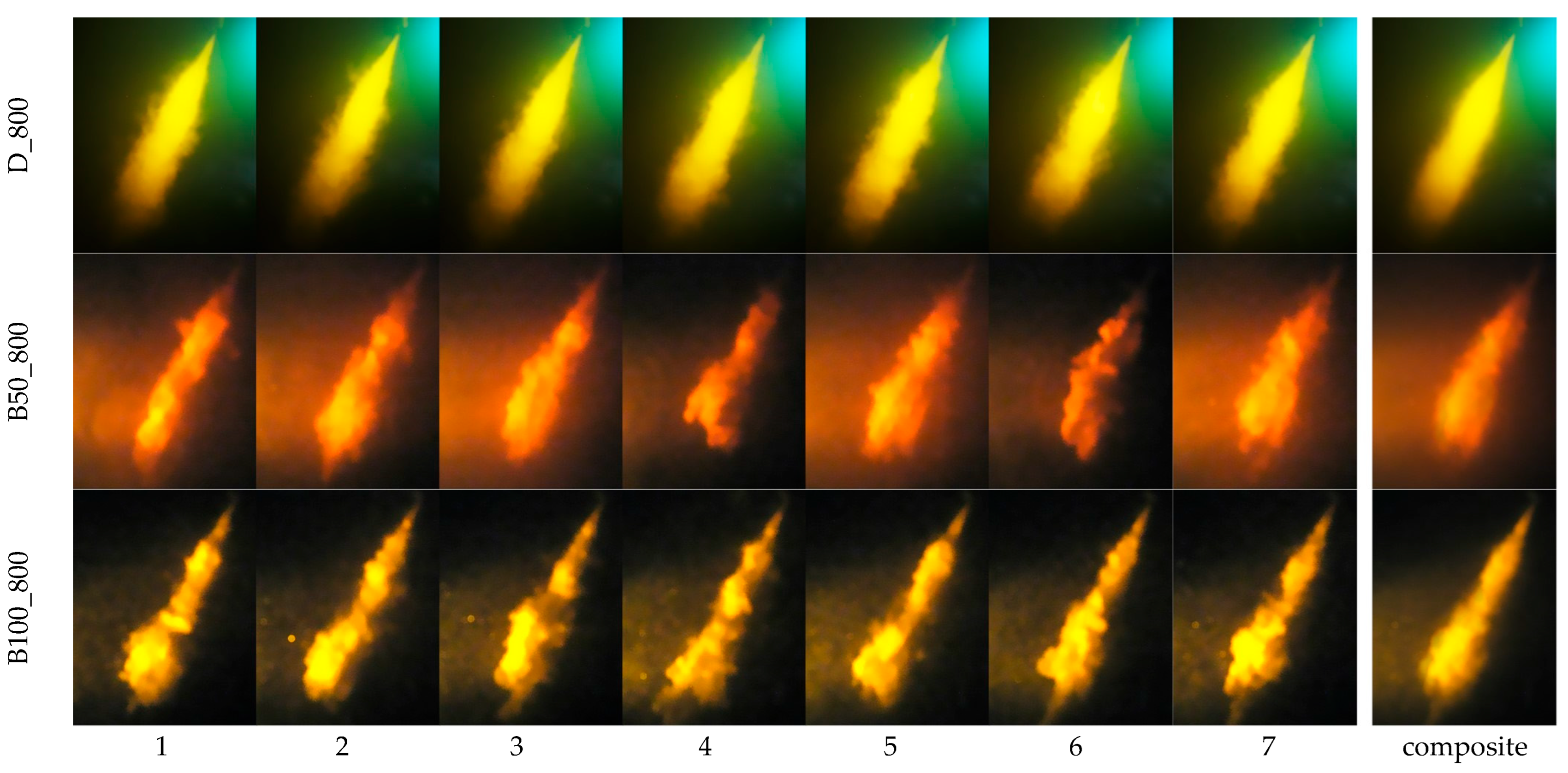
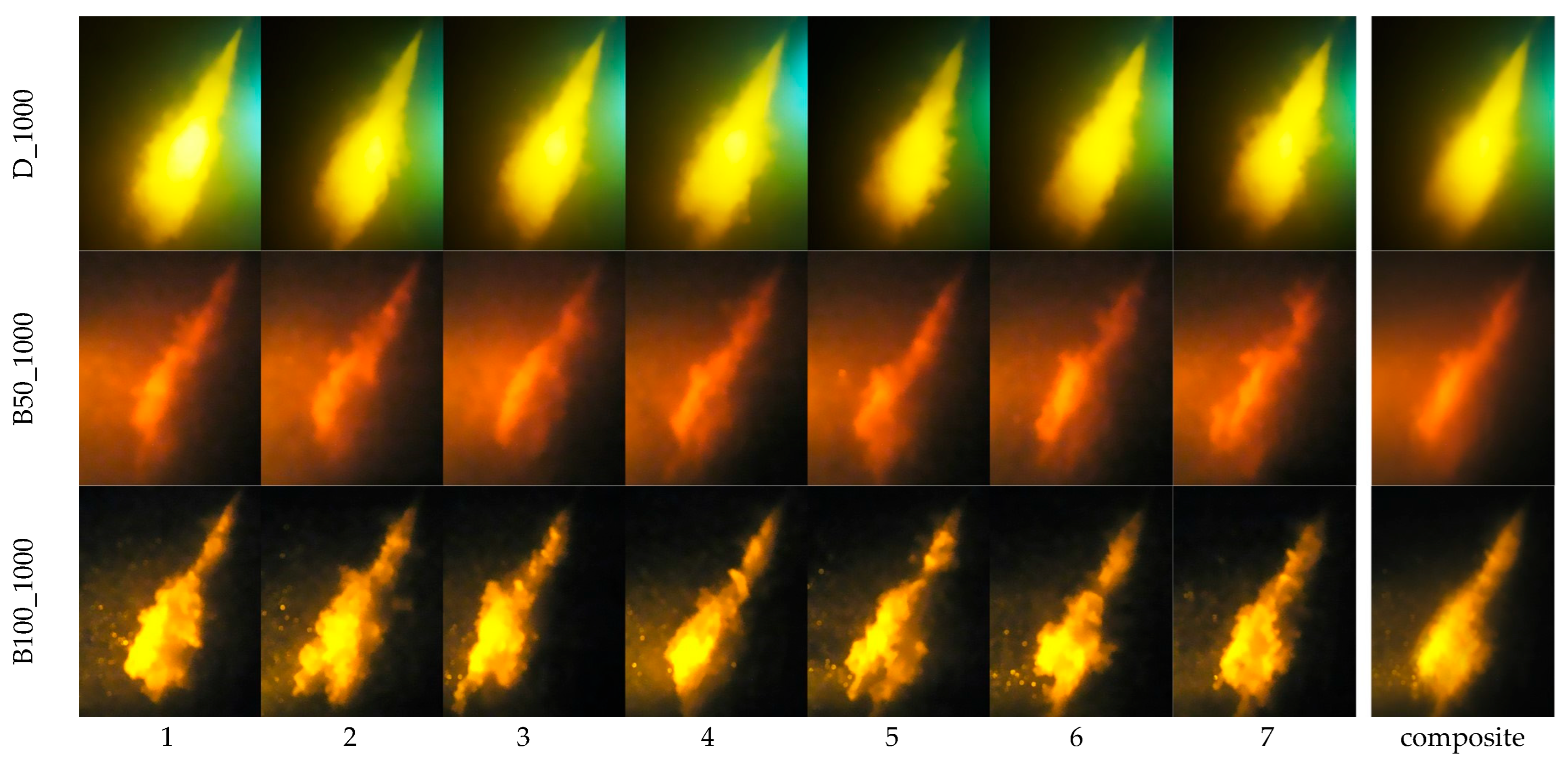
The sets of spray images were planimetrically combined and processed to obtain a single composite image representing the geometric ensemble of spray points (its contour reflects the union of all reliably reproducible spray positions) for each fuel and engine speed (Figure 5—composite image). Frames that deviated due to transient distortions—such as local turbulence, illumination variability, or stroboscopic desynchronization—were excluded because they did not produce meaningful changes in the extracted SPL or SCA. This procedure ensured that the composite contour consistently captured the stable macroscopic spray envelope, while avoiding the inclusion of outliers that would artificially widen or distort the boundary.
From the composite spray image, a contrast image was generated, enabling identification and definition of the spray shape and contour (Figure 5—contrast, spray shape, and spray contour), as well as measurement of macro-scale spray characteristics, including spray penetration and spray cone angle.
The spray contour line, cone angle (with arms), and spray penetration line were then overlaid on the composite spray image for verification. If discrepancies were observed, the procedure was repeated until the parameters matched the composite spray. Once the contour line and penetration length corresponded to the composite spray, the spray-projected area was calculated based on the number and density of pixels (pixels per mm2) within the area enclosed by the spray contour line (Figure 5), following the methodology of [26,32]. The measured values and percentage differences refer to the selected injection system, fuels, and operating conditions.
Since the spray shape is not ideally conical, the cone angle was measured at half of the spray penetration length and treated as the spray cone angle, as in [9,26,31]. To assess the robustness of the chosen definition, a sensitivity check was performed by re-evaluating the spray cone angle at 0.4·SPL and 0.6·SPL. The resulting values differed by less than ±2.5% from those obtained at 0.5·SPL for all fuels and speeds (the relative ordering of fuels (D < B50 < B100 in cone-angle narrowing remained unchanged), confirming that the cone-angle classification and fuel-to-fuel comparisons are not sensitive to the exact axial position at which the angle is measured, if this position is from 0.4·L to 0.6·L.
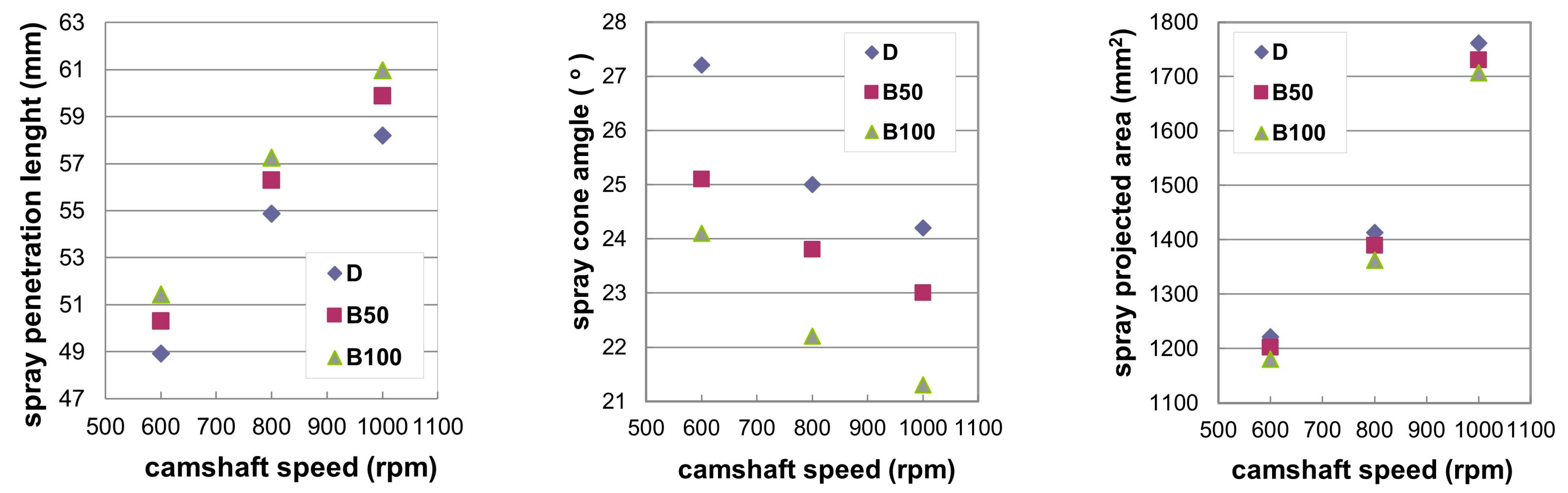
The results of spray imaging obtained with fuels D, B50, and B100 at camshaft speeds of 600, 800, and 1000 rpm are presented in Figure 6, Figure 7 and Figure 8 and summarized in Figure 9 and Table 1.
To improve consistency across different operating regimes, the same image-processing parameters (contrast threshold, smoothing kernel size, and pixel scaling factor) were applied to all datasets. This ensured that any observed variations in spray shape, length, and cone angle were due solely to fuel type and injection conditions rather than image-processing bias.
A supplementary analysis of projected spray area (SPA) variation with camshaft speed revealed that SPA increases nearly linearly with p I I max , supporting the earlier conclusion that spray development intensity follows pressure-dependent trends.
Furthermore, the use of a composite image approach allowed visualization of minor asymmetries in spray development that could not be identified from individual frames, particularly at higher camshaft speeds. These asymmetries are attributed to transient pressure fluctuations in the high-pressure line during mechanical injection.
Spray penetration length for all three fuels increases with camshaft speed, as a direct consequence of higher injection pressures pII (Figure 2 and Figure 3). The spray penetration length of B100 is consistently about 5% greater than that of D at all tested speeds (Figure 9, Table 1). Values for B50 lie between those of B100 and D. This behavior results from the higher injection pressures attained with B100, caused by its physical properties—higher density, speed of sound, bulk modulus [1,40], viscosity, and surface tension [5,6,33].
Since injection in this study occurs into a liquid medium (diesel fuel), without the influence of ambient air, the observed spray remains in the liquid phase. Nevertheless, a similar trend can be expected in real systems with respect to the spray break-up length, i.e., the continuous liquid core of the spray. Accordingly, under real operating conditions, injection of B100 is likely to exhibit a longer break-up length compared to D, which is consistent with earlier findings [5,6,24,25,26,32,33,34,41], thereby supporting the validity of this methodological approach for assessing spray length as a macroscopic spray characteristic.
The observed difference of approximately 5% in spray penetration length corresponds well with the measured difference in maximum injection pressure ( p I I , max ), confirming that the variation in SPL arises mainly from hydraulic effects rather than from optical or measurement uncertainty. This correlation reinforces the earlier conclusion regarding the coupled influence of fuel density and compressibility on pressure build-up and spray momentum.
Although the liquid-phase visualization excludes evaporation and air–fuel mixing, the proportionality between injection pressure and spray penetration remains valid because the momentum flux at the nozzle exit dominates the macroscopic spray trajectory. This supports the physical basis for extrapolating the liquid-phase results to real engine conditions.
The spray cone angle decreases with increasing camshaft speed for all fuels, due to higher injection pressures and the combined effects of viscosity and surface tension. The cone angle of B100 is narrower than that of D across all speeds (by approximately 11–12%), while B50 exhibits intermediate values, being 5–8% narrower than D (Figure 9, Table 3).
The reduction in spray cone angle and projected area with increasing camshaft speed also reflects the limitation of mechanical injection systems, where higher injection pressures shorten the needle-opening period and reduce lateral dispersion. This behavior is consistent with earlier optical studies and supports the interpretation that narrower sprays at higher speeds arise from mechanical rather than fuel-specific factors.
From a fluid-dynamic perspective, the decrease in spray cone angle with increasing injection pressure corresponds to a higher Reynolds number but a relatively constant Weber number, indicating that inertial forces dominate over surface-tension effects. Consequently, spray contraction occurs despite increased atomization energy, particularly for fuels with higher viscosity such as B100.
The spray-projected area increases with camshaft speed for all fuels as a result of higher injection pressures and a greater amount of injected fuel. Compared to diesel, the projected spray area of B100 is about 3% smaller, while that of B50 is slightly larger than B100 but still lower than D (by <2%). As with the cone angle, these differences can be attributed to variations in fuel physical properties (viscosity, density, and surface tension). The observed reduction in projected spray area for B100 relative to diesel across all operating conditions suggests that, in real spray development, B100 would exhibit reduced mixing intensity with the surrounding air compared to diesel.

6. Conclusions

This study investigated the operating characteristics and macroscopic spray behavior of a mechanically controlled diesel fuel injection system operating with diesel (D), rapeseed biodiesel (B100), and a 50% volumetric blend (B50). Based on the experimental results, the following conclusions can be drawn.

6.1. Injection System Operating Characteristics

  • The use of biodiesel leads to an earlier rise in injection pressure, an earlier start of injection, and an earlier achievement of maximum injection pressure compared to diesel.
  • Maximum injection pressure values were consistently higher with B100, followed by B50, with diesel showing the lowest values.
  • Both injection duration and the quantity of injected fuel increased with biodiesel content and camshaft speed, primarily due to higher density, viscosity, and bulk modulus of biodiesel.
  • These findings demonstrate that within mechanically controlled systems, the use of biodiesel noticeably alters the hydraulic response of the injection circuit, primarily through its higher density, viscosity, and compressibility. This provides valuable insight into how fuel properties influence pressure build-up, injection delay, and fuel delivery characteristics, which can guide the further refinement of injection system calibration and component matching.

6.2. Spray Development Characteristics

  • Spray penetration length increased with camshaft speed for all fuels. Across all regimes, B100 exhibited penetration lengths about 5% greater than diesel, while B50 values were intermediate.
  • Spray cone angle decreased with camshaft speed for all fuels. Relative to diesel, B100 showed narrower cone angles (by 11–12%), while B50 exhibited 5–8% narrower angles.
  • Projected spray area increased with camshaft speed but was consistently smaller for B100 (by ~3% compared to diesel). Again, B50 exhibited intermediate values.
  • The reduced cone angle and spray area of biodiesel suggest weaker air–fuel mixing intensity under real operating conditions, which may affect mixture formation and combustion efficiency.
  • The consistency of these spray parameters with data from other optical investigations supports the reproducibility of the applied liquid-phase visualization method and highlights its reliability for characterizing macroscopic spray behavior under simplified but controlled conditions.

6.3. Significance of Liquid-Phase Spray Visualization

  • Visualization of fuel spray in a liquid medium proved to be a highly effective method for isolating macroscopic spray parameters (penetration, cone angle, and projected area) from the complicating effects of atomization, evaporation, and combustion residues present in gaseous environments.
  • This approach provides reliable reference data and enables direct comparison of biodiesel and diesel spray characteristics under controlled conditions.
  • Furthermore, liquid-phase spray visualization can serve as a valuable preliminary tool for optimizing biodiesel properties (through additives or blends) and injection system parameters, before extending investigations to real engine conditions.
  • However, it should be noted that this approach does not capture evaporation, secondary atomization, or turbulent entrainment phenomena. Future extensions should, therefore, combine the liquid-phase visualization with gaseous-phase diagnostics to fully represent real-engine spray evolution.

6.4. General Implications

  • The results confirm that the differences in injection and spray behavior between biodiesel and diesel are primarily governed by the physicochemical properties of biodiesel (density, viscosity, speed of sound, bulk modulus, and surface tension).
  • Although this study was performed with injection into a liquid medium, the observed trends are in line with previous findings under real engine conditions, indicating that biodiesel is likely to produce longer liquid spray cores and reduced air–fuel mixing.
  • These effects should be considered in the optimization of injection strategies, nozzle geometry, and combustion chamber design for compression-ignition engines operating with biodiesel or its blends, thereby supporting the practical development of adaptive injection-control solutions and the gradual transition toward higher biodiesel shares.

Author Contributions

Conceptualization, B.N. and B.K.; methodology, B.N.; software, B.K.; validation, B.N. and B.K.; formal analysis, B.N. and D.M.; investigation, B.N. and B.K.; resources, B.N. and B.K.; data curation, B.N.; writing—original draft preparation, B.N.; writing—review and editing, N.P. and V.J.; visualization, B.N. and N.P.; supervision, D.M.; funding acquisition, D.M. and N.P. All authors have read and agreed to the published version of the manuscript.

Funding

This research was financially supported by the Ministry of Science, Technological Development and Innovation of the Republic of Serbia (Contract No. 451-03-137/2025-03/200109).

Institutional Review Board Statement

Not applicable.

Informed Consent Statement

Not applicable.

Data Availability Statement

All data generated or analyzed during this study are included in this published article. However, the reader may contact the corresponding author for more details on the data.

Conflicts of Interest

The authors declare no conflicts of interest.

Abbreviations

The following abbreviations are used in this manuscript:
SPLSpray penetration length
SCASpray cone angle
SPASpray-projected area
JB20Jatropha biodiesel 20%, diesel 80%
KB20Karanja biodiesel 20%, diesel 80%
WCOWastw cooking oil
BDE50Neem biodiesel–ethanol blend (both with 50%)
CME20Castor biodiesel 20%, diesel 80%
B100Biodiesel 100%, rapeseed biodiesel 100%
B50Biodiesel 50%, diesel 50%
HPPHigh-pressure pump
hnNeedle lift
pIIPressure in the high-pressure tube, directly upstream of the injector; injection pressure
nCamshaft speed
TDCTop dead center
CAMCamshaft, camshaft angle
φinjInjection duration

References

  1. Nikolić, B.; Marković, S.; Petrović, N.; Marinković, D.; Jovanović, V. Biodiesel and Feedstocks—Possibilities and Characteristics: A Review. Therm. Sci. 2025, 29, 3477–3490. [Google Scholar] [CrossRef]
  2. Božanić, D.; Epler, I.; Puška, A.; Biswas, S.; Marinković, D.; Koprivica, S. Application of the Dibr Ii—Rough Mabac Decision-Making Model for Ranking Methods and Techniques of Lean Organization Systems Management in the Process of Technical Maintenance. Facta Univ. Ser. Mech. Eng. 2024, 22, 101–123. [Google Scholar] [CrossRef]
  3. Arasteh, B.; Bouyer, A.; Ghanbarzadeh, R.; Rouhi, A.; Mehrabani, M.N.; Tirkolaee, E.B. Data Replication in Distributed Systems Using Olympiad Optimization Algorithm. Facta Univ. Ser. Mech. Eng. 2023, 21, 501–527. [Google Scholar] [CrossRef]
  4. Sadeq, A.M. Combustion Advancements: From Molecules to Future Challenges, 1st ed.; Lulu Press, Inc.: Morrisville, CA, USA, 2023. [Google Scholar]
  5. Lešnik, L.; Vajda, B.; Žunič, Z.; Škerget, L.; Kegl, B. The Influence of Biodiesel Fuel on Injection Characteristics, Diesel Engine Performance, and Emission Formation. Appl. Energy 2013, 111, 558–570. [Google Scholar] [CrossRef]
  6. Kegl, B.; Pehan, S. Influence of Biodiesel on Injection, Fuel Spray, and Engine Characteristics. Therm. Sci. 2008, 12, 171–182. [Google Scholar] [CrossRef]
  7. Sathiyamoorthi, R.; Sankaranarayanan, G.; Munuswamy, D.B.; Devarajan, Y. Experimental Study of Spray Analysis for Palmarosa Biodiesel-Diesel Blends in a Constant Volume Chamber. Environ. Prog. Sustain. Energy 2021, 40, e13696. [Google Scholar] [CrossRef]
  8. Ulu, A.; Yildiz, G.; Rodriguez, A.D.; Özkol, Ü. Spray Analysis of Biodiesels Derived from Various Biomass Resources in a Constant Volume Spray Chamber. ACS Omega 2022, 7, 19365–19379. [Google Scholar] [CrossRef]
  9. Haq, M.U.; Jafry, A.T.; Ahmad, S.; Cheema, T.A.; Ansari, M.Q.; Abbas, N. Recent Advances in Fuel Additives and Their Spray Characteristics for Diesel-Based Blends. Energies 2022, 15, 7281. [Google Scholar] [CrossRef]
  10. Caresana, F. Impact of Biodiesel Bulk Modulus on Injection Pressure and Injection Timing. The Effect of Residual Pressure. Fuel 2011, 90, 477–485. [Google Scholar] [CrossRef]
  11. Gowrishankar, S.; Krishnasamy, A. Injection System Modification and Optimization for Performance Enhancement and Emission Reduction in a Light-Duty Diesel Engine Fuelled by Biodiesel-Water Emulsion. Fuel 2023, 337, 127222. [Google Scholar] [CrossRef]
  12. Gupta, P.; Dhar, A.; Agarwal, A.K. Experimental Investigations of a Signle Cylinder Genset Engine with Common Rail Fuel Injection System. Therm. Sci. 2014, 18, 249–258. [Google Scholar] [CrossRef]
  13. Agarwal, A.K.; Dhar, A.; Gupta, J.G.; Kim, W.I.; Choi, K.; Lee, C.S.; Park, S. Effect of Fuel Injection Pressure and Injection Timing of Karanja Biodiesel Blends on Fuel Spray, Engine Performance, Emissions and Combustion Characteristics. Energy Convers. Manag. 2015, 91, 302–314. [Google Scholar] [CrossRef]
  14. Plamondon, E.; Seers, P. Development of a Simplified Dynamic Model for a Piezoelectric Injector Using Multiple Injection Strategies with Biodiesel/Diesel-Fuel Blends. Appl. Energy 2014, 131, 411–424. [Google Scholar] [CrossRef]
  15. Celik, M.B.; Simsek, D. The Determination of Optimum Injection Pressure in an Engine Fuelled with Soybean Biodiesel/Diesel Blend. Therm. Sci. 2014, 18, 229–238. [Google Scholar] [CrossRef][Green Version]
  16. Rakopoulos, D.C.; Rakopoulos, C.D.; Giakoumis, E.G.; Papagiannakis, R.G.; Kyritsis, D.C. Influence of Properties of Various Common Bio-Fuels on the Combustion and Emission Characteristics of High-Speed DI (Direct Injection) Diesel Engine: Vegetable Oil, Bio-Diesel, Ethanol, N-Butanol, Diethyl Ether. Energy 2014, 73, 354–366. [Google Scholar] [CrossRef]
  17. Geng, L.; Wang, Y.; Wang, Y.; Li, H. Effect of the Injection Pressure and Orifice Diameter on the Spray Characteristics of Biodiesel. J. Traffic Transp. Eng. 2020, 7, 331–339. [Google Scholar] [CrossRef]
  18. Xie, H.; Song, L.; Xie, Y.; Pi, D.; Shao, C.; Lin, Q. An Experimental Study on the Macroscopic Spray Characteristics of Biodiesel and Diesel in a Constant Volume Chamber. Energies 2015, 8, 5952–5972. [Google Scholar] [CrossRef]
  19. Palani, R.; Nallusamy, N.; Pitchandi, K. Spray Characteristics of Diesel and Derivatives in Direct Injection Diesel Engines with Varying Injection Pressures. J. Mech. Sci. Technol. 2015, 29, 4465–4471. [Google Scholar] [CrossRef]
  20. Visconti, P.; Primiceri, P.; Strafella, L.; Carlucci, A.P.; Ficarella, A. Morphological Analysis of Injected Sprays of Different Bio-Diesel Fuels by Using a Common Rail Setup Controlled by a Programmable Electronic System. Int. J. Automot. Mech. Eng. 2022, 14, 3849–3871. [Google Scholar] [CrossRef]
  21. Hawi, M.; Kosaka, H.; Sato, S.; Nagasawa, T.; Elwardany, A.; Ahmed, M. Effect of Injection Pressure and Ambient Density on Spray Characteristics of Diesel and Biodiesel Surrogate Fuels. Fuel 2019, 254, 115674. [Google Scholar] [CrossRef]
  22. Bari, S.; Zhang, C.; Kafrawi, F.; Lee, K.H. Study of Spray Behaviors to Correlate with Engine Performance and Emissions of a Diesel Engine Using Canola-Based Biodiesel. Fuels 2022, 3, 87–112. [Google Scholar] [CrossRef]
  23. Chaudhari, V.D.; Jagdale, V.S.; Chorey, D.; Deshmukh, D. Combustion and Spray Breakup Characteristics of Biodiesel for Cold Start Application. Clean. Eng. Technol. 2021, 5, 100285. [Google Scholar] [CrossRef]
  24. Lahane, S.; Subramanian, K.A. Effect of Different Percentages of Biodiesel–Diesel Blends on Injection, Spray, Combustion, Performance, and Emission Characteristics of a Diesel Engine. Fuel 2015, 139, 537–545. [Google Scholar] [CrossRef]
  25. Valentino, G.; Allocca, L.; Iannuzzi, S.; Montanaro, A. Biodiesel/Mineral Diesel Fuel Mixtures: Spray Evolution and Engine Performance and Emissions Characterization. Energy 2011, 36, 3924–3932. [Google Scholar] [CrossRef]
  26. Guan, L.; Tang, C.; Yang, K.; Mo, J.; Huang, Z. Effect of Di-N-Butyl Ether Blending with Soybean-Biodiesel on Spray and Atomization Characteristics in a Common-Rail Fuel Injection System. Fuel 2015, 140, 116–125. [Google Scholar] [CrossRef]
  27. Yu, S.; Yin, B.; Chen, C.; Jia, H.; Wang, W. A Comparative Analysis of Internal Flow and Spray Characteristics in Triangular Orifices with Diesel and Biodiesel. Energy 2023, 285, 129390. [Google Scholar] [CrossRef]
  28. Kuti, O.A.; Nishida, K. An Investigation into Spray Combustion Processes of Waste Cooking Oil Biodiesel Fuel Under Diesel Engine Conditions Using the LIF-PIV, Shadowgraph, and Chemiluminescence Techniques. Int. J. Thermofluids 2025, 26, 101066. [Google Scholar] [CrossRef]
  29. Chaudhari, V.D.; Kulkarni, A.; Deshmukh, D. Spray Characteristics of Biofuels for Advance Combustion Engines. Clean. Eng. Technol. 2021, 5, 100265. [Google Scholar] [CrossRef]
  30. Lee, S.; Lee, C.S.; Park, S.; Gupta, J.G.; Maurya, R.K.; Agarwal, A.K. Spray Characteristics, Engine Performance and Emissions Analysis for Karanja Biodiesel and Its Blends. Energy 2017, 119, 138–151. [Google Scholar] [CrossRef]
  31. Haq, M.; Jafry, A.T.; Khan, W.U.; Ahmed, A.; Ahad, M.A.; Algayyim, S.J.M.; Abbas, N.; Sajjad, U.; Hamid, K. Investigation of In-Nozzle Flow Behavior Coupled with Spray Characteristics of Waste Cooking Oil and Castor Biodiesel. Energy Convers. Manag. X 2024, 24, 100787. [Google Scholar] [CrossRef]
  32. Agarwal, A.K.; Chaudhury, V.; Agarwal, A.; Shukla, P.C. Comparative Study of Macroscopic Spray Parameters and Fuel Atomization Behaviour of Straight Vegetable Oils (Jatropha), Its Biodiesel and Blends. Therm. Sci. 2013, 17, 217–232. [Google Scholar] [CrossRef]
  33. Vajda, B.; Lešnik, L.; Bombek, G.; Biluš, I.; Žunič, Z.; Škerget, L.; Hočevar, M.; Širok, B.; Kegl, B. The Numerical Simulation of Biofuels Spray. Fuel 2015, 144, 71–79. [Google Scholar] [CrossRef]
  34. Pan, J.; Yang, W.; Chou, S.; Li, D.; Xue, H.; Yhao, J.; Tang, A. Spray and Combustion Visualization of Biodiesel in a Direct Injection Diesel Engine. Therm. Sci. 2013, 17, 279–289. [Google Scholar] [CrossRef]
  35. Senthil, R.; Vijay, G.A. Review of physicochemical properties and spray characteristics of biodiesel. Environ. Sci. Pollut. Res. 2023, 30, 66494–66513. [Google Scholar] [CrossRef]
  36. Algayyim, S.J.M.; Wandel, A.P. Comparative Assessment of Spray Behavior, Combustion and Engine Performance of ABE-Biodiesel/Diesel as Fuel in DI Diesel Engine. Energies 2020, 13, 6521. [Google Scholar] [CrossRef]
  37. Geng, L.; Bi, L.; Li, Q.; Chen, H.; Xie, Y. Experimental Study on Spray Characteristics, Combustion Stability, And Emission Performance of a CRDI Diesel Engine Operated with Biodiesel–Ethanol Blends. Energy Rep. 2021, 7, 904–915. [Google Scholar] [CrossRef]
  38. Kafrawi, F.; Lee, K.H.; Zhang, C.; Bari, S. Spray Analysis of Palm-Based Biodiesel to Correlate Performance and Combustion Analysis of a Compression Ignition Engine. Fuel 2022, 319, 123822. [Google Scholar] [CrossRef]
  39. Lešnik, L.; Kegl, B.; Bombek, G.; Hočevar, M.; Biluš, I. The Influence of In-Nozzle Cavitation on Flow Characteristics and Spray Break-Up. Fuel 2018, 222, 550–560. [Google Scholar] [CrossRef]
  40. Nikolić, B.; Kegl, B.; Marković, S.; Mitrović, M. Determining the Speed of Sound, Density and Bulk Modulus of Rapeseed Oil, Biodiesel and Diesel Fuel. Therm. Sci. 2012, 16, 505–514. [Google Scholar] [CrossRef]
  41. Kuti, O.A.; Zhu, J.; Nishida, K.; Wang, X.; Huang, Z. Characterization of Spray and Combustion Processes of Biodiesel Fuel Injected by Diesel Engine Common Rail System. Fuel 2013, 104, 838–846. [Google Scholar] [CrossRef]
Figure 1. Experimental setup for fuel spray visualization: 1—transparent glass chamber, 2—high-pressure pump, 3—high-pressure line, 4—injector, and 5—injector holder.
Applsci 15 12261 g001
Figure 2. Fuel influence on pressure pIImax.
Applsci 15 12261 g002
Figure 3. Fuel influence on pressure pII and needle lift hn (left) and segment from −24 to −16 °CAM (right) at n = 1075 rpm.
Applsci 15 12261 g003
Figure 4. Fuel influence on injection duration (left) and cyclical fuel supply (right).
Applsci 15 12261 g004
Figure 5. Illustration of the procedure for processing fuel spray images.
Applsci 15 12261 g005aApplsci 15 12261 g005b
Figure 6. Spray appearance during injection of fuels D, B50, and B100 at 600 rpm: individual images and composite spray representation; experimental results—comparative presentation.
Applsci 15 12261 g006
Figure 7. Spray appearance during injection of fuels D, B50, and B100 at 800 rpm: individual images and composite spray representation; experimental results—comparative presentation.
Applsci 15 12261 g007
Figure 8. Spray appearance during injection of fuels D, B50, and B100 at 1000 rpm: individual images and composite spray representation; experimental results—comparative presentation.
Applsci 15 12261 g008
Figure 9. Spray penetration length, cone angle, and projected area for different fuels and camshaft speeds—experimental results.
Applsci 15 12261 g009
Table 1. Physicochemical properties of diesel (D), biodiesel blend (B50), and rapeseed biodiesel (B100) (all values at 20 °C unless otherwise noted).
Parameters, Units, and ConditionsFuelRef.
DB50B100
Density (kg/m3)p = 1 bar840859880Exp. [1,40]
p = 1000 bar884903922
Speed of sound (m/s)p = 1 bar135313771400Exp. [1,40]
p = 1000 bar170717191728
Bulk modulus (109 Pa)p = 1 bar1.531.631.72Exp. [1,40]
p = 1000 bar2.582.672.75
Kinematic viscosity (mm2/s)at 40 °C3.344.425.51[1,5,6]
Surface tension (mNm/m)at 20 °C26.827.628.4[5,6,33]
Table 2. Instrumentation and methodology of the injection-system test bench.
Component/MeasurementInstrument/MethodOperating PrincipleNotes Relevant to This Study
Injection pressure pII
(upstream of injector)
Piezoelectric pressure transducerHigh-frequency dynamic pressure measurementUsed in numerous prior studies on this test bench; calibrated using manufacturer-provided charge amplifier settings.
Pressure in pump delivery line (downstream of HPP)Diaphragm-type pressure transducerStrain-based pressure sensingSuitable for quasi-static line-pressure behavior and confirmation of HPP operation.
Needle lift hn(t)Custom variable-inductance sensorInductive displacement measurementProven in multiple theses and publications; relative lift profile used (not absolute lift uncertainty).
Fuel temperature
(pump inlet/outlet)
K-type thermocouplesThermoelectric measurementUsed for maintaining 20–22 °C boundary conditions.
Camshaft speedOptical sensor with digital tachometerInterruption-based pulse countingUsed for synchronizing injection cycles and stroboscope triggering.
TDC referenceOptical pickup sensorOptical edge detectionEnsures temporal alignment of injection with crankshaft position.
Spray visualizationCanon SX150IS digital cameraDigital imaging (video mode)Fixed focal distance; lens distortion corrected using geometric reference grid.
Illumination/synchronizationStroboscope synchronized with HPPPhase-locked flashingFlash timing verified to within ±2° crank angle (procedurally controlled).
Spatial calibrationVertical/horizontal reference scales on chamberPixel-to-mm
conversion
Parallax minimized by perpendicular optical alignment; uncertainty < 1 pixel.
Image processingThreshold segmentation + morphological filteringBinary contour extractionWorkflow reproducible; edge uncertainty < 1 pixel after validation.
Table 3. Spray characteristics of injected fuels.
Parameters and UnitsFuel
DB50B100
Camshaft speed(rpm)600800100060080010006008001000
Spray penetration lengthSPL (mm)48.9054.8658.2050.2956.2859.8851.4357.2460.98
compared to D (%)---+2.83+2.59+2.88+5.16+4.34+4.78
Spray cone angleSCA (∘)27.225.024.225.123.823.024.122.221.3
compared to D (%)---−7.7−4.84.9−11.4−11.2−11.9
Spray-projected areaSPA (mm2)122114141761120213901730118013621706
compared to D (%)---−1.57−1.66−1.76−3.36−3.62−3.10
Disclaimer/Publisher’s Note: The statements, opinions and data contained in all publications are solely those of the individual author(s) and contributor(s) and not of MDPI and/or the editor(s). MDPI and/or the editor(s) disclaim responsibility for any injury to people or property resulting from any ideas, methods, instructions or products referred to in the content.