Article

Chemical and Bio-Based Coagulation Coupled with Adsorption: Advancing Leachate Treatment Chemistry


1
Laboratory of Matter’s Valorization and Recycling for Sustainable Development, Faculty of Mechanical and Process Engineering, University of Science and Technology (USTHB), Algiers 16111, Algeria
2
Unité de Développement des Équipements Solaires (UDES), Centre de Développement des Énergies Renouvelables (CDER), Tipaza 42415, Algeria
3
Institut Des Sciences Analytiques Et de Physico Chimie Pour L’Environnement Et Les Matériaux, IPREM, UMR 5254, CNRS Université de Pau Et Des Pays de L’Adour, 2 Avenue P. Angot, Technopôle Hélioparc, 64000 Pau, France
*
Authors to whom correspondence should be addressed.
Appl. Sci. 2025, 15(22), 11948; https://doi.org/10.3390/app152211948
Submission received: 29 September 2025 / Revised: 21 October 2025 / Accepted: 6 November 2025 / Published: 10 November 2025
(This article belongs to the Special Issue Water Pollution and Wastewater Treatment Chemistry)

Abstract

Leachate from the Magtaa Kheira landfill exhibits complex physicochemical characteristics that restrict the efficacy of single-treatment processes. This study assessed a sustainable two-stage treatment strategy combining coagulation–flocculation and adsorption. During the initial stage of the study, both aluminum sulfate (AS) and a bio-based coagulant derived from Moringa oleifera seeds (MOS) were evaluated for their effectiveness in the pretreatment of leachate. Box–Behnken Design combined with Response Surface Methodology was used to optimize the coagulation process using aluminum sulfate (AS). The highest removal efficiencies were 91% for turbidity and 85% for chemical oxygen demand (COD) removal, achieved at an AS concentration of 1.44 g·L−1 and an initial pH of 8. In parallel, the performance of MOS extract was investigated as an eco-friendly alternative to AS. An FTIR analysis revealed the presence of protein-associated hydroxyl (3288 cm−1) and carboxyl and amine groups (1647 cm−1), which are integral to destabilization via hydrogen bonding, while SEM confirmed a surface morphology conducive to effective floc formation. MOS demonstrated comparable turbidity removal to AS, significantly reducing both sludge generation and chemical consumption. Following the coagulation stage, treated leachates were passed through a granular activated carbon (GAC) column, enhancing overall COD removal to over 94% to reach acceptable discharge and reuse levels. The coagulation–adsorption sequence, incorporating both chemical and bio-based coagulants, provides an efficient and sustainable approach for the treatment of complex leachate, addressing both performance and environmental considerations.

1. Introduction

Landfill leachate is a complex effluent that is enhanced with organic matter, inorganic salts, and hazardous compounds. It is mostly produced by rainwater infiltration, the waste’s natural moisture content, and the byproducts of its breakdown. This fluid’s specific composition is extremely variable in both space and time [1,2]. The migration of untreated or insufficiently treated leachate through soil poses significant risks to both surface water and groundwater, contributing to serious environmental degradation and ecosystem risks [3]. Several physicochemical processes (adsorption, coagulation–flocculation, precipitation, advanced oxidation, membrane separation, ion exchange, etc.) and biological approaches (aerobic treatment, aerated lagoons, activated sludge, etc.) have been employed either individually or in combination for landfill leachate purification in order to meet discharge or reuse standards and mitigate these adverse effects [4].
Effective leachate treatment is challenged by variations in composition and volume, driven by landfill age and waste type, requiring technologies that are cost-efficient, sustainable, and capable of achieving high performance [5,6,7].
While several advanced technologies have been proposed in wastewater treatment, the coagulation–flocculation process is still the most commonly applied method in water and wastewater treatment, valued for its operational simplicity, affordability, and effectiveness in removing suspended solids, colloids, and organic impurities [8,9]. Despite these advantages, conventional coagulants present significant limitations, notably the generation of large amounts of non-biodegradable sludge [10] and the potential release of toxic metals, such as aluminum and iron salts, which can lead to serious health risks, such as allergies, tumors, and cancers [11]. To overcome these issues, recent research has demonstrated that plant-based natural coagulants effectively remove suspended particles and reduce organic contaminants, providing a renewable, biodegradable, and non-hazardous alternative to conventional chemical coagulants [12]. Various plant-derived materials, including tannin, groundnut, and cactus, have demonstrated significant potential in wastewater treatment applications [13,14,15]. Among these, Moringa oleifera seeds have emerged as a particularly promising and sustainable option for leachate treatment. Their coagulation efficiency is primarily attributed to bioactive compounds, especially cationic proteins and peptides, which facilitate floc formation through charge neutralization and particle aggregation [16,17].
The cationic proteins in Moringa oleifera seeds are not directly accessible and must undergo processing prior to use. This typically involves sequential stages: seed powder preparation (primary), followed by oil extraction (intermediate), protein extraction (secondary), and concluding with purification (tertiary). The seeds can act as a coagulant at any of these stages; however, advanced processing increases both cost and complexity and may lead to inconsistent treatment performance, thereby restricting large-scale use [18,19]. Studies on the effect of defatting on coagulant activity show conflicting results: Skaf et al. [20] reported similar turbidity removal for whole and defatted seeds, whereas Garcia-Fayos et al. [21] found higher efficiency with defatted seeds. Challenges remain, as unfractionated seeds release additional organic matter (proteins, lipids, carbohydrates) that can increase residual organic carbon, promote microbial regrowth, and lead to disinfection by-products, limiting their ability to reduce dissolved organic matter (DOM) and overall treatment efficiency [22,23,24,25].
Like coagulation–flocculation, the adsorption process using commercial activated carbon is also used for landfill leachate treatment due to its high efficiency in removing dissolved organic compounds, heavy metals, and other pollutants, as well as its ease of operation and suitability for continuous industrial-scale applications. However, high levels of suspended solids or turbidity can reduce its effectiveness by clogging adsorption sites [26,27]. To address this limitation, adsorption is often combined with coagulation–flocculation, which first destabilizes and removes suspended solids and colloids, reducing turbidity and organic load. This preconditioning enhances the subsequent adsorption stage, allowing it to more effectively target dissolved pollutants.
However, significant variation in leachate composition highlights the need for further treatment strategies. Hybrid processes, such as coagulation flocculation coupled with adsorption, have shown significant enhancement in the removal of COD in landfill leachate treatment. Gandhimathi et al. [28] reported that combining AS coagulation with fly ash adsorption increased the overall COD removal rate from 28% to 82%.
In this framework, the present study was designed to rigorously assess the effectiveness of conventional and bio-based coagulants for the treatment of landfill leachate, applied either as standalone processes or in combination with adsorption. The optimal operating conditions for aluminum sulfate (AS) coagulation were systematically established through Box–Behnken Design (BBD) coupled with Response Surface Methodology (RSM), enabling a statistically robust optimization of process variables. Concurrently, the performance of a natural coagulant derived from Moringa oleifera Seeds (MOS) was investigated, with particular emphasis on turbidity reduction and sludge minimization. In addition, the integrated application of granular activated carbon (GAC) with coagulation was examined to determine its potential for enhancing the overall chemical oxygen demand (COD) removal efficiency, thereby offering a comprehensive insight into hybrid treatment strategies for complex leachates.

2. Materials and Methods

2.1. Leachate Sampling

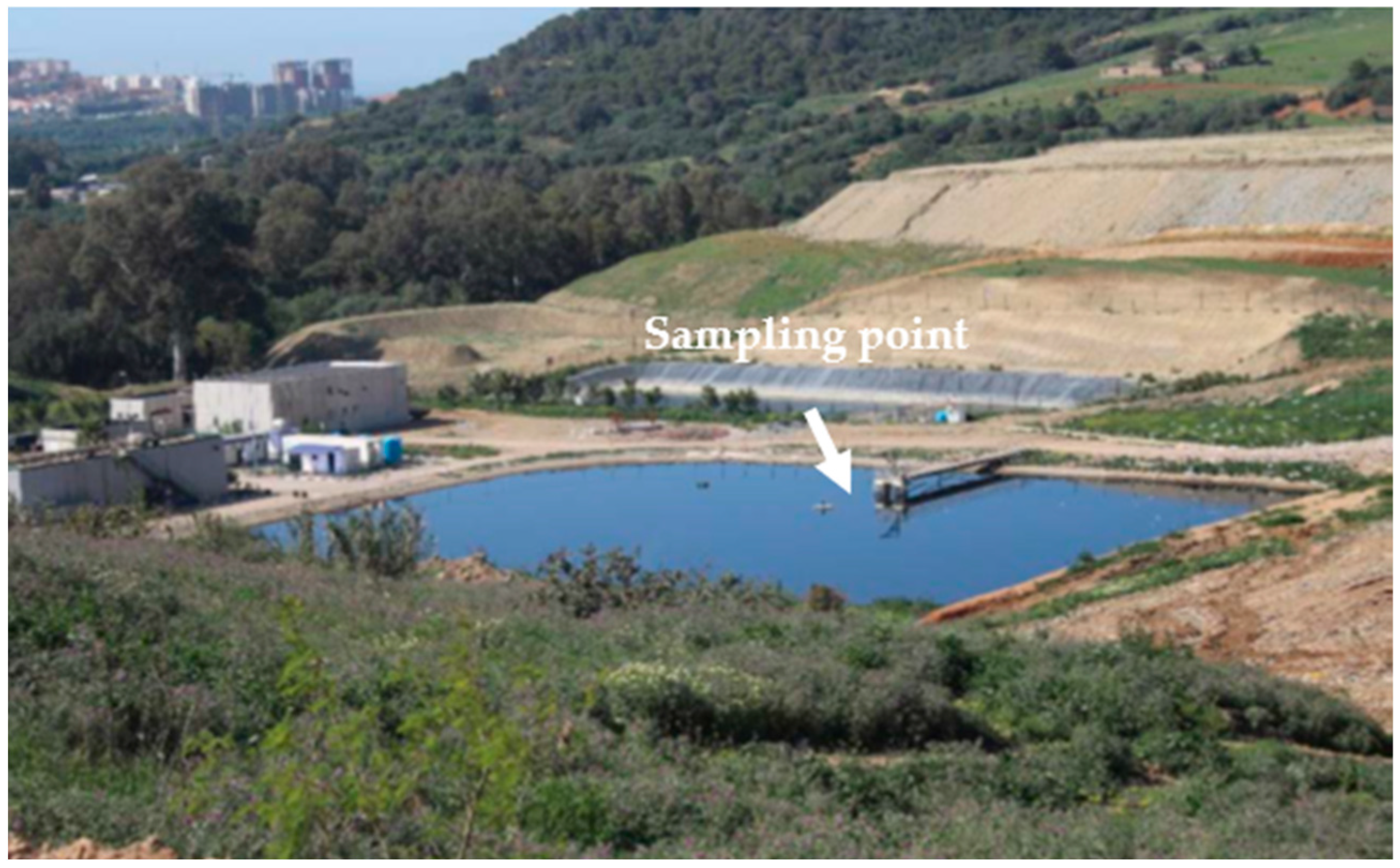
Leachate samples were collected from the Magtaa Kheira landfill, located in the western part of Algiers province, between February and July 2025. Consistent with the site description by Almi et al. (2022) [2], this household-waste landfill is equipped with a leachate drainage system that directs the effluent from the cells into a 30,000 m3 storage pond.
Leachate samples were collected directly from this storage pond, as shown in Figure 1, using a submerged pump and transferred into 10 L polyethylene containers, which were filled completely to minimize the risk of biodegradation and volatilization. The collected leachate was immediately transported to the laboratory, homogenized, and stored at 4 °C to maintain its integrity and reliability in our research. The characterization analyses were performed at the Matter’s Valorization and Recycling for Sustainable Development Laboratory, following the standard methods for the examination of water and wastewater [29].

2.2. Bio-Based Coagulant Preparation

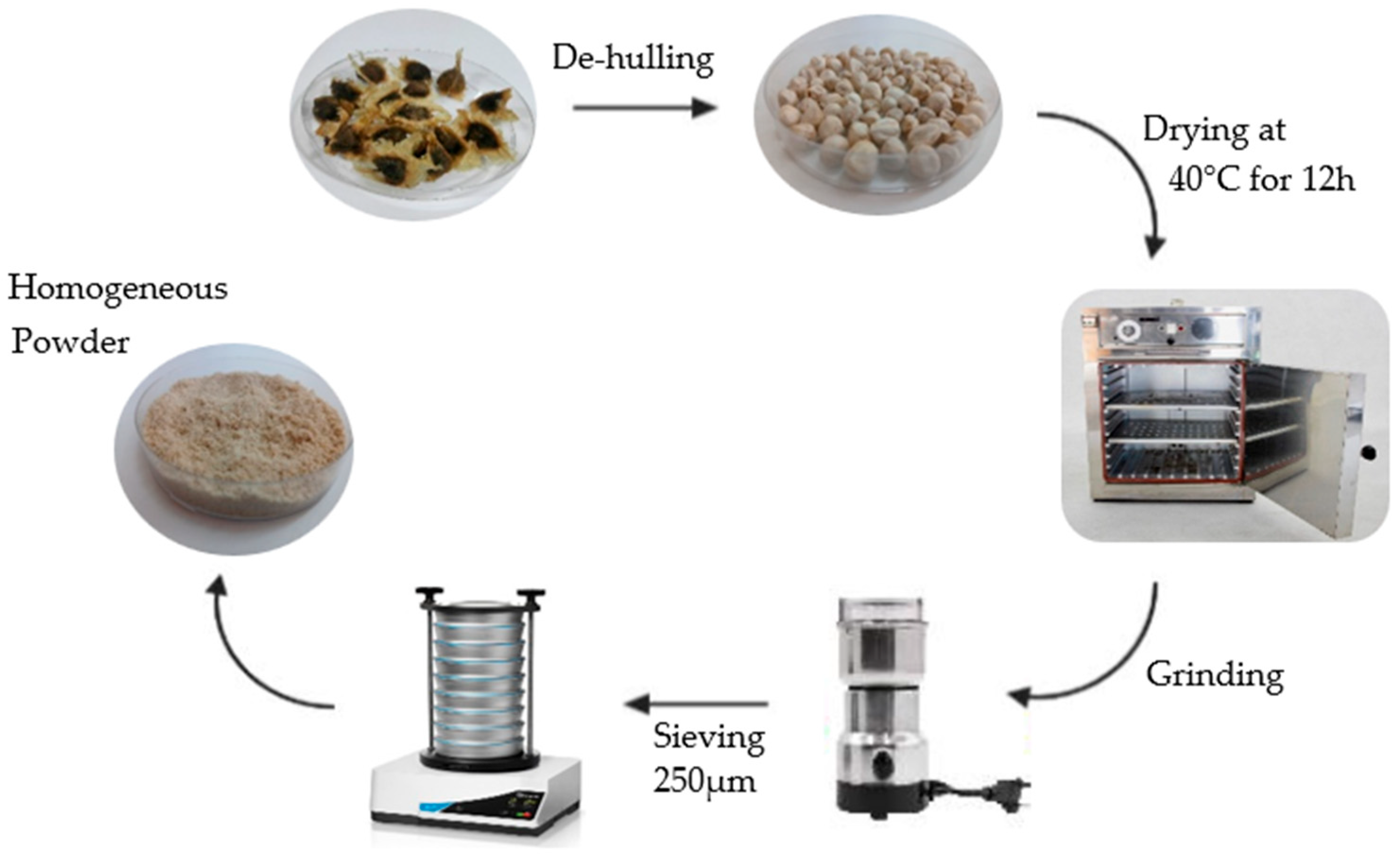
Moringa oleifera seeds, harvested from the Algerian desert, were procured from a local supplier in Algiers, and prepared as illustrated in Figure 2; in brief, the shells were removed manually using a knife, the kernels were milled into a fine powder after being dried for 12 h at a moderate temperature of 40 °C, and then they were sieved through a 250 µm mesh to obtain an homogenous fine powder, as recommended by Bouchareb et al. [30]. The sieved powder was stored in a sterile container, which was protected from moisture.

2.3. Preparation of MOS Stock Solution

The MOS stock solution was prepared following the procedure detailed by El Sharqawy et al. [31], with slight modifications. A 10% stock solution of MO was obtained by soaking 10 g of the MOS powder in 100 mL of NaCl (1 N); the suspension was stirred using a magnetic stirrer at 50 °C for 1 h. After maceration, the mixture was filtered through a vacuum filtration system. The filtered solution, without any additional purification, was used as a coagulant on the same day of preparation to prevent efficiency loss during storage [32].

2.4. Coagulation–Flocculation Pretreatment

Prior to each experiment, raw leachate samples were removed from refrigeration, allowed to equilibrate to room temperature, thoroughly shaken, and diluted at a 1:10 ratio. Subsequently, 500 mL of the diluted leachate was transferred into 1 L beakers of the Jar Test apparatus (VELP JLT6, VELP Scientifica Srl, Usmate, MB, Italy). The coagulation–flocculation experiments involved two stages: the coagulant was added during the rapid mixing stage at 180 rpm for 3 min, followed by the addition of the flocculant polyacrylamide (PAM) during the slow mixing stage at 60 rpm for 20 min. After mixing, the suspensions were allowed to settle for 60 min. MOS extract was tested as a bio-based coagulant and Aluminum Sulfate (AS) as a chemical coagulant, each separately.
The pH of the leachate was adjusted with solutions of NaOH (0.1 N) and HCl (0.1 N).
The removal efficiency of the pretreatment process is calculated as follows:
R % = C i C f C i × 100
where
  • Ci: The initial values of the leachate parameters (turbidity and COD) before treatment.
  • Cf: The final value of the leachate parameter (turbidity and COD) after treatment.

2.5. Experimental Design and Pretreatment Optimization

The optimization of the conventional coagulation–flocculation pretreatment of leachate was performed by employing Box–Behnken Design (BBD) in conjunction with Response Surface Methodology (RSM). Following a series of preliminary trials, the operational ranges for the key variables were defined, with central values of a 1.2 g·L−1 AS concentration, a 12 mg·L−1 PAM concentration, and an initial pH of 6, as outlined in Table 1. The chosen responses were the turbidity (Y1) and COD (Y2) removal rates.
To enhance the reliability of the results, four replicates at the central point were included. Data was analyzed using Minitab v22.2.1 software to assess the model’s performance.

2.6. Adsorption Tertiary Treatment

The adsorption experimental setup consisted of a fixed-bed column with an internal diameter of 2.4 cm, packed with different masses of Granular Activated Carbon GAC, yielding bed heights of 5, 10, and 15 cm. A stainless-steel sieve and a layer of gravel with particle diameters ranging from 3.5 to 8 mm were packed at the bottom to prevent washout of the adsorbent. Effluent from AS and MOS coagulation–flocculation pretreatment was passed through the column in a downflow mode using a peristaltic pump (LONGER LP-BT300-2J, Baoding Longer Precision Pump Co., Ltd. (Hebei, China)) with a total volume of 5 L. Following the conditions outlined by Oloibiri et al. [33], the flow rate was fixed at 10 mL·min−1. The samples were collected at the column exit at different time intervals ranging from 2 to 360 min and analyzed for COD and turbidity removal. The column was stopped after 6 h. Physicochemical characteristics of the adsorbent are listed in Table 2.

3. Results and Discussion

3.1. Sample Characterization

The analysis of Magtaa Kheira leachate revealed a high organic pollution load, as indicated by COD values ranging from 7780 to 8790 mg·L−1 and BOD5 levels between 2580 and 3300 mg·L−1. The elevated turbidity values, ranging from 290 to 316 NTU, reflect a substantial presence of suspended solids. Similarly, the high electrical conductivity (26.4–33.7 mS·cm−1) indicates a significant concentration of dissolved salts.
The BOD5/COD ratio was approximately 0.3, which falls within the 0.1 to 0.5 range, suggesting that the landfill is at an intermediate to mature stage of stabilization [2]. This classification is further supported by the observed alkaline pH values (8.55–8.7). During the early stages of anaerobic degradation, leachates are typically highly acidic (pH < 4) due to the accumulation of volatile fatty acids. As the landfill matures, these fatty acids are progressively degraded, causing the pH to rise toward neutral or alkaline levels, confirming the stabilization stage [2].
The leachate characteristics used in the pretreatment experiments with different coagulants are presented in Table 3.
Nearly all measured parameters exceeded the permissible limits set by Algerian regulations, reflecting the substantial pollution load of the leachate and its advanced age. Consequently, conventional biological or membrane treatment processes alone are insufficient, underscoring the need for an integrated approach to effectively reduce COD and turbidity prior to discharge or potential reuse [34].

3.2. Characterization of the Bio-Based Coagulant

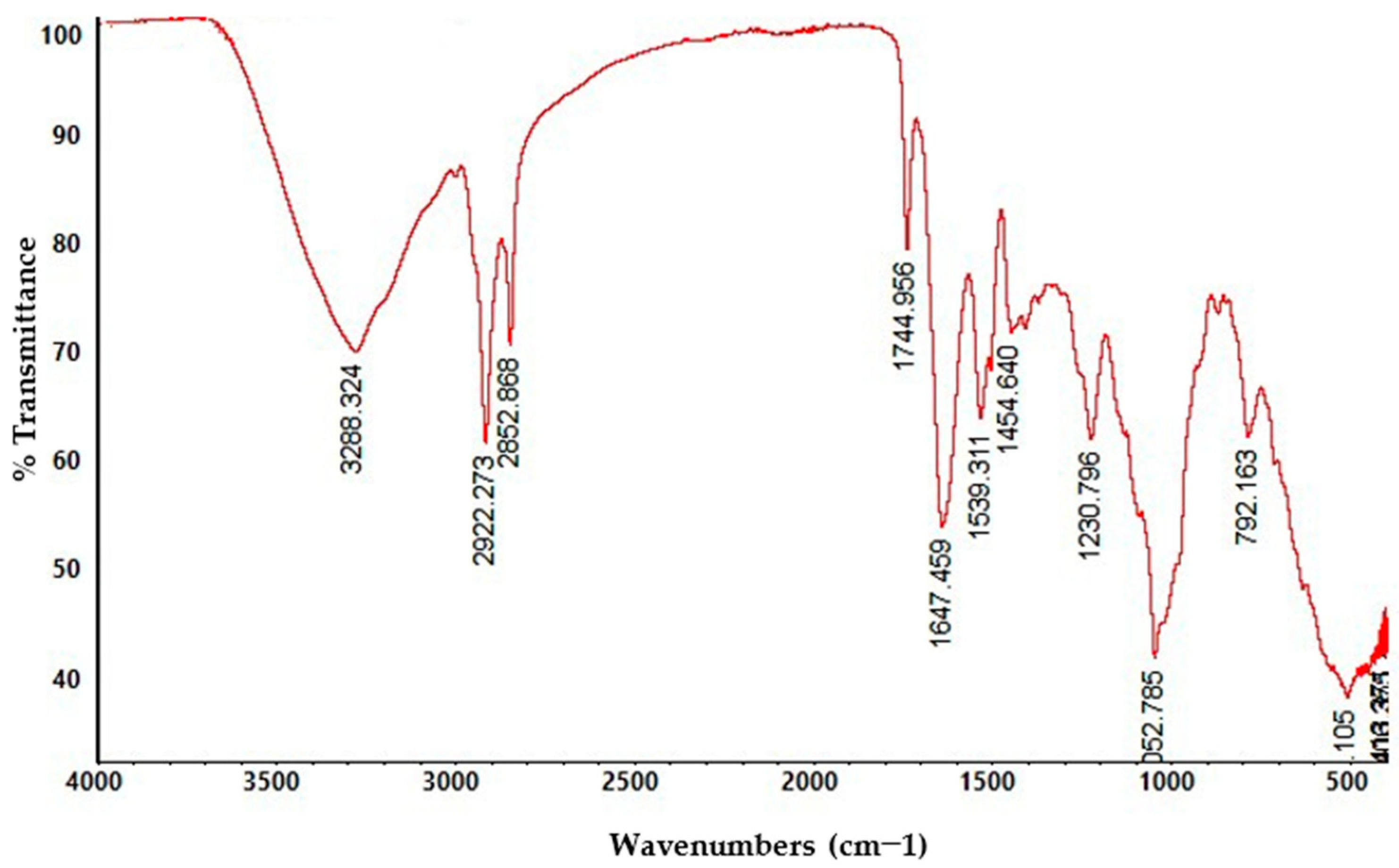
Globally, MOS are widely recognized for their rich bioactive compounds, which are beneficial for nutrition, industrial applications, and water purification [35]. To evaluate their effectiveness in water treatment, we conducted a detailed compositional analysis of MOS powder, and the functional groups present were identified using Fourier transform infrared (FT-IR) spectroscopy, as shown in Figure 3. The spectrum revealed the key IR spectral signatures of protein functional groups. A broad band centered at 3288 cm−1, corresponding to O–H stretching, this functional group is commonly found in proteins, fatty acids, carbohydrates, and lignin [36]. Due to the high content of protein present in Moringa oleifera seeds, there is also an involvement of the N–H stretching of amide groups in this region [30]. The peaks observed at 2922 cm−1 and 2852 cm−1 are assigned to the symmetric and asymmetric stretching vibrations of the C–H of the CH2 group, characteristic of fatty acids [37,38]. Furthermore, the peak at 1744 cm−1 was associated with C=O stretching, confirming the presence of carbonyl groups in fatty acid and protein structures [39]. Two intense bands at 1647 cm−1 and 1539 cm−1 corresponded to amide I and amide II bands, respectively, confirming the presence of protein structures in MOS powder. Bands between 1454 cm−1 and 1230 cm−1 were linked to CH2 deformation vibrations as well as C–O and/or C–N stretching vibrations, suggesting the presence of amino acids, polysaccharides, or phenolic compounds. Finally, the band located around 1052 cm−1 further confirmed the presence of polysaccharides in the MOS powder [40].
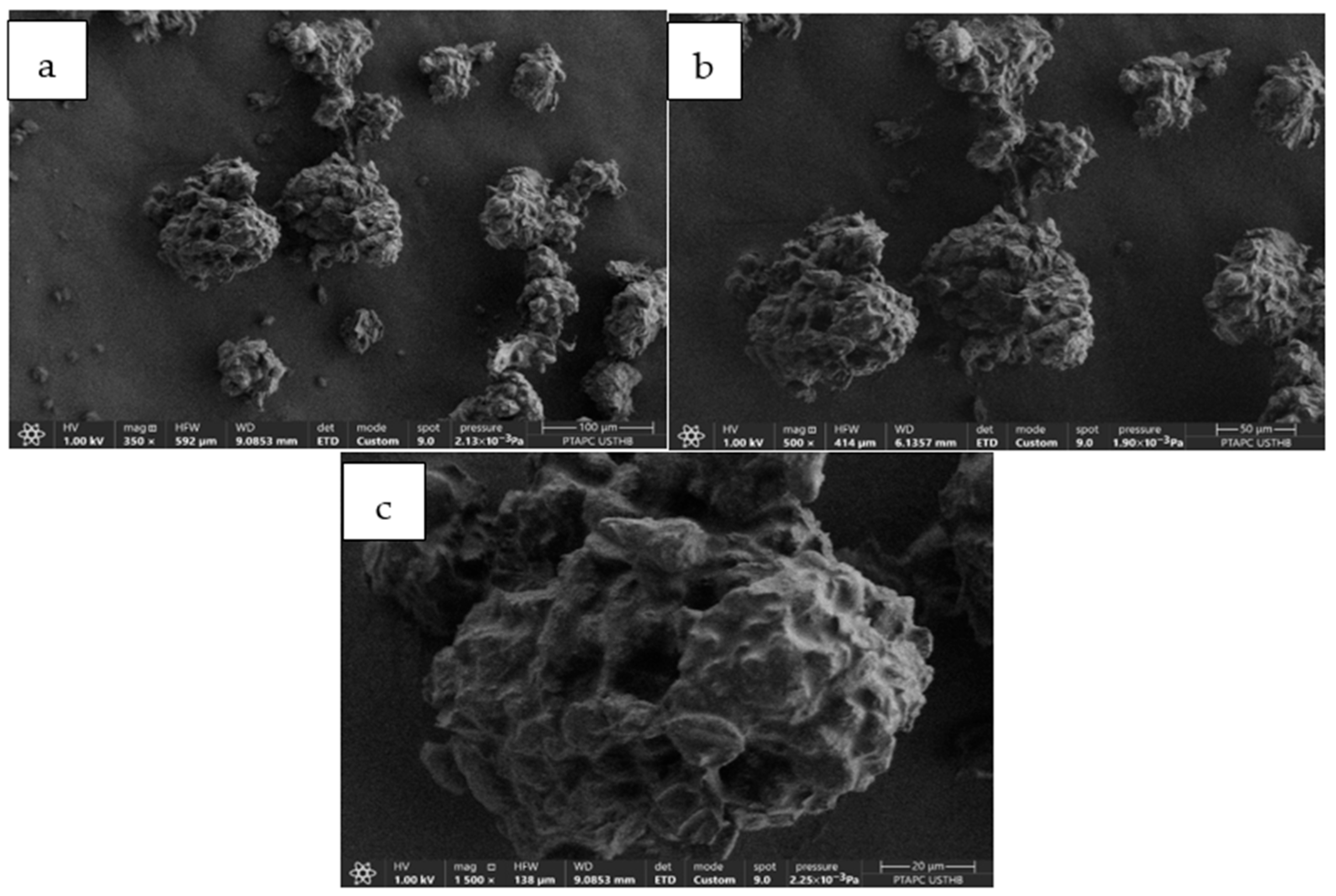
The morphological analysis of MOS powder was investigated using scanning electron microscopy (SEM) and is illustrated in Figure 4. The analysis revealed a heterogeneous surface composed of irregular agglomerates and porous structures. This morphology suggests a high specific surface area, which endows the powder with strong adsorptive potential. This characteristic is favorable for enhancing wastewater treatment performance by promoting key mechanisms in the coagulation–flocculation process [41].
Furthermore, the exterior surface facilitates ionic adsorption mechanisms, which are made possible by the presence of reactive protein functional groups in the powder.
The identified granular and spherical structures are essential for reducing water turbidity and improving overall treatment performance, as confirmed by previous studies [37,40].
Additionally, the Moringa oleifera seed (MOS) stock solution exhibited an acidic pH of 5.48, high turbidity of 915 NTU, elevated electrical conductivity of 40.2 mS·cm−1, and a COD of 8070 mg·L−1.

3.3. Coagulation Pretreatment Efficiency

3.3.1. Optimization of AS-Based Coagulation

The functional relationship between the removal of the two main pollution parameters (turbidity(Y1) and COD(Y2)) and three key variables: AS concentration, PAM concentration, and initial pH was investigated and optimized using RSM-BBD.
The experimental findings, obtained from 16 runs with four central points, are presented in Table 4.
Statistical Analysis
Based on the BBD results, mathematical models were developed to predict turbidity (Y1) and COD (Y2) removal as functions of AS concentration (X1), PAM concentration (X2), and initial pH (X3). These models allowed for the evaluation of both individual and interactive effects of the variables on treatment efficiency.
The models’ performance was assessed through the coefficient of determination (R2) and lack-of-fit (LOF) test and was further validated using an analysis of variance (ANOVA) to confirm the overall goodness of fit at a 5% confidence level.
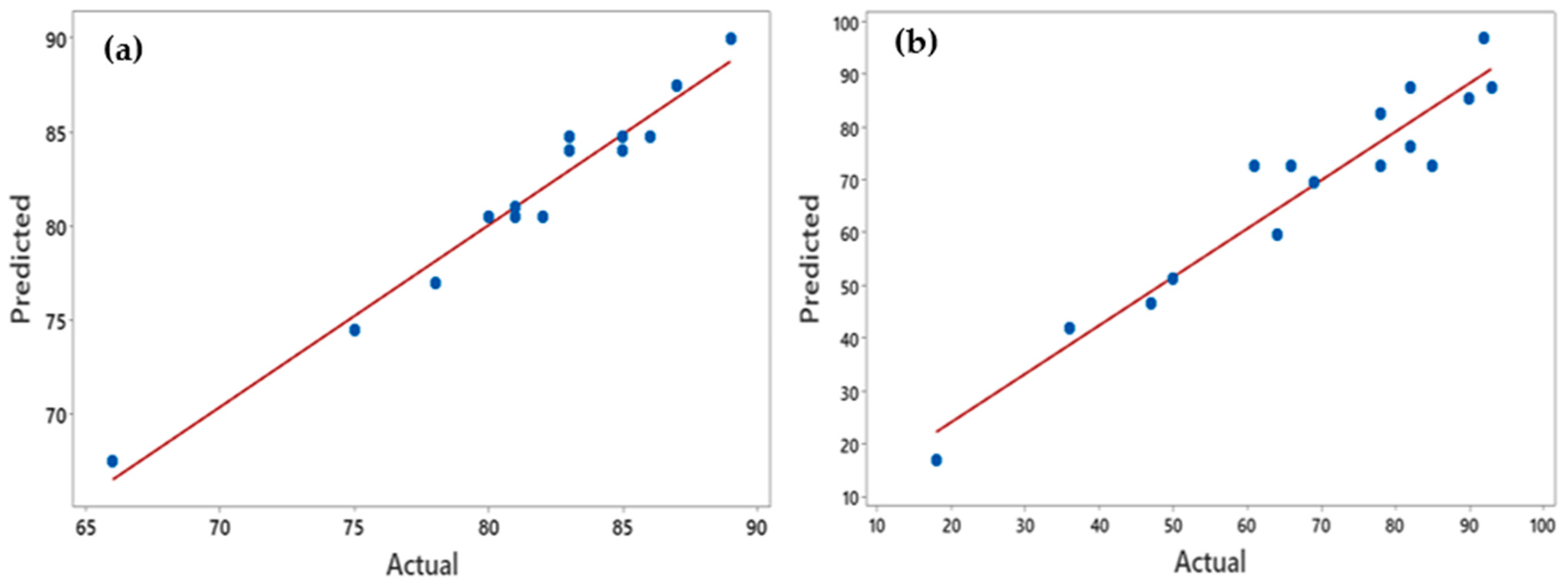
The high coefficient-of-determination values, R2 = 91.67% for turbidity (Y1) and 96.80% for COD (Y2), indicate a good fit of the quadratic models to the experimental data. As noted by Alani et al. [42], an R2 approaching 1 reflects an excellent model performance.
The models’ LOF test further supported this conclusion, with non-significant p-values (PLOF > 0.05) indicating that the models reliably represent the observed data [43].
Simultaneously, the ANOVA revealed p-values of 0.012 for turbidity and 0.001 for the COD model, confirming the significance of both models and regression coefficients at p < 0.05. These results highlight the reliability of the models in predicting turbidity and COD removal, aligning with the statistical validation approach outlined by Chowdhury and Turin [44].
The final quadratic equations for turbidity (Y1) and COD (Y2) removal were refined by excluding statistically insignificant terms (p-value > 0.05). The resulting models are presented in Equations (2) and (3):
Y1 = 72.50 + 14.25 X1 − 2.88 X3 − 25.37 X12 + 17.87 X22 + 12.00 X1X3
Y2 = 84.750 + 3.250 X1 − 3.250 X3 − 6.875 X12 + 3.500 X1X3
For turbidity removal (Equation (2)), the most influential factors are the quadratic effect of the PAM concentration, the linear and quadratic effects of AS concentration, and the interaction between the AS concentration and pH. However, in COD removal (Equation (3)), the dominant parameters are the AS concentration, its quadratic effect, and the interaction between AS concentration and pH. A positive coefficient indicates a synergistic effect, whereas a negative coefficient reflects an antagonistic influence, both of which significantly affect turbidity and COD removal [45,46]. Compared to other studies employing RSM and BBD for the optimization of industrial wastewater treatment Ounis et al. [47], our models were deemed significant.
Regression model adequacy was assessed using predicted versus actual values plots, as illustrated in Figure 5. The close alignment of the data points with the 45° reference line indicates a strong correlation between experimental and predicted values, thereby confirming the reliability and accuracy of the developed models.
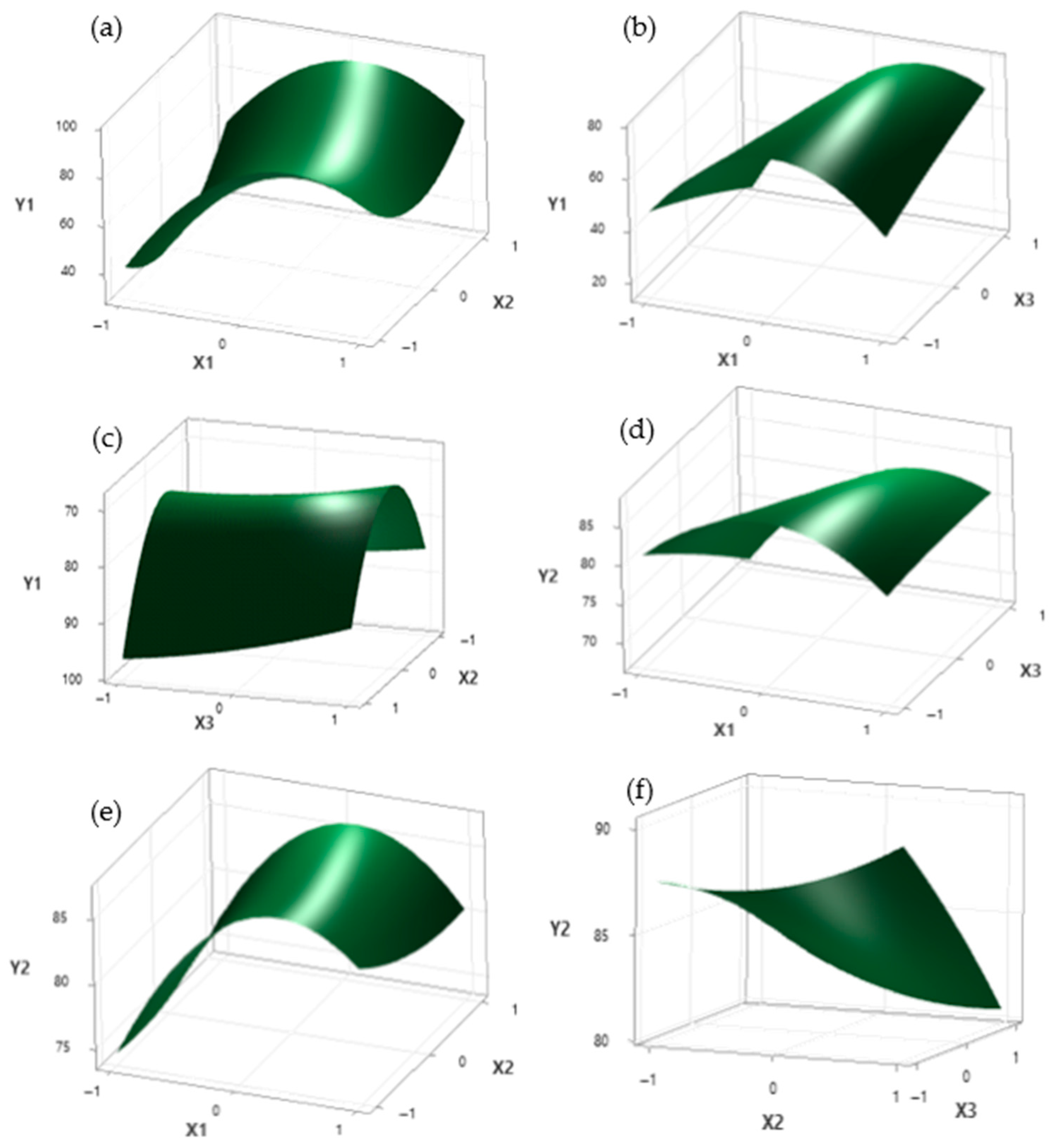
Figure 6 presents the response surface plots of the two developed models (turbidity (Y1) and COD (Y2)), illustrating the effects of varying two independent variables simultaneously, while keeping the remaining one constant at its zero-level value. These plots aid in visualizing the interaction effects and in identifying the optimal conditions for maximum removal [48].
Figure 6a,d reveal elliptical contour plots, with maximum removal efficiencies exceeding 90% for turbidity and 85% for COD observed at AS concentration between 1 and 1.55 g·L−1 in combination with elevated PAM concentrations ranging from 4 to 20 mg·L−1. In contrast, lower removal efficiencies were recorded when the AS concentration dropped below 0.90 g·L−1, indicating that an inadequate coagulant concentration hindered colloid neutralization and subsequent floc formation.
As illustrated in Figure 6b,e, low treatment efficiencies were observed at low AS concentrations and within an initial pH range of 6 to 8. However, under acidic pH and AS concentrations ranging between 1 and 1.5 g·L−1, COD removal reached 85%, while turbidity removal exceeded 90%.
The surface plots in Figure 6c,f show a circular pattern between PAM concentration and initial pH, indicating a minimal interaction and limited influence on the response [49]. The highest removal efficiencies were obtained at PAM concentrations between 17.5 and 20 mg·L−1 when the pH was adjusted below the natural value of 8.
A multi-response optimization was performed using Minitab software to identify operating conditions that simultaneously maximize turbidity and COD removal while maintaining the natural pH of the leachate (close to 8) to minimize chemical consumption and reduce operational costs related to pH adjustment. The optimal parameters were determined as an AS concentration of 1.44 g·L−1, a PAM concentration of 4 mg·L−1, and a pH of 8. These conditions yielded predicted removal efficiencies of 95.44% for turbidity and 86.4% for COD. Three additional experiments were performed under these optimal conditions to validate the model predictions [50]. The results closely matched the model predictions, with deviation margins of 4.2% for COD and 1.4% for turbidity, confirming the robustness and predictive accuracy of the developed models.

3.3.2. Evaluation of MOS-Based Coagulation

Bio-coagulation experiments were conducted to evaluate the potential of MOS in reducing turbidity and COD in leachate. MOS was tested at concentrations of 5, 6, 7, and 8 g·L−1 under initial pH values of 5–8, with a settling time of 60 min and a fixed PAM concentration determined from conventional coagulation optimization.
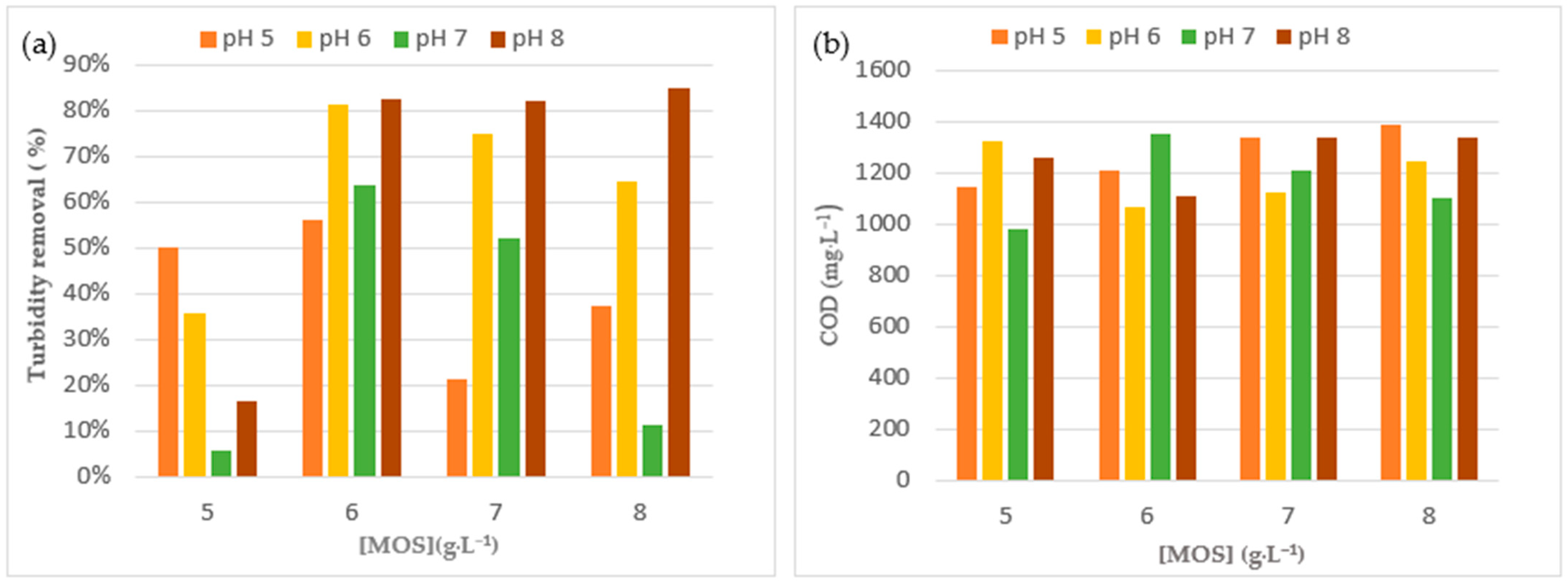
As shown in Figure 7a, the performance of the MOS-extracted coagulant was strongly influenced by both its concentration and the leachate pH. Turbidity removal improved with an increasing MOS concentration, reaching an optimum of 6 g·L−1 across all tested pH levels. However, beyond this optimum, efficiency declined, suggesting an overdosing where excess coagulant restabilizes colloidal particles and inhibits floc formation [12].
The influence of pH on MOS coagulation is evident, with turbidity removal increasing from approximately 56% at pH 5 to 83% at pH 8, highlighting its key role in enhancing the coagulating activity of MOS. According to Vunain [41], the effectiveness of MOS extract is attributed to water-soluble dimeric cationic proteins in the seeds, composed of amino acids, whose charge properties allow them to act as natural polyelectrolytes. Their mechanism likely involves a combination of adsorption (facilitated by the protein’s porous structure), charge neutralization, and particle bridging of destabilized colloids.
Tong et al. [51] reported that the isoelectric point of MOS proteins (pH 10–11) corresponds to the best performance of coagulation in this pH range, indicating that MOS can perform effectively under alkaline conditions. In this study, turbidity removal reached 81% at pH 6 and 83% at pH 8, showing that protein activity remained consistently high across this range. Similar results have been reported in other studies: Effendi et al. [52] observed turbidity removals of 95.32% at 5 g·L−1 within a pH range of 5–9 in textile wastewater treatment, while Jammeli et al. [53] found that in the ecological treatment of soybean oil refinery wastewater, the highest turbidity removal was achieved using a green MOS coagulant at 4 g·L−1 and pH 5–9.
Considering the above, a pH of 8 and a concentration of 6 g·L−1 are opted as optimal conditions, enabling efficient turbidity reduction while minimizing chemical usage and reagent consumption.
Regarding COD variation, Figure 7b illustrates that the use of MOS extract negatively affected COD removal, with COD increasing from 778 to 1010 mg·L−1 at a concentration of 6 g·L−1 and pH 8. This increase is attributed to the substantial organic content present in the crude MOS extract (COD = 8070 mg·L−1), much of which remains dissolved in the treated water after coagulation, thereby elevating COD levels and contributing to undesirable odor and coloration. These findings are consistent with those reported by Shan et al. [54], who observed an increase in COD from 99.5 mg·L−1 to 164.0 mg·L−1 when applying MOS in the treatment of Sungai Baluk river water. Similarly, Andrade et al. [55] reported negative removal efficiencies of 2.7% for COD and –109% for BOD when using 600 mg·L−1 of MOS extract, In the same study, they evaluated the intrinsic effect of the MOS extract by applying it to demineralized water, where both BOD and COD increased proportionally with MOS concentration, confirming that the negative removal was due to the organic load introduced by the MOS itself, attributed to the release of soluble compounds, such as lipids and carbohydrates, from MOS proteins into the water [56,57].
The limited efficiency of MOS in COD removal is further linked to its composition and the extraction method. Several studies [18,30] have shown that the saline extract of the coagulant achieved higher turbidity removal using concentrations up to 7.4 times lower than the aqueous extract. This improvement is due to the presence of salt, which promotes protein–protein dissociation and enhances protein solubility by increasing the ionic strength. However, Baptista et al. [36] identified a high dissolved organic carbon (DOC) concentration of 5938 mg·L−1 in aqueous MOS extract, while protein concentrations in saline coagulant reached 4282 mg·L−1, approximately five times higher than in the aqueous extract [55]. This may explain the difference with the findings of Jammeli et al. [53], who reported a maximum COD removal efficiency of 35.99% at 20 g·L−1 of green MOS coagulant under an initial pH of 7.
Furthermore, as saline extracts contain significant amounts of fatty acids, which are mostly to blame for the rise in COD after treatment, oil removal from Moringa oleifera seeds is an essential step [56].

3.3.3. MOS and AS Comparisons

A comparison between MOS and conventional coagulant AS is challenging; however, at their respective optimum concentrations, 6 g·L−1 and 1.44 g·L−1, the pretreatment with MOS achieved 83% turbidity removal, whereas AS achieved 91.25%. This finding is consistent with the research of Katalo et al. [58], who reported that the optimal turbidity removal by AS (99.7%) was significantly higher than that by MOS (86%). The lower efficiency of the MO coagulant can be explained by the formation of flocs that are lighter, smaller, and have poorer settleability compared to those produced by AS. In contrast, several studies have documented that MOS performs similarly to AS in terms of clarification efficiency. Andrade et al. [55] reached 92 ± 5% of turbidity when using MOS and 93 ± 4% using AS. Ugwu et al. [59] also identified high removal rates for 102 UNT initial turbidity of raw wastewater, achieving 96% and 91% turbidity removal using AS and MOS, respectively.
As shown in Table 5, the residual pH of leachate treated with MOS remained relatively neutral at approximately 6.96, while treatment with AS resulted in a lower pH of 5.7. This difference is due to the chemical nature of the coagulants: the cationic proteins in MOS do not interact with the water’s alkalinity, whereas AS reacts with it, releasing H+ ions, which leads to a decrease in pH [55].
The sludge generated by AS was 4 times higher than that produced with the MOS saline extract. Similar findings were reported by Narasiah et al. [22], who observed 7.6 mL·L−1 of sludge with AS compared to only 1 mL·L−1 with MOS. Likewise, Andrade et al. [55] found that treatment with 200 mg·L−1 of AS produced about three times more sludge than treatment with 600 mg·L−1 of MOS.
The coagulation–flocculation pretreatment efficiently removed turbidity using both AS and MOS. However, this technique is insufficient for the complete removal of dissolved organic matter in the leachate to meet discharge or reuse criteria, thus indicating the necessity of a subsequent treatment stage to address the remaining COD.

3.4. Adsorption Efficiency

The effect of GAC bed depth was investigated at 5, 10, and 15 cm to identify the optimal depth yielding the greatest treatment efficiency.
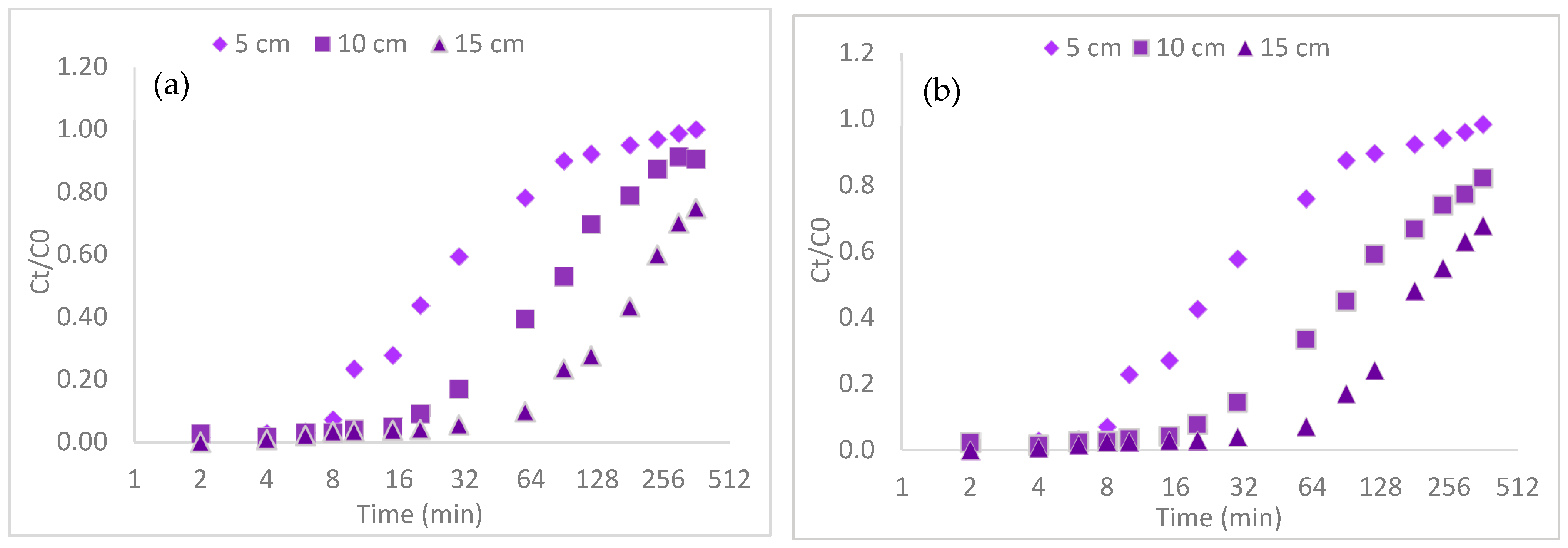
As illustrated in Figure 8, the breakthrough curves demonstrate that the adsorption behavior and efficiency are strongly influenced by the adsorbent bed depth. Adsorption occurs rapidly at the beginning of the process, followed by a gradual decline until complete exhaustion. This pattern demonstrates that GAC is most effective in targeted impurity removal during the initial adsorption phase.
Increasing the bed depth significantly enhanced removal performance by extending both the breakthrough point (Ce/C0 = 0.05) and the exhaustion time. This improvement results from the greater mass of adsorbent, which provides more active binding sites for pollutants, combined with the longer contact time, which enhances physicochemical interactions between pollutants and the GAC surface [60]. Similar findings have been reported in the literature; the shape and position of breakthrough curves often vary depending on the adsorbent’s properties, the composition of the influent, and operating conditions. A bed depth of 15 cm was selected for our experiments, as it consistently demonstrated the highest performance for pollutant removal.
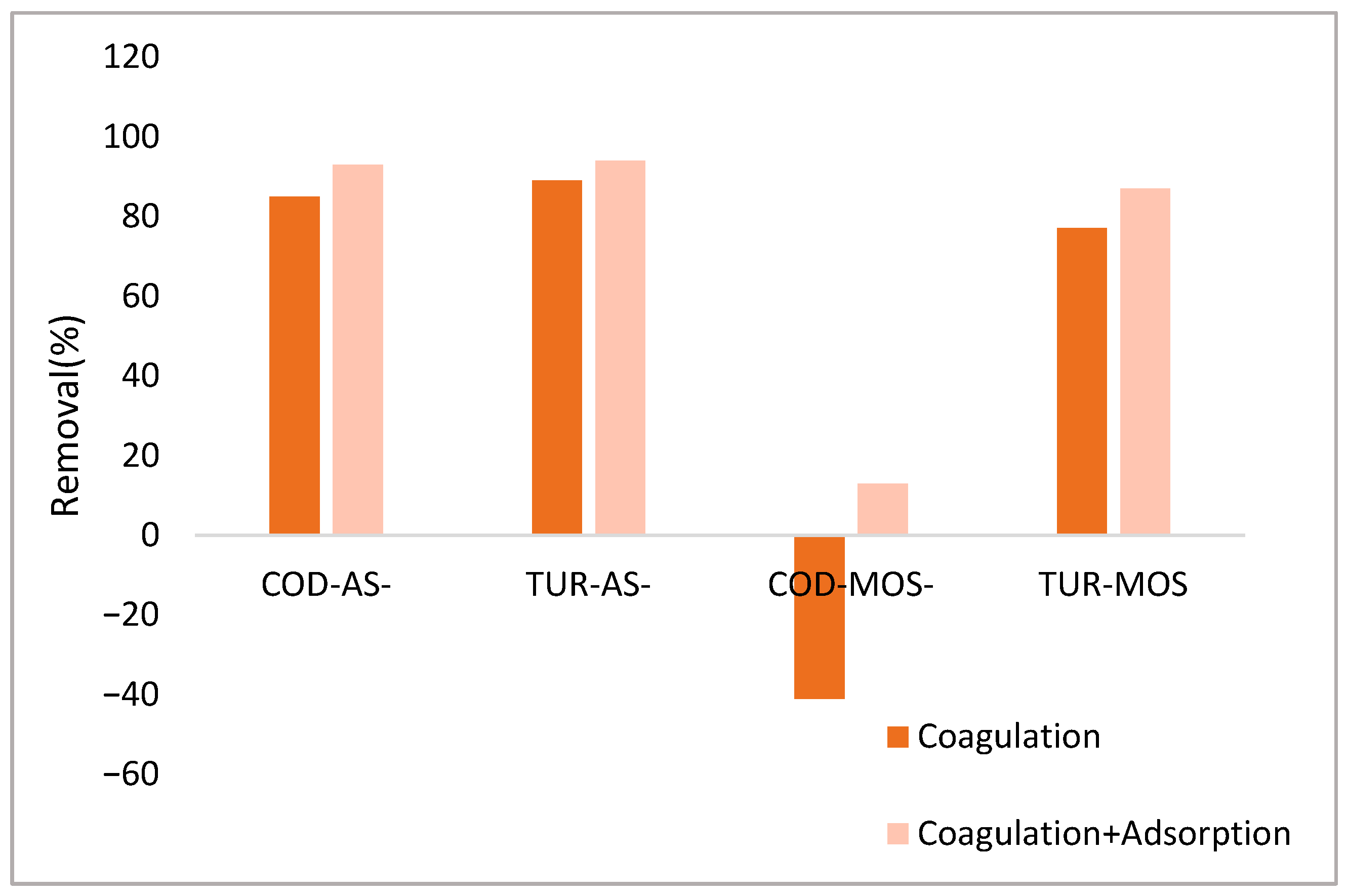
Figure 9 illustrates the removal efficiency of the COD and turbidity achieved by AS coagulation alone, MOS coagulation alone, as well as coagulation coupled with GAC adsorption. The use of conventional coagulant alone or in combination with GAC showed an important increase in COD removal. The overall efficiency of the combined treatment reached 93%, compared to 85% for AS coagulation alone. In contrast, COD adsorption in the bio-coagulated leachate was limited, with a removal efficacy of just 13%. This limited performance can be attributed to the high concentration of organic load in feed effluent, particularly compounds of large molecular weight that are unable to access GAC pores due to their size or structural configuration [61]. Similar results have been reported for GAC [62], and consistent findings were presented by Li et al. (2010) [63], who observed COD removal efficiencies of up to 80% following combined chemical coagulation–adsorption treatment. Coagulation–flocculation is only efficient in removing humic acids, whereas fulvic acids remain in the leachate, still reducing the adsorption capacity of GAC.
In terms of turbidity removal, as shown in Table 6, conventional coagulation alone was slightly more effective than bio-coagulation, achieving an 89% reduction compared to 77%. When GAC adsorption was applied to effluent pretreated with AS coagulation, the additional removal was relatively modest at 48.5%. In contrast, adsorption following MOS coagulation resulted in an even lower improvement of 41.6%. This difference can be attributed to the denser and more compact flocs formed by AS, which settle more efficiently and leave fewer residual particles available for subsequent adsorption. On the other hand, MOS produces lighter and less stable flocs, which are more difficult for GAC to adsorb, reducing its adsorption effectiveness. Overall, GAC adsorption appears more effective when applied to leachate pretreated by conventional coagulation–flocculation compared to bio-coagulation.

4. Conclusions

This study highlights the potential of hybrid treatment combining coagulation and adsorption for sustainable landfill leachate remediation. Optimization of aluminum sulfate (AS) coagulation by RSM-BBD achieved up to 85% COD and 91.25% turbidity removal under natural pH, confirming its high efficiency. As a greener alternative, Moringa oleifera seed (MOS) extract removed 83% of turbidity while generating biodegradable sludge without altering the pH, although its application increased the organic load of the treated effluent. The integration of a GAC adsorption step further improved the overall removal to 93% COD and 94% turbidity. These findings demonstrate that MOS is a promising bio-coagulant for turbidity control and that coupling coagulation with adsorption provides a robust strategy to enhance leachate treatment efficiency.

Author Contributions

Conceptualization, M.A., N.C., D.T., K.B., W.Y., N.S., S.B. and L.M.; methodology, M.A., N.C., D.T. and S.B.; software, M.A., N.C., D.T., L.M. and S.B.; validation, M.A., N.S., D.T. and L.M.; formal analysis, M.A., N.C., D.T., L.M. and S.B.; investigation, M.A., N.C., D.T., L.M. and S.B.; resources, M.A., N.C., D.T., L.M. and S.E.I.L.; data curation, M.A., N.C., D.T., L.M. and S.B.; writing—original draft preparation, M.A.; supervision, N.C., D.T. and S.E.I.L.; project administration, S.E.I.L. All authors have read and agreed to the published version of the manuscript.

Funding

This research received no external funding.

Institutional Review Board Statement

Not applicable.

Informed Consent Statement

Not applicable.

Data Availability Statement

The original contributions presented in this study are included in the article. Further inquiries can be directed to the corresponding author.

Conflicts of Interest

The authors declare no conflicts of interest.

Abbreviations

ASAluminum sulfate
MSWMunicipal solid waste
BOD5Biological oxygen demand
CODChemical oxygen demand
MOSMoringa oleifera seeds
PAMPolyacrylamide
RSMResponse Surface Methodology
BBDBox–Behnken Design
R2Coefficient of determination
LOFLack Of Fit
TSSTotal suspended solids

References

  1. Alibardi, L.; Cossu, R. Leachate generation modeling. In Solid Waste Landfilling (Concepts, Processes, Technologies); Cossu, R., Stegmann, R., Eds.; Elsevier Inc.: Oxford, UK, 2018; pp. 229–245. [Google Scholar] [CrossRef]
  2. Almi, M.; Sahraoui, N.; Tassalit, D.; Korichi, B.; Khelifi, F.; Ladjere, S. Seasonal changes in pollutant composition in leachates from a waste management landfill site: Magtaa Kheira case study. Desalination Water Treat. 2022, 279, 102–108. [Google Scholar] [CrossRef]
  3. Joshi, S.M.; Gogate, P.R. Treatment of landfill leachate using different configurations of ultrasonic reactors combined with advanced oxidation processes. Sep. Purif. Technol. 2019, 211, 10–18. [Google Scholar] [CrossRef]
  4. El Mrabet, I.; Nawdali, M.; Rafqah, S.; Valdés, H.; Benzina, M.; Zaitan, H. Low-cost biomass for the treatment of landfill leachate from Fez City: Application of a combined coagulation–adsorption process. Euro-Mediterr. J. Environ. Integr. 2020, 5, 63. [Google Scholar] [CrossRef]
  5. Jones, A.N.; Bridgeman, J. Disinfection ability of hibiscus seeds in water treatment. Proc. Inst. Civ. Eng. Water Manag. 2018, 171, 216–222. [Google Scholar] [CrossRef]
  6. Boya, X.; Bethany, P.; Ziyuhan, W.; Rose, M.; Emma, C.; Taylor, C.; Adam, U. Manish Kumar, and Stephanie Butler Ve legol. Environ. Sci. Technol. Lett. 2018, 5, 38–42. [Google Scholar] [CrossRef]
  7. Ajibade, F.O.; Adewumi, J.R.; et Oguntuase, A.M. Sustainable approach to wastewater management in the Federal University of Technology, Akure, Nigeria. Niger. J. Technol. Res. 2014, 9, 27–36. [Google Scholar] [CrossRef]
  8. Haddaji, C.; Ennaciri, K.; Driouich, A.; Digua, K.; Souabi, S. Optimization of the coagulation-flocculation process for vegetable oil refinery wastewater using a full factorial design. Proc. Saf. Environ. Prot. 2022, 160, 803–816. [Google Scholar] [CrossRef]
  9. Badawi, A.K.; Salama, R.S.; Mokhtar, M.M.; Mostafa, M. Natural-based coagulants/flocculants as sustainable market-valued products for industrial wastewater treatment: A review of recent developments. RSC Adv. 2023, 13, 19335–19355. [Google Scholar] [CrossRef]
  10. Aal-Hamad, K.K. Optimization of the Performance of Date Seed as a Natural Coagulant for Industrial Wastewater Treatment. Doctoral Dissertation, Karabuk University, Karabuk, Turkey, 2023. [Google Scholar]
  11. Pagano, C.; Navarra, G.; Coppola, L.; Savarese, B.; Avilia, G.; Giarra, A.; Pagano, G.; Marano, A.; Trifuoggi, M.; Bifulco, M.; et al. Impacts of environmental pollution on brain tumorigenesis. Int. J. Mol. Sci. 2023, 24, 5045. [Google Scholar] [CrossRef] [PubMed]
  12. Muhammad, B.; Nur, S.; Norelyza, H.; Mika, S.; Dedy, D.; Achmad, S. Recent advances on coagulation-based treatment of wastewater: Transition from chemical to natural coagulant. Curr. Pollut. Rep. 2021, 7, 379–391. [Google Scholar] [CrossRef]
  13. Grehs, B.W.; Lopes, A.R.; Moreira, N.F.; Fernandes, T.; Linton, M.A.; Silva, A.M.; Manaia, C.M.; Carissimi, E.; Nunes, O.C. Removal of microorganisms and antibiotic resistance genes from treated urban wastewater: A comparison between aluminium sulphate and tannin coagulants. Water Res. 2019, 166, 115056. [Google Scholar] [CrossRef]
  14. Kingue, B.; Njila, R.; Ndongo, B. Assessment of groundnut (Arachis hypogaea) as a natural coagulant for water treatment. Water Pract. Technol. 2023, 18, 2057–2067. [Google Scholar] [CrossRef]
  15. Sethu, V.; Selvarajoo, A.; Lee, C.W.; Ganesan, P.; Lim, G.S.; Mok, X.Y. Opuntia cactus as a novel bio-coagulant for the treatment of Palm Oil Mill Effluent (POME). Prog. Energy Environ. 2019, 9, 11–26. [Google Scholar]
  16. Abu-Gharbia, M.A.; Farghaly, M.M.; Haridi, A.M. Moringa oleifera seed extracts as a natural coagulant for raw water treatment and improving its quality. Sohag J. Sci. 2024, 9, 114–120. [Google Scholar] [CrossRef]
  17. Farouk, A.R.; Alkaradaghi, K.; Al-Ansari, N. The potential of Moringa oleifera seed in water coagulation-flocculation technique to reduce water turbidity. Water Air Soil Pollut. 2023, 234, 250. [Google Scholar] [CrossRef]
  18. Chales, G.G.; Tihameri, B.S.; Milhan, N.V.M.; Koga-Ito, C.Y.; Antunes, M.L.P.; Reis, A.G.d. Impact of Moringa oleifera Seed-Derived Coagulants Processing Steps on Physicochemical, Residual Organic, and Cytotoxicity Properties of Treated Water. Water 2022, 14, 2058. [Google Scholar] [CrossRef]
  19. Villaseñor-Basulto, D.L.; Astudillo-Sánchez, P.D.; del Real-Olvera, J.; Bandala, E.R. Wastewater treatment using Moringa oleifera Lam seeds: A review. J. Water Process Eng. 2018, 23, 151–164. [Google Scholar] [CrossRef]
  20. Skaf, D.W.; Punzi, V.L.; Rolle, J.T.; Cullen, E. Impact of Moringa oleifera extraction conditions on zeta potential and coagulation effectiveness. J. Environ. Chem. Eng. 2021, 9, 104687. [Google Scholar] [CrossRef]
  21. Garcia-Fayos, B.; Arnal, J.M.; Sancho, M.; Rodrigo, I. Moringa oleifera for drinking water treatment: Influence of the solvent and method used in oil-extraction on the coagulant efficiency of the seed extract. Desalin. Water Treat. 2016, 57, 23397–23404. [Google Scholar] [CrossRef]
  22. Ndabigengesere, A.; Subba Narasiah, K. Quality of water treated by coagulation using Moringa oleifera seeds. Water Res. 1998, 32, 781–791. [Google Scholar] [CrossRef]
  23. Ragasa, C.Y.; Levida, R.M.; Don, M.J.; Shen, C.C. Cytotoxic isothiocyanates from Moringa oleifera Lam seeds. Philipp. Sci. Lett. 2012, 5, 46–52. [Google Scholar]
  24. Hoa, N.T.; Hue, C.T. Enhanced water treatment by Moringa oleifera seeds extract as the bio-coagulant: Role of the extraction method. J. Water Supply Res. Technol.-Aqua 2018, 67, 634–647. [Google Scholar] [CrossRef]
  25. Oladoja, N.A. Headway on natural polymeric coagulants in water and wastewater treatment operations. J. Water Process Eng. 2015, 6, 174–192. [Google Scholar] [CrossRef]
  26. San-Pedro, L.; Méndez-Novelo, R.; Hernández-Núñez, E.; Flota-Bañuelos, M.; Medina, J.; Giacomán-Vallejos, G. Selection of the activated carbon type for the treatment of landfill leachate by fenton-adsorption process. Molecules 2020, 25, 3023. [Google Scholar] [CrossRef]
  27. Babaei, S.; Sabour, M.R.; Moftakhari Anasori Movahed, S. Combined landfill leachate treatment methods: An overview. Environ. Sci. Pollut. Res. 2021, 28, 59594–59607. [Google Scholar] [CrossRef] [PubMed]
  28. Gandhimathi, R.; Durai, N.J.; Nidheesh, P.V.; Ramesh, S.T.; Kanmani, S. Use of combined coagulation-adsorption process as pretreatment of landfill leachate. Iran. J. Environ. Health Sci. Eng. 2013, 10, 24. [Google Scholar] [CrossRef]
  29. APHA; AWWA; WEF. Standard Methods for Examination of Water and Wastewater, 22nd ed.; American Public Health Association: Washington, DC, USA, 2012. [Google Scholar]
  30. Bouchareb, R.; Derbal, K.; Benalia, A. Optimization of active coagulant agent extraction method from Moringa oleifera seeds for municipal wastewater treatment. Water Sci. Technol. 2021, 84, 393–403. [Google Scholar] [CrossRef]
  31. Hassouna, M.E.K.M.; El-sharqawy, M.E.M.; Hassanien, M.M. Moringa oleifera seeds powder as an alternative coagulant for beet sugar juice samples instead of lead acetate. Adv. Environ. Technol. 2020, 6, 139–148. [Google Scholar] [CrossRef]
  32. Katayon, S.; Noor, M.M.M.; Asma, M.; Ghani, L.A.; Thamer, A.M.; Azni, I.; Suleyman, A.M. Effects of storage conditions of Moringa oleifera seeds on its performance in coagulation. Bioresour. Technol. 2006, 97, 1455–1460. [Google Scholar] [CrossRef]
  33. Oloibiri, V.; Ufomba, I.; Chys, M.; Audenaert, W.T.; Demeestere, K.; Van Hulle, S.W. A comparative study on the efficiency of ozonation and coagulation–flocculation as pretreatment to activated carbon adsorption of biologically stabilized landfill leachate. Waste Manag. 2015, 43, 335–342. [Google Scholar] [CrossRef] [PubMed]
  34. EL Bada, N.; Assobhei, O.; Kebbabi, A.; Mhamdi, R.; Mountadar, M. Caractérisation et prétraitement du lixiviat de la décharge de la ville d’Azemmour. Environ. Ingénierie Développement 2010, 58, 16–21. [Google Scholar] [CrossRef]
  35. Seterik, U.Z.; Kanakaraju, D.; Sim, S.F.; Bilung, L.M. Characterisation and optimisation of M. oleifera for the removal of humic substances from peat water. Int. J. Environ. Sci. Technol. 2023, 21, 255–274. [Google Scholar] [CrossRef]
  36. Baptista, A.T.A.; Silva, M.O.; Gomes, R.G.; Bergamasco, R.; Vieira, M.F.; Vieira, A.M.S. Protein fractionation of seeds of Moringa oleifera lam and its application in superficial water treatment. Sep. Purif. Technol. 2017, 180, 114–124. [Google Scholar] [CrossRef]
  37. Araujo, C.S.; Alves, V.N.; Rezende, H.C.; Almeida, I.L.; de Assuncao, R.M.; Tarley, C.R.; Coelho, N.M.M. Characterization and use of Moringa oleifera seeds as biosorbent for removing metal ions from aqueous effluents. Water Sci. Technol. 2010, 62, 2198–2203. [Google Scholar] [CrossRef]
  38. Chaturvedi, D.; Bharti, D.; Dhal, S.; Sahu, D.; Behera, H.; Sahoo, M.; Pal, K. Role of stearic acid as the crystal habit modifier in candelilla wax-groundnut oil oleogels. ChemEngineering 2023, 7, 96. [Google Scholar] [CrossRef]
  39. Synytsya, A.; Bleha, R.; Skrynnikova, A.; Babayeva, T.; Čopíková, J.; Kvasnička, F.; Jablonsky, I.; Klouček, P. Mid-infrared spectroscopic study of cultivating medicinal fungi ganoderma: Composition, development, and strain variability of basidiocarps. J. Fungi 2023, 10, 23. [Google Scholar] [CrossRef]
  40. Kwaambwa, H.M.; Maikokera, R. Infrared and circular dichroism spectroscopic characterization of secondary structure components of a water treatment coagulant protein extracted from Moringa oleifera seeds. Colloids Surf. B Biointerfaces 2008, 64, 118–125. [Google Scholar] [CrossRef]
  41. Vunain, E.; Masoamphambe, E.F.; Mpeketula, P.M.G.; Monjerezi, M.; Etale, A. Evaluation of coagulating efficiency and water borne pathogens reduction capacity of Moringa oleifera seed powder for treatment of domestic wastewater from Zomba, Malawi. J. Environ. Chem. Eng. 2019, 7, 103118. [Google Scholar] [CrossRef]
  42. Alani, A.H.; Johari, M.A.M.; Bunnori, N.M.; Majid, T.A. Application of response surface methodology for optimizing the compressive strength of green ultra high strength concrete using silica fume. J. Build Rehabil. 2024, 9, 5. [Google Scholar] [CrossRef]
  43. Ghafari, S.; Aziz, H.A.; Isa, M.H.; Zinatizadeh, A.A. Application of response surface methodology (RSM) to optimize coagulation–flocculation treatment of leachate using poly-aluminum chloride (PAC) and alum. J. Hazard. Mater. 2009, 163, 650–656. [Google Scholar] [CrossRef]
  44. Chowdhury, M.Z.I.; Turin, T.C. Variable selection strategies and its importance in clinical prediction modelling. Fam. Med. Commun. Health 2020, 8, 000262. [Google Scholar] [CrossRef]
  45. Bayuo, J.; Rwiza, M.J.; Mtei, K.M. Optimization of divalent mercury removal from synthetic wastewater using desirability function in central composite design of response surface methodology. J. Environ. Health Sci. Eng. 2023, 22, 209–227. [Google Scholar] [CrossRef]
  46. Abu Bakar, F.I.; Abu Bakar, M.F.; Abdullah, N.; Endrini, S.; Fatmawati, S. Optimization of extraction conditions of phytochemical compounds and anti-gout activity of Euphorbia hirta L. (Ara Tanah) using response surface methodology and liquid chromatography-mass spectrometry (LC-MS) analysis. Evid.-Based Complement. Altern. Med. 2020, 2020, 4501261. [Google Scholar] [CrossRef]
  47. Ounis, M.; Sanz-Santos, E.; Fakhfakh, F.; Mohamed, K.Y.; Bilel, H.; Silvia, A.T.; Marcos, L.; Juan, G. Optimisation of adsorption removal of bisphenol a using sludge-based activated carbons: Application of response surface methodology with a box-behnken design. Arab. J. Sci. Eng. 2023, 49, 497–514. [Google Scholar] [CrossRef]
  48. Khan, M.; Thejasree, P.; Natarajan, M.; Narasimhamu, K.L. Application of a hybrid Taguchi grey approach for determining the optimal parameters on wire electrical discharge machining of Ti6Al4V. Int. J. Interact. Des. Manuf. 2023, 18, 3059–3076. [Google Scholar] [CrossRef]
  49. Chen, J.; Lan, X.; Jia, R.; Hu, L.; Wang, Y. Response surface methodology (RSM) mediated optimization of medium components for mycelial growth and metabolites production of Streptomyces alfalfae XN-04. Microorganisms 2022, 10, 1854. [Google Scholar] [CrossRef] [PubMed]
  50. Zhang, J.; Yao, X.; Zhao, Y.; Li, R.; Chen, X.; Jin, H.; Liu, X. Optimizing the UV-fenton degradation of m-cresol wastewater: An experimental and artificial intelligence modeling approach. Ind. Eng. Chem. Res. 2024, 63, 921–929. [Google Scholar] [CrossRef]
  51. Tong, C.Y.; Yusuf, F.H.B.C.; Derek, C.J.C. Fish farm wastewater treatment using moringa oleifera seed powder as natural coagulant. IOP Conf. Series: Earth Environ. Sci. 2021, 945, 012070. [Google Scholar] [CrossRef]
  52. Effendi, H.; Sari, R.D.; Hasibuan, S. Moringa oleifera as coagulant for batik effluent treatment. In Proceedings of the 35th Annual Conference of the International Association for Impact Assessment, Firenze Fiera Congress and Exhibition Center, Florence, Italy, 20–23 April 2015. [Google Scholar]
  53. Jammeli, L.; Louhichi, G.; Khouni, I. Effectiveness of using Moringa oleifera seeds as a green coagulant for soya oil refinery wastewater ecological treatment: Box–Behnken design optimization. Euro-Mediterr. J. Environ. Integr. 2025, 10, 2171–2195. [Google Scholar] [CrossRef]
  54. Shan, T.C.; Matar, M.A.; Makky, E.A.; Ali, E.N. The use of Moringa oleifera seed as a natural coagulant for wastewater treatment and heavy metals removal. Appl. Water Sci. 2017, 7, 1369–1376. [Google Scholar] [CrossRef]
  55. Andrade, P.V.; Palanca, C.F.; de Oliveira, M.A.C.; Ito, C.Y.K.; dos Reis, A.G. Use of Moringa oleifera seed as a natural coagulant in domestic wastewater tertiary treatment: Physicochemical, cytotoxicity and bacterial load evaluation. J. Water Process Eng. 2021, 40, 101859. [Google Scholar] [CrossRef]
  56. Baptista, A.T.A.; Coldebella, P.F.; Cardines, P.H.F.; Gomes, R.G.; Vieira, M.F.; Bergamasco, R.; Vieira, A.M.S. Coagulation–flocculation process with ultrafiltered saline extract of Moringa oleifera for the treatment of surface water. Chem. Eng. J. 2015, 276, 166–173. [Google Scholar] [CrossRef]
  57. Gidde, M.R.; Bhalerao, A.R.; Malusare, C.N. Comparative study of different forms of Moringa oleifera extracts for turbidity removal. Int. J. Eng. Res. Dev. 2012, 2, 14–21. [Google Scholar]
  58. Katalo, R.; Okuda, T.; Nghiem, L.D.; Fujioka, T. Moringa oleifera coagulation as pretreatment prior to microfiltration for membrane fouling mitigation. Environ. Sci. Water Res. Technol. 2018, 4, 1604–1611. [Google Scholar] [CrossRef]
  59. Ugwu, S.N.; Umuokoro, A.F.; Echiegu, E.A.; Ugwuishiwu, B.O.; Enweremadu, C.C. Comparative study of the use of natural and artificial coagulants for the treatment of sullage (domestic wastewater). Cogent Eng. 2017, 4, 1365676. [Google Scholar] [CrossRef]
  60. Batool, F.; Kurniawan, T.A.; Mohyuddin, A.; Othman, M.H.D.; Anouzla, A.; Meidiana, C.; Goh, H.H.; Chew, K.W. Fixed-Bed Studies of Landfill Leachate Treatment Using Chitosan-Coated Carbon Composite. Water 2023, 15, 2263. [Google Scholar] [CrossRef]
  61. Pramanik, B.K.; Pramanik, S.K.; Suja, F. A comparative study of coagulation, granular-and powdered-activated carbon for the removal of perfluorooctane sulfonate and perfluorooctanoate in drinking water treatment. Environ. Technol. 2015, 36, 2610–2617. [Google Scholar] [CrossRef]
  62. Matsui, Y.; Knappe, D.R.; Takagi, R. Pesticide adsorption by granular activated carbon adsorbers. 1. Effect of natural organic matter preloading on removal rates and model simplification. Environ. Sci. Technol. 2002, 36, 3426–3431. [Google Scholar] [CrossRef]
  63. Li, W.; Hua, T.; Zhou, Q.; Zhang, S.; Li, F. Treatment of stabilized landfill leachate by the combined process of coagulation/flocculation and powder activated carbon adsorption. Desalination 2010, 264, 56–62. [Google Scholar] [CrossRef]
Figure 1. Location of the leachate sampling point at the Magtaa Kheira landfill.
Applsci 15 11948 g001
Figure 2. Preparation of Moringa oleifera seed powder.
Applsci 15 11948 g002
Figure 3. Fourier transform infrared (FT-IR) spectrum of MOS powder.
Applsci 15 11948 g003
Figure 4. Morphological analysis via scanning electron micrographs (SEM) of MOS powder at different magnifications: (a) 100 μm, (b) 50 μm, and (c) 20 μm.
Applsci 15 11948 g004
Figure 5. Predicted vs. actual values plot for (a) COD removal and (b) turbidity removal. The red line in the picture is the regression line (line of perfect fit (y = x)).
Applsci 15 11948 g005
Figure 6. Response surface plots for COD and turbidity removal. (a): Interaction effect of X1 and X2 on Response Y1; (b): Interaction effect of X1 and X3 on Response Y1; (c): Interaction effect of X2 and X3 on Response Y1; (d): Interaction effect of X1 and X3 on Response Y2; (e): Interaction effect of X1 and X2 on ResponseY2; (f): Interaction effect of X2 and X3 on Response Y2.
Applsci 15 11948 g006
Figure 7. Effect of MOS concentration and initial pH on (a) turbidity removal and (b) COD variation.
Applsci 15 11948 g007
Figure 8. Evaluation of (a) COD and (b) turbidity adsorption on GAC fixed-bed column for different bed depths.
Applsci 15 11948 g008
Figure 9. Effect of the combination of coagulation and adsorption on COD and turbidity removal at a bed depth of 15 cm.
Applsci 15 11948 g009
Table 1. Independent variables and coded levels.
Coded FactorIndependent VariablesCoded Levels
−10+1
X1AS concentration (g·L−1)0.81.21.6
X2PAM concentration (mg·L−1)41220
X3initial pH468
Table 2. Physicochemical characteristics of GAC.
FormRaw MaterialPurityIodine NumberSpecific Surface AreaTotal AshDiameterBulk Density
Granules (GAC)Coconut shell≥99%≥850 mg·g−1~900 m2·g−1≤15%0.5–1.5 mm~510 kg·m−3
Table 3. Quality parameters of Magtaa Kheira leachate.
ParameterUnitValue
Color-Blackish
Odor-Nauseating
pH-8.7
TurbidityNTU290
Electrical conductivitymS·cm−126.4
Total ColiformMPN/10 mL520
NH4-Nmg·L−11528
CODmg·L−17780
BOD5mg·L−12580
BOD5/COD-0.33
Table 4. Experimental results based on the Box–Behnken design for the analyzed responses.
Run No.Experimental DesignResponse (Removal (%))
X1X2X3Y1Y2
10118281
20007883
31016981
401−19289
510−15082
60008585
70006686
80−1−19387
9−1−103675
101−107883
11−1106478
120006185
13−10−14781
140−119085
151108280
16−1011866
Table 5. Comparison of sludge volume, turbidity, and residual pH after treatment with MOS and AS.
Coagulant ConcentrationSludge Volume
(mL·L−1)
Turbidity Removal (%)Residual pH
MOS–6 g·L−117.5836.96
AS–1.44 g·L−14.891.45.7
Table 6. The COD and turbidity removal efficiencies obtained for AS- and MOS-coagulated leachate, as well as for the overall combined system with GAC adsorption at a bed depth of 15 cm.
TreatmentSingle TreatmentCombined Treatment% Total Removal
InfluentEffluent% RemovalEffluent%Removal
COD (mg·L−1)
Coagulated leachate—AS8791288561.751.493
Bio-coagulated leachate—MOS 7951116−406923813
Turbidity (NTU)
Coagulated leachate—AS31.633.48891.848.594
Bio-coagulated leachate—MOS 16.153.6772.141.687
Disclaimer/Publisher’s Note: The statements, opinions and data contained in all publications are solely those of the individual author(s) and contributor(s) and not of MDPI and/or the editor(s). MDPI and/or the editor(s) disclaim responsibility for any injury to people or property resulting from any ideas, methods, instructions or products referred to in the content.