Article

Origanum vulgare and Cinnamomum zeylanicum Essential Oils Enhance Disease Resistance to LCDV in Gilthead Seabream (Sparus aurata L.)


by
Eleni Golomazou
1,*,
Dimitris Dedeloudis
1,
Eleni Antoniadou
1,
Theodoros Karatzinos
1,
Christina Papadouli
1,
Mado Kotsiri
1,
Charalambos Billinis
2 and
Panagiota Panagiotaki
1
1
Department of Ichthyology and Aquatic Environment, Aquaculture Laboratory, School of Agricultural Sciences, University of Thessaly, 38446 Volos, Greece
2
Faculty of Veterinary Science, Laboratory of Microbiology and Parasitology, University of Thessaly, 43100 Karditsa, Greece
*
Author to whom correspondence should be addressed.
Appl. Sci. 2025, 15(22), 11883; https://doi.org/10.3390/app152211883
Submission received: 7 October 2025 / Revised: 28 October 2025 / Accepted: 29 October 2025 / Published: 7 November 2025

Abstract

The lymphocystis disease virus (LCDV) is a widespread disease in Mediterranean aquaculture and could lead to losses in fry as well as prevent the sale of adult gilthead seabream (Sparus aurata), affecting both hatchery and on-growing stages. Although LCDV infections are often considered self-limiting, they can lead to severe outcomes due to skin microbiome alterations that promote secondary infections, while also reducing growth and marketability, causing substantial economic losses. Basic biosecurity measures are not successful, and there is no available commercial vaccine. This study evaluated diets supplemented with Origanum vulgare and Cinnamomum zeylanicum essential oils (1% and 2%) in gilthead seabream experimentally infected with LCDV. Preventive feeding (90 days before infection) and therapeutic feeding (initiated at infection) were compared across 11 experimental groups, including infected, recovered, and control groups. Results showed that essential oils were more effective prophylactically than therapeutically, highlighting their protective role when incorporated into diets. Cinnamon-supplemented groups consistently exhibited lower prevalence and mortality than oregano groups. High DNA damage values linked to reduced mortality, particularly in the CIN90.1 group, demonstrated that viral dissemination was most restricted. In conclusion, essential oils modulated LCD progression by influencing viral interactions with DNA damage repair mechanisms, supporting their potential for disease control in intensive aquaculture.

1. Introduction

Lymphocystis disease (LCD) is among the earliest viral diseases documented in fish at the onset of the 19th century [1]. Currently, it is a well-recognized disease identified in over 125 species of wild and cultured fish in marine, brackish, and freshwater environments [2,3]. The causative agent is the lymphocystis disease virus (LCDV), a double-stranded DNA virus characterized by cytoplasmic replication and complex icosahedral particles measuring between 130 and 300 nm in diameter. It is a member of the Iridoviridae family and classified under the genus Lymphocystivirus [4], which includes the LCDV types 1, 2, 3, and 4. LCDV-1 and LCDV-2 have been identified in Platichthys flesus and Paralichthys olivaceus [5,6], whereas LCDV-3 and LCDV-4 have been reported in Sparus aurata and Micropogonias furnieri, respectively [7,8]. In addition, genotypes have been documented: LCDV-KRF (Sebastes schlegelii), LCDV-RC (Rachycentron canadum), LCDV-SB (Lateolabrax japonicus), LCDV-PGF (Parambassis baculis), LCDV-PG (Trichogaster leeri), LCDV-SSE (Solea senegalensis), NFH (Micropterus salmoides), and YP (Perca flavescens) [9].
LCDV is widely distributed across Europe (including the North Sea and Mediterranean Sea), Asia, and America. In S. aurata, LCD was initially diagnosed in Israel in 1982 [10] and has since been documented in various countries [11,12,13]. The disease is characterized by nodular lesions composed of hypertrophied fibroblastic cells in connective tissue, known as lymphocystis, which typically appears on the skin, fins, and oral region. These lesions may appear as single cells or clusters forming papillomatous tumors, which are the pathognomonic features of this disease [2]. Currently, LCD is acknowledged as a significant disease affecting Mediterranean seabream aquaculture [14] and is classified as a major infectious disease in finfish for which no vaccine is available [15] even though several experimental studies have been conducted [16,17]. Mortality rates range from low to high, with fish exhibiting characteristic symptoms being unsuitable for commercialization, and the diminished growth rate of infected fish delaying the anticipated breeding period, resulting in considerable economic losses [18]. The prevalence of the disease may be influenced by environmental conditions and common aquaculture practices, which, in conjunction with secondary infections, can increase mortality rates. In aquaculture facilities, a high prevalence, reaching up to 70% of the fish population, has been reported, reflecting the ease of horizontal transmission through the environment or live feeds [19,20,21] and vertical transmission through eggs [22]. Moreover, LCDV can substantially alter the skin microbiome of gilthead seabream, thereby increasing the incidence of bacterial pathogens associated with major diseases in seabream farms, such as Tenacibaculum maritimum and certain Vibrio species [23]. Asymptomatic fish harbor chronic subclinical LCDV infections, and the suppressed microbial metabolic activities of the skin microbiota in these fish, along with the identified pathogens, are likely to facilitate secondary infections, transforming a typically benign, self-limiting viral infection into a severe condition that results in fish mortality.
LCD is typically a self-limiting disease, and the interactions between viruses and their hosts involve intricate molecular processes. The host’s defense mechanism limits viral replication by triggering apoptosis in cells infected by the virus, a response that begins with DNA damage [24]. Viruses manage to overcome cellular DNA damage by either incapacitating crucial cellular proteins or by activating, recruiting, and utilizing host cell factors to aid in their replication process [25]. Numerous viruses have evolved diverse strategies to modulate apoptosis and optimize their propagation. LCDV, like other iridoviruses, induces apoptosis in host cells [26]. It is well established that iridoviruses can suppress apoptosis in permissive cells at an early stage of infection, thereby protecting infected host cells from cell-mediated or immune system-induced death [27].
LCD management is primarily dependent on preventive husbandry measures, as there are currently no effective treatments or commercially available vaccines. Biosecurity measures for LCDV include broodstock screening, egg and larval disinfection, quarantine of new stock, water and equipment hygiene, and stress reduction through optimal stocking and environmental management. In contrast to betanodavirus infections in sea bass, the other major viral disease commonly reported in Mediterranean aquaculture, biosecurity measures against LCDV in gilthead seabream are considerably less effective. Standard preventive practices are not yet well developed or routinely implemented. Moreover, the latent nature of LCDV infections, combined with their predominantly sublethal effects except in smaller fish, and subclinical carriers, further limits the effectiveness of preventive strategies in seabream hatcheries. DNA vaccines against LCDV have demonstrated the ability to elicit specific cellular and humoral immune responses in gilthead seabream [16,17]; however, a commercial vaccine has yet to be developed. Although the use of chemotherapeutics appears to provoke an effective immune response and enhance disease resistance [28], these treatments cannot be systematically applied in aquaculture; therefore, it is crucial to investigate environmentally friendly methods for disease prevention to ensure sustainable production of gilthead seabream. In the absence of vaccination, controlling LCDV in intensive aquaculture requires general strategies for viral disease prevention, including screening and quarantining introduced fish, implementing disinfection procedures at all production stages, and improving nutrition [29].
Medicinal plants and their extracts are promising alternatives to chemotherapeutics in aquaculture [30,31,32]. Optimized nutrition, supplemented with immunostimulants such as herbal extracts and probiotics, could potentially decrease the frequency of LCD. Solvent extracts of P. granatum and probiotics have been shown to enhance innate immune response and disease resistance in fish infected with LCDV [33,34]. The incorporation of phytobiotics into aquafeeds has gained increasing attention as a sustainable strategy to enhance fish health and performance. These plant-derived additives—rich in antioxidants, flavonoids, alkaloids, and essential oils—exert multifaceted effects, including antimicrobial, antioxidant, and immunostimulatory activities that strengthen both innate and adaptive immune responses while limiting oxidative damage. Their use in aquaculture diets has been associated with improved growth rates, feed conversion efficiency, hematological and biochemical balance, and heightened disease resistance across several species such as tilapia, catfish, sea bass, shrimp, and mussels [35,36,37,38,39,40,41]. Among the available products, essential oil–based formulations from aromatic plants represent the most prevalent form of phytogenic feed additives due to their strong biological activity, formulation stability, ease of use, and established regulatory acceptance in multiple regions [42]. The antibacterial activity of these feed additives against major fish pathogens is largely attributed to plant bioactive compounds—including alkaloids, saponins, polyphenols, terpenes, essential oils, and flavonoids—which act synergistically to suppress microbial proliferation and support host immune defense [43]. Therefore, the integration of phytobiotics into aquafeeds offers a promising alternative to antibiotics, contributing to improved productivity, fish welfare, and environmentally sustainable aquaculture practices.
Oregano (Origanum vulgare) is a widely recognized medicinal herb known for its strong antioxidant properties, as well as its ability to enhance growth and boost the immune system in fish [44,45]. Its antiviral activities have been attributed to the presence of active molecules [46,47]. The incorporation of oregano and its derivatives as dietary supplements into basal diets is considered a promising approach for enhancing fish immunity and health [48,49,50]. Cinnamon (Cinnamomum zeylanicum) is a valuable medicinal phytogenic supplement recognized for enhancing growth performance, digestibility, antibacterial properties, immunity, and overall health in aquatic animals. The impact of cinnamon has been studied in grass carp (Ctenopharyngodon idella) [51], common carp [52], rainbow trout (Oncorhynchus mykiss) [53], catfish [54], Nile tilapia (Oreochromis niloticus) [55], and sea bass [56], indicating that cinnamon improves growth performance, feed digestibility, immunity, antioxidant capacity, and resistance to pathogenic bacteria. However, the application of these herbal extracts to enhance the immune response and disease resistance in gilthead seabream infected with the LCDV has not yet been investigated, highlighting a gap in the promotion of sustainable fish production.
The present study aimed to evaluate the impact of O. vulgare and C. zeylanicum essential oils, utilized as phytogenic feed additives (PFAs), on two specific aspects: (i) the progression of disease in gilthead seabream in response to LCDV infection and (ii) genotoxicity that is induced in the liver and spleen cells of infected fish as a consequence of infection.

2. Materials and Methods

2.1. Ethical Statement

The experimental procedures were conducted utilizing the experimental aquarium facilities (EL-43BIO/exp-01) at the Aquaculture Laboratory of the Department of Ichthyology and Aquatic Environment, University of Thessaly, Greece. The experimental protocol was approved by the ethics committee of the department. All procedures involving fish adhered to the European Union guidelines for the protection of animals used for scientific purposes (Directive 2010/63/EU). This research conformed to the widely recognized ‘3Rs’ principles and the ARRIVE guidelines for experiments involving live animals. Standardized and well-defined work protocols were employed, and necessary Standard Operating Procedures (SOPs) were implemented. Personnel responsible for animal care, procedures, sampling, and euthanasia were well-trained and qualified to identify adverse effects, under the supervision of scientists accredited by the Federation of European Laboratory Animal Science Associations (FELASA). To evaluate the results, fish were selected at random, and the person conducting the outcome and statistical analysis was unaware of the treatment details.

2.2. Experimental Diets

Essential oils derived from O. vulgare and C. zeylanicum (STYX Naturcosmetic GmbH, Ober-Grafendorf, Austria) were incorporated as dietary supplements into the nutrition of the experimental fish. Four distinct experimental diets were formulated by augmenting commercial pellets with essential oils: D.OR1 (1% O. vulgare), D.OR2 (2% O. vulgare), D.CIN1 (1% C. zeylanicum), and D.CIN2 (2% C. zeylanicum). The essential oils were sprayed onto commercial dry pellets. The pellets were air-dried at 25 °C for 24 h and stored at 4 °C.

2.3. Pre-Experimental Infection Phase

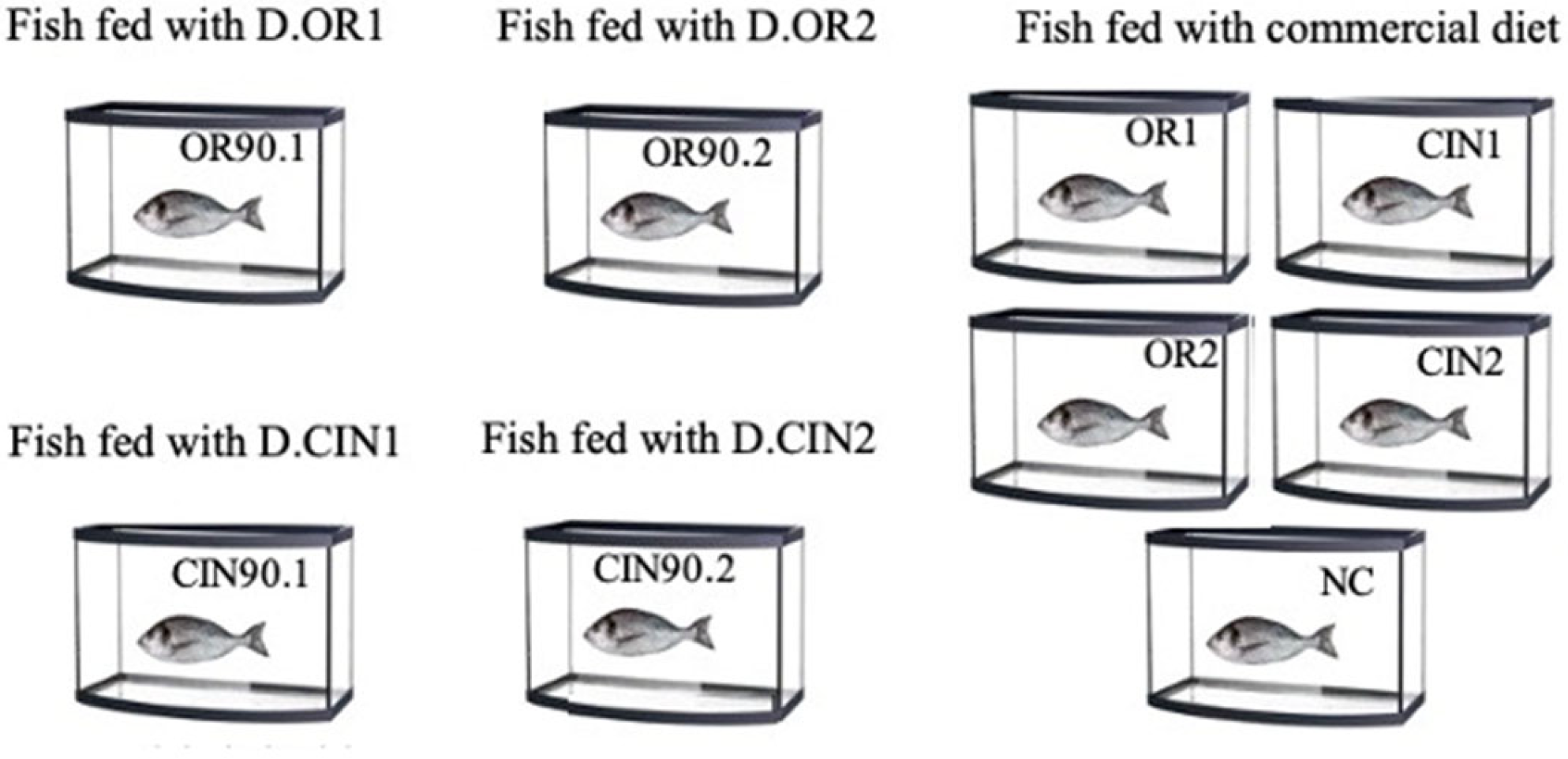
Healthy gilthead seabreams (S. aurata L., n = 972, average body weight 5 ± 0.32 g) were obtained from a commercial aquaculture facility and subsequently transferred to the experimental aquarium facilities. These fish originated from a population free of LCDV and were randomly allocated into 27 tanks (n = 36, 125 L/tank), organized into nine groups, each represented in triplicate. Before the commencement of the experiment, the fish underwent a two-week acclimatization period and fasted for 24 h. The pre-experimental infection phase lasted for 90 days. During this period, four groups, designated as OR90.1, OR90.2, CIN90.1, and CIN90.2, were administered the four distinct experimental diets: D.OR1, D.OR2, D.CIN1, and D.CIN2, respectively. The remaining five groups, identified as OR1, OR2, CIN1, CIN2, and NC, were fed commercial dry pellets (Figure 1). During the pre-experimental infection phase, the fish were prepared as recipient animals for the subsequent infection trial and were fed the designated diets for their respective groups.

2.4. Experimental Transmission of LCDV

2.4.1. Donor Fish

Gilthead seabream (S. aurata L.; mean weight: 16 ± 0.86 g) served as the donor fish for experimental infection. These specimens were sourced from a sea cage at a commercial fish farm where a 100% prevalence of LCDV infection was diagnosed. The infected fish were subsequently transferred to experimental aquarium facilities. Infection was confirmed by the observation of white-creamy nodular lesions, characterized by hypertrophied fibroblastic cells in the dermal connective tissue (lymphocysts), primarily affecting the skin and fins. Comprehensive bacteriological and parasitological examinations were performed to confirm the absence of other pathogens. To distinguish them from the recipient fish, the donor fish were marked with dorsal fin cuts.

2.4.2. Recipient Fish

Groups of healthy fish, as defined in Section 2.3 (OR1, OR2, CIN1, CIN2, OR90.1, OR90.2, CIN90.1, CIN90.2), were utilized as recipient fish. Furthermore, an additional group, designated as “RF: Recovered Fish”, was evaluated. This group comprised healthy gilthead seabreams (n = 108, average body weight 18 ± 1.17 g) that had previously been infected with LCDV at a prevalence of 100% and subsequently self-recovered. Fish were stocked in three tanks (125 L).

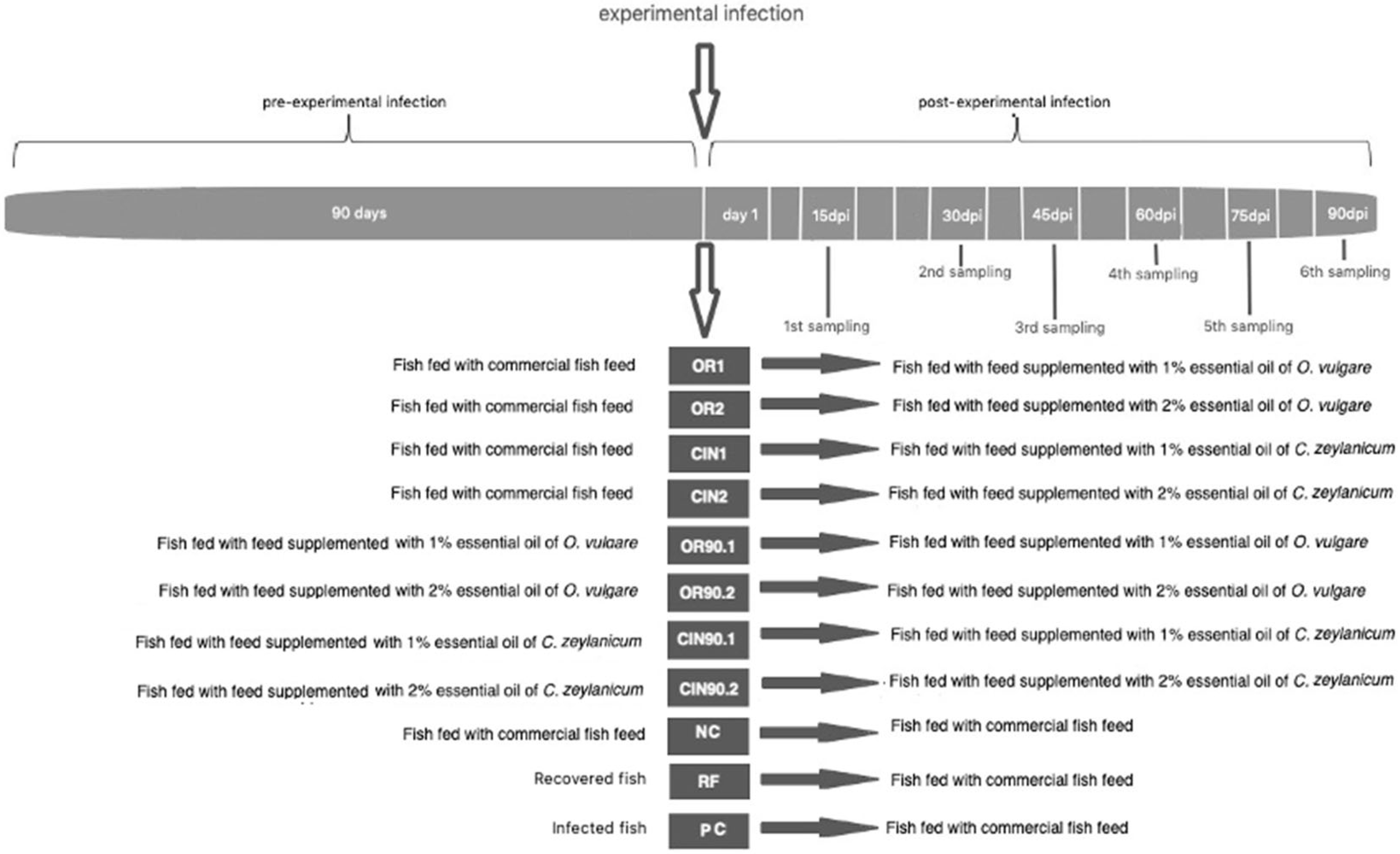
2.4.3. Experimental Procedure Protocol

Experimental transmission of LCDV was conducted over 90 days through the cohabitation of infected (donor) and non-infected (recipient) fish, maintaining a ratio of one donor to nine recipients across all experimental groups. This transmission method was applied to nine distinct groups of healthy recipient fish, as detailed in subchapter Section 2.4.2 (OR1, OR2, CIN1, CIN2, OR90.1, OR90.2, CIN90.1, CIN90.2, and RF). Additionally, two control groups were included: a negative control group (NC) comprising only healthy fish (Section 2.3) and a positive control group (PC) consisting solely of infected fish (Section 2.4.1). In total, 11 experimental groups were tested in triplicates (Figure 2). During the post-experimental infection phase, groups OR1 and OR90.1 were administered the experimental diet D.OR1, groups OR2 and OR90.2 received diet D.OR2, groups CIN1 and CIN90.1 were given diet D.CIN1, and groups CIN2 and CIN90.2 were fed diet D.CIN2. The remaining groups (RF, PC, and NC) were provided with dry commercial pellets. Throughout the experiment, fish were hand-fed twice daily to ensure complete consumption of the feed. The tanks were supplied with running and aerated artificial seawater using a recirculation system. The water temperature was consistently maintained at 21 ± 1 °C, and the water quality and environmental conditions were stable (pH: 8.0 ± 0.3, salinity: 33 ± 0.5 g L−1, dissolved oxygen: >6.5 mg L−1, total ammonia nitrogen: <0.1 mg L−1, photoperiod: 12 h light:12 h darkness). Every 15 days post-exposure, all fish were anesthetized and examined for external lesions indicative of LCDV, a pathognomonic feature of this condition. The prevalence of infection was assessed in all experimental fish every 15 days post-infection (dpi). At the end of the experiment, 90 dpi, liver and spleen samples were collected to assess the genotoxicity induced in gilthead seabream following exposure to LCDV. Mortality rates in all experimental fish groups were recorded daily, with deceased fish promptly removed. Cumulative mortality was calculated at the end of the experiment. The sampling time points are shown in Figure 2.

2.5. Genotoxicity Assessment

2.5.1. Comet Assay

After the experiment, three fish from each aquarium were euthanized, and their livers and spleens were collected for cell extraction. The tissues were placed in a chilled Hanks’ balanced salt solution (HBSS)-balanced solution and maintained on ice. Collagenase solution was injected into the tissue, which was then finely minced using a razor blade. The cells underwent centrifugation at 3000 rpm for 5 min, after which the pellet was reconstituted in 10 mL of PBS. This process was performed twice. DNA damage assessment was performed using the comet assay, following a modified protocol established by Singh et al. [57].
In summary, a fully frosted slide (in triplicate), previously coated with a 300 μL layer of 0.5% normal melting point agarose (NMA), was used to apply 100 μL of 0.5% low melting point agarose (LMA) (Sigma, Milwaukee, WI, USA) mixed with 20 μL of cell suspension. A 22 × 22 mm coverslip was placed over the agarose and kept at −20 °C for 2–3 min to allow the agarose to solidify. Subsequently, the coverslips were carefully removed, and a third layer of 100 μL of 0.5% LMA was applied and solidified on ice. After the coverslips were removed, the slides were immersed in freshly prepared lysis solution (2.5M NaCl, 100 mM Na EDTA, 10 mM Tris, 1% Triton X-100, 10% DMSO) overnight at 4 °C. The slides were moved from the lysis solution to a horizontal gel electrophoresis unit containing a freshly prepared alkaline buffer (1 mM Na2EDTA, 300 mM NaOH, pH 13). They were left in this buffer for 25 min to allow DNA to unwind before starting electrophoresis, which lasted for 20 min. All steps were carried out in the dark to avoid DNA damage. Afterward, the slides were washed three times with a neutralization buffer (0.4M Tris buffer, pH 7.5).

2.5.2. Scoring of DNA Damage Using Image Analysis

On each slide, the nuclear DNA was stained with 20 μL of acridine orange (20 μg/mL) in a distilled water solution, followed by the application of a coverslip. DNA was then observed in a dark room using a fluorescence microscope at 40× magnification, with an excitation filter range of 510–590 nm. For each sample, images of 150 randomly selected nuclei (50 per triplicate) were analyzed. The Comet Assay IVTM comet scoring system was used to evaluate the DNA migration. The percentage of tail DNA damage was measured to quantify the extent of DNA damage, which is directly proportional to the level of damage in the cells.

2.6. Statistical Analysis

Data from each treatment were analyzed and the effects of all treatments were compared. Prevalence and mortality rates were evaluated using Pearson’s chi-square test. Genotoxicity data from both the liver and spleen samples were analyzed using one-way ANOVA, followed by Tukey’s post hoc test. All analyses were conducted using SPSS 26 statistical package, and differences were considered significant at p < 0.05.

3. Results

3.1. Effect of Essential Oils Supplemented Diets on Clinical Signs, Prevalence, and Mortality in Gilthead Seabream After LCDV Exposure

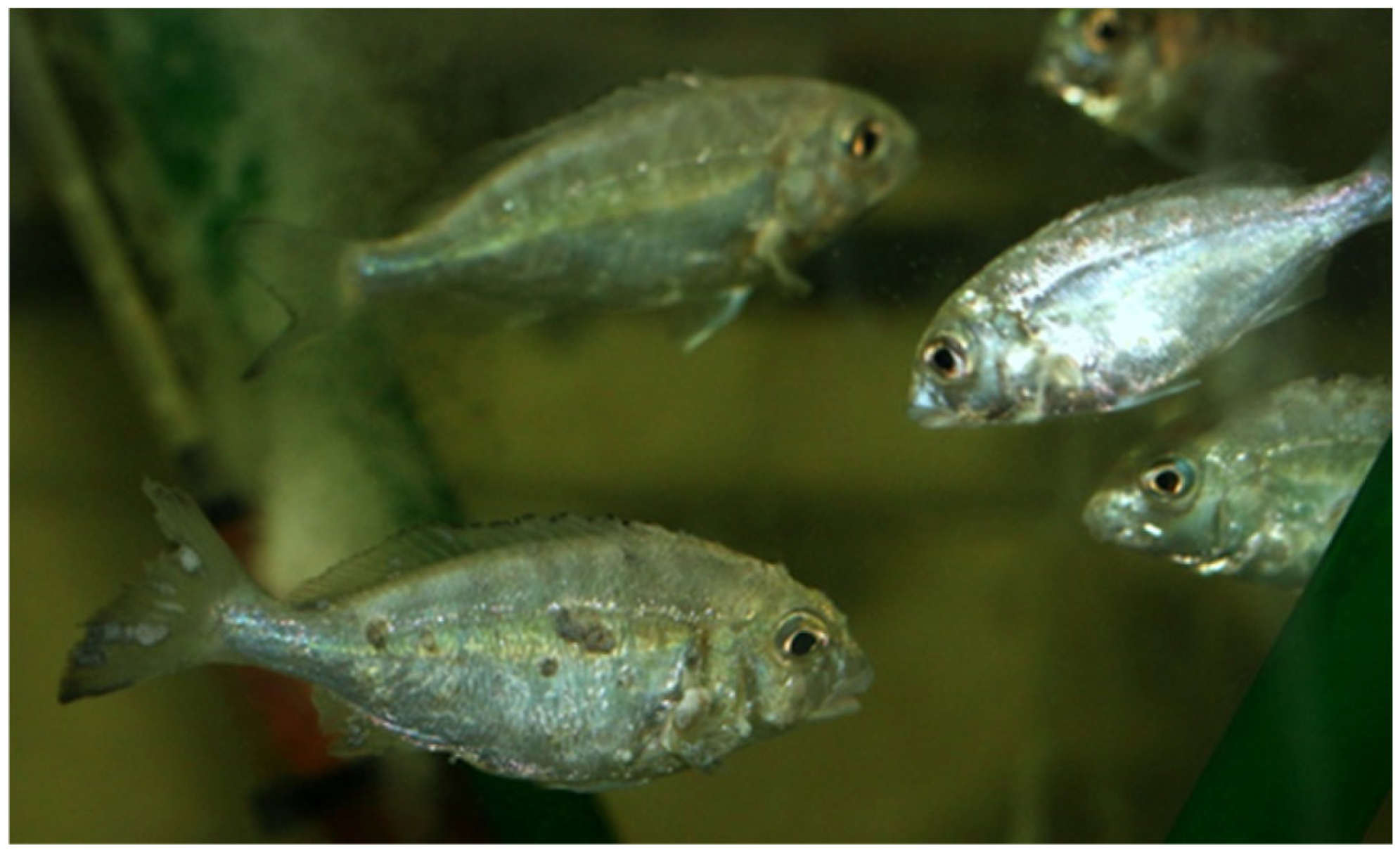
Gross clinical signs indicative LCDV were initially observed across all experimental groups within 15 dpi. These signs included lymphocysts, characterized as nodular lesions composed of hypertrophied fibroblastic cells within the dermal connective tissue (Figure 3).
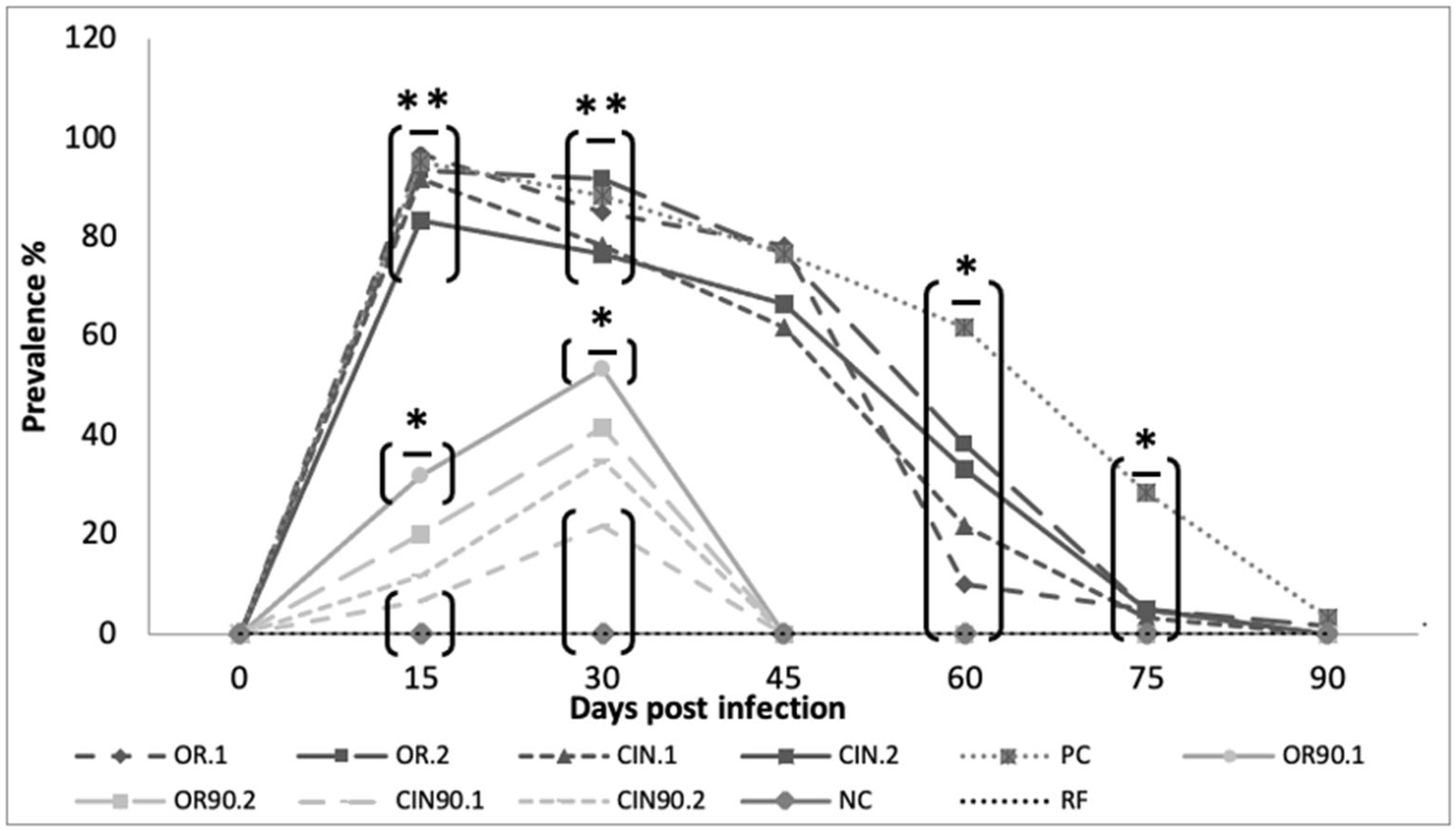
During this period, the infection was mild, with one to three small, white-creamy nodules observed on the fins and skin of the infected fish. Figure 4 illustrates the prevalence fluctuation of gilthead seabream following the experimental infection with LCDV.
In groups OR1, OR2, CIN1, CIN2, and PC, the highest prevalence was observed at 15 dpi. No significant differences were noted among these groups until day 60, when the PC group exhibited significantly higher values than the other groups (p < 0.05). In certain instances, fish were severely affected, with lymphocystis cells covering the entire body, including the buccal cavity. Oversized nodules, grouped in clusters and forming papillomatous tumors, were observed.
A significantly lower prevalence was recorded in OR90.1, OR90.2, CIN90.1, and CIN90.2, where essential oils were applied prophylactically, compared to therapeutic administration (groups OR1, OR2, CIN1, CIN2) (p < 0.05). In this context, the CIN90.1 group recorded the overall lowest value, while the OR90.1 group recorded the highest. Among the latter, statistically significant differences (p < 0.05) were recorded at 15 dpi and 30 dpi when the highest prevalence was observed, ranging from 21.67% for the CIN90.1 group to 53.33% for the OR90.1 group.
As the disease progressed, a significant reduction in prevalence was observed across all examined groups (p < 0.05). By day 45, all fish in the OR90.1, OR90.2, CIN90.1, and CIN90.2 groups self-recovered, with no nodules observed. Conversely, in the OR1, CIN1, and CIN2 groups, the disease was undetectable at 90 dpi, whereas the OR2 and PC groups exhibited low prevalence rates of 1.67% and 3.33%, respectively. In the NC and RF groups, no clinical signs consistent with lymphocystis disease virus (LCDV) were observed.
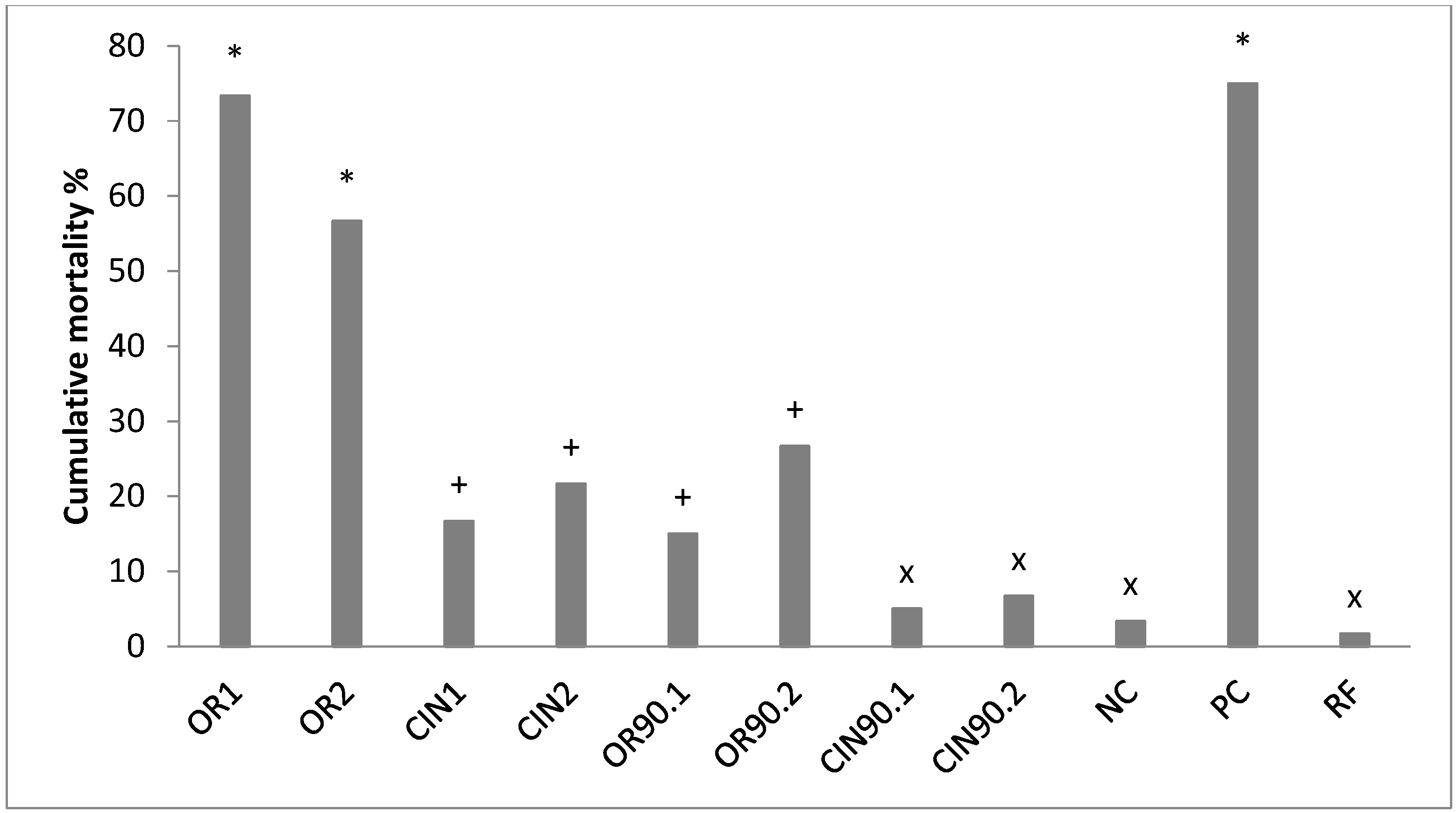
The highest cumulative mortality was observed in the OR1, OR2, and PC groups, with no statistically significant differences detected among them. The cumulative mortality of gilthead seabream following the LCDV experimental infection is shown in Figure 5. The initial mortality in the PC group was recorded at 4 dpi, with subsequent mortality continuing until 73 dpi, ultimately reaching 75%. In groups OR1 and OR2, mortality commenced at 5 dpi, reaching 73.33% and 56.67% at 43 and 58 dpi, respectively. Mortality in groups CIN1, CIN2, OR90.1, and OR90.2 was significantly lower than that in the other groups (p < 0.05), with percentages ranging from 15% (OR90.1) to 26.67% (OR90.2); however, no significant differences in cumulative mortality were recorded among them. The cumulative mortality in groups CIN90.1 and CIN90.2 was very low, with no statistically significant differences observed compared to the NC and RF groups (p < 0.05). These groups recorded a significantly lower percentage than the other groups (p < 0.05).

3.2. Effect of Essential Oils Supplemented Diets on DNA Damage Induced in Gilthead Seabream After LCDV Exposure

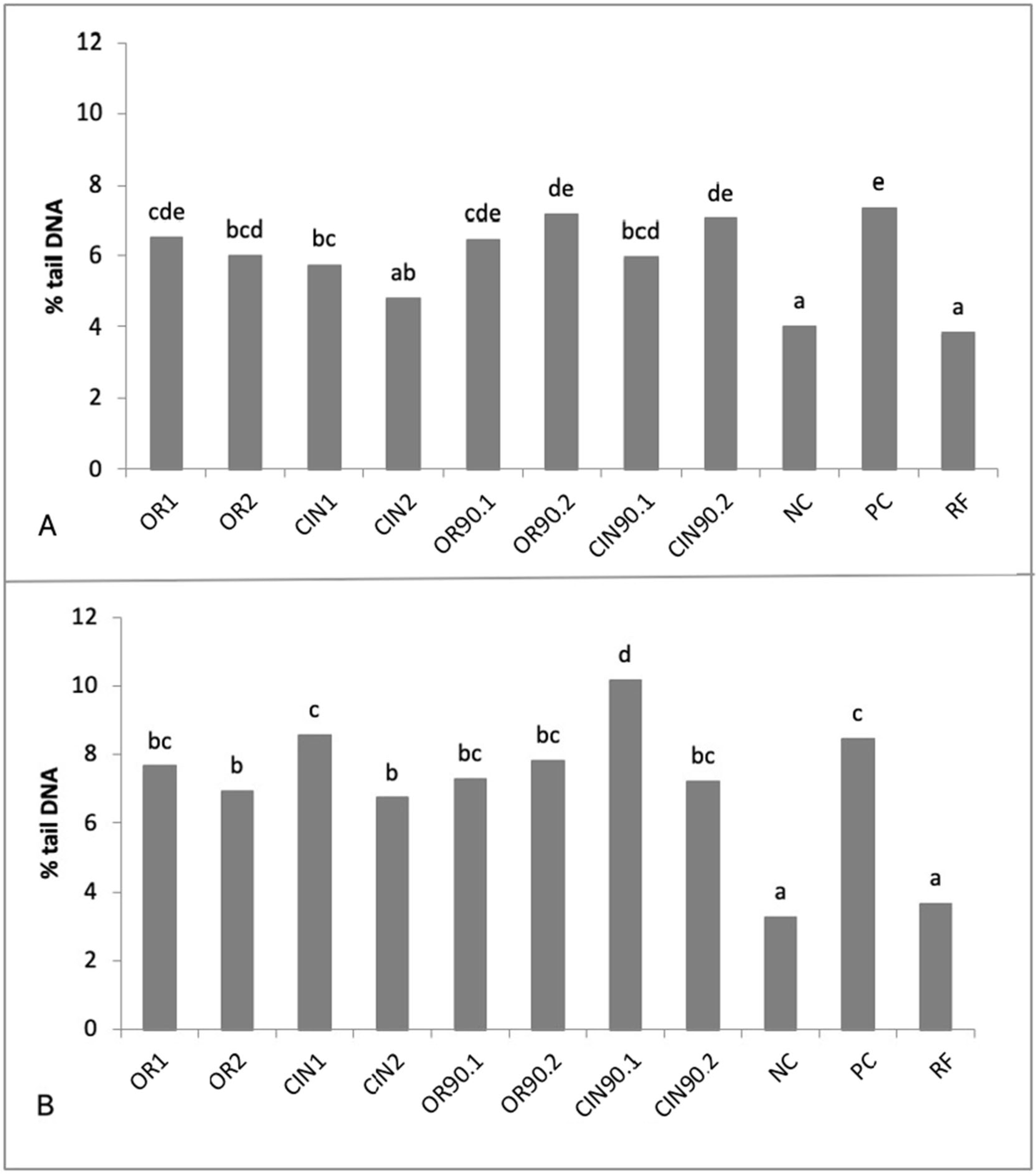
The infected groups exhibited significantly higher DNA migration than the non-infected NC and RF groups in both liver and spleen cells (p < 0.05). The experimental diets did not induce higher genotoxicity compared to the positive control group in either organ. However, in the CIN90.1 group in spleen cells, the DNA damage was clearly pronounced (p < 0.05). In general, spleen cells, the comet assay indicated increased DNA fragmentation compared to hepatocytes. Additionally, no differences were observed in DNA strand breakage between the non-infected NC and RF groups. Genotoxicity induced in both liver and spleen cells following experimental infection of gilthead seabream fed diets supplemented with essential oils is shown in Figure 6.

4. Discussion

Aquaculture contributes to nearly 50% of the fish consumed by humans and is anticipated to remain the primary driver of global fish supplier, which is projected to reach 111 million tonnes by 2032 [58]. Nevertheless, biosecurity risks, including the spread of transboundary aquatic animal diseases, diminish productivity and reflect the influence of various factors [59]. Viruses impose a significant constraint on the expansion of aquaculture because of the decreased productivity and costs associated with disease management and the resultant mortalities [60,61]. LCD is of particular concern, as it is among the most frequently reported diseases in sea bream, impacting production during both the hatchery and on-growing stages in the Mediterranean [14]. O. vulgare and C. zeylanicum have demonstrated their broad-spectrum potential in enhancing welfare, overall health, and disease resistance in fish [62].
This study evaluated the impact of diets supplemented with essential oils on the progression of LCD. Two concentrations of O. vulgare and C. zeylanicum (1% and 2%) were tested as both preventive and therapeutic interventions in gilthead seabreams experimentally infected with LCDV. Initial gross disease symptoms, characterized by nodular lesions of hypertrophied fibroblastic cells in the dermal connective tissue, were observed and the critical period for infection was identified as 15 dpi. The statistically significant differences in cumulative mortality among the infected groups highlight the influence of experimental diets on disease progression. Essential oils were found to be more effective when applied prophylactically than therapeutically, while the statistically significant reduction in the prevalence and cumulative mortality between these groups underscores the protective effect of essential oils in diets. C. zeylanicum was more effective than O. vulgare, as in both preventive and therapeutic applications, cinnamon groups exhibited significantly lower prevalence and cumulative mortality than the oregano groups. When essential oils were used as a preventive measure, the cumulative mortality in the cinnamon groups did not differ from that in uninfected fish in the NG and RF groups. When supplemented feeding was initiated concurrently with the experimental infection, a statistically significant reduction in prevalence was observed compared with the positive control group at 60 dpi. In these cases, despite the delay in self-treatment compared to the prophylactically treated groups, the cumulative mortality was significantly lower than that of the positive control group, suggesting a therapeutic effect of the essential oils. LCD proved to be a self-limiting disease, as anticipated [63]. The duration until self-treatment appeared to be influenced by most of the supplemented diets, ranging from 45 dpi in cases of preventive administration to >90 dpi in naturally self-treated fish. Concerning the re-infection group (RF), lymphocysts were absent indicating that natural immunity acquired from prior exposure to the virus through actual disease infection prevents reinfection.
The findings presented in this study are supported by previous reports demonstrating a consistent and stable pattern in disease progression. Medicinal plants, which serve as natural immunostimulants, are being increasingly used in place of chemotherapeutic agents to boost fish immunity and health, as well as to prevent or treat fish diseases [30,31,32]. These plants can potentiate the innate and adaptive immune systems at both systemic and mucosal levels. Enhanced immunity in fish fed oregano and cinnamon is evidenced by increased lysozyme and phagocytosis activities and positive effects on the absorptive area of the fish intestine [48,55]. The period that the symptoms appear seems to be influenced by temperature fluctuations, as lymphocystis may emerge on the skin and fins at a later stage or remain absent even when LCDV is detectable by PCR [64]. The detection of LCDV genome 14 days post-infection (dpi) in the dorsal fins with a gradual increase in viral genomes corresponding to lymphocyst development was previously discussed in the case of Japanese flounder [65]. Once lesions appear, LCD typically resolves within 20–45 days, depending on the water temperature, resulting in high morbidity [66]. LCDV infection is strongly influenced by environmental temperature, which affects both disease severity and clinical expression. In gilthead seabream, temperature fluctuations may lead to apparent recovery through reduced lesion visibility, though viral persistence under non-optimal conditions has been documented [64]. Beyond temperature, factors such as stress, co-infection, immune status, and water quality also modulate the progression or regression of infection. Together with temperature and microbial community composition, these factors may allow LCDV to persist in fish or water even after external signs subside [67].
The host organism employs various defense mechanisms during viral infections, including the cellular DNA damage response and apoptosis [25]. In the current study, a statistically significant increase in DNA damage was observed in the infected fish in the positive control group compared to the uninfected fish in both the negative control and reinfection groups. This pattern was observed in most experimentally infected groups across both examined organs suggesting that the host defense system attempts to limit viral replication by inducing DNA damage to eliminate the virus-infected cells. In the context of therapeutic administration of essential oils, DNA damage was significantly lower compared to the positive control group. Similar to other Iridoviruses, LCDV induces apoptosis in host cells, utilizing this process as a fundamental defense mechanism against viral infections to efficiently remove virus-infected cells [26]. However, when inhibition of DNA damage occurs, it may be related to the ability of the iridovirus to suppress apoptosis in permissive cells, thereby protecting the infected host cells from apoptosis induced by the cell itself or the immune system [27]. In gilthead seabream, LCDV-Sa seems to trigger an immune reaction, marked by a partial activation of the type I IFN system and a lack of systemic inflammatory response, which might be linked to the persistence of the virus [68]. Furthermore, when low DNA damage values coincide with low cumulative mortality, as described in the present study, the activation of repair mechanisms may be implicated because the activation of repair proteins is part of the viral strategy to counteract the host cell’s DNA damage response [25].
In most instances of preventive administration of essential oils, a distinct pattern emerged, as no statistically significant differences were observed when compared to the positive control group. This indicates a tendency for self-treated fish to maintain elevated levels of induced DNA damage as an extension of the immune response. Once self-treatment is completed, the virus can establish a symptom-free carrier state, which may last for at least two months in individuals who have recovered. During this period, viral DNA and transcripts are detectable in the skin and various organs, including the gills, intestine, kidney, liver, and spleen [69]. Notably, in the CIN90.1 group, high levels of DNA damage coupled with very low cumulative mortality suggest an enhancing effect of diet on virus-infected cells, facilitating the elimination of viral propagation within the host. This innate host response is particularly evident in spleen cells, where higher DNA damage values are observed compared with liver cells. This difference was anticipated because viruses primarily target immune-related tissues of the kidneys and spleen [27]. Viruses typically react to damage in cellular DNA by either deactivating essential cellular proteins or by initiating, attracting, and utilizing host cell factors to support their replication process [25]. The spleen, as a major peripheral lymphoid organ in teleosts, represents a primary site for viral replication and immune activation [70]. Due to its lymphoid composition, viruses such as LCDV often display a high tropism for splenic tissue, leading to greater viral loads, necrosis, and lymphocyte depletion than in other organs [69]. Intense immune responses further contribute to tissue damage, with marked inflammatory reactions and lymphoid depletion commonly observed after infection [71]. Additionally, the spleen’s hematopoietic and filtering functions increase its exposure to infected and abnormal cells, explaining the more severe pathological changes compared to the liver [72]. Therefore, preventive and therapeutic administration of O. vulgare and C. zeylanicum essential oils in supplemented diets on LCD progression exhibited an effect on viral activities that interact with the cellular DNA damage repair system at multiple levels, disabling certain components while taking advantage of others.

5. Conclusions

LCDV is of significant concern due to its potential threat to aquaculture and its role in emerging secondary bacterial infections and causing substantial economic losses. This study investigated the effects of O. vulgare and C. zeylanicum essential oils, administered at two concentrations (1% and 2%), as phytogenic feed additives on the disease resistance of gilthead seabream against LCDV infection, as well as on DNA damage in the liver and spleen cells of infected fish. The protective and therapeutic effects of these essential oils were confirmed by assessing the progress of the disease, their self-treatment duration, and mortality rates. C. zeylanicum proved more effective than O. vulgare; however, both treatments were more effective than the untreated groups. LCDV induces apoptosis in host cells as a primary defense mechanism against viral infections. Diets supplemented with O. vulgare and C. zeylanicum essential oils influenced the cellular DNA damage repair process, and the preventive use of 1% C. zeylanicum essential oil for 90 days appears to be a promising health practice for managing LCD.

Author Contributions

Conceptualization, E.G., C.B., P.P. and D.D.; Methodology, E.G., D.D., T.K. and C.P.; Software, D.D., E.A. and M.K.; Validation, E.G., D.D. and M.K.; Formal analysis, E.G., D.D., T.K. and C.P.; Investigation, E.G. and D.D.; Resources, E.G. and D.D.; Data curation, E.G., D.D. and M.K.; Writing—original draft preparation, E.G., D.D., C.B. and P.P.; Visualization, E.G., D.D., T.K. and M.K.; Supervision, E.G., C.B. and P.P. All authors have read and agreed to the published version of the manuscript.

Funding

This research received no external funding.

Institutional Review Board Statement

The animal study protocol was approved by the Institutional Ethics Committee of the University of Thessaly (Ref. No. 120758/19-6-20).

Data Availability Statement

Data is unavailable due to privacy or ethical restrictions.

Acknowledgments

The authors would like to acknowledge undergraduate student Vasilios Sagris for his contribution in creating Figure 3. During the preparation of this manuscript, the authors used Paperpal as an AI-based language editing tool. The authors have reviewed and edited the output and take full responsibility for the content of this publication.

Conflicts of Interest

The authors declare no conflicts of interest.

References

  1. Weissenberg, R. Über infektöse Zellhypertrophie bei Fischen (Lymphocystiserkrankung). Sitzungsberichte Königlichen Preuss. Akad. Wiss. 1914, 30, 792–804. [Google Scholar]
  2. Borrego, J.J.; Valverde, E.J.; Labella, A.M.; Castro, D. Lymphocystis disease virus: Its importance in aquaculture. Rev. Aquac. 2017, 9, 179–193. [Google Scholar] [CrossRef]
  3. Xu, H.; Zhang, W.; Jiang, Y.; Yang, E.J. Use of biofilm-dwelling ciliate communities to determine environmental quality status of coastal waters. Sci. Total Environ. 2014, 470–471, 511–518. [Google Scholar] [CrossRef]
  4. Chinchar, G.V.; Yu, K.H.; Jancovich, J.K. The molecular biology of frog virus 3 and other iridoviruses infecting cold-blooded vertebrates. Viruses 2011, 3, 1959–1985. [Google Scholar] [CrossRef]
  5. Darai, G.; Anders, K.; Koch, H.; Delius, H.; Gelderblom, H.; Samalecos, C.; Flugel, R. Analysis of the genome of fish lymphocystis disease virus isolated directly from epidermal tumors of pleuronectes. Virology 1983, 126, 466–479. [Google Scholar] [CrossRef] [PubMed]
  6. Zhang, Q.Y.; Xiao, F.; Xie, J.; Li, Z.Q.; Gui, J.F. Complete genome sequence of lymphocystis disease virus isolated from China. J. Virol. 2004, 78, 6982–6994. [Google Scholar] [CrossRef] [PubMed]
  7. Doszpoly, A.; Kaján, G.L.; Puentes, R.; Perretta, A. Complete genome sequence and analysis of a novel lymphocystivirus detected in whitemouth croaker (Micropogonias furnieri): Lymphocystis disease virus 4. Arch. Virol. 2020, 165, 1215–1218. [Google Scholar] [CrossRef] [PubMed]
  8. López-Bueno, A.; Mavian, C.; Labella, A.M.; Castro, D.; Borrego, J.J.; Alcami, A.; Alejo, A. Concurrence of Iridovirus, Polyomavirus, and a Unique Member of a New Group of Fish Papillomaviruses in Lymphocystis Disease-Affected Gilthead Sea Bream. J. Virol. 2016, 90, 8768–8779. [Google Scholar] [CrossRef]
  9. Golomazou, E.; Panagiotaki, P. Lymphocystis Disease Virus (LCDV) in Aquatic Environment. In Earth Systems and Environmental Sciences, Encyclopedia of Environmental Health; Jones, B.S., Smith, R.Z., Eds.; Elsevier: Amsterdam, The Netherlands, 2019; pp. 158–162. [Google Scholar] [CrossRef]
  10. Paperna, I.; Ilana Sabnai, H.; Colorni, A. An outbreak of lymphocystis in Sparus aurata L. in the Gulf of Aqaba, Red Sea. J. Fish Dis. 1982, 5, 433–437. [Google Scholar] [CrossRef]
  11. Haddad Boukaker, S.; Bouzgarou, N.; Fakhfakh, E.; Khayech, M.; Mohamad, S.B.; Megdich, A.; Chéhida, N.B. Detection and genetic characterization of Lymphocystis Disease Virus (LCDV) isolated during disease outbreaks in cultured gilt-head sea bream Sparus aurata in Tunisia. Fish Pathol. 2013, 48, 101–104. [Google Scholar] [CrossRef]
  12. Le Deuff, R.M.; Renault, T. Lymphocystis Outbreaks in Farmed Sea Bream, Sparus aurata, first report on French Mediterranean coast. Bull. Eur. Ass. Fish Pathol. 1993, 13, 130–133. [Google Scholar]
  13. Menezes, J.; Ramos, M.A.; Pereira, T.G. Lymphocystis disease: An outbreak in Sparus aurata from Ria Formosa, south coast of Portugal. Aquaculture 1987, 67, 222–225. [Google Scholar] [CrossRef]
  14. Muniesa, A.; Basurco, B.; Aguilera, C.; Furones, D.; Reverté, C.; Sanjuan-Vilaplana, A.; Jansen, M.D.; Brun, E.; Tavornpanich, S. Mapping the knowledge of the main diseases affecting sea bass and sea bream in Mediterranean. Transbound. Emerg. Dis. 2020, 67, 1089–1100. [Google Scholar] [CrossRef] [PubMed]
  15. Toffan, A.; Marsella, A.; Menconi, V.; Bertola, M. Finfish infectious diseases in the Mediterranean basin: A systematic review with insights on vaccination possibilities. Fish Shellfish Immunol. 2025, 160, 110189. [Google Scholar] [CrossRef] [PubMed]
  16. Leiva-Rebollo, R.; Castro, D.; Moreno, P.; Borrego, J.J.; Labella, A.M. Evaluation of gilthead seabream (Sparus aurata) immune response after LCDV-SA DNA vaccination. Animals 2021, 11, 1613. [Google Scholar] [CrossRef]
  17. Leiva-Rebollo, R.; Gémez-Mata, J.; Castro, D.; Borrego, J.J.; Labella, A.M. Immune response of DNA vaccinated-gilthead seabream (Sparus aurata) against LCDV-Sa infection: Relevance of the inflammatory process. Front. Immunol. 2023, 14, 1209926. [Google Scholar] [CrossRef]
  18. Masoero, L.; Ercolini, C.; Caggiano, M.; Rossa, A. Osservazioni preliminary sulla linfocisti in una maricoltura intensiva italiana. Riv. Ital. Pisic. Ittiopac. 1986, 21, 70–74. [Google Scholar]
  19. Cano, I.; Ferro, P.; Alonso, M.C.; Sarasquete, C.; Garcia-Rosado, E.; Borrego, J.J.; Castro, D. Application of in situ detection techniques to determine the systemic condition of lymphocystis disease virus infection in cultured gilt-head seabream, Sparus aurata L. J. Fish Dis. 2009, 32, 143–150. [Google Scholar] [CrossRef]
  20. Xing, J.; Sheng, X.; Zhan, W. Lymphocystis disease and diagnostic methods in China. Aquacult. Asia Magaz. 2006, 11, 30–33. [Google Scholar]
  21. Valverde, E.J.; Labella, A.M.; Borrego, J.J.; Castro, D. Artemia spp., a susceptible host and vector for lymphocystis disease virus. Viruses 2019, 11, 506. [Google Scholar] [CrossRef]
  22. Cano, I.; Valverde, E.J.; Garcia-Rosado, E.; Alonso, M.C.; Lopez-Jimena, B.; Ortiz-Delgado, J.B.; Borrego, J.J.; Sarasquete, C.; Castro, D. Transmission of lymphocystis disease virus to cultured gilthead seabream, Sparus aurata L., larvae. J. Fish Dis. 2013, 36, 569–576. [Google Scholar] [CrossRef] [PubMed]
  23. Xavier, R.; Pérez-Losada, M.; Silva, S.M.; Lino, M.; Faleiro, M.J.; Canada, P. Lymphocystis viral disease impacts the diversity and functional profiles of the skin microbiome in gilthead seabream. Front. Microbiol. 2024, 15, 1470572. [Google Scholar] [CrossRef] [PubMed]
  24. Kaina, B. DNA damage-triggered apoptosis: Critical role of DNA repair, double-strand breaks, cell proliferation and signaling. Biochem. Pharmacol. 2003, 66, 1547–1554. [Google Scholar] [CrossRef]
  25. Lilley, C.E.; Schwartz, R.A.; Weitzman, M.D. Using or abusing: Viruses and the cellular DNA damage response. Trends Microbiol. 2007, 15, 119–126. [Google Scholar] [CrossRef] [PubMed]
  26. Hu, G.-B.; Cong, R.-S.; Fan, T.-J.; Mei, X.-G. Induction of apoptosis in a flounder gill cell line by lymphocystis disease virus infection. J. Fish Dis. 2004, 27, 657–662. [Google Scholar] [CrossRef]
  27. Lin, P.W.; Huang, Y.J.; John, J.A.C.; Chang, Y.N.; Yuan, C.H.; Chen, W.Y.; Yeh, C.H.; Shen, S.T.; Lin, F.P.; Tsui, W.H.; et al. Iridovirus Bcl-2 protein inhibits apoptosis in the early stage of viral infection. Apoptosis 2008, 13, 165–176. [Google Scholar] [CrossRef]
  28. Harikrishnan, R.; Balasundaram, C.; Heo, M.S. Effect of probiotics enriched diet on Paralichthys olivaceus infected with lymphocystis disease virus (LCDV). Fish Shellfish Immunol. 2010, 29, 868–874. [Google Scholar] [CrossRef]
  29. Bowden, R.A.; Oestmann, D.J.; Lewis, D.H.; Frey, M.S. Lymphocystis in red drum. J. Aquat. Anim. Health 1995, 7, 231–235. [Google Scholar] [CrossRef]
  30. Harikrishnan, R.; Devi, G.; Balasundaram, C.; Van Doan, H.; Jaturasitha, S.; Saravanan, K.; Ringø, E. Impact of cinnamaldehyde on innate immunity and immune gene expression in Channa striatus against Aphanomyces invadans. Fish Shellfish Immunol. 2021, 117, 1–16. [Google Scholar] [CrossRef]
  31. Reverter, M.; Bontemps, N.; Lecchini, D.; Banaigs, B.; Sasal, P. Use of plant extracts in fish aquaculture as an alternative to chemotherapy: Current status and future perspectives. Aquaculture 2014, 433, 50–61. [Google Scholar] [CrossRef]
  32. Van Hai, N. The use of medicinal plants as immunostimulants in aquaculture: A review. Aquaculture 2015, 446, 88–96. [Google Scholar] [CrossRef]
  33. Harikrishnan, R.; Heo, J.; Balasundaram, C.; Kim, M.C.; Kim, J.S.; Han, Y.J.; Heo, M.S. Effect of Punica granatum solvent extracts on immune system and disease resistance in Paralichthys olivaceus against lymphocystis disease virus (LDV). Fish Shellfish Immunol. 2010, 29, 668–673. [Google Scholar] [CrossRef]
  34. Harikrishnan, R.; Kim, M.C.; Kim, J.S.; Balasundaram, C.; Heo, M.S. Immune enhancement of chemotherapeutants on lymphocystis disease virus (LDV) infected Paralichthys olivaceus. Fish Shellfish Immunol. 2010, 29, 862–867. [Google Scholar] [CrossRef] [PubMed]
  35. Hayatgheib, N.; Fournel, C.; Calvez, S.; Pouliquen, H.; Moreau, E. In vitro antimicrobial effect of various commercial essential oils and their chemical constituents on Aeromonas salmonicida subsp. salmonicida. J. Appl. Microbiol. 2020, 129, 137–145. [Google Scholar] [CrossRef] [PubMed]
  36. Hernández-Contreras, Á.; Hernández, M.D. Application of aromatic plants and their extracts in aquaculture. In Feed Additives; Florou-Paneri, P., Christaki, E., Giannenas, I., Eds.; Academic Press: Cambridge, MA, USA, 2020; pp. 239–259. [Google Scholar] [CrossRef]
  37. Awad, E.; Awaad, A. Role of medicinal plants on growth performance and immune status in fish. Fish Shellfish Immunol. 2017, 67, 40–54. [Google Scholar] [CrossRef] [PubMed]
  38. Bhavaniramya, S.; Vishnupriya, S.; Al-Aboody, M.S.; Vijayakumar, R.; Baskaran, D. Role of essential oils in food safety: Antimicrobial and antioxidant applications. Grain Oil Sci. Technol. 2019, 2, 49–55. [Google Scholar] [CrossRef]
  39. Gabriel, N.N. Review on the progress in the role of herbal extracts in tilapia culture. Cogent Food Agric. 2019, 5, 1619651. [Google Scholar] [CrossRef]
  40. Wińska, K.; Mączka, W.; Łyczko, J.; Grabarczyk, M.; Czubaszek, A.; Szumny, A. Essential oils as antimicrobial agents—Myth or real alternative? Molecules 2019, 24, 2130. [Google Scholar] [CrossRef]
  41. Rahul Sandeep, T.; Sravya, M.V.N.; Simhachalam, G. Phytobiotics in finfish and shellfish: A systematic review. Discov. Anim. 2025, 2, 74. [Google Scholar] [CrossRef]
  42. Okon, E.; Iyobhebhe, M.; Olatunji, P.; Adeleke, M.; Matekwe, N.; Okocha, R. Feed Additives in Aquaculture: Benefits, Risks, and the Need for Robust Regulatory Frameworks. Fishes 2025, 10, 471. [Google Scholar] [CrossRef]
  43. Hudecová, P.; Koščová, J.; Hajdučková, V. Phytobiotics and Their Antibacterial Activity Against Major Fish Pathogens. A Review. Fol. Veter. 2023, 67, 51–61. [Google Scholar] [CrossRef]
  44. Abdel-Latif, H.M.R.; Abdel-Tawwab, M.; Khafaga, A.F.; Dawood, M.A.O. Dietary oregano essential oil improved the growth performance via enhancing the intestinal morphometry and hepato-renal functions of common carp (Cyprinus carpio L.) fingerlings. Aquaculture 2020, 526, 735432. [Google Scholar] [CrossRef]
  45. Abdel-Latif, H.M.R.; Abdel-Tawwab, M.; Khafaga, A.F.; Dawood, M.A.O. Dietary origanum essential oil improved antioxidative status, immune-related genes, and resistance of common carp (Cyprinus carpio L.) to Aeromonas hydrophila infection. Fish Shellfish Immunol. 2020, 104, 1–7. [Google Scholar] [CrossRef] [PubMed]
  46. Fernandes, M.J.B. Screening of Brazilian plants for antiviral activity against animal herpesviruses. J. Med. Plants Res. 2012, 6, 2261–2265. [Google Scholar] [CrossRef]
  47. Sökmen, M.; Serkedjieva, J.; Daferera, D.; Gulluce, M.; Polissiou, M.; Tepe, B.; Akpulat, H.A.; Sahin, F.; Sokmen, A. In vitro antioxidant, antimicrobial, and antiviral activities of the essential oil and various extracts from herbal parts and callus cultures of Origanum acutidens. J. Agric. Food Chem. 2004, 52, 3309–3312. [Google Scholar] [CrossRef] [PubMed]
  48. Alagawany, M.; Farag, M.R.; Salah, A.S.; Mahmoud, M.A. The role of oregano herb and its derivatives as immunomodulators in fish. Rev. Aquac. 2020, 12, 2481–2492. [Google Scholar] [CrossRef]
  49. Zhang, R.; Wang, X.W.; Liu, L.L.; Cao, Y.C.; Zhu, H. Dietary oregano essential oil improved the immune response, activity of digestive enzymes, and intestinal microbiota of the koi carp, Cyprinus carpio. Aquaculture 2020, 518, 734781. [Google Scholar] [CrossRef]
  50. García Beltrán, J.M.; Silvera, D.G.; Ruiz, C.E.; Campo, V.; Chupani, L.; Faggio, C.; Esteban, M.Á. Effects of dietary Origanum vulgare on gilthead seabream (Sparus aurata L.) immune and antioxidant status. Fish Shellfish Immunol. 2020, 99, 452–461. [Google Scholar] [CrossRef]
  51. Zhou, Y.; Jiang, W.D.; Zhang, J.X.; Feng, L.; Wu, P.; Liu, Y.; Jiang, J.; Kuang, S.Y.; Tang, L.; Peng, Y.; et al. Cinnamaldehyde improves the growth performance and digestion and absorption capacity in grass carp (Ctenopharyngodon idella). Fish Physiol. Biochem. 2020, 46, 1589–1601. [Google Scholar] [CrossRef]
  52. Mohammad, M.A. Effect of adding different levels of cinnamon (Cinnamomum sp.) on growth and chemical composition criteria of common carp Cyprinus carpio L. Iraqi J. Vet. Sci. 2021, 35, 93–98. [Google Scholar] [CrossRef]
  53. Ravardshiri, M.; Bahram, S.; Javadian, S.R.; Bahrekazemi, M. Cinnamon promotes growth performance, digestive enzyme, blood parameters, and antioxidant activity of rainbow trout (Oncorhynchus mykiss) in low-carbohydrate diets. Turk. J. Fish. Aquat. Sci. 2021, 21, 309–322. [Google Scholar] [CrossRef]
  54. Ouyang, P.; Chen, J.; Yin, L.; Geng, Y.; Chen, D.; Wang, K.; Lai, W.; Guo, H.; Fang, J.; Chen, Z.; et al. The sub-inhibitory concentration of cinnamaldehyde resists Aeromonas hydrophila pathogenicity via inhibition of W-pili production. Aquac. Int. 2021, 29, 1639–1655. [Google Scholar] [CrossRef]
  55. Abdel-Tawwab, M.; Samir, F.; Abd El-Naby, A.S.; Monier, M.N. Antioxidative and immunostimulatory effect of dietary cinnamon nanoparticles on the performance of Nile tilapia, Oreochromis niloticus (L.) and its susceptibility to hypoxia stress and Aeromonas hydrophila infection. Fish Shellfish Immunol. 2018, 74, 19–25. [Google Scholar] [CrossRef]
  56. Habiba, M.M.; Hussein, E.E.; Ashry, A.M.; El-Zayat, A.M.; Hassan, A.M.; El-Shehawi, A.M.; Sewilam, H.; Van Doan, H.; Dawood, M.A.O. Dietary cinnamon successfully enhanced the growth performance, growth hormone, antibacterial capacity, and immunity of european sea bass (Dicentrarchus labrax). Animals 2021, 11, 2128. [Google Scholar] [CrossRef] [PubMed]
  57. Singh, N.P.; McCoy, M.T.; Tice, R.R.; Schneider, E.L. A simple technique for quantitation of low levels of DNA damage in individual cells. Exp. Cell Res. 1988, 175, 184–191. [Google Scholar] [CrossRef] [PubMed]
  58. FAO. The State of World Fisheries and Aquaculture 2024—Blue Transformation in Action; IEEE: Rome, Italy, 2024; 264p. [Google Scholar] [CrossRef]
  59. Hine, M.; Adams, S.; Arthur, J.R.; Bartley, D.; Bondad-Reantaso, M.G.; Chavez, C.; Clausen, J.H.; Dalsgaard, A.; Flegel, T.; Gudding, R.; et al. Improving biosecurity: A necessity for aquaculture sustainability. In Farming the Waters for People and Food, Proceedings of the Global Conference on Aquaculture, Phuket, Thailand, 22–25 September 2010; Subasinghe, R.P., Arthur, J.R., Bartley, D.M., De Silva, S.S., Halwart, M., Hishamunda, N., Mohan, C.V., Sorgeloos, P., Eds.; FAO: Rome, Italy; NACA: Bangkok, Thailand, 2012; pp. 437–494. [Google Scholar] [CrossRef]
  60. Renault, T. Controlling viral diseases in aquaculture: New developments: New technologies and prospects. In New Technologies in Aquaculture: Improving Production Efficiency, Quality and Environmental Management; Burnell, G., Allan, G., Eds.; Woodhead Publishing: Oxford, UK, 2009; Volume 9, pp. 244–266. [Google Scholar] [CrossRef]
  61. Whittington, R.J.; Chong, R. Global trade in ornamental fish from an Australian perspective: The case for revised import risk analysis and management strategies. Prev. Vet. Med. 2007, 81, 92–116. [Google Scholar] [CrossRef] [PubMed]
  62. Khafaga, A.F.; Naiel, M.A.E.; Dawood, M.A.O.; Abdel-Latif, H.M.R. Dietary Origanum vulgare essential oil attenuates cypermethrin-induced biochemical changes, oxidative stress, histopathological alterations, apoptosis, and reduces DNA damage in Common carp (Cyprinus carpio). Aquat. Toxicol. 2020, 228, 105624. [Google Scholar] [CrossRef]
  63. Kvitt, H.; Heinisch, G.; Diamant, A. Detection and phylogeny of Lymphocystivirus in sea bream Sparus aurata based on the DNA polymerase gene and major capsid protein sequences. Aquaculture 2008, 275, 58–63. [Google Scholar] [CrossRef]
  64. Hossain, M.; Kim, S.R.; Kitamura, S.I.; Kim, D.W.; Jung, S.J.; Nishizawa, T.; Yoshimizu, M.; Oh, M.J. Lymphocystis disease virus persists in the epidermal tissues of olive flounder, Paralichthys olivaceus (Temminch & Schlegel), at low temperatures. J. Fish Dis. 2009, 32, 699–703. [Google Scholar] [CrossRef]
  65. Iwakiri, S.; Song, J.Y.; Nakayama, K.; Oh, M.J.; Ishida, M.; Kitamura, S.I. Host responses of Japanese flounder Paralichthys olivaceus with lymphocystis cell formation. Fish Shellfish Immunol. 2014, 38, 406–411. [Google Scholar] [CrossRef]
  66. Colorni, A.; Padrós, F. Diseases and Health Management. In Sparidae: Biology and Aquaculture of Gilthead Sea Bream and Other Species; Wiley: Hoboken, NJ, USA, 2011; pp. 321–357. [Google Scholar] [CrossRef]
  67. Leiva-Rebollo, R.; Labella, A.M.; Valverde, E.J.; Castro, D.; Borrego, J.J. Persistence of Lymphocystis Disease Virus (LCDV) in Seawater. Food Environ. Virol. 2020, 2, 174–179. [Google Scholar] [CrossRef]
  68. Labella, A.M.; Leiva-Rebollo, R.; Alejo, A.; Castro, D.; Borrego, J.J. Lymphocystis disease virus (LCDV-Sa), polyomavirus 1 (SaPyV1) and papillomavirus 1 (SaPV1) in samples of Mediterranean gilthead seabream. Dis. Aquat. Org. 2019, 132, 151–156. [Google Scholar] [CrossRef]
  69. Valverde, E.J.; Borrego, J.J.; Sarasquete, M.C.; Ortiz-Delgado, J.B.; Castro, D. Target organs for lymphocystis disease virus replication in gilthead seabream (Sparus aurata). Vet. Res. 2017, 48, 21. [Google Scholar] [CrossRef]
  70. Morales-Lange, B.; Agboola, J.O.; Hansen, J.Ø.; Lagos, L.; Øyås, O.; Mercado, L.; Mydland, L.T.; Øverland, M. The Spleen as a Target to Characterize Immunomodulatory Effects of Down-Stream Processed Cyberlindnera jadinii Yeasts in Atlantic Salmon Exposed to a Dietary Soybean Meal Challenge. Front. Immunol. 2021, 12, 708747. [Google Scholar] [CrossRef]
  71. Zhang, H.; Sheng, X.; Tang, X.; Xing, J.; Chi, H.; Zhan, W. Transcriptome analysis reveals molecular mechanisms of lymphocystis formation caused by lymphocystis disease virus infection in flounder (Paralichthys olivaceus). Front. Immunol. 2023, 14, 1268851. [Google Scholar] [CrossRef]
  72. Sayed, R.K.A.; Zaccone, G.; Capillo, G.; Albano, M.; Mokhtar, D.M. Structural and Functional Aspects of the Spleen in Molly Fish Poecilia sphenops (Valenciennes, 1846): Synergistic Interactions of Stem Cells, Neurons, and Immune Cells. Biology 2022, 11, 779. [Google Scholar] [CrossRef]
Figure 1. Feeding preparation of the recipient and negative control fish groups during the pre-experimental infection phase.
Applsci 15 11883 g001
Figure 2. Experimental groups and sampling time points. The diet supplemented to each fish group during the pre- and post-experimental periods is also shown.
Applsci 15 11883 g002
Figure 3. Fish showing multiple nodular lesions distributed throughout the body.
Applsci 15 11883 g003
Figure 4. Prevalence fluctuation in gilthead seabream after experimental LCDV infection. Fortnightly samplings were performed during the post-experimental infection period. OR1, OR90.1 groups were fed with D.OR1, OR2, OR90.2 groups were fed with D.OR2, CIN1, CIN90.1 groups were fed with D.CIN1, CIN2, CIN90.2 groups were fed with D.CIN2, and RF, PC, NC groups were fed with commercial dry pellets. Statistically significant differences between the groups in each bracket at the same time point are indicated by symbols * and **.
Applsci 15 11883 g004
Figure 5. Cumulative mortality of gilthead seabream after experimental LCDV infection. Deaths were recorded until the end of the experiment. OR1 and OR90.1 groups were fed with D.OR1. OR2 and OR90.2 groups were fed with D.OR2. CIN1 and CIN90.1 groups were fed with D.CIN1. CIN2 and CIN90.2 groups were fed with D.CIN2, and RF, PC, and NC groups were fed with commercial dry pellets. Different symbols (*, +, and x) denote statistically significant differences (p < 0.05) between treatments.
Applsci 15 11883 g005
Figure 6. DNA fragmentation tested by the comet assay in liver (A) and spleen (B) cells after experimental infection of gilthead seabream with LCDV. The percentage of DNA in the tail of the comet was determined. OR1 and OR90.1 groups were fed with D.OR1. OR2 and OR90.2 groups were fed with D.OR2. CIN1 and CIN90.1 groups were fed with D.CIN1. CIN2 and CIN90.2 groups were fed with D.CIN2. RF, PC, and NC groups were fed with commercial dry pellets. Different letters (a, b, c, d, e) denote statistically significant differences (p < 0.05) between treatments.
Applsci 15 11883 g006
Disclaimer/Publisher’s Note: The statements, opinions and data contained in all publications are solely those of the individual author(s) and contributor(s) and not of MDPI and/or the editor(s). MDPI and/or the editor(s) disclaim responsibility for any injury to people or property resulting from any ideas, methods, instructions or products referred to in the content.