Article

Chickpea-Based Burgers as a Sustainable Meat Alternative: Life Cycle Assessment and Preliminary Economic Evaluation

1
School of Chemical Engineering, National Technical University of Athens, Zografou, 15780 Athens, Greece
2
Hellenic Catering S.A., 1st Street, Industrial Area of Thessaloniki (VI.PE.TH.), Sindos, 57022 Thessaloniki, Greece
*
Author to whom correspondence should be addressed.
Appl. Sci. 2025, 15(21), 11581; https://doi.org/10.3390/app152111581
Submission received: 25 September 2025 / Revised: 22 October 2025 / Accepted: 23 October 2025 / Published: 29 October 2025

Abstract

The meat industry is widely regarded as one of the most environmentally and economically burdensome sectors, playing a significant role in greenhouse gas emissions, resource depletion, and public health challenges. Additionally, its high production costs and inefficiencies in resource use exacerbate the economic strain on both local and global scales, making it a major contributor to unsustainable practices in food production. This study investigates the environmental and economic benefits of replacing conventional meat burgers with plant-based vegan burgers, through a cradle-to-gate Life Cycle Assessment (LCA) and economic evaluation. The assessment was conducted using the GaBi 2023 software, applying the ReCiPe 2016 impact assessment method to evaluate multiple environmental indicators. The LCA results reveal substantial environmental advantages of vegan burgers, including a 92.25% reduction in greenhouse gas emissions, a 99.51% decrease in fine particulate matter formation, and significant reductions in water and land usage. Additionally, the human health and ecosystem impacts associated with vegan burgers are markedly lower, highlighting their advantages as a healthier dietary option. An estimated ±10% data variability is expected, though it does not significantly affect the comparative results, as uncertainty applies consistently to both scenarios. From an economic perspective, the production of vegan burgers proves more cost-effective, with a production cost of €0.24 per vegan burger compared to €0.66 per meat burger. In conclusion, plant-based vegan burgers present a compelling alternative to conventional meat products, offering environmental, health, and economic benefits that support more sustainable food systems.

1. Introduction

The global human population is projected to reach 10 billion by 2050, placing increasing pressure on food systems to deliver sustainable, nutritious, and economically viable products. Consumer preferences are shifting toward diets that are both health-conscious and environmentally friendly, fueling demand for innovative plant-based food products [1].
Among the foods popular in contemporary society, burgers stand out due to their exceptional taste, high nutritional value and ease of consumption. However, excessive red meat consumption has been linked to cardiovascular and metabolic diseases, and red meat production is associated with high environmental burdens, including greenhouse gas emissions, land degradation, and water overuse [2]. Nevertheless, red meat is also a valuable source of essential nutrients such as protein, iron, zinc, and vitamin B12, and when consumed in moderation as part of a balanced diet, it can contribute positively to overall nutritional adequacy and health. Additionally, the environmental impact of cattle farming and meat processing up to the point of consumption is significant. Thus, there is an urgent need to explore viable and sustainable alternative protein sources to replace red meat in burgers [3].
The meat industry alone contributes approximately 14.5% of global greenhouse gas emissions [4], with projections indicating an 80% increase by 2050 if current trends continue [5]. The environmental burden of meat production involves land exploitation, water and energy consumption, and significant air pollution [6]. In contrast, plant protein production requires substantially less land and water. For example, producing 1 kg of beef can consume up to 22,000 L of water, whereas 1 kg of corn requires just 450 L [7].
In response to these environmental and health challenges, the modern market is increasingly transitioning towards the production of food products derived from alternative plant protein sources. By 2030, vegan and vegetarian diets are expected to comprise 10% of global eating habits, with plant-based meat projected to surpass $25 billion in annual revenue [8].
Life Cycle Assessment (LCA) has become a critical tool for evaluating the environmental impacts of food products from cradle-to-grave or cradle-to-gate perspectives [9]. As a result, stakeholders such as governments, organizations, businesses, and consumers are keen on understanding the environmental impacts associated with food production processes [10]. Additionally, when developing new products or processes, economic viability must also be considered. Accurate process modeling, cost analysis, and experimental validation play a crucial role in optimizing production efficiency and minimizing both costs and environmental footprints [11].
Numerous LCA’s have already explored the environmental and nutritional impacts of plant-based or vegan burgers made from soy, pea, and wheat proteins, finding significant environmental benefits over conventional meat [12,13,14]. For example, soy-based burgers have been shown to reduce GHG emissions by over 80% and water use by 99% compared to beef [15], while pea protein burgers have shown similar reductions in land and water use [16]. However, comparative LCA research on chickpea-based burgers remains limited, despite chickpeas offering several promising attributes, such as high protein content, nitrogen-fixing ability, drought resistance, and a relatively low environmental footprint during cultivation [17].
This study fills that gap by providing a comparative environmental and economic evaluation of chickpea-based vegan burgers and conventional meat burgers. Unlike most existing works, which focus on environmental performance alone, this study combines a cradle-to-gate LCA with a cost analysis, offering a holistic understanding of both sustainability and economic feasibility.
The main novelty of this work lies in its integrated assessment of chickpea protein as a viable meat substitute within burger products—an underexplored area in both scientific literature and industrial practice. By directly comparing chickpeas with other plant proteins and conducting a detailed economic analysis, this research supports informed decision-making for sustainable food innovation.

2. Materials and Methods

2.1. Life Cycle Assessment Methodology

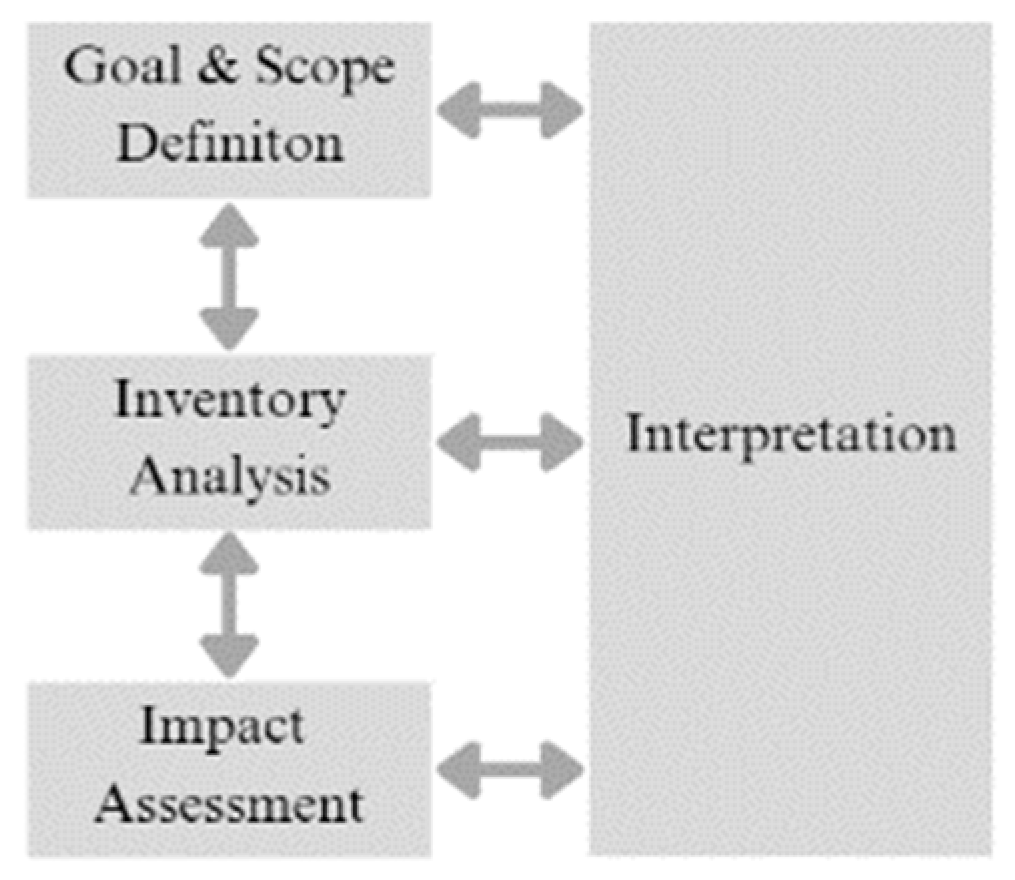
The Life Cycle Assessment (LCA) study was conducted in accordance with the guidelines set forth by the ISO 14040 series (14040:2006 and 14044:2006) [18,19]. The ReCiPe 2016 (H, hierarchist) method was employed for the impact assessment, aiming to convert the Life Cycle Inventory results into a concise set of environmental impact scores using characterization factors. LCA analysis is carried out in four steps in accordance with the aforementioned ISO guidelines, as described in Figure 1 [20]. The impact categories were calculated using GABI ts software (v10.6.2.9, Sphera Solutions GmbH, Echterdingen, Stuttgart, Germany).

2.2. Goal and Scope

The Goal of the LCA study was to determine the environmental impact of producing a burger using alternative plant-based proteins rather than conventional meat burgers. This assessment aimed to provide a comprehensive analysis of how substituting animal proteins with plant-derived options affects various environmental factors, such as greenhouse gas emissions, land use, water consumption, and overall ecological footprint. By conducting a thorough Life Cycle Assessment, the study sought to identify the potential benefits and drawbacks of plant-based protein alternatives in terms of sustainability and resource efficiency. The insights gained from this analysis could inform policy decisions, guide agricultural and food industry practices, and support consumer choices towards more environmentally friendly and sustainable dietary options.
The Scope of the LCA analysis involves defining the study’s goals and boundaries, gathering data on resource consumption and environmental emissions throughout all life cycle stages, evaluating potential environmental impacts, and interpreting the findings to support decision-making and enhance sustainability [21].

2.2.1. Product Systems and System’s Boundaries

The environmental footprint of a burger production industry was evaluated with a cradle-to-gate approach. Specifically, the system boundaries include all production processes from livestock farming (for conventional) and plant cultivation (for innovative) to burger production and cooking. This assessment covers both studied scenarios (conventional and innovative), taking into account the production processes as well as the methods for wastewater and solid waste treatment.
The first scenario (Case A) focuses on the production of a conventional burger, which is made with meat as the primary ingredient. This scenario encompasses the entire production process of a meat-based burger, including the raising of the animals, the transportation of raw materials, and all relevant processing stages. By evaluating these aspects, the study aims to provide insights into the ecological footprint of traditional meat-based burgers.
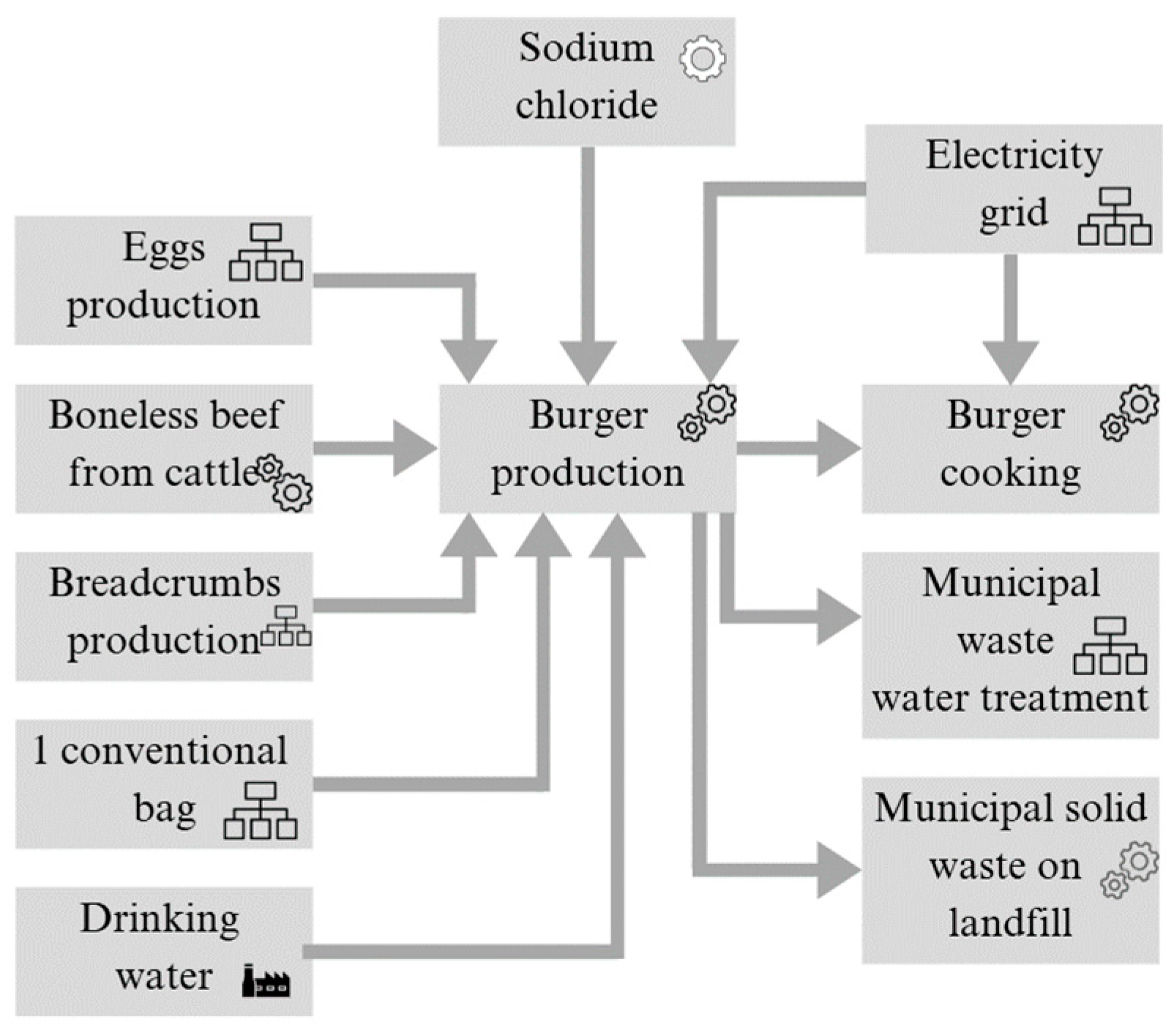
Burger production begins with selecting high-quality raw materials, including beef, buns, vegetables, and condiments. The beef is then ground and shaped into patties, which may be seasoned or enhanced with additives to improve flavor and texture. During the cooking process, patties are typically grilled to the desired doneness, taking into account factors such as temperature control, cooking time, and food safety regulations. The cooking method impacts the burger’s flavor, texture, and juiciness. Concurrently, buns are toasted, and toppings are prepared. The production is presented in Figure 2.
The second scenario (Case B), examines the innovative vegan burger made with alternative plant-based proteins. This scenario includes the cultivation and processing of plant ingredients, such as legumes, grains, and vegetables, including extraction of proteins, as well as the production of the vegan burger. The assessment for this case considers the environmental benefits and challenges of using plant-based proteins. By analyzing these factors, the study seeks to highlight the potential sustainability advantages of plant-based burgers over their meat-based counterparts.
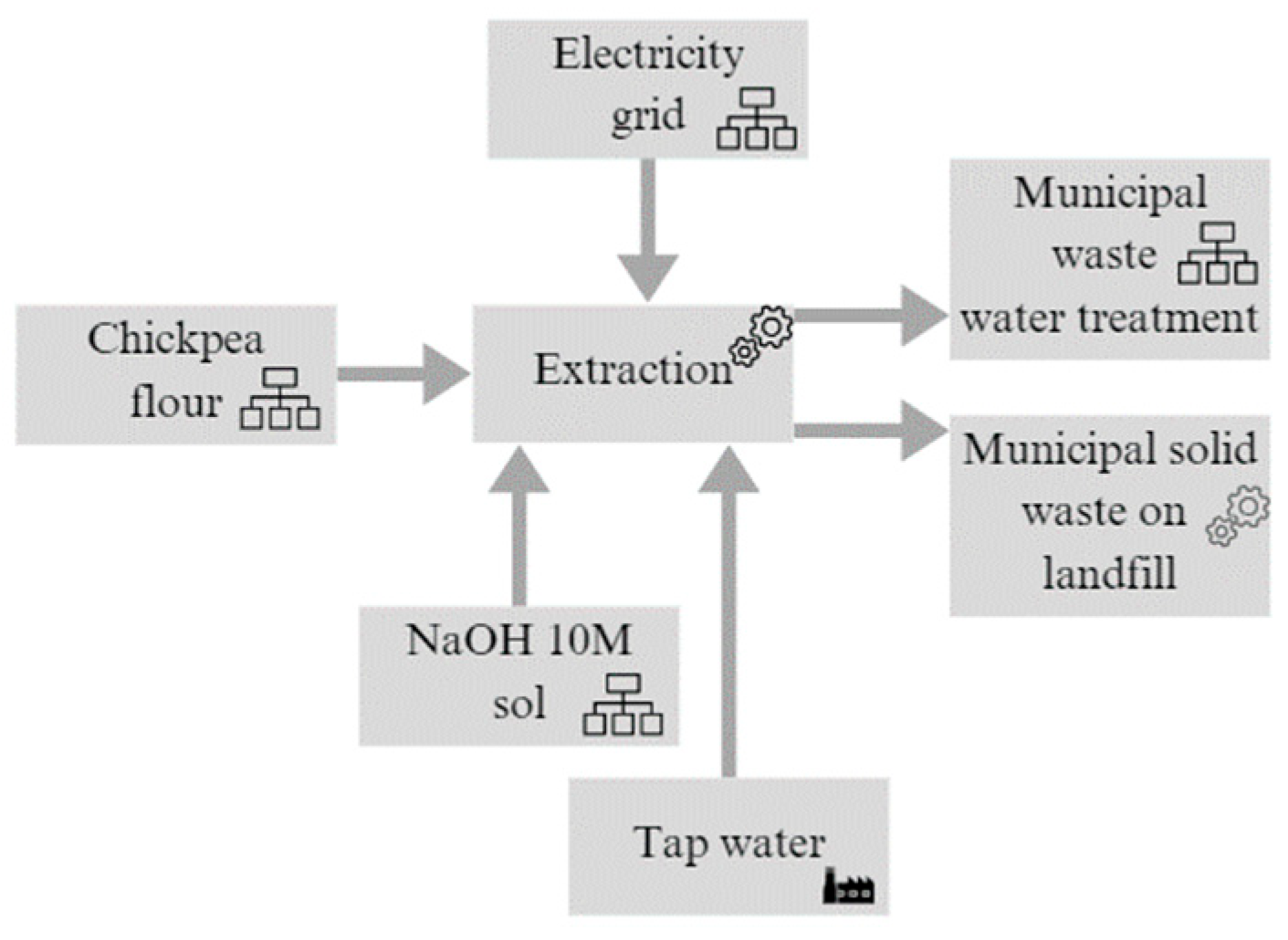
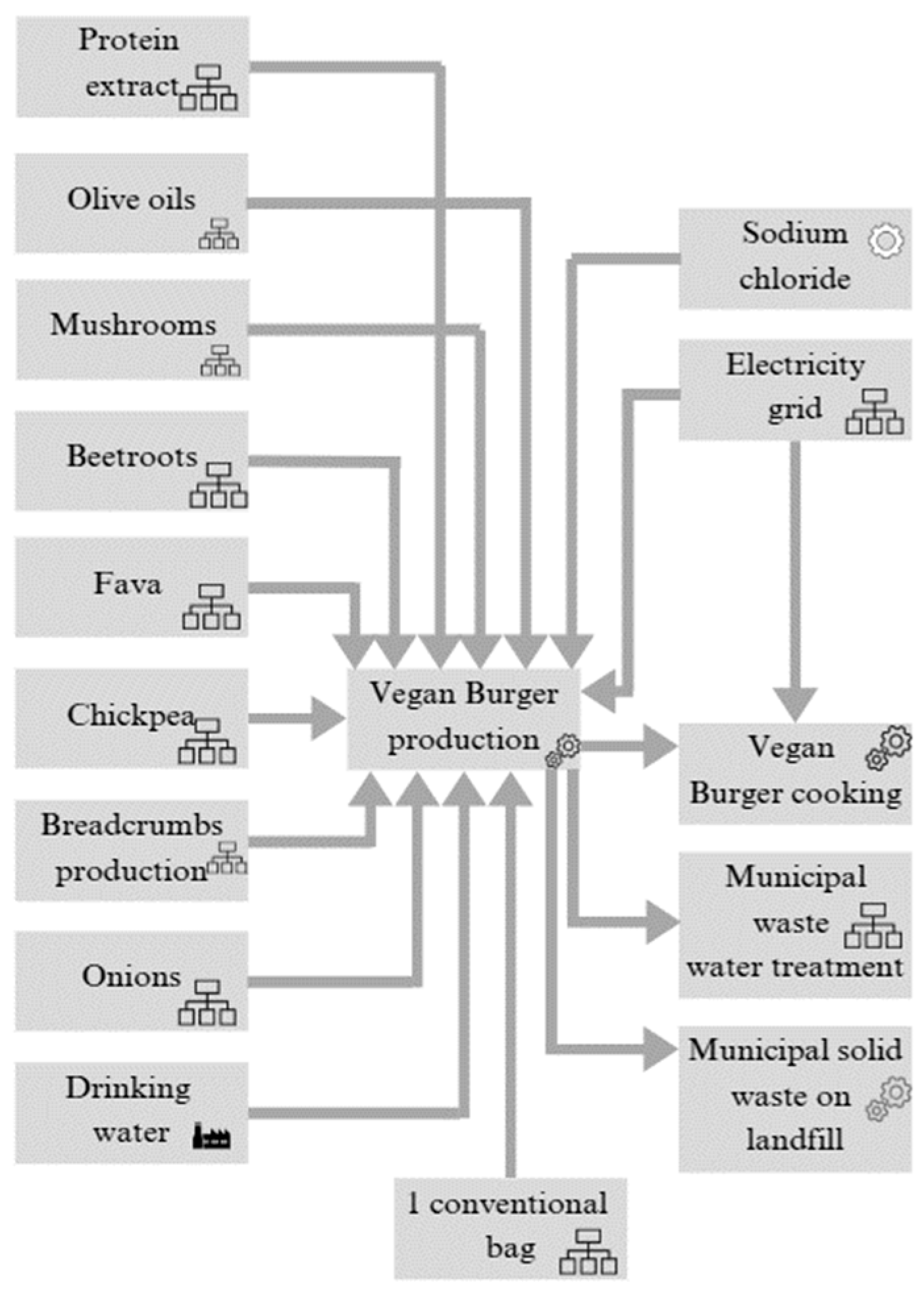
Vegan burger production involves careful selection and preparation of plant-based ingredients to mimic the taste and texture of traditional meat burgers. Vegan burger production starts with sourcing high-quality plants containing proteins followed by their subsequent extraction from the crop. The extraction of proteins from plants for incorporation into vegan burgers is a crucial step in developing a product with the desired nutritional and textural qualities. The process typically begins with selecting protein-rich plants. These plants undergo mechanical and chemical processing to isolate the proteins. Mechanical methods include milling, while chemical methods involve using solvents to break down plant material and separate the protein fractions. The obtained protein isolate can then be blended with other ingredients, such as fats, binders, and flavorings, to form a cohesive and palatable burger patty. These ingredients are processed into patties mostly via extrusion or blending, ensuring consistency and food safety. During the cooking process, vegan patties are grilled similarly to meat burgers, with attention to temperature control and cooking time to achieve the desired texture and flavor. Concurrently, vegan buns and toppings, such as lettuce, tomato, and dairy-free cheese, are prepared. Assembling the vegan burger involves layering these components to create a visually appealing and flavorful product. The production processes are presented in Figure 3 and Figure 4.

2.2.2. Functional Unit

The functional unit was defined as one unit of burger (150 g for the conventional burger and 113 g for the vegan burger).

2.2.3. Assumptions and Limitations

The data selected for the production of both meat and vegan burgers were collected following communication with Hellenic Catering that specializes in the production and distribution of meat and vegan burgers. For any data that was difficult to collect or measure, a thorough literature review was performed to obtain the relevant value. Therefore, it is expected that this uncertainty will not significantly affect the findings, as it applies to both scenarios under consideration. The statistical error is expected to be no greater than 10.0%, which does not influence the final results since it affects both studied scenarios equally.

2.2.4. Data Requirements

For data collection and inventory establishment, values were obtained from measurements conducted at Hellenic Catering (2023). The experimental part was carried out by NTUA (2023), and the measurements were supplemented with literature data, with all figures appropriately adjusted and verified through direct communication with the company.

2.2.5. Methodological Clarifications

In both production systems—conventional and vegan—dedicated processing lines were used, and each product was treated as a stand-alone output. As the vegan burger was the only product in its line, allocation was not required. No by-products, co-products, or coproduct-specific burdens (e.g., waste heat, reuse streams) were identified, and therefore the full resource and energy consumption was attributed to the respective functional unit (1 burger).
Primary data were collected through direct measurements and records provided by Hellenic Catering and the NTUA team during 2023, ensuring high temporal representativeness and data quality. These included energy consumption, material inputs, and process-specific emissions. Secondary data for background processes (e.g., energy supply, packaging material, transportation) were sourced from the GaBi 2023 database, which reflects average European conditions and is consistent with the system boundaries.
Data quality was assessed qualitatively through expert judgment, considering factors such as temporal and geographic representativeness, technological relevance, and completeness. The estimated ±10% uncertainty is based on this expert-based pedigree approach and is deemed acceptable for comparative purposes since it affects both scenarios equally. While a full pedigree matrix was not applied, the level of uncertainty is consistent with similar comparative LCA studies where high-quality foreground data are available.
Normalization and weighting were not applied, in accordance with ISO 14044 guidelines [18,19], since the study’s objective is a comparative attributional LCA rather than absolute single-score ranking.
A summary of key assumptions and methodological decisions is presented in Table 1.

2.3. Life Cycle Inventory

The Life Cycle Inventory (LCI) links various processes to quantitative data based on a defined functional unit (1 burger). Table 2 provides detailed input and output data for each step involved in the conventional burger production, as illustrated in Figure 1. Similarly, Table 3 presents corresponding data for the vegan burger production, depicted in Figure 2 and Figure 3. The data for building the inventory and conducting the analysis were primarily sourced from existing literature, with necessary modifications and subsequent verification. Environmental information was gathered using the GABI professional database (version 8007, 2022) and Ecoinvent (version 3.8).

2.4. Preliminary Economic Assessment

Economic evaluation is a critical tool for assessing the financial feasibility and sustainability of different production systems. In the context of food production, economic evaluation involves analyzing the costs associated with producing food products and identifying the most efficient methods for allocating resources.
Cost analysis refers to the process of identifying and evaluating all the costs involved in the production of goods or services. For this study, cost analysis focuses on both direct costs (such as raw materials, labor, and energy consumption) and indirect costs (including waste management, transportation, and environmental externalities). In food production, the main categories of direct costs include:
  • Raw materials: The ingredients used in the production process.
  • Energy and utilities: The electricity, water, and other resources required for processing and cooking.
  • Packaging: The cost of packaging materials used to prepare the final product for distribution.
By systematically analyzing these costs, the cost-effectiveness of each burger is determined.
All cost estimations in this economic assessment are based on market prices from the year 2023, ensuring that the analysis reflects current economic conditions and input costs. By systematically analyzing these costs, the cost-effectiveness of each burger is determined.
Additionally, a simple sensitivity analysis was conducted to evaluate the robustness of the economic results. This analysis involved varying the total production cost by ±20% to assess how changes in cost assumptions could influence the overall economic outcomes. This approach helps identify the extent to which fluctuations in input prices or resource costs might affect the profitability and feasibility of the production systems.

3. Results and Discussion

3.1. Life Cycle Assessment Results

The results of the life cycle impact assessment for the production system of the conventional meat and innovative vegan burger (per 1 burger) are presented in Table 4 for the studied impact categories [22]. In particular, the results of the current state of the production line are presented in comparison to the results using alternative proteins from plant sources.
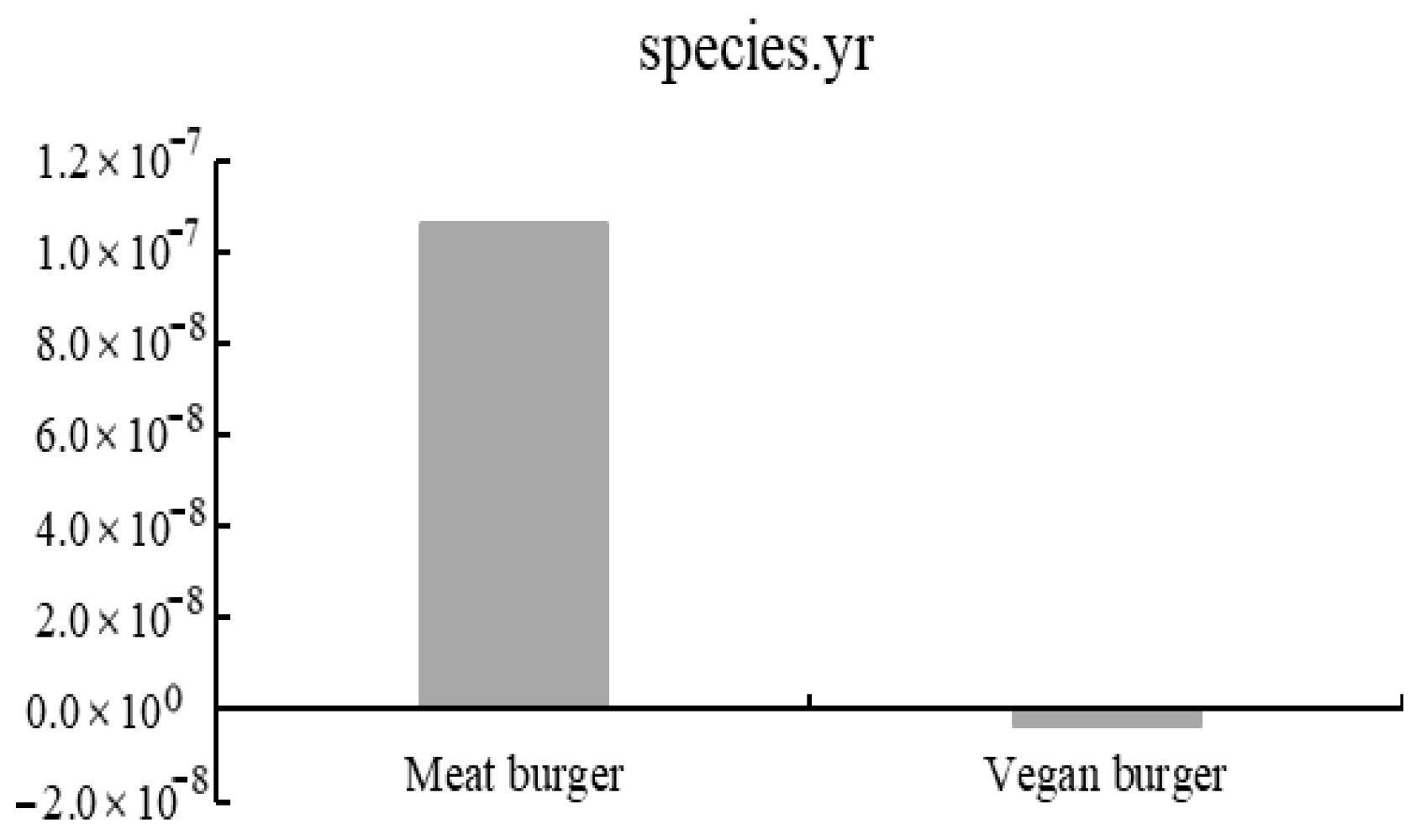
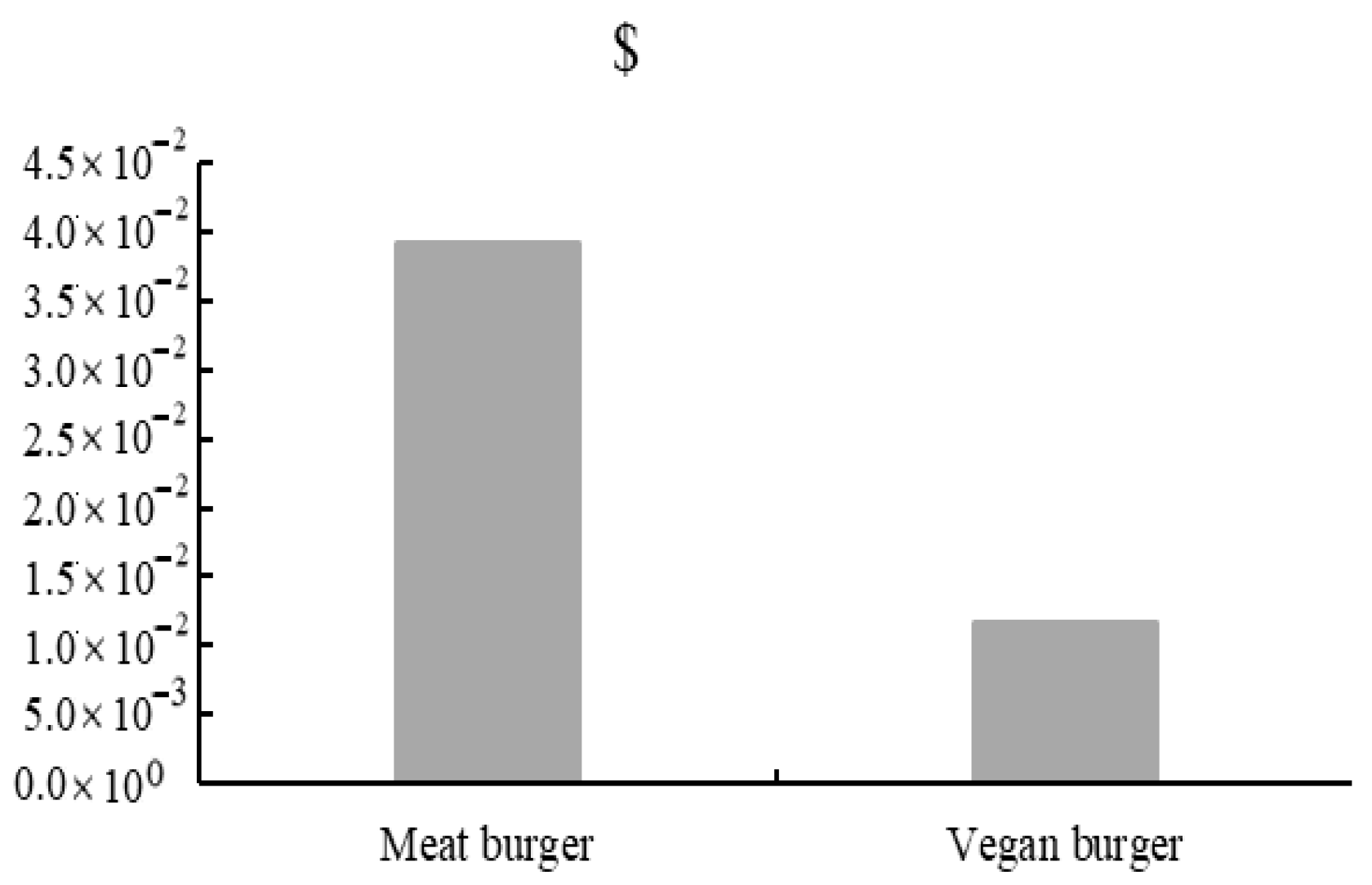
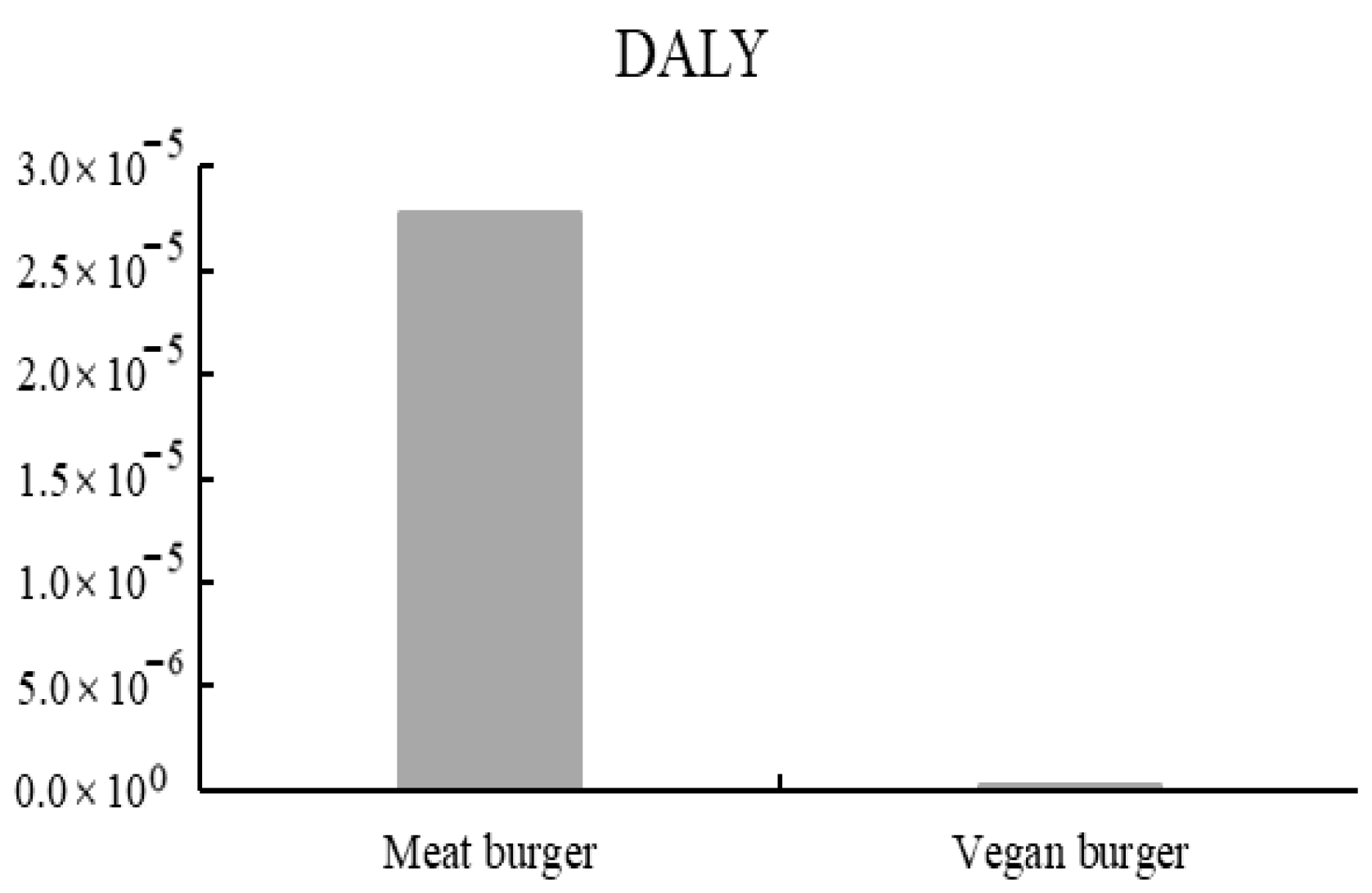
Figure 5, Figure 6 and Figure 7 depict the impact on human health [DALY], ecosystems [species.yr], and resources availability [$] of the two studied products systems that are generated for producing 1 unit of meat or vegan burger.
The findings of the Life Cycle Assessment (LCA) clearly demonstrate that substituting meat with plant-based proteins in burger production substantially reduces environmental impacts across multiple categories. Furthermore, the human health burdens associated with vegan burger production are significantly lower than those of conventional meat-based burgers [16].
Recent studies emphasize that achieving the Paris Agreement goal of limiting global temperature rise to 1.5 °C or 2 °C above pre-industrial levels will be unattainable without significant reductions in greenhouse gas emissions from the food sector [23]. A key environmental advantage of vegan burgers is their markedly lower contribution to greenhouse gas (GHG) emissions. Specifically, the climate change impact, expressed in kg CO2 equivalents, is reduced by approximately 92.25% compared to meat burgers.
This substantial decrease is primarily attributed to the absence of livestock-related methane emissions and the lower energy intensity of chickpea protein processing. Additionally, chickpea cultivation acts as a carbon sink, sequestering atmospheric CO2 during plant growth, leading to net negative emissions in some impact categories. This explains values exceeding 100% reduction (e.g., −102.28%), which reflect biogenic carbon uptake.
The transition to plant-based proteins results in a 50.94% reduction in fossil fuel depletion, mainly due to lower upstream energy requirements and reduced transportation emissions associated with plant-sourced ingredients. The assessment also reveals a 99.51% decrease in fine particulate matter formation, driven by the lack of combustion and animal waste-related emissions during vegan burger production.
Contribution analysis identified key contributors to environmental impacts in the conventional system as beef production, cooking electricity, and packaging, whereas in the vegan system, the primary contributors were chickpea cultivation, NaOH used in protein extraction, and extrusion energy. Human toxicity impacts were notably lower for vegan burgers, with a complete reduction in non-cancer toxicity. This is again linked to reduced chemical inputs and absence of veterinary pharmaceuticals used in livestock production.
Impacts on aquatic ecosystems are also significantly mitigated. Freshwater eutrophication is reduced by 98.24%, while marine eutrophication decreases by 99.75% in vegan burger production, primarily due to the absence of nitrogen runoff from livestock manure and feed production. Water consumption is another crucial factor, with vegan burger production requiring 40.16% less freshwater than meat-based alternatives. Given that meat production—particularly beef—has a high water footprint, this reduction highlights the role of plant-based proteins in promoting water conservation and sustainable resource management [24].
Land use is drastically reduced, with a 99.88% lower impact, as vegan burger production requires neither pasture grazing nor feed crop land. Although meat and dairy contribute less than 20% of global caloric intake, they occupy over 70% of all agricultural land and 40% of arable cropland [25]. Plant-based protein production, particularly chickpeas, utilizes far less land while offering nutritional and ecological advantages.
Sensitivity analysis was qualitatively conducted by evaluating variation in key input categories (e.g., energy, transportation, extraction chemicals). However, given the standardized, optimized production procedure developed and validated through experimental trials by Hellenic Catering and NTUA, the overall system configuration was fixed. Thus, full parameter variation analysis was not included.
Methodological limitations include the exclusion of allocation due to single-product lines, expert-based uncertainty estimation (±10%), and lack of normalization or weighting as per ISO 14044 [18,19], given the comparative focus.
The transition from meat-based to plant-based protein sources in burger production yields substantial environmental and health benefits. The significant reductions in GHG emissions, land and water use, air pollution, and human toxicity illustrate the potential of plant-based alternatives as a sustainable solution for food production. These findings emphasize the crucial role of alternative proteins in minimizing the environmental footprint of food systems while promoting human health and resource conservation.
These results align well with recent Life Cycle Assessment (LCA) literature, which confirms the environmental superiority of plant-based alternatives. For example, Notarnicola et al. (2017) reported that replacing meat with soy or pea proteins can reduce GHG emissions by 70–90% and land use by over 85% [26]. Similarly, a detailed LCA conducted on Beyond Burger found a 90% reduction in global warming potential, along with 93% less land use and 99% lower water consumption compared to conventional beef production [16]. A European LCA study by Saerens et al. (2021) showed that beef burgers had a climate change impact of 22.4 kg CO2 eq, while soy-based vegan burgers emitted only 0.6 kg CO2 eq, highlighting dramatic reductions in ecosystem damage [27].
While most comparative LCA studies have focused on soy and pea proteins, recent assessments have begun evaluating additional legumes. The inclusion of chickpeas in meat substitute formulations addresses both environmental and agronomic considerations and contributes to diversification in sustainable protein strategies. These findings confirm that plant-based burgers—regardless of the specific legume used—consistently achieve substantial environmental gains over traditional meat products.

3.2. Economic Results

The results for the economic evaluation of the two burgers are presented in Table 5.
The cost analysis presented in the table highlights significant differences between the production costs of conventional meat burgers and innovative plant-based burgers. The total cost per 100 kg of meat burgers is 451.31 €, whereas the cost for the same quantity of vegan burgers is significantly lower at 214.2 €. This substantial cost reduction is also reflected in the price per individual burger, with a meat burger costing 0.66 € compared to 0.24 € for a vegan burger.
The primary reason for the cost disparity between the two products lies in the significant difference in the price of their key ingredients. Conventional burgers rely heavily on meat, which is one of the most expensive components in food production. This high cost substantially increases the overall expense of producing a traditional meat-based burger. In addition to meat, other animal-derived ingredients such as eggs also contribute to the higher production costs, making the conventional burger a more costly option.
On the other hand, the plant-based burger uses a variety of more affordable ingredients, including legumes like chickpeas and fava beans, as well as vegetables such as mushrooms and beetroot. These plant-based components are generally much less expensive than animal-derived ones. Although the vegan burger does incorporate a protein extract that is relatively costly, the overall ingredient costs remain significantly lower. The use of cost-effective plant sources helps offset the price of the more expensive components, resulting in a product that is much more economical to produce.
Both burger types have identical costs for packaging materials (2.85 €/kg), electricity during production (0.22 €/18 kWh), and water usage (0.9 €/0.3 m3). The slight variation in electricity consumption during baking is not significant, with the meat burger requiring 0.22 €/65 kWh, compared to 0.2 €/65 kWh for the vegan burger.
The waste output for both meat and vegan burger remains consistent, with liquid waste at 0.165 €/0.3 m3 and solid waste at 0.2 €/0.638 kg. These values suggest that despite the differences in raw materials and production, both burger production processes generate similar levels of waste.
Transportation costs, which are determined by diesel consumption (1.6 €/5.5 L), remain unchanged between the two products, indicating that the distribution logistics do not significantly affect the cost difference.
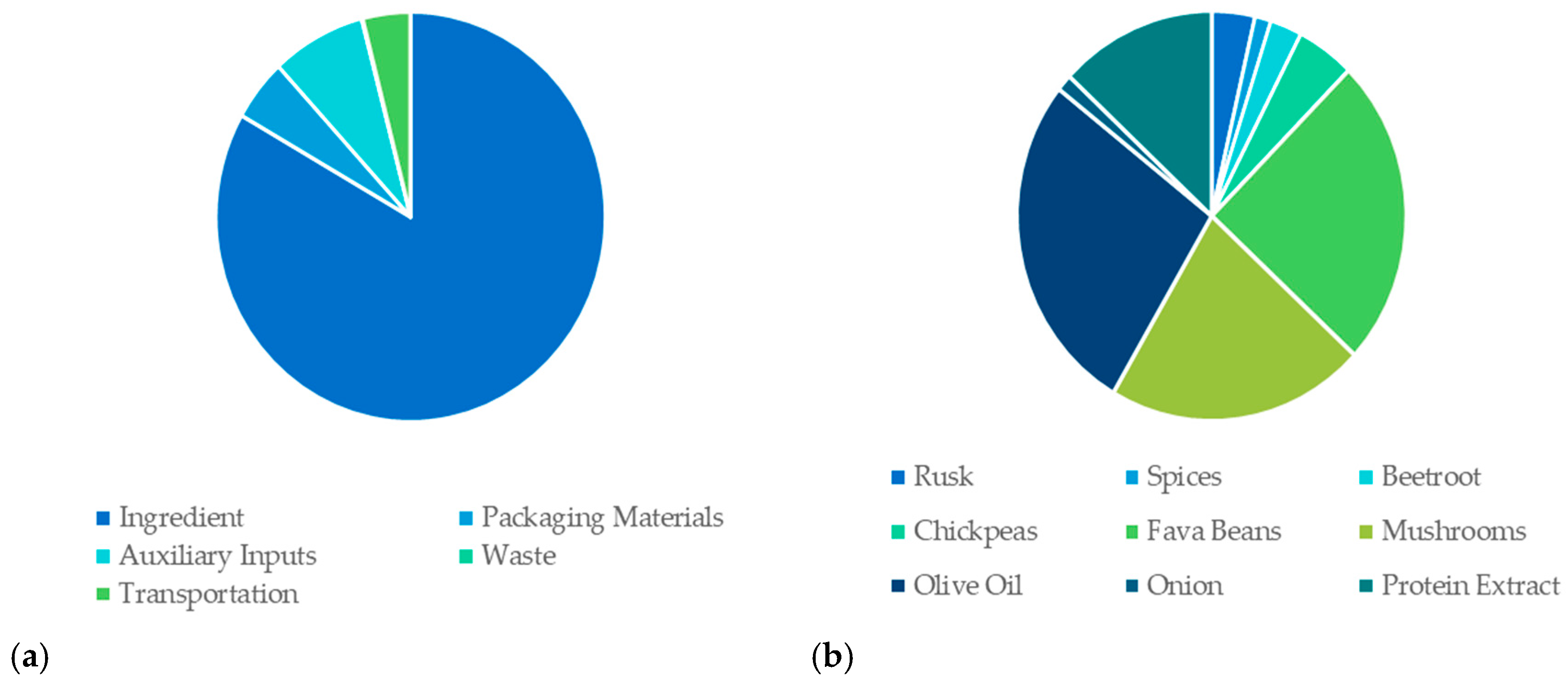
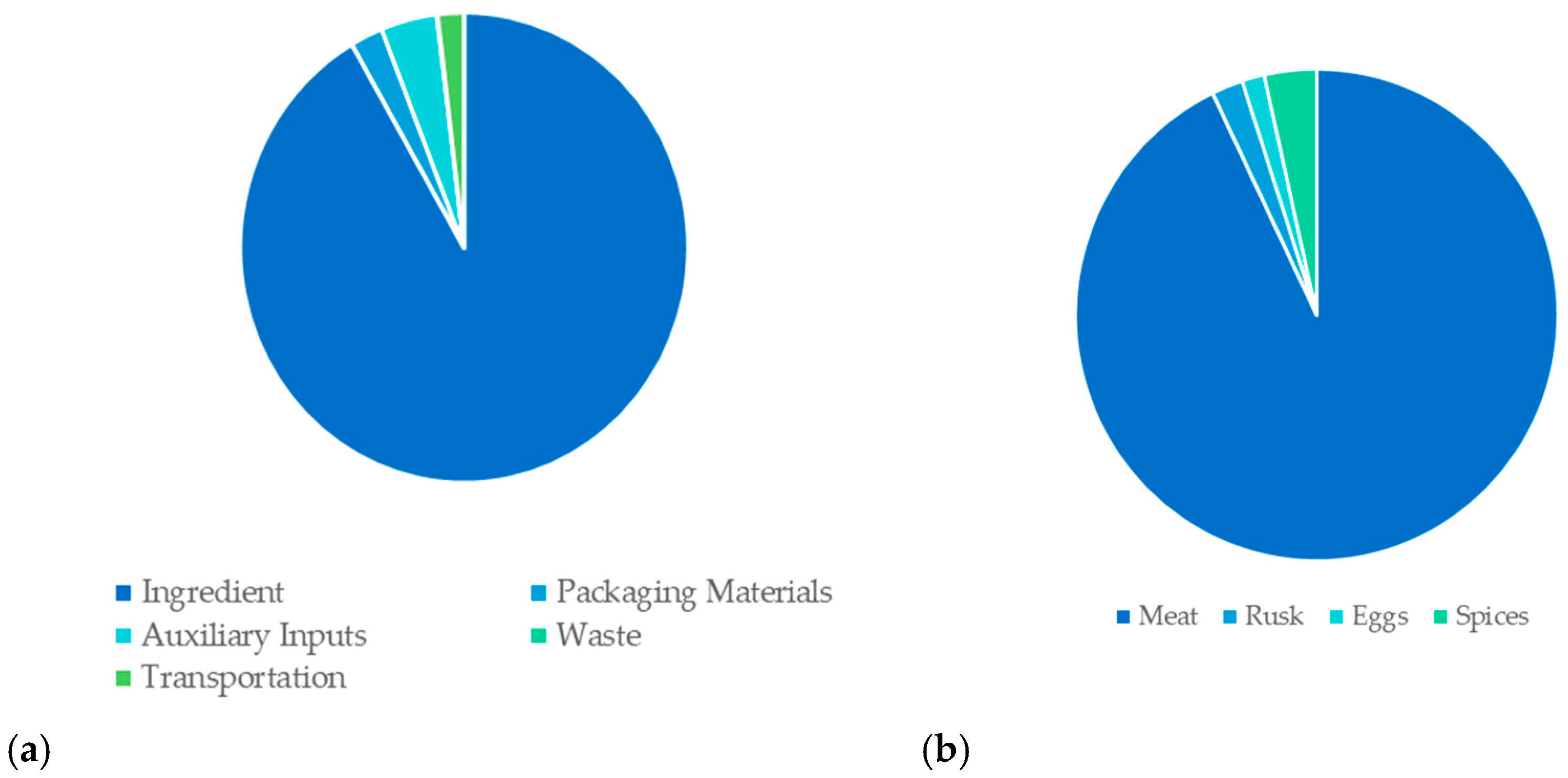
A graphical comparison of the cost structure is presented in Figure 8 and Figure 9. Figure 8 illustrates the relative contribution of major cost categories (ingredients, packaging, auxiliary inputs, transportation, and waste) to the total cost of a meat burger. Figure 9 details the proportional cost distribution among key ingredients, without disclosing specific quantities. This aggregated representation enables a clear understanding of the dominant cost drivers while respecting proprietary or sensitive data related to exact input formulations.
To evaluate the robustness of the economic advantage of the vegan burger, a sensitivity analysis was conducted by varying the production cost by ±20% for both burger types (Table 6). Even in a conservative scenario where the cost of the vegan burger increases by 20% (€0.288 per unit) and the cost of the meat burger decreases by 20% (€0.528 per unit), the vegan burger remains more cost-effective by approximately €0.24 per unit. This demonstrates that the cost advantage of plant-based burger production is resilient to market fluctuations, raw material pricing, and other economic uncertainties. On a larger production scale, this differential could translate into substantial cost savings, reinforcing the financial viability of transitioning toward alternative protein-based food products.
The findings from this economic assessment suggest that innovative vegan burger production is considerably more cost-effective than traditional meat burger production. The primary cost driver for meat burgers is the increased price of animal-derived ingredients, particularly meat and eggs, whereas plant-based ingredients rely on more affordable protein sources. Despite the inclusion of the protein extract which is a high-cost, the overall production cost of the vegan burger remains significantly lower. These economic benefits, combined with the environmental advantages, make plant-based burgers a financially viable and sustainable alternative to conventional meat-based options.

3.3. Scalability and Industrial Applicability

This research highlights the potential for scaling up vegan burger production using chickpea-derived proteins in an industrial setting. The environmental and economic benefits observed suggest that these products are not only more sustainable but also offer a cost-efficient option for large-scale manufacturing. Relying on locally grown legumes with minimal processing needs strengthens regional supply chains, supports food independence, and reduces reliance on imported protein sources. Furthermore, the overall production process for vegan burgers—covering forming, packaging, and cooking—shares many similarities with traditional meat burgers, making it relatively easy to adapt existing production lines without major changes.
However, some limitations should be acknowledged. The LCA and cost analysis are based on data from a single production site, which may not fully reflect variations across different regions, technologies, or scales of operation. Moreover, certain processing steps within the production chain are resource-intensive and could present challenges when scaling up, especially in regions facing constraints in water, energy, or infrastructure. These factors highlight the need for continuous innovation and adaptation to ensure that environmental and economic benefits are maintained as production expands.
To improve the environmental profile and industrial efficiency, several strategies could be implemented. Switching to dry extraction methods for proteins could help cut down water usage and lower energy requirements. On the agricultural side, adopting more efficient practices—like precision fertilization, better crop rotations, and integrated pest control—can reduce upstream emissions and resource consumption. Using eco-friendly packaging materials, such as biodegradable or recycled-content options, would also help minimize the impact of post-consumer waste. Moreover, transitioning to renewable energy sources in both manufacturing and logistics can further reduce the carbon footprint of the entire production chain.
By pursuing these innovations, supported by appropriate policy frameworks and industry investment, plant-based burger production can become even more viable and sustainable at scale. This positions it as a promising solution for addressing future food system challenges while aligning with environmental and public health goals.


4. Conclusions

Based on the Life Cycle Assessment (LCA), the use of alternative plant-based proteins in burger production results in significant environmental benefits, particularly through reductions in greenhouse gas emissions, particulate matter formation, eutrophication, and fossil resource depletion. These improvements are also linked with reduced impact on human health, ecosystems, and the overall availability of natural resources. In particular, replacing meat with plant-based proteins dramatically reduces the impact on climate change, particulate matter formation and eutrophication. Additionally, there is a substantial reduction in freshwater consumption and the negative health impacts associated with meat burger consumption. Therefore, compared to conventional meat burgers, vegan burgers exhibit a considerably smaller environmental footprint, while simultaneously constitute a healthier option for consumers.
The overall analysis indicates that vegan burgers significantly decrease the impact on human health, ecosystems, and resource availability. More specifically, the damage to human health and ecosystems is nearly negligible for vegan burgers, underscoring their environmental and health advantages.
Economically, the production of plant-based burgers is more cost-effective than traditional meat burgers. The reduced price of the ingredients translates into financial savings, making vegan burgers a viable and sustainable alternative. Sensitivity analysis confirmed that this cost advantage remains even under 20% cost fluctuation scenarios, reinforcing the economic robustness of plant-based burger production.
Therefore, the innovative plant-based burgers developed are sustainable both economically and environmentally. They represent a promising strategy for reducing the environmental burden of the food sector, lowering health risks, and enabling more sustainable consumer choices.

Author Contributions

Conceptualization, C.B., C.P., P.T. and M.K.; methodology, A.M., T.K., C.B., C.P., P.T. and M.K.; software, T.K., C.B. and G.F.; validation, A.M., C.B., G.F., C.P., P.T. and M.K.; formal analysis, A.M., T.K., C.B., G.F., C.P. and P.T.; investigation, A.M., T.K., C.B., C.P., P.T. and M.K.; resources, C.P., P.T. and M.K.; data curation, A.M., T.K., C.B., G.F., C.P. and P.T.; writing—original draft preparation, A.M., T.K. and G.F.; writing—review and editing, A.M., T.K., C.B., G.F., C.P., P.T. and M.K.; visualization, A.M., T.K., C.B. and G.F.; supervision, C.B., C.P., P.T. and M.K.; project administration, C.P., P.T. and M.K.; funding acquisition, C.P., P.T. and M.K. All authors have read and agreed to the published version of the manuscript.

Funding

This research has been co-financed by the European Regional Development Fund of the European Union and Greek national funds through the Operational Program Competitiveness, Entrepreneurship, and Innovation, under the call RESEARCH—CREATE—INNOVATE (project code: T2EDK-02830).

Institutional Review Board Statement

Not applicable.

Informed Consent Statement

Not applicable.

Data Availability Statement

No new data were created or analyzed in this study.

Acknowledgments

The authors would like to express their gratitude to Hellenic Catering S.A., 1st Street, Industrial Area of Thessaloniki (VI.PE.TH.), 570 22 Sindos, Thessaloniki, Greece, for their valuable support and collaboration in providing resources and materials essential for the completion of this study.

Conflicts of Interest

Authors Christina Panou and Panagiota Thasitou were employed by the company Hellenic Catering S.A.. The remaining authors declare that the research was conducted in the absence of any commercial or financial relationships that could be construed as a potential conflict of interest.

Abbreviations

The following abbreviations are used in this manuscript:
LCALife Cycle Assessment
ISOInternational Organization for Standardization
ReCiPeRecipe for Environmental Impact Assessment Methodology
GABIGaBi Software (a life cycle assessment tool)
EcoinventA global LCA database
LCILife Cycle Inventory
CO2Carbon Dioxide
GHGGreenhouse Gas
kg CO2 eq.Kilogram of Carbon Dioxide Equivalent
PM2.5Fine Particulate Matter
kg Cu eq.Kilogram Copper Equivalent
CFC-11 eq.Trichlorofluoromethane Equivalent
SO2 eq.Sulfur Dioxide Equivalent
kg 1,4-DB eq.Kilogram 1,4-Dichlorobenzene Equivalent
kg oil eq.Kilogram Oil Equivalent
DALYDisability-Adjusted Life Years
species*yrSpecies Year
NOxNitrogen Oxides

References

  1. Gil, M.; Rudy, M.; Duma-Kocan, P.; Stanisławczyk, R.; Krajewska, A.; Dziki, D.; Hassoon, W.H. Sustainability of Alternatives to Animal Protein Sources, a Comprehensive Review. Sustainability 2024, 16, 7701. [Google Scholar] [CrossRef]
  2. Binnie, M.A.; Barlow, K.; Johnson, V.; Harrison, C. Red meats: Time for a paradigm shift in dietary advice. Meat Sci. 2014, 98, 445–451. [Google Scholar] [CrossRef] [PubMed]
  3. Godfray, H.C.J.; Aveyard, P.; Garnett, T.; Hall, J.W.; Key, T.J.; Lorimer, J.; Pierrehumbert, R.T.; Scarborough, P.; Springmann, M.; Jebb, S.A. Meat consumption, health, and the environment. Science 2018, 361, eaam5324. [Google Scholar] [CrossRef] [PubMed]
  4. Poore, J.; Nemecek, T. Reducing food’s environmental impacts through producers and consumers. Science 2018, 360, 987–992. [Google Scholar] [CrossRef] [PubMed]
  5. Gerber, P.J.; Steinfeld, H.; Henderson, B.; Mottet, A.; Opio, C.; Dijkman, J.; Falcucci, A.; Tempio, G. Tackling Climate Change Through Livestock—A Global Assessment of Emissions and Mitigation Opportunities; Food and Agriculture Organization of the United Nations (FAO): Rome, Italy, 2013. [Google Scholar]
  6. Steinfield, H.; Castel, V.; Wassenaar, T. Livestock’s Long Shadow Environmental Issues and Options; Food and Agriculture Organization of the United Nations: Rome, Italy, 2006. [Google Scholar]
  7. Mekonnen, M.M.; Hoekstra, A.Y. A Global Assessment of the Water Footprint of Farm Animal Products. Ecosystems 2012, 15, 401–415. [Google Scholar] [CrossRef]
  8. Andreani, G.; Sogari, G.; Marti, A.; Froldi, F.; Dagevos, H.; Martini, D. Plant-Based Meat Alternatives: Technological, Nutritional, Environmental, Market, and Social Challenges and Opportunities. Nutrients 2023, 15, 452. [Google Scholar] [CrossRef] [PubMed]
  9. Ahmad, S.; Wong, K.Y.; Ahmad, R. Life cycle assessment for food production and manufacturing: Recent trends, global applications and future prospects. Procedia Manuf. 2019, 34, 49–57. [Google Scholar] [CrossRef]
  10. Peña, C.; Civit, B.; Gallego-Schmid, A.; Druckman, A.; Pires, A.C.; Weidema, B.; Mieras, E.; Wang, F.; Fava, J.; i Canals, L.M.; et al. Using life cycle assessment to achieve a circular economy. Int. J. Life Cycle Assess. 2021, 26, 215–220. [Google Scholar] [CrossRef]
  11. Parajuli, R.; Matlock, M.D.; Thoma, G. Cradle to grave environmental impact evaluation of the consumption of potato and tomato products. Sci. Total Environ. 2021, 758, 143662. [Google Scholar] [CrossRef] [PubMed]
  12. Cellura, M.; Cusenza, M.A.; Longo, S.; Luu, L.Q.; Skurk, T. Life Cycle Environmental Impacts and Health Effects of Protein-Rich Food as Meat Alternatives: A Review. Sustainability 2022, 14, 979. [Google Scholar] [CrossRef]
  13. Xiang, H.; Li, W.; Li, C.; Ling, S.; Wang, H. Optimization configuration model and application of product service system based on low-carbon design. Sustain. Prod. Consum. 2023, 36, 354–368. [Google Scholar] [CrossRef]
  14. Herrmann, M.; Mehner, E.; Egger, L.; Portmann, R.; Hammer, L.; Nemecek, T. A comparative nutritional life cycle assessment of processed and unprocessed soy-based meat and milk alternatives including protein quality adjustment. Front. Sustain. Food Syst. 2024, 8, 1413802. [Google Scholar] [CrossRef]
  15. Tang, M.; Miri, T.; Soltani, F.; Onyeaka, H.; Al-Sharify, Z.T. Life Cycle Assessment of Plant-Based vs. Beef Burgers: A Case Study in the UK. Sustainability 2024, 16, 4417. [Google Scholar] [CrossRef]
  16. Martin, C.H.; Keoleian, G.A. Beyond Meat’s Beyond Burger Life Cycle Assessment: A Detailed Comparison Between a Plantbased and an Animal-Based Protein Source; University of Michigan: Ann Arbor, MI, USA, 2018. [Google Scholar]
  17. Becker, G.; Janssen, J.N.; Kalev-Altman, R.; Meilich, D.; Shitrit, A.; Penn, S.; Reifen, R.; Ornan, E.M. Plant and Insect Proteins Support Optimal Bone Growth and Development; Evidences from a Pre-Clinical Model. arXiv 2024, arXiv:2407.21087. [Google Scholar] [CrossRef]
  18. ISO 14040:2006; Environmental Management—Life Cycle Assessment—Principles and Framework. International Organization for Standardization: Geneva, Switzerland, 2006.
  19. ISO 14044:2006; Environmental Management—Life Cycle Assessment—Requirements and Guidelines. International Organization for Standardization: Geneva, Switzerland, 2006.
  20. Farjana, S.H.; Mahmud, M.A.P.; Huda, N. Introduction to Life Cycle Assessment. In Life Cycle Assessment for Sustainable Mining; Elsevier: Amsterdam, The Netherlands, 2021; pp. 1–13. [Google Scholar]
  21. Mari, A.; Kekes, T.; Boukouvalas, C.; Drosou, C.; Krokida, M.; Tsartsaris, C. Evaluating the Environmental and Economic Benefits of New Technologies in Low-Salt Olive Fermentation. Agriculture 2024, 14, 2077. [Google Scholar] [CrossRef]
  22. Muralikrishna, I.V.; Manickam, V. Life Cycle Assessment. In Environmental Management; Elsevier: Amsterdam, The Netherlands, 2017; pp. 57–75. [Google Scholar]
  23. Saget, S.; Porto Costa, M.; Santos, C.S.; Vasconcelos, M.; Styles, D.; Williams, M. Comparative life cycle assessment of plant and beef-based patties, including carbon opportunity costs. Sustain. Prod. Consum. 2021, 28, 936–952. [Google Scholar] [CrossRef]
  24. Zucchinelli, M.; Spinelli, R.; Corrado, S.; Lamastra, L. Evaluation of the influence on water consumption and water scarcity of different healthy diet scenarios. J. Environ. Manag. 2021, 291, 112687. [Google Scholar] [CrossRef] [PubMed]
  25. Parlasca, M.C.; Qaim, M. Meat Consumption and Sustainability. Annu. Rev. Resour. Econ. 2022, 14, 17–41. [Google Scholar] [CrossRef]
  26. Notarnicola, B.; Tassielli, G.; Renzulli, P.A.; Castellani, V.; Sala, S. Environmental impacts of food consumption in Europe. J. Clean. Prod. 2017, 140, 753–765. [Google Scholar] [CrossRef]
  27. Saerens, W.; Smetana, S.; Van Campenhout, L.; Lammers, V.; Heinz, V. Life cycle assessment of burger patties produced with extruded meat substitutes. J. Clean. Prod. 2021, 306, 127177. [Google Scholar] [CrossRef]
Figure 1. Life Cycle Assessment Framework.
Applsci 15 11581 g001
Figure 2. Conventional meat burger production.
Applsci 15 11581 g002
Figure 3. Extraction process.
Applsci 15 11581 g003
Figure 4. Vegan burger production.
Applsci 15 11581 g004
Figure 5. Damage to human health [DALY] for meat and vegan burger (per 1 burger).
Applsci 15 11581 g005
Figure 6. Damage to ecosystems (species.yr) for meat and vegan burger (per 1 burger).
Applsci 15 11581 g006
Figure 7. Damage to resource availability [$] for meat and vegan burger (per 1 burger).
Applsci 15 11581 g007
Figure 8. (a) Distribution of overall cost categories (b) Detailed contribution of individual ingredients to total ingredient cost of meat burger.
Applsci 15 11581 g008
Figure 9. (a) Distribution of overall cost categories (b) Detailed contribution of individual ingredients to total ingredient cost of vegan burger.
Applsci 15 11581 g009
Table 1. Summary of Key Assumptions and Methodological Details.
CategoryDetails
Functional Unit1 burger (150 g meat; 113 g vegan)
System BoundaryCradle-to-gate
AllocationNot required (single product per system, no co-/by-products)
Primary DataDirect measurements from Hellenic Catering and NTUA (2023)
BackgroundDataGaBi 2023 Academic database (average EU conditions)
Uncertainty HandlingExpert-based evaluation; estimated ±10% across both systems
Uncertainty ManagementNot applied (per ISO 14044 [18,19], comparative LCA does not require normalization when impacts are evaluated category by category)
Table 2. Life Cycle Inventory for conventional meat burger production.
Burger Production
[In] Eggs (kg)0.0021
[In] Sodium chloride (kg)0.0043
[In] Plastic bags for transportation (kg)0.0054
[In] Breadcrumbs (kg)0.0057
[In] Electricity (MJ)0.0919
[In] Meat (kg)0.1112
[In] Water (kg)0.4332
[Out] Municipal wastewater (kg)0.4317
[Out] Mince (kg)0.1523
[Out] Waste (solid) (kg)0.0037
Burger cooking
[In] Mince (kg)0.15
[In] Electricity (MJ)0.34
[Out] Burger (kg)0.15
Table 3. Life Cycle Inventory for vegan burger production.
Plant-Protein Extraction
[In] Electricity (MJ)0.4911
[In] EU:NaOH 10 M sol (kg)0.7113
[In] Chickpea flour (kg)8.8821
[In] Water (tap water) (kg)88.1736
[Out] Protein extract (kg)1.0000
[Out] Municipal wastewater (kg)88.7624
[Out] Waste (solid) (kg)7.8744
Burger production
[In] Sodium chloride (kg)0.0006
[In] Protein extract (kg)0.0011
[In] Breadcrumbs (kg)0.0034
[In] Plastic bags for transportation (kg)0.0043
[In] Onions (kg)0.0068
[In] Beetroots (kg)0.0090
[In] Olive oil (kg)0.0113
[In] Mushrooms (kg)0.0203
[In] Fava (kg)0.0203
[In] Chickpea (kg)0.0401
[In] Electricity (MJ)0.0732
[In] Water (drinking water) (kg)0.3390
[Out] Vegan burger (kg)0.1130
[Out] Municipal wastewater (kg)0.3390
[Out] Waste (solid) (kg)0.0029
Burger cooking
[In] Vegan burger (kg)0.1133
[In] Electricity (MJ)0.8512
[Out] Vegan burger (kg)0.1133
Table 4. Life cycle impact assessment results for the meat and vegan burger production system (per 1 burger) for the studied impact categories.
Impact CategoriesMeat BurgerVegan BurgerDifference (%)
Climate change, default, excl biogenic carbon [kg CO2 eq.]2.79 × 1002.16 × 10192.25
Climate change, incl biogenic carbon [kg CO2 eq.]2.70 × 100−6.16 × 102102.28
Fine Particulate Matter Formation [kg PM2.5 eq.]3.58 × 1021.76 × 10499.51
Fossil depletion [kg oil eq.]1.25 × 1016.12 × 10250.94
Freshwater Consumption [m3]2.93 × 1021.75 × 10240.16
Freshwater ecotoxicity [kg 1.4 DB eq.]2.51 × 1035.42 × 10597.84
Freshwater Eutrophication [kg P eq.]4.40 × 1047.75 × 10698.24
Human toxicity, cancer [kg 1.4-DB eq.]2.57 × 1047.95 × 10569.05
Human toxicity, non-cancer [kg 1.4-DB eq.]−8.73 × 1017.36 × 103100.84
Ionizing Radiation [Bq C-60 eq. to air]3.11 × 1032.57 × 10317.38
Land use [Annual crop eq.·y]3.07 × 1003.78 × 10399.88
Marine ecotoxicity [kg 1.4-DB eq.]4.07 × 1036.58 × 10483.84
Marine Eutrophication [kg N eq.]1.85 × 1034.57 × 10699.75
Metal depletion [kg Cu eq.]1.66 × 1023.70 × 10377.65
Photochemical Ozone Formation, Ecosystems [kg NOx eq.]4.32 × 101−3.29 × 102107.61
Stratospheric Ozone Depletion [kg CFC-11 eq.]2.43 × 1054.62 × 10899.81
Terrestrial Acidification [kg SO2 eq.]3.42 × 1025.37 × 10498.43
Terrestrial ecotoxicity [kg 1.4-DB eq.]2.35 × 1017.36 × 10268.71
Table 5. Economic Data for the Production of 100 kg of Burgers and 1 Burger.
ProductMeat BurgerVegan Burger
Cost [€/unit]QuantityUnitCost Cost [€/unit]Quantity
Ingredients419.8100kg183.805100kg
Packaging Materials2.853.78kg2.853.78kg
Auxiliary Inputs
Electricity (Production)0.2218kWh0.2218kWh
Water0.90.3m30.90.3m3
Electricity (Baking)0.2265kWH0.265kWh
Waste
Liquid Waste0.1650.3m30.1650.3m3
Solid Waste0.20.638kg0.20.638kg
Transportation
Diesel1.65.5L1.65.5L
Final Costs
Cost per 100 kg of Burgers451.31 €214.2 €
Cost per Burger0.66 €0.24 €
Table 6. Sensitivity analysis of cost variation (±20%) for meat and vegan burgers.
Meat BurgerVegan Burger
PricePrice + 20%Price − 20%PricePrice + 20%Price − 20%
Cost per 100 kg of Burgers451.31541.572361.048214.2257.04171.36
Cost per Burger0.660.7920.5280.240.2880.192
Disclaimer/Publisher’s Note: The statements, opinions and data contained in all publications are solely those of the individual author(s) and contributor(s) and not of MDPI and/or the editor(s). MDPI and/or the editor(s) disclaim responsibility for any injury to people or property resulting from any ideas, methods, instructions or products referred to in the content.