Article

Study on the Evolution Law of Ice–Water Transport During the Ice Flood Period in the Shisifen Section of the Yellow River in Inner Mongolia


by
Yu Deng
1,2,*,
Kaidi Duan
3 and
Yong Zhu
1,2
1
Yellow River Institute of Hydraulic Research, Zhengzhou 450003, China
2
Research Center on Levee Safety Disaster Prevention, Ministry of Water Resources, Zhengzhou 450003, China
3
School of Port, Coastal and Offshore Engineering, Hohai University, Nanjing 210024, China
*
Author to whom correspondence should be addressed.
Appl. Sci. 2025, 15(18), 10270; https://doi.org/10.3390/app151810270
Submission received: 22 July 2025 / Revised: 12 September 2025 / Accepted: 17 September 2025 / Published: 21 September 2025
(This article belongs to the Special Issue Advances in Computational and Experimental Fluid Dynamics)

Abstract

Ice disasters in the Yellow River’s Inner Mongolia reach exhibit sudden onset and high destructiveness, driven by climatic and channel constraints. The Shisifen Bend, within this reach, is particularly prone to initial ice jamming during freeze-up periods annually. This susceptibility arises from channel narrowing, increased upstream ice influx, and complex river morphology. To address persistent ice flood risks and mitigation challenges at Shisifen Bend, this study developed a coupled ice-transport numerical model. Utilizing MIKE21’s hydrodynamic and particle tracking modules alongside measured bathymetric and depth data, the model simulates ice movement under three distinct flow conditions: 2000, 2500, and 3000 m3/s. Analysis of ice trajectories and distribution patterns under varying flow conditions reveals key transport mechanisms for both ice and water. These findings provide critical insights for enhancing ice flood prevention and disaster reduction strategies along the Inner Mongolia Yellow River during freeze-up period.

1. Introduction

Ice flood is a distinctive hydrological phenomenon observed in cold region rivers, particularly during winter and spring. It arises from substantial ice accumulations that obstruct river channels, forming ice jams and dams, which elevate the upstream water level significantly. As temperatures rise, the river thaws, causing the ice cover to melt or the ice structures to burst, resulting in rapid water discharge and subsequent flooding [1]. The frequency and unpredictability of ice floods have escalated due to the intricate interplay of geography, temperature, and flow dynamics [2]. This presents a dual challenge: limited time for emergency measures or resident evacuations, posing significant safety risks and economic losses, and the destructive force of ice floods that jeopardize water conservancy structures, such as embankments. Consequently, there is an imperative need to investigate the evolutionary patterns of ice transport. Numerical simulation stands out as one of the most efficacious methods for this purpose.
Numerical simulation offers advantages over field observations and physical model tests, including shorter cycles, faster processing speeds, and reduced economic costs. Zufelt et al. [3] introduced a coupled model that treats the strength of ice jams and their friction coefficients with riverbanks as constants, exploring the impact of coupled water flow and ice cover movement on ice thickness. Brayall [4] utilized the River2D model to simulate and assess changes in river water levels under various ice jam flow conditions in the Hay River delta. Kolerski et al. [5] simulated the formation and release of the largest recorded ice jam in the St. Clair River, elucidating the relationship between ice jams and riverbed shear stress. DAS et al. [6] developed a one-dimensional river ice model to simulate and test ice cover formation, transport, blocking, and backwater processes in the Athabasca River section, and analyzed model parameter sensitivity. Ji et al. [7] established a river ice dynamics model by integrating the discrete element method with a customized two-dimensional hydrodynamic software, which was applied to simulate river ice transport, accumulation, and ice dam formation processes. Li et al. [8] combined a two-dimensional finite element method with the DPM river ice dynamics model to simulate and analyze hydraulic characteristics, ice thickness growth, and river closure morphology during river ice transport and accumulation in natural channels, revealing pertinent factors and mechanisms. Guo et al. [9] systematically reviewed advancements in river ice dynamics and established a theoretical framework for river ice hydraulics, thereby providing a foundation for further in-depth investigations into ice movement mechanisms. Krylenko et al. [10] developed an architectural model for an intelligent monitoring system aimed at rivers affected by ice jam and ice dam flooding during melting events. Ye et al. [11] integrated field observation data from the thawing period of the Athabasca River with numerical simulations using the River1D model to analyze wave characteristics following ice cover breakup. Their findings highlighted the significant influence of variable channel roughness on ice cover failure behavior. Wang et al. [12] investigated the evolutionary patterns of ice floods and cross-sectional changes in the Yellow River, and successfully simulated the ice flood progression in the Inner Mongolia reach using a one-dimensional mathematical model for ice flood dynamics. Similarly, Zhang et al. [13]. employed image processing techniques to extract critical ice parameters from video imagery captured by the Yellow River Ice Flood Prevention Remote Video Surveillance System, demonstrating the utility of automated image recognition in monitoring ice conditions.
An examination of the current research landscape, both domestically and internationally, reveals that most studies have concentrated on simulating river ice generation, disappearance, and evolution, as well as the progression of ice jams and dams. However, there is a dearth of research on ice transport movement patterns during the ice flood period. During this period, ice and water conditions are complex, and frequent collisions between ice and riverbanks can potentially result in embankment damage under extreme circumstances. Existing monitoring technologies in the Yellow River have limitations, making it challenging to collect data on ice transport within the river channel, and the available measured data for simulation is not yet comprehensive.
Based on this analysis, this paper constructs an ice transport model by coupling the two-dimensional particle tracking module with the hydrodynamic module of MIKE21. Utilizing measured data from a fixed-point suspension-type ice condition radar, the ice transport process during the ice flood period in the Shisifen section of the Yellow River is simulated and analyzed. Scenarios with upstream flows of 2000 m3/s, 2500 m3/s, and 3000 m3/s are formulated to investigate ice trajectories and distribution under different conditions, thereby revealing the evolutionary patterns of ice and water transport in the river bend during the ice flood period.
Furthermore, this study advances the numerical representation of ice–bank interaction processes during transport, which have been oversimplified in previous models. By incorporating dynamic ice-boundary contact mechanics within a high-resolution hydrodynamic framework, the proposed model captures recurrent collision events and their role in redistributing ice flux and inducing localized scour—a mechanism for embankment failure that has not been adequately quantified in earlier work. The application of continuous radar-derived ice motion data also allows for unprecedented validation of simulated particle pathways under real flood conditions, enhancing the physical reliability of scenario-based predictions. This combination of targeted monitoring and advanced numerical coupling offers a replicable methodology for assessing ice-related hazards in other bend-dominated cold-region rivers, bridging a gap between theoretical ice dynamics and practical river engineering.

2. Overview of Ice and Water Conditions in the Shisifen Section of the Yellow River

2.1. River Channel Characteristics

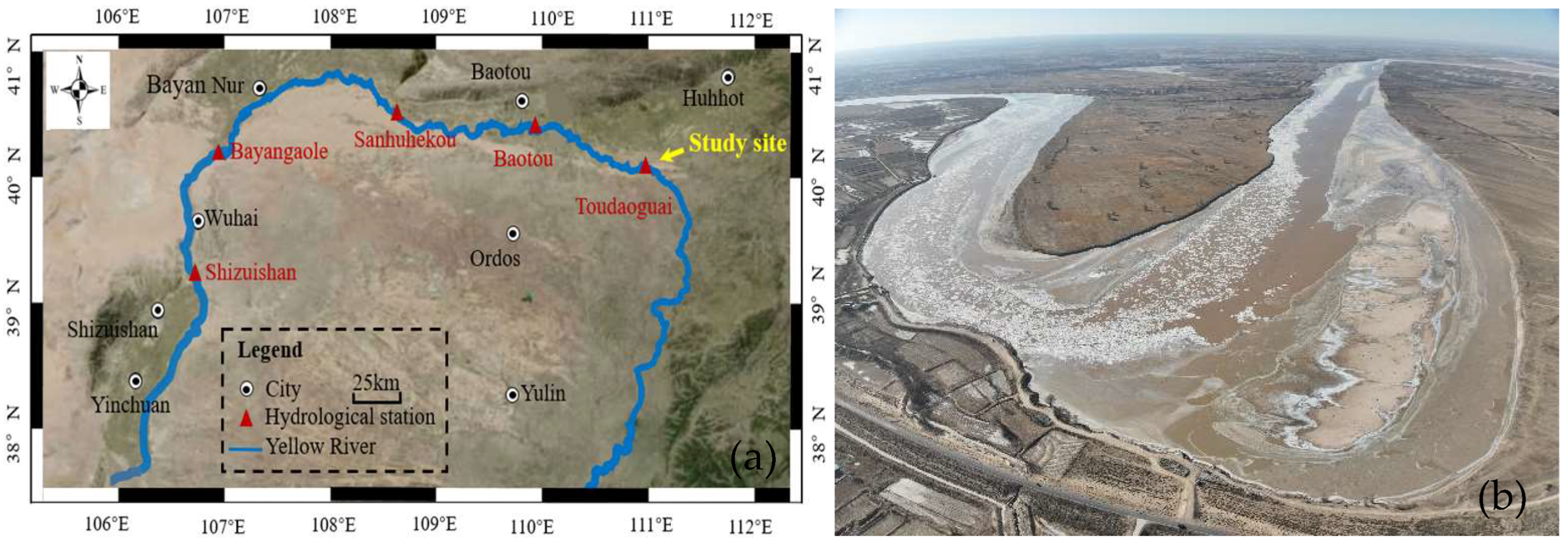
The Yellow River traverses Tuoketuo County, Hohhot City, spanning 37.5 km with a watershed area of 1416.8 square kilometers. It flows through several administrative villages, including Shisifen, Liulintan, Xiashalahutan, and Hekou. At Shisifen, the river forms a pronounced “J”-shaped bend, approximately 8 km long, known locally as “Baliwan,” located at 40°17′39″ N, 111°2′53″ E. The riverbed in this section is characterized by shallow shoals and mid-channel bars, contributing to its complex terrain. The bend at Shisifen has a curvature of around 120°, with a river slope ranging from 1/10,000 to 1/11,000. The river width varies between 200 and 700 m, averaging a depth of 2.85 m, and features a sandy riverbed [14]. Due to engineering structures at the bend’s apex, the topography widens at the top and narrows at the bottom (Figure 1). The narrowest point measures only 220 m, highly susceptible to ice jam formation, leading to ice dam development. This section is therefore critical for ice prevention in the Ningxia-Inner Mongolia segment of the Yellow River and a key area for ice control in Tuoketuo County [15].

2.2. Hydrological Characteristics

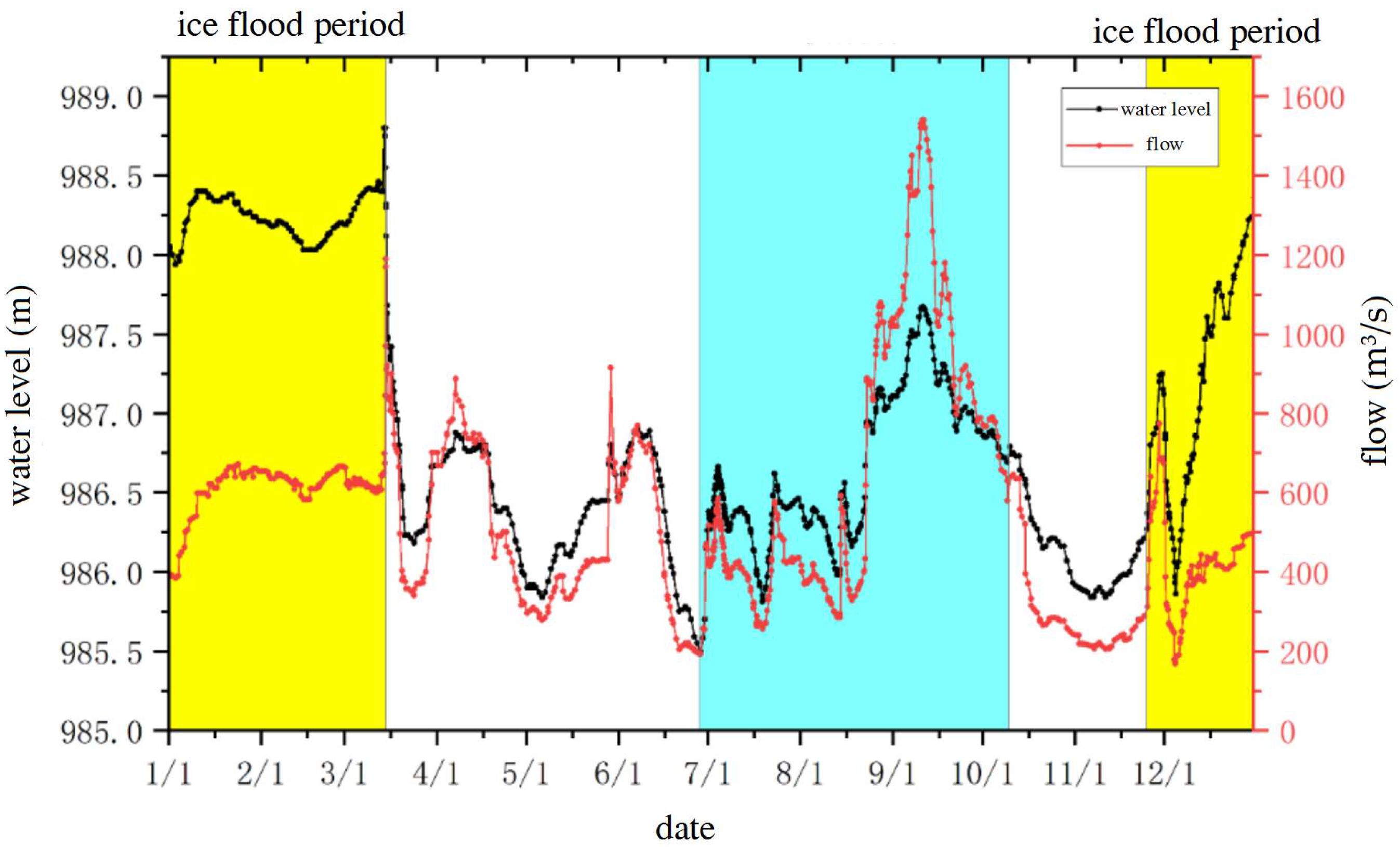
Using the measured water level and flow data from 2021 as an example, the data is sourced from the Shisifan Field Observation Station of the Yellow River. Figure 2 illustrates the distribution of water level and flow in the Shisifen section of the Yellow River in Inner Mongolia. Among them, the yellow areas represent the ice flood period, the white areas represent the non-flood period, and the blue areas represent the summer flood period. From mid-August, the river flow gradually increased, peaking at 1540 m3/s during the summer flood season, with a corresponding rise in water level. As autumn arrived and rainfall decreased from late September, the flow and water level gradually declined, indicating a positive correlation. However, during the ice-jam flood season from mid-to-late November, the relationship between water level and flow became complex due to human factors, such as upstream reservoir operations, and natural factors, including ice jams and ice dams.
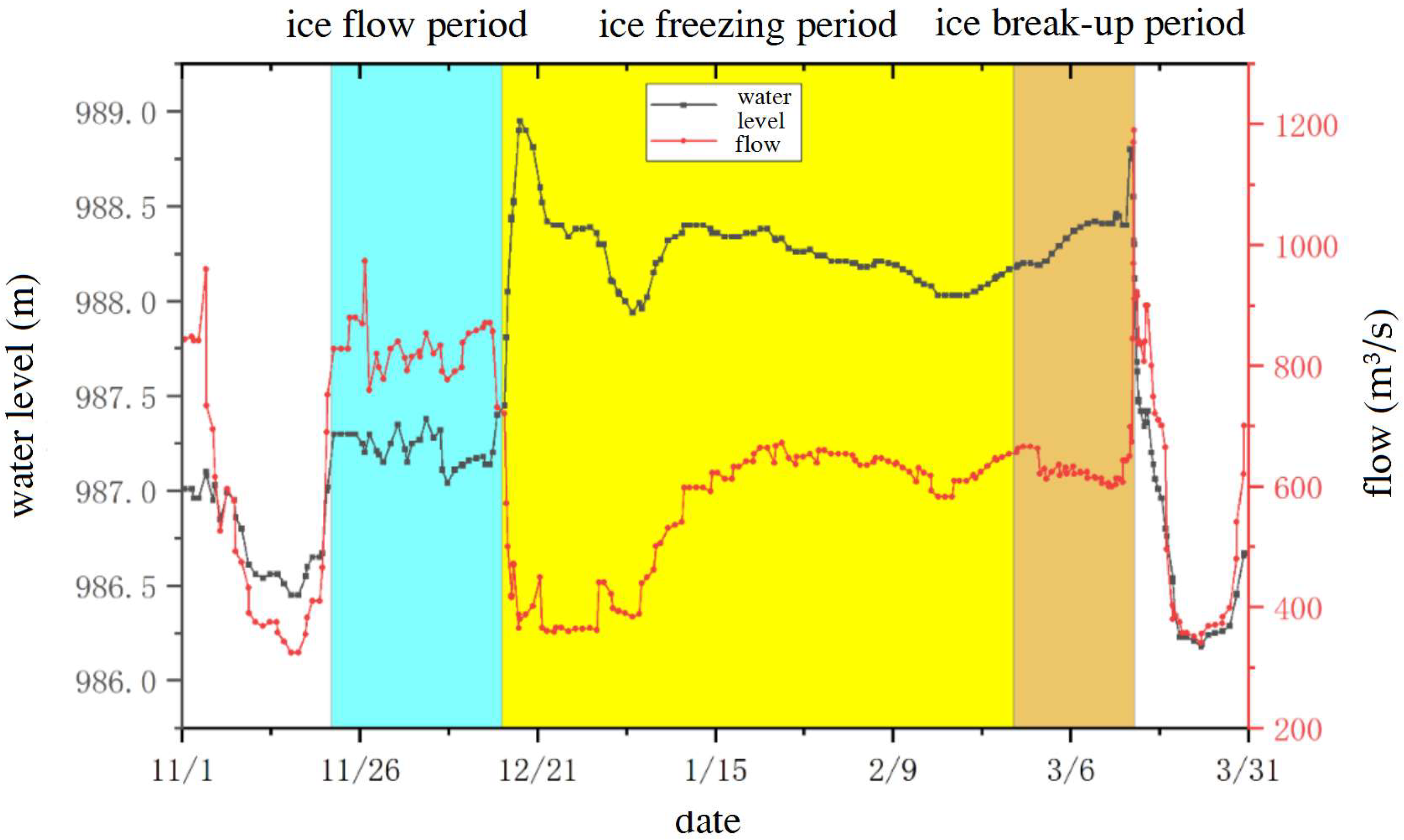
The water level and flow process during the 2021–2022 ice-jam flood season in the Shisifen section of the Yellow River is depicted in Figure 3. Among them, the white areas represent the non-flood period, the blue areas represent the ice flow period, the yellow areas represent the ice freezing period, and the coffee color areas represent the ice break-up period. From November 22nd, when ice began to form in the Shisifen section, the water level and flow fluctuated within a certain range. On December 14th, due to the emergence of ice jams in the river channel, the flow rapidly decreased while the water level rapidly rose. During the stable freezing period, both water level and flow gradually decreased along the river. On February 26th of the following year, as the ice cover began to melt, the water level and flow also slowly increased. After entering the ice breakup period, the river channel became unobstructed, the flow quickly recovered, and the stored water in the upstream channel continuously discharged, causing the water level to rapidly drop. The successive operation of reservoirs such as Longyangxia, Liujiaxia, and Haibowan has, to a certain extent, alleviated the ice conditions in the Ningxia-Inner Mongolia section of the Yellow River and altered the flow distribution process during the ice flood season in the Inner Mongolia section. In the 2021–2022 season, the peak flow during the ice flood in the Shisifen section was 1190 m3/s, which was about 20% lower than the average peak flow during previous years.
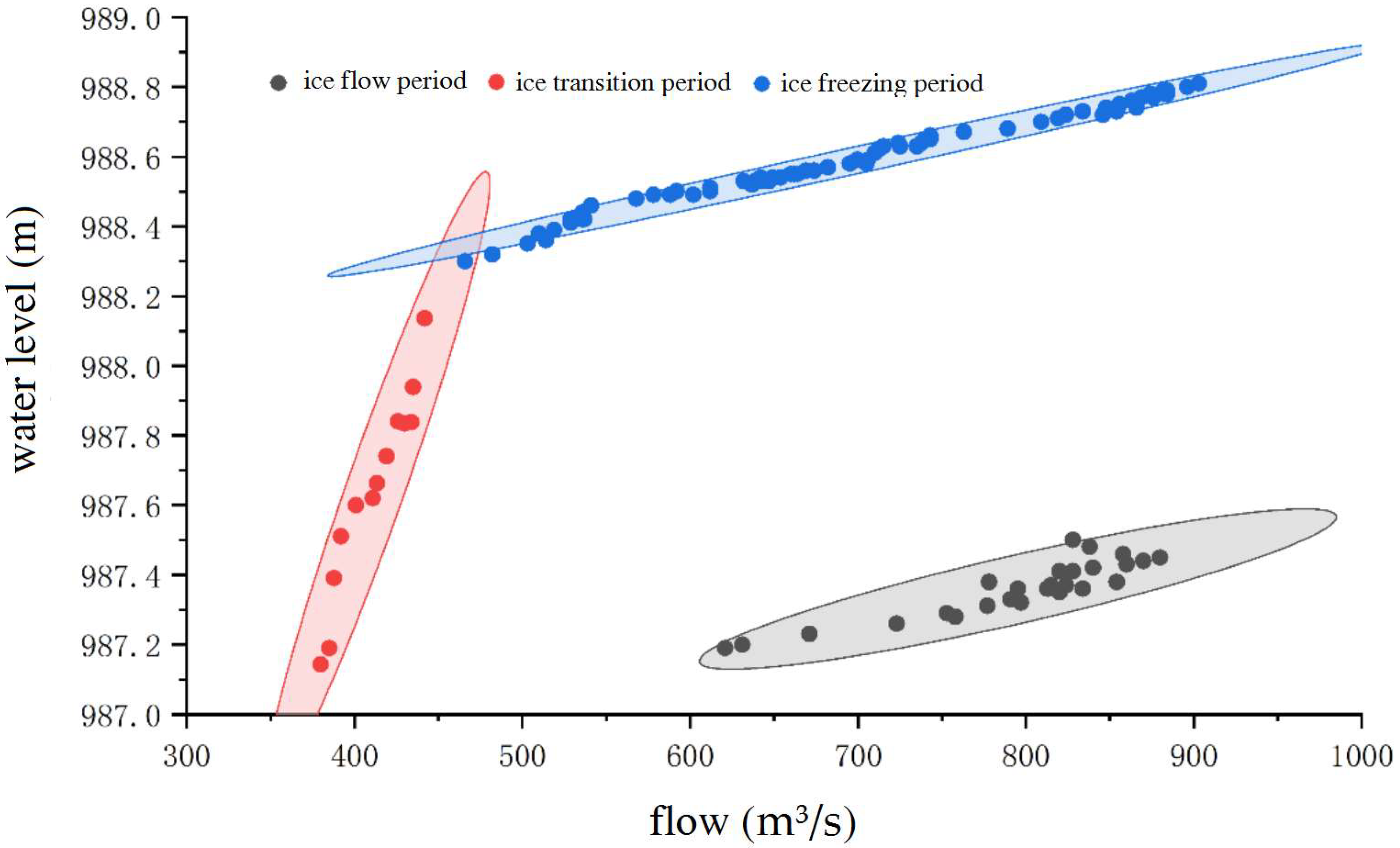
The relationship between water level and flow during the 2021–2022 ice flood season in the Shisifen section of the Yellow River is illustrated in Figure 4. The river freezing process can be divided into three stages: the ice flow period, the transition period to complete freeze-up, and the stable ice freezing period. During the ice flow and stable ice freezing periods, there is a strong correlation between water level and flow, which is almost linear. During the transition period to complete freeze-up, the flow changes are relatively small, but the water level rises significantly. This indicates that the density of floating ice rapidly increases at this time, leading to the formation of ice jams and ice dams that block the river channel.

3. Model Construction and Verification

3.1. Adopted Methods

(1) Hydrodynamic Module Calculation Theory
The hydrodynamic module of the MIKE 21 model is a versatile and widely used numerical simulation system, primarily engineered to simulate water levels and currents in estuaries, bays, and coastal areas. The model is designed to simulate unsteady two-dimensional flow of a single-layer (vertically homogeneous) fluid and has a wide range of applications. Numerous studies have employed the MIKE 21 model for hydrodynamic simulations, establishing it as an indispensable tool in hydrological and hydrodynamic research in estuaries, bays, and other regions. The following conservation equations for mass and momentum describe the changes in water flow and water level in the vertical direction [16,17]:
ξ t + p x + q y = d t
p t + x ( p 2 h ) + y ( p q h ) + g h ξ x + g p p 2 + q 2 c 2 h 2 1 p w x ( h τ x x ) + y ( h τ x y ) Ω q f V V x + h p w x ( p a ) = 0
p t + y ( q 2 h ) + x ( p q h ) + g h ξ y + g p p 2 + q 2 c 2 h 2 1 p w y ( h τ y y ) + x ( h τ x y ) Ω p f V V y + h p w y ( p a ) = 0
In the equations: ζ ( x , y , t ) is the water depth (m); t is time; d ( x , y , t ) is the surface elevation (m); p , q ( x , y , t ) is the water depth varying with time; u , v are the average flow velocities in the x and y directions, respectively; C ( x , y ) is the Chezy coefficient; f is the Coriolis force coefficient; f V is wind friction factor; V x , V y ( x , y , t ) are the wind speeds in the x and y directions at a certain moment (m/s); Ω ( x , y ) is the Coriolis parameter; P a is the atmospheric pressure density; and ρ w is the density of water (kg/m3).
Based on fundamental principles of hydraulics and the basic equations of the MIKE 21 hydrodynamic module, the following two-dimensional shallow water equations are derived. The finite volume method are used for discretization. The basic form of the two-dimensional unsteady shallow water equations is as follows:
h t + h u ¯ x + h v ¯ y = h s
h u ¯ t + h u ¯ 2 x + h u v ¯ y = f v ¯ h g h η x h ρ 0 p a x g h 2 2 ρ 0 p x + τ s x ρ 0 τ b x ρ 0 1 ρ 0 s x x x + s x y y + x ( h T x x ) + y ( h T x y ) + h u s S
h v ¯ t + h v 2 y + h u v ¯ x = f u ¯ h g h η y h ρ 0 p a y g h 2 2 ρ 0 p y + τ s y ρ 0 τ b y ρ 0 1 ρ 0 s y x x + s y y y + x ( h T x y ) + y ( h T y y ) + h v s S
where t is time; η is the water level (m); d is the still water depth (m); h = η + d is the total water depth (m); u and v are the velocity components in the x and y directions, respectively; f is the Coriolis force coefficient; g is the acceleration due to gravity (m/s2); ρ 0 is the density of water (kg/m3); s x x , s x y , s y y are the components of the radiation stress tensor; S is the source term; ( u s , v s ) are the source term velocities; u ¯ , v ¯ are the depth-averaged velocities (m/s).
(2) Particle Tracking Module Calculation Theory
The MIKE 21 Particle Tracking (PT) module employs a Lagrangian discrete method to investigate the transport of suspended matter within aquatic environments. In this approach, the total mass of the substance is partitioned into numerous particles, each possessing three-dimensional coordinates and an associated mass. Contrary to the conventional Eulerian discrete method, a distinctive advantage of this module lies in its capacity to precisely trace the drift trajectories of substances, such as ice particles, making it particularly apt for simulating ice transport during river ice flow periods.
The drift characteristics of ice particles encompass advection-diffusion motion, which is governed by the influences of wind, water current, and the Coriolis force, as well as Lagrangian drift, representing the interactive drift process of ice particles with the external environment.
Lagrangian et al. proposed utilizing stochastic differential equations to delineate the dynamics of Brownian motion and formulated a particle tracking equation using the Lagrangian method. This equation meticulously outlines the motion trajectory of particles within a random force field, as cited in [18].
d X t = a ( t , X t ) d t + b ( t , X t ) ξ t d t
where d X t is the spatial vector position of the stochastic process at t time; a ( t , X t ) is the advection term, describing the drift part of the stochastic process; b ( t , X t ) is the diffusion term, describing the diffusion part of the stochastic process; ξ t is Brownian motion, which is random and describes the randomness of diffusion motion.
This equation represents a stochastic process that includes both deterministic drift and diffusion parts while considering the randomness of Brownian motion.
Y n + 1 = Y n + + a ( t , X t ) Y n Δ n + b ( t , X t ) Y n Δ W n
This expression represents a stochastic difference equation, where Y n + 1 and Y n are random variables at a certain time; n is the Eulerian combination of advection coefficient a and diffusion coefficient b, Y n Δ n is the deterministic increment, and Δ W n = W t W s N ( μ = 0 , σ 2 = Δ n ) is the increment of Brownian motion, representing random disturbances.
Brownian motion characterizes the random motion of particles in static water or laminar flow environments, resulting in diffusion phenomena. In turbulent environments, diffusion encompasses both particle diffusion and turbulent diffusion, with turbulent diffusion often being the primary factor. The determination of the flow state hinges on whether fluid friction (viscosity) or flow inertia dominates, distinguishing between laminar and turbulent flows. The Reynolds number stands as a crucial parameter for assessing the flow state. The significance of the Reynolds number lies in its ability to differentiate the dominant factors of diffusion and the criteria for determining the flow state across various environments. Closely tied to the inertia and viscosity of the fluid, the Reynolds number serves as a key parameter for evaluating both the flow state and the prevalent factors influencing diffusion. Its value reflects the relative strength between inertia and viscosity within the flow, thereby defining the nature of the flow. At low Reynolds numbers, viscous forces prevail, and the flow displays laminar characteristics; conversely, at high Reynolds numbers, inertial forces dominate, and the flow exhibits turbulent traits. Consequently, the computation of the Reynolds number offers an invaluable tool for gaining a deeper understanding of fluid motion states and diffusion mechanisms.
Turbulent diffusion holds substantial importance in natural waters and is pivotal for the development of hydrodynamic models. Employing a random walk model to depict the diffusion process constitutes an effective approach. By integrating the random walk model with numerical solution methods, the MIKE 21 PT module furnishes potent tools and technical support for simulating and forecasting diffusion phenomena in natural aquatic environments.
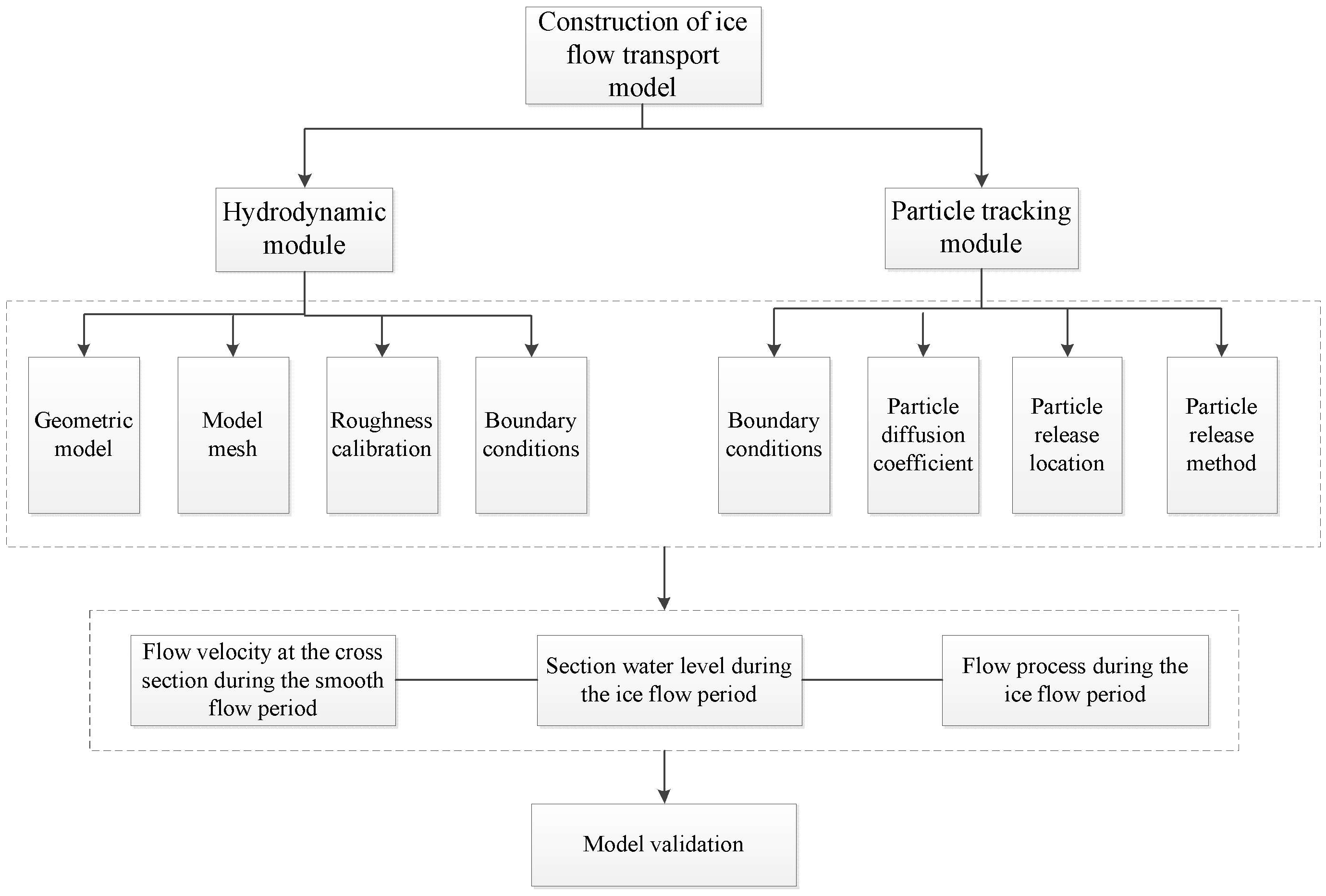
Based on the method introduced above, the specific flowchart of model construction is shown in Figure 5.

3.2. Data Processing

Data preprocessing involves the extraction and systematic organization of raw data pertaining to terrain depth, meteorological conditions, ice status, hydrology, and other relevant parameters within the designated study area. The present paper primarily concentrates on a sequence of processing steps tailored for terrain depth data.
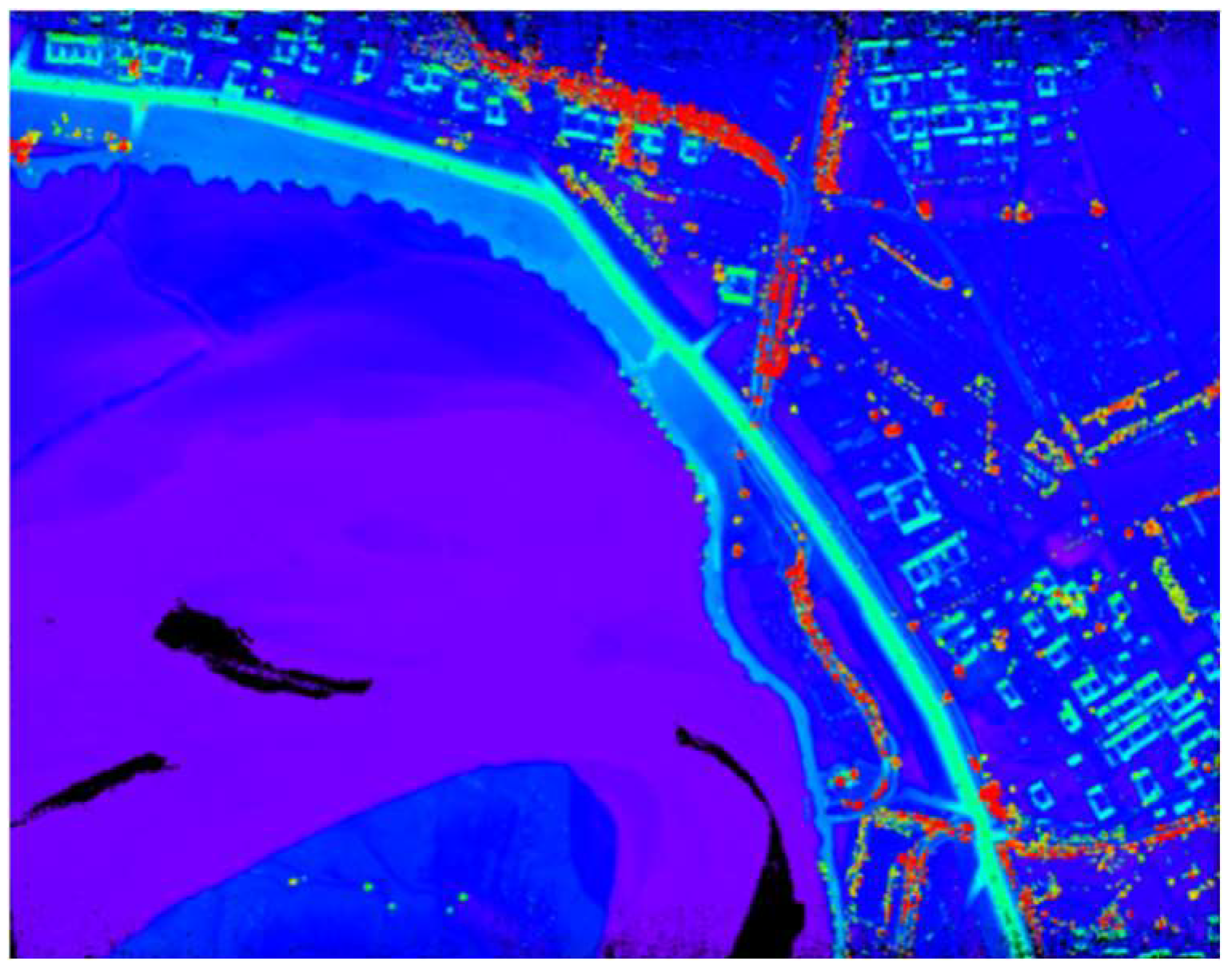
Initially, an aerial survey was executed using an unmanned aerial vehicle (UAV) to gather surface information. This was followed by the application of RiSCAN PRO(2.0) software for multi-station point cloud stitching, registration, coordinate transformation, and coloring. The resultant output was a point cloud file in LAS format, with a partial scan depicted in Figure 6.
To measure underwater terrain data within the river channel, an RTK was employed alongside an HD-360 depth sounder. Additional measurements were obtained using the RTK for areas along the riverbank. The river segment spanned 60 km, with measurements taken at intervals of 5 m. The Selective Kriging method was utilized for interpolation to generate Digital Elevation Model (DEM) data of the riverbed. The output consisted of pixels with a resolution of 0.1 m × 0.1 m, which were subsequently saved as a point cloud file in LAS format.
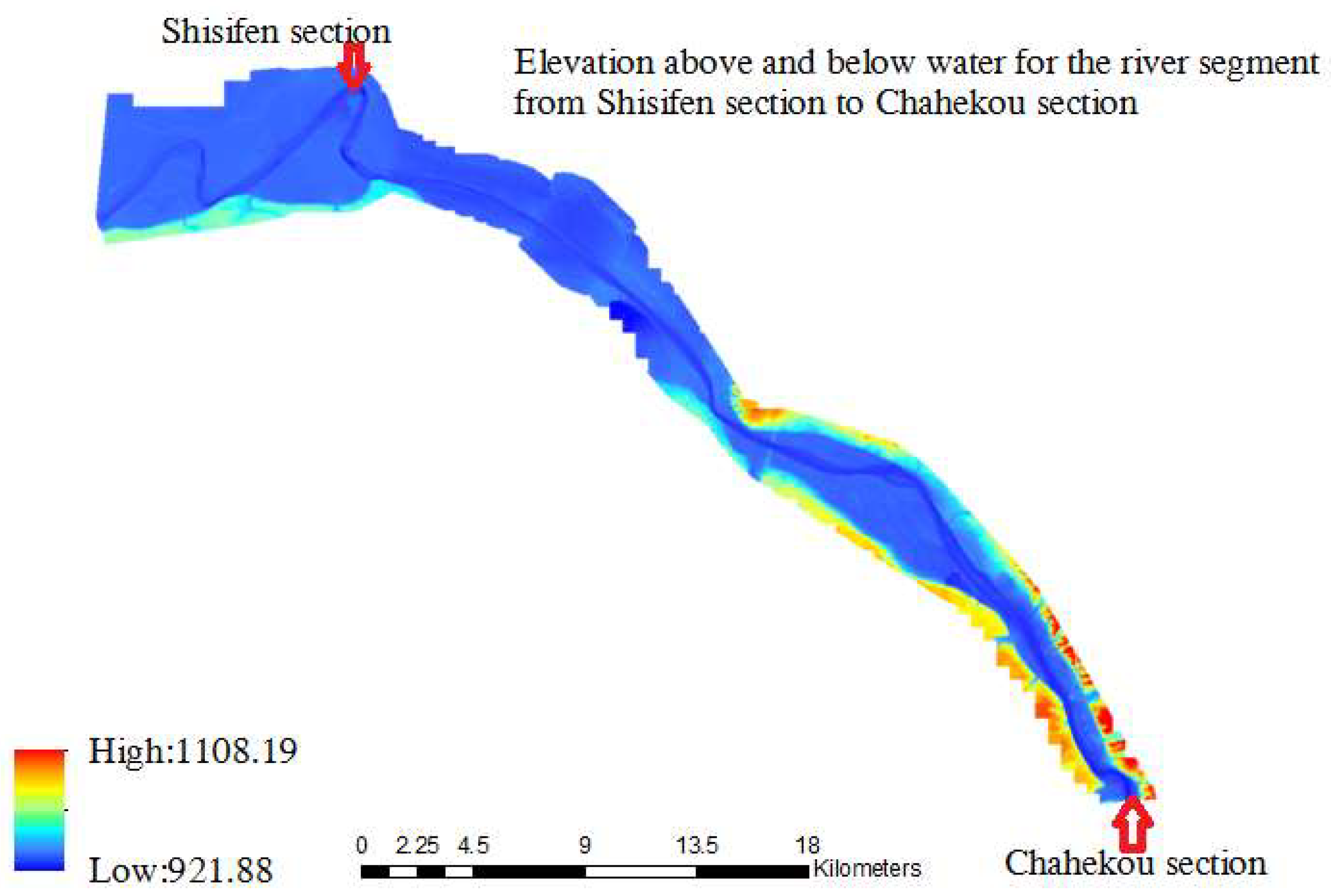
Utilizing oblique photography, laser scanning, and depth sounder technology for model development, the collected data was processed with ArcGIS(10) and other pertinent software and methodologies to derive a DEM (Digital Elevation Model) with a 1 m resolution for the region extending from Shisifen section to the downstream Chahekou section of the Yellow River in Inner Mongolia, as depicted in Figure 7. Following the transformation of the data into DEM elevation data, we employed ArcGIS to conduct data vectorization extraction, thereby obtaining XYZ format files of the elevation scatter points necessary for MIKE modeling. Furthermore, vectorization extraction of boundary data was carried out to obtain XYZ format files of the boundary contours.
In addition, a grid editor was employed for the automatic computation and generation of the grid. The grid discretization not only ensures the accuracy of the numerical simulations but also considers computational time, since denser grids generally yield higher accuracy at the expense of increased computational effort. Therefore, during the discretization of the model, a detailed grid partitioning strategy was implemented to balance simulation accuracy and computational efficiency. Through a grid independence study, the partitioning methodology and grid sizes were appropriately determined. The simulated river reach was subdivided into multiple segments, each discretized using an unstructured triangular mesh. Local refinement was particularly applied in areas with high curvature. The final grid consists of 24,595 elements and 13,061 nodes, with the minimum interior angle throughout the mesh maintained above 30°.

3.3. Calibration of Model Parameters

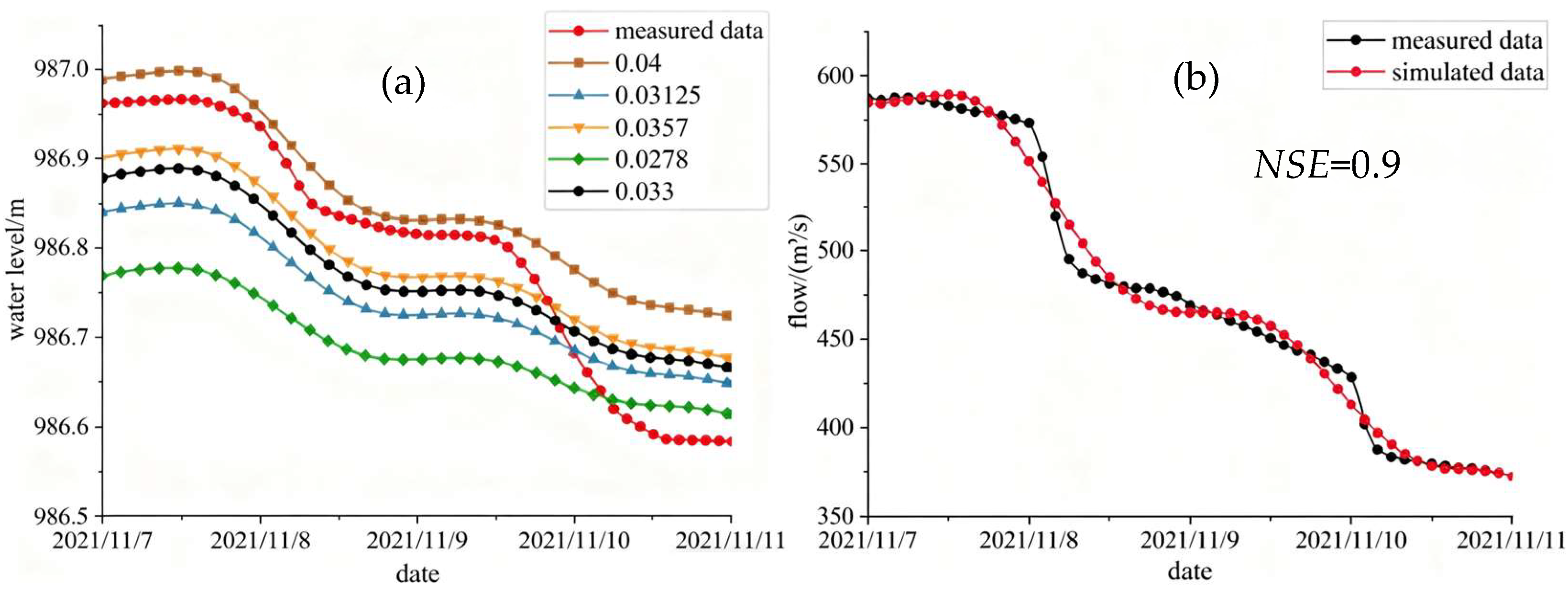
In real-world scenarios, the study river segment exhibits various terrain features such as shallow shoals, mid-channel bars, continuous bends, and narrowed river surfaces. The riverbed roughness varies significantly along the flow path, necessitating the calibration of roughness values after model construction. The average roughness provides a comprehensive assessment of riverbed roughness within a certain range, simplifying the model calculation process and enhancing the model’s operability and stability. Therefore, average roughness is employed as a substitute for the true riverbed roughness. Referring to the empirical range of riverbed roughness values for the Ningxia-Inner Mongolia section of the Yellow River, which is 0.011 to 0.04 [19], simulations were conducted with values within this range, using the water level at the Toutaoguai section as the calibration standard. Figure 8a shows a comparison of simulated and measured water levels at the section under different roughness values. The analysis reveals that when the average roughness n is set to 0.033, the Nash–Sutcliffe Efficiency (NSE) of the section’s water level is 0.751, indicating a good fit. The Nash–Sutcliffe Efficiency under different roughness values are shown in Table 1. Figure 8b presents a comparison of simulated and measured flows at the section when the roughness n is set to 0.033.

3.4. Computational Control Conditions

When conducting numerical simulations using the hydrodynamic model, it is essential to set a reasonable time step to minimize computation time while ensuring the accuracy and stable operation of the model. Based on measured data from the Shisifenzi section of the Yellow River, the average flow velocity is approximately 0.8 m/s, and the total length of the simulated river segment is about 20 km. If the model’s computational time step is set to 180 s and the total number of time steps to 1440, the actual duration of the simulation is 72 h. According to the settings of the hydrodynamic module and particle tracking module, a simulation time of 72 h is sufficient for the flow field and ice movement in the simulated area to reach a stable state.
(1) Inlet and Outlet Boundary Conditions
Typically, the inlet is controlled by flow conditions, while the outlet is controlled by water level conditions. Based on hydrological data from the Shisifen monitoring station and the Toutaoguai hydrological station, the measured flows for three consecutive days from 22 to 25 November 2021, were used as the upstream inlet flows. Simultaneously, based on measured water level data, the measured water level of 986 m at the start of the simulation was determined as the downstream outlet water level.
(2) Roughness Boundary Conditions
Roughness is used to measure the influence of the roughness of a boundary surface on water flow resistance. The numerical value reflects the magnitude of the resistance that the water flow experiences on that surface. A larger roughness value indicates a rougher boundary surface, while a smaller value indicates a smoother surface. Based on the calibrated roughness results of the computational model in Section 3.3, a Manning’s file was generated for numerical simulation.
(3) Wind Vector Boundary Conditions
For each scenario, the measured wind speeds within the simulation time range, i.e., from 22 to 25 November 2021, were used to generate time series files that were imported into the computational model.
(4) Wet-Dry Boundary Conditions
Wet-dry boundary conditions are used to simulate the interface between land and water in a water body, i.e., the transition zone between wet and dry areas. These boundary conditions allow the model to automatically handle the conversion between land and water when simulating water dynamics. Wet-dry boundary conditions are crucial in simulating water dynamics as they can accurately capture the impact of water level changes on terrain, thereby providing more realistic simulation results. In this simulation, the default values were adopted: the dry water depth was set to 0.005 m, the wet water depth was set to 0.1 m, and the flooding depth was set to 0.05 m.
(5) Eddy Viscosity Coefficient
The eddy viscosity coefficient is a parameter in fluid mechanics that describes the dissipation effect of eddies due to viscosity in incompressible flows. It represents the degree of diffusion and dissipation of eddies in the fluid, i.e., it describes the influence of internal viscous damping on eddy motion in the fluid. A higher eddy viscosity coefficient means that eddies in the fluid will dissipate faster and propagate at a slower speed in the fluid flow, resulting in smoother and slower fluid motion. In the hydrodynamic model of this paper, the eddy viscosity coefficient was set to the default value of 0.28.
(6) Coriolis Force
The Coriolis force is a concept involving fluid dynamics that describes the inertial force experienced by an object moving within a fluid. For water flows, the Coriolis force can have a series of effects. It causes objects moving in the fluid to experience a force to the right (in the Northern Hemisphere) or to the left (in the Southern Hemisphere), thereby deflecting the object’s motion trajectory. In water flows, this means that water flowing past fixed objects (such as bridge piers or rocks) may experience lateral offsets. The calculation formula is as follows:
F = 2 m ω × v
where F is the Coriolis force; m is the mass of the particle; ω is the angular velocity of the rotating system in rad/s, × denotes the cross product of two vectors, and v is the velocity of the particle in m/s. According to the formula, the Coriolis force acting on the upstream inlet section of the study area in this paper is 5.96 N/m2, and the Coriolis force acting on the downstream outlet section is 2.79 N/m2.

3.5. Model Validation

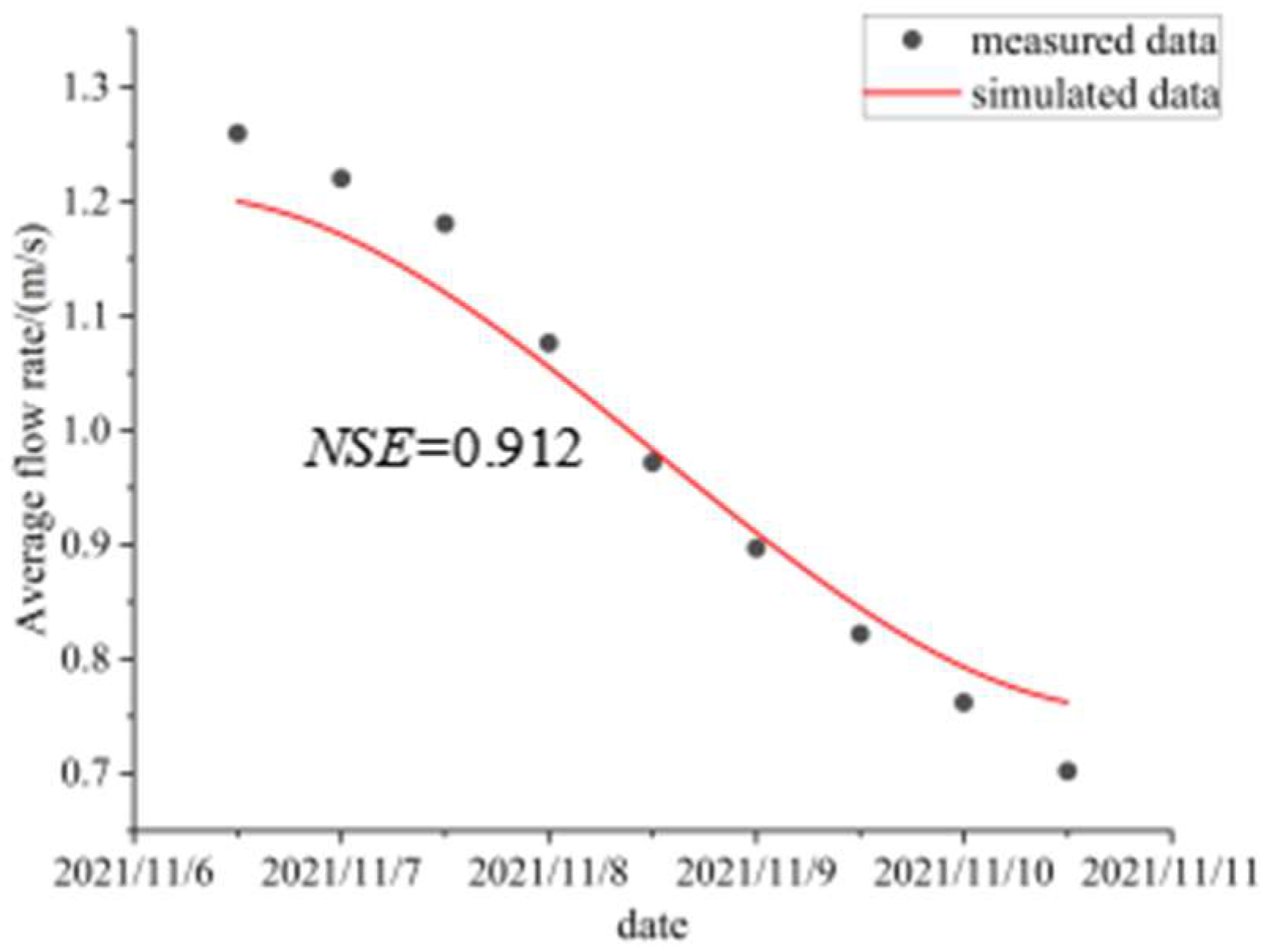
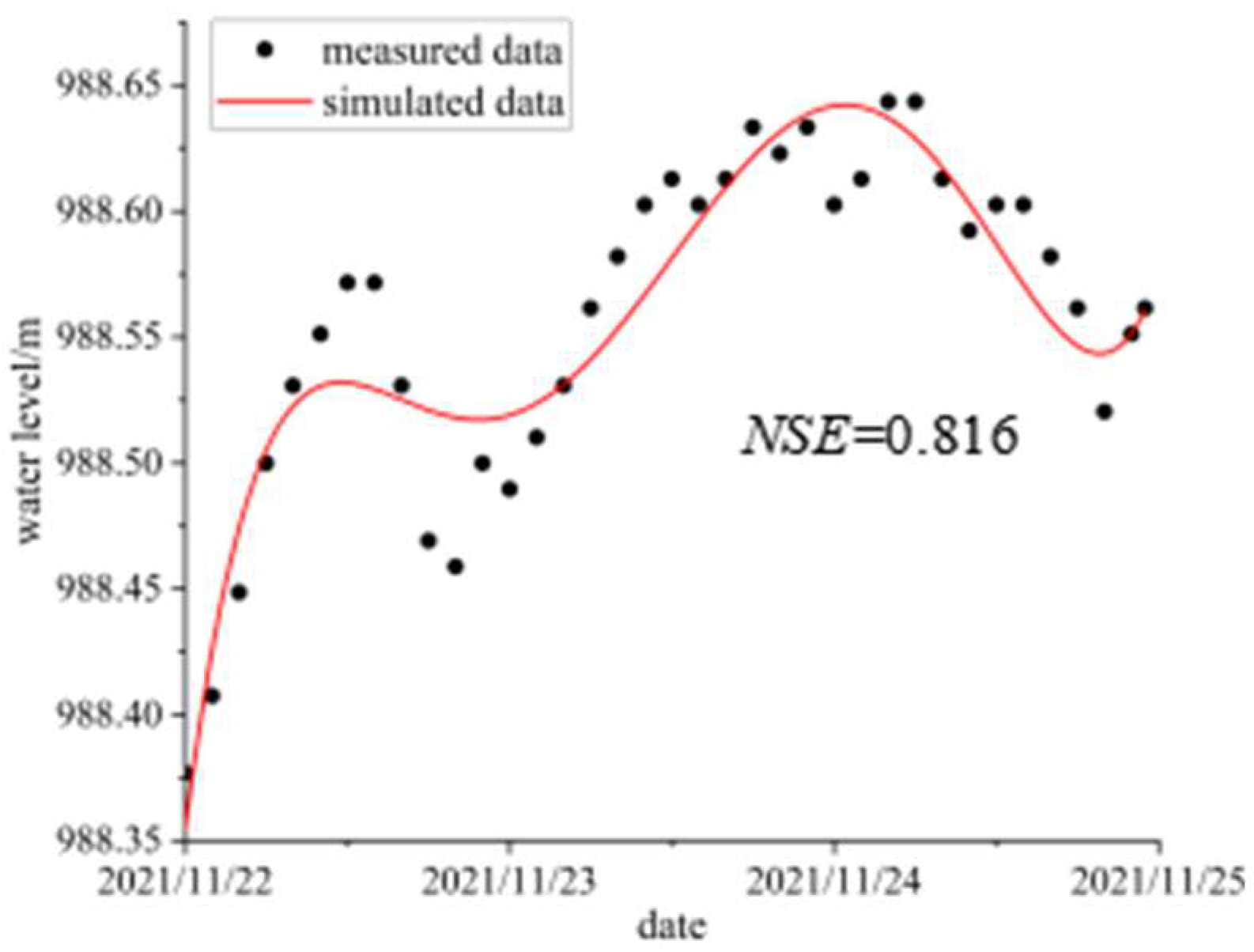
The validation of the model primarily involves comparing the simulated and measured values of the downstream outlet section’s water level and average cross-sectional velocity, as well as contrasting the simulated distribution of ice flow transportation with actual conditions. The comparison results of the simulated and measured water levels at the cross-section are presented in Figure 9. The NSE coefficient for the cross-sectional water level is 0.816, indicating a good fit. Through the comparative analysis shown in Figure 10, it can be observed that during the non-ice period at the Toutaoguai section, the relative error range between the simulated average velocity distribution results and the field measurement results is between 2.2% and 6.56%. Based on this relative error range, it demonstrates a good agreement between the simulated and measured values. Through the validation analysis of the cross-sectional water level and velocity, it can be concluded that this model can effectively simulate the hydraulic characteristics of the Shisifen section.

3.6. Model Limitations and Uncertainties

While the coupled MIKE21 model offers advantages in simulating ice transport dynamics, several limitations and associated uncertainties should be acknowledged. First, the model relies on simplified parameterizations of ice–ice and ice–bank contact mechanics, wherein friction coefficients and collision restitution properties are based on empirical values rather than in situ measured data, potentially affecting the accuracy of ice redistribution and bank impact force estimates. Second, the radar-derived ice condition data, though valuable, remain limited in spatial coverage and temporal resolution, introducing uncertainties in initial and boundary conditions for particle tracking-particularly during rapid flow changes or sudden ice accumulations. These limitations suggest that future efforts could integrate 3D hydrodynamics, coupled thermo-mechanical ice processes, and monitored bank material properties to reduce these uncertainties.

4. Analysis of Simulation Results Under Different Conditions

Based on the current situation of bankfull discharge in the Inner Mongolia section of the Yellow River, numerical simulations of ice flow were conducted under flow rates of 2000 m3/s, 2500 m3/s, and 3000 m3/s, three aspects were analyzed: floodplain area, flow field distribution, and ice flow density distribution. The aim was to identify vulnerable sections requiring reinforcement in embankment construction and provide prevention recommendations.

4.1. Floodplain Analysis

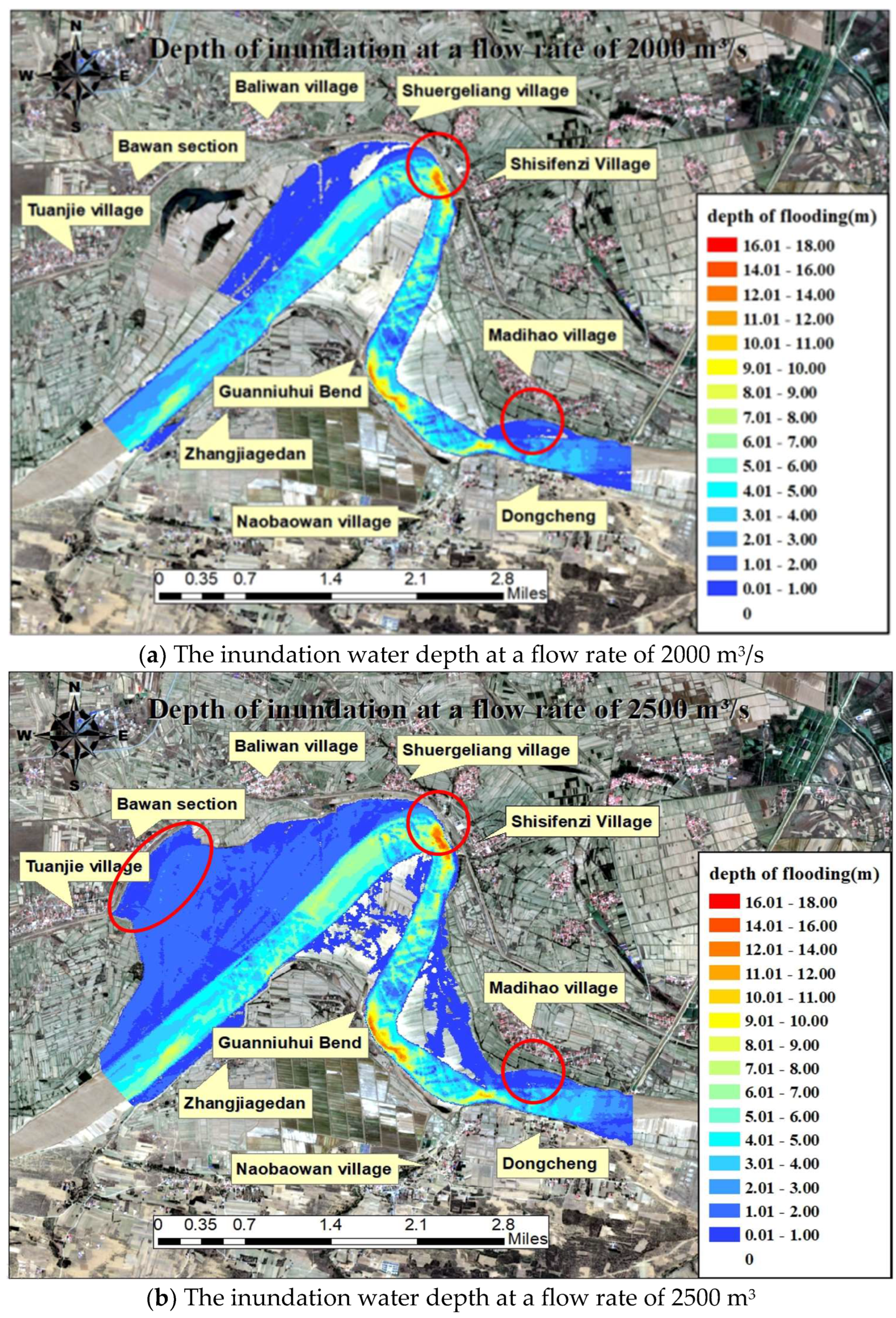
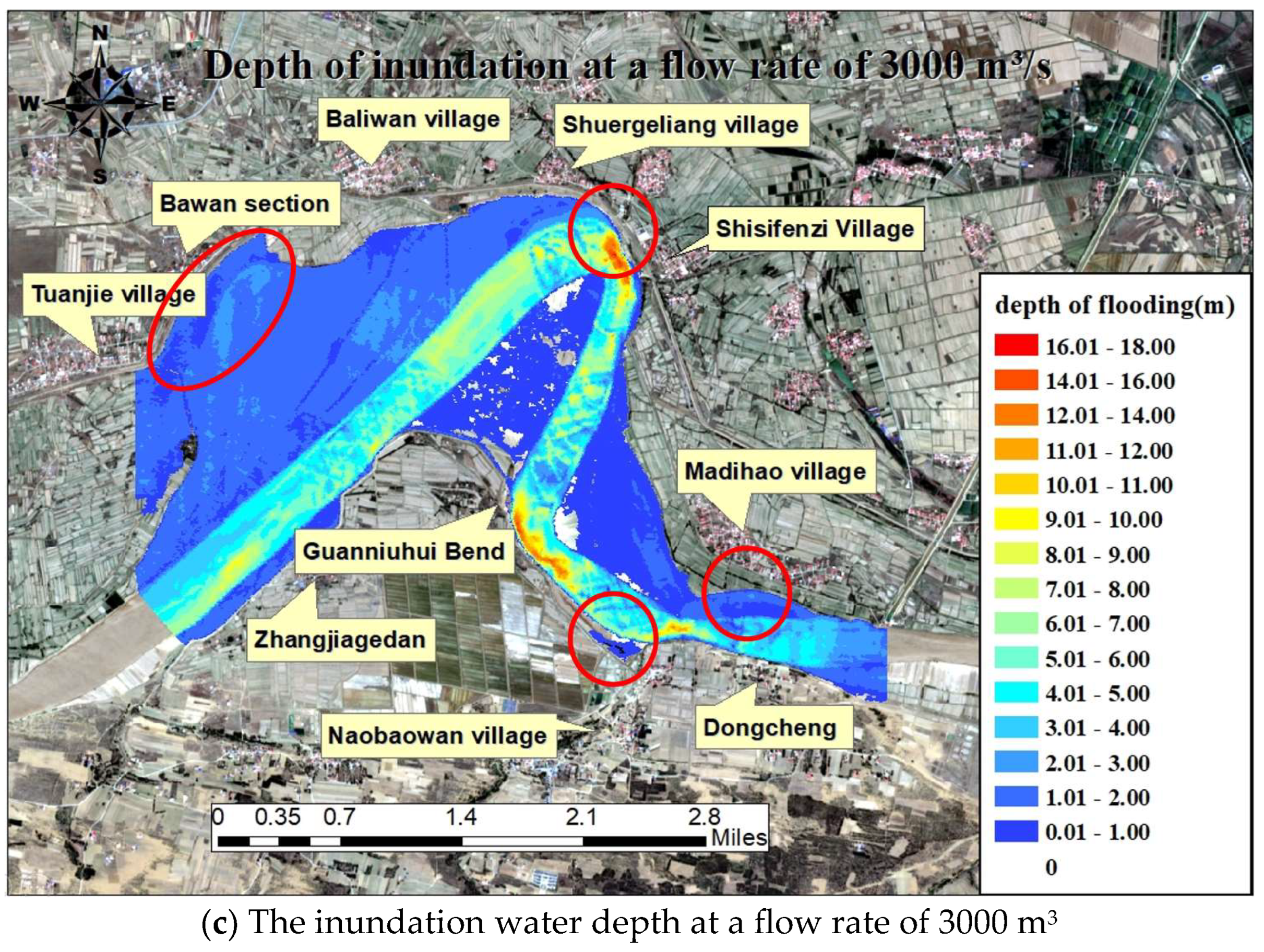
The flood inundation results, derived from the two-dimensional coupled model, were integrated with geographic information and remote sensing image data to undertake a comprehensive floodplain analysis of the study region. Utilizing ArcGIS software, spatial interpolation calculations were executed to generate a flood depth map (depicted in Figure 11). The red circles denote areas where inundation is most proximate to embankments and residential zones, highlighting the necessity for embankment reinforcement and relocation strategies in these locales.
As seen in Figure 11a, when the flow rate is 2000 m3/s, the study area experiences the largest inundation area with a water depth of less than 1 m, approximately 1.54 km2. The upstream segment of the Shisifen bend is initially inundated as denoted by the red circle, while small areas on both banks of the Ximadihao river section are inundated as denoted by the red circle, with an inundation area of about 0.36 km2 on the left bank and 0.25 km2 on the right bank. As seen in Figure 11b, when the flow rate increases to 2500 m3/s, the inundation area increases to approximately 4.4 km2, with a new inundation area emerging between Tuanjie Village and Baliwan Village, covering about 3.62 km2 as denoted by the red circle. However, due to bank protection projects at the bend apex and the Yellow River embankment at the Bawan section, which afford flood control up to 5900 m3/s, the risk to these villages remains minimal. Additionally, the upstream right bank of the Shisifen bend experiences inundation that extends onto the floodplain, including all areas beyond the Yellow River embankment to the left of Zhangjiagedan and portions of the floodplain spanning the bend. On the left bank of Ximadihao, the flood, facilitated by low terrain, propagates along the Shisifen channel, inundating 0.48 km2. As shown in Figure 11c, at a flow rate of 3000 m3/s, the inundation area across the study region approximates 6.8 km2 as denoted by the red circle, with the majority having a water depth below 2 m. Moreover, a fresh inundation zone manifests to the south-east of the Yellow River embankment in Tuanjie Village, exhibiting a southward spread as denoted by the red circle. Nearly the entire floodplain between the upstream and downstream segments of the Shisifen bend is submerged, and the area surrounding the Shisifenzi channel on the left bank of Ximadihao is almost entirely flooded. Notably, in the northern section of Naobaowan Village, the flood surpasses the Guanniuhui bank protection project.
There are four river regulation projects along the Yellow River in Tuoxian County, namely, the Shisifen critical engineering project (3200 m), the Dongyingzi (Shenquan section) control project (3262 m), and the bank protection projects at Madihao (2140 m) and Zhanggaiyingzi (2560 m). The Shisifen critical engineering project was raised by 0.5 m in 2012, reaching a current top elevation of 991.51 m. The Madihao bank protection project has a top elevation of 989.64 m, which corresponds to the water level of a 3000 m3/s flow in 2012. Consequently, when the flow at Toutaoguai on the Yellow River surpasses 3000 m3/s, the river overflows the bank at Madihao. As the flow exceeds this threshold, the flood inundation area in the vicinity expands, and the inundation depth near the embankments gradually increases. Therefore, preemptive relocation measures should be implemented for populations residing near the embankments, particularly those in the Madihao area. The simulation results of floodplain inundation under different flow conditions are shown in Table 2.

4.2. Analysis of Flow Field Distribution

The influence of flow field distribution on ice flow is a significant research domain within fluid mechanics. The distribution of the flow field affects the movement, aggregation, fragmentation, and accumulation of ice blocks within the water flow, thereby impacting the formation, movement, and distribution of ice flow.
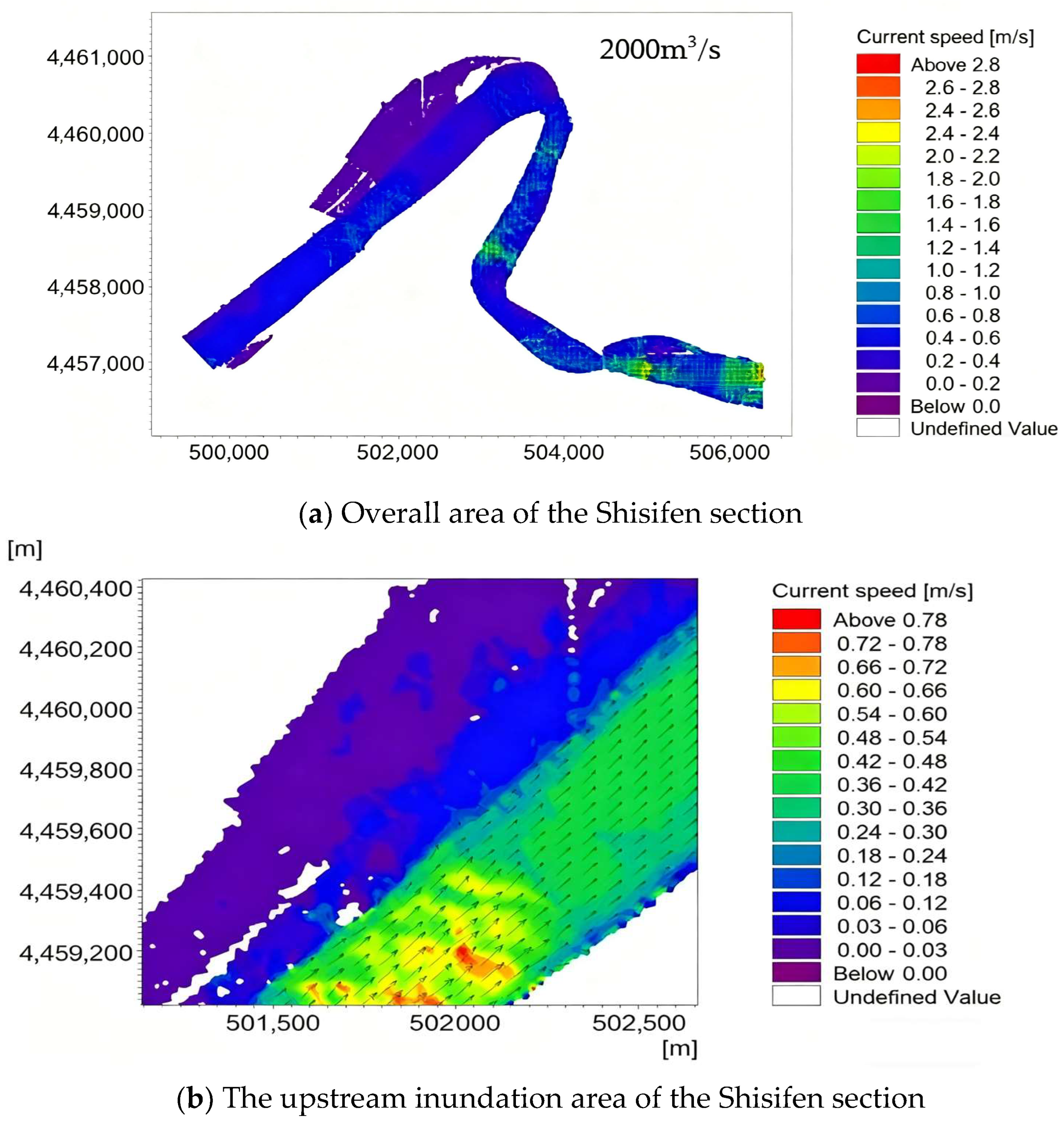
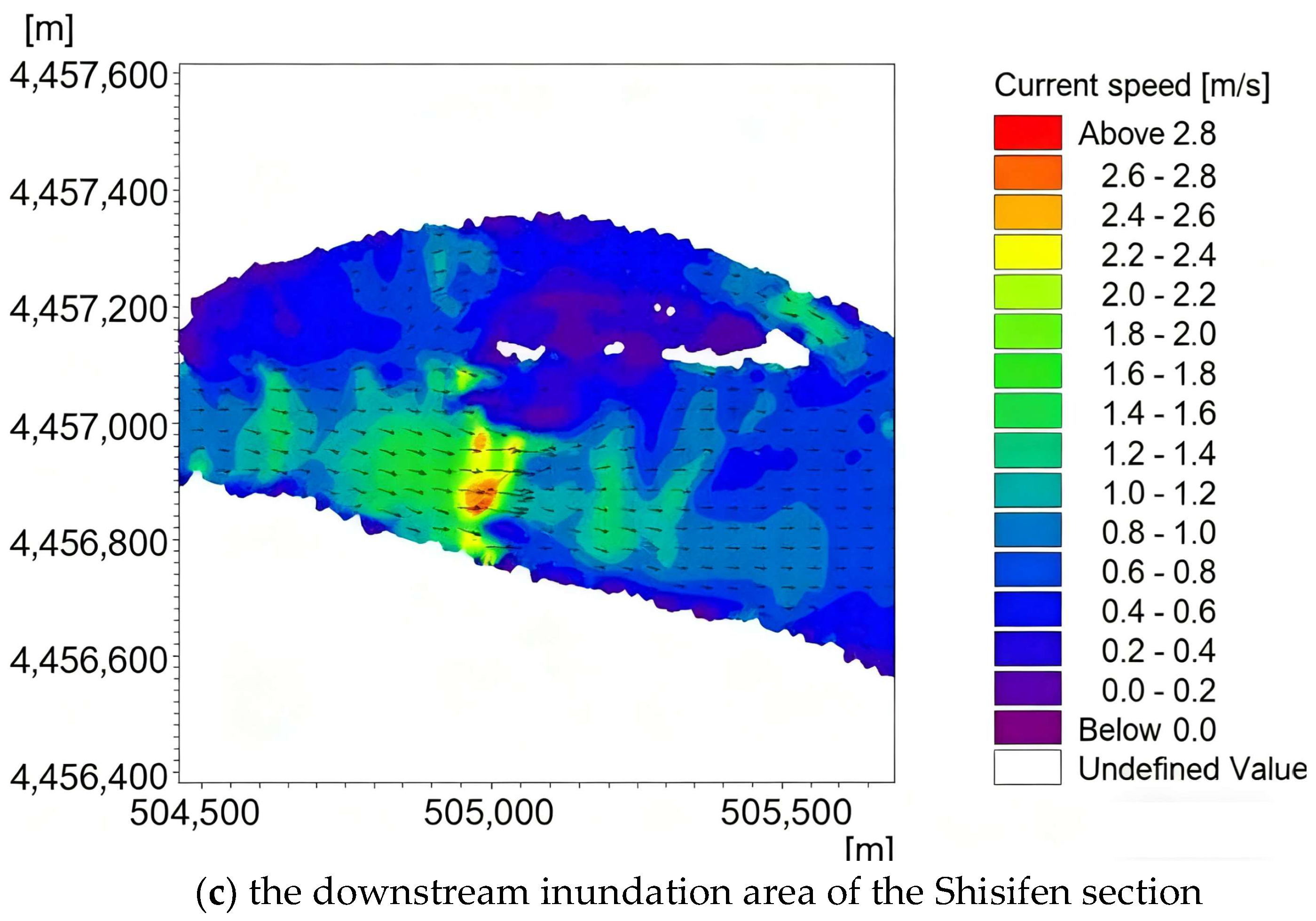
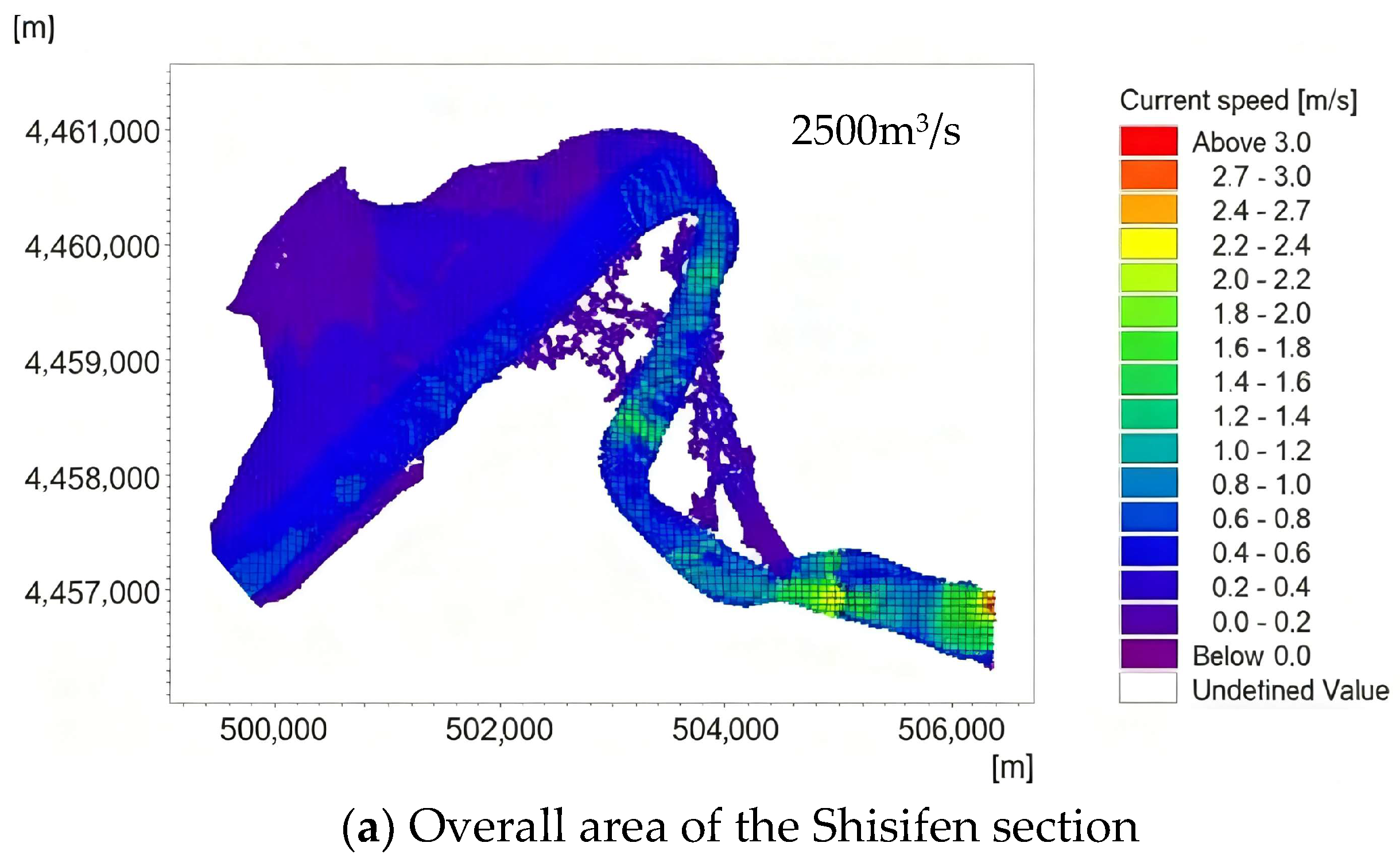
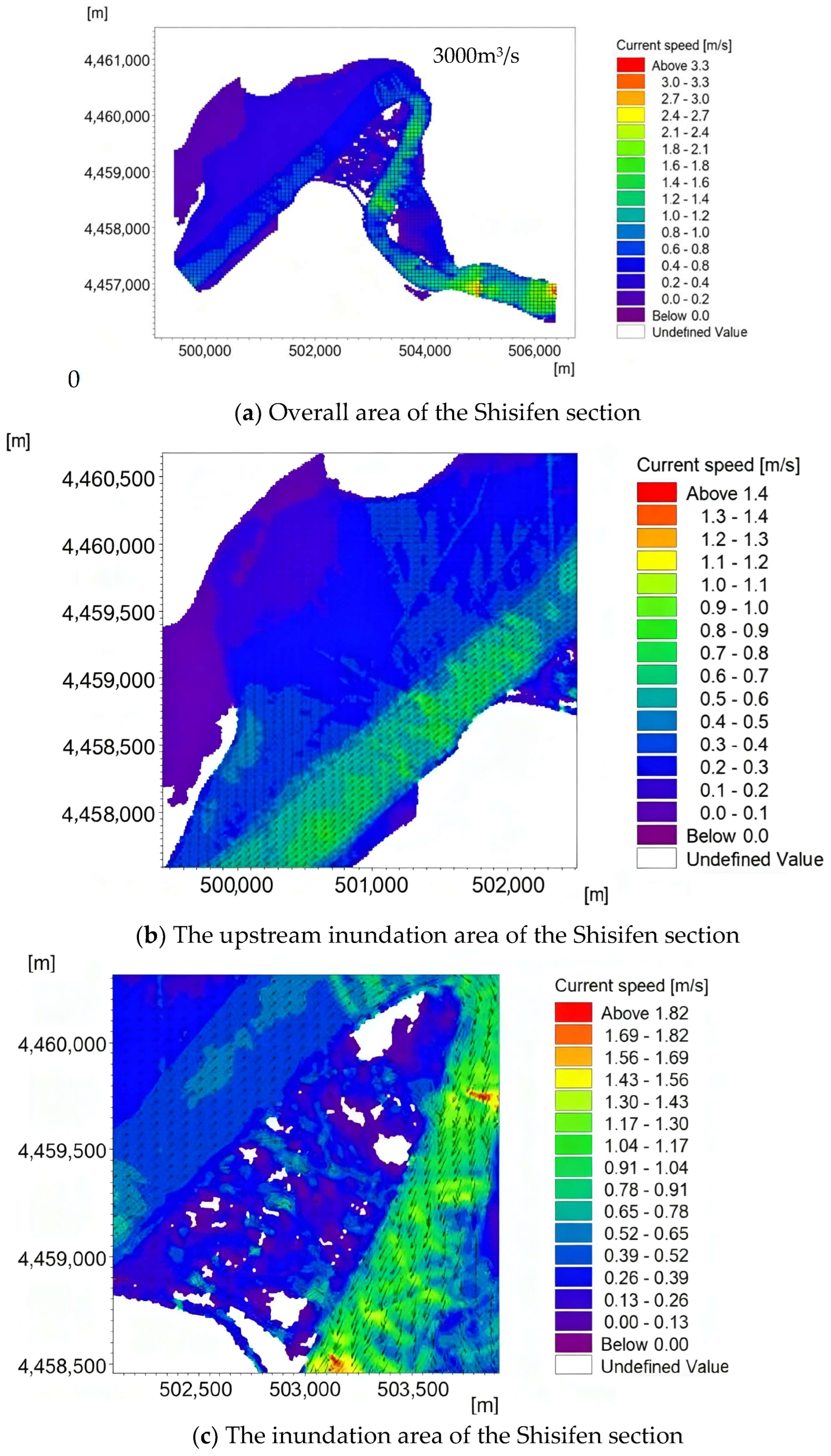
To investigate the effects of flow field distribution under different flow conditions, the hydrodynamic calculation results from MIKE 21 were exported. Using the flow direction as the base map, velocity vectors were overlaid to obtain the flow field distributions under various flow conditions (Figure 12, Figure 13 and Figure 14). These flow field maps were then analyzed for different flow conditions.
(1) Flow Field Distribution at a Flow Rate of 2000 m3/s
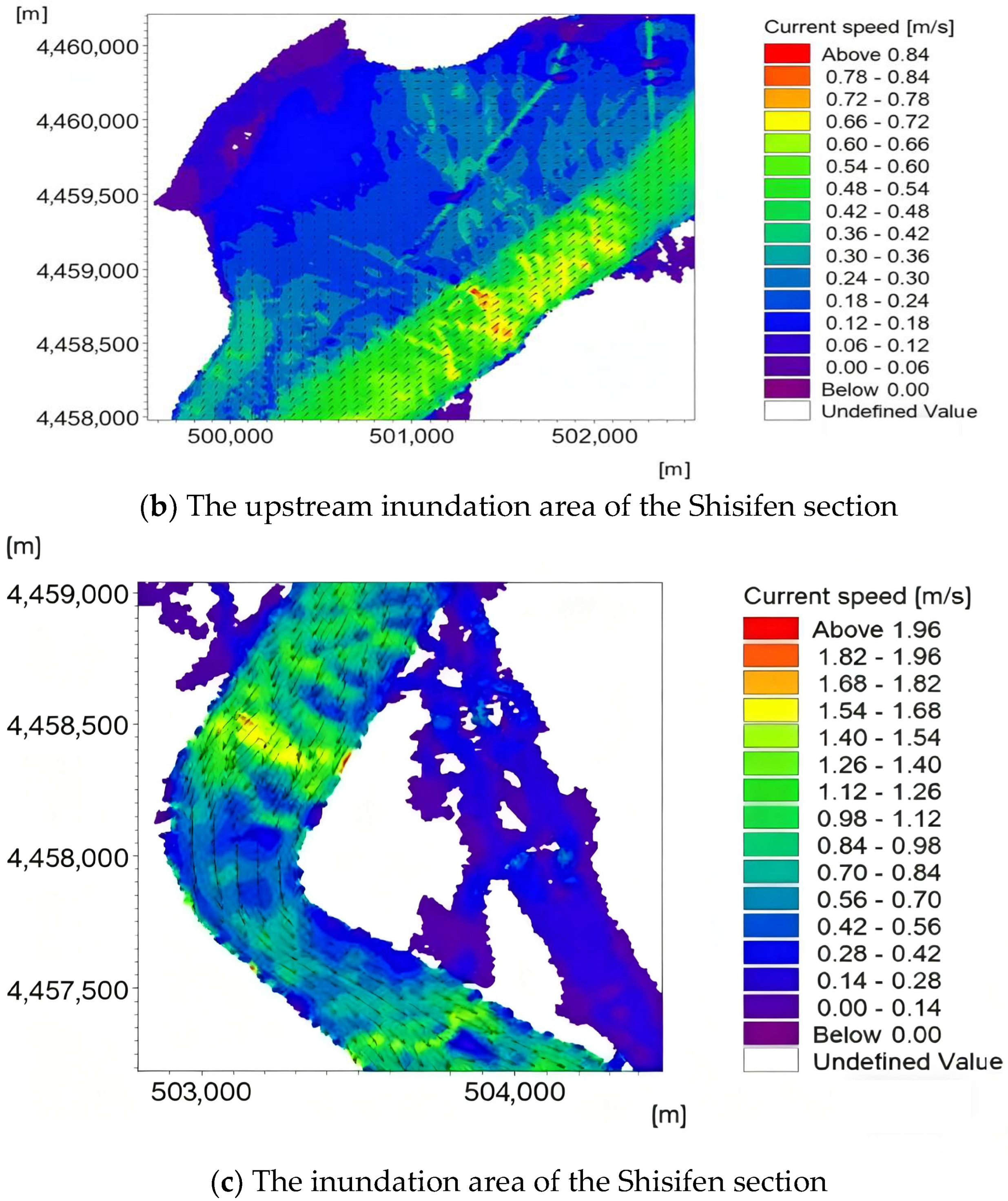
As illustrated in Figure 12, at a flow rate of 2000 m3/s, the flow direction in the upstream river section of Shisifen is notably uniform, with velocities primarily falling within the range of 0.4 to 0.8 m/s. In the upstream inundation area (depicted in Figure 12b), velocities are generally low, with values below 0.2 m/s. This may lead to the accumulation of ice flow. Notably, the bend apex region of Shisifen is particularly susceptible to the accumulation and aggregation of ice flow due to the combination of slow flow and river curvature. In the horizontal axis range of 502,000 to 502,500, on the left bank of the river channel, which signifies the onset of flood overbank flow, velocities are observed to be between 0.24 and 0.3 m/s. The relatively flat terrain at the flood overbanking location results in a uniform, stepped decrease in velocities. In the downstream inundation area of the Shisifen river section (shown in Figure 12c), where the river channel narrows and the riverbed becomes shallower, the reduction in cross-sectional area leads to an increase in flow velocity. The highest velocity in this area reaches 2.81 m/s.
(2) Flow Field Distribution at a Flow Rate of 2500 m3/s
As depicted in Figure 13, at a flow rate of 2500 m3/s, the velocities in the upstream section of the Shisifen river channel remain relatively stable compared to those at 2000 m3/s, primarily oscillating between 0.4 and 0.8 m/s. Notably, within the inundation area (Figure 13b), there is a discernible increase in velocities, ranging from 0.24 to 0.42 m/s, exhibiting a radial distribution pattern. This radial configuration arises due to the floodwater entering a narrower bank section, where constrained flow leads to velocity augmentation, followed by dispersion into broader regions. Consequently, under these circumstances, the flood flow direction assumes a radial character, with elevated velocities observed in the narrower river channel sections and progressively diminishing velocities towards the periphery.
Furthermore, in the inundation area illustrated in Figure 13c, floodwater propagates along the Shisifen sub-channel, linking the upstream and downstream segments of the Guanniuti bend and forming a braided river channel. The river channel features multiple mid-channel bars, and due to frictional forces along the shoreline, this area is susceptible to ice flow accumulation. Additionally, it exerts an influence on the adjacent water flow, modifying its direction and velocity, potentially leading to deviations in flow direction and even the occurrence of backflow phenomena.
(3) Flow Field Distribution at a Flow Rate of 3000 m3/s
As illustrated in Figure 14, at a flow rate of 3000 m3/s in the upstream inundation area of Shisifen (Figure 14b), despite a higher flow rate compared to 2500 m3/s, additional inundation zones arise, resulting in an expansion of the flooded region, whereas the overall velocity alterations remain insignificant. Conversely, in the inundation zone located on the convex bank of the Shisifen bend (Figure 14c), the water traverses the bend and floodplain, merging with the downstream segment of the bend. The uneven floodplain terrain, combined with relatively shallow water depths, leads to the formation of a crisscross water network. The flow direction is dictated by the terrain, following the lowest-lying areas, where ice flow, influenced by frictional forces, tends to accumulate in a dispersed pattern.
The statistical results of flow field distribution under different flow conditions are shown in Table 3.

4.3. Analysis of Ice Flow Distribution

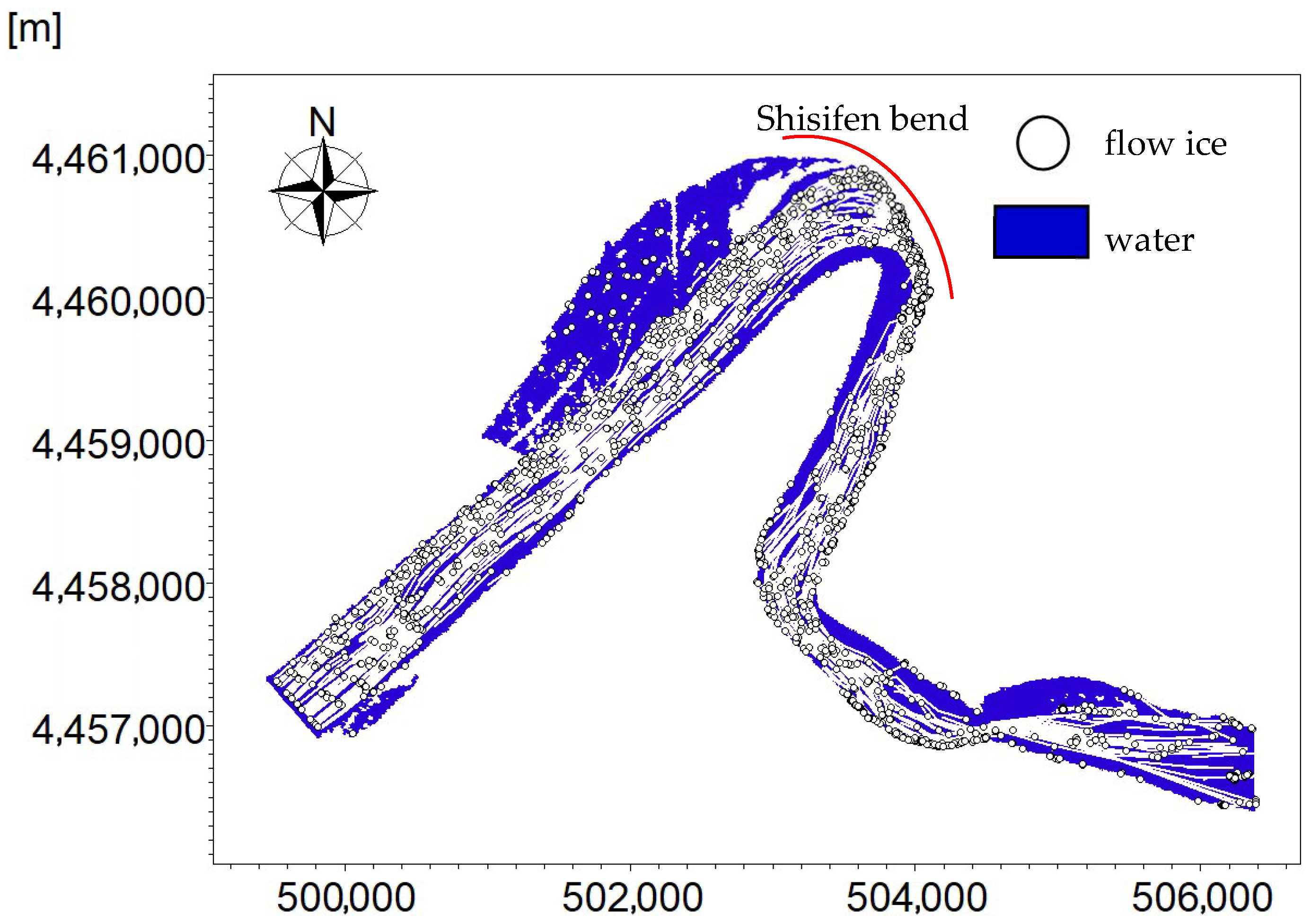
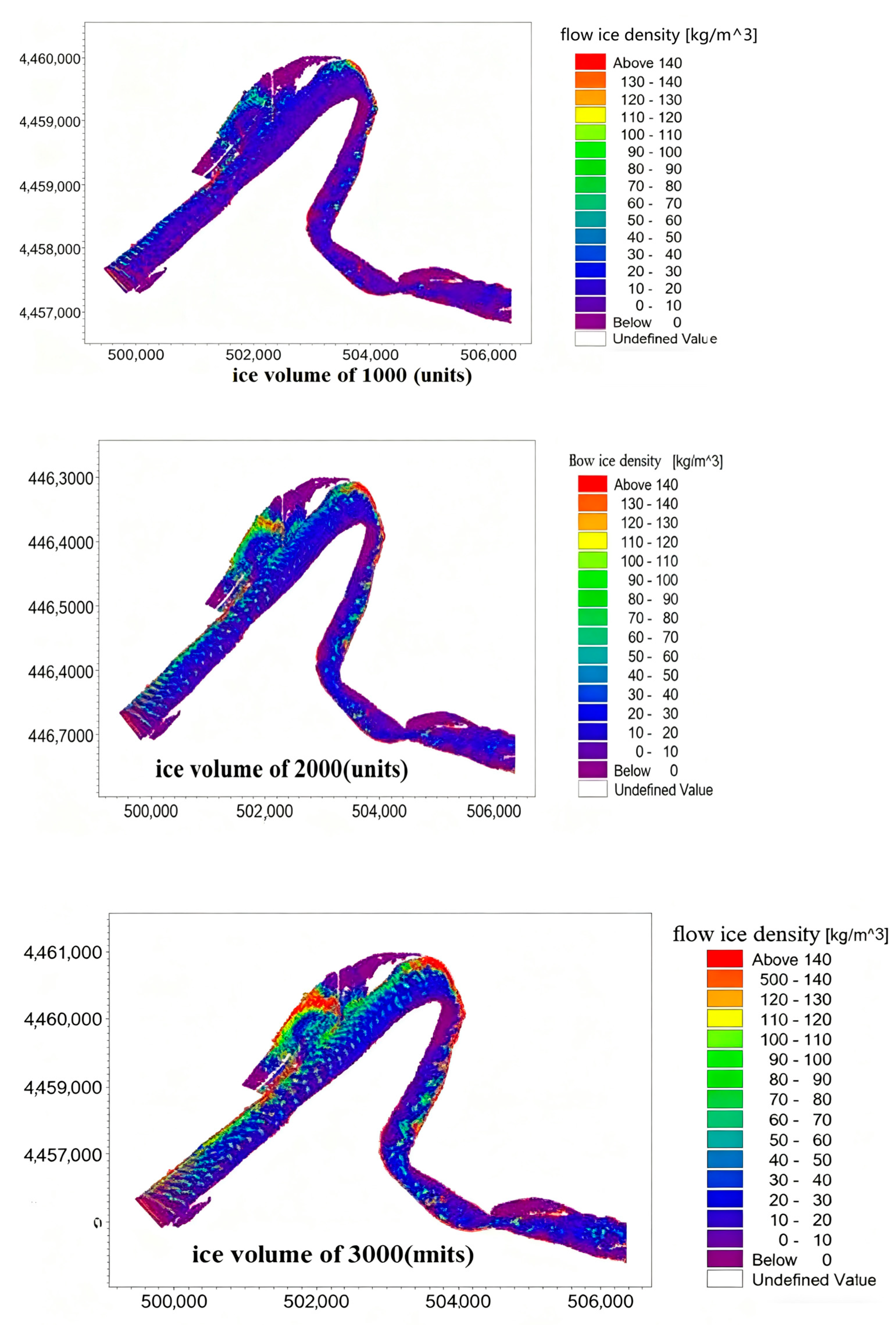
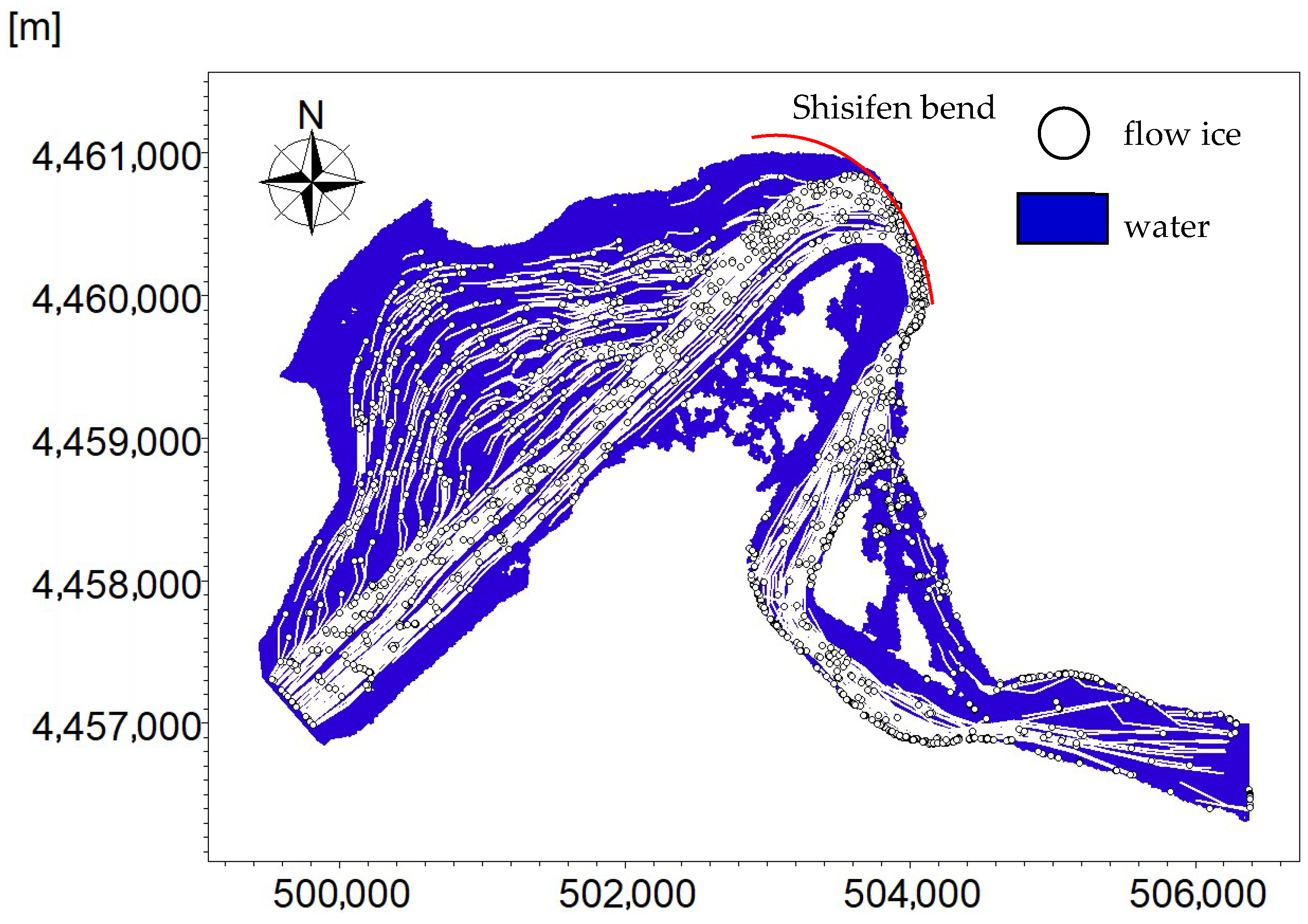
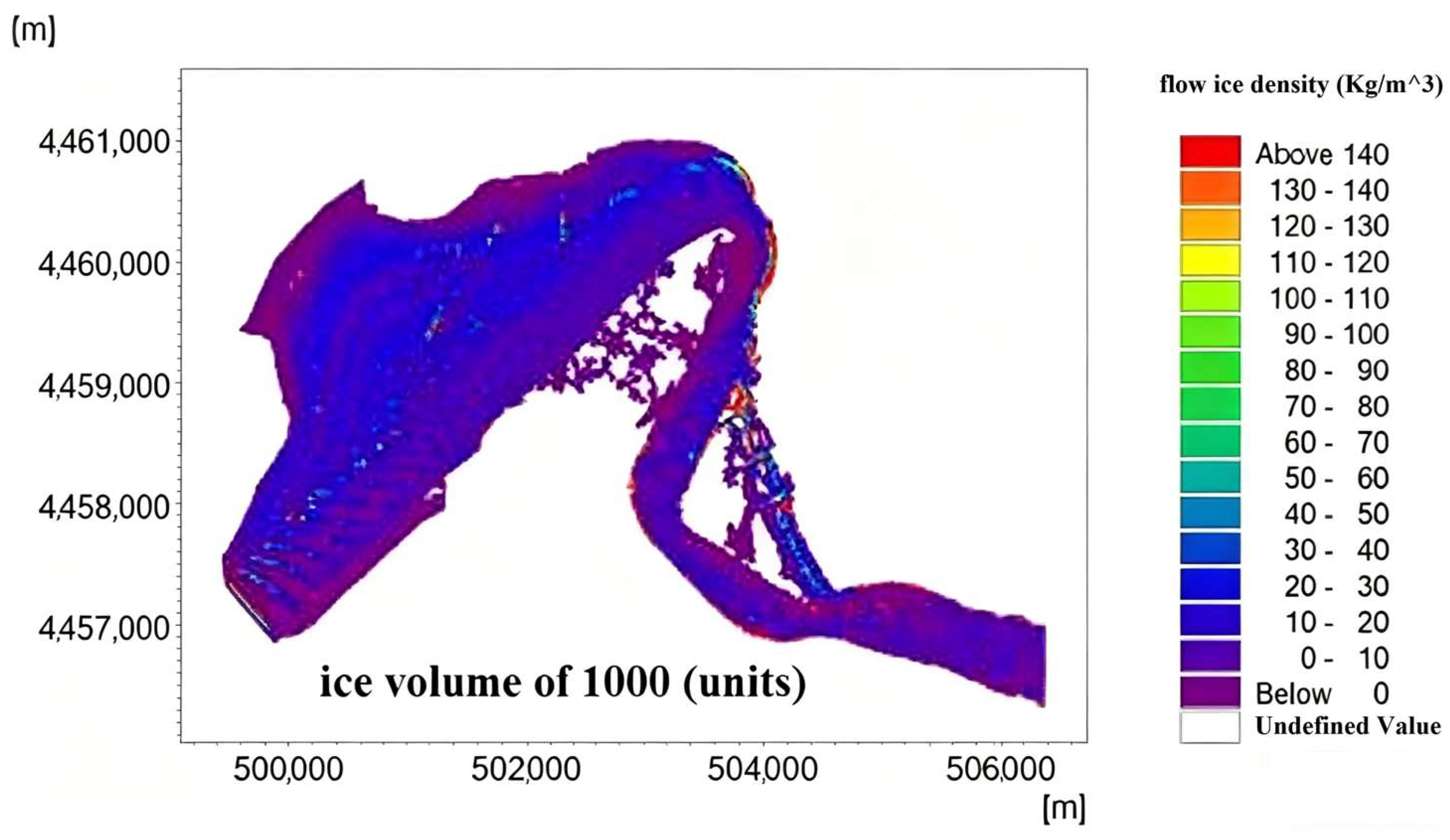
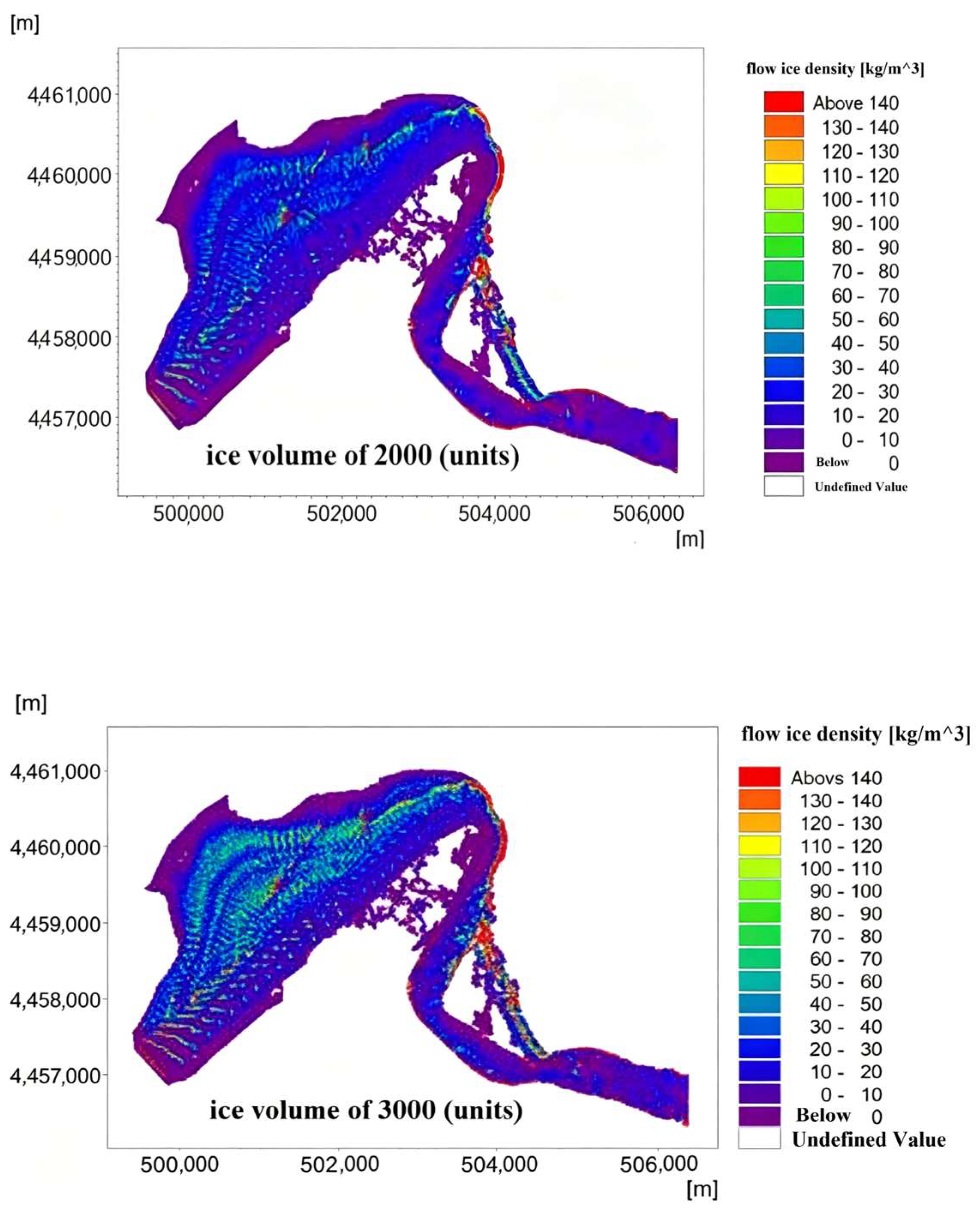
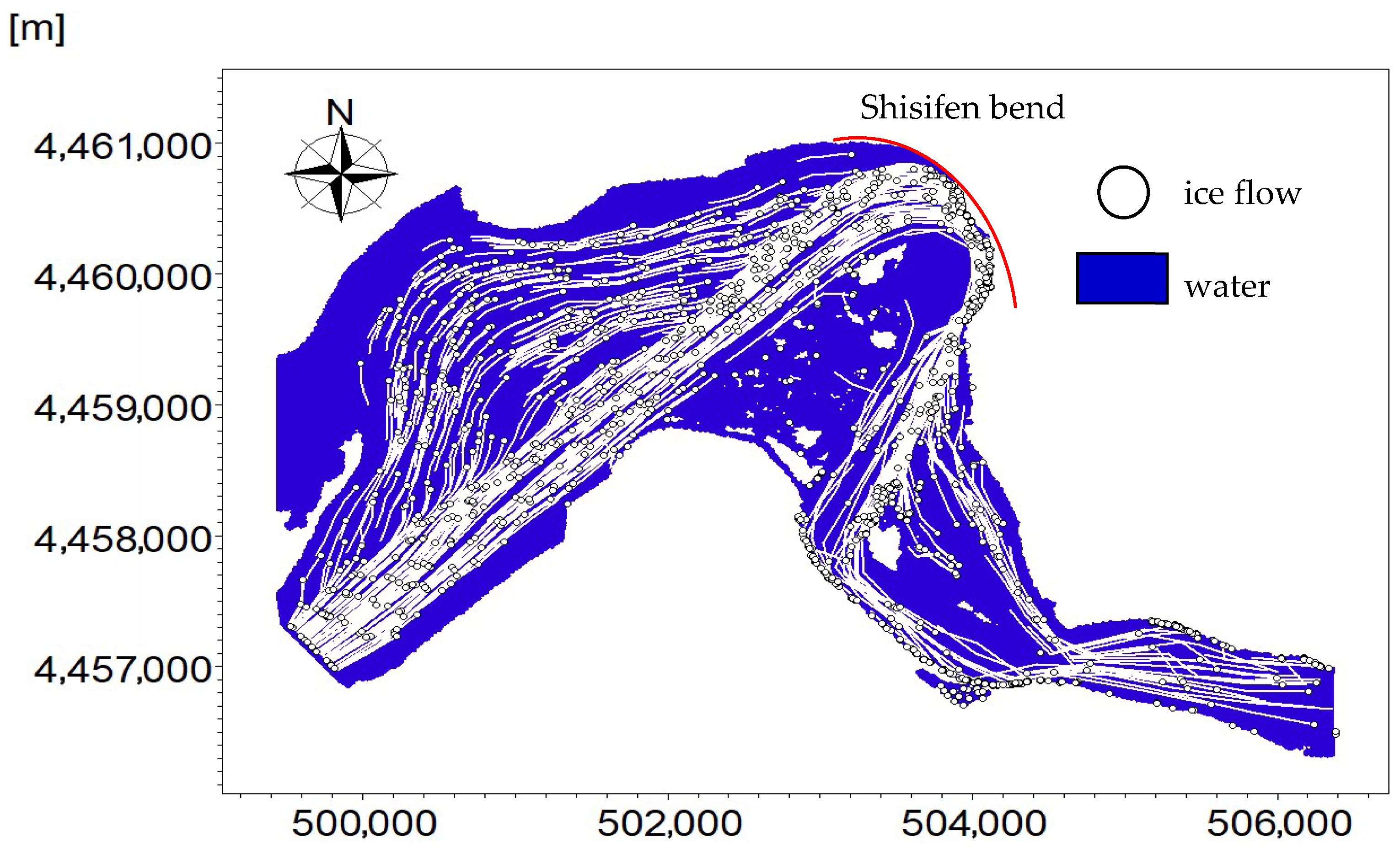
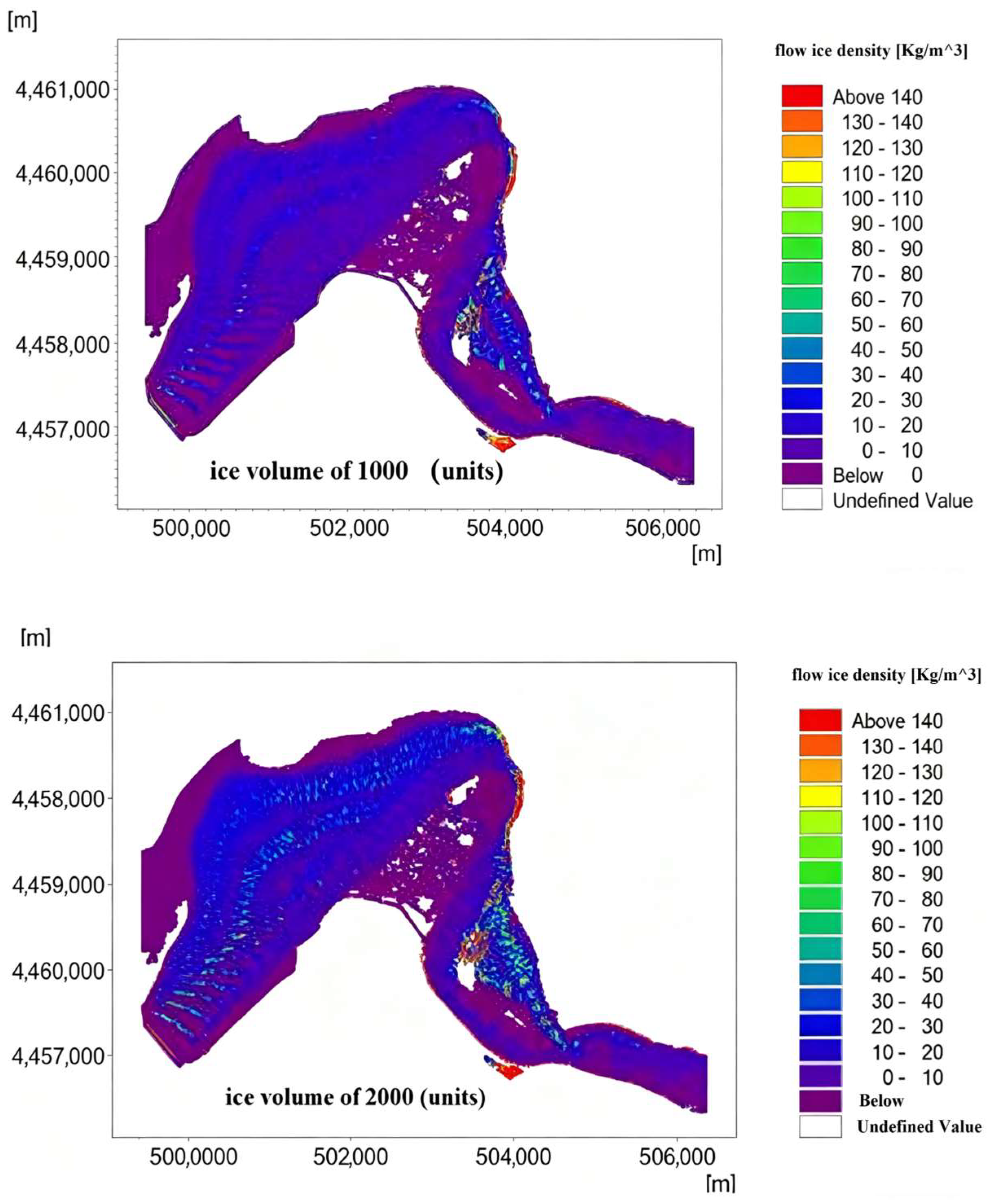
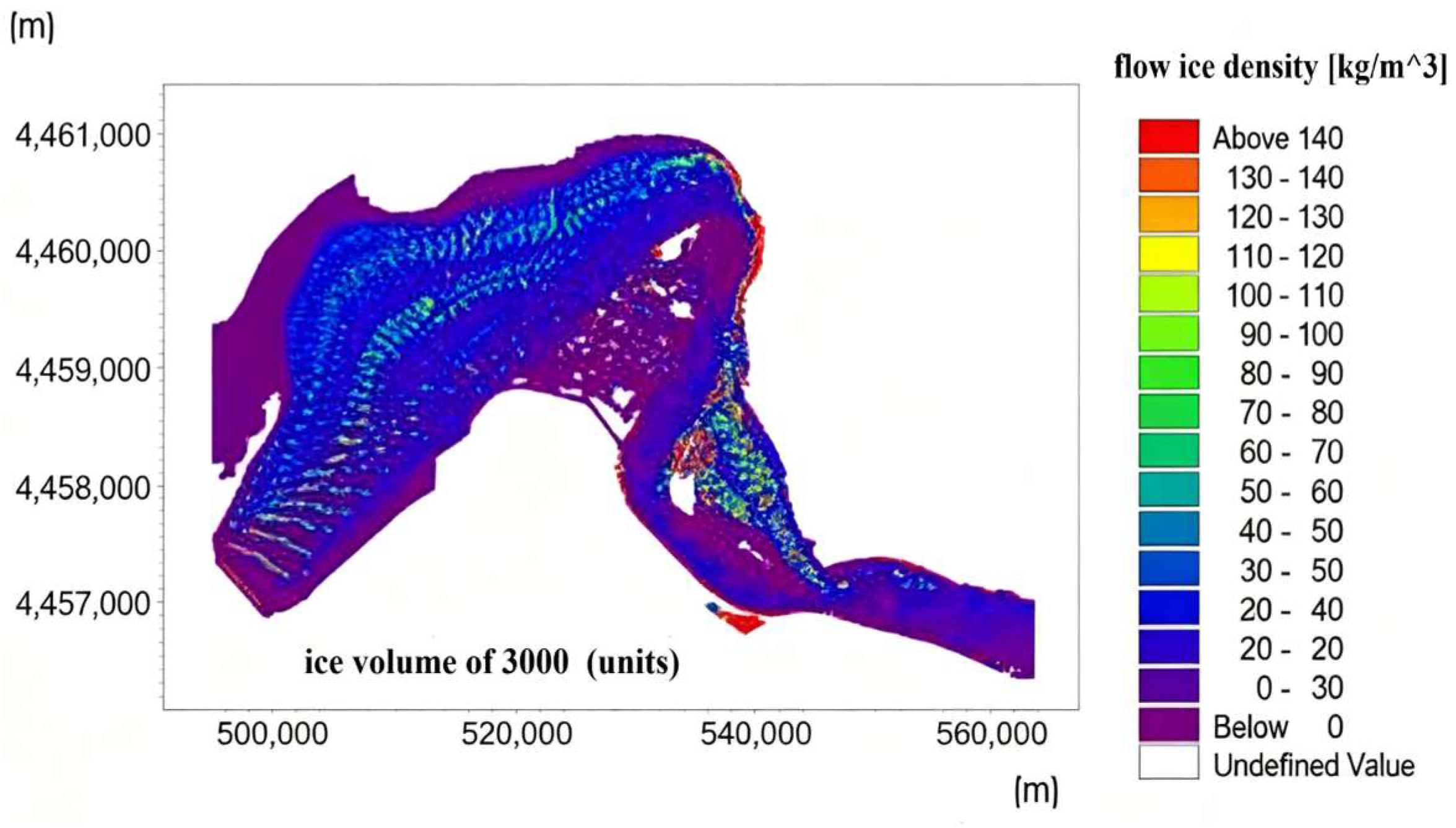
Due to the fact that this section of the river experiences a large accumulation of ice during the annual ice flood season, after performing calculations under different flow rates, the particle tracking module was integrated, and the number of incoming ice particles was increased to 1000, 2000, and 3000, respectively, to simulate ice flow transport. The transport and distribution of ice flow are shown in Figure 15, Figure 16, Figure 17, Figure 18, Figure 19 and Figure 20 below. A comprehensive analysis of the distribution patterns of ice flow transport is conducted in conjunction with the results presented in Section 4.1 and Section 4.2.
(1) Distribution of Ice Flow at a Flow Rate of 2000 m3/s
From the ice flow trajectory (Figure 15) and ice flow density distribution (Figure 16), it can be observed that at a flow rate of 2000 m3/s, ice flow primarily follows along the river channel. Nevertheless, due to the shallower water depth and lower velocity on the left bank compared to the right bank, the ice flow density is generally higher on the left bank, making it the mainstream area for ice flow. As the floodwater inundates the banks, a portion of the ice flow is carried by the current into the flooded area, where it accumulates and aggregates due to obstruction by unflooded elevated terrain, causing a rapid increase in ice flow density. The remaining portion of the ice flow persists along the river channel. Upon reaching the apex of the Shisifen bend, the river channel narrows post-bend, leading to swift accumulation of ice flow on the concave bank, which has the highest density. Consequently, reinforcement of embankments in this region is imperative. Downstream of the Shisifen bend, there is greater ice flow accumulation on both banks compared to the river center, with minimal accumulation along the shore.
(2) Ice Flow Distribution at a Flow Rate of 2500 m3/s
From the ice flow trajectory (Figure 17) and ice flow density distribution (Figure 18), it can be seen that at a flow rate of 2500 m3/s, substantial ice flow enters the inundation zone alongside the water flow following the floodwater’s rise onto the upstream banks of Shisifen. This phenomenon leads to a reduced ice flow density within the river channel compared to the inundation area. As the water flow expands, it encounters obstacles such as bank protection measures and embankment engineering, causing a reflow into the river channel. Notably, unlike the conditions observed at a flow rate of 2000 m3/s, there is no significant ice accumulation at the concave bank of the bend apex. This absence of accumulation can be attributed to the increased cross-sectional area of water flow and decreased river bending at 2500 m3/s. Consequently, the impact position of the ice flow shifts slightly downstream, where it is carried onto the banks by the floodwater within the Shisifen channel. The highest ice flow density and substantial accumulation are found on the left bank downstream of the Shisifen bend and within the channel itself.
(3) Ice Flow Distribution at a Flow Rate of 3000 m3/s
By observing the ice flow trajectory (Figure 19) and ice flow density distribution (Figure 20), it is found that under the flow rate of 3000 m3/s, the transport and distribution patterns of ice in the upstream section of Shisifen closely mirror those observed at 2500 m3/s. Within the inundation zone, particularly regions with horizontal coordinates below 500,000, a notable absence of ice flow is apparent. Conversely, the inundation area on the convex bank of the Shisifen bend displays scattered yet concentrated aggregations of high-density ice flow. Furthermore, it is important to highlight that the Guanniuhui bank protection project, situated at coordinates (504,000, 4,456,800), is submerged by floodwaters, resulting in significant accumulation of ice flow. Given the high ice flow density in this area, preventive measures must be implemented to safeguard the embankments against potential damage.
The distribution results of ice flow under different flow conditions are shown in Table 4.

5. Conclusions

Addressing the recurrent ice flood disasters and associated challenges in risk prevention and control within the Shisifen section of the Yellow River in Inner Mongolia, a numerical simulation of ice flow was executed under three distinct flow conditions: 2000, 2500, and 3000 m3/s. This simulation involved the integration of MIKE21’s hydrodynamic and particle tracking modules. An analysis of overbank inundation under each flow condition was conducted, yielding results on ice–water transport and distribution across different flow rates. Potential sites susceptible to ice flow damage were pinpointed, and corresponding recommendations for embankment protection were formulated. The specific findings are outlined below:
(1) An examination of flood inundation across varying flow rates revealed the following patterns: at 2000 m3/s, the upstream region of the Shisifen bend is the initial area to be inundated, accompanied by minor inundation on both banks of the downstream Ximadihao river section. As the flow rate escalates to 2500 m3/s, new inundation zones emerge between Tuanjie Village and Baliwan Village, with floodwater overflowing the right bank upstream of the Shisifen bend, resulting in partial land inundation. At 3000 m3/s, the lower right section outside the Yellow River embankment in Tuanjie Village becomes inundated, and nearly the entire floodplain between the upstream and downstream portions of the Shisifen bend is submerged. When flow rates surpass 3000 m3/s, The flood extent further expanded, with inundation depth gradually increasing near embankments. It is advisable to enhance flood prevention measures in areas such as Tuanjie Village to Bawan, Shisifen Village to Shuergeliang, and the concave bank of Guanniuhui in the northern segment of Naobaowan Village. Early evacuation of residents, particularly those in the Madihao area, is recommended.
(2) An analysis of ice flow transport and distribution across different flow rates yielded the following observations: at 2000 m3/s, ice flow accumulates in the inundation area upstream of Shisifen and the concave bank of the Shisifen bend, with the highest density found at the latter, necessitating embankment reinforcement. At 2500 m3/s, substantial ice flow accumulates on the left bank downstream of the Shisifen bend and within the Shisifen channel, exhibiting the highest density. At 3000 m3/s, ice flow displays scattered high-density points in the inundation area on the convex bank of the Shisifen bend. Furthermore, in the northern part of Naobaowan Village, floodwater overflows the Guanniuhui bank protection project, leading to significant ice flow accumulation. Preventive measures against ice flow-related damage should be implemented for embankments in this region.
(3) Ice flow is influenced by a complex interplay of hydrological, meteorological, and hydrodynamic factors, particularly the interaction between ice and water flow. These complexities pose significant challenges for predicting and preventing ice flood disasters. Moreover, the mixture of ice and water enhances the destructive potential of ice floods compared to conventional flood events, posing serious threats to hydraulic structures and the safety of nearby communities. Therefore, it is essential to conduct comprehensive studies on ice flow dynamics during winter ice flood seasons, incorporating multidisciplinary approaches and multi-scale research methodologies to effectively mitigate the risks associated with ice floods.

Author Contributions

Conceptualization, Y.D. and K.D.; methodology, K.D.; software and formal analysis, Y.Z.; data curation, K.D.; writing—original draft preparation, Y.D. and K.D.; visualization, Y.Z. All authors have read and agreed to the published version of the manuscript.

Funding

This research was supported by the National Natural Science Foundation of China (Grant No. U23A2012) and the Special Funds for Basic Scientific Research of the Yellow River Institute of Hydraulic Research (HKY-JBYW-2022-08).

Data Availability Statement

The original contributions presented in the study are included in the article.

Conflicts of Interest

The authors declare no conflicts of interest.

References

  1. Lindenschmidi, K.E.; Rokaya, P. A stochastic hydraulic modelling approach to determining the probable maximum staging of ice jam floods. J. Environ. Inform. 2019, 34, 45–54. [Google Scholar] [CrossRef]
  2. Li, Y.; Han, H.W.; Sun, Y.; Xiao, X.; Liao, H.; Liu, X.; Wang, E. Risk evaluation of ice flood disaster in the upper Heilongjiang River based on catastrophe theory. Water 2023, 15, 724. [Google Scholar]
  3. Zufelt, J.E.; Ettema, R. Fully coupled model of ice-jam dynamics. J. Cold Reg. Eng. 2000, 14, 24–41. [Google Scholar] [CrossRef]
  4. Brayall, M. Applicability of 2D modeling for forecasting ice jam flood levels in the Hay River Delta, Canada. Can. J. Civ. Eng. 2012, 39, 701–712. [Google Scholar] [CrossRef]
  5. Kolerski, T.; Shen, H.T. Possible effects of the 1984 St. Clair River ice jam on bed changes. Can. J. Civ. Eng. 2015, 42, 696–703. [Google Scholar] [CrossRef]
  6. Das, A.; Lindenschmidt, K.E. Evaluation of the sensitivity of hydraulic model parameters, boundary conditions and digital elevation models on ice-jam flood delineation. Cold Reg. Sci. Technol. 2020, 183, 103218. [Google Scholar]
  7. Zhai, B.; Liu, L.; Zhang, B.S.; Shen, H.T.; Ji, S.Y. A river ice dynamics model based on the coupling of discrete element method and hydrodynamics. J. Hydroengineering 2020, 51, 617–630. [Google Scholar]
  8. Li, C.; Ji, X.F.; Zhao, S.X.; Shen, H.T. Numerical simulation of ice transport and accumulation process in the Toutaoguai Section of the Yellow River. J. Hydroengineering 2023, 54, 474–485. [Google Scholar]
  9. Guo, X.L.; Wang, T.; Fu, H.; Pan, J.J.; Lu, J.Z.; Gao, Y.X.; Li, J.Z. Progress and trend in the study of river ice hydraulics. Chin. J. Theor. Appl. Mech. 2021, 53, 655–671. [Google Scholar]
  10. Krylenko, I.; Alabyan, A.; Aleksyuk, A.; Belikov, V.; Sazonov, A.; Zavyalova, E.; Pimanov, I.; Potryasaev, S.; Zelentsov, V. Modeling ice-jam floods in the frameworks of an intelligent system for river monitoring. Water Resour. 2020, 47, 387–398. [Google Scholar] [CrossRef]
  11. Ye, Y.L.; She, Y. A systematic evaluation of criteria for river ice breakup initiation using River1D model and field data. Cold Reg. Sci. Technol. 2021, 18, 103–316. [Google Scholar] [CrossRef]
  12. Wang, T.; Yu, H.; Guo, X.L.; Liu, J.F.; Chen, Y.Z.; Yu, Y.T. Numerical modeling of typical ice processes in the Inner Mongolia reach of the Yellow River. J. Hydraul. Eng. 2021, 52, 535–545. [Google Scholar]
  13. Zhang, B.S.; Li, C.J.; Sun, K.; Fan, Q.T.; Ji, S.Y. Identification of river ice parameters based on digital image processing technique. Yellow River 2021, 43, 41–44+48. [Google Scholar]
  14. Luo, H.C.; Ji, H.L.; Gao, G.M. Study on the characteristics of ice-period flow and ice jam in the Shisifen Bend of the Yellow River. J. Hydroengineering 2020, 51, 1089–1100. [Google Scholar]
  15. Zhao, S.X.; Li, C.Y.; Li, C.; Shi, X.H.; Zhao, S.N. Analysis of river ice formation, disappearance, and ice jam formation process in the Shisifen Bend of the Yellow River. J. Hydroengineering 2017, 48, 351–358. [Google Scholar]
  16. Shen, H.T.; Liu, L.; Hoshi, K.; Watanabe, Y.; Hirayama, K. Ice jam formation in the Shokotsu river. In Proceedings of the 15th IAHR Ice Symposium, Gdansk, Poland, 28 August–1 September 2000; pp. 81–88. [Google Scholar]
  17. Shen, H.T.; Su, J.; Lu, S.; Wake, A. A two-dimensional model for dynamic ice transport and jamming in the up-per Niagara river. In Proceedings of the 12th IAHR Ice Symposium, Trondheim, Norway, 23–26 August 1994; pp. 724–733. [Google Scholar]
  18. Yi, X.Y.; Guan, C.M.; Guo, Y.N.; Wang, C.Y.; Lv, H.B.; Li, Z.H. Application and Research of Flood Simulation Technology Based on DHI MIKE; China Water Power Press: Beijing, China, 2014. [Google Scholar]
  19. Fu, C.; Popescu, I.; Wang, C.; Mynett, A.E.; Zhang, F. Challenges in modelling river flow and ice regime on the Ningxia-Inner Mongolia reach of the Yellow River. Hydrol. Earth Syst. Sci. 2014, 18, 1225–1237. [Google Scholar] [CrossRef]
Figure 1. Morphology of the Shisifen river section: (a) location of the study site; (b) nearby view.
Applsci 15 10270 g001
Figure 2. Water level and flow variations in the Shisifen section of the Yellow River, Inner Mongolia, in 2021.
Applsci 15 10270 g002
Figure 3. Water level and flow variations during the 2021–2022 ice flood season in the Shisifen section of the Yellow River, Inner Mongolia.
Applsci 15 10270 g003
Figure 4. Water level–flow relationship during the 2021–2022 ice flood season in the Shisifen section of the Yellow River, Inner Mongolia.
Applsci 15 10270 g004
Figure 5. Model construction flowchart.
Applsci 15 10270 g005
Figure 6. Three-dimensional laser scanning results of the Shifenzi section.
Applsci 15 10270 g006
Figure 7. Elevation above and below water for the river segment from Shisifen section to Chahekou section.
Applsci 15 10270 g007
Figure 8. Comparison of water levels and flow rates at the section during the non-ice period. (a) Comparison of water levels under different roughness coefficients; (b) comparison of flow when the roughness coefficient is 0.033.
Applsci 15 10270 g008
Figure 9. Comparison of water levels at the Shisifen section during the ice period.
Applsci 15 10270 g009
Figure 10. Comparison of average flow velocities at the Shisifen section during the non-ice period.
Applsci 15 10270 g010
Figure 11. The inundation water depths under different flow conditions.
Applsci 15 10270 g011aApplsci 15 10270 g011b
Figure 12. Flow field distribution under flow rate of 2000 m3/s.
Applsci 15 10270 g012aApplsci 15 10270 g012b
Figure 13. Flow field distribution under flow rate of 2500 m3/s.
Applsci 15 10270 g013aApplsci 15 10270 g013b
Figure 14. Flow field distribution under flow rate of 3000 m3/s.
Applsci 15 10270 g014
Figure 15. Trajectory of ice flow at a flow rate of 2000 m3/s.
Applsci 15 10270 g015
Figure 16. Distribution of ice flow density under different ice volumes at a flow rate of 2000 m3/s.
Applsci 15 10270 g016
Figure 17. Trajectory of ice flow at a flow rate of 2500 m3/s.
Applsci 15 10270 g017
Figure 18. Distribution of ice flow density under different ice volumes at a flow rate of 2500 m3/s.
Applsci 15 10270 g018aApplsci 15 10270 g018b
Figure 19. Trajectory of ice flow at a flow rate of 3000 m3/s.
Applsci 15 10270 g019
Figure 20. Distribution of ice flow density under different ice volumes at a flow rate of 3000 m3/s.
Applsci 15 10270 g020aApplsci 15 10270 g020b
Table 1. Nash–Sutcliffe Efficiency under Different Roughness Values.
Roughnessn = 0.0278n = 0.03125n = 0.033n = 0.0357n = 0.04
Sum of Squared Residuals0.9600.7820.5330.5741.601
Variance of Simulated Values2.1422.1422.1422.1422.142
Nash–Sutcliffe Efficiency (NSE)0.5510.6340.7500.7310.252
Goodness of Fitaveragegoodexcellentgoodpoor
Table 2. Simulation results of floodplain inundation under different flow conditions.
Flow ConditionsInundation RegionInundation Area
(km2)
Average Inundation Depth (m)Flood Prevention Measures
2000 m3/sUpstream left bank of Shisifenzi River section; south side of Madihao downstream1.881.25Shisifenzi bank protection project; Madihao bank protection project
2500 m3/sFrom upstream left bank of Shisifenzihe section to Bawan; downstream Shisifenzi channel and south side of Madihao6.281.54Shisifenzi bank protection project; Madihao bank protection project
3000 m3/sFrom upstream left bank of Shisifenzi River section to the south side of Tuanjie Village; downstream Shisifenzi channel, south side of Madihao, and north of Naobaowan Village6.81.78Shisifenzi bank protection project; Madihao bank protection project; Guanniubei bank protection project
Table 3. Simulation results of flow field distribution under different flow conditions.
Flow ConditionAverage River Velocity (m/s)Maximum River Velocity (m/s)Average Inundation Area Velocity (m/s)
2000 m3/s0.922.81Upstream: 0.12; Downstream: 0.78
2500 m3/s1.183.23Upstream: 0.25; Shisifen Channel: 0.40
3000 m3/s1.243.66Upstream: 0.27; Shisifen Bend Convex Bank: 0.52
Table 4. Results of ice flow distribution under different flow conditions.
Flow ConditionIce Flow DistributionPrevention of Ice Flow Damage
2000 m3/sThe upstream inundation area of the Shisifen section and the concave bank of the Shisifen bend have the most accumulation, with the highest density at the concave bank of the Shisifen bendShisifen bank protection project; Yellow River Shisifen bend section
2500 m3/sThe left bank downstream of the Shisifen bend and within the Shisifen channel have the most accumulation, with the highest density within the Shisifen channelShisifen bank protection project; Yellow River Shisifen bend section
3000 m3/sThe left bank downstream of the Shisifen bend and the concave bank of the Guanniuhui bend have the most accumulation, with the highest density at the concave bank of the Guanniuhui bendShisifen bank protection project; Guanniuhui bank protection project; Yellow River embankment Guanniuhui bend section
Disclaimer/Publisher’s Note: The statements, opinions and data contained in all publications are solely those of the individual author(s) and contributor(s) and not of MDPI and/or the editor(s). MDPI and/or the editor(s) disclaim responsibility for any injury to people or property resulting from any ideas, methods, instructions or products referred to in the content.