Control Strategy of Multiple Battery Energy Storage Stations for Power Grid Peak Shaving


Abstract
1. Introduction
2. Methodology
2.1. Peak Load Shifting Control Strategies
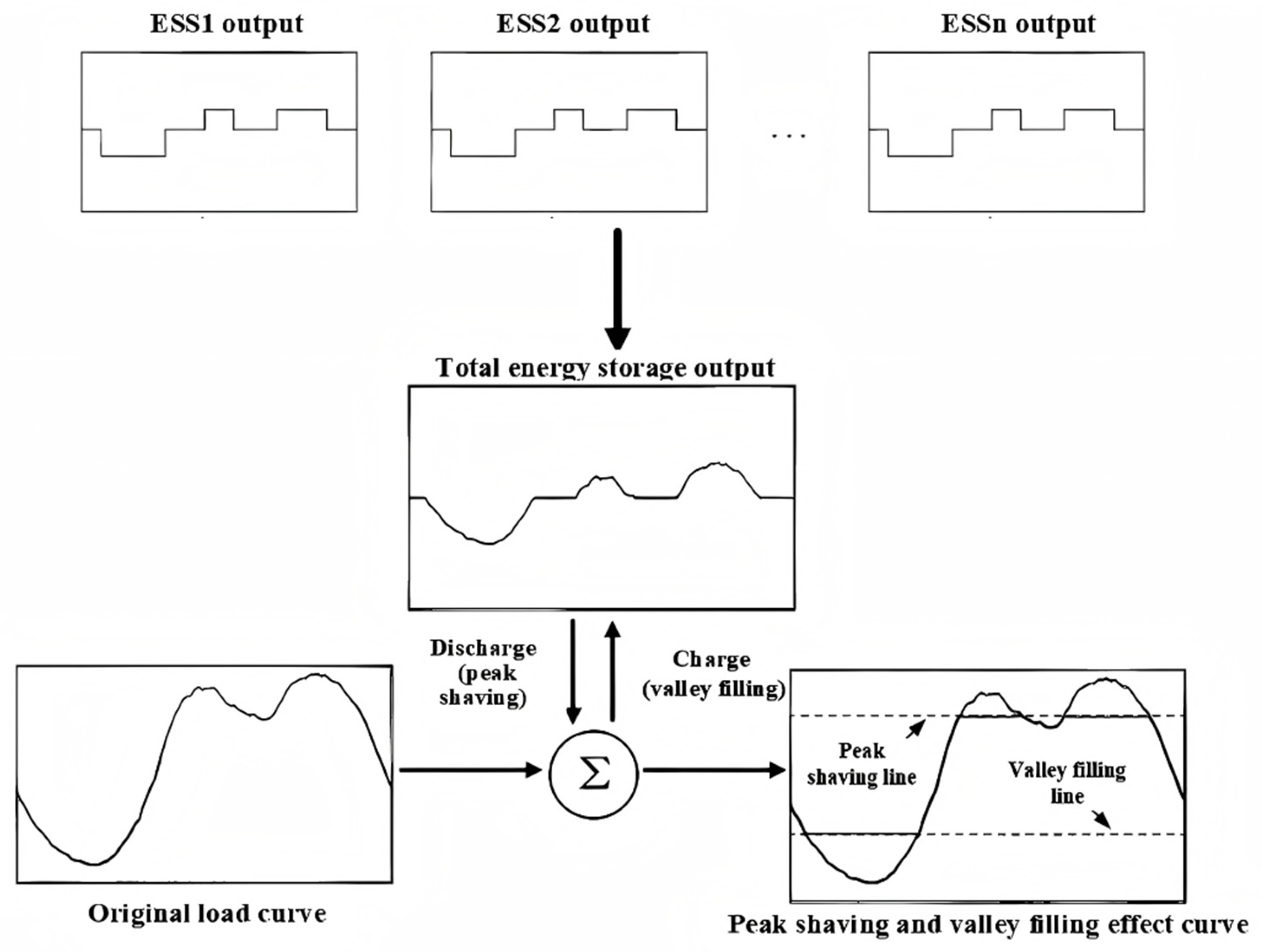
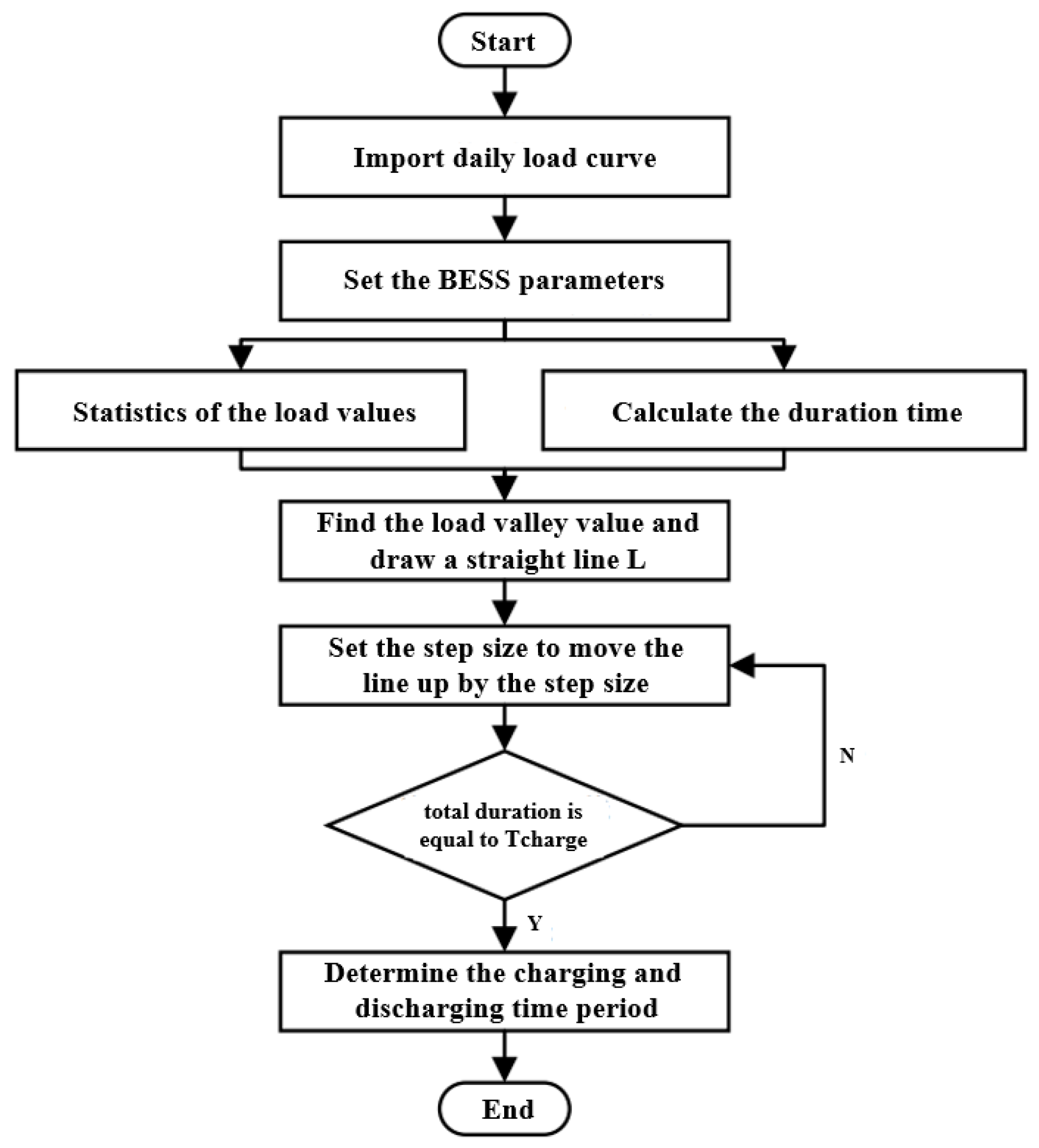
2.1.1. Control Strategy for Constant Power Charging and Discharging Mode
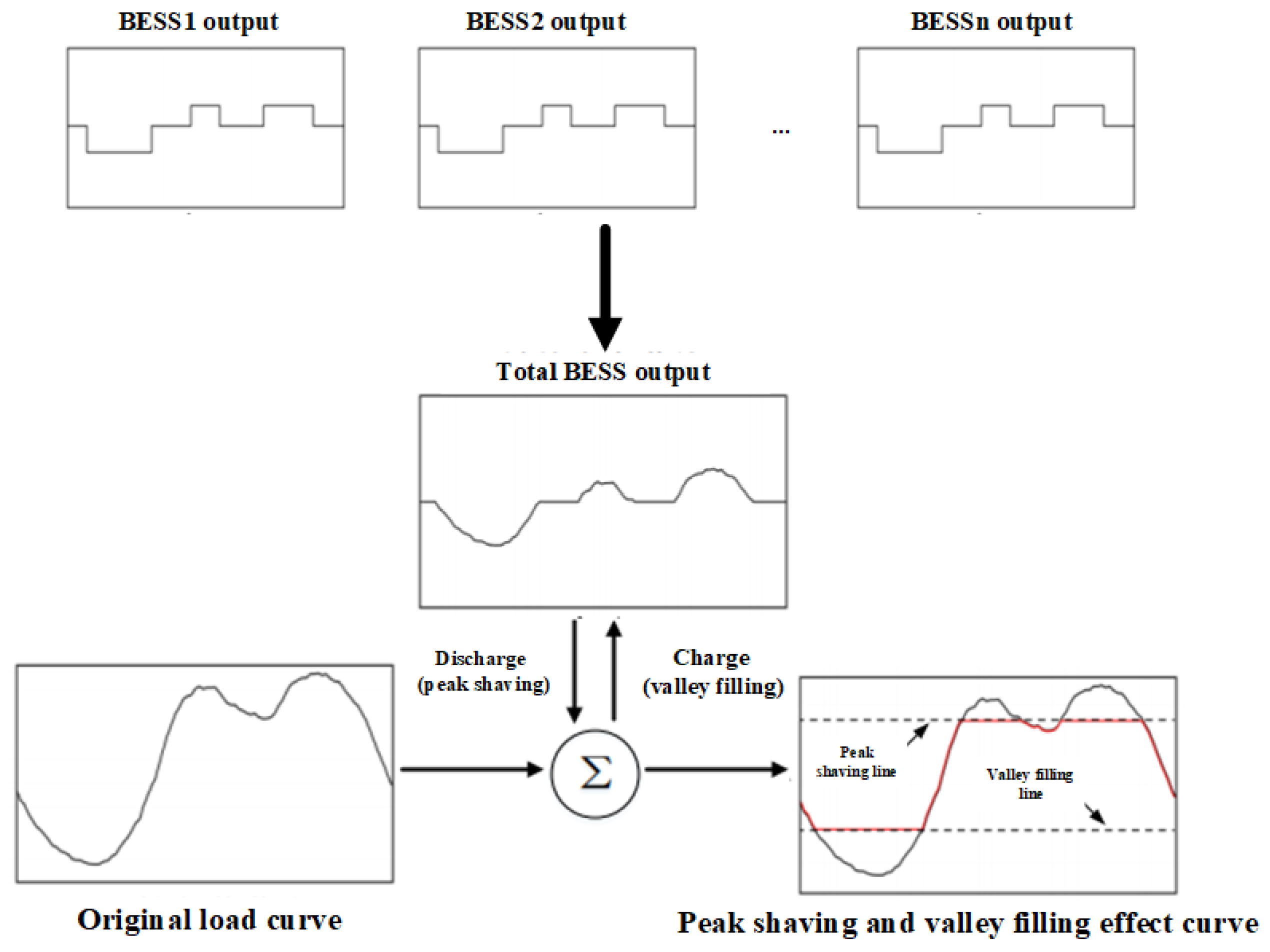
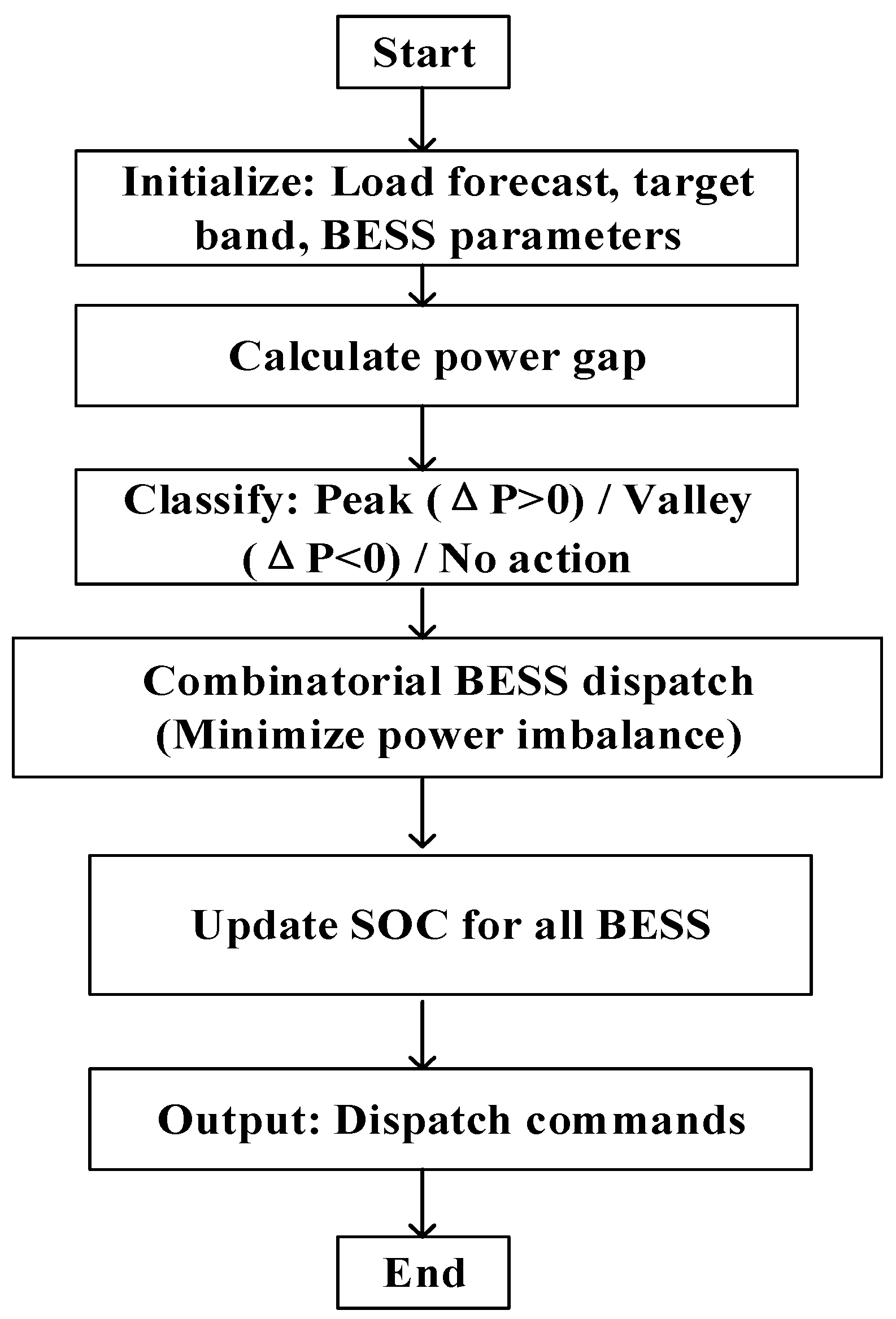
2.1.2. Control Strategy for Variable-Power Charging and Discharging Mode
2.2. Evaluation
2.3. Constraint Conditions
2.4. Algorithm Implementation
| Algorithm 1 Multi-BESS Coordinated Variable-Power Control for Grid Peak Shaving |
|
(1) Initialization Input: Lforecast(t): Forecasted grid load curve [t = 1:T]; Target_Band: Desired load band [Lmin, target, Lmax, target]; BESSlist = {BESSi}: List of BESS units (rated power, capacity, SOCmin/max) (2) Time-Step Processing(t = 1~T) Calculate power gap: ∆Pgap(t) = Lforecast(t) − Target_Band(t) (3) Power Allocation: If ∆Pgap(t) > 0 (peak): Pdischarge, total(t) = min(∆Pgap(t), ΣBESSi, discharge capacity) Dispatch BESS units via combinatorial optimization to meet Pdischarge, total(t) while respecting SOC constraints (7), Power limits (8), and Energy conservation (9). If ∆P_gap(t) < 0 (valley): Pcharge, total(t) = min(|∆Pgap(t)|, ΣBESSi, charge capacity) Optimize BESS charging sequence (similar to Step 2). (4) Dispatch and Update: Send power to each BESS unit and update SOC for all BESS units by using (9). (5) Termination: Output: Time-series dispatch commands for all BESS units. |
3. Results
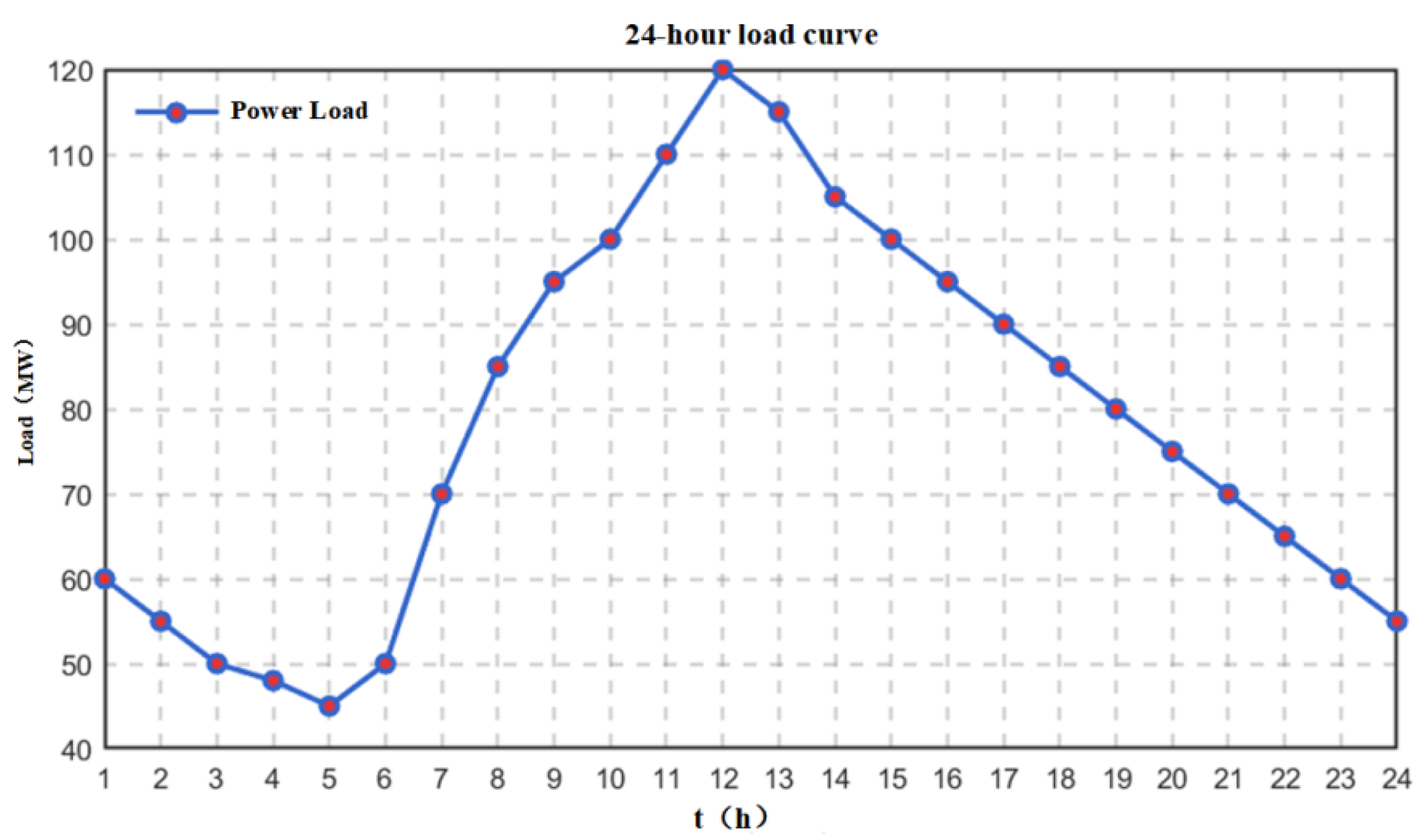
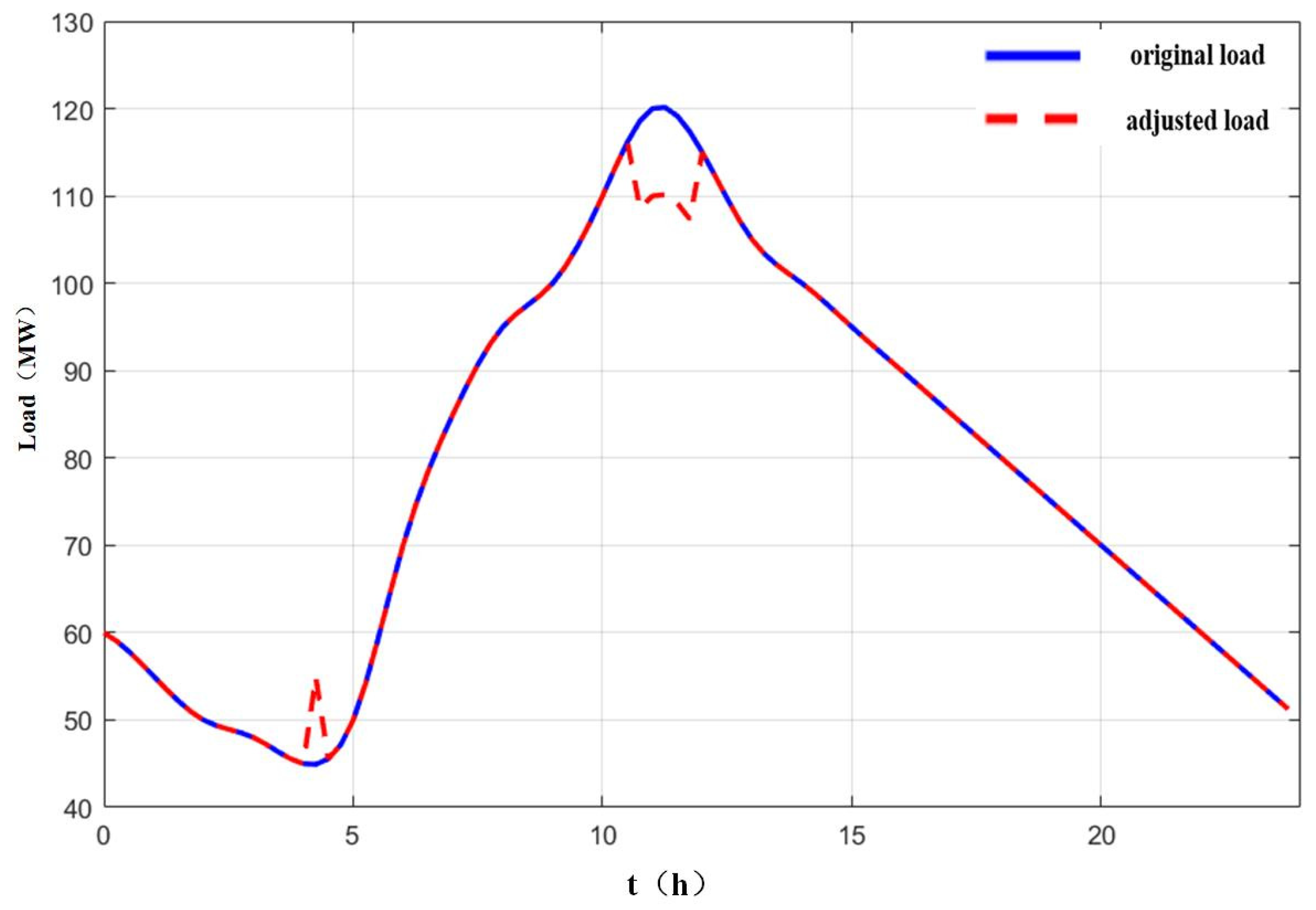
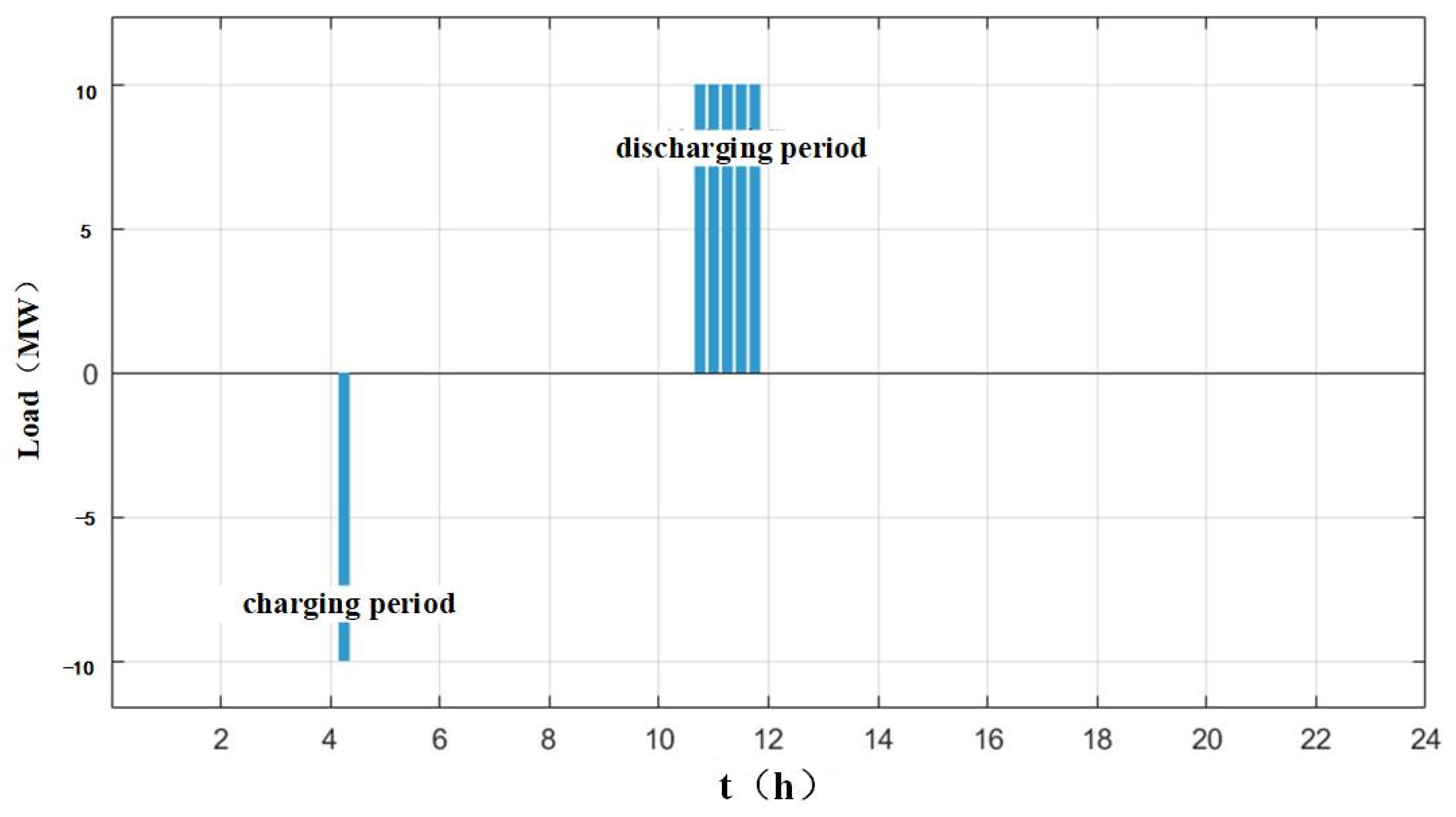
3.1. Performance of Constant Power Charging and Discharging Control Strategy
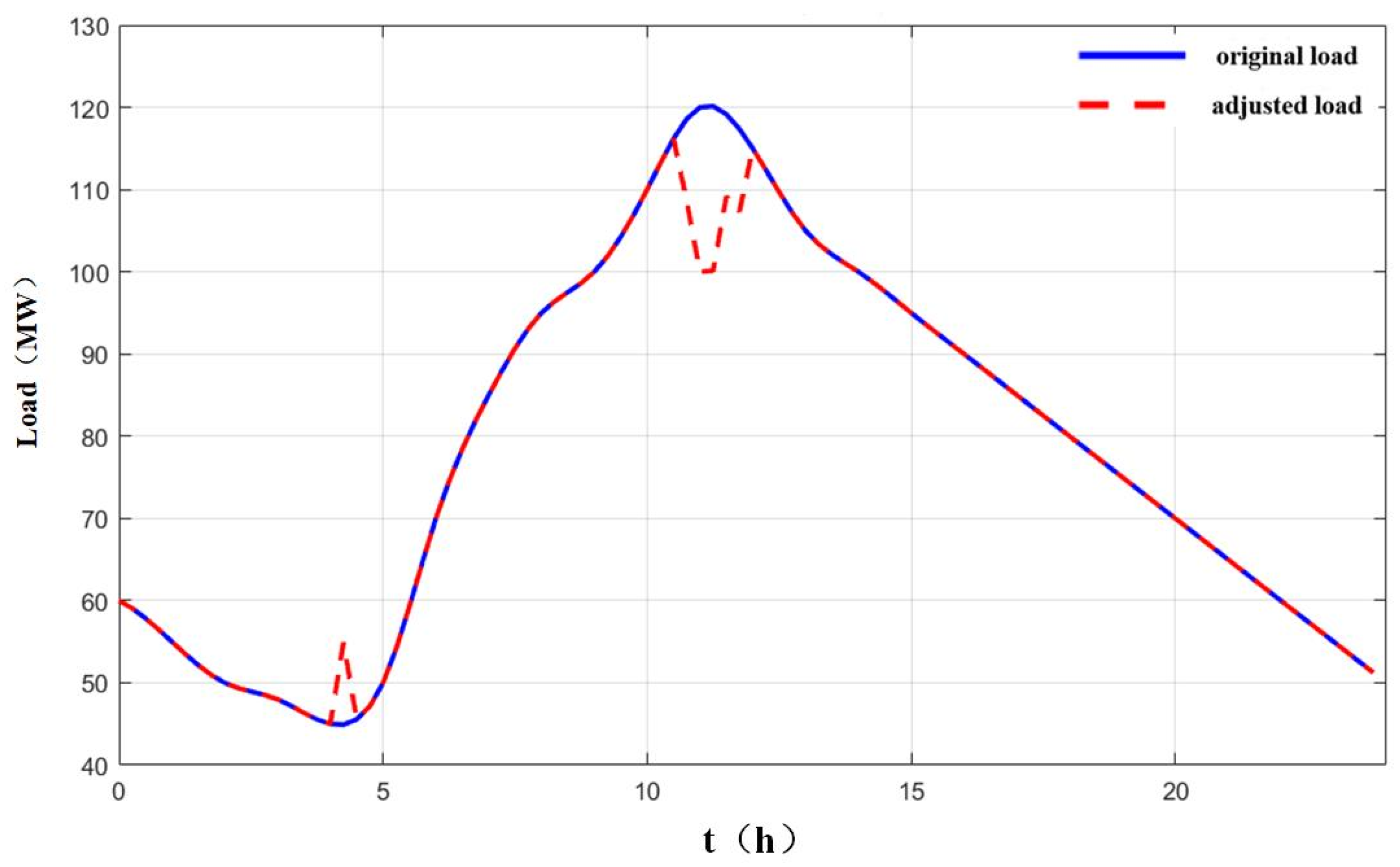
3.2. Performance of Variable-Power Charging and Discharging Control Strategy
3.3. Scalability Analysis for Multiple BESSs (N > 2)
- (1)
- Finer Power Granularity: The equivalent power resolution improves with N, enabling tighter tracking of load fluctuations.
- (2)
- Enhanced Flexibility: Combinatorial control of N units expands the solution space, extending cumulative regulation duration and reducing individual stress via dynamic power sharing.
- (3)
- Algorithmic Tractability: The phased control algorithm (Section 2.1.2) maintains complexity, ensuring real-time feasibility for practical N values.
4. Conclusions
- (1)
- This strategy addresses the peak-shaving challenge by coordinating the start-stop sequence of multiple constant power BESS units. This coordination produces equivalent continuously adjustable charging and discharging power at the grid level, enabling fine-grained aggregation and control of discrete storage devices. This paper illustrates the basic design principles of this coordinated variable-power strategy and develops an auxiliary optimization model that incorporates load forecasting, security constraints, and evaluation metrics.
- (2)
- The effectiveness of the proposed strategy is rigorously demonstrated through a comparative case study. The validation clearly demonstrates the superior overall peak-shaving performance compared to the constant power strategy of a single BESS.
- (3)
- Quantitative analysis confirms the significant advantages: improved energy storage utilization through phased collaborative scheduling, reduced equipment risk and flexibility constraints inherent in single BESS operation, and reduced system dynamic response requirements through the “cluster-based stand-alone replacement” model. All in all, this provides a reliable solution for large-scale energy storage participation in high-precision peaking applications.
Author Contributions
Funding
Institutional Review Board Statement
Informed Consent Statement
Data Availability Statement
Conflicts of Interest
Abbreviations
| BESS | Battery Energy Storage Station |
| SOC | State of Charge |
References
- Zhang, Z.; Kang, C. Challenges and Prospects for Constructing the New-type Power System Towards a Carbon Neutrality Future. Proc. CSEE 2022, 42, 2806–2819. [Google Scholar]
- Chen, G.; Liang, Z.; Dong, Y. Analysis and Reflection on the Marketization Construction of Electric Power With Chinese Characteristics Based on Energy Transformation. Proc. CSEE 2020, 40, 369–379. [Google Scholar]
- Xie, X.; Ma, N.; Liu, W. Functions of Energy Storage in Renewable Energy Dominated Power Systems: Review and Prospect. Proc. CSEE 2023, 43, 158–169. [Google Scholar]
- Engels, J.; Claessens, B.; Deconinck, G. Optimal Combination of Frequency Control and Peak Shaving With Battery Storage Systems. IEEE Trans. Smart Grid 2019, 11, 3270–3279. [Google Scholar] [CrossRef]
- Liu, H.; Zhang, G. A review on key technologies and optimization methods for energy storage systems in distribution networks. J. Mod. Power Syst. Clean Energy 2019, 7, 1055–1067. [Google Scholar]
- Li, B.; Li, B.; Li, C. Modeling and Fault Characteristic Analysis of Electrochemical Energy Storage Station Considering Overcharging/Overdischarging. Autom. Electr. Power Syst. 2024, 48, 119–128. [Google Scholar]
- Tang, Y.; Lu, X.; Zhao, J. Comprehensive optimization of distributed generation and energy storage in distribution networks. IEEE Trans. Sustain. Energy 2017, 8, 1351–1362. [Google Scholar]
- Chen, M.; Zhao, S.; Wang, Y. Review on Fault Monitoring and Diagnosis of Large-scale Electrochemical Energy Storage System. Proc. CSEE 2024, 44, 8086–8103. [Google Scholar]
- Li, J.; Zhang, J.; Mu, G. Collaborative Optimal Dispatch of Peak Shaving and Frequency Modulation with Independent Energy Storage Based on Auxiliary Service Market. Proc. CSEE 2025, 45, 650–665. [Google Scholar]
- Zhang, M.; Song, X.; Xin, H. Optimal operation strategy of battery energy storage system in distribution networks with consideration of power losses. Power Syst. Technol. 2013, 37, 2123–2128. [Google Scholar]
- Bao, G.; Lu, C.; Yuan, Z. Load shift realtime optimization strategy of battery energy storage system based on dynamic programing. Autom. Electr. Power Syst. 2012, 36, 11–16. [Google Scholar]
- Wu, C.; Lin, S.; Xia, C. Distributed Optimal Dispatch of Microgrid Cluster Based on Model Predictive Control. Power Syst. Technol. 2020, 44, 530–538. [Google Scholar]
- Chen, M.; Lu, Z.; Liu, Y. Research on optimal peak load shifting strategy of battery energy storage system operated in constant power mode. Power Syst. Technol. 2012, 36, 232–237. [Google Scholar]
- Cheng, M.; Chen, J.; Yu, Y. Optimization of Power Grid Dispatching Operation Mode Based on Intelligent Algorithms. Electr. Eng. 2025, 10, 167–172. [Google Scholar]
- Lin, S.; Guo, Y.; Zhou, B. Collaborative Optimal Scheduling Method for Multi-virtual Power Plants and Shared Energy Storage Considering Electricity Prices Uncertainty. Smart Power 2025, 53, 20–27. [Google Scholar]
- Huang, J.; Yang, J.; Huang, Z. Control Strategy of Energy Storage Power Station Participating in Power Grid Peak Shaving Based on Extended Short-Term Load Forecasting and Dynamic Optimization. Acta Energ. Sol. Sin. 2021, 42, 470–476. [Google Scholar]
- Wang, F.; Liu, Z.; Zhang, K. Adjustable resource aggregation and scheduling in distribution transformer station areas based on time-of-use price and charge-discharge strategy of energy storage. Energy Storage Sci. Technol. 2023, 12, 1204–1214. [Google Scholar]
- Xiu, X.; Li, J.; Hui, D. Capacity configuration and economic evaluation of energy storage system for grid peak load shifting. Electr. Power Constr. 2013, 34, 1–5. [Google Scholar]
- Li, C.; Li, B.; Li, B. Adaptability Analysis of Power Directional Elements in Electrochemical Energy Storage Power Stations Connected to Distribution Networks. Autom. Electr. Power Syst. 2025, 49, 126–135. [Google Scholar]
- Li, J.; Wang, S. Optimal Combined Peak-shaving Scheme Using Energy Storage for Auxiliary Considering Both Technology and Economy. Autom. Electr. Power Syst. 2017, 41, 44–50. [Google Scholar]



| Rated Capacity | Rated Power | Initial SOC | Max Charge Capacity | Max Discharge Capacity |
|---|---|---|---|---|
| 20.0 MW·h | 10.0 MW | 0.80 | 2.0 MW·h | 12.0 MW·h |
| Time Period Type | Start Time (h) | End Time (h) | Duration (h) | Power (MW) |
|---|---|---|---|---|
| Charge | 4.25 | 4.75 | 0.50 | −10.0 |
| Discharge | 10.75 | 11.75 | 1.25 | 10.0 |
| Indicator | Before Peak Shaving | After Peak Shaving | Change |
|---|---|---|---|
| Maximum load (MW) | 120.13 | 116.18 | 3.95 |
| Minimum load (MW) | 44.92 | 45.00 | 0.08 |
| ∆P (MW) | 75.21 | 71.18 | 4.03 |
| α | 0.3739 | 0.3873 | 0.0134 |
| β | 0.6261 | 0.6127 | 0.0134 |
| X | 22.8483 | 21.8695 | 0.9788 |
| Output Stage | Charging Period | Discharging Period |
|---|---|---|
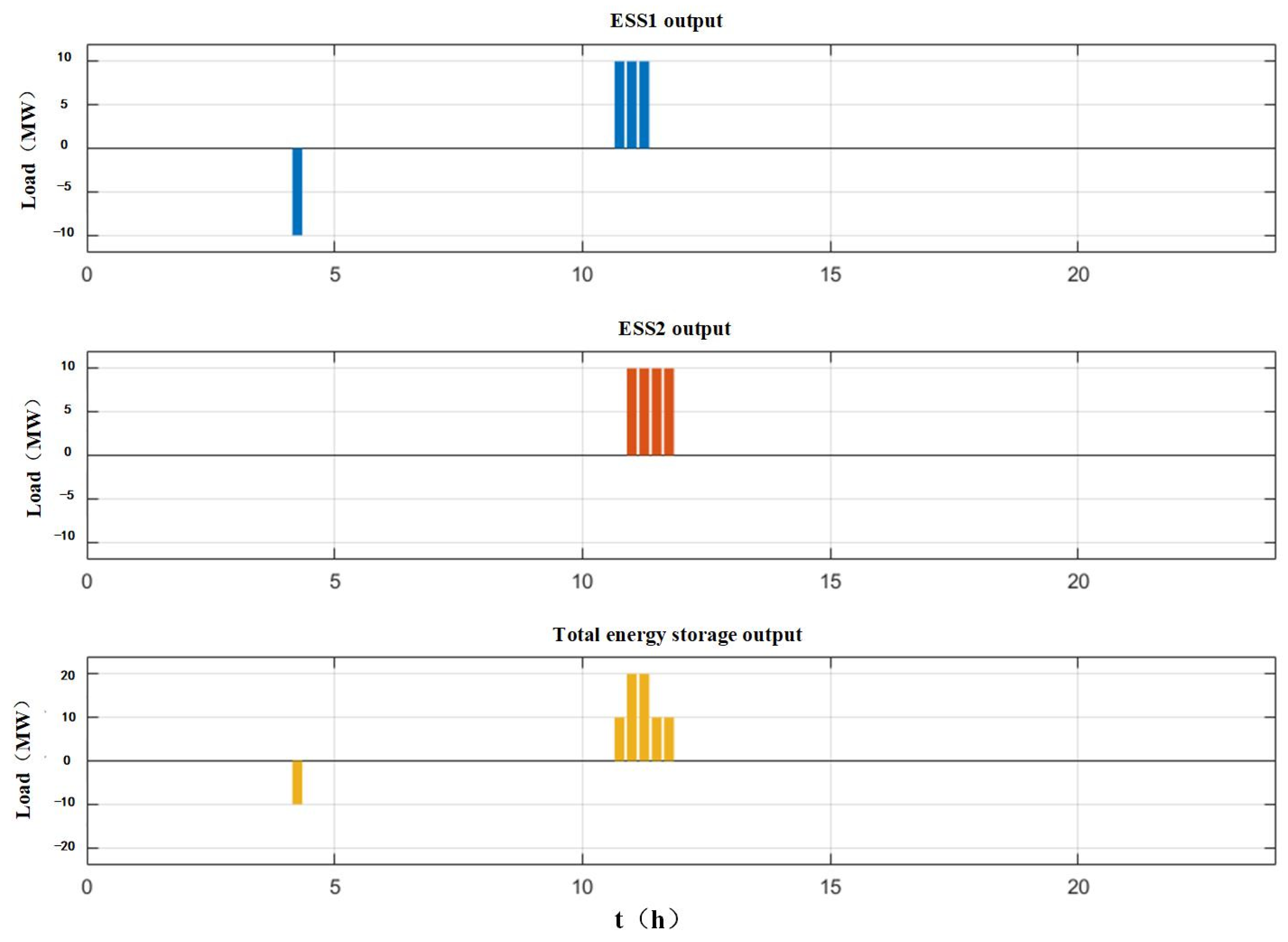
| Total duration | 3.75–4.25 h (0.5 h) | 10.75–11.75 h (1.0 h) |
| Stage 1 | Charging two BESS simultaneously (3.75 h) | Discharging only BESS1 (10.75 h) |
| Stage 2 | Charging only BESS2 (4.00 h) | Discharging two BESS simultaneously (11.00 h) |
| Stage 3 | Charging only BESS1 (4.25 h) | Discharging only BESS2 (11.50 h) |
| Indicator | Before Peak Shaving | After Peak Shaving | Change |
|---|---|---|---|
| Maximum load (MW) | 120.13 | 114.50 | 5.63 |
| Minimum load (MW) | 44.92 | 47.20 | 2.28 |
| ∆P (MW) | 75.21 | 67.30 | 7.91 |
| α | 0.3739 | 0.4122 | 0.0383 |
| β | 0.6261 | 0.5878 | 0.0383 |
| X | 22.8483 | 21.2826 | 1.5657 |
Disclaimer/Publisher’s Note: The statements, opinions and data contained in all publications are solely those of the individual author(s) and contributor(s) and not of MDPI and/or the editor(s). MDPI and/or the editor(s) disclaim responsibility for any injury to people or property resulting from any ideas, methods, instructions or products referred to in the content. |
© 2025 by the authors. Licensee MDPI, Basel, Switzerland. This article is an open access article distributed under the terms and conditions of the Creative Commons Attribution (CC BY) license (https://creativecommons.org/licenses/by/4.0/).
Share and Cite
Chen, P.; Cui, W.; Shang, J.; Xu, B.; Li, C.; Lun, D. Control Strategy of Multiple Battery Energy Storage Stations for Power Grid Peak Shaving. Appl. Sci. 2025, 15, 8656. https://doi.org/10.3390/app15158656
Chen P, Cui W, Shang J, Xu B, Li C, Lun D. Control Strategy of Multiple Battery Energy Storage Stations for Power Grid Peak Shaving. Applied Sciences. 2025; 15(15):8656. https://doi.org/10.3390/app15158656
Chicago/Turabian StyleChen, Peiyu, Wenqing Cui, Jingan Shang, Bin Xu, Chao Li, and Danyang Lun. 2025. "Control Strategy of Multiple Battery Energy Storage Stations for Power Grid Peak Shaving" Applied Sciences 15, no. 15: 8656. https://doi.org/10.3390/app15158656
APA StyleChen, P., Cui, W., Shang, J., Xu, B., Li, C., & Lun, D. (2025). Control Strategy of Multiple Battery Energy Storage Stations for Power Grid Peak Shaving. Applied Sciences, 15(15), 8656. https://doi.org/10.3390/app15158656