Article

Phase Transition and Controlled Zirconia Implant Patterning Using Laser-Induced Shockwaves
Department of Physics & Astronomy, Western Kentucky University, Bowling Green, KY 42101, USA
*
Author to whom correspondence should be addressed.
Appl. Sci. 2025, 15(1), 362; https://doi.org/10.3390/app15010362
Submission received: 22 November 2024 / Revised: 21 December 2024 / Accepted: 27 December 2024 / Published: 2 January 2025
(This article belongs to the Special Issue Advances of Laser Technologies and Their Applications)

Abstract

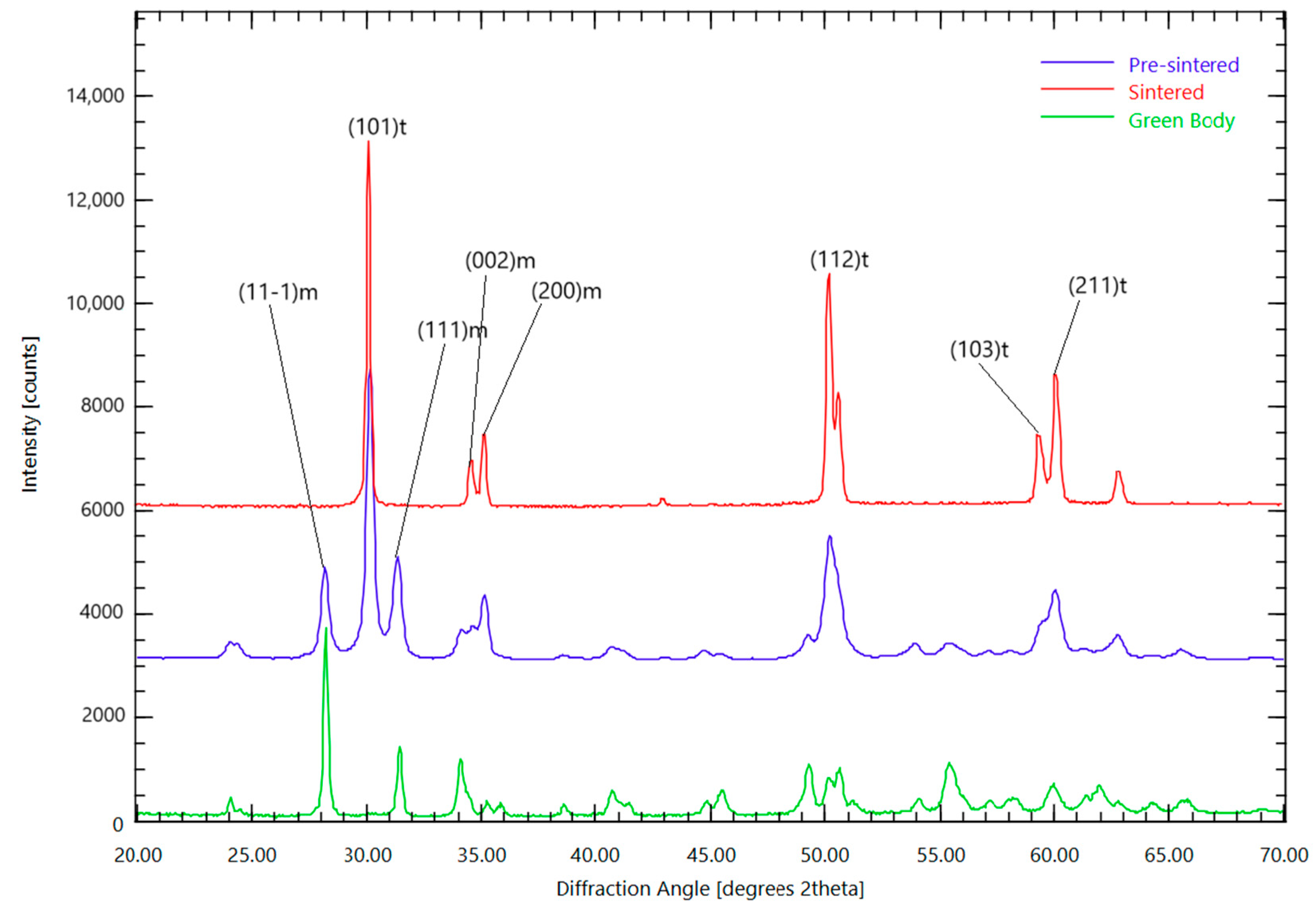
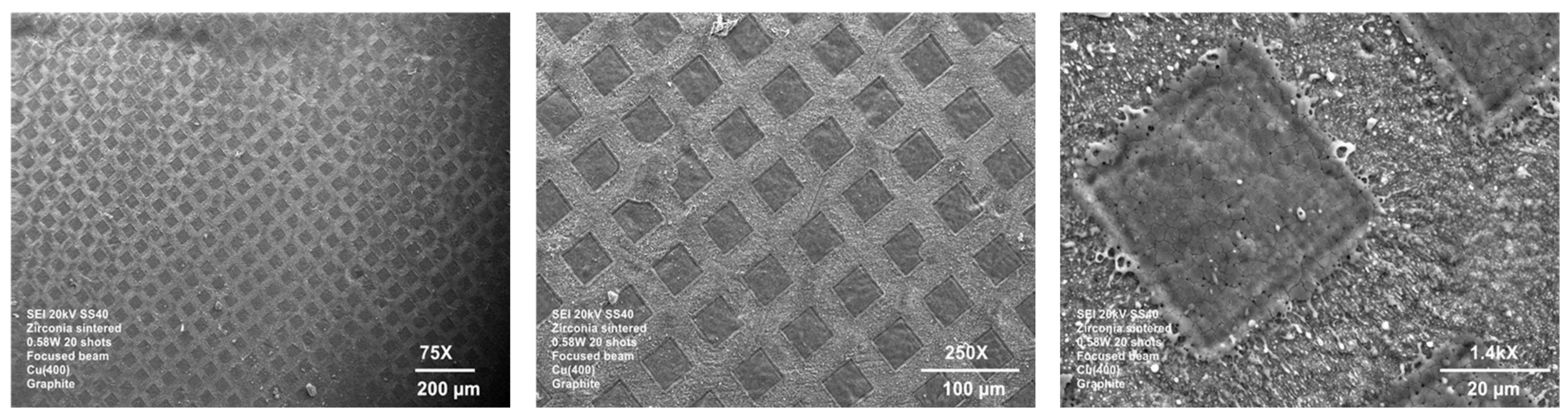
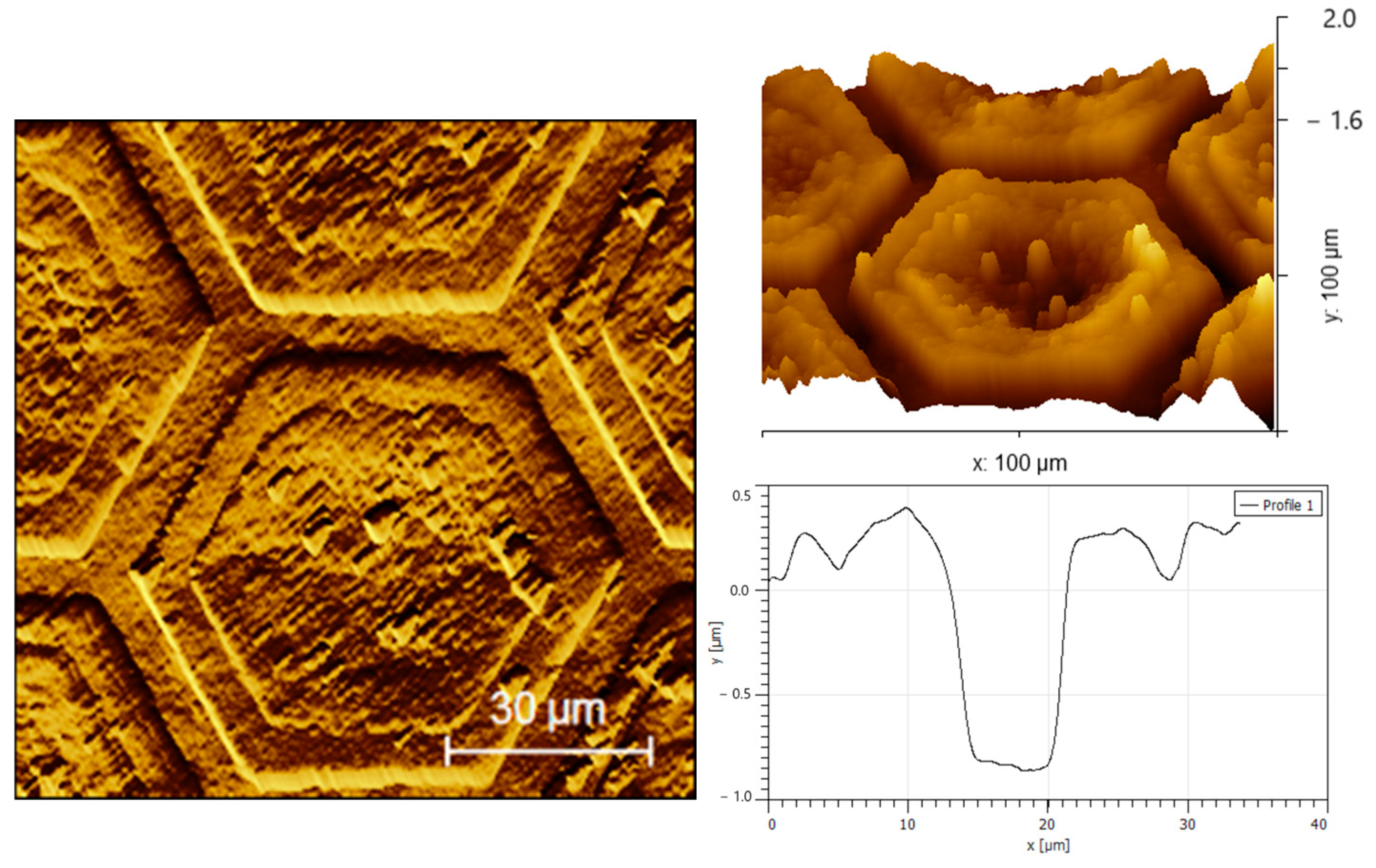
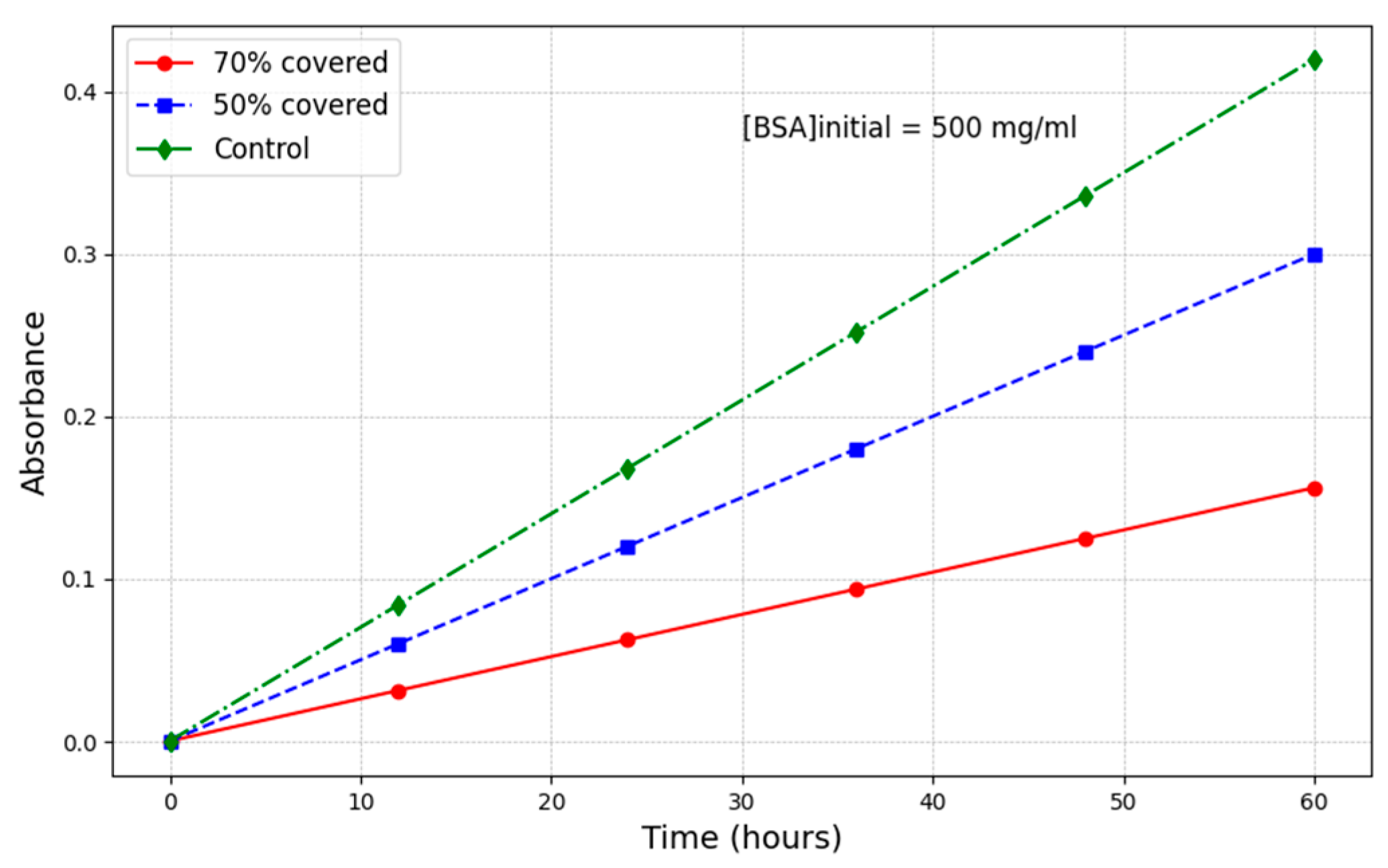
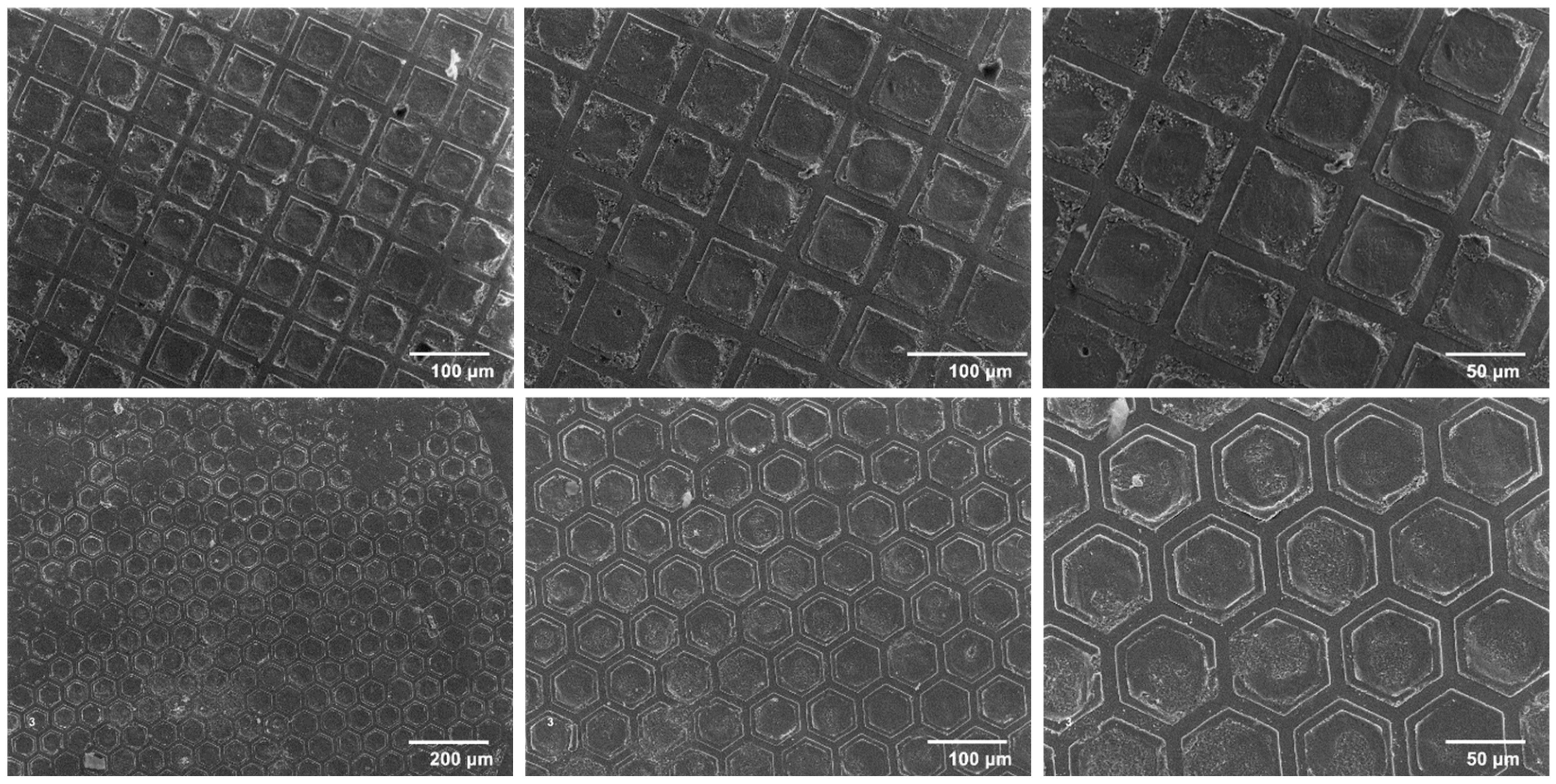
Zirconia is increasingly favored for dental implants owing to its corrosion resistance, hypoallergenic properties, and superior esthetics, but its biocompatibility remains a challenge. This study explores laser-assisted surface modification to enhance zirconia bioactivity. Zirconia transitions from the monoclinic to the tetragonal phase during sintering, with mixed phases observed in the pre-sintered stage. These transitions are critical for understanding its structural stability and malleability. Grid patterns were imprinted on the green body implant surface using a 1064 nm Nd-YAG laser (Continuum Surelite II, San Jose, CA, USA), with mesh sizes ranging from 7 to 50 µm and depths up to 2 µm, controlled by varying laser fluence, irradiation time, and templates. SEM, AFM, and XRD analyses were used to characterize the surface morphology and crystallography. Protein adsorption studies compared two patterned samples with different surface coverage—the first sample had a patterned area of 0.212 cm2 (27%), while the second sample had a patterned area of 0.283 cm2 (36%)—to a control sample. Protein adsorption increased by 92% in the first and 169% in the second sample, demonstrating a direct correlation between increased pattern area and bioactivity. Enhanced protein adsorption facilitates cell attachment and growth, which are crucial for improving osseointegration. These results underscore the potential of laser-assisted surface modification to optimize zirconia’s performance as a medical implant material.
Keywords: zirconia; medical implant; laser patterning; confined plasma; sintering; surface modification zirconia; medical implant; laser patterning; confined plasma; sintering; surface modification