Article

BIZON–UGV for Airport Pavement Testing: Mechanics and Control

by
Marcin Chodnicki
1,
Mirosław Nowakowski
1,
Paweł Pietruszewski
1,
Mariusz Wesołowski
2 and
Sławomir Stępień
3,*
1
Air Force Institute of Technology, Ksiecia Boleslawa St. 6, 01-494 Warsaw, Poland
2
Military Institute of Armoured and Automotive Technology, Okuniewska 1, 05-070 Sulejowek, Poland
3
Faculty of Control, Robotics and Electrical Engineering, Poznan University of Technology, Piotrowo 3a, 60-965 Poznan, Poland
*
Author to whom correspondence should be addressed.
Appl. Sci. 2024, 14(6), 2472; https://doi.org/10.3390/app14062472
Submission received: 7 February 2024 / Revised: 27 February 2024 / Accepted: 28 February 2024 / Published: 15 March 2024
(This article belongs to the Collection Advances in Automation and Robotics)

Abstract

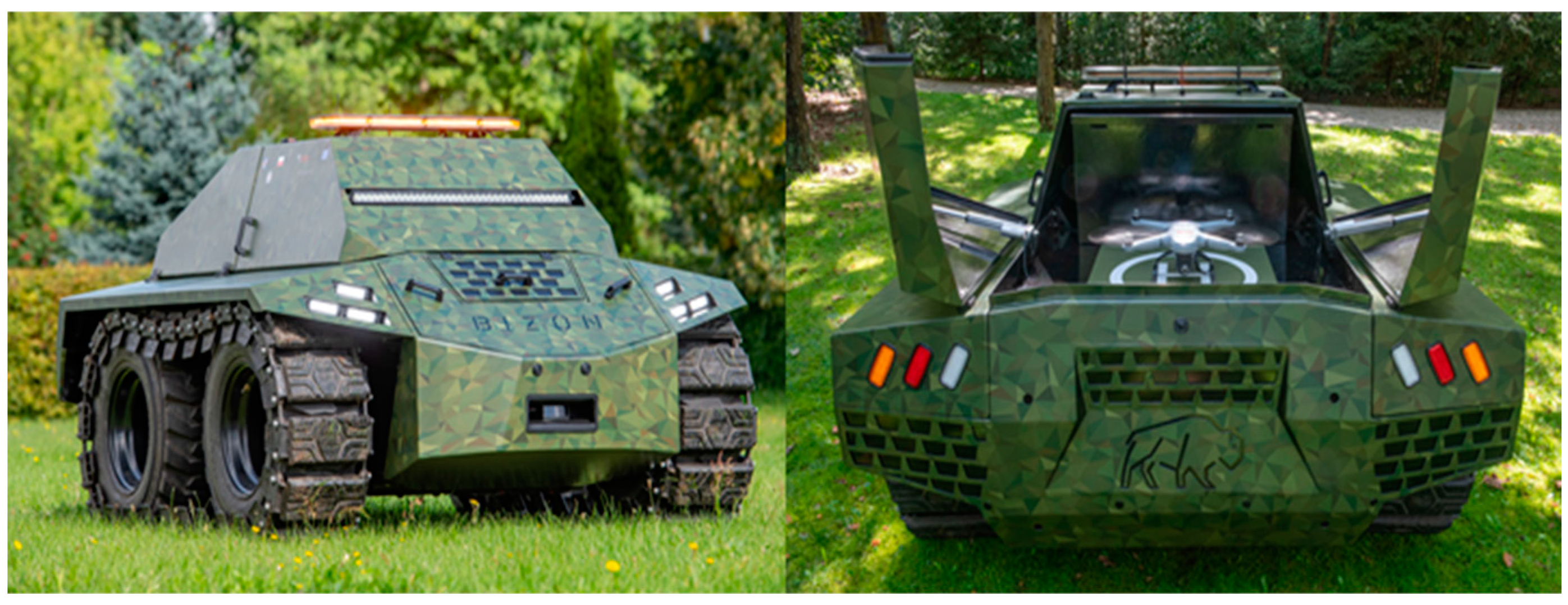
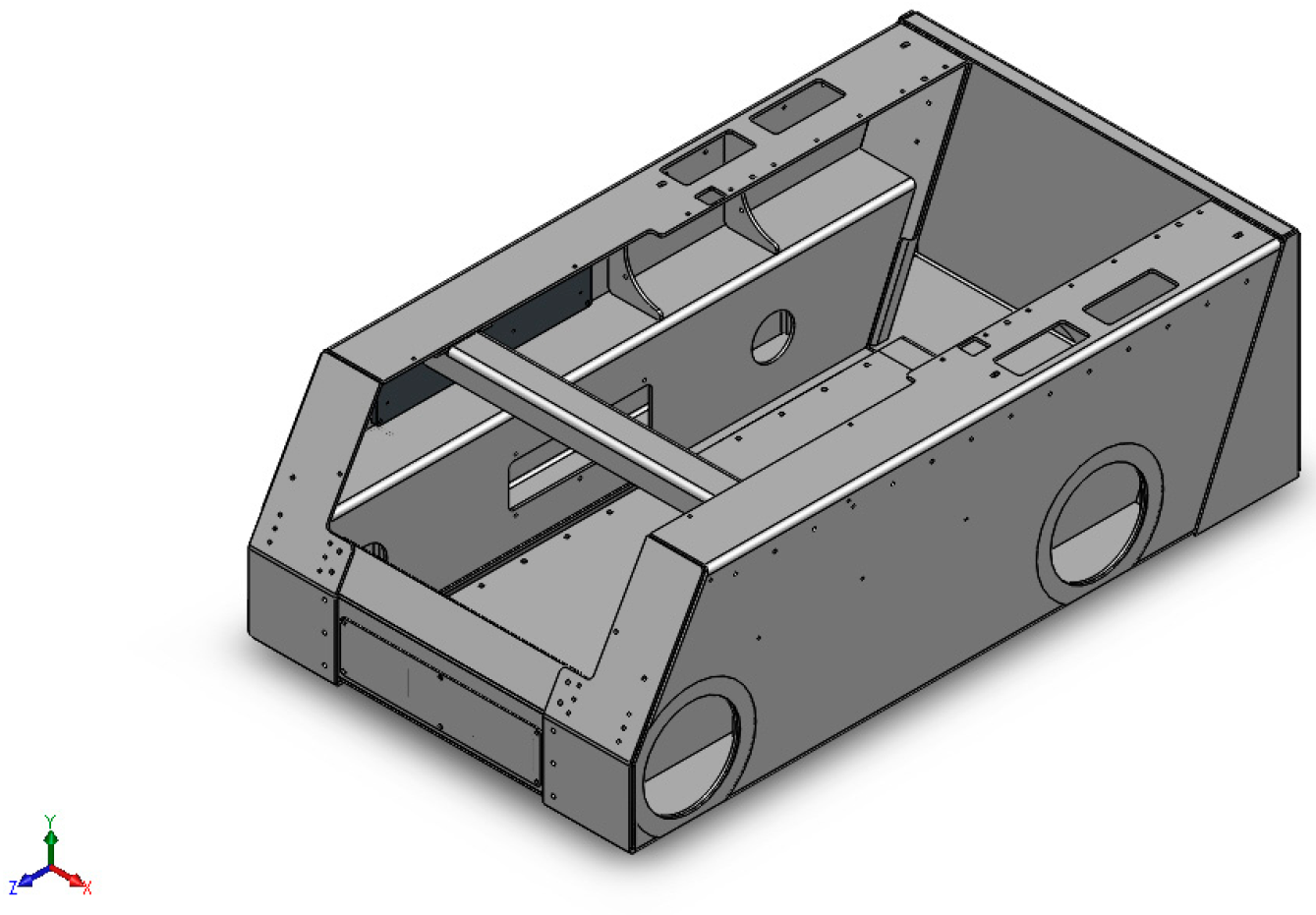
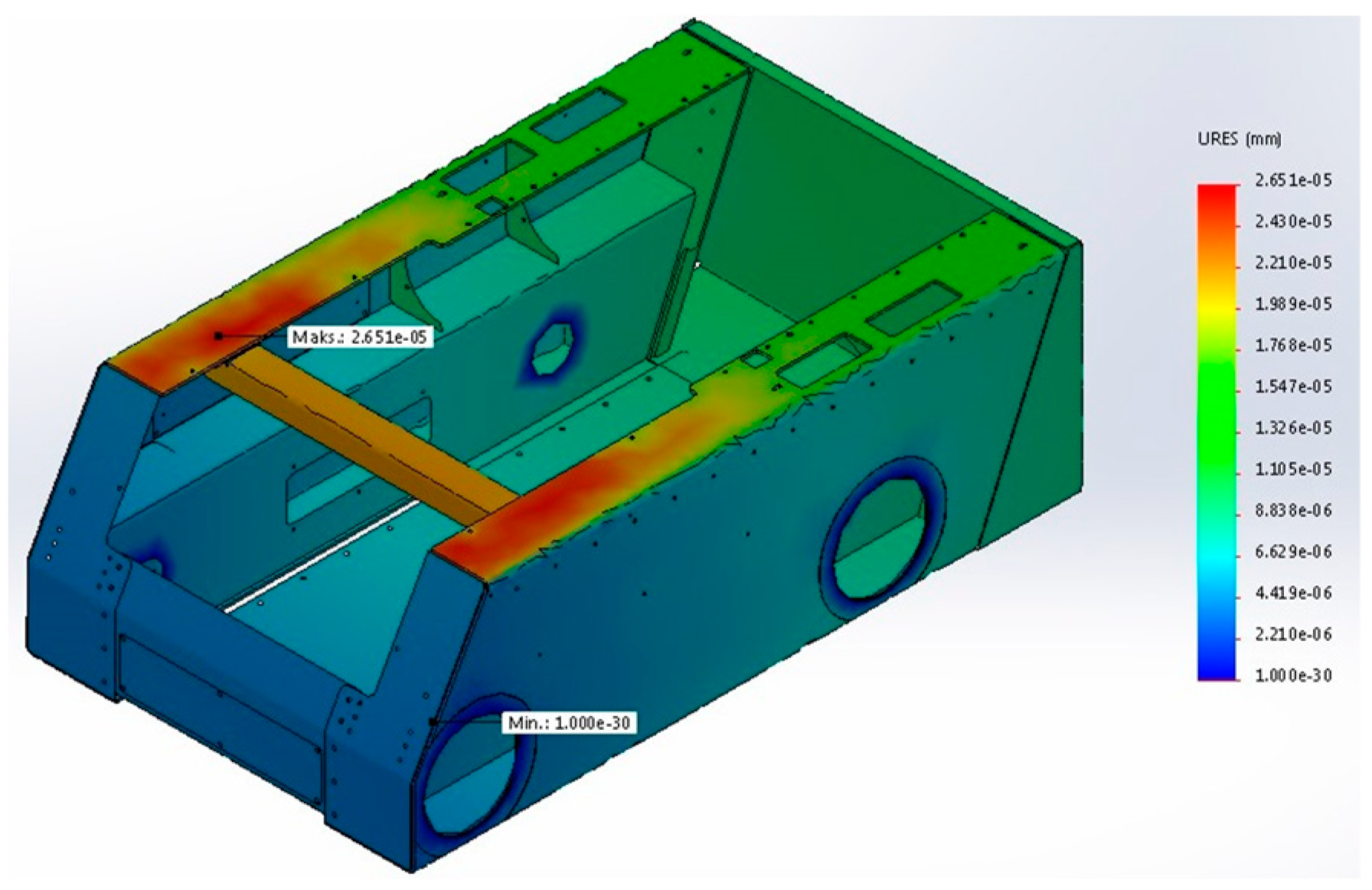
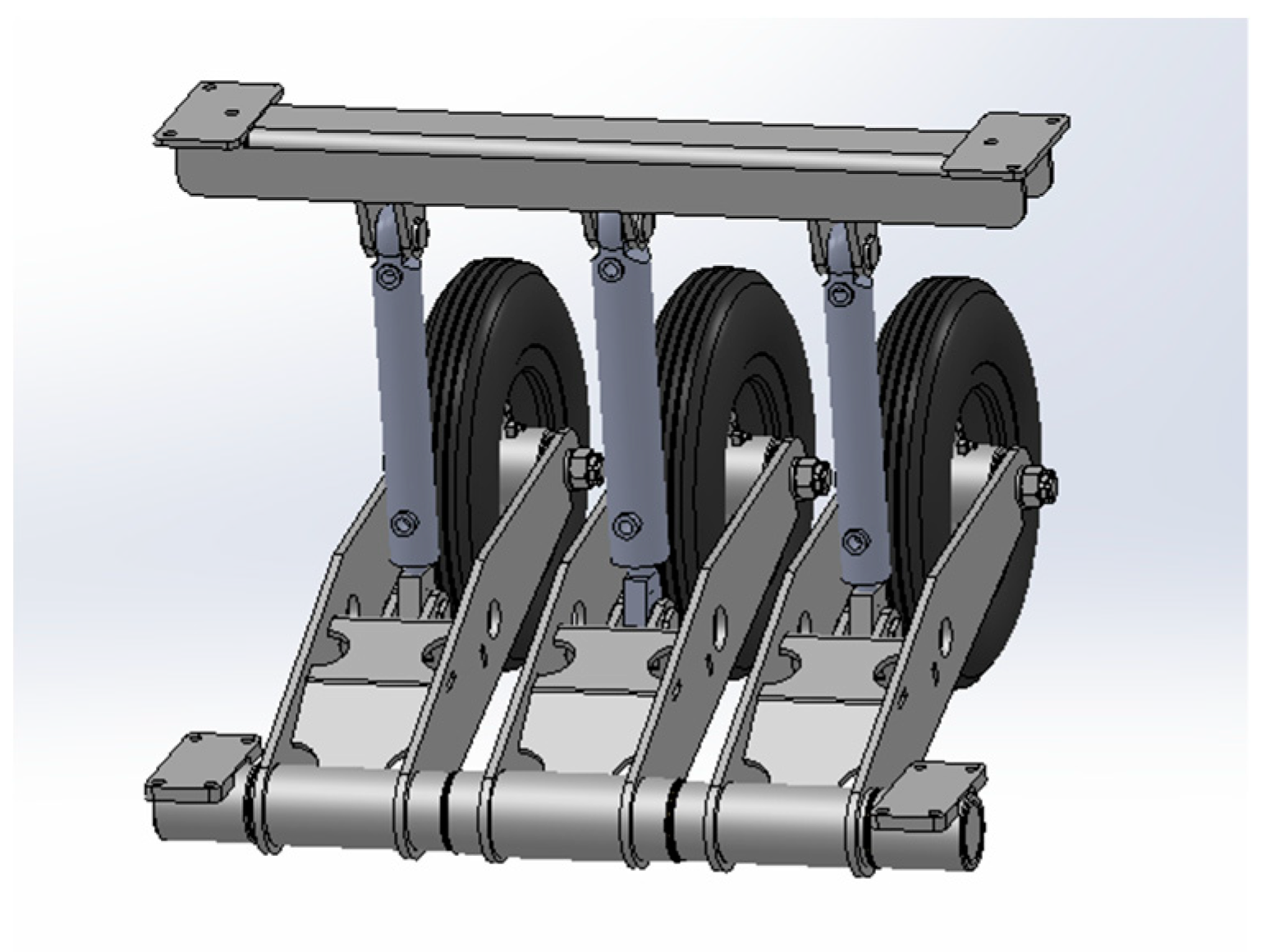
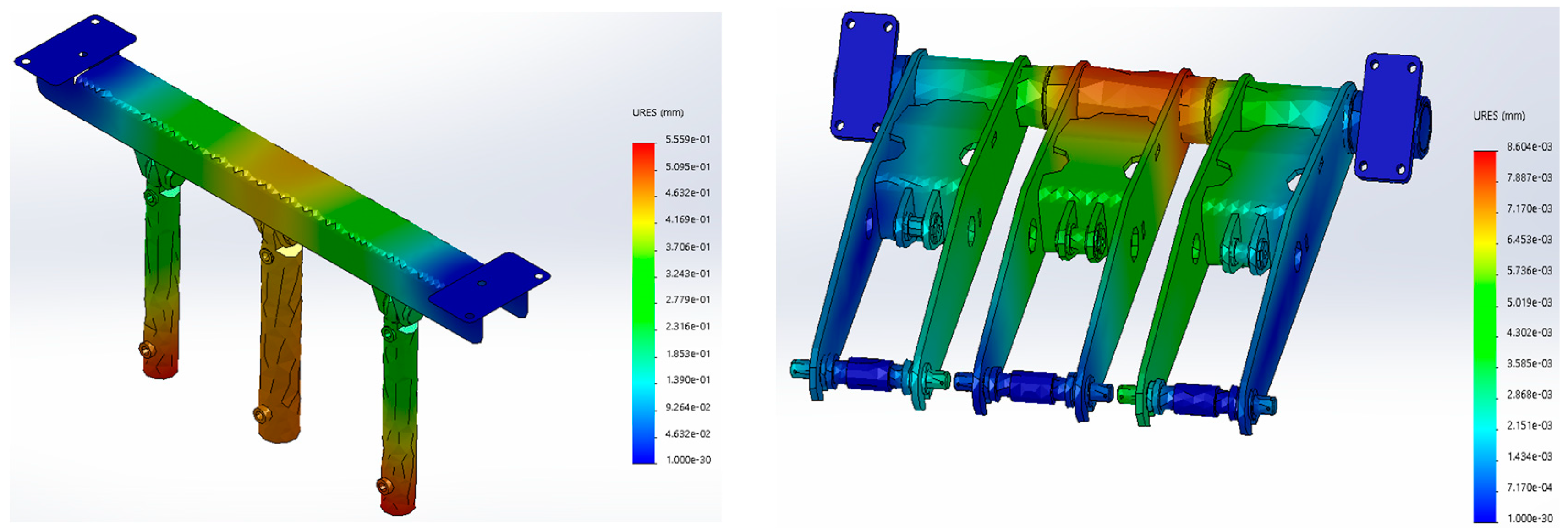
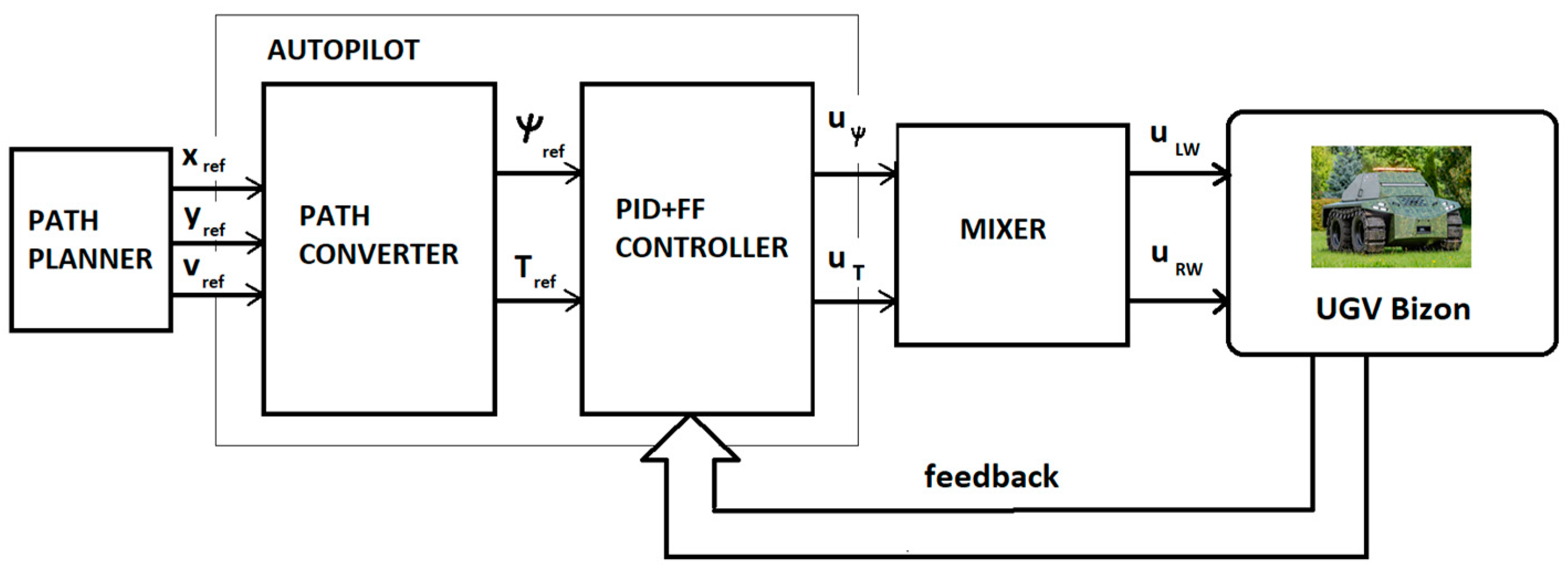
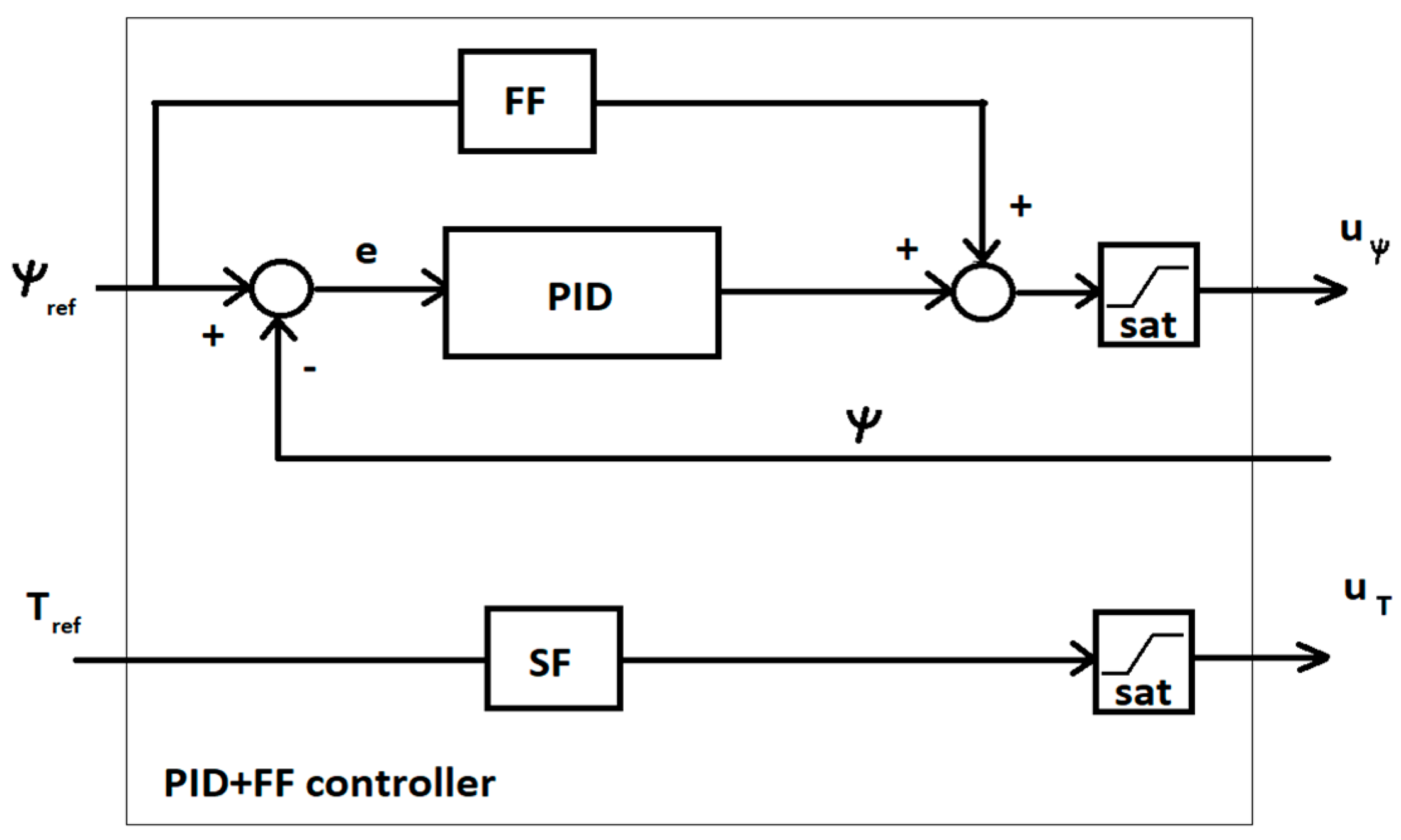
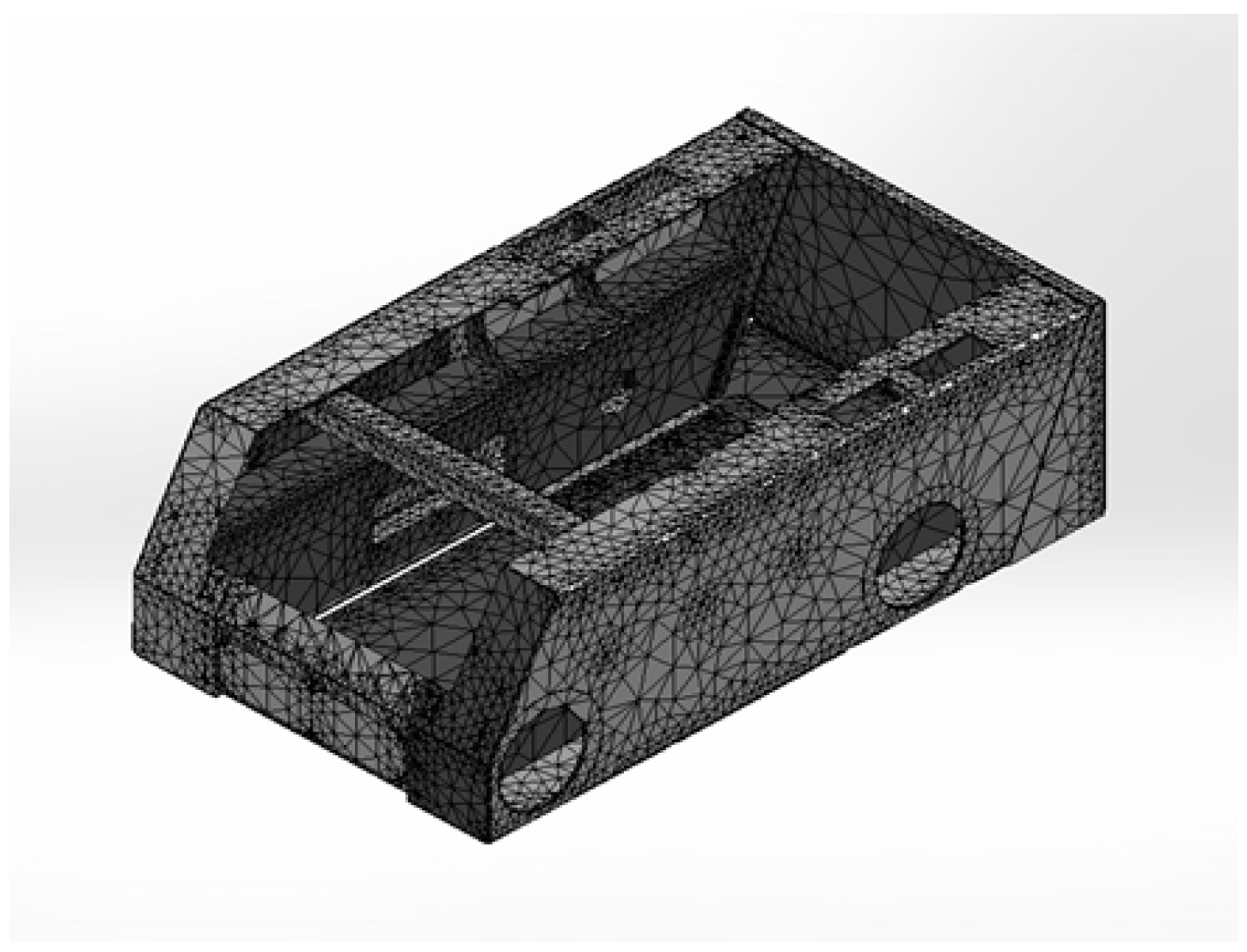
The paper presents a study of the performance and development of unmanned ground vehicles (UGVs), establishing mathematical and numerical models of the chassis system. The model analysis is performed by 3D software package SolidWorks 2018 with finite element discretization. The mesh modelling and analysis are focused on studying the strength and stiffness of the robotic platform chassis and the distribution of stress and deformation in the extremal condition. The paper also presents an autopilot design with a new cascade control system for the autonomous motion of an unmanned ground vehicle based on proportional–integral–derivative (PID) and feedforward (FF) control. The PID-FF controller is part of a UGV used in a hybrid control system for precise control and stabilization, which is necessary to increase the vehicle motion stability and maneuver precision. The hybrid PID-FF control system proposed for the ground vehicle model gives satisfactory control quality while maintaining the simplicity of the control system. The presented tests performed in mechanical design and control analysis give good results and prove the usefulness of the designed unmanned device.
Keywords: finite element method; mechanical stress and deformation; airport pavement; unmanned ground vehicle; autopilot; proportional–integral–derivative control; feedforward control finite element method; mechanical stress and deformation; airport pavement; unmanned ground vehicle; autopilot; proportional–integral–derivative control; feedforward control