Article

Personalization of Affective Models Using Classical Machine Learning: A Feasibility Study

by
Ali Kargarandehkordi
1,
Matti Kaisti
2 and
Peter Washington
1,*
1
Information and Computer Sciences Department, University of Hawai’i at Manoa, Honolulu, HI 96822, USA
2
Department of Computing, University of Turku, 20014 Turku, Finland
*
Author to whom correspondence should be addressed.
Appl. Sci. 2024, 14(4), 1337; https://doi.org/10.3390/app14041337
Submission received: 5 December 2023 / Revised: 26 January 2024 / Accepted: 31 January 2024 / Published: 6 February 2024
(This article belongs to the Special Issue Advanced Technologies for Emotion Recognition)

Abstract

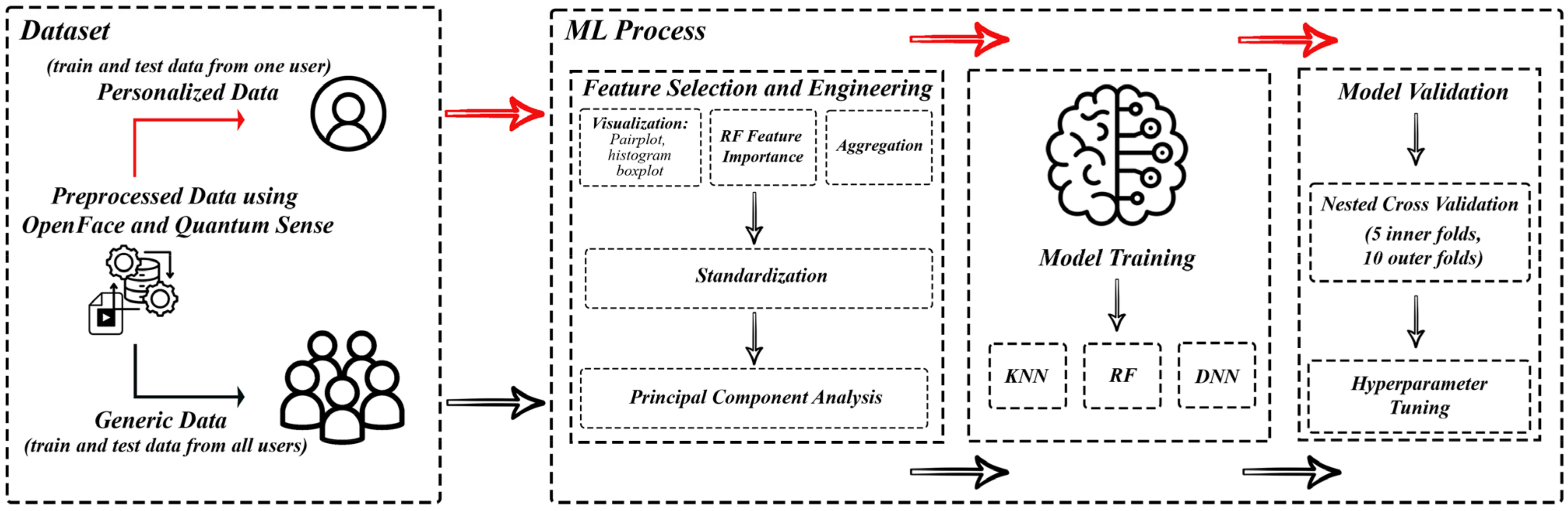
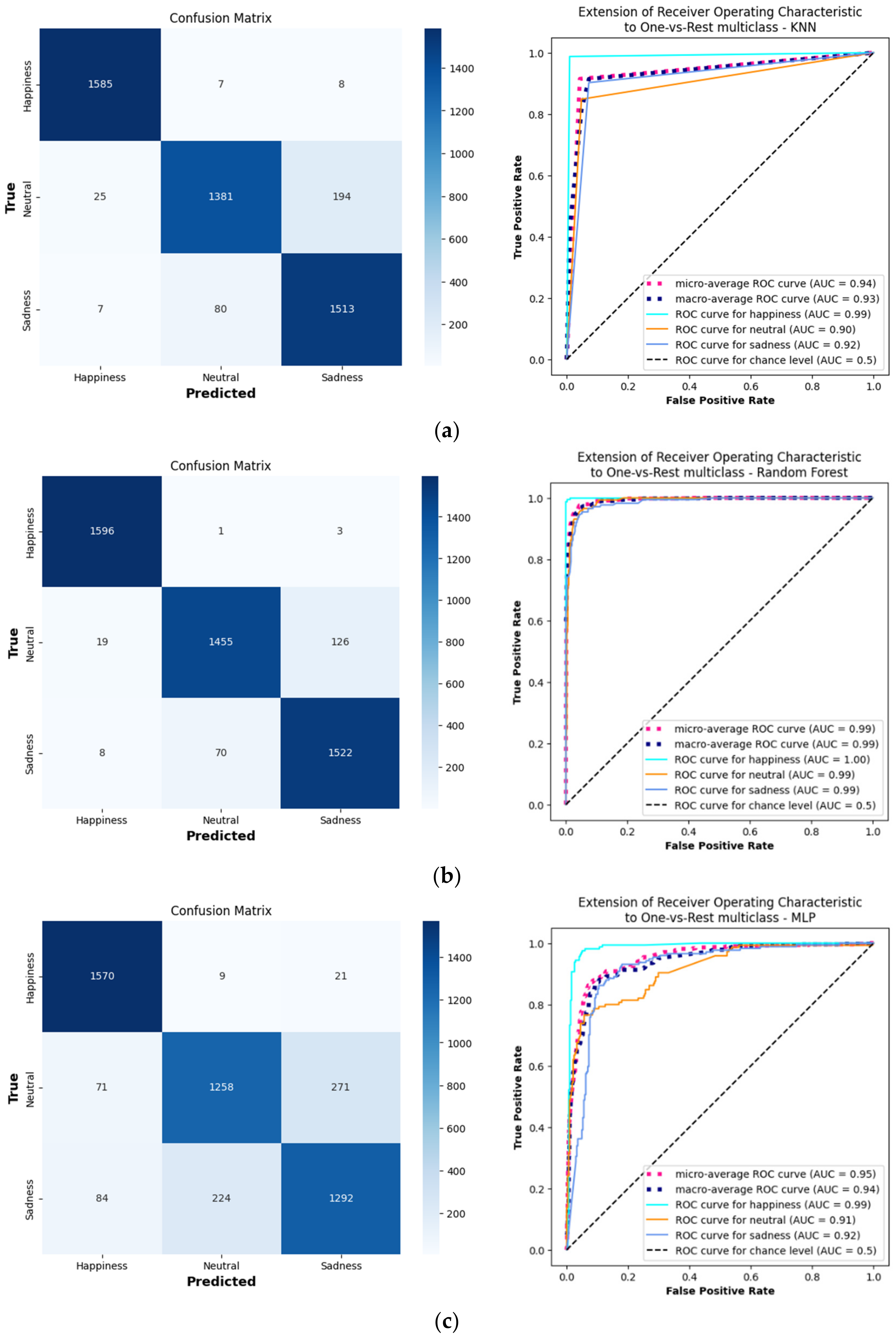
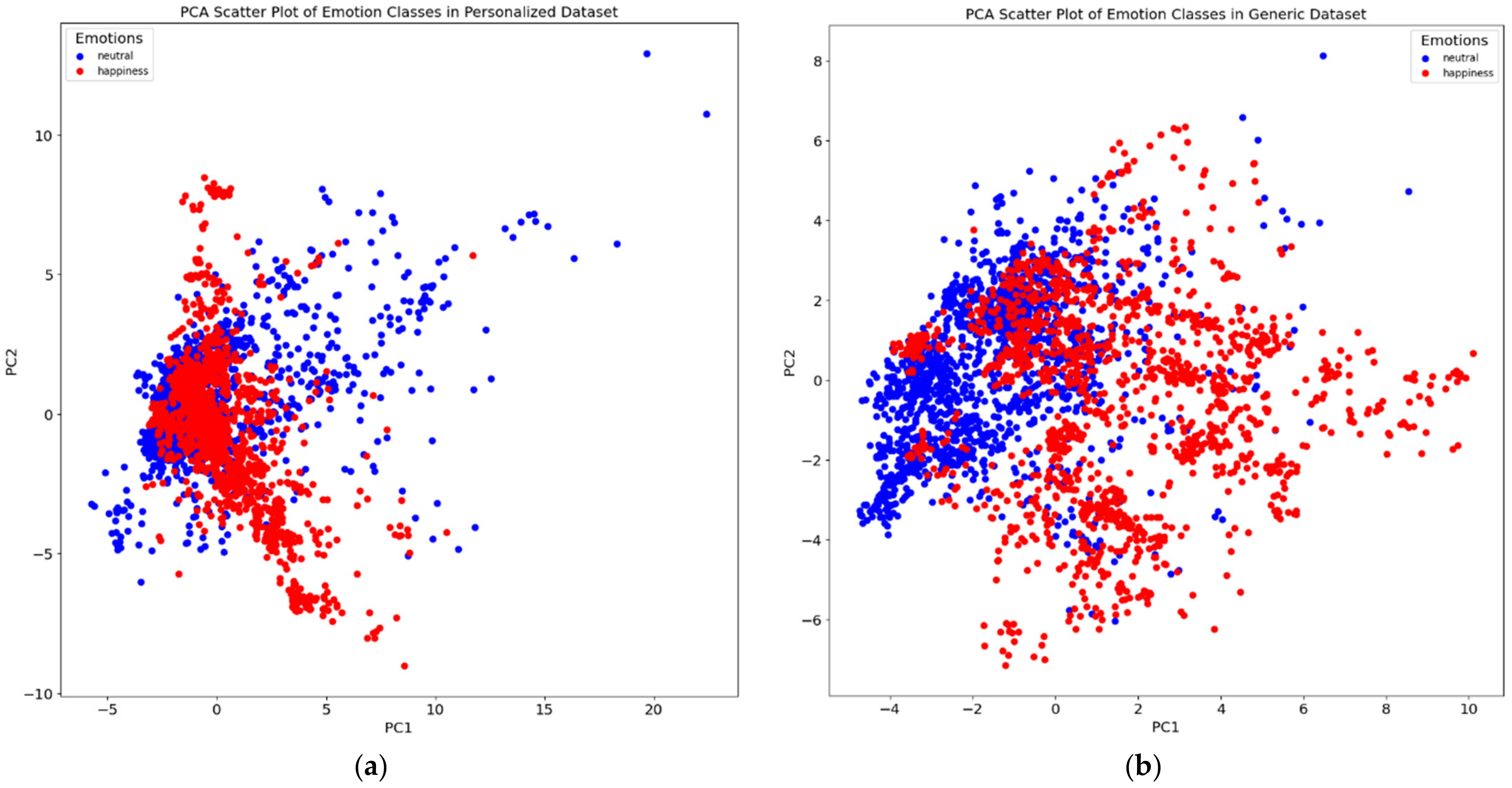
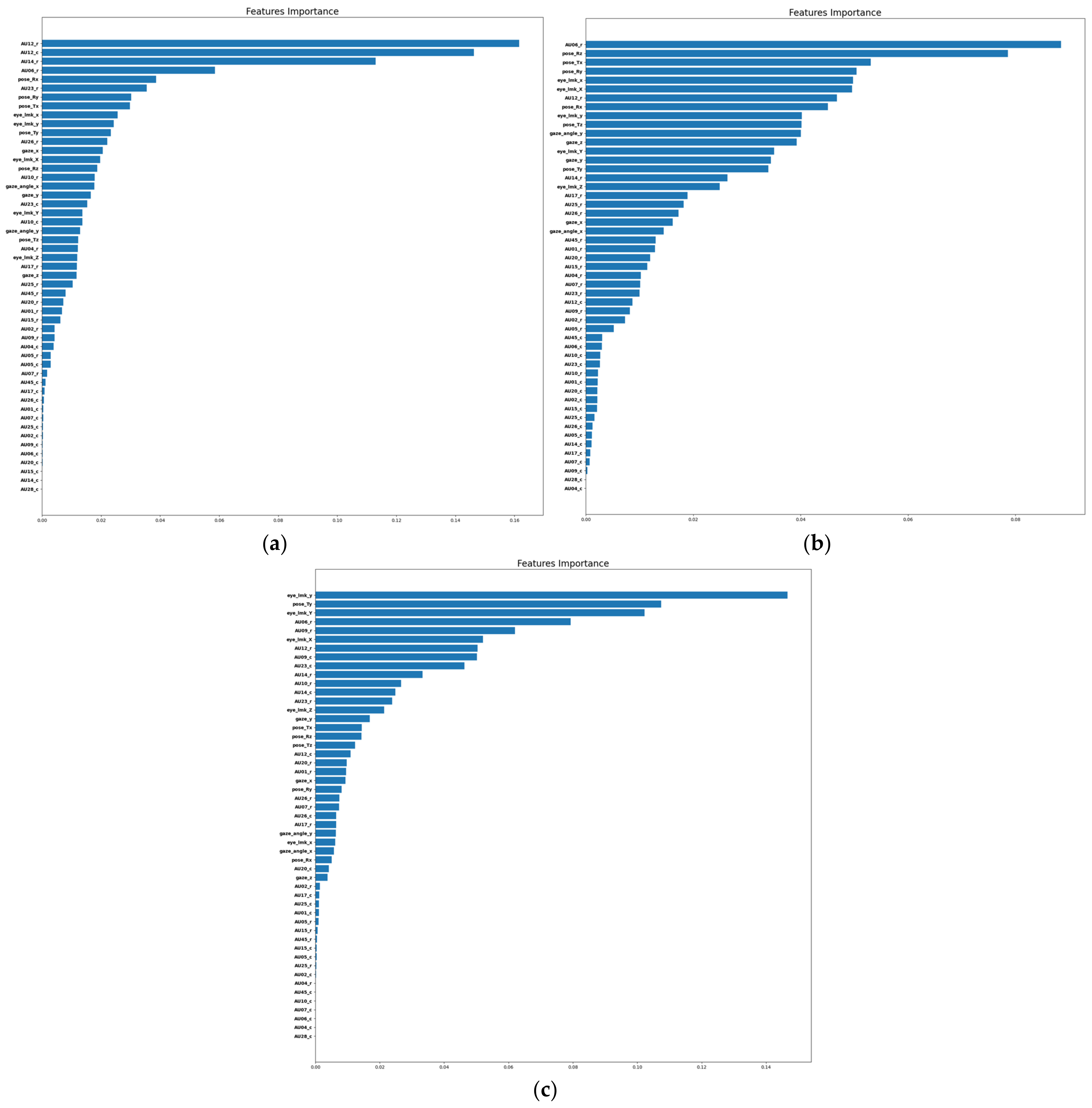
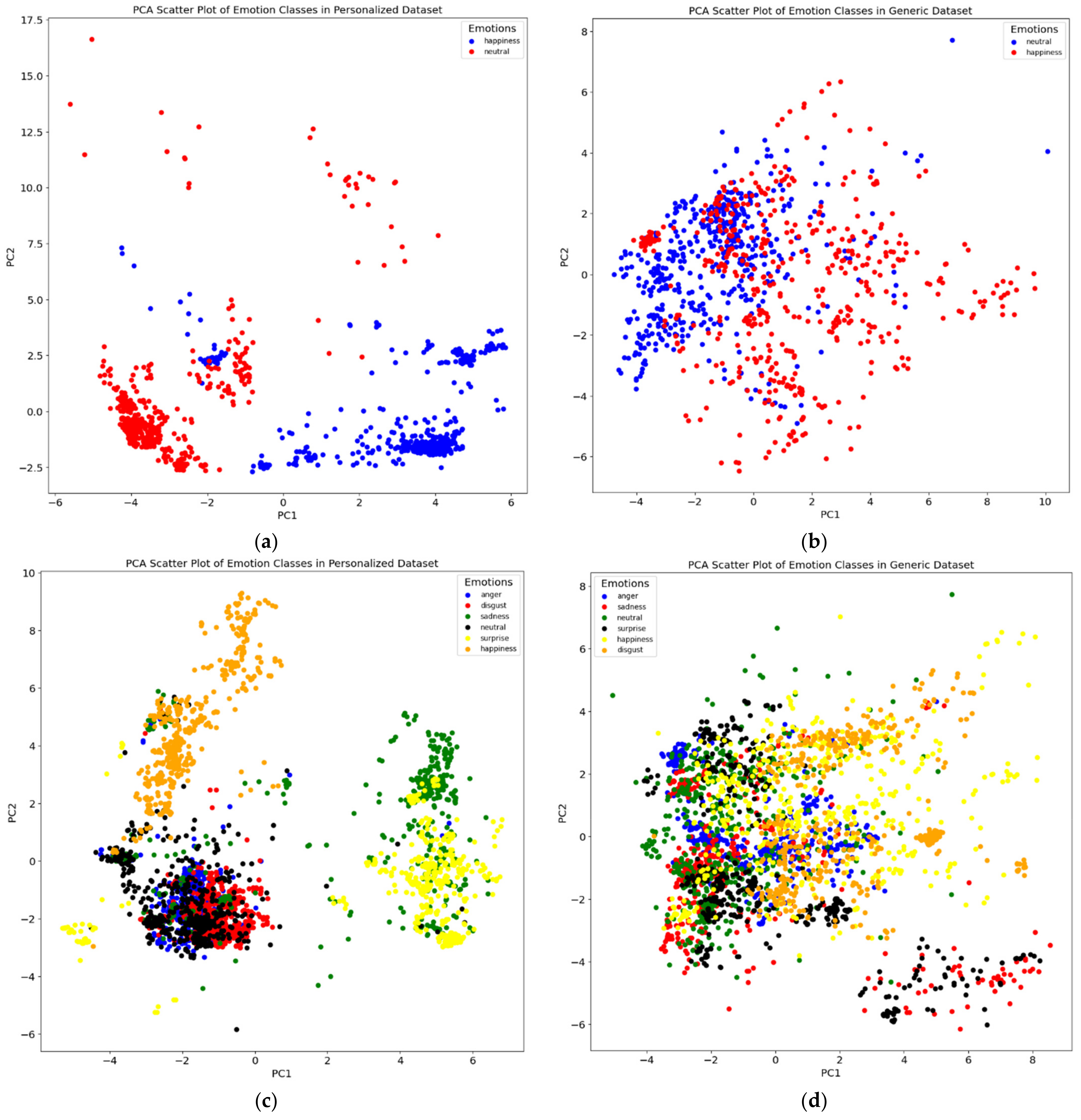
Emotion recognition, a rapidly evolving domain in digital health, has witnessed significant transformations with the advent of personalized approaches and advanced machine learning (ML) techniques. These advancements have shifted the focus from traditional, generalized models to more individual-centric methodologies, underscoring the importance of understanding and catering to the unique emotional expressions of individuals. Our study delves into the concept of model personalization in emotion recognition, moving away from the one-size-fits-all approach. We conducted a series of experiments using the Emognition dataset, comprising physiological and video data of human subjects expressing various emotions, to investigate this personalized approach to affective computing. For the 10 individuals in the dataset with a sufficient representation of at least two ground truth emotion labels, we trained a personalized version of three classical ML models (k-nearest neighbors, random forests, and a dense neural network) on a set of 51 features extracted from each video frame. We ensured that all the frames used to train the models occurred earlier in the video than the frames used to test the model. We measured the importance of each facial feature for all the personalized models and observed differing ranked lists of the top features across the subjects, highlighting the need for model personalization. We then compared the personalized models against a generalized model trained using data from all 10 subjects. The mean F1 scores for the personalized models, specifically for the k-nearest neighbors, random forest, and dense neural network, were 90.48%, 92.66%, and 86.40%, respectively. In contrast, the mean F1 scores for the generic models, using the same ML techniques, were 88.55%, 91.78% and 80.42%, respectively, when trained on data from various human subjects and evaluated using the same test set. The personalized models outperformed the generalized models for 7 out of the 10 subjects. The PCA analyses on the remaining three subjects revealed relatively little facial configuration differences across the emotion labels within each subject, suggesting that personalized ML will fail when the variation among data points within a subject’s data is too low. This preliminary feasibility study demonstrates the potential as well as the ongoing challenges with implementing personalized models which predict highly subjective outcomes like emotion.
Keywords: personalized ML; affective computing; ASD; digital phenotyping; emotion; generic personalized ML; affective computing; ASD; digital phenotyping; emotion; generic