Article

3D Acoustic Map Analysis of the National Theatre of Zagreb

by
Lamberto Tronchin
1,* and
Antonella Bevilacqua
2
1
Department of Architecture, University of Bologna, 40126 Bologna, Italy
2
Department of Architecture and Engineering, University of Parma, 43100 Parma, Italy
*
Author to whom correspondence should be addressed.
Appl. Sci. 2024, 14(11), 4365; https://doi.org/10.3390/app14114365
Submission received: 5 May 2024 / Revised: 19 May 2024 / Accepted: 20 May 2024 / Published: 22 May 2024
(This article belongs to the Special Issue Architectural Acoustics: From Theory to Application)

Abstract

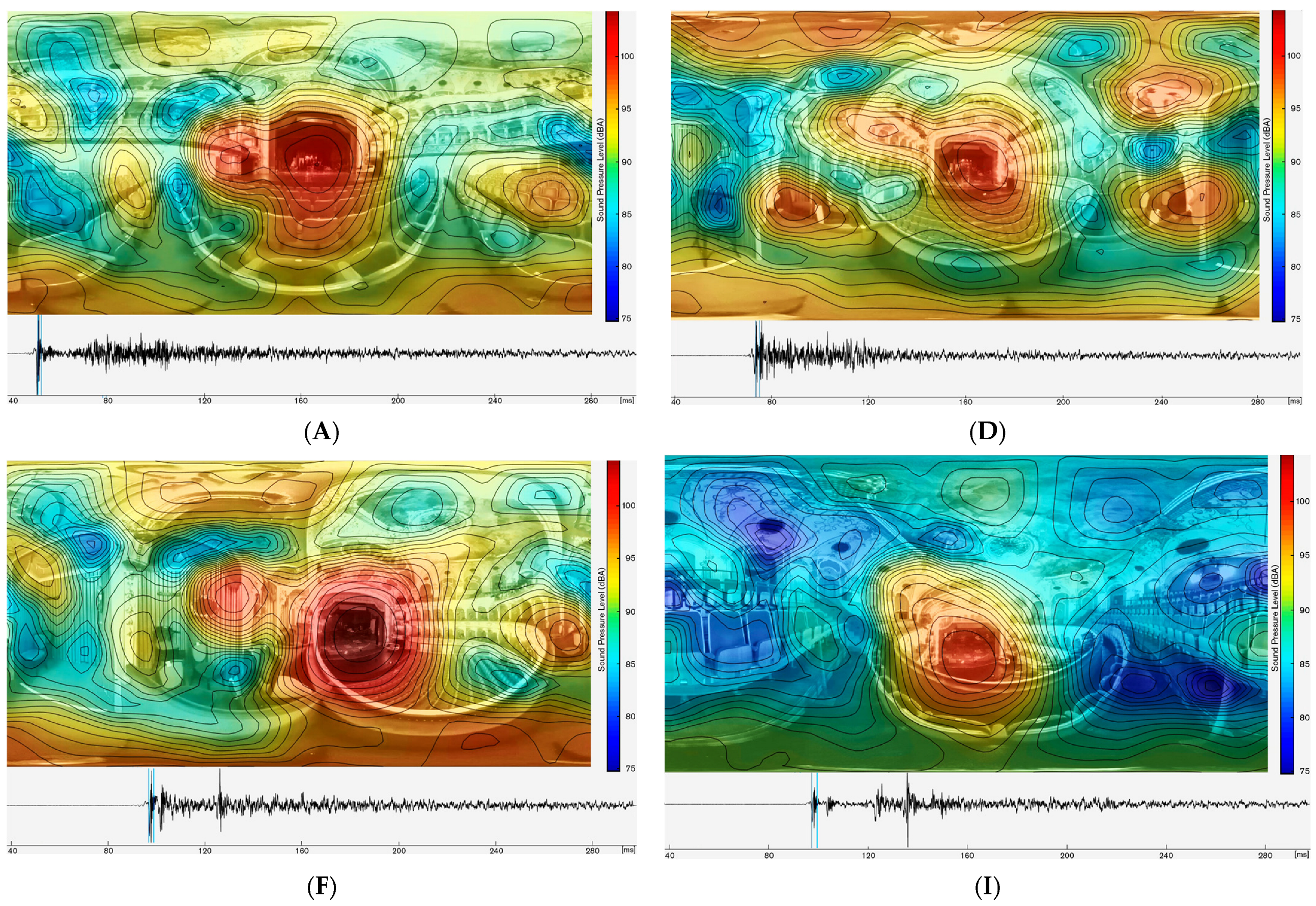
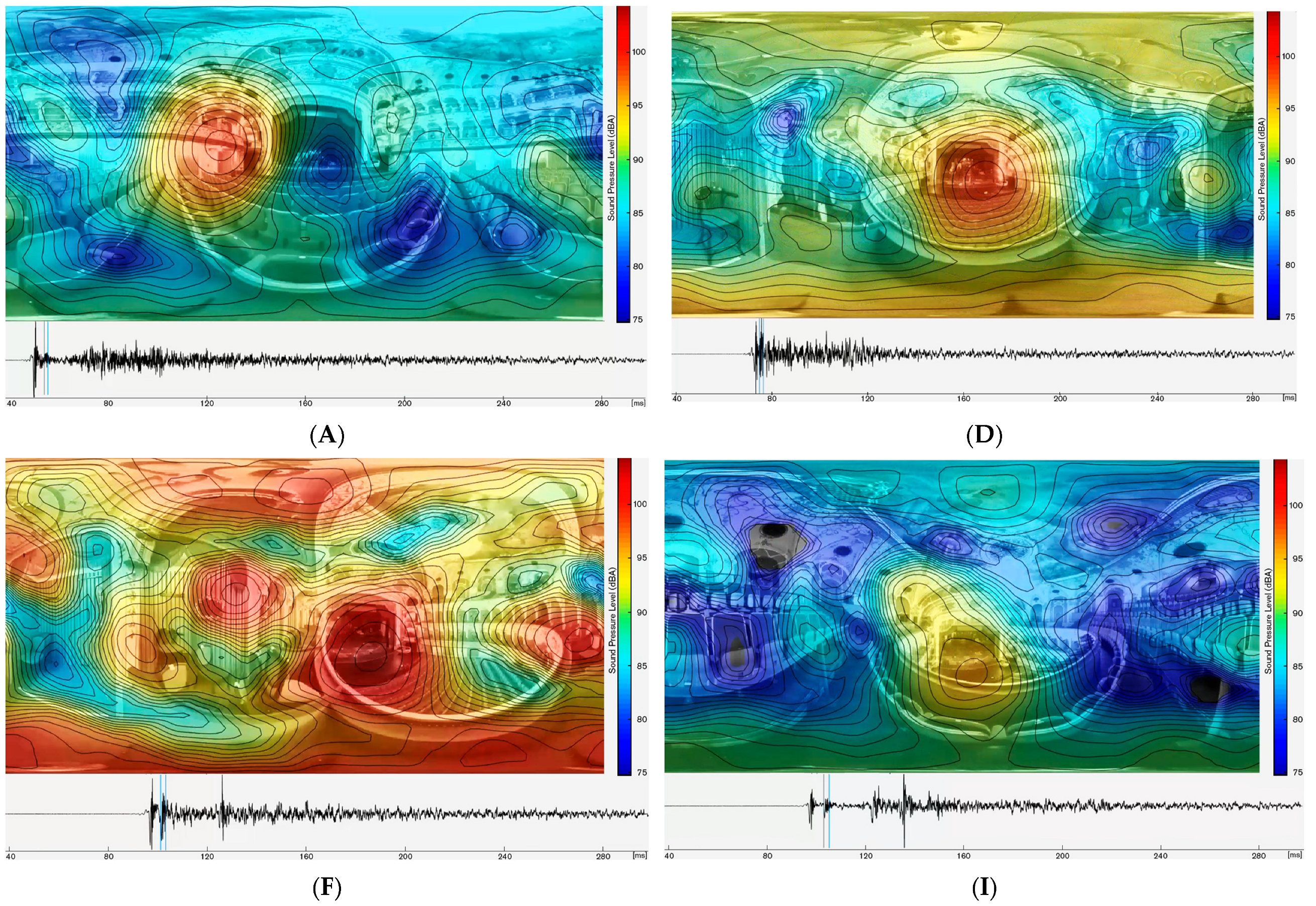
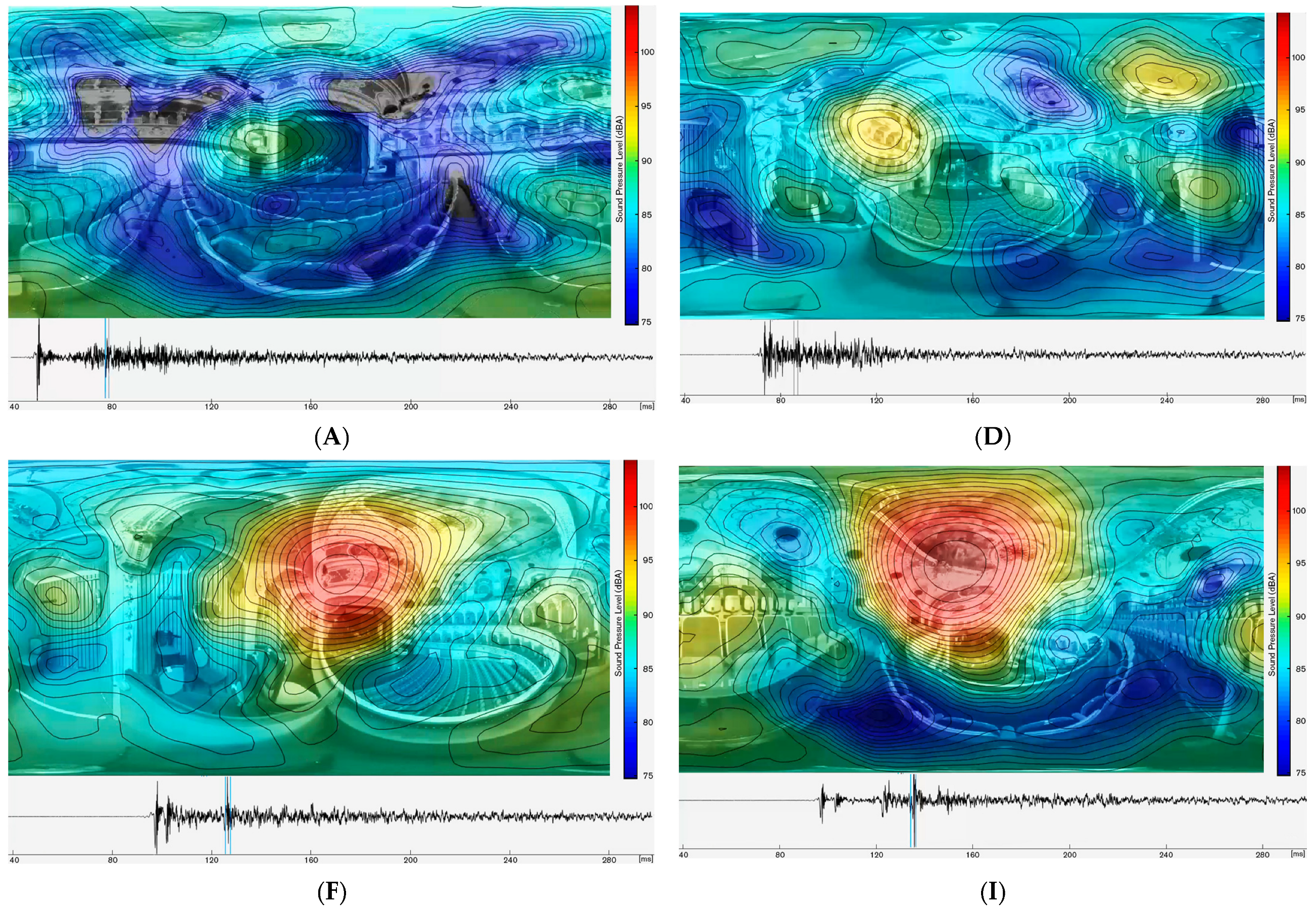
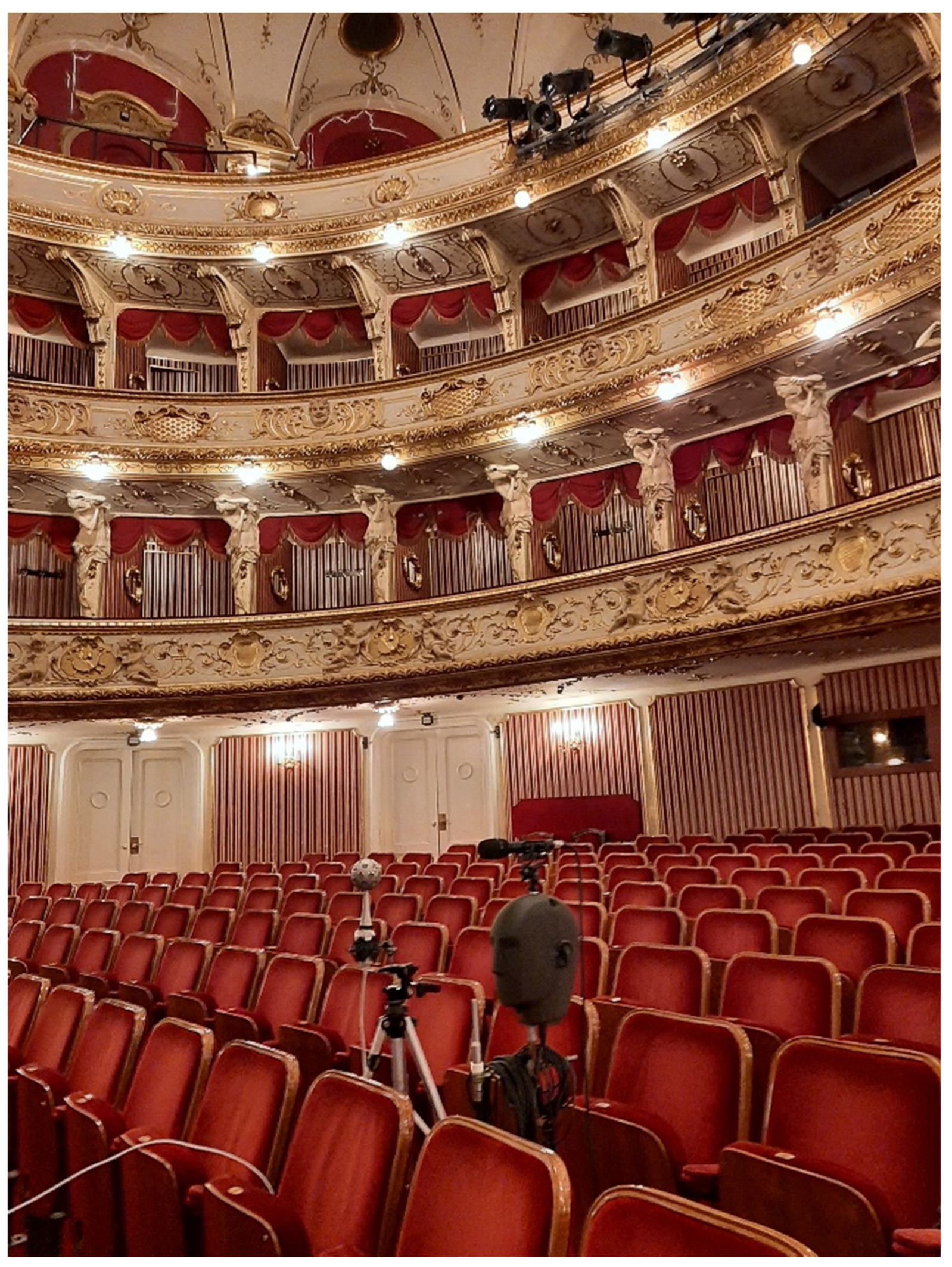
Rapid technological advances in recent decades have led researchers to refine the accuracy of their studies. In the field of acoustics, the impact of new devices is noticeable, especially in the investigations of cultural heritage buildings. The selection of a seat in theatres and concert halls has always been a concern, since the live experience of artistic performance depends on the quality of hearing and sight view. This paper deals with the elaboration of 360° acoustic maps made in the National Theatre of Zagreb, one of the opera theatres investigated with the Sipario project. The analysis of the main acoustic parameters has been carried out, starting with site measurements describing the acoustic response at various representative points of the main hall by covering the audience area. In addition, acoustic maps have been created for some selected positions based on a 3-degree-of-freedom (3dof) technique that allows a panoramic visualization of the impulse responses (IRs). This methodology completes the determination of early and late reflections that contribute to the acoustic quality of a place. In addition to the interest of experts in acoustics, this methodology can also be adopted by music lovers who can find a reasonable explanation for seat selection when booking their tickets.
Keywords: soundscape; acoustic map; opera theatres; Zagreb; Croatia soundscape; acoustic map; opera theatres; Zagreb; Croatia