Article

Bridge Acceleration Data Cleaning Based on Two-Stage Classification Model with Multiple Feature Fusion


1
School of Civil Engineering, Southeast University, Nanjing 210096, China
2
Jiangsu Transportation Institute Group, Nanjing 211112, China
3
National Key Laboratory of Safety, Durability and Healthy Operation of Long Span Bridges, Nanjing 211112, China
4
Jiangsu Key Laboratory of Engineering Mechanics, Southeast University, Nanjing 210096, China
*
Author to whom correspondence should be addressed.
Appl. Sci. 2023, 13(21), 12045; https://doi.org/10.3390/app132112045
Submission received: 9 September 2023 / Revised: 28 October 2023 / Accepted: 2 November 2023 / Published: 4 November 2023

Abstract

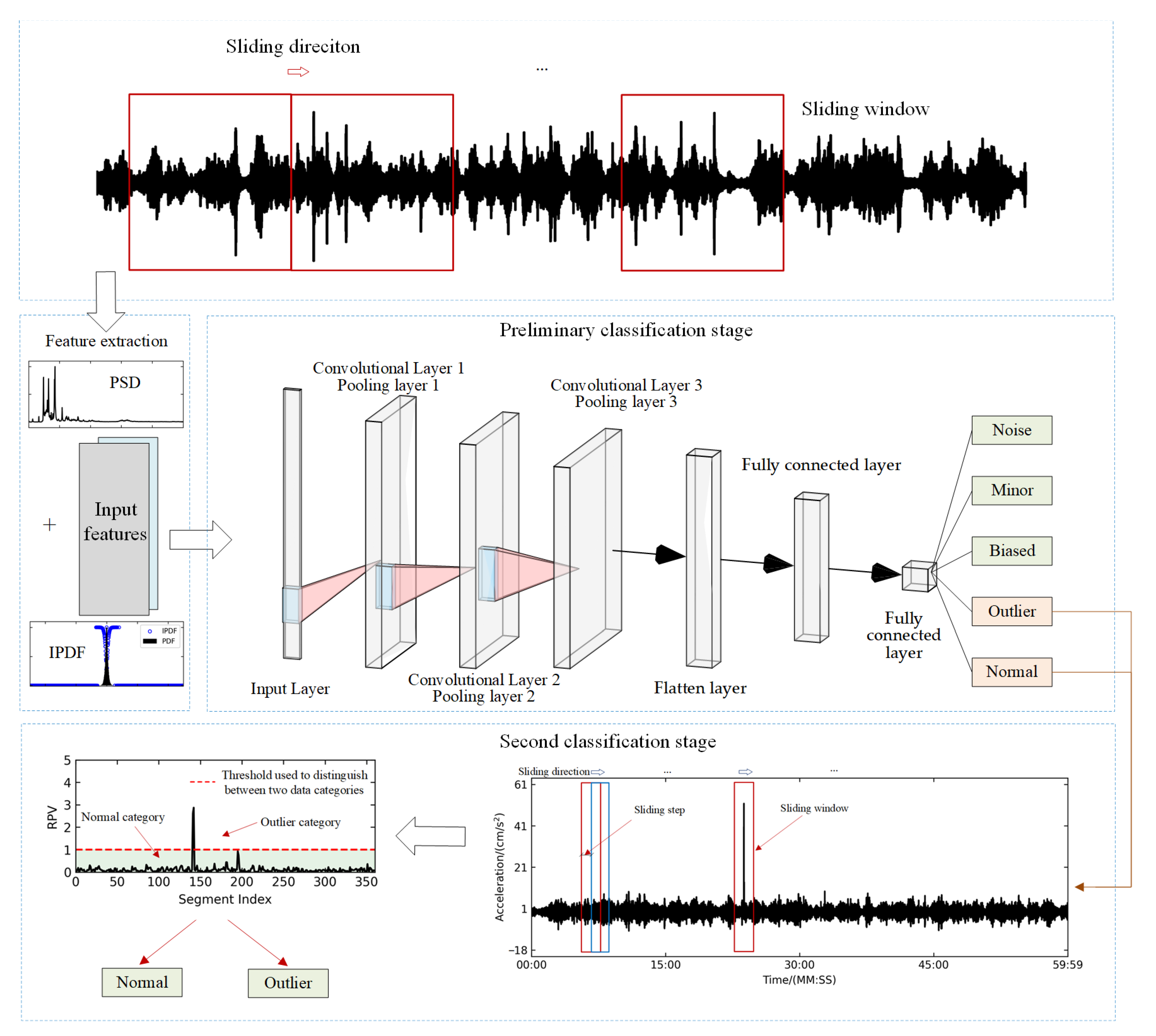
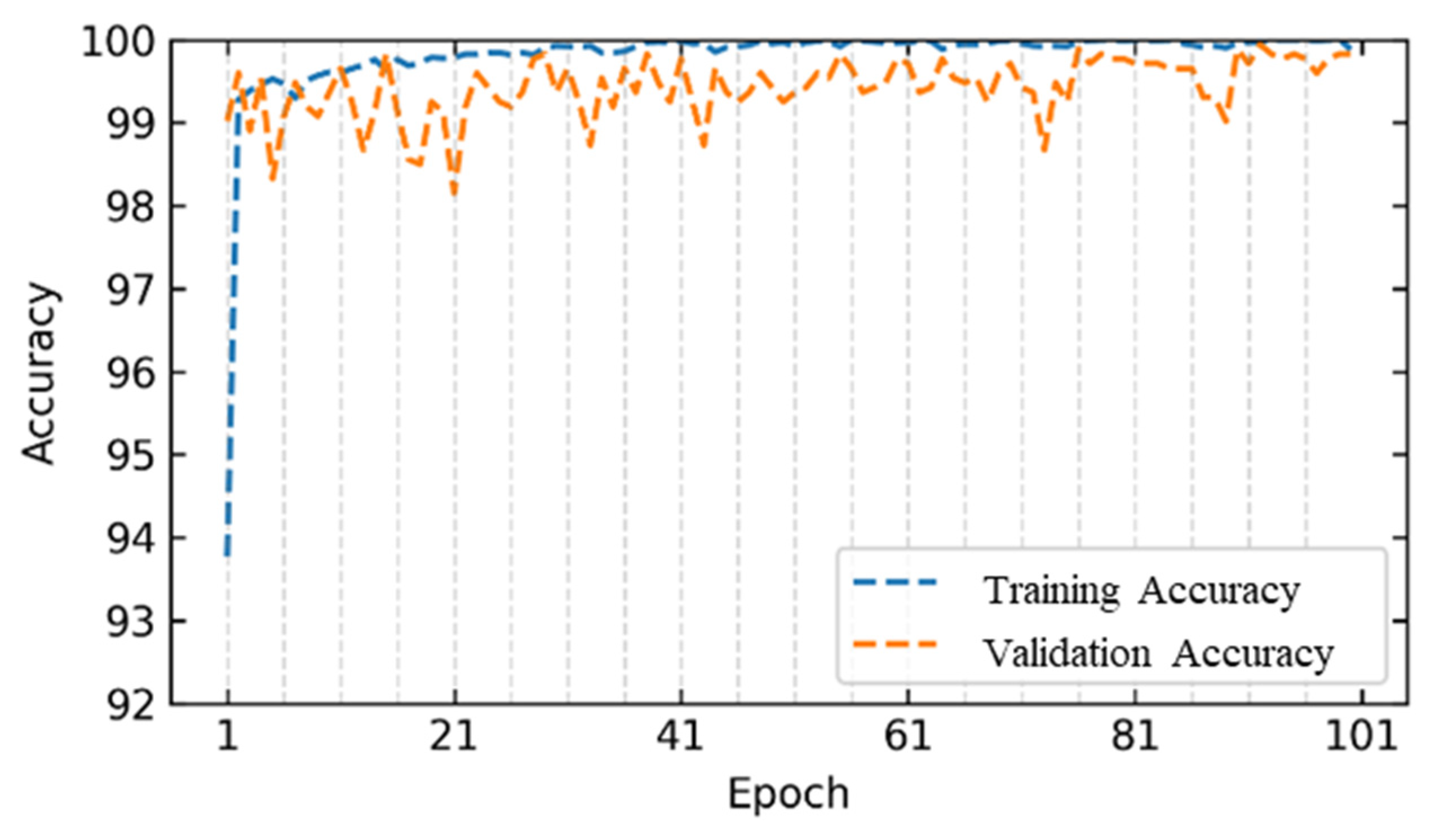
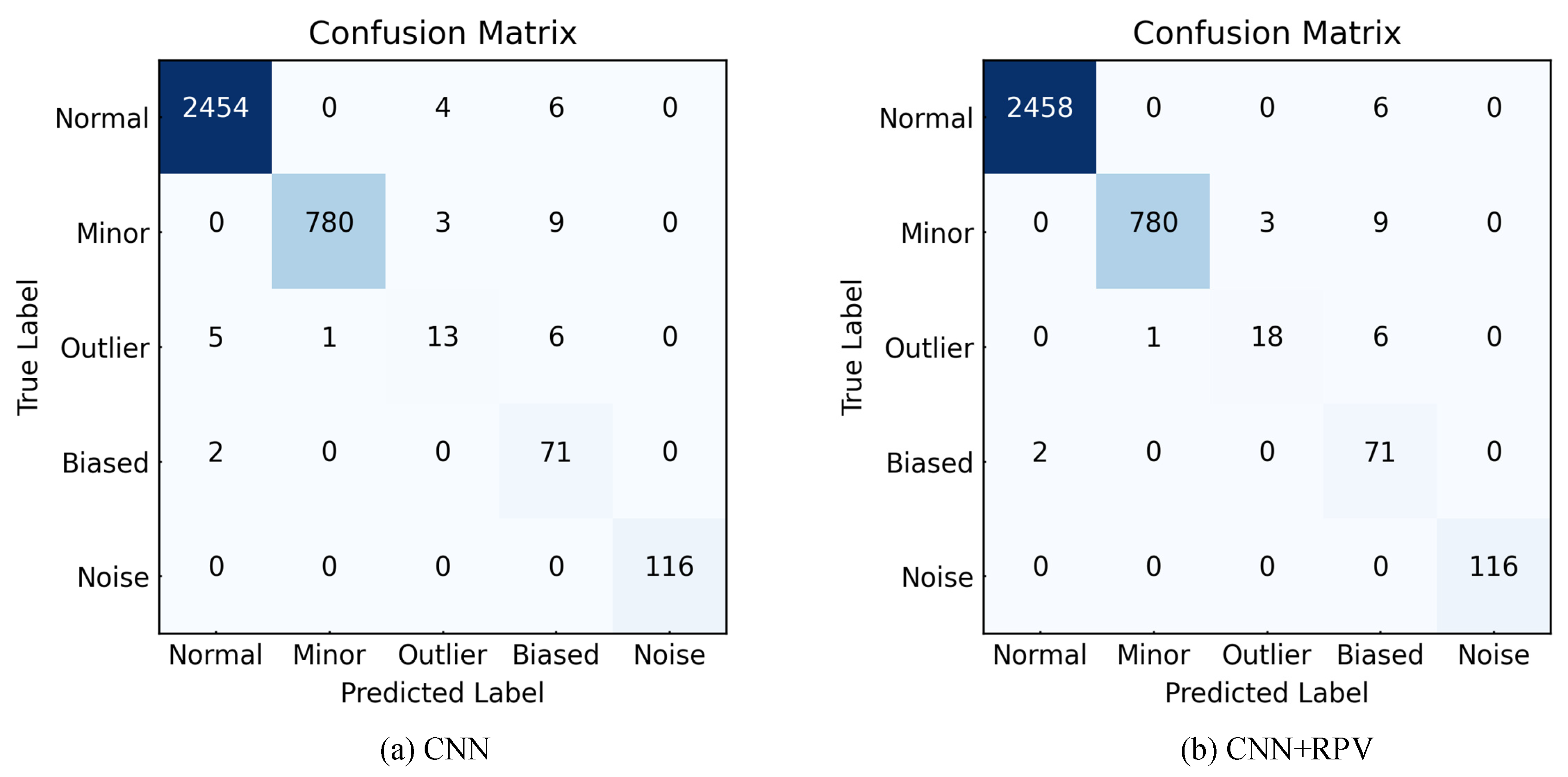
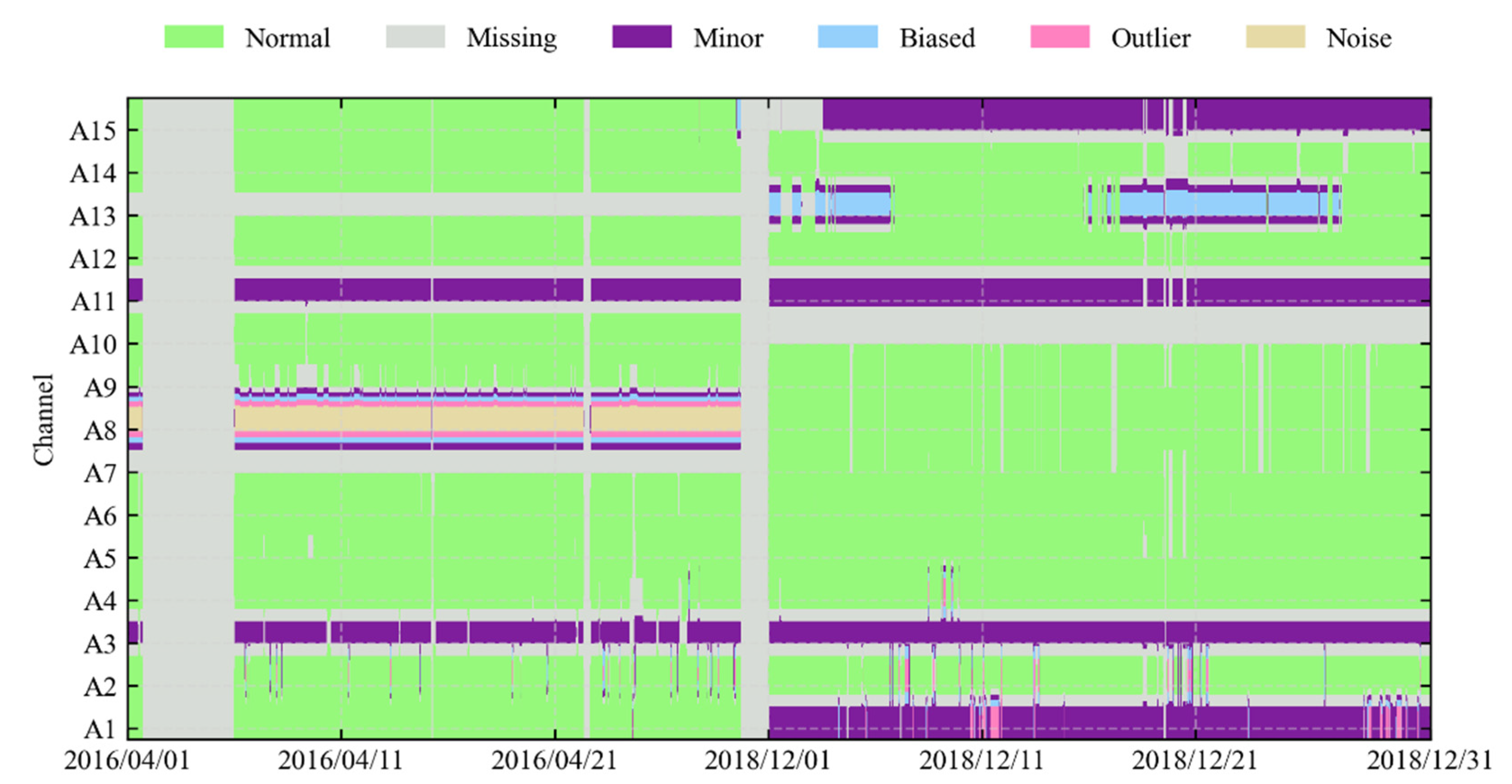
Over the past few decades, rapid economic development has led to the establishment of numerous monitoring systems, resulting in the accumulation of vast amounts of monitoring data. Among these data, dynamic acceleration data stand out prominently. However, the quality of collected acceleration data is often compromised due to factors such as challenging operational environments and sensor malfunctions. This severely hampers the value extracted from the data. Although manual identification and classification of data anomalies are more reliable, they are time consuming and labor intensive. To address the challenge of identifying and classifying anomalies in massive acceleration data, this paper proposes a two-stage model for intelligent data cleaning. Firstly, raw acceleration data are transformed into IPDF and PSD features, and a one-dimensional convolutional neural network is trained to preliminarily identify and classify acceleration data anomalies. Subsequently, the RPV indicator is extracted from the original data of the normal and outlier categories to achieve precise classification based on threshold values. The proposed method is successfully validated using acceleration monitoring data from a large-span arch bridge, achieving an accuracy of over 99%. Furthermore, compared to directly employing a one-dimensional CNN classification model, the approach significantly enhances the model’s perception of local significant disturbances.
Keywords: bridge structural health monitoring; data cleaning; one-dimensional convolutional neutral network; two-stage classification model bridge structural health monitoring; data cleaning; one-dimensional convolutional neutral network; two-stage classification model