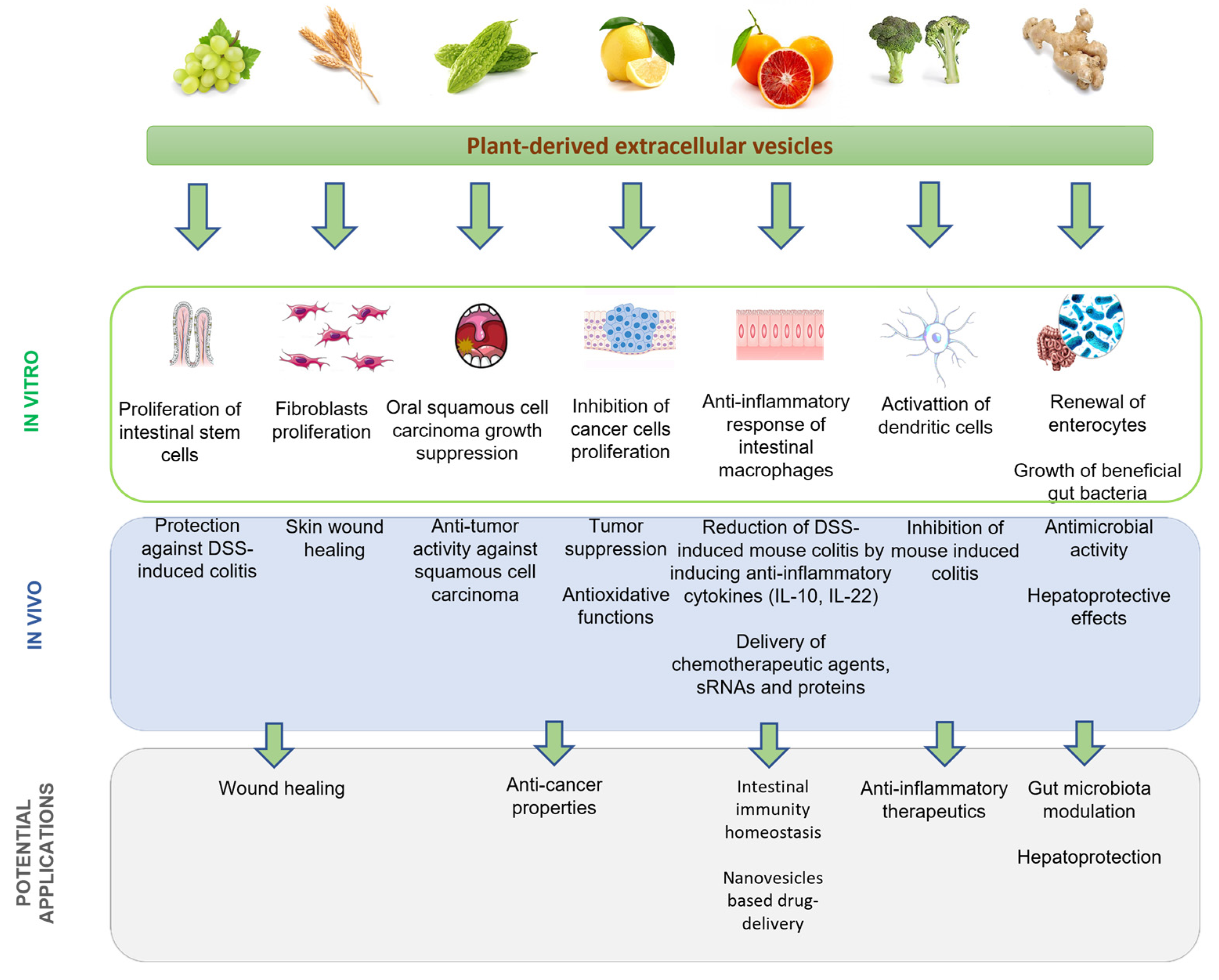
Plant Extracellular Vesicles: Investigating Their Utilization as Beneficial Nutrients in Diet



Abstract
Share and Cite
Di Giulio, S.; Carata, E.; Mariano, S.; Panzarini, E. Plant Extracellular Vesicles: Investigating Their Utilization as Beneficial Nutrients in Diet. Appl. Sci. 2023, 13, 6656. https://doi.org/10.3390/app13116656
Di Giulio S, Carata E, Mariano S, Panzarini E. Plant Extracellular Vesicles: Investigating Their Utilization as Beneficial Nutrients in Diet. Applied Sciences. 2023; 13(11):6656. https://doi.org/10.3390/app13116656
Chicago/Turabian StyleDi Giulio, Simona, Elisabetta Carata, Stefania Mariano, and Elisa Panzarini. 2023. "Plant Extracellular Vesicles: Investigating Their Utilization as Beneficial Nutrients in Diet" Applied Sciences 13, no. 11: 6656. https://doi.org/10.3390/app13116656
APA StyleDi Giulio, S., Carata, E., Mariano, S., & Panzarini, E. (2023). Plant Extracellular Vesicles: Investigating Their Utilization as Beneficial Nutrients in Diet. Applied Sciences, 13(11), 6656. https://doi.org/10.3390/app13116656