Review

A Systematic Review of Internet of Things Adoption in Organizations: Taxonomy, Benefits, Challenges and Critical Factors

by
Sehnaz Ahmetoglu
1,*,
Zaihisma Che Cob
2,3 and
Nor’Ashikin Ali
1
1
College of Graduate Studies, Universiti Tenaga Nasional (UNITEN), Kajang 43000, Malaysia
2
College of Computing and Informatics, Universiti Tenaga Nasional (UNITEN), Kajang 43000, Malaysia
3
Institute of Informatics and Computing in Energy, Universiti Tenaga Nasional (UNITEN), Kajang 43000, Malaysia
*
Author to whom correspondence should be addressed.
Appl. Sci. 2022, 12(9), 4117; https://doi.org/10.3390/app12094117
Submission received: 9 March 2022 / Revised: 30 March 2022 / Accepted: 4 April 2022 / Published: 19 April 2022
(This article belongs to the Special Issue IoT-Enhancing the Industrial World)

Abstract

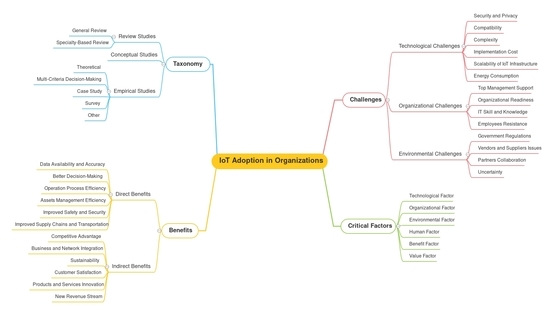
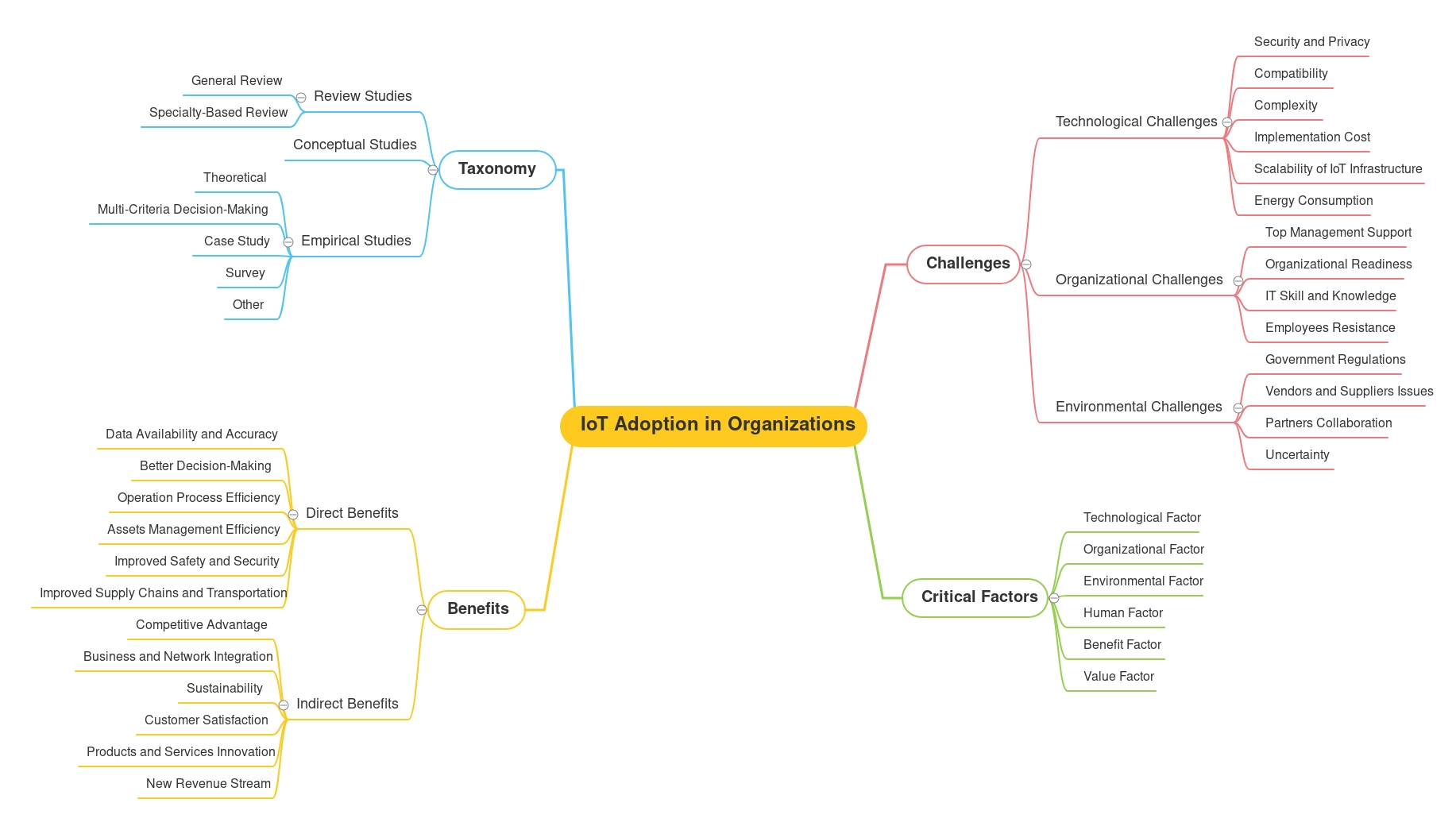
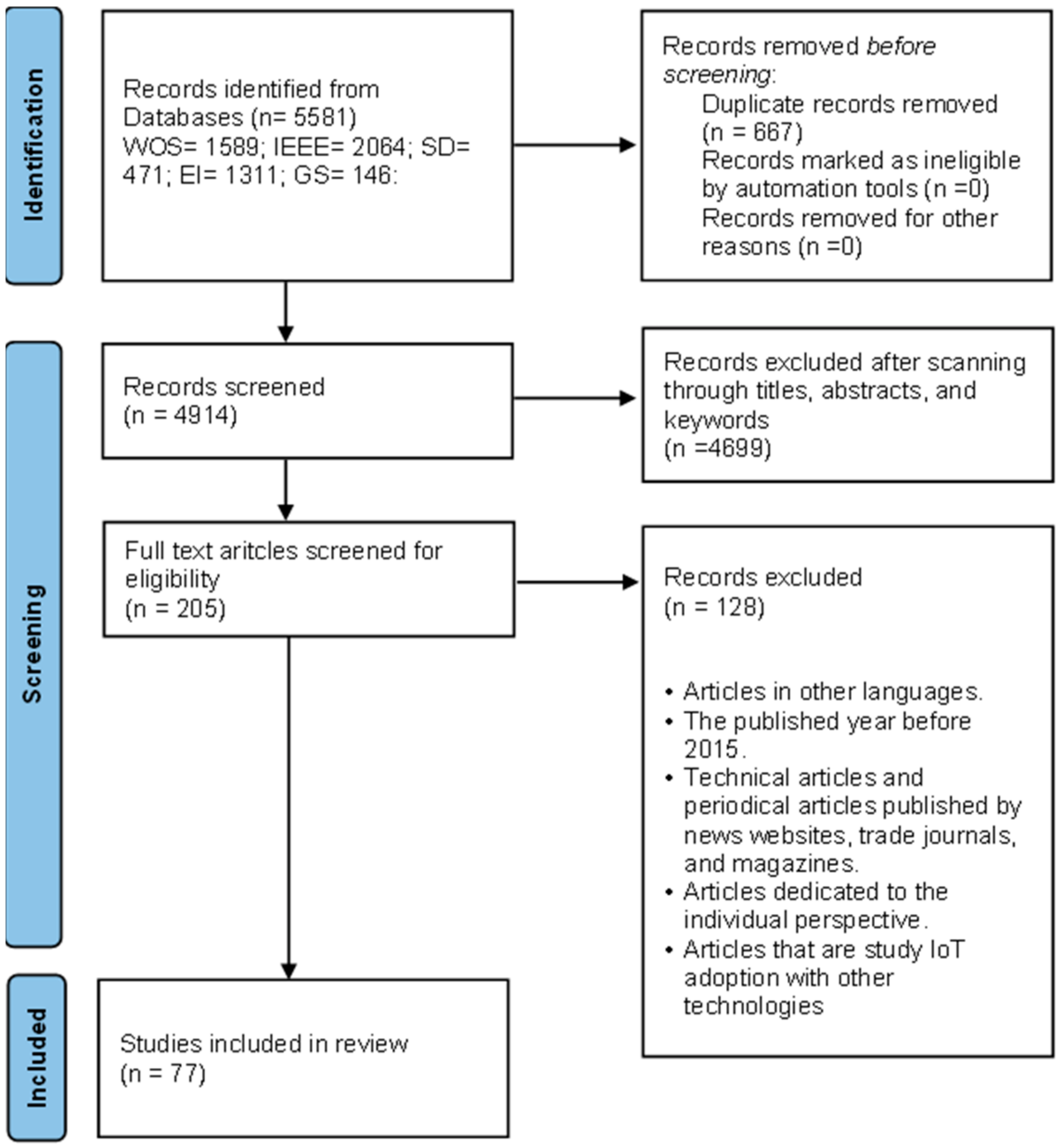
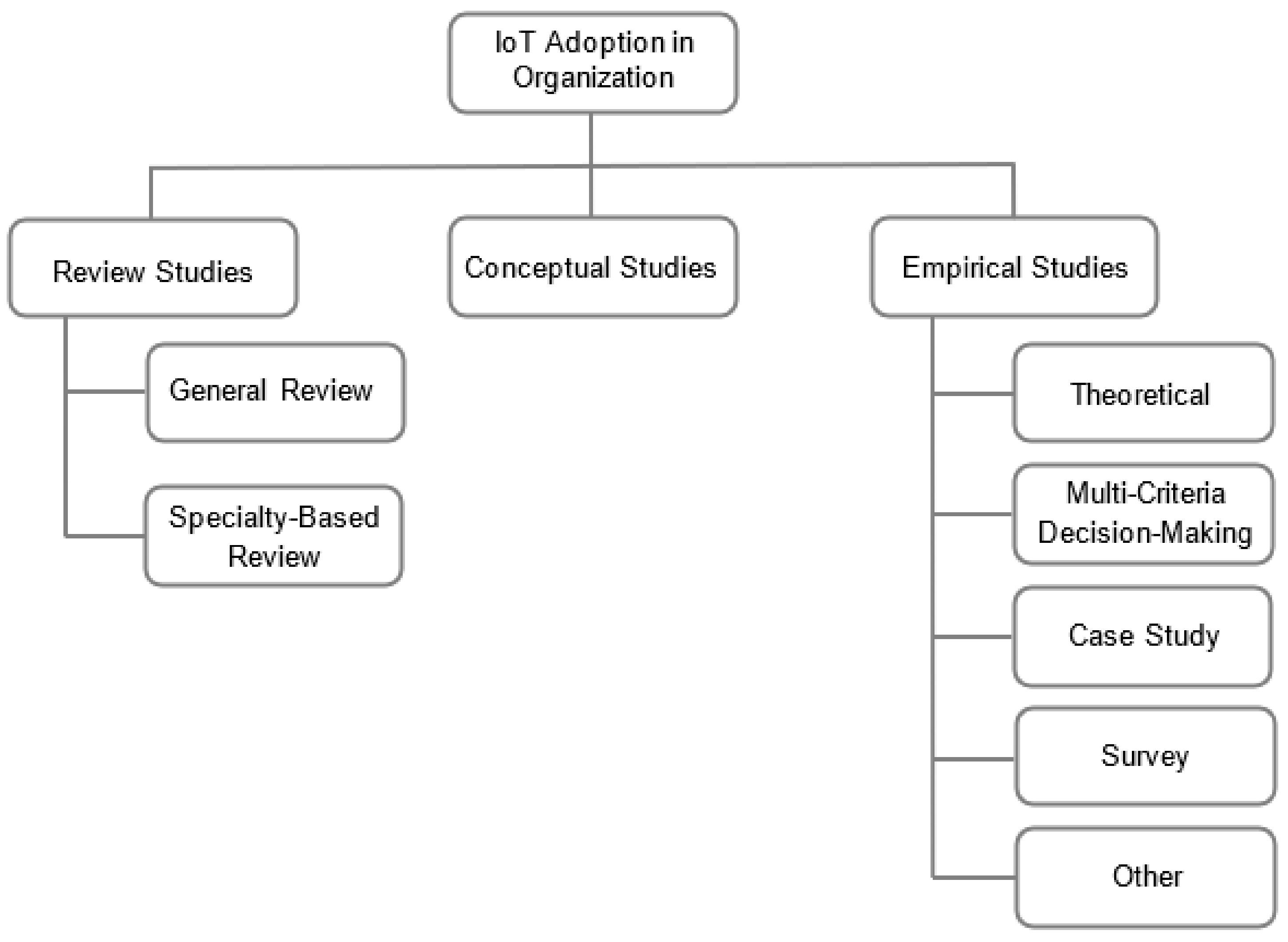
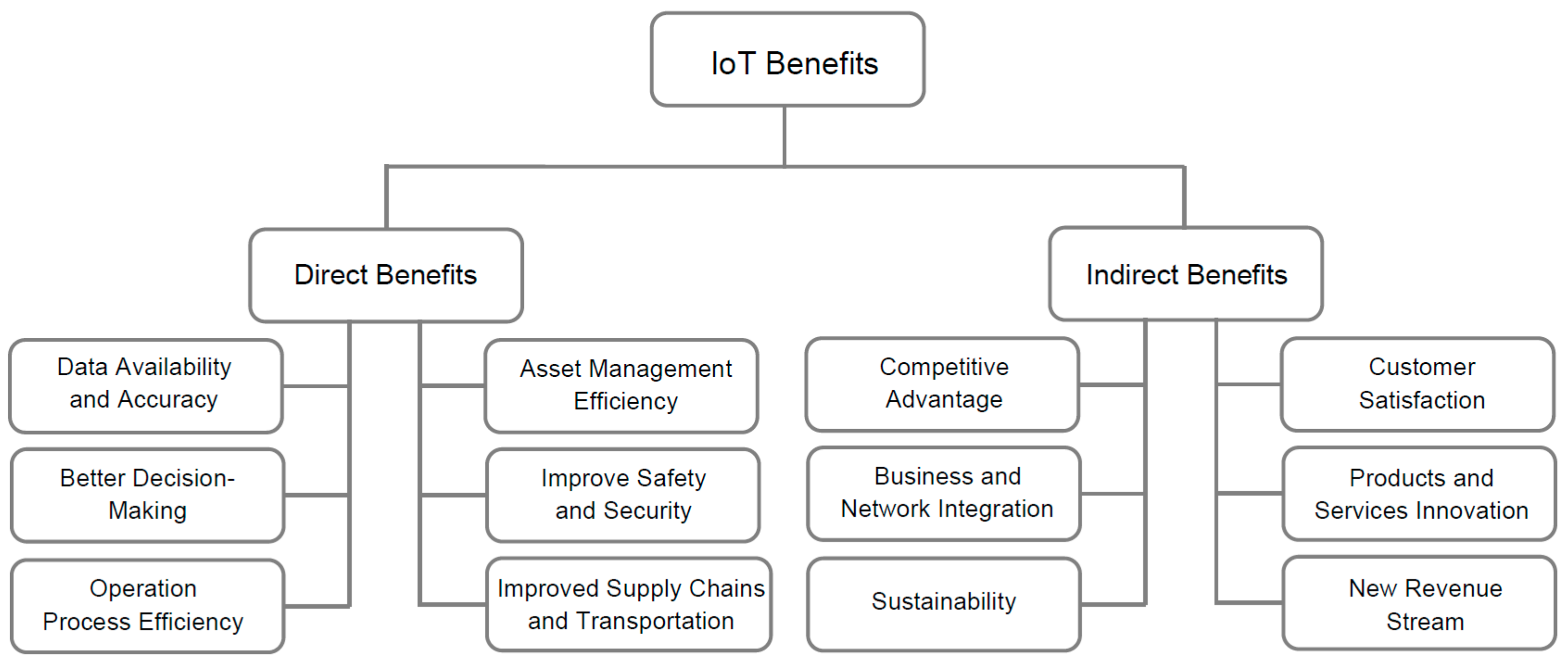
Despite the evident growth of the Internet of Things (IoT) applications, IoT deployments in organizations remain in their early stages. This paper aims to systematically review and analyze the existing literature on IoT adoption in organizations. The extant literature was identified using five electronic databases from 2015 to July 2021. Seventy-seven articles have met the eligibility criteria and were analyzed to answer the research questions. This study produced a coherent taxonomy that can serve as a framework for future research on IoT adoption in organizations. This paper presents an overview of the essential features of this emerging technology in terms of IoT adoption benefits and challenges in organizations. Existing theoretical models have been analyzed to identify the factors that influence IoT adoption and to understand the future requirements for widespread IoT adoption in organizations. Six critical factors affecting and playing a key role in IoT adoption in organizations were identified based on the critical review findings: technological, organizational, environmental, human, benefit, and value. Decision-makers and developers can prioritize these critical factors and progressively improve their development to enhance IoT adoption efficiency. This review also includes an in-depth analysis to bridge gaps and provide a comprehensive overview to further understand this research field.
Keywords: adoption factors; IoT benefits; IoT challenges; organizations; systematic review; technology adoption adoption factors; IoT benefits; IoT challenges; organizations; systematic review; technology adoption
Graphical Abstract